Showing posts with label Mathieu Amalric. Show all posts

Tuesday, December 10, 2024

You, the Living

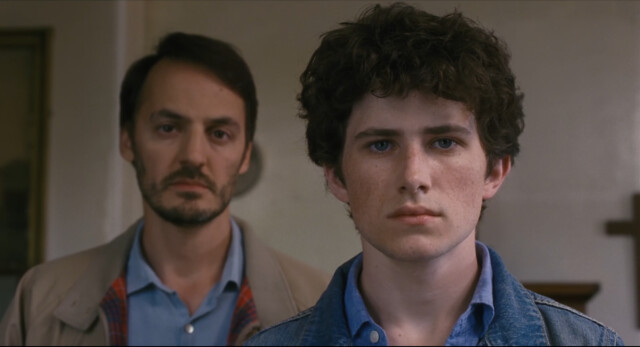
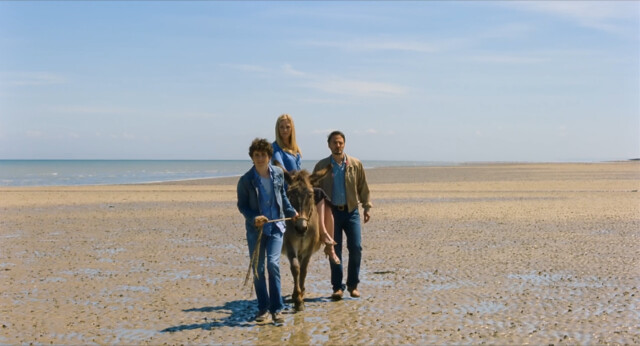
Fin août, début septembre/Late August, Early September (1998) - Assayas Screen Shot 2024-12-10 at 4.37.07 AM Screen Shot 2024-12-10 at 4.28.54 AM Screen Shot 2024-12-10 at 5.48.35 AM Screen Shot 2024-12-10 at 6.00.03 AM Screen Shot 2024-12-10 at 6.17.45 AM Screen Shot 2024-12-10 at 6.16.41 AM Screen Shot 2024-12-10 at 6.15.11 AM Again, more I watch Olivier Assayas's films, they remind me what a great writer he is - how perceptive and insightful he is in every character and situation. That he is one of the great working writer/directors I admire most. Late August, Early September is no exception. Its down to earth characters and their approach to life that they lead, warts and all, are all too believable. I remember someone on the internet asking what filmmaker's films you want to live in- a decidedly a corny question, and thinking about it for a minute at the time but couldn't come up with an answer. After watching August/September, if I have a choice, I can safely say that I'd want to live in Assayas movies.

Late August, Early September concerns Gabriel (played fluidly by the great Mathieu Amalric), a literary editor/translator/documentary filmmaker, being tasked to interview a recluse writer Adrien (François Cluzet), since they think Gabriel is the one Adrien can trust and open up to. Adrien is a good writer - not a big famous one, but a good one. Always broke. And he does open up to Gabriel, after Gabriel accompanies him to the countryside to his childhood hometown. It's a friendship built on respect and admiration.

While juggling his professional career, Gabriel is also going through a breakup with live-in partner Jenny (Jeanne Balibar). They are trying to sell their apartment and split the money. It's hard when they still have feelings for each other and all your friends and family are mutual, wherever they go. Then there's Anne (Virginie Ledoyen), Gabriel's new young, hot-headed fling who is very into a physical, sexual relationship. Anne is trouble and she herself knows it too.

Then there is Vera (Mia Hansen-Løve, the real life partner of Assayas and an esteemed director herself), a high-schooler and Adrien's secret girlfriend: there's a poignant thread of this unrecognized love, only to be revealed after Adrien's untimely death, which affects great many people, especially Gabriel.

Early August, Late September sketches out very naturally (with Assaya's signature handheld, grainly Super 16mm), a creative person's life and its ups and downs and the meaningful relationships he forms. As usual, jobs don't define these characters. Their interactions feel genuine and truthful. Their joy and sorrow deeply felt. It's amazing how everyone looks so young in this, but at the same time so mature, compared to other characters these actors imbibe in their later years. Wistful yet hopeful, the film is a beautiful elegy to the vagaries of life. Loved it.

Friday, September 23, 2022

Cinema of Gesture: Interview with Mathieu Amalric on Hold Me Tight

Mathieu Amalric Mathieu Amalric, a prolific French actor whose filmography includes Diving Bell and the Butterfly, Quantum of Solace, Grand Budapest Hotel, Summer Hours and many many more, is also an accomplished film director with a wide range. Hold Me Tight, starring Vicky Krieps, is his latest directorial output and perhaps the most touching and emotionally resonant film from his filmography.

With the film opening statewide, I had a chance to chat with him about his craft and filmmaking process at length, via whatsapp, before his flight to the New York premiere of his film. I loved his sprawling answers that jumped from one subject to another fluidly. This interview gave me a great deal of insights into an artist's creative process.

Hold Me Tight is playing in New York and opens in Los Angeles on 9/23. Please check Kino Lorber website for more rollout dates near you.

The thing about you as a director since the early 90s, is how distinctly different each of your projects is, from one another. I am wondering about how you go about choosing your next project, and in this case, Hold Me Tight.

Yes it's really a miracle to find something concrete. It's like a magnet. It's true that when you don't have that, your life feels strange...but that's how you feel often. In one moment, you don't know why, but it congregates towards something, something that makes you see the whole world. And it's true what Truffaut was saying and everything, when I talk to friends who make films, well not all of them, but I feel certain things like that. The film before this was Barbara. I had some sort of a feeling that was solidifying. So I said, "let's go somewhere that is very strange...," I swear this is true. But after Barbara, I told a producer, "No more films that are in order, I want to film now the storytelling that is not in a straight line." It was Claudine Galea's play, a very slim book that had never been performed. It brought me to melodrama. Melodrama of the first degree. Very simple. When I read it I was struck by it. It was the opposite of everything I hated in Barbara. Of course everytime you make a film you throw it away and go somewhere else. And then later on you love them again. It was not to be a form of distance. It was not to be... Barbara was almost like a commission for me. It was Jeanne (Balibar) and the producer's idea. Jeanne was supposed to do it with Pierre Léon but the producer didn't want him. So they called me up and asked how about you do it? But it was a biopic. You can't really cheat in a biopic. But this film, based on a play, a melodrama, where it afforded me a direct access to the emotions I wanted. So it was that factor for this film.

I started to write, immediately in fact. What drew me into it was that Claudine developed a game of invention for this character Clarisse. I was attracted to her gesture toward imagination. Cinema can amplify those parallel lives. In fact, we deal with it each moment in our lives - we either accept or we are scared of them. That's what I like about Clarrise. That she finds the way to accept them and even bring more beauty to them than what she could've had in real life. But it is real. There's no difference in aesthetics between what's projected and what's real. I don't even know if there's a memory in this film. Maybe a discotek is a memory...maybe. But I think even that, she-

Invented.

-in my head, she transformed it a bit.

Got you.

But all the rest is a projection. I was thinking of a spectator looking at the screen, you know that there is nothing behind the screen but at the same time you believe in it. This is true. And that's what happened in the editing. With my editor, François (Gédigier), we really played around the idea that what the audience is experiencing can be very close to her gesture.

I see. You mentioned that Galea's play was pretty short. How much of it was from that and how much of it you invented?

It takes place in the Pyrenees. But in Galea's play, it's not really specific. It's here somewhere...

*Amalric looks around for the book.

There is a house, there is a car, there is a boy and a girl...thoughts, words and things that go from one place to another in the same graphic way...onto the pages like that. She uses italics, antiquated fonts, a long monologue...

*Amalric holds up Galea's play with the film poster as a cover.

It's a reprint, so they put that cover on it now. So it's not really a play in a typical sense. She is playing with forms. And at the end yet, there is a mountain.

I see.

For me, the mountain, my father comes from the Southwest of France, some of my filmmaker colleagues are from the Pyrennes, the border with Spain. So we searched for the house there, not in the mountains but at the foot of it, just outside Toulouse called Saint-Orens. And that's where we shot. When Clarrise takes the car, she goes to La Rochelle, by the sea. Do you know it?

No.

It's the west coast of France. A very lovely port town.

Vicky Krieps is wonderful in this film and how did you get to cast her for the part?

That is something that I really...the producers Laetitia (Gonzalez) and Yael (Fogiel), I gave them the book. And they said, yes we can try something with that. So I go to the house and for a day and a half I did archeological work. The first thing I did was start with objects and Vicky appeared. Just like that, she appeared in my head. I think I'd seen Phantom Thread four month prior. I remember the first shot she appears in as a waitress and... sometimes it happens in the streets, it's like, "I know that person. I knew that person somewhere..." We have those feelings sometimes. I tried to phone her and it doesn't go through because where I live in Brittany the reception is not so good. Then I googled and found out that she has a French agent and I call her agent and she says she will be in Paris in three weeks. So we meet. And I don't have a script yet. So I give her the book and we forget to say if we will meet again or do the film together or anything. It just happened! That's why we say it's our film. And we had to shoot in three different periods of time because of the mountains and the snow. It took a year and a half. Shooting and stopping for four month waiting for snow to melt and a lot of things happen during that time, you know. It is challenging to have the same crew for that long period of time. Life happens: separations, moving, new relationships.... And I think that was part of our film as well.

But the stretch of time was also valuable because we were editing between the shooting. That creates the possibility to be a spectator. We started by spring, which means we got rid of the dead immediately. After two days she finds the bodies. It's done. But that means we could move toward something relatively lighter - like her in the kitchen, or singing while driving, eating or trying to flirt with a man... things like that wouldn't have happened if we had to wait out of respect for the dead. So sometimes the order of which you film can have an influence.

What I love about the film are the small details- like Clarisse burying her face in ice in the fish market or hugging a total stranger in a pub... You don't know what those mean when you see them, but at the end you realize how things are all related and connected to each other, like her listening to the cassette tapes of Lucie playing piano. I am wondering how much was in the script and how much was improvised.

When I say I did the work of an archaeologist, this is what I meant. Yes they were not in the book but in a way, when I talked with Claudine, I don't know, I was trying to imagine this woman, that I was this woman. For instance, we had to film this scene in the cafe. At that moment, the audience is judging this woman, "how can she leave her husband and children?" She is guilty. That's what you think. But the whole crew and everyone on set knows that's not the case. She says, "He's gonna call me in a week." You just put yourself in that situation. It's her reality. Yet I pretend that I left and they stayed. It's so simple. She leaves like that. My job is to help my actors. So in this film it occurred to me that me being an actor really helped. It really helped me a lot because you don't need words sometimes to express. You just need an object or something to incite those emotions. Maybe it's the woman at the bar that I like a lot and I want her to believe me. Or that dream catcher in Lucie's room that invokes something in me, or I want the man at the bar close to me so if I fall, I won't fall to the ground. I would do a walk-through with my crew and cast where I am doing all those things and convey what I was trying to express.

Those things with the ice. It's in the morning. Me and my crew had a location scouting. La Rochelle has an extraordinary market. And the backstory is that Clarrise had too much to drink the previous night. I even wrote a scene where she had a party the night before. We didn't end up filming that. The thing is that when you go to the market in the morning, you see people working and it's full of life. Life is going on all around you. It continues. This morning I looked out the window and there were people preparing delivery and... I can watch that for hours. I guess I wanted to comment on real life. I don't know.

It makes sense.

That's why she went there. And when you saw that ice, because I am in her head, I know that there will be bodies underneath the ice come Spring and she still has to wait for the inevitable. That's unbearable.

I think I mentioned in my review but all your films have a sense of controlled chaos.

Yeah. It's true.

That chaos is reflective of what's going on inside your characters. It is very interesting to see that. I always wondered about what your film set is like. Is it controlled chaos or not at all. I wonder if it's very different from, say, the set of Arnaud Desplechin's film set, for instance.

There is. Arnaud's film set is becoming quicker and quicker. When we were young, he was doing 35 takes. We had time and we had three months to do the film, now he has to do his films in five weeks with a small budget, but he uses that. That is something we have in common. We love to shoot quickly. But this one was different. We were shooting for 6 weeks. And I write a lot, in fact - a lot a lot a lot. So that I can rewrite at the last moment, in the morning.

I see, I see.

And I give sort of a letter to the crew every morning, usually it's dialog but this film it was replaced by gesture or piece of music. What's the scene about? Where does it happen? Where are we? I have worked with the same people for twenty years and they will never leave me alone. But they won't let me be the artist on the ivory tower. They keep you in check.

Exactly. I know them and understand them because I was a film technician also- sound, first AD and I did all the jobs in movie making. So you know changes can occur at a moment's notice in film sets. You know what you have to decide and when you have to decide. There are all the books on Fellini that are great on that: 'the work of a great director is in fact decided on the last moment'. An example would be the fight scene between the brother and sister in the room. I didn't think it somehow was strong enough. Then we have this beautiful tree just outside the window. But you don't ask the person the morning of the shoot that he will be falling off of a tree. You plan that four days in advance. But things happen like that.

There is also a lot of live music playing in the film. The two girls who play Lucie, Juliette and Sophie, are not actors but musicians. So we had live piano music all the time. We had another house with a grand piano where they played because they have to practice for their conservatory. Both amazing pianists and that gave us something quite incredible.

We had very long one- takes for different reasons. I knew Vicky had to go deep into places to reach them and it is a hard thing to do. I'm not going to ask her to find the bodies twice you know. You do that once. She had to prepare for it. Really prepare for it. There's almost no professional actors in the film. They are people who actually own those places we shot. Only professional actors were Vicky, Arieh (Worthalter who plays husband, Marc) and the guy at Marc's job and Aurélia Petit at the gas station scene which I invented two days before the shoot. I thought to myself, "I think we need another scene before she leaves."

For this film I wanted to create objects that could go and connect to something that we already shot, a memory of something. For instance, when she falls after the ice scene and she is carried away in this blanket- what the prop master would do each time- because she is inventing all those scenes, to put all her objects in her projections, we used the same blanket that Marc uses after taking a bath. So we had a lot of different ways to go about connecting those moments - through objects, through music, through gestures, all the time.

Dang.

It was written precisely like that. But in editing, there are other possibilities to go different directions. In the scene where Clarrise is told by the innkeepers that she has to wait until Spring for the snow to melt. She goes out to the car and starts digging. The next scene is her and Marc in the discotek. She heard what was said but she doesn't want to hear it. With my editor, we ask, "So where could she go now?" For me, I feel that she goes to the beginning. The beginning is when she met this guy. Then they lived together, had children. "If I hadn't met this guy...," that's why she goes to the beginning. That's how the editing goes. In Claudine's book, it's the final, final revelation. You have suspected all along but it's literally the last page of her book that reveals it's her imagination that her family is growing without her because she left. The script was written like that. And because we had time between the shooting and editing, I hated the fact that the editor and I can be the puppeteer. You see what I mean? It's like, "Aha we know more than you!" It was clear after the first week of shooting that it was not us who were puppeteers but she was.

It's always the case with your films that it doesn't feel like trickery. I feel that there are real emotions behind it. I love hearing about the process of the film in how it was put together. It adds so much to the experience, looking back. I might have to watch the film again to get all the details and connections you put in. That's quite marvelous.

But I have the feeling that we all do that in fact. I was thinking about a traffic jam. Why would they prefer to be in there to go to work and get stuck in their cars? I think people need that sometimes, that they want to be alone sometimes. They are not at home and they are not at their job yet. It's in those moments you imagine horrible and beautiful things and that's where decisions are made in their own lives: it can depend on something they hear on the radio or what you see outside, or weather, or something stuck on your windshield... I am sure that we all imagine things, four or five things at the same time. I think cinema can explore your mind and body like that of dance. I think dance is an art form that can transpire those feelings, even more than music. There's no words to describe when you see someone move and you go "Ahhh" in awe.

My work is in storytelling and it's all about how to put those things together. So to what point do I want to give information? Do I need to make it too clear? Do the questions I ask need to be intellectual? How do you bring those questions down to the belly again? These are all done in the editing. We concentrate on the voice also. Do we need to make things clearer? Vicky was in Berlin and I would try to record her line reading in my iphone to put in the film. It was my editor and my producers not to make things more clear and more obvious. It's usually the other way around - directors want to make it more obscure and producers want to be more linear and more obvious therefore more commercial!

People take things differently. That's why I loved the Q&A last night at the sneak preview. Some people get it within a few minutes that she is in mourning. Some people don't get it, that she invented the whole losing the family thing to make excuses to leave her house. People also project their own lives from loss of a loved one or even a bad break up. It's great to see the different reactions.

You did something very special here. So congratulations. What else do you do when you are not making feature films?

I do a lot of short music documentaries. I've been working with John Zorn. You know during his famous marathon sessions? I filmed that. And I've been filming him since 2010 whenever I am in New York. We've done four, five of them together. My girlfriend Barbara Hannigan is a Canadian soprano opera singer. There is a youtube video called C'est presque au bout du monde that I did for Opéra national de Paris. You should check it out. It's very intimate. It's just a soprano preparing her voice.

I will do that.

Tuesday, September 6, 2022

Grieving and Letting go

Serre moi fort (2021) - Amalric Hold Me Tight I have said many times that Mathieu Amalric is not only a great actor but a great director as well. Over the years, he has proven the fact time and time again with his incredibly diverse work in his filmography: On Tour, a film about a group of burlesque performers touring with a washed-up manager to ‘the end of the world’, Blue Room, a Gustave Courbet inspired sexy noir courtroom drama and Barbara, fiercely inventive biography of a popular French singer. He does it yet again, with Hold Me Tight with the great Vicky Krieps in a very affecting performance. Amalric's strength as a director has always been his seeming aimlessness or controled chaos if you will, which always ends up greatly resonating on an emotional level. Hold Me Tight is no exception.

It starts out with Clarisse (Vicky Krieps) playing polaroid pictures of her family like a deck of cards on her bed, then sneaking out of the house in the middle of the night, driving away in a dusty old car that’s been sitting in their garage, leaving behind her loving family - Marc, her hunky husband and two adorable pre-teen children, Lucie, and Paul. She tells herself that after a while they will not miss her. She is never coming back, and they will have to accept the fact. But why is she running away? What is she running from? She is seen saying goodbye to her friend in town (it’s mountainous region of Northwest France near Luxembourg/Germany border) at the gas station.

The film wisely cuts back and forth with Clarisse’s road trip and the happy family life. They are always on her mind and the thoughts of them make her smile while on the lonely road. As the film plays out, it’s as if she is watching her children grow up from a distance, as if by choice. Then the film becomes something else entirely.

Clarisse’s seemingly aimless road trip, listening to an old cassette tape recording of Lucie playing piano, incessant smoking, her pauses, staring at inanimate objects, silent smiles- each of these tell a story, so do her inexplicable, seemingly random behaviors as the film goes on: Why does she hug a stranger from behind in a pub? Why does she bury her head in ice in a fish market? Why does she berate tourists for not keeping an eye on their children? Why is she so insistent of getting the same room with bunk beds at a ski resort over and over again? Amalric builds upon these details to the film’s ultimate big reveal. But unlike the gotcha moments in other films, Hold Me Tight’s conceit doesn’t feel like a conceit. This is mainly because of Krieps, (in my opinion, the best actress working today), who embodies Clarisse with natural grace, inner strength, intelligence, and unassuming beauty all at once.

The fragments of memories of Clarisse's family that she plays in her head and the construction of what the life with them would have been clashes, when she tracks the life of a local piano protégé. Believing that it is her Lucie, now a fiery teenager, playing in an important competition, Clarisse acts out her mostherly concerns at the teenager. And it causes a scene.

Krieps gives a gut-wrenching performance in a film about grieving and letting go that is so portent and heartfelt than any other film I've seen in a long time. Constantly going back and forth with her and her family, feeling the absence of one another yet articulating the connection in a very ingenious way, Amalric, adapting from Claudine Galea's play Je reviens de loin, makes perhaps the most heartfelt film as a writer/director. Give Krieps all the acting awards there are!

Hold Me Tight opens 9/9 in New York, 9/16 in Los Angeles. National rollout will follow.

Wednesday, March 2, 2022

Rendez-Vous with French Cinema 2022 Preview

The 27th edition of celebrating the best of contemporary French cinema offers a star studded 23 film line up. And after going all virtual last year due to the pandemic, this year's Rendez-Vous is back at the beloved Walter Reade Theater, Film at Lincoln Center, NY. The festival runs 3/3 - 3/13.

Opening night film is a highly anticipated Berlinale winner, Claire Denis's Juliette Binoche and Vincent Lindon drama, Fire. Other notables include Mathieu Amalric's Hold Me Tight with Vicky Krieps as a grieving French housewife, Jacques Audiard's contemporary romance Paris, 13th District, Christophe Honoré's stage adaptation of Proust going awry during Covid-19 in Guermantes, Arnaud Desplechin's adaptation of Philip Roth's Deception, starring Léa Seydoux.

For showtimes and tickets, please visit FLC website.

Here are some notable films I was able to sample:

Deception - Arnaud Desplechin Deception Tackling on Philip Roth's autofiction, Arnaud Desplechin's Deception showcases Léa Seydoux's talent and charisma once again (they collaborated in his last effort Oh, Mercy, where she played a poor working class girl mired in crime).

Here Seydoux plays a sophisticated Londonite whose unhappy marriage drives her into the arms of Philip Roth(Denis Podalydès), a London based American writer, also stuck in loveless marriage. In his London flat, they talk and make love. He jots down his thoughts about her in his trusty notebook for keepsake. They break up many times yet have a strong hold on each other and can't let it go completely. His wife suspects and accuses him of having an affair and he defends himself by saying that Seydoux character is just that, a character, a manifestation of a writer's imagination run amok. As usual for a Desplechin film, Deception is wordy and performance driven. And despite the setting and the characters nationalities, with the usual neurosis and everything, Deception is decidedly and predictably Desplechin and very French.

Hold Me Tight - Mathieu Amalric Hold Me Tight I've said many times that Mathieu Amalric is not only a great actor but great director as well. Yet again, he proves it with Serre moi fort/Hold Me Tight.

It starts out with Clarisse (Vicky Krieps) sneaking out of the house in the middle of the night, driving away in an old car, leaving behind her loving family - Marc, her hunky husband and two adorable children, Lucie and Paul. She tells herself that after a while they will not miss her. She is never coming back and they will have to accept the fact. But why is she running away? What is she running from?

Then the film becomes something else entirely. Krieps gives a gut wrenching performance in a film about grieving and letting go that is so portent and heartfelt than any other film I've seen in a long time. Constantly going back and forth with her and her family, feeling the absence of one another yet articulating the connection in a very ingenious way, Amalric perhaps makes the most heartfelt film as a writer/director.

Guermantes - Christophe Honoré guermantes The planned stage play of Guermantes, based on Proust's third volume of In Search of Lost Time (appropriate title for our pandemic times), is getting canceled, because of Covid. Director Christophe Honoré and a large cast of mostly theater actors, who's been rehearsing the play together for months, are devastated by the news. So they have two choices, stop the project, admit the defeat and go home, or continue to rehearse without a guarantee that the show will ever be staged in the future. After much debate, they continue their rehearsal.

So starts this delightful, communal film of actors and a novice theater director rehearsing the Proust's labyrinthine texts while making the Théâtre Marigny and its lovely garden their home- sleeping, eating, singing together and make the best out of the world wide pandemic.

Unlike the play they are enacting which lacks many of the characters back story due to it being a chapter in a 7 volume book, Honoré explores many of the actors backstory and their lives, making the film much more than a mere documented rehearsal. It's obviously scripted cinematically playful and shot beautifully on film, by frequent collaborator Rémy Chevrin. A delightful salvo of a film that shows a power and resiliency of art in the pandemic era.

Paris, 13th District - Jacques Audiard PARIS 13TH DISTRICT Les Olympiads, the high-rise residential buildings named after the cities that hosted Olympics over the years, is a middle income housing built in the 70s, located in ethnically diverse 13th District in Paris. Audiard, known for his well crafted thrillers and highly emotive characters, tries his hands at a modern romance film with his sleek, staccato style, shot on beautiful black and white.

Webcam, dating apps and decidedly young attractive actors give Paris, 13th District, a fresh, vibrant look at the lives of young, ethnically diverse Parisians of today.

Breakthrough performance here is definitely Lucie Zhang as Emilie, a Taiwanese descent millennial looking for love while living off in her grandma's apartment in Chinatown, located in the 13th District. Zhang's uninhibited performance is contrasted by Noémie Merlant (Portrait of the Lady on Fire) as Nora, a 30 something Bourdeaux transplant running away from the grip of her husband to find herself in the city. Their lives cross paths through handsome Camille, played by Makita Samba, a public school teacher whose self-assured but arrogant demeanor both attracts and repels women. Co-written by Céline Sciamma, Paris, 13th District weaves a seductive, fresh tale of modern romance.

Thursday, March 22, 2018

Creative Process Can Use Some Help from Ghosts of the Past

Ismael's Ghosts (2017) - Desplechin
Screen Shot 2018-03-11 at 11.08.01 AM
Could Ismael's Ghosts be seen as Desplechin's 8 1/2? is the question that kept coming up in my head while watching the film. At 58, Arnaud Desplechin lends a deeply personal, metaphysical insight to inner struggles of a creative mind, even more so than in My Golden Days. In his usual sprawling ways, Desplechin goes on explaining the difficulties of filmmaking process and throws in the Jewish guilt/survivor's remorse: What do you do when your loved one, long presumed dead but never forgotten, comes back to your life? This quandary is one of the ghosts that our protagonist has to reckon with.

With multiple flashbacks and movie within a movie, Ismael's Ghosts tells a story of Ismael (Mathieu Amalric), a boorish movie director. While struggling with his The Man Who Knew Too Much style, Hitchcockian cold war spy movie project based on his suave (but estranged) diplomat brother Ivan (Louis Garrel), starring Garrel, Ismael falls for timid but supportive, loving Astrophysicist Sylvia (Charlotte Gainsbourg). He has been maintaining a good relationship with Henri Bloom (Laszlo Szabo) the father of his missing wife Carlotta (Marion Cortillard) as they share the same grief and loss.

The movie is narrated by Sylvia. Intimidated by this charismatic movie director at first, but charmed by his broken 'widower' side of him, she falls in love. But the reappearance of Carlotta (Marion Cortillard), a long declared absent wife of a Ismael, tests their relationship. Walked out of her marriage at 20, Carlotta manifests herself some twenty years later at the Ismael's childhood beach house where he comes to write. No explanation is good enough for Ismael, furious with Carlotta for sabotaging his life, first by disappearing and now coming back, he resents her greatly. Unable to compete with magnetic Carlotta, Sylvia calls it quits and goes back to her telescope at an observatory up in the mountains.

After sleeping with Carlotta, Ismael flees to his home town of Robaix. All broken up and melancholy, with mixed up memories and emotions brought on by Carlotta, he becomes a hermit. With the production of his spy movie's future uncertain, the company sends in his friend/line producer (Hippolyte Giradot) to convince Ismael to finish the movie. In that chaos, the director finds his inspiration flowing once again, helped by the ghosts of his pasts so to speak.

In the meantime, Carlotta visits Henri and her presence freaks him out and sends him to a hospital. For everyone who loved her, the impact of her disappearing was too great and deep, her presence is not welcome but painful reminder of their loss. As similarly themed recent movie A Memoir of War based on Marguerite Duras' book tells us, the pain of losing someone and no sense of closure is too great that even the eventual return can't remedy its wounds.

Desplechin deals with a lot of complicated thoughts and emotions on screen, acted out by three very good actors on the top of their game. And as usual, his writing is excellent. His preoccupation with an international spy in the name of Dedalus is still there, this time Ivan, not his alter ego, Paul. Deliciously self-reflexive and touching, Ismael's Ghosts is another great testament of Desplechin's unique talent as a film enthusiast and a great writer.

Ismael's Ghosts opens theatrically at The Quad and Film Society of Lincoln Center on March 23rd in New York

Wednesday, March 7, 2018

Rendez-Vous with French Cinema 2018 Preview

There are different ways to celebrate the arrival of Spring. But if you are in New York, there is only one way to do it, in style- you go see some great new French films at the Film Society of Lincoln Center. It's a proud tradition around this neck of the woods.

The 23rd edition of Rendez-Vous with French Cinema is here with array of films by established filmmakers and first timers alike, including Bruno Dumont (Jeannette: The Childhood of Joan of Arc), Mathieu Amalric (Barbara), Raymond Depardon (12 Days), Toni Marshall (Number One), Léonor Serraille (Montparnasse Bienvenüe), Léa Mysius (Ava), just to name a few.

FSLC is partnering again with UniFrance this year, putting emphasis on presenting emerging women directors. To quote Executive Director of UniFrance Isabelle Giordano:

French cinema today is unafraid to delve into the issues at the forefront of our collective consciousness, which is reflected throughout this year’s selection. In particular, we’re extremely proud to showcase a wide variety of women’s stories—films about women’s resilience during times of war, millennial women trying to find their place in the world, the glass ceiling, and even the childhood of a young girl destined to become a legend. As ever, we are thrilled to introduce American audiences to bold newFrench voices, this year including Léa Mysius, Léonor Serraille, Maryam Goormaghtigh, and Marine Francen.
The series runs 3/8 -3/18. For tickets and more info, please visit FSLC website.

Here are the films I was able to sample:

Jeannette, The Childhood of Joan of Arc - Bruno Dumont

Screen Shot 2018-03-06 at 9.29.00 AM
It does makes sense that Bruno Dumont's latest is about Joan of Arc. She personifies the Christian devotion and spirituality, so it comfortably fits in his filmography. It also makes sense that Jeanette is a musical comedy: as he brazenly made it clear since his first foray into comedy with L'il Quinquin and last year's Slack Bay that comedy is just a flip side of a coin- that his austere films (dotted with bizarre surrealist moments) can easily be rip-roaringly funny when they go two millimeter off the path.

Young Jeanne (Lise Leplat Prudhomme, and later played by Jeanne Voisin) is a precocious girl living in Domrémy, north-east France (Dumont's beloved home region). She and her friend have been praying to god to save France from English invaders to no avail. She encounters a twin dancing nuns or, has a religious epiphany of Ste. Marguerite & Catherine, telling her to lead the French army. They conclude their meeting with a choreographed headbanging with Heavy Metal music.

I get what Dumont is trying to do and Jeannette should work in theory. His Bressonian approach, using non-professionals to convey the serious subject such as faith and purity of Joan of Arc is a noble attempt and should be praised. But when you think of Joan of Arc, it's usually the haunting close ups of Renée Jeanne Falconetti's face in Dreyer's poetic masterpiece Passion of Joan of Arc that come up to mind. In comparison, Jeanette can come across as a bad high school musical, complete with b-boy moves and falling off a horse for laughs.

Dumont's full framed beautiful composition highlighting the big sky country is there, so as the picturesque, windswept, soft lit sand hills of Brittany. But can it offset the silliness? You will be the judge.

Barbara - Mathieu Amalric *Opening Night Film
barbara
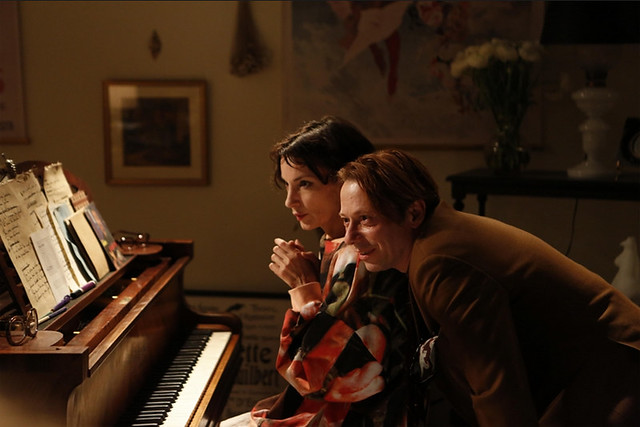
Mathieu Amalric's continues to show his impressive directing chops with Barbara, starring his ex, the immensely talented singer and actress, Jeanne Balibar. As the case with his award winning On Tour, Amalric's kaleidoscopic reverie on show business is a Fellini-esque controlled madness. Still, his deep love for performers is always palpable. And it's Balibar front and center here. She plays Brigitte, an actress interpreting the details from the legendary french singer's life, being directed by aimless, but passionate film director Yves (Amalric). As the film moves along, it becomes hard to distinguish Brigitte from Barbara and vice versa.

The title sequence accentuates the importance of Barbara's dictation of each word as she speaks, title appearing in intervals as she pronounces words rhythmically. It's all about mannerisms and gestures and the heavy make-up and her singing style, which Balibar tackles confidently. Added is movie within a movie meta-ness. But it doesn't take away the spotlight from its star.

Born Monique Andrée Serf in a Russian Jewish immigrant household, the singer took her grandmother's name as her stage name and became Barbara. Her melancholic love songs which were all written by her, touched a generation of listeners and helped her to become a national treasure. She also had a very pronounced nose which Brigitte lacks. There is a scene where Brigitte gets her face cast for the nose. In some scenes she wears it and in others she doesn't. Amalric is interested in recreating those details up to a point but leaves it to the flow of the film. He uses archival footage of the real singer in the beginning and back to Brigitte faithfully studying and practicing her every gesture and singing style. But as the film progresses, he cuts rapidly back and forth between Barbara and Brigitte, with added grainy footage of Balibar reenacting Barbara on stage, blurring the line among all three.

Amalric is an astute student of cinema. He is keenly aware of the medium and knows how to benefit from its possibilities but not in a showy way. His aimlessness is also his best asset. The film is rhythmic, fluid and free. One of the year's best.

A Memoir of War - Emmanuel Finkel
Screen Shot 2018-03-02 at 6.49.25 AM
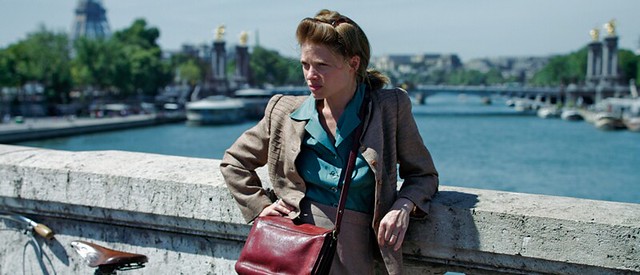
Emmanuel Finkel tackles on semi-autobiographical book by writer & film director Marguerite Duras. And it's an ambitious one. The film starts with Marguerite (Mélanie Thierry) in German occupied Paris at the tip end of WWII. She had found her own journal which is essentially the book the film is based on, but she doesn't recall if it was she who wrote it. She is waiting for her husband Robert's return. He has been in custody for his resistance activities. Robert's prolonged absence has been a disorienting, unraveling experience for her.

We roll back to 1944, just before the scale tipped for the Allied forces. Marguerite was approached by Rabier (Benoit Magimel, becoming more and more like young Gerard Depardieu), a collaborator, working for the Vichy regime, offering help to find where Robert is. He is a working class bloke who dreams of opening up a bookstore and thus fancies Margueritte because she's a writer. Her circle of friends in the resistance first think it's too dangerous for her, then admit that it might be a good opportunity for her to play Rabier to get important information.

First, fear and intimidation grip her but she plays along as Rabier leads her on to the promise of Robert's well being. It is clear that he wants something in return - ratting on her resistance friends. A dangerous game of cat and mouse play out.

Not unlike Duras scripted Hiroshima mon amour, A Memoir of War concerns the effect of war has on people- the guilt that survivors have to carry around weighs so heavily on them that they lose their sense of self. Marguerite often sees her surroundings in a third person perspective. She also sees herself from a distance as if she is experiencing an out of body experience. Duras doesn't put blames on a collaborator alone. Holocaust happened. As a human being, we all have to wrestle with the fact that it happened. Using shallow depth of field, Finkel makes sure there that there is a distance between people at all times. There is a striking scene of empty Paris just before its liberation where Marguerite rides her bicycle. But she will never be free from that guilt. And it won't stop even if she has Robert back finally.

Thierry is a revelation as Marguerite, a learned, intellectual woman who slowly gets broken emotionally. A Memoir of War is a great film.

12 Days - Raymond Depardon
Screen Shot 2018-02-25 at 11.30.28 AM
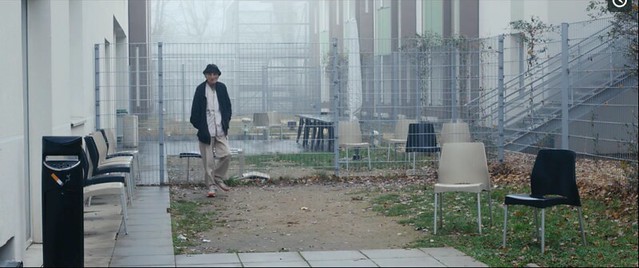
The French law requires 12 days of involuntary hospitalization in a psychic ward for anyone deemed danger to him/herself and others. Nearly 92,000 people are placed under psychiatric care each year. After those initial 12 days, a judge makes fateful decisions based on doctor's observations on these cases in the courtroom.

The famed filmmaker/photographer Raymond Depardon gets an access to these court hearings for the first time and gives voices to the voiceless for better or worse. The result is a fascinating documentation of the unseen, underexposed mental problems the modern society faces.

The courtroom cases with 3 camera setups, we witness these hearing sessions to determine if the involuntarily hospitalized persons will continue to be involuntarily hospitalized or not. Many of them are obviously disturbed and suffering from mental disorder- a girl who was repeatedly raped thinks only way to get the bad sexual energy out of her body is to slit her wrist, a man who killed his father 10 years ago longs to go home to his father, etc. Some are comparatively mild encounters with the law- an office worker who brandished a knife in front of her boss and co-workers, a man in a violent outdoor brawl. All of them don't want to be locked up. All they do is medicate. Judges listen, they can be compassionate, but the results are always the same - ruling for involuntary hospitalization beyond 12 initial days. The film is a startling and chilling document of real life unfolding because we see these kind of cases all the time on our streets, in our subway stations and homeless shelters. 12 Days remind you of our complicated, psychologically fragile society where we are not equipped with dealing with the massive flow of mental illness.

The Lion Sleeps Tonight - Nobuhiro Suwa
Screen Shot 2018-02-24 at 12.06.02 PM
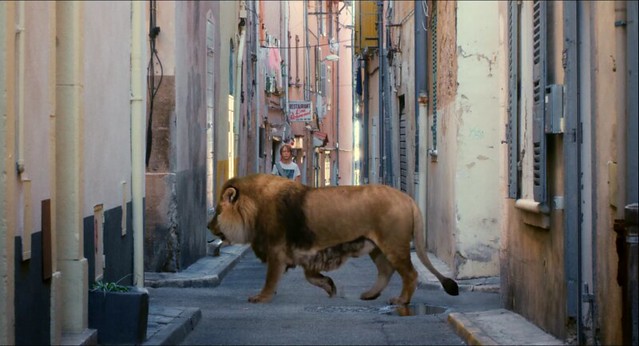
Jean-Pierre Léaud plays an aging actor Jean, starring in a movie in southern France. He is having a hard time how to play death. The director (Louis-Do de Lencquesaing) insists it being played like him quietly falling asleep. Jean prefers it as an 'encounter', something more impactful, at least on camera.

The project is getting delayed because of his young co-star refuses to come out of her trailer because her heart is broken after an affair with a dancer. "It will pass soon", Jean says. So he has an unintended mini vacation and free to roam around a picturesque, sun drenched town.

He encounters the ghost of his long lost love Juliette (Pauline Etienne) in an abandoned mansion where he once lived. He abandoned her 40 some years ago and she committed suicide by throwing herself in the lake. As he starts to living in that abandoned house, the local kids armed with amateur movie making equipment, barges in and starts following him around.

Along with last year's Death of Louis XIV, Léaud plays a role that deals with aging and mortality. As the face of French New Wave, he is an embodiment of living legend. But he's not really considered as a great actor. At 73, with his leathery, sagging face, he is rather the testament of ravaging flow of time. Nobuhiro Suwa, a Japanese director who's been making films in France, like Albert Serra and Tsai Ming-Liang before him, uses this walking icon for a subtle contemplation on lost love, the joy of cinema and passage of time. Falling somewhere between The Great Beauty and Cinema Paradiso but very very muted in tone, The Lion Sleeps Tonight might be a little too sentimental for some.

Custody - Xavier Legrand
Screen Shot 2018-03-04 at 11.09.37 AM
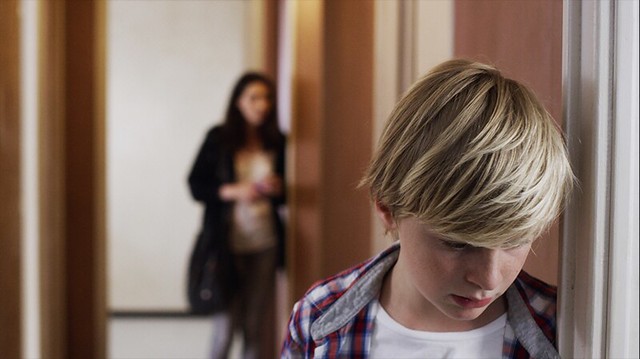
Xavier Legrand's debut feature Custody is about a domestic violence case that plays out like a thriller. Going for detached, observational documentary style of Dardennes brothers, his mastery in getting an amazingly natural performance out of his talented cast must be commended.

Custody starts out with the custody mediation hearing which lays out the typical situation - abusive husband (Denis Ménochet) who has an upper hand financially gets the joint custody of their 11 year old son (Thomas Gioria) on weekends, even though the kid wrote a statement that dad has been abusive and threatening to his mother (Léa Drucker). Because there is a little evidence of physical abuse.

It's really painful to watch as physically imposing, threatening dad manipulating the kid to get at mom and into their lives again against their wishes. Custody slowly builds up to an explosive conclusion and it's unbearably tense.

It says a lot about the inadequate system in terms of domestic abuse and how things are stacked up against women to prove that abuse can take many different forms.


Montparnasse Bienvenue - Léonor Serraille
montparnasse bienvenue
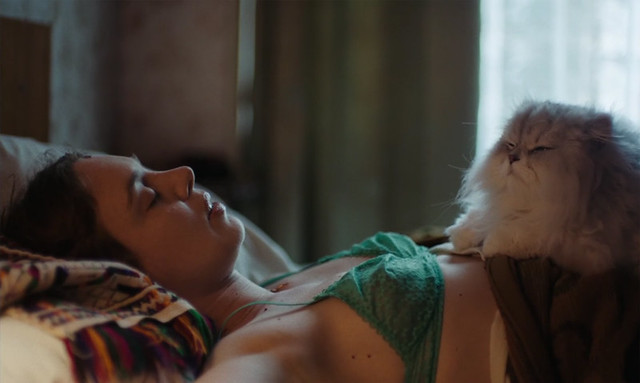
Paula (Laetitia Dosch) just got dumped by her professor boyfriend of 10 years. She makes a scene outside his flat by screaming and banging her head against the door and ends up in a hospital getting stitches on her forehead. With a fluffy cat in tow, homeless, aimless Paula drifts from one place to another, trying to score a place to spend a night while cursing out Paris, the most unfriendly city in the world.

While on the metro, Paula meets exotic Yuki (Léonie Simaga) who mistakes her for her elementary school classmate (it's her Heterochromia iridium - one brown and one green). Yuki invites her to stay at her flat and even gives her a lead for a job - babysitting for a wealthy woman in exchange for a maid's room in the attic. Paula also gets a job at a lingerie shop in a department store after many failed interviews. Naturally chatty, she makes friends everywhere she goes.

At first, Dosch's Paula strikes as a typical 'crazy girlfriend' but after a while, we ease into her quirks and get charmed by her personality. Dosch makes her character endlessly endearing and relatable. First time writer/director Serraille does a great job painting a complicated young woman trying to navigate the world.

'Nothing is that black and white', one of the characters says to her. This resonates throughout the whole film. Montparnasse Bienvenüe is not really about post-college syndrome (think of Francise Ha!)- Paula is 31 but always lies that she is 29 as if that makes a huge difference. But as the film's original title (Jeune Femme - young woman), suggests, it paints a general picture of a modern woman who charges through life with 'fake it till you make it' spirit. Constantly hilarious and immensely watchable, Montparnasse Bienvenüe is a comedy gem.

Monday, November 13, 2017

Clear-Eyed Humanism

Le fils de Joseph (2016) - Green
Screen Shot 2017-11-13 at 6.54.22 AM
Screen Shot 2017-11-13 at 7.53.50 AM
Screen Shot 2017-11-13 at 6.47.19 AM
Screen Shot 2017-11-13 at 6.51.37 AM
Screen Shot 2017-11-13 at 6.53.27 AM
Vincent (Victor Ezenfis) is a good kid. He's a kind of kid who shies away from fellow schoolmates torturing the rat in a trap and steals from a Hardware store but only to put the item back later, smiling to himself. He is also a serious kid who'd have Caravaggio's Sacrifice of Issac on his bedroom wall. Raised by a hardworking single mom (Natasha Régnier), he has never known his dad. He becomes increasingly unhappy about this and starts resenting his mom.

After snooping around the house, Vincent finds out who his dad is- Oscar Pomenor (Mathieu Amalric), a big time playboy and important literary figure in Paris. After gaining access to one of Pomenor's parties by pretending to be one of his literary pupils, Vincent sneaks into his posh office only to witness his dad's extramarital thryst. It turns out that Pomenor is a grade A asshole and a terrible human being, not worthy of being a dad. He makes a decision to kill him, Abraham style. But when the moment comes, he can't do it. And there in the hotel bar where Pomenor's office is located, he meets Joseph (Fabrizio Rongione), who has just been rejected a loan by Pomenor.

Joseph, a never-do-well brother of Oscar, who dreams of owning a farm in Normandy where he grew up, strikes up a good friendship with troubled Vincent. The kid, longing for a good dad and a family, in turn introduces him to his mom. The romance blossoms.

Even though Le fils de Joseph is steeped in religious references, you can't not be moved by its clear-eyed humanism. Green, a unique filmmaker whose Bressonian approach might need some getting used to, once again, makes a deeply touching parable showing that goodness exists in people. Solid performances all around. Régnier's beautiful in this. SHer subtle, warm, vulnerable performance really shines.

Friday, March 18, 2016

Adolescent in Spirit: Arnaud Desplechin Interview

Desplechin
Arnaud Desplechin's magnificent new film, My Golden Days, opens theatrically today at FSLC in New York. It was preceded by a week long 8-film retrospective. I was lucky enough to snag an interview on the eve of the film's theatrical release with Desplechin who's known for his slightly amplified, messy, life-like stories.

Our conversation topic went from his new film, to his muse Mathieu Amalric, to other directors work he admire. It was a great experience talking to another cinephile who also happens to be a director of my favorite film of the year so far.

First of all, congratulations for winning the Best Director award at this year’s Cesár.

Arnaud Desplechin: Oh yes. I was happy. I was very happy with that.

I watched MY GOLDEN DAYS the other day and I have to tell you. It’s one of my favorite movies this year so far. It’s really fantastic.

Thank you so much.

So we saw Paul (Dedalus) and Esther characters some twenty years ago in your film, MY SEX LIFE (OR HOW I GOT INTO AN ARGUMENT). What’s the reason behind bringing them back again after all these years?

Actually I didn’t start with the idea of writing a prequel or whatever of Paul and Esther. I started with this couple with different names. In My Sex Life, the guy was already a Parisian and the girl was from the countryside you know. Then I realized that in My Goden Days, there are four characters who have to fit together and again I thought of My Sex Life. I talked with Mathieu (Amalric), “Twenty years ago, you and I regarded Paul as a sort of a hero, so if My Golden Days is going to be a prequel of some sort, you might have to go back and resume playing that character” and Mathieu said, “ No, I wouldn't be able to make the film.”

Because things have changed since then. Mathieu is a big movie star now and he wouldn’t be able to go back and play the same character the way he did. You know back then, he wasn’t an actor. He was a technician. He didn’t plan to be an actor. So in order to go back to the character, he had to find new ways to portray - the idiosyncrasies Paul had, the difficult relationships he had with his mother, how her death made deep impact on him dealing with women. You know the fact Paul was much more cautious and shy than Esther who seems solid as a rock. I thought it would be interesting to see the birth of their love.

MY GOLDEN DAYS can’t be an autobiography since the characters are about ten years younger than you. So is it loosely autobiographical or is it pure fiction?

I can see it as both. On one hand I am older than the characters, more than ten years. But I liked the idea of making a period piece. I wanted to set it during the fall of the Berlin walls, 1989. There was still the feeling of Cold War time and how we thought of Russia and all of that ended up there.

You know I’ve been a cinephile since I was ten. We cinephiles lead a very boring life. I don’t share the expanses of experience that Paul had. He is much more adventurous throughout his whole life. On the other hand, I tried to give a sense of autobiography. I like to share the feeling the characters are experiencing.

It’s funny because I could phrase it that way - I am asking actors on set not to just give me their acting craft. I’m sure their craft is wonderful and I expect that because I respect the art of acting. But I am asking them to give me the feeling of intimacy, something… the feelings that come out when they are speaking as themselves. So I’m just trying to be a good actor amongst good actors. I am trying to give you the feeling that the film is autobiographical.

I have to comment amazing performances by newcomers Quentin Dolmaire as Paul and Lou Roy-Lecollinet as Esther. I had a chance to interview Mathieu Amalric for BLUE ROOM last year. He says he owes everything to you. What is your method for actors that they say such things about your directing?

I would say Mathieu is too generous. I owe him a lot. There is a scene in My Golden Days where Paul writes a very long letter to his friend saying that he hopes he was good for Esther. I loved the words that was written and my friend (Julie Peyr of Parisienne) was helping me on the script and she was asking me how I would film that scene. Mathieu would come and we would find out the solution! I wouldn’t dare to write such long lines but he would come and help me. I owe him so much.

I don’t know about my method. But I know one thing and I am quite proud of it. I talked with Quentin before the shoot. I never behave like a teacher. When I did My Sex Life with Mathieu, we just had dialog, just simple ordinary dialog.

The only trick, if you can call it that, I have is even though I am a terrible actor, but I tried to act in front of them. So if we don’t find a solution, I’m not afraid to make a fool of myself by acting in front of them, rightly or wrongly. They see you are ridiculous. It encourages them to be ridiculous as well.

I loved where grown up Paul going off on his old friend and his wife at the end. It was such an impolite thing to do as a grownup to a friend you haven’t seen for twenty years. And that’s why I loved it. I loved Paul at that moment, his imperfections, his passion, his resolute behavior that he’s never going to forgive his friend as long as he lives.

Without Mathieu that scene wouldn’t have been possible. Absolutely not. Being serious and being humorous at the same time. It’s serious and funny at the same time. During the scene there was a wonderful moment I realized because when Paul was 19, he was behaving like he was 55. He was too reasonable, cautious, wise… and when he finally became an old man, he behaves like he is an adolescent! That’s what I love about the scene. Paul is a fool, full of rage and anger.

Do you share the same sentiment if you were in the same predicament?

(laughs) What I share with Paul is the idea to save certain things from the past- not forget it but save it. Obviously there is a price to pay if you save the past. You have to move to another chapter of your life somehow. But you also should be faithful to your younger self.

I couldn’t shake off the film’s melancholic mood. You can totally feel Paul’s heart being broken as he drifted apart from Esther. The differences in this film from something like Fellini’s 8 1/2 is that it’s so truthful to life that we never grow up and we still act like children sometimes. That life is not really a fantasy.

But now you’ve grown older and you made about 9 to 10 films, do you consider this film as your 8 1/2?


What is it?

The Fellini film?

Oh Huit et demi. Funny you mention that film. I just finished writing a script and I was so happy and full of excitement. I was discovering new writing process and et cetera, and for the first time in my life that my main character is a film director!

That’s so funny!

It's always difficult to do because with that kind of character, it could be obnoxious. I think I found a way. Mathieu told me one day that the best European actor we ever had was Marcello Mastroianni. An actor who was not afraid of being ridiculous and so beautiful at the same time. I think Mathieu has learned something from Mastroianni for sure.

He is your Mastroianni.

Oh yeah. He is not Jean-Pierre Leaud. He is definitely Mastroianni.

Speaking of Jean-Pierre and Truffaut, back in 2005 when you came to Brooklyn, you showed double bill of MISSISSIPPI MERMAID and THE ROYAL TENNENBAUMS instead of your movies when asked about your retrospective. Your cinephilia is well known. This year you are here for your real retrospective. What would you have shown in place of your films if you had a chance?

Funny you ask me that question. I was supposed to present a double feature at Metrograph but because of my schedule, I had to cancel it. I was going to show Frances Ha by Noah Baumbach which I adore and The Earrings of Madame de… by Ophüls. Both heroines with no full names.

That would’ve been really excellent!

You showed your admiration for Wes Anderson and Tarantino. Who are some of your favorite contemporary directors nowadays?


Right now a lot of them for sure. One of the best directors alive is Jia Zhangke, of course. I didn’t get a chance to see his new film (Mountains May Depart) but I am seeing it tomorrow. I really have a high hopes for it because I heard about it a lot and I just couldn’t see it because of my schedule.

It's fantastic!

I am also very interested in seeing the new Scorsese series Vinyl. I heard a lot of good things about that and I can’t wait to see it.

I’m really happy that you have a very strong, mature generation of filmmakers working here in America. You've always had Hollywood but today you have Tarantino - I loved Hateful Eight, Paul Thomas Anderson, who is so fascinating, and you have Noah Baumbach, whose films I love. You have a very solid generation of directors, Wes Anderson being one of them.

That’s a great affirmation of American cinema from a reputable cinephile as yourself. One film I really loved last year was EDEN by Mia Hansen-love.

She has a new one out: L’avenir. The one that was in Berlin?

The one with Isabelle Huppert?

Yeah the one with Huppert. I haven’t seen it yet.

Me neither but I am dying to. I really loved EDEN. When I was watching MY GOLDEN DAYS--

Eden is a great film. A great film.

I can see the correlation with your film and EDEN.

I love that you mention her because she is the most important talent today. She stands alone in a way in France. She is so peculiar and singular…I was not lucky enough to catch her art in previous films before but after I watched Eden…oh I love that movie! Now I know I am a fan.

What’s the name of your new script?

Ismael and the Ghosts.

And it’s going to be Mathieu who’s going to be playing the director?

Oh I don’t know. I don’t write scripts with particular actors in mind anymore. I try not to do new projects with actors I already worked with. But I love him so perhaps he will be in it.

It’s been really honor to talk to you. As a fellow cinephile, you are an inspiration to me with your enthusiasm and your filmmaking. I loved JIMMY P and hope you make another film in the States. It will be fascinating.

Thank you. It will happen one way or another.

Thursday, March 17, 2016

Wounded Heart, Haunting Memories

Les trois souvenirs de ma jeunesse/My Golden Days (2015) - Desplechin
 photo 4f438fca-c7fd-479f-b1d0-3a5d8cafaf5b_zpslrstlbwn.jpg
Paul Dedalus, a character last seen in Arnaud Desplechin's playful romantic comedy, Comment je me suis disputé... (Ma vie sexualle), reemerges to guide us through intensely vivid, intimate memories of his life as a young man. Trois Souvenirs has very little in common other than some names of the characters and the time frame. It is also interesting to note that it's not quite an autobiographical film since Desplechin, now in his mid 50s, is making film about people slightly younger than his age (in 1989, he was 29 years old not 19). But in its melancholic tone and sense of regret, and 10 films after since his debut in 1991, the film has the feel of aging artist searching for a defining moment(s) in his youth. And it's a beauty to behold.

The film's unwieldiness and varying tone settles after 1/3rd way in and it becomes a heartbreaking, long drawn love affair of Paul and Esther(mainly played by newcomers Quentin Dolmaire and Lou Roy-Lecollinet). Desplechin knows how first love affects people- how it makes people certain way for the rest of their lives. We see Dedalus as a kid who was traumatized by an overbearing, crazy mother who commits suicide, as a teen who resolutely gets involved in pseudo political espionage act to help a total stranger escape from dire situations in the former Communist Russia on a school trip there --the episode that catapulted now grown up Paul (Mathieu Amalric) to revisit his past, and as a chain smoking, competent petit-intellectual whose life gets rattled by a long beautiful/torturous relationship with a beautiful girl, Esther (Roy-Lecollinet).

All the characters, even the minor ones, are so well drawn and beautifully acted by Desplechin's young cast. Utterly believable and charming in its sincerity, Trois Souvenirs puts any bombastic films looking back at one's life to shame. Perhaps the most heartbreaking part is Paul, now grown up anthropologist, getting a letter from Kovalki, one of his childhood friends who slept with Esther in his absence, asking for her address. Months later, he then runs into him at a concert, now a married man, Kovalki asks him about the letter. Now supposedly all grown up, yet still keeping all the bottled up feelings for those heartbreaks and memories, Paul blows up on his old friend and his wife. Childish and self-centered one might say. But Desplechin knows all too well that it's our abilities to remember that makes us human. Easily one of the best films I've seen this year so far.

Wednesday, November 25, 2015

Therapy

Jimmy P.:Psychotherapy of a Plains Indian (2013) - Desplechin
 photo 506dc721-08f7-4102-b10f-bd1933a5829d_zpsgdwkwljx.jpg
Jimmy P is an odd movie. Even though it lets us know that it's a true story and takes place in the U.S. 1948, it wears its cultural, racial, political contexts very thinly- not actively ignores their importance but rather, it is seemingly uninterested in them. What's left is two leisurely hours of Jimmy Picard (Hulking, understated Benicio Del Toro), a somewhat shellshocked WWII veteran Indian from Montana and Georges (always great Mathieu Amalric), an enthusiastic anthropologist/therapist of an unknown European origin. They meet in Topeka, Kansas, where the veteran hospital is located. It is slowly revealed that Jimmy has some repressed sexual issues with women and suffering from a guilty conscience of abandoning many women in his life. Georges also has a bit of a back story and seems to have a complicated love relationship with a sophisticated married lady friend (Gina McKee). But it's mostly about Jimmy and Georges talking. As the title suggests, it's a psychotherapy session of a Plains Indian so his constant headache and seeing blinding bursts of white spots would go away. But its literal presentation is never clinical nor fairytale like. The performances, nuanced and subtle, make the characters and interactions human. Jimmy P is not a gripping drama and you never quite get too close enough to the characters, but there is a sense of peace and tranquility to the film that I really dig. Great directors don't need to have their signature 'style' or whatever. They can tackle any subject and should be able to produce something that is completely different from one another. Desplechin surprises me in that respect. And I respect that.

Thursday, October 2, 2014

Hot and Cold: Mathieu Amalric Interview

 photo 4de0eee6-f726-4745-b3dd-166dd49c12cc_zps475be219.jpg
Mathieu Amalric, a superstar of French cinema is in town for NYFF, promoting his new film THE BLUE ROOM, which he co-wrote, directed and stars in. It's also co-written by his wife, playwright, Stephanie Cléau who also co-stars. As an admirer, I was relieved for the fact that Amalric was exactly how I imagined him to be - a piercingly bright, yet chaotic little Frenchman who reeks of cigarette smoke, just like many endearing roles that he played over the years. Listening to his all-over-the-map responses with wildly gesticulating hands, I couldn't help but smile. I could've easily listen to him speak all day if I was given time.

This is how my 25 minute went with Amalric:

You are known as an actor more so than as a director at least in the States, even though you've been making films as a director as long as you've been acting.

No even before. Acting came afterwards.

Was being an actor just incidental?

It was (Annaud) Desplechin who saw something that I was in and... as I always say, he invented me as an actor, as a guy who plays a role in films, you know? Acting is not that complicated...it's just films. Now I act on stage and that's something else. So Stephanie (Stephanie Cléau-- Amalric's wife irl, co-writer and co-star of The Blue Room) is inventing me 'cause we are on stage, on tour, she is inventing me as a stage actor. And woah, that's something else.

Which do you prefer-- directing, acting or stage?

Since I was 17, always shy, always hiding, I've been constructing small films as a 'director' as you call it, to watch and to observe. Acting came as a surprise. And now I don't see the differences in those, really, anymore.... I do it when I am in love or in such an admiration for the directors. I am a construct of all these experiences.

What was the reason for adapting THE BLUE ROOM the book, written by Georges Simenon after doing ON TOUR? It's a very different film altogether.

It's because my great producer (Paulo Branco). A great producer would see and feel where you are in your life. Paulo, I've worked for him since I was 17, as a trainee, AD and Assistant Editor... all different jobs in movies.... He knows me. And he produced one of my films (La Stade Wimbledon) also. It's that I've been trying to adapt this Stendhal's book The Red and the Black for three years. And he says, "stop with that bullshit! Just do a film! You have to shoot now. Stop that and just shoot! " And I thought that he was right. He says, "shoot a film in three weeks". "Ah ok. You are right. But what...."  "Go home and read something, I'll search for something also". So back home, I see La Chambre Bleu/The Blue Room, the book that's been obsessing me for such a long time, not really to do a film about it, but when I read that book, I was so struck by the opening of that book. I remember the sexual description of it was so close to the painting of Corbet, called  Le érogène du monde where you see feminine sex. And there is that exact description, the cunt and the sperm and all that, so you just don't come back empty handed from something like that. And maybe I was at the moment in my life...it's just I....

Yes it was a commission - doing a film in three weeks, I told him, "ok, I can do it in four weeks". And we had some money from Pathé and we were able to shoot in five.

Wow. that's short.

Two weeks in july and 3 weeks in november. But everything went so quickly. So I met Georges Simenon's son, John, a wonderful guy. Immediately in a sort of confidence, he said to go with it. So I called Stephanie and she was in Paris, cause I was shooting the Larrieu Bros film (Love is the Perfect Crime, read my review here) in Switzerland. As her job for stage, she adapted a lot of novels before. So I told her about the book and she had already read it.

Interesting bit of coincidence here: the last scene of On Tour, when after the man and the woman make love and she is very tenderly closing the shutters so the man can sleep. That scene I named it the blue room! It came from the first scene of that book. It's funny eh? There are these sort of links everywhere.

And then I think I was attracted by how it was produced-- with not a lot of money which was fine. But it had to be done quickly. I thought about the old RKO films. Those b-pictures. Tried to be a b-picture and tried to be very honest. So I worked with the real police, real attorneys, real crime lab people so the audience would never ask about their authenticity. And that the plot is not the center, you know. So your mind can go like in great b-pictures, where you think it's one thing but it's really about something hidden behind. This desire, this monster you have to deal with everyday, which is sexuality. How do we manage to live with those horrible moments where you go to bed with your companion without any feelings or thoughts? Many of us do live like that because we have to keep up responsibilities. Simenon was very precise about that in the book: a self made man who worked so much to achieve the dream-- the house, with pretty wife and a daughter, like the perfect world, but the house is terrible and cold. I wanted to give the film both cold and hot. Like Stephanie.

So tell me about Stephanie--

Well, I don't know who she is. I think that's what makes men crazy: something that has to do with illegibility that you can't read someone. There were those descriptions in the book, "Why didn't you kiss her before?" "I wouldn't have thought about it." "Why not?" "Because she was too tall." Well Stephanie is taller than me. And she has this quality. I thought she was this statuette and that she was cold. But the miracle of chemistry between two bodies is that you feel like yourself and feel alive. That doesn't happen that often.

Did she agree to do the movie right away? Did you have to do a lot of convincing?

We've both read the book. And it's been 9-10 years we've been together. She is not an actress and very shy. Then I ran into Paolo. What happened was that I was going to leave for Switzerland for two month to do that Larrieu film. She was in Paris. I don't know why she made this joke: She told me that she can play the unfaithful wife and I can play the lover. I didn't like that because I was leaving Paris for 2 months. I go on a shooting and she knows that the Larrieu's film's about 3 women fighting over me and sexual desire and all that. So after she made that joke, I couldn't concentrate. Then when I was thinking about who could play the roles, if it's me to play the title role, people know my face, then I felt my wife in the film also has to be a face people know. Léa Drucker is a famous actress in France so she is well known. But if the mistress also had been an actress with a well known face, it would have been the usual film. Two actresses fight over a man is too typical. It becomes a competition- Who is more seductive? Who is the best actress? Then I thought if I make Stephanie play the role, I can protect her from all this. This was the fantasy I had. It would be more interesting if I made her 'the threat of the unknown', she would be the face that nobody knows. like ones you see on tv who is suspected of crime and you project the worst thoughts on them. Stephanie has that. You can project terrible thoughts on her face.

That really worked out. Did she say yes right away?

She did. She was rehearsing her own play working with actors and I think she was attracted by the thought of finding out what acting is which you can only know by living it. And that really helped her doing her play in dealing with her actors because she did it herself. Many scenes naked of course! It was a comfortable environment though. I always use the same crew and they are all our friends. We had a lot of laughs on the set.

Also the film has nothing to do with harmony and nothing to do with camera caressing the body or anything warm like that. It had to do with the feeling a bit morbid. It's not about eroticism. It's a battle between sound and the image with voice over and everything. Yo don't know why he is arrested but you know somebody has died. But who? of course in the beginning you think, so, he killed her. So you see the scenes differently with only pieces presented to you bit by bit. So the there is no harmony in Simenon's writing.

That's the reason why we went with 1:33 aspect ratio. Because it has to do with isolation. You get not only the body but...

Yeah I thought your choice of aspect ratio was a psychological choice not an aesthetic one.

Yes. with the plenty of head room you have,  you don't know what's in the head of the other person. It seemed that that aspect ratio is the right one for Simenon's honesty.

The Blue Room.jpgDid you take any big liberties on adapting the book?

No. I've read a lot on other filmmakers adapting simenon because there were quite a lot. It all said that you have to be faithful to Simenon, you can't change it. This one is a peculiar one because it's not linear. because there are a lot of flashbacks and you don't know who's dead. we tried to keep that intact when Stephanie and I wrote the script. In fact when we were writing it there were two colums: on screen and off screen. so they have to fight for our attention. It was as if we were reading two scripts at the same time. And of course the provincial life never change but And we shot it like that. Only thing we had to update was the police procedure, the crime scene investigation with DNA evidence, cell phones and all that. It was a lot of fun to work with the real police. The forensic files were really done by the police. You see it in the courtroom. the file they have on the desk are real ones compiled by the police. the trial was a real trial with real lawyers and real audience. we shot it for 3 hours just for the sound of proceedings.

I can just listen to you all day.

No no no. Just talking to you reminded me all these things we did. We did everything in 11 months-- from the day Stephanie started writing and the film's release in theaters.

One last question is about the music.

Oh yeah.

It reminded me of a Hitchcock film. Very Bernard Herman.

But in fact, it comes from Ravel. 'cause Bernard Herman comes from Ravel. it's the Spanish Rhapsody. Grégoire Hetzel who is a genius did the music for us. Again I told him that I want some cold and some hot. Something that burns and something that is scary. So the ostinato...(starts singing the repetitive melody) that everyone thinks Hitchcock is, indeed, comes from Ravel. And we recorded at Abby Road and it was great. I felt that the film could accept the music. In the beginning I worked with the Stockhausen music box, with that tinkling sound, an obsessive sound that you can't get it out of your head. But I discovered during editing with Francois (editor François Gédigier) that it was cold on cold. Then I thought the music has to provide some warmth. So in that kiss scene that is the only time you see where there is a swooping camera movement and swelling music. we pulled off that scene because of incredible light.

Yeah I remember the sunset in the film.

Yeah it was raining all day and all of a sudden there was this incredible warm sunlight for about 20 minutes. A miracle. so we have light we have kiss we have music.  It's Hollywood I know and we are not  allow to do it. but it works for that scene.

After appearing at various festivals, THE BLUE ROOM opens Friday, October 3rd in New York at Lincoln Plaza Cinema and IFC Center. It will also be available on Cable and On Demand.

Sunday, September 28, 2014

Enigma

The Blue Room (2014) - Amalric
 photo 2fc007e3-0d83-4390-8128-1a034947d3d8_zps87380fb3.jpg
The Blue Room is a hard film to like-- its tone is cold and distant. But it is designed that way to accompany the mind of its passive protagonist. Based on the book of the same name by popular French novelist Georges Simenon, the film tells a brief obsession that causes double murder and ensuing courtroom drama. It harkens back to the olden days of film noir with hidden motives, loose morals and a (unlikely) femme fatale. The film is a Hitchcockian intrigue coupled with Chabrol's breeziness. Even the film's score (beautifully composed by Grégoire Hetzel) reminds you of Bernard Herman.

It starts with Julien and Esther in the throes of sweaty, passionate lovemaking in a French door shuttered, stifling hotel room. In the heat of passion, she bites his lips and he bleeds. "Did it hurt?" "No, it's fine." "Would your wife notice it?" "I'll just tell her that I ran into a post." They tell each other sweet nothings. It's a thoughtless pillow talk for him, but for her, it's something more. "Could you spend the rest of your life with me?" "Sure." Julien has a comfortable life, he manages a successful John Deere dealership, has an upbeat blonde wife and a daughter. It's his passivity that becomes his downfall. It's not that he is unhappy with life, but he finds the enigma of Esther too irresistible. Before we know it, Esther's ill husband is found dead and Julien's wife strangled. All the things Esther said, as Julien recalls in a series of police interrogations, have ominous significance for the crime(s). "If I am suddenly free, would you be free too?" After Esther's husband's death, he gets a cryptic message from her in two words, "Now You."

The Blue Room feels completely opposite of much improvised, free wheeling, 8 1/2-esque, On Tour, a film which Amalric won the Best Director award for at Cannes, few years back. It is an extremely measured film with subtle performances.

The 1:33 aspect ratio comes across as not an aesthetic choice but a psychological one, to show Julien's unwitting confinement in the situation. Stéphanie Cléau who co-adapted the book with Amalric, and not a trained actor, plays the role of Esther. There is not a hint of dark side in her unassuming beauty. But that's why she is so perfect for the role who is completely illegible. It still works as a whodunit thriller, but we never get to find out who killed who. In a breezy 76 minute running time, Amalric rightly concentrates on the Julien's distant passivity rather than making a psycho killer out of Esther. It's a hard to film to enjoy but to admire, because there are a lot to admire in this film. It definitely shows Amalric's ability as a director, a great one at that, proving himself that he's not only a mere actor.

The Blue Room plays part of NYFF 2014. It plays on 9/29 and 9/30. Please visit FSLC website for more info.

Saturday, August 30, 2014

Poor Man's 8 1/2

Tournée (2010) - Amalric
 photo 15d0fb29-373e-4ca8-b1fd-d70aa2c78dee_zps8532f908.png
The art of burlesque is in the tease- expectation of the big reveal that would never arrive, earthly desires go unfulfilled. Indeed, it retains all the mysteries of life. It's a magic act. A mirage. With that, Mathieu Amalric, an esteemed French actor, directs a group of buxom non-actors in telling the life of a washed up producer and his wayward attempt at redemption. It's a scaled down, poor man's 8 1/2.

Joachim (Amalric) is a producer and manager of American burlesque performers touring the coastal towns of France. We don't know why they are there. We don't know what was promised by Joachim (perhaps a show in Paris?). Constantly on the move, the group does a show after another in these lonely, sleepy, all too familiar (gas stations, malls, hotels, chain grocery stores, etc) towns. We don't get to know any of these performers inner lives or anything. But they are all likable gals and fully formed, ahaha, characters. Joachim is a mess of a man, trying to make a comeback of sorts in show business that is just as hostile as when he left it. He is also a terrible father. He picks up his two adorable sons and takes them with him to the tour.

With a ridiculous mustache and unkempt hair, Amalric is great as a loser who is taking everyone around him on an aimless tour to the 'end of the world'. But Tournée avoids all the cliché associated with melodramas. There is no big reveal. There are no emotional breakdowns. But there are many small fleeting moments that suggest characters' past, their connections without elaboration. It's in Joachim's glance at Mimi (Miranda Colclasure)'s tattoo of the creature from The Creature from the Black Lagoon, it's in Joachim's two sons reactions when they were given stuff toys, it's in Julie Atlas Muz's shapely legs as she makes room in the train aisle, it's in the unbuttoned shirt of a lovely gas station attendant. With an air of improvisation, Tournée first entice you with some t & a action, but it's far wiser and classier fare than at first glance.