Showing posts with label Olivier Assayas. Show all posts

Monday, May 18, 2026

Tower to Power

The Wizard of the Kremlin (2025) - Assayas Screen Shot 2026-05-17 at 7.58.01 AM Based on a fictional account by Giuliano Da Empoli, Olivier Assayas, the one of the most astute observers of our ever evolving, complex world, takes on Putin's Russia in recent history, with the star studded international cast. The result is perhaps short on the satisfying narrative, but a fascinating history lesson nonetheless.

The film starts with an American journalist, Rowland (Jeffrey Wright), visiting Vadim Baranov (Paul Dano), a former spin doctor of Putin living in isolation in the suburbs of Moscow. Baranov pulls out a yarn of the chaotic, exciting days after the dissolution of the Soviet Union. As a young man eager to prove himself, Baranov moves into the city filled with other young people, eager to take advantage of the anything-goes, wild-west of the Yeltsin era Russia. While others are busy making money and signaling the dawn of the future oligarchs, Baranov chooses art in avant-garde theater. There, he meets a punk performance artist Ksenia (Alicia Vikander) whom he would have a long off/on relationship with. His work in art leads him to TV and communications and works up the ladder and becomes a producer of a recently privatized national TV station, with the help of Berezovsky (Will Keen), a reigning spin doctor with political connections. The Chechen war was going badly and the Russian public was in need of change.

There's a funny bit about Yeltsin's sagging popularity and his alcoholism and in order to make him more 'presidential' on TV for his reelection, they have to tie him to the chair in order not have have him fall asleep at the desk and slow down the teleprompter speed.

Since Yeltzin is a goner, Berezovsky bets on a former KGB head, young & athletic Vladimir Putin (Jude Law) to be his successor. And this is where things get interesting. Putin, a disciplined former intelligence officer and spy, unlike other politicians in Russia, is not interested in money and wants to have no interference in government from newly minted oligarchs. And he hates the frivolity of TV and spins. Admirer of Stalin, he wants absolute power. While Ksenia moves from one billionaire to another, Baranov becomes a trusted counsel for Putin after his verticality of power speech, pushing his strongman image as what is needed in Russia.

Dano, in his puff dough face and forever smug, fits the role of Baranov, who observes the world with forever cynicism and insincerity. When asked about why he stayed so long by Putin's side, he admits that he is addicted to power. Law is scary as Putin, a one-track minded former intelligence officer and spy, who detests moneyed people and the west. Someone who wants to wield power in a geopolitical game in the new era.

Tom Sturridge shows up as Dimitri Sidorov, a flashy, hedonistic oligarch in the making, of whom Ksenia falls for.

There are tons of films about Russia's recent history, but Assayas makes a somewhat concise overview of how Putin's Russia came about. He juxtaposes the real threat of the strongman who does play by western capitalist standards. Baranov, who was fashioned after Vladislav Surkov, a spin doctor who served Putin in his aggressive pursuit of Crimea and then Ukraine. Obviously, these are villains. But aren't they as villainous as Europe and the US? As Rawland asks about the invasion of Ukraine and violence Baranov orchestrated, overseen by Putin, Baranov counters with all the villainy the West has been inflicting to the world at large. Aren't we as culpable as Putin - Venezuela, Cuba, Iraq and Iran?

Narratively The Wizard loses steam on the way to its fatalistic, unsatisfying ending. But again, Assayas accomplishes deciphering the complicated recent history and reflects on where we find ourselves, at this chaotic, morally ugly present.

Monday, August 11, 2025

Brief Utopia

Hors du temps/Suspended Time (2024) - Assayas Suspended Time There has been a few films made during the Covid-19 pandemic of 2019-2020. For Miguel Gomes, lockdown with all the safety protocols was a source of inspiration to make a small, intimate comedy, The Tsugua Diaries (2021). Radu Jude made a stock footage laden satire, Bad Luck Banging or Loony Porn (2021), where as Jia Zhangke gave it a grander historical context in Caught by the Tides (2024). But for most of filmmakers, the period was a time of frustrations and gave them a complete pause in their artistic endeavors. The prolonged lockdowns, and strict safety protocols on set and social distancing made almost impossible for filmmaking to take place, which is a highly communal art. Although the pandemic happened only a short time ago (even though it feels like it's been ages), enough time has passed to look back at this 'suspended time'.

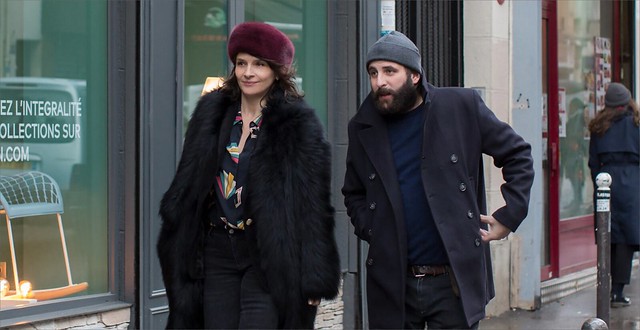
For French auteur Olivier Assayas, one of most astute observers of our changing times, this reflection is perhaps his most personal and autobiographical film to date. Suspended Time takes place in a country house where Assayas grew up in, and narrated by Assayas himself. Brothers Paul (Vincent Macaigne) and Etienne (Micha Lescot) and their girlfriends, Morgane (Nine D'Urso) and Carol (Nora Hamzawi) are riding out the lockdown together. Paul is a film director (Assayas's alterego) and Etienne a music journalist (based on Mitchka Assayas, Olivier's brother and journalist). Going through a messy divorce, and not being able to work, Etienne is less than happy being stuck with his brother as a grown-up. Also Paul's hypochondriac tendencies when it comes to all the Covid precautions aren't helping the matter.

All the habits and tendencies during lockdowns were examined with humor - masks, gloves, countless Amazon deliveries for stuff you don't need, shopping for groceries.... The brothers bicker about letting the packages and groceries outside before taking them in, cleaning the floors and how to cook ripe strawberries. They both engage their work via the internet while trying to be less intrusive to others as possible - facetiming a therapist in the garden, talking to an ex and their daughter, taking an online yoga class and delving into cooking perfect crepes.

Assayas narrates many of the details of his childhood home and its surroundings - a house with his dad's extensive book collections, the memories of his parents separation, mom's forbidden room, a creaky kitchen door, a large estate next to his parents house owned by his neighbors who let them use their property as kids - the tennis court, large idyllic gardens. However restricting and scary the lockdown is Paul's days are filled with peace and tranquility, thanks in large part to Morgane- a girlfriend of two years, whom he never had a chance to live with, but the pandemic inadvertently gave them an opportunity to do so. They reflect on their time together and a self-imposed exile that is forced upon their lives. For Paul, stuck in his childhood house, gives him a brief utopia, an almost therapeutic reprieve. Even though no one knew how long it would last or the impact it would have on the future. It wasn't a renewal, a change in the new world order as many had secretly or openly hoped. It was a mere pause.

With Suspended Time, Assayas is channeling Eric Rohmer vibe - idyllic, vacation movie full of reflections. Macaigne is great as his neurotic alterego, as a germaphobe, neurotic self, talking about considering Kristen Stewart as the famous Portuguese nun, a literary sensation from the 17th century, and about having just finished shooting a project in Cuba (his international production - Wasp Network). So is the rest of the small cast, giving naturalistic performances in their roles. Lensed by Assayas regular DP, Eric Gautier, Suspended Time is sunny and beautiful and full of wide shots of French countryside.

In varying degrees, Assayas maintained that all his films were personal, some more than others - Early August, Late September and Something in the Air come to mind. But with Suspended Time, he really delves deep into autobiography territory. It is said that when he showed his brother the script for approval, Mitchka Assayas suggested that they play the roles themselves. But Assayas, fervent purveyor of preserving the life and work separation, declined the idea. But using his parent's house and narrating the film himself, the filmmaker shows much more of himself and his background to the public, in contemplation of the world in precarious times. It's light, playful and nostalgic and features an artist being forced to pause and reflect and ultimately enjoying life.

Suspended Time opens in theaters Friday, August 15.

Tuesday, December 10, 2024

You, the Living

Fin août, début septembre/Late August, Early September (1998) - Assayas Screen Shot 2024-12-10 at 4.37.07 AM Screen Shot 2024-12-10 at 4.28.54 AM Screen Shot 2024-12-10 at 5.48.35 AM Screen Shot 2024-12-10 at 6.00.03 AM Screen Shot 2024-12-10 at 6.17.45 AM Screen Shot 2024-12-10 at 6.16.41 AM Screen Shot 2024-12-10 at 6.15.11 AM Again, more I watch Olivier Assayas's films, they remind me what a great writer he is - how perceptive and insightful he is in every character and situation. That he is one of the great working writer/directors I admire most. Late August, Early September is no exception. Its down to earth characters and their approach to life that they lead, warts and all, are all too believable. I remember someone on the internet asking what filmmaker's films you want to live in- a decidedly a corny question, and thinking about it for a minute at the time but couldn't come up with an answer. After watching August/September, if I have a choice, I can safely say that I'd want to live in Assayas movies.

Late August, Early September concerns Gabriel (played fluidly by the great Mathieu Amalric), a literary editor/translator/documentary filmmaker, being tasked to interview a recluse writer Adrien (François Cluzet), since they think Gabriel is the one Adrien can trust and open up to. Adrien is a good writer - not a big famous one, but a good one. Always broke. And he does open up to Gabriel, after Gabriel accompanies him to the countryside to his childhood hometown. It's a friendship built on respect and admiration.

While juggling his professional career, Gabriel is also going through a breakup with live-in partner Jenny (Jeanne Balibar). They are trying to sell their apartment and split the money. It's hard when they still have feelings for each other and all your friends and family are mutual, wherever they go. Then there's Anne (Virginie Ledoyen), Gabriel's new young, hot-headed fling who is very into a physical, sexual relationship. Anne is trouble and she herself knows it too.

Then there is Vera (Mia Hansen-Løve, the real life partner of Assayas and an esteemed director herself), a high-schooler and Adrien's secret girlfriend: there's a poignant thread of this unrecognized love, only to be revealed after Adrien's untimely death, which affects great many people, especially Gabriel.

Early August, Late September sketches out very naturally (with Assaya's signature handheld, grainly Super 16mm), a creative person's life and its ups and downs and the meaningful relationships he forms. As usual, jobs don't define these characters. Their interactions feel genuine and truthful. Their joy and sorrow deeply felt. It's amazing how everyone looks so young in this, but at the same time so mature, compared to other characters these actors imbibe in their later years. Wistful yet hopeful, the film is a beautiful elegy to the vagaries of life. Loved it.

Wednesday, July 17, 2024

Rebel Rebel

L'eau froide (1994) - Assayas Screen Shot 2024-07-17 at 2.42.40 PM Screen Shot 2024-07-17 at 2.18.42 PM Screen Shot 2024-07-17 at 2.37.14 PM Screen Shot 2024-07-17 at 2.19.04 PM Screen Shot 2024-07-17 at 3.09.09 PM Screen Shot 2024-07-17 at 2.44.51 PM Screen Shot 2024-07-17 at 2.49.27 PM Screen Shot 2024-07-17 at 2.50.55 PM Baby-faced Gilles (Cyprien Fouquet) and Christine (Virginie Ledoyen) are always in trouble. When they steal stacks of records at the music store, Christine ends up getting caught. She pulls some wild stories at the police station about a store security guard mistreating her sexually. Their parents don't know what to do with them. Christine's dad, who owns a hardware store, sends her to a mental asylum. He's done it before. Gilles, who's from a more privileged background, will be sent to a boarding school if his shenanigans keep up. Christine's mom and her boyfriend chastise Gilles;It might be a silly game for him, but for Christine, he is toying with her life.

Christine breaks out of the asylum, ends at the party in the woods where young ones hang out. There's Bonfire, drugs, alcohol and music. Christine asks if Gilles wants to run away with her to some artist colony that her friends live in. There won't be running water or electricity or phones. It will just be her and him. He hesitates first, then says yes.

Always in tight close up with a handheld camera, Assayas creates a raw, intimate portrayal of young rebels without a cause. Their pledges of love and promises seem as fleeting as the water stream Christine bathes in. L'eau froide, epitomizes the adolescent genre French cinema is known for. Ledoyen has the same rawness and volatility of Sandrine Bonnaire in A nous amours and stunning in her youthful beauty. The fitting soundtrack consists of many of the 60s rebel anthems by Joplin, Dylan, Cohen, Twisted Sisters and more.

Tuesday, May 30, 2023

Currency of Ghosts

Phantoms in the capitalist system in Vagabond, Germany Year 90 Nine Zero & Personal Shopper Germany 90 5 A phantom, a specter, a ghost, a spirit, or what Heidegger termed as “ontological obscurity, (Derrida, p461)” is closely linked with cinema. Seeing flickering moving images projected on the screen, one must connect the question of technicity with that of faith. A phenomenon of belief, of “pretend as if,” is an inherent quality of the narrative film. The spectral dimension is neither the living nor the dead, neither hallucination nor perception. According to Jacques Derrida, “Cinema is the image grafted from the past, a spectral memory, a magnificent mourning. (Baeque, Thierry, and Kamuf, p27)” It’s that mourning part of Derrida’s discussion that I want to examine and draw the correlations to the idea of phantoms in the capitalist society in which we live in, in three different films, Germany Year 90 Nine zero (Godard), Vagabond (Varda) and Personal Shopper (Assayas). Each director has a vastly different approach to cinema. But they have some common threads running through all their films; changes in society, advancement of technology and its effects and the exploration of cinema/personal history. But moreover, I believe there are sharp critiques of capitalism in these three films and similarities in their calls for the need of spirituality in our society.
After his Dziga Vertov Group/political film days and his collaborative period with Anne Marie-Mieville where he exclusively made political documentaries and experimental video works in most of the 70s Godard returned to feature filmmaking with Sauve qui peut (la vie) (1980). During the 80s and 90s, one striking feature of his style was the presence of nature punctuating the rhythm of his films. I view Godard’s output during this period as more spiritual than his earlier works. Nature is presented, not with characters or weaved into the narrative, but rather used in opposition to, and for criticizing a morally bankrupt, rampant capitalist society. It’s the use of nature that counterbalances capitalism and its effect on people, whether it’s a close up of setting sun or an empty windswept field in Je vous salue Marie (1985), shots of waves rolling into shore in Prenom Carmen (1983), a cloud obscuring the sun or swaying reeds in Nouvelle vague (1990), the sun in a woman’s mouth in Hellas pour moi (1993), or the foggy lakeside in For Ever Mozart (1997).

The first example from this period, and that showcases nature as something divine, is Germany Year 90 Nine zero/Allemagne année 90 neuf zéro (1991), an hour long film made for French TV, with its title mimicking Godard’s idol Roberto Rossellini’s neorealist, post-WWII drama, Germany Year Zero/Germania anno zero (1948). Godard’s take on post-Wall Germany, after the collapse of Soviet Union, shows the onslaught of earth-churning machines and advertisements for material goods.

screen shot 2023-05-03 at 10.27.17 am Germany Year 90 Nine Zero features the return of Lemmy Caution (played once again by Eddie Constantine), from the hard-boiled detective serial, and also featured in his sci-fi film, Alphaville, 25 years prior. Caution walks through the uninhabited fields and marshland of the German countryside as the morning mists roll over them, the existence of god in a voice over when he reaches abandoned church overgrown with vegetation, “This god of nature speaks to us, educates us and gives himself to us. And if we make our beloved into such a divinity, then this is putting religion into practice. (Godard, 1991)”

Lost in time and place, the last ‘secret agent’ has one last assignment; he must travel through Germany on foot, from East to West. We first find Caution living above a hair salon in East Germany under a different name. While there, he is contacted by a former government official whose identity or allegiance is unknown. Caution is ordered to go to the west on a fool’s errand. Godard makes literary references to Cervantes, putting Caution in a Quixotic quest as he narrates in voice-over quoting Rilke, “The dragons in our lives are only princesses who are waiting for us to act with beauty and courage. (Godard, 1991)” It was Caution, who defeated Alpha 60, the supercomputer in charge of the technocratic totalitarian world, with poetry and the irrationality of love in Alphaville. And the dragon turned into Anna Karina.

Godard uses Don Quixote to emphasize the failure of the heroic individual, as if to suggest that there is only so much that individual belief and desire can do to transform the world. Unfettered capitalism is swooping in to fill the vacuum and people are facing the prospects of wage slavery. The spirit of the 68’ was dead. Caution, a fictional character, is the perfect specter, a relic from the past, sleepwalking through now the unified Germany. Unable to change the world like he once thought he did, but only to witness what’s to come from the sidelines, like a ghost from the past.

Germany 90 Caution encounters the same woman he met in the hair salon now working as a maid at a hotel in West Berlin. He tells her, “So you chose the freedom too, eh?” She repeats the same Nazi slogan that adorned the gates of Auschwitz concentration camp, “Arbeit macht frei/Work Makes You Free.” In not-so-subtle terms, Godard reminds us that Germany’s atrocious war past should not be forgotten, and that in the year 1990, almost a half decades after the end of WWII, Germany is still haunted by its past, only this time, the ghosts are not the war deaths, but a different kind of ghosts, the ghost of the capital.

Gleaners If the onslaught of advertisements for material goods and the prospects of wage slavery were haunting the newly united Germany in Germany Year 90 Nine Zero, the same capitalistic inclination is at work in Agnes Varda’s scathing criticism of the developed world, Vagabond. Varda wasn’t didactic in her films. Nor was she brazenly literal in her political point of view like Godard was in his Marxist period. But her criticism of capitalism appears in her 2000 documentary, The Gleaners and I. With its focus on sustainability and its denunciation of colossal food waste, the lovely portrait of the people living in the margins, nevertheless, remains a sharp criticism of the capitalist system.

Vagabond In Vagabond (1985), the free-spirited hippie woman who dies so unceremoniously in the beginning of the film, always struck me as a phantom. She is a manifestation of what the idea of a vagabond is, in various people’s imaginations- an idea of a rebellious free spirit literally conjured up out of the sea, into the minds of cold-hearted citizens of the global economy. Told in documentary style through interviews with the townsfolk of Nîmes (many who were real residents), who encounter Mona (Sandrine Bonnaire), Vagabond sketches out the picture of an enigmatic young drifter who comes into town in the middle of winter. There are people who see Mona with sympathetic eyes and those who don’t. There are people who lend her helping hands and those who take advantage of her. There are some who are disappointed by her antics and some who are envious of her freedom. She is an object upon which they can project their wishes, envy and hatred.

In one scene Mona and her fellow vagrant traveling companion take refuge in a boarded up, abandoned mansion. The sleeping pair is discovered by a maid who imagines a romantic notion of the free souls in love. The sight resembles almost a religious renaissance painting. Just like Godard’s quoting Rilke over divine landscapes, I think this shot represents Varda’s inclinations to bring in the spirituality to otherwise bleak assessment of humanity in a capitalist system where one can die of exposure without people turning heads.

Vagabond For me, more than anything, Mona’s death is symbolic of the death of the Flower Power generation of the 60s. Born out of the resistance movement against the Vietnam War, they soon became synonymous with the hippie movement, counterculture, and drugs. Even though she was a decade or two older, the movement wasn’t lost on Varda, who experienced it firsthand when she moved to San Francisco in 67’, when her husband Jacques Demy landed a contract with a Hollywood studio. She subsequently made three films in California - Uncle Yanco, Black Panthers and The Lion's Love (...and Lies). “It was a shower of freedom," she recalled in a 2009 interview. “Suddenly, everything was different. It was a peace and love time. They were trying to have sexual revolutions and colors were daring. They were eating different. I had to learn the language and we threw ourselves into the generation and we loved it so much. (King, 2009)” In this sense, Mona in Vagabond was an image grafted from the past, a spectral memory.

Vagabond is a formal, rigorous work, concentrating more on the tapestry of movement, sound and image and less on character psychology. But the project was born out of Varda’s dismay that people were still dying of exposure in the civilized modern world. Therefore it’s important to examine what was happening in France in the mid 80s’, when the film was made. The robust post-war economy of the last three decades was slowing down. The promises of François Mitterrand and his Socialist government went largely unfulfilled. After the promising start of “regularization” of migrant workers (most of them North Africans from the former French Colonial African nations), due to economic pressure, the friendlier immigration policies were mooted by 1983. There was general discontent and high unemployment. And the height of American economic and cultural hegemony was epitomized by the Euro-Disney breaking its ground in Paris, in 1985. Mona, who manifested out of the sea, like Venus in a renaissance painting, who refused to conform by refusing to be a secretary and dropping out of the grid, had no place in the cold hearted capitalist system in France in the 80s.

Godard and Varda were from the same pre-WWII generation and grouped together as French New Wave, both starting to make films in the 1950s, Olivier Assayas, a post-war generation filmmaker, moved away from the radical politics of the French New Wave of the 60s. He has been in pursuit of something different, something newer. His films divert from conventional narratives. He mixes different genres and thematic tones to reflect our increasingly complicated hyper capitalist society. His films are seen as postmodern, not only because he portrays modern phenomena, such as the internet porn, industrial espionage, and celebrity culture, but he is interested in the friction in storytelling devices, in casting and between satire and reality. He has been the chronicler of hyper capitalist, celebrity addicted society like no other, with Irma Vep (1996), Demonlover (2002), Boarding Gate (2007), Clouds of Sils Maria (2014), Personal Shopper (2016), Nonfiction (2018), Wasp Network (2019), and Irma Vep the TV Series (2022).
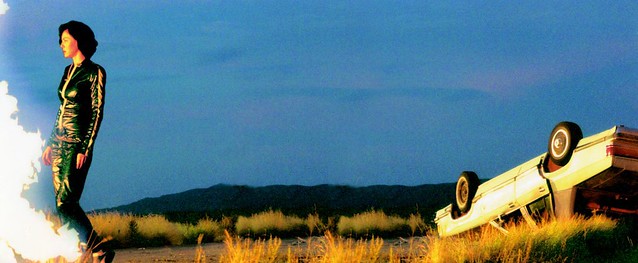
demonlover A good example of a disorienting yet discernable modern world is portrayed in Demonlover. It’s a formless, lucid fever dream, a corporate espionage intrigue that reflects a borderless, transient world in which the internet, globalization, and corporate mergers and takeovers have obliterated any sense of continuity or personal loyalty. In it, people are endlessly talking in business jargons while backstabbing each other in the confines of private jets, luxury hotel rooms and the antiseptic glass towers of their corporate headquarters. Sex is a commodity and a spectacle in Demonlover. The film is so over the top, convoluted in its narrative, and devoid of humanity, you can’t not think of it as an unfunny parody of the late capitalist system on steroids.

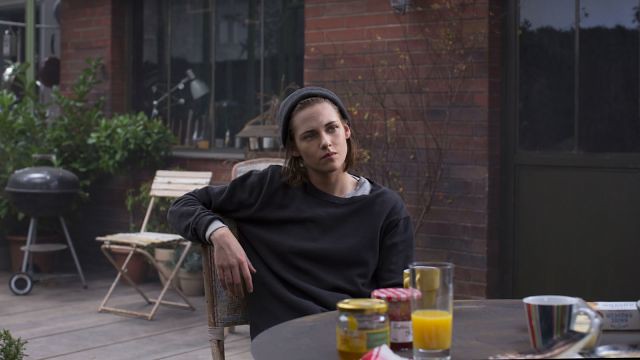
Personal Shopper marks Assayas’s second collaboration with American Actress Kristen Stewart, who at the time was a main subject of tabloid and celebrity gossip. In it, she plays Maureen, a young American woman living in Europe who has a very modern job, shopping for a celebrity who doesn’t have time to do it herself. It’s a fantasy world (yet real) of the rich and famous. And it’s a vacuous world. The job is a concept majority of people can’t relate to, yet know that it exists in our consumerist, celebrity obsessed society. But ironically, with the stroke of genius in casting, it’s the presence of Stewart that provides much needed humanity in the film. Assayas said about Personal Shopper, “I think the film is totally over the top ridiculous about the fashion world or celebrity worshiping culture, but I wouldn’t say I am satirizing them. I am presenting them as reality. That there is that side of the world that actually exists. (Chang, 2016)”

Untitled Maureen is also a medium, trying to connect with her twin brother who died suddenly, from a heart condition they both share. She starts getting text messages from someone she doesn’t know. At first, she thinks it’s a sign that her dead brother is making contact with her from the other side. But increasingly, the text messages become more sinister and voyeuristic. Then someone murders her employer and unexplained things start happening; objects move around by themselves, an invisible being detected at an automatic sliding doors and an ectoplasm vomiting translucent being. Is it the creepy ex-boyfriend of her dead employer who is a murderer and texting Maureen? Is he orchestrating the elaborate hoax on her? The film plays out like a thriller with some supernatural elements.

Personal Shopper features Maureen reading about the turn of the century Swedish painter and spiritualist, Hilma af Klint, first on her smartphone and then in a book on the pioneer abstract painter. Klint, after losing her younger sister at a young age, joined a circle of women spiritualists known as “the five” and dedicated herself to connect the spirits of the dead with her abstract art. Again, like Godard and Varda, Assayas uses art to represent spirituality. af Klint’s powerful large scale, colorful paintings counter that of the shallow and decadent world that Assayas presents in Personal Shopper. Maureen is desperate to hold on to something that is missing from her surroundings.
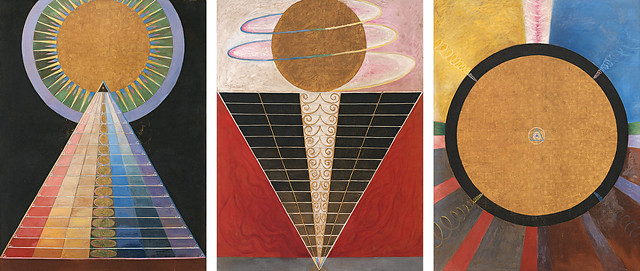
Hilma Phantoms in Assayas - Irma Vep and Personal Shopper, are quite literal in cinematic sense. They are fantasy elements from the cinema’s past. Irma Vep draws its inspirations from the character from Feuillade’s silent serials Les Vampires. Personal shopper’s rather shoddy, simple ghost effects resemble spirit photography of the 19th century, and a floating glass cup in mid-air is from House on a Haunted Hill variety.

No films are ever not political political and I see Personal Shopper, however superficial it seems, touching upon a yearning for spirituality in a soulless hyper-capitalist society. Assayas said, “We live in a world that is very materialistic and we all have some sort of spiritual longing. To me it was very much of a portrait of a contemporary character with some universality to her. I went to extremes that her day job was working as a proletarian of the fashion industry. She does a superficial job that she dislikes where she doesn't find satisfaction. There is spiritual longing, trying to connect with an invisible world. (Crummy, 2016)”
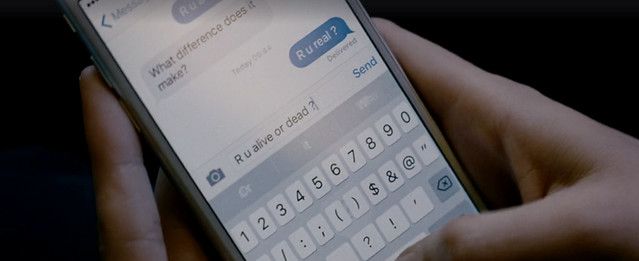
personal shopper In all three of these films, the directors invoke phantoms in three distinctly different ways. Lemmy Caution, a spy whose job is rendered useless in post-wall Germany, is now a tired, incapable old man, a lost spirit, mourning the death of idealism of the 60s, and of the dream of unrealized communist utopia, in Germany Year 90 Nine Zero. Based on a news article about a homeless man being frozen to death, Vagabond finds Mona, an embodiment of the Flower Power generation, whose anti-conformist ideals, dead in a frozen ditch. Maureen desperately hangs on to the idea of an invisible world while living in an absurdly materialistic, superficial world in Personal Shopper.

With the choking death of Jordan Neely lingering in the news, I can’t help connecting the dots. Times have changed. People were on the road like Mona in Vagabond by choice, not by systematic economic injustices suffered by today’s homeless population. Christian Petzold, a German filmmaker who constantly portrays people on the road in his work, responded to a question about the differences in his characters who are on the road and the characters from the New German cinema of the 70s: “...in the 70s, everyone was rich in West Germany. We thought that we'd won 68' and we thought we could change society…. Films by directors like Wenders- when they (characters) are on the road; they are on the road not because of economic reasons or pressure. They are like Novalis or Hölderlin. They are on the road because they are romantics. (Chang, 2012)”

In the shadow of material wealth brought on by capitalist system in global economy, grew a glaring discontent in those left behind. In Petzold’s films, people are on the road not by their choice, but because of economic situations that made them uprooted and spat out onto the road, left directionless, haunting the world as living ghosts. The accelerations of the wealth gap saw explosions in homeless populations across the US. According to Housing and Urban Development (HUD), 580,000 people experienced homelessness in 2020. According to Gothamist, 1 out of 120 New Yorkers are living in the streets. But the similarities are in the general indifferences on their death. Varda’s deliberate, matter-of-fact presentation of Mona’s death in the beginning of the film is just as inhuman as the news headlines on Neely- “Shocking video shows NYC subway passenger putting unhinged man in deadly chokehold.” (NY Post, 2023) It is equally disturbing that the choking death was filmed by onlookers and posted up on social media. Everyone cheered even for a “good Samaritan” who killed Neely for being loud and asking for food and water by putting Neely on a chokehold for 15 minutes.

The Communist Manifesto starts with “A specter is haunting Europe.” The specter in this case was communism. But idealism lost out to the capital in the end. Maybe the real specter isn’t Lemmy Caution or Mona or some malevolent entity that might or might not be Maureen’s dead brother, but capitalism itself. And the phantoms in these films are mourning the society we are living in. A specter haunting the World.

Bibliography:

Baecque, Antoine de, Jousse, Thierry and Peggy Kamuf. “Cinema and Its Ghosts: An Interview with Jacques Derrida.” Discourse 37, no. 1–2 (2015): 22–39.

Chang, Dustin. “Interview: Olivier Assayas Talks Kristen Stewart and Breaking the Boundaries of Narrative Filmmaking.” Screen Anarchy. March 11, 2017
https://screenanarchy.com/2017/03/interview-olivier-assayas-talks-kristen-stewart-and-breaking the-boundaries-of-narrative-filmmaking.html

Chang, Dustin. “I Envision All These Great Small Movies in the Ruins of Hollywood: Christian Petzold Interview.” Screen Anarchy. December 12, 2012
https://screenanarchy.com/2012/12/i-envision-all-these-great-small-movies-in-the-ruins-of-hollywood-christian-petzold-interview.html

Crummy, Colin. “The Spiritual Inspirations Behind ‘Personal Shopper.’” i-D, March 17, 2017
https://i-d.vice.com/en/article/papy99/the-spiritual-inspirations-behind-personal-shopper

Derrida, Jacques, Geoff Bennington, and Rachel Bowlby. “Of Spirit.” Critical Inquiry 15, no. 2 (1989): 457–74.

Kelly, Alexandra. “HUD says homelessness in the US has exploded, before and during pandemic.” The Hill. March 18, 2021
https://thehill.com/changing-america/respect/poverty/543868-hud-says-homelessness-in-us-has-exploded-before-and-during/

King, Susan. “Varda looks back at her life loves.” Los Angeles Times. July 3, 2009
https://www.latimes.com/archives/la-xpm-2009-jul-03-et-agnes3-story.html

Morgan, Daniel. “The place of nature in Godard’s late films.” Critical Quarterly 51. 3 (2009): 1-24.

Stewart. Justin. “Vagabond.” Reverse Shot. October 17, 2016
https://reverseshot.org/archive/entry/2269/vagabond

Monday, October 17, 2022

Irma Vep

Screen Shot 2022-09-21 at 2.48.39 PM Olivier Assayas’s HBO series Irma Vep is perhaps the best film/TV series/whatev about filmmaking that I’ve seen. If his 1996 film version, starring Maggie Cheung was a grungy version and a love letter to its Hong Kong starlet, and low budget 'French' filmmaking, The series is bigger and more indepth look at filmmaking in the age of globalism with secondary characters more fleshed out - Assayas taking advantage of the long form. Thanks to Assayas, I have a better understanding of filmmakers’ compulsion to make movies one after another. That there’s a sadness in btwn projects because you see your film crew as a surrogate family and you want to have that constantly not to get lonely. I never thought of it that way before.

Also it’s a beautiful way of seeing the film as a spiritual medium capturing the ghost of the past in many different ways.

So this is Irma Vep related story. In ep.3, Mira wears what looks like a Korean folk tiger shirt and I wanted it. I did some googling and it directed me to a French band, The Great Divide, website. I ordered a t-shirt. Two weeks later, I get an email:

The Great Divide Sep 15 to The, bcc, me

Hi,

I'm Antoine, The Great Divide guitarist. I might have reach you earlier regarding your order, please find further information below.


First of all, we are deeply sorry for the lack of attention paid to your order.


As the band is on hiatus, nobody delt with the bandcamp and emails lately. We have been noticed only yesterday that our tiger T features in Olivier Assayas’ Irma Vepp series on Alicia Vikander’s shoulders. Following that, our bandcamp has been crushing under orders of that tee.

We assessed the stocks and the shipping fees, and we are not in the position to fulfill the order with the set up deal. We mostly sold our merch at our shows, therefore did not pay a closer look to the fees for worldwide shippings. Almost all of these new orders are to be shipped worldwide and these fees reach €30 per item through the French postal service, way above the €5.50 we previously asked for, putting us in the position to sell at a loss.

We are canceling all orders and proceeding to full refunds. We updated the product page with the appropriate price & fees and will ship the new orders by the end October if you would kindly decide to place a new one in support of the band.

Please accept our apologies and bear in mind that we are not a company but a punk band which primary focus was to play and share music with others.

Don't hesitate to answer to this email if you did not receive your refund or if you have any questions. Best regards, Antoine Pépin

Thursday, October 4, 2018

Being Relevant

Double vies/Non-Fiction (2018) - Assayas
Screen Shot 2018-09-20 at 6.49.20 AM
It seems, along with Godard, Olivier Assayas is one of the cinema's keenest chroniclers reflecting the soulless modern world in the late stages of capitalism. He reflected on the internet porn industry and shady side of desire in Demon Lover, corporate espionage and power politics in Boarding Gate, Hollywood & stardom in Clouds of Sils Maria and fashion industry in Personal Shopper. Now he takes on the fate of the print media with a biting new comedy, Non-Fiction. Unlike his last two collaborations with Kristen Stewart with international cast and locations, Non-Fiction takes place mostly in Paris with an ensemble cast of French actors - Juliette Binoche, Guillaume Canet, Vincent Macaigne and Nora Hamzawi. Although the scale of the film might seem smaller and less glamorous, Assayas' observation on the publishing industry and the rising popularity of TV are, as usual, spot-on.

Canet plays Alain, a book publisher. He is not too hot about the new manuscript of his long time client, Leonard (Macaigne), a semi-respected author. Alain used to like Leonard’s books, but the author's thinly veiled, self-aggrandizing autobiographical works have been getting on his nerves lately. So he decides to pass on his latest. Alain is also dealing with office politics with physical books transitioning into digital format and sales figures where prestige doesn't necessarily produce profit anymore. And there is a rumor of a large media conglomerate taking over the company he works for.

For Leonard, who is going through a hard time with his live-in girlfriend Valerie (Hamzawi), a sharp tongued political consultant for a major political candidate for the upcoming election, the news of Alain's refusal to publish his new book (titled Full Stop) is a big blow. Leonard also happens to be having a long term affair with Alain's actress wife Selena (Juliette Binoche) who also appears (thinly veiled of course) in Full Stop and she is deathly afraid of Alain finding out.

Valerie is getting frustrated because her earnest candidate's message is not getting through to people. In this post-Trump, post-truth era, there’s just too much noise for people to filter out, Leonard tries to console her to no avail. It doesn't help that when the allegation of sexual harassment turns up from the candidate's past.

Selena talks about a policier TV series that she has been starring for 4 seasons. It's physical work and kind of cool to be a feminist heroine but she doesn't feel any joy doing it anymore. Any TV show is something to put on when working stiffs get home after long day of work and binge watch and relax, she says. Alain chimes in that it's like those adult coloring books that are money-makers for publishing companies. They are for relaxation, nothing more. Selena complains that only other job offers she gets is Phaedra on stage, obviously because of her age.

All of these characters are trying very hard to make a mark in their own field. They want to desperately matter in an internet age where people prefer blogs instead of esteemed magazines and a twitter rumor can ruin someone's reputation in an instant.

Non-Fiction is a very wordy, very French film. In cafes, apartments and hotel rooms, they smoke, drink and talk non-stop. Leonard quips that because of twitter's narcissistic nature, it’s very French.

Printed literature versus e-book and the intellectual property rights versus the internet being the purveyor of democracy are all hot topics these days. Do we really prefer that digital media you bought, which eventually disappears from your computer’s digital library, to physical media that can never truly disappear? I feel that Assayas is the only major director who actually verbalizes these issues on screen.

A lot of big words are thrown about and discussed among these urban, cultured professionals - Unwitty witticism, auto-fiction, dematerialization, post-truth, etc. These characters embody the anti-thesis to the anti-intellectual world where everyone is free to spout three sentence haikus on twitter without any consequences.

Where it lacks Assayas' languid visual language, Non-fiction makes up with his sharp, witty dialog and humor. Macaigne, a comedian with his unkempt hair and portly disposition, appearing in many of quirky French comedies of late, is becoming a major figure in French cinema. He has worked his way up to having a full nude love scene with Juliette Binoche here.

In this fictional light comedy with its English Title Non-Fiction, along with its French Title Double vie, Assayas once again rightly reflects our society in real time. To top the movie's meta-ness, Alain tells that he is in negotiation with Juliette Binoche to do an audio book of Full Stop. This got the biggest laugh from the audiences at the film's press screening.

Sunday, March 12, 2017

Hyper Capitalism vs. Spirituality

Personal Shopper (2016) - Assayas
personalshopper2
Loved it. With a lucid, flowing script, Assayas lets out the best in Kristen Stewart. The film's more Demon Lover or Irma Vep than Summer Hours. Assayas sketches out the general framework of the film in broad strokes - Maureen (Stewart), a girl who can't let go of her twin brother's death, comes to Paris where he died and waits for his signal (they were both mediums). In the mean time, she works as a personal shopper for Kyra (Nora von Waldstätten), who can't do normal things for herself because of her celebrity status. The result is a delicious, genre bending whatsit that highlights Stewart's best assets - her nonchalance and youthful physical beauty. Added on here is her vulnerability. She is pretty much the same character here as she was in Clouds of Sils Maria or anything she's ever done that I saw her in, except here she is a fully flesh and blood, a young woman unsure of her judgment and emotion.

After determining the presence who vomits ectoplasm in her brother's house is not her brother and giving up the hopes of contacting her brother again, Maureen starts getting text messages from an unknown caller. He is watching her every move, and making her do things. Things turn darker and scarier for Maureen.

Assayas is operating on his top form with Personal Shopper. Forget about his penchant for portraying flash subjects and celebdom. No other European filmmaker better keeps balance in catering toward box office appeal while not compromising his/her artistic vision than he (Lars von Trier is the other I'm thinking of, but to lesser extent). As usual for Assayas standards, there are many international actors showing up - von Waldstättten (October November), Lars Eidinger (Everyone Else, Sils Maria), Anders Danielson Lie of Joachim Trier films. And of course in the middle of it all is Stewart. She plays her character with so much disdain. She doesn't need a man to be sexy (no pun intended). Her eyes reading the text message, "you are afraid because it's forbidden?" alone makes her sexy. And where else would you see her changing clothes and putting on expensive dresses so casually? One of the year's best.

Saturday, March 11, 2017

Interview: Olivier Assayas on Kristen Stewart and Breaking the Boundaries of Filmmaking in Personal Shopper

Assayas Stewart1
French writer/director Olivier Assayas, turned 62 this year. He doesn't look it though. He is an ultimate cinema geek- when he talks about filmmaking, you can easily be overpowered by his enthusiasm and fast talking. He hasn't lost twinkle in his eyes. Only giveaway of his age might be his short graying hair.

Assayas diverse filmography (including Irma Vep, Summer Hours, Demon Lover, Carlos) reflects his tireless exploration of film as a medium. Clouds of Sils Maria, a delicious hall of mirrors meta-film, made an international splash two years ago and made its young American actress, Kristen Stewart a darling of French movie goers. Assayas and Stewart, an unlikely pair, hit it off and now we have Personal Shopper, a delicious whatisit, that is 100 percent Assayas (for me, as of now, the hard to beat movie of the year). I met him in blustery snowy day in March in New York for a brief chat. Honestly, I could listen to him for days.

There is always this fluidity in your films but especially in Personal Shopper, there seems to be surprises in every turn. It was really fun to watch the film! How did this particular script developed?

I think I’ve been experimenting more and more in terms of screenwriting. I’m just trying things. I've kind of lost interest in the classic dynamics of the narrative, of linear narrative, I would say. For some reason there is something frustrating about it for me, so I’m just trying to see by twists and turns and putting on layers, whatever, so I can come up with something that’s more exciting for me. I always have this notion that if I’m having fun writing it, quite possibly the audience will have fun watching it.

I can’t deal any more with ‘traditional steps’ when you are telling the story. I just want to go straight to moments - I need to write cinematic moments that would make sense once connected together. It feels somehow stronger. I need to feel that because there is so much of corporate industrial filmmaking going on, movies have become totally predictable. Because you have to adopt to standards and if you don’t they will think it will have problems with the audiences.

I think it’s important to move on because filmmaking has so much potential. So I have been describing this movie as a collage which in a way it is - I’m using mixed materials to tell my story.

You know when people say ‘cut to the chase’ and I’m constantly cutting to the chase. I am constantly moving to the next exciting moment. But I don’t really deal with the connection, I just, (hitting his hands together) hit the two things together. It would be like hitting two stones together to create a spark or something like that.

I think that’s the best kind of cinema.

Kristen Stewart is obviously the main character in this and you’ve made her a big French star now with two back to back films. In our previous conversation when you were presenting Clouds of Sils Maria, you said that Stewart’s biggest assets are her youth and her power to go against a legend like Juliette Binoche in that film. How did this continued working collaboration come about?

I think so much of filmmaking is about grabbing opportunities when they come to you. I’m not sure why— well I kind of know why. Connecting with Kristen has been an inspiration in a sense that, I would not have imagined that we would click the way we clicked. I mean we met and talked. I liked her work and she’d seen couple of my films that she liked. I thought that it was interesting that this young American actress is interested in my work. I thought if we were gonna work together, something interesting would come out of it. But then I realized that we connected way beyond that. There was something deeper- how we approach filmmaking, how we idealize filmmaking in a certain way, how we live for movies.

There is something very genuine in her in approaching filmmaking. And she is very ambitious in the best sense of the word. She always wants to go beyond whatever she knows how to do or have been doing. She has this feeling that filmmaking is an open space for her.

I’ve been trying to break the boundaries of French filmmaking. I always felt trapped, not as much as limited. I am a product of French independent filmmaking in many ways. But simultaneously, it’s been frustrating to see that there are certain things you can do and can’t do in any film culture. At some point there is this framework and I’m always excited by what’s beyond the framework.

Kristen brings another dimension which is youth. It’s essential. It’s vital. Independent filmmaking is kind of losing touch with the young audience.

True.

You know I think it’s happening all over the world - the indie film crowd is aging. But I think filmmaking has so much to do with youth because the youth is the real audience for cinema. It’s a medium for young people so you don't want to lose that audience. You just hope that you connect with it. Beyond anything we do together, Kristen brings me that.

And as a director and an actor, it goes both ways right? And what I can give her is space, time and freedom. Like my movies, indie European films- often we create then while we are doing it. It’s not always possible to do that in American indie framework, unless you are Malick or someone who has been doing that for all his life.

What did she first think about the Personal Shopper script?

She was in Paris for couple of days. And we were like 'lets have a drink together'. We kind of sat down and she asked me what I’m up to and I said I was working on a screenplay and she was like, 'oh can I read it?' 'well, yeah sure.' (laughs) And she sent me the document saying that she loved it and would love to do it. And that was pretty much it. I supposed we had couple of short conversations afterwords but nothing much.

What I love about Kristen is that she doesn’t ask questions. Most actors, including most interesting, great actors I’ve worked with, wants me to discuss the psychology of the characters and why this and why that. Kristen doesn’t function like that. She connects physically with a character and she considers making sense of it as an actor which is their job. Other actors would take it as that they ‘should somehow contribute’. Because I’m the director and writer, they want to please me and want to go in my direction. But I don’t want that. I want them to bring their own imagination to bring the spark of life to my screenplay. When I finish writing a screenplay, I already went as far as I can go. I need someone to take over the character.

The supernatural element of the film reminded me of Irma Vep. Despite all the glamorous settings, there is something sweet about Maureen being a medium and waiting for her brother to give her a sign. I’d call it sweet spirituality. Is it what you were exploring? Some kind of spiritualism against this rather vacuous materialism?

That’s what I was aiming at, I suppose. I wanted to make a movie that dealt with invisible, whatever that invisible is - you can call it spirituality, you can call it ghosts, parallel reality, alternative facts! (laughs). The thing is, there is the material world and there is our inner world however we project ourselves -longing, imagination, into this outside world. All through the ages, every culture in the world, people have had visions, heard voices or projected some of these tendencies to the outside world. So I wanted to deal with that. I was always convinced that cinema was a way of capturing things that are ultimately beyond perception.

Something intangible.

Intangible. And I wanted to explore that. Once you decide to go in that direction, you will be using genre element because cinema had invented the ways of dealing with that dimension of human experience which is genre filmmaking. I’m saying that in terms of films like Vampyr by Dreyer or Nosferatu by Murnau would be considered horror movies today but they are not horror movies. They are films by those directors who tried to cross the dimensions of reality through those specific stories.

So there is Nora Von Wal--

Walstäten.

Who is an Austrian actress, there is Lars Eidinger--

German

Anderson Danielson Lie who is Norwegian in that group as well. Once again, you have this whole international cast working for you. How do you come up with such great actors from all over? Do you cultivate relationships over the years?

You know, I love working with people that I love. Nora has been a friend since we did Carlos together. I've known Lars since Sils Maria and I hope to keep working with those guys. I think it’s so precious to establish those kind of friendship with your actors. And they happen to be great actors.

When I was talking about opening the boundaries of french filmmaking, it mostly involves working with the actors I love. And making my films in English helps me with that. It’s because I’ve done few films in English, all of sudden I can work with German actors and I can work with Anders Danielson Lie whom I think is an amazing actor.

Yes.

You know, I saw him in Oslo, August 31. I thought he was amazing. He has something specifically modern about him that fascinates me. I can’t imagine a French actor who would’ve brought the same vibe to that role. So shooting in English opens the possibilities of working with the broad range of actors and in that sense broad range of colors that I can use it in my film.

We talked about this before but you were always on the forefront of pushing and discovering film culture from other parts of the world and I still feel you are the only one as a French director who continue to do so.

One thing I found interesting thinking about your filmography - Demon Lover, Boarding Gate and now Personal Shopper. There is this hyper-capitalist element in the background. And I can't help myself thinking that oh Assayas perhaps is satirizing the highly advanced capitalist society. Is that the case?

Ha ha. Yes. I think it’s totally over the top ridiculous about fashion world or celebrity worshiping culture but I wouldn’t say I am satirizing them. I am presenting them as reality. That there is the side of the world that actually exists.

Personal Shopper is now playing in New York and LA. National roll out will follow next week.

Wednesday, April 8, 2015

Hall of Mirrors: Olivier Assayas Interview

 photo 768f56ee-09b2-49cf-bdde-68430410ff96_zpskdvijoiq.jpg
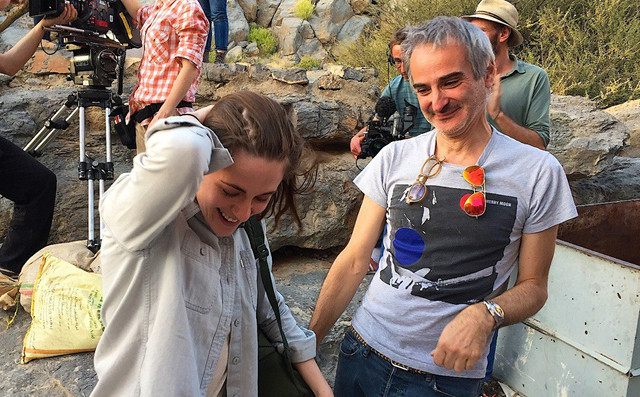
Even though French director Olivier Assayas has been a trailblazer for international production for a long time, he surprised everyone by casting a teenybopper Kristen Stewart opposite the great Juliette Binoche in his new film Clouds of Sils Maria. The multi layered film is a hall of mirrors about acting, fame, aging & Hollywood. It is also perhaps the most entertaining film Assayas has ever done. Stewart went on to become the first American actress to win a Cesar Award for her role in the film.

As a big fan of his work, I was thrilled to catch up with him at last year's NYFF and talk to him about the film, his career and his filmmaking process.

Where did CLOUDS OF SILS MARIA originate?

It started simply. It started with Juliette Binoche. She called me one day saying, "I have a gap next winter for two months. Why don't you write something really quickly and shoot it quickly with small budget?" "I like the idea of where I'd be playing an old part, where we can show two sides of me," something like that.

I said to Juliette, "I don't know, let me think about this...." It's not how I exactly function, I don't write things fast, plus I was finishing another screenplay at the time, and was shopping for Something in the Air. Then I started thinking about it. She had a point that we should make a movie together, I mean, for many reasons. The most essential one, being that there is something beyond the relationship between a director and an actor. We had known each other for 30 years. We started our career together. We have some kind of parallel history. But we really haven't worked together, very little. I mean we only crossed our paths when we did Summer Hours together where she plays one of the characters in an ensemble piece. But ultimately, you know, if you think about how long we've known each other, we should've done more movies together.

It was often the matter of timing. I offered parts to Juliette once in a while when I had something that would correspond to her, including when I did Les Destinee Sentimentale. It just never happened because our schedule never matched up. It was frustrating. And because we had so much fun making Summer Hours, we wanted to expand it.

The thing is that I was convinced that there was an opportunity to do something different with Juliette, to do a film that she had never done it before in a sense. A movie where it won't be just a part intended for her but I could do something with my familiarity with her, I suppose. I could build something around the person she is, use her as 'Juliette Binoche the actress' with the history she has and build something from that. Of course it would echo with my own experience with time- growing and aging, both as a person and an artist. There was a potential for a film there. I wasn't sure what it would turn out to be but I could competently tell her that I have a shot at it.

Funny, preparing for this interview, I revisited André Téchiné's RENDEZ-VOUS, which you wrote, starring baby Juliette Binoche and baby Lambert Wilson, after twenty years. I realized what you are doing in CLOUDS OF SILS MARIA. The layers you create, with Juliette's history and her personal reflections- it's a really intriguing hall of mirrors you are creating. I am wondering if there was another layer that you put upon the film as a director that I am missing.

If you've seen Rendez-vous, you know how much I am drawing from that film. I used the same theme... I think I used the over all mood of the film too. It's still a completely different animal. But it's also because the world has changed. In terms of the themes, there are things in common: obviously the theater and the path towards becoming an actress. But the major difference is that I am doing something that André (Téchiné) is not doing in that film, which was using whoever those actors are. I mean, in this movie, one additional layer to the narrative which ends up giving it this kind of hall of mirror feeling which was not planned.

It just kind of happened to me in a certain way, but it derives from the logic that begins with deciding that I am going to use Juliette Binoche. That I'd give her another name and a slightly different character- one inch away from her where she can have fun playing an actress she could have been. She can make fun of herself in certain ways. But still, the audience knows that it is watching Juliette Binoche playing a famous actress who is very much like Juliette Binoche. But then what comes out of it is that you are also watching Kristen Stewart playing Valentine and Chloë Moretz playing Joan. They are playing whom they could have been or part of someone they know. It gives very specific texture to this film. In movies, it's all about making you forget that you are watching these actors- having them blending into these characters who are believable.  Here, part of the fun is experiencing, acknowledging Kristen is Kristen and Juliette is Juliette.

Do you see yourself in the fictional theater director Melchior who dies in the film?

Hmmm. I just couldn't think of any other stronger way to stress the passing of time. (laughs) All of sudden, the guy, the old mentor is gone. You have to reflect the time that has passed- what you've done with that time. It kind of provokes you to go back to whatever you experience with that person. It also is the event that provokes the subsequent events. Because he is dead, because of that shock, that all of a sudden, Maria accepts something that she initially didn't want to do, which was to play that part of the older woman. She is doing it for him but the minute she says yes she has second thoughts about.

So Juliette was already set for the part. Were Kristen and Chloë your first choices when you were writing the script?

No I wasn't really thinking about anyone in particular when I was writing it. But the minute I sat down with them, especially with Kristen, I knew she was the one. She was on the top of my list and obvious choice anyway. But things don't really happen that way in movie business, especially it being a small weird  European film and so on. So it stopped somewhere in the middle of the developing stage. Then Kristen finally got a hold of the screenplay and contacted us and told us she wanted to do it. But someone already had a part and that someone couldn't do it anymore and Kristen came back. So it ended up how it was supposed to be. For me Kristen was ideal embodiment of Valentine, perfect. I wanted someone who has both youth and power in front of Juliette. I wanted someone to challenge her. Not someone who would be in awe of Juliette. I wanted someone with guts.

Chloë happened very differently. I didn't have that much of a clear vision for Joan until I realized that what would be interesting was having someone very young to play the part. And that's what Chlöe had brought me. She was 16 when she played the role. She turned 17 while shooting the film. ultimately, it was that age difference that she had with kristen that made sense of the whole system.

Chloë came to me in the late stage but when I spoke with her it was completely clear. She has one more thing on top of what other young actresses have- her sense of humor. She is very witty. She is very sharp so she gets it really quickly. So that was very important in the comedy side of it also.

This is kind of off the cuff question.

OK.

I've talked with Christoph Honoré couple of years ago and he mentioned that there is no solidarity among the directors in the global film stage anymore. He said that there were real connections in the 60s and 70s where Truffaut would rescue Milos Forman from Russian Invasion of Czechoslovakia and Truffaut would star in a Spielberg film. You've done many international productions and I am wondering if you agree with that sentiment.

I understand perfectly what Christoph means but I've been trying to contradict that in a certain sense. When Christoph started making films in france, there was a whole indie scene that started happening. He could define or not based on his connections or disconnections with his peers so and so forth.

In my case, it was a little more difficult because there were older filmmakers but very few filmmakers of my generation I could speak with. So very early on I had to find the way to connect with other filmmakers in other cultures and different countries. Because they were the filmmakers I could have dialog with. To me it was very formative moment in my career. It was meeting Hou Hsiao-Hsien and Edward Yang- we are talking 1984, in Taipei. And those guys were completely reinventing Chinese cinema. It was like a big thing: those two guys changing the face of chinese cinema! And I was there! I was the first western writer (was writing for Cahier du cinema at that time) to meet them and understand what was going on. And...

You did a documentary on Hou (HHH) didn't you?

But it was way before doing the documentary, like ten years early. I kind of promoted their work to the world. When I was getting to ready to do my own feature, these guys were just slightly older than me. The thing is I understood what they were doing and it was exciting and modern compared to what was happening in France. I was inspired by them. I had much more creative, exciting dialog with Edward and Hou. Back then Hou didn't speak much English but with Edward who grew up in San francisco, my god, we talked so much!

I met Atom Egoyan when he was beginning to grow as a filmmaker. He's also someone who instantly became a friend, who I could have dialog with. I'm not even touching upon the guys I met in Hong Kong like Wong Kar Wai and Stanley Kwan...

I've always been concerned by those issues. And I tried to find my own solutions. Like when Edward did Majong, he used Virginie Ledoyen because he had seen her in my film. You know we met in Kyoto film festival when I was there with Virginie and we had lunch and the next day Edward emailed me asking if Virginie would be interested in being in his film. Or when Maggie (Maggie Cheung, Assayas' ex who was in his films Irma Vep and Clean) came to France to do my film. I understand that it is not part of the film culture anymore, so you have to provoke it. I've been provoking it as far as long as I know. I think it's because I've been a film journalist and had the exposure to international cinema that few french filmmakers had.

It's interesting that you mention sharing certain actors. I saw Mia Hansen-Love (his wife)'s last two films and your last two film and they have a lot of actors in common.

Even the cameraman (Denis Lenoir). (laughs)

Do you guys always share the pool of actors or recommend each other actors all the time?

With Mia I've been discussing movies for the last fifteen years on top of living together, and so and so forth. So yeah we share same values and I suppose we also have tastes in common. I love her films and when she watches my films she loves the actors in them. So she's going to pick this or that guy. You know like Felix de Givry who plays the main character in Mia's Eden. He wouldn't have been right for my film, Something in the Air, but the it was a decision I hesitated for weeks between him and Clément Métayer and ended up giving Felix another role. But I saw the potential in Felix that he would be great in other films. It's just a matter of casting for the right role because he looked a bit old for that role, what I liked about Clément was he has more of a child's face.

That's true. But Felix is great in EDEN.

Oh yeah. absolutely.

How was shooting in Switzerland?

It was great. We shot only parts of it in Switzerland. Most of the interiors which is supposed to be in Zurich, we shot it in Germany. Some exteriors including the chalet, we shot it in South Tyrol which is a just the other side the border of Engadin, Switzerland. It was still under European film production with tax breaks and all.

The key element of the film we shot it in Switzerland. The landscape was an essential part of the film. It's a character. So it was very vital to have those specific landscapes. It's something you have to struggle for. The producers tell you that mountain is a mountain. (laughs) But I said yes but this is not exactly any mountain and the lake isn't exactly like any other lake. You need the vibrations from the place...

Was it difficult to shoot in the mountains?

Yes. Of course it is difficult.  Especially you are out there shooting in the environment you can't control. You have to get up there in helicopter with your whole crew and everything. It's complicated. It's deceptively simple on screen but it involves fairly complex logistics.

Your actors are really troopers out there shooting int he snow. It must've been cold.

Yes it was cold! We were shooting in the summer and all of sudden it was snowing. but it was snowing for the right scene. I like the idea of snow in that particular scene. Also we were on the schedule that we couldn't lose a day. So it snows, so be it. But snow looks so beautiful on screen. I'm just extremely happy that it ended up in the film.

How long did the production take?

With small budget, you can't waste time. It took about 31 days.

I guess valentine is a reflection or Maria's projection. I can't help thinking that the disappearance of Valentine is because she is the only one who sees the irony in the situation as an assistant to the great actress taking a back seat to the rising star.

You know, basically she disappears so everyone can have their own take and interpretation on the disappearance. Everyone thinks it's a big thing, but ultimately its a small thing. It would be like, I add one shot of her buying a ticket and getting on the train for something. It's that tiny thing that opens up to a lot of interpretations and make it much more interesting.

I had couple of options you know. But none of it is as interesting as yours. No, I'm not joking. When you are a writer you don't control everything that's going on. When you are a reviewer you discover everything. (we laugh)

No, because you are discovering it and all of a sudden things make sense to you in ways it can't make sense to me. Because I was involved in assembling the elements and at some point things happen on their own and your imagination connects with the images and you recreate the film. Any audience recreates his or her own film, so when you have a gap in the narrative it's your whole imagination that is channeled into that gap. It's a way to appropriate the film.

After playing in TIFF and NYFF, Clouds of Sils Maria opens in theaters on 4/10. For more info, please visit IFC Films website.

Thursday, October 9, 2014

Hall of Mirrors

Clouds of Sils Maria (2014) - Assayas
 photo clo_article_story_large-630x420_zps4e9aad0c.jpg
Delicious! Assayas' take on celebrity, acting, time passing is an extremely entertaining hall of mirrors. It concerns an aging movie star Maria (Juliette Binoche) and her personal (very)American assistant Valentine (Kristen Stewart) heading over to Switzerland to celebrate the life and work of the great stage/film director Wilhelm Melchoir who gave Maria her first big break in Maljora Snake, a mythical tale of two women, only to find out that he just passed on. Now Maria has to improvise an eulogy instead of tribute. Valentine is a very able assistant, always on her mobile devices arranging everything for Maria. She informs her movie star employer that a young hotshot director (Lars Eidinger of Alle Anderen), wants her to be in the stage production of Maljora Snake revival, but this time, he wants her to play the older part. The younger part Sigrid, the part that made her famous, is going to be played by Hollywood's rising star and the center of the gossip world, 19 yr old Jo-ann (Chlöe Moretz). This proposition takes Maria through a whirlwind of emotional turmoil. She hated the character of Helena who commits suicide after getting dumped by Sigrid. Time has passed: no longer young, she has to endure the fate of her predecessors. With much Valentine's urging, she accepts the role and immediately regrets it right afterwards. She googles Jo-ann's latest shenanigans where the little brat assaults police officers, blabbering her mouth off at various talkshows, etc. But nevertheless, she starts rehearsing the play with Valentine in the remote house (Wilhelm's) on the mountains in Switzerland. As they say the lines back and forth, the material strongly resembles their relationship without them noticing it.

This multi-layered reflections on real life situations with all the principals involved is wickedly entertaining. In Assayas hands, these materials are never trash but playful. There is not an ounce of wink-wink sarcasm of typical Hollywood satire. There is no surprise in the great Binoche, showing wide range of emotions of a seasoned actress as she grapples the idea of time passing and celeb-dom but it's Stewart who steals the show. That cocky confidence, that one note delivery is a perfect match for the role. Their back and forth banter is extremely believable and nuanced. Assayas never makes it over-the-top: the sexual tension between the two women are subtly presented, never vulgar. And the storytelling is brimming with intelligence but never feels trickery. One of the most entertaining, engaging films I've seen by Assayas.

Clouds of Sils Maria
plays as part of NYFF on 10/8 and 10/9.

Wednesday, June 19, 2013

Passing Times

L'heure d'été/Summer Hours (2008) - Assayas
Image
Light touches, a lot of room for actors but mostly Olivier Assayas's Summer Hours is about feelings, nostalgia without sentimentality. Three grown up siblings, an economics prof. Frederick (Charles Bering) the eldest, NY based designer Adrienne (Juliette Binoche) and Jeremie (Jérémie Renner), a Puma factory manager in China, gather with their children and spouses for their mom Helen (Edith Scob)'s birthday at an idyllic summer house filled with precious art and furniture. It is their childhood home with many personal memories and secrets. Helen, at 75, knows that her days are numbered, so she starts arranging things and pesters her children about divvy-ing up the the house and assets. They wouldn't hear any of it. But after Helen dies, with financial instability, they decide to sell the house and have all the art liquidated- many of them being donated to Musée d'Orsay for tax purposes. The grown ups don't have much attachment to the house anymore and too busy with their own lives.

In a typical Assayas fashion, the director orchestrates the star studded cast with balance and care. The result is a warm, mature, harmonious film that reflects human experience.  But heart of the film belongs to Edith Scob's presence and grace in the first 30 minutes. Loved Binoché's bitchy, unsentimental Adrienne. Also loved two contemplative moments: one with Helen sitting alone in the dark and one with Frederick alone in the shadows. And what a finale: Alice de Lencquesaing from Father of my children, now a slightly mischievous teen, provides the well deserved, poignant, fitting ending sequence to the film.

Thursday, October 4, 2012

Social Experiment

Something in the Air (2012) - Assayas
something in the air
At the outset, Olivier Assayas's Something in the Air is a biographical nostalgia piece about growing up in the aftermath of the May '68 events in France. But what it really is, is a social experiment in which 18-19 year olds, most of them first-time actors, reenact the youth of perhaps the most volatile time in contemporaneous French society, when the revolution seemed palpable.

As it was revealed in my interview with Mia Hansen-Løve (director of Goodbye First Love and the current wife of Assayas) early this year that Assayas has a real knack for connecting with and getting great performances out of young actors (Hansen-Løve herself was in Assayas's Late August, Early September when she was 17 and swears that the experience changed her life).

The French title (Après mai) refers to the student uprising and General Strike of May 1968. Something in the Air starts with a group of high school students' violent confrontation with baton wielding, teargas shooting cops on motorcycles. The scene is too energetic and immediate to be nostalgic. Set in 1971, this semi-autobiographical, ensemble piece about a group of friends in tumultuous times when everything seemed possible, is at once personal and sprawling. After vandalizing their school with revolutionary banners and graffiti, they end up injuring one of the security guards and are told to lay low during the summer. Puppy eyed, mild mannered aspiring painter Gilles (newcomer Clément Métayer), who just broke up with his ethereal poetess girlfriend (Carole Combes), hitches a ride with the Leftist filmmakers, along with a devout of the cause, Christine (Lola Créton of Bluebeard and Goodbye First Love) and artistically inclined Alain (Félix Armand) to Italy.

I don't pretend to be an expert in French history; I only have vague memories of that time period of France from textbooks and films. Assayas got all the political jargon and lingo down, as everyone was into politics at the time. If you think today's left is fractured and sectarian, France in the 70s would make your head spin: there was the French Communist Party, CGT (French Trade Union Federation), Trotskyites, Leninists, Le Secour Rouge, the Maoists, VLR (Vive la revolution), FLJ (Front de Liberation des Jeunes), and the list goes on.
Our Gilles is in the thick of all these political activities, but, at the same time, independent minded. He reads a newly published book criticizing (first of its kind) Chairman Mao's Cultural Revolution, despite the disapproval of many upper classmen. He also finds his own voice through art -- first painting then filmmaking -- while maintaining his counter culture attitude and general skepticism of the world. Assayas's energetic camera also turns to many of the sunny Tuscany locations, as many of his young protagonists pour out their youthful enthusiasm in art, love and politics. There is no voice over or flash forward. Assayas, born in 1955, who was of age back then, never once steps in to remind us that this is all in the past. No, this is not a nostalgia piece.

The film's hopefulness and youthful energy is quite infectious. In addition to the aforementioned great young actors (Metáyer, Combes, Créton and Armand), newcomers India Manuez and Hugo Conzelmann shine as Leslie, a free spirited American girl, and as Jean-Pierre, a dignified, honorable fellow student activist. One can't help but compare youth in the film with today's largely disaffected, docile young people. What happened to that passion, awareness and dedication? This is where Assayas's genius kicks in. He uses actual teenagers of today to play the part of youth of his generation! It's a social experiment on a smaller scale. None of the characters seem out of their element. His even handed attention to each character brings out a well-balanced, strong ensemble piece that is both relatable and affectionate without ever being coy or stereotypical. The more I think about the film, the more I like it. It is one of the best films I've seen at this year's New York Film Festival.

(Something in the Air screens on Oct. 5 6 p.m., Oct. 8 12 p.m. and Oct. 12 6:30 p.m. at Film Society of Lincoln Center. For tickets, please go to NYFF 2012 website.)