Showing posts with label Russia. Show all posts

Monday, May 18, 2026

Tower to Power

The Wizard of the Kremlin (2025) - Assayas Screen Shot 2026-05-17 at 7.58.01 AM Based on a fictional account by Giuliano Da Empoli, Olivier Assayas, the one of the most astute observers of our ever evolving, complex world, takes on Putin's Russia in recent history, with the star studded international cast. The result is perhaps short on the satisfying narrative, but a fascinating history lesson nonetheless.

The film starts with an American journalist, Rowland (Jeffrey Wright), visiting Vadim Baranov (Paul Dano), a former spin doctor of Putin living in isolation in the suburbs of Moscow. Baranov pulls out a yarn of the chaotic, exciting days after the dissolution of the Soviet Union. As a young man eager to prove himself, Baranov moves into the city filled with other young people, eager to take advantage of the anything-goes, wild-west of the Yeltsin era Russia. While others are busy making money and signaling the dawn of the future oligarchs, Baranov chooses art in avant-garde theater. There, he meets a punk performance artist Ksenia (Alicia Vikander) whom he would have a long off/on relationship with. His work in art leads him to TV and communications and works up the ladder and becomes a producer of a recently privatized national TV station, with the help of Berezovsky (Will Keen), a reigning spin doctor with political connections. The Chechen war was going badly and the Russian public was in need of change.

There's a funny bit about Yeltsin's sagging popularity and his alcoholism and in order to make him more 'presidential' on TV for his reelection, they have to tie him to the chair in order not have have him fall asleep at the desk and slow down the teleprompter speed.

Since Yeltzin is a goner, Berezovsky bets on a former KGB head, young & athletic Vladimir Putin (Jude Law) to be his successor. And this is where things get interesting. Putin, a disciplined former intelligence officer and spy, unlike other politicians in Russia, is not interested in money and wants to have no interference in government from newly minted oligarchs. And he hates the frivolity of TV and spins. Admirer of Stalin, he wants absolute power. While Ksenia moves from one billionaire to another, Baranov becomes a trusted counsel for Putin after his verticality of power speech, pushing his strongman image as what is needed in Russia.

Dano, in his puff dough face and forever smug, fits the role of Baranov, who observes the world with forever cynicism and insincerity. When asked about why he stayed so long by Putin's side, he admits that he is addicted to power. Law is scary as Putin, a one-track minded former intelligence officer and spy, who detests moneyed people and the west. Someone who wants to wield power in a geopolitical game in the new era.

Tom Sturridge shows up as Dimitri Sidorov, a flashy, hedonistic oligarch in the making, of whom Ksenia falls for.

There are tons of films about Russia's recent history, but Assayas makes a somewhat concise overview of how Putin's Russia came about. He juxtaposes the real threat of the strongman who does play by western capitalist standards. Baranov, who was fashioned after Vladislav Surkov, a spin doctor who served Putin in his aggressive pursuit of Crimea and then Ukraine. Obviously, these are villains. But aren't they as villainous as Europe and the US? As Rawland asks about the invasion of Ukraine and violence Baranov orchestrated, overseen by Putin, Baranov counters with all the villainy the West has been inflicting to the world at large. Aren't we as culpable as Putin - Venezuela, Cuba, Iraq and Iran?

Narratively The Wizard loses steam on the way to its fatalistic, unsatisfying ending. But again, Assayas accomplishes deciphering the complicated recent history and reflects on where we find ourselves, at this chaotic, morally ugly present.

Monday, January 10, 2022

Inner Space

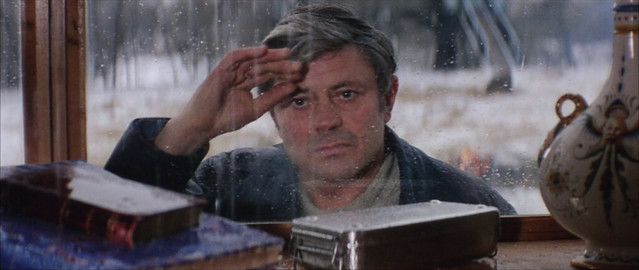
Solaris (1972) - Tarkovsky solaris 10 solaris11 solaris8 solaris7 solaris5 Solaris 1 solaris2 Solaris4 solaris3 Kelvin (Donatas Banionis) is tasked to go to a space station orbiting an ocean planet Solaris, to check on its remaining crew and determine if their probing mission is still valid. During the briefing, Burton, a former cosmonaut in the station, reports strange phenomenon going on, on the surface of Solaris, that the planet generates physical manifestations from the crew's memories. Once he gets there, he finds only 2 crew members still remaining: Snaut (Jüri Järvet) and Satorius (Anatli Solnitsyn) and the body of Gibarian who just killed himself and left Kelvin a taped message warning him about the 'visitors' that Solaris sends out. Soon enough, Kelvin's dead wife Hari (Natalia Bondachuk) turns up in front of him and any of his scientific research is out the door. Is she just a manifestations conjure up from Kelvin's memories of her? It doesn't matter to him. It is Hari and he will love her. But she begins to doubt her existence. She kills herself by drinking liquid oxygen only to be violently revived.

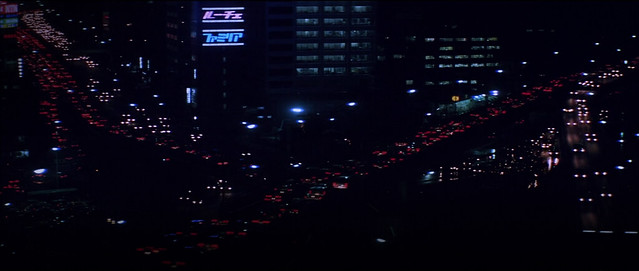
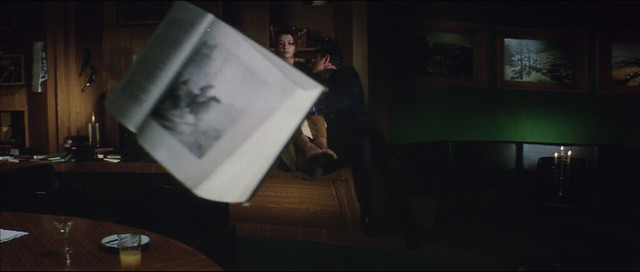
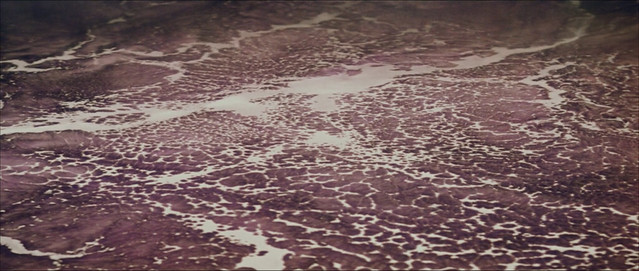
'Sculpting time' seems very appropriate in Solaris than any other film I can think of. With the series of long shots with slow zooms where actors quickly change their places around just outside the frame to take different positions within (and using multiple stand-ins in some cases), and repetition of images (in the beginning then later on), Tarkovsky invites audience to experience past, present and future at the same time. Loosely connected images such as reeds in the water and Tokyo traffic are just as striking as the famous bone to space ship transition cut in 2001 Space Odyssey but with more time devoted to percolate naturally in viewer's mind instead of visible edits. There are many notable scenes, but the most striking is perhaps Hari contemplating time, while watching Bruegel's Hunters in the Snow in the library of the station and them briefly experiencing weightlessness in embrace. Time is highly subjective so are our perceptions of the world.

Memories, dreams and fantasies all mingle in Solaris. How much do we know about other people? Is our existence just compounded memories of others? Tarkovsky is using the Sci-fi genre as a fodder to question our reality and contemplate human existence in perhaps the loneliest place we can imagine- outer space. Solaris is a deeply humbling experience.

Monday, September 20, 2021

A Film Culled from the Sea

The Village Detective: A Song Cycle (2021) - Morrison THE VILLAGE DETECTIVE still Avant-garde filmmaker and artist Bill Morrison, known for his use of decaying, found films and collaborating with innovative contemporary musicians, produced some of the most unique movie/live theater going experiences (Decasia, Miner's Hymns, Dawson City: Frozen Time) over the last few decades. Using plenty of archival materials and found footage, just like with Dawson City, he concocts an intriguing film history lesson while showcasing the hypnotic, decaying celluloid images with The Village Detective: A Song Cycle. The difference here is that the old Soviet film, The Village Detective, was not dug up from the frozen tundra in Yukon Territory but netted from depth of the icy North Sea.

In 2016, an Icelandic lobster trawler hauled in a film canister along with various crustaceans at the bottom of the North Sea. It ended up in the hands of the archivists and film scholars at the Finnish Film Institute. It was the late visionary Icelandic musician and friend of Morrison, Jóhann Jóhannsson, who worked with the director in Miner's Hymns, mentioned the news to him, who took an immediate interest. It contained 4 rolls of seawater brined, muddy, degrading film prints. Many assumed that they contain a very old film. But it turns out to be a 1969 Russian film, The Village Detective, starring Mikhail Zharov as Columbo like detective, in a provincial Russian town, on the case of a missing accordion.

The Village Detective: A Song Cycle submerges itself into an intriguing film history and does its own diligent history detective work. Morrison, along with producer/film scholar Maria Vinogradova, set out their own investigation, giving context to the movie reels found at the bottom of the sea. Like good detectives, they peel away layers of mud and dirt and debris the time has accumulated and connect the dots- the images on the film, its actors, the political climate, film archiving practices (or lack there of), while highlighting the beauty of the physicality of film print as an art object.

Taking advantage of Gosfilmofond, the state run Russian film archive and with the help of their archivists, the film devotes itself going through Russian film history by way of Mikhail Zharov's six-decades spanning career. Zharov, whose immense popularity in Russia was equal to that of Humphrey Bogart and Clark Gable at his prime, played many boisterous roles and often sang with an accordion in his hands in many of his films. He was a renowned stage actor and starred in many state propaganda films. But with the country’s antisemitism in the 40s and 50s took a toll on the actor who was married to a Jewish woman from a prominent Jewish family. Even though any charges were dissolved after Stalin’s death, he would get type-casted in the 50s and 60s as he aged.

Going back and forth with old Russian archival footage, many of Zharov's film clips, interviews and the actual footage of The Village Detective found in the sea, set in original accordion soundtrack by David Lang (Requiem for a Dream, The Great Beauty, Wildlife, Youth), Morrison creates a cohesive, entertaining yarn.

Still, all the beauty is in the footage culled from the sea. Damaged and decayed in multitudes of ways, intentionally slowed down and without a dialog track, the audience can savor each passing frames- obscured by scratches, blotches, indecipherable patterns and ghost images that natural elements and time inflicted on the celluloid. With the historical and philosophical context provided by Morrison and co., the film's haunting beauty is amplified greatly.

The Village Detective: A Song Cycle is a celebration of cinema that reflects life and art and its resilience to the test of time both metaphorically and physically.

The Village Detective: A Song Cycle opens in theaters on 9/22 at IFC Center in NYC. Please visit Kino Lorber website for details.

Saturday, May 5, 2018

Bearing Witness

Ivan's Childhood (1962) - Tarkovsky
Screen Shot 2018-05-05 at 1.59.47 PM
Screen Shot 2018-05-05 at 1.34.04 PM
Screen Shot 2018-05-05 at 1.36.06 PM
Screen Shot 2018-05-05 at 1.37.22 PM
Screen Shot 2018-05-05 at 1.38.31 PM
Screen Shot 2018-05-05 at 1.40.56 PM
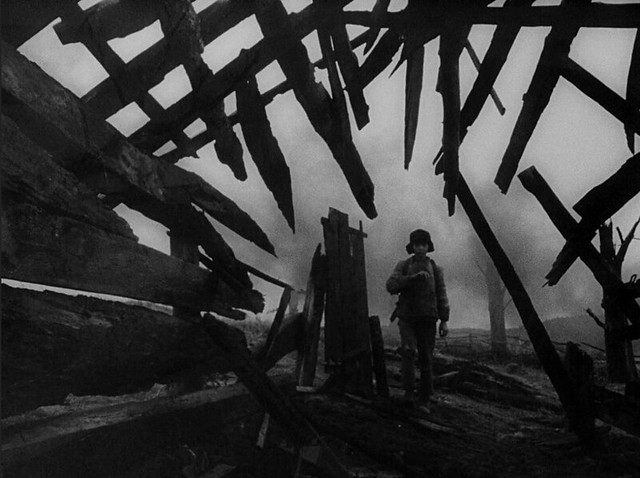
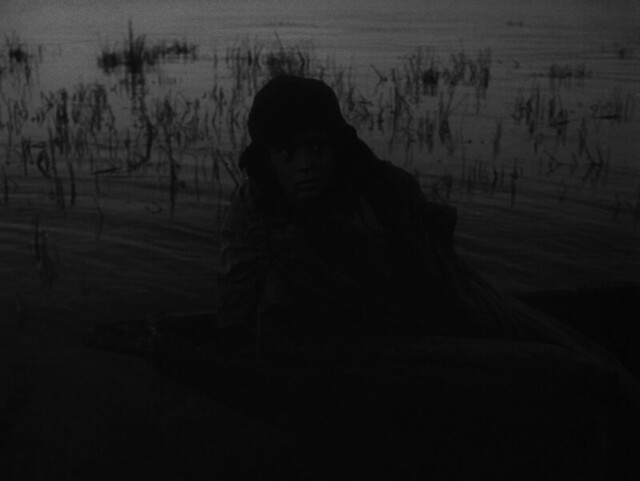
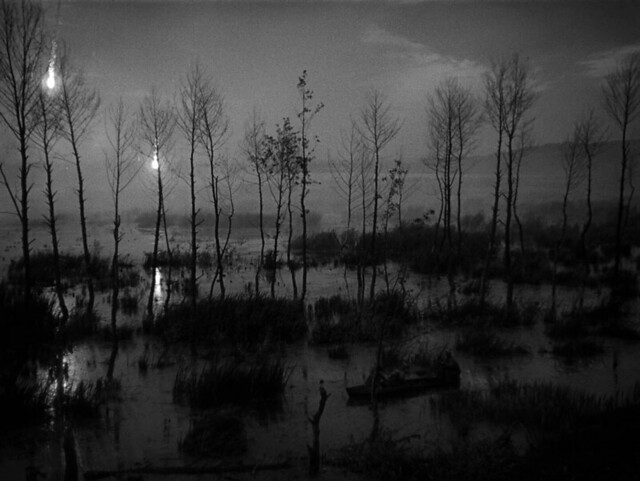
The film starts with an impressive crane shot of young Ivan (Nicolay Burlyaev) playing in the piney forest. It's all idyllic and whimsical. This is what this young man dreams of when he closes his eyes shut for brief nap while scurrying around the burnt out surroundings and murky swamps of the WW2 frontline. He is volunteering reconnaissance work- because he is small and nimble, he crosses the river to the German side and report back to the Russians with the enemy's movements. The last one was a tough one and Ivan is exhausted mentally and physically. The young lieutenant Galtsev (Evegeni Zharikov) who took him in after such mission, not knowing who the kid was and what he was up to, voices his opposition to the idea of child soldier to his superiors. Kholin (Valentin Zubkov), a veteran of war and Ivan's friend agrees that Ivan needs to be sent to the military school or boys home, far away from the war front. But he also knows that Ivan's going to run away eventually and end up in the war front. Ivan's mother and sister was killed in the war and he has only one thing in his mind - vengeance. No one can stop him.

After Ivan runs away from the Military school and ends up on the front, Kholin, Galtsev and the boy decides to go across the river for yet another dangerous mission. In the middle of it, they realize that Ivan is the only one small enough not to get caught and they let him go alone for the mission.

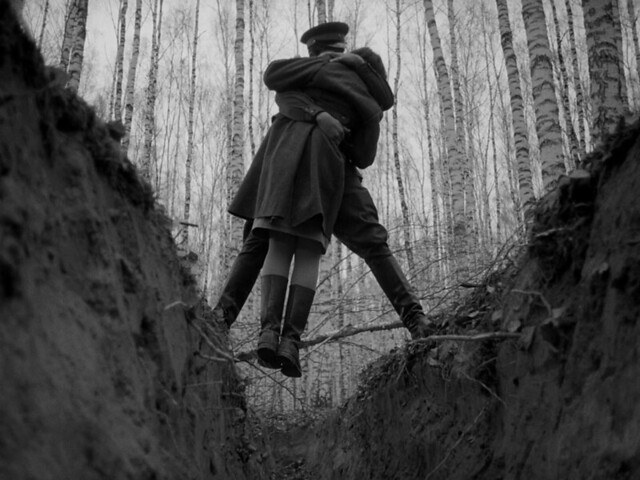
Ivan's childhood is a staggering debut of Andrei Tarkovsky. In it, his signatory visual prowess in the later films is evident here. The measured framing and dolly and crane shots are out of this world! The brief romance in the white birch forest between Kholin and military nurse Marsha (Valentina Malyavina) are lyrical and breathtakingly beautiful. The seemlessness of editing and transition from dreams/flashbacks to reality, especially the Ivan and the mother in the well is just astonishing. The point of view change from Ivan then later to Galtsev is also very impactful- the war burden is on the survivors to witness the devastation of the innocents, not the innocents themselves.

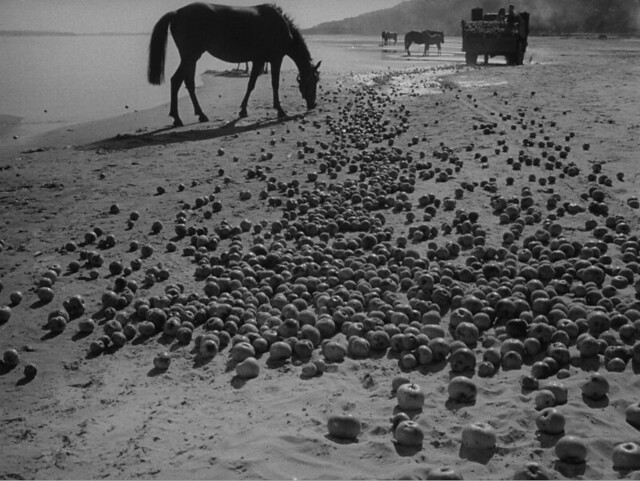
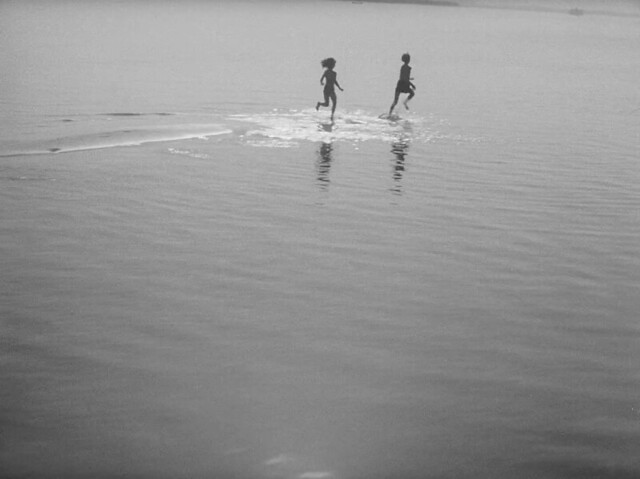
Tarkovsky knows that he doesn't need to put emphasis on the theme of child soldiers and women in war. Earlier scene with Ivan writing down what he learned from the mission counting different seeds he collected and sending them in envelopes suggests that his recons might be a fool's errand that the superiors are letting the war scarred child play his spy games however irrelevant to the realities of war. In fact, there is knowing looks and smiles exchanged between adults when they talk about him. But Ivan's Childhood is not overtly melancholic or dramatic. The evidences of the war themselves - photographs of the war dead, of the defeated - photos of laid out bodies of Goebel's young daughters who were poisoned by him before he killed himself after Germany's surrender, speak volumes already. It ends in one of the most aching scenes of film history - eternal summer on the beach with the tracking shot that seems to go on forever. It's a beautiful film.

Wednesday, November 19, 2014

Delicious Twist

Seventh Code (2013) - Kurosawa
 photo b5df5a03-c87a-4c15-abb5-409a8518a2cb_zps4a0fb92e.jpg
I don't care if it is an hour long promotional material of some Japanese popstar. It's KK's take on the espionage thriller genre and it's delicious. A frail looking girl, Akiko (Atsuko Maeda), with a huge luggage cart with little wheels is stalking Matsunaga (Ryuhei Suzuki), in the streets of Vladivostok. He is a major dreamboat and according to her, he snubbed her after picking her up and buying lunch back in Tokyo. After being dumped on the side of the road in a burlap sack, she gets friendly with a Japanese restaurant owner with a chip on his shoulder. From there, things progress in a very different direction. Absorbing and unpredictable, it's one of those films better not knowing anything going in.

Monday, August 11, 2014

Burning Down the House

Offret/The Sacrifice (1986) - Tarkovsky
 photo 9d6648d9-c1bd-4500-812f-c47249d1a841_zps4f24fdd2.png
 photo 423d65db-6e22-47cd-8d56-d5c183855b85_zpseb40ce6d.png
 photo 285daa72-7792-40dc-8ae5-6b680e2bfecf_zps8f4a8118.png
 photo 41c58b49-3339-4d00-ad02-cc05ad915248_zps75dbdad1.png
 photo 3158e1dc-f83f-4261-941c-58dcc3d85cf0_zps677f37c7.png
 photo 3b3ab71c-e77f-4a5c-b2be-7e9a47fe12e3_zps7cc2331d.png
 photo c1a025e0-3774-4790-98c0-10b4adaae4bd_zpsed6d74b1.png
 photo e5960e45-19a6-4169-be93-9cf26685e87a_zps9444dd69.png
 photo 9017a195-13e4-4696-9b43-edaaa8fca048_zpse31edc3c.png

It's Alexander (Ingmar Bergman regular Erland Josephson)'s birthday. He and his young son plants a leaveless, twisty tree. He tells the son that even the ordinary actions, done them time and time again, brings a change in the world. Not a religious man, Alexander argues with a local postman and Nietzsche quoting Otto (Allan Edwall of Fanny och Alexander). As the day wears on, dinner is getting set up for his birthday at his house by the ocean attended by his wife, teenage daughter, son, his doctor friend and the wife's lover, Otto and two servant girls. But just before dinner, they are startled by sonic jet flying over and distant booms. It's the end of days. Nowhere in Europe is safe, stay at home, the radio announcer says in a grim voice.

Alxander, gripped with fear for all humanity, prays to god that he will give up anything to save the mankind. Otto sneaks in and tells Alexander that he has to lie with Maria, a sullen, saintly foreign servant, in order to save the world. He does so on her levitating bed.

The Russian master's last film is a beautiful religious parable. Dreamlike, meditative, all encompassing work. The uninterrupted climax scene of Alexander burning down the house is perhaps the master's finest technical feat and a true cinematic tour-de-force. And it's a hopeful one. It ends with the young son watering the tree as Maria looks on.

Shot by the great Sven Nykvist (yet another Bergman cohort), The Sacrifice is a fitting finale for illustrious filmmaker who wanted to elevate film's status to other art form, that of painting and music.

Thursday, November 7, 2013

Ethnography of Mirage

The Days of the Eclipse (1988) - Sokurov
 photo e4f7fc56-8c0c-478a-b4a1-1953739516ae_zpsf967e260.jpg
 photo ed5aabbf-6173-45ae-bdbe-532a69595763_zps060bb3b9.jpg
 photo 39e25ad3-ccd6-4d20-b8f8-0208692ab01e_zpsc531dce8.jpg
 photo aeeaf914-ac65-4210-84cf-05bc7084e44e_zpsc04b1052.jpg
 photo e6281c03-76c1-4fdc-bb5a-b14d0d4fcffa_zpsd10ab393.jpg
 photo ef7106d8-4ab5-4efd-8dcf-0b176d545fb3_zps17f03f29.jpg
 photo 9dd8f987-4113-4961-9359-e545eac73438_zps72bfdaae.jpg
 photo 988a80a0-ec7f-4d6d-ba80-a82e91d445eb_zps6433b87e.jpg
Strange and heady, Sokurov's semi-Sci-fi is a surrealistic meditation of the USSR on the eve of its dissolution. It starts with the POV shot of a celestial being flying over the barren, arid Turkmenistan landscape and crashing down to earth, accompanied by laughter of a child and Ennio Morricone inspired carnival music. Then we are introduced to its inhabitants - old, toothless people with decidedly Asiatic features. Sokurov points out many times throughout the film that this dusty small village in the desert could simply be a mirage.

Dmitri, a fresh faced young doctor/writer from Moscow is our prince Myshkin: he is more of an ethnographer, observing the foreign landscape and its inhabitants. The unrelenting heat makes many of the residents sleepless and Dmitri shirtless most of the time. His adobe is strewn with papers, exotic animals and strange artifacts and uninvited visitors. His life is total chaos: he talks to a recently deceased friend at the morgue, gets into a fist/kick fight in the street while trying to intervene the fight between two men and gets taken hostage by an armed military man.

The Days of the Eclipse can be read as a palimpsest of a Soviet federation's history: not quite understanding different ethnic groups with completely different culture and religion under one large umbrella. And its past still haunts even in the remote valley in the desert. The most beautiful scenes are the ones with celestial cherubic blonde kid appearing at his doorstep. He tells how handsome Dmitri is, but sees time passing in his face. Perestroika is good looking and all, but is it going to last?

Thursday, October 24, 2013

Mother Russia

Mother and Son (1997) - Sokurov
Mother and Son Mother and Son 2 Mother and Son 3 Sokurov's idea of the basis of all human relationship - the one between mother and child, is stunningly visualized in Mat I Syn. As the rightful heir to Tarkovsky and reining spiritual backbone in faithless, chaotic Mother Russia, Sokurov shows eternal rebirth of devotion, sadness and nostalgia. The film's dreamy, skewed images are heavily influenced by paintings of Caspar David Friedrich. The look of the film is like nothing I've ever witnessed on film: its slightly distorted, no depth of field, soft green & yellow palette creates the world where time has lost all its meaning. It's a beautiful and soulful film.

Thursday, December 13, 2012

Devil's Contract

Faust (2011) - Sokurov
Image
Image
Image
Image
Image
Image
Image
Image
Alexandr Sokurov's interpretation of Faust is one extraordinary, hallucinatory trip. It starts with Dr. Faust dissecting a corpse, looking for/failing to locate the exact location of the soul. Living in extreme poverty, he tries to pawn his ring to a dark eyed, deformed, devilish pawnbroker (Anton Adasinsky). Instead, the pawnbroker convinces Faust to sign away his soul in blood (ink is expensive!) in exchange for one night with virginal Magarete (Isolda Dychauk), whose brother he just killed during a fit of rage in the bar brawl. Last of his tetralogy (Moloch, Taurus, The Sun) about power/seduction of power, and not based on an actual historical figure, Faust can also be read as parody of the Age of Enlightenment.

Technically, it's an amazing looking film. Even though it is not shot all in one take like Russian Ark, it's visually so cohesive and fluid, you don't get to notice the edits much. It's soft edges and shallow depth of field, dutch angle, dark, rembrandt cinematography and mirror tricks give it its hypnotic, nightmarish feel. Adasinsky is perfect as a ratty, Goya-ish Mephisto. I haven't seen Moloch or Taurus, but Faust is much more engaging than The Sun, the one about emperor Hirohito. There is no stuffiness in Sokurov's period pieces: the camera and actors are constantly moving. Giddy and playful, it almost works as a comedy. It does have enough beautifully weird moments that are not out of character as a whole, Faust provides a fascinating movie experience.

Friday, November 30, 2012

The Zone

Stalker (1979) - Tarkovsky
stalker
stalker1
stalker2
stalker3
stalker4
Tarkovsky's usual theme of faith and sacrifice in the age of science is told metaphorically, making full use of the grimiest looking industrial wasteland ever as a backdrop. Stalker is not an insufferable borefest as I remembered. On the contrary, it's a pretty straightforward and simple road movie with clear destination and purpose. Writer and Professor are guided by Stalker to the zone where people's innermost wishes come true. These are earnest people: Professor tags along with an intention of blowing up the zone so it won't fall into the hands of bad people, Writer is a doubtful holy fool and Stalker is a true believer who is burdened with guiding non-faithful to happiness. They talk, move along and talk. The action here is always breathtaking cinematography- amazing slow tracking shots.