Showing posts with label Chile. Show all posts

Tuesday, January 3, 2023

Worldly Desires of Intellect

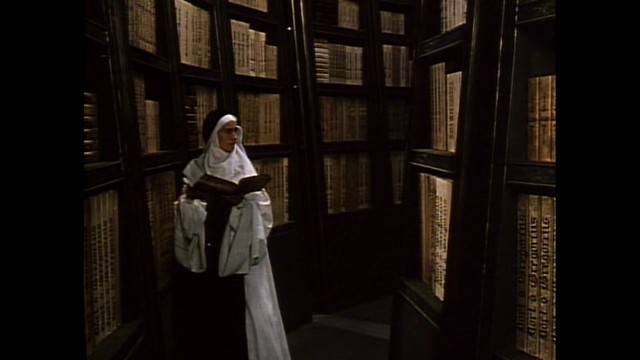
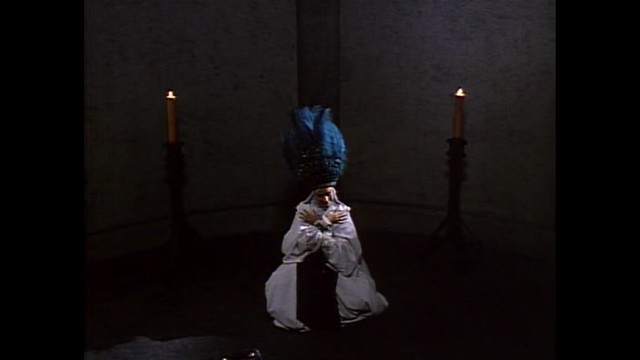
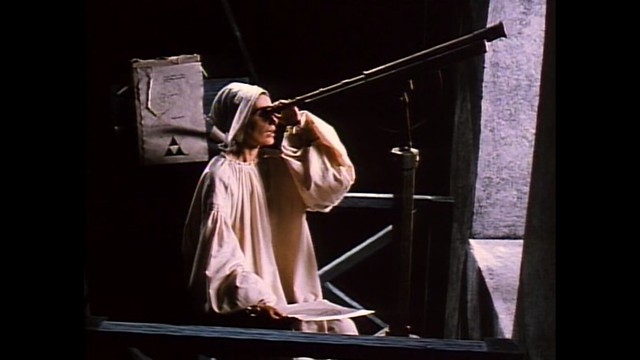
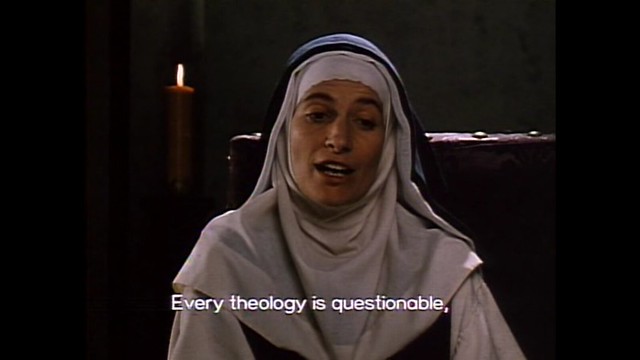
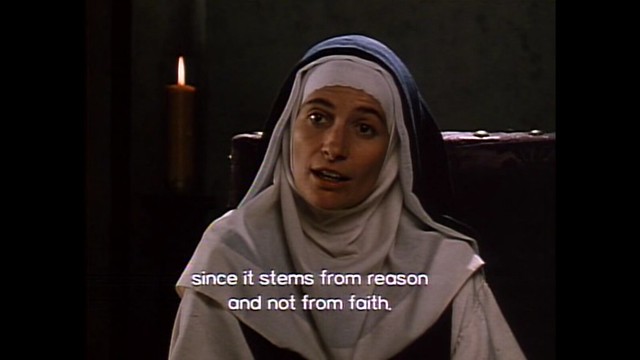
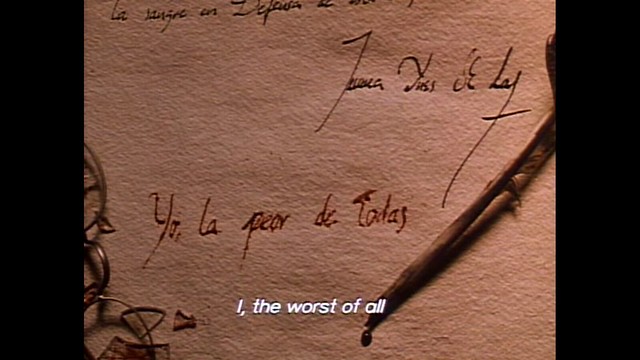
Yo, la peor de todas/I, The Worst of All (1990) - Bemberg Screen Shot 2023-01-02 at 9.17.18 AMScreen Shot 2023-01-02 at 9.26.56 AM Screen Shot 2023-01-02 at 9.33.18 AM Screen Shot 2023-01-02 at 9.55.43 AM Screen Shot 2023-01-02 at 10.09.08 AM Screen Shot 2023-01-02 at 10.09.14 AM Screen Shot 2023-01-02 at 10.51.30 AM Based on a historical figure, Juana Inés de la Cruz, I, The Worst of All, tells trials and tribulations of a catholic nun who lived in the 17th Century Mexico. Sister Juana who was a poet, playwright, theologian and a philosopher. And because it was unorthodox for woman to be an inquisitive and brilliant intellectual in the age of inquisition, she was persecuted by the patriarchal church and forced to denounce her 'sins'. Maria Luisa Bemberg directs the unflinching version of Sister Juana's story. Assumpta Serna plays Sister Juana, whose brilliance was the subject of both envy and jealousy in the convent. She is afforded with a large library and fine material things, like a telescope and harpsicord within the convent walls. She makes a big impression on the viceroy sent from Spain to the new world, and strikes up the friendship with the Vicereine (played by Dominique Sanda) who feels a certain kinship with the Sister (convent/marriage = jail). The Viceroy and his wife become an ardent supporter and protector of Juana against the vicious archbishop who thinks Juana is a nothing but a harlot and heretic.

Things get dire when Viceroy is called back to Spain and replaced by another. With her protection gone, Sister Juana becomes the target of archbishop's fury. Bemberg paints rampant religious hypocracy and sexism where women's intelligence were lauded only on the surface but ignored and actively repressed under the eyes of the church. Many of her supporters turn their backs on her. Then the plague hits the convent, where she devotes herself to the caring for the dying. It is her only confessor, the unnamed Father who reappears at the end to hear her confession, of her pride, her self-love and praises. He tells her that it's her selflessness in the time of plague is what God wanted all along.

I, the Worst of All, is a searing indictment of hypocracy of the religious institution and clear eyed examination of the true devotion and worldly desires of intellect. What happened to Sister Juana is a real tragedy.

Thursday, January 7, 2021

Torching the Traditional Motherhood

Ema (2019) - Larrain Screen Shot 2021-01-06 at 6.29.03 AM Screen Shot 2021-01-06 at 10.34.22 AM Screen Shot 2021-01-06 at 6.48.15 AM Screen Shot 2021-01-06 at 6.53.25 AMScreen Shot 2021-01-06 at 9.21.43 AM Screen Shot 2021-01-06 at 9.57.58 AM
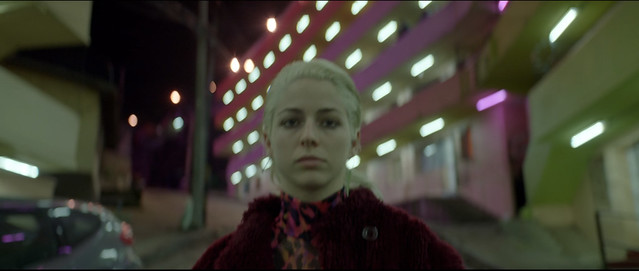
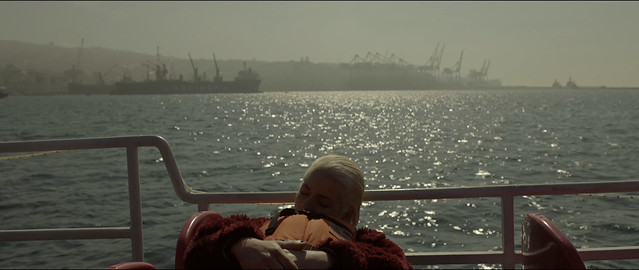
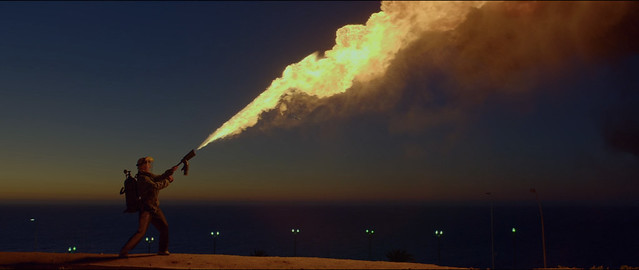
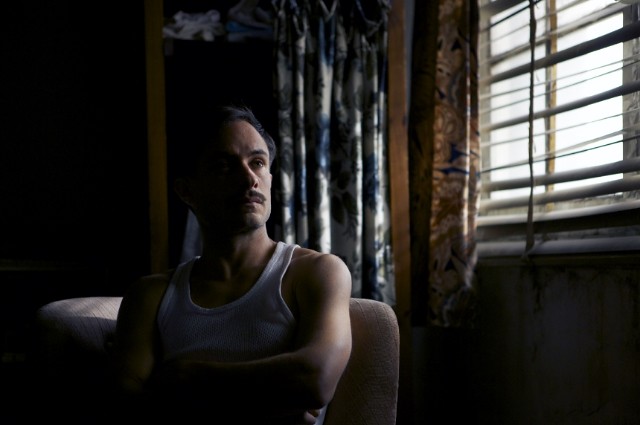
Ema (Mariana Di Girólamo) is in any way a mom material. She is first seen torching the traffic signal in the middle of the night in the Chilean city of Valparaiso with her flame thrower. This sleek platinum blonde beauty is a dancer in a group who dances street dance known as Reggaeton. She is in divorce proceedings from Gaston (Gael Gacia Bernal), a choreographer of the group, 12 year her senior and a foreigner. She also maintains numerous amorous relations within her team, mostly comprised of female persuasion. 

Ema-Gaston backstory is that Gaston can't conceive a child. So they adopted 12 year old Colombian boy. But when things got tough and the boy tried to burn down the house and half of Ema's sister's face (got that tendency from mom obv), they gave up the boy and sent him back to the system. The rest of the movie is Ema trying to get the boy back by manipulating her way into the boy's new adopted parents' lives.

It's fun, horny movie that torches the traditional notion of motherhood into oblivion. 

Last October, Chile overwhelmingly voted (78 percent!) to rewrite their constitution which was written in the military dictatorial years of Pinochet which was supported by American government of course. Argentina just voted to legalize abortion. Seeing yesterday's shenanigans at our nation's capitol where Trumpers stormed the halls of our House chambers and reading the reactions to it online, one thing that struck me is that we as a society failed miserably for our next generation. No one under 40 will ever trust our government ever again to do anything right.  In this context, Ema is as much of a rebuke of the old generation than anything else. Who are we to judge what's amoral or what is a right thing to do? Burn the shit down!

Energetic with fuck-all attitude, Ema is a new breed of filmmaking that signals the arrival of the next generation who are more empowered and care-free, as if saying "whether we like it or not, the future is ours." I tend to agree.

Thursday, December 15, 2016

Poetic License

Neruda (2016) - Larrain
Neruda - Gael García Bernal
Despite its title, Neruda is not a typical biopic about the famed Nobel laureate and Chiléan national treasure Pablo Neruda, though it does feature the poet (adroitly played by Luis Gnecco) on the lam. But the film is more to do with the power of his poetry or, dare I say with a straight face, the transcendent power of art.

Neruda has all the ingredients of an 'award winning' film. Unlike all the heavy handed, self-important and mostly boring award winners, however, it floats around like a cloud while retaining all the artistry, elegance and poignancy without missing a beat. Immensely watchable and wildly entertaining, Neruda, along with his other release of the season Jackie, proves that Pablo Larrain has emerged as one of the major talents in contemporary cinema.

Neruda starts with a voice-over of a police prefect, speaking disdainfully about then senator Neruda. 'That fat communist,' he calls the poet. He is revealed later as inspector Oscar Peluchonneau (Gael Garcia Bernal). The year is 1948: Chilé elected Gabriel Gonzalez Videla a couple of years before, but Gonzalez betrays his radical left upbringing and starts hunting down his former communist friends, including Neruda, once his ardent supporter. Surrounded by his admirers and comrades-in-arms and his rich aristocratic Argentine wife Delia (Mercedes Moran) in tow, Neruda goes 'underground.'

Not willing to leave his beloved country nor give up his bourgeois tendencies -- visiting his beloved whorehouses and throwing wild parties whenever he can -- Neruda exposes himself to dangers of being captured and jailed, while Delia suffers quietly, locked in various safe houses. So begins the very loose game of cat-and-mouse between Peluchonneau and Neruda.

The hard as nails inspector has many close calls of crossing paths with the fugitive but the fat, bald man always sneaks away, always leaving the same detective novel for Peluchonneau to pick up. As the film progresses in its dreamlike, at times surrealistic way, both we and the inspector himself begin to wonder if he were a creation of the mind of the poet? Is he a mere supporting character in an unfolding narrative?

Larrain and writer Guillermo Calderón (Violetta Went to Heaven, The Club), with the help of fantastic acting from the entire cast, expertly move the focus from the famous historical figure to his art. Neruda is seen as a womanizing bourgeoisie, a so-called champaigne commie. But it's his beautiful poetry that captured the heart of the working class. Everywhere he goes, people ask him to recite his poems. From a drag queen in a whorehouse to a street urchin, to strikers and political prisoners, his poetry gives them a voice.

Sergio Armstrong (Young and Wild, No)'s fluid camerawork-- 360 degree long takes, plenty of anamorphic lens flares and full of light-- owns the film's borderline dreamstate quality. Shot digitally but with one 35mm anamorphic lens to have that old timey film look (more grains, soft edges), Neruda is definitely one of the most beautifully shot films in recent years that beckons to be seen on a big screen.

As Peluchonneau tracks down Neruda to the snowy Andes, the film takes another one of its many unexpected turns and becomes a metaphysical road movie - that it's not Neruda the person the inspector is after, rather, it's an idea of Neruda: a mirage or something unattainable, like his poetry, as it leaves your mouth and becomes something intangible but unequivocally meaningful.

Treading boundaries of reality in a free form that is unquestionably cinematic, Larrain achieves something very special with Neruda. It's a beautifully crafted film that feels completely effortless and airy. It is clever, playful and fluid yet not too showy, emotionally resonant yet not corny. It's a political treatise, yet it doesn't take itself too seriously. But it doesn't make light of the persecution and people's suffering either. Neruda is a great achievement in cinematic art form.

Neruda opens in the US on Friday, December 16.

Monday, June 1, 2015

Damaged Goods

Il futuro/The Future (2013) - Scherson
 photo 8b53a354-4605-4ecd-b78e-b311dbb30005_zpsurybhhyt.jpg
Based on Bolaño's novel A Little Lumpen Novelita which I haven't read, Il Futuro tells about two adolescent Chilean siblings living in Rome, recently orphaned by car accident- Bianca (Manuella Matelli), slightly older than her brother Tomas, who is still in high school. In order to get their dead father's pension and preventing Tomas to go to an orphanage, Bianca accepts the responsibility of being the head of the household, suggested by a social worker. Soon they are living in filth- cigarette butts everywhere, unwashed dishes pile up, leftovers strew the floor. Bianca starts working at a hair salon as an apprentice and Tomas at a local gym. Easily impressionable, Tomas brings two young trainers (who shows him how to break the cable code so he can watch porn) from the gym in to the house and they start living in their with them, doing dishes and taking charge of cooking. Bianca in turn starts having sex with them regularly.

One day the trainers have a plan: there is an old English or Australian recluse (Rutger Hauer) living in a mansion. He is a retired movie star/former Mr. Universe, who used to be known as Maciste (old Hercules style sword-sandal action movie hero). He must have a safe of some sort in his house. Maybe Bianca can sacrifice herself a little, earn his trust and rob him. It will be a big break for all.

Bianca finds out that Maciste is blind the first night when he put massage oil all over her naked body. For some reason, those lunkheads didn't mention his disability. Night after night, one intimate encounter after another, having great conversations, Bianca falls for this old man. Does he feel the same way about her, or is she just another whore at his disposal?

The way it is shot and its hazy atmosphere, Il futuro has an enigmatic quality that pulls you in. Matelli, with her cat eyes, small body and asymmetrical hairstyle is stunning as a girl who is thrown into an adulthood. With strong acting from both Matelli and Hauer, Alice Scherson makes the film about two damaged individuals getting together very poignant and seductive without ever becoming sentimental. Great premise, I'd love to read the book now.

Monday, July 28, 2014

This Dream That One Calls Human Life...

The Dance of Reality (2013) - Jodorowsky
 photo 9d3ee443-8f14-4ba6-85fd-47fd874430cd_zps4279ee35.jpg
Jodorowsky gives all with this self-reflexive masterpiece based on his childhood full of magic, dreams and melancholy. His father (played by his son, Brontis Jodorowsky, finally getting a hammy lead role he deserves), a Russian communist Jew transplant in Tocopillo, Chile, was a spartan atheist who was determined to make a man out of young, frail Alejandrito (Jeremias Herskovits). His buxom mother (Pamela Flores) who delivers all her lines in soprano was a believer and a saint. Jodorowsky runs wild with realizing his vision with the help of some unobtrusive CGI. You realize where his fantastic imagery and obsessions come from as you watch the film: circus folks, drag queens, sages, priests, vivrant colors, maimed limbs. But this time, they are not there for a mere shock value, but memorialized fondly as he reminisces them with great amplification. The film makes a big turn and we follow the father to Santiago as he tries to assassinate the military dictator Ibanez. He succeeds in earning the general's trust but fails at the opportunity as his hands are suddenly paralyzed. His odyssean journey back home is truly epochal.

If Woody Allen used humor to exorcise his childhood and Jewishness, Jodorowsky does with surrealism and weird freakishness. His sensibility comes from being a forever persecuted stranger commie Jew without a homeland. In this dream we called life, Jodorowsky is dreaming us, us playing part as audience. Who's dreaming Jodorowsky the filmmaker? Cinephiles of course. The Dance of Reality is his much softer, lyrical contemplation of life. One of the year's best.