The Beast (2023) - Bonello
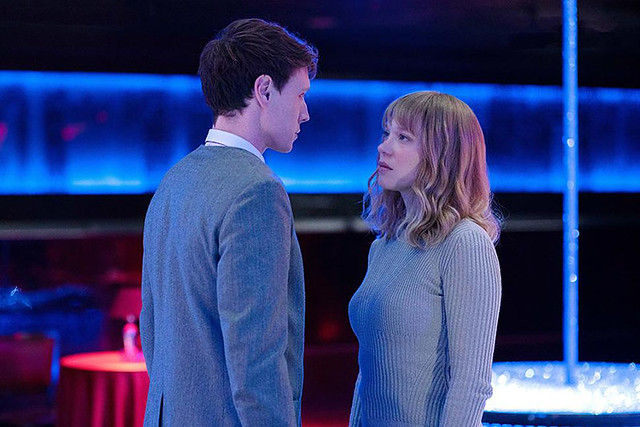
With arresting visuals and seductive filmmaking, Bonello has been chronicling our troubled 21st century like no other, with a string of films that are pretty, but not too pretty: House of Tolerance (sex workers rights), Nocturama (aimless angst of youth), Zombie Child (haunted by colonialism). and most recently Coma (Covid-19 lockdown). This time, Bonello is freely adapting Henry James's turn-of-the-century novella, The Beast of the Jungle, which tells of two would-be lovers forever beset by a sense of doom always hovering over them. It is a good parallel he is drawing with the state of things here and now.
The dawn of the 20th century was an exciting time, both socially and politically. And the possibilities with the advancement in science and medicine were endless, at least for the citizens of the first world. But there was also volatility in every corner of the street. Violence, disease, extreme wealth and poverty and uncertainties everywhere. Bonello taps on that anxiety with The Beast, a beast of a film, with these hefty ideas swirling around and stylized to perfection, also greatly helped by mesmerizing performances by Léa Seydoux and George MacKay. This timeline-jumbled, massive film is set in three distinctive time periods (1904, 2014 and 2044); Bonello effortlessly shifts from one point to another.
We first see Gabrielle (Seydoux), an actor playing a scene against a greenscreen on a soundstage. The off-stage direction tells her she is supposed to be afraid of some monster that will be filled in later, with a close-up of her frightened eyes dotting side to side. The only prop she has is a small knife she takes up to protect herself. When the invisible monster appears, she shrieks, and we are presented with an ugly digital smear along with the title sequence. Then we jump into 1904, which plays out like a typical Victorian-era period film. In beautiful dresses and constant close-ups, Seydoux has never been more radiant as Gabrielle, a married, upper-class woman living in Paris with the thought of impending doom.
She meets a British man, Louis (MacKay), whose life is entwined across time with that of Gabrielle's. He hears her feelings of omen and swears to protect her from it when it happens. And it does happen when the city floods, making historical connections with the 'flood of the century of 1910,' which submerged Paris for weeks.
In 2044, it's AI that rules the world, and the humans will need to undergo a medical procedure to cleans their DNA of any generational trauma, in order to be more productive members of society. It's their emotions that hamper whatever work they do. Gabrielle has reservations about the procedure. Wouldn't it erase what makes her herself? Yet, she can't get quite get rid of the sense of doom she has had since she was a child. Bonello is suggesting that this angst is what makes us human. Something that we have to carry around all the time. The melancholy and pessimism are ingrained in us, considering the world is hurtling toward ecological disaster. and its speed and ferocity are only accelerating.
A doll is an recurring theme throughout. Gabrielle's husband is an owner of a doll factory. The production is in transition from porcelain to silicon to be current with the times. Louis asks if all dolls have their own expressions, and she demonstrates their neutral face by freezing herself with a blank expression for several minutes for our amusement. Indeed, you can't deny Seydoux's porcelain beauty in her close ups. It goes the same with MacKay's pale face, in his period costumes. The doll factory also provides some spectacularly beautiful sequences when it catches fire during the flood, and the would-be lovers are forced to escape by swimming underwater for the exit. Then there is Kelly, played by Guslagie Malanda from Saint Omer, a doll assigned to help Gabrielle to better acquaint with the AI-dominant future. Then there's a Chucky-inspired talking doll in the Los Angeles part of the film.
Now we are back in 2014, and the images are mostly shot with crude cellphone-video aesthetics. Gabrielle is an actress in LA, milling about taking auditions for modeling and acting jobs. Louis is now a 30-year-old incel spouting YouTube manifestos and planning to kill all the girls who rejected him. It's interesting that Bonello is connecting the bowed celibacy of Victorian era to the incels of the YouTube age here, perhaps making fun of the seriousness and self-importance in both eras. With an opulent LA glass house with security monitors, the cat and mouse game playing and replaying out, the film is definitely in Haneke's Funny Games territory.
This is the thing - the images and sequences in The Beast often reminds us of the best of cinema, culled from, namely, Haneke, Lynch and Resnais. Bonello is certainly aware of the facsimile of images or sequences or even feelings. Watching it, my thoughts immediately connected with the debate in the art community about AI's takeover amid rising authenticity and copyright issues.
Back to the future, just like Last Year at Marienbad, These two would-be lovers find each other across time, again and again. Humans go to time specific theme clubs to mingle in 2044. One day it's 1972, another day it's the 1980s, another day it's 1963, and so on, accompanied by great music from those decades, trapped in generational trauma and memories of past lives, helpless to their fate to never be together.
The Beast is perhaps the most ambitious, seductive film that Bonello has ever done, filled with ideas to the brim. It also features the career-best performance by Seydoux. It's my frontrunner for the best film of the year.


 Mark Jenkin, a Cornish purveyor of celluloid art, has been shooting his films exclusively on 16mm film on Bolex camera, now comes up with time traveling, seafaring film with great efficiency and intrigue with two big movie stars, George MacKay and Callum Turner, as a couple of hired fishermen off the Coastline where Jenkin comes from.
