Showing posts with label Léa Seydoux. Show all posts

Thursday, April 30, 2026

If Trees Could Talk

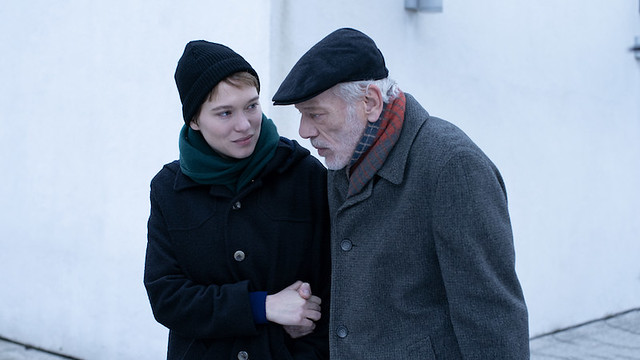
Silent Friend (2025) - Enyedi Silent Friend After delving into the contemplation on nature with 'all animals are sentient creatures' message in her film, On Body and Soul in 2017, Hungarian filmmaker, Ildikó Enyedi, presents Silent Friend, a loosely connected three narratives dealing with our connection with trees across time, observed by 200 year old ancient ginkgo biloba tree.

Tony Leung (making his first European production appearance) plays Dr. Wong, a renowned Hong Kong neurologist, who gets marooned in a medieval looking university campus in Marburg, Germany, due to Covid outbreak. He was conducting an experiment on how the human brain functions differently in babies from that of adults. In a lecture with a bouncing light ball in darkened room, he gives an example with spotlight consciousness (adult brains- concentrate on one thing at a time), and lantern-light consciousness (babies- open to surroundings more and their concentration differs as their attention shifts more freely like a floating ball). Now due to Covid, all the students and faculty are cleared out. Wong's research is on hold. His perky German-Chinese assistant is only communicable through zoom sessions, and he is the only one left in the whole empty campus with a cranky German custodian who serves him daily meals while keeping distance in accordance with the pandemic restrictions.

The second story starts in black and white with Grete (Luna Wadler), a bright student attending the same Marburg University studying botany. It's the turn of the century and she experiences blatant sexism from a sea of male students and faculty. In a cringe-inducing selection process in front of the all old male committee, Grete is interrogated mercilessly through the texts of Carl Linnaeus, whose classification of plants based on their sexual organs which was groundbreaking at the time. The societal prejudices and sexual insinuation against young learned women bleed into her life, Grete loses her lodging and finds solace in an old photographer's studio as an assistant, where she explores her artistic freedom and sexuality.

The third narrative thread concerns introverted Hannes (Enzo Brumm), who has a love/hate relationship with nature, due to his rural upbringing, falling for fellow university student Gundula (Marlene Burow) who has a lab experiment set up in her dorm room. The setting is in the 1970s - counterculture, drug use and free love. Gundula tries to record her geranium's reaction to humans, because she believes our silent friends- plants, trees, fungi, etc, want to communicate with us as much as we do with them.

While being stuck in isolation, Dr. Wong contacts a fellow scientist Alice Sauvage (Léa Seydoux) who specializes in communicating with plants, and decides to conduct an experiment on the ancient ginko tree right in front of his temporary residence at the university. But he has to deal with the German Gatekeeper, who is suspicious of his activities and is actively trying to sabotage his experiments.

With all these intersecting stories and through breathtakingly beautiful images (by Gergely Pálos, About Endlessness, Pigeon Sat on a Branch Reflecting on Existence, shooting in digital for 2020 section, 16mm film for 1970 and 35mm film for 1908), Enyedi tells our relationship with nature and by extension, among ourselves. Dr. Sauvage tells Dr. Wong via zoom that she sees lonely souls when she enters a garden. Male ginko trees separated from their female counterparts for landscaping reasons.

Tony Leung is aging like a fine wine. He carries the film with hefty philosophical implications with ease and elegance. His soulful, searching eyes and his wrinkles add to the wisdom and intelligence of his character, draping over simmering underlying sexual tensions in the film. He also does a tai-chi session in the garden completely naked.

Throughout these interconnecting stories, Enyedi makes us contemplate the fact that while a ginkgo tree can live up to a thousand years, observing us silently, as generations of us live and die in its time.

Silent Friend can be seen as narratively unsatisfying, by not tying up its threads neatly enough. But it reminds us that fleeting human existence and brief, yet meaningful connections that are what matters, in the eons of time.

Silent Friend opens on May 8, in conjunction with the Tony Leung retrospective at Lincoln Center - The Grandmaster: Tony Leung.

Friday, October 6, 2023

Overhanging Dread

The Beast (2023) - Bonello la-bete-the-beast With arresting visuals and seductive filmmaking, Bonello has been chronicling our troubled 21st century like no other, with a string of films that are pretty, but not too pretty: House of Tolerance (sex workers rights), Nocturama (aimless angst of youth), Zombie Child (haunted by colonialism). and most recently Coma (Covid-19 lockdown). This time, Bonello is freely adapting Henry James's turn-of-the-century novella, The Beast of the Jungle, which tells of two would-be lovers forever beset by a sense of doom always hovering over them. It is a good parallel he is drawing with the state of things here and now.

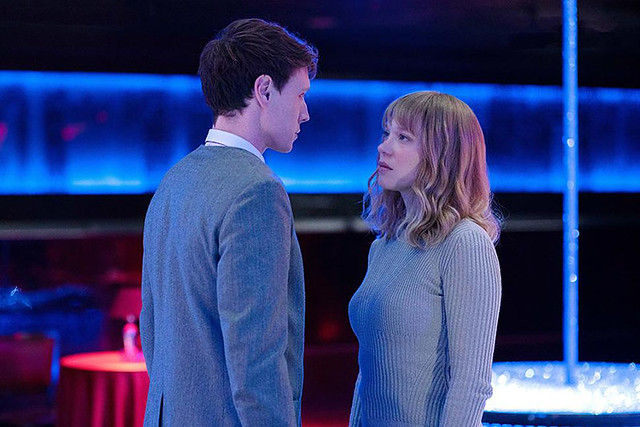
The dawn of the 20th century was an exciting time, both socially and politically. And the possibilities with the advancement in science and medicine were endless, at least for the citizens of the first world. But there was also volatility in every corner of the street. Violence, disease, extreme wealth and poverty and uncertainties everywhere. Bonello taps on that anxiety with The Beast, a beast of a film, with these hefty ideas swirling around and stylized to perfection, also greatly helped by mesmerizing performances by Léa Seydoux and George MacKay. This timeline-jumbled, massive film is set in three distinctive time periods (1904, 2014 and 2044); Bonello effortlessly shifts from one point to another.

We first see Gabrielle (Seydoux), an actor playing a scene against a greenscreen on a soundstage. The off-stage direction tells her she is supposed to be afraid of some monster that will be filled in later, with a close-up of her frightened eyes dotting side to side. The only prop she has is a small knife she takes up to protect herself. When the invisible monster appears, she shrieks, and we are presented with an ugly digital smear along with the title sequence. Then we jump into 1904, which plays out like a typical Victorian-era period film. In beautiful dresses and constant close-ups, Seydoux has never been more radiant as Gabrielle, a married, upper-class woman living in Paris with the thought of impending doom.

She meets a British man, Louis (MacKay), whose life is entwined across time with that of Gabrielle's. He hears her feelings of omen and swears to protect her from it when it happens. And it does happen when the city floods, making historical connections with the 'flood of the century of 1910,' which submerged Paris for weeks.

In 2044, it's AI that rules the world, and the humans will need to undergo a medical procedure to cleans their DNA of any generational trauma, in order to be more productive members of society. It's their emotions that hamper whatever work they do. Gabrielle has reservations about the procedure. Wouldn't it erase what makes her herself? Yet, she can't get quite get rid of the sense of doom she has had since she was a child. Bonello is suggesting that this angst is what makes us human. Something that we have to carry around all the time. The melancholy and pessimism are ingrained in us, considering the world is hurtling toward ecological disaster. and its speed and ferocity are only accelerating.

A doll is an recurring theme throughout. Gabrielle's husband is an owner of a doll factory. The production is in transition from porcelain to silicon to be current with the times. Louis asks if all dolls have their own expressions, and she demonstrates their neutral face by freezing herself with a blank expression for several minutes for our amusement. Indeed, you can't deny Seydoux's porcelain beauty in her close ups. It goes the same with MacKay's pale face, in his period costumes. The doll factory also provides some spectacularly beautiful sequences when it catches fire during the flood, and the would-be lovers are forced to escape by swimming underwater for the exit. Then there is Kelly, played by Guslagie Malanda from Saint Omer, a doll assigned to help Gabrielle to better acquaint with the AI-dominant future. Then there's a Chucky-inspired talking doll in the Los Angeles part of the film.

Now we are back in 2014, and the images are mostly shot with crude cellphone-video aesthetics. Gabrielle is an actress in LA, milling about taking auditions for modeling and acting jobs. Louis is now a 30-year-old incel spouting YouTube manifestos and planning to kill all the girls who rejected him. It's interesting that Bonello is connecting the bowed celibacy of Victorian era to the incels of the YouTube age here, perhaps making fun of the seriousness and self-importance in both eras. With an opulent LA glass house with security monitors, the cat and mouse game playing and replaying out, the film is definitely in Haneke's Funny Games territory.

This is the thing - the images and sequences in The Beast often reminds us of the best of cinema, culled from, namely, Haneke, Lynch and Resnais. Bonello is certainly aware of the facsimile of images or sequences or even feelings. Watching it, my thoughts immediately connected with the debate in the art community about AI's takeover amid rising authenticity and copyright issues.

Back to the future, just like Last Year at Marienbad, These two would-be lovers find each other across time, again and again. Humans go to time specific theme clubs to mingle in 2044. One day it's 1972, another day it's the 1980s, another day it's 1963, and so on, accompanied by great music from those decades, trapped in generational trauma and memories of past lives, helpless to their fate to never be together.

The Beast is perhaps the most ambitious, seductive film that Bonello has ever done, filled with ideas to the brim. It also features the career-best performance by Seydoux. It's my frontrunner for the best film of the year.

Tuesday, January 24, 2023

Life's Curve Balls

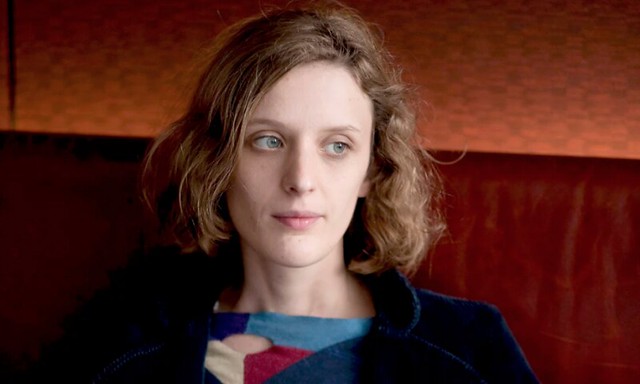
One Fine Morning (2022) - Hansen-Løve One Fine Morning After experimenting with the self-reflexive Bergman Island where she explored the origins of the artistic inspirations and the nature of art influencing life and vice versa, esteemed writer/director Mia Hansen-Løve comes back to her usual theme of grief and passage of time with quietly devastating yet lovely, One Fine Morning. The theme, I truly believe, that no other contemporary film directors can put in words and on screen, as acutely and sensitively as she can. With exceptional script and acting, One Fine Morning is a finely composed filmmaking at its best.

Léa Seydoux plays Sandra, a Parisian widow juggling life with tending to her grade school daughter, taking care of her aging father while working as a translator. She leads a relatively quiet existence with her loving daughter Sarah in her tiny apartment. She is a learned woman who speaks several languages and is very efficient at her job. But it's her father, Georg (Pascal Greggory) who's in sharp cognitive decline, and in great need of help with everything from opening the front door of his flat, to going to the bathroom. He often forgets where he is and where he places things. With her siblings busy with their own lives, it seems the duty to look after him largely falls on Sandra. As she and her mom/Georg's ex (Nicole Garcia), discuss the next steps, she realizes that Georg is facing grim prospects- Retirement home in Paris is expensive, has a long waitlist, and his pension alone will not cover it. And they've heard so many horror stories about the condition of many of these establishments. They are pretty much a waiting place for undignified death. He will also need to sell his flat, which is filled to the brim with books, as he was a scholar and a teacher. 'What do we do with all of his books?' Sandra wonders out loud. 'These were his life.' Françoise, maybe cold but more practical, tells her that they will have to throw away most of them. 'Why don't you just burn them?' She quips. Hansen-Løve doesn't shy away from all the life's complications. These are real quandaries people actually face in life. So is love and relationship.

Sandra finds love in an unexpected place. She runs into Clément (Melvil Poupaud), an acquaintance of her dead husband, at a playground while playing with her daughter. He is married and has a young son. He is an astro-chemist and takes long expedition trips to the remotest areas. There is a mutual attraction and they can't help but fall for each other. But he is not ready to leave his family for her. This is again, another added complication Sandra wasn't really looking for in life. Even though she still pretty young, she had given up on any romance long ago, resigned to the idea that part of her life is already over. But life throws curve balls at you like that.

It is almost unthinkable to see Seydoux, a glamorous international movie starlet as a sad, frumpy, middle aged single mom. But with short haircut and no makeup in her mom jeans, she is remarkably natural as Sandra, who thinks she is over her prime, weathering life's problems. In her understated way, Seydoux conveys Sandra's enormous compassion toward her father and deep understanding of his predicament - a brilliant academic whose age rapidly robbing away at what he once was and awkward shyness of finding herself to love and be loved again which she already had given up on. It is by far the best performance of her career if not the most poignant. Greggory, once a dashing leading man in French cinema not twenty years ago, plays demanding role of a brilliant mind in cognitive decline. Garcia gives matter of fact, no nonsense woman who provides much needed dry humor as she banters with her new husband about the state of French politics, portraying the embodiment of a Macron liberal. Poupaud is also on point with nerdy energy and charm, equally surprised by his own forwardness with the declaration of love.

As with all of her previous films, Hansen-Løve is a keen observer of fleeting life. This time she is tackling the theme of aging and decline, which is not a subject many filmmakers touch upon. This is part of life many people don't want to think about but fast becoming an issue as the elderly population grows larger. It makes you think about the attitudes towards elderly. Once brilliant, vibrant minds who need our compassion and treated with dignity, not pity and sympathy. Because we will all become old one day. One Fine Morning, as the simple title suggests, all we can do is face the life one day at a time. Leave all the sorrows of yesterdays behind because there will be another beautiful morning tomorrow.

One Fine Morning opens 1/27 in New York and Los Angeles. National release will follow.

Cinema Saved My Life: Mia Hansen-Løve on One Fine Morning

Mia-Hansen-Love It's always a pleasure to talk to Mia Hansen-Løve, one of my favorite contemporary directors in French cinema. Her astute observations of life and time passing always gets me. Her new film One Fine Morning, featuring mega movie star Léa Seydoux in an unrecognizable role as a single mother who juggles motherhood, aging parent and love, is a truly touching and moving film. The interview was conducted via Zoom in December. We talked about the film in detail, about Seydoux, her obsession and how filmmaking saved her life!

One Fine Morning opens 1/27 in theaters in New York and Los Angeles. The national roll out will follow.

The title of the film One Fine Morning/Un beau martin is a simple one and it reminds me of Yasujiro Ozu’s. The theme of time passing and family relations are all familiar Ozu territory. Is it safe to assume Ozu’s influence in your films?

Thank you for comparing my films to Ozu’s. I am a big admirer of his films. Yes. I loved his minimalism and also how restrained his style is, the way he looks at life without adding documentary to it, how he presents it straight with proper distance, proper frame and proper rhythm. There’s a feeling of truth, you know. I don’t pretend to say that I do the same way. I’m trying to find my own language, but I am sensitive to that kind of philosophy of filmmaking. His film Late Spring, for instance, haunted me a lot. There’s a lot of father-daughter relationships in Ozu’s films. It’s the subject I am very sensitive to.

I don’t know if I can say I ‘chose’ the title. One Fine Morning. It was some kind of illumination. During the writing process, the title just appeared to me. It was the same for my first feature, All is Forgiven. You don’t even know why, but there it is, and that is the title. I like it because it was not an intellectual process. It’s there where it should be. The title has to impose itself and then you can intellectualize about it and find reasons to it, not the other way around. Those are the best titles. Now I know what the title means: there’s the notion of the beginning, of clarity. Clarity is a word that matters to me a lot as a writer and a director but also as a person in my life. I enjoy that the notion of clarity in this title. But there is also a fairytale aspect of it. Do you know il était une fois, in German it’s Es war einmal…

You mean ‘Once Upon a Time…’?

And to me One Fine Morning is another kind of ‘Once Upon a Time’. There is something that has to do with storytelling and innocence. It’s like the lullabies in my films I use. I love lullabies in my films and it connects with the childhood, also we hear them as adults too and there’s a connection with this title as well. It’s a poetic idea of course.

Something like a New Beginning.

Yes, new beginning and it’s a difficult story and a sad story but there is a pleasure of a story being told. There’s something cathartic about fairy tales. We love to be told stories. It’s all unconscious though. I am thinking about it now and analyzing it now. (laughs)

I think choosing that title has to do with the desire of not only dealing with harsh reality but also has to do with romantic, cathartic way to hear stories and to tell stories.

Speaking of music and speaking of lullabies. I noticed Jan Johansson’s music in the beginning. Is there a story behind it?

Do you know Jan Johansson?

I’ve heard of him, but since I saw your film, I’ve been listening to him a lot.

I have to confess something I did here that I'd never done and probably will never do again, I stole that track from one of the lesser known Bergman films--

Ah.

The film that I love, it’s called The Touch. If you have seen the film, it would make sense. The two films have something in common in a way – an adulterous passion outside of a marriage. It’s a Bergman film that has been haunting me when I was preparing the film. And that music was haunting me so much that I couldn’t think of any other melody for my film. The music was not composed for Bergman by the way, it existed before. And I am using it again.

Interesting. Good to know.

Thinking about the role of Sandra. I wasn’t expecting Léa Seydoux in that role. Seydoux is a glamourous movie star and here she plays a single mom without any makeup. How did you get to choose here for the film?


Yes she is glamourous and yes she can be sophisticated in films and as a person too, but there is also a rawness about Léa. It’s not only that she plays with simplicity and rawness, but also there’s something almost masculine side of her. You feel she can be both, which is quite special, even without knowing her personally. While working with her it is quite apparent that her rawness is almost Bressonian. I find her presence very strong. On the one hand she has this star quality about her on the other hand, she is extremely simple and plain in her acting, like an Ozu or Bresson actress – she doesn’t force anything, there’s no intention and that’s all I care about when I deal with actors. I still love working with unknown, non-actors and with children and teenagers, as well as working with Isabelle Huppert, Vicky Krieps or Nicole Garcia. Both cases, what I care about is innocence. That’s what I admire. And sometimes it’s challenging when I work with actors who has great deal of experiences. It’s challenging to have them get rid of all their habits and let them show themselves as who they really are, and not pretend, you know. With Léa, it was incredibly easy. Easy for me at least. It’s what I am looking for in actors. She preserved the quality of innocence in her acting. It’s so easy with her, it’s almost embarrassing for me. Even with all the films with all these directors, she still has that innocence about her. Even more impressive is the emotions she brings on set. I mean, all the actors know how to cry on command, but it can be very mechanical without emotions. But when Léa cries in the scene, I cry. It never happened to me before. It’s hard to tell with her if she is acting or really living the scene. It is almost disturbing. Even when it’s not in the script, in some moments, just reading the lines with Pascal (Greggory) who plays her father, she becomes very emotional. She becomes the character and they become virtually the same.

Pascal Greggory’s character, once an intellectual person who is losing himself due to Alzheimers was heartbreaking. I was thinking about the physicality of your being. That all you have left at the end is your books. Do you think about your mortality often and what you will leave behind? Is that what this movie is partly about?

I think of that all the time. (Laughs) That’s why I started making films when I was 18 years old. I was obsessed with passing of time and what we are going to leave behind, at the age when you are not supposed to think about those things. I think that’s partly why I became a director. Some people would say naïve, but for me it was very efficient way of fighting against time and destruction it brings. The fact that life and death happen and time carries on and vanishes everything… I had that obsession ever since I was young. That makes me say today that I was a very melancholic young woman. And that’s why I say sometimes that cinema saved my life. Because cinema brought me back to the present. It made me enjoy the moments. It made me feel more rooted, thanks to the intensity of making films, especially the actual production (shooting). The intensity made me feel that I was alive and present in life, you know. Before I discovered making films, I always felt a little bit disconnected – the awareness of the passing of time took too much space in my head and it unbalanced my life. It all started there for me. I think it’s easier for me now but that obsession is still part of who I am. It influences my inspiration and my characters and art.

The father character who figuratively disappears which is inspired by my father. It is difficult to see my father disappear. But I want to and need to believe that there’s something remains. When I made this film, I am trying to meditate on that. I don’t want to cheat or tell lies to myself. I am trying to look at life the way it is. But I am trying to look further and find meaning to that. And I am trying to cling on to the idea that there is a soul, even with or without believing in god. And I am trying to approach the idea of what a soul is.

You will not be forgotten. I can tell you that.

(Laughs) I was talking about my father…

I know.

Tuesday, May 31, 2022

Its Soul Got Sucked Out

Crimes of the Future (2022) - Cronenberg Crimes of the Future Hardly reinventing the wheel, but with Crimes of the Future, David Cronenberg reiterates his usual theme strongly- inadequacy of human bodies and our soulless society. Crimes might lack his usual titilation and shock value, but it's still quite potent in making those points, more so than his better films over the years, namely - Dead Ringers, Crash, Cosmopolis and even Dangerous Methods.

Crimes of the Future presages with a disturbing beginning where a mother murders her own child after the young boy starts chomping at the plastic garbage bin in their bathroom. It's the indescript near future where human bodies evolved to a point that they don't feel pain or in needs of anticeptics when the knives cut into them. Saul Tenser (Viggo Mortensen) is a performance artist. He and his partner, a former surgeon Caprice (Léa Seydoux) performs a sort of live autopsy on Saul's torso. It's Saul's ability to will a new organ that serves no function to his body and Caprice's tattooing and removing the organs that make them the superstars of this seemingly still unlawful and underground art form.

Saul, always shrouded in veils and hunched over, is physically not well. Either his mutations made him always brittle and ill, or his performances left him looking like a MS sufferer; he spends most of his time in the aide of a cocoon like bed hanging from the ceiling - a true cronenbergian contraption that looks like an upside down cockroach and a skeletal chair that helps him feed.

Their registering the new organs at the very literally named Organ Registy Office, a dreamy, Kafkaesque reimagining of what 'institution' looks like, connects the pair to a nebbish bureaucratic hottie Timlin (Kristen Stewart in a very comical performance), who breathlessly praises Tenser's artistry. Surgery is new sex, she declares. The dead child's father, who's also training his body to the effects of poison, approaches the pair and offers his son's body for the performance. Do they perform the live autopsy of the boy in front of the live audience or no?

Watching Crimes of the Future immediately reminded me of the famed painting by Rembrandt - The Anatomy Lesson of Dr. Nicolaes Tulp. In it, spectators surround a recently deceased corpse and Dr. Tulp is explaining the denuded musculature of the corpse's left forearm. Yet, the spectators' attention is not with the corpse but elsewhere and they are not even noticing the inaccurate arm (it's the right hand depicted instead of the left). Rembrandt was commenting on the inadequacy of seeking knowledge and truth in the human body in the Age of Enlightenment. And this is the point Cronenberg has been making all his career- our futile quests for answers in what makes us humans, in our bodies which are the most personal, tangible things that each of us possesses, and not finding it there. And pursuing so hard to find something in all the blood and guts, you lose sight of whatever the humanity that's left in us. In a way, Cronenberg is going back to the basics - to the flesh after more cerebral musings in searching for the soul (Dangerous Methods, Cosmopolis). Crimes of the Future is less kitschy and much less over the top parody like History of Violence or Maps to the Stars. And its general mood is closer to Spider and Dead Ringers. But nonetheless it's undeniably Cronenbergian and great.

Wednesday, December 8, 2021

France Finds Faith in a Celeb TV News Personality

France (2021) - Dumont p Bruno Dumont has tried everything, from a sobering police procedural (Humanité) to a symbolic take down of the US hegemony and violence (Twentynine Palms) to an unflinching biography (Camille Claudel 1917) to a slapstick comedy TV series (P'tit Quin-Quin) to heavy-metal period musical(s) (Joan of Arc Series), all the while working with non-actors and big time movie stars alike. His diverse filmography has drawn comparisons to works of such auteurs as Bresson and Dreyer, both in method, form and spirituality. 


With French superstar Léa Seydoux in a title role in France, he surprises us once again, with an astute take on the role of the media in our complicated world where trust and belief are hard to come by. 


Seydoux fits right in as glamorous France de Meurs (rather unsubtle wordplay and metaphor), a big haired, famed TV personality in designer clothes and posh apartment. She practices combat journalism where she throws herself into the world's hotspots and edits news segments in such a way to be seen as a brave, noble and caring journalist.

Her tit-a-tat with politicians -- including cleverly edited actual TV conference footage of French President Emmanuel Macron, and a Crossfire-style news segment she hosts with political pundits -- bring her fame and fortune. She indeed is the defacto face of French TV infotainment.


But a fender-bender with a delivery man on a bike puts France into a mid-life crisis where she questions every choice she has made in her career, including her loveless marriage to a semi-famed writer Fred (Benjamin Biolay), and parenthood. Meeting with the man's parents, who are disabled and unemployed, takes her out of the affluence bubble a bit as well.

Is she playing the part of a saint on camera or is she trying to get some instant points on her karma? Dumont, with many of the film's slow zooms into the close-up of Seydoux's alabaster face and painted lips, in which she looks straight at the camera, never makes it clear.

One thing for sure is that she is unhappy. France declares her retirement from her TV career in her show while tears stream down her face.


To avoid public scrutiny, and trying to figure out her next step, France flees to the German Alps, into a very exclusive mountain retreat health clinic where the rich and famous go to rest and rejuvenate. She meets a charming and unassuming young man, Charles (Emanuele Arioli), there and they have an affair, only to find out he is a journalist implanted to write about France in a magazine.


TV and being famous are the only things she knows how to do, so she gets back to the TV world, only to stumble when her carefully organized boat ride with immigrants fleeing their 'oppressive regime' segment goes on live with an off-screen conversation between her and her wisecracking producer Lou (Blanche Gardin), in which they disparage immigrants, without knowing their mics were still on.


France is not quite a media culture, first-world liberal satire. Sure, there are few laughs here and there, including a slo-mo car crash that are too stupendous to be taken literally, but that’s not where Dumont’s interests lie. And the film's second half veers more into a melodrama of the classic Holywood style 'women's movie' territory where a female protagonist have to choose between her career and love, calling to mind Broadcast News.


Based on his track record, Dumont is always searching for a spiritual side of things in unlikely places, across time and the class divide. In France he seems to be likening the news celeb culture to a new religion, with France's garishly decorated apartment, including stained glass wall featuring some mundane pop art pastoral, as our new altar. 


France herself -- a blonde, blue-eyed white beauty in designer clothes -- is perfect for being our flawed, needy god, in our wired, neo-liberal capitalist society. Her simultaneously fake and sincere demeanor both in public and private, her desire to love and be loved, her ability to cry on cue are all the attributes the new news anchorwoman needs: France is 'fair and balanced,' 'the most trusted name in the news,' and so forth.

Underneath all the glitzy and bougie shenanigans of a celeb news personality, Dumont finds the post-irony era belief system we deserve in France de Muers, the flawed infotainment queen, as our new god. And a nation, still holding on to the colonial mindset of military presence in the world’s hotspots, embodied by a pretty woman in nice clothes, in whom the French public still put their trust, whether the motto of the revolution -- liberty, equality and fraternity -- still rings true in an ever changing world we live in or not.

France opens in theaters in New York on Friday, December 10, followed by a national roll out, via Kino Lorber.

Monday, September 30, 2019

Desplechin's Law and Order Episode

Oh Mercy! (2019) - Desplechin
oh mercy
Roubaix, a little northern French town near Belgian border, is where Arnaud Desplechin's new film, Oh Mercy! takes place. It happens to be the director's hometown. He didn't have good things to say about Roubaix in Ismael's Ghost, his last film. He described it as the poorest, crime-ridden rathole, the city in decline. But when I interviewed him, he told me that he is making a film about its townsfolk in the next film. As a result, Oh Mercy! is Desplechin's episode of Law and Order with some compelling acting by two of France's leading actresses - Léa Seydoux and Sarah Forestier.

Narrated by a well meaning young cop Louis(Antoine Reinartz) who was just transferred from another town, Oh Mercy!'s trajectory is just as erratic and unexpected as many of Desplechin's past work. And it's delightful. Anchored by Chief Daoud (great Roschdy Zem), the police precinct tries to keep law and order where drug abuses, runaway cases, disorderly conduct, break-ins, false accusations based on racism are daily occurrence. The town is in bad shape with years of neglect and its mostly immigrant population barely getting by. Born in Algeria, but Daoud has been living in Roubaix most of his life. He knows the streets and he knows its people. He never raises his voice when questioning or interrogating suspects. He is firm yet deeply cares about what's happening in the lives of his townsfolk.

The film follows multiple threads at first, in real Desplechin fashion. Only in mid-way we revisit the one of the threads involving two young women which takes over the rest of the film. Claude (Lea Seydoux) and Marie (Sarah Forestier), two druggy friends living in a dangerously under-occupied, decrepit building in a neighborhood where you don't want to go out at night. They called the police before for breaking and entering, which Louis couldn't solve. It is most likely the girls lied, trying to get others in trouble. This time though, they report someone breaking into another apartment in their building. And the Daoud team finds an old woman strangled to death in a burglary-gone-wrong situation. All the usual suspects threads lead them to nowhere. And there's something that doesn't really add up in two girls' testimonies.

Louis, who has slight feelings for Claude, struggles to keep his temper in check when interviewing her. He knows she's lying. Marie, who is withdrawn and extremely shy, with her deer in the headlight expression leaves everything up to Claude when testimonies are concerned. They will need to interrogate the girls separately. It will be a she said, she said situation. Someone's gonna crack and spill the beans.

Seydoux and Forestier are great in their very unglamorous roles playing petite criminelles. But it's Roschdy Zem deserves an award for this. The sordid story is nothing to brag home about. There are millions stories like this we see on TV every night. But it's Desplechin's so very human portrait of these characters that is the heart of the film. There are several compelling scenes in the film but the one most stuck with me is Daoud's cool observation of the girls' relationship that sums up their entire history. He tells Claude what he sees - A pretty girl who was popular in school. But she finds out she can't really get what she wants or want others to get it for her in real life. Time in a town like Roubaix wasn't kind to her. She is stuck with her childhood friend who still worships her. They live in a day to day life in a squalor. It's a bad relationship. She knows it all to be true.

Oh Mercy! is certainly different from any other Desplechin film I watched over the years. But it's any less intriguing. The love he has for his hometown and its inhabitants are undoubtedly palpable. Desplechin is a master storyteller and humanist. Oh Mercy! is a very moving experience.

Monday, February 8, 2016

Consider the Lobster

The Lobster (2015) - Lanthimos
 photo 90f40f02-df6e-4152-9d47-2a788a1dc9ab_zpswos4dqrq.png
 photo d4c9e461-9a74-41c1-b538-b3db03148383_zps7jkzn0ta.png
 photo dd5c6001-4cca-4972-b409-36ad97eebf2f_zpseyqeljlo.png photo e982c904-4326-46f5-ae8f-2f01ceed6fae_zps3k6seufo.png
 photo 5b08de85-082d-4163-b385-73dc522b33f2_zpseum7c72m.png
An absurdist satire on modern relationship, The Lobster is the first English feature, with an international cast, by Greek badboy Yorgos Lanthimos. An unnamed middle-aged schlubby, bespectacled protagonist (Colin Farrell) is relocated to a remote lakeside hotel/sanitarium after his wife of 12 years dumps him. The place is full of such rejects, trying to fall in love with someone while staying there before they turn into an animal (of their choice). Our protag wants to be a lobster if the time comes, because it lives long, blue blooded and remains fertile all its life. There he befriends with two men- the man with a lisp (John C. Reilly) and the man with a limp (Ben Whishaw), both awkwardly, desperately trying to make connection with the opposite sex any way they can to avoid turning into an animal. Then they have to hunt loners in the woods (former hotel guests who ran away to avoid turning into an animal) with tranquilizer guns to prolong their stay.

After pairing with a sexy but heartless hunting champ (Angeliki Papoulia) by faking his heartlessness and things horribly go wrong, our protag escapes to the woods, only to fall in with a group of loners, headed by Léa Seydoux. This loner leader takes a polar opposite view on relationship, prohibiting any flirting or hooking up among members and punishing them severely if they break the rules. It's as if the hotel symbolizes (it does/doesn't really) the consumerist capitalism, the loners are like the emotionless commies. There he meets a fellow short sighted person (Rachel Weisz) and falls in love.

There are bunch of rules and inner logic in the world Lanthimos creates that are just as complicated as the hidden rules of our mating rituals in the modern world. He hits home hard that our arbitrary criteria in dating and finding a companion in our world largely depends on trivial matters like putting heavy emphasis on matching attributes (nearsightedness, types of music you like, whatev). That you can just easily reject someone by not liking that person is prone to nosebleed or having a lisp. Just like his other films, Lanthimos has a mean streak (especially against animals- obviously fake but still). But I can see many people shrugging it off as a lackluster film. It is visually, emotionally subdued by design. Its black humor pitched and delivered perfectly by Farrell, Reilly, Whishaw, Seydoux, Weisz, Olivia Coleman, and two stunning Lanthimos regulars - Papoulia and Ariane Labed.

While it's never laugh out loud funny, nor extremely disturbing, the film has a lot to say about the hollow nature of human courtship. I was touched by how sweet the film was: characters in the film still abide by the social conventions, but their desire to be with someone and not be lonely is stronger than anything. It's the most romantic movie I've seen in a while.

Sunday, November 29, 2015

Lackluster End to Daniel Craig's Bondiverse

Spectre (2015) - Mendes
 photo 9086f9b0-6036-41d1-9411-09c6e01f4fbb_zps4ov6z48a.jpg
So everything in Daniel Craig's Bondiverse comes together to a close with this forth installment. And everythings lagging - script, visceral action sequences, a great villain, even a spectacular opening usually associated with this franchise. Sure, Day of the Dead celebration sequences in Mexico that opens up Spectre looks like a gazillion dollars (or more) but it lacks the energy. Beautiful settings in Rome, Austria, Tangier shot by Hoyte Van Hoytema (Let the Right One In, Her, Interstellar) wasted. They decided to make a character study out of Craig's Bond from its inception in Casino Royal. They knew that deeper they dig, the franchise is going to be short-lived. Unfortunately, this is the most lack-luster film of the series. It has that by-the-book kind of feeling and unbelievably stupid plotholes everywhere. Monica Bellucci is completely wasted, so as Christoph Weitz for the most part. Lea Seydoux is all right, but her part is not so (her name is Dr. Swann forgodssake). Bond doesn't seem to have any scruples banging the daughter of the man who tortured Vespar Lind whose death catapulted this whole supposed journey.

It's still an entertaining ride to a degree. Since they put an exclamation mark on Craig's Bond era, where do we go from here? The much publicized Black Bond (Idris Elba) taking the barton? Or female double o agent? Would it start with a clean slate, creating another alternate Bondiniverse? Craig had some beautiful moments with the well worn character struggling at being an outdated tool in a changing society (in Casino Royal and Skyfall). I wished their would be a plot line involving the Middle-east, reflecting the current mess we are in without inciting Hollywood's racist caricatures in the past. I mourn this chapter of the franchise.

Saturday, May 16, 2015

My Mother My Sister

Sister (2012) - Meier
 photo 58a638e2-2de1-4761-a842-8ed4285acd84_zpstb2x2dmx.jpg
Simon (Kasey Mottet Klein) is a young boy who lives in a some economically depressed Swiss town right below a ski resort. He makes a living stealing skis and gears and brings them to whomever want to buy it, pretending he is one of the rich tourists with masks and gloves and ski boots. He blends right in. He lives with his older sister Louise (Léa Seydoux) who's not really home much. She's always out with some guys with expensive cars. Their apartment is a mess. It seems it's Simon who provides food on the table and money too. He obviously has mommy issues as he clings on to a svelt English speaking tourist (Gillian Anderson) who is there with her two young sons. He lies to everyone that his parents were long dead from an accident, or owns a big hotel but too busy to be with him.

Simon tells his sister that his ski stealing business is a low risk job. But he gets caught and roughed up from time to time. Since it's Switzerland, there are no law enforcement anywhere it seems. No one really cares since the business around skiing is a seasonal affair- for both who work in the resorts and skiers.

Ursula Meier examines the class disparities as well as interesting family dynamics. The 'big reveal' is pretty devastating. Seydoux is lovely, so as Anderson, but it's Klein who shines in a psychologically complex role. Simon is a tragic figure - lonely, small kid who is left in his own devices to fend for himself as he grapples himself with the idea of 'family'. Great little movie.

Saturday, February 7, 2015

Hurting Game

La Belle Personne/The Beautiful Person (2008) - Honoré
 photo 81c64b12-a853-4652-9adf-9a7235aba87a_zpshitapi9m.png
 photo f73da5f3-e978-41e3-a4d1-c14bb9a337e0_zpsh4uqvv45.png
 photo f102bcbb-5232-46ea-9996-73ecc1c499bb_zpsbskehxzw.png
 photo ffa44972-544c-464d-a876-684704f95dff_zps4es77nr9.png
Juni (Léa Seydoux) is a new girl in school. She's Mathias's cousin who lost her mom not long ago. Mathias and his gang of friends are poised to set her up with saintly Otto (Grégoire Leprince-Ringuet of Love Songs). She also attracts the attention of her handsome, playboy Italian class teacher Nemours (Louis Garrel). Thrown in this Shakespearean melodrama, sullen Juni needs to figure out what she wants without hurting anyone and getting hurt herself. Otto doesn't understand why for Juni, it's not love at first sight like for him. Nemours breaks off all his female relationships in pursuit of Juni. He intellectually understands that she will never fall for him, but can't stop pursuing her. After reading a love letter that was mistakenly identified as written by Nemours, Juni makes up her mind.

Seydoux's loveliness dominates most of La Belle Personne. Her downcasted eyes, her melancholic expression suggest deep mystery. No she's not a naif, unlike the observation of a cafe owner, that teenage girls are as delicate as a glass (in warning Nemours). No matter what the circumstance, she is stronger than you and she can destroy you if she wants to. She is infinitely wiser than you. She understands that love doesn't last long and if she falls for it, it might hurt her. So she resists. Honoré too understands, about fleeting nature of love and its unfairness. His love stories are always sad, but also beautiful.

My interview with Christophe Honoré
Les bien-aimes/Beloved review
Les chansons d'amour/Love Songs review

Thursday, October 10, 2013

Coming of Age Film of Different Colors

Blue is the Warmest Color (2013) - Kechiche
 photo 12da6cde-30c5-425a-b600-25e373c890a1_zpscb268f4a.jpg
The film makes me think about why it feels different than other comparable French coming of age films. I don't want to generalize anything, but could the reason be because it was directed by a man? I don't mean whether this or that feels more sincere and honest. This film deserves all the accolades it is garnering. Adèle Exarchopoulos gives an unbelievable performance as Adèle, 15-year old High school junior who falls hard for an older, blue haired art college student. Léa Seydoux, the elder of the couple, assumes the older, wiser, more emotionally stable Emma. The three hour film covers about ten years of their relationship. It breezily moves along. There is no time for life's little details in Kechiche's direction. He prefers long-drawn out natural dialog scenes that don't necessarily signify anything.

Adèle is not some sensitive damsel who cries from reading flowery poetry. She is a tough talking, voraciously gastronomical, voluptuous girl who wants to be a teacher. When she cries, she is a blubbering mess. The much talked about graphic sex scenes render their bond more palpable. I understand that majority of lesbians don't look like Exarchopoulos and Seydoux and there is an exploitation tinge when Kechiche enthusiastically talks about his actresses 'bodies' in interviews. But no filmmaker I can think of used sex this way though in portraying first love. It's something everyone goes through and it hits home hard. Therefore Adèle's joy and heartbreak has much more resonance. This would make a good double feature with Mia Hansen-Løve's Goodbye First Love for further discussion on female directors vs male directors on 'adolescent girl/coming of age subject. They are equally great film, but with different sensibilities. I find Blue resonating more for me because of its honest depiction of physical attractions and intimacy of two people who love each other. After winning Palme d'Or at the Cannes this year, Blue is the Warmest Color plays as part of NYFF on Oct. 11th. Please visit FSLC website for tickets.

Wednesday, July 11, 2012

I Love Candy

Farewell My Queen/Les adieux à la reine (2012) - Jacquot
Photobucket
It's not the first time Benoit Jacquot took liberties with depicting the life of a controversial historical figure. In Sade, the infamous Marquis is neither a cross-dressing sexual fiend nor over-the-top lunatic he is normally portrayed as. His strength is in portraying these larger-than-life figures in more of a relatable human level. Indeed, in Farewell My Queen, Marie Antoinette (Diane Kruger), never utter the infamous line, "Let them eat cake." She is not an airhead teenager, but a reticent, lonely queen in her last days.

Seen from the queen's high strung personal reader Sidonie Laborde (Léa Seydoux)'s point of view, the film tells queen's infatuation with a beautiful and enigmatic Mme. Gabrielle de Polignac (Virginie Ledoyen) and her increasing isolation as the revolution approaches. As a servant, then confidant, Sidonie lends her sympathetic ears to the queen. Her feelings toward the queen is a mixture of pity, envy and adoration. She is ready to do anything Her Majesty asks of her. But would she sacrifice herself for her queen's love for another?

Farewell My Queen sizzles with sexual tension among the three principle actresses. I like Jacquot's straightforward approach to lesbianism. Virginie Ledoyen owns whenever she appears on the screen with her flirtatious gaze and her diamond sharp feature. In one scene, Gabrielle's naked sleeping body even stops jealous Sidonie on her track with admiration. Diane Kruger proves that she is not only a pretty face with her portrayal of complex and charismatic Marie Antoinette. At once naive and untouchable, she wears the role of tragic beauty with ease. But the film belongs to Léa Seydoux. Sidonie's journey from an observer looking in, to an unwitting pawn of the game with her heart on a string, she is the most tragic figure in the story. It's Seydoux's forlorn forever baby face and brooding intensity that convey Sidonie's desire and yearning perfectly.

Let me state that I am not the biggest fan of period pieces. But with lavish set design, costumes and radiant actresses, I have to admit, Farewell My Queen is a total eyecandy and delicious intrigue that is great fun to watch.

Farewell My Queen was shown in this year's Berlinale, made an appearance in Rendez-vous with French Cinema and has a limited release in the US on 7/13.

Wednesday, September 14, 2011

Waiting for the Miracle

Lourdes (2009) - Hausner
Photobucket
Lourdes, a small town in the Southwest France, famous for the Virgin Mary apparition is the mecca for the handicapped or terminally ill pilgrims in the hopes of a miracle. A young wheelchair bound woman (Sylvie Testud) is one of them among others in one of the groups. She has multiple sclerosis. She can only move her neck and barely move her arms. You get from the small chats she has with the nurses and priests, she is a lonely woman and the pilgrimages are the only way to be out and about. She doesn't seem too religious.

Lourdes is a quiet film. There are no big show of emotions or a religious epiphany. But the film is in no way strictly procedural either nor is it straight out character study. With static shots and slow zoom-ins, Austrian Jessica Hausner's film creates both sense of security and limited mobility. When the supposed miracle happens, rather than the true jubilation, Hausner hints at uncertain future and only slightly points out the hypocrisy in true devotion- Why her and not me? I'm much more religious, and so on. Not quite sure what to make of this film. I didn't mind its understated approach and Testud's performance carries the human warmth, but it's quite underwhelming. Elina Löwensohn as the mother superior and Léa Seydoux as a frumpy nurse make up the supporting cast.