Showing posts with label Isabelle Huppert. Show all posts

Tuesday, July 30, 2024

Live Life Truthfully

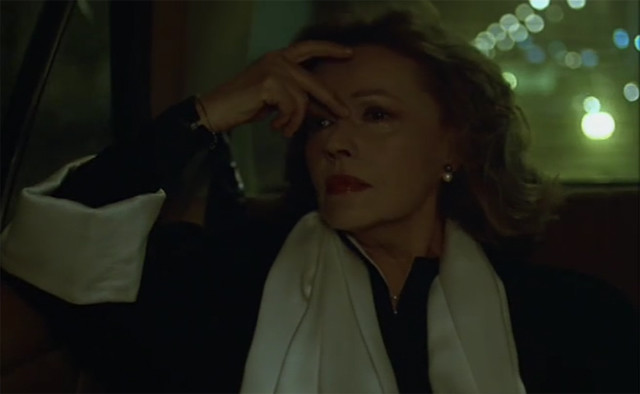
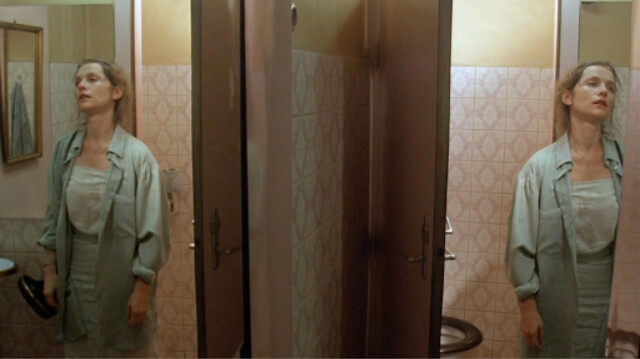
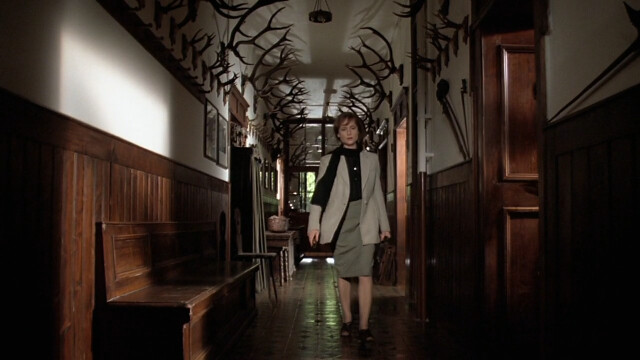
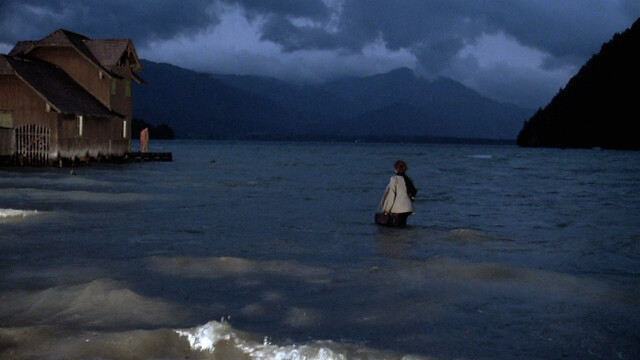
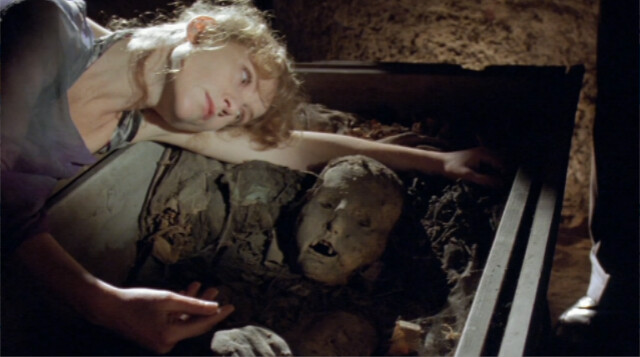
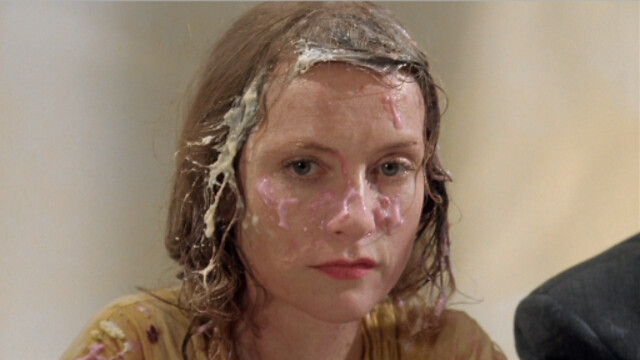
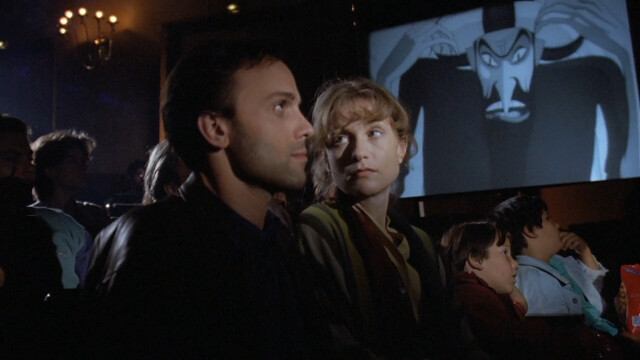
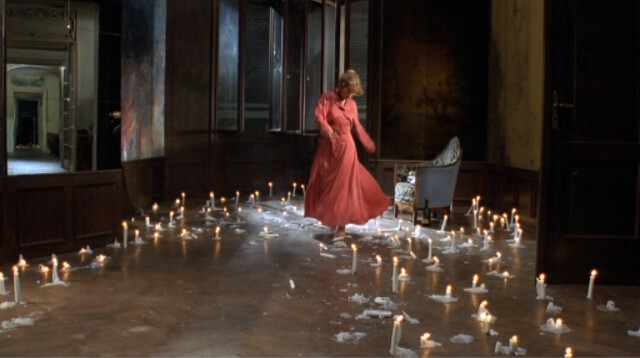
A Traveler's Needs (2024) - Hong Screen Shot 2024-07-29 at 9.21.02 AM Screen Shot 2024-07-29 at 9.31.03 AM Screen Shot 2024-07-29 at 9.53.17 AM Screen Shot 2024-07-29 at 10.11.44 AM Screen Shot 2024-07-29 at 10.17.15 AM It is hard to quantify Hong's films, and I am not talking about him making two or three films of the year as he has been for the last decade or so. It's not that what Hong does need to be measured by the likes of me, but as someone who watched vast swaths of his films, with my ADHD triggered rating system toward a director's filmography going, I can't help myself ranking which of his films are better, more impactful than others in my head. and I am happy to say that A Traveler's Needs, his new film starring indomitable Isabelle Huppert, is one of his best films.

A Traveler's Needs concerns Iris (Huppert), a French woman living in Korea. She started giving French lessons to two Korean women recently. Her method seems interesting: she writes down a custom-made phrase on wads of index cards she carries in her bag for each person she is tutoring. Eager to please the foreign woman, Korean women play musical instruments in front of her. She asks each of them how they feel when they play. And they both in turn give generic answers which turn out to be identical. Iris pushes harder - but how do you really feel? Then she writes down her French phrases for them.

All the Hong signatures are present - a subtle comedy based on repetition, copious amounts of alcohol consumption - in this film, the choice is Makguli, a milky Korean rice wine.

The third act concerns a young man, Seong-guk who shares his flat with Iris. It turns out that he met her in a park, sitting there alone, playing a flute badly without a care in the world. It is revealed that she didn't have any means for living, so he suggested tutoring French which she has no prior experience in. Seong-guk's estranged mom stops by unexpectedly and chastises her son for living with some foreign woman. He explains that Iris lives her life truthfully. Mom wants him to ask her about her background. She doesn't want this mysterious foreign woman taking her naive son for a ride.

A Traveler's Needs have much in common with Wim Wenders's Perfect Days. These protagonists are people of very limited means and ambitions. They just float around living life as truthfully as they can. Never looking backwards but always forward. There's some sort of universality here - Wenders directing in Japan seeing the world through the eyes of Koji Yakusho and Hong directing and seeing the world through Huppert's eyes. Gentle, living by the moment, enjoying the surroundings - nature, sleeping, drinking, small human interactions.

I see that Iris can be the continuation of a character Huppert played in Mia Hansen-Løve's L'avenir/Things to Come (2016), a professor losing her job and marriage, trying to find the footing in the world for the first time in a long time as an aging woman. It is not difficult to imagine her character taking off to some foreign land and keep on living like that.

Huppert is marvelous as Iris. The best scene is perhaps her flirting with Kwon Hye-ho's character: obviously there's an attraction between them. She touches him on the shoulder and winks at him, then giggles like a schoolgirl. He is spellbound obviously.

A Traveler's Needs is up there in Hong canon and one of my favorite films of the year for sure. Here is my review for Things to Come

Wednesday, June 22, 2022

Non Communicative

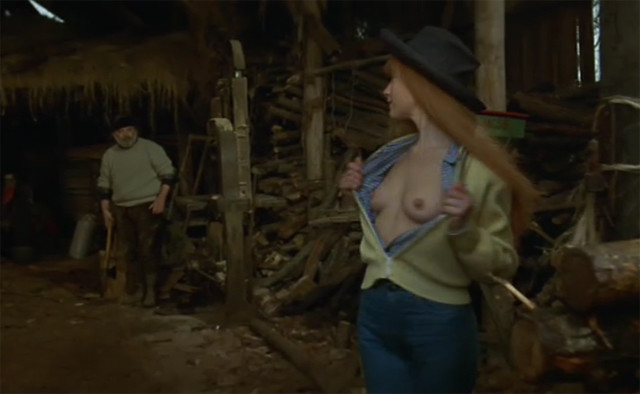
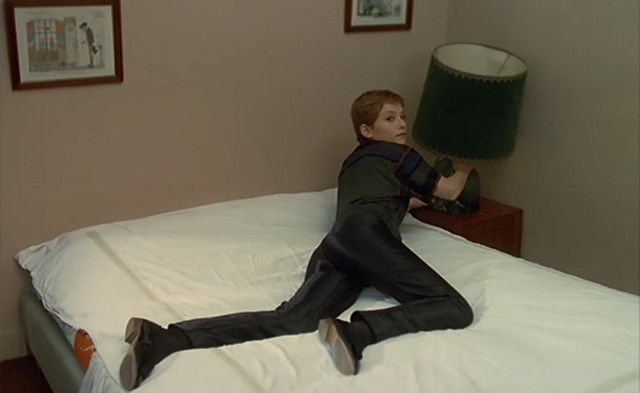
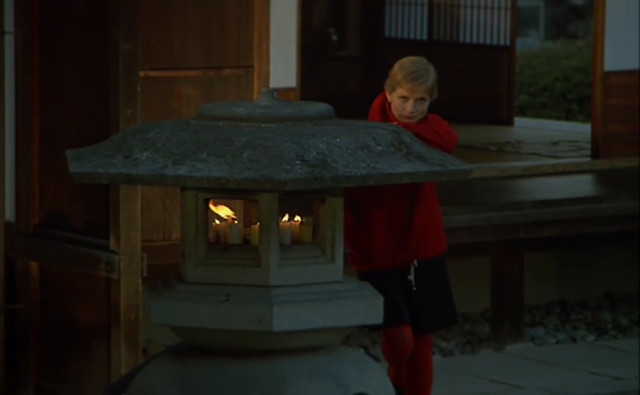
Happy End (2017) - Haneke Screen Shot 2022-06-22 at 7.03.50 AM Screen Shot 2022-06-22 at 7.03.01 AM Screen Shot 2022-06-22 at 7.02.26 AM Screen Shot 2022-06-22 at 7.01.17 AM Screen Shot 2022-06-22 at 6.59.06 AMScreen Shot 2022-06-22 at 6.56.41 AM Screen Shot 2022-06-22 at 7.05.07 AM Unlike its ironic title in Michael Haneke's searing portrayal of bourgeois French family, no one is quite happy with their lives. An aging patriarch of the house Laurent (Jean-Louis Trintignant) is quietly suicidal with his failing body and early Alzheimer’s. His daughter Anne (Isabelle Huppert), the head of the family construction business, is facing a lawsuit by a worker involved in an accident at one of the construction sites, which is shown in CCTV camera in the beginning of the film, and her grown up son Pierre (Franz Rogowski) is not good at anything and not ambitious enough for her despite all the pestering. His son Thomas (Mathieu Kassovitz), a surgeon, is having an illicit sexual affair with a musician while neglecting his second wife and a newborn baby. Then there is Eve (Fantine Harduin), a thirteen-year-old girl from Thomas's first marriage. She comes to live with the Laurents after her mother is hospitalized for poisoning (Eve secretly poisoned her mother and recorded the process on her phone for amusement).

New technologies always figure into Haneke's films and this time around, it's smart phones and the internet. Eve's incessant YouTube watching of very mean boys doing evil things and Thomas's explicit sexting with his mistress which Eve has no problem excessing. The smartphone video footage bookends the film.

Even though everyone's living under the same roof, they are all living their separate, secretive lives and no one's talking to each other about anything, least of all, their feelings. When they try, like Anne confronts Pierre and Thomas does Eve, they miserably fail. The old Laurent drives out of the house in the middle of the night and crashes his car intentionally into a pole with the full intention of killing himself but ends up with a broken ankle and bruises and ends up in a wheelchair. Everyone automatically accepts that the old man is losing his marbles slowly. In this well-mannered 1st world society, everyone is too polite to air their grievances or their problems out loud. They'd rather suffer internally. No dramatics, no heart-to-heart, no sentimentality. It is funny then, that Laurent ends up confiding his dilemma to his old barber in an attempt to get him a gun so he can commit suicide. The horrified barber refuses. OK OK, see you next time. And it's the 1st world/third world, haves/and have-nots dichotomy Haneke utilizes so skillfully: Laurent's long-time caretakers are a Muslim couple. We don't know anything about them other than their very servile attitudes. We don't know if they had a young daughter until she gets mauled by the family German Shepherd.

Haneke also uses wordless scenes in wide shots to demonstrate what's lost in translation. Pierre goes to an apartment building where supposedly the victim of the construction accident lives. He is there probably to apologize. But he only gets shit kicked out of him. A group of African immigrants make appearances in two different scenes: one with the old Laurent confronting them in his wheelchair on the street, seemingly bargaining them with his wristwatch for killing him off while a white onlooker mistaking them for thugs harassing an old man. Later, the same group of people show up on Laurent's birthday brought on by Pierre, intentionally trying to make a scene, introducing them to the party guest, as he awkwardly attempts to humanize them. The Laurents are the definition of self-righteous white liberals.

It falls on the old Laurent and Eve to connect over their killing tendencies. He confesses that he suffocated his aging wife in a mercy killing and Eve semi-confesses that she once poisoned her classmate in the camp. In a way, Happy End is a sequel or extension to Haneke's extremely affecting Amour and an affirmation of his advocation for having a choice to end life. Acting is superb all around. Great to see Haneke utilizing the great Franz Rogowski and his physicality here. Rogowski's acrobatic karaoke scene is that of end dancing scene in Beau Travail with Denis Lavant. Good to see Toby Jones as Anne's British love interest as well. But it's the late Trintignant who steals the show. His scene with young Harduin is so good. Bleak in the assessment of our present society which is grooming a generation that lacks empathy, Happy End is in line with such great Haneke films as Code Unknown and Benny's Video and just as strong.

Thursday, September 28, 2017

Skooled

Mrs. Hyde (2017) - Bozon
973045
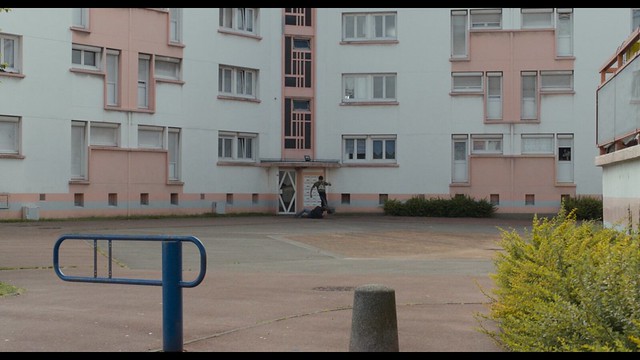
Serge Bozon's idiosyncratic WWI musical comedy La France impressed me when I watched it some years ago. In it, he demystified war heroics and masculinity with his deadpan humor. In Mrs. Hyde, in his peculiar way, Bozon takes jabs at the failing education system where intelligence is willfully ignored and pent up rage and anger simmers just below the surface.

The indomitable Isabelle Huppert plays Marie Géquil, a soft spoken, extremely ineffective Physics teacher in a rough suburban school where most of her students in her vocational class are comprised of rowdy, uninterested students of color. They incessantly make fun of her and scold her and have zero respect. But always good natured, Marie tries to get through to them, especially Malik (Adda Senani), her worst tormentor who's handicapped and relies on crutches for walking, even though no one give him the light of day. At home, she is greeted by Pierre (Sergio Garcia), a supportive, teddy bearish, stay-home husband who cooks elaborate meals and plays music for her but doesn't quite understand what she goes through day after day.

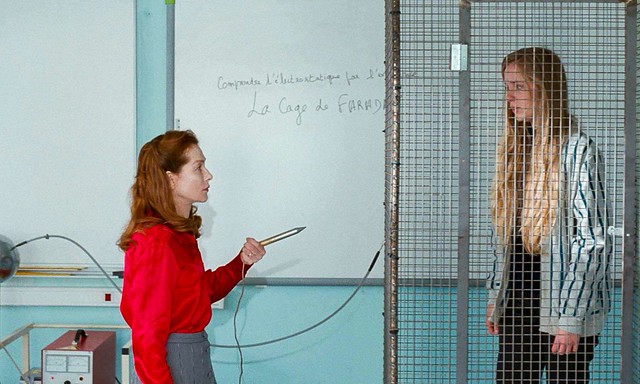
She takes solace in her laboratory in a trailer in the school lot after hours where she deals with complicated blinking machines and math equations. One day she is hit by a lightening in the trailer and becomes an occasional red-glowing night crawler.

Things change after the incident. Having more confidence in herself (as the energy visibly moves through her vain), she finally gets through Malik, despite objections of favoritism by do-good students (two white girls who always talk in unison in class). With the laws of reflection, not only she shows the path from Point A to Point B, she shows him how to stop and think. But despite the breakthrough, Malik still wants to belong to a street rap group consists of dropouts. In her sleep walking glowing form, Marie ends up frying one of the rappers in front of Malik one night.

I can watch Isabelle Huppert picking her nose for two hours no problem. She's done comedies before, but in Mrs. Hyde, her performance is completely against her type and it's still mesmerizing watch. Romain Duris, playing smarmy, self-loving, small time principal here represents, along with an uppity 35-year old teacher-in-training, the clueless establishment.

I didn't expect a biting, timely social commentary from Bozon and from Mrs.Hyde. Unlike Robert Louis Stevenson's Jekyll and Hyde, Bozon's two faced, mild mannered school teacher parable has a lot more to do with the society we live in - which lacks self-determination, individual thoughts, and honestly, is more and more very much anti-intellectual. Dangerous Mind it's not. The film shows us that we have responsibility to teach our new generation faced with a lot of problems and distractions to stop and think for themselves. That they can't rely on a savior ('white savior syndrome' that is prevalent in popular culture) because that will eventually burn you. I was mildly and pleasantly surprised by the audacity of Bozon's moral lessons that digs deeper while maintaining his brand of deadpan comedy on the surface.

Mrs. Hyde is a social commentary that packs a punch wrapped in a screwball comedy form. Highly recommended.

Mrs. Hyde plays as part of NYFF 2017 at Film Society of Lincoln Center on 9/29 and 10/1. Please visit FSLC website for tickets and more info.

Monday, May 29, 2017

Cold Fish

La Truite (1982) - Losey
truite1
truite04
truite10
truite8
truite 7
truite05
truite 4
truite01
truite02


From what I've read, Joseph Losey planned adaptation of Roger Vailland's book of the same name with Brigitte Bardot in mind. He got to make it much later with the one and only, Isabelle Huppert. The choice of Bardot makes a lot of sense to play a sexpot who can't be controlled by surrounding men and like a trout, would slip away from their grasp. But she would've been too obvious of a choice and the movie would've been less interesting. La Truite, instead, is a much more nuanced film about sexual power play, finding love in the cold society and fraternity of women.

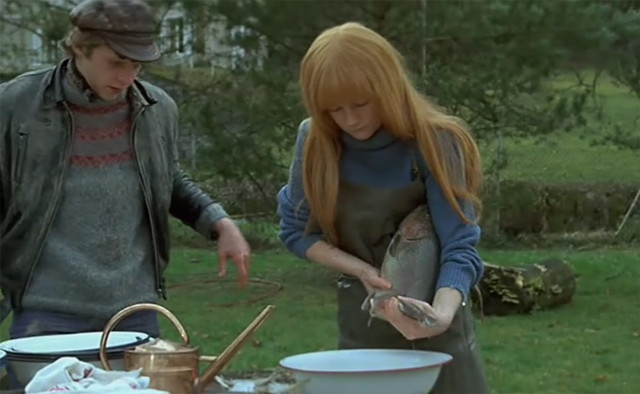
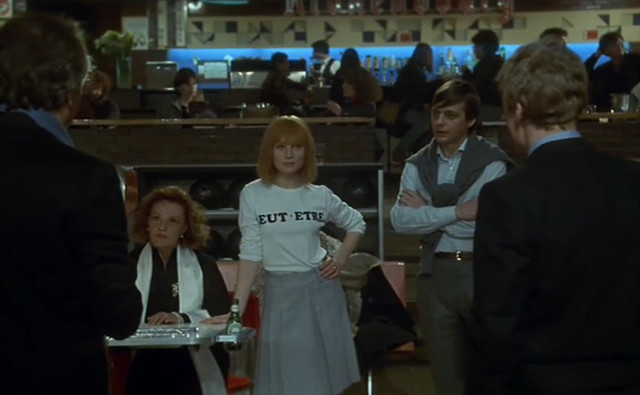
Frederique (Huppert) works at a trout farm in the rural area. She is young and married to an effeminate young man, Galuchat, who grapples with his sexuality and has suicidal tendencies. Frederique is also disgusted by her father and his friend's behavior among village girls- 'taking them to his chalet' has an ugly connotation in her mind. It is revealed in constant flashbacks that she belongs to 'carefree girls club' where they perform rituals and swear to each other never give men what they want. It's maybe or never. Galuchat and Frederique meet an old couple, Rambert (Jean-Pierre Cassell) and Lou (Jeanne Moreau) and their friend St. Genis (Daniel Olbrychski), a rich business man while bowling. Rambert and St. Genis are immediately smitten by Fred. St. Genis offhandedly suggests to take Fred to his business trip to Japan. Rambert is mad jealous and Lou is pissed at Rambert. Fred rummages through high society and wreck a havoc.

Off they go to Japan. Fred soaks in her first plane ride and exotic culture and all the luxury St. Genis provides for her. But she never gives him what he wants. Because Galuchat's suicide attempt, Fred and St.Genis come back to France. Rambert and Lou are in the fritz because of Fred. Lou and Fred bond over their mutual understanding of men's folly.

It's all Huppert though. Her mixed naivete and nonchalance makes a hell of a complex, beguiling character. She can be brutal in kicking old pervert's balls several times but also can be remorseful after throwing the man's stuffed trophies out the window and seeing him cry. Another strong film that demonstrates Huppert's talent and charm.

Sunday, April 23, 2017

Existential Crisis

Malina (1991) - Schroeter
a8a472b6-51d6-4914-81b0-02d0ff8cff03_zpsoyzpcvfo
adc1f100-9412-4f6a-b58b-83bcf8c1558a_zpsqc9d85ol
0ce8c128-1b10-453e-9e29-96e272419890_zpscym9fajs
86d4bdfb-5491-4baf-a28b-294cd29ee2f5_zpsitm3fzhz
bef572f6-f0ad-4dc5-b57d-3cfd9b9bad38_zpsvwlacp5w
a0227341-50d7-4446-a70f-1a4ec0cc7c36_zpseydio8c8
1648b3d7-022e-4699-96cb-e11aae426c9d_zpsujommdlh
b2dea77e-20e7-4e95-a5a5-8504d9fa639f_zpsnyucbov5
f16de952-6947-4ba9-8a60-ca6cbdaadb45_zpsaztewuqn
73978a94-3faf-4f3e-915e-0ae8d4470f2d_zpsyiyc6yog
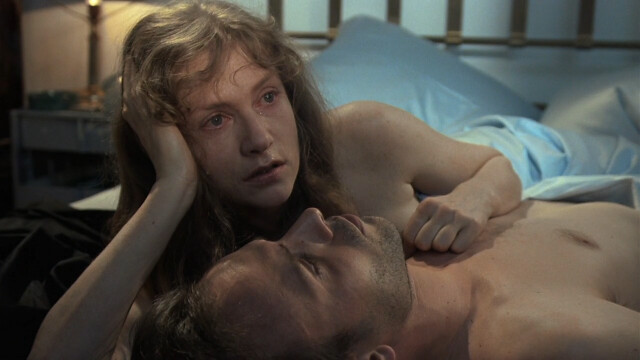
A Viennese writer (Isabelle Huppert) is having an existential crisis. She struggles between two men - Malina (Mathieu Carrière), her stoic, supportive husband and Ivan (Can Togay), her young handsome Bulgarian lover, to define her existence. It's a gripping, surreal film that showcases Huppert as an actress. She is absolutely radiant in this.

The writer is always seen typing away countless letters that ends up on the floor of her flat that will never get sent. She goes through a whirlwind of emotions, searching for that eternal happiness, but not finding with either men. Malina, with the female sounding name, could be the one and the same as the writer herself. He is the rock in her fragile existence in the beginning. But as she slowly loses her grip with reality, he stays distant and cruel. Ivan, whose nonchalance makes her all the more desperate. finally ends up abandoning her.

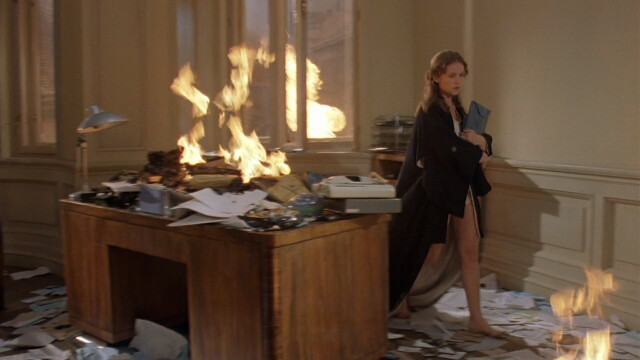
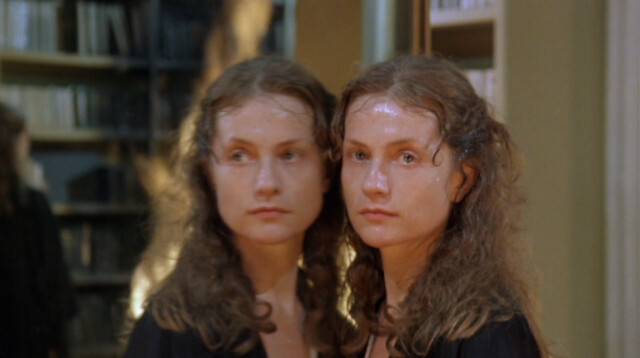
The film begins with a horrific nightmare of the writer. Her father throws her younger-self out the roof of the building. Her father is a recurring figure, sometimes seen in a Nazi uniform, reinforcing patriarchal post-war male dominant European society. Malina is a complex and crazy movie filled to the brim with symbolic images and close ups of Huppert's tearful face. Mirrors, reflecting our writer's state, is also prominently used. It goes completely bonkers in the last 30 minutes as things turn completely surreal, with part of the writer's apartment constantly on fire while Huppert pacing back and forth in her letter strewn flat as if everything is normal. Malina has a same emotional intensity as any Zulawski films and Huppert gives all to her blistering performance as a woman who desperately needs to validate her existence.

Friday, October 14, 2016

Elle: Paul Verhoeven Doubles Down on Making a Rape Comedy

Elle (2016) - Verhoeven
 photo 663223a9-a7c9-45ec-a1ca-fb514a29a667_zpshflb4nhm.png
In the age where a presidential candidate says he's grabbed women by the pussy and still has a chance to win, Verhoeven doubles down on the impossible task of making a rape comedy. The king of bad taste, known for such classics as Starship Troopers and Showgirls, Verhoeven has always been walking the fine line between vulgar entertainment and satire while enjoying pushing buttons a little too much. It's a rare gift for a filmmaker to be having a cake and eat it too -- there are no wink-wink moments or obvious strings of the puppet master seen in his films and actors all seem to play straight without irony. But whenever you watch his films, you can feel 'all the world's a stage' vibe. And Elle is a terrific entertainment.

Elle is made possible because of Isabelle Huppert. The most fearless actress of our time, she dives right into the role of Michele, a callous woman who gets raped by a masked intruder and has to deal with the aftermath. The film starts with the said rape in black screen with the sound of glass breaking and beating and moaning. After the incident, Michele carries on as if nothing has happened. She changes all the locks in her luxurious apartment, chides her cat for not gauzing the rapist's eyes out while it was happening, goes to work and dinner parties. As the head of the company which makes sexually violent video games, she complains to her much younger male programmers that the prototype graphics for the next project is not shocking enough. When she announces her experience matter of factly at the dinner party to her friends and her ex, they were flabbergasted by her not calling the police and how calm she is. She gets dirty texts from the assailant and gets somewhat aroused by them. But who is he?

Elle is not a revenge thriller per se. Not quite whodoneit either. Like many of Verhoeven's other films, it is a hard to pin down film. Not as over the top and sentimental as Almodovar nor as clinical and visceral as Cronenberg, but it's so deftly and slyly done, you can't not enjoy it even though rape is not a light subject to joke about. Destined to be controversial and definitely a conversation starter, Elle highlights two artists at the top of their game.

Thursday, April 7, 2016

Joachim Trier's Louder than Bombs is a beautifully written gem of a film

Louder than Bombs (2015) - Trier
 photo 9498f605-f304-42bc-a269-70538b222325_zpsq8efgz0c.jpg
I can't stress enough that watching Joachim Trier's films is like reading really good books. That he might be the most literary (not in a superficial sense) film director working today. With each new films, Trier and his writing partner Eskil Vogt, show what mature, gifted writers they are. Their English language debut, Louder than Bombs, is a finely tuned chamber piece about grief and family dynamics. It is a great American film that brings out nuanced, beautifully drawn, rich characters just under two hours running time and would give Jonathan Franzen a run for his money. The title comes from the Smiths' album which was the US only released compilation, taken from Elizabeth Smart's prose poem By Grand Central Station I Sat Down and Wept. It's an apt title to illustrate the state of internal grief felt by the characters. The film's so beautifully written and acted, I can't find one false note.

The Reed family is grieving the death of the family matriarch, a strong willed war photographer, Isabelle (Isabelle Huppert). Her husband Gene (Gabriel Byrne) is a gentle high school teacher who had been always supportive of Isabelle and took care of their two sons while she's away in the war zones. Josh the elder son (Jesse Eisenberg), who just became a father himself, has his mother's traits - smart, driven, but has an air of a boy who grew up too fast. Then there is Conrad the younger son (Devin Druid), an unresponsive, always plugged in high schooler. Even though she's gone for two years, Isabelle is always present through numerous flashbacks, dreams and even has her own narrations. Things get a little complicated when Isabelle's colleague and former lover Richard (David Strathairn) is about to publish his article on her in New York Times and mention her suicide, a fact Gene never told Conrad about. As Josh comes home to take charge of Isabelle's photos in her untouched studio, it slowly becomes clear that the visit is an excuse for him to get away from his nagging wife and the new born. The three men have to deal with their grief in their own way.

As Trier and vogt explored before in Reprise, Bombs deals with the consequences of being a talented, driven person. Many fail to balance work and relationship. For Isabelle, her work was like an addiction, no matter how much she kidded herself with the notion of family life. Not that she was an uncaring mother, but she was unhappy, feeling that she wasn't needed every time she came home and at the same time felt guilty for being selfish. Gene, who gave up his acting career to take care of their sons, never found his place in the world and doesn't really know how to connect with his growing/grownup sons who worshiped their mom and in turn resented him. Although Josh would never admit to anyone, he regrets having to grow up too fast and made rash decisions undoubtedly because of his mom's death. Conrad daydreams and makes up scenarios how his mom really died and lives in his head most of the time.

Acting is superb throughout: Byrne exudes warmth and patience in an anti-patriarchal character that is rarely seen in American films. Added to his arrogant, intelligent kid he always plays, Eisenberg brings vulnerability in a basically a not showy supporting role. But it's Druid who is truly phenomenal as a weird kid who is much more mature than he seems. And of course, Huppert, again, makes her presence felt, even with limited screen time, playing enigmatic, complicated woman.

Despite its heavy subject matter Bombs contains many humorous moments involving Conrad's crush on one of the school's popular girls while Josh matter of factly discouraging him that it would never work out ('been there done that' defeatist nerd talk) and Gene trying to connect with Conrad through a role playing video game with resulting in hilarity. And just like in his two previous films, Trier uses fast moving montage sequences that signify meaningful moments in characters' lives (over Conrad's confessional essay) that are truly beautiful and touching. Dense yet lively, touching but not corny, mature and intelligent without being showy, Louder than Bombs is a rare gift of a movie. So good!

Joachim Trier Talks about Louder Than Bombs and His Dream Cast

Joachim_Trier
With only three feature films under his belt, Norwegian helmer Joachim Trier is quickly establishing himself as a world class filmmaker with his thoughtful, wise and emotionally resonating films. With his English language debut, Louder than Bombs, about a family dealing with the death of a matriach, releasing state side this weekend, I had a chance to catch up with him. Fiercely intelligent and extremely generous, Trier talked great length about working with his amazing ensemble cast.

This is your first English language film. What were some of the challenges you faced?

I went to film school in London (National Film and TV School) and because we grew up in Norway watching American movies with subtitles and with American voices, rather than overdubbed dialog in country like Germany, we had a real advantage to listen to the language and learn it that way. I spent in 7 years in England and I have a lot of friends in America, spent a lot of time in New York, so as Eskil (Eskil Vogt, co-writer).

But I would say it was different because Eskil and I were little more insecure. We were worried that we weren’t getting the right wording or phrasing. So we stayed open with people, like consultants and actors - we asked them to help us to correct things and they helped us change little things. At the end of the day, most of the people found that the dialog was good. The thing is dialog is more dynamic than it is just about words, and because I’m not precious about dialog, If the actors wanted to change words here and there, like they do even Norway, it's was fine with me.

But what was more challenging almost was the idea of getting the attitudes and culture right since we fitted this story into present day America. We ended up doing a High School life movie. I know that life from John Hughes movies. But we went High Schools for real and did some anthropological research so we get authenticity. I really hope we nailed it. We really spent time on it.

I think it was great.

The thing is, whenever I watch your film, I feel like I’m reading a really good book. And I mean it as a compliment. I’m definitely not saying that your films aren’t cinematic, but it’s so well written and characters so beautifully drawn. I know that you don’t want your films to be pigeonholed but I’d say you make the most literary films even more so than Woody Allen does.

For me, the word literary has two sides to it. I am a film fan. And because the film history is so young, one could strive to think ‘what is purely cinematic?’ ‘what’s so unique about this art form?’ These are the essence of how we start out the process. It sounds maybe weird but Eskil and I often say, 'it would be more filmic, if…' and then we try to find a way to do something that has to do with form, or visuality or what we call gestalt - you know, something is shown not told.

But the interesting thing about the inspiration in literature is not the story for us, it’s the freedom of the novel as a form. So the novel as a literary form as I’m sure you are aware, is not that old either. If you look back to the French naturalists in the 1860s, the idea that there have been so many stages since then, of the novel being interpreted- the poetic, the formalist, the naturalist… there are so many. So the idea of form at the essence of storytelling is what I’m often intrigued by. For example there are a lot of those chapters that is more like a diary and you see a scene from two perspectives. To me that is filmic, but it’s going off of just straight storytelling, like the best novels often do. It’s the potential of storytelling in novels I am interested in.

Another example is the visual potential in films of Terrence Malick or…Barry Lindon or in Good Fellas for instance, where a lot of narration is done, so you get a lot of the plot out of the way so images can be more filmic. you know what I mean? You can actually say that often times plot enslaves the image to tell a plot, which is not necessarily always so filmic. That’s actually something that literature also struggles with. The idea of plot is that it has to function.

My films are not plot driven. They are character, emotionally, thematically driven. So I’m having the same challenge as a lot of people in literature to find ways to let more tactile and philosophical moments mean something and emotionally engaging. This is quite complex and I don’t know If my answers are even clear. I hope it makes sense.

It does make sense.

It’s something that I ponder upon. But when you say literary cinema, I choose to take it as compliment because the same was said about filmmakers like Alain Renais or Truffaut, the people that I have been inspired by.

The film has an amazing cast. I know that we don’t have too much time but can you tell me a little about working with these actors? You have Isabelle Huppert, one of the greatest actress of our time, Gabriel Byrne whom I always thought a great actor who never gets a good role, then of course, Jesse Eisenberg and young newcomer Devin Druid…

Oh please! I’d love to talk about each of them if the time allows!

Isabelle got in touch with me after Oslo, August 31st. She liked it and she wanted to meet me and we started talking and…I think she is one of the greatest actor of all cinematic history. I think she’s one of the top people…she IS cinema history: working with her I feel one step closer to understanding why. She is a big risk taker. She is one of the bravest actress I’ve ever met. And she never goes safe. She always tries new things - you will get variations on a scene continually, which is… yeah she never goes for the safe choice or sloppy choice. She’s incredibly bold and brave.

As a side bar, I love shooting with a 50mm lens and I was talking to my cinematographer Jakob Ihre one day and she goes, “Oh, you guys, Chabrol always loved shooting with 50mm…” And it dawned on us that she’s worked with some of the cinema’s greatest directors. She knows modern film history and that she really IS film history!

Then we have, Gabriel Byrne. I agree with you who is a great actor. He is so humble, yet so precise. He always said to me, “You know I’m not really an actor. I never went to school in that way and I just do it and, I don’t know…” He is very very humble but if you get him in front of the camera, He’s always interesting. And he is a thinking man. He could be silent and observing and you go, what’s he thinking? That’s a great gift for an actor. He also takes a carer's responsibility. He is a very natural father in this family because he is a very kind and gentle in real life.

One thing I loved about his character is that he is not a typical patriarchal father you see. You don’t see that in American films often.

You see, men can also be carers. It is very important and I’m glad you bringing it up because for this film, I think many men would stay away from this role. I think there is slight prejudice. Yes we can discuss the very important issue of letting women play many different roles. In real life women play many more roles in society. I am a feminist and I believe it that absolutely. Very important. But that doesn’t mean we shouldn’t fight, at the same time, for men to be allowed to play different roles as well. We are all struggling existentially with being restricted, continually, in having to live up to expectations which don’t make us feel that we are allowing ourselves to be more than we could, you know, or be what we can be.

Gene’s story is not about patriarchy, playing the role of the authoritarian father. It’s about playing the role many mothers have played, as the carer, the one that ultimately is the pivot of the family. And he is the only one for the children to be present at the same time being pushed away, because of this idealized mother is no longer around. So that’s very much Gabriel.

Let’s touch on some of the other actors as well.

Sure.

Jesse (Eisenberg) is remarkable. He comes from comedic tradition and he is very very funny. But he’s great with structure. He understands every beat of the scene and he is so well prepared. I don’t give notes between takes. I might try to insinuate emotions or directions or try to make this discovery in the actors. But with him, you can actually be very specific. You can say, “with that line, you can do this.” Like 5 or 6 points in a long take and he’s go, “got it.” He’s the only actor that I worked with whom you can give instructions like that. He's like a waiter taking an order around the table of twelve. (laughs)

He has a great capacity to remember these things and he likes to show off a little bit. He is a virtuoso in his way of doing things. But what I’m also happy about, is that regardless of his incredible skills, he is also allowing in this film to be emotional and…

Vulnerable.

That’s the word. I knew that that was very important for the role. It took a little bit of work for us to find the tone but I’m ultimately so happy that he opened up to doing more vulnerable work and I really appreciated working with him. He is a great guy.

Then there is this last role. We were nervous about finding a young kid who has to work with these great actors. Where are we going to find this 15 year old kid? And I was so happy that Laura Rosenthal, a great casting director brought Devin Druid to our attention. He is really really good. I can recommend him highly enough to other directors. I’m not just saying this as a director being nice. I’d love to work with him again. I’m so intrigued by how emotionally available he is. Because he is so young, I imagine people will think that it’s just luck. “Oh, he’s just spontaneous but he can’t be a great crafty actor because he's so young." His instincts for preparing and knowing how to use the knowledge that he’s given to make it playable is remarkable.

I’ll tell you, sometimes he’d be in an emotional zone and he discovered already in that young age what actors take years to discover- how to sustain that emotional state. You can shoot a scene with him like that all day. It can very hard and painful if it’s an emotional scene. People run dry quick. He was able to reengage with his own technique that I don’t really know how, in an emotional state that is sustainable for a long time. And at the end of the day he goes, "Oh I need to sleep now," (laughs) and comes back in and does something else. Devin is a very intuitive guy but there is more preparation in what he does.

If you'd allow me, I’d love to mention few other people as well, because this is an ensemble.

By all means.

I never get enough time to talk about Amy Ryan, David Strathairn and Rachel Brosnahan. I wanted to make an ensemble film. Like Lumet or Coppola, all these great American directors did so many of these great ensemble films. But I never imagined I’d get people like this in smaller roles.

Amy Ryan is amazing. She’s one of the best actresses in the world. My editor (Olivier Bugge Coutté), whenever the rushes came in with the scene with her, he was like, "Who is she? Everything is good with her!"

David Strathairn is remarkable. I mean he is one of the greats.

Yes.

He is almost too cool. He is such a smart and generous guy. and there seems to be so much interesting and exciting stuff going on in his life so I don’t think he is chasing around all the available parts. He is very picky in choosing roles which I completely respect. So I felt honored that he actually came on set. I dig him. He’s like, oh I’ll drive to the set myself. He is very unpretentious. I love him.

Rachel Brosnahan, you know her from House of Cards. She is this new talent and what’s so great about her is she has natural grace in the way she appears in front of the camera. But there is no vanity with her. She came in and she does couple of scenes where she is exposing emotions where a lot of actresses would perhaps try to beautify it. But she creates beauty through just being real. She has a great instinct and knack for naturalism and I really respect that in her. In her generation of actresses, there are so many who is just choosing to be a pretty girl. She has that natural grace, she doesn’t need to, you know.

So Devin Druid and Rachel Brosnahan are the two young actors we will see more of in the near future?

Yeah I’d love that. It makes me happy to see that there are real great actors coming up in the next generation. It just makes me feel excited. That’s something that led me in the first place to make films in America, the actors.

There is a certain melancholy in your films. Even though there are many funny moments in LOUDER THAN BOMBS, There is certain sadness. I want to talk about the theme of death in your films.

Yeah. Louder than Bombs deals with, I guess, eroticism in death, a lot. We are also dealing with young mind, a 15-year old, who is going through adolescence and he is being infatuated with a girl for the first time, at the same time he is grieving his mother. So there is this sex and death thing going on. (laughs)

Also those eternal themes,I care about those things. To be personal for a second, I think I was quite concerned while I was very young. I was obsessed with memory and mortality. I was very worried about the short time we have on earth. I am an atheist, so I believe this is it. This time is all I got. I don’t believe in afterlife, at least not with this conscience. So that's a pretty tough premise. Much of our culture is in denial of that. At the same time, it gives us a purpose for action and to do things and can also be a trigger for creation even.

So my film reflects my existential curiosity. I don't want to be perceived as pretentious, I think it’s unanimous human quandary and I care about stories that deal with how we construct or accept ourselves through perception of memory and how we know that it’s not infinite and how that affects out relationships. In this film specifically - 3 years ago, a husband and two sons the mother of the family. That affects how each of them engage, with the women - the new women, new partners in their lives. What aftereffects does that have in the erotic and the ability to build a relationships. That's what we are asking in this film. And that has melancholic implications.

So what’s next for you?

I haven’t announced my next film yet because we are not one hundred percent sure yet. So I’m not talking about it so much at the moment. But what I can say on the record is that I am writing and hope to shoot it this fall in Norway. A quick one we’re working on- am working with Eskil at the moment: back in the room with my old friend. And we are coming up with some new things and we hope to get to make it and I think we will. So hopefully we will be talking soon again with something else. It’s in Norwegian this time but hopefully it will be in English again after that.

Louder than Bombs opens on Friday, April 8 at the Angelika Film Center and Lincoln Plaza Cinemas. National roll outs will follow.

Thursday, March 24, 2016

An Affecting Ghost Story Set in Death Valley

Valley of Love (2015) - Nicloux
 photo a64beffc-ae44-4e48-bfbe-02a37bfac3f7_zpswtf9p7tx.jpg
It strikes me as peculiar that Gerard Depardieu and Isabelle Huppert, two of the French cinema's titans, each appeared in hundreds of films (Depardieu 217 films, Huppert 126 to date according to imdb), had previously worked together in just 2 films - Bertrand Blier's Les Valseuse (1974) where young Huppert had a supporting role and Maurice Pialat's great Loulou (1980). But some 36 years later, they are together again in Guillaume Nicloux (Kidnapping of Michel Huellebecq, The Nun)'s Valley of Love, a film that takes place in Death Valley, playing themselves, well, sort of. Deeply anchored in these two veteran actors' chemistry, the film is much more than a coy, reflexive exercise in celeb-dom but a deeply affecting drama about grief and a physical manifestation of guilt.

Isabelle (Isabelle Huppert) and Gérard (Gérard Depardieu), French actors who were a couple 30 years ago but divorced and now each with own family, are summoned by their dead son who sent each a letter just before his suicide, to be in Death Valley for a week and be at specific places at specific times because he will reappear in front of them. It's November, but the sun is blazing and temperature reaches almost 140 degrees day and night.

Isabelle gets there first, spending most of her time in the hotel pool or in the shade while fighting bad cell phone receptions. This is Isabelle Huppert we know, at least physically - a petite redhead with more pronounced freckles on her pale skin because of unforgiving desert sun.

Then comes Gérard, a beast of a man, who is sweating profusely and wheezing with his each step. He is grown more beastly now- simply gigantic, following the footsteps of other greats who let themselves go- Welles and Brando. "Are you happy?" she asks, "How could I be, being like this?" he retorts. But never a prude, he lets his girth out in the open most of the screen time.

There are some funny bits about them being famous French actors being in America. A man recognizes Gérard at a poolside, but doesn't remember any of the titles that he saw him in. He asks for an autograph and Gérard signs it Bob DeNiro. Later they were asked which one is more popular in France.

Isabelle is the one who feels more guilty about being a bad parent. She sent away their son to a prep school when he was young and never really connected with him. Gérard saw him from time to time but not much better. Their son was living in Mission District of San Fran and had a boyfriend. He had visited Death Valley before. That much we know. Did he have AIDS? The grieving mother can only speculate. In his letters, he adamantly asks both to ask each other to come because they wouldn't come alone. Out of duty (Gérard) and guilt (Isabelle), they did. He says that he is leaving early to make an important appointment before the end of promised week. Besides, he thinks the whole thing was their son's last attempt to have them get back together And it's working somehow.

As the days pass by, strange things start to happen. In a gripping sequence, we follow Gérard in his night time stroll. He looks up on Isabelle's hotel window (it's a bungalow style two story hotel) full of yearning and sees the lights inside go off. Then he hears her scream, and the camera tracks behind him as he slowly, clumsily makes his way to her room. No intruders are found but she claims that someone was in her bed and grabbed her ankles. He tries to convince her that she had a bad dream, but someone's left a physical mark on her ankles. Later in a Lynchian sequence, Gérard encounters a girl with a deformed face at an empty tennis court at night. She says she was waiting there for him, to die.

What's great about Valley of Love is two veteran actors' effortless rapport. With their complete ease with each other, you could totally believe that they were once a couple and have known each other forever. Huppert, prolific as ever, is no surprise here and gives a beautifully fine tuned, vulnerable performance as a grieving mother. Depardieu, whose real life antics drew more spotlight than his acting outputs in the last decade or so (though I haven't seen Inspector Bellamy or Welcome to New York), proves here why he is still one of the greats. Despite the physical discomforts, he gives a very understated, introspective, tender performance. The best scenes are perhaps them reading each other's letter from their son that are addressed to them. The long letters tell missed opportunities, regrets and love.

Death Valley, the place full of mysticism and spirituality, makes a great backdrop for a ghost story. Nicloux uses its physicality in cinemascope to highlight what's invisible, intangible - grief, regrets, love. Valley of Love is a quietly affecting film with beautifully nuanced performances by two of the greats.

Valley of Love played as part of this years Rendez-vous with French Cinema. It opens theatrically on 3/25 at FSLC. Please visit their website for details.

Saturday, June 6, 2015

Fragile Social Hierarchy

La Cérémonie (1995) - Chabrol
 photo b183ab97-6a03-48e1-bbad-c2723dd2ddcc_zpsrvyjvyd4.png
Two of the France's top actresses star as a couple of social miscreants slowly wrecking havoc on upper-class family is perhaps the most delicious Chabrol thrillers I've seen so far. Sophie (Sandrine Bonnaire) is a perfect maid hired by Mme. Lelievre (Jacqueline Bisset) who needs help in taking care of her remote big mansion in a seaside town. She was a former model now running a gallery. Her husband and two children live in relative comfort and luxury. But there is something odd about Sophie that the Lelievres quite put their fingers on. She befriends with another odd ball in town, a nosy post-office clerk, Jeanne (Isabelle Huppert). They acknowledge each others' secrets in which they got away with crimes and starts to hang out, watching TV together and giggle at others expenses. Sophie's another big secret is that she is illiterate. Which isn't really a problem, but to her it is a big deal that no one can know.

Already taken a dislike of Jeanne, M. Lelievre, disapproves Sophie hanging out with her. After Sophie threatens their young daughter (Virginie Ledoyen) because her illiteracy was discovered, he fires her, giving her a week to vacate the premises. Our troublemaker couple decides to take action.

Huppert in pigtails and miniskirts, is a riot as a chatty, morally ambiguous Jeanne while Bonnaire is quietly unsettling as Sophie. The Lelievres are perfectly respectable- their children well behaved and understands the follies of social hierarchy. They just don't know how fragile that hierarchy is, that it can be shaken at any time when you least expect. It's really fun film. La Cérémonie is quite a different animal in terms of bourgeois satire than, say, Haneke's Funny Games. Chabrol is not interested in spoon-feeding everything for us in terms of character's back story. But the characters, however slightly drawn, thanks to Bonnaire and Huppert have real depth and humanity behind it. Fun times!

Friday, January 16, 2015

Class War

Heaven's Gate (1980) - Cimino
 photo 51527c7b-8e0a-4ac9-8f44-eb910f6aedcd_zps0bf3f57a.png
 photo 6703400e-4f9e-4746-8c8c-d5d9eb3d57d7_zps2905e794.png
 photo d58c175a-72a4-47f4-8d15-fa5afaa65839_zps431c7c76.png
 photo 00113e4c-6669-4e21-a8b0-f0a25a819422_zps07e801f7.png
 photo 7d6097ac-75e9-4850-bef2-dc7da318add3_zps57c7a752.png
 photo c183eaea-b407-477c-b495-fd18317869ce_zps49f98ed1.png
 photo d41cce99-6713-4f45-919c-58dcb45501a3_zpsd0f6c03d.png
Here is the basic plot: James (Kris Kristofferson), a Havard graduate law man, joins the frontiers of Wyoming in 1890 as a hired sheriff in the town of Casper, Johnson County. He goes head to head with the Cattle Rancher's Association, the Freemason like, all powerful group, comprised of the New England elites poised to stop the flood immigrants (mostly Eastern European hodge-podge) moving in to the New Territory. They put out an illegal warrant to kill 125 'thieves and anarchists' among these relative newcomers. James is involved with the French madam of the whore house, Ella (Isabelle Huppert), but her heart belongs to working class muscleman hired by the Association, Nate (Christopher Walken). The assault/massacre of Johnson county is impending.

With the majestic Wyoming backdrop (lensed by Vilmos Zsigmond), Cimino tries to paint the ruthless frontier Americana with bold strokes that back then wasn't much different than today. It's an ambitious project, taking on the grand theme of class warfare: the rich aggressively persecuting the poor with violence, in not sharing that piece of American pie. It's a pleasure to see something this epic, with thousands of extras and cast that includes, Kristofferson, Huppert, Walken, Jeff Bridges, John Hurt, Sam Waterston, Brad Dourif and Mickey Rourke. But despite all the beautiful visual poetry, the film lacks a narrative pull, mainly because of its unhurried pacing and lack of urgency. It contains perhaps the most lackluster large scale stagecoach-style gun battles even though body count aplenty.

I haven't come across Huppert being this beautiful and magnetic in any other films yet. Playing a woman in love with two men of the opposite spectrum, she is completely arresting whenever she's on screen. Walken is brilliant as always, as a cold, vulnerable, tragic anti-hero. Kristofferson's James, born into privilege, not fitting anywhere, gets away with snarls like- (to Ella) "This is mo yer country than mine!" and falls victim of criticism, "You know what I hate about you James? Even though you are rich, you pretend to be poor." It's his false Eastwoodian sense of righteousness that irritates me as a character.

But Heaven's Gate is from James's point of view: it starts out with extravagant graduation ceremony at Havard, with Billy (John Hurt), a wisecracking valedictorian making jabs at the establishment. The sequence is full of whimsy, excess and unfiltered hope, for they are the future leaders of the still burgeoning country full of possibilities. In the film's end, James reflects on his experiences of the wild west, thinking about all the bloodshed that built this country, on his yacht off Rhode Island. This is how it is- that in America, no one can't escape the position they are born into. Oh, throughout a 3 1/2 hr duration, you really want to shoot Sam Waterston in the face 15 times! He is that evil in this film.

Friday, January 9, 2015

Making Film is a Bitch

Passion (1982) - Godard
 photo 8c534bac-bff0-4ee5-8b19-2fc4c3598252_zps16bf4e52.png
 photo d82c3aa1-5f99-4456-8a96-64af4c13d911_zpsb5a43a79.png
 photo 98934fb5-01b0-4ba1-831b-5cc0f3e060c9_zps02181e5a.png
 photo 837d1b51-a7ac-48f0-b531-17f49e8ff392_zpsf45796f0.png
 photo b4b8b99b-b8d5-4d8e-ad1c-9df09061ef6b_zpsbcaeba45.png
 photo 005fe853-0627-4b0b-9973-95563bfb2adf_zpsdc32a659.png
 photo f93d2f95-b32d-479f-a616-0ed6866243cd_zps7ab18eb9.png
 photo 63806a61-3d30-4ebf-a975-fd028bdbf7d7_zpsea3fdc39.png
 photo 107aee40-4d3d-4bf8-a08d-ab1ee4c3c044_zpscee989c5.png
 photo 1cd80e9f-4e16-48de-9b85-9c4306960954_zpsb4773f52.png
 photo 3db0b921-706a-42fd-8d5c-c98a5a350321_zps75ec9cf3.png
 photo d6eeb7c9-ed54-44f1-8e2c-7204a5046b3f_zps97584626.png
 photo f877d17a-e589-4357-b180-8a1388e513b4_zpsb7fed160.png
Film financing is a bitch. After reading Richard Brody's book on Godard, funding seems especially messy and difficult every time Godard have made his films. And many of his films are about, in some ways or another, making films. Passion is also one. Jerzy the Polish film director (played by Polish actor in exile, Jerzy Radziwilowicz) is trying to make a film in the West. Taking cues from the masters of western art- Rembrandt, Goya, Delacroix in a TV studio setting, he is trying to conjure up the opening scene. The production is stalled because of some unknown lighting problems and already 4 million over budget. With civil unrest in Poland in mind and under pressure by the film's Italian financiers while keeping his German wife Hanna (luminous Hanna Schygulla) happy and entertaining the possibility of getting involved with a beguiling, Wałęsa inspired factory worker Isabelle (Isabelle Huppert), Jerzy's struggling to keep everything under control. There are talks of censorship, public appeasement and subversiveness in art, in relations to those masters work and film. Is going to the USA, just like his producer and only friend (László Szabó)'s suggestion, the end of all problems or end of creative freedom?

As usual, Godard mixes up current political affairs with his lifelong examination of film medium, the rise of video technology, beauty, representation of truth in art. The usual slapstick comedy is there along with discordant soundtrack and out of sync dialog. The other Godard regulars include Michel Piccoli as the ruthless and greedy factory boss, Miriem Roussel as deaf-mute ingenue. Again, Raoul Coutard provides some beautiful images and there are so many babes/boobs in this movie. Another delicious concoction.