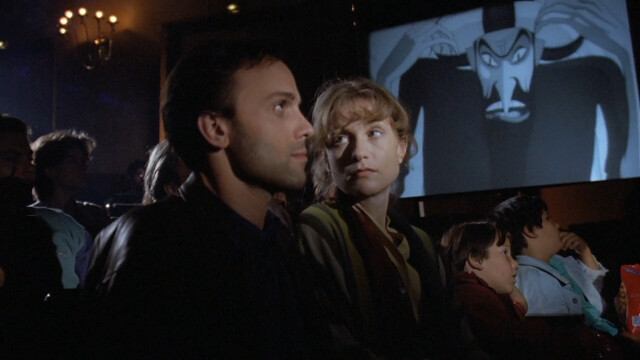
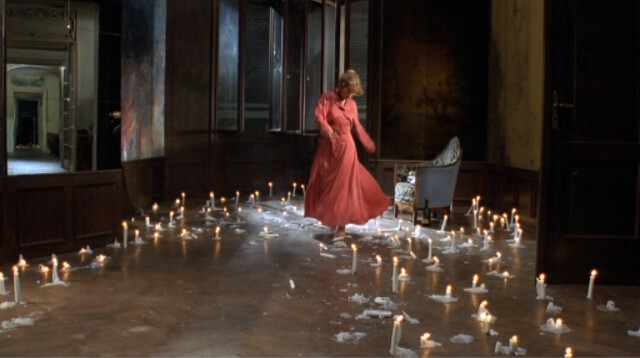
Showing posts with label Austria. Show all posts

Saturday, September 26, 2026

Rose by Any Other Name

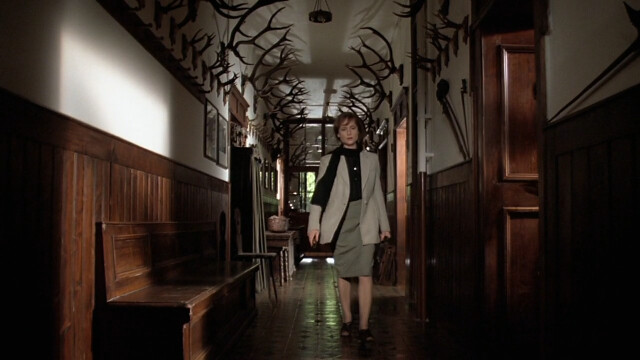
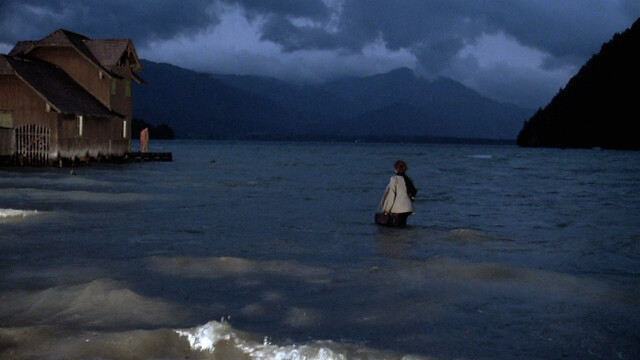
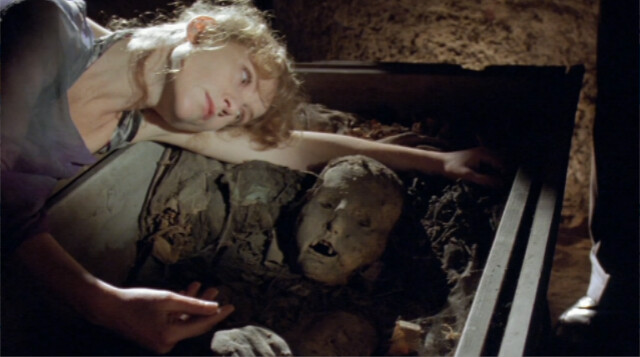
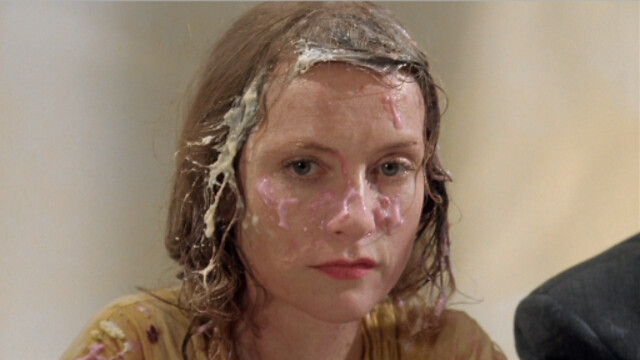
Rose (2026) - Schleinzer Rose_NYFF64_01 Rose is a candid presentation of a woman's place in society in the 17th century Europe. Avoiding the pitfalls of period dramas with the similar subject matter, where things often get overly melodramatic and didactic, Markus Schleinzer opts for more matter-of-fact approach, depicting harsh prospecting lives of the pastoral Europe after the 30 Year War.

Sandra Hüller plays a mysterious disfigured war veteran returning to a rural village to claim a long neglected farmland. No one remembers the descendants of the property and it's in such disrepair, they don't make much of the stranger taking over the land. It turns out 'the soldier' is a woman and has been pretending to be a man all her life, for the freedom it grants in the world at the time. The soldier, with his bravery- defending other members of the community from a vicious bear attack, and deligent work ethics, gains the trust of the village still steeped in rigid Protestant beliefs and patriarchy, where siring an heir means more than anything. To expand the farmstead and to gain access to the neigbhoring creek, Rose agrees to marry Suzanna, a neighbor's daughter.

Under the pretense of 'protecting the purity', the couple don't consummate their usual marital duties and concentrate on the daily, back breaking work. They acquire some servants to help out at the stead. Things get touchy when the sexual needs are not met and the pressure to have an offspring gets dire. And by some miracle, Suzanna is pregnant and the family affords peace and tranquility for a while. But when Rose is stung by bees while doing a bee keeping duty and faints, her secret gets revealed.

Markus Schleinzer presents a story of a woman pretending to be a man, during the time when religious and societal restrictions for women were tantamount, with direct, clear eyed vision of a woman trying to find her place in the man’s world and yearning to be free. Thankfully Schleinzer spares us the depiction of unnecessary graphic violence and torture. A crisp monochrome image by Austrian cinematographer Gerald Kerkletz (Walden), often lit by candlelights, adds to the serene and somber mood of the film.

But the star of the film is, of course, Hüller. Time and time again, Hüller shows how multifaceted, gifted an actress she really is. In a role with make-up (a nasty scar from gunshot wound) that covers half of her face, she still manages to communicate the range of subtle emotions of a person living with a big secret and even bigger, untold backstory. Caro Braun, who plays Suzanna is also great starting out as a naive young woman who is married off by her father without a single consideration, then later becomes a confidante of Rose and co-conspirator in pursuing their freedom together.

As two women get found out their secret and an angry village mop gathers for a big confrontation, Rose gives a passionate plea, of what matters the most - a good, contributing member of the community and a great neighbor and friend, or a person who just has manhood between his legs? As the tragic ending rolls around, Rose becomes Renée Falconetti from Dreyer’s Passion of Joan of Arc, complete with the straw weaved throne on her head.

Quietly devastating and deeply moving, Rose presents the hypocrisy of its time and unforgiving nature of rigid patriarchal society without ever being too sentimental or preachy.

Monday, February 17, 2025

Keeping it Together in this Crazy World

How to be Normal and the Oddness of the Other World (2024) - Pochlatko Screen Shot 2025-02-08 at 9.01.12 AM Screen Shot 2025-02-08 at 9.00.12 AM Screen Shot 2025-02-08 at 9.03.58 AM Screen Shot 2025-02-08 at 9.04.20 AM Screen Shot 2025-02-08 at 9.06.46 AM Screen Shot 2025-02-08 at 8.45.13 AM Screen Shot 2025-02-08 at 8.49.51 AM It's all in the perspectives when talking about our mental health, considering the wild and crazy world that we are living in right now. Austrian director Florian Pochlatko plays with this idea in his zany debut feature How to be Normal and the Oddness of the Other World. We see Pia (played drolly by Luisa-Céline Gaffron), a sullen young woman, being discharged from a mental institution and moving back to her childhood room in her concerned parents' house. Mom, Elfie (Elke Winkens), is a voice actor for narrating documentary programs and dad Klaus (Cornelius Obonya) owns a printing company.

Jumbled up timeline and fantasy sequences, you don't quite know what we see on screen is real or not, neither does our unreliable narrator Pia, who is on a variety of colorful anti-psychotic pills. We get to know a little bit of details in Pia's life - her boyfriend Joni (Felix Pöchhacker) has moved on, but Pia is still deeply in love. And it gets a little touchy when she confronts him and his new love. Also Pia is paranoid about men in black suits, very much like Agent Smith from the Matrix movies, following her around everywhere. Are they real or her drug induced hallucinations?

In order to give some stability to Pia, her parents decide to give her a job at dad's company, doing dull office work. They hope that a daily routine would help her. But the real world is not as stable as everyone hopes to be. Increasingly sensationalist tendencies in documentary topics that Elfie narrates - parasite infected zombie snails, wayward asteroids that might collide with the earth, combined with daily atrocities and natural disasters blaring on TV, test Elfie's sanity causing her to crash her car in a traffic heavy motorway. Klaus struggles with his company being taken over by a huge conglomerate called 'Friendly' (a stand-in for Amazon). It's as if there's a very thin line distinguishing being normal and insane. Not only Pia, but everyone slowly loses grip on their reality, as the world keeps spinning out of control.

How to be Normal asks big questions about what is perceived as normal when the world around us is insane. Pia, constantly under pressure to be normal, is trying to hold on to the idea of home and self-worth in the world constantly in turmoil. Pochlatko, like Daniels' Everything Everywhere All at Once, balances the heady subject with plenty of humor and great visual gags. As paranoid and delusional Pia appears to be, she provides the film's many hilarious moments as she appears as a giant monster with a piece of Gouda cheese across her face lumbering like a Gozilla in the city, or using the post-it notes to cover her face at her job. Gaffron is fantastic as a acne ridden, heavily medicated young woman desperately trying to find a footing and self-worth, so is the rest of the cast with their droll performances.

Can Pia find peace and stop slashing her wrists with a plastic knife? Is there a brighter future for mankind? Pochlatko poses these questions and asks us to contemplate what it means to be sane and normal in the world that is completely nuts.

Thursday, March 3, 2022

Life Restricted

Great Freedom (2021) - Meise GreatFreedom It's almost unthinkable now, in a free, democratic society that Paragraph 175, a provision of the German criminal law that criminalized homosexual act, existed more than a century and was only abolished in 1994. Austrian director Sebastian Meise tells the injustices done under such law and concentrates on a character with the camera firmly stationed behind the prison walls most of the time. Great Freedom again showcases the immense talent of its star Franz Rogowski, an actor best known for recent string of films by Christian Petzold - Transit, Undine, whose quiet demeanor and soulful stares communicate with the audience way better than wordy dialog. His portrayal of Hans, who frequents prison for just being who he is and living his life, once again proves that he is one the best working actors out there.

The film starts with surveillance camera footage of seedy men's bathroom where homosexual sex acts are taking place. Hans (Rogowski) is seen taking part in that footage. It is documented that German police engaged in surveillance program in public places to 'weed out' illegal activities in the SC and SC extensively. As Hans is arrested and thrown in jail and his casual self-deprecating exchange with the long term convict Viktor (Georg Friedrich) that this isn't the first time Hans was in prison. The year is 1968.

After trying to protect a young gay man in a prison yard fight, Hans is thrown into a solitary confinement. This also seems like a reoccurring theme. Meise uses these solitary confinement and release from it as a temporal jump points to the past and back, highlighting the longevity and persistence of Paragraph 175. Hans is seen being liberated from a concentration camp by Allied Forces only to be transferred to another prison to serve his remainder of his sentence for performing homosexual acts.

It's this prison where he meets Viktor for the first time. Viktor, a convicted murderer serving a long sentence and an innate homophobe, first acts violently at the news that his new bunkmate is a homosexual. But over time, his hostility and aggression softens and takes a younger, sensitive bunkmate under his arm. Being an amateur tattooist, he even offers to cover Hans's concentration camp numbers on his arm.

Hans can't help himself for falling in love with younger, vulnerable gay men being sent to prison. And they are always the target of prejudices and violence in a prison environment. Against Viktor's warning, Hans keep getting involved in fights while protecting his lovers and keeps getting thrown into an unbearable solitary confinement.

With the simple date titles, we go back and forth between three time periods. Over 3 decades, the law stays the same, Hans keeps coming back to prison. Meise puts a soft touch on these transitions rather than actor's physical transformations, accentuating that time passes differently from the inside the prison wall. The moon landing on TV doesn't have the same effect there as outside. The world keeps evolving, but the unjust, inhumane law is still prevalent. Rogowski's performance adapts to the passing of time, his silent expression and dancer trained body language showcases from nervousness to volatility to resignation.

Friedrich, a veteran German actor, is also fantastic as Viktor, serves as a witness to the injustice done to his fellow inmate and friend, while contemplating his misdeeds as a young man; his sad and weathered face reflecting our humanity.

As the talk of the reformation of the law, Hans finally gets a chance to be free. Would it be the last time he and Viktor will see each other?

Great Freedom beautifully illustrates about genuine human connection while examining the injustices done to generations of people who were persecuted just for being who they are. The film is also a great reminder, along with the recent films like Audrey Diwan's Happening, that the rights we have gained (fairly recently) are not to be taken for granted, especially the world is experiencing great fascistic conservative pushback from the right.

Great Freedom opens in New York on 3/4 and Los Angeles on 3/11. National rollout will follow. Please check Mubi website for rollout dates.

Saturday, June 19, 2021

Fluidity

The Seismic Form (2020) - Zwirchmayr

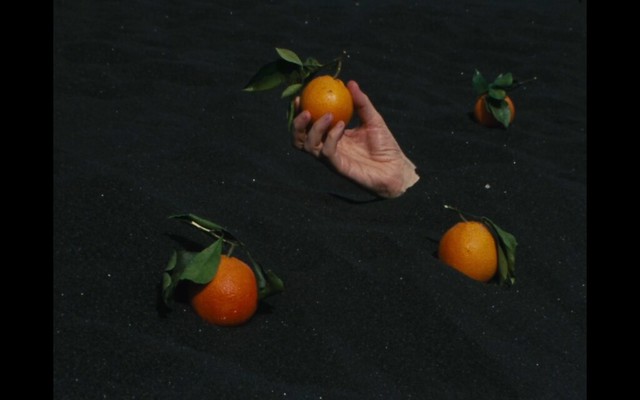
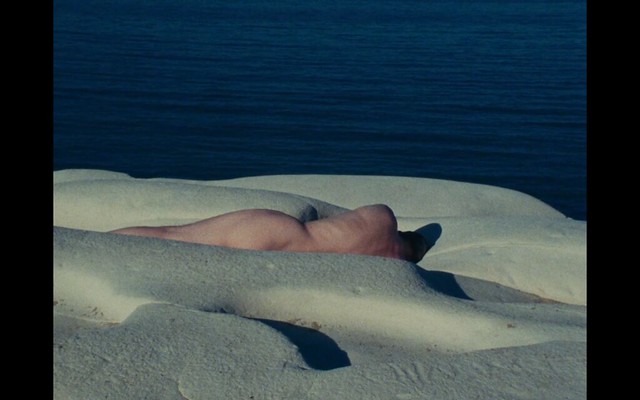
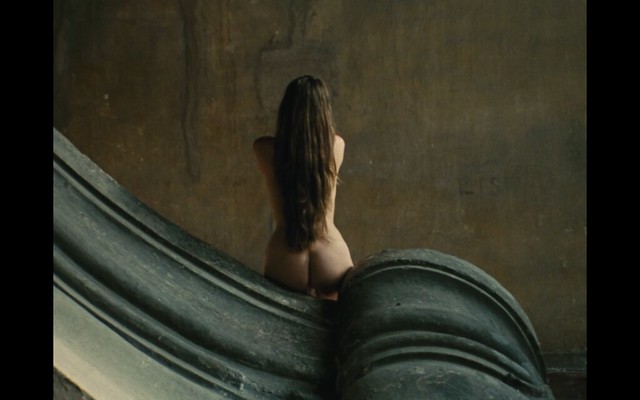
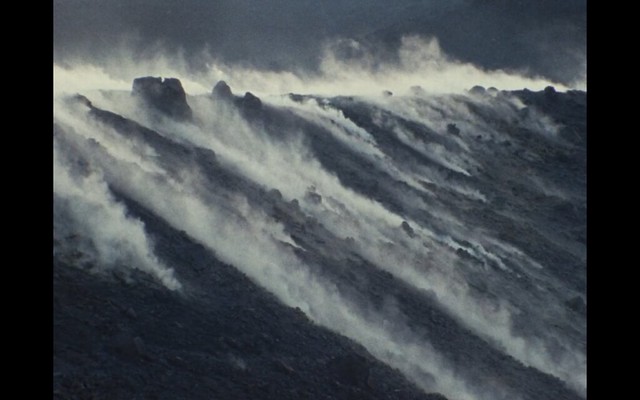
Text by Jean Baudrillard, Antoinette Zwirchmayr's short The Seismic Form visually examines the impermanance of life on earth in very elegant visuals, often juxtaposing human bodies with environments formed by seismic activity. It's beautiful. Some screen grabs: Screen Shot 2021-06-19 at 9.15.42 AM Screen Shot 2021-06-19 at 9.15.51 AM Screen Shot 2021-06-19 at 9.16.02 AM Screen Shot 2021-06-19 at 9.16.55 AM Screen Shot 2021-06-19 at 9.17.06 AM Screen Shot 2021-06-19 at 9.17.18 AM Screen Shot 2021-06-19 at 9.17.29 AM Screen Shot 2021-06-19 at 9.17.38 AM

Friday, August 28, 2020

Communism to Tourism

Epicentro (2019) - Sauper
epicentro Hubert Sauper, known for his searing documentaries on the effect of globalization and legacy of colonialism on African continent, in Darwin's Nightmare and We Come as Friends, now turns his attention to the island nation of Cuba. But this time, instead of his journalistic, overtly expansive approach which was necessary to shed a light on the issues that no Western countries knew or cared about, Sauper takes more personal approach in Epicentro, perhaps because Cuba, the Caribbean island nation's reputation as America's longest running foe in such a close proximity, has been a known entity to most Westerners. This doesn't mean Epicentro lacks a bite on exposing and criticizing inhumane US policy on Cuba over the last 50 years and the new exploitation in the form of tourism. Blending cinema historionics and geopolitics Sauper creates something that feels pointy yet ethereal and deeply personal.

Sauper narrates briefly about the title of the film in the beginning. He calls Cuba the Epicenter of 3 dystopian chapters of history, the ingredients of building a modern empire - slave trade, colonization and globalization of power. You'd think it would be one of those third world poverty porn. but Epicentro is nothing but. Sauper's usual guerrilla style camera follows a handful subjects - mostly children whom he calls 'little prophets', as they go on about their daily lives - at school, at home, playing in the streets, taking dance lessons, etc. The most striking parts of these children are how vividly conscious about Cuba's place in the world as the sole remaining Communist regime (North Korea is something else entirely at this point) and proud to be standing up to the world's superpower up north for so long. Yes, there are elements of brainwashing, as they are constantly reminded in school and on the streets and on TV of Fidel Castro and Che Guevara's revolutionary rhetoric. But is that talk of self-reliance, cemented by decades of crippling economic sanctions, a bad thing? Whether it was Spaniards or Teddy Roosebelt, it was colonialism through and through. American invasion of Cuba in 1898 is based on the fake footage of USS Maine blowing up in which US government created in the bathtub with blowing cigar smoke and toy ships. Every Cuban knows this - the fact Sauper hits again and again throughout the film. Their literacy rate is staggering 96 percent.

First world arrogance is in full display - an American photographer snaps shots of the locals without any consent. They are used to this. Kids pose for him. He goes into their courtyards, snapping copious amount of pictures, through the windows even. Kids ask him for something in return. He gives the kid a pen, turns to the camera and say, "they should be honored to be photographed by me." An old German tango dancer, who is in Havana for 2 weeks, wants to show off his tango in school in front of kids doing ballet lessons. A teacher lets him, while kids snicker in the background.

Talking with the cadre of ex-pats and locals, Sauper juxtaposes the folly and absurdism of tourism industry. It is revealed that the director is a son of innkeepers in small Austrian resort town. In conversation, his friend says there are two types of people - there are normal human beings and there are tourists. There are luxury hotels that only American and European tourists stay. One of the main subject, Leonelli, a beautiful and bright little girl wants Sauper to sneak her and her friends in to the hotel so they can use the pool on the roof. They have a plan. Sauper will pretend they are his kids.

The director's whiteness and his camera adds another dimension to the film. Sure he has been invested in other parts of the world and their people. He speaks their language. But ultimately, he is a foreigner. How do you reconcile that he is there making a film? How much of a blending in really make you a 'normal people' instead of a 'tourist'?

Sauper ties the idea of modern day Cuba, full of intact 50s archetypes - cars, buildings as fiction that provides false narrative for tourists and of cinema: how they resemble, by way of presenting fiction, tourism. Cinema is all make believe anyway.

Unlike his other documentaries, Epicentro is filled with sense of joy and buoyancy. The flow of tying ideas together - past/present, reality/fiction, normal person/tourist, seems natural and even spontaneous. These ideas are imbued in the presence of Oona Chaplin, a Hollywood actress and a granddaughter of Charlie Chaplin and daughter of Geraldine. She enacts scenes with Leonelli, sings impromptu Spanish songs with her guitar, an attends the screening of a Chaplin film to the delight of kids.

Epicentro is an intimate, fluid, ethereal film while still being sharp edged in condemnation of the globalization and colonial history. It's one of the truly great documentaries of 2020.

Epicentro launches in Virtual Cinemas on August 28.

Saturday, May 23, 2020

Terrible Children

The Lodge (2019) - Franz, Fiala
the-lodge
Veronika Franz and Severin Fiala, the Austrian duo, behind Goodnight Mommy, is back with another terrible children's game gone wrong movie. This time, children are a little older (played by Jaeden Martell and Lia McHugh). The film moves along in brisk pace to leave all the implausibilities and plotholes behind. And that is all the better for horror movie like this. Franz and Fiala, again as was with Goodnight Mommy, are very good at psychological horror. This time, it's Riley Keough, a stepmom-to-be who gets tortured and driven into a mental and physical breakdown.

The divorce takes a toll on a mom (Alicia Silverstone) of two children, Aidan and Mia. Dad (Richard Armitage) is dating Grace (Keough), who was the subject of his book about the only survivor of a mass religious cult suicide led by her father (the kids look her up on google). Not long after he tells her his intention to marry Grace, mom kills herself. Six month later, dad is planning on trip to a lakeside lodge for Christmas, thinking it is a good time to have Grace and kids get to know each other and accept one another. He has to do some stuff in the city, so Grace will have some time with the kids for a couple of days.

With creepy soundtrack and their glacial visual aesthetics, Franz and Fiala excels at building up tension and add another classic to "cold horror" genre. Kids can be innocent with their games, but they can be vicious. F&F seem to tell us with two features now that they think us humans are capable of unspeakable violence and cruelty and it is in our innate being. I suspect their next film will be about young people doing mean things? Oh wait, that was done and it was called Funny Games by fellow Austrian.

Monday, December 9, 2019

Humorous Inventions: Jessica Hausner on Little Joe

jessica_hausner
Jessica Hausner's wickedly funny Sci-fi genre twist LITTLE JOE garnered accolades at this year's Cannes Film Fest. The Austrian filmmaker was also honored with her own retrospective at the Film at Lincoln Center this fall. Her female perspectives and unique take on genre conventions make her one of the most interesting voices in contemporary cinema. I sat down with Hausner when she was in town for her retro.

Congratulations on Emily Beecham winning the best actress award at the Cannes Film Festival and also on your retrospective that is about to happen here at the Lincoln Center.

Thank you.

Your retrospective is titled ‘Miracle Worker’. I am wondering how you feel about being called a miracle worker in this case?

Well…I didn’t even know that the title of my retro was miracle worker. It might be because I made a film about a miracle called Lourdes. But no, I don’t have any other specific thoughts about why it’s called that. (laughs)

It is interesting going through your filmography that each film is playing with the genre.

Some. Not all. I don’t think Lourdes is playing with the genre.

But I can see that it can be called a religious film that is not religious. It’s kind of a sly take on religious film, something that you are playing with.

Yes.

What I think about this is that when you are creating a new project, do you approach it as a genre film? How does Jessica Hausner’s process work?

Well, I start with a very short idea. Some times it’s only a sentence or logline or something. In terms of Little Joe, I did think about the genre, especially Invasion of the Body Snatchers, as you can tell when you see the film. It’s obviously a film that plays around with that set up.

Yes.

There is even a psychosis called Cat Grass syndrome – when you think that a person you know well is kidnapped and replaced by an imposter. It’s really funny to think but it really exists as a psychosis. But also as a genre film, it’s a funny set up to get into more a philosophical questioning. So yes, for Little Joe I used it and corrupt that genre convention to make something unique out of it.

There’s a film academic who said that about Christian Petzold’s films. How he sees his films is that Petzold is walking through the cemetery of genres and picking up the remains of the genre to make his films. Do you agree with that?

No. I mean I understand what he is saying. Petzold films do function like genre films, although they are Petzold films. That’s his specific style.

But I don’t think that’s exactly how I am doing it. Even though I mixed it in in Little Joe, I am not constantly doing it. And I do not trust genre. I have to say that as a woman, genre films are not really my cinematic language. When I started filmmaking at the academy, we only learned the male film language. I’m not saying it’s necessarily bound to gender but it is. For example, when we talk about Petzold, at the film academy, we had to shoot this exercise…how do you call it, a chase scene. It was time for me to do something else because I was not interested in doing a chase scene at all. I remember back then all the filmmaking instructions were so one sided and were a lot about genre films. If Petzold finds it now to used those genre, it is his world. But it’s not mine.

You’ve done the French language film as we talked about LOURDES. LITTLE JOE is your first English language film. Was it any different than how you approach your German language films?

No. I worked very much the same as I always do. I start with my idea and do a lot of research I write a script, with Geraldine Bajard. We wrote Lourdes, Amour Fou and Little Joe together. I usually write scripts in German and it is translated to French or English. But I do like working in English. It’s the humor in English language I like. I think there is a same stride of dry humor that Austrian’s have in common with English.

Was it any different directing English actors such as Emily Beecham or Ben Wishaw?

I think it’s very similar to me directing in other languages. I usually direct actors concentrate on the false side of their characters than on their authentic side. In all my films I try to show that these people are manipulated in order to function well in societies, so they can talk and act according to the society we live in. Some one termed it ‘unconscious social pressure’. I had to remember that. (laughs). This is what I work with whether I work in German, French or English. I think we all have this codes this and modify our behaviors to follow that code.

It’s true.

One thing to add, I don’t think it’s anything negative. In Little Joe, and other films as well, I just wanted to show that it is necessary. Because otherwise we would not be able to live together if we say whatever’s on our mind all the time. That would be a nightmare!

In LITTLE JOE which is a paranoia film, there is no paranoia. There is no emotional fireworks, no people screaming on top of their lungs or flailing their arms. What I feel when I watch your films is that even though it’s funny, there is this sadness coming from disconnections between characters.

Yes.

Are depression and sadness something you consider when you write a script?

No. On the contrary, I try to focus on the humor. I can only write a script when the tone is slightly funny. You mention Amour Fou. I did work on the script about double suicide a long time ago and it was about depression. When I wrote it and read it, I thought, I want to kill myself it’s super sad. So I put it in the drawer and didn’t touch it anymore. Only 15 years later, by chance, I read about this German poet Heinrich von Kleist and when he asked different people to die with him – he asks his best friend who said no, then he asks his cousin and then he asks this random woman, Henriette who finally consents because she thinks she is dying anyway, so I found that was a comedy and that I could laugh about it. It’s a friendly laugh. It’s a laugh of understanding the basic human condition. The weakness of the character, the ridiculousness of it all.

The symmetry of your films, the film language – the mise-en-scene, the colors, everything is very precise. I know that you’re from an artistic family – your father is a painter, so is your sister. Did you study art yourself?

No I did not study art myself. But I do think that my family had an influence on my interest and my love for art for sure. When we were little, I have two sisters, one is an artist and the other is a costume designer who works with me on my films, so the costume designer sister and me would be absorbed in the conversations my parents had about art and colors and artists. During vacations we didn’t go to the beach, we went to the museums. We triggered alarm several times because we were looking at the paintings too closely.

I watched AMOUR FOU recently and it is in LITTLE JOE too. There is sadness in those films. And it affected me.

I think there is sadness and there is lightness in all things. I don’t go out to make a sad movie necessarily. As the saying goes, tragedy plus time is comedy. Then you can get that humor.


Little Joe plays one week engagement at Quad Cinema, 12/6-12/12 in New York.

Sunday, April 23, 2017

Existential Crisis

Malina (1991) - Schroeter
a8a472b6-51d6-4914-81b0-02d0ff8cff03_zpsoyzpcvfo
adc1f100-9412-4f6a-b58b-83bcf8c1558a_zpsqc9d85ol
0ce8c128-1b10-453e-9e29-96e272419890_zpscym9fajs
86d4bdfb-5491-4baf-a28b-294cd29ee2f5_zpsitm3fzhz
bef572f6-f0ad-4dc5-b57d-3cfd9b9bad38_zpsvwlacp5w
a0227341-50d7-4446-a70f-1a4ec0cc7c36_zpseydio8c8
1648b3d7-022e-4699-96cb-e11aae426c9d_zpsujommdlh
b2dea77e-20e7-4e95-a5a5-8504d9fa639f_zpsnyucbov5
f16de952-6947-4ba9-8a60-ca6cbdaadb45_zpsaztewuqn
73978a94-3faf-4f3e-915e-0ae8d4470f2d_zpsyiyc6yog
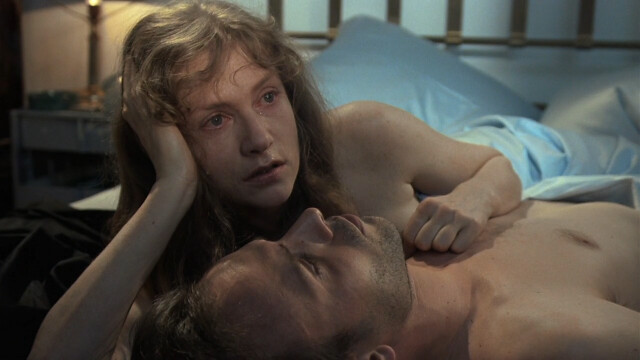
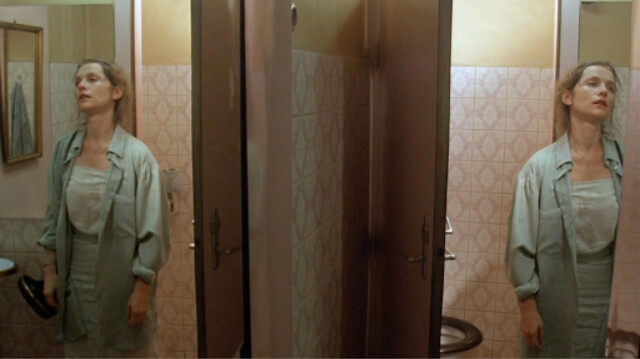
A Viennese writer (Isabelle Huppert) is having an existential crisis. She struggles between two men - Malina (Mathieu Carrière), her stoic, supportive husband and Ivan (Can Togay), her young handsome Bulgarian lover, to define her existence. It's a gripping, surreal film that showcases Huppert as an actress. She is absolutely radiant in this.

The writer is always seen typing away countless letters that ends up on the floor of her flat that will never get sent. She goes through a whirlwind of emotions, searching for that eternal happiness, but not finding with either men. Malina, with the female sounding name, could be the one and the same as the writer herself. He is the rock in her fragile existence in the beginning. But as she slowly loses her grip with reality, he stays distant and cruel. Ivan, whose nonchalance makes her all the more desperate. finally ends up abandoning her.

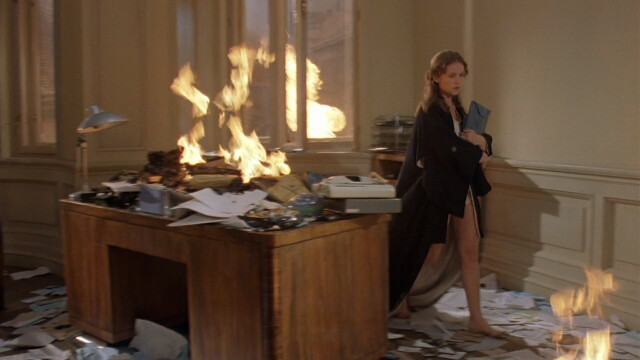
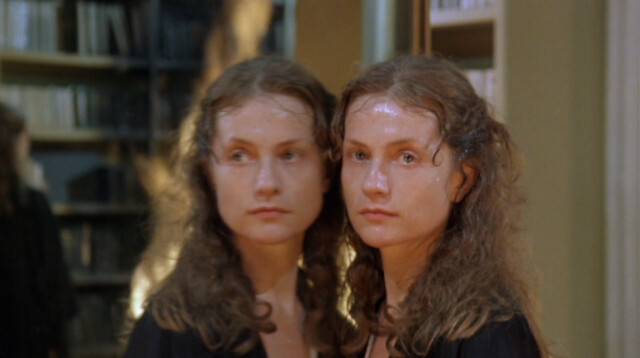
The film begins with a horrific nightmare of the writer. Her father throws her younger-self out the roof of the building. Her father is a recurring figure, sometimes seen in a Nazi uniform, reinforcing patriarchal post-war male dominant European society. Malina is a complex and crazy movie filled to the brim with symbolic images and close ups of Huppert's tearful face. Mirrors, reflecting our writer's state, is also prominently used. It goes completely bonkers in the last 30 minutes as things turn completely surreal, with part of the writer's apartment constantly on fire while Huppert pacing back and forth in her letter strewn flat as if everything is normal. Malina has a same emotional intensity as any Zulawski films and Huppert gives all to her blistering performance as a woman who desperately needs to validate her existence.

Monday, December 14, 2015

Present Reimagined

Dreams Rewired (2015) - Luksch, Reinhart, Tode
 photo 10ec939f-d5dd-49af-b865-cc0a005dd2a6_zpsjv9zgv2a.jpg
Directed by Manu Luksch, Martin Reinhart and Thomas Tode, Dreams Rewired is a fascinating historical reflection of our obsession with connectivity. Appropriating old world technology to draw the parallels to our own, the post-NSA era society where files can be stored in the ether and anyone can have access from anywhere, any time.

The film digs deeper into history of mass media- early films, phonograph, radio and early television- culling from more than 200 archival silent movie clips and retro style animation, the Austrian experimental filmmakers examine not only development of technology but also human desire to connect with one another and to relentlessly innovate. The film also puts a mirror on 21st century society as it asks serious questions about our blind dependency on technology.

Narrated, ever so appropriately, by our resident alien queen from the future, Tilda Swinton, in her crisp, otherworldly voice, Rewired is a dense, playful, philosophical and poetic look not only at how the old, both real and imagined, technology (roughly from 1880s to 1930s) matches up to 21st century world that we are taking for granted - from radio transmitter on a garter belt, mobile device the size of shoe box, notions of virtual reality and world in harmony and understanding. Swinton playfully plays along, often having conversations all by herself in clips with two characters.

Beautifully structured, It sets up with the clips from infant stages of film technology - films by Edison, Feuillade, to early greats like Griffith, Vertov, Eisenstein, to early avant-garde silents where they imagined technology fueled Utopia.

The film takes a darker turn as it talks about invasion of privacy ('I can see everything through the wall!') and 'human zoo' with the exotic world archival footage that is today's equivalent of the third world poverty porn. It cleverly makes a transition from early Soviet propaganda films (including Battleship Potemkin) to aerial view of bombed out Europe after WWI, to the first international TV broadcast of the Olympics game being Nazi Germany in 1936. That 'the world within arm's length also means within striking distance.' Then it hints at the rise of fascism and totalitarianism and surveillance.

Dreams Rewired is not only an entertaining visual feast for the eyes, but also a kin, thoughtful, cautious observation on how these 'imagined' world where total connection might have meant a 'transparent future' unlike our uncertain world where we store and share information in ether and deal with whistle blower scandals in the deepest reaches of the governments every other year.

Dreams Rewired has world theatrical premiere, Wednesday, Dec. 16 at Film Forum.

Saturday, September 12, 2015

Where is Our Mommy?

Goodnight Mommy (2014) - Franz, Fiala *Originally Published March 26, New Directors/New Films
 photo 541673d5-6431-42b1-8173-4e70d7dcf4cb_zpsboqpdwc8.jpg
As far as creepy twins movies go, Goodnight Mommy tops it all. Impeccably executed and acted, this Austrian chiller rubs shoulders with Funny Games on cringy inducing level. It is no surprise then that the film is directed by the wife and the nephew of Ulrich Seidl. It's quite an achievement what they pulled out from the young real twin brothers Lukas and Elias Schwarz.

We are introduced to preteen twins, Lukas and Elias, playing in the corn field, then near the lake. Colors are lush and vibrant you can almost smell the warm Summer surroundings. Something dark and sinister is hiding just around the corner. You can feel it. Then there is mom (brave Susan Wuest), whose face is bandaged like a mummy. She is cold and distant and barks orders at Elias and doesn't seem to acknowledge Lukas's presence. It becomes pretty clear that Lukas doesn't really exist and that something terrible has happened before. But there is scarcely any dialog for the first half of the film. They are in the hiding in the ultra modern house in the country, away from Vienna. Lukas is feeding his brother some unspeakable thoughts: our mother isn't really our mother. We need to find out where our mother is from that woman who is not her. From then on, Goodnight Mommy slowly slips into very dark, dark territory.

Franz and Fiala know to build tension without the help of music or dialog. Goodnight Mommy is quite a feat for visual storytelling. Images, shots and editing matters. Not quite formalist approach of Seidl but the images have power in this film.

Thursday, September 10, 2015

Interview: Veronika Franz and Severin Fiala on Directing Creepy Twins in Goodnight Mommy

Franz Fiala
Veronika Franz and Severin Fiala, first time (in narrative form) filmmakers hailing from Austria, made a fantastic yet deeply disturbing film, Goodnight Mommy. It's been garnering much deserved critical acclaim around the globe ever since it made a splash in the Venice Film Festival last year.

The film's disturbing content makes sense when you consider Franz is married to Austrian auteur Ulrich Seidl (Import/Export, Paradise Trilogy and who serves as their producer) and Fiala being his nephew.

In person, they are very open and passionate film fanatics who finish each other's thoughts. They are an energetic pair whose enthusiasm for filmmaking is infectious. Our conversation was filled with film geekery and laughter.


GOODNIGHT MOMMY was great. But it was disturbing.

Veronika Franz (V): We ourselves want to be disturbed in cinema. That's what we expect a film to be. That it will do something, stir things up in us.

That's what Ulrick Seidl does. I got a chance to interview him when he was presenting the PARADISE TRILOGY.

V: Yeah, last year was it? Right. But these are different films. He presents kind of different reality with his films and we tend toward genre filmmaking.

Severin Fiala (S): I think it's maybe that we start at the same starting point but we walk different ways.

V: Yeah, that's it.

That's an interesting point. I know you guys have done a documentary on Peter Kern, a controversial Austrian director/actor.

S: It's the least successful Austrian film ever! [They explode with laughter.] It had 482 spectators.

V: We still think it's a good film, actually.

How different was it directing that and doing a narrative film?

S: From the outside point of view, you can say it was completely different. I mean one (Goodnight Mommy) was with a normal professional production. But I think every film is maybe the same -- circumstances might be different: in a documentary, you have a different working method to make things happen. But on one hand, you don't have Peter Kern shouting at you or you behave in a way that he shouts at you. And in Goodnight Mommy, things were completely different -- you have different means of achieving what you want. But it's the same drive to make things done.

V: And creating intimacy is important. It is difficult in terms of making narrative film to bring out intimacy, especially with child actors behaving naturally.

Exactly. Watching the film I was amazed by how natural those two kids were. You guys did a pretty remarkable job getting out those performances from them.

Well, thank you.

And with that dark subject matter...

V:We shot it chronologically. Like Ulrich's films we have a starting point, but don't give them the script and each day we just gave them basic suggestions, but reveal certain kind of information to them to keep their interests.

I see, I see.

V: We didn't give them dialog. But we sometimes had to tell them things because opposite of Ulrich's films, we had to get from point A to point B at some point.

S: Mostly we wanted to make the children feel that they could do anything in a scene, that they should feel free. But we had to find a way to navigate the way we wanted to have [things] happen. So the first thing we had to do was to tell the children that they don't need to know everything. Things will happen somehow but they don't need to know about the structure or anything.

V: It was tough in the beginning because you have like 30 people standing around you, waiting. A director tells the children something that they need to do.... It took some time for them to accept this environment.

S: It was impossible. It was cold the first day of shooting. We were really nervous. The children were there standing shivering. If you just have said, "now play," then they wouldn't have played it in the forest like they did. So we were running across the forest, throwing pine cones and we ended up in the frames because we were running around with the children. We wanted that natural feeling.

V: We moved in to the house that we were shooting at and decorated the house in such a way that they wouldn't feel it was like a stage, like strange surroundings for them. We used their twin-ness- we changed their roles--

S: Because it's not easy for children to repeat the same line over and over again. The delivery can become lifeless but we had to somehow rehearse certain scenes so we switched them around. We didn't know how the scene would go. It was the first time we were working this way. But the kids were really capricious. They wanted to do it better than the other one who did it before.

That's interesting. How was the casting process? I'm sure you've seen a lot of twins.

V: From Austria, we had about 130 pairs of boys from 9 to 11.

That's quite a lot.

V: Yeah it is. Austria is a very small country and we only looked in bigger cities. We didn't want them to have strong accents. We called many schools and of course they would know if they had twins in their schools and we would write them letters to invite them.

S: It was kind of normal. It wasn't difficult actually.

V: In the end we had three pairs who were really good. The last casting round was that we had an actress (in the mom role) tied to a chair. We told them, "OK, she's not your mom. Now try to find out if she is your mom or not. You can do whatever you want to find it out." Two pairs only circled the actress around asking, "Where is our mom, where is our mom?" But our pair (Lukas and Elias Schwarz), took a pencil--

S: And started toward the actress and we got up to stop them. [Laughs.]

V: They were very courageous. The thing is, we looked for beautiful children the audience could identify with.

S: But they should have some kind of secret to them below the surface. That was what we were looking for. But that's what we tried to convey everywhere in the film -- in the house, in the main actress, in the twins -- you could feel that there are secrets to them behind their masks.

Are Lukas and Elias completely identical, so that you can't tell them apart?

S: No, they are not.

V: When we first saw them, they were not identical enough. They had very different hair in the beginning and we had to call the hairdresser and told her to make them as close as possible because we thought they were not similar enough. But then, while shooting, we couldn't tell them apart. [Laughs.]

S: The continuity person had a hard time distinguishing them.

I was always wondering about whenever there were twins in a film if they actually shared some kind of connection?

S: They definitely do. First time we met them we were trying to play a game, 'Ich Seh, Ich Seh', which is referring to the film's original title, a children's game. We tried with them but it proved impossible because they always knew what the other one means.

V: We saw 130 pairs in casting, so we know about their connections. [Laughs.] We should make a scientific study about this. Rock paper scissors, they can play for hours. We even shot them playing it and we couldn't use it because it would never end!

Also there is a lot of doubling going on in this film. For instance, two directors, obviously. How do you divide your roles?

S: We didn't divide at all. We did everything together from the start until the last edit in the editing room, which is kind of easier for first time directors [as narrative filmmakers] because you are a lot stronger together when it comes to getting your idea through, against other people who constrain you with money or time or whatever. It's easier if there were two. And we know each other for a long time. We share the same vision of cinema and we want the same film. It's not about vanity or ego but it's all about the same film we want to make.

So even on set, you guys do everything the same.

V & S: Yes.

S: In a way we get extra chances to do it right. If we were shooting a scene once, one of us was talking to children and one of us would be behind the camera and we do it again and it's not good. And we do seven times and it's still not good, then we would switch roles and approach it the same way. But it would be completely different because we are different people and it would work.

V: You'd think that the process would be slow, but it's quicker, because we talk to each other right there and then, so we prevent each other from second guessing ourselves. It's the same in our writing process. We physically write together and talk our ideas through sitting at the same computer...

It was fascinating that in the first part of the film, about an hour or so, there is not much dialog. It's all visual storytelling.

V: Yes.

S: We understand that cinema is a story told in pictures. We approached it that way.

V: I always prefer films with least dialog. I hope I can make a film one day without any dialog.

The colors and everything are so intense in the film. Martin Gschlacht's cinematography is gorgeous. I've seen that Jessica Hausner film (LOURDES) he shot.

V: Yes, and he shot the Shirin Neshat film, Women Without Men.

I saw that! That was him too? And he shot THE WALL (DIE WAND)?

V: No, no. That movie was shot by many cinematographers, not just him. Only small part was shot by him. But yes, he is very good.

I saw the ending credit stating that it was 'shot in glorious 35mm'. I laughed at that. I am a film purist so I totally understand. But was there any consideration to shooting GOODNIGHT MOMMY in digital?

V: They recommended us shooting in digital.

S: Yeah it was the question of money and time and many suggested us shooting in digital since we are first time directors -- too much film stock, especially shooting with children and so on.

Thankfully, we had a producer (Ulrich Seidl) who understood our artistic vision and who fights for us to do that, which is rare for a producer.

V: We could convince him that it was a matter of aesthetics. And as you know, the process of shooting film on set is a lot different than just pushing a button and hoping something will happen. There is a discipline that goes with it. It's a complete concentration that you need to have shooting film.

This is what filmgoers don't really know about shooting film instead of digital.

S: Another thing is that shooting on film, it's the chemical process of shooting on a film stock that is fascinating because no one really knows how that really will turn out. It's not a perfect medium. We strive for perfection and shooting in film doesn't really give you that, which is fascinating. In digital filmmaking, the idea that you can make it look perfect afterwords seems strange to me.

V: The crazy thing is that Martin Gschlacht showed us that what they do now is digitally... you can... how do you say?

Repaint?

V: Yes! They can even paint certain things in where it didn't existed! It's a complete fake! Why fake something? That's completely fake, I think.

The process is completely backward: When you shoot film, you choose a stock and you build it from there. When you are shooting digital, you start it in edit stations.

V: Yes, exactly.

S: It's bad for your concentration because you think you can do it afterwards. I like where you have to make decisions while you are on set. Why would be on set if you don't make any decisions?

Exactly.

S: We don't like that way of thinking in the digital world at all. We like to have fun.

I have to say that the film is technically brilliant. It's beautiful and the editing is amazing. I want to ask you about some of the visual references. Especially ones in the forest and the twins exploring darkness. Was there something that you had in mind as visual inspiration?

V: One of the visual inspirations was an Austrian artist, Gottfried Helnwein. How do I describe his art... a pop artist? He is very famous. Inspiration in films, we watched all kinds of films for twenty years together and we love horror films. We have quite a big collection in our heads.

S: We wanted to not so much as emulate other films but going through the psychological aspect of two children. The thing was we wanted to watch some horror films with Martin but he is not a fan of that. He was afraid to watch some of the films we wanted to show! [They laugh.]

That's hilarious.

V: We ended up watching one of Dario Argento's films together with him. He was very nervous and excited.

What we wanted to do was playing with nature/indoors, light/darkness. The twins always want to go outside and play in nature. The mother is always inside as if she's a prisoner. The twins like the sun and light. Mother not much. We play around with that concept for two thirds of the film. Then it becomes more like cinema verité with handheld shots at the end. The blinds are open and the light comes in. That's why the horror and violence is more effective because everything is out in the open and light.

Right, right. But it's not all horror. There are many funny moments in the film too. Like, the--

V: The Red Cross

Yeah exactly. I noticed all the small moments in the film. Like the drunk with the accordion...

V & S: Oh yeah!

V: I'm so glad you mentioned him! He's one of our favorites. Almost no one mentions him! We didn't like him too much but we shot a lot of him. We had a hard time to cut the footage of him down to what was included in the film.

S: Because it was too much.

V: But he was a real character.

S: If you talk to him, you never understand him. He always shouts something but we can't make sense out of what he's saying. He lives in this kind of fucked up environment, more or less. He has a beautiful house but he doesn't live in there because he doesn't want to destroy it. He wants to make a brothel out of it. Or at least that's what I understood.

V: What unifies all these characters is that they are all real people. The Red Cross are real Red Cross workers because Severin knows them from work.

S: Yeah I was in The Red Cross.

Oh, I didn't know that!

S: Those are my colleagues. We wanted to have some real life bleeding in the film and it just worked out that way.


It was just announced that Goodnight Mommy is the official entry from Austria for Best Foreign Film at next year's Academy Awards. The film opens nationally on Friday, September 11.

Tuesday, June 24, 2014

Eurotrip

So Nicole and I did a Tour of Europe this Summer. It's been a long time coming and we really wanted to get the hell outta dodge for a while. This twelve-day trip encompassed three countries (Italy, Austria and Czech Republic) and seven cities. We started our journey in Rome then moved on to Pisa, Cinque Terre, Florence, then a night train to Vienna and ended up in Prague. It was a short, exhausting trip but totally worth it. We took more than a thousand pictures but here are the gist of what we saw:

Friday, December 6, 2013

Much More than a Feminist Parable

The Wall/Die Wand (2012) - Pölsler
 photo a7de8f02-500c-4b20-b5a7-892988b0a633_zps77346568.png
 photo d60b5204-a305-497f-b252-dcfc787dfdc1_zpse8bb728a.png
 photo e16259b6-f906-4fd8-aad5-35314d6ddba9_zps05f8aba5.png
 photo 47a15ae1-96d6-4889-824d-f7c14851b7c8_zps83fbeafc.png
 photo 16c9baff-4f25-4d00-b403-8d93325ec7d7_zps08bbd174.png
 photo 3d5c9ec1-9c5d-4f91-b725-aa8e785a4ebb_zps27abd214.png
 photo 1d9337e4-5cc4-46e1-8c50-b82e9c2445aa_zpsfb29848d.png
 photo 5b1075ce-b3ec-46aa-86ce-af3ca1474dfa_zpsab7b02d8.png
It is very hard to disregard The Wall as a 'what-if' tinged sci-fi in the tradition of Twilight Zone that The Simpsons is so keen on ripping off of. Based on a 60's novel by Marlen Haushofer, the film tells a frumpy, middle aged woman (played superbly by Martina Gedeck) suddenly finding herself cut off from the rest of the world overnight by an invisible wall in the wilderness of the stunning Austrian Alps. It's as if the time has stopped outside the wall. The old couple it the neighboring cabin on the other side of the wall has frozen in their daily activities. Yet, the nature prevails: the birds chirp, the trees sway in the wind, the stream gently flows.... It's just her and her dog, Lynx, alone. She slowly accepts this nightmarish fact and starts a journal, cataloging her thoughts and activities in the back of an old calendar she finds in her cousin's hunting lodge. She goes on long treks to map out the limits of her territories. She learns herself how to survive by hunting and growing crops. The seasons change, and she slowly begins to enjoy living in nature. Crippling loneliness is compensated only by Lynx and other animal friends. Taking care of her animals become her sole reason to go on. But her peace is not meant to last long.

The star of the film is undoubtedly its spectacular setting and cinematography. As our unnamed protagonist treks, works and rests in four seasons in day/night time, we are presented with the majestic Alps scenery. Contemplative, and strangely moving by the end, The Wall doesn't come across only as some sort of a feminist parable on the modern world. The whole experience is much more than that.

Saturday, July 6, 2013

Art of Life

Museum Hours (2012) - Cohen
 photo c5517a2a-9d82-47de-b413-4eba38d32c46_zps0c0697fe.jpg
It's Cohen's landscapes that are so arresting- the mundane urban settings become meaningful -- the empty, stillness of the frames get more resonance by sporadic, gentle musings. Museum Hours loosely concerns an old guard Johann (Bobby Sommer) at Kunsthistorisches Museum and a middle aged woman Anne (Mary Margaret O'Hara) from Montreal, visiting Vienna to see her distant cousin who fell into a coma. There is a gentle flow to the film that is not hurried to anywhere, not married to anything, so it slowly puts your mind at ease. It opens you up, to put you in place of an observer, not unlike observing a painting in a museum.

Kunsthistorisches in Vienna is famous for housing, among other things, large volumes of Pieter Bruegel the Elder's work. Bruegel's paintings, along with Goya's happen to be some of my favorites. Cohen even dedicates a chunk of time for a museum guide to explain his work that even without their subversive nature, everything has equal importance. The guard narrates that he finds new things every time he sees Bruegel's paintings -- there is a broken egg, a man is squatting down and defecating in this corner, etc. Gently weaving real life and chance encounters of these two people with numerous paintings in the museum, the film is a sublime beauty. Anne singing to her cousin, snowy melancholic Vienna streets under the street light, Johann lovingly talking about his young coworker, a skate kid sitting, staring nowhere -- these images and sounds are equally beautiful and resonant in Museum Hours. Quite possibly the front runner for my favorite movie this year.

*the film was preceded by Cohen's ultra-short, Springtime shot in industrial Gowanus area in Brooklyn. Mood and imagewise, and not knowing his work at all, it was a good indication of what's to come.

Saturday, April 27, 2013

'We Search for Our Own Paradise but We All Fail.': Ulrich Seidl Interview

seidl photo 0c003e7e-c23e-470c-9175-205ded96f66c_zps4497aa78.jpg
The Film Society of Lincoln Center hosts Ulrich Seidl, controverisial Austrian director of Dog Days, Import/Export and now the Paradise Trilogy, in a special Film Commend Selects series. It's a rare occasion to watch Love, Faith and Hope, back to back to back, the way they were intended. The screenings are on April 26-27 (with Paradise: Love getting a separate week run). Our interview took place at the posh Austrian Cultural Forum building in mid-town in the sunny afternoon. Mild mannered and personable, Seidl doesn't really give you any impression that he is the director of those depravity filled, human misery films.

*I had to share my time slot with the esteemed film writer Oleg Sulkin in prodding Seidl, the other Austrian provocateur (Oleg and I among others also shared Haneke last year). I thank him for his camaraderie.

Was the Paradise Trilogy originally conceived as three separate films or was it conceived as a whole?

Originally it was intended as a single film consisting of three episodes, dealing with three protagonists. The stories were going to be interwoven similar in structure to previous films of mine: Import/Export which consisted of two episodes and Dog Days which consisted of six episodes. So here we have three episodes, each with a female protagonist and each dealing with their search for fulfillment and longing. The decision to make three autonomous films only came when I was editing the material.

How much footage are we talking about when you conceived it as one film?

When I found myself in the editing room, first time I had about ninety hours of rushes and when we first attempted to cut it in to a single film, the result was over six hours long. But the length wasn't the problem, you can make films that are six hours long. The problem however was that dramaturgically and emotionally the film didn't work. It was too heavy, too intense for an audience to follow it and to stay involved.

Faith, hope and love are famous Christian virtues. I noticed that you changed the usual order of these notions. Does it have any special meaning behind it?

First of all, the order of the films I presented, in my mind, is a correct one. For example you couldn't start with the film about Melani (Hope), just as you couldn't start it with Faith. So titles have to follow in that respect. First film, about Teresa is love and the others follow as a result. Do you understand that?

(I think he was referring to Corinthian 13:13- And now these three remain: faith, hope and love. But the greatest of these is love. Hence, Love first)

Yes.

Why focus so intensely on nakedness and sexual relations in people?


In all my films, sex and relationship to bodies are very important. I am always interested in looking behind the façade because the world we are living in is flooded with images by media which paints completely distorted picture from the our true selves. If we look at ourselves in the mirror, what we see is very different from the images in the media. For me it's very important to look and present reality.

Also the power struggle between the sexes and couples are carried out through sexuality. The mutual exploitation is also a theme that I'm always interested in exploring.

Judging by your filmography, you seem to be very interested in photography and painting. It looks pretty evident that it is very important to you to create amazing visual images which sometimes don't need any dialog. Can you elaborate on that a little bit?

Those were my beginnings. At first I was seeking not to confront reality but to deal with the artistic process. It's the question of gaze. My interest was in painting and photography and they were what led me into film. My background isn't in writing but pictures.

That's my approach. I try to share my gaze with the audience and by sharing a specific gaze through my films would hopefully increase their awareness. It hopefully will give them different view on things and allow them a new consciousness, new awareness of reality.

Speaking of photography, I'd like to know how your professional relationship began with an American cinematographer, Ed Lachman.

Indeed, Ed Lachman (The Limey, The Virgin Suicides, Far from Heaven) is an American. But he is very interested in Europe. He hasn't devoted himself to working only in Hollywood but he is interested in cinema. He'd seen several of my films and many years ago, we first met in Vienna and felt a sense of kinship. Two years later when it came time to make Import/Export, I asked him if he wanted to work with me and he said yes. Of course, in the 70s Lachman already worked with Wim Wenders (Lightening Over Water, Tokyo-Ga) and Werner Herzog (La Soufrière). So it was nothing new to him.

I could be mistaken but the last part of the trilogy is more warm-hearted and delicate than the others. Does it have to do with the subject of hope: because the doctor overcomes his desire- his sexual temptation and did not become pedophile? Is that what you mean by hope?

No. (laughs) My relationship to the three female protagonists is identical. I feel the same compassion, same tenderness for them. But it's true that the last film is less provocative, probably it's because there is no abuse that takes place. That's how I wrote the script. Had the abuse taken place it wouldn't have been provocative and would've gone in a very different direction. But you are right. As children/teenagers they have far greater potential for hope.

The notion of paradise is very important for three of them in the trilogy. They dream of it but they never get close to it. Does it mean you are pessimistic about the human nature in general?

That's what we all do. We search for our own paradise and happiness but we all fail.

That's... (we all laugh)

Do you have a different opinion?

No. I ought to agree with you unfortunately.


You have a great background as a documentary filmmaker. I notice that you cross the border between narrative and documentary. Is it important for a cinema to have these definitions?

No. In fact when I was first starting out I was criticized for mixing those two together. But with time there have been many other filmmakers started working in a similar fashion- melding documentary and fiction. So times have changed.

On that note I have a question on authenticity of your films. I can't never tell when I watch your films which is fictitious and which is authentic. Does the notion of authenticity matter to you?

The so-called authenticity is developed because of the actors and their performances. The audience sees and identifies with these protagonists on screen, people they can recognize: 'that's my mother, my neighbor, my brother or my friend'. That authenticity is my intention when I seek to create and that leads me to identify with the world and to recognize my responsibility in my participation in it as a filmmaker.

When you work with actors, do you leave a lot of room for improvisation? What's your method?

It would require days to explain my shooting method. It's something I often talk about with film students. I can just say all of the scenes, whether with professional actors or non-professionals, are improvised. I never write up dialog. They are improvised by them.

And there are various circumstances: on the one hand there are scenes in which you have everything down to an inch determined- where people are going to sit in exactly what position and what exactly they would do. On the other hand you have a scene with Teresa involving striptease where you create an area, a shooting space in which actors can move about with much more freedom and spontaneity.

Is the filmmaking hell or paradise for you?

(A big pause) Paradise. (laugh) Well, very often hell but occasionally paradise too.


The Paradise Trilogy plays in the correct order: Love, Faith and Hope at FSLC 4/26-27 in conjunction with US theatrical release of Paradise: Love. The standalone releases of two films will follow in coming months.

Sunday, April 21, 2013

Old Fashioned Therapy

Jesus, du Weisst/Jesus, You Know (2003) - Seidl
 photo 51712c8e-89e9-4ef8-8b53-943106e40477_zps549faa5e.jpg
Seidl's doc on individual prayers gets blessings from many of participants, praying for film's success in the beginning of the film. As they pray to Jesus in front of the camera set on pew level, in various grand empty churches, which usually starts "Jesus, du weisst..." (Jesus, you know..., hence the title), you feel that their faith in god is more to do with solving their earthly problems (mostly relationship/marital) through talking to themselves. Seidl's detached approach in these tableaux can be seen as ironical or mocking since Catholicism is losing grip in Europe and other alternatives have taken the place of religion (therapy, happy pills, etc). But I'd like to think that it is sincere reflection of our society where religious faith seems extraordinarily old-fashioned and out of place. It is still a feat to get ordinary people's innermost thoughts in their most private moments (but this time, with their clothes on) on film, as they ask for guidance/strength in killing their spouse with poison, in avoiding having erotic fantasies involving the bible, in getting over fear of dying, etc.

Friday, February 22, 2013

Paradise Lost

Paradise: Love (2012) - Seidl
 photo c9bb974f-f8dd-48dd-ac3f-bd6e6b3ad38b_zpsaeef9df4.jpg
Paradise: Love reaches its dizzying heights in terms of its brevity and authenticity using non actors to bring out the ugliest side of humanity. Compared to Seidl's work, Todd Solondz's stuff is a kid's play. Paradise: Love, the first of the planned trilogy (Paradise: Hope just played at this year's Berlinale), deals with the uncomfortable subject of sex tourism. It's pretty icky when it's the first world old white men on third world young women. It gets doubly gross when it's old, flabby white women (and no, they don't look like Charlotte Rampling in Heading South) on young black men. Seidl up the ante with its African setting (Kenya). Shot on location with mostly local people and non actors, Paradise is a two-hour, all-access glimpse into how the colonization still perpetuating dehumanizing effects on both side of the aisle. There are a lot of humor (intentional or otherwise) in the film but it's mostly oppressively sad and depressing. The most cringe worthy part is probably the scene where four droopy, old, naked white women trying to manage the young black stripper to get it up.

What Seidl achieves here is truly commendable. But dang, it's one of the saddest movies I've ever seen.

Monday, February 18, 2013

Children of the Damned

The White Ribbon (2009) - Haneke
 photo 8ce01bc8-bab4-4729-9c06-0acd5cc832b6_zpsad0bbb08.jpg
 photo 3b21bd8e-a38b-4f93-9058-5f17a5e751d3_zpsacdc4e1c.jpg
 photo b4fbaa6e-e519-42f2-93ee-16bf8298102d_zps73209ec0.jpg
 photo 3c66123d-0176-4b73-86b9-28b2fdb41784_zps376dd748.jpg
Masterful. I know I'm quite late in the game with this one. Haneke's examination of how the entire generation of people can be capable of atrocity or turn the blind eye to it is as complex as the history it is contextualizing. Think of it as Children of the Damned without being ironical or allegorical. It's deeper than that. There are definitely the economical disparity and religious hypocrisy at play in The White Ribbon. But what's most striking in the film is the attitude of grown ups not accepting the possibility of 'innocence' not existing. It is chilling because Haneke's view can be applied to any time period. But he suggests in the scene where the youngest son of the pastor presents the distraught man of God with his prized sparrow, that kids are not inherently evil. But do we start persecuting children when they reach 11? Where do we draw the line? Haneke doesn't give us easy answers and there are a lot to mull over. Perhaps the subtlest of all his films, White Ribbon is a lean, unblinking filmmaking at its best.

Monday, December 17, 2012

Love and Death: Michael Haneke Interview

Haneke
Austrian film director Michael Haneke took home the coveted Palme d'Or at Cannes for the second time after his The White Ribbon in 2009 and swept the year end European film awards with his austere, devastating film Amour. I got a chance to attend a roundtable interview with the director at this year's New York Film Fest. As the interview unfolded in the Executive Room at the Trump International Hotel where myself and six other journalists were served with 'Donald Trump approved bottled water', my expectations were met -- Haneke outright avoided many pointed questions we asked and when he did answer, they were very concise and to the point. But also, there was a lot of laughter to be found in the room. This mild mannered, white bearded old man could be anyone's grandfather, I thought, temporarily suspending the truth that this is the director responsible for Funny Games and The Piano Teacher. But in his answers, I found that his films are not so cut and dry as they often appear to be.


Q: Amour is being called as a very humanist film. I don't argue with that. But I feel there is something more at work here. I feel that the film is pushing the audience to an end point that there is no option but to condone the unconscionable act. Was that your goal, if so where did that desire comes from?

A: That's not my impression at all. My impression is that I'm not trying to condone what I'm showing. I'm trying to present the film in its entirety. This film and that scene in particular, is presented in such a way that it's open to a number of interpretations.

The title of the film is very simple, yet provokingly so. I've heard that it was not your first choice. Why did you go with it?

I chose the title because I couldn't come up with a better one. I had a list of about 20 titles. None of them I was satisfied with. I was having lunch with Jean-Louis (Trintignant) and I read him the list of titles. And Jean-Louis said, the film is about Love, why don't you just call it that? I thought that was a very convincing argument. If I were making a conventional love story I would've never chosen that title because it would've been too obvious.

For Trintignant it must've been very personal approach since he starred in A Man and a Woman and its sequel twenty years later and now Amour, almost 50 years later. Did you talk about this symbolism with him?

You have to ask him about that. We never talked about it. I'm not a fan of A Man and a Woman.

What was the effect on shooting with Emmanuelle Riva ? You take her to a place where even in films that are that are supposedly looking at the subject, most films usually turn away before you do. Considering the amount of time and her coming back day after day to this role, what was the impact on her?

You have to ask her that. I can't answer that. (everyone laughs). From some of the interviews I've heard of her talking about the film, she had said that it was a pleasure working on this film.

Did you lipserve anything during the filming?

One scene was very difficult for her. Because she was scared to death of that electric wheelchair, the one with the control stick. After we completed shooting for the day, we spent two evenings getting used to the wheelchair. In fact, I had to learn it before she did so I could show her and reassure her that it wasn't that difficult.

Did you do any preparations and research for the film? If so, how extensive were they?

Yes of course. It was a personal story that motivated me to deal with this theme. I have nothing to do with what you see on the screen. So it was necessary for me to do a lot of research. For that I went to hospitals and spent time in old age homes and talked with doctors. I also sat in on number of speech therapy sessions for the stroke victims where they regain their speech. Emmanuelle didn't want to do a research herself and asked me to do it for her and show her what she had to do. She had that trust in me and that's how it worked. I felt that it was important that we have that precision of accuracy in the film.

You started the film with what could be called a 'happy ending' to just reveal everything in the very beginning and the whole film is kind of a continuous flashback. I understand that it was a crucially important structural decision you made. Is it because in order to eliminate any kind of suspense for the viewer?

Yes.

Can you elaborate on that?

No. (everyone laughs)

As you said, I wanted to eliminate any kind of false suspense. It is quite clear quickly in the story how it might be the only possible ending. But what interested me was not how the film ended but rather the events that lead up to it.

What interested me was not the death per se, but how to cope with the suffering of a loved one.

I've read something about the film being advisory for young couples. The quote is, "the film should be shown to any young couples who are considering getting married and committing their life together."

Who said that?

I read it in one of the reviews.

Oh good, that means that it will have larger audience. (laughs)

Many of your films takes place in France and in French. I was wondering where your love of France comes from?

When I was going to school I studied French rather than English. Sorry if I studied English I would be speaking directly to you now. Back when I was at your age, France was the core attraction for young intellectuals, the object of our desire. It was the age of existentialism and Nouvelle Vague. Now everyone's looking to America. But it was a matter of chance collaboration that brought me to France. Juliette Binoche had seen my Austrian films and called me up and suggested to work together and that lead to our first project (Code Unknown) and the collaboration worked very well since then.

I have a related question about language. When you write a script, do you write it in French or German then translate it?

No I can only write in German. Ever since I started making films in French, I've worked with the same translator. He does the first draft of translation and we revise it together. My French is not good enough to judge in a dialog that that's what I'm looking for.

When you write a script, do you have certain actors in mind?

It is the case for this film. I wrote a script with Trintignant in mind. Similarly, I've done this for certain German or Austrian actors in the past. It's more efficient means of writing a script because you are able to write into the scripts when you know who (the character) it is. But that's not always possible.

In the case of The White Ribbon, I've written the part of Pastor for Ulich Mühe, one of my favorite actors who played a lead in several of my other films and you may also know him as the lead in The Lives of Others. Unfortunately he died before I made the film, but I never gave up the challenge to replace him. However I was lucky enough to (the role eventually went to veteran theater actor Burghart Klaußner). So you never know.

Do you think if the story was told in America would it be differerent?

I've never really thought about it because from the very beginning, I wanted to work with Jean-Louis. So right now I can't come up with any American actors who would be able to play the part, certainly not the ones who exude such warmth as he does.

Did you choose to set the majority of the film in the apartment to illustrate the confines of their lives?

Yes. When you are elderly or infirmed, then your life is restricted to the four walls that you live in. That was the external reasons for the choice. In terms of aesthetic reasons for the choice, it occurred to me that when you are dealing with such serious theme as this, you have to find a fitting place like a stage. That's why I went back to a form of classical theater- real time based action seemed appropriate for the reduction of their lives.

Did you attempt to shoot this film in sequence given the limited setting and if not how did you take your actors through the extreme states that they had to go through?

We sought as far as possible to shoot the film chronologically. The one exception was the nightmare sequence, which we left for the end. But we had to tear down the sets and rebuild them. On the second half of the shooting, we had to make changes because Jean-Louis had broken his hand and we couldn't show it in certain scenes because of the scheduling issues.

You do a lot of long takes. I think it's good because it adds depth to the real old couple's rhythm of life. It's very slow and stretched out. But also I was wondering if you sometimes decide not to use long takes, cutting them before the audience to see what you'd like to avoid, for example, the mirror scene or the toilet of this ill woman whose body is unresponsive.

(Immediately after translator has finished translating the question)Yes. (laughter from everyone)

That's cruel. (another round of laughter)

Since the fate of the female character is predetermined as revealed in the opening sequence, and therefore the suspense is gone. I couldn't help focusing on the pigeons. At the press conference after the screening that you said it's up to the viewers to decide the symbolism of the pigeons. The guy next to me joked that if it was the early stages of your career, the pigeons would have been killed. The message is that now you are not into torture and cruelty, but more humane and mild. (again, laughter from everyone)

I'm OK with every interpretation anyway. As long as the film drives many interpretations out from audience, I'm open to them. Perhaps the revision of it will change in my next film.

Is there a script for the next film?

Not yet.

Can you describe an idea for us?

Not at the moment.

If you are OK with whatever the audience takes away from it--

It has to be OK. (laughs) Sorry. Go on.

However, they approach you to get you to endorse their view, say in favor of euthanasia, are you willing to sign on for that?

That's not my task.

If you are writing a film like this in sort of questions rather than themes, like how I deal with the suffering of a loved one rather than death, was there something sparked in your personal life to pursue this?

Yes there was. But I don't want to talk about it. It was a private, personal experience.

Could you talk about the music or the theme of the music in your films? I've noticed that you seem to be drawn to musicians or characters who are musicians. In fact, the characters in Amour are both music teachers. I'm wondering if you know how to play any instrument or trained as a musician.

When I was a young man, it was my dream to becoming a musician. If it had been up to me, if I was up there when the talents were bestowed, then I would've liked to have been a musician instead of a director. I would have liked to be a conductor or composer. My stepfather who himself was a conductor and a composer warned me that I was only a mediocre pianist. That stirred me away from becoming a musician. And I count myself lucky to have become a director because there is nothing more depressing that a mediocre concert pianist.

Nevertheless I've maintained my love of music and always enjoyed whenever possible to use it in my films when the occasion arises. But I don't use it the same way as how it's usually done in mainstream cinema where it's applied to cover up the directorial sins and weakness. I love music too greatly to use it for those reasons.

Do you think then other filmmakers use music as crutch?

I don't think so. I'm sure of it. (laughs)

Why do you say that?

It really depends on what kind of films. If it's a genre film, say Spaghetti Westerns, you can separate them with the music of Ennio Morricone. The music in those kind of films has a fiction in them. I have nothing against musicals or genre films for example: films of Fred Estaire or films of Hitchcock. Without Herrman, there would be no Hitchcock. But those aren't realistic films.  But for most of the films, the music is there to fill the emotions there otherwise lacking. Most films claim to be realistic. I understand if there is a musician present or radio playing in the scene, but find it problematic to make up for lack of tension or emotions the director failed to create.

The pianist in the film is the real concert pianist (Alexandre Tharaud) isn't he? How did you get him involved? Did you just discover his music?

We did auditions for pianists and actors. And he was the best actor who was also a pianist among them.

As a writer/director with a definite vision, do you find that you are very demanding of your actors or do you have a lot of trust in them?

Both. I have a lot of trust in my actors and I expect a great deal from them.

In this country, it's really hard to have a rational, mature conversation about assisted suicide. There was a case recently in Britain where the High Court struck down the case of Tony Nicklinson, a former athlete who had been suffering from lock-in syndrome and his right to end his own life. I wonder if it's any different in Europe to have a mature discussion about keeping one's austerity and dignity in euthanasia cases.

You'd have to ask someone who are more knowledgeable than I am about that.

Were you at all concerned about avoiding making this film about assisted suicide?

As I said, I wasn't making a film about assisted suicide, I was making a film about how one copes with the death of a loved one. There are any number of related tangential issues and themes that are touched upon because of that question. But I never set out to deal with these themes. That is never my approach. My starting point is always certain feelings that I experienced or witnessed or read about and that emotion leads me want to explore. It's the opposite approach of television where they deal with theme of the day or theme of the week. That's not my approach.

It's always dangerous especially politically when you decide to make a film about a certain theme. In television, you say, 'oh this theme is talked about a lot. It's a hot topic, let's make a film about it'. In Austrian film history I can only think about a handful of films that dealt with themes successfully. The results are usually quite terrible. And when I say successfully, I mean not from the box office point of view but artistic point of view.

You say political dangers. Yet many of your films you deal with topics that eventually step on some potent political landmines. Are you not afraid of doing that?

If you are a film director who is making films today and you are dealing with our contemporary reality, then you are automatically expected to talk seriously about the society you are living in. And you are automatically going to touch upon raw points which you can't cover up or alter. You can't avoid that. But the point is that you are not seeking to exploit those but sticking to what you are interested in, your vision.

In many of my films I talked about the role of the media in our society not because it seemed to be important theoretically but rather  because I am part of that media landscape: it touches me and part of it angers me and that's why I want to deal with it. Theoretical films are terribly boring and well-intentioned films are even more boring.

Talking about actors. The two leads are magnificent.  But Isabelle Huppert is in your film again who has a brief role as the daughter. What sets her apart from her generation of actors?

I've worked with her before and we have a great working relationship. It would be foolish to change that and use some other actors I've never worked with. I asked her for the role and she did it for a personal favor. She is used to playing the leading roles and here I was asking her for a supporting role and she accepted without a moment's hesitation.

I don't know if you might not want to answer this question but I wonder since it's such a personal film and personal subject, you might consider it to be your most personal film that you've made? And thus far, I wonder if you discussed the content of your film with your family prior to making the film and what their reaction was to it?

First of all, both of my parents are dead. And the second of all, as I said in my acceptance speech at Cannes, my wife and I promised to each other that we will do everything in our power to avoid the other person being shunned off to the old age home or hospital at the end of our lives. And that's all I have to say about the question.


Just in time for Christmas, Haneke's harrowing film Amour opens in NY  and LA on Dec. 19. Please visit Sony Pictures Classic's website for more information.

My Amour Review