Wednesday, January 28, 2015

Predestined

The Music of Chance (1993) - Haas
 photo 83974d2a-5169-4728-8c6c-d1a40c6d8e21_zpslyx5zkxo.png
 photo f7d875f2-81b7-4509-8ef0-1b9639a5d114_zpsdgedx1bd.png
 photo 39b2c3ee-e564-45d7-93bc-047f425b4f41_zpss5dyuwsa.png
 photo 0d1d2b44-24da-4bb8-9b39-e4a096e19594_zpsreev8uam.png
Jim (Mandy Patinkin), a straight-laced drifter picks up Jack Pozzi (James Spader), a ratty, beaten up gambler on the side of the road. On the way to New York, Jack tells Jim a wild story about a poker game with a couple of rich old kooks, Bill and Willy (Charles Dunning and Joel Grey) in their mansion that he needs $10,000 to get back into the game. Jack is really good at the game and thinks he can wipe the floor with these old brothers. Jim decides to take his chances with this shady total stranger and back him up with his money after testing Jack's poker skills.

So they go to the mansion, pass the creepy caretaker (M. Emmet Walsh) at the gate, and meet the brothers. Bill and Willy show them around the place, including Willy's rendition of the miniature model 'world'. Once the card game begins, Jack is destroying the brothers. But the luck turns the other way, after Jim steals the trinket from 'the world' during the break. Jack loses everything (including Jim's car) and they owe the brothers $10,000. The brothers have a proposition: they can build the wall in their property to pay back the debt while living in the trailer park. Jack is outraged by it but Jim doesn't see any way out of this predicament, they agree to build the wall and earn their wages to pay back the debt. It's going to take a month or so, probably.

Based on Paul Auster's story, The Music of Chance is an intriguing film. The questions arise: Are the two brothers god and Jack and Jim paying the penance for whatever sin they have committed? Is the stone wall that serves no purpose a metaphor of some kind, that we are all trapped in this rat race of a life whether you want to escape it or not? Jim keeps listening to classical music. There is no music of chance. Music is orchestrated to a T by a composer. Jim, a man of strong moral, who doesn't believe in luck, always taking things in stride, gets tested in this story.

The Music of Chance is an intriguing puzzle piece full of seductive power. A perfect movie to ride out the snowstorm with.

Tuesday, January 27, 2015

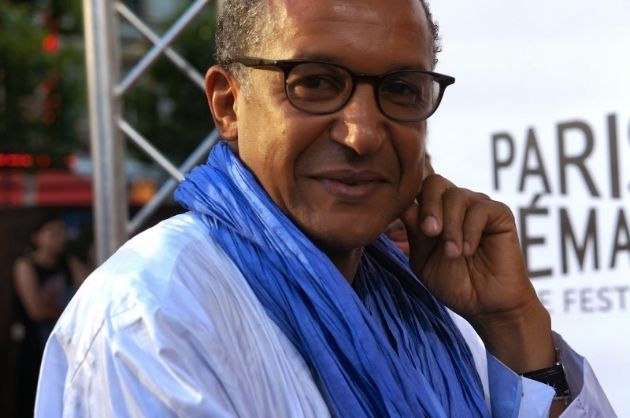
Je suis Timbuktu: Abderramane Sissako Interview

 photo de9ebd74-9789-41c5-8dbf-39abfd2dff48_zpsgur4ux5a.jpg
A lot has happened since I talked with Abderramane Sissako last October at the New York Film Festival. Islamic terrorists' attack on the headquarter of French satire magazine Charlie Hebdo and a kosher grocery store in Paris this January shook all of Europe. And Sissako's film Timbuktu got nominated for Best Foreign Film Oscar this year.

The anti-Islam sentiment and jingoism are on the rise in Europe. With that, unfortunately, Timbuktu is embroiled in controversy on the eve of its theatrical release in France. (Read the full article from Washington Post here) It's a pity because Timbuktu is such a beautiful film and a strong condemnation of religious extremism.

The film struck me very strongly. For the little time I was given for the interview, I was fully committed to have Sissako speak about the film the whole duration. But however passionate and knowledgeable he was on the subject, he wasn't interested in schooling me about what happened in Timbuktu, he was more interested in engaging in conversation. For that I am very honored and grateful.

The film opens in New York on January 28 and January 30 in Los Angeles. And in my humble opinion, it should win an Oscar.
 

TIMBUKTU is such a powerful, tragic film. I know I don't get much time with you so I won't bother with bunch of silly questions. I just want you to talk about the film.

Abderramane Sissako: (laughs) No no no. Of course you can ask questions.

TIMBUKTU is based on/inspired by a true story. I'd like to know how you went about building a film around this true story.

Sometimes you feel that a film is useful and also necessary. I don't know if this is true but it's possible that that is true. It's not that I felt obligated to do so but I felt it was important for me to tell the story and to tell it quickly. Because I think what's happening in this part of the world is not usually told well. Because in the West, we only report about it when it's something that specifically touches us - namely, a hostage. Of course, a hostage is a dramatic situation. But we forget that on a daily bases there are people who are being held hostage and humiliated. When Timbuktu was under siege by Islamic militants, people were having their hands cut off - a guy sees that an air conditioner doesn't work so he goes there to fix it, they think he's stealing it and cut off his hand! It's just horrible. And it's as awful as hostage, but we don't talk about these arms and legs being cut off. So I think what filmmaker needs to do is that he needs to focus on ordinary people and their everyday lives.

People whose daily lives don't appear in the news. To really directly answer your question, this film really took sustenance from the city itself and the beat and the life in it.

One thing that struck me about the film was how diverse the city of Timbuktu is. There are several different languages spoken and different culture presented within the Muslim community. It is a reminiscent of other occupations who bring in their own laws and completely oblivious about the culture and customs of the people who are living there.

Timbuktu is an old city and it's historic. It's always been a meeting place, situated at a crossroads. People from different cultures have always lived there. And that was one of the reasons why they had decided to take Timbuktu, as a symbol. The parallel I can make is in New York after 9/11. What happened in New York, not only people who lived here but everyone felt like a New Yorker because what was happening. Because here every English speaker speaks another language. If you ask anyone on the street they will tell you. And it's this diversity and culture that the city was attacked because it was a symbol and that's why so many people reacted.

You made a film about Poverty of Africa with your last film BAMAKO. It's about the influence of the World Bank and the West and they are literally on trial. This one, even though extreme Islamic fundamentalism stems out of that western influence but you don't talk about the West in this film at all.

I think that's a very good question. With Bamako, I wanted to talk about the fault of other people and I didn't want this film to be like that. In this film, I wanted people to look inward, to look inside themselves and to understand that this is something that that's happening and we could say it's brought on by foreigners but those foreigners are not so distant from who we are. And Timbuktu was liberated by the French army. But I didn't want to show that. What I wanted to show was that the first revolt was by the citizens themselves - people who play soccer without a ball, that's what the resistance is.

Yes.

A woman who sings and they beat her and she sings anyway.

I read about the retreating occupiers burning down the famous Ahmed Baba Institute. I'd like to know if the sense of normalcy came back to Timbuktu after what happened in 2012.


I think the destruction of the library really had a huge impact on many people. The same thing with the mausoleums: the ground burial sites. But what's important to know is that before that happened, a lot of the people in Timbuktu have saved these artifacts. (read about it here) And today the situation is better.

How was your collaboration with your DP, Sofian El Fani (BLUE IS THE WARMEST COLOR), because there are a lot of handheld sequences and a lot of running around?

I knew his work. When I chose him, he also wanted to work with me on the project. So things were very simple between us. He works a lot with (Abdellatif) Kechiche and Kechiche is always about handheld camera and they are very tight shots. What makes El Fani a really great cinematographer is his adaptability. He knew right away what I was looking for in framing.

There were discussions of course. I don't really like closeup shots in cinema. I always want to create space because, for me, that space is an invitation, to enter into it. When I make a film I don say, "look!" I say, "come in".

I know that BAMAKO was funded in part by actor Danny Glover because no one was funding movies of African origin. Was it the case with TIMBUKTU? Was getting funding just as difficult?

No. With Bamako, what Danny Glover did was extraordinary. He was the first person who really believed in the kind of film I wanted to make. And I knew Timbuktu was supposed to be made very quickly, so the funds came very quickly too. So it wasn't really necessary to involve many people.

Oh good.

It was important to move quickly.

How long was the entire shoot?

All together, about six weeks.

Six weeks!? Wow, that's fast.

And these are distances where you are on the road full day. It was very difficult. And of course there were no trails or anything. It's also difficult to deal with people who aren't professional actors for 6 weeks. But you know, sometimes, things are difficult.

But you pulled it off beautifully.

Thank you.

What's next for you?

Without talking too much about it, it's going to be about China and Africa. But a love story.

I will very much look forward to that.


Read my Timbuktu Review Here

Monday, January 26, 2015

Ninja in America

Ninja III: The Domination (1984) - Firstenberg
 photo 2831b93e-17c9-4069-b760-9473fd3f3165_zpsakh6urdd.png
Ninja Cutlery
 photo e361c52a-15bd-4eee-8e3a-259ad64c4f24_zpsp68rchsd.png
Come to me, you sword of doom you
 photo 70fded05-4b7f-4c30-8aab-b6f4ab406d57_zpsmcnqpnl0.png
Christie can't help herself dancing uncontrollably when haunted by the ninja ghost
 photo dee7b3e1-84f4-42e7-8583-f156293a3a34_zpsgskqljt0.png
Badass ninja from JAPAN
 photo 40d6bccb-1237-4861-be20-fa86d4b46ff2_zpsf1iueahb.png
Who could have guessed that the Bouncer arcade game Christie owns is a portal to ninjaland!
 photo 0a6069d6-2d1a-4a8b-b5fb-1388819e8442_zpspf0ptdue.png
Ninja showers
 photo 1e826a4e-2cef-4113-a6f2-b50501c48bd4_zps0vbr3h6i.png
Ninja art of seduction
 photo cf563005-7051-4e90-a5d5-00e4f4747752_zpsnpwlprdm.png
Bad ninja breath
 photo 0339bc03-908b-4409-913c-35a604fd0e08_zpsg13dmczx.png
Raccoon eyed ninja
 photo 1dd6ea07-5414-4fee-8684-e7a21b2797ba_zps1taf1mpk.png
Ninja soul escaping

Christie (Lucinda Dickey) is just ordinary working gal: she works for a phone company, climbing up the telephone polls in a cute jumpsuit, then changes to a neon colored leotard to teach an aerobics class. She encounters a dying ninja who just killed about a hundred LA cops along with his intended victim. His soul gets transferred to Christie and she becomes an unstoppable cop killer. Ninja III, mired in 80s b-movie cheese and unrealistic settings, Patric Nagel, squiggly neon tubes, is loads of fun.

Friday, January 16, 2015

Class War

Heaven's Gate (1980) - Cimino
 photo 51527c7b-8e0a-4ac9-8f44-eb910f6aedcd_zps0bf3f57a.png
 photo 6703400e-4f9e-4746-8c8c-d5d9eb3d57d7_zps2905e794.png
 photo d58c175a-72a4-47f4-8d15-fa5afaa65839_zps431c7c76.png
 photo 00113e4c-6669-4e21-a8b0-f0a25a819422_zps07e801f7.png
 photo 7d6097ac-75e9-4850-bef2-dc7da318add3_zps57c7a752.png
 photo c183eaea-b407-477c-b495-fd18317869ce_zps49f98ed1.png
 photo d41cce99-6713-4f45-919c-58dcb45501a3_zpsd0f6c03d.png
Here is the basic plot: James (Kris Kristofferson), a Havard graduate law man, joins the frontiers of Wyoming in 1890 as a hired sheriff in the town of Casper, Johnson County. He goes head to head with the Cattle Rancher's Association, the Freemason like, all powerful group, comprised of the New England elites poised to stop the flood immigrants (mostly Eastern European hodge-podge) moving in to the New Territory. They put out an illegal warrant to kill 125 'thieves and anarchists' among these relative newcomers. James is involved with the French madam of the whore house, Ella (Isabelle Huppert), but her heart belongs to working class muscleman hired by the Association, Nate (Christopher Walken). The assault/massacre of Johnson county is impending.

With the majestic Wyoming backdrop (lensed by Vilmos Zsigmond), Cimino tries to paint the ruthless frontier Americana with bold strokes that back then wasn't much different than today. It's an ambitious project, taking on the grand theme of class warfare: the rich aggressively persecuting the poor with violence, in not sharing that piece of American pie. It's a pleasure to see something this epic, with thousands of extras and cast that includes, Kristofferson, Huppert, Walken, Jeff Bridges, John Hurt, Sam Waterston, Brad Dourif and Mickey Rourke. But despite all the beautiful visual poetry, the film lacks a narrative pull, mainly because of its unhurried pacing and lack of urgency. It contains perhaps the most lackluster large scale stagecoach-style gun battles even though body count aplenty.

I haven't come across Huppert being this beautiful and magnetic in any other films yet. Playing a woman in love with two men of the opposite spectrum, she is completely arresting whenever she's on screen. Walken is brilliant as always, as a cold, vulnerable, tragic anti-hero. Kristofferson's James, born into privilege, not fitting anywhere, gets away with snarls like- (to Ella) "This is mo yer country than mine!" and falls victim of criticism, "You know what I hate about you James? Even though you are rich, you pretend to be poor." It's his false Eastwoodian sense of righteousness that irritates me as a character.

But Heaven's Gate is from James's point of view: it starts out with extravagant graduation ceremony at Havard, with Billy (John Hurt), a wisecracking valedictorian making jabs at the establishment. The sequence is full of whimsy, excess and unfiltered hope, for they are the future leaders of the still burgeoning country full of possibilities. In the film's end, James reflects on his experiences of the wild west, thinking about all the bloodshed that built this country, on his yacht off Rhode Island. This is how it is- that in America, no one can't escape the position they are born into. Oh, throughout a 3 1/2 hr duration, you really want to shoot Sam Waterston in the face 15 times! He is that evil in this film.

Sunday, January 11, 2015

Free as a bird

Bird People (2014) - Ferran
 photo 667fbe78-d012-4e55-b76a-14c427edb2f7_zpsb7efb602.png
A fleeting fairy tale of sorts, Pascale Ferran's Bird People is unexpectedly charming and touching without being coy. It begins from a bird's eye view of the Paris airport and people, as we swoop down and move from one person to another, as we eavesdrop their thoughts and conversations. We know that airports and hotels are not their final destinations. They are places people go through temporarily. Bird People evokes this empty feeling - loneliness, absence of human connections, very delicately. For the first half of the film, we follow an American businessman Gary Newman (Joshua Charles). He lands in Paris to attend an important business meeting en route to Dubai. He has a sort of mid-life crisis and decides to leave his job and his family. After a long emotional breakup session with his resentful wife (Radha Mitchell) over skype, Gary is ready to embark on a European tour by himself. Then we move to Audrey (Anaïs Demoustier), a college student who works as a hotel maid, whose aimless life consists of repetitive house-cleaning work and peeping other people's lives through the window across her apartment. Things go weirdly wonderful from there.

What I like about Bird People is that Ferran is not in a hurry to make some obvious point about urban loneliness. Her wispy tale of people connecting in a truly unexpected way is as light and soft edged as bubbles from a children's shampoo. But it carries as much depth and poignancy as any films about urban loneliness.

Friday, January 9, 2015

Making Film is a Bitch

Passion (1982) - Godard
 photo 8c534bac-bff0-4ee5-8b19-2fc4c3598252_zps16bf4e52.png
 photo d82c3aa1-5f99-4456-8a96-64af4c13d911_zpsb5a43a79.png
 photo 98934fb5-01b0-4ba1-831b-5cc0f3e060c9_zps02181e5a.png
 photo 837d1b51-a7ac-48f0-b531-17f49e8ff392_zpsf45796f0.png
 photo b4b8b99b-b8d5-4d8e-ad1c-9df09061ef6b_zpsbcaeba45.png
 photo 005fe853-0627-4b0b-9973-95563bfb2adf_zpsdc32a659.png
 photo f93d2f95-b32d-479f-a616-0ed6866243cd_zps7ab18eb9.png
 photo 63806a61-3d30-4ebf-a975-fd028bdbf7d7_zpsea3fdc39.png
 photo 107aee40-4d3d-4bf8-a08d-ab1ee4c3c044_zpscee989c5.png
 photo 1cd80e9f-4e16-48de-9b85-9c4306960954_zpsb4773f52.png
 photo 3db0b921-706a-42fd-8d5c-c98a5a350321_zps75ec9cf3.png
 photo d6eeb7c9-ed54-44f1-8e2c-7204a5046b3f_zps97584626.png
 photo f877d17a-e589-4357-b180-8a1388e513b4_zpsb7fed160.png
Film financing is a bitch. After reading Richard Brody's book on Godard, funding seems especially messy and difficult every time Godard have made his films. And many of his films are about, in some ways or another, making films. Passion is also one. Jerzy the Polish film director (played by Polish actor in exile, Jerzy Radziwilowicz) is trying to make a film in the West. Taking cues from the masters of western art- Rembrandt, Goya, Delacroix in a TV studio setting, he is trying to conjure up the opening scene. The production is stalled because of some unknown lighting problems and already 4 million over budget. With civil unrest in Poland in mind and under pressure by the film's Italian financiers while keeping his German wife Hanna (luminous Hanna Schygulla) happy and entertaining the possibility of getting involved with a beguiling, Wałęsa inspired factory worker Isabelle (Isabelle Huppert), Jerzy's struggling to keep everything under control. There are talks of censorship, public appeasement and subversiveness in art, in relations to those masters work and film. Is going to the USA, just like his producer and only friend (László Szabó)'s suggestion, the end of all problems or end of creative freedom?

As usual, Godard mixes up current political affairs with his lifelong examination of film medium, the rise of video technology, beauty, representation of truth in art. The usual slapstick comedy is there along with discordant soundtrack and out of sync dialog. The other Godard regulars include Michel Piccoli as the ruthless and greedy factory boss, Miriem Roussel as deaf-mute ingenue. Again, Raoul Coutard provides some beautiful images and there are so many babes/boobs in this movie. Another delicious concoction.

Sunday, January 4, 2015

Top 20 Discoveries of 2014

Bulk of my cinematic exploration came early this year: there was always dependable Rendez-vous with French Cinema series of course, providing me with my #2 pick of the year, Love Battles, then there was the best film series I've ever been part of in a long time, the first inaugural Art of the Real, presented by FSLC. The series encapsulated everything I was interested in cinema now - blurring the boundaries between film and reality, fired up by people at Havard Film Ethnography Lab (Leviathan, Manakamana, Iron Ministry). Then there was annual New York African Film Festival which fueled my interest in African films. Needless to say, It's been a very good year for films.

Top 20 in order watched:

Drowning by Numbers (1988) - Greenaway
 photo cf20552d-40a6-4e86-a171-a3f7facf15c6_zps7c7ce202.png

Another Sky (1954) - Lambert
 photo 68a7deb7-51c7-4f6b-8c24-749b9958ff59_zps8722bc12.png

Still of the Night - (1982) - Benton
 photo 46507861-9f55-4b14-a641-ca6110f0873c_zps229aaf85.png

Le Notti di Cabiria (1957) - Fellini
 photo df2db6b5-60d3-4605-afef-bbb90c94e373_zps61526e44.jpg

Under the Sun of Satan (1987) - Pialat
 photo 0a98be50-dc4c-487f-80c2-ac891dc20cbb_zps21d3d592.png

US Go Home (1994) - Denis
 photo 079efb0e-3f19-4214-89e8-8071b3d6cd10_zps09057129.png

Libera Me (1993) - Cavalier
 photo 3875efc8-2774-436c-92aa-28436861abd4_zps79a6eb6a.png

Touki Bouki (1973) - Mambéty
 photo c41d08b8-faed-4f3e-ad9f-67ae4d831792_zpscefe9e19.png

Yeelen (1987) - Cissé
 photo e498b7da-1943-4ce3-a063-dde56c1a0ab7_zpsac2e6b04.png

Sinbad (1971) - Huszárik
 photo fed2b81b-8183-421c-9f2d-c5d0b2e0cebb_zps1660c95d.png

Phaedra (1962) - Dassin
 photo c6f339fe-3b71-49ff-a860-7bb874e62cd7_zps848fa3c3.png

Goodbye Again (1961) - Litvak
 photo 6e62a84e-7842-4add-8ed2-3e4c06ffa186_zps5a17826f.png

Koumiko Mystery (1967) - Marker
 photo 8537fe6f-c92e-4916-a7b6-ffbccaf20ab3_zps89975887.jpg

L'Avventura (1960) - Antonioni
 photo 3c3e4642-e54d-43a3-9277-4416f94850b1_zps69630056.png

Détective (1985) - Godard
 photo e1c857ea-0fb3-407c-86cf-ceb4249e4cb4_zps451070e2.png

Rendez-vous (1985) - Techiné
 photo 5fc494fb-8dff-4992-94ee-f7cd4ced35cd_zpsf70c023b.png

The Public Woman (1984) - Zulawski
 photo 8543635f-7322-4fd8-a28f-30ef08738b40_zps85c973af.png

Strayed (2003) - Techiné
 photo d2f05e2b-0b51-475d-a442-54744e07ea00_zps88c71645.png

Buffet Froid (1979) - Blier
 photo f31d5e15-3b9e-4f26-96e3-ec5b1d66b95f_zpsa43ae045.png

Viola (2012) - Piñeiro
 photo 61881f18-4f3f-44a0-95fe-567e12c2c57e_zps4540a3bb.png