Tuesday, June 8, 2021

Extinction, Evolution or Devolution

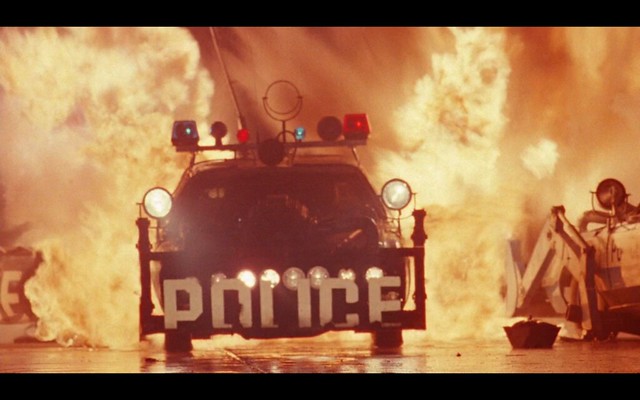
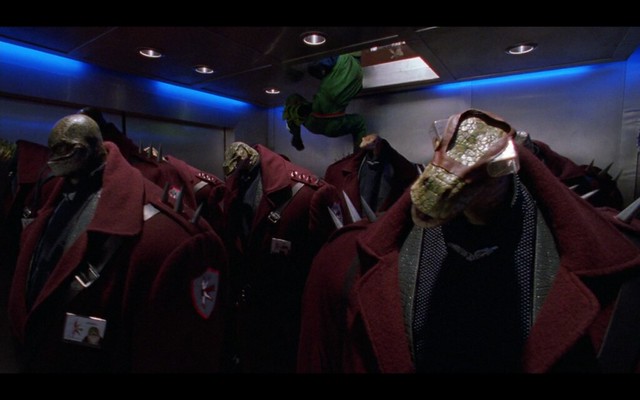
Super Mario Bros. (1993) - Jankel, Morton Screen Shot 2021-06-07 at 8.31.06 AM Screen Shot 2021-06-07 at 8.31.27 AM Screen Shot 2021-06-07 at 8.33.45 AM Screen Shot 2021-06-07 at 8.44.13 AM Screen Shot 2021-06-07 at 8.51.02 AM Screen Shot 2021-06-07 at 8.59.20 AM Screen Shot 2021-06-07 at 9.33.31 AM Since I am not a gamer and didn't spend my childhood in the 90s, perhaps not a good judge of the faithfulness of this movie adaptation based on a famous Nintendo game. But what I can say is that for big budget children's movies go, Super Mario Bros., directed by commercial/MV directors couple Annabell Jankel and Rocky Morton, is bonkers for Hollywood standards.

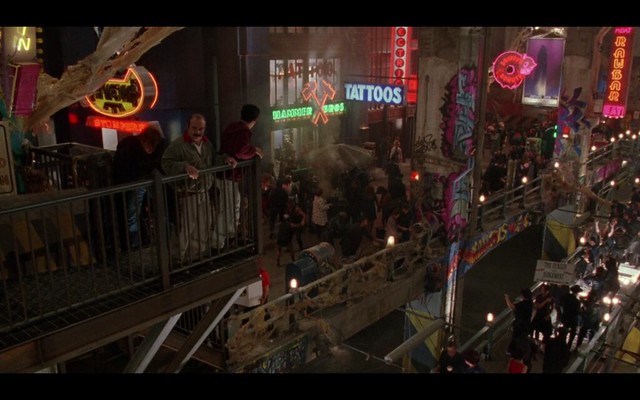
The movie concerns an alternate universe where dinosaurs are not extinct from the Asteroid hitting the earth some 66 million years ago. In this universe, people who inhabit there are evolved from reptiles. The earth is a vast desert except for uh, Mushroom Kingdom (New York City Doppelganger). The resources is running out and King Koopa (Dennis Hopper), wants to merge the two universes with the help of princess Daisy (Samantha Marthis) who possesses a necklace made out of a fragment from the asteroid. Then he wants to devolve our population to apes with his mobile devolving machines with his reptilian army.

This set up manifests the most cyber-punk dystopian production design since Blade Runner. Mario (Bob Hoskins) and Luigi (John Leguizamo) are hapless plumbers from Brooklyn who get somehow thrown into the situation to save the world from King Koopa. It spouts some snappy dialog, environmental and animal rights messages, among others.

The aesthetic is kitchy and bright, but definitely not Nickelodeon. With commmited performances from Hoskins, Leguizamo, Hopper and Fiona Shaw, as Koopa's evil henchwoman, Super Mario Bros. is an entertaining, twisty game adaptation worthy of its cult status.

Friday, June 4, 2021

Voluntary Game

La Collectionneuse (1967) - Rohmer


Screen Shot 2021-06-04 at 8.01.44 AM Screen Shot 2021-06-04 at 7.56.34 AM Screen Shot 2021-06-04 at 8.00.08 AM Screen Shot 2021-06-03 at 11.22.25 PM Adrien (Patrick Bachau)'s love interest is going to London. He doesn't want to. His friend Rodolph is letting him stay in his villa in sunny French Riviera. His plan is to go there and do nothing, except for selling a Chinese antique vace to a collector who can help him set up his art gallery. Easy-peasey. Even though Adrien wants to be alone, his painter friend Daniel is also there at the villa. But he is harmless and tolerable for the most part. Enter Haydée (Haydée Politoff), a young woman with a bobbed hair and round face, whom Adrien saw the glimpse of before when he accidentally entered a room at one of Rodolph's parties. She was having sex with someone.

Haydée's routine at the villa is to be picked up in the morning and coming home at dawn with a different man every time. Even though he says he is not interested in her, she intrigues Adrien. So starts La Collectionneuse, a mutual game where an older man plays with a younger woman to sleep with him. It's not really about who is having an upper hand or the assumed roles people play. It's not some sinister mindgame or manipulation. Adrien and Daniel name her a collector, of men. Even she doesn't think about it that way. Even the Adrien's self-centered narration rings hollow to what's actually occuring on screen. Haydée is her own woman. She's not that easy to figure out. Largely dependent on Haydée Politoff's charm, the film is light and airy, like those water dropplets on Haydée's skin evaporating under the summer sun.

Wednesday, June 2, 2021

Ugly Masculinity

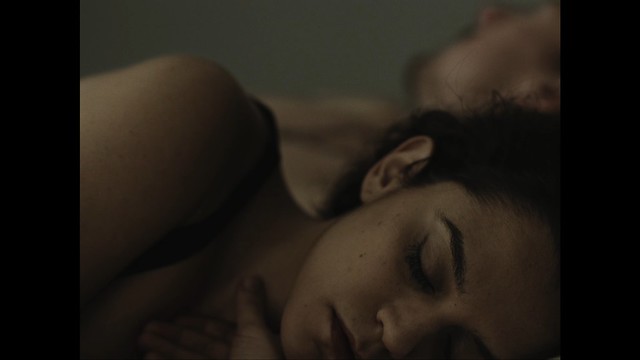
The Killing of Two Lovers (2021) - Machoian Screen Shot 2021-06-02 at 11.49.18 AM There is nothing more ugly than the desplay of toxic masculinity on or offscreen. Robert Machoian's The Killing of Two Lovers zeroes in on David (Clayne Crawford) as he thinks of killing his etranged high school sweetheart wife and her lover while they sleep in bed. Yes David and Nikki (Sepideh Moafi), married with 4 kids in rural Utah, are separated and David has moved in with his ailing dad for the time being while they figure out their situation. Boys are too young to know what's happening, but their teen daughter is deeply unhappy. Machoian places us in David's head who can't really think about anything else but getting back together with Nikki even though they can't really communicate with each other without every conversation ending in a shouting match.

Letting-out-of-steam sequences - punching the exercise dummy (Body Opponent Dummy) until his knuckles bleed and taking BOB out to the field to use as a target practice tells everything about David's mindset and it's ugly. Him serenading a song about their breakup and hopes for getting back together during a date night is both pathetic and pitiful. At the end, his toxic masculinity is undone by another toxic masculinity. And Nikki choosing over lesser toxic of the two is... well, less than desirable outcome and says a lot more about her than needed.

It doesn't really matter that the movie was shot in full frame with painterly gaze. I don't care about the long takes or effective extreme close up photography, because the theme of the film is so cliché, uninteresting and undeserving. If Machoian's job was commenting on the pervasiveness of toxic masculinity in America, it's fine. But that doesn't have to be a movie- because we live with it in our daily lives.

Tuesday, June 1, 2021

Interview: Form Follows Function: Christian Petzold on Undine

Christian Petzold

It is always a delight to listen to Christian Petzold, German director of such films as Barbara, Phoenix and Transit, because he is a master storyteller. I could listen to him for hours on end as he enthusiastically talks about his filmmaking process.

His new film Undine is his take on the fantasy genre - about a water creature which takes a human form and takes revenge on humans when her love is not reciprocated. Melding this fantasy with the tumultuous history of the city of Berlin, Petzold concocts another beautifully written and gorgeously realized film that is at once seductive and thought provoking.

Even though we were conducting our interview over a Zoom session due to Covid, his enthusiasm and exquisite storytelling abilities were not diminished in any way. Below is the result of our conversation that took place in May.

Undine hits theaters and VOD platforms via IFC Films on 6/4.


Where are you now at the moment?

I am in Brooklyn. Are you in Berlin?

Yes. Berlin in the chilly spring afternoon. Waiting for the summer, waiting for the end of the pandemic.


Yeah, I was wondering. I heard that it's still pretty bad in Berlin and in Germany in general.


No, I think the peek is behind us. I hope that the cinemas will open in coming weeks. I can't stand looking at my TV set anymore. I miss going to movie theaters and the loneliness of being in the big crowd.


hear you. Everything's okay with you and your family?


Yes, thank you. You know, I had Covid one year ago around this time.

Oh no!

It was not too serious, but for a full week, I had to stay in bed. I changed my whole plans for the future and put my dystopia script away. It was based on this book that I have bought the rights to, but I'm not interested in dystopia anymore. I don't want to see walking dead in a desert world. I really can’t say I want to do that anymore.

During my time in bed, I read many books including many novellas of Chekov and saw many films. My distributor in France sent me the Eric Rohmer box set as a gift. I said, my god, I haven’t seen Rohmer since back in the school days! What is it called, La Collectioneuse! I was impressed how well it holds up. It’s been such a long time. We had a teacher at the film academy who told us that we have to make movies, so 20, 30 years from now people will know how we had kissed, how we had touched, how we had walked through the streets and how our social life was. I was so impressed by Rohmer’s films so I started writing a new story and I am now finished with the script. It's about a group of young people, in the summer at the Baltic sea, surrounded by forests and the forest are burning and their desire and their hearts are also burning, and the fire in the end is out of control. So this is what I wrote during Covid and I’d love to make it. Paula Beer will play the main female role. But I have to wait for the next summer because it's a summer story and I need the sun. I need a world where we can touch each other without being tested!


Christian, I love to see your summer movie. That sounds amazing! I watched Undine last year at the New York film festival. It's such a beautiful film and it's visually really stunning. I really, really enjoyed it. And I'm glad it's coming out in theaters. 

You always dealt with genre cinema to tell your stories - you’ve done noir, horror, pollcier, sci-fi even, with your last film Transit. Now you are taking on the fantasy genre. It’s really interesting to see you melding it with the history of Berlin. And I'm just wondering how that came about, in terms of the story.


Yeah. You know, I grew up in, near the river Rhine in west Germany and this part of Germany it's filled with myths and songs and old tales. And when I was 20, I leave for Berlin for school. West Berlin was a big laboratory of politics, acting, theater and all that. But you know, this is a very modern city without tales, without myths, without songs, it doesn't have anything. The only myth we have is Adolf Hitler. Maybe it’s an oversimplification but the point is it's a very modern city. And the people in Berlin, they know so much about tales and myths because they are people like me, coming from other parts of the world, because it's a city where people are connected with their stories and with their backgrounds and so on.

The place I was born (West German city of Haan) was between two rivers and also Berlin is a city of the two rivers, Havel and Spree. Yeah. But these rivers are very boring: they are small and very narrow. Nobody's really interested in these and there are no songs. I grew up in this part of Germany between, the river Rhine and the Wupper. The Rhine is a very, very big river. And it's filled with songs about myths and sirens. And also it's that river where you, as a child, would be standing in front of, and you are thinking about going away- to take a boat and go to the sea and perhaps go to America, for instance. We have that sentimental-journey feeling associated with the river Rhine. The Wupper, there are no boats on the water because it's a wild river. And there's a saying in German, “geh über die Wupper”/to go over the Wupper means you know, this is the river Styx, the river of death. Someone's going over the Wupper means he's going into the land of the dead.


So we have the Rhine, which means you are going far away and the Wupper you're going into the end of your life. I'm thinking that living between those two rivers also had something to do with cinema. There's a cinema, which says to you it’s a road movie. And there's also a breaking through a wall, to go over border, to go into another life or could be the death, could be a bank robbery, with a head shot at the end. And so, I thought about my rivers from my youth and my work on Undine started.


That’s amazing! Also, there are a lot of talks about architecture in the movie and how Berlin was built in such a way. And there is obviously a division of the east and west. Paula Beer’s lecture monologue was very interesting. What struck me was when she says, “form follows function.” Can you tell me about that?


That's a very good question, because Paula loved the sentence. I think she loved the sentence more than when she says, “If you leave me, I will have to kill you.” I think of Berlin as a raped city architecturally. Every 3 years someone is coming with new architecture plans. The concept is making money with very cheap buildings with retro style buildings and no form follows function. The idea is totally out. They just want to make money.  

Right.

Before you have a fascist architecture. That was a form following function. Now it’s for tourism. Nothing can grow here. There's no organic life here. But Berlin has always tried to defend itself. So we have these idealist and we have the defenders. I'm so disappointed because in 1989, Berlin had the chance: we had a whole city being united, which was now in the hands of the government, it was not a private property. It was our property. We could’ve made something beautiful. In five, six years, they sold it to people who are only interested in making money. And so Berlin is now raped by money, by the banks in the US. I must say that. 

And so this, someone like Undine who's been living here for centuries, with all these changes, she is like a sad witness of our changing times. So this was our idea.

I remember when we were shooting the (guide tour) scenes and Paula was very very anxious, I must say. It was a bit of a stage fright she had, because it was 18 pages of monologue in the script. I told her that all the extras in that architectural model room were intellectuals: I don't hire dumb extras for an hour. They were university students and professors. So she had to give a very convincing presentation and I liked this as a director, capturing her nervousness. 

The situation in that scene is that the city we are living in, we don't even know so much about it. But now at that moment, we understand what’s happening: it’s the Humbolt Forum. It's a museum in the form of a castle. And Paula is in there surrounded by intellectuals stating that form follows function. I am also commenting on the state of cinema: we haven't got this form follows function anymore. It’s a little disappointing.

Interesting. 

I have to say that the Paula and Franz (Rogowski) have amazing chemistry together. I enjoyed them immensely in Transit before, but there is really something to them in Undine. I’d like to know how it was working with them.

Yeah. I had the idea for Undine during filming Transit because of these two actors. I've never seen a couple like this before. Neither have the German stage theater education. They never worked for the stage as an actor in their careers. They are quite different in their movement and speech, there is certain innocence about them in that way that I like. Interesting thing is they both are dancers. Franz is a professional dancer. He is from a dance background. 

My experience in Transit, when we did rehearsals in the morning, the first two or three hours, they didn’t talk about their lines or talked with me about the script or psychology of the characters. For example when they enter the hotel room, they walk around and touch things - windows, bed and they danced around. It was more like Pina Bausch: their concerns were more like, what is the distance and when can we touch each other? For me it was a fantastic experience working with these two very physical actors. It was more like two young actors dancing their lines.

So when I was thinking about making Undine, I couldn’t think of anyone else but those two for the part. So when three of us were doing rehearsals, especially in the apartment scene, it was like the same rehearsals in Transit: Who is in the terrace? Who is going out of the terrace? Who is going to the window? It was more like they were swing dancing!

So the first six or seven days of shooting, we filmed scenes without any dialogue. This is in their bodies. It’s the movement of their bodies that tells the story - how she puts her head on his shoulder. I always had a feeling that their movements were as if they were filmed underwater.

Forgive me saying this: not that your previous films are not visually beautiful, but I find Undine absolutely gorgeous. Especially underwater sequences with the Big Günter, the catfish and everything. Did you have those scenes in mind when you were writing the script?

I have never done storyboards before. I do rehearsals and make the storyboard afterward. But for those underwater scenes, I needed to do storyboards. It was like doing a graphic novel. All the things I drew for the movie, they were from other films: The catfish comes in like the scene from Jaws where they go under water to investigate the broken ship and find the decapitated head coming out of the hole. I wanted to have the catfish appear like that. Or the scene from 20,000 Miles Under the Sea and Creature from Black Lagoon by Jack Arnold, where the creature almost touches the legs of the girl…. Underwater scenes in cinema are like a liquid memory room. You don’t invent new things but the images are lodged in your subconsciousness. That’s why I like them so much.

It’s really beautifully done.

I think my time is up but I wanted to tell you that the ‘Staying Alive’ scene was hilarious as well as very romantic.

They really use it in Germany. It is in the lessons for the lifeguards. My producers were begging me not to use it because it’s Bee Gees and it was in another movie, the rights to it cost 17,000 dollars. But I had to have it in the film. It was just too good!

Saturday, May 29, 2021

Memories in Space

Hotaru (2016) - Laboury Screen Shot 2021-05-29 at 10.01.28 AM Screen Shot 2021-05-29 at 10.03.11 AM Screen Shot 2021-05-29 at 10.04.39 AM Screen Shot 2021-05-29 at 10.05.44 AM Screen Shot 2021-05-29 at 10.08.29 AM Scientists find a perfect vessel to send out the proof of human existence and civilization to space in Martha, a young woman who possesses hyperthymesia, a super photographic memories of everything. "Down here, your gift is useless, So we're gonna show you the most beautiful things. You're gonna have more memories than everyone else. And then, you will sleep. You won't wake up. But you will carry the most precious memories from Earth." Bernard, an omniscient guide in Martha's journey informs us. So starts a beautiful 21 minute short film, Hotaru, by William Laboury.

Using computer generated images with the aide of google maps and relatively simple 3D animation techniques and intentionally pixelated images, Laboury manages to create a deeply affecting contemplation on memories and what makes us separate individuals. Martha starts to question her own existence and that of her surroundings as people she left on earth age and die. Only she can find Hotaru, a Japanese man she met in a forest on the eve of her rocket launch to validate her existence.

Hotaru is available on vimeo: https://vimeo.com/260920165.

Don't forget to check out how Laboury's team created the film's look: Behind the scene : https://williamlaboury.com/realisation-hotaru-1

Thursday, May 20, 2021

Multiplicity in Ceaseless Motion

Multiplicity in Ceaseless Motion: Black Performativity in Chameleon Street and Suture
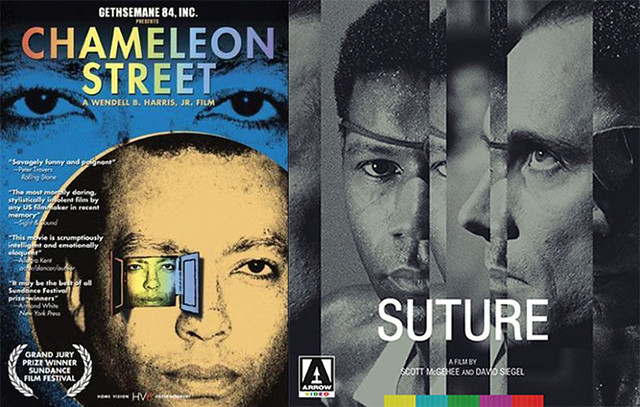
 Chameleon Suture         My research project is on Wendell Harris’s Chameleon Street and Scott McGehee & Brian Siegel’s Suture. Both films explore Black performativity in strikingly original ways, contrasting and challenging the typical notion of how African American lives are portrayed in American cinema. They examine how Black identity is viewed and practiced in the confines of the white hegemonic world and conclude that evasiveness and fluidity of blackness are very much a part of what constitutes performative Black identity. 

        Based on a real life story of William Douglas Street Jr., Chameleon Street is about an African American man who compulsively takes on different identities to satiate the needs of others as well as his. The film explores Black performativity in contemporary American society and how it deviates from many stereotypical, binary notions of blackness. I will make an argument that Chameleon Street demonstrates the constantly shifting Black identity based on performativity- rebellious and non-conforming, makes a truer Black identity.

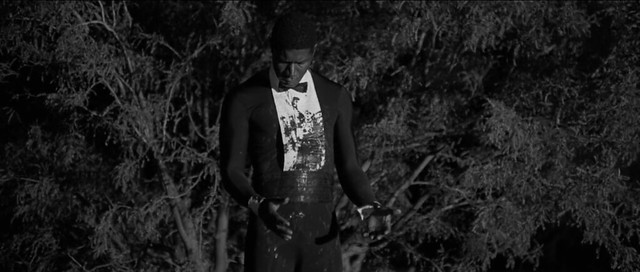
        The film starts with a prison counselling session with Street and a white psychiatrist. The psychiatrist asks what Street is going to do once he is released from prison. Street says no more impersonations. Then the psychiatrist tells him, matter of factly, that he does not believe him. Street retorts, “Would I lie?” The psychiatrist says that he doesn’t think Street is necessarily lying, but he is not in control of what he does or says that his behavior is complementary. Then he asks Street if he understands what he means by that. Street says no. The psychiatrist then explains that he intuits the needs of others and fills those needs. But at this point, Street’s attention is already elsewhere. After contrasting colors, jump cuts and indecipherable whisperings, Steet’s narration continues, “I think the air is sweet. I know not what I am. I am Chameleon Street.” From the beginning, Street flatly refuses to engage and reveal his true identity if there was one.  

 double consciousness       W.E.B. Du Bois, a prominent African American author and civil right activist, was the first scholar to invoke the notion of “double consciousness” when talking about Black lives in America. In his article “Strivings of the Negro People,” in 1897, he explained the predicament many African Americans face in post-Civil War American society: 

…born with a veil, and gifted with second-sight in this American World, - a world which yields him no self-consciousness, but only lets him see himself through the revelation of the other world. It is a peculiar sensation, this double-consciousness, this sense of always looking at one’s self through the eyes of others, of measuring one’s soul by the tape of a world that looks on in amused contempt and pity. One feels his two-ness, - an American, a Negro; two souls, two thoughts, two unreconciled strivings; two warring ideals in one dark body, whose dogged strength alone keeps it from being torn asunder. The history of the American Negro is the history of this strife, - this longing to attain self-conscious manhood, to merge his double self into a better and truer self.In this merging he wishes neither of the older selves to be lost. 

With Du Bois’s invocation of double consciousness and the longing for merging two souls into a better truer self as a framework, I will attempt to define performative Black identity in Chameleon Street. Chameleon Street 
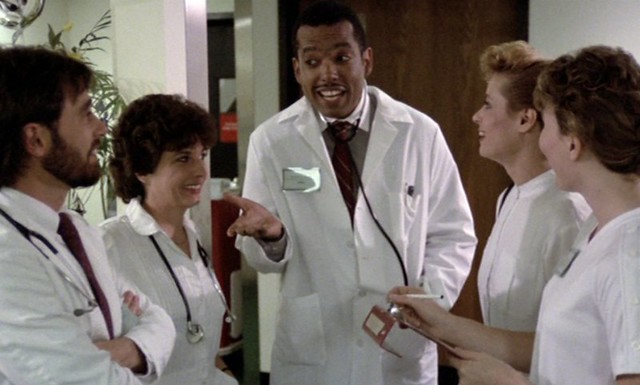
        Doug Street’s con: passing as professionals - a reporter, doctor and lawyer has its roots in racial passing in cinema, made famous by Imitations of Life, (1934 version, directed by John M. Stahl and 1959 version directed by Duglass Sirk) and as well as in literature, Passing. (written by Nella Larson) Racial passing occurs when a person of color or of multiracial ancestry who assimilated into white majority to escape the legal and social conventions of racial segregation and discrimination. Even though the tone of his skin is never discussed in the film, Wendell Harris, who directs and also plays Street is undoubtedly an African American man. The classic passing narrative is replete with the familiar and tragic melodies of passing as betrayal, blackness as self-denial, whiteness as comfort. Chameleon Street deviates from this classic passing and concentrates it on its ‘performance’ side of it. After all, passing is a performance that, like any other, requires an audience.

        The real Doug Street whose life the film is based on is said to have made no more than $4,000 dollars from his shenanigans. So it wasn’t just the financial gain he was after. Street masquerading as a doctor, journalist, Ivy League school student and lawyer is, according to Michael Gillespie, an act of rebellion infiltrating the exclusive zone of elite professional castes kept out of the practical reach, and aspiration of most black men. Being as a raced passer, Street is compelled by a desire to be convincing, successful, and exceptional. Gillespie also states that Street exemplifies what Elaine Ginsberg describes as the dialectical nature of passing: “Passing is about identities: their creation or imposition, their adoption or rejection, their accompanying rewards or penalties. Passing is also about the boundaries established between identity categories and about the individual and cultural anxieties induced by boundary crossing. Finally, passing is about specularity: the visible and the invisible, the seen and the unseen.”

        In Passing, Irene, a childhood friend of Clare, the protagonist of the book who ‘race passes’ in white society, observes that it’s not only financial freedom that Clare strives for passing as white. It’s also “stepping always on the edge of danger,” that she revels in the nearness of getting caught. Gillespie notes that Street “thrives as a proficient quarreling with the power, privilege, and regulation of boundary crossing as Chameleon Street depicts the strategic opportunities generated by the discounting of the immanence of identity categories.” Combining this with borrowing Judith Butler’s notion of gender as performativity in her essay, Performative Acts and Gender Constitution: An Essay in Phenomenology and Feminist Theory, where she states that gender is performative means that there can be no gender identity before the gendered acts, because the acts are continuously constituting the identity. Substituting gender with race, Chameleon Street gives a new perspective into the performative identity of African American entertainers since the beginning of the moving picture industry, going all the way back to mammy roles and slow-talking, lazy bum roles in often grotesquely negative stereotypes. Stepin-Fetchit-Pinterest         When talking about Stepin Fechit, a vaudeville performer who made many ‘show stealing’ appearances in Hollywood films in the 1930s, known for his slurring speech and somnambulistic simpleton behavior, Miriam Petty asserts the phrase, ‘stealing the show,’ as informed by Frederick Douglass and Andrew Levine, and others, to indicate theft as an act of survival and protest. After the grossly racist misrepresentation of an African American male in D.W. Griffith’s Birth of a Nation, many prominent African American scholars and thinkers at that time, called for the positive representations of Blacks in the uplift movement. The most prominent figure in uplift cinema and race films (films made by and for Black audiences), was Oscar Micheaux, who made more than 40 films in his career. But even his major film Body and Soul, which introduced young Paul Robeson (in a dual role, no less), to cinema, wasn’t immune to criticism over its representation of Black criminality. Micheaux argued that realism, not some false idyll, was the key to progress of the race. In her book Double Negative, Raquelle J. Gates argues that the power of the negative image rests in its ability to shift the dynamics in popular culture. The reverberations of negative texts function as tremors that irrevocably weaken the foundation on which their positive counterparts are constructed. Street went in and out of jail for his shenanigans, ranging from extortion, mail fraud, identity theft and impersonation. In the eyes of the law, he was nothing but a low level criminal. But it’s that negativity - the act of coning, stealing (identity), in the context of strategic essentialism, is to learn from it. invisible man wall         A pun on Cathasian sense of being, Street famously says “I think, therefore I scam.” in his narration. Gillespie notes , “Mercurial, unstable, and improvisational, Street as intuitionist encounters the Cartesian ideal with a black consciousness devoted to self-evident truth as performative.” The statement shares an affinity with another subterranean utterance, “I am an invisible man.” Ralph Ellison’s novel, The Invisible Man, is about an unnamed black narrator experiencing racism and being an outcast through a tumultuous period of American history, and ends up a shaded trickster to adapt to white society at the cost of his own identity. It is the story of a black man in America who doesn’t need a disfigured face or one hidden behind bandages to be spurned and treated as less than a man. “That invisibility to which I refer occurs because of a peculiar disposition of the eyes of those with whom I come in contact,” explains Ellison’s nameless narrator, “a matter of the construction of their inner eyes, those eyes with which they look through their physical eyes upon reality.” The color of his skin renders him unseen in the mind’s eye of the somnambulist whites who have been taught to categorize him as outside of importance, to discount not just his equality but his humanity. In it, the shape-shifting saboteur Reinhart, more of an idea than a real character, whom unnamed narrator is often mistaken for, is the perfect foil for Gillespie to illustrate the effects of Street’s performance: 
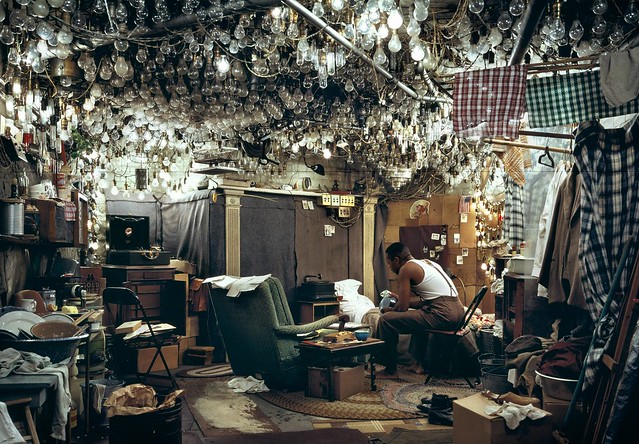
Like Rinehart, Street embodies multiplicity in ceaseless motion, undermining every certitude, destabilizing every authority, concealing the ‘truth’ of his character by performing its proliferation in public. Thus the skilled racings or stagnings of race by Street as a black cipher of “myth and dash, being and non-being,” exceed allegiances or determinacy. Charmeleon Street executes Rinehartism in a cinematic key as it is crucially guided by an immaculate abandon and liquidity exemplified by Street’s exploits. 

        Far from not knowing what he is, Street knows exactly what he is doing in subsequent talk with the same psychiatrist in the later part of the film- conning white people. He lets whites believe in correctly analyzing this complex, exotic, “notorious negro”. He goes on to say that when he meets somebody, he knows in the first few minutes who they want him to be and he just cut the emotional cloth of his personality to fit the emotional clothing of whoever he is...conning. Raced functions as a term for Street’s modulating acts of identity as a measured motion or rhythm that is affectively attuned to place, race and being. This is because Chameleon Street insists on a shift from racial fidelity to identitarian disloyalty, racial passing to racial performativity. In other words, Chameleon Street as an enactment of film blackness demonstrates process rather than the idle cataloguing of lack or pathology.    

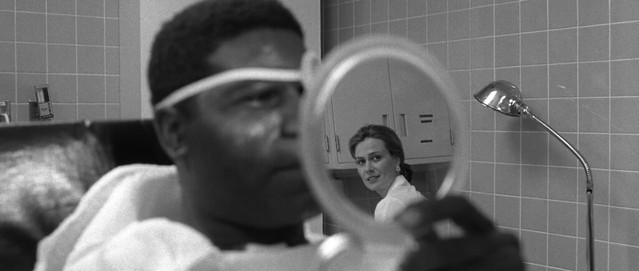
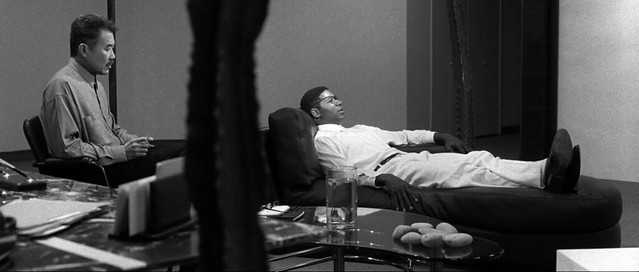
         Screen Shot 2021-04-26 at 6.59.44 AM         Scott McGehee and Brian Siegel’s Suture is another prime example in examining class, Black identity & Black performativity in noir thriller setting.. In a clever word play, suture, in film terms, is an editing technique to make the audience forget the presence of the camera and situate them inside a film. In the film, the disfigured amnesiac protagonist, who survives a car bomb blast which was made like suicide in an attempt to evade a murder charge, goes through multiple reconstructive surgery on his face (hence the need for suture), only to look exactly the same as before, except for an eye patch. The main conceit of Suture is that the brothers Vincent and Clay, who are supposed to be similar in appearance (similar enough for one to plot the murder of the other and take over his brother’s identity), are played by one white (Michael Harris) and one black (Dennis Haysbert) actor. The filmmakers and audience are in on the joke, but not the people who inhabit the world within the film. They see two white men. Unlike Chameleon Street, here, the embodied black experience is artificially accentuated. The black body, played by the statuesque Haysbert, is highlighted in his otherwise all white environment. His visible invisibility is an obvious metaphor for Blackness. The amnesiac who only remembers his past only in flashes and symbolic dreams - a former life as a poor construction worker in the rural south. He ultimately recovers his memories when confronted with his doppelganger Vincent, who came back to finish the job of killing him. After the confrontation and ending up killing Vincent, he decides to renounce his past and choose to continue to live in his relatively newfound opulence and privilege in performative identity.

        A psychiatrist, Dr. Yoshida (who is non-white, non-black therefore neutral) who narrates Suture, concludes that the amnesiac chose to erase the wrong past. That he will never be happy because he is a pretender. He won’t? What if the performances themselves are true identities? Although Suture is subservient to typical good/bad dichotomy at the end, the film demonstrates the performativity of the black body alone in the eyes of others.

        The driving tenor of both Chameleon Street and Suture obviously considers the substance of blackness in ways not dependent on self dispossession because Street and Clay as film protagonists don’t exhibit any interest in the disavowal of blackness for the lure of whiteness. There is an underlying contempt for whitness in Street and Clay’s performative impulse and their sense of cool detachment in their performances. But both films highlight the black desire in attaining white privilege through performances. They distinctly amplify the way racial passing potentially displaces the relationship between inside and outside, truth and appearance, identity and identity politics. 

        As it is demonstrated in both Chameleon Street and Suture, the process of Black performativity defies and disrupts the society’s compulsive need for identity while refusing to be pinned down. For both films, Ellison’s concept, “To be invisible is to be seen, instantly and fascinatingly recognized as the unrecognizable, as the abject, as the absence of individual self-consciousness, as a transparent vessel of meanings wholly independent of any influence of the vessel itself.” is figuratively and literally presented. The last image of Chameleon Street is Street standing against the jail cell bars, back lit and his face obscured by cigarette smoke - like a smoke screen, remaining indisciperable and unknowable, only leaving trails of his shenanigans in his performative false identities. In Suture, Clay, free in the eyes of white society presented in the film, conceals his blackness with an invisible wink, willfully assuming that false identity as his own.

        The act of performing multiple roles continuously in the white hegemonic society as an African American, is a series of delicate socio-political, cultural negotiation. It’s the process rather than the idle cataloguing of lack or pathology. It’s an act of defiance and survival. 

BIBLIOGRAPHY:

Du Bois, W.E.B. “Strivings of the Negro People.” The Atlantic Monthly, August 1897 https://www.theatlantic.com/magazine/archive/1897/08/strivings-of-the-negro-people/305446/ 

Butler, Judith. "Performative Acts and Gender Constitution: An Essay in Phenomenology and Feminist Theory." Theatre Journal 40, no. 4 (1988): 519-31. 

Field, Allison Nadia. Uplift Cinema: The Emergence of African American Film and the Possibility of Black Modernity. Durham; London: Duke University Press, 2015. 

Gates, Raquelle J. Double Negative: The Black Image and Popular Culture. Durham; London: Duke University Press, 2018. 

Gillespie, Michael Boyce. Film Blackness: American Cinema and the Idea of Black Film. DURHAM; LONDON: Duke University Press, 2016. 

Hahn, Andrew. “Color-Blind in Black and White: How Suture Wants Us to Ignore Race.” Bright Lights Film Journal, July 2020 https://brightlightsfilm.com/color-blind-in-black-and-white-how-suture-wants-us-to-ignore-race/#.YKMiFpNKjUp 

Petty. Miriam J. Stealing the Show: African American Performers and Audiences in 1930s Hollywood. University of California Press, 2016. Rottenberg, Catherine. ""Passing": Race, Identification, and Desire." Criticism 45, no. 4 (2003): 435-52.

Sunday, May 2, 2021

Saint Rocco

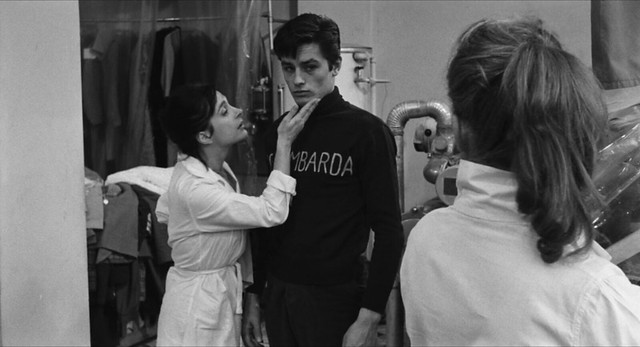
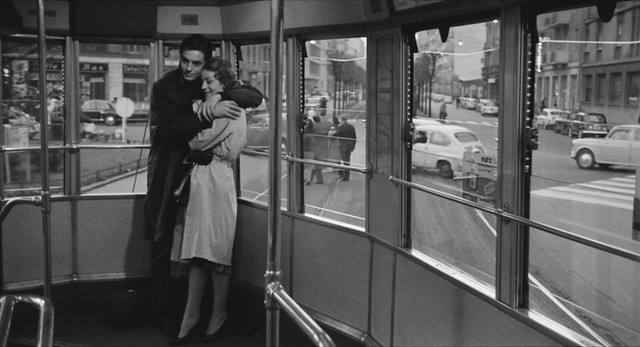
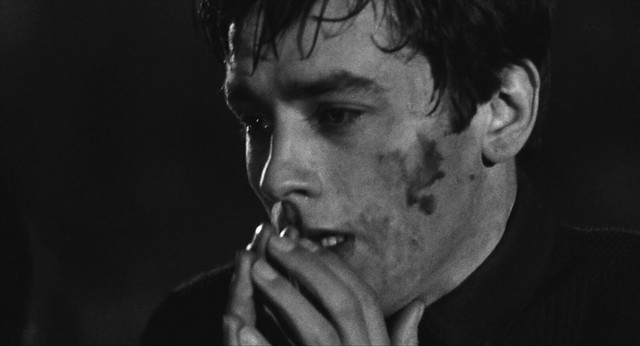
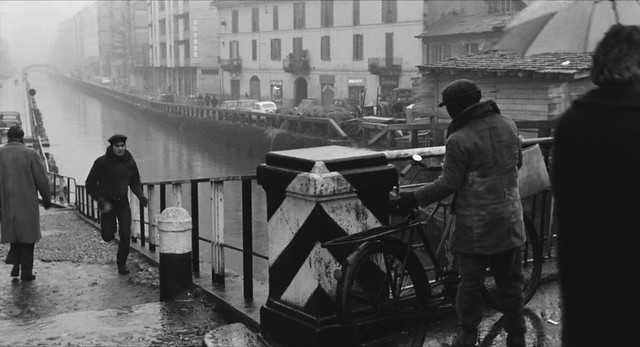
Rocco e i suoi fratelli/Rocco and His Brothers (1960) - Visconti Screen Shot 2021-05-01 at 11.08.56 PM Screen Shot 2021-05-01 at 11.10.57 PM Screen Shot 2021-05-01 at 11.12.14 PM Screen Shot 2021-05-01 at 11.19.56 PM Screen Shot 2021-05-01 at 11.20.57 PM Screen Shot 2021-05-01 at 11.01.38 PM Screen Shot 2021-05-01 at 11.07.10 PM Screen Shot 2021-05-01 at 11.15.41 PM Epic melodrama about changing times and a family's disintegration told in Dostoevskian flair. It tells the 5 Parondi brothers, an impoverished farmers from the southern Italy moving to the bustling industrious city of Milan with their beloved, devoted matriarch of the family (Katrina Paxinou). Shot in crisp monochrome and on location, Rocco has the look and feel of Italian neorealist cinema. Vincente the oldest, has settled in and married a girl (Claudia Cardinale in one of her first roles) his mother doesn't really approve (her family mostly) and doesn't really want to deal with family matters, Simone (Renato Salvatori), is a brute who gets into boxing but falls victim to the lure of the city - drinking, whoring and gambling among other things, Rocco (Alain Delon) is a quiet spiritual one who'd do anything for the family, even if it means sacrificing his own happiness, Ciro (Max Catier) is the unsung narrator, realist of the film, assessing each of his elder brothers' flaws and tries to teach the youngest Luca that times-are-a-changing.

The bulk of the 3 hour runtime concerns Simone and Rocco's relationship with a local floozy Nadia (alluring Annie Girardot). After unsuccessful attempt with Vincent, she lures Simone in, then dumps him. She runs into Rocco who is finishing up his military service in Turin. His innocence and pious ways impresses her to changes her life around and they become a passionate lovers. Simone's boxing career is not going well due to his vices, and Rocco happens to be excelling at the sport. After Simone finds out about Rocco and Nadia, he tracks them down with his gang and beats up Rocco and rapes Nadia in front of him. In order not to disrupt the family, Rocco urges Nadia to go back to Simone and Nadia reluctantly agrees. And the tragedy ensues.
It's all Alan Delon show though. His youthful beauty and unending saintliness is the point of the movie. As he shivers in the muddy riverbank, tears rolling down his face, you get to feel his soul being crushed over and over. His unconsolable wailing when he finds out that Simone killed Nadia, is one of the most harrowing scenes in any film. Then the life goes on, he needs to tour as a boxer to earn money for the family, beating strangers to a pulp even though he doesn't like that side of himself, dreaming of going back to the south one day.

Beautiful and novelistic, Rocco and His Brothers is one of the greatest Italian neorealist films I've ever seen.

Monday, April 26, 2021

Racial Identity

Suture (1993) - McGehee & Siegel Screen Shot 2021-04-26 at 6.59.44 AM Screen Shot 2021-04-26 at 7.00.34 AM Screen Shot 2021-04-26 at 7.01.14 AM Screen Shot 2021-04-26 at 7.01.46 AM Screen Shot 2021-04-26 at 7.02.53 AM Screen Shot 2021-04-26 at 7.02.21 AM Suture cleverly toys with the racial identity - both physical, psychological and performative but with a black actor playing a white man to the blind eyes of everyone in the movie, it becomes all that of physical & psychological. The slick noir tells a deception of a patricidal rich white man Vincent Towers (Michael Harris) who finds a perfect patsy in his long lost brother Clay (Dennis Haysbert) who happens to share striking resemblence(!!) to take the blame on their father's death. Feigning a sudden business trip, Vincent leaves Clay in charge with his opulent mansion and swaps their ID, then blows up his car with Clay in it with a remote. But Clay survives with his memories wiped clean and mangled face. People around him not seeing the color of his skin and assumes that he is Vincent, nurses him back to health with an extensive reconstructive plastic surgery.

Eugenics, white priviledge, interracial romance and many other stereotypical racial stereotypes are examined and explored within the confines of a noir genre setup. "How do we know who we are?" asks the psychoanalyst who narrates the film in the beginning. After Clay remembers his past and chooses to stay with the assumed identity, the narrator concludes with "Clay chose to errase the wrong past," did he though? There is nothing wrong with the desire to live in opulence and priviledge instead of in poverty. But Suture equals denying one's own past means losing one's soul. With brave casting, Suture seems to examine hefty subjects if it's only on the surface level. It is on us audiences to contemplate the rest.

Monday, April 12, 2021

Killing Revenge

Los Conductos (2020) - Restrepo Screen Shot 2021-04-12 at 3.01.40 PM Screen Shot 2021-04-12 at 3.02.39 PM Screen Shot 2021-04-12 at 2.36.50 PM Screen Shot 2021-04-12 at 2.40.28 PM Screen Shot 2021-04-12 at 2.49.05 PM Screen Shot 2021-04-12 at 2.51.11 PM Camilo Restrepo's enigmatic first feature, Los Conductos, packs a lot in its one hour and ten minutes running time.

We are introduced to a young bearded man (Luis Felipe Lozano), who shoots his way out of an empty warehouse where he has been living, steals a motorbike and rides into the night. The economy of shots here is astounding: thrown flashlights, sound of a motor of a bike running then crashing (without ever showing an attack or crashing), an extended leash of a dog, and a barking (but without a dog).

It's all simple shots and gestures and some sound thrown in that suggest narrative. It tells you all you need to know though.

The voice-over comes in around 11 minutes after the credits. The young man is apparently running from an underground cult, a collective of people on the margins united by their hate of the society. Its leader, only known as 'Father,' has disappointed him. He saw something in the leader he can't forgive. It might have to do with him being a pedophile clown.

The timeline isn't very clear, as we see the young man getting fired from a silkscreen T-shirt factory for drug use, then breaking into a warehouse space in the middle part of the movie. Are we seeing the flashback?

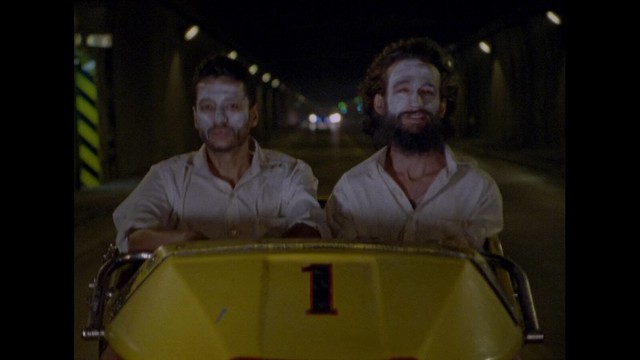
The voice-over tells the story of abandoned kids he once saw on TV. The young man and his friend named 'Revenge' takes the role of the kids and have a joyride in the mostly empty city which is directly underneath Medellin (as suggested by empty highways and tunnels), the second largest city in Colombia.

The metaphor here is not so subtle: upper/under has been explored many times and in many forms successfully in cinema, from the Morlocks in Time Machine, to servants’ living quarters in Altman’s Gosford Park, to residents’ social status designated by what floor they live on in High Rise, to people dwelling in the basement in Parasite. What’s impressive with Restrepo’s film is its resourcefulness to show it with so little. Need to shoot in an empty street doubling as underground city? Do it in the abandoned salt-mine, show the mountain of waste? Shoot the film at the landfill, present the dualities of men? The double exposure, and so forth.

Laden with metaphors and parables, Los Conductos is ultimately commenting on the cyclical nature of violence and its culture in Colombia. It takes a jab at the early military government indoctrination -- the showy military parade, the child soldiers, the rampant waste of industrial and capitalist productions -- overproducing of junk, environmental destruction, false idols and the lost generation they created.

It's Restrepo's ingenuity of creating something complex out of nothing that is admirable here. With Arthur Gillette's appropriately pounding score, Los Conductos is a daring, dazzling cinematic exercise that is once again proving that the future of cinema is in Latin America.

Los Conductos opens in Film at Lincoln Center in New York on April 29, with a national rollout to follow, via Grasshopper Film.

Wednesday, March 31, 2021

Dancing with the Ghost

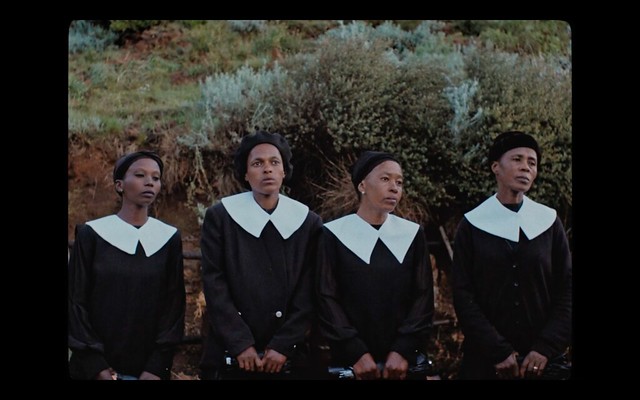
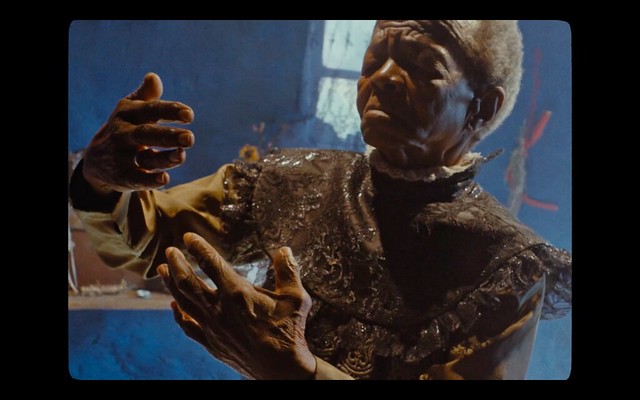
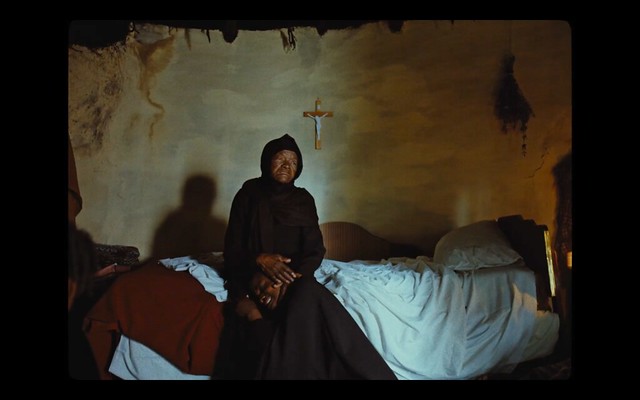
This is Not a Burial, It's a Resurrection (2020) - Mosese Screen Shot 2021-03-16 at 3.16.16 PM Screen Shot 2021-03-16 at 3.52.55 PM Screen Shot 2021-03-16 at 3.48.06 PM Screen Shot 2021-03-16 at 3.57.45 PM Screen Shot 2021-03-16 at 4.03.25 PM Screen Shot 2021-03-16 at 4.14.01 PM Screen Shot 2021-03-17 at 9.12.13 AM Screen Shot 2021-03-17 at 9.19.57 AM Screen Shot 2021-03-17 at 9.22.37 AM Screen Shot 2021-03-17 at 9.40.42 AM Mantoa (Marytwala Mhlongo) lost all her family members over the years and now she is a recipient of her son's dead body. He died in an accident, presumably while working nearby mining field. Since she has no will to live anymore, she starts preparing for her death. She puts on a dress her husband gifted her long ago, lays down in her bed for death to come and take her away.

But the death doesn't come. She tries to hire a local man to dig her grave for him. He refuses – it’s a bad omen for digging a grave for someone who is still living. She will need to do it herself. In the mean time, her village is under the threat of a dam being built nearby. All villagers will need to relocate because of their valley will be flooded. It means their ancestral burial ground will be flooded as well. As Mantoa objects to the dam project, pleading with the villagers about the importance of having their land, she unwillingly becomes a leader of a movement.

Mosotho filmmaker and visual artist Lemohang Jeremiah Mosese's This is Not a Burial, It's a Resurrection is a stunning film that defies easy categorization. Gorgeously shot in full frame by Pierre de Villiers with captivating score by Berlin based electronic composer Miyashita Yu, the film is a highly visual, aural experience that charts new frontier in its cinematic language. Only comparison I can think of is the work of Pedro Costa in its painterly, static framing and its visual poetry.

Steeped in Lesotho's natural beauty and its culture and history, the narrative moves languidly forward as our grief stricken, life beaten heroine picks herself up and fight against the village chief and the catholic priest who are resigned to give up the land, their heritage and dignity in the name of progress. Her refusal to relocate and her passionate speech about protecting their land and ancestral burial ground where all their families and ancestors are buried, the villagers finally come to her aide. They start cleaning up the cemetery and pressure the village leaders to reconsider.

The company which is behind the dam construction, uses scare tactics and violence to oppress the villagers. As their celebration turns into tragedy, the villagers are forced to relocate. It is again Mantoa, who has nothing else to lose, making the last stand.

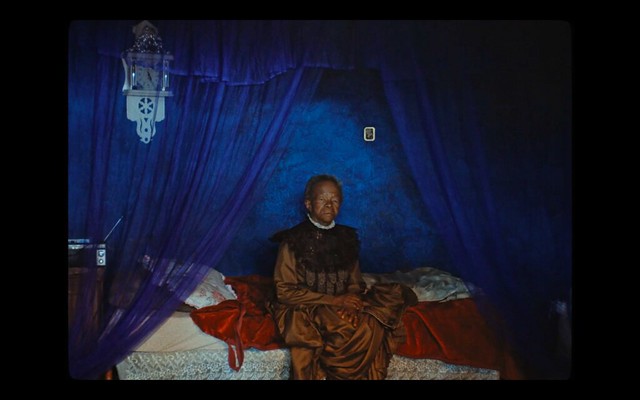
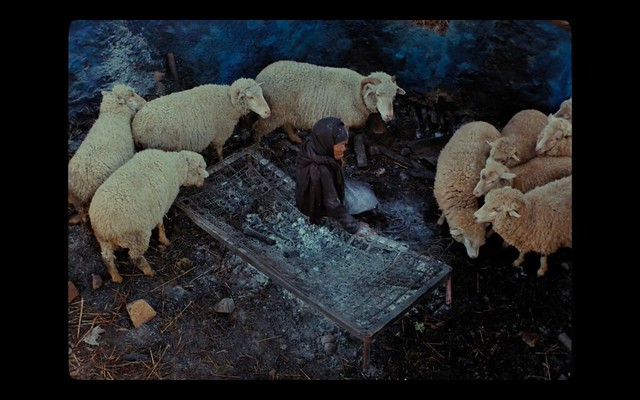
It's Marytwala Mhlongo's weathered old face that speaks thousand words here. Her dignified stand in her forever black mourning dress stands out like a sore thumb in the frame mostly populated by giant Lesotho sky. Nature, however beautiful, doesn't let you forget that human are insignificant in Mosese's expressive framing. There are so many memorable scenes but Mantoa dancing in her best dress dancing with the dead - shot in close handheld camera, and women in black choir singing at Mantoa’s son’s funeral, stand out for me.

This is Not a Burial, It's a Resurrection signals the arrival of a major new voice in international cinema, one who is gifting us a unique cinematic language rooted in his tradition and culture. One of the year’s best.

Sundance winner This is Not a Burial, It's a Resurrection opens April 2, in virtual cinemas nationwide.