Tuesday, March 19, 2013

Happiness

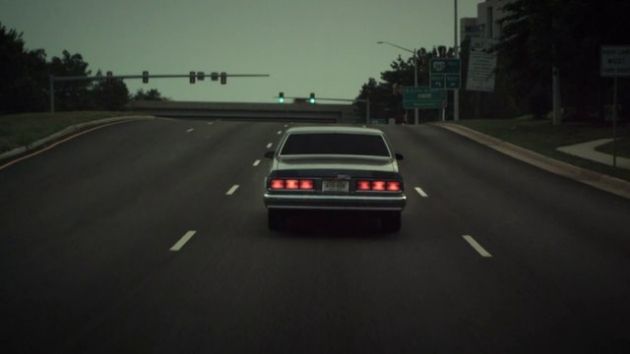
Happy People: A Year in the Taiga (2010) - Vasyukov, Herzog
 photo 1d1a5a83-0371-4015-9cb8-2df26966374d_zps7ba4e467.jpg
 photo 7d1050f8-3128-4476-9853-f4ca54a3a538_zps4c733123.jpg
 photo 09e2a8ad-7914-4691-8e90-5adecfbefe31_zps659ba375.jpg
 photo aed03b6b-b9b1-42fc-ae44-26164cf3da24_zps20185e7a.jpg
 photo b4ec81ec-7bd2-4b62-aa2a-8c4c9f65d86f_zpse1cc0a7b.jpg
Herzog's narration is always music to my ears. The actual music for the film, not. It almost ruins otherwise a fine doc about the trappers living in a small village in the Taiga. It's not as vigorous or focused as the usual Herzog doc. Basically he edited down mountains of footage the Russian filmmaker Dmitry Vasyukov to a digestible length, spanning the whole year living in Siberia. Many villagers make their income hunting for little furry animals in winter. They have to prepare it all year around- setting traps, getting provisions, move equipment, etc. There are other stuff- fishing, canoe and ski making and some village festivities. But it's all about men's solitude- beautiful nature, trapping the same way your ancestors have been doing for hundreds of years, drinking hot tea after exhausting trek with your companion dog by your side. What more can you ask for in life?

Monday, March 18, 2013

ND/NF Preview 2013

So here is the sneak preview of this year's New Directors New Films. The series is usually a good indication of what's to come in the film world. There are 25 films represented this year and the line-up is pretty strong and diverse. With these 8 films I was able to see below, I am happy to report that cinematic output is still healthy and alive all over the world. Please make sure to check out Blue Caprice, The Act of Killing and Upstream Color upon their future release date if you can't make it to ND/NF 2013. The series runs from March 20 through March 31, at Film Society of Lincoln Center and MoMA.

 photo b7528568-9d39-4a81-8595-ab7bfc843a4d_zpsea767360.jpg

BLUE CAPRICE | Alexandre Moors


Amid renewed conviction for gun control in this country after the Connecticut shooting, Blue Caprice timely revisits the Beltway Sniper case, which happened more than a decade ago. The terrifying, indiscriminate killing spree perpetrated by John Allen Muhammad and Lee Malvo left indelible mark in American Psyche, already battered by 9/11 and the Invasion of Iraq. This slim, understated thriller is an impressive debut of Alexandre Moors, a New York based filmmaker. Even though it’s carefully orchestrated - from brooding cinematography and score to deliberately muted act of violence, the film still manages to leave enough breathing room for the audience to connect the dots for themselves. And the acting is superb: Isaiah Washington is mesmerizing as a former army man progressively disgruntled-at-the-unfair-world, and Tequan Richmond is a revelation here as an impressionable 16-year old who desperately wants a father figure. Blue Caprice doesn't give you any satisfying answers. It just accurately reflects on the complicated world we are living in.


 photo 025e38a7-d51e-4a86-a3ac-6d3df073ee0b_zps689c87e4.jpg

EMPEROR VISITS THE HELL | Li Luo


Li Luo freely interprets from the Ming Dynasty classic literature The Way to the West (chapters from 9 to 11). Emperor Visits the Hell is a straight-faced farce that is barest of the bare-bone filmmaking. The setting is transformed into modern day China and all the frumpy actors look and talk like regular people. The story goes like this: The Dragon King upsets the heavens when he bets against the heaven's will. Despite the emperor's intervention, the Dragon King is executed (off screen). Now the ghosts (in no disguises or special effects) including the Dragon King are haunting the emperor, so he has to visit the underworld and pay off each ghost to stop bothering him. Emperor Visits the Hell is loose, playful movie that is reminiscent of the works of Apichatpong Weerasethakul and the recent Miguel Gomes’s winsome film, Tabu.

The_Color_of_the_Chameleon.jpg
THE COLOR OF THE CHAMELEON | Emil Hristow

 
Batko (Ruscen Vidinliev) is a compulsive liar and masturbator since young age, no wonder he was recruited by the Bulgarian secret police to spy on the rogue elements in college- so starts this slick, sexy Bulgarian political satire. It has a lot of ins and outs and many laughs. But The Color of Chameleon comes across as too clever for its own good most of the time.

 
 photo b4273447-27f8-41d1-9af8-c7d42b9f4f56_zps59e99639.jpg  
THE ACT OF KILLING | Joshua Oppenheimer

 
Crazy. The Act of Killing stars former paramilitary gangsters in Indonesia (preman they are called, from English words free man), who carried out killing estimated one million people accused of being Communists in the years 1965-66. It's quite unfathomable by the Western standards: killers are roaming proudly, telling people their grand, detailed stories, even on TV talk shows. It's the winners who write history. For losers, there isn't anyone left to voice their oppositions- as one of the gang members proudly claims, "because we exterminated them all". 

Director Joshua Oppenheimer asks one such gangster, the lean, flamboyant Anwar Congo if he can reenact killings in front of the camera. Without any irony or shame, Anwar goes along with it in detail with his fat sidekick compatriot Herman in tow. But as Anwar goes through garish movie-making business (complete with dancing girls and waterfalls and John Barry's 'Born Free' playing in the background), his conscience starts to catch up with him. He admits having nightmares of haunting ghosts of the people he killed. 
The Act of Killing might be the most powerful and cathartic documentary I've ever seen. It's no wonder Herzog and Errol Morris got involved in executive producing it. The credit sequence of The Act of Killing is still riddled with 'Anonymous' from co-director down: the political situation in Indonesia is still too dangerous for many people who are involved. It’s certainly one of the year's best films. DO NOT MISS THIS FILM.
 
 
 photo 1acc0a9a-c506-46a1-9a35-dad9771541de_zpse7fb162c.jpg 
SOLDATE JEANNETTE | Daniel Hoesl

 
European cinema is very much alive. Daniel Hoesl, a member of A European Film Conspiracy directs a film borne out of casting process without a script and the result is an intriguing, slim film about being free of materialistic world. There is no soldier name Jeannette, only Fanni (Johanna Orsini-Rosenberg), a lightly sketched character who might be a leader of a movement in the making. I'd love to know more about this EFC.


 photo 213866-Shane-Carruth-Upstream-Color-sundance-film-festival_zps8cf52217.jpg    
UPSTREAM COLOR | Shane Carruth

 
Intricately designed and immaculately executed, Upstream Color is an impressive, seductive film that draws you right in from the first frame. It involves brain washing through some earthy pharmatropix that is reminiscence of early Cronenberg (but non of his cheekiness) and Walden without any socio-political implications. But is there anything more than its slick pictures, hypnotic pacing and decidedly opaque narrative? Only you can decide for yourself and it’s definitely worth the trip.

It is safe to say that Shane Carruth is a real renaissance man: he wrote, directed, co-edited, starred in and composed for Upstream Color. He is distributing it himself as well. 


Stories_We_Tell_Sarah_Polley.jpegSTORIES WE TELL | Sarah Polley

 
On her third outing as a director, Sarah Polley continues her close examination of human relationships: this time, her own family. It's not a Rashomon-ish tale as they market it to be. Through candid interviews of her extended family and friends, home movie footages and reenactments shot on Super-8, Canadian actor/director Polley tells her family secret that her mother, Diane, took to her grave: who was Polley's biological father? The documentary deconstructs the marriage of her loving but severely mismatched parents (her mother an extreme extrovert and her father the opposite). After Diane's untimely death (cancer), it was always a family dinner table joke how little Sarah didn't look like her father or her siblings. Polley keeps most of the melodrama at bay and gives the film a lot of warmth and humor. It's a lovely documentary if not a little too ordinary. But I guess that's the point.


 photo 011bae8e-143b-4565-a6df-3885a272453e_zps3bee3259.jpg  
L'INTERVALLO/ THE INTERVAL | Leonardo di Costanzo


Salvatore (Alessio Gallo) is a chubby 17-year old kid who sells lemon ice in the neighborhood. He somehow gets called in by a local gang. His mission is to keep an eye on a spirited, 15-year old girl, Veronica (Francesca Riso), in an abandoned old building compound. She did something wrong and is being imprisoned against her will and is waiting for her fate which will be decided by a local honcho that night. So begins a simple, lovely, one-day-in-the-lives-of, coming-of-age story deeply rooted in the neo-realist filmmaking. Without any music or gimmickry, Leonardo di Costanzo quietly observes two young leads. Gallo and Riso are great- at first putting on air and stand off-ish, then recoiling back to their normal kid selves. The Interval is a beautiful, subtle, touching film.


For the full lineup and tickets, please visit newdirectors.org.

Sunday, March 17, 2013

Fever Dream

A Midsummer Night's Dream (1935) - Reinhardt, Dieterle

In pictures:
 photo 3286ec34-1fdd-474c-8500-015e33128048_zps59e44e94.jpg
 photo 11be3189-2dc7-4726-ba46-bfa1bf1809d5_zps518d5b85.jpg
 photo 214aedca-ce88-4831-b84c-f7a2c7500aaa_zps2febba3e.jpg
 photo c430b213-7393-4b1e-bc9f-b8250ec6ba51_zps00b4e498.jpg
 photo ce715b56-d2fc-4b75-a952-a4a13215c145_zps63c926be.jpg
 photo ae517063-8eb1-4c33-ae84-647d6e44bb35_zpsea908cbe.jpg
Couldn't help checking this out based on the film stills I saw despite my disinterest in musical and the bard's comedies. This big Hollywood production is visually impressive - expressive lighting, dual exposure, wire work, lots of sparkles. Cagney and Rooney have never been more annoying. Perhaps it's the granddaddy of all "It's all been a dream"tale.

The Hill

Restrepo (2010) - Hetherington, Junger
 photo cf85cee0-7269-4cb9-bc7a-5f6d9621747e_zpsba8331d0.jpg
I consciously blocked out the onslaught of Iraq & Afgan war movies ever since that war began more than a decade ago. I was opposed to any military actions and it was too soon and too much for me to stomach. Restrepo follows a US battalion stationed in the most dangerous area in Afganistan, Korengal Valley, 2007. No ideology, no messages, no judgment, just young soldiers doing their job which happens to be taking over a hill, build a post (called Restrepo, named for their fallen comrade) there to get a better view and hold that position amid intense firefight and angry villagers day and night. It's a riveting stuff. Soldiers are no older than students I deal with every day. They are under insane amount of pressure and stress. They see their friends being shot and killed. Hetherington and Junger are there right beside them. If not anything, they are as much adrenalin junkies as the soldiers are. At one point one asks one of the soldiers about the rush that's much greater than bungee jumping or being on crack, what happens when they go back to civilian life? They don't know. They can't sleep at night, thinking about their dead friends. No sleeping pill helps. The epilogue says the US troops began withdrawing from the valley in 2009. Restrepo doesn't have to be preachy. It shows the follies of war naturally.

Saturday, March 9, 2013

Home at the End of the World

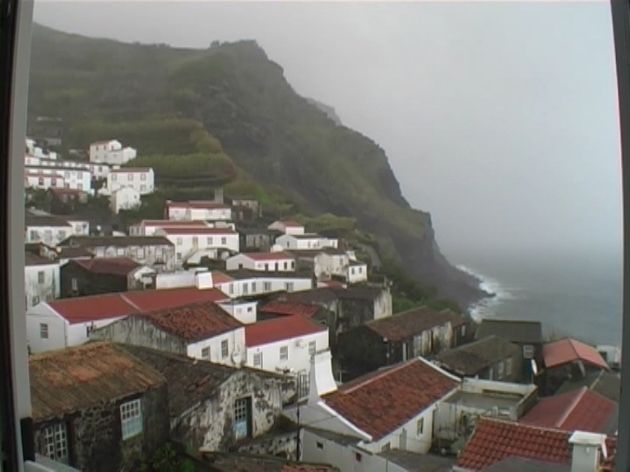
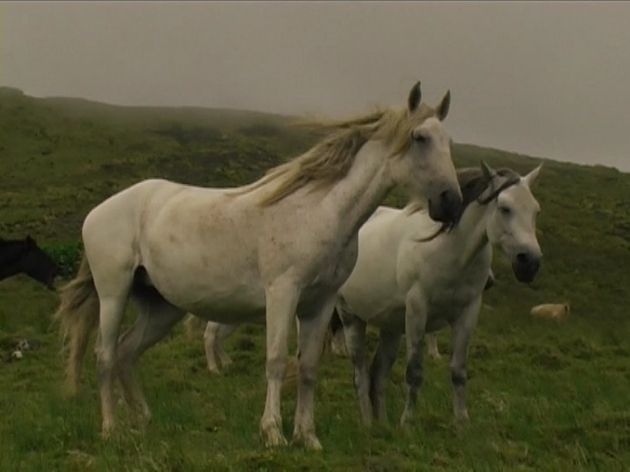
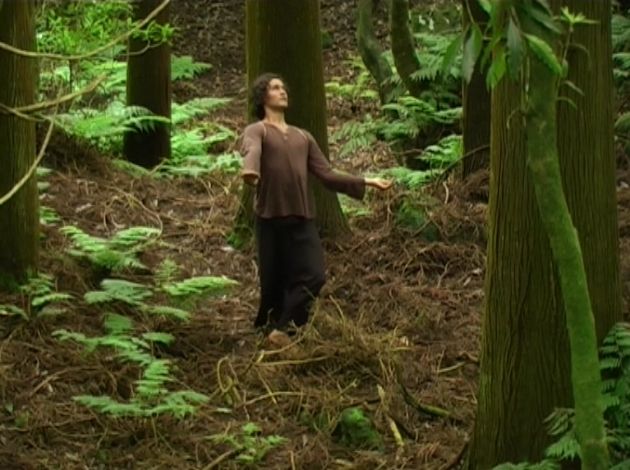
É na Terra não é na Lua/It's the Earth Not the Moon (2011) - TochaImage
Image
Image
Image
Image
Image
Image
Image
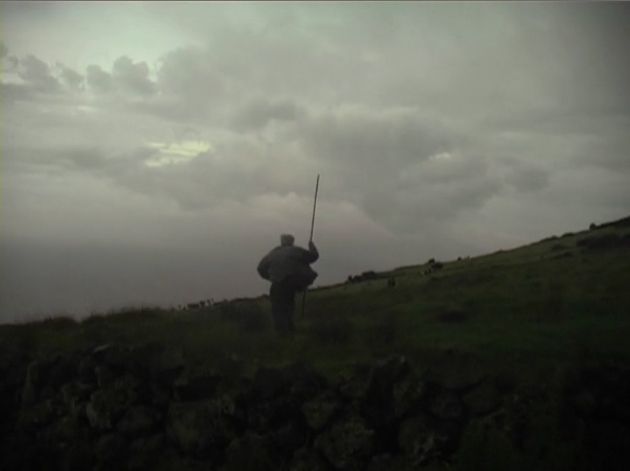
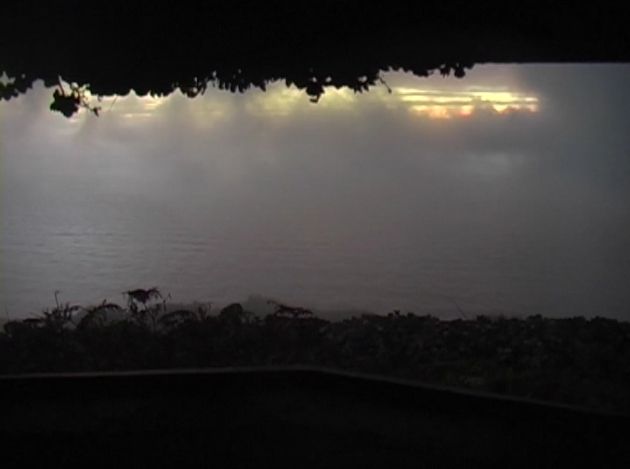
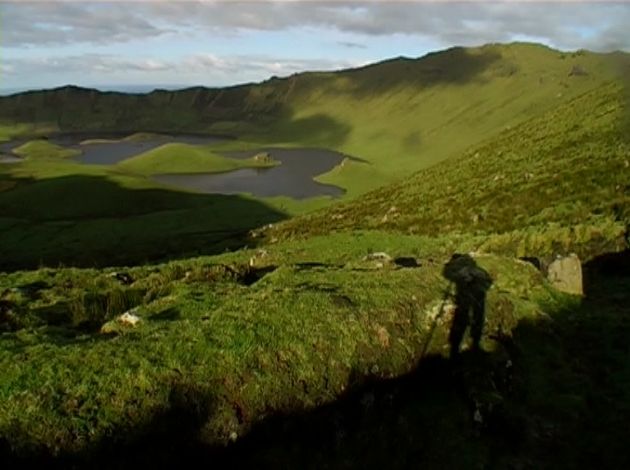
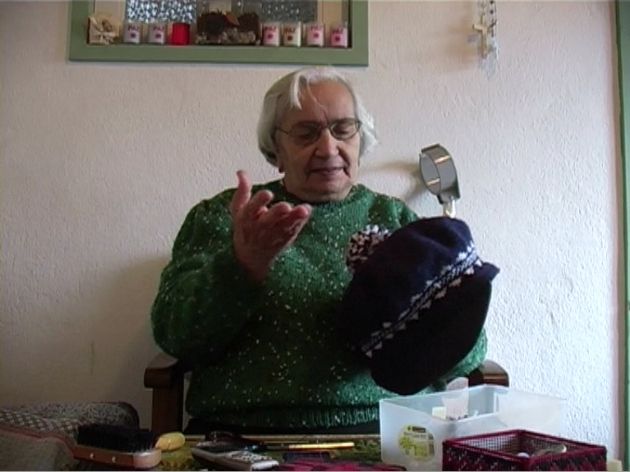
At the onset, Gonçalo Tocha states his intentions, that he will film everything and everybody, go everywhere and anywhere and will not miss a thing while on Corvo, the smallest island (pop. 440) in the Azores archipelago, the farthest tip of Europe in the middle of the Atlantic. For the next three hours, this doc plays out a gentle, warm, intimate visual diary in 14 chapters. Clouds pass by, rough sea, people's faces and their stories, losing the old way of life, etc.

Corvo, however isolated it looks from a distance, is not dissimilar to any small European town- a school, city municipality, airport, landfill, elections, cars, slaughter house etc. Holding a shot no more than 2-3 minutes, Tocha's fleeting sketches of the island and the lack of the usual eccentrics are quite anti-climactic compared to Herzog's bombastic documentaries, although they both deal with mysticism of a particular place, searching for truth and all that. It isn't quite like travel shows like Globe Trekker or anthropological study either. Tocha quietly takes all in and provides a slight, gentle voiceover in conversation with his only other crew, Didio Pestana, his sound man. It's Not the Earth is like a warm blanket, a fine mist that clings to your skin, or a bowl of hot chicken and noodle soup on a cold day. It's all very comfortable, even though it takes place at the end of the world, cut off by enormous and powerful sea. I can watch this all day long.

Thursday, March 7, 2013

Beyond Exorcism

Beyond the Hills (2012) - Mungiu
beyond the hills photo 034e2ef6-dfec-4693-b222-ba14b7d483af_zps7182a6c5.jpg
Christian Mungiu, the leading figure of Romanian New Wave, strikes again with Beyond the Hills. Just like his Palme d'Or winner 4 Months, 3 Weeks and 2 Days, which elevated a rather unpleasant subject matter (illegal abortion) into a dizzying, tension-filled masterpiece, here he manages to make something greater out of an exorcism-gone-horribly-wrong story based on a true event. Mungiu again proves to be a gifted storyteller and a great tension builder. He is also masterful at presenting nuanced human interactions.

The film takes place in a small remote Romanian monastery in the hills. A young nun named Voichita (Cosmina Stratan) reunites with her childhood friend Alina (Cristina Flutur) from their orphanage days after a long separation. Alina, emotionally stunted of the two, having been living in Germany alone for a long time, is determined to reclaim her long time love. But Voichita's world is now all about God and prayers, living without worldly attachment. Indeed, affectionately calling the head priest and Mother Superior papa and mama, she calls the electricity-less orthodox monastery her true home now.

After throwing an emotional tantrum and trying to throw herself into a well, Alina spends a night at a crowded local hospital. If she can't run away with Voichita, then she will join in. The priest insists on telling her that the monastic life is not fit for a person with human desires and monetary attachment, not noticing the seriousness of the girl's obsessive love for her best friend. Things escalate to a point where the esteemed priest is pressured to perform a sort of exorcism to rid the evil spirit from hysterical Alina, followed by the grisly aftermath. These nuns and the priest are not bad people and have the best of intentions in their hearts. But with the old rules they follow and their conduct for 'curing' the emotionally disturbed, they are still stuck in the Middle Ages. 

In Mungiu's films, Romania is a country full of contradictions where the past and the present precariously co-exist side by side. None are more pronounceable than one scene at the hospital where unsympathetic, overworked staff collide with the priest and nuns. In another scene, two arresting officers make small talk about a boy stabbing his mother to death in the presence of hushed nuns in a paddy wagon on the way to the police station. 

With great performances all around, Beyond the Hills is an emotionally exhausting experience. Even with a running time of 2 1/2 hours, the film succeeds in holding your attention from beginning to end with unrelenting tension. Stratan and Flutur deservedly shared the Best Actress honors for their portrayals, and Mungiu took home Best Screenplay award at last year's Cannes film festival.

Beyond the Hills has a limited release in theaters on March 8 and VOD on March 14. Please visit Sundance Selects website for more info.

Monday, March 4, 2013

Body Image

There She Is (2012) - Rao, Sheskin
 photo 1d1fe1d4-bf9a-4f50-923c-a301d3a68651_zps635d4d64.jpg
My wife Nicole is a muralist and a High School teacher. When she lead an Afterschool mural project last Summer with a team of High School girls, the subject they chose was the theme of "Women as International Community." It resulted in a spectacular mural in Downtown Brooklyn. The mural contains many prominent (and not so well known) female figures around the world - Aung San Suu Kyi, King Peggy and Comadres of El Salvador among them. But when Nicole first approached the girls with the subject and trying to include their concerns as a young women living in the US, she found out that their number one concern was body image, which ended up represented in the middle of the mural (in one of the raindrops- mirror and the Venus of Willendorf).

It is no secret that today's youths are bombarded day and night with images everywhere of how they are supposed to look, when in fact, the average size of the US women is 14 - 16. Then how does the average woman cope with the pressure of being perceived as abnormal and slovenly even though they are statistically average? A revealing short documentary There She Is delves into this seldom talked about topic: body image. The film follows two best friends, Alison Kopach and Jenny Flores as they prepare for entering the American Beauties Plus Pageant where 22 plus size women compete for the 'Elite' title. For Kopach and Flores, the pageant is that special day they feel like somebody. It's their empowerment tool. But how do they deal with it the rest of the year?

Thanks to Veena Rao and Emily Sheskin's deft direction, There She Is digs much deeper than your run-of-the-mill reality TV show. It presents an honest assessment of inner-conflict of these contestants as they continue to struggle with self-acceptance long after the pageant is over and the camera's turned off. As Kopach says in the film, she has to rev up her appearance everyday to feel good about herself, while Flores has to deal with her boyfriend and his family's prejudices about dating a 'big' woman.

Shouldn't we all have the right to feel beautiful? Why is self-acceptance so difficult? The film asks the audience to ponder about the impossible standard of beauty women are subjected to and how it warps many of their perspectives on life. I think this short film has a lot to say in its 20 minute run time and I hope Rao and Sheskin explore the subject further in the future because what we have here is a very potent, thought provoking documentary.

Please visit the film's website for more info: www.pageantdocumentary.com

There She Is Official Teaser Trailer from There She Is on Vimeo.

Sunday, March 3, 2013

Frumpy Life

4 Months, 3 Weeks and 2 Days (2007) - Mungiu
4 months, 3 weeks, 2 days photo 1cb8c158-187a-4636-93d7-3197a4c58437_zps22c316b4.jpg
4 Months tells a story about Otilia (Anamaria Marinca), a college student, who is trying to help out her roommate Gabita (Laura Vasiliu) getting a sketchy illegal abortion. The messy, frumpy dorm life is presented matter of factly. There are class tensions and general hopelessness of living under communist regime. The acting is superb, so as layered interactions among the film's inhabitants. Christian Mungiu is a gifted storyteller. He also understands nitty-grittiness of everyday lives of his characters. It doesn't really matter whether his film takes place in the 80s under Ceausescu regime or in a monastery in a present day, there is always that unmistakable immediacy and urgency present- with the help of natural, handheld tracking shots and long takes throughout. And thankfully, Mungiu is not quick to judge his characters decisions or faults nor is he interested in being didactic. These judgment calls young people make under difficult circumstances are all relatable one way or another. He is very good at humanizing their faults but also great at not overly emphasizing heroism that only happens in movies. Hey, if Otilia was my girl, she's alright by me.

Wednesday, February 27, 2013

Preview: Rendez-Vous with French Cinema 2013

The 18th Edition of this New York tradition, Rendez-Vous with French Cinema unveils perhaps their most diverse line-up in years. This range includes grand and engaging entertainments such as Régis Roinsard's Populaire (Opening Night film with its stars Romain Duris and Deborah François attending), uncompromising auteurs such as Jean-Claude Brisseau and Damien Odoul, rising independent voices including Héléna Klotz and Shalimar Preuss, and master filmmakers François Ozon, Patrice Leconte, Raymond Depardon, Nicolas Philibert and the late Claude Miller.

Here are some of the titles I had a privilege to have a sneak peek at:
   
Renoir.jpgRENOIR

Silly me, I never made the connection between Renoir the painter and Jean Renoir the filmmaker all these years. Anyway, Renoir recounts the last days of Pierre-Auguste Renoir's life in the sun drenched French Riviera. Even though wheelchair-bound and in obvious physical decline with two of his three sons in trenches of WWI, Renoir is as productive as ever, churning out those unmistakeable colorful nudes of round, apple breasted figures, thanks to the recent arrival of young redheaded model named Andrée (played by radiant Christa Theret). The old man tells her flatly that it's all about young women's velvety skin that seems to absorb sunlight. It's all about beauty, because nothing else lasts. Enter his 21 yr old, second oldest son, Jean, wounded in battle and on leave for recuperation. Jean falls for the young, libertine model who teaches him the meaning of carpe diem. Renoir is a shamelessly pretty picture. There are dark undertones hinted here and there- Renoir the elder lives in a room full of maids, all of whom may or may not have been his models turned maids and vice versa. The youngest son, a mere child (here played by Thomas Doret from The Kid with a Bike) who has a tendency to play with dead things is generally creepy. But these very underdeveloped negative aspects never overtake the hopefulness and sunny disposition of the film.

in the house.jpgDANS LA MASON/IN THE HOUSE

In typical Francois Ozon fashion, In The House is deliciously perverse. It would make a great double feature with his Swimming Pool. Fabrice Luchini is perfect as a failed writer and High School writing teacher, so is Kristen Scott Thomas as his passionless wife/gallery owner as is Emmanuelle Seigner as a bored 'middle class' housewife. The film is very good at keeping you on your toes. It starts out like a High School drama about a teacher/pupil relationship, with notebook line title sequence and everything. Then it becomes something else. Not that I didn't know it was directed by Ozon, but it still caught me off guard. When I realized it, it was too late. The film pulled me in and it was a totally engaging movie going experience.

threeworlds.jpgTROIS MONDES/THREE WORLDS
 

A turgid morality play involving a car accident. Al (Raphaël Personnaz) is a young car salesman moving up on the social ladder, about to marry his boss's daughter. On the rawdy drunken night of the bachelor party, he accidentally runs over an illegal Moldavian worker, which is witnessed by Juliette (Clotilde Hesme) from her balcony. Despite Personnaz's soulful performance as the guilt ridden young man trying to do right and beautiful Arta Dobroshi giving the widow of the victim some dignity, the film is full of melodrama and not enough substance.


LA RICHESSE DU LOUP/RICH IS THE WOLF

The movie follows a nameless beautiful woman (Marie-Eve Nadeau) going through hundreds of hours of videotapes left behind by her lover of 7 years, who disappeared without a trace, trying to reconstruct the man that she thought she knew. This self-reflexive visual essay by Damien Odoul is at once puzzling and engrossing. The seemingly random, grainy video footages- nature, reflections, driving, people, day, night are beautiful at first. Then a slight story begins to emerge around the man's past, mostly narrated by the woman. Then it becomes more coherent by the end as it tinkers with the notion of death.

you will be my son.jpgTU SERAS MON FILS/YOU WILL BE MY SON

Niels Arestrup eschews every scene he's in as an overbearing father/owner of a reputable vineyard in France. The tragedy here is of Shakespearean proportions, supported by a great cast, including nebbish Lorant Deutsch as a never-good-enough-in-his-fathers-eyes son, Anne Marivin as a supportive wife and a father-in-law defying, sexy hothead and Nicolas Bridet as the-son-you-never-had-but-always-wished. With his stop-on-your-tracks stare and the lion's mane, the film belongs to singular ruthlessness of Arestrup.

-------

Others films in the series I am very interested in seeing, are a remake of Jacques Rivette's The Nun, starring lovely Pauline Etienne (Restless), Raymond Depardon and Claudine Nougaret's documentary Journal de France and two animated features, The Day of Crows and The Suicide Shop.
The series runs 2/28 - 3/10 at The Film Society of Lincoln Center, The IFC Center and BAM. Please visit Rendez-Vous with French Cinema website for the complete rundown.

Tuesday, February 26, 2013

Lucien Castaing-Taylor & Véréna Paravel on Leviathan and the Possibilities of Cinema

 photo Castaing-TaylorampParavel_zpseeadb930.jpg
Leviathan, a stunning piece of audio-visual whatsit shot on tiny HD cameras on a fishing vessel, made a splash last year at various film festivals, including Locarno, TIFF, NYFF and this year's Forum section of Berlinale. The film's receiving a theatrical release in New York starting on Friday, March 1.

I got a chance to talk briefly with its directors Lucien Castaing-Taylor and Véréna Paravel at the office of U.S. distributor The Cinema Guild. Fiercely intelligent and academic, yet very passionate about their filmmaking, Castaing-Taylor and Paravel responded lengthily to  everything I threw at them, even though our interview took place in the latter part of their press day and Paravel was still reeling from jet-lag, having returned from the Berlinale just the day before. I thank them heartily for their patience and candor.

 
You both are anthropologists by profession?

Véréna Paravel (VP): We used to be.

Lucien Castaing-Taylor (LCT): We are recovering anthropologists.

VP: We still are. But we're just trying to forget this dark side of us. (laughs)

For those of us who don't know what the Sensory Ethnography Lab is, can you explain?

LCT: It's a little lab, as in an experimental laboratory, but not really scientific. We are not conducting experiments with controlled variables. It's experimental since we don't know what we are doing. There are a bunch of us working there. We are trying to do things with audio visual media -- with photography, sound, film and video, to do things that can't ordinarily be done or aren't ordinarily done either within anthropology or within film, especially documentary or within art.

We are definitely, like anthropologists, invested in the real world and the vagaries and different varieties of lived experiences and cultures around the world. But we are not interested in reducing that magnitude of that lived-in experience to sound bites or to discuss formulations or linguistic propositions that would summarize a culture or human existence in ways that are reducible to meanings that can be transcribed in language or written words.

We are interested in working with documentary in ways that pulls away from its affinity with broadcast journalism, with the lecture format and with talking heads to discuss the world rather than experiencing it. In that regards, I think our works, even though largely non-narrative or working against the conventional narrative structures, have a lot more affinity with cinema as a whole rather than just a straight up documentary.

We are also interested in, even though most of us are working with moving images, like film and video so far, unless of course working with sound, we are doing things that don't separate different art forms, different genres but seeking a way to bring all in, so everything is rubbing shoulders, so there is more friction and interstices between different art forms and different traditions and representations as well and to see where they can take us.

How many people are involved in this laboratory usually at one time?

LCT: It changes the whole time. Like when we teach, usually classes are kept at ten or twelve people and every year there is a new twelve. Then there are visiting post doctorates and different artists passing through. I'd say about a dozen people at any given time.

Are there a lot of people making projects similar to what you guys are doing?

LCT: Yeah. But we don't want it to be huge. We are not a factory. (laughs) 

I do feel LEVIATHAN is much more than just an observational documentary. I mean it's so cinematic. I've seen both SWEETGRASS and FOREIGN PARTS and I kept thinking that you must've had some sort of training as a filmmaker or photographer. I can't accept the idea that you guys just shot a bunch of footage and made your film out in the editing process.

VP: Well, for me making Foreign Parts was basically the first time I touched the camera.

That's crazy talk.

LCT: (To Paravel) Well, Foreign Parts came out of an amazing earlier work that you did on the No.7 subway Line (7 Queens).

VP: Yeah, I just borrowed a camera and made this short, very strange, non fiction film and I discovered the junkyard right there which became the subject for Foreign Parts. The only training I got was actually from the Sensory Ethnography Lab, where I spent a year watching films and reading poetry and not-too-academically written ethnography books. But basically no film or photo school for sure.

You just blew my mind!

LCT: We did have a yearning, even though we were trained as anthropologists, we both have PhDs in Anthropology and social science. (To Paravel) For a long time you had this yearning to break out of this academia. You were unsatisfied with academic work and wanted to work with images and sound.

VP: Yeah but I didn't know--

LCT: And moving from Paris to New York, you watched a lot of films and lots of documentaries and you told me (Frederick) Wiseman was a huge influence on you.

VP: But that's not really true, because I didn't start watching films too seriously until I really decided that I couldn't go any further with the written words. Something was deeply missing in my capacity of expressing myself, which I am still struggling with, all the time. I didn't figure out right away, but I knew deep down that there was something more in expressing myself through images. It was a huge bet within myself to see if I could go through with it. I had many ideas that could be expressed through film but I was really shy and scared when the camera was literally thrown into my hands. But enough about me...

LCT: I had a little more training. We had a similar but also very different childhood. In France and in England. Yours was completely peripatetic, always moving around and mine was not. I grew up in Liverpool but we didn't have television at home. My parents never went to the movies and I was never interested in visual medium. I'm still a very non-visual person in many ways. I'm hardly a cinephile. I hardly have seen any movies. I don't like movies unless it's incredibly good. I'm easily bored by a film. Now I'm middle aged, I fall asleep invariably while viewing a regular film, including 56 Up two days ago. (laughs)

But I ended up studying anthropology undergrad in the UK and being unsatisfied with it already even though I ended up doing PhD in Berkeley, CA. But at least I escaped the UK and anthropology and became a self taught, bad still photographer and ended up going to this program in South Central LA in visual anthropology and that was my first exposure to the field and that was the first time I had to deal with moving images instead of still images. 

It was really hard for me because I was always fetishizing compositions and the stillness, the cutoff-ness of the frames and so on. And the moving image with sound has obviously having an affinity with the flux of life and existence within the duration of time frame. So it was hard for me to make that transition. But after I've gone to this program in Los Angeles, after I started working with moving images and sounds, I, like Verena, found it much more demanding but much more fulfilling and much more potentially faithful to myself and to whatever little minuscule thing either of us could contribute to the world or to ourselves than anything I could do with the written words.

VP: The way we capture things is with our bodies. We don't necessarily look through the viewfinders but we are there, trying to experience the friction with the real world. I think that's why people tell me that our films are different. It's not from a cinephile's point of view.

I was at the New York Film Festival and attended your Q & As after the screening. It was funny to see a French filmmaker, Philippe Grandrieux being there and defending you from a barrage of silly questions. Subconsciously, I thought about how similar the experience was seeing LEVIATHAN with Grandrieux's work. What's the connection there?

LCT: We have quite a number of mutual friends. We've only met him two years ago in France. We both adore his films. We were blown away by his work because they are so visceral and haptic and deranged and disturbing and courageous and risky ... and because of all the common things we pursue artistically, we wanted to meet him. So we did and that's how we became friends.

So in Paris, we asked him if he could come to Harvard and teach, to take a break from the film world. And eventually he came to Harvard and has now been teaching for a year and is also very interested in coming back and be a part of the film studies program. It's a good break for him because for him, making film is so physically demanding, it consumes him body and soul. As it happens that he is just as invested in teaching even though he has never taught before, but he gives his all, exhausts himself teaching. It's been great for students and for him. He really gives all to life. There is nothing he does that is not 110 percent. That's what he's doing this year and it's been working out really well.

VP: It happened that he was in Montreal attending his retrospective. He had the Leviathan DVD but he refused to see it unless it's on the big screen on DCP, so he agreed to come down with us to New York. So we drove down together in our car: him and his wife and us having all these conversations. We got him in to the press screening and that's why he was there.

To go back to his form of cinema, the haptic cinema, as people call it, his cinema does something to you deeply, even the way you breathe. It affects you physically and emotionally in a very deep way and cinema should be like that, rather than you thinking about the next shot is going to be this and that.

I don't want to ask you about the technical questions. I'm pretty sure you get asked a lot about how LEVIATHAN was shot. The use of GoPro cameras in this movie is something we've never seen before though. So let me ask you about how you perceive this ever evolving video technology and if it is beneficial for your artistic practice.

VP: I have to tell you first that we are a complete technophobe and very spastic.

LCT: It's true, she is not being humble.

VP: When they asked me about these technical questions about my last project I couldn't help but being repulsed by it. (laughs)

But I can't imagine that kind of spontaneity and being that physical in LEVIATHAN with clunky big movie cameras. What was SWEETGRASS shot on?

LCT: It was shot on video but it was bigger, shoulder mounted camera. One thing I'll say about the miniaturization and automatization of the cameras can sometimes be really enabling. But for me it's more of a difference in degree than kind. And also paradoxically there is an inversion within, which is now with HD cameras whether they are big or small, they have clarity of resolution that to me is very non-real. You can have great depth of field but there is still this flatness that comes with HD. And these GoPro cameras have much more cinematic quality, the look is more filmic than video-y: the noise, the abstraction and the figurality of them resemble the film grain, the degree of abstract realism of the film camera. We could've shot everything with the film camera in a waterproof housing but the size of GoPro definitely enabled us.

As much as we wanted to come up with the film from the human perspective: the anthropologized representation of this encounter at sea with all the different players and agents, humans and non-humans, animals and non-animal, there was a danger in supposing that these shots are purely mechanistic. A kind of technological perspective that there is no filmmaking or directorial agency whatsoever, that you can just place these cameras and let them do the work. There are really four shots in the whole film that were not held by nor tethered to our bodies. All other shots were either held by us or attached to the fishermen's bodies. The shots of the camera going over and underwater were done, GoPro attached on the sticks held by us.

VP: It is the extension of ourselves. It's physically attached to sentient beings--

LCT: It's exactly the same discourse though when the 16mm and super 8 came in. It always goes back to what's great for democracy and the greater informality and domesticity but it greeted every new technological advances whether it's photochemical or video the same way. But it's true that the latest cameras are so small that you don't have to hold it at head high anymore and it's very enabling.

With the amount of attention LEVIATHAN is getting, being filmmakers is working out for you. Is it something you will be continuing in the future?

VP: Hopefully, yes, if we can survive.


Leviathan opens 3/1 at IFC Center in New York and rolls out to other cities later. Please go to The Cinema Guild website for more information.

My Leviathan Review

Sunday, February 24, 2013

Primal

White Epilepsy (2012) - Grandrieux
White Epilepsy is the latest from the esteemed French visual artist Philippe Grandrieux (Sombre, La Vie Nouvelle, Un Lac). It makes a US premiere here at this year's Film Comment Selects series.

It starts with a back side of an androgynous nude figure in the dark accompanied by the sound of nocturnal insects. The movement of this body mass is slowed down and as it lurches forward and back, it reveals all the nooks and crannies: every vertebrae, every flutter of muscles becomes subtly visible in an eerie muddy visualization that has become the trademark of the French auteur's haptic cinema.

While watching this 67 minute film, a sort of primal Adam and Eve story with no dialog, displayed in an inverted format (acting taking place only in a vertical rectangle in the center of the screen- like an iphone video) among the room full of adoring cinephiles (myself included), I realized that this is a product of the unavoidable conclusion reached by an uncompromising visual artist whose interest lies in human bodies and nature of violence. This interest was previously presented in a borrowed genre: film noir, in which only a skeletal narrative was present to help the audience move through a string of dark, visual 'sensations'. His 2008 film Un Lac (a slim folklore about a brother and sister told in the Grimm tradition) made me a Grandrieux devotee. Even watching it on a small screen with my headphones on, it was a mesmerizing experience. I just wished I had seen it on the big screen.

So I have been very much looking forward to seeing White Epilepsy in a theater. But stripped of any narrative pulses and plasticity of normal filmmaking, the film stubbornly refuses to be nothing but a moving painting. There are surely some hauntingly beautiful images. But even though I'm not a novice to experimental and challenging cinema, I couldn't invest my full attention to what Grandrieux was trying to achieve here. In the past, he managed to maintain his films from becoming gallery art installations. It was a fine balancing act. White Epilepsy would undoubtedly make a fine gallery installation.

Friday, February 22, 2013

What do you do about Korean men...

In Another Country (2012) - Hong
In another country photo c6cb4644-1de9-4036-a8d6-da1bfa6245ee_zps9d216346.jpg
"What do you do about Korean men,
They only think about sex."

A great lite comedy. It's a pleasure to see Isabelle Hupert running around being in three different scenarios in a deserted coastal town in Korea. Hong finds humor in repetitions in slightly different situations and awkward exchanges in English. As always with any Hong movies, it all comes down to excessive smoking and getting shitfaced on copious amount of Soju. And it's true. All Korean men are animals with only one thing in their minds.

Paradise Lost

Paradise: Love (2012) - Seidl
 photo c9bb974f-f8dd-48dd-ac3f-bd6e6b3ad38b_zpsaeef9df4.jpg
Paradise: Love reaches its dizzying heights in terms of its brevity and authenticity using non actors to bring out the ugliest side of humanity. Compared to Seidl's work, Todd Solondz's stuff is a kid's play. Paradise: Love, the first of the planned trilogy (Paradise: Hope just played at this year's Berlinale), deals with the uncomfortable subject of sex tourism. It's pretty icky when it's the first world old white men on third world young women. It gets doubly gross when it's old, flabby white women (and no, they don't look like Charlotte Rampling in Heading South) on young black men. Seidl up the ante with its African setting (Kenya). Shot on location with mostly local people and non actors, Paradise is a two-hour, all-access glimpse into how the colonization still perpetuating dehumanizing effects on both side of the aisle. There are a lot of humor (intentional or otherwise) in the film but it's mostly oppressively sad and depressing. The most cringe worthy part is probably the scene where four droopy, old, naked white women trying to manage the young black stripper to get it up.

What Seidl achieves here is truly commendable. But dang, it's one of the saddest movies I've ever seen.

Thursday, February 21, 2013

Invisible Gods

Hadewijch (2009) - Dumont
 photo 18a1694c-42fb-4f0a-95bb-92735b8f2747_zps3d6c776e.jpg
 photo 616957e5-3620-41f8-8e11-63c0936ef31b_zps6cf7468f.jpg photo 86da0e95-907f-468d-a726-0113cef7b4be_zps165bbc52.jpg
 photo 6c688bba-013b-4111-8f29-9feab8c2890a_zpse84b6dab.jpg
Hadewijch is a film with immense power and beauty. The innocence and religious devotion are embodied by non-professional actor Julie Sokolowski. After getting kicked out of the convent because of her zealotry (refusing to eat and not covering herself against the cold) by concerned mother superiors, Céline (Sokolowski) is befriended by an Arab youth, who at first is attracted by her beatific demeanor, then impressed by her devotion. He in turn introduces her to his older brother who teaches Q'oran. Dumont serenely shows how an innocent can easily get bought into the martyrdom without judgment. It is not easy to buy into Céline's existence- a daughter of an extremely wealthy family, studying theology at her age, her unquestioning faith, etc. But Dumont's approach is so austere and sincere, these little set ups don't really matter too much. Elliptical climax threw me off a little but redemptive ending, with the constant presence of David Dewaele (the soulful lead from Hors Satan) really moved me as a whole. Hadewijch is definitely a great reward of a movie for adventurous filmgoers. I am really getting into Dumont.

Wednesday, February 20, 2013

Examining the Nature of Gaze

 photo e5d4eacb-8557-4909-b229-4b35ee513d2f_zps1f87f907.jpgAfter making its rounds at various festival circuits, and with his new narrative feature Vic and Flo Saw a Bear playing at this year's Berlinale, the adventurous Québécois film critic turned director Denis Côté's intriguing little documentary Bestiaire gets one week theatrical run at Cinefamily in Los Angeles, 2/19 - 2/27.

The documentary starts in an art class where a group of students sketching an inanimate object. They stare at the object intently. The whole sequence is tense and serious. It turns out that the object is a stuffed deer (or is it a baby antelope?). We are looking at the spectators looking at their subjects. Then we move on to grey concrete blocks that are animal holding cells in a zoo. It's Parc Safari in Quebec in wintertime. The film features a series of animals in exquisitely composed tableaux. Who knew that static close ups of animals bobbing their heads above and below the frame can be this hypnotic?

Lions bang on the cage, trying to get out of their small cells. Tigers aimlessly trots back and forth. Just like passive young caretakers of the Parc Safari, we partake in observing these animals in their natural state in captivity. But the film is not really about captive animals. Côté is not an animal rights advocate. Rather, he is interested in the relationship between spectators and their subjects.

Bestiaire
, done in a deceptively simple way, has no narrative pull whatsoever. But along with Lucien Castaing-Taylor & Ilisa Barbash's Sweetgrass (2009), it's the best kind of observational documentary as it leaves a lot of room for audience to reflect. It gets interesting especially the beasts look back at you and you feel like you are locked in a staring contest with them. Who's zoomin' who now? 

apesmoving.jpgThe film will be preceded by two intriguing shorts Primate Cinema: Apes as Family by Rachel Mayeri and Moving Stories by Nicolas Provost, both have to do with our way of seeing things: while Apes gets the better of us emotionally instead of intellectually, Moving Stories shows us how easily we fall for narratives with such little devices.

Please visit Cinefamily for showtimes and tickets.


Dustin Chang is a freelance writer. His musings and opinions of the world can be seen at www.dustinchang.com

Monday, February 18, 2013

Children of the Damned

The White Ribbon (2009) - Haneke
 photo 8ce01bc8-bab4-4729-9c06-0acd5cc832b6_zpsad0bbb08.jpg
 photo 3b21bd8e-a38b-4f93-9058-5f17a5e751d3_zpsacdc4e1c.jpg
 photo b4fbaa6e-e519-42f2-93ee-16bf8298102d_zps73209ec0.jpg
 photo 3c66123d-0176-4b73-86b9-28b2fdb41784_zps376dd748.jpg
Masterful. I know I'm quite late in the game with this one. Haneke's examination of how the entire generation of people can be capable of atrocity or turn the blind eye to it is as complex as the history it is contextualizing. Think of it as Children of the Damned without being ironical or allegorical. It's deeper than that. There are definitely the economical disparity and religious hypocrisy at play in The White Ribbon. But what's most striking in the film is the attitude of grown ups not accepting the possibility of 'innocence' not existing. It is chilling because Haneke's view can be applied to any time period. But he suggests in the scene where the youngest son of the pastor presents the distraught man of God with his prized sparrow, that kids are not inherently evil. But do we start persecuting children when they reach 11? Where do we draw the line? Haneke doesn't give us easy answers and there are a lot to mull over. Perhaps the subtlest of all his films, White Ribbon is a lean, unblinking filmmaking at its best.