Wednesday, June 12, 2013

Korean Film Archive on Youtube

Look at all these cool posters!!
 photo movieposter-9_zps287da779.jpg photo movieposter-8_zps3b436a8e.jpg
 photo movieposter-7_zps3bafa7c5.jpg photo movieposter-6_zpsc23a45e0.jpg
 photo movieposter-4_zps0de01cd9.jpg photo movieposter-3_zps87f12122.jpg
 photo movieposter-2_zpscaf156d3.jpg photo movieposter-1_zps654b5d13.jpg
 photo movieposter_zps35985026.jpg photo movieposter-10_zps517b1517.jpg

I'm sure you noticed as of late, I've been in a Korean movie watching kick! Growing up in Korea, I've never really watched Korean films. Even after Korean film renaissance began around mid 90s, I was very slow to catch up with the rapid ascension of the Korean cinema and the country's reputation as one of the leading film producing countries in the world. I've seen my share of it now, joining many K-cinephiles, enjoying steady diet of current crop of Korean actioners/thrillers/policiers, etc. But I've neglected the classic Korean films of the yesteryears and been curious about them ever since I watched Madam Freedom (1956) a couple years back. Then I recently stumbled on to this: Korean Film Archive. It boasts 71 Korean classics (mainly from the 60s through early 90s), decent qualities with a decent subtitle options (CC button). Most of them not available anywhere neither on disc format nor streaming. I've watched Black Republic the other day and will check out many more in the days to come. Granted many of them are 80s skinflicks (Military dictatorship haydays under Pres. Chun Doo-hwan who promoted 3Ss- Sex, Screen, Sports to keep the citizens occupied) with amusing titles like The Ball Shot by a Midget, Parrot Cried with Its Body and Does Cuckoo Cry at Night?

But if you are like me, curious about Korean films prior to mid-90s, please visit the site and check them out yourselves.

Tuesday, June 11, 2013

Life is Beautiful


Peppermint Candy (1999) - Lee
Image
Image
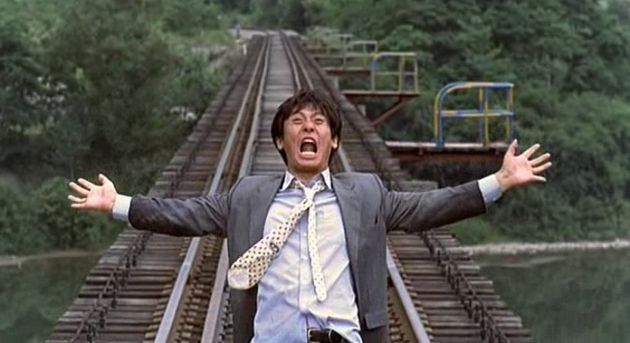
The film chronicles key events in the life of Kim Young-ho (Sol Kyung-gu). It opens with Kim stumbling into his school reunion outing near an idyllic creek under the railroad tracks. After making a scene, he throws himself in front of an oncoming train. Tracing backward into 20 years, it shows the dehumanizing effect that the violence has on a person. With a crooked smile and bad temper, Kim is not a nice guy. But he wasn't always like that. It's hard to believe that he was once a young man who liked looking at wild flowers and wanted to be a photographer.

The Gwangju Masssacre in 1980 in which thousands of pro-democracy students lost their lives by the military force, deeply scarred a generation of Korean people. Peppermint Candy deals with that incident in a personal storytelling that is amazingly effective. Kim's sneering detachment, unhappiness and violent nature of his later years is explained slowly through traveling back in time in an absorbing, revealing way. Its accumulative power in making us sympathize with this deeply detestable person is undeniable. Lee Chang-dong is a gifted writer/filmmaker whose use of 'time traveling' device here is much more elegant and resonant here than the likes of Memento and Irreversible. His attention to detail and use of different cinematic devices (music, phrases and especially peppermint candy) for connecting different times are not showy but beautifully done, almost reminding me of Kieslowski films- again, much more resonant given the historical/personal context. I can't say anything more than that it's an amazingly beautiful, touching film.

Miner's Woe

Black Republic (1990) - Park
Image
Image
Image
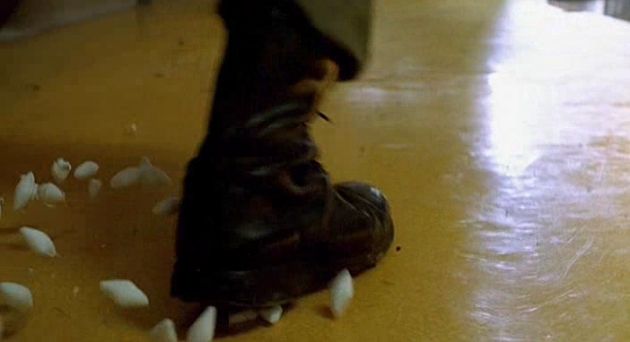
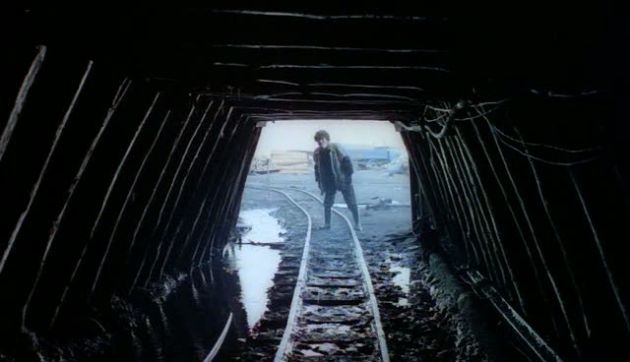
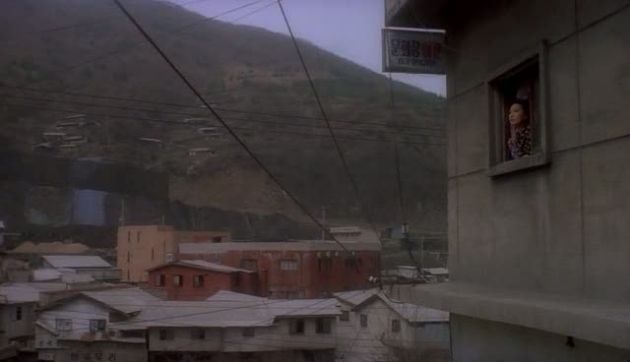
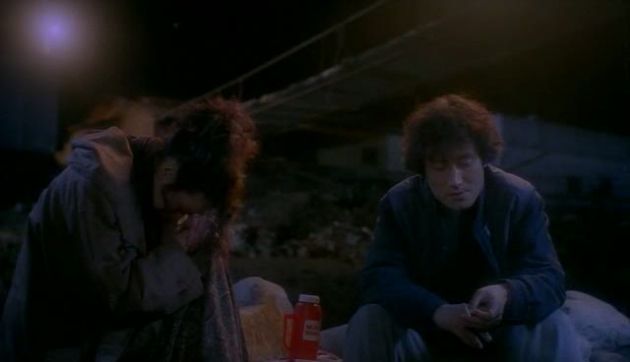
Kim (Hong Sang-soo regular Mun Seong-gun)arrives in a small, dying mining town in the midst of nationwide labor protests. He is an educated labor organizer from Seoul, wanted by the police for his activities, trying to lay low. The mining companies are shuttering its doors due to strikes and low employment and Kim can't get a job without proper identification. He finally gets hired by a small coal Briquette manufacturing company. It's a dirty, back breaking work. The company owner's spoiled, loan sharking son (Park Joong-hoon) somehow takes a liking to Kim (possibly because they are around the same age, and Kim looks like a learned man unlike dirty faced country hicks around him?). Song (homey Shim Hye-jin), one of his girls at the cafe (mostly pay-dates,just above being downright prostitutes), takes a shine on Kim. She wants to escape the small town and be free.

Park Kwang-su's social realist melodrama has well drawn characters and brings out sympathy for down and out 'ordinary people'. The Korean title roughly translates to 'They are Like Us'. By that, what Park means to say is that these small town people are like us- they go through life's hardships, fall in love, rage against injustice, get jealous, etc. I liked it.

Friday, June 7, 2013

The Life Chaotic

Elle Veut le Chaos (2008) - Côté
Image
Image
Image
Image
Image
Image
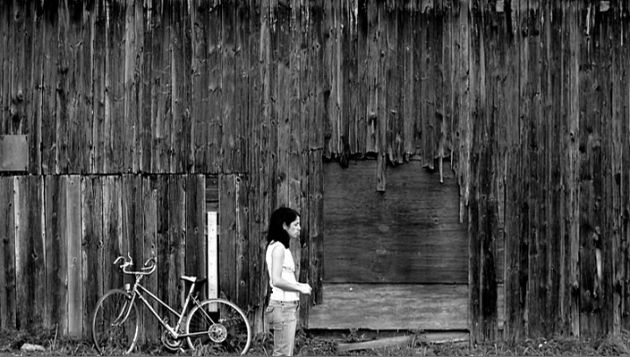
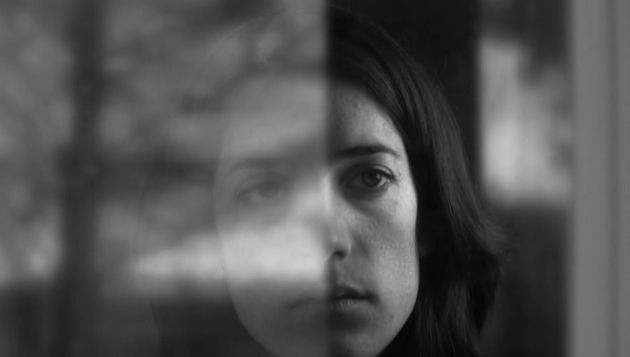
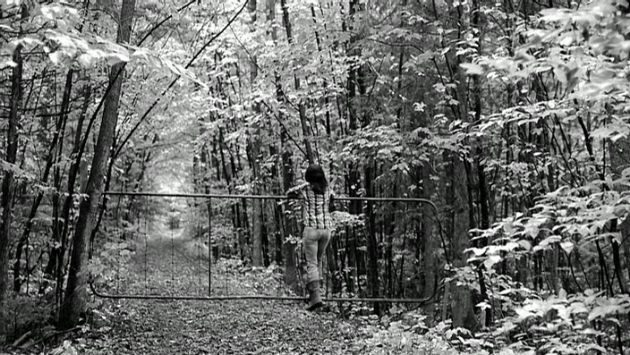
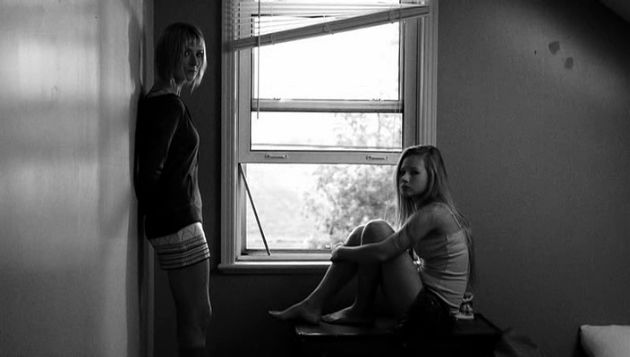
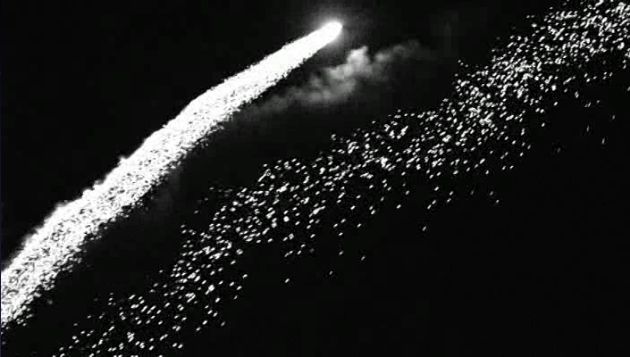
Enigmatic in its beautiful black and white images, Denis Côté's Elle Veut le Chaos/All That She Wants tells a slight story of Coralie (Eve Duranceau), who ekes out a living in nowhereland next to a highway near Montreal. Côté seems to have a knack for lightly sketching out these sort of small time outsiders while keeping their mysterious origins intact. Coralie lives with Jacob, an older man/father figure. Their lives seem forever indentured to the violent gang, headed by Alain, next door. Their relationships are never clearly defined. As the film plays out, one can guess that they (including Coralie's crazy mother who runs away in the beginning of the film) all belonged to the gang at some point. And they are all somewhat related to Alain.

Pierrot (Laurent Lucas), just came out of jail, comes back and tells Coralie that he wants to take her away to his home in France. But that's not what she wants. Jacob wants to kill Spazz, the most violent of the gang, and get away. Coralie doesn't want that either. Meanwhile, the gang brings in two young Russian girls whores who can't speak French, for their entertainment.

Cause and effect don't really apply to Côté's films. Violence happens abruptly, motivations hidden and unclear and things turn out unexpectedly. The mood he creates is absorbing and has a somewhat otherworldly quality to it. Oh, and fireworks look beautiful in black and white.

Thursday, June 6, 2013

Rock'n'Roll Mom

Mama (2013) - Muschietti
 photo e52d4b6e-ceb1-4e68-b836-6c6e31db6ee5_zps5d5a11d2.jpg
Surprisingly decent horror movie despite its title. Jessica Chastain finally plays someone other than a Mid-Western housewife (haven't seen Zero Dark Thirty). She is Annabelle, a dark haired, tattooed bassist for a rock band (styled after Chrissy Hines I'm sure), far from mother material who's thrown into one when her artist boyfriend Luke's long lost nieces were discovered in a secluded cabin in the woods, living wild-child style. After a child psychiatrist helps them win the custody, under the condition that he will be observing the kids as a case study, Annabelle moves into a clinic owned manor house with the newfangled family. It's totally not her thing, but she can't abandon Luke now. It turns out kids were raised by some unknown woman they call Mama with the diet consists of cherries, rats and raccoons for 5 years. They think it's the kids' imagination gone wild, some kind of mental illness, split personality disorder maybe. Then strange things start happening in the house...

Did I say Chastain is great in this? She is. Her character's nicely drawn: her interactions with kids awkward and awesome. Did I say she has giant octopus tentacles tattooed on her shoulder? Pretty hot. Mama has that dark signature Guillermo Del Toro children's movie written all over- tragic ghost story with a not so evil, just creepy antagonist. Has some real scares. It's the best J-horror a Hollywood production can muster.

Tuesday, June 4, 2013

Showboating

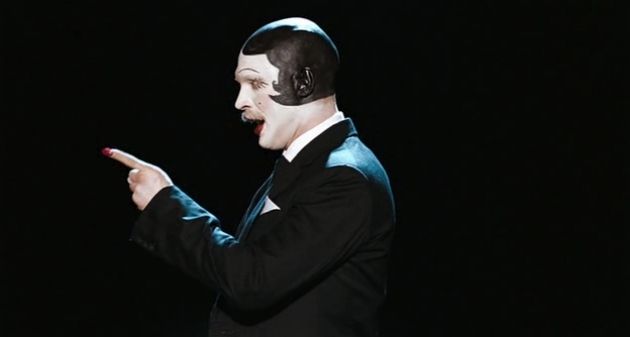
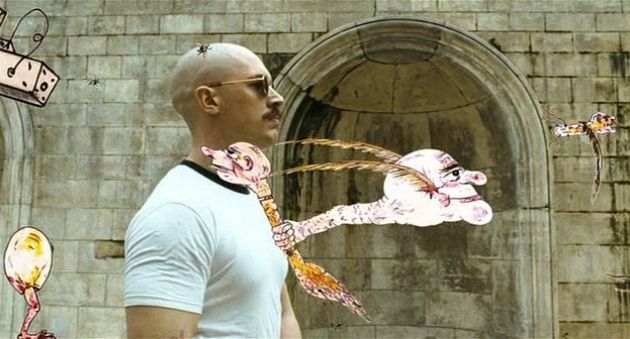
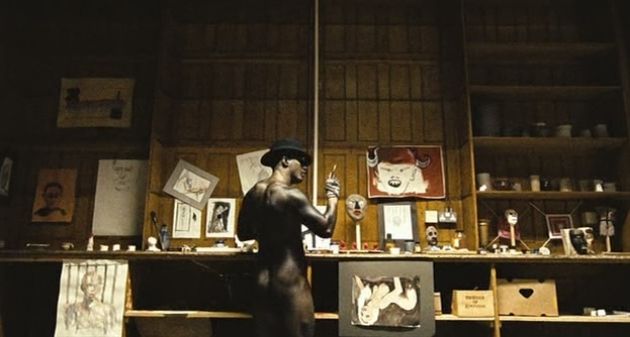
Bronson (2008) - RefnImage
Image
Image
Image
Image
Image
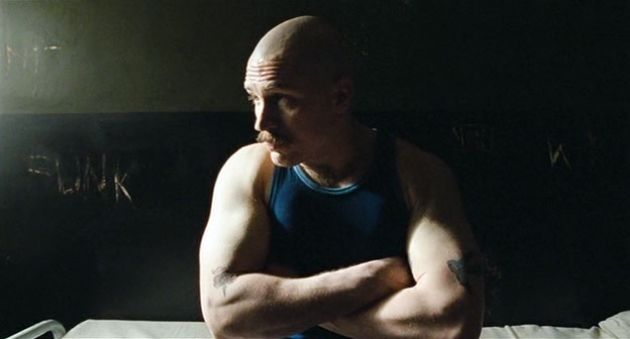
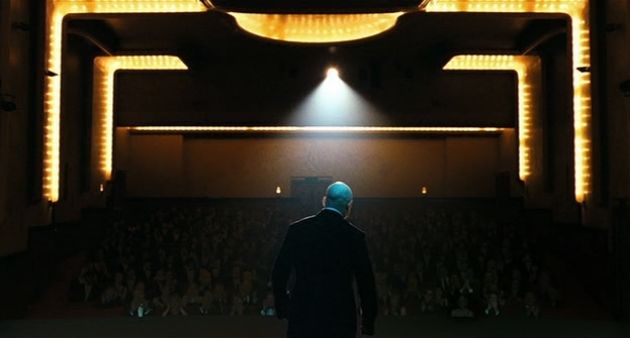
Perhaps I enjoyed this way too much than I should've, but I can't deny the fact that I was dazzled by it. Refn is no fluke. His unabashed operatic, Kubrick-esque stylings and Tom Hardy's showboating, over-the-top performance are totally magnetic. I loved all the unmotivated angles and dolly shots. A great soundtrack too: it has the best use of a Pet Shop Boys song ever. A blast!

Sunday, June 2, 2013

Evolutionary Biology

Mon Oncle d'Amerique (1980) - Resnais Image
Image
Image
Image
Image
Image
Built around physician/philosopher Henri Laborit's ideas on evolutionary biology, the film follows three subjects from childhood - Jean (Roger Pierre) a writer from a privileged background, Jannine (Nicole Garcia), an actress from a proletariat household and René (Gerard Depardieu), a famer's son/struggling everyman. Using lab rats as an example, Laborit lays out how people avoid painful situations by moving, and if there is no escape, psychosomatic symptoms develop. And in defensive action, people turn violent against each other. But the film is much more than that. Resnais slightly interweaves these 3 lives without turning them into lab rats. Their melodramatic stories are rendered sympathetically and their problems relatable. The film is not cynical in any way, except for the notion of that mythic 'American uncle' who'd solve all our problems but never actually shows up.

Resnais counters Laborit's deterministic view with poignant montage sequences, constant cutting back to childhood memories and old movie clips featuring the heroes of our protagonists. The beauty of Mon Oncle d'Amerique is that it leaves me with more questions than answers. Are we all prisoners of our biological origins, that if one brick from our building blocks is removed, we are bound to crumble? Can our good memories trump our childhood traumas? Are we capable of leaping over our biological makeup of self preservation and think of the others? Beautifully constructed, playful and thoroughly thought provoking, Mon Oncle d'Amerique is one of my new favorites.

Saturday, June 1, 2013

Film as History

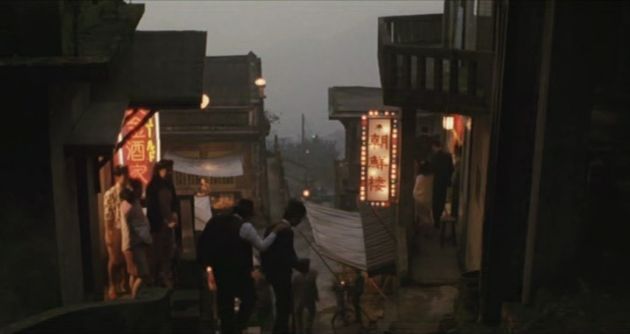
City of Sadness (1989) - Hou
Image
Image
Image
Image
Image
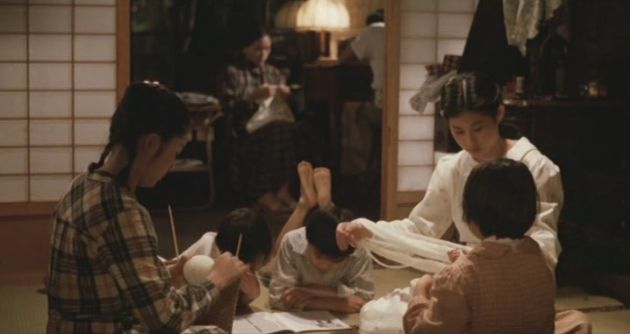
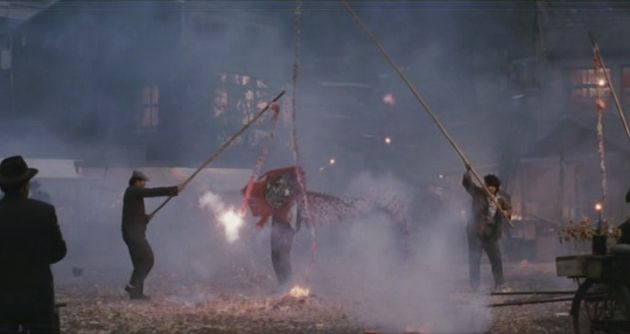
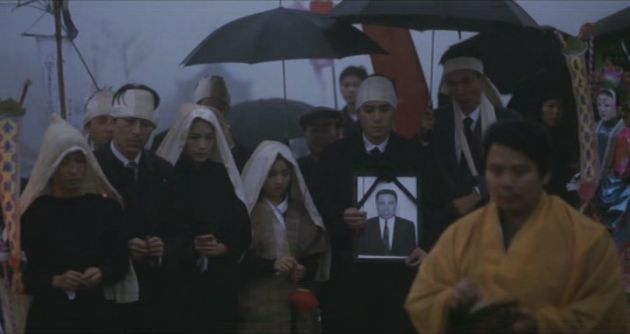
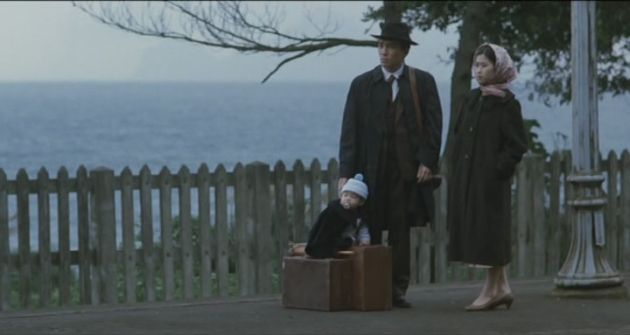
Hou quietly observes a prominent Lin family in a mountain town as it breaks apart during turbulent times in Taiwan after WWII. Handsomely photographed static interior shots accompanied by naturalistic performances, City of Sadness looks and feels like Ozu. Sung Young Chen is great as boisterous eldest son, so as Jack Kao as the middle child who suffers from PTD who were drafted to fight in a Japanese army and later is tortured by Kuomintang as a collaborator. Young Tony Leung also shines as the youngest, sensitive, deaf (because Leung couldn't speak Taiwanese, I found out, but it works him being as a slient witness) brother of the family. It's he and his long time family friend and later wife Hinomi (Xin Shu Fen) who bear witness to the changing times.

I had a very little knowledge of Taiwanese history going in City of Sadness: didn't know about their 51 year Japanese Occupation (compared to Korea being under 30 year occupation, and we still hold grudges) and the rather unique colonial past (as the first Japanese colony since 1894, taking cues from the Brits, the Japs governed them differently at first and to this day, I hear Taiwanese don't have too much adversarial feelings toward Japs as the rest of Asia do) , didn't know about their diverse ethnic groups, culture and languages, didn't know about Kuomintang's atrocities after the WWII against its own people. It is rather wrong to base your knowledge of a certain people's history solely on one mere film, but knowing Hou and his detached yet humanistic approach, I'd take his film over any dry history textbooks.

Lights! Camera! and Hold!

Gregory Crewdson: Brief Encounters (2012) - Shapiro
 photo 4d36d313-671e-44fc-b019-a261efbc7b22_zpse4132daa.jpg
 photo 07a5a7d7-728f-435f-bf19-c993ea9bd397_zpsda5ff0d0.jpg
 photo 0c2d85d1-2057-4f1f-84b0-8737cc3855ad_zps2cd54dc0.jpg
 photo d76e0e20-c3f7-47af-bec0-e00ddf5cc251_zps04d7d45c.jpg
Image
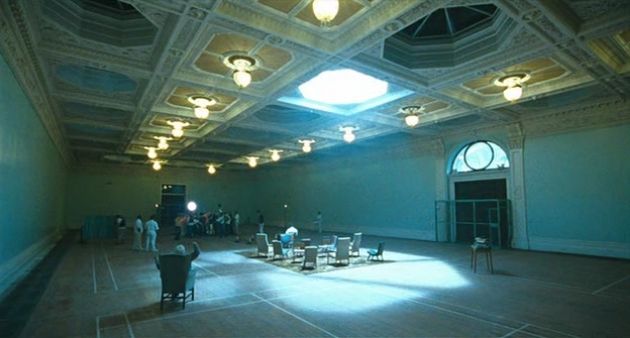
I like Crewdson's large format, cinematic photographs. I was excited about this documentary coming out but missed the chance to see it in theaters this spring. The native Brooklyn photographer is known for capturing scenarios of lost (white) American dream in the suburban/small town setting that New England writers are so fond of (apparently, Russell Banks and Rick Moody are big fan of his work and are interviewed in the film). As Crewdson talks about Cindy Sherman and David Lynch as inspirations, you can see where he's sensibilities are coming from. Unfortunately, Shapiro's doc is all about the process- how he shoots his massive scale photos working with a DP, production designer, set decorators and editors. It is indeed interesting stuff that he regards his photographic process as a film shoot with same amount of people and equipment as a moderate indie movie set. Instead of 'lights, camera and action!', it's 'lights, camera and hold!'

The doc never delves into how a well to do Brooklynite became photographing suburban decay. Crewdson comes across as a nice enough guy and his meticulousness (shouting from a cherry picker, "move your left hand about 2 inches up and to the right!") is pretty cool. But what motivates him to gravitate toward his subjects? Also, his post-touch up heavy process made me wonder about being an artist in the tech heavy age. Call me old fashioned, but I feel ambivalent about his compositing final product from many different takes, physically removing certain things from the frame and whatnot. I guess what matters at the end is selling your photos of poor folks for upward of one hundred thousand dollars to rich folks.