

Bela Tarr's 7 hour 15 minute contemplation on individualism vs collectivism and power stretches beyond its initial take on the breakup of communism parable. In a very unsparing terms, Tarr paints a grim picture of human nature. Divided in 12 chapters, the film's narrative often folds into itself and start over, presenting a set of two different perspectives of the same setting or incidents- not for the different point-of-view but just to harp on the endlessness of its purgatory. This is satan's tango - two steps forward, two steps back. Repeat.
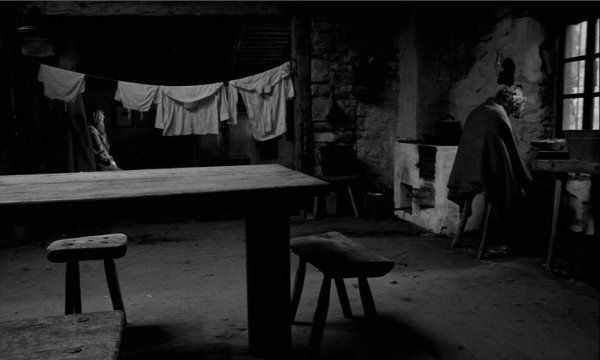
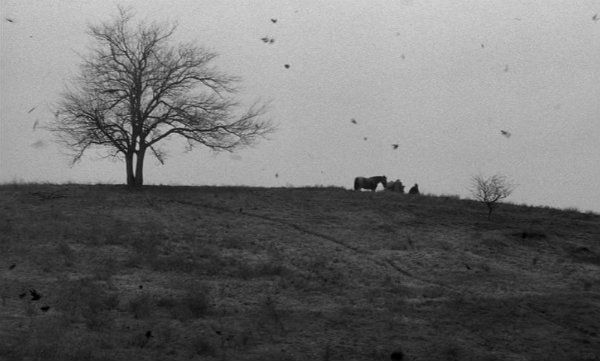
Satantango starts with a ten minute tracking shot of large cattle slowly moving about in the rain. It's late October and its never ending autumn rain has started. It's cold, muddy and unrelenting. This small farming village in rural Hungary is awakened by the ominous sound of church bells, even though the nearest church was destroyed long ago in the war. The village is in obvious decline physically and morally- the old houses are in various stages of disrepair, men are after each other's wives in public, everyone's drinking too much.... Also, everyone is scheming to take each other's share of money (from the farm collective?) and planning to skip the god-forsaken town and start over somewhere else.
There is a rumor going around that Irimias, the community's prodigal son, a wizard of some kind, who was presumed dead for two years, is coming back to set things straight. Things get tense and testy with the news. It seems everyone is fearful of this character. In the mean time, Irimias, out in some sort of parole, pledges to a local bureaucrat that he will work for them and report on the townsfolks. Some sort of a trickster, charismatic Irimias sets out to pull off the biggest swindle.
On the eve of Irimias's arrival, the townsfolk gather around in the only pub in the village to participate all night drinking, dancing and whoring binge. In true Bela Tarr fashion, this uncut/long take sequence is a mindboggling technical feat. This is where 'Satantango' takes place.
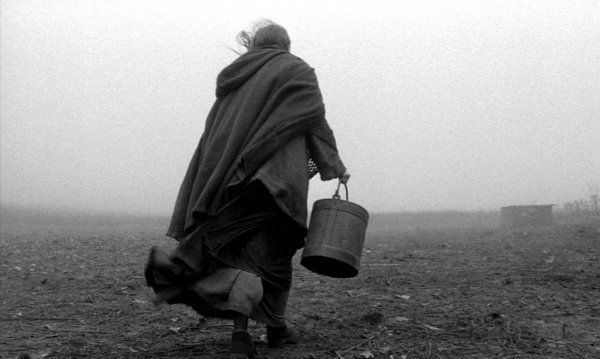
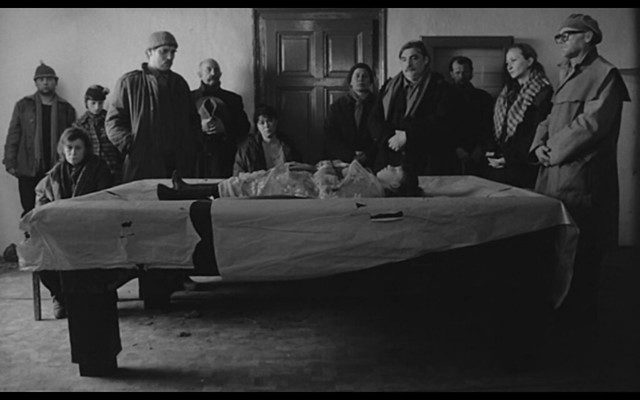
There is a long segment in the middle, involving Estike, a little girl who witnesses towns physical and moral decline. This could be a standalone film by itself. Neglected and abandoned, Estike takes her miserable existence out on a kitten, "because you are smaller than I am, I have power over you." It illustrates the whole theme of the film in no subtle terms. The prolonged torture sequence is hard to watch, especially for cat lovers like me. Estike with the dead cat tucked under her arm, walks endlessly in the rain, completely neglected, ends her life drinking rat poison.
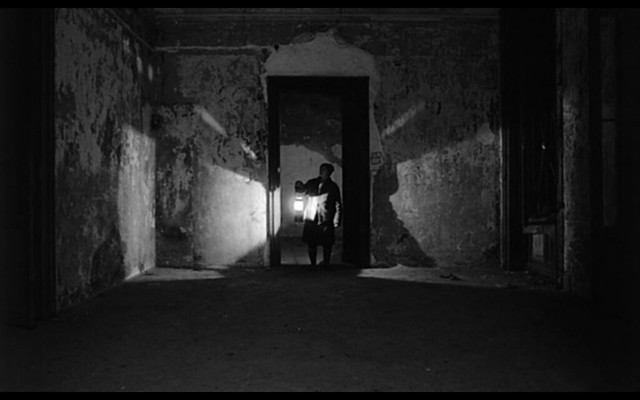
Estike's death provides a big summon from Irimias to the townsfolk. In awe of his charisma and in hopes for a new beginning, they give up all their money to him who promises a new life somewhere else. Everyone packs up their belongings and starts a long road to the destination that Irimias promised. After long, wet, muddy trip on foot, they arrive at an abandoned mansion. Disillusioned and angry, the infighting begins between believers and non-believers. Some ask for money back when Irimias finally returns. And he spins it around as a test of faith. His stinging criticism of their less than perfect characters is at once intimidating and persuasive, they end up giving back the money to him and put trust in him, even though some see that this is a con game. The news on their final destination - some sort of a beautiful manor where everyone's going to live is not ready, so in the mean time, they will each get a small allowance money and be set up for a job in some village. You a butcher in this village, you a church hand, etc. Except for one, Futaki, the village's designated cynic, all of them follow Irimias's instructions and go separate ways. The cattle mindset is a scary thing.
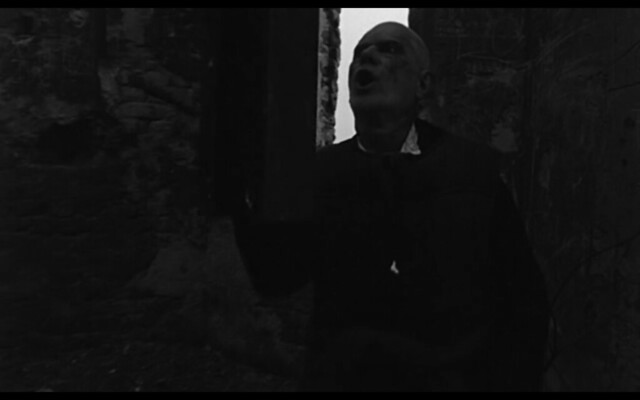
The village's obese doctor, who was left behind after being hospitalized and still doesn't know everyone left, hear the church bell and decides to investigate. It turns out to be some jingoistic idiot who's been banging on the remnants of iron beams in a ruined church. Everyone misheard it as a church bell or did they?
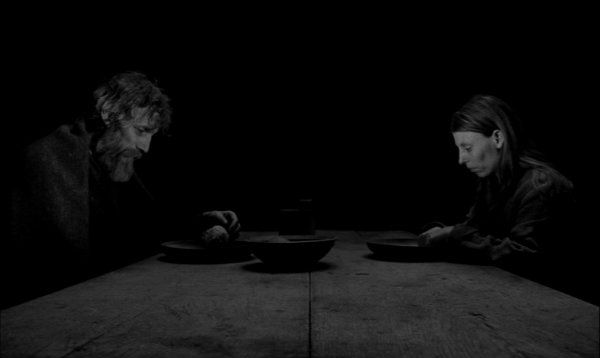
So, does Satantango warrant its 7 hour running time? I do admit that there is magnetic qualities in Tarr's images, especially when viewing the film in proper settings - on the big screen in the dark. I can imagine its power in theatrical viewing (I myself viewed it at home). His use of sound - always a mechanical hum in the background, dialog fading out when the camera moves away from characters are all very impressive. I can see the devout fans indulging long hours in the communal setting whenever it travels around in repertory theaters and regarding it as one of the greatest masterpieces of our time. But I still personally prefer Werkmeister Harmonies which came out 6 years after over this in exploring the same themes. Werkmeister is more concise(?) and impactful. Satantango's miserablist sentiment and its unrelenting pessimism does have its place. But nah, I don't see the beauty in it.
Satantango starts with a ten minute tracking shot of large cattle slowly moving about in the rain. It's late October and its never ending autumn rain has started. It's cold, muddy and unrelenting. This small farming village in rural Hungary is awakened by the ominous sound of church bells, even though the nearest church was destroyed long ago in the war. The village is in obvious decline physically and morally- the old houses are in various stages of disrepair, men are after each other's wives in public, everyone's drinking too much.... Also, everyone is scheming to take each other's share of money (from the farm collective?) and planning to skip the god-forsaken town and start over somewhere else.
There is a rumor going around that Irimias, the community's prodigal son, a wizard of some kind, who was presumed dead for two years, is coming back to set things straight. Things get tense and testy with the news. It seems everyone is fearful of this character. In the mean time, Irimias, out in some sort of parole, pledges to a local bureaucrat that he will work for them and report on the townsfolks. Some sort of a trickster, charismatic Irimias sets out to pull off the biggest swindle.
On the eve of Irimias's arrival, the townsfolk gather around in the only pub in the village to participate all night drinking, dancing and whoring binge. In true Bela Tarr fashion, this uncut/long take sequence is a mindboggling technical feat. This is where 'Satantango' takes place.
There is a long segment in the middle, involving Estike, a little girl who witnesses towns physical and moral decline. This could be a standalone film by itself. Neglected and abandoned, Estike takes her miserable existence out on a kitten, "because you are smaller than I am, I have power over you." It illustrates the whole theme of the film in no subtle terms. The prolonged torture sequence is hard to watch, especially for cat lovers like me. Estike with the dead cat tucked under her arm, walks endlessly in the rain, completely neglected, ends her life drinking rat poison.
Estike's death provides a big summon from Irimias to the townsfolk. In awe of his charisma and in hopes for a new beginning, they give up all their money to him who promises a new life somewhere else. Everyone packs up their belongings and starts a long road to the destination that Irimias promised. After long, wet, muddy trip on foot, they arrive at an abandoned mansion. Disillusioned and angry, the infighting begins between believers and non-believers. Some ask for money back when Irimias finally returns. And he spins it around as a test of faith. His stinging criticism of their less than perfect characters is at once intimidating and persuasive, they end up giving back the money to him and put trust in him, even though some see that this is a con game. The news on their final destination - some sort of a beautiful manor where everyone's going to live is not ready, so in the mean time, they will each get a small allowance money and be set up for a job in some village. You a butcher in this village, you a church hand, etc. Except for one, Futaki, the village's designated cynic, all of them follow Irimias's instructions and go separate ways. The cattle mindset is a scary thing.
The village's obese doctor, who was left behind after being hospitalized and still doesn't know everyone left, hear the church bell and decides to investigate. It turns out to be some jingoistic idiot who's been banging on the remnants of iron beams in a ruined church. Everyone misheard it as a church bell or did they?
So, does Satantango warrant its 7 hour running time? I do admit that there is magnetic qualities in Tarr's images, especially when viewing the film in proper settings - on the big screen in the dark. I can imagine its power in theatrical viewing (I myself viewed it at home). His use of sound - always a mechanical hum in the background, dialog fading out when the camera moves away from characters are all very impressive. I can see the devout fans indulging long hours in the communal setting whenever it travels around in repertory theaters and regarding it as one of the greatest masterpieces of our time. But I still personally prefer Werkmeister Harmonies which came out 6 years after over this in exploring the same themes. Werkmeister is more concise(?) and impactful. Satantango's miserablist sentiment and its unrelenting pessimism does have its place. But nah, I don't see the beauty in it.