Showing posts with label Fabrizio Rongione. Show all posts

Monday, November 13, 2017

Clear-Eyed Humanism

Le fils de Joseph (2016) - Green
Screen Shot 2017-11-13 at 6.54.22 AM
Screen Shot 2017-11-13 at 7.53.50 AM
Screen Shot 2017-11-13 at 6.47.19 AM
Screen Shot 2017-11-13 at 6.51.37 AM
Screen Shot 2017-11-13 at 6.53.27 AM
Vincent (Victor Ezenfis) is a good kid. He's a kind of kid who shies away from fellow schoolmates torturing the rat in a trap and steals from a Hardware store but only to put the item back later, smiling to himself. He is also a serious kid who'd have Caravaggio's Sacrifice of Issac on his bedroom wall. Raised by a hardworking single mom (Natasha Régnier), he has never known his dad. He becomes increasingly unhappy about this and starts resenting his mom.

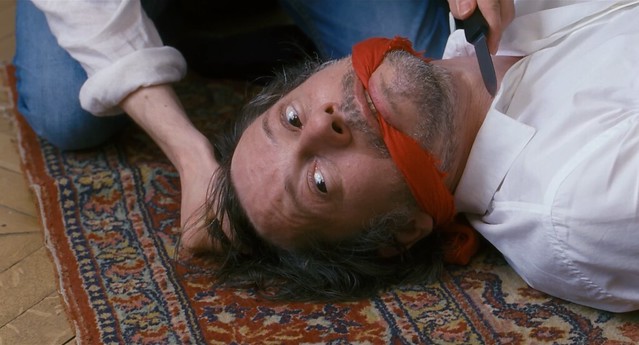
After snooping around the house, Vincent finds out who his dad is- Oscar Pomenor (Mathieu Amalric), a big time playboy and important literary figure in Paris. After gaining access to one of Pomenor's parties by pretending to be one of his literary pupils, Vincent sneaks into his posh office only to witness his dad's extramarital thryst. It turns out that Pomenor is a grade A asshole and a terrible human being, not worthy of being a dad. He makes a decision to kill him, Abraham style. But when the moment comes, he can't do it. And there in the hotel bar where Pomenor's office is located, he meets Joseph (Fabrizio Rongione), who has just been rejected a loan by Pomenor.

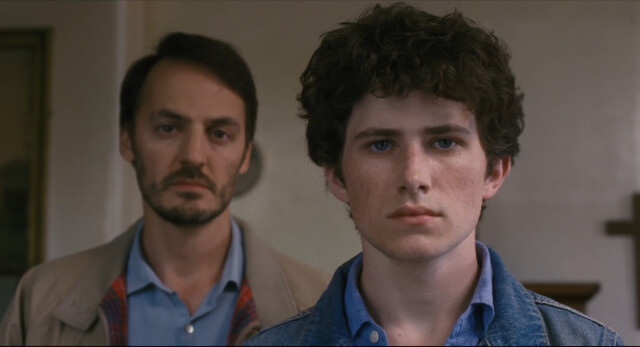
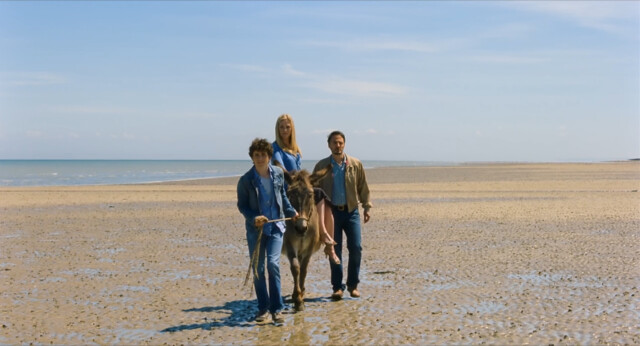
Joseph, a never-do-well brother of Oscar, who dreams of owning a farm in Normandy where he grew up, strikes up a good friendship with troubled Vincent. The kid, longing for a good dad and a family, in turn introduces him to his mom. The romance blossoms.

Even though Le fils de Joseph is steeped in religious references, you can't not be moved by its clear-eyed humanism. Green, a unique filmmaker whose Bressonian approach might need some getting used to, once again, makes a deeply touching parable showing that goodness exists in people. Solid performances all around. Régnier's beautiful in this. SHer subtle, warm, vulnerable performance really shines.

Thursday, March 19, 2015

Beyond Beauty and Knowledge

La Sapienza (2014) - Green
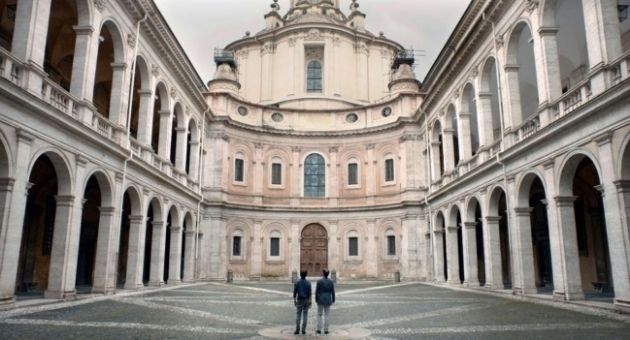
 photo a2e757cf-21c4-4102-b698-e3cbafc4db12_zpsjhkmfk5d.jpg
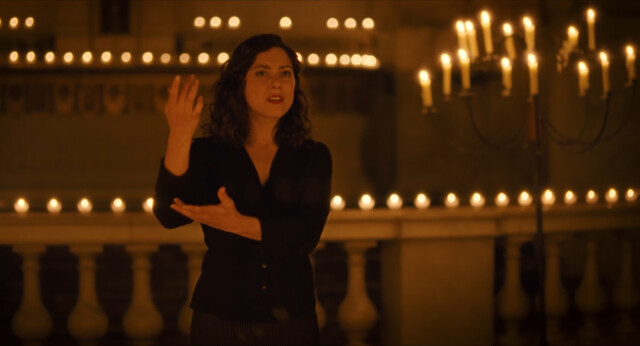
La Sapienza is the latest from Eugène Green, an American born, French filmmaker known for his highly theatrical, Bressonian films. Highly esoteric, the film will undoubtedly turn off many viewers with its intentionally stilted acting where actors often address the audience directly. My first experience with Green film was Le pont des Arts, it concerned with the transcending power of music beyond time and space. I was too, put off by this aesthetic choice at first, but got used to it by the middle and ended up adoring the film.

There are no Altmanesque, overlapping conversations like in real life in the world Green creates. Instead, people talk in their turns, medium shot/reverse medium shot back and forth in dead seriousness, in order to convey the weighty subjects concerning art, and this time, architecture.

The thing is, the emphasis Green puts on dialog is tremendous and the idea he wants to get across is simple but always lofty. Green, from a theater background, saw the direct approach of the theater fit to convey these ideas and have been sticking with it in his filmmaking ever since.

The method, I thought at first pretentious but slowly found less cluttered by the petty human emotions and other 'worldly' things, helps to get to the heart of the matter(s) directly. Ultimately, it's Green's dialog that brings back humanity down to earth and gives his films poignancy.

La Sapienza stars Fabrizio Rongione (Two Days, One Night) as Alexandre Schmidt, a French architect tracing his steps of his idol, a Roman Baroque architect Borromini, starting in his picturesque birthplace Ticino. Alexandre has lost his ways as an architect, mired in corporate city planning which lacks humanity. He is joined by his estranged psychologist wife Aliénor (Christelle Prot) to accompany him at the conference. They grew apart some time even though they love each other.

They run into two young Italian siblings Godfredo (Ludovico Succio) and Lavinia (Arianna Nastro) near the picturesque lake promenade. It's Lavinia's mysterious fainting spell that brings them together - kind-hearted Aliénor insists to be by Lavinia's bedside and suggests Alexandre to take Godfredo, a bright eyed aspiring architect, to accompany him for his research trip, instead of her. Alexandre begrudgingly accept the idea out of politeness.

At this point film becomes two distinctive narratives: one in Italian with Alexandre and Godfredo on the road and mostly in French with Aliénor with Lavinia indoors.The guys establish teacher pupil relationship as they tour various Borromini designed, glorious buildings in different cities. But it turns out Godfredo is the teacher, reminding the old man with his youthful idealism that architecture can be one's passion, that purpose for architecture is to fill the space with light and people.

As it turns out, through dialog, we find out Alexandre and Aliénor grew apart after a loss of a child. Young Lavinia's belief that her illness is some sort of sacrifice starts making sense to Aliénor.

Uncharacteristically, Green himself makes a cameo in his own film for the first time as one of the last descendants of a tribe from Iran who spoke Aramaic. Even though their culture's gone and their language lost, he serves as a foreseer who reads stars and shows that there is hope for Aliénor, because she is loved.

These lofty ideas - rekindling passion for life through the reflection on youth, the transcending power of art, the harmony in architecture and in life, the eternal nature of culture and language, things beyond beauty and knowledge, etc. are all delicately explored and examined through these four characters. Their sincere expression of these thoughts rings true and melts away its artificiality in its presentation soon enough. This is the beauty of La Sapienza and Green films in general. As the older couple realize, the source of beauty is love and the source of knowledge is light. I couldn't help but deeply moved by it by the end.

La Sapienza opens in New York on 3/20 at Lincoln Plaza Cinema. National roll out will follow. For more info, please visit Kino Lorber website.
Saturday, October 4, 2014

Discovering Solidarity

Two Days, One Night (2014) - Dardenne
 photo 6ea46fa9-d47a-4fd1-9a38-2710e924f1c6_zps0bf2872e.jpg
Take it as the Dardenne Bros thriller with the time ticking away. They even put human face in that genre. It's Friday. Sandra (Marion Cotillard), a working class mom struggling with depression, is just told that she is getting laid off from a solar panel manufacturing company. The management framed it so that it's either her job or one thousand euro bonuses each for remaining 16 workers. But her two friends at work asked the manager to get another vote to keep her job on Monday. That means she has two days to convince 7 out of 14 co-workers to give up their bonuses and vote to keep her job.

Dardennes puts the dilemma squarely on us. What would we do if we were in Sandra or co-workers shoes? Unsurprisingly in the beginning, Sandra gives up the fight. For her, there is no dignity in begging for her job back. The bonus is a lot of money and she can't blame her co-workers who are pretty much in the same boat as she is: struggling to make ends meet. She just wants to give up and go to sleep. But it is her supportive husband (Fabrizio Rongione) who keeps pushing her to fight. He will help her to gather everyone's address and drive her to each co-worker's house to make her case.

As usual, the set up here is super simple, but it works like gangbusters. Cotillard is amazing, so as every actor in the film. By the end, without ever being didactic, Sandra learns a thing or two about solidarity. For many North Americans who are opposed to any kind of welfare system and firmly believe in pulling-at-your-bootstraps, Deux Jours is a terrible movie and Sandra a horrible character. It's definitely not a kumbaya kind of movie but I thought singing Van Morrison's Gloria with a newly converted to her cause co-worker in the car was a bit too much.

Two Days, One Night plays part of NYFF 2014 on 10/5, 10/6. Please visit FSLC website.