Showing posts with label Lois Patiño. Show all posts

Tuesday, December 30, 2025

Endless

Ariel (2025) - Patiño Screen Shot 2025-12-28 at 8.07.30 AM Screen Shot 2025-12-28 at 8.24.32 AM Screen Shot 2025-12-28 at 8.20.43 AM Screen Shot 2025-12-28 at 8.31.53 AM Screen Shot 2025-12-28 at 8.32.11 AM Screen Shot 2025-12-29 at 9.25.59 AM Screen Shot 2025-12-29 at 9.28.04 AM Screen Shot 2025-12-29 at 9.30.36 AM Screen Shot 2025-12-29 at 9.32.24 AM Screen Shot 2025-12-29 at 9.34.03 AM Screen Shot 2025-12-29 at 9.37.27 AM Screen Shot 2025-12-29 at 9.52.28 AM Screen Shot 2025-12-29 at 10.01.20 AM Screen Shot 2025-12-29 at 10.04.20 AM Screen Shot 2025-12-29 at 10.06.19 AM Screen Shot 2025-12-29 at 10.09.39 AM Screen Shot 2025-12-29 at 10.17.30 AM Screen Shot 2025-12-29 at 10.19.04 AM Argentine actress Agustina Muñoz (seen in many of Matías Piñeiro's films playing various Shakespearean characters), is on her way to Azores in mid-Atlantic in the Spanish-Portuguese co-production staging of Tempest. She is supposed to play Ariel. But when she gets to the volcanic island, she can't get in touch with anyone. Her phone keeps telling her that no such numbers of her contacts exist and everyone on the island is speaking lines from the Shakespear plays while doing their daily chores - shopping at the supermarket, pumping at the gas station, etc. Agustina understandably gets very annoyed by everyone who's acting as if in trance. Then she meets Ariel, played by Spanish actress Irene Escolar, and finds out that the inhabitants of the islands are all characters from the bard's various plays, acting out their plays from beginning to end. At sunset, they must finish their plays and the next day, they start anew, playing the same characters over and over again.

Irene, who has no knowledge of being a real-life actress, is thrown into an existential crisis after Agustina sowing the notion that Ariel shouldn't just follow Prospero's orders because the character's a rebel and they all need to chart their own destiny. In the meantime, Agustina is trying to get out of the island to no avail. She is resigned to help Ariel to finish off the rest of the plays around the island - Hamlet, Tempest, Macbeth, Romeo & Juliette, etc. There is even a Becket character marooned there - because he landed on the wrong island (Becket's characters' island is the next one over this one), walking around alone, mumbling Becket lines.

Lois Patiño, a Spanish visual artist/filmmaker, plays around with the idea of 'life is a stage', with his trademark crossfades with multiple images and static frames breaking up to reveal what's behind the images we are seeing. At one point, the characters, instigated by Augustina, openly question the role of 'creator' and plan to steal Prospero's (and in turn Shakespear's) book and destroy it and write themselves their own destiny and question the man behind the camera even, by breaking the 4th wall.

With stunning Azores' backdrop and his signature color tinted images, Patiño creates another hypnotic, dreamy film that is both thoughtful and whimsical.

Sunday, May 5, 2024

Bardo

Samsara (2023) - Patiño Screen Shot 2024-05-05 at 8.52.41 AM Screen Shot 2024-05-05 at 9.02.12 AM Screen Shot 2024-05-05 at 9.46.08 AM Screen Shot 2024-05-05 at 9.49.21 AM Screen Shot 2024-05-05 at 9.58.49 AM Screen Shot 2024-05-05 at 10.01.03 AM Screen Shot 2024-05-05 at 10.31.17 AM Screen Shot 2024-05-05 at 10.31.49 AM Screen Shot 2024-05-05 at 10.32.36 AM Screen Shot 2024-05-05 at 12.16.35 PM In his new film Samsara, filmmaker/visual artist Lois Patiño channels the Tibetan Book of the Dead via Apichatpong Weerasethakul. In his natural, documentary style narrative which is a departure from his previous, silent, non narrative, visually stunning work, he invites us to meditate. There are two parts, er, three parts to the film: first part takes place in Laos, the second part, we are supposed to close our eyes for 15 minutes, then third part in Zanzibar. His gamble pays off. I'd love to experience this film on a big screen with other people and perhaps fall asleep and not feel ashamed to do so. It's that kind of film.

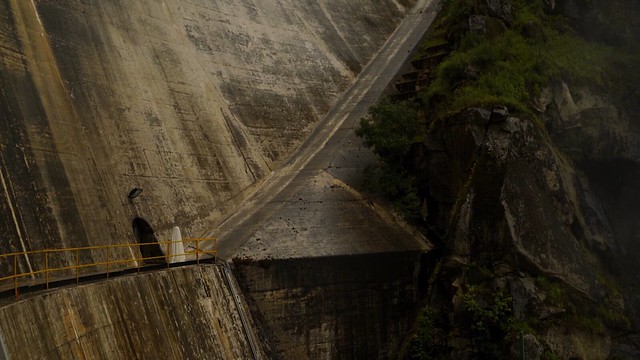
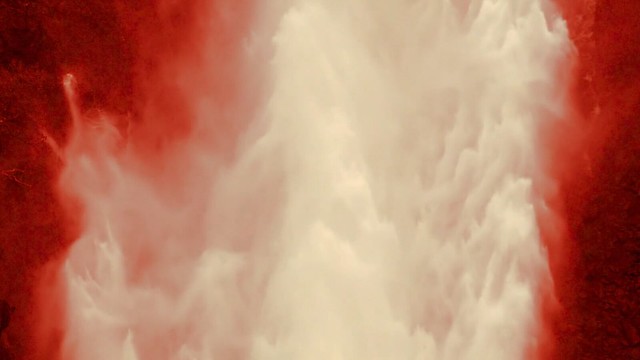
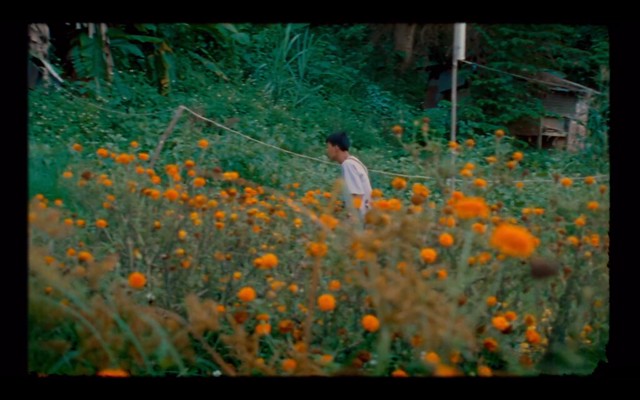
In the first part, a young man is reading the Tibetan Book of the Dead to a dying old woman in a small fishing village in Laos. She knows that her time is almost up and ready to travel to Bardo, the intermediate stage where your soul will move on eventually. Reincarnation is mentioned. The young man is to take bunch of monks from the local monestery to a famous waterfall on his boat. This affords Patiño to do some really gorgeous long transitional shots with images overlapping each other.

The old woman passes and we are prompted to close our eyes and travel with the old woman. For the next 15 minutes, we are supposed to close our eyes and feel the light flashing in our closed eyelids with the sounds of what she is hearing from her life. Then silence.

We are now introduced to a little girl in Zanzibar, to a small fishing community where local women gather seaweeds to make soaps out of it. A new white goat is born and the little girl goes everywhere with the goat on a leash. The old woman tells the little girl that the goat might be an incarnation of a big tree in the forest, or an elephant (which we saw in Laos part), or an old woman. The little girl loses her goat.

Gentle and deeply contemplative, Samsara is a truly unique experience. Go see it in theaters if you can.

Tuesday, December 29, 2020

Bad Moon Rising

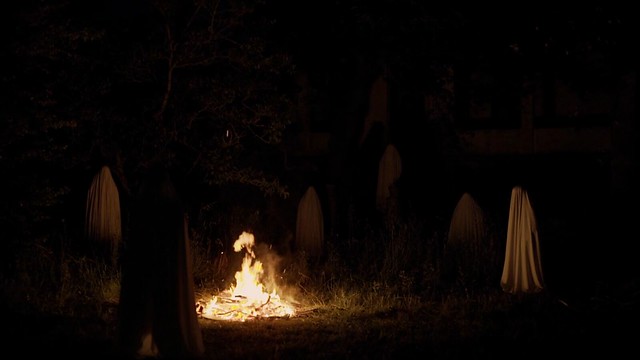
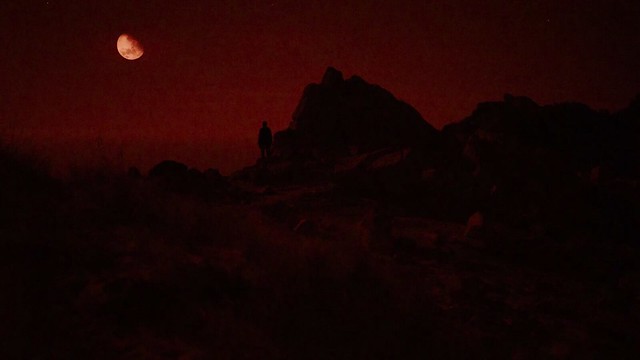
Lúa vermella/Red Moon Tide (2020) - Lois Patiño Screen Shot 2020-12-28 at 11.12.01 AM Screen Shot 2020-12-28 at 11.11.35 AM Screen Shot 2020-12-28 at 11.10.28 AM Screen Shot 2020-12-28 at 10.22.56 AM Screen Shot 2020-12-28 at 10.33.27 AM Screen Shot 2020-12-28 at 10.29.36 AM Screen Shot 2020-12-28 at 10.48.32 AM Screen Shot 2020-12-28 at 10.53.08 AM Screen Shot 2020-12-28 at 10.53.14 AM Screen Shot 2020-12-28 at 10.58.12 AM Screen Shot 2020-12-28 at 11.05.30 AM Screen Shot 2020-12-28 at 11.09.34 AM Screen Shot 2020-12-28 at 11.10.08 AM In a coastal fishing village in Gallicia is experiencing another ocean related tragedy; Rubio, a fisherman who is known for retrieving dead bodies of shipwreck victims so the mourning villagers can have closures, became the victim himself of the tumultuous waves off the coast when his ship sank. His body might never be found. The local legend dictates that there is a monster living in the dark sea, awakened by the devil moon. Three ancient witches come in to town, to take its villagers who seem to be immobilized by grief on the spot where they stand by shrouding them over with white clothes making them a literal ghosts statues, while under red moon. And that's the gist of the story in Lúa Vermella.

Like Oliver Laxe's Fire Will Come, Patiño makes full use of Galicia's rustic natural beauty and its real inhabitants to tell a tale steeped in legends and its surroundings. His images are out of this world though. I've seen his short Fajr before, shot in Morrocan desert morphed with shadowy cloaked figures. Lúa vermella goes several steps further. I mean, those mindboggling transition shots alone makes it a worthwhile viewing.