Showing posts with label New York. Show all posts

Thursday, July 9, 2026

NYAFF 2026 Preview

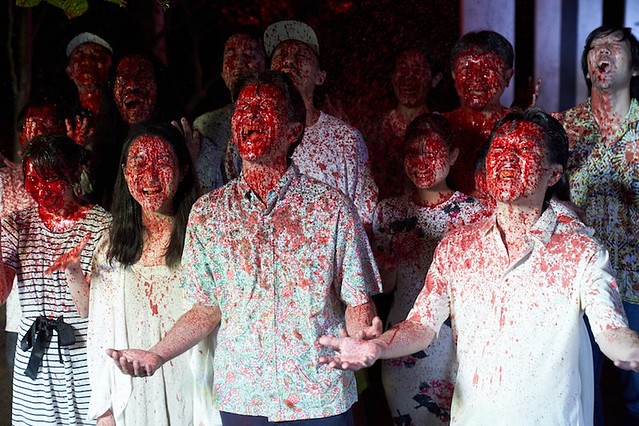
Funky Freaky Freaks - Han Funky Freaky Freaks Yong-gi, Jisook and Dumbo are foul mouthed, troubled highschool friends. When not in class, they engage in various mischief - including selling dirty underwear and pretending to be a girl online. The film's rough, handheld aesthetics and with jumpcuts, mixed media formats, and urban decay settings give it an energetic, edgy feel to the trio's shenanigans. Everything changes with the arrival of Woojoo, a handsome Judo champ transfer student from a rich family. Much to the distress of Yong-gi, Jisook's childhood friend who has been carrying a flame for her, Jisook destructively falls for Woojoo, who is a known womanizer.

After Woojoo unceremoniously dumps Jisook, they devise a plan to kill him - lure him into a deserted building. But Dumbo never shows up and Woojoo gets spooked and runs away. Jisook chastises Yong-gi and drives him to kill Woojoo in school.

Funky Freaky Freaks features the social media saturated environment and its pressure to conform in the most artificial ways, where looking good means everything and deception becomes the weapon of choice for the outsiders and non-conformists. It's a stark, uncompromising debut.

Kinki - Shiraishi Kinki Kinki is a south central region of the mainland of Honshu, also known as Kansai. So despite how it sounds, it's not that kind of film. The found-footage horror master Shiraishi Koji (Noroi), directs this Lovecraftian horror that has a lot of creepy imagery and jump scares, also touching on Japanese folk horror involving torii gates, a cult group and resurrection.

It plays out as a missing persons case involving a reporter on a big mystery case. The mountains of clues in physical media- videotapes of interviews, folklore, anime, CDs and newspaper clippings and thumb drives, throw a young journalist and a friend of a missing reporter deep into the mystery, where peoples head vends back in unnatural ways, disappearing limbs, falling deaths, etc. It's a good throwback to early 2000 Japanese horror.

Human Resource - Thamrongrattanarit Human Resource Fren works at the HR department of a company situated among the glass and steel towers in Bangkok's business district. She discovers she is in early stages of pregnancy, but her feelings on expecting a baby are ambivalent at best. The world is a scary place according to the news which is bombarding the airwaves every day in her commute. Her husband, Thame, is a sales person for an anti-stabbing protective gear company. Fren and her co-worker interview many young people for an entry level position in her company, vacated by a young woman who failed to show up to work for several days now. The applicants are all overqualified and demanding. But in this economy, it is hard to be choosy. The company wants someone who can work 6 days a week with low salary, under a tyrannical boss, whose bad temper goes unchecked.

The threat of the everyday world escalates in a monstrous traffic jam in Fren's neighborhood and confrontations become more frequent. Fren's stress and exhaustion results in a fenderbender and Thame finally finds out that they are expecting a baby. He is overjoyed and busies himself to provide for his family - enquiring about the elite international school, decluttering the house, etc. But for Fren, often seen in silhouette or in profile at night, something is eating at her.

With constant overhead shots of the urban jungle combined with long static shots of inanimate objects and great sound design, Human Resource shares the universal concern of treating human beings like resources, leaving humanity behind.

Montreal, My Beautiful - He Montreal My Beautiful Joan Chen stars in this queer drama set in Montréal. She plays Feng Xia, a dutyful housewife of Wang, an immigrant who has a convenience store business. They have two kids - daughter just started college and son is in elementary school. She is having hot flashes and irritability due to menopause. Her daughter's refusal to translate anymore in public forces Feng Xia to take up French classes, after living in Montréal for 14 years. With the encouragement of a gay Cuban classmate who finds the city liberal and open, Feng Xia joins a dating app and finds Lisa (Charlotte Aubin), a stunning 30 year old blonde, working as a server in a cafe. Feng Xia has a secret love in her youth with another girl.

Forbidden love, duty, culture clash all take part in Chinese Canadian filmmaker Xiaodan He's immigrant story. Joan Chen, at 65 is still luminous and plays Feng Xia, a woman trapped between tradition and desire, gracefully. Aubin, as a young woman still trying to figure out herself and finding love is also commendable.

Wednesday, March 12, 2025

Preview: First Look 2025 at MoMI

A highlight of the MoMI’s annual film programs, the 14th edition of First Look returns March 12–16 with a diverse lineup—38 films including 4 world premieres and 23 U.S. or North American premieres, representing 21 countries—beginning with the New York premiere of Durga Chew-Bose's Bonjour Tristesse with the director and star Lily McInerny in person. Half of all films in the festival this year, including opening night, are directed by women. The full schedule and advance tickets are available here.

Below are some of the most intriguing titles I was able to sample:

Bonjour Tristesse - Durga Chew-Bose Screen Shot 2025-03-10 at 12.54.48 PM The original 1958 version, a cautious coming-of-age tale directed by Otto Preminger, made a star out of pixie-cut Jean Seberg (later to be immortalized in Godard's Breathless). It seemed Bonjour Tristesse was primed for an update. Durga Chew-Bose, a Canadian filmmaker, makes it her feature debut with Claes Bang as Raymond, a widowed father, Chloe Sevigny as Anne, Raymond's old friend, an elegant fashion designer from Paris and Lily McInerny as Cécile, a wide-eyed seventeen-year-old, trying to fix up her father's love life. In Chew-Bose's hand, this sun-drenched, French Riviera set fairy-tale-gone-wrong plays out like an elegant chamber piece, beautifully shot by Maximilian Pittner. She concentrates on the tender father-daughter relationship with a hint of sadness.

Sevigny, playing against type as an uptight, motherly Anne, with an air of unapproachability, a wounded woman being denied of her long-lost love for the second time. With decidedly old fashioned - costumes, the old parent-trap theme, Bonjour Tristesse doesn't feel like it belongs in 2025, but this reboot is fun, nonetheless. Desert of Namibia (2024) - Yoko Yamanaka Desert of Namibia Yoko Yamanaka, who made splash with her first low budget feature Amiko (2017) when she was just twenty, is at it again with her second feature, Desert of Namibia. This time, her protagonist is not a High School girl, but a wayward 21-year-old, bouncing from one boyfriend to another, having a hard time fitting into a rigid society, where things are in decline and there's no real prospect for the future, as a young zoomer woman.

Kana (Yuumi Kawai), a gazelle like beauty is first seen wondering around Tokyo, meeting a friend, who informs her the suicide death of one of their friends. But she is distracted by other peoples' conversations spilling in her earshot. The dissociation is a dominant feature in the film. One minute Kana is happy and sunny, the next, she is moody and unresponsive. After leaving a live-in boyfriend in their tiny apartment, she moves in to another crammed one with Hayashi (Daichi Kaneko), an artist. Both men are enamored of her. But she soon finds faults in men and become volatile in her relationships.

There's a scene Kana takes a tumble on the stairs outside their apartment after a heated argument. She is briefly hospitalized with a neck brace. But Kana's anger doesn't stop there. Everyone tells her that she is free to do whatever she wants and choices she makes in life is entirely hers. But it's as if she is watching her daily life (physically fighting with Hayashi) on her phone while on treadmill - which Yamanaka includes later, as a movie within a movie. The general idea of survival and foreignness Kana feels is suggested in the film's title. The handheld camera work and long takes in tiny spaces, Yamanaka captures the intimacy and suffocation that Kana feels expertly.

Israel-Palestine on Swedish TV 1958-1989 - Olsson Israel-Palestine Göran Hugo Olsson's new, well-timed archive-based documentary once again culls materials exclusively from Swedish Public Broadcasting (SVT), seeing the Israel-Palestine conflict from an as much non-partial point of view. But even with the wealth of footage, Olsson puts in the beginning of the film that 'the archive material doesn't necessarily tell us what really happened but says a lot about how it was told.' What's not shown or omitted holds just as much importance, he seems to suggest. These snapshots of 40 years of footage, with numbers, dates, the producer's names, the original title, and the type of film stock (up until the 80s) on 'archive cards', chronicles the rise of the State of Israel and 'The Palestine Problem'.

It features many of the movers and shakers of the region over the years, all of whom contributed to the downward spiral of the circle of violence and suffering. It illustrates when the powers-that-be lose the sight of the people, even while attempting to solve the Problem. It also suggests that it is unreasonable that a state exists on religious foundation in this day and age. As we go through early reports on Israeli society through 1967 war and tumultuous 70s, Sabra and Shatila Massacre and the collapse of Soviet Union, it shows how the public opinion has shifted as Israel's aggression intensified over the years. If anything, this clear-eyed, 3 1/2-hour documentary gives the historical and political context to what is happening in Gaza right now.

100,000,000,000,000 (2024) - Vernier Virgil Vernier Taking place in glitzy Monaco near Christmas time, Virgil Vernier's new film focuses on Alfine, an escort who describes himself as having a nice ass, nice lips, nice cock but lacking initiative. Not having a permanent residence, Alfine jumps from one client's luxury home to another and wonders around the port city-state lit up with Christmas decorations and lights, luxury shops, and shorelines filled with million-dollar yachts. He and his escort friends talk about opening an agency and their shallow dreams. Then he gets to babysit Julia, a twelve-year-old Chinese girl whose super rich developer parents are away on holidays. She says that her father is building an offshore island equipped with bunkers. She ominously tells Alfine that something bad is going to happen in the near future and she wants him to be on the island. The society we are living is in many ways incomprehensible. A million, trillion, quadrillion- numbers so big they lose all meaning and don't contribute to anything to our lives.

As usual, Vernier (Mercuriales, Sophia Antipolis), examines the seedy underbelly of our shallow modern society, urban isolation, loneliness, and human connection. Virgil Vernier remains to be one of the most interesting contemporary French directors working today.

Tuesday, March 4, 2025

Preview: Rendez-vous with French Cinema 2025

This year marks Rendez-Vous with French Cinema, running from March 6 to March 16, celebrates its 30th year at Film at Lincoln Center, NYC. This celebrated festival offers a dynamic showcase of contemporary French filmmaking, featuring an array of 23 films by both emerging voices—some selected as part of Unifrance’s 10 to Watch 2025 Program*, a yearly initiative honoring a new generation of directors and actors who contribute to the vitality of French creation—and seasoned directors that tackle relevant and enduring themes. This selection of North American, U.S., and New York premieres celebrates the energy, innovation, and range of French cinema.

The stellar lineup this year includes Visiting Hours by Patricia Mazuy, about two woman forging an unlikely friendship over their husbands' incacerations, starring indomitable Isabelle Huppert, the 77th Cannes Film Festival opener The Second Act by Quentin Dupieux, a meta-comedy taking place on a film set and featuring a star-studded cast, Wild Diamond, stunning feature debut by Agathe Riedinger, a gripping exploration of 19-year-old Liane’s (Malou Khebizi) fierce pursuit of fame as a reality TV contestant, Meeting with Pol Pot, a searing indictment of Khmer Rouge regime by Rithy Panh, and Jessica Palud’s Being Maria, which premiered at Cannes, an unsparing exploration of Maria Schneider’s (Anamaria Vartolomei) trauma stemming from her experience on the set of Bernardo Bertolucci’s Last Tango in Paris, with Matt Dillon playing Marlon Brando.

Being Maria - Jessica Palud Being Maria As French film industry's going through a full #MeToo reckoning, Jessica Palud's Being Maria revisits Bernardo Bertolucci's controversial film The Last Tango in Paris and tells the untold story from the perspective of its co-star Maria Schneider and the film's life-long effect on the actress. Schneider, star of many memorable films as Michelangelo Antonioni's Passenger, Jacques Rivette's Merry-Go-Round, later became outspoken activist against sexism in French film industry.

Anamaria Vartolomei of Happening, plays Schneider, a young, unknown actress chosen by Bertolucci (Giuseppe Marggio), to star opposite Marlon Brando (Matt Dillon) in sexually charged The Last Tango, at age 19. It was the 70s and if you are an established auteur like Bertolucci, it was 'anything goes' for art. The premise of the film is two strangers meeting by chance and carrying out a strictly physical relationship, baring their bodies and souls to each other. There will be a lot of nudity, so it will be controversial, the director warns. But you get to work with Brando and your career will be launched. Maria knows what she is signing up for. Yet she needs a consent form (because she is underage) signed by her movie-business disapproving mother. But it's the infamous "butter" scene, an improvised simulated sex scene involving butter, that really breaks Maria. After the scene, she felt violated and humiliated by both Bertolucci and Brando, who never told her what their intentions were for the scene beforehand and never apologized. Her shock and tears captured on screen were real.

She is reprimanded by her manager for speaking out about the incident during the press tour after the film's release. Soon afterwards, she becomes a heroin addict and finding herself branded as 'difficult to work with', by refusing to do a nude scene in most of the roles she is offered. She befriends with a college student Noor (Céleste Brunnquell) who is writing her dissertation on women's roles in films and the two become involved. And it is Noor who sees Maria through her drug addiction.

It is understandable that Vartolomei was chosen to play Schneider, even though there's no physical resemblance. In Happening, where she plays Anne, a high school student in need of abortion which was still illegal in the 60s France. With all the conservative swing around the world, her performance became a women's rights symbols. And she does a great job portraying a principled young Schneider who saw injustices in French film industry run by men, for men, long before #metoo caught up with it.

Wild Diamond - Agathe Riedinger Wild Diamond 19-year-old Liane (Malou Khebizi), living with her unemployed single mother and a younger sister, lives and dies by her phone, getting followers with her looks and dance moves. Platitude of her fans, spreading across the screen is what she lives for. Her emphasis on her looks - she got a boob job and self-administered Botox on her lips, are all part of getting more followers, so she can be famous. Being rich and powerful are her goals in life. She really wants to get out of her less than perfect surroundings. To her, everyone, including her circle of friends, mom, family counselor, and Dino, a local dirt bike mechanic that she has a sweet for, is beneath her.

She gets a call from a casting director of the popular reality TV show, Miracle Island. And she gets a chance to do an audition. This is the golden ticket she has been waiting for. While obsessing over the callback, all the people around her are getting irritated by her diva behavior. Dino asks her what if she doesn't get the TV role. She sullenly replies that she would kill herself. Would she get a break and show all the naysayers, who tells her that being loved is not a talent? Agathe Riedinger creates great intimacy with documentary style camera work with the help of Malou Khebizi's incredibly natural, vulnerable performance in a soul baring role.

Visiting Hours - Patricia Mazuy Visting Hours Alma (Isabelle Huppert) and Mina (Hafsia Herzi), women from two different backgrounds - one of privilege and the other, working class, meet at the family visiting facility of a prison. Both their husbands are incarcerated. Alma, a former dancer now a bored wife of a neurosurgeon who is serving time for DUI manslaughter, sees Mina in distress and lends a helping hand- she invites her and her two young children to stay at her large empty house, so Mina doesn't have to travel 3 hours by bus to visit her husband in prison. This way, Alma doesn't feel so alone by herself.

A friendship blossoms: Mina takes liking to Alma's directness, biting sense of humor and her generosity. It is revealed that Alma's marriage has been on the fritz for a while, even long before the hit-and-run, whereas Mina still has a passionate love for her incarcerated husband- tears and brief tryst on visits. Mina's husband is in jail for robbing a jewelry store and Yassine, his associate outside, is not liking her new situation, suspecting that she and her husband are stiffing him from some hidden stolen goods.
Things take a turn with the news of Alma's husband's early release and Yassine spying on her. Alma's assessment of her husband's collecting art as an investment gives Mina an idea of a staged break-in where Yassin can take one of the paintings from Alma's house and leave her and her family alone. Alma wouldn't mind and won't call cops on her.

Patricia Mazuy's women's empowerment story has similar dynamics with Claude Chabrol's Hitchcockian thrillers. It even starts with Alma shopping for flowers in visually overloaded flower shop sequence reminiscent of Vertigo. Mazuy is a very competent director and gets great chemistry out of Huppert and Herzi. Visiting Hours may not have the gritty, ultra-violent aspect of her last film, Saturn Bowling, but it's a solid film with great performances and great visuals.

Meeting with Pol Pot - Rithy Panh Screen Shot 2025-03-02 at 8.59.30 AM Based on American journalist Elizabeth Becker's personal experience in Cambodia under the genocidal Khmer Rouge regime, Meeting with Pol Pot tells a three French journalist Lise (Irène Jacob), Alain (Grégoire Colin) and Paul (Cyril Gueï) being invited to interview Pol Pot, known as Brother No.1 in 1978.

But however the welcome party, consists of high ranking officials who were classmates of Alain at Sorbonne, paints the pictures of completely just and egalitarian society that they are shown around, the skeptical journalists can't shake off the feeling that there's something hidden amid tightly controlled the rural work-camp compound. Paul, the photographer, who has tendency to walk off from the carefully guided tour, disappears first after witnessing human remains in the field and his films confiscated. Even though Lise protests of their near imprisonment in the compound and lack of transparency by their AK-45 wielding captors, Alain, who forged the friendship through correspondences with Brother No. 1, is in denial of the rumors of the genocide of 1.5 - 2 million people, and still hoping for a chance to interview him.

Cambodian filmmaker Rithy Panh is known for his documentary work on atrocities committed by Khmer Rouge regime (S21: Khmer Rouge Killing Machine, A Missing Picture), combines archival footage, rare projections, and dioramas with clay figures, along with scenes with actors to tell the story of what happens when an ideology overtakes its intent. It's a sobering, clear eyed film. Jacob, as she ages, possesses Charlotte Rampling gravitas in her acting.

Friday, May 31, 2024

Flight of Fancy

Perdues dans New York/Lost in New York (1989) - Rollin Screen Shot 2024-05-31 at 7.55.58 AM Screen Shot 2024-05-31 at 8.00.48 AM Screen Shot 2024-05-31 at 8.04.01 AM Screen Shot 2024-05-31 at 8.06.26 AM Screen Shot 2024-05-31 at 8.07.27 AM Screen Shot 2024-05-31 at 8.08.04 AM Screen Shot 2024-05-31 at 8.10.09 AM Screen Shot 2024-05-31 at 8.11.54 AM Screen Shot 2024-05-31 at 8.13.34 AM Screen Shot 2024-05-31 at 8.14.27 AM Screen Shot 2024-05-31 at 8.15.12 AM Screen Shot 2024-05-31 at 8.16.03 AM Screen Shot 2024-05-31 at 8.23.27 AM Screen Shot 2024-05-31 at 8.26.50 AM Screen Shot 2024-05-31 at 8.27.48 AM Screen Shot 2024-05-31 at 8.32.31 AM Jean Rollin, the master of sodden poetic (and often sleazy) vampire films of the 70s, tries to make an art film in his late period in his little girl fantasy variety with Lost in New York. This almost wordless time and space jumping tale involves Michelle and Marie, two little French girls from the desolate coast of Brittany, finding an wooden African moon goddess sculpture which has a magic power of transporting them into their fantasy world in books they read. Obviously they choose New York and in their twenties. Then BAM! they are in New York, donning a tutu skirt and black suit pants with suspenders respectively, roaming the streets and rooftops of the greatest city on earth.

The magic is not exact science and they are transported to other parts of the town, always running and missing each other by the seconds. There's danger everywhere - a knife wielding (but pretty) street urchin in Chinatown, a see-through white dress wearing vampire haunt the pair in the streets and their dreams. As usual, there are cheap Rollin symbolism everywhere - roses, masks, etc. Don't matter, as many of his better regarded gothic films - Iron Rose, Nude Vampire, Two Little Orphans, Lost in New York retains that melancholic mood. Short and sweet. Just the way I like.

Friday, January 5, 2024

Girlfriends

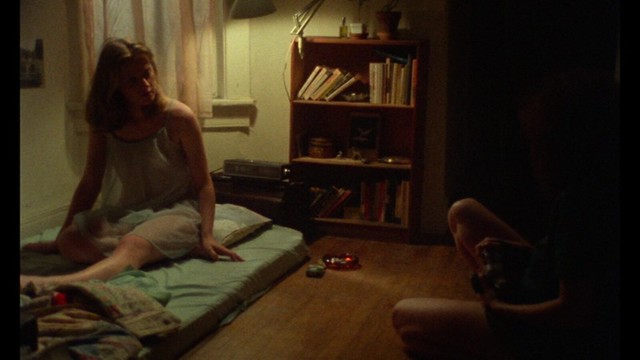
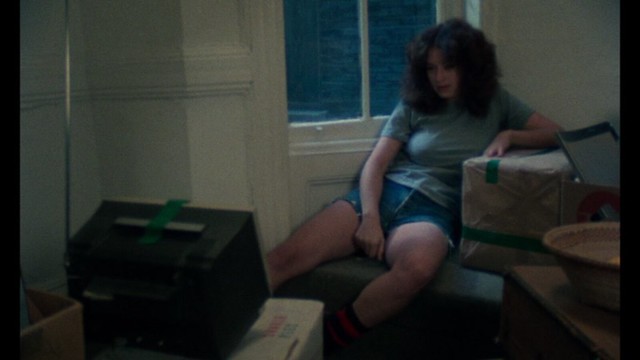
Girlfriends (1978) - Weill Screen Shot 2024-01-05 at 10.29.45 AM Screen Shot 2024-01-05 at 10.31.52 AM Screen Shot 2024-01-05 at 10.32.34 AM Screen Shot 2024-01-05 at 10.55.26 AM Screen Shot 2024-01-05 at 10.32.58 AM Screen Shot 2024-01-05 at 10.33.10 AM Screen Shot 2024-01-05 at 10.33.40 AM Screen Shot 2024-01-05 at 10.35.01 AM Screen Shot 2024-01-05 at 10.35.47 AM Screen Shot 2024-01-05 at 10.36.21 AM Screen Shot 2024-01-05 at 10.39.49 AM Screen Shot 2024-01-05 at 10.41.14 AM Criterion recently put out the 4K restored version of Girlfriends and I can't recommend this film more. It's really fantastic. Susan (Melanie Mayron) and Annie (Anita Skinner) are roommates in a tenement apartment in New York City in the 70s. Susan is an aspiring photographer and Annie is a writer in the beginning of their career. They are best friends who can help each other out on their work when they need a second pair of eyes. Susan takes gigs as a photographer at bar mitzvah and weddings with the help of an older rabbi (Eli Wallach) at the local synagogue.

Things change with the news of Annie announcing that she is getting married and move to the suburbs. Susan is happy for her friend but also protests, "How can you marry him? You don't even know him!" It's a financial burden to cover the rent all by herself but also liberating to have her own space. Susan paints the wall red and starts going out with a young local artist she met at a party. Even though she spends most of the time in his apartment, she doesn't want to give up her apartment/independence. He could be annoying sometimes. She also starts relationship with the rabbi who is married.

Visit to Annie and Martin in the suburbs further illuminates the different life paths they took. Married life with a kid in the suburbs or being single in the city and struggling? Susan feels that their friendship is fading. On the way home, Susan picks up a young woman hitchhiker, Ceil (Amy Wright), a dancer who is very insistent about crashing at Susan's apartment until she gets her shit together. At first the arrangement is fine, but Ceil's inconsiderate behaviors are getting to Susan who needs her own space.

After landing a show in a downtown gallery with a very supportive, eccentric gallery owner, she invites everyone. But Annie doesn't show. Martin who came alone says that Annie's not feeling well. Susan decides to visit her by driving up to Annie's suburban house after the show. She finds out that Annie had an abortion. It turns out the married life is not what she thought it would be. They look at one another and share an understanding smile before Martin gets home.

Girlfriends is a very natural, great depiction of being a woman in the beginning of her career. It's not preachy in any ways and not judgmental about the characters it portrays. It's their decisions to make those life choices and will have to live with them. There is no wrong or right choice. There is only her choice. Independence is the key word in Girlfriends. Then there is sisterhood. It's a great film. Male supporting characters include, Bob Balaban and Christopher Guest.

Monday, July 24, 2023

Japan Cuts 2023 Preview

Japan Society's Japan Cuts: The Festival of New Japanese Film is back in its 16th year. It marks the first all in-person festival since 2019! From July 26-Aug 6, this year’s festival features over 25 films from major blockbusters to indie darlings, spanning narratives, documentaries, experimental and short films, and anime! This year’s festival features five International Premieres, 10 North American Premieres, seven U.S. Premieres, three East Coast Premieres, and three New York Premieres! Japan Cuts will also welcome six special guests and host two parties!

Leading this year’s guests, JAPAN CUTS has the honor of presenting acclaimed actor Yuya Yagira with the 2023 CUT ABOVE Award for Outstanding Achievement in Film for his role in Under The Turquoise Sky by director KENTARO.

Here are some unique and outstanding films I was able to preview:

The First Slam Dunk - Inoue SLAM_Image2 The wildly popular manga-turned-TV anime series Slam Dunk creator Inoue Takehiko finally comes up with The First Slam Dunk, a feature length anime about a high stakes final game in high school basketball tournament and its players. Using both 3DCG and 2D animation, Inoue creates tense, poignant sports film that is thoroughly enjoyable. It starts with Miyagi Ryota, a short kid from Okinawa who loses his mentor brother and becoming a point guard for the Shohoku high school team against unbeatable reigning champs, the Sannoh. Inoue wastes no time and throws us into the final game as the ragtag underdogs beating against all odds and turning the apathetic spectators around their sides with their tenacity and sheer will power. Other than Miyagi, there is the team's power forward loose cannon Sakuragi (the red head main protagonist in Slam Dunk manga series), Hisashi, shooting guard, Rukawa, small forward, and Akagi, the long-suffering captain and center. Each gets his own limelight and backstory. But it's the game itself that is exciting to watch - at one point down 20 points, the Shohoku team seems helpless and in the midpoint of the film. Then it catches fire as it plays out with some crazy play by play as their scores seesaw back and forth - the time elongates as the tension builds to the final moment of the game. And what a beautiful game it is! The First Slam Dunk is much less juvenile than its origins. It's not about playing basketball to be cool or get girls. Girls are on the sidelines. It's all about the game and it's exciting.

Under the Turquoise Sky - Kentaro sky3 Amraa, a Mongolian horse thief is first seen stealing a horse from a stable and riding through Tokyo city scape. He is soon apprehended by authorities. It turns out the horse belongs to an aging business tycoon Saburo. In turn, Saburo makes a deal with the Mongolian: take his spoiled, womanizing grandson Takeshi (Yagira Yuya, the youngest recipient of top acting winner at Cannes for Kore-eda's Nobody Knows in 2004) to Mongolia and find his long-lost daughter that he sired with a Mongolian woman when he was stationed there in WW2. So begins an unlikely journey Under the Turquoise Sky, driving through the breathtaking steppe landscape of Mongolia. Without much dialog, director Kentaro paints the picture with broad strokes, peppered with magic realism and visual poetry. This leisurely paced, Jarmusch-ite road trip movie has its charm. Amraa, a Mongolian horse thief is first seen stealing a horse from a stable and riding through Tokyo city scape. He is soon apprehended by authorities. It turns out the horse belongs to an aging business tycoon Saburo. In turn, Saburo makes a deal with the Mongolian: take his spoiled, womanizing grandson Takeshi (Yagira Yuya, the youngest recipient of top acting winner at Cannes for Kore-eda's Nobody Knows in 2004) to Mongolia and find his long-lost daughter that he sired with a Mongolian woman when he was stationed there in WW2. So begins an unlikely journey Under the Turquoise Sky, driving through the breathtaking steppe landscape of Mongolia. Without much dialog, director Kentaro paints the picture with broad strokes, peppered with magic realism and visual poetry. This leisurely paced, Jarmusch-ite road trip movie has its charm.

From the End of the World - Kiriya From the End of the World Kiriya Kazuaki (Casshern, The Last Knights) directs a low budget time traveling tale where a high school girl's recurring dreams of marauding samurais in medieval Japan may hold a key to survival of mankind from apocalypse. After her grandmother's death, 17-year-old lonely high school girl Hana (Ito Aoi), is giving up on her dream of being cosmetologist, to support herself by working at a bar. She is soon visited by a secret government official who seem to be very interested in what she's dreaming. It turns out the world is ending in two weeks and only her dreams can alter the outcome of the book which contains the humanity's fate. Navigating between reality and dreams, Hana must save Yuki, a little girl in her dream, from a menacing, time traveling samurai (Kitamura Kazuki, letting his eyebrow to do the talking as usual). The convoluted script resembles typical 'end of the world' manga premises, From the End of the World depends too much on lengthy explanation, but Kiriya's energetic DIY style (DP, Kanbe Chigi) camera movement and digitized color palette make an enjoyable two-hour ride.

Amiko - Morii Amiko A remarkable directorial debut of Morii Yusuke, based on a book Kochira Amiko (Look Here Amiko) by Imamura Natsuko, Amiko tells an oddball grade schooler (Osawa Kana) living in a small seaside town. She lives with her parents and her older brother. She has tendency to obsess over small things around her life - a big mole on her mom's chin, a neighborhood boy named Nori who's in the same class, various animals and insects that share her immediate, rural environment. She is an enthusiastic, high-energy child with wild imaginations. But she is sometimes too much for everyone around her. Unbeknownst to Amiko, life takes a darker turn as her mom's miscarriage reverberates throughout her family - mom's postpartum depression takes a toll on her mental health, her father is more absent-minded, and her brother becomes a raging juvenile delinquent.

Young Kana's wide-eyed wild child is a revelation, embodying Amiko who doesn't understand the consequence of her actions and tragedies that befall in life, obviously, because she is just a child. Morii captures all this in constant close-up of Kana's round, adorable face. It's a remarkable, heartbreaking unusual film about growing up.

Hand - Matsui te Hand - Matsui Sawako (Fukunaga Akari), a twenty-something office worker has a fetish for old men. She collects photos of old men taken on the street in a series of scrap books named "Happy Old Men," like schoolgirls collects pictures of cute animals. She thinks the snapshots of their content-with-life expressions and their bald spots and portly figures adorable. She gets a lot of attention from older men as well, but she observes that they tend to treat her like a little girl when they are alone. At home, her father prefers to interact with mom and her younger sister who's still in high school. It seems that her father doesn't quite know how to behave around his grown up daughter. Sawako starts an intense physical relationship with a former co-worker Koichi whom she confesses her love. But it turns out that he is in another relationship. Unwanted at home, and heartbroken with her lover, Sawako reassesses her adulthood. Conceived as a Roman Porno revival project by Nikkatsu Studio, Matsui Daigo (Japanese Girls Never Die) directs Hand. Yes, it abides by the Roman Porno rules (low budget, shot in a week with sex scene every 10 minutes). But the film is an exceptionally well written poignant, intimate relationship drama that gently approaches father-daughter relationship. Hand is a great little film which shows you that the spirit of Japanese indie film scene is alive and well.

Wednesday, August 18, 2021

Japan Cuts 2021 Hybrid Edition Preview

After last year's all online edition, Japan Cuts, North America's largest showcase for new Japanese films, has chosen to go for a combination of online and in-person screenings (at Japan Society, NYC) for their 15th edition, taking place 8/20 - 9/2. The festival is divided in Feature Slate, Next Generation, Classics, Documentary Focus, Experimental Spotlight, Shorts Showcase, Narrative Shorts and Experimental Shorts, totaling 38 films.

The 15th Edition of Japan Cuts kicks off with the U.S. Premiere of Matsumoto Soushi's charming Sci-fi and samurai tinged celebration of cinema, It's a Summer Film! For centerpiece presentation, Kurosawa Kiyoshi's Venice Film Festival winner, Wife of a Spy. Other highlights are an in-person screening of the late Obayashi Nobuhiko's 3 hour swan song Labyrinth of Cinema, 2K restored version of the cult classic, Hiruko the Goblin and Miike Takashi's The Great Yokai War: Guardians.

Without further a do, here are 5 films I was able to sample:

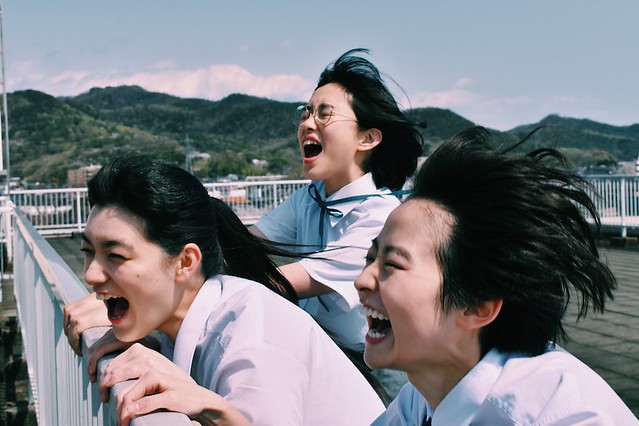
It's a Summer Film! It's a Summer Film It's a bubbly love letter to cinema with gaggle of high school girls. It stars Japanese idol singer Ito Marika (former Nogizaka 46 member) as a high schooler, Barefoot, who is obsessed with chanbara films and a Katsu Shintaro (Zatoichi) enthusiast. She is in a school film club but disillusioned by the films they produce - directed by and starring her rival popular girl Karin and her entourage. Barefoot decides to make her own samurai film to counter Karin's saccharine rom-com at the year end screening. With her best friends - Kendo champ Blue Hawaii and sci-fi nerd Kickboard and a rag-tag film crew, Barefoot embarks on a harrowing journey of indie filmmaking.

Even though she prefers brusk hero than a pretty boy type, Barefoot can't stop falling for her main actor Rintaro, a handsome time-traveling stranger she chose as her main actor in her film titled, "Samurai Spring." You see, in the future, there is no such thing as movie theaters, movies are only 5 seconds long and the traditional notion of cinema is non-existing. She needs to save the future of cinema! It's a Summer Film! is a cute, airy comedy geared towards Stranger Things crowd.

Wife of a Spy *Centerpiece Film Wife of a Spy Satoko (Aoi Yu), an unassuming young housewife of a wealthy merchant suspects that her husband is involved in something dangerous. The year is 1940. The place is Kobe. And Japan is slowly hurtling toward authoritarian nightmare before the World War II. Kurosawa Kiyoshi directs this period thriller off the script written by Yamaguchi Ryusuke and his writing partner Nohara Tadashi (Happy Hour, Asako I & II) .

Wife of a Spy involves atrocities committed by the occupying Japanese army in Manchuria, experimenting biological weapons on civilian population. It's a very straight forward wartime intrigue with a stellar performance by Aoi as an innocent woman who has her blind devotion to her husband tested and gets embroiled in an international espionage. The film might not feel like a usual KK film, but a solid one nonetheless.

Wonderful Paradise Wonderful Paradise Moving is never easy and letting go even more difficult. It's a moving day for the Sasayas from their large opulent house, because dad had some gambling debts and bad investments. While packing and being nostalgic about mementos strewn about the house, disaffected Akane, the daughter of the family, unwittingly tweets that there will be a party in the empty house with their address. So starts Yamamoto Masaki's madcap comedy Wonderful Paradise. There will be several dead bodies, a gay wedding, a funeral, The Thing inspired coffee bean monster, moving statues with laser beam shooting eyes, strippers, a choreographed dance number, traditional singing, ghosts, synchronized sex scenes, rebirths, a kid turning into a tree branch, a makeshift drug lab, a yakuza gambling den.... By the end of it, Sasayas learned something about life and themselves and finally let things go. Life is one big party.

Mari and Mari Mari and Mari Mari and Mari plays out like a Murakami Haruki novel. Norio (Maehara Kou) is a mild mannered 30-something working at a small casting agency. He is very much in love with Mari (Nao), his long time live-in girlfriend. Their almost nauseating lovey-dovey behavior is an easy target for both ridicule and envy of his co-workers. They even have a corny song of their own that they hum to each other. Then one day, Mari disappears and replaced by childlike girl (Amano Hana), also named Mari. This new Mari doesn't remember where she came from. She is just materialized in his apartment. Norio looks for his old Mari everywhere to no avail. He demands the new Mari to leave but she always returns.

In a very subtle manner, when it comes down to it, director Yamanishi Tatsuya seems to suggest that it's not a particular person but rather the idea of a person in a certain mould that you fall in love with.

As the new Mari sticks around, Norio begins to accept her as his girlfriend. They sing the same song, make fun of each other's silly habits. It's an intriguing film by first time director writer Yamanishi.

The Blue Danube The Blue Danube Ikeda Akira's droll anti-war film The Blue Danube starts with Tsuyuki (Maehara Kou) waking up at the sound of a marching band. As he reports to the army barracks for 9 to 5 shifts, wasting his life away shooting at invisible enemies across the river without a question like a clockwork. "Do as you are told without question" rules this town and everyone follows its rigid army style way of living. No one remembers how long the town has been at war with its neighboring town and the reason for the conflict. They just assume that the town across the river is horrible and its people are savages.

Things change after the new young recruit soldier starts questioning the ongoing conflict. Meantime, Tsuyuki is transferred to join the marching band after its trumpeter suddenly dies.

With intentionally stilted acting and droll delivery of the actors, repetitions and absurd deadpan humor, Ikeda pokes fun of Kafkaesque bureaucracy combined with blind trust in inept authorities and fear tactics instilled in people's mind in the war time. The Blue Danube highlights the meaninglessness of war.