

Showing posts with label Ulrich Köhler. Show all posts

Thursday, November 2, 2023

A Ghost Anywhere

Schlafkrankheit/Sleeping Sickness (2011) - Köhler Screen Shot 2023-11-02 at 9.26.06 AM Screen Shot 2023-11-02 at 11.32.14 AM Screen Shot 2023-11-02 at 11.35.24 AM Screen Shot 2023-11-02 at 11.26.56 AM Screen Shot 2023-11-02 at 11.27.29 AM Screen Shot 2023-11-02 at 11.28.03 AM Screen Shot 2023-11-02 at 9.27.17 AM Screen Shot 2023-11-02 at 11.28.33 AM Ulrich Köhler's Sleeping Sickness examines a complicated relationship between Europe and Africa. It also shows how losing one's identity (in this case, being a German) is indirectly, but yet deeply connected to Germany's colonial, post-war revival past.

Epidemiologist Dr. Ebbo Velten (Pierre Bokma) and his wife Vera have been stationed in Cameroon for a long time. Velten is there to eradicate Sleeping Sickness, the insect borne disease that causes neurological problems if untreated. He has been successful and therefore, he has no reason to stay there any longer. It's time for him and his wife to go back to Germany. But something is nagging at him. Their sullen teenage daughter's visit only exacerbates his ambivalent feeling about going back home to his mundane life as a pharmacist, according to his expat doctor/industrialist pal Gaspard (Hippolyte Girardot), "prescribing pills for a living in the suburbs."

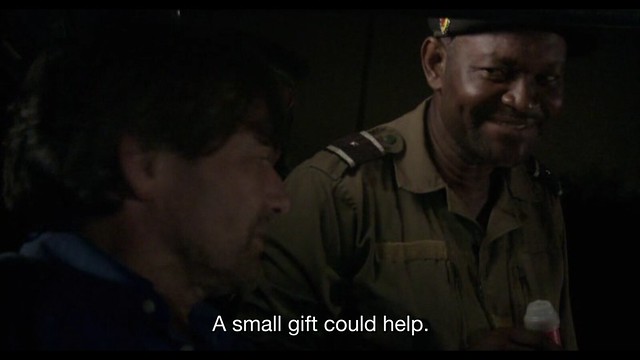
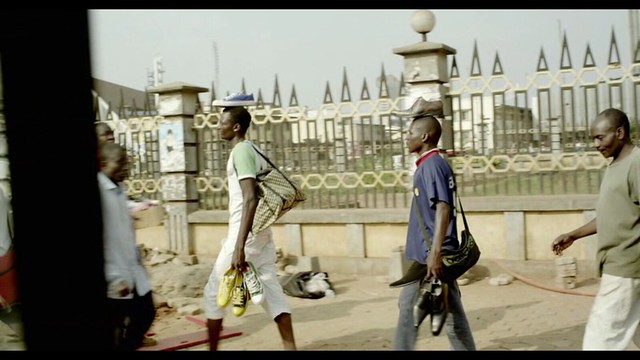
We see the whites' arrogance and the locals peddling for their money everywhere - at checkpoints, in restaurants, in Velten's home with guards, peddlers in city streets, in medical board meetings. The colonialism and free market enabled this ugly relationship to perpetuate and made any meaningful relationship between them impossible. The wife and daughter go home. Three years pass by.

A well-meaning, young doctor Alex Nzila (Jean-Christophe Folly) who works for the World Health Organization is first seen at a medical conference where a black representative is advocating cutting off relief funds to Africa and letting the free market take care of everything. He scoffs at the speaker. After Alex deflects his colleague's racist joke with 'I am born here,' speech, he is sent to Cameroon to evaluate Velten's project on sleeping sickness. The problem is, when he gets there to his compound/clinic, in the remote jungle, the German doctor is never around to meet with him. After failing to perform a Cesarean birth by throwing up and passing out on Velten's pregnant Cameroonian wife, Alex finally meets Velten. But it seems the illness is almost eradicated in the region. Then why does Velten ask for an evaluation on his progress?

It becomes slightly clear that it's Velten's cry for help, who is in the country he doesn't belong to and perhaps doesn't belong anywhere. He is pulling Colonel Kurtz. He is completely lost and wants someone else to decide his destiny.

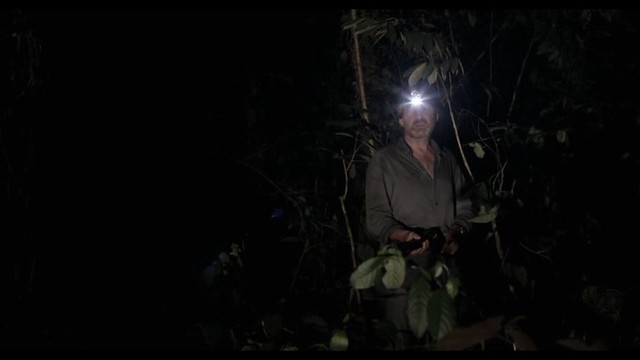
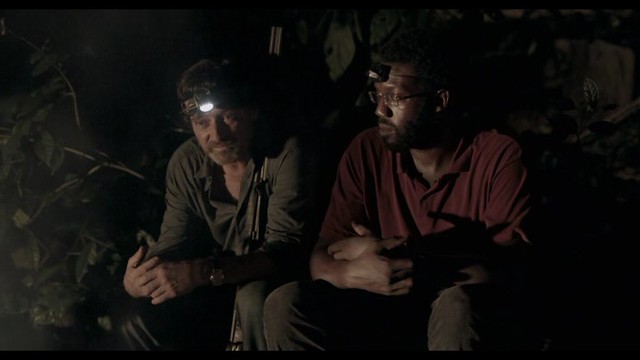
The film ends with Velten and Gaspard taking Alex to a night time hunting in the jungle. Alex has no idea what they are hunting for. Again, for Alex, it's a wild goose chase.

Sleeping Sickness is a complex film that says a lot about colonialism and its ugly symbiotic relationship in capitalist society. As a German directed film with a German main character, the subtext of losing one's identity in a global capitalist system and yearning for some sort of metamorphosis is quite striking.

Sunday, June 7, 2020

Plenty

In My Room (2018) - Köhler
Screen Shot 2020-06-07 at 6.23.14 AM
Screen Shot 2020-06-07 at 7.59.07 AM
Screen Shot 2020-06-07 at 7.10.01 AM
Screen Shot 2020-06-07 at 7.45.04 AM
Screen Shot 2020-06-07 at 7.45.33 AM
Screen Shot 2020-06-07 at 7.43.44 AM
Screen Shot 2020-06-07 at 7.56.54 AM
Screen Shot 2020-06-07 at 7.46.00 AM
The apocalypse or extinction of human race comes in suddenly and without a bang in Ulrich Köhler's In My Room. The Sci-fi tinged dystopian near future has been the genre of choice for many prominent filmmakers working today. And Köhler, one of the Berlin School directors, is no exception. And he delved in to it previously, in Bungalow (2002). Rest assured, In My Room is not a wistful comedy or action thriller of Hollywood's view of the future. It's realistic version of what if and the reflection of the current consumerist society we live in.

Armin (Hans Löw) is a slovenly TV cameraman in his 30s who is prone to fuck ups. Living in a tiny, unkempt apartment alone and not getting any younger, he is wasting away his life by chasing young girls and getting fucked up. He visits his dying grandma at his father's house. His devorcee father is dating someone new. Other than that, life is uneventful. Then grandma passes away. His father doesn't want to be consoled. So Armin leaves and get wasted looking at party boats floating by in his car, under the elevated highway.

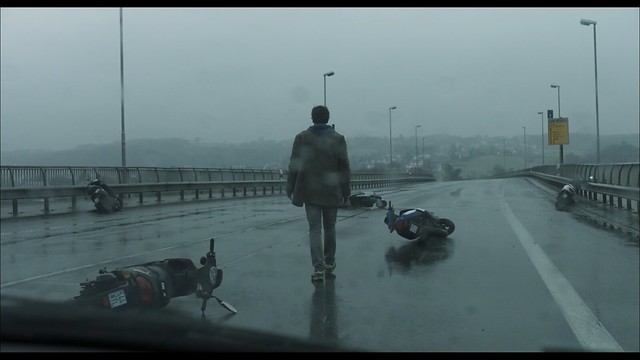
The next morning, he realizes that everyone has vanished. There are empty cars and motor bike strewn about on the road, no attendants at the gas station. The phone has no signal. After building a makeshift pyre for his grandmother in her bedroom, Armin takes off, leaving his father's house on fire. During a joyride in a cop car through the empty streets of small town near Switzerland where he grew up, he finds trapped horses in the tunnel and frees them.

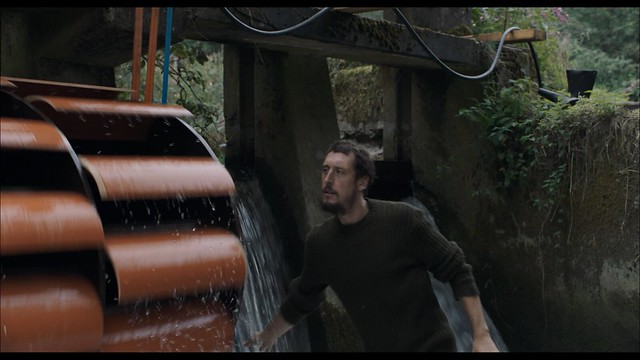
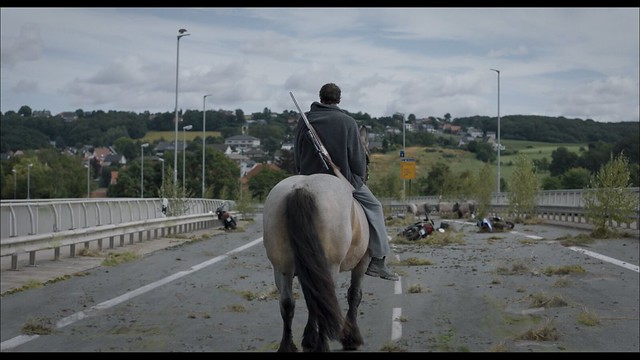
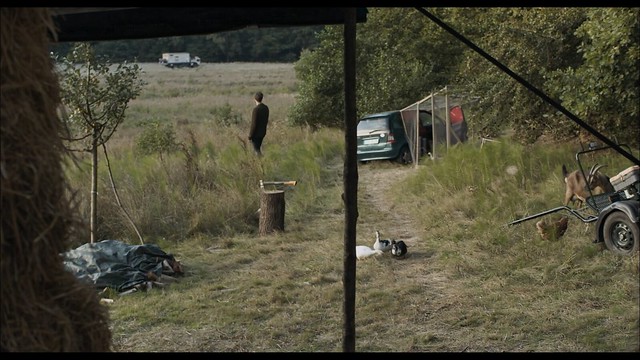
Next time we see Armin, shirtless and fit, is working on some type of hand rigged watermill using the stream. It turns out the rig powers his make-shift home where he irrigates land and grows animals. He goes supply runs on a horseback with a hunting rifle that used to belong to his neighbor, to empty shops and grocery stores. He seems efficiently settled down living by himself, as the possibly only man on earth. One night, a dog snatches his goat calf and he goes after it and falls off his horse after dog attacks him. It turns out the dog belongs to Kirsi (Elena Radonicich), an Italian speaking woman who's been living in a small RV. They haven't seen anyone other than themselves. They could be the only people on earth. They become close. There are still plenty of remnants of the human civilization, like canned food and DVDs and Techno music which they enjoy. But while Armin is pretty much settled in to the environment and accepts the new world, Kirsi remains curious and searching. He wants a child, she doesn't. She wants to see the world and doesn't want to stay with him.

In My Room realistically imagines the apocalypse where you might be the last man on earth and infinite choices we might encounter living in the comfort of the advanced capitalism or remnants of it. You can choose Armin's way, a city boy who seems to be enjoying being a self-made man and content being domestic or Kirsi, who is from a small town, trying to experience the world. The tragedy here is, the comfortable society we led so far gives you way many options, so even if you are the only man and only woman on earth, there is no guarantee that you will end up with each other. Sex and intimacy? Yeah sure. But the couple is seen in a DVD store browsing not only Ben Affleck movies (Kirsi's favorite) but the store's massive porn collection. Köhler seems to tell us that we have so many things to entertain ourselves with, companionship and loneliness take a backseat even at the world's end.

Monday, November 18, 2013

Suspended State

Bungalow (2002) - Köhler
 photo 6711ac45-5610-4baa-aa79-79b43ba7f9c4_zpsf569ccdb.jpg
A teenage soldier Paul (Lennie Burmeister) deserts his squad at a roadside gas station and comes back home. His parents are on holiday in Italy, so the house is empty. Things get complicated when his older brother Max (Devid Striesow, Yella, Three, The Heart is a Dark Forest) shows up with his pretty Danish actress girlfriend, Lene (Trine Dyrholm). They are on the way to Munich because Lene is about to star in a low grade German Sci-fi flick. They leave in two days. It's quite obvious that the brothers don't get along. Paul lies about his AWOL status and develops an unhealthy obsession with Lene. Stooped, sulking and completely inept in human interactions, Paul is not just another lost, wayward youth. There is something more dangerous hidden in his unmotivated actions. There is something missing in him.

The post-Wall Germany's collective identity crisis and its angst is demonstrated by an unexplained, ominous explosion in the middle of the film, as our characters watch the plume of smoke rising in the distance from the roof of the house in their quiet suburban town. No one knows what exactly happened. Everyone has their own theories and no one believes the news media. Everyone remains suspicious and on guard. Bungalow does an amazing job at showing the German society treading dangerous, unforeseen territory in the new millennium.

Bungalow plays part of MoMA Film Series The Berlin School: Films from the Berliner Schule Nov.20 through Dec.6. Please visit MoMA website for details.