Tuesday, February 18, 2014

Book Fetish

Goltzius and the Company (2012) - Greenaway
 photo b75ffd25-9fff-46c8-abef-0b4d0253dfef_zpsc44874c9.jpg
Goltzius and his printing company employees ask a wealthy Italian merchant Margrave (F. Murray Abraham) money so they can continue printing series of high quality eroticas. Margrave agrees to give him the money, only if he and his trope performed 6 plays about 6 sexual taboos based on the Old Testament for his pleasure. Even though Margrave gave his court freedom of speech, the plays are too blasphemous for some to take. To complicate the matter even further, there are constant squabbles in the trope about the roles they play, whether or not to have sex in public (simulated or otherwise) and creative differences. Soon there are casualties for people confusing play with real life.

As usual, Greenaway's aesthetically robust production is visually stunning. He makes the great use of giant old smelting plant with wide lens as a Margrave's palace. All his usual elements are here - book fetish, necrophilia, erect penises, free speech.... Love how he equates Goltzius' endeavor with that of a film director - financing, mananging (and failing) egos on set, fighting censorship, politics dealing with the audiences, etc. But like most Greenaway's stuff, the repeated visual rigor loses its steam and gets tiresome mid-way. The put-on accents of some actors get in the way of dense texts as I tried to understand what's happening half the time. Also, I wish Greenaway stayed away from CG effects since it lessens the impact of his already crowded palate. Still, it's a mesmerizing visual feat.

Monday, February 17, 2014

Satan in Plain Clothes

Under the Sun of Satan (1987) - Pialat
 photo 3649a516-117d-4470-aa48-332af37a2d0a_zpsf340e489.png
 photo 17c1f501-f778-4fcc-8c18-2255b1b43445_zpsfd8960e7.png
 photo 0a98be50-dc4c-487f-80c2-ac891dc20cbb_zps21d3d592.png
 photo b617a57e-83bc-429e-8408-e2dbda9930ed_zps2fc83966.png
Young priest Donnisan (Gerard Depardieu) is struggling with his faith. His doubt leads him to self-flagellations of the body and mind. His superior views this as arrogance. On the way to another parish by foot, Donnisan has an unnerving encounter with satan in plain clothes. Satan's parting word is that Donnisan is a marked man. He then meets 16-year old harlot, Mouchette (Sandrine Bonnaire) who just murdered her older lover. It is a miracle that he can read through the girl's soul. He is convinced that it's satan's doing, not god's.

All this sounds outlandish and theatrical, but it's a Pialat film. It means everything is straightforward and extremely subtle. Heady, wordy theological exchange between Donnisan and his superior (played by Pialat) can be sometimes too dry. But Pialat never wavers in his no frills approach. Mouchette's storyline takes up the better first half of the film without interruption. The two encounter later in the film with stirring intensity that is quite something to see. The cold look of the film is completely appropriate for this somber, religious themed drama. Depardieu and Bonnaire are outstanding.

Sunday, February 16, 2014

Child's Fever Dream

Paperhouse (1988) - Rose
 photo 73cd32b2-a8ef-41f9-a335-02de1dfa6370_zpse5b14cce.png
 photo d1717652-1113-44c4-9ca7-e33993660a47_zpsa9e4c66a.png
 photo 474230a0-4621-4d2a-9baa-afa06f79c3e9_zps49bb74d8.png
 photo 81b9d587-ced3-48d9-9e63-fce7262e230e_zps59ef6b9c.png
 photo 03f84e6e-0ab0-4b4d-b157-604c2fd16c7c_zps67bbc87f.png
 photo afc03c03-d5f7-46ad-9bd7-7ffe4a77d9f3_zps2b3d3a4b.png
 photo f82f9bda-6ed1-41e1-ae39-58b7045e2bfb_zps67ae9598.png
 photo 21b39315-739a-448c-bf51-d7953ca84e2b_zps23f7767c.png
A mischievous Elementary School girl Anna (Charlotte Burk) is having fainting spells lately. In her fever dreams, she sees a house in the middle of a field and a paraplegic boy who lives there. For some reason, whatever she draws in her big sketchbook is directly related to what happens to the boy. Then she finds out that the boy exists in real life. The dreams become nightmares when Anna's anger toward her absent dad (Ben Cross) materializes.

I've been a fan of Brit director Bernard Rose ever since I saw Candyman. I always adored his visual style. This early effort of his is no exception. Stunning visuals and vivid imagination, Paperhouse is way too good to be regarded as a children's movie. It's also way too dark for kids but dang, ain't it maddeningly gorgeous!

Saturday, February 15, 2014

Film Comment Selects 2014 Preview

Each year, Film Comment Magazine holds a film series at the Film Society of Lincoln Center, its selection of films assembled from festivals around the world by its esteemed editors. In its 14th year, Film Comment Selects 2014 consists of 22 films (17 of them local premieres) from all corners of the cinema spectrum, including genre tropes, new films by seasoned and upcoming filmmakers, well-deserved revivals and Jane Campion's much praised TV show Top of the Lake in its entirety.

Specifically, the selection includes new films from Lukas Moodyson, Hong Sang-soo, Denis Villeneuve, Lasse Hallström, Bernardo Bertolucci, Ti West and much more.

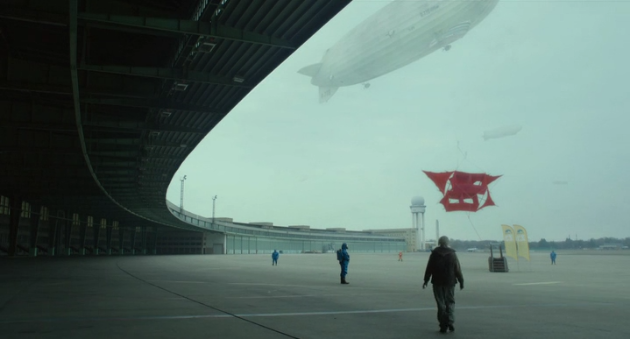
It will also feature two earlier works (Wolfsberg and Ghosts) of the lead figure in Berliner Schule, Christian Petzold, The City of Pirates -- a seldom seen masterpiece by the master surrealist Raul Ruiz -- as well as the adaptation of Betrayal, arguably the greatest play that famed playwright Harold Pinter ever wrote, starring Jeremy Irons and Ben Kingsley.
The series will open with Hong's new film Our Sunhi and close with Bertolucci's Me and You. 

Please visit Film Society of Lincoln Center website for the full list and tickets. The series runs 2/17 - 2/27.

Here are the preview of five films I was able to watch in advance:


OUR SUNHI - Hong Sang-soo    *Opening Night Selection
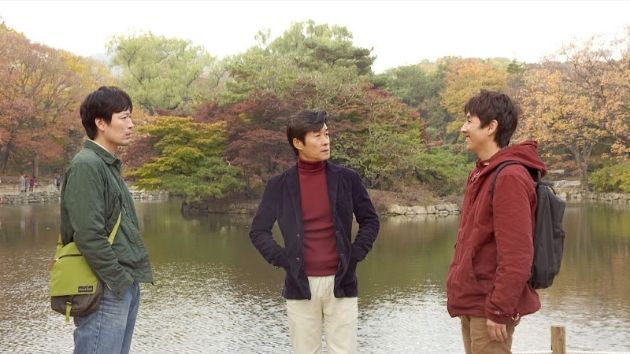
 photo 8178a911-b4a9-4604-a4b2-3f8a4dc90dac_zpsb3ef7e51.jpg
Singular, prolific Hong Sangsoo graces us with Our Sunhi, soon after last year's Nobody's Daughter Haewon. Another slight variation on the world of post-college entanglement soaked in soju & stained with cigarette butts. After getting a less than satisfying recommendation letter from her former professor, timid Sunhi (Jeong Yumi) confronts an old flame, Moonsoo and her former college senior and the professor in an attempt to define herself. The three men, all rekindled their interests in Sunhi, try to grapple themselves with their overwhelming attraction to the young woman who they find kind, smart and sometimes brave. Heavily inflected by alcohol and desire, their opinions of her overlap and get muddled. But in the end, after much digging, everyone reaches pretty much the same conclusion of that she is a good person. Hong concocts yet another delicious human comedy.


ME AND YOU/IO E TE - Bernardo Bertolucci     *Closing Night Selection
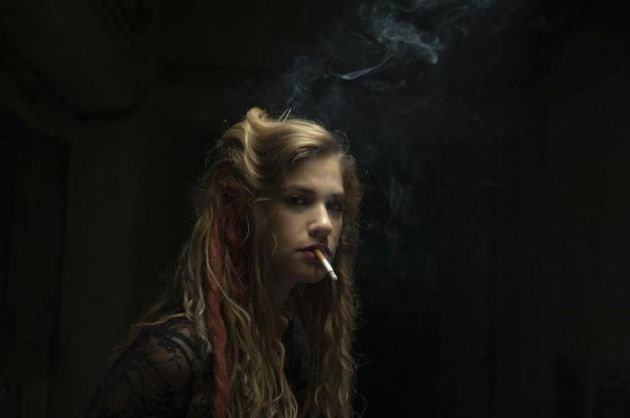
 photo 37b7b5a4-7aa5-4561-95b3-c2b406467f2e_zps38bd5681.jpg
The reason there hasn't been a new Bertolucci film for more than ten years was because the now 72-year-old master has been having health problems. His bad back led to multiple surgeries and, ultimately left him wheelchair-bound. Me and You, his new film, directed from his wheelchair is a simple, affecting story of a 14-year old loner and his older junkie sister bonding over the course of a week, trapped in the basement of their parent's apartment building.

The film is unexpectedly sweet. Sure, there is a bit of Bertolucci's usual sexual innuendos/brashness but skin is kept to a bare minimum. Lorenzo (Jacopo Olmo Antinori), a pimply young Malcolm McDowell lookalike fakes a school ski trip to get away from the world and his overbearing mom into the stuffy basement. He gets provisions (junk food) for a week, brings his computer, music and a freshly purchased ant farm for entertainment. But his peace is suddenly interrupted by his twenty something half-sister Olivia (sultry Tea Falco). She is heading up to the countryside to her friend/lover's, but first, she needs a place to crash in Rome to clean up her drug habits. Since she hates his mom, she blackmails Lorenzo to let her stay in his escape pad. Bertolucci uses a confined space effectively: the tiny shared space forces the siblings to bond and share intimate moments. Seeing these slightly drawn characters portrayed by not-too-pretty unknowns is refreshing in the world saturated with cookie-cutter pretty young thangs on TV.

If concentrating on youth reinvigorated Bertolucci to direct again despite his conditions and the result is this good, I am all for his future endeavors. The great soundtrack starts with The Cure's Boys Don't Cry and ends with Bowie's Space Oddity.


GHOSTS/GESPENSTER - Christian Petzold    *Revival
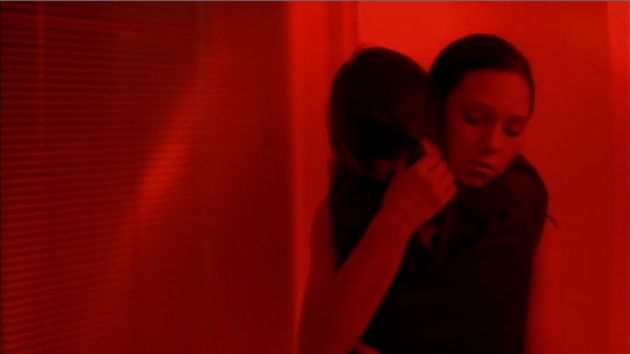
 photo f035f64a-11ed-4bc5-b9f3-33c8a47c2a1b_zps55d252c9.jpg
My full review here


Blood Glacier - Marvin Kren
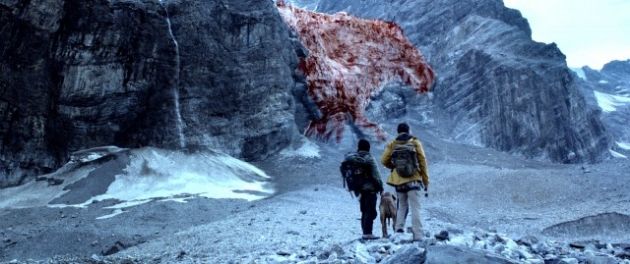
 photo 564867fa-4687-444a-a5cc-c2f76f75b4bd_zpsf9ff60d2.jpg
3 German scientists and a technician stationed at the high Alps to monitor the ever receding ice shelf have a stunning discovery one day. The part of the glacier has turn red. They suspect that it's some kind of bacterial phenomenon. Little do they know that it thawed mutation causing microbes that turn mountain mammals and insects into a giant hideous mutants, preying on humans. Things get hairy when a team accompanying an important government minister arrives for a tour.
This is a sophomore effort from Marvin Kren, whose low-budget, solid German zombie flick Rammbock delighted the genre fans few years back. Blood Glacier is a topical eco-disaster horror mashup of The Thing and The Mist. Quite enjoyable


CITY OF PIRATES - Raul Ruiz    *Revival
 photo ea232a46-d465-4327-880f-5b02b57d60c8_zps14db7006.jpg
My full review here


THE FLESH OF MY FLESH - Denis Dercourt

 photo c4dbc334-6925-44d7-bc20-dc5c3c2a6b51_zps3d2e5f7b.jpg
French director Denis Dercourt writes, directs, edits and also does camera sound work in Flesh of My Flesh, a psychological horror in the vein of Repulsion. With a shallow focus and soft edges, the handheld image mostly concentrate on the face of mentally unstable heroine (new comer Anna Juliana Jaenner) for much of the running time. Anna, a young Austrian woman working as a domestic worker/nanny in France has a sick daughter. In order to improve her daughter's condition, Anna needs to feed her human flesh and blood. With often veiled, soft frames, Dercourt succeeds in reflecting Anna's singular mental state. But I find the film too clinically cold and distant and its elliptical storytelling devoid of mystery or seductive power.


CANNIBAL - Manuel Martin Cuenca
 photo 573ac4ab-0ce9-42a1-b4bb-914608b6f850_zpsb48776ca.jpg
With a pitch perfect performance from Antonio de la Torre as the title role, Manuel Martin Cuenca's expert, low-key film betrays its not-too-subtle title. De la Torre plays Carlos, a soft spoken, loner tailor living in deeply the religious town Granada. He has a dark side: he likes to kill women whom he is attracted to and consume them. Things change when a flirtatious Romanian masseuse Alexandra (Olimpia Melinte) moves in to his building. After Alexandra's suspicious disappearance, her introverted sister Nina (Melinte playing a double role), comes into his life.

Sumptuously photographed and beautifully acted, Cannibal is a real gem. Cuenta manages to translate a tricky subject into a moving love story.

Johnny Got His Gun

RoboCop (2014) - Padilha
 photo f88bc7e8-2030-4a09-b28e-9023c2e97045_zps685411ca.jpg
The thing about Paul Verhoeven movies in the 90s was that it's so knowingly cynical and campy, you can't ever make it serious the second time, like some other action franchises. Fortunately, the makers of this redux were smart enough to realize this. This reboot is more like a clean cut, paint by numbers style actioner with no serious pretention. Sleaze is gone though- no grisly death by acid or bullet to the head, no raping, murdering punks, no Nancy Allen. They are replaced by corrupt cops, right wing media celebrities and calculating capitalists. But José Padilha gives his veteran character actors enough room to shine - Michael Keaton has never been this effective in a role in a long while, as a cold-hearted industrialist and it seems Sam Jackson is playing himself in a role written for him. Gary Oldman is again, playing against type as a conscientious scientist and Jackie Earl Haley eschews his limited screen time as a seasoned mercenary soldier, calling Murphy a 'tin man'. Newcomer Joel Kinnaman is no Peter Weller but has a almost a Stallonesque working class hero charm. Enjoyable.

Thursday, February 13, 2014

Dark World

Kill List (2011) - Wheatley
 photo b5139972-d3a0-4711-bb5a-9364ce43ad1a_zpsebf88f90.jpg
OK. I'm on board again in believing Ben Wheatley as the 'real deal'. Kill List starts out as a crime drama but ends as a total wtf. Wheatley's measured, careful composition, editing and soundtrack creates an ominous place filled with mystery and intrigue. It's violent, eerie and original, if not in its content, in execution. The less you know the better the experience will be. It's one of those dark films which its images will linger over your head for days. Wheatley's in the same league as Refn and Park Chan-wook as the reigning visual stylist of our day. I can't wait to see A Field in England when it comes out.

Sunday, February 2, 2014

Philip Seymour Hoffman, dead at 46

 photo 8f3e3092-e0f6-41cb-a22c-979de80fcfdc_zpsfab067eb.png
I don't go around announcing someone's passing like some gossip newspaper columnist. But this afternoon, when I heard Philip Seymour Hoffman found dead in his New York apartment, possibly by heroin overdose, I can't help but great sadness overtaking me. It's not that he was my favorite actors of all time or anything, but he was one of those actors who were always solid and watchable on screen. I remember him playing bit parts in Hollywood movies, then being typecast in indie films as 'that creepy fat guy'. He was not your typical handsome movie star. But his talent was too enormous, too great for people to ignore.

Most memorable character he played, for me, was in Charlie Kaufman's magnum opus, Synecdoche, New York, as a long suffering writer, beaten down by life, ambition and carrying the burden of having a creative mind. He used his physicality and awkwardness fully in the biopic Capote, garnering much deserved recognition and fame. He also shined as a larger than life but ultimately emperor with no clothes in PT Anderson's The Master, the slight play on L. Ron Hubbard and Scientology. I'll watch Mission Impossible III tonight, just because he was in it (I've heard he is good in it, as usual). RIP Philip Seymour Hoffman, I'll miss you.

Wednesday, January 29, 2014

Deprived of Dignity

Paradise Now (2005) - Abu-Assad
 photo edf34d00-f2e1-4667-9b8d-52718a37ba8a_zps45e4292c.png
Rarely one sees a good political thriller that humanizes its characters. Palestinian filmmaker Hany Abu-Assan does an amazing job at portraying two childhood friends/would be suicide bombers from Nablus, the Occupied Territory. The film is neither a by-the-numbers, robotic Paul Greengrass actioner with the apologist bent nor a satirical black comedy.

Two underemployed friends- sad eyed Said (Kais Nashef) and happy-go-lucky Khalid (Ali Suliman) are chosen to be martyrs. They will blow themselves up in Tel Aviv tomorrow. Just like that. They are not to talk to anyone about it. They seem to be not only resigned to the fact but giddy about the prospects, especially Khalid. After some technical snafu, they finally tape their video statement wherein Khalid gives his mom the tips where to buy water filters. They get half-hearted congratulatory remarks by the leaders, haircut, dinner, suits, the works. With bombs strapped to their chest, their plan gets thwarted by sudden appearance of Israeli Military vehicles at the border fence. Khalid safely gets back in time but Said is left near the border and gets lost. He unwittingly becomes a fugitive.

The film buys some time for two men to think about their options. The appearance of Suha (luminous Lubna Azabal of Incendies, Here), a woman from a well to do family, returning from Europe shakes things up a little bit. Paradise Now is a great balancing act, avoiding pitfalls of heavy handed political statement without ever losing sight on showcasing the mindset of the people whose dignity has been taken away by the occupation.

"Please Think of the Children!"

The Hunt/Jagten (2012) - Vinterberg
 photo e292fd1a-dae3-4d71-87c3-e74ed7599543_zpsd835418b.png
Yes, Mads Mikkelsen is great as Lucas, a kindergarten teacher who's falsely accused of sexual molestation in a small, tight knit community. He deserved the best actor award at the Cannes and everything. But it's Vinterberg's regular Thomas Bo Larsen who plays Theo, Lucas's best friend and the father of a little girl whose little lie that starts up a shitstorm, really shines here. Vinterberg is smart not to make it a courtroom drama or about the loss of innocence. It still retains the sharp critique on the 'please think of the children' mentality and deals with thorny subject expertly without sacrificing the narrative. The Hunt is about simmering tension underneath the society that looks picture perfect. That even someone as well regarded and decent like Lucas isn't safe once the seed of doubt is planted. The Hunt is a less grandiose, down to earth Haneke film. It's a chilling reminder of once well to do northern Europe and its turmoil in a much more complicated world. The ending is really chilling.

Falstaff

Chimes at Midnight (1965) - Welles
 photo a0e4f700-0204-4473-8ea3-682d7d6f1c6b_zps20318434.png
 photo 224d8e2d-fcfa-4456-acc0-fcb011d4a8a3_zps6d066226.png
Another great Shakespeare adaptation by Orson Welles. This time, it's Henry IV. It's the story of a young prince becoming a king, shedding off his scoundrel days and his former friends, on the way to greatness. Welles is great as massive, vulgar, cowardly and utterly sympathetic Falstaff. It's perhaps one of the most hammy (haha) roles an actor can play in the Bard's plays, which imbues both comedy and tragedy. And he is mesmerizing. With visibly limited budget, his direction is as distinct as ever, with use of vast space, light and shadows. The field battle scene where the King Henry's force meets Harry Percy's, is brutal and energetic - Welles speeds up the action in some parts, accompanied by rapid cutting. But compared with his other, better known cinematic work, it's a lesser Welles. Supporting cast includes John Gilgud, Keith Baxter, Jean Moreau and Fernando Ray.

Sunday, January 26, 2014

Pop Psychology

Still of the Night (1982) - Benton
 photo 46507861-9f55-4b14-a641-ca6110f0873c_zps229aaf85.png
80s pop psychology abound, Still of the Night is simple but effective, moody noir. Meryl Streep plays a mousy, mysterious woman working at an auction house who may or may not be a murderess. Roy Scheider is Sam, a psychiatrist whose patient gets murdered. Streep is unbelievably attractive in this! The high point is the night in Central Park chase sequence and a creepy dream sequence beautifully shot by master cinematographer Nestor Almendros. It's one of those films that lingers you for days, if not years.

Thursday, January 23, 2014

This Film is Gazing Back at You

Visitors (2013) - Reggio
 photo 54c4230d-767c-44a3-b560-d28b993d8846_zps6b119650.jpg
Koyaanisqatsi (1982), a genre-defining, landmark film that features stunning time-lapse photography and the hypnotic Philip Glass's score, expanded boundaries of film. It garnered cult following and spawned countless imitators in commercial, documentary and narrative film world (most recently, Samsara). Its director, Godfrey Reggio, followed it with Powaqqatsi (1988) and Naqoyqatsi (2002) to complete the long intended trilogy.

Reggio insists his films are not experimental, but rather, experiential. He asserts this notion again with Visitors, his new film in more than ten years. It's a visual tone poem presented in stunning monochrome 4K. Like his previous -qatsi trilogy, 'life unbalanced' theme is still present. But consisted of only 74 shots, the film is much more graceful, subtle, abstract experience. As for the meaning of the film, it is anybody's guess. Watching Visitors is not a passively immersive experience like Cuaron's Gravity. Its inhabitants (including a lowland female gorilla) in mostly closeup look directly at you. The film is watching you watching the film. It requires audience to be active participants to interpret the meaning of the film themselves.

Philip Glass's score makes up the other half of the film and it's just as awe inspiring. Unhurriedly, one piece of music ends and the other starts accompanying the crisp imagery, perfectly in tune with what's being seen. It's beautiful, powerful and deeply moving. After experiencing Visitors, I purchased its soundtrack the same night, so I could listen to it away from its visual partner. I realized how rare it is for a film soundtrack to stand on its own. It is by far, the finest orchestral writing I've heard from always masterful Glass.

Except for the view from the moon SFX shots, the scope of the film seems much narrower than his previous films- New Jersey for urban decay and Louisiana Everglades for nature in time-lapse photography and aforementioned human & animal portraiture. But it's a majestic film going experience. It wouldn't be a stretch to call Visitors a little mute brother of Malick's Tree of Life.

Visitors received its world premiere at the 2013 Toronto Film Festival and will open theatrically on Friday, January 24 at the Landmark Sunshine Cinema, New York, with a national rollout to follow. Please visit the film's official website for more information.


Sunday, January 19, 2014

Mirage

Another Sky (1954) - Lambert
Image
Image
Image
Image
Image
Image
Image
Image
Image
Image
Image
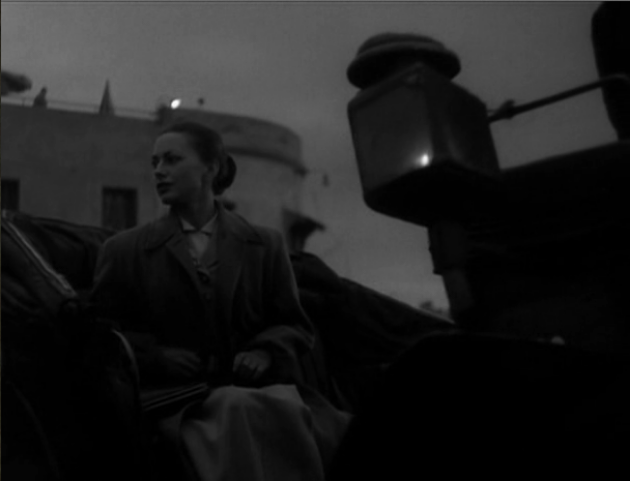
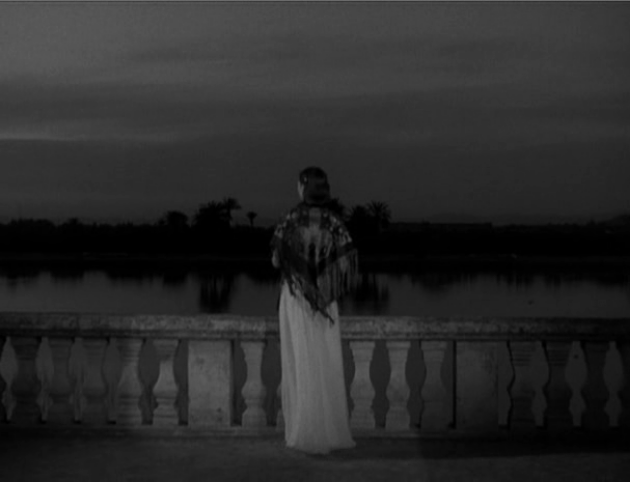
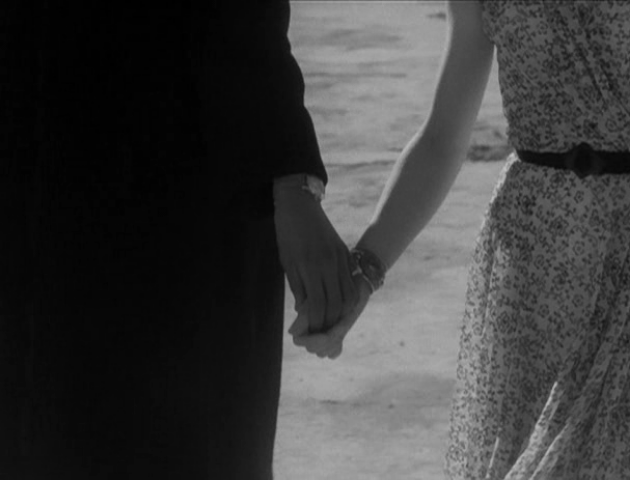
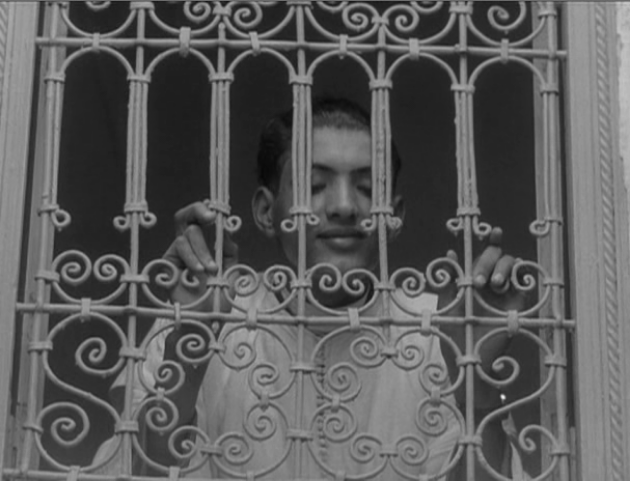
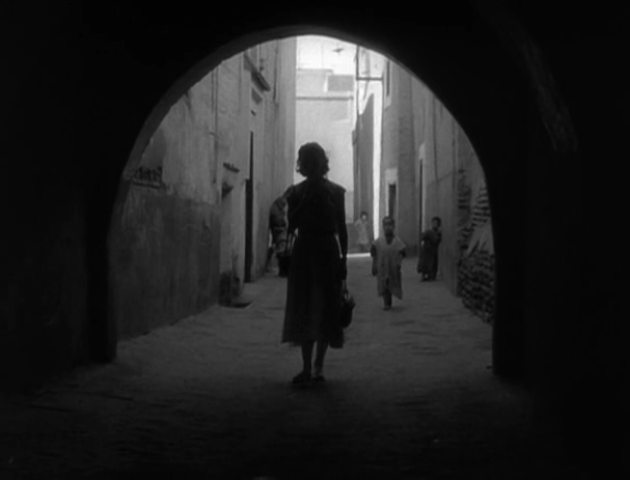
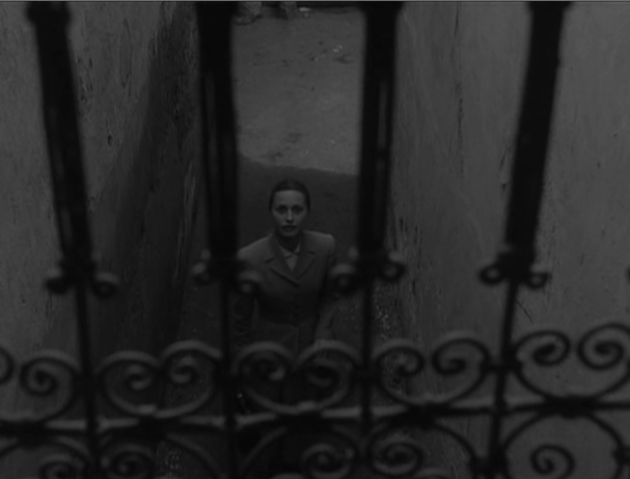
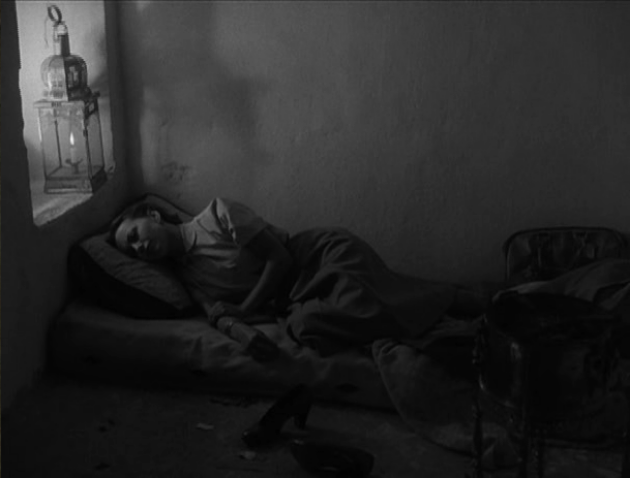
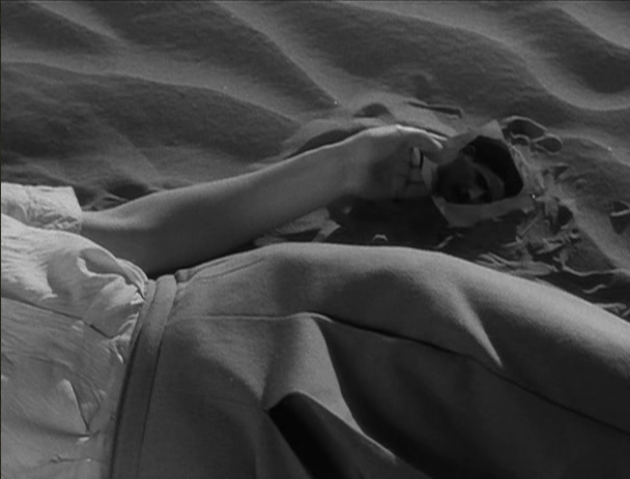
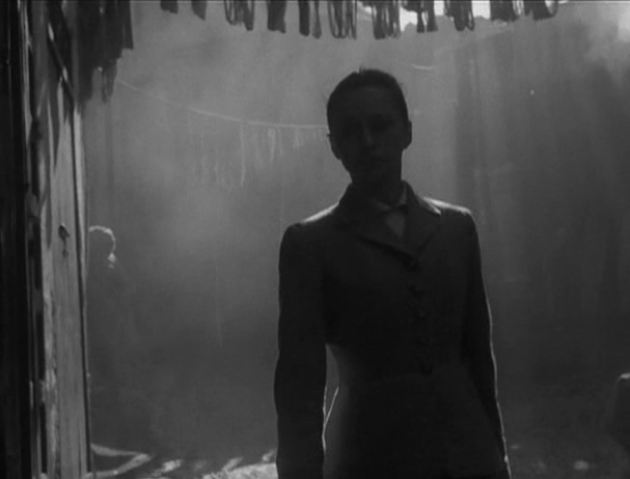
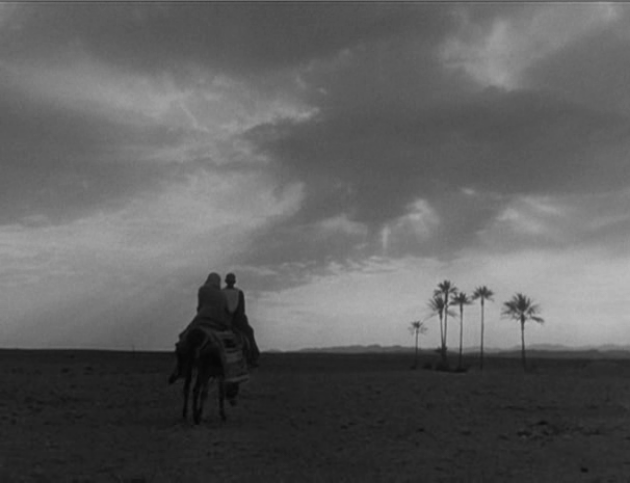
A comely English Governess Rose (Victoria Grayson) arrives in bustling Marrakech, Morocco. She is hired by aging socialite Selena to keep her company and do house chores. She is escorted by Ahmed, a stoic Arab who shows her around the town. Even though she doesn't speak much French or Arabic, Rose gets by with the help of Ahmed, who seems to understand everything. One day at the party, thrown by a flamboyant American Bancroft at a former Sultan's palace, Rose lays her eyes on a young Arab musician, Tayeb. After several rendezvous arranged by Ahmed, Rose is head over heels for Tayeb. His sudden disappearance makes Rose to abandon everything and go on a whirlwind journey into the foreign desert landscape.

Writer Gavin Lambert, a friend of writer Paul Bowles (Shetering Sky, Up Above the World) perfectly captures the melancholy and loneliness of the desert in his only film. Elegantly photographed and with great local music, Another Sky is a beautiful film about magnetic force of the desert landscapes, being lost while searching for something unattainable, a mirage.

Thursday, January 16, 2014

Interview: Hirokazu Kore-eda on Like Father, Like Son and Parenting

 photo 6f1c0d6f-03c9-4d8a-a527-fa478de8faaa_zps3f37a590.jpg
Regarded by many as the best contemporary Japanese filmmaker and spiritual heir to the master filmmaker and humanist, Ozu Yasujiro, Kore-eda Hirokazu has been making quiet, deeply affecting films about childhood, family and death. I told myself not to cry while watching his new film Like Father, Like Son at the New York Festival last fall, but couldn't help tearing up at the end.

Soft spoken and a with gentle demeanor, Kore-eda was exactly how I imagined him to be when I sat down for an interview, one early October morning.

Many of your films deal with family and childhood and this film is no exception. I'd like to know about the origins of this particular film which involves a 'switched at birth' story.

For the last couple of films I tried to incorporate my life in it as much as possible. I tried to incorporate motifs and things from my life, the subjects that are close to me. In terms of this movie I think the starting point was what happened with my daughter. I actually didn't have very much time to spend with her. While working on my last film, I Wish, I was away for about a month and when I came home after being away for that duration, she recognized me as a father but I could see that there is this 'resetting' in her mind as to who I was. She was three at the time. Then when I was leaving the next day, in the hallway to say good bye, she said, "Please, come again." [laughs]

It was shocking to me. Then it came to me that even though we are connected by blood, a father has a very different existence and relationship, compared to that of a mother to a child. So I actually panicked. I thought, "this is not good." And based on that experience it made me to think about the ties between the parents and the children. Especially time. The time we spend together, compared to just blood ties - all these went into making this film.

So then do you feel closer to Ryota (played by Japanese TV and pop star, Fukuyama Masaharu) more so than Ryudai (Franky Lily)?

That's right. Ryota. And making him the main character, I thought about 'who would be the least appealing character in terms of who you want to raise your child with. And that was the type I'd like the least.

Fukuyama Masaharu, who plays Ryota is a big star in Japan. Did you have him in mind for the role?


I wasn't conscious about him playing the role when I was working on the screenplay. It was Fukuyama who approached me and wanted to work together. This offer from him was the starting point. I thought I'd portray him in a different way than the way he is usually portrayed before. So that was how it happened.
I couldn't help wondering about your method working with child actors. In films like Nobody Knows, I Wish and now Like Father, Like Son, you capture the moments of pure delight in their faces that is too real to be just them acting and being in characters.

It actually starts with an audition process, forming communication with them to see whether they understand what I'm saying and I understand what they are saying- that's where it all starts. Once that communication is formed with the premise (of the film) then we move audition into rehearsals. It's not that I'll pass out the scripts to them or give them lines to say. It's more of doing a particular scene with me or a person who's going to play the father and just to see how to say the words, have them hear through their ears and have them come out of their own. It's a natural process. Out of hundred children, there are maybe five or six who I'll be able to interact in this way, with those I'll bring them to the set. In terms of the lines, I don't feed them lines, I try to incorporate their words and vocabularies into the lines I create. So i consider myself sort of borrowing their words and returning them. They are the inspiration of those lines. I might say something like, 'try to say something like you did last time or say what you told me the other day'. That's how I've been working with children the last ten years or so.

Has the Great Eastern Earthquake that hit Japan and The Fukushima disaster which has been going on since then changed anything for you as a filmmaker?

Yes, it is something that I am conscious of. It's not really about something that has affected how I express myself. That's something I don't really know for sure. There's probably a portion which unconsciously incorporated into my work, but it's not really simple. Of course there are a lot of works regarding the subject and it's important. But I really think that we are not going to be able to digest everything that's happened until, maybe 5 or 10 years down the road, in terms of its impact on Japanese society.

[He pauses for a long time, then continues]

But I think this time, in terms of making this film, there were couple of motivations for it. One was definitely had to be the earthquake. I think it really enforced the idea of bonds in Japan. The idea actually became very trendy. In a way, it wasn't so good in Japan before (in that regard). But the idea of bonds and people supporting each other and all of Japan becoming one has become very common in Japan. I've been thinking about that, about how we can reduce that feeling to a small community that is family. So I think in terms of how I came up with the idea for the movie about a man and his bond with his family, I suppose the earthquake played the role.

There is always a sense of optimism I feel in your movies. Is it your inherent nature as a filmmaker to portray childhood or the next generation in optimistic light? Is it why you always go back to the subject of family?

In Japan, the word optimism doesn't have a positive connotation. It has a tinge of 'escape from reality'. I wouldn't use the word to describe my work. I don't like making films about downcast or pessimistic side of life. That's just not what I do. The thing about making movies about family is that it is a troublesome subject but also essential. Something that you need.

I know that you support the younger generation of filmmakers by producing their films. Nishikawa Miwa (Dear Doctor, Dreams for Sale) is one of them. I'm just wondering how you go about supporting certain projects with younger directors. And can you tell us some young directors you can think of that we need to know about?

Some of them I supported have already been in my crew so there is a connection already there. And when I actually read a script by someone and it seems interesting, I'd support them. That's usually the process. It may not be so in the film world, but in the Japanese TV community where I came from, it is pretty common practice to help younger pupils. And also I don't have any director friends, so it's a good way for me to make friends who are directors. [laughs] Young directors, young directors….

[Thinking really hard… asking others]

Yamashita Nobuhiro (Linda, Linda, Linda) and Nishikawa Miwa, come to think of it they are not that young. they are all in their forties. [we all laugh] Right now, they are the two I can think of…

Tuesday, January 14, 2014

Avatars

The Congress (2013) - FolmanImage
Image
Image
Image
Image
Image
Image
Image
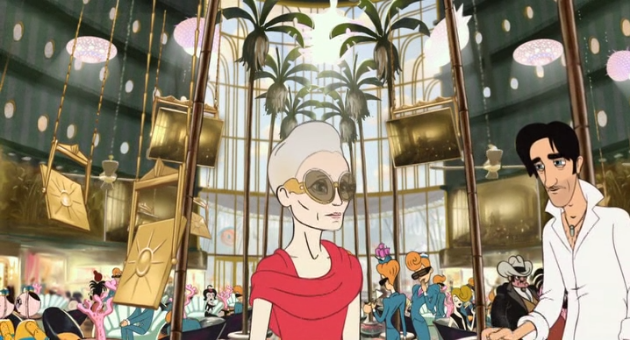
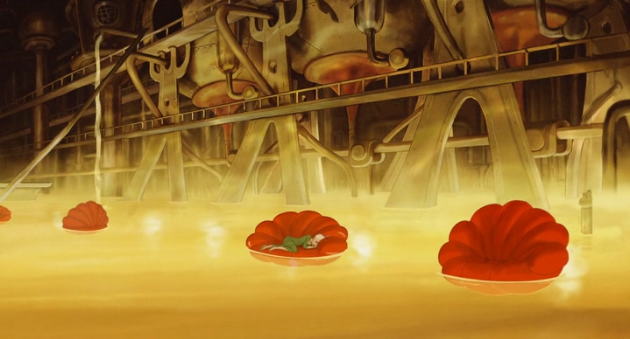
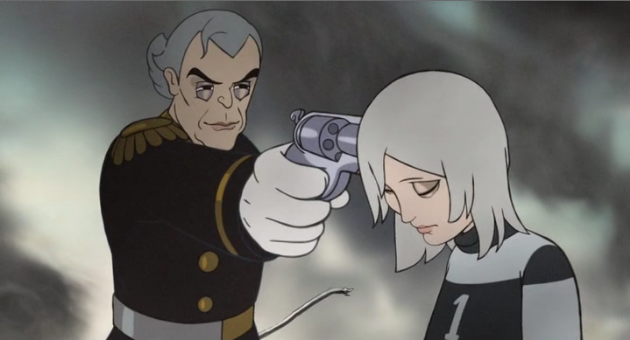
Ari Folman (Waltz with Bashir) returns with a trippy new live action/animation feature. The selling point of this highly ambitious parody on stardom and movie industry, loosely based on Stanislaw Lem's The Futurological Congress, is first and foremost its dazzling animation. The look of The Congress is decidedly retro - a combination of Astro Boy, Fantastic Planet, Betty Boop on acid.

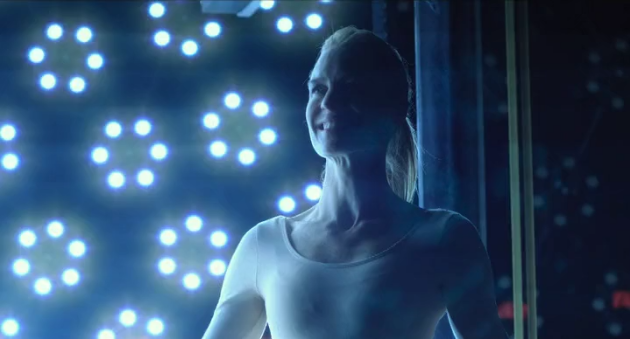
The story concerns Robin Wright, a middle aged former actress who lives in a airplane hangar with her two kids, Sarah and Aaron. Hollywood had tired of her because she's been a 'difficult' actress all her career. Her long time agent Al (Harvey Keitel) visits her with one last offer which seems to be the norm for the aging actors in the business ('Keanu has done it!') - total body scanning. Once she is scanned completely into the computer system, she will never be able to work again. But her computer generated younger self, forever at age 33-34, will star in whatever studio demands. She will be handsomely rewarded. Aaron having some sort of sensory debilitating disease and half-threat from the ruthless Miramount studio head Jeff (Danny Huston), Robin reluctantly agrees to the deal.

Twenty years later, she visits Miramount again to attend the animated world of Congress, where they announce sensory altering drugs where people can drink the portion of the celebrities of their choosing and become like their idols until the drug wears off. By now Robin's computer generated self is a mega action babe and no one recognizes her old self except for Dylan (voiced by John Hamm), an animator/scan artist who has been in love with her since her 'retirement'. She opposes the drug that suppresses individualism and promotes hiding behind mask in public and pays the consequences. Then there is an animated revolution...

Folman's take on our technology imbued society where people wear masks/live through avatars is an overly ambitious project, so much so its narrative structure has visible cracks everywhere. Yet by the end, you are so dazzled by its colors and style, you find yourself standing dazed, covered in its electric rainbow mist, asking what just happened.

Thursday, January 9, 2014

First Look 2014 at The Museum of Moving Image

 photo b70b01df-aa44-46a8-ad7b-daeba517e285_zps77a3f4ae.jpg
MoMI (Museum of Moving Image) presents First Look, a bona fide film series showcasing new works by established filmmakers and first timers alike from all corners of the globe, carefully selected by the esteemed curatorial staff (first by Critic Denis Lim now David Schwartz and Aliza Ma). Quietly nestled in post-New Year hangover days with crazy award season just around the corner.First Look is fast becoming one of the most sought after film series in New York City. The series runs from January 9 - 19.

This is where I first saw Chantal Akerman's gorgeous new film Almayer's Folly and Philippe Grandrieux's loving documentary, It May Be That Beauty Has Strengthened Our Resolve: Masao Adachi, on the Japanese New Wave great Masao Adachi in its inaugural edition two years ago. Last year, the series graced me with Bruno Dumont's seldom seen 2011 masterpiece, Hors Satan (one of my very favorites of last year) and a beautiful three-hour documentary on the remote island of Corvo and its inhabitants off of Azores, It's The Earth, Not The Moon.

This year, they are presenting 13 features and 6 shorts on two consecutive weekends, including Godfrey Reggio's new film The Visitors with Philip Glass's score, Glass will be presenting the screening along with Steven Soderberg. The opening night's film, Little Feet is a new work by American Indie staple, Alexander Rockwell (In the Soup, Somebody to Love). I am particularly interested in seeing the Chilean offerings, The Quispe Girls and The Summer of Flying Fish, as well as Ape (pictured above) by Joel Potrycus. For any cinephiles, First Look offers a great start to a new year.

Please go to the MoMI website for more info, schedule and tickets.