Thursday, November 7, 2013

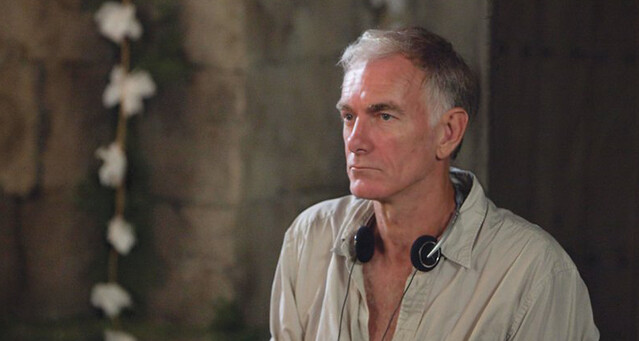
John Sayles Interview

John-Sayles
Go for Sisters, a new film by director/writer John Sayles, the godfather of American independent cinema (Return of the Secaucus Seven, Brother from Another Planet, Lone Star, Limbo), is just as I expect in a John Sayles film; beautifully written, beautifully acted, mature and always relevant -- the qualities so rare in mainstream American cinema these days. Recently I had a chance to talk to him briefly on the phone about his new film, Edward James Olmos and the country's immigration reform debate.

Can you tell me the origin of GO FOR SISTERS?

Chinese smugglers of illegal immigrants are called Snakeheads. There was a case in New York where the head of this organization got indicted for human trafficking. She was operating in a hole in the wall place down on Canal Street. They would come first to Belize, Guatemala by ships, then to Mexico through our southern borders or through Canadian border up north. They come from China for economical reasons. So for many people, she was a good business woman providing valuable services for those who want to come over.

Then I had this situation in my head for a long time -- about two very close friends whose lives have taken different paths and are reunited in the most awkward of circumstances. I've heard that there is a stricter rules now in monitoring parolees in the parole system. It's in the film where Fontayne (Yolonda Ross) has to pee in the cup in front of her parole officer, Bernice (LisaGay Hamilton) -- the two High School friends who haven't seen each other for a long time. So those two things just came together.

It's such a beautifully acted film. Did you have certain actors in mind for these roles?

I usually don't do that when I make a film. There are a lot of actors I want to work with but that doesn't mean I can get them -- sometimes their schedule doesn't work out, they might not want to work on a reduced scale, they are having babies.... But when I was writing Go for Sisters, I had these three actors (Hamilton, Ross and Edward James Olmos) in mind.

I've worked with LisaGay before in Honeydrippers. I've auditioned Yolonda for LisaGay's role. I remember jotting down next to her name, 'not quite right for the role but a terrific actor, will need to work with her in the future'.

It's so opposite of Hollywood. There are no mainstream films about two African American women in their 40s.

There are so many talented actors who are not getting work, let alone good roles. Lucky for me, they both were available for this project.

Eddie James Olmos is an actor I've been admiring for a long time. We've met at film festivals and such before but I never got a chance to work with him before.

Edward James Olmos is also credited as one of the producers, how did he come on board as a producer?

He's a legendary actor. He's done a lot of films. And half of the films he's been in had to be independent. He was in most of Robert Young films.

Yeah I remember watching Robert M. Young's great film, CAUGHT, which Olmos produced also.

Not only that, he is a director as well. So he knows what making small independent movies, shooting on a shoestring budget is like. There are a lot of components to producing and he was a great help.

So what's Freddy Suarez (Edward James Olmos's character)'s backstory? Why is he helping these two women out?

As it was portrayed in the film, first it was money. Because Freddy was disgraced when he was in the police force, the pension is gone. He needs to pay for paying the mortgage. Two thousand dollars is not much money but he is in a desperate situation. So he takes the job to help Bernice and Fontayne to locate Bernice's son. The second reason is, as he learns along their trip, he wants some sort of redemption. Not that what happened to his career was his fault, he still wants to redeem himself for doing something right.

It's an amazing performance. I hope he gets some kind of recognition for this.

It can happen. Hopefully many people will see the film and I am actively talking to many of my actor friends to vote for him come awards season.

I can't help thinking about what would be left out while watching your films compared to Hollywood films. There are two beautiful scenes I want to talk to you about: And these are the scenes that if GO FOR SISTERS was a Hollywood film, they would surely be cut out.

Right. For Hollywood projects, there can be no breathing room. It has to be a roller coaster ride and you have to move on. I do a lot of script doctoring for Hollywood films so I know how that works. The thing about doing your film your way is that there is no financial pressure coming from studios.

I love the scene with Bernice and Fontayne at the AA meeting, where Bernice understands what Fontayne has been going through for the first time. The other scene I love is Freddy buying the young Mexican mother and her little girl breakfast.

That's the trade off, isn't it? On one hand I am shooting a movie in 14 days with under a million-dollar budget, barely making it. On the other hand, I have a freedom to really get into creating characters and give them more nuances.

I know it's always a struggle for you to find funding for your film. The last time I interviewed you for AMIGO which was a historical period piece, you told me that one of the main reasons you shot that film in the Philippines is because you could do it cheap down there. I am wondering what you could've done differently if you had more money for GO FOR SISTERS.

(Without hesitation) I would have liked to pay actors and crew better. I mean the reason I could've (barely) made Go for Sisters was because its budget was low enough to qualify for the SAG Modified Low-Budget Scale agreement, which I understand, is about the same as the California State minimum wage. Because of this I could worked with many of the actors (besides those three principals) I always wanted to work with but didn't get a chance to -- Hector Elizondo, Harold Perrineau and Isaiah Washington. So I would've definitely paid them more - actors, crew, everyone involved.

Can you tell me your assessment on the climate of Washington in terms of immigration reform?

The problem with immigration laws in this country is that they aren't practical, they're symbolic, and the government is unwilling to enforce our minimum wage laws. If immigrant workers had to be paid minimum wages, fewer employers would hire them, and we'd have a better idea of what their true employment situation is. Then we could arrange a work-permit and visa system -- this has been done before. Instead we have a free-for-all that is both racist and hypocritical.


Go for Sisters played at SXSW this year and has a theatrical release on Nov. 8 in NY, Nov. 15 in LA and regional roll out in Nov/Dec.

Ethnography of Mirage

The Days of the Eclipse (1988) - Sokurov
 photo e4f7fc56-8c0c-478a-b4a1-1953739516ae_zpsf967e260.jpg
 photo ed5aabbf-6173-45ae-bdbe-532a69595763_zps060bb3b9.jpg
 photo 39e25ad3-ccd6-4d20-b8f8-0208692ab01e_zpsc531dce8.jpg
 photo aeeaf914-ac65-4210-84cf-05bc7084e44e_zpsc04b1052.jpg
 photo e6281c03-76c1-4fdc-bb5a-b14d0d4fcffa_zpsd10ab393.jpg
 photo ef7106d8-4ab5-4efd-8dcf-0b176d545fb3_zps17f03f29.jpg
 photo 9dd8f987-4113-4961-9359-e545eac73438_zps72bfdaae.jpg
 photo 988a80a0-ec7f-4d6d-ba80-a82e91d445eb_zps6433b87e.jpg
Strange and heady, Sokurov's semi-Sci-fi is a surrealistic meditation of the USSR on the eve of its dissolution. It starts with the POV shot of a celestial being flying over the barren, arid Turkmenistan landscape and crashing down to earth, accompanied by laughter of a child and Ennio Morricone inspired carnival music. Then we are introduced to its inhabitants - old, toothless people with decidedly Asiatic features. Sokurov points out many times throughout the film that this dusty small village in the desert could simply be a mirage.

Dmitri, a fresh faced young doctor/writer from Moscow is our prince Myshkin: he is more of an ethnographer, observing the foreign landscape and its inhabitants. The unrelenting heat makes many of the residents sleepless and Dmitri shirtless most of the time. His adobe is strewn with papers, exotic animals and strange artifacts and uninvited visitors. His life is total chaos: he talks to a recently deceased friend at the morgue, gets into a fist/kick fight in the street while trying to intervene the fight between two men and gets taken hostage by an armed military man.

The Days of the Eclipse can be read as a palimpsest of a Soviet federation's history: not quite understanding different ethnic groups with completely different culture and religion under one large umbrella. And its past still haunts even in the remote valley in the desert. The most beautiful scenes are the ones with celestial cherubic blonde kid appearing at his doorstep. He tells how handsome Dmitri is, but sees time passing in his face. Perestroika is good looking and all, but is it going to last?

Wednesday, November 6, 2013

Sisterhood

Go for Sisters (2013) - Sayles
 photo 0ee9d1bf-e0b0-4855-b6af-a35bb8025a4c_zps41adc9b0.jpg
A solid movie from John Sayles. It's not mindblowing or anything but as usual in John Sayles film, acting and script are superb. It concerns two childhood friends, Bernice (Lisa Gay Hamilton) and Fontayne (Yolonda Ross) reuniting as a parole officer and a parolee. Their lives went different ways after High School. Bernice became a no-nonsense, "I can sense your bullshit even before you finish your sentence" law enforcement agent and Fontayne has been struggling with drugs and bad relationships.

Bernice gives Fontayne a break with the parole violation for old times sake, but its her asking her old friend's help whose seedy underworld connection might help locate her son who maybe in trouble. With the help of an old disgraced cop, Freddy 'the Terminator' (Edward James Olmos) the odd trio embark on a road trip down south of the border.

Fine tuned performances never delves into caricature territory. Class differences explored and so is the problems of human trafficking across the border. Olmos is so fucking good in this as an aging cop who is amazing at his job while going blind. And there are some very fine moments in the film that would've definitely ended up on the chopping block if it was a studio film. Go for John Sayles!

Tuesday, October 29, 2013

Žižek Remains Hopeful, So Should You

The Pervert's Guide to Ideology (2013) - Fiennes
 photo b6e87d84-d965-45d1-8427-c89aeb112cd0_zps187d4e80.jpg
Why is it easier for us to visualize the end of the human race, than the end of the free-market capitalism? This is the driving question behind the latest collaboration between Slavoj Žižek, the superstar philosopher/psychoanalyst/cultural critic of our time and director Sophie Fienne's in their new documentary, The Pervert's Guide to Ideology. It's their second film since the widely successful The Pervert's Guide to Cinema in 2006. Clocking at 135 minutes, Ideology is arguably less entertaining than its predecessor despite the charming presence of the famed philosopher in several iconic movie backdrops, gesticulating wildly and sounding like the Eastern European Sylvester the Cat. But this film is a denser, more serious examination of our consumerist society that asks many of the important questions of our time, and will require your full attention. As the film jumps briskly through various components of ideology, I suggest seeing the film more than once to absorb Žižek's whole thought process.

For a person who grew up in Communist Slovenia during the Cold War, and hailing from a Marxist/Anarchist perspective, Žižek is equally critical of all ideologies -- the Soviet Communism, Fascism, Capitalism and religion. With various examples of Soviet era war films and Nazi propaganda, he demonstrates the manipulative nature of ideology.

While this film is intellectually complex and sometimes hard to follow, there are many brilliant moments that you just have to nod and smile. One of these is in the beginning, with John Carpenter's hidden gem of the Hollywood Left, They Live. Žižek begins his dissertation by the dumpster in a back alley in LA, where the epic fist-fight between Roddy 'Rowdy' Piper and Keith David takes place, because David's character refuses to put on the sunglasses that will let him see the hidden messages used by the yuppie aliens to control the human race ("Obey", "Money is your God" etc - all the good things about the Reagan years). Ideology is essentially the filter that we see the world through.

Žižek uses different cultural examples to demonstrate how historic ideological movements manipulate the masses. Beethoven's 9th Symphony -- Ode to Joy, a world famous melody associated with a vision of fraternity amongst all human beings, has been appropriated by many political movements: Nazis, Marxists, Maoists and even the Shining Path -- believe it or not, these were all 'utopian movements' in their own minds. It was the national anthem of the apartheid government of Southern Rhodesia (present day Zimbabwe) and is now the anthem of the European Union. After the long historical montage, you are relieved to see Žižek sitting in the Korova Milk Bar from Clockwork Orange. The genius of Beethoven is not only utopian vision in music, but the realization that there are those who will always be excluded from this utopia, as illustrated by the carnivalesque version of the symphony's fourth movement heard in the scene where Little Alex prowls the shopping mall.

Žižek dissects our advanced, capitalist system using Freudian psychoanalytic terms and Western philosophy, giving variety of cultural examples for the laymen: Sound of Music, Kinder Eggs, Starbucks, coke, Titanic.... He takes us to the Mojave Desert -- the gravesite of derelict airplanes, for us to witness the amazing amount of waste created by the current economic system. For those who are not familiar with Plato's Republic, he sites Dark Knight to explain the 'Noble Lie', a conservative view of the society where it is necessary for the rulers to lie because the public can't handle the truth.

All this heady, intellectual inquiries are at times too much. Fiennes deftly moves from one iconic movie setting to another connecting the dots and continuing visual threads to keep up with our motor-mouthed host and keep the film afloat. The movie settings are perfectly matched with the originals and the visual gags are clever and funny.

Capitalism is the only revolution that survived because it thrives on economic crises and social turmoil. Why do people loot during the riot? Žižek uses an example of the London Riots of 2011. In our consumerist system, people's frustrations in social and economic injustice can be only expressed by stealing objects. We go back to his main question for the finale:

Why do we so easily envision asteroid hitting the earth or the end of days rather than seeing a moderate change in our economic system?

I saw him speaking eloquently about the possibilities of envisioning a different kind of world for our future at the Zuccotti Park, during Occupy Wall Street protests in 2011. With The Pervert's Guide to Ideology, he is suggesting us to examine the past, learn from mistakes and be a little bit of a realist in seeing the world.

The Pervert's Guide to Ideology opens 11/1 at the IFC Center followed by other markets.
Slavoj Žižek and director Sophie Fiennes in person Fri Nov 1 & Sat Nov 2 for Q&As following 6:45 shows.

Plus book signing with Žižek for his new book Less Than Nothing: Hegel and the Shadow of Dialectical Materialism, Sat Nov 2 at 9:45pm – books on sale at lobby concessions stand.
Please visit IFC website for tickets.

Thursday, October 24, 2013

Mother Russia

Mother and Son (1997) - Sokurov
Mother and Son Mother and Son 2 Mother and Son 3 Sokurov's idea of the basis of all human relationship - the one between mother and child, is stunningly visualized in Mat I Syn. As the rightful heir to Tarkovsky and reining spiritual backbone in faithless, chaotic Mother Russia, Sokurov shows eternal rebirth of devotion, sadness and nostalgia. The film's dreamy, skewed images are heavily influenced by paintings of Caspar David Friedrich. The look of the film is like nothing I've ever witnessed on film: its slightly distorted, no depth of field, soft green & yellow palette creates the world where time has lost all its meaning. It's a beautiful and soulful film.

Tuesday, October 22, 2013

"I Don't Need to be Put on a Pedestal": Claire Denis Interview

 photo b83e23e7-7a4c-4ed9-a2ce-a8a4549cb917_zps95c90cde.jpg
Claire Denis goes all-out noir in Bastards, a brooding, nocturnal thriller where innocents get punished and good men die. With a star studded cast, Denis creates a film experience so seductive and mesmerizing, it reminded me of the exhilaration that I haven't felt in theaters since, gosh, maybe Mulholland Dr.?

The film's strong sexual contents are stirring controversy since it debuted at Cannes (in Un Certain Regard section). It will be a divisive film for sure. But there is no question that the film demonstrates Denis as a filmmaker in her prime. I had a pleasure of chatting with her for the second time since her last outing to NYFF with White Material in 2010.

BASTARDS plays out like a hardboiled film noir in the vein of James M. Cain and reminiscent of CHINATOWN. I know it's co-written by your long time collaborator Jean-Pol Fargeau. Is the story based on anything?

Yes, it was based on something. I wanted to work once more with Vincent Lindon (they collaborated in Friday Night, 2003) and have him to play someone like James Caan or Toshiro Mifune -- someone solid, someone we can depend on. But I like seeing bad things happening to those hero types. So I started with some Kurosawa revenge movies from the [60s] -- Bad Sleep Well and High and Low. Then with Jean-Pol, we decided that if we wanted to do a noir that we will write it straight forward, scene by scene, brick by brick. Otherwise it wouldn't work because I have a tendency to revise again and again and again.

There is a plot but like many of your other films, it's all about the mood and atmosphere you create. I'm wondering how much of the script is translated on the screen?

In Bastards, the script was exactly the blueprint of the film. Nothing was invented on the set. One scene was cut and I wanted the killing of Marco to take place on the seaside. They were going to carry the little boy off by the boat and she (Chiara Mastroianni's character) shoots him and he falls into the sea. But that' about it. The weather was bad and it was going to cost too much. Other than that, there was really no big change made. Everything was planned well and it was different than shooting in other countries where I have no control over all those sudden changes. I love the locations and it was very easy shooting in Paris.

The mesmerizing soundtrack, once again, is composed by Stuart Staples (of Tindersticks). How does this collaboration work?

We are always in the process together. We go through the script and we discuss, then he sees the dailies. In this film, I told him about Tangerine Dream. I wanted something electronic, something inhuman.

It's really gorgeous.

The way Stuart helps me with the project, he is not only a working companion or musician. He's much more than that. He is someone who I trust so much. In White Material, he was the only one who made me cut out a scene. I wouldn't do it for anyone but he said, "I don't understand that scene," and I said, "Alright, if YOU don't understand it, I'll cut it out."

Wow.

No it's because...he is such a great poet, such a great musician. His feelings are so intense.

And his sensibility matches with what you are trying to do?

It's more like I try to match with him.

You are so modest.

I'm not modest, you know. When you are making films, you are clumsy because you have to take care of a lot of stuff. I'm not exaggerating about Stuart. A collaboration with him is like me flying and he is my co-pilot.

So the great Agnes Godard again shot your film. And for the first time you shot on digital video. I'd like to know what you think about the whole digital revolution that's been happening and if you liked the result shooting on video.

Of course, I like the result. We chose to shoot the film that way, so it had to work. I was happy to do it. I was thinking about shooting White Material on video already. But I thought the look of digital was too cold for the project. So we chose to shoot with low speed Kodak film with almost pinkish tone to express the heat on Isabelle [Huppert]'s face. This heat you can't get it on digital, unless you add it in [color] timing in post. But it's not the same. It still seemed too cold to me. The heat comes from the depth of field and the reaction to the film itself. For instance, when it's very hot, the RED EPIC camera won't work. You have to put an icepack around the camera. Because digital can't stand that kind of heat.

Right. The camera itself gets very hot.

Yeah and it needs to get ventilated all the time. And it's very noisy on the set. It only gets quiet when it's recording. It's like having a computer on set. It took me a week to recreate the relationship I had with Agnes because I don't like to watch film on monitors and I like to be close to the camera. So in the beginning, I felt I was outside the film for a while and I had to fight my way back!

Would you shoot on digital again?

Sure. The thing about shooting digital is trying not to make it look like film. If it looks like digital, it's fine with me.

BASTARDS is stunning though. I love how it looks. And I'm a film guy. But I teach college students how to use digital equipment now. And a lot of kids are not shooting film anymore and it makes me feel sad.

I've seen The Master by PT Anderson last year, shot on 70mm. I mean, wow--

Not many people are doing that though.

I know it's expensive and everything, but it's such a different experience. We should fight to keep them both.

We should.

Because it expresses something else.

I totally agree.

Let me move on to the actors. Whew, such a star studded cast in this one, including your regulars -- Vincent Lindon, Alex Descas, Michel Subor and Gregoire Collin and some actors you haven't worked with before -- Chiara Mastroianni and Lola Créton. I'm wondering if you had those actors in mind when you were planning this film.


I had Chiara in mind for such a long time. But we were shy about approaching each other. And she is an impressive actress, you know? Then we became very close. And Lola, I saw her in two films and I immediately wanted to work with her.

Was the process of working with those two any different than working with your regulars?

No. But I spent a lot of time together with Lola before shooting. I wanted her not to be afraid and trust me and to be the master of the ceremony. I didn't want her to be the victim. So I spent a lot of time with her for that. And Chiara, I know her well, so the trust was already there. But she is someone who doesn't need a lot of psychological explanation. She does it without being told. And it's good for me because I don't like explaining things. So it just the question of being together with those two.

But Vincent is different. He needs a lot of explanation. He always needs more and more. It's because he is such a generous actor. He's always afraid he is not giving you enough.

I saw Lola Créton last year at the festival here.

For Olivier Assayas'?

For Mia Hansen-Løve's GOODBYE FIRST LOVE.

Ah yes.

She was doing a Q&A session and she was so amazingly shy. But in GOODBYE FIRST LOVE, she just gives it all. I am wondering if it was the same for you.

She is shy but you can be shy at the same time as strong. She is both.

There was controversy this year at the Cannes Film Festival where people were protesting the lack of women filmmakers represented. Do you think those objections have merits?

I don't care if I don't win competition. I just don't have time to think about that. If I did, I would become furious. So I'd drop the thing completely and just accept everything I'm given. I remember once watching a Godard movie and afterward I was in a bar next to the theater with Agnes Varda, eating and drinking wine because Agnes was starving. Godard walked by us without giving us any attention and Agnes called him out, "Hey, Jean-Luc Godard doesn't even say hello to me?" So he turned around and said in a slightly sarcastic, slightly comical way "You expect to be decorated (like Legion d'honneur) eh?" as if wanting any acknowledgment was a sin. She said, "Look Jean-Luc, I'd accept everything I'm given." And from then on, I think, 'yes this is true: it's better to accept everything you are given and try not to contest'. It's a waste of time. The controversy about Bastards...I accept it too. I don't feel like a victim just because I'm a woman. I might be victim of myself but not of others.

The thing is, I really want you to be recognized at some point though. You are one of the great directors of our time and I feel sad you don't get that recognition.

Then, what the fuck?! You know what I mean? What can I do about that? Some people like my work and some people don't. Maybe my films are too weird. For some people I am important, but a pedestal I don't need.

Museum of Moving Image is doing mini retro of Claire Denis which culminates to the preview screening of Bastards on Oct. 22, a day before its release in New York. It has a limited release in theaters, VOD and Digital on Oct. 25. Please visit MOMI website and IFC Entertainment website for tickets.

Here is my short review for Bastards

My Claire Denis Interview Nov, 2010

Reviews:

Chocolat
Beau Travail
White Material
Vendredi Soir/Friday Night
35 Rhums

Tuesday, October 15, 2013

Woman Under the Influence

Camille Claudel 1915 (2013) - Dumont
 photo 11287_zps5690123e.jpg
With each new film, a controversial French filmmaker Bruno Dumont continues to fascinate me. His fixation with purity is quite unflinching, and his characters suffer for (or for the lack of) it. Camille Claudel 1915, an even more characteristically stripped-down, austere Dumont film, concerns 3 days in the life of Camille Claudel, a famed sculptress and one time August Rodin's mistress. She has been abandoned and committed by her family to a mental asylum where she would spend the rest of her life until death. Her younger brother Paul, a famous poet and writer with a strong Christian bent visits her during this time, not to rescue her, but to chastise her.

Juliette Binoche, who continues to choose intriguing projects as she gets older, plays the unglamorous title role and giving a measured and beautiful performance of a woman (slightly) under the influence. From what I hear, the famed actress reached out to Dumont because she wanted to work with the director and challenge herself. She wanted to play a woman in a confined space. Camille Claudel 1915 is the result of their collaboration.

So this is quite the rare film where Dumont uses a famous actor (other than the late Katerina Golubeva in Twentynine Palms back in 2003, which I feel was the only misstep in his otherwise singular filmography). In a true Bressonian fashion, he usually populate his films with non-actors. In this film, he mainly focuses on Binoche's non-made up, anguished, hollow face as she spends her days in boredom and frustration surrounded by other mental patients.

It starts with Camille preparing her meal alone in the kitchen- a couple of boiled potatoes. A greenhorn intern who is not familiar with Camille's arrangement tries to stop her only to be the victim of her outbursts. A seasoned nurse quietly informs him that Camille is allowed to prepare her own meals because of her 'condition' that she thinks someone is trying to poison her. Tearful Camille joins the rest of the group at the dining table. It's a group of sad creatures- a toothless, drooling, howling bunch of real mental patients.

For naturalism and fluidity, Dumont and the crew shot the film during the daily routine of the mental hospital (where the film was shot): real patients going about their daily schedule and real nurses playing Sisters of the old Catholic mental asylum. The result is quite astounding. I can assure you that the controversy surrounding using real mental patients in film, that the film is exploitative is quite unfounded. Dumont has proven over the years that what he strives for in his filmmaking is showing purity and authenticity in both physical and spiritual form.

The sibling's differences are portrayed in two nearly identical, long, technically daring scenes: with the other patients in tow, Camille and the Sisters climb a rocky hill. Preoccupied but not unhelpful or uncaring, Camille assists others who are much more handicapped than her to reach the top of the hill. It's a beautiful site. But it's just a hill. As soon as they reach it, they go back down. The afternoon walk is over. Then there is Paul (Jean-Luc Vincent)'s long walk up to a hill behind a church with a friend who is an ordained priest. On the way to the top, Paul describes his first religious epiphany in detail to his friend, his story coming to a crescendo at the peak.

The only time we see Camille smile is when the news of her brother Paul's visit is announced. She is fully expecting to be freed from her unjust confinement. She might be a little paranoid, but she is still a sentient, sensible thinking being. When they meet, he lectures her why she is in her state of misfortune. He deems that it is her arrogance which is prevalent in artistically talented types that gave way to her delusions of grandeur. In his mind, God loves everyone but punishes those who are insolent. It's an unforgivable sin.

Dumont always grapples with the idea of purity of faith in his films. It can be devastating (Humanité). It can be beautiful (Hadewijch, Hors Satan). In Camille Claudel 1915, he examines this purity in a historical context in the lives of historical figures.

Camille Claudel was a tragic figure, not because she was punished by God. She was as much a victim of her paranoia as of the sexist society and its times. As Dumont throws Paul's view in, the film becomes another contemplation of the purity of faith which can be quite rigid, inhumane and self-righteous.

All the controversy aside, the film remains to be beautiful in its austerity. It's a hard film to watch but a very strong one, one that will definitely ring over your head long after you leave the theater.

Camille Claudel 1915 has an exclusive two-week theatrical run at Film Forum, starting October 16. It's distributed by Kino Lorber. For tickets please go to Film Forum website.

Monday, October 14, 2013

New Anthem of the Millennials

Her (2013) - Jonze
 photo 91120178-204a-40ca-a90b-74701a6aac85_zpsac364f95.jpg
It's hard to believe that Her is only Spike Jonze's fourth feature film because it feels like he's been in our pop culture consciousness for a long time. With his music videos and films, he's always been creating worlds that are just ahead of the curve. Written solely by Jonze for the first time, Her is a surprisingly thoughtful and moving film. In a mere two-hour running time, it raises a lot of important issues in our society which is heavily dependent on technology. And it's bound to be a cult classic.

Her refers to the new operating computer system that our sad sack protagonist Theodore Twombly (played beautifully by Joaquin Phoenix) falls in love with. She is a cross between an operating system and Siri. The setting is Los Angeles, in the very near future, where IKEA and Banana Republic seem to have spawned and populated every pore of the city with their sensible furniture and clothing. In this future, everyone pretty much walks around with a cigarette-box sized mobile computer device with a wireless earplug in his/her ear, verbally dictating tasks on the screen at work, playing 3D video games alone at home and have one-night-stands on the internet. Do these sound too close for comfort?

The genius of the film is how Jonze makes us quickly suspend our disbelief and surrender to his world. It's like how much we cared for an abandoned desk lamp in his 30-second IKEA commercial. An inanimate object, in this case a talking computer, becomes a sympathetic, three dimensional being before you realize it (Of course, it helps to have her voiced by sexpot Scarlett Johansson). And yes, there is a lot of humor to be found in many of the film's ironical situations, but it doesn't feel like a gimmick. In Jonze's view, there is no cynicism in irony.

Theo is a lonely divorcé working for a company specializing in crafting handwritten personalized letters for their clients. His insights and ability to personalize the lives of strangers are well regarded among his co-workers. Still reeling from the memories of his ex, Catherine (Rooney Mara), whom he still cares for, he finds love and companionship in his new artificial intelligence enabled computer operating system, Samantha. She is smart, personable, funny, always available and most of all, knows everything about Theo, because his whole life is stored in his computer.

Theo finds out that he is not the only one having a relationship with an operating system. In Jonze's world, this practice seems widely accepted. He and Samantha even go out on a double date with his co-worker and his girlfriend. As their affections for each other grow, Samantha starts to question her bodiless existence. But that doesn't stop them from having a physical relationship which plays out more like hot phone sex. But soon after the ' honeymoon period', they are having problems like any other couple, with jealousy and attachment issues.

After Samantha's attempt at body surrogate with a devout volunteer (Portia Doubleday) who finds their relationship beautiful, fails miserably, things slowly take a turn. With forever expanding her knowledge and consciousness, Samantha starts corresponding with other A.I.s and much to Theo's chagrin, she realizes the restriction of the physical form.

Amy Adams is great as Theo's sympathetic, long time friend and neighbor Amy. Olivia Wilde and Chris Pratt round up the supporting cast. But it's all Phoenix. It catches you off guard when you realize that most of the time, it's him talking to himself, carrying out the phantom relationship. It's another amazing performance from him. His sensitive, vulnerable modern man persona is instantly recognizable and relatable.

What's remarkable about Spike Jonze films is that regardless of his boundless cleverness, there is always an emotional core and sincerity inherent in his work. With Her, Jonze also proves himself to be a very acute observer of the hypersensitive generation which was raised on the computer. Her will resonate and undoubtedly garner a cult status among the Millennials just as Fight Club did with the Gen X.

Leaks

The Fifth Estate (2013) - Condon
 photo news_thumb_43636_630_zps55374146.jpg
There should be a rule in Hollywood that forbids making movies about current affairs that are less than 5 years old. With a grand, manipulative soundtrack, The Fifth Estate is everything I hate about Hollywood biopic. There is absolutely no exciting way to portray computer based info war in films, so Condon and Co. resort to very unhip, breezy 'text across actors' faces' style. Then there is the fake Argo suspense involving Libyan family (friends of concerned State Department employee played by Laura Linney) crossing the border after Bradley Manning's Wikileak of the Pentagon papers. There is a scene where Linney character dismisses Manning as "a 22 year old kid who has mental problems" even. I could give too shits about Julian Assange's private life. He could really be an egotistic rapist people make him out to be. So what if he was? It seems Condon and the screenwriter of the film don't care about anything. Is the film for transparency in our Gov't? Is it saying Assange was reckless man who put people in danger? Is it supposed to be a commentary about a new era of information age? The only good scene is near the end where The Guardian editor in chief played by David Thewlis and Wikileak's former cohort/friend Daniel Berg played by Daniel Brühl talking about the impact of Wikileaks. Benedict Cumberbach and the rest of the cast do a great job. But with its muddled message and by-the-numbers Hollywood filmmaking, only thing general moviegoing public would take away from the theater is this: Assange is a creepy asshole. Ugh.

Long Term Relationship

Only Lovers Left Alive (2013) - Jarmusch
 photo only-lovers-left-alive_zpscff0dd5d.jpg
Jarmusch's latest is a take on vampire genre. Just like anything he's ever done, the genre trapping is in the name only, it's all Jarmusch. An extremely good looking couple, aptly named Adam (Tom Hiddleston) and Eve (Tilda Swinton) lives in seclusion. They have very distinctive personalities- Adam, a depressed musician, lives in once the great American music mecca, Detroit. Eve leads a nomadic life in Tangier. Adam has no interest in technology and the changing world around him, while Eve flourishes. After sensing Adam's destress, Eve comes to Detroit and they hang out, touring the beautiful decay of now all but abandoned city. Things get complicated when Eve's spunky younger sister, Eva (Miwa Wasikowska) shows up. The little brat from LA is cramping their style. They have enough when Eva kills Adam's human minion and drinks his blood. It's time to fly back to Tangier where they have connections to fresh blood supplies.

As usual, with Jamusch's deadpan humor abound, Only Lovers Left Alive is a beautiful, funny, playful pun at vampire genre and also a poignant contemplation on long term relationship. I mean, how do you keep up the freshness when you have eternity together? Sometimes the film feels like self-indulging exercise in coolness. The namedropping of his cool friends gets kinda annoying. But that's Jarmusch for you. He is a cool dude and no one can deny that. Oh and amazing soundtrack as usual.

Saturday, October 12, 2013

Bangkok Dangerous

Only God Forgives (2013) - Refn
 photo 9eb52376-ac8d-4239-bb2f-2c00fdc68cff_zps4b81c90e.jpg
Only God Forgives is not very different than Refn's previous films. And I have no complaints. Immaculately designed and choreographed, the film looks and sounds fantastic. Its composition and colors all seem like house of cards at first, but its plasticity grows on you. Ryan Gosling's expressionless face and sparse but totally lol dialog hurtle the film toward unintentional black comedy territory. But once you shake off that unavoidable, nagging tendency to compare him to the stylings of Kubrick and Lynch, deep down you know this guy has got something. It's his use of silence that gives his vulgar, low life characters weight. And I love that. All in all, it works. It was a blast!

Thursday, October 10, 2013

Coming of Age Film of Different Colors

Blue is the Warmest Color (2013) - Kechiche
 photo 12da6cde-30c5-425a-b600-25e373c890a1_zpscb268f4a.jpg
The film makes me think about why it feels different than other comparable French coming of age films. I don't want to generalize anything, but could the reason be because it was directed by a man? I don't mean whether this or that feels more sincere and honest. This film deserves all the accolades it is garnering. Adèle Exarchopoulos gives an unbelievable performance as Adèle, 15-year old High school junior who falls hard for an older, blue haired art college student. Léa Seydoux, the elder of the couple, assumes the older, wiser, more emotionally stable Emma. The three hour film covers about ten years of their relationship. It breezily moves along. There is no time for life's little details in Kechiche's direction. He prefers long-drawn out natural dialog scenes that don't necessarily signify anything.

Adèle is not some sensitive damsel who cries from reading flowery poetry. She is a tough talking, voraciously gastronomical, voluptuous girl who wants to be a teacher. When she cries, she is a blubbering mess. The much talked about graphic sex scenes render their bond more palpable. I understand that majority of lesbians don't look like Exarchopoulos and Seydoux and there is an exploitation tinge when Kechiche enthusiastically talks about his actresses 'bodies' in interviews. But no filmmaker I can think of used sex this way though in portraying first love. It's something everyone goes through and it hits home hard. Therefore Adèle's joy and heartbreak has much more resonance. This would make a good double feature with Mia Hansen-Løve's Goodbye First Love for further discussion on female directors vs male directors on 'adolescent girl/coming of age subject. They are equally great film, but with different sensibilities. I find Blue resonating more for me because of its honest depiction of physical attractions and intimacy of two people who love each other. After winning Palme d'Or at the Cannes this year, Blue is the Warmest Color plays as part of NYFF on Oct. 11th. Please visit FSLC website for tickets.

Monday, October 7, 2013

Unabashedly Noir

Bastards (2013) - Denis
 photo 693a88ec-d710-4c4d-ab97-c4a175f25db9_zps99f8ea9b.jpg
It's raining. Hard. The camera descend alongside the wall of a building glistening in water outside. The man in the building seems distressed. Then we cut to a naked, teenage girl (Lola Créton) walking down a wet street. She seems to be in trance. Then it's Marco (Vincent Lindon), a sea captain coming in to the harbor. This is how the film starts. With moody music by Tindersticks, I'm instantly hooked.

Denis goes all out noir on Bastards, a brooding, nocturnal thriller where innocents get punished and good men go die. With star studded cast - the mix of her regulars (Alex Descas, Vincent Lindon, Gregoire Collin, Michel Subor) and new to her clan (Chiarra Mastroianni, Lola Créton), Denis creates a film experience so seductive and mysterious which I haven't had since maybe Mulholland Dr. Its pulpy premise and fuzzy the ending didn't really bother me. I hear this was Denis' first foray into digital filmmaking, but with Agnes Godard at the DP helm, the images are just as mesmerizing as her previous films. Bastards played as part of NYFF. It will get theatrical releases in October 23rd here in New York and available elsewhere in theaters, VOD and digital on 25th. Don't miss it.

Here is Tangerine Dream inspired, mesmerizing soundtrack by Stuart Staples:

Sunday, October 6, 2013

Scenes from A Marriage

Exhibition (2013) - Hogg
 photo de2c31eb-3b86-4e55-abda-1b07e21e903e_zps5e362447.jpg
British filmmaker Joanna Hogg, along with Mexico's Fernando Eimbcke is chosen by FSLC's The Emerging Artists Program, part of this year's New York Film Festival. They are playing all 3 feature films by her, the latest being Exhibition. Recently discovered her films and impressed by her talent in portraying human (dis)connections related to specific environment, I was eagerly awaiting her new film. Complex yet subtle, innovative yet basic, it's absolutely one of the best films I've seen at the festival.

A three-story modern house is just as much a character in Joanna Hogg's Exhibition as a married artist couple (played by non actors - Viv Albertine of the punk rock band Slits and artist Liam Gillick) who inhibit it. Equipped with floor to ceiling glass windows, a small lift, a spiral staircase, curtains and dividing screens, the building possesses strong sense of utilitarianism. The childless, middle aged couple have their own work spaces and talk to each other through intercoms whenever they need each other's company. He is a successful architect and she seems to be an artist who is still looking for her voice. At the moment, she is obsessed with recreating Ecstasy of St. Teresa with her own image. For hours on end, she poses almost acrobatically on a stool, looking at herself in the mirror for sketches.

Accompanied by amazing sound design, Hogg often creates and takes away these dividers, figuratively and literally between the couple, inside/outside. The large windows reflect what's inside as much as it shows what's out. We hear everything as she works in her space which is located underneath(!) his space- from heavy footsteps to sliding doors, shutters, sirens outside, street noise, people fighting, construction....

These people are still very much in love and tell each other so (through the intercom). They even take bath together. She fakes fainting so they can be excused from a friend's boring dinner party. They really want to be together and left alone most of the times. Yet they have problems communicating their feelings verbally. Each needs his/her own space too. Just like real life couple, they are complicated people.

They are in the process of selling the building which they have been living for over a decade. Their only condition to a real estate agent (Joanna Hogg regular Tom Hiddleston) in selling is that the building should remain intact and never get demolished. At the party celebrating their leaving, they ironically serve the guests the cake- the mini replica of the building.

Without much of expositional dialog, Hogg paints the complicated picture of relationship brilliantly using other means. The result is exceptional. If her previous films (Unrelated, Archipelago) showcased her as a promising writer/director of subtle emotions and family dynamics, Exhibition proves that she is also very much in tune with cinematic language. The film announces the arrival of major cinematic talent.

Along with her 2 previous films, Exhibition plays part of this years NYFF (The second viewing is on Oct. 8th). Please visit FSLC website for tickets.

Friday, October 4, 2013

A Touch of Jia: Jia Zhangke Interview

 photo ea69187b-d643-48e6-b6bc-c2df29b981b3_zps14d5c59f.jpg
A Touch of Sin is an anomaly for Jia Zhangke. Or at least it feels like it. Known for his unique melding of documentary and fiction, observing China's transformation with critical eye and nostalgia, here he bases the film on four different recent news flashes. First half tells gritty, violent, senseless killing sprees, the second half turns a little giddy in its style with dramatic shifts. The fact that they are based on real events adds another layer to this sprawling, ambitious film. Interesting to note that Jia's version of real life events veers dangerously toward glossy fiction.

I had a privilege of talking to him on the phone while he was in town for this year's New York Film Festival.


First of all, congratulations on winning the best screenplay at this year's Cannes film festival. That said, knowing your documentary work and your documentary style, I am wondering how much of the dialog is actually written and how much of it was improvised.

On the script level, everything was very detailed including the dialog and lines for each character. Actually there are two different, distinct states that were shot within because the characters portray two different states.

Right.

The first one is this very natural, sort of quotidian, relaxed state. When I approached writing this aspect of the script, the dialog was more loosely written and I left some room for improvisation. But the other, the opposite end, there are very dramatic scenes in the film. For those scenes I needed the actors to stick to the script so they could prepare for the scenes. So I required them to stick very closely to the dialog that was written on the script.

Your films always have been reflections of rapidly changing Chinese society, but never really this explicit about death and violence. I wonder what made you to concentrate on that aspect in this film.

Because the violence is an issue in social reality in China that has been accumulating in the past 2-3 years in particular. I digest them via the social media- from microblogs and weibo(Chinese version of Twitter). I noticed that these events are very widely discussed and I wanted to portray this in my film.

The scope of your film has been getting bigger over the years. You were making films in Shanxi, your hometown, then you moved on to other cities- Chengdu, Beijing, Chunquing, then this film takes place in 4 different corners of china with 4 different stories. Is this your biggest production yet?

Yes. It was definitely the biggest and the most challenging one. The geography required us to travel four different locations. We were arranging things in a countryside separated by thousands of kilometers. We kind of joked that we indeed made four different films in one. For instance, casting we had to do four times, scouting locations, four times, and so on and so forth.

It was also an expression of the theme of migration in wuxia films. The theme that characters are always roaming around the country...peripatetic you could say. You can also notice it in traditional Chinese paintings that the landscape also conveys sense of movement. So there was an emphasis on landscape in this film.

Considering the scope of the film did it take longer to make than usual?

The entire production we spent about half a year and the principal photography was about three months.

The fantasy aspect of the film doesn't come out until Hubei story with Zhao Tao where things take interesting turns in terms of mood and rhythm. Was there a specific method on which order the film was going to play out?

The integral structure of the film rested upon two notable considerations: One is temporal - I structured the film temporally around the Chinese New Year. The first segment occurs during the lead up to the New Year where people are migrating. Second part happens during the New Year. The third part occurs after, where everyone travels back to work and the last part is after that. It's the time of the year when this mass migration happens in Chinese society.

The other consideration was that of geography - going from north to south. Four stories together formed a throughway in Chinese geography.

Along with the progression of geography, there is also the progression of drama. For instance, the emotional quality in each event filled with more intensity with each character. So when it reaches Zhao Tao's segment, the drama has expanded and accumulated in such a way that wuxia form begins to inhabit. At the same time it's set in a mountainous region where you tend to associate with wuxia imagery. So it was shot with thorough aesthetic consideration.

The English title A Touch of Sin is obviously a play on old wuxia film A Touch of Zen by King Hu. And you have already answered many of the connections this film has with wuxia. Are there any other connections that I'm missing?

There is one pertinent element, which is that I see King Hu films as political allegories. They portray individuals under duress in their surroundings and they need to fight back. So I find that these stories very much parallel the four stories I wanted to tell. Although times have changed, the connections between people have not necessarily changed so much.

I found it interesting that of all your films, this one, based on true events have the most stranger than fiction quality to it.

Yes. Although all the stories have their roots in the events that happened in the real world, when you consider the characters facing such extreme situations, perhaps the only way to depict this is through the imaginary.

Since your scope of the films is getting bigger, do you ever think about making films outside China?

Currently I am beholden to a project that have already taken six to seven years in preparation. It's set in China between 1800-1900, about the beginnings of modernization of China. I have another project that is set in 1950-60s about a Chinese journeyman traveling through the world- first China to Europe then Europe to South America.


A Touch of Sin has been garnering critical acclaim since it won the Best Screenplay Award at this year's Cannes Film Fest. After TIFF and NYFF screenings, Kino Lober is rolling out the film in theaters on October 4 in New York. Jia will be on hand for the opening night screening Q & A. For tickets, please visit IFC Center website.

Monday, September 30, 2013

Nature vs. Nurture

Like Father, Like Son (2013) - Kore-eda
like father, like son photo 2e5b11ef-ebd4-44af-b55a-c79a2cf5f27b_zpsada99c1c.jpg
It seems Kore-eda Hirokazu is incapable of making bad movies. The babies-switched-at-birth premise in films is nothing new. But he just makes it so darn affecting and poignant, avoiding all the clichés that go with this kind of blurry-eyed family drama. Him getting unbelievable performances out of his child actors is already legendary since, then 12-year old Yagira Yuya won the Best Actor Award at Cannes in 2004 for his film Nobody Knows. But it really stumps me how Kore-eda manages that with kids every time. Like Father, Like Son is no exception. For example, I really need to know how he captures moments where child actors shrieks in true delight while maintaining themselves in character. HOW? If Kore-eda's last film I Wish was more focused on childhood, Like Father, Like Son is more about parenting.

Ryota Nonomiya (Japanese TV star and pop idol, Fukuyama Masaharu) is a hard working architect who pushes his adorable, well-behaved son Keita a little too much to excel at everything. It's not that he doesn't love his son, but because he's always been pushing himself hard all his life to be successful- so naturally that's the way it is supposed to be with everyone around him. But married to his career, he doesn't have much time for his family. When he and his wife Midori (played wonderfully by Ono Machiko, Eureka, Mourning Forest) gets an urgent message about the switcheroo from the country hospital where Keita was born 6 years ago, their tranquil life gets turned upside down. They meet their counterparts, Saikis - Yudai (Franky Lily) and Yukari (Yoko Maki) a country bumpkin couple managing a small electrician's shop. They have three adorable children including Ryusei, Nonomiyas' real son. They happen to be a very loving, warm family. Both parties decide that it is best to switch them back before they get too old. Either way, it is going to be a scarring experience for both families.

In a funnily awkward scene, Ryota in his arrogance of the well-to-do, unknowingly insults the Saikis by offering money to take both children in. Astonished by this suggestion, Yudai, a little older than his counterpart, walks up to him and with a moment of hesitation, bonks Ryota in the head. Midori apologizes profusely for her insensitive husband's behavior of course. After that, they slowly agree to do family get-togethers and sleepovers to a permanent switch-over. Even though Ryota says that the switcheroo is not a clear-cut matter, he makes up his mind never to see Keita again.

The children are confused and don't really know what's going on. Ryusei is often left alone in their posh, hotel-like, apartment with Midori who is having hard time getting used to him. She still feels guilty about sending Keita off and starting to love Ryusei. It bothers Ryota that Ryusei's unruly behavior and table manners are not like that of Keita's. It is quite apparent Ryota has been mostly absent and quite terrible at being a father to Keita in many ways compared to affable, warm, funny Yudai.

How could one just ignore your child of 6 years and take up another just because he is your own flesh and blood? The good old, Nature vs Nurture debate aside, Kore-eda makes you think about what it means to be a good parent. Ryota's own daddy issues float up to the surface during the process and him realizing his faults plays out beautifully and naturally as the families reunite with their children who grew up with them.

It's another warm, life affirming film by Kore-eda with the help of pitch perfect acting from everyone involved. One of the best films I've seen this year so far.

Like Father, Like Son plays as part of NYFF. For showtimes and tickets, please visit FSLC website.

Saturday, September 28, 2013

The Wind Rises...We Must Live

The Wind Rises (2013) - Miyazaki
 photo 189dfc7d-d0a6-413e-8e05-ef456e421ebd_zpsf16dc1b9.jpg
'Follow your dream' is the theme of The Wind Rises, the latest, decidedly grownups oriented film by master Hayao Miyazaki. The setting is different too. It's the 1920s-30s Japan: The Great Kanto Earthquakes, The Great Depression, unemployment, poverty and tuberculosis. It's also politically very pointy. From early on, we see a boy's tranquil dreams of flying get overshadowed by ominous war planes adorned with Nazi crosses and Italian flags. There are talks of thought police following engineers. Based on the real life character who ended up designing the Zero fighter plane, the main character Jiro grows up to be an idealistic engineer who dreams of creating a beautiful aeroplane in the midst of national turmoil. But as usual, he is as generous and selfless and heroic as any other Miyazaki protagonists. There is a love story there too, albeit a sad one. Jiro and Nahoko meet during the fateful earthquake and fate would have it, meet up again later on. Nahoko is suffering from tuberculosis and frequents a sanitarium to recuperate.

We all know Miyazaki's completely capable of creating exciting battle scenes. It seems he greatly strains himself from portraying any kind of man-made violence in The Wind Rises. There is a poignant scene where Jiro walks through the graveyard of wrecked planes: the horror of broken dreams. Some of the stylistic choices and especially innovative sound design separates the film from his previous ones too. Mostly the color palette of The Wind Rises is more like sunny impressionist paintings. The title comes from Paul Valéry's poem and characters quote it in French. The complete line is: "The wind is rising...we must attempt to live." The country still reeling from The Great Eastern Japan Earthquake, Miyazaki at once finds parallels in the past and also don't shy away from criticizing Japan's military ambitions. It's definitely the saddest Miyazaki movie I've ever seen. As he announced his retirement, The Wind Rises is a fitting finale of the one whose remarkable carrier not only serves him the title of a master filmmaker, but a true humanist.

The Wind Rises plays part of this year's New York Film Festival. Please go to FSLC website for tickets and showtimes.

Friday, September 27, 2013

Stranger than Fiction

A Touch of Sin (2013) - Jia
 photo 6c26c649-727b-4f61-a559-6e4972799419_zps6c982aa4.jpg
A Touch of Sin is an anomaly for Jia Zhangke. Or at least it feels like it. Known for his blend of documentary and fiction observing China's transformation with critical eye and nostalgia, here he bases the film on 4 different violent recent news flashes. 4 people resort to violence to express their discontent in 4 corners of rapidly changing China. It's an interesting one- first half tells gritty, violent, senseless killing sprees, the second half turns a little giddy in its style. The fact that they are based on recent news events adds another layer to this sprawling, ambitious film. In A Touch of Sin, Jia's version of real life veers dangerously toward glossy fiction.

A Touch of Sin plays part of this year's New York Film Festival. Showtimes and tickets, please visit FSLC website.

Thursday, September 26, 2013

Enigma of Harry

Harry Dean Stanton: Partly Fiction (2013) - Huber
 photo timthumb_zps60f22abe.jpg
There are only a few actors I can think of whose faces alone speak volumes without uttering a word. Harry Dean Stanton possesses one of those. He always looks like hell. Having appeared in more than 200 feature films, even my Korean grandma recognizes his weathered face: he meowed into his demise in ALIEN, got to have Adrienne Barbeau all to himself in ESCAPE FROM NEW YORK, taught Emilio Estevez some codes to live by in REPO MAN, failed to seduce Warren Oates in TWO LANE BLACKTOP and made Nastasha Kinski and everyone else cry in PARIS, TEXAS.

Swiss filmmaker Sophie Huber's portrayal of Harry Dean Stanton isn't exactly a revealing documentary per se. Because the 86-year old character actor, isn't really a talkative fella. Rather, most of the doc is filled with Stanton singing his favorite songs -- Country Westerns, Mexican songs and Danny Boy. He happens to be a very good singer. And PARTLY FICTION happens to be a great documentary on one of the great living American actors.

There is some background information revealed, but not that much: born in Kentucky, a war veteran who fought in the Battle of Okinawa and forever bachelor and womanizer. Debbie Harry wrote a song about him and hooked up with him once. Many of the questions are answered without further elaboration: Was his mother proud of him after he got famous? "Yes," (followed by long silence)

Huber lets Stanton's famous friends do the talking. David Lynch tells him how many movies they've done together because Harry doesn't remember ("Well, I'll tell you Harry!"). There is a funny bit with Lynch reading a list of questions (presumably Huber's) off of a piece of paper. "Have you ever been married?" "No. But I was really close once...," "Oh, the next question would have been, how did you meet your wife?"

In Partly Fiction, more than any other characters he's played, Stanton resembles Travis from Paris, Texas the most - a world-weary man with his gaze always fixed toward the yonder, deep in regret. This is confirmed by Wim Wenders, who got the veteran actor his first lead role in 1984. "He brought a lot of himself in the character. It's a brave thing to do to be that vulnerable."

Kris Kristofferson shows up and reminisces his first encounter with Stanton who recruited him and did a screen test with him in Cisco Pike. Harry chimes in, telling us how he held a broken bottle, just to intimidate the then young Kristofferson. Stanton regrets a little not to pursue his real love - music. "I avoided the success and fame...gracefully." He tells his friend with a wry smile. KK performs the song He's a Pilgrim in which the title of the doc originates. This is how the chorus goes:

He's a poet, he's a picker
He's a prophet, he's a pusher
He's a pilgrim and a preacher, and a problems when he's stoned
He's a walking contradiction, partly truth and partly fiction
Talking every wrong direction on his lonely way back home

Stanton's view on life is that of a zen Buddhist - a total detachment. He gets into a conversation with a driver about how the earth travels around the sun at 11,000 miles per hour while driving around Sunset Blvd at night. The mere thought of it makes him uneasy. When asked how he wants to be remembered by, he says, "Nothing." Life is a fleeting dream. Love is when you are not attached.

Only counterpoint to this comes from Stanton's spry personal assistant, Logan Sparks. According to him, the actor's nonchalance in his life and career is all bullshit. Sparks says that if Stanton didn't do anything, he would be still sitting in a rocking chair at home in Kentucky. He got to where he is now by hard work. That's why he is so well regarded and respected in Hollywood after all these years.

Gorgeously shot by Seamus McGarvey (Atonement, Avengers) in part monochrome and color, the scope of Partly Fiction feels very much like a passion project with everyone involved. We get to know the real Harry only as much as he wants us to know. His enigma is still intact. Huber as a fan, respects his subject enough not to overdo it. The result is still more than enough for us to appreciate Harry.

Harry Dean Stanton: Partly Fiction gets a national US theatrical release on Sept. 27th.

*I attended the New York Premiere of the film with Stanton, Huber, McGarvey and producer Chiemi Karasawa present. Karasawa announced that there is a soundtrack coming out. I'm definitely getting that!


Dustin Chang is a freelance writer. His musings and opinions on the world can be found at www.dustinchang.com

Thursday, September 19, 2013

Late Term

After Tiller (2013) - Shane, Wilson
 photo 7c044696-20b3-4123-a3d9-db357ed47b55_zpsf6a78ef3.jpg
The decision whether or not to bear a child is central to a woman's life to her well being and dignity. When the government controls that decision for her, she is being treated as less than a full adult human responsible for her own choices.
(Supreme Court Justice Ruth Bader Ginsberg)
We all can agree that no one is really pro-abortion but I believe that what women do with their bodies is not for public debate. It amazes me that this day and age this is even an issue, especially in this country. Documentary filmmakers Martha Shane and Lana Wilson are not here to engage the religious nuts in conversations. Late-term abortion is not an attractive subject and not many people want to touch the subject. But After Tiller an essential film for anyone who is interested in women's rights issues who needs a little more convincing.

George Tiller, a physician and the medical director of Women's Health Care Services was gunned down at his church in Wichita, Kansas by an anti-abortion activist. Tiller was a mentor/friend to the four remaining doctors in the country featured in this film, who still performs late-term abortions. They do it because they are first and foremost, medical doctors concerned about the health of their patients. They do it under the constant death threat from violent, so called pro-lifers. There are many searing anecdotes told in the film: one of the doctors decided to provide abortion services because when he practiced his medicine in Peru, there were one maternity ward and two wards for women recovering from attempted self-induced abortions and the fatality rate in those wards was about 50 percent. There was a young rape victim who, after urging of the doctors, went to the police to report.

Their patients, many of them couples, with their faces blurred for protection, make difficult decisions to terminate the pregnancy because of severe defects in their fetuses. They can't bear to carry the term and see their baby live in agonizing, torturous short life. These defects are usually not detectible until the 20 weeks in. Then there are others- poor, young.... the thing is, there are many different circumstances why women end up seeking the procedure. These compassionate doctors are there to help them make informed decisions.

This film isn't a requiem but help to inspire other doctors to take up the cause and I hope they do.

Sunday, September 15, 2013

The Other Side of Mexican Cinema

Duck Season/Temporada de Patos (2004) - Eimbcke
 photo c752c4b1-a866-4132-980f-21f86429eb3a_zpsaf0875ee.jpg
 photo 800461fb-e6ac-4fe3-8cf6-825bd6c9614f_zps99e36429.jpg photo 8dfe9cdf-7366-4bc1-a1a0-dad23d82966c_zps7ce45dd4.jpg
A charming little debut film of director Fernando Eimbcke. Unlike the current crop of modern Mexican directors who tend to go for broke, Eimbcke chooses to be smaller and quieter in scale and scope - and it's refreshing. The awkward comedy of human connection, black and white photography, static long shots and fadeouts have more common with the world of Jim Jarmusch than that of Iñarritu. Young actors here are very good and natural. It tells the lives of two 14 year old boys left alone without adult supervision on one lazy sunday, which is meant to be a pizza and videogames duderthon, interrupted by a sexy 16 year old neighbor and a pizza deliveryman. They are middle class, ordinary people soaked in American culture, not miserablists in some poverty porn. It's a slacker comedy (which I usually hate), but a good, charming one. I enjoyed it.

Sunday, September 8, 2013

Fairytale for Adults

Vendredi Soir/Friday Night (2002) - Denis
 photo 41dfb451-7662-4cf9-a023-4a0f9e2df18b_zps78cdde40.jpg
 photo 53570598-5372-429e-b428-243a59893592_zpsda575ce3.jpg
 photo 10f424a6-4c6a-4691-8257-68338d190081_zps71d1e6e2.jpg photo e5cd2cad-5d09-4b83-a740-5fe229360439_zps900ac083.jpg
 photo 4e42ffa7-a5a6-4c27-9a4e-89eb35bc4ceb_zps812e6b25.jpg
 photo 64feb3fd-9dde-4e71-b847-5924bcd33785_zpsfa7d41eb.jpg
With tinkling orchestral score and a couple of unobtrusive and brief CG effects, Claire Denis creates fairy tale for grownups with Vendredi Soir. Without much dialog, it tells a one-night-stand taking place amid of a transit strike in Paris. Laure (Valérie Lemercier) is first seen in her flat, packing up all her belongings in boxes. She is moving in with her boyfriend the next day. She is on her way to her friend's house for dinner. But with the strike, the traffic jam is severer than the one in Week End. Laure picks up a handsome stranger Jean (Vincent Lindon) with the urging of radio broadcaster's plea to carpool. The attraction between the two is palpable.

Denis makes the most of the City of Lights through the car window. Agnes Godard's fluid camera captures pulsating street and intimacy of the confined space. With ordinary looking Lemercier is our guide to the fairytale, Denis suggests that this particular night, anything is possible. Laure asks a young man who happens to be Gregoire Colin if he needs a ride. He politely declines. The camera focuses on a lovely blond in a car for a while. But Jean chooses Laure's car. Even after their hook up, there are sequences suggesting other possible scenarios. Laure's personal problems or insecurities are never discussed, nor Jean's background. Vendredi Soir treads on the subject of one-night-stands very lightly with maturity, avoiding all the pitfalls of crass Hollywood romance or tortured realistic drama. I couldn't get into the film when I first attempted watching it. I suppose you have to be in a certain mood for it.

Wednesday, September 4, 2013

Life's Rich Pageant

35 rhums (2008) - Denis
 photo bedf898e-7e59-4cb6-afeb-c198cd0ddaa7_zpsb70e606a.jpg
 photo bd1ab349-d5c8-4a17-8b60-a6f9d2b0b2d0_zpsaadc5384.jpg
 photo a7f4619f-5b26-4a8e-b419-fb8a9d4762ec_zpsb243d385.jpg
 photo e0d299e5-dc15-46c6-9181-2860e382a40b_zps4b928df2.jpg photo 65cac203-6fec-4967-aacd-7a942253d468_zps1e1a4df8.jpg
 photo 2f7a4fad-dc5c-4b08-a169-c475a5e4a9a4_zps19b34ed4.jpg
 photo e51ca9c5-b51e-4e5b-b84d-fa1ce8073d51_zpsb4b2b32b.jpg
A family drama so understated yet deeply affecting, 35 rhums showcases Claire Denis's versatility as a filmmaker. It presents the life of an extended Parisian family consists of long-time neighbors in the same building. They are Lionel (Alex Descas), a stoic metro conductor and his daughter, Jo (Mati Diop), a college student, Gabrielle (Nicole Dogue), a cab driver and a one time lover of Lionel who still has feeling for and Noe (Grégoire Colin), a loner who lives up in the penthouse & has been a best friend/love interest of Jo since their childhood.

Times are changing. Lionel's buddy Réne, kills himself after retirement from his longtime metro job. Jo is getting too old to be a daddy's girl anymore. Noe is selling the house and leaving the country because his 17-year old cat just died and nothing in Paris is holding him back(?). Denis weighs each characters equally and the cast is marvelous. Each small gesture, each unspoken moment has profound resonance.

But the film's largely about Lionel and Jo. It's perhaps the tenderest father-daughter relationship I've seen on screen. As they embark on a short road trip to visit the grave of Jo's mother in Germany, they know that they are spending time together like that for the last time and we know this too, even though no words are ever uttered between the two about it.

Said to be an homage to Ozu, 35 rhums comfortably slips in to the universality of human conditions. Paper lanterns in Germany, rice cookers in an African household in France are completely in harmony with their surroundings. It's a beautiful film. I might have to try Vendredi Soir again.

Friday, August 30, 2013

Collective Hypnosis

Heart of Glass (1976) - Herzog
heart of glass photo 42a193a5-0acd-430f-88b7-7f3e663ffc11_zps4b641e15.jpg
 photo c5d0217d-16bc-4156-a59c-910c56dc1885_zps37973148.jpg
 photo 736f55e0-1624-457f-befa-9e5e38c32347_zps07b46fa6.jpg
 photo ec3522db-6fb2-462f-b70c-bf94cc854da5_zps31e81f1b.jpg
 photo 6e24a452-9f36-4651-88d5-55f4714891be_zps43775575.jpg
What is crazier: a film about a whole town going mad or a filmmaker hypnotizing all the actors to get a certain mood out of it? Herzog did the latter with one of his least seen masterpieces, Heart of Glass. In the heart of the majestic Barbarian mountains, a town is thrown to chaos because their glassmaker died, taking the secret of the much prized 'ruby glass' to the grave. Everyone, from the town's master, owner of the glass factory and his son to workers and farmers, is somehow completely dependent of this one industry. After many failures to duplicate ruby glass everyone sheepishly, subtly go mad collectively, just as Hias the oracle (Joseph Bierbichler)'s predicted.
(Non) actors who are hypnotized look and act like they are lobotomized zombies, moving slowly and uttering their fed lines in monotone. Their glazed eyes are either rolled back or staring nowhere, as if their souls have been sucked out. Herzog's mission therefore, is accomplished!

Accompanied by Caspar von Fredrich inspired visuals of nature and men and Popul Vuh's soundtrack, Heart of Glass is even more hypnotic than usual Herzog in many different ways. His commentary on industrialization, Fascism, losing soul in the modern world are painted with his usual bold style and he does it like no other. Its tacked on operatic ending at sea -- concerning the futility of man, at first feels like it comes out of nowhere, doesn't seem too far fetched when you digest the film as a whole. It's a truly majestic film and the one that needs to be seen on the big screen.