Sunday, March 14, 2021

Mindgames

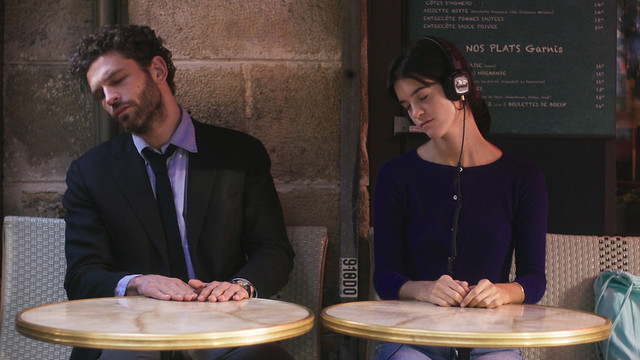
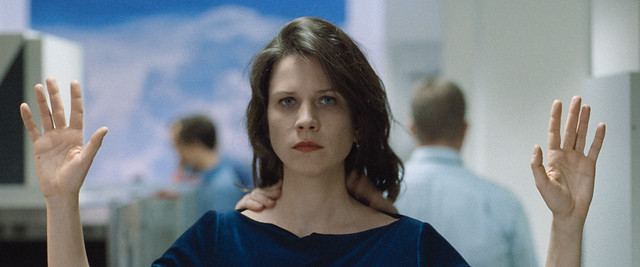
Preparations to be Together for an Unknown Period of Time (2020) - Horvát preparations-to-be-together-for-an-unknown-period-of-time-movie-review-2021 Beautiful and esteemed neurosurgeon Márta (Natasa Stork) comes back to Budapest after twenty years abroad living and working in the US, because she fell in love with a fellow Hungarian doctor János (Viktor Bódo) at a medical conference. They made a lover's pact - they will meet each other at the Liberty Bridge in a month's time. But he never shows up. And when confronted at his work place, János denies that they ever even met. But instead of going back to New Jersey where she works and lives, she decides to stay put and take a job at the same local hospital where he has an office. Márta even rents a dumpy apartment with the view of the bridge.

Director Lili Horvát cleverly sets up Preparations... as a seductive mindtrip which is yet grounded in logic (or illogic) - Márta calmly questions herself if she made up the encounter just because she wanted love to happen so badly for whatever reason, in ongoing therapy sessions - and this means she is abandoning her life in the States, best friends and all. She is there for a long term to find out.

The delicious juxtaposition of being a brilliant neurosurgeon where she can diagnose and eliminate illness of the brain which affects both body & mind and letting the whim of her own heart set the course for the unknown is ahem, what's at the heart of the film.

Stork's performance as a highly intelligent and confident woman losing her grip on reality, not because of a man but rather, the idea of a man, is totally absorbing. Her always stoic façade and curt demeanor don't reveal an inch of her inner life. But it's her bare apartment - a mattress on the floor, her lack of interests in furniture that hints at her person. Camera loves Stork though, often with extreme close ups in different angles, Horvát suggests Travis Bickle like fracture in her psyche.

Arresting visuals and unhurried cat-and-mouse situations, Preparations... seduced me visually like no other film in recent years. Watching the movie reminded me of the feeling I got from watching Kieslowski films, long ago. It would've been lovely to see the film on the big screen.

Thursday, March 11, 2021

The House of Ubuntu

The Inheritance (2020) - Asili Inheritance A Philly native artist/filmmaker Ephraim Asili's experimental whatsit The Inheritance draws from his days as a member of West Philadelphia Black radical collective, where a group of like-minded young African American activists, artists lived and shared their thoughts and ideas in a communal setting. The idea was heavily indebted to MOVE, a black liberation group founded by John Africa and his followers who preached importance self-sufficiency and living in harmony within nature.

A loose narrative concerns Julian (Eric Lockley) and Gwen (Nozipho Mclean), childhood friends who move in together when Julian inherits his late grandmother's multi-story house in Philadelphia. The grandma also left myriads of black cultural artifacts: books, magazines, and records - most of them from the black liberation era. They decide to take in roommates - philosophers, educators, artists, and activists and open the place up to the neighborhood as a communal space/library.

The film's staccato, but unhurried episodic structure gives way for Asili to interject with many archival footage: Shirley Chisholm's Presidential campaign, MOVE's standoff with police in 1978 and the police bombing of MOVE compound that took 11 lives in 1985. It also features black liberation luminaries such as Mike Africa Jr and Debbie Africa and renown poets, Sonia Sanchez and Ursula Rucker who appear on screen as guests in Asili's narrative universe.

The Inheritance's freewheeling form owes great deal to Godard, right down to the brightly colored walls, editing and the constant, exaggerated noise of a 16mm camera rolling. Asili doesn't try to hide his influence by putting a giant poster of La Chinoise as a centerpiece on the living room wall. His intention was to make a hip-hop/reggae version of Godard's agitprop classic.

The film is heady with many memorable quotes from black liberation era thinkers and writers, often provided by giant black boards located on the wall and Julian, Gwen and others repeating many of the quotes in dramatic fashion, looking straight at the camera. But in Asili's hands, The Inheritance doesn't feel like a dogmatic film. There are many funny moments as the residents of the 'house of Ubuntu' have to deal with any communal living, following such strict rules as 'no shoes inside the house', 'don't eat someone else's food in the fridge without asking' and so on. Rather, this airy fusion of filmed experiment gives opportunity to its unsuspecting viewers the window to unseen/under seen, unheard/under heard pieces of American history that give them the proper context to understanding the current political climate - the continuing police brutality against black community, the BLM movement and the white supremacists storming of the Capitol building.

In its rather conventional movie ending, Asili closes his narrative part of the movie on a positive note. But we all know that there's more work to be done. The Inheritance is an ode to black resistance and fitting cinematic experiment for the BLM era.

The Inheritance opens virtually on 3/12. Please visit Grasshopper film website for more info.

Searing Indictment of War from Not So Distant Past

Quo vadis, Aida? (2020) - Zbanic Quo Vadis Jasmila Zbanic's Quo vadis, Aida? puts its protagonist, Aida (Jasna Djuricic), a middle-aged schoolteacher working as an English translator for the UN peacekeeping troops, in a very difficult position. The place is Srebrenica, Bosnia, the year is 1995 and the film is based on a true story. The Serbian troops incursion is imminent. Like in all wars, people have to make difficult choices to survive. The kicker of the film is that this life and death situation it depicts has actually taken place merely 26 years ago.

Considering estimated 100,000 people killed, and 1.3 million displaced in The Bosnian War, I have to say right off the bat that the outcome in Quo vadis, Aida? is not a positive one. But it says a lot about how horrific the war actually was. And however well meaning the international interventions were, they were not at all prepared when faced with humanitarian crises.

The setting and the story is pretty specific. Srebrenica is a town of 30,000 people, consists of mostly Muslim population. The shelling by the Serbian tanks has started. The Dutch UN troops confined to their camp just outside the town are completely impotent since the entire UN command in Europe seems to be on vacation. So their ultimatum to the Serbian troops to halt or face the air strikes become empty threats. The snide Serbian commander knows its predicament and uses it to his advantage. Aida, working as a translator for the UN Command unit, sees that they are making promises to the townspeople they can't keep. The air strike never materializes. Once Srebrenica is taken by Serbian army, all of town's folks seek refugee in the UN compound. And the UN troops are not set up to deal with the unfolding humanitarian crisis - shortage of supplies, food, water, fuel and even toilets. All they can do is provide shelters for about 4,000-5,000 people on the concrete floor and the rest camping out just outside the barbed-wire fences.

Aida, using her connections with the Dutch, brings her husband and two sons into the compound. Her husband who is a learned man, will act as one of the civilian leaders to negotiate the terms with the two faced Serbian general.

Things get dire as the Serbians dictate the terms of "moving refugees out of harms way" by buses. Women get separated from their men, but no one knows if the buses are headed to where they were supposed to be headed. Some of the UN soldiers witness men being rounded up and executed. And some young women are dragged off by Serbian army.

Quo vadis, Aida? is all about one woman's mission to save her family at all costs. It's her survival mode taking over and working overtime in a dire, life and death circumstances. It also is a searing indictment of war and the West's naiveté and hubris as to believe in their moral superiority but complete impotence when it comes to decision-making and action. Compellingly and deftly written and directed by Zbanic, the film moves along breathlessly to its tragic end.

It ends with Aida going back to Srebrenica to resume her teaching after some time has passed. The life is back to normal. Everyone is supposed to be friends and neighbors again. The film questions if this so-called peace is acceptable, if you recognize a parent in the audience at the school talent show is the same person who is responsible for the death of thousands people, including your family. Can you ever forgive him? The film tries to make you understand the post-war Bosnian society, its fragile peace, its not so distant past and trauma and wounds not healed. Quo Vadis, Aida? is a powerful, harrowing film with a stellar performance by Jana Djuricic in the title role. Highly recommended.

Quo vadis, Aida is playing now at virtual cinemas across the US and will be available on digital and on demand on 3/15

Wednesday, March 3, 2021

Rendez-vous with French Cinema 2021 Preview

It's Spring in New York. It means it's time for Rendez-vous with French Cinema, the festival showcasing the best of what contemporary French cinema can offer. But this year, with all virtual presentations due to the Covid-19 crisis, the festival is going beyond New York audience. So any lovers of French cinema in the US will have access to all the films presenting!

The 18 film line up includes Sebastian Lifshitz's affecting Little Girl - the first Documentary to open the festival, François Ozon's queer romance nostalgia piece Summer of 85, Nicole Garcia's sexy noir Lovers and Quentin Dupieux's idiosyncratic comedy Mandibles starring Adèle Excharpoulos. Rendez-vous with French Cinema runs 3/4-3/14. Please click on the Film at Lincoln Center link for tickets and information.

Without further a do, here are 6 films I was able to sample:

Little Girl - Lifshitz *Opening Night Film Little GirlSébastien Lifshitz, director of such queer art films as Come Undone and Wild Side, directs Little Girl, a poignant documentary on gender dysphoria- a feeling of distress that occur in people whose gender identity differs from the sex they are born with. The film concerns Sasha, a second grader who is having a hard time being accepted in school and the world as she was born as a boy but feels strongly about being a girl. It's a good thing she has a a very supportive family - parents and three siblings. First it's her mom who feels responsible because she wanted a girl when she was pregnant with Sasha as doctors assure her that her child's condition has got nothing to do with her wishes. The prejudices Sasha faces in school, by her principal and teachers make the little girl cry. She is also prejudiced in her ballet class as she is not treated as a girl. And it is heart wrenching to see the child cry in pain. 

There are good moments as Sasha plays with her best friend Lola with bobbie dolls in her pink girly room, or her hanging out on the beach in cute bikinis she picked out. Children don't notice or don't care if Sasha is a boy or girl. It's the adults who are narrow minded. Why not let Sasha be what she wants to be, Lifshitz seems to say. As were his documentaries on LGBTQ pioneers in Les Invisibles and The Lives of Thérèse, Little Girl is a deeply humanistic look at people struggling with identity politics of the still rigid, dogmatic world.

Spring Blossom - Lindon Spring Blossom
A lanky, shy high school student Suzanne (Suzanne Lindon) lives comfortable life in a middle-class Parisian household. But she is bored of her school-home-school routine and feels no kinship among her peers. All that changes when she meets a dashing stage actor (Arnaud Valois) who is rehearsing a play in her neighborhood.

Lindon, 18 year old daughter of French cinema staple Vincent Lindon and Sandrine Kiberlain, makes a directorial debut and also plays the main role of a 16 year old high schooler in this delicately observed, sensitive love story, not predicated by its initial a school girl and an old man set up. It is refreshing to see love and mutual understanding not playing out in flesh but in choreographed dances and movements while not losing true to being a teenage girl crushing on the idea of a man, love and life.

Summer of 85 - Ozon Summer of 85François Ozon is back in his old naughty self and I welcome it. In its pure Ozon set up, a young man retracing his steps in police custody, we are led to believe that the film is about a murder mystery. Alex (Félix Lafebvre) experiences near drowning after his stolen boat capsizes at sea and rescued by David (Benjamin Voisin). They strike up a friendship. David, slightly older, takes the lead in the relationship, taking Alex on his motor bike to dangerous adventures. He is everything Alex wants in a best friend and more.

Taking on a British YA novel Dance on My Grave from the 80s, Summer of 85 invokes the innocent times before the AIDS crisis and harkening back to his more salacious, hormone overloaded earlier works that he is known for. Summer of 85' is a delicious, erotically charged period piece filled with colors and pop songs and a top tier Ozon.

Lovers - Garcia lovers
A sleek noir thriller from veteran director/actor Nicole Garcia. Lisa (Stacy Martin) and Simon (Pierre Niney) are young lovers in Paris. Simon is a high society drug dealer and Lisa, a hospitality management student working various jobs. They get separated when one of Simon's clients die of an overdose and he has to leave the country.

Some years have passed, and Lisa is married to a Swiss businessman Léo (Benoit Magmiel) who travels all over the world for his corporate insurance jobs. When they are vacationing in a fancy Indian Ocean resort, Lisa and Simon (now working as a tour guide) reunite by chance and rekindle their first love and passion. After they return to snowy Geneva, they continue to see each other under the nose of Léo. Things go wrong, as they always do.

Strength of Lovers is in its casting. Two attractive leads, Niney and Martin both possess fatalistic beauty and fit the roles of ill fated lovers like gloves. Also Niney's fawny figure and face are steep contrasts to aging bear actors (Magimel and Grégoire Colin, who plays Simon's brother, both aging and becoming more and more like Gerard Depardieu everyday). Considering Magimel and Colin were once young and angular heartthrobs, I wonder what's going to happen to Niney ten years from now.

Mandibles - Dupieux Mandibles
Two ne're-do-well man Manu (Grégore Ludig) finds a giant fly in the trunk of an old Mercedes he just hotwired for a delivery job. With his buddy Jean-Gab (David Masais), the duo comes up with a brilliant plan- they will train the fly to grab the stuff they want, like money or food, whatever they desire. It will be like a thief drone. So starts another absurd comedy from the maker of Rubber, Wrong Cops and the last year's Deerskin. Dupieux doesn't seem to have any problems attracting top French female talents to have his silly vision realized. It was Adèle Haenel (Deerskin), now it's Adèle Excharpoulos (Blue is the Warmest Color), albeit in a small role as Agnès, who had brain damage from a skiing accident and can't control the volume of her voice.

The case of mistaken identity, babes on a Summer vacation, a school of red herrings/mcguffins plague this film. Think of Mandibles as a lazier French Big Lebowski where things amount to nothing but a chuckle.

Faithful - Cistern faithful 
A rousing period romance taking place in Algiers in 1950s, Faithful features Vincent Lacoste (Sorry Angel, Eden) and Vicky Krieps (Phantom Thread) as members of communist party who takes up armed struggle against occupying French military. It's a little on the nose in terms of dialog - they openly 'speak their minds' and clash with their political beliefs when they first meet in Paris. Born in Algiers, Fernand (Lacoste) is all about being communist and defending his country from France. Hélèn (Krieps), a Polish immigrant, has a different opinions about communism. But they fall in love and move to Algiers with Hélèn's teenage son in tow. Fernand's devotion to the cause and dangerous political activities threaten their daily lives. Fernand gets caught when he plants a bomb at Algerian Electricity and Gas Company where he works as an engineer. And the unjust military courtroom drama ensues.

<b>Faithful</b> is a handsomely made political intrique that exposes the shameful chapter of French history, implicating Mitterrand's role in the execution at the gallows of hundreds of Algerian citizens.

Thursday, February 25, 2021

Film Subjects as Filmmakers

Un film dramatique (2019) - Baudelaire

Un Film Dramatique Éric Baudelaire, a French visual artist, filmmaker (Letters to MaxAnabasis of May and Fusako Shigenobu, Masao Adachi, and 27 Years Without Images), was commissioned to do a project with the newly constructed Dora Maar middle school in the suburb of Paris, spent 4 years working with middle school kids as they recorded themselves their daily lives. The result is not only a refreshing slices of life documentary on close to two dozen sixth grade students as they grow up in front of our eyes, but also a incisive contemplation on the nature of filmmaking itself.

Baudelaire, with Social Science academic background, previously made documentaries regarding a daughter of Japanese Red Army founder and also Adachi Masao, a radical militant leftist Japanese New Wave director, as they collaborated on turning the camera not on subject but toward landscapes in which the subject has lived, trying to put into practice Adachi’s Landscape Theory. With Un Film Dramatique, he puts the cameras in the hands of its subjects. And the result is surprisingly touching examination and revealing reflection of a multicultural society.

Dora Maar is a public school, situated in a not so affluent but a racially and culturally mixed neighborhood. It's a microcosm of modern multicultural, pluralist France represented in one classroom. Students are from diverse backgrounds and many of them are descendants of immigrant families and everyone has his/her own little story to tell. But it's those discussions in classroom are extremely revealing and insightful.

In diverse subject from religion, identity to politics, these little runts prove to be much more astute and knowledgeable about the world around them. The filming started amidst the series of terrorist attacks by Islamic terrorists that hit France. As Marine Le Pen, the head of the ultra nationalist, right wing party the National Rally, was running a presidential election, their discussion turns to racism and how the immigrants are being scapegoated and prejudiced against by Le Pen's rhetoric, that they see her as blatant racist. As these fascinating, no holds-barred in-class discussions show that they are like sponges, absorbing everything they see and hear and fully aware of their surroundings.

They learn about each other by seeing their home footage as they travel to their parents home country, be it Romania or French overseas region of Réunion in the middle of the Indian Ocean.

Living in a media saturated age, these kids are much more savvy recording themselves but also extremely conscious about their screen presence. Baudelaire chooses to show not only their most revealing moments but also them being kids, as they fumble around and make mistakes.

The title Un Film Dramatique comes from the kids’ discussion about the film they are making. Is it a documentary? But the sound needs synchronization via slating and ambient sound also needs to be added. In their minds, a documentary is truth being recorded, so no manipulation. There are stories, in the film they are making, there's drama, hence dramatique. The film is refreshing documentation of the lives of middle school students reflecting on changing French society as well as a boundary breaking, playful cinematic experiment.

Un Film Dramatique opens 2/26 virtually. Please visit Cinema Guild for playdates in venues.

Thursday, February 11, 2021

Immigrant Story at a Micro-level

Minari (2020) - Chung Minari

 Michael Gillespie, African American film scholar, says in his book, Film Blackness, "Black filmmakers are burdened with the rope chain of 'reality' in ways white people simply aren't." I think this can apply to any POC filmmakers in America making films about their stories. How do you go on about making a film about certain ethnic experience? Do you make it to appeal to the general public audience who are mostly white? And how do we perceive it as, from audience perspective? Speaking as an immigrant Korean-American male, Lee Isaac Chung’s Minari touches upon a lot of issues that Korean-American males struggle with. But in the grand scheme of things, the film operates as a micro-level family drama in and of itself, which is as personal as it gets, largely devoid of the usual immigrant struggle against the odds in America. I’m not saying it’s a bad thing and am glad Minari is not a dignity porn that most films about non-white immigrants almost always turn out to be. But if you are expecting Steven Yeun’s character being a recipient of racial slurs and persecution in the rural Arkansas and overcoming odds to achieve that elusive American Dream, this film will surprise you in a good way.

Minari tells the story of the Yi family. Jacob (Steven Yeun) is seen excitedly introducing a large trailer house in the middle of an empty field. Monica (Han Yeri), tries to hide her disappointment in front of their children, Anne (Noel Cho) and David (Alan Kim). It’s the 80s and the setting is rural Arkansas. Jacob moved his family from California in search of a fertile plot of land where he dreams of owning a vegetable farm. According to the locals, we later find out, the former owner of the land blew his brains out when his crops failed. But Jacob can’t be deterred. His stubbornness is the cause of the young couples countless argument. Monica, accustomed to living in the city, misses human interactions and community. Their job at the local chicken processing plant where they work as chicken sexers (they determine if the chicks are male or female and separate them), isn’t ideal and not that different from their life in California.

Jacob’s idea is to grow Korean vegetables and sell them to Korean restaurants to nearby Korean enclaves in Dallas and other big cities. But there are some problems he didn’t account for, such as the water shortage in his plot, and unpredictable weather, such as tornados. He’s also quick to dismiss any helps that come along the way, like water dowsing or friendly suggestions from a good-natured farmhand Paul (Will Patton), as hillbilly nonsense. Jacob’s desire to prove himself and his needs to provide for his family overshadow any of his shortcomings. Because of this mindset, he has no choice but trudge forward.

Things get better when Monica’s mom (Youn Yuh-jung) arrives from Korea to live with them and take care of children. Her presence gives a much needed moral boost and emotional support Monica needed but to the kids, she is nothing like what a grandma is supposed to be. She is loud, vulgar and generally a bad influence. She also smells funny and force-feeds smelly medicine she brought from Korea (David has a heart condition).

It’s grandma and David’s tit-a-tat that gives Minari most of its laughs. David’s experiences seem very authentic if not a little extreme – like peeing in grandma’s drinks. Even though David sees her as an adversary at first, they bond as time goes along.

Steven Yeun, an unlikely Korean-American movie star who started his career not playing a typical Asian character is almost on the backward career trajectory here, playing perhaps his meatiest role to date. Yeun, whose angular face and light complexion suits a cosmopolitan city dweller rather than a rural, working-class everyman profile, goes against typecasting and does a great job playing Ajussi (a middle-aged Korean man). He got the mannerisms, boorish stubbornness, stern disciplinarian and dismissing of others in a typical Korean father figure down pat (except for drinking, perhaps).

Veteran Korean TV and film actress, Youn Yuh-jung shines as eccentric grandma who says the most inappropriate things in front of people just to embarrass her grandchildren. She also provides the pivotal moment of catharsis for the Yi family.

Will Patton, a veteran character actor who worked with Chung in his film Abigail Harm, lends his support, playing a hick farmhand and a Jesus freak, giving perhaps the most touching, humanistic performance of the year.

Drawing from his childhood memories, writer director Lee Isaac Chung's Minari is not so much as an heart-warming, uplifting immigrant story that A24 is aggressively trying to sell it as, in this award season - the press screener comes with a lengthy introductions by a CA congresswoman and a newly elected CA senator, both second generation immigrants no less, but a personal story about a family and their struggles within themselves, not as much with the outside force.

Minari is a small, very personal film that is not made to appeal to general (white) audiences. Having the film mostly in Korean and American cast only in the periphery are some of the bold choices director Chung makes. He understands that more personal storytelling from life experience comes across as the most universal, even it risks alienating general audiences which might come across as impersonal and distant.

Then again, it’s a typical American story, reminding us that this country is a land of immigrants. The second generation immigrant director also understands that memories are selective and unique to each individual. Playing with the idea of typical and atypical immigrant family and roles, he defies that ‘burdened with rope chain of reality’ with the film. After the success of Parasite, and the popularity of Korean culture and Steven Yeun, Minari has a lot going for it. The success of Minari will define how far we came as a society that a POC filmmaker doesn’t necessarily need to adhere to appeal to general white audiences anymore.

Minari opens 2/12 in select theaters and available on VOD.


Wednesday, February 10, 2021

Black/Noir

Deep Cover (1992) - Duke Screen Shot 2021-02-10 at 11.04.31 AM Screen Shot 2021-02-10 at 11.12.09 AM As far as the 90s hood films go, Bill Duke's Deep Cover cuts pretty deep. Maybe I shouldn't group the film with hood films, which in turn are message films, usually dealing with in and out of 'community'. But that's for another review. Deep Cover is a cold hard noir. I guess we can group it with Rage in Harlem (also directed by Duke, based on Harlem noir writer Chester Himes), One False Move and Glass Shield, all release around the same time.

Deep Cover poses itself as an interesting case study in black film noir. African American film scholar Michael Gillespie makes an interesting observation about noir, a genre film that grew out of post-war white angst as it rose from surrealism and existentialism coupled with hard-boiled literature. This world, filled with vice, moral ambiguity and misogyny. What takes place in there is the criminal undertaking of abject whites with the racial undertones of invisible black bodies. What black film noir does is casting a light on black people.

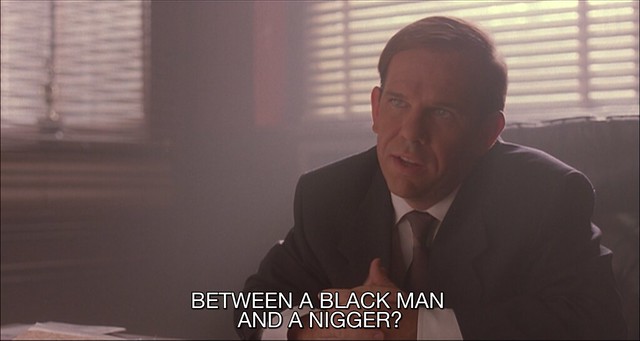
Stevens/Hull (Lawrence Fishburne) a Cincinnati cop with daddy issues, is recruited to go undercover to bring down a drug kingpin in LA, when he coolly gave the just right answer when a white federal agent Carver (Charles Martin Smith)'s asks a loaded question, "How can you tell between a black man and a nigger?" "Only a nigger would even consider answering that question." From the get-go, Deep Cover delves into Fishburne's conflicted character as a cop with 'all the personality traits of a criminal'. Once on the streets of LA, he quickly establishes himself in the drug dealing business. He befriends with a drug dealing defense attorney Jason (Jeff Goldblum) who has a fetishistic attachment for African American and indulges himself in the seedy world of Latino run drug-dealing business. An LA cop Taft (Clarence Williams III) is on their trail. Taft is a bible thumping father figure.

Even though there is a rapport between Hull and Jason, the tight script doesn't allow their bromance to the level of interracial duo in buddy cop movies. It's strictly business for Jason and for Hull, it's sheer necessity. In order to stop the flow of drugs coming in to the black neighborhood, Hull will need to not only deal, but also kill (with Carver's blessings) not to blow his cover. After taking down the expected targets of the police investigation, Hull goes for the top man of the drug organization, Guzman, a Latin American diplomat with ties to the high level US politicians - after all, this is the man is responsible for funneling drugs into the neighborhood of LA. But Carver pulls the plug on the operation. It's done. The State Department is taking over. Guzman can't be touched. The Man used Hull and screwed him.

Jason, blinded by his ambition as a big time drug kingpin, suggests pitching his synthetic drug idea to Guzman for the funding. So the trap is set at a harbor at night. With Taft on his trail and Jason not suspecting Hull to be a cop, and Hull still doing what's right even though his job is over converge.

Deep Cover is an interesting, above average noir with a black protagonist. Duke and co uses a genre to shed a light on the complex African American experiences.

Tuesday, February 2, 2021

Normalizing Hope

Le milieu du monde (1974) - Tanner Screen Shot 2021-02-01 at 1.58.31 PM Screen Shot 2021-02-01 at 5.44.16 PM Screen Shot 2021-02-01 at 2.33.07 PM Screen Shot 2021-02-01 at 5.34.07 PM Screen Shot 2021-02-01 at 6.08.24 PM Screen Shot 2021-02-01 at 6.25.51 PM
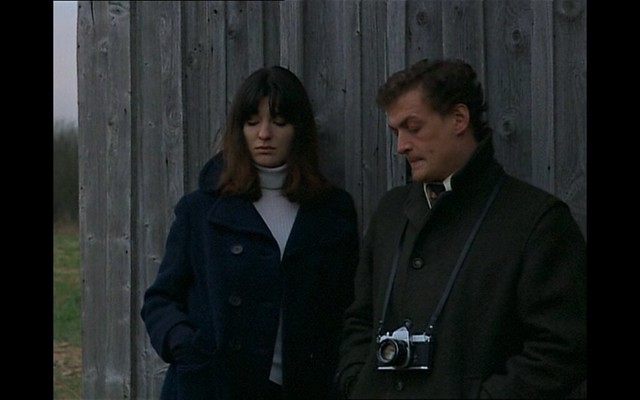
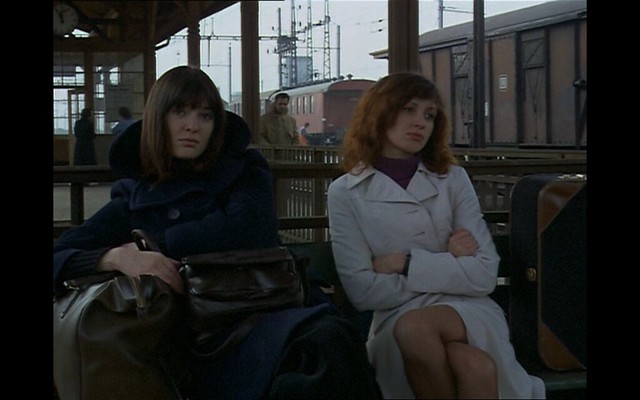
In the beginning, we are introduced to a winter landscape of rural Switzerland, cold and dreary and desolate. There is a film crew setting up a dolly tracking shot from a distance. A female voice preludes the theme of the film - how giving context to a film is important - the time, 1974, the place Switzerland, etc and the film's got to do with normalizing hope. What unfolds for the next hour and a half is a working class romance between an out of towner waitress and a local engineer turned politician. The center of the world is wherever you are - each of us as a center.
Adriana (Olimpia Carlisi) is a tall Italian from Venezia region arriving to a small rural town in Switzerland. She takes a job as a waitress at a local cafe where regulars hang out. Paul (Philippe Léotard), an engineer with a boxer's face, is being recruited and groomed by a local party officials to be a candidate for an upcoming elections for a seat in a local council or something. They are pushing him because he is young, married, a working class technician, someone who is obviously not a politician. Mrs. Schmidt, who owns the cafe, warns Adriana not to get into political conversations with the patrons. 'Business and politics don't mix'.

Adriana gets few sexist jokes and butt grabs from the locals at the cafe but she is a toughie and can handle them. She is an all around gal who's not born yesterday. She gets Paul's attention as he is in town for the election campaign and asks her out. It's a working class romance. But we know where it's going and it's not going to go well. People gossip and Paul's naive insistence that what's private affair is private while running for a political office is not going well. Adriana is just along for the ride. She keeps saying Paul doesn't really know her.

Alain Tanner's observation on a working class micro-affairs takes a cynical tone on Paul's false sense of hope - that he will leave his wife and move in with Adriana in to some fancy apartment. His hubris of showing off his 'Italian girlfriend' without thinking twice about what it means to his election, that it's all in context of the system- liberal democracy, class, sex in the 70s Switzerland. Election is just red herring because his loss is only mentioned in passing and everyone goes on the way it was before. It's no biggie: Politics is not a big deal either with the elites - they always can find another bloke or stay with the establishment, or working class - they can stop pretending to understand what those political slogans mean and go back to their lives. Adriana decides to leave town because she doesn't really know what she wants. It's her own volition. She will go and get a job at some factory. Everyone is in the middle of his/her world.

I understand what Tanner is trying to do in Le milieu du monde, but it's not all that successful. Carlisi and Léotard are affable enough. Juliette Berto shows up as a sexy peer waitress. But the matter-of-fact presentation and dreary winter setting are dry as hell. I'd try other Tanner's films some time soon.

Monday, February 1, 2021

Letting Go

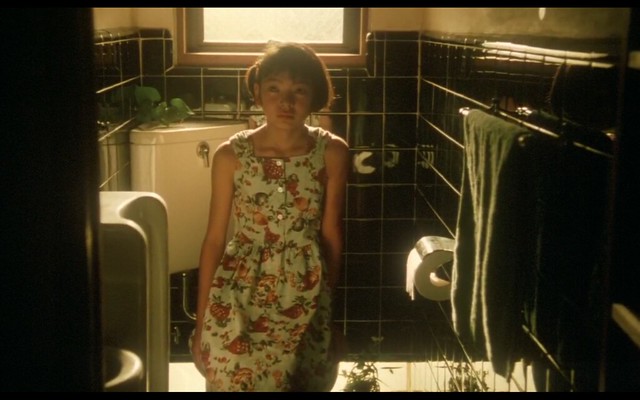
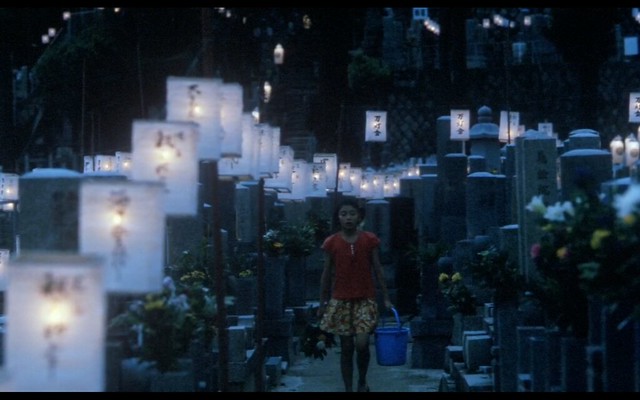
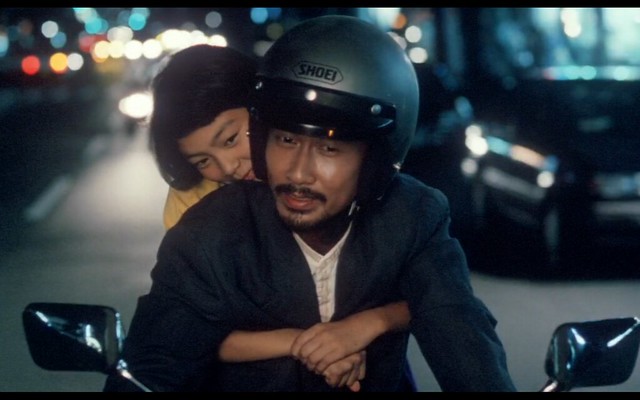
Moving (1993) - Sômai Screen Shot 2021-02-01 at 6.22.43 AM Screen Shot 2021-02-01 at 7.03.17 AM Screen Shot 2021-02-01 at 7.03.42 AM Screen Shot 2021-02-01 at 7.27.29 AM Screen Shot 2021-02-01 at 7.28.56 AM Screen Shot 2021-02-01 at 7.36.57 AM Screen Shot 2021-02-01 at 7.59.56 AM Screen Shot 2021-02-01 at 8.27.10 AM Screen Shot 2021-02-01 at 8.33.11 AM Screen Shot 2021-02-01 at 8.34.07 AM Screen Shot 2021-02-01 at 8.36.12 AM Screen Shot 2021-02-01 at 8.37.39 AM Screen Shot 2021-02-01 at 8.12.21 AM Screen Shot 2021-02-01 at 8.14.09 AM A wide-eyed, bouncy 6th grader Ren (Tomoko Tabata) is not taking her parents’ separation well. At first, she doesn't quite get her father moving out of the house, which 3 of them shared. It slowly dawns on her that it will never be the same way again. Shinji Sômai's separation drama from a child's point of view takes place around Daimonji fire festival in Kyoto in the height of Summer. And it's a beauty.

Ren's displeasure with her situation manifests in classroom disturbances as she picks fights and starts a fire in a science lab. Her mother, enjoying her freedom for the first time, makes unilateral decisions and breaks her own written up house rules (constitutions they call it). Ren frequently runs away from home and spies on her dad outside his glass office building. Her plans to bring her parents together doesn't quite work, since they are quite selfish and have grown apart over the years.

After some violent incidents, Ren devises another plan, giving it a last shot at reuniting her estranged parents. She would arrange a trip to the Lake Biwa, just like they used to during Daimonji and her mom reluctantly agrees. After they get there, seeing it's impossible to reconcile their former happy family, Ren runs away and it turns into a journey of self-discovery and growth.

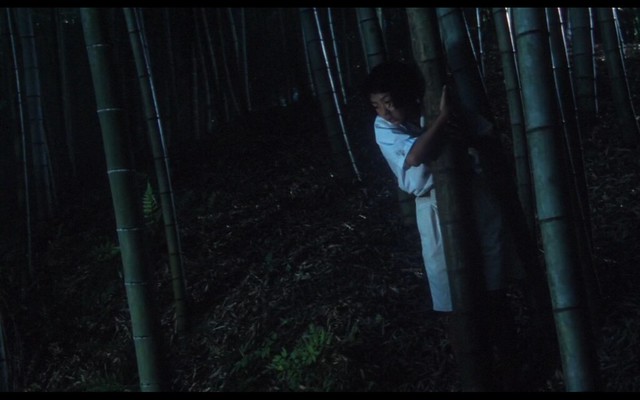
Moving works largely because of Tabata, a cat eyed child actor not afraid of delving deep into physical and emotional journey of acceptance and letting go. Sômai's always moving camera, doesn't lose focus on the young heroine and never gets bogged down in cheap sentimentality. The almost silent long sequence two-third of the way where Ren gets herself lost in the forest at night, is breathtaking.

Parents, however selfish, are not monsters and do care about you and love you. Sometimes it doesn't work out. It might be hard to grasp for a 6th grader. Children still can count more good memories with their hands and run out of fingers than old people do. Accepting that they can keep only a handful of those memories is tough. Using the backdrop of fire festival and the power of burning and renewal, Moving is an infinitely wise and beautiful film about growing up.

Monday, January 25, 2021

Super Dark Romantic Comedy

The Apartment (1960) - Wilder Screen Shot 2021-01-25 at 2.50.26 PM Screen Shot 2021-01-25 at 2.51.14 PM Screen Shot 2021-01-25 at 2.55.11 PM Screen Shot 2021-01-25 at 2.52.44 PM 
Billy Wilder's comedies always had an edge, that he had a very dark sense of humor, bordering on being offensive. A person taking too much sleeping pills over love or shooting oneself in the leg to get over a relationship aren't really funny. Nor is letting your apartment used as a sex den. It is though, in Billy Wilder's world. HAHAHAHAHA.

The Apartment, about a good natured white collar worker, Baxter (Jack Lemmon) at a skyscraper insurance agency, trying to climb corporate ladder by letting his bachelor apartment on 64th Street in Manhattan to be used as a fuck den for his superiors and also falls for a cute elevator operator, Fran (Shirley MacClaine). But he finds out that she is already taken by an executive (Fred MacMurray) as he pushes Baxter to let him used his apartment for, you know what. Baxter in turn, has to be content with having a reputation as a crazy party monster and sex maniac in his apartment building with music blaring every night and discarded mounds liquor bottles at the door every morning. All these for a shot at promotion!

Heartbroken by the executive who wouldn't leave his wife and family and who has been sleeping around with numerous female office workers at the job, Fran takes the whole bottle of Baxter's sleeping pills one night after the one of those arranged nights and spends 48 hours recuperating under Baxter's care. He tells the story of him shooting himself in the leg getting over a girl in the past. THIS IS SUPPOSED TO BE FUNNY. Oh at one point a character says about ending up with Egg Foo Young all over her face in one of those date nights too. SO FUNNY.

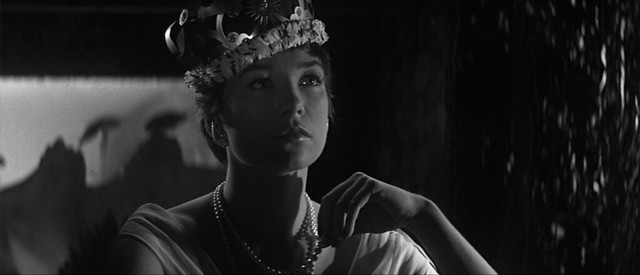
Wilder's direction and technical prowess are, as always, a marvel. Both Lemmon and MacClane are aces in their roles. Young MacClane is a beauty to behold. But the blatant sexism, the subtext in male oriented corporate culture of the late 50s, early 60 are all really icky.

Sunday, January 24, 2021

Wandering Dreams

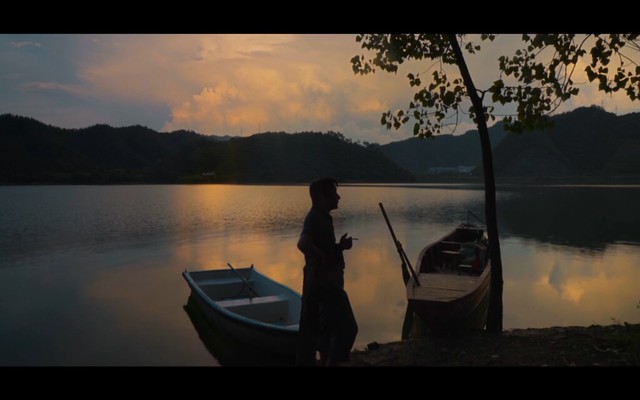
Vanishing Days (2018) - Zhu Screen Shot 2021-01-24 at 9.17.42 AM Screen Shot 2021-01-24 at 10.12.38 AM Screen Shot 2021-01-24 at 10.26.42 AM Screen Shot 2021-01-24 at 10.41.53 AM Screen Shot 2021-01-24 at 10.46.39 AM Young Chinese filmmaker, Zhu Xin is apparently a big fan of Apichatpong Weerasethakul. His debut feature shows the Thai master's influence - languid visual style, abstract plot line, supernatural elements... etc. While not quite succeeding to pull off his idol's innate, spiritual lyricism, there are plenty to admire and chew on in Vanishing Days. 

It's the beginning of hot summer days. The film takes place in picturesque Hangzhou- a glut of urban development surrounded by lush nature - parks, caves and lakes. The world is first seen from a wide-eyed teenage girl Senlin. It's everyday life during summer break. She does a lot of lounging around in her small apartment where she lives with her mom. Things change when her middle aged aunt Qui visits. Qui used to sail a freight ship with her deceased husband Bo. The point of views switch back and forth between Senlin and Qui. 

There are couple of indicators that we are either seeing scenes from a parallel universe/dreams. Senlin's dad disappears in the beginning of the film after going into the cave and communicating with his dead son who is also named Senlin. We hear stories Qui tells Senlin's mom - about Qui and Bo being lost in an island, which we see later on the screen. Qui whispers in Senlin's ear in a taxi ride, "Tell mom that you want to come live with me. But don't tell her that I said so." Is Senlin Qui and Bo's daughter in an alternate reality? If this is all a dream, which one is real? It's as if two realities vying for its legitimacy in front of our eyes. Senlin's ordinary existence in the city and her boredom takes on another dimension in Zhu's waking dreams. 

Helped greatly by sound design and editing, Vanishing Days is an intriguing film full of great potential. It's great to see the new generation of young filmmakers emerging from China is doing some extraordinarily cinematic stuff - Bi Gan (Kaili Blues, Long Day's Journey into Night) and Zheng Lu Xinyuan (Cloud in Her Head) come to mind. I wish Zhu's visual was a little stronger: Vanishing Days doesn't quite convey its waking dream aspect of the film.

Thursday, January 21, 2021

Love on the Frozen Land

Atlantis (2019) - Vasyanovych Screen Shot 2021-01-19 at 4.02.35 PM Screen Shot 2021-01-19 at 4.12.02 PM Screen Shot 2021-01-19 at 4.01.14 PM Screen Shot 2021-01-19 at 3.59.59 PM Screen Shot 2021-01-19 at 3.59.17 PM Screen Shot 2021-01-19 at 4.10.51 PM Screen Shot 2021-01-19 at 4.06.39 PM The pitfall of political filmmaking in general, in my view, both fiction and non-fiction, is its didacticism that turns people off, however well intentioned and informative it might be. Without fail, these films come across as snobbish and classicist. It is doubly difficult as we live in an era where irony is dead and satire is getting harder and harder to pull off when the real world already feels like a grotesque satire of itself. 

Good filmmakers know how to use genre filmmaking in order to tell a topical, timely and socially relevant stories. In the recent surge of those films - Bacurau and Transit come to mind, filmmakers brought down sci-fi closed to home - political/economic instability & ecological devastation into a revenge thriller against first world, and a fascist takeover (history repeating itself) into an identity crisis, directly referencing the current state of Brazil and Germany/Europe respectively. These sci-fi genre tropes gave the filmmakers a lot of freedom to reflect on the current state of affairs while giving themselves a bit of distance to play around and even have some fun, while regarding them as if they are mere sci-fi and works of imagination, not socio-political realist films.

Writer/director/cinematographer Valentyn Vasyanovych (who lensed The Tribe) is one of those good filmmakers. And his stunning new film, Atlantis, proves that a science fiction can be both visually arresting and also socio-politically relevant to the present. In this case, it concerns his home country of Ukraine.

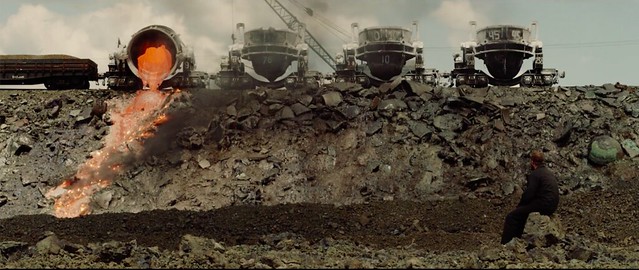
The subtitle in the beginning says it's the year 2025, a mere 4 years in the future. The Ukraine-Russian war seems to be over but wintry industrial landscape suggests that the war devastated the ecosystem and made a large swath of its land uninhabitable. The human toll both physically and emotionally is even greater, as we are introduced two PTSD ailing former soldiers whose sleepless nights are spent on driving around and shooting at makeshift targets planted on frozen tundra. The steel mill they both work at is taken over by multi-national corporation: an English-speaking figurehead on a giant screen talks of the bright future while pumping up Soviet style propaganda reminiscent of 1984. Many are fired from the job because of the automation of labor.

After his PTSD buddy's fiery suicide T2 style into the furnace at the steal mill, Sergiy (Andriy Rymaruk) moves on and gets a job as a water tanker driver - water became scarce since the bombardment and landmines planted during the war contaminated much of the country's water supply. On the road, he meets Katya (Liudmyla Bileka), a volunteer for a humanitarian group which identify the war dead by digging them up from half-frozen, muddy mass graves. It's a gruesome process, but it will give a lot of people closures, she says.

Talk of homeland takes a center stage. Ukraine might appear to be an unforgiving, desolate wasteland now, but where else would its inhabitants live? Sergiy is offered to work for an international organization and go abroad by a woman he rescued from a landmine wreckage. He says resolutely, "This is my home. Where could I go?"

The visual symmetry in wide ratio shot Atlantis is awe-inspiring. The industrial landscapes and machinery, as well as decay of abandoned houses (think of decay porn of Detroit, but doubling here as the war aftermath) have common with Ed Burtynsky's photographic documentations of the late stages of capitalist society - Manufactured Landscapes (2006), Anthroposcene (2018) and other documentaries that focuses on ecological devastation and human footprints on earth. Charting the country's recent history with human elements, Vasyanovych also finds common spirits with Jia Zhangke, the master chronicler of China and its people.

Vasyanovych unsubtly comments on Russian expansionism as seen in the annexation of Crimea in 2014 and Western commerce influence, but the film is not without hope. Working with non actors (Rymaruk is a former soldier, Bileka is a medic), the director imbues real life experiences within their fictional characters to give sense of connection, sense of national identity. The bare bone romance between Sergiy and Katya with the cold and unforgiving backdrop hints at the glimmer of hope, human resilience and connection despite dire circumstances. It's there, even if we are only able to detect it through infrared camera footage.Atlantis marks the arrival of the first great film of 2021.
Please visit Metrograph for virtual tickets. The film opens on 1/22.

Thursday, January 14, 2021

We Won't Die Together Hand-in-Hand

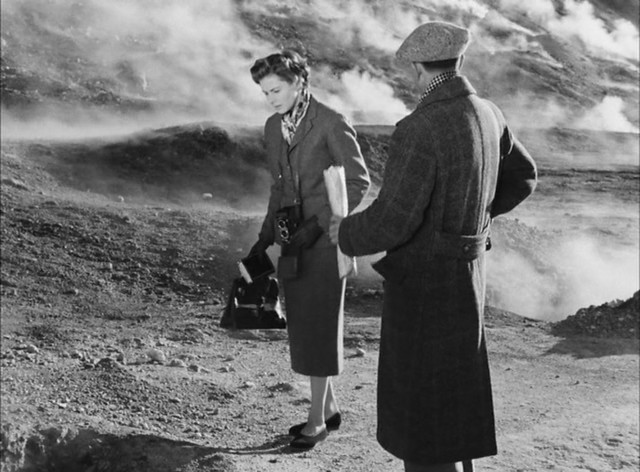
Viaggio in Italia (1955) - Rossellini Journey to Italy Screen Shot 2021-01-14 at 3.11.50 AM Screen Shot 2021-01-14 at 3.20.23 AM Screen Shot 2021-01-14 at 3.38.58 AM Screen Shot 2021-01-14 at 3.55.05 AM Screen Shot 2021-01-14 at 3.55.41 AM The childless Joyces - Alex (George Sanders) and Katherine (Ingrid Bergman) are English couple travelling to Naples to settle some inheritance matter (Katherine's uncle Homer left them a villa). It is pretty obvious as the film progresses, their marriage is on the rocks: After 8 years of marriage, they don't know each other very well and find themselves uncomfortable when left alone only with each other. She hates his snobbery and self-absorption; he hates her jealousy and resentment. Reconciliation doesn't seem possible. 

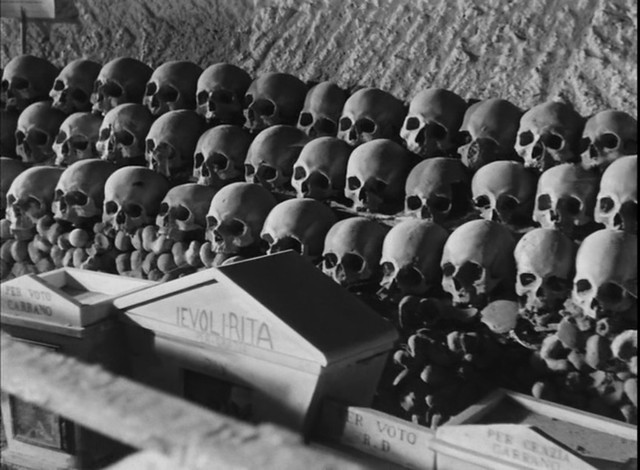
While the estate matter is being settled, Alex leaves for Capri to unsuccessfully pursue an affair and Katherine remains in Naples visiting museums and archeological digs and thinking about that sickly young poet who stood outside her window in the rain. 

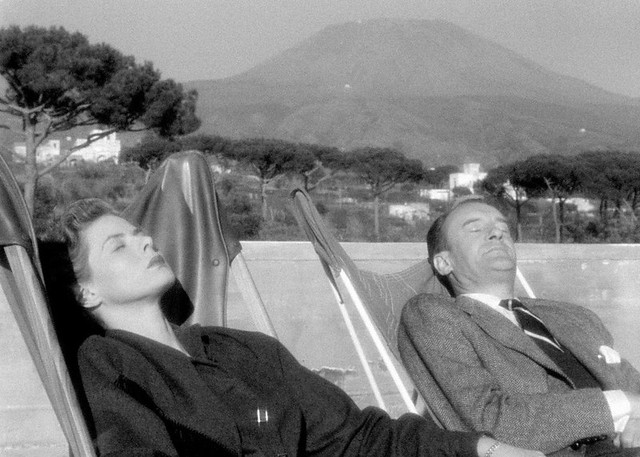
 Just like in Stromboli, the rugged, imposing background- active Mt. Vesuvius, which erupted only a few years before, reveals the chasm between the couple. 

There are a lot of driving shots. Rossellini emphasizes the couple's isolation and strict observers status as life happens outside the windshield of their car - Naples with its crowded streets, religious processions, livestock, a river of humanity on the other side of glass. 

While narratively weak and with the unconvincing ending, Viaggio in Italia is, as Deleuze points out in Cinema II, the prototype for what's to come - Antonioni's Urban ennui and isolation in L'Avventura and La Notte.