Sunday, August 18, 2024

Hong Kong Mon Amour

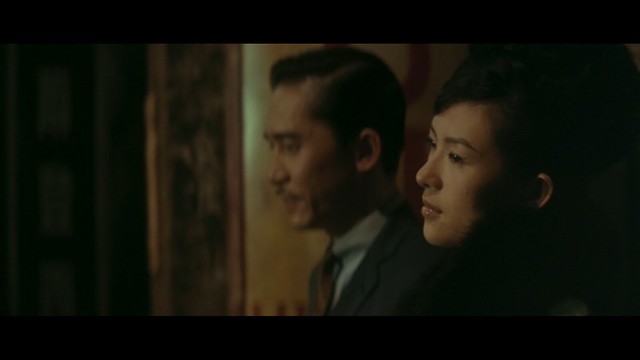
2046 (2005) - Wong Screen Shot 2024-08-17 at 9.29.01 AM Screen Shot 2024-08-17 at 9.27.52 AM Screen Shot 2024-08-17 at 9.35.46 AM Screen Shot 2024-08-17 at 9.33.50 AM Screen Shot 2024-08-17 at 9.26.42 AM Screen Shot 2024-08-17 at 9.22.43 AM Screen Shot 2024-08-17 at 9.22.14 AM Screen Shot 2024-08-17 at 9.26.42 AM Screen Shot 2024-08-17 at 9.36.15 AM Screen Shot 2024-08-17 at 9.30.16 AM There is a train that goes to a place called 2046, a place trapped in memory, at least for characters in Wong Kar-Wai's filmography. Also the year 2046 is the eve of Hong Kong's supposed return to the control of mainland China. The end of an era marking the 50 years of self-governing after British Handover in 1997. Memories are nothing but trails of tears, the title card says. Once you get to 2046, you can't escape from it. So starts WKW's a sort of sequel to Days of Being Wild and In the Mood for Love.

Mr. Chow (Tony Leung), the same man who had a platonic relationship in In the Mood for Love and cultivated his gigolo status at the end of Days of Being Wild, is a hack writer for a newspaper in 60s Hong Kong. The film, in nonlinear fashion, traces his many encounters with various female characters who tread his pad, room 2047, in Hotel Oriental. The film is an observation of a gigolo from his room the goings on in the room next door 2046. Su Li-Zhen from in the mood for love, played by Maggie Cheung, is now played by Gong Li and Zhang Ziyi, with Cheung making a brief appearance as a memory/dream. Faye Wong of Chunking Express also makes an appearance as the hotel manager's daughter who is in love with a Japanese man (Takuya Kimura).

2046, like most of Wong's films, is about unrequited love and yearning. Chow, who is incapable of emotional attachment, is the only one who can observe the love's fickle nature objectively. He even creates science fiction to exemplify the unanswerable nature of love - the train to 2046 is attended by fembots that passengers shouldn't fall in love with. In 2046, everyone is a reminder of lost love or what would have been. Time and timing are the enemies.

In true WKW fashion, 2046 took 4 years to make, with three different DP attached. But it's stunning. Gorgeous costumes and beautiful actors unhurriedly go in and out of tightly held frames. Chow gets to consummate with Su Li-Zhen, who is now a high-priced call girl. Zhang Ziyi is at the height of her youth and beauty and thrives in Wong's astute melodrama. But again, I'm Chunking Express/Fallen Angels/Happy Together Wong fan, not In the Mood for Love fan. I find this revisit to the film since its initial release, overlong and tedious. If 2046 is a lamentation of a bygone era and a specific place, Wong has a funny way of (not) showing the place except for some heavily CGI shot of the neon landscape.

I rewatched Fallen Angels just before 2046 and the contrast can't be more obvious. It was his humor, light touch and Chris Doyle's handheld, intimate photography that made his 90s films so iconic. 2046 is more of an idea of the lamentation of a place that gave Wong much freedom to capture the place's spontaneity and vibrance. And the film marks the end of WKW supremacy.

Tuesday, July 30, 2024

Live Life Truthfully

A Traveler's Needs (2024) - Hong Screen Shot 2024-07-29 at 9.21.02 AM Screen Shot 2024-07-29 at 9.31.03 AM Screen Shot 2024-07-29 at 9.53.17 AM Screen Shot 2024-07-29 at 10.11.44 AM Screen Shot 2024-07-29 at 10.17.15 AM It is hard to quantify Hong's films, and I am not talking about him making two or three films of the year as he has been for the last decade or so. It's not that what Hong does need to be measured by the likes of me, but as someone who watched vast swaths of his films, with my ADHD triggered rating system toward a director's filmography going, I can't help myself ranking which of his films are better, more impactful than others in my head. and I am happy to say that A Traveler's Needs, his new film starring indomitable Isabelle Huppert, is one of his best films.

A Traveler's Needs concerns Iris (Huppert), a French woman living in Korea. She started giving French lessons to two Korean women recently. Her method seems interesting: she writes down a custom-made phrase on wads of index cards she carries in her bag for each person she is tutoring. Eager to please the foreign woman, Korean women play musical instruments in front of her. She asks each of them how they feel when they play. And they both in turn give generic answers which turn out to be identical. Iris pushes harder - but how do you really feel? Then she writes down her French phrases for them.

All the Hong signatures are present - a subtle comedy based on repetition, copious amounts of alcohol consumption - in this film, the choice is Makguli, a milky Korean rice wine.

The third act concerns a young man, Seong-guk who shares his flat with Iris. It turns out that he met her in a park, sitting there alone, playing a flute badly without a care in the world. It is revealed that she didn't have any means for living, so he suggested tutoring French which she has no prior experience in. Seong-guk's estranged mom stops by unexpectedly and chastises her son for living with some foreign woman. He explains that Iris lives her life truthfully. Mom wants him to ask her about her background. She doesn't want this mysterious foreign woman taking her naive son for a ride.

A Traveler's Needs have much in common with Wim Wenders's Perfect Days. These protagonists are people of very limited means and ambitions. They just float around living life as truthfully as they can. Never looking backwards but always forward. There's some sort of universality here - Wenders directing in Japan seeing the world through the eyes of Koji Yakusho and Hong directing and seeing the world through Huppert's eyes. Gentle, living by the moment, enjoying the surroundings - nature, sleeping, drinking, small human interactions.

I see that Iris can be the continuation of a character Huppert played in Mia Hansen-Løve's L'avenir/Things to Come (2016), a professor losing her job and marriage, trying to find the footing in the world for the first time in a long time as an aging woman. It is not difficult to imagine her character taking off to some foreign land and keep on living like that.

Huppert is marvelous as Iris. The best scene is perhaps her flirting with Kwon Hye-ho's character: obviously there's an attraction between them. She touches him on the shoulder and winks at him, then giggles like a schoolgirl. He is spellbound obviously.

A Traveler's Needs is up there in Hong canon and one of my favorite films of the year for sure. Here is my review for Things to Come

Sunday, July 28, 2024

A Case Against Capital Punishment and Institutional Racism

Death by Hanging (1968) - Oshima Screen Shot 2024-07-27 at 10.02.55 AMScreen Shot 2024-07-27 at 10.03.52 AM Screen Shot 2024-07-26 at 11.05.09 AM Screen Shot 2024-07-26 at 10.57.14 AM Screen Shot 2024-07-27 at 9.30.12 AM Screen Shot 2024-07-26 at 10.43.59 AM Screen Shot 2024-07-27 at 9.32.31 AM Screen Shot 2024-07-27 at 9.52.35 AM Screen Shot 2024-07-27 at 9.53.09 AM Screen Shot 2024-07-27 at 9.53.46 AM Screen Shot 2024-07-27 at 9.58.28 AM Nagisa Oshima's resolute condemnation of capital punishment and institutional racism is laid out in Death by Hanging, based on a real life case of Ri Chin'u, an ethnic Korean who murdered 2 Japanese school girls in 1958. The film concerns the botched execution of a young ethnic Korean man, known only as R (Yung-do Yoon) where he doesn't die from hanging and losing his memories and Japanese state officials' attempt to make him realize his crimes again, as they can't execute a man who doesn't recognize his guilt. In the process of proving R his guilt, the film exposes the state violence and Japanese colonialist past and asks pointed questions where executioners themselves are guilty and whether they have the authority to kill the accused.

After the hanging and R survives, the officials, consisting of a military general, a catholic priest, an education officer, a hangman, a prosecutor, debate the legality of attempting another execution. To their displeasure, R became conscious but doesn't remember who he is or what he has done. In order to execute him again, they have to make R conscious of his guilt. In a series of bizarre and darkly comical reenactments by themselves, the film becomes a Brechtian experimental theater, first within the confines of a staged death chamber where hanging takes place which Oshima narrates in detail in the beginning like a documentarian. After several failed attempts to get R recognize his crimes and him being Korean living in Japan as ethnic minority, the officials have to delve into his ethnicity and background, thus digging up the dreadful conditions of the lives of ethnic minorities living under the institutionalized racism day in and day out. Their grotesque caricatures of Koreans are carried out in reenactment and their superiority complex as colonizers is pronounced.

R's sister (played by Oshima's wife, Akiko Koyama) manifests in front of the officials, who one by one sees her, as she tries to convince R as a nationalistic communist of North Korea, but fails to convince him. She ends up being hanged by the officials. R finally accepts being himself but refuses to acknowledge his crimes because the murderous imperial Japanese power has no legitimacy to impose capital punishment on anyone. The prosecutor finally tells him that if he doesn't feel guilty of his crime, he can leave. Upon opening the door, the bright light from outside overtakes R and he realizes he has no prospects in Japanese society as an ethnic Korean and chooses to be hanged the second time.

Death by Hanging is a complex film, questioning the legitimacy of capital punishment, especially by Japanese government considering all the atrocities committed during the war and occupation of much of the South East Asia, Osmhima, a long time advocate of rights of ethnic Koreans living in Japan, is unafraid of exposing the hypocrisy of the state.

Thursday, July 25, 2024

Yakuza vs Teens

P.P. Rider (1983) - Somai Screen Shot 2024-07-25 at 9.23.21 AM Screen Shot 2024-07-25 at 8.39.45 AM Screen Shot 2024-07-25 at 11.48.52 AM Screen Shot 2024-07-25 at 8.41.56 AM Screen Shot 2024-07-25 at 8.50.01 AM Screen Shot 2024-07-25 at 9.20.02 AM Screen Shot 2024-07-25 at 9.21.11 AM Screen Shot 2024-07-25 at 9.29.32 AM Screen Shot 2024-07-25 at 9.33.42 AM Considered to be Shinji Somai's first masterpiece, the freewheelin, madcap coming-of-age tale by way of combating authorities - teachers, cops, yakuza is an unruly, wild ride, taking place in sweltering summer heat when the school's out. Three high schoolers - Jojo, Bruce and Jisho witness the kidnapping of a fat, bully schoolmate in the school yard and even though they don't like him, they decide to track down the kidnappers. It's the summer vacation and anything is possible. It's that manic energy of youth Somai is tapping on and P.P. Rider is nothing if not that forward momentum from the beginning, long tracking shot (supposedly used 3 cranes to manage) to the very end. On the trio's journey (one girl named Bruce, and two boys), they meet many characters - cops, a druggy yakuza named Nobody (Gombei), played by Tatsuya Fuji (In the Realm of the Senses), and their school teacher who decides to help them out, perhaps infected by her student's youthful exuberance and more.

Getting the fatso back is not really the main point of P.P. Rider. The chaos is. The world outside school is truly a dangerous place - they get beat up, get shot at constantly, offered drugs left and right, and have to face a lot of physical hurdles on the way. Nothing really fazes them. They sing, dance, exchange their clothes and appearances and shoot their way through the obstacles.

The physicality of the film is astounding. The trio constantly climbs up and down grimy concrete walls and barbed wires: the prolonged chase scene at the lumber yard near the harbor where they jump from a floating log to log and constantly falling into water. I really do not know how Somai and team achieved that. It's much less coherent and compact than his later masterpieces like Typhoon Club and Moving. But it's P.P. Rider's unkempt, daring attempt at capturing the manic exuberance of youth that is commendable.

Wednesday, July 24, 2024

The Lost Generation

Sway (2006) - Nishikawa Screen Shot 2024-07-24 at 9.35.41 AM Screen Shot 2024-07-24 at 10.58.27 AM Screen Shot 2024-07-24 at 11.00.05 AM Screen Shot 2024-07-24 at 11.11.15 AM Screen Shot 2024-07-24 at 11.16.41 AM Screen Shot 2024-07-24 at 11.35.35 AM Screen Shot 2024-07-24 at 11.36.59 AM Miwa Nishikawa (Dear Doctor, Under the Open Sky), a pupil of the great Hirokazu Kore-eda, proves herself to be a fine writer and director in her debut feature with Sway. One could make a comparison between Sway and Rysuke Hamaguchi's recent Evil Does Not Exist. But while I find the city/country dichotomy a little unsubtle and naive in Hamaguchi's latest, Sway examines it with much more nuance.

Takeru Hayakawa (Joe Odagiri), a hip photographer in Tokyo, goes back to a small rural town to attend his mom's funeral. He confronts his gas station owning father and his older brother Minoru (great character actor Teruyuki Kagawa). It seems Takeru was the one who got away from drabby small town living and Minoru, always a mediator, remained and has been taking care of things, like working at the gas station. There is Chieko (Yoko Maki), a childhood sweetheart, who now works for the gas station too - after the economic downturn cost her her job, a couple of years prior. It is also clear that Minoru has feelings for her. After the funeral and all the blame game and awkward exchanges, Takeru and Chieko spend the night together. There are a lot of unsaid yearnings in her looks toward Takeru which he is oblivious to or doesn't care enough about. He just wants to get back to his life in Tokyo. Next day, by the urging of Minoru, the three of them go to the picturesque gorge with a swaying drawbridge across. It's the Hayakawa family picnic spot which their father often took the brothers to when they were young. After a confrontation on the draw bridge between Minoru and Chieko, she falls to the water and drowns. The rest of the movie is mostly a courtroom drama where the family dynamics were examined.

The film presents the deep chasm that can't be bridged between the generations in Japanese society amid the crippling economic downturn. Minoru's confession to the cops, originates from the mixture of envy, humiliation and resignation for meaningless life in the boring rural life as a gas station attendant, still living under the old school patriarchy. But Nishikawa shows that his envy of Takeru's success in the city is also misplaced, since Takeru's life is just as meaningless in superficial surroundings - a cool vintage car, a leather jacket, lots of one night stands. Nishikawa makes a subtle point to have Takeru's car break down near the end of the movie.

Nishikawa presents a snapshot of a Japanese society in mid-2000: one escapes the old school patriarchy to a meaningless life in superficiality. The other, full of envy and resentment, still trying to appease the old generation and living in a self-imposed prison. Odagiri and Kagawa are both terrific in their roles.

Hare to the Throne

Starve Acre (2023) - Kokotajlo Starve Acre Parents' grief manifests into a supernatural horror in Daniel Kokotajlo's moody, slow burn Starve Acre, based on a book by Andrew Michael Hurley who also co-wrote the screenplay.

Richard (Matt Smith) has moved back to his father's estate with his family - his wife Juliette (Morfydd Clark of Saint Maude) and their young son Ewan. He is a lecturer of archeology in nearby university. With his long hair and an outsider status, Richard doesn't really get along with his colleagues and neither does Ewan, who demonstrates violent tendencies. Jules is worried about their child but Richard is not. Richard's distance from his family stems from the physical abuse he received from his father when he was a young boy. He chastises his neighbor Gordon for telling the boy about the local folktale of Jack Grey and an oak tree that can reanimate the dead. Country folks are backward and full of superstitions. But the family can't shake off the feeling that there is something spooky about the nature that surrounds their house.

Ewan suddenly dies from an asthma attack and it pulls Richard and Jules farther apart. Guilt stricken and grieving, Jules can hardly get out of bed and Richard spends much time alone digging through the mud in the yard. Harrie (Erin Richards), Juliette's sister, comes to stay to comfort the grieving mother. It's the séance performed by Mrs. Ford, a neighbor that puts the idea in Jules' head that Ewan's spirit is still around.

Richard experiences a supernatural phenomenon when the bones of a hare he dug up near the oak tree of the old folklore, slowly starts to reanimate Hellraiser style - tissues appearing around the bones, then organs and muscles, eyes and hair. Is he imagining things out of grief or does the folktale about the oak tree and Jack Grey contain some sort of truth? He first hides this ungodly occurrence. But soon enough, a fully reanimated large hare is hopping around in their house. They release the hare to the wild but it comes back, wrecking havoc in the grieving parents' minds. According to Starve Acre, a research book left by Richard's father, they need three sacrifices to finish the ritual.

Smith and Clark are superb as grieving parents who are desperate to hold on to the idea of their dead son coming back, even if it takes a physical form of an animal. Cinematographer Adam Scarth’s expansive landscape shots and tinkling score by Matthew Herbert help accentuate the film’s sodden and moody tone. Grief and the power of folklore make great combination for a creating great unsettling, atmospheric horror. Starve Acre is one of the very fine English folk horror films to come out in recent years.

Tuesday, July 23, 2024

Riverman

Only the River Flows (2023) - Wei Only the River Flows Based on Yu Hua's short novel Mistakes by the River, Wei Shujun's the film is a neo-noir set in provincial, changing Chinese town in Jiangdong in the lower reaches of Yangtze river in 1995. It tells a story of a police detective being obsessed with an unsolved murder case that pushes him into madness. Only the River Flows is a gritty, police procedural gone wrong, with the look of bygone era cinema, shot on film with soft edges and noticeable film grains.

Ma Zhe (Zhu Yilong), a seasoned detective who is up for promotion with a pregnant wife, is tasked to solve a murder of an old woman by the river. The perpetrator used a blunt instrument to kill her. Everything points toward the murderer to be a vagrant with a mental problem. The old woman took him in and took care of him - this is a village idiot well known to the villagers. But the man remains elusive. In the meantime, Ma follows the clues in a woman's hand bag that was left at the murder scene - a music cassette tape with a message; a forlorn love letter recorded in a woman's voice. At this point, Only the River Flows plays out like a good police procedural, as Ma and his young lieutenant steadfastly follow the clues. The recording leads to young lovers who attend poetry readings. Their illicit affair turns up nothing, but only more clues- there was a long wavy-haired woman when the murder took place as witnessed by the poetry reading man. Then suddenly, the poetry reader turns up dead and the village idiot is caught with a bloody cleaver in his hand. Like that, the case is solved. But in Detective Ma's head, it is too obvious of a conclusion to the case. What about the lovers? what about the mystery woman with the wavy hair? What about the factory hairstylist with a rap sheet? For Ma, the case is an unending rabbit hole.

The complications with his wife's pregnancy and following arguments, unable to locate the old certificate of his merits as a policeman from another town (was he ever a decorated officer as he says he was, or is he misremembering it?), and a lot of unanswered questions in his mind, Ma hesitates to turn in his final report on the case, much to the annoyance of his superior. After the death of hairdresser who jumped to his death in front of him, Ma has a mental breakdown. He keeps seeing the village idiot, smiling, taunting him.

Only the River Flows makes the connection between the film medium as a truth telling, seeing is believing device in the age of information technology, fake news and the AI. In the beginning of the film, we are presented with the police station moving into an old, abandoned movie theater. No one is going to the theater anymore, the police chief says. Ma is seen setting up his office in the projection booth. There is constant shots of Ma playing out his fever dreams on the big screen in front of him. Shot on 35mm in constant rain, it is a gorgeous film to look at, reminiscent of the good old days of 90s Wong Kar-Wai and Zhang Yimou's cinema.

The film questions what is considered truth in our complicated modern society. Should we take the obvious answer that is dangling right in front of us and take it as an acceptable truth? Or do we dig deeper into the murky depth and devote our life to find the real truth where there might be no bottom? Only the River Flows ponders these hefty ideas on its celluloid illusion.

Wednesday, July 17, 2024

Rebel Rebel

L'eau froide (1994) - Assayas Screen Shot 2024-07-17 at 2.42.40 PM Screen Shot 2024-07-17 at 2.18.42 PM Screen Shot 2024-07-17 at 2.37.14 PM Screen Shot 2024-07-17 at 2.19.04 PM Screen Shot 2024-07-17 at 3.09.09 PM Screen Shot 2024-07-17 at 2.44.51 PM Screen Shot 2024-07-17 at 2.49.27 PM Screen Shot 2024-07-17 at 2.50.55 PM Baby-faced Gilles (Cyprien Fouquet) and Christine (Virginie Ledoyen) are always in trouble. When they steal stacks of records at the music store, Christine ends up getting caught. She pulls some wild stories at the police station about a store security guard mistreating her sexually. Their parents don't know what to do with them. Christine's dad, who owns a hardware store, sends her to a mental asylum. He's done it before. Gilles, who's from a more privileged background, will be sent to a boarding school if his shenanigans keep up. Christine's mom and her boyfriend chastise Gilles;It might be a silly game for him, but for Christine, he is toying with her life.

Christine breaks out of the asylum, ends at the party in the woods where young ones hang out. There's Bonfire, drugs, alcohol and music. Christine asks if Gilles wants to run away with her to some artist colony that her friends live in. There won't be running water or electricity or phones. It will just be her and him. He hesitates first, then says yes.

Always in tight close up with a handheld camera, Assayas creates a raw, intimate portrayal of young rebels without a cause. Their pledges of love and promises seem as fleeting as the water stream Christine bathes in. L'eau froide, epitomizes the adolescent genre French cinema is known for. Ledoyen has the same rawness and volatility of Sandrine Bonnaire in A nous amours and stunning in her youthful beauty. The fitting soundtrack consists of many of the 60s rebel anthems by Joplin, Dylan, Cohen, Twisted Sisters and more.