Showing posts with label Cambodia. Show all posts

Wednesday, May 17, 2023

Changing Times

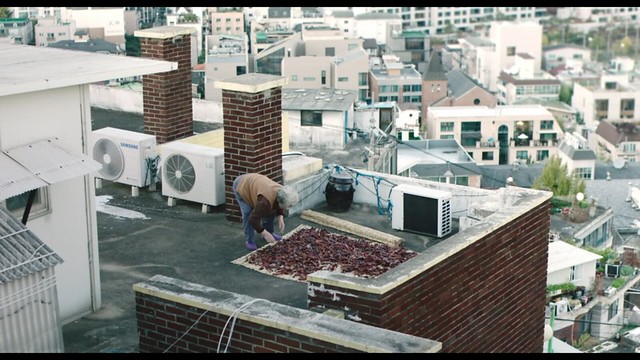
White Building (2022) - Neang Screen Shot 2023-05-01 at 10.19.23 AM Kavich Neang's White Building is a beautiful elegy for Phnom Penh's checkered past, observed by a young man full of dreams and hopes. The old, crumbling, leaky white building of the title is the multi-household urban slum for its longtime residents. Samnang and his friends Tol and Ah Kha dream of TV stardom by entering a dance contest. When they are not practicing in front of their small camera, they drink and talk about losing their virginity until the wee hours of the morning. The vibrant Phnom Penh's colors and sounds through the eyes of these youths on their motorbike at night are very much like the early films of Hou Hsiao Hsien and Tsai Ming Liang. But things don't pan out for the youngsters as they hope. Ah Kha's family are moving to France to join their relatives and their dreams of becoming dance stars fizzle out.

In the meantime, government officials are offering residents of the building to move out, offering crumbs to relocate. Residents are split between taking the settlement money or stay put to renegotiate the terms. The idea of renovating the building on their own is not feasible anymore. The building is decaying with them living in it. Things are getting progressively, intentionally worse. The city officials are cutting off the water supply to the building. The Monsoon season is coming, and the ceilings are leakier than ever. Samnang's dad, the chief of the building on behalf of the residents, is conflicted on the matter. And his diabetic conditions worsen as he refuses to go to the doctor and must face the possibility of a leg amputation.

All things must pass. The residents can't compete with the rising tide of progress. And Samnang's family relocate to the countryside. His mom laments that despite her wishes to live as a family, all her children are leaving and going back to the city.

Gentrification happens everywhere in the world. But the building, which was a subject for Neang's 2019 documentary, Last Time I saw You Smiling, has been home for more than 400 souls. And his family was one of the those who had to relocate before the building was demolished. The director actually lived through that change. The film is soaked with melancholy, and it's all captured with crispy digital cinematography by Douglas Seok (Minari) - it's in the nighttime scooter ride, it's in the clothes lines hanging in the building, it's in the growing big moldy stains on the ceilings, it's in the empty apartments with the remnants of past lives, it's in the silhouette profile of Samnang's dad under the mosquito nets at night. Contemplative and full of longing with its characters witnessing the progress replacing the memories of its inhabitants with glass and metal skyscrapers in real time, White Building serves not only the filmic record of lives from not so distant past but also reflects on youth and their resilience and optimism in the face of change.

Friday, April 28, 2023

Missiles

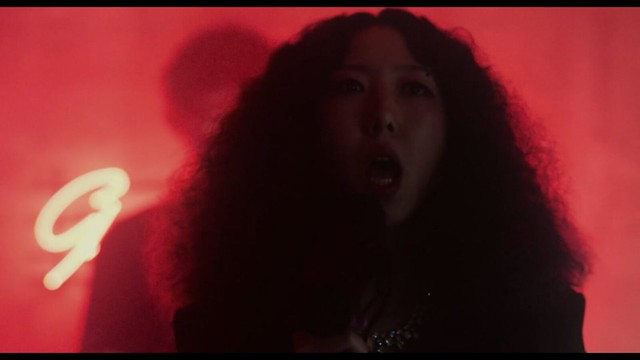
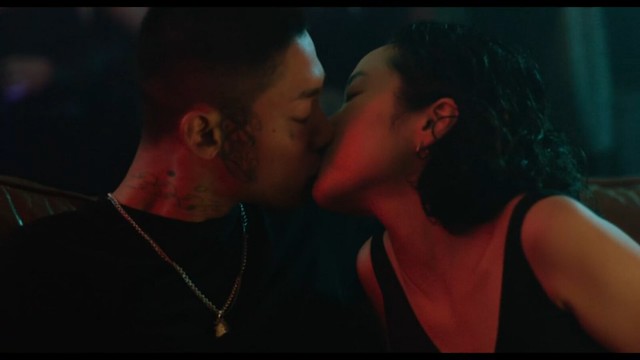
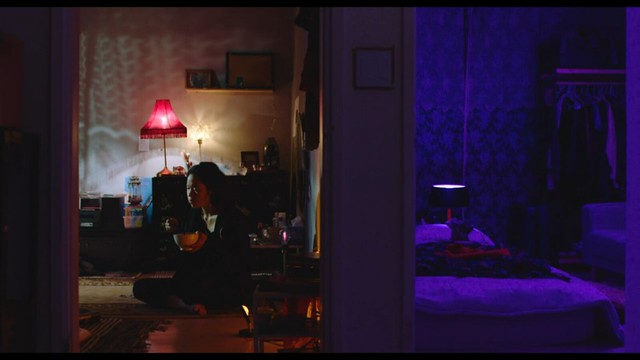
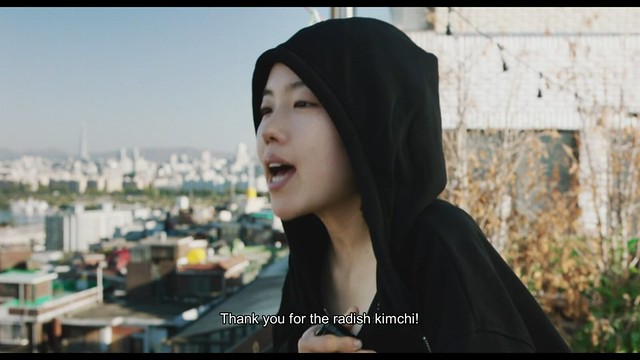
Return to Seoul (2022) - Chou Screen Shot 2023-04-27 at 10.33.45 PM Screen Shot 2023-04-27 at 8.43.26 PM Screen Shot 2023-04-27 at 9.19.29 PM Screen Shot 2023-04-27 at 10.35.35 PM Screen Shot 2023-04-27 at 9.39.04 PM Screen Shot 2023-04-27 at 9.39.49 PM Screen Shot 2023-04-27 at 9.44.51 PM Screen Shot 2023-04-27 at 9.43.55 PM Screen Shot 2023-04-27 at 10.36.29 PMScreen Shot 2023-04-27 at 9.50.02 PM Screen Shot 2023-04-27 at 9.53.38 PM Screen Shot 2023-04-27 at 10.37.15 PM Freddie (Park Ji-min) is a young Korean born French woman in Seoul. She is staying at a hostel for couple of weeks. She is outgoing, impulsive and makes mousy Tena (Guka Han), whom she just met at the hostel and has been acting as Freddie's interpreter, very uncomfortable. It is slowly revealed that Freddie lied to her French parents to come to Korea to find her biological parents. Through the adoption agency, she gets a prompt that her father is willing to meet her. But no words from her mother. He lives in Gunsan a port city in the South West Korea, with his new family. And their encounter is pretty typical and cringey - Father and his family are extremely apologetic and eager to reconnect. Father insists that she relocate to Korea permanently and live with him. He will even find her a good Korean man to marry! It's all guilty conscience, over compensation and pure sentimentality. Freddie, irked by the experience and regretting her impulsive decisions, cuts the trip short and comes back to Seoul. But her father won't stop drunk texting her, apologizing and demanding. She has to put a stop to it.

Two years later, and still living in Seoul, Freddie, now 27, is working for a French company while having amorous relationship with an underground tattoo artist and having wild parties. She meets an older French arms dealer too through a dating app. She has picked up some Korean as well. But there is always a sad side to her in quiet moments.

Another five years pass by. Freddie is a smartly dressed arms dealer now, selling missiles to the Korean National Defence Force. More confident now, she can bring her French boyfriend to meet with her father. She can even let her doe eyed father touch her scars on her collarbone who got in a trip to Thailand. Her mother finally contacts her through the agency. And we can guess that this has been the reason why she stayed in Seoul for the last 7 years, away from her French family and friends. The reunion is a tearful one.

Park's performance is a revelation. She makes Freddie a strong willed, fascinating young woman in search of herself. Her magnetic presence makes her always watchable. Seeing from the perspective of an adoptee and a modern woman in a still very patriarchal society, Return to Seoul is a visceral journey toward self-discovery and finding identity. The quiet ending reminds me a lot of Drive My Car. Return to Seoul has that novelistic quality about it that I liked a lot.

Tuesday, April 21, 2015

Cambodian Rock 'n' Roll Remembered

Don't Think I've Forgotten: Cambodia's Lost Rock And Roll (2015) - Pirozzi
 photo c04b16ca-a1dc-4964-ad53-c3de23eed29d_zps6bpyh1p0.jpg
If you are a hipster who picked up a copy of Cambodian Rocks Vol.II in the World Music section at your favorite vinyl shop then you might already be familiar with musicians like Sinn Sisamouth, Pan Ron and Yol Aularong. But did you know that these musicians all perished in forced labor camps along with an estimated 2 million others under the brutal Pol Pot regime? Don't Think I've Forgotten: Cambodia's Lost Rock And Roll isn't some cutesy, esoteric music documentary but a well researched, searing history lesson of Cambodia.

With mountains of archival footage and interviews, director John Pirozzi whose long list of credits include being a cameraman on countless documentaries and films on musicians, chronicles the history of the music scene in Cambodia. The result is an important, vivid reminder of the past and the music that reflected the era that was once almost erased and forgotten.

Cambodians saw their independence in 1953 after a long French colonial rule. Its very much revered, musically inclined leader Prince Norodom Sihanouk brought modernity and art to the country, making its capital, Phnom Penh, 'the Pearl of Southeast Asia'. Everybody flocked to the booming capital, including many musicians.

In Phnom Penh, the French and Afro-Cuban inspired music flourished. First made popular by Sinn Sisamouth, a svelt voiced, mild mannered singer who was regarded as 'the father of the soul of Cambodia'. Then there was Ros Serey Sothea, a country girl whose voice captured the hearts of the public. They recorded many songs together as the khmer music's royal couple. Another popular singer was Pan Ron, known for her versatility as she dabbled in a variety of genres as the music trend changed with the times.

As rock 'n' roll gained popularity in the West, Cambodian youth sought it out. It took off particularly after American GIs' radio stations on aircraft carriers off the coast of Indochina (a constant reminder of the Cold War brewing just across the border in Vietnam) filled the airwaves with Wilson Picket and the Shadows and Carlos Santana. Countless guitar bands started to pop up everywhere. Baksey Cham Krong was one of the first surf guitar bands who gained popularity. With their long hair and pants, they reflected the changing society.

Vibrant with archival footage, colorful rock 'n' roll poster art and album covers and enthusiastic interviewees, the film is an affectionate love letter to Cambodia's forgotten past.

Then things turn serious as Walter Cronkite and Dan Rather explain the intensifying situation on TV. As the Khmer Rouge gained ground in the northeast near the Vietnam border, Prince Norodom's neutral stance towards the Vietnam War abruptly ended with a military coup backed by the US. Incensed by the coup, the prince who had never been an ideologue, allied with communists, his former enemies. Pol Pot and Khmer Rouge used his popularity to their advantage among peasants, and their numbers swelled.

The indiscriminate bombing of rural Cambodia by the US didn't help the matter either. After the US decided to pull out their troops, Khmer Rouge entered Phnom Penh in 1975 to a flurry of welcoming civilians. Then everything stopped. Pol Pot's regime lasted only 4 years but its abominable legacy is still felt 35 years later. Pirozzi effectively uses countless mug shots of the disappeared during the time of Khmer Rouge. They are a searing reminder of the magnitude of this genocide.

Don't Think I've Forgotten, minding Cambodia's darkest history, contrasts the free spirited musicians and their lively music with the horrible fate that they suffered. The interviewed surviving musicians and artists solemnly recall how they lived through hell on earth, lying about their professions, as Khmer Rouge systematically exterminated anyone who had ties to the opulent, past culture.

10 years in the making, watching the film, you can feel the amount of passion and dedication that is poured into it. This documentary is not only a tribute to those musicians who perished but a celebration of music's resilient, lingering power in reminding us of the past.

Don't Think I've Forgotten will have an exclusive one week engagement at Film Forum here in New York. National roll out will follow. Please check the film's website for dates and more info. To celebrate the film's opening, City Winery will host two concerts featuring surviving musicians from the film, on Friday April 24 at 7:30pm and 10:30pm (Details here). The soundtrack for the film will be released via the specialty label Dust-to-Digital on 5/12.