Thelonious Monk: Straight No Chaser (1988) - Zwerlin
Lucky for us jazz fans, the pioneer of Direct Cinema, Charlotte Zwerlin (co-director of Salesman & Gimme Shelter with Albert Maysles) got involved making a documentary of the jazz great, Thelonious Monk, with the candid newfound footage of Monk's 1968 European tour by the Blackwood Brothers for German television in the early 80s. Straight No Chaser is that rare filmed testament of genius at work.
They wanted to involve Monk in the film but his health was failing and eventually passed away in 1982 and the estate complication and funding problems prevented from the completion of the film until 1988 (with large thanks to Clint Eastwood, a huge fan of bebop and whose production company Malpaso Productions provided funding). The film captures the hulking, introverted, inarticulate man at work, always donning various funny hats and wire rimmed glasses, on stage and off stage. It shows his astounding composing skills - the sophistication of his arrangement and meticulous music notes on paper, and how he conveyed that to other musicians. It features his devoted wife Nellie and his relationship with the millionaire Baroness Panonnica de Koenigswarter (née Rothchild).
With interviews with family and friends, musicians and managers, we get the complicated picture of a genius who wasn't really appreciated in the beginning of his career. Just like many jazz greats in the 50s, he was targeted by cops and frequently harrassed. Jazz, for many black musicians at the time, was the freedom of expression. Monk's complex compositions weren't selling, but few afficionados in the music industry let him keep making his music. The docu tells a funny story about Monk taking the rap for his musician buddy Bud Powell on narcotics possession charges and had his permit to play suspended. And in turn Rothchild taking the rap for marijuana possession later on. It speaks about his physical ailment and mental decline - that he sometimes would not recognize people and stare at a space for moments. It also shows his jubilant on stage antics - twirling around on stage then back to his piano. Twirling around at the airport and on the streets with music always playing in his head.
It's the closeups of Monk's hands though, that god-like hands dancing energetically above the keys- creating and playing something incredible, something out of this world - real genius at work. Plus, we get to find out he was a cat lover. For Monk fans, Straight No Chaser and the recent Alain Gomis's Rewind & Play make a great double feature.
Rhythm-A-Ning
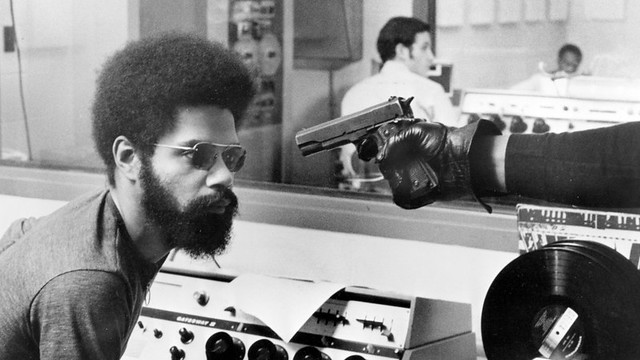
Tryin’ to Get Over: Post-Civil Rights Era Soundscape in Black Films:How The Spook Who Sat by the Door and Superfly Soundtracks Reflected Changing Times
Since the beginning of cinema, music has been an integral part of filmmaking: from silent era films accompanied by live music on stage, to Golden Age of musicals in 1930s- 50s, to orchestral arrangements of individual composers such as Elmer Bernstein, Ennio Morricone and Morris Jarre in the 60s, and jazz and pop composers such as Henry Mancini, Lalo Schifrin, Herbie Hancock. By the late 1960s, even though there were still many music themed films made in Hollywood, the costly musical genre had all but died out. With troubles abroad - the Vietnam War, and at home - anti-war protests, race riots and political assassinations, the new generations of Hollywood filmmakers decided to reflect the mood of the nation not only in their films but in music as well by working with seasoned and popular musicians who were in transition themselves.
Also, Hollywood was taking notice in the Black audience market, which accounted for 30 percent of all movie-going public at the time. Driven by demographics, economics, and the political realities of the Civil Rights and Black Power movements, the studios hired their first black directors, who would redefine the African American image on the big screen. And who would they choose to collaborate for their motion picture soundtrack? Naturally, the biggest and most popular names in music of the era. And these Black filmmakers understood the power and sway of music on general audiences.
One can’t ignore the Blaxploitation phenomenon when discussing African American filmmaking or black representation in the 1970s. The African American community had entered a new phase in the Black Freedom Movement. America was witnessing a political shift from African Americans engagement primarily in non-violent Civil Rights tactics towards their participation in move vociferous Black Power actions. (Acham P.113) Long simmering tensions boiled over across the United States in July 1967, with violent rebellions - labeled “race riots” by the press - exploding in New York, Detroit, Milwaukee, Toledo, Houston, Newark, and other cities. President Lyndon Johnson’s Kerner Commission found systematic racism that Governmental institutions failed to address the poverty, crime, drug addiction, joblessness, inequality, poor housing, and general hopelessness growing in many African American communities. (Ryfle p.12) Sidney Poitier became number one box office drawer in 1967. His success was based on mainstream US acceptance of the roles that he played which were typically sidekick characters who supported white counterparts in obtaining their dreams. Poitier was now seen as an integrationist hero and was considered behind the times. (Acham p.113)
After the success of films such as Sweet Sweet Baadasssss Song (1971), Cotton Comes to Harlem (1970) and Watermelon Man (1970), black themed movies were generally marketed through the iconography of blaxploitation regardless of the narrative content of the film. This meant that films with predominantly black casts and/or themes surrounding race were seen at the time as occupying the same discursive space. At a time when African Americans’ battle with oppression heightened, and worsening city problems were evident, films that celebrated overcoming The Man were empowering and enjoyable. (Acham p.114) While many 1970s black-themed films were using limited black talent, The Spook Who Sat by the Door (1971), not only boasted a black cast, but black director Ivan Dixon and black writer Sam Greenlee. Greenlee, a Chicagoan who experienced racism firsthand while in the military, and while stationed in Iraq, found kinship with the oppressed Iraqis under the British and US backed monarchy, wrote The Spook which he then adapted as a screenplay for Dixon’s film.
On the surface, The Spook Who Sat by the Door looks like any other blaxploitation film. There’s the man who says things like, “those people make great athletes,” and “This is no place for misplaced cotton pickers.” There’s judo, there is Black militancy, there’s prostitute and there’s that offensive title. “Spook” here has a double meaning, spy, and a derogatory term to address an African American. But the film is much more radical than that. Taking advantage during the integration era, a black man named Don Freeman, patiently works up the ranks as a token black CIA agent, learning everything he could while being a model employee and in turn use all the knowledge, he acquired into an urban armed guerrilla warfare in his native Chicago against authorities. By the end, the film advocates armed uprising by the disenfranchised blacks in every major city in America. Despite the success of the film’s opening gross of half a million dollars in the first three days, the film was pulled from theaters and shelved.
Herbie Hancock, a pianist, keyboardist, and composer extraordinaire, first rising to prominence as a pivotal figure of the post-bop jazz movement of the 1960s, most notably through collaboration with Miles Davis’ incredible Second Quartet, continued to innovate, boldly embracing new technologies and new approaches in music. His keen interests in crossover appeal of jazz with soul, R&B, and funk, went on to become one of the most well-known and popular composers in American music. It was Italian film director Michelangelo Antonioni’s first English language feature film, Blow-Up (1966) that Hancock provided music for its soundtrack for the first time. Antonioni, a big jazz fan, knew Hancock’s music. The film, reflecting the decadence and excess of the decade, was perfectly accompanied by Hancock’s groovy, percussion heavy soundtrack. And like many of his compositions, “Bring Down the Birds” from the Blow-Up soundtrack would be sampled and enjoy a second life in the 90s in Deee Lite’s “Groove is in the Heart (1990).”
His seventh album The Prisoner (1969) was dedicated to the Civil Rights leader Martin Luther King Jr. who was assassinated the year before, the album and many of the songs on it reflect African American experience at the time. The most beautiful and delicate composition in the album is the first track I Have a Dream, invoking MLK’s famous speech at the steps of Lincoln Memorial in 1963, featuring a haunting flute by flutist Herbert Laws. This was the last album Hancock made with the legendary jazz label, Blue note. The second film he scored was The Spook Who Sat by the Door (1971). Dixon and Hancock met on the set of Hogan's Heroes (1965-71), an American TV sitcom, where Dixon played Staff Sergeant Kinch. Dixon knew his music and asked him to compose the soundtrack.
At the time of their collaboration, Hancock’s was moving on to something different. He signed with Warner Brothers Music and made forays into popular music including composing many jingles for TV commercials and Bill Cosby’s animated TV special Hey, Hey, Hey, It’s Fat Albert (1969). Musically, Hancock was going through his Mwandishi phase. It was his first departure from the traditional idioms of jazz, as well as the beginning of original and creative style which eventually appealed to a wider audience. Mwandishi means composer in Swahili, the name he chose for himself in the late 1960s to early 70s. Mwandishi (1971) happens to be the name of his 9th studio album. Albums he produced between 1969 - 1973 are now known as the work of Hancock’s Mwandishi period. Deeply influenced by Miles Davis’ foray into electronic music and working on In a Silent Way (1969) and Bitches Brew (1970) with the master trumpeter, he began to experiment with combining electronic with acoustic instruments during this period. Along with his Mwandishi albums, the soundtrack of The Spook marks the jazz pianist’s move from a straighter jazz sound to funk and a transition that would reach its apex with 1983’s “Rock It!” A hit single featured in his album Future Shock (1983) using scratching, drum machines and synthesizers, confounded jazz critics, set the blueprint for rap and much of the pop music for the coming years. Including dialog and sound from the film, the soundtrack is an important precursor to modern film soundtracks. Hancock worked on about ten soundtracks since then, most notably, Death Wish (1974), A Soldier’s Story (1984), Around Midnight (1986), Colors (1988) and Harlem Nights (1989). As an educator, Hancock influenced countless young talents over the years as a chair and an artistic director of Herbie Hancock Institute of Jazz at USC.
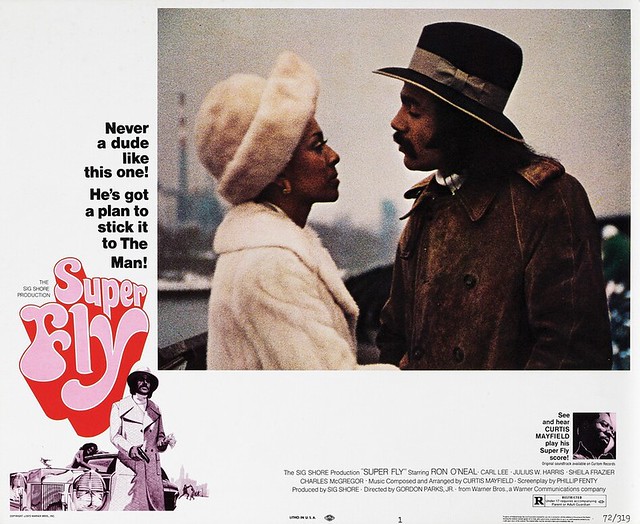
Unlike Ivan Dixon’s The Spook Who Sat by the Door which fell into obscurity after it opened and only to be rediscovered with the proliferation of home videos and streaming much later on, Gordon Parks Jr.’s Super Fly (1972) was a bona fide hit, grossing more than 4 million dollars at the box office. A film about a suave cocaine dealer, Super Fly has many of the negative stereotypes the blaxploitation genre was accused of perpetuating - pimps, hustlers, degradation of women, violence, and drug use. Youngblood Priest (Ron O’Neal), a tall, handsome black man with long flowing black hair and hyper fashionable attire with a big car and beautiful white and black girlfriends, lives a luxurious lifestyle in Harlem. He is a man of action and a ruthless boss. No one rips him off and everyone has to pay. But with all the money he is generating selling drugs, he still yearns to go straight. With his partner Eddie, he is trying to score big one last time before he retires from the drug business. The plan is, with $300,000 he and Eddie have, to buy 30 kilos of high-quality cocaine and turn it around for one million, split between them and get out of business. Eddie, although going along with the plan, is unsure. For him, dealing drugs is the only option left to them by “the Man”. After their goon, Freddie, gets killed by the police, they find out that it is the deputy police commissioner Reardon’s intention to keep them in the game and in his pocket. Although Eddie likes the idea of police protection and continuing being the drug dealer, Priest is his own man and no one else can have power over his life. After his mentor, Scatter, who helped him start the business, feeds him the information on the Reardon before he gets killed by the police, Priest devises a plan to escape the drug underworld clean with a big middle finger to the corrupt system.
The film struck a core with black youth film goers and became a cultural phenomenon. It also resonated with the post-Civil Rights Movement generation of African Americans, who saw Youngblood as a new example of how to rise in the American class system. Super Fly’s focus on black underground wealth generation was energized by its rejection of the two classic protest strategies of integration and transformation- the film spoke to disillusionment with both racially ameliorative civil rights politics and radical black nationalism. (Quinn, p.88) Classic civil rights mobilization was based upon those who worked hard at honest callings, whatever their origins, could better themselves and lift their children’s prospects. By romanticizing black criminal life, Super Fly was detrimental to their cause. In one pivotal scene, three “black militants” approach Priest and Eddie and challenge them to give something back to the community. “It is time for you to pay some dues!” Priest responds, “Unless you start killing some whitey, go sing your marching songs somewhere else.” In its staging of business dynamism outside of mainstream white structures, Super Fly proved extremely attractive in a hardening sociopolitical climate. Priest can be seen as a self-made African American outlaw entrepreneur, determined to transcend the endless cycle of crime and danger to which “the Man” has conscribed him, and smart and tough enough to succeed.
Curtis Mayfield was a singer, lyricist and record producer who started his career in a vocal group The Impressions. It was his socially conscious lyrics that made such songs as “Keep on Pushing (1964)” and “People Get Ready (1965)” being embraced by the Civil Rights leaders and utilized during the decades’ many freedom rides, that elevated Mayfield from soul group member to poet/artist/activist.
In 1970 Mayfield went solo and released Curtis (1970) and Roots (1971). With songs such as “The Other Side of Town,” “We the People Who are Darker than Blue,” and “Move on Up," he continued to show that he was acutely aware of America’s racial, and class divide and was not afraid to discuss it.
Recorded in just three days, the soundtrack made an indelible mark on pop consciousness. Blaxploitation films had opened an ancillary market for black musicians. Earth Wind and Fire perform the music for Sweet Sweetback’s Baadasssss Song (1971), Isaac Hayes did Shaft (1971) and Marvin Gaye did Trouble Man (1972). Now it was Mayfield’s turn.
In Super Fly soundtrack, Mayfield continued to offer his social commentary. For James Stewart in his article Message in the Music, it was a deliberate attempt to neutralize the thematic content and visual imagery by producing audio commentaries challenging the glorification of the underground economy. “In effect, these cultural warriors engaged in a type of guerrilla campaign against external cultural manipulation. (Stewart p.211)
The first single from the soundtrack, which was released just before the film hit the theaters, “Freddie’s Dead,” was a massive hit and sold more than a million copies. Freddie, a good-hearted yet weak willed man caught up in the life of a pusher, is killed unceremoniously in the film. Mayfield eulogizes this side character this way:
Everybody's misused him, ripped him up and abused him.
Another junkie plan, pushin' dope for the man.
A terrible blow, but that's how it goes.
If you don’t try, you’re gonna die.
Why can’t we brothers protect one another?
No one’s serious, and it makes me furious,
Don’t be misled, just think of Fred.
Mayfield was by far the best-remunerated African American on the project. Earnings from performance rights and royalties feld back to Mayfield because he owned his own publishing company and independent record label, Curtom Records, founded in 1963. The hit singles “Super Fly'' and “Freddie’s Dead” both sold more than one million copies, and the crossover soundtrack album went on to shift a colossal twelve million units. Mayfield ultimately earned more than $5 million for his soundtrack. (Quinn p.89)
After the critical and financial success of Super Fly,” Mayfield went on to score several more blaxploitation soundtrack albums: Claudine (1974), Let’s Do It Again (1975), Sparkle (1976), Short Eyes (1977) and A Piece of Action (1977).
Riding the tide of blaxploitation boon in the early to mid 70s, many of the prominent African American musicians from different genres and backgrounds were given the opportunity to collaborate and explore their craft and artistry to not only reflect the changing society but to help shape and sway African American youth to let themselves heard and protest the Civil Rights Movement’s unkept promises. Herbie Hancock lend his name and music to a radical, revolutionary black film while continuing his exploration of electronic music and found his way to a wider audience, working with different musicians and filmmakers. For Mayfield, while making a cultural milestone with a blaxploitation film soundtrack, he was afforded to counterbalance the negative reaction to the film with his activist lyrics.
Bibliography
Guest, Hayden. “Soundtrack by Herbie Hancock. Harvard Film Archive.” (February 2014).
https://harvardfilmarchive.org/programs/soundtrack-by-herbie-hancock
Quinn, Eithne. “‘Tryin’ to Get Over’: ‘Super Fly’, Black Politics, and Post—Civil Rights Film
Enterprise.” Cinema Journal 49, no. 2 (2010): 86–105.
Telotte, J.P. “The New Hollywood Musical: From Saturday Night Fever to Footloose.” In Genre and Contemporary Hollywood, ed. Stephen Neale, London: Bloomsbury (2001): 48-61.
Ryfle, Steve. “The Politics of Super Fly: The Blaxploitation Classic That Defined an African-American Battle for Self-Determination on Screen.” Cinéaste 44, no. 2 (2019): 12–16.
Stafford, James. “From the Stacks: Herbie Hancock- The Spook Who Sat by the Door.” Why It Matters. (August 25, 2015).
https://wimwords.com/2015/08/23/from-the-stacks-herbie-hancock-the-spook-who-sat-by-the-door/
Stewart, James B. “Message in the Music: Political Commentary in Black Popular Music from Rhythm and Blues to Early Hip Hop.” The Journal of African American History 90, no. 3 (2005): 196–225.
Yaquinto, Marilyn. “Cinema as Political Activism: Contemporary Meanings in The Spook Who Sat by the Door.” Black Camera 6, no. 1 (2014): 5–33. https://doi.org/10.2979/blackcamera.6.1.5.
Music (2023) - Schanelec
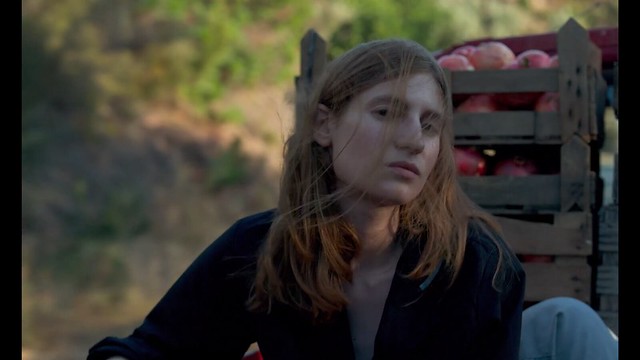
Angela Schanelec's new, nearly silent film, simply titled Music, is supposedly 'freely' based on the Greek Myth of Oedipus. It might be the most enigmatic offering from the esteemed German director. But its depiction of melancholy and fragility of human life is nevertheless so beautiful and timeless, I can't help tearing up by the end.
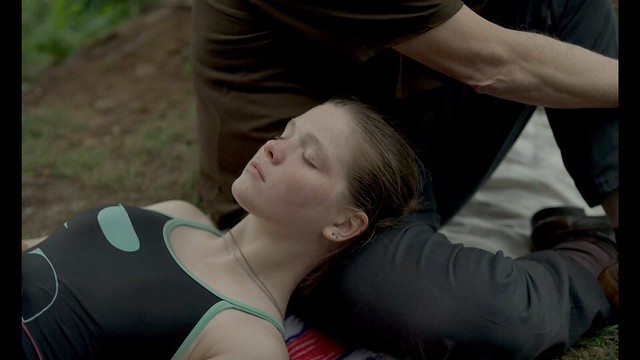
As always with Schanelec's films, there are striking images and a ghost of a narrative thread with lots of gaps that you will need to fill in yourself. Time is elastic in Music; in one scene you see an infant being found and adopted, the next we see Jon (Aliocha Schneider) accidentally killing someone (his father?) and going to prison. There's a prison guard Iro (French actress Agathe Bonitzer) who attends to his swollen feet (like Oedipus by his unsuspecting mother/lover), and gives him the list of classical composers to listen to. Then he's out of the prison, and they are expecting a baby. But fate would have it, tragedy follows Jon as his past catches up with him. He is a musician now, living in Berlin with his grown up daughter. He sings melancholic songs in falsetto on stages. And also, he is going blind.
Static framing and stoic acting that Schanelec cultivated over the years are all present here. Pivotal, life-altering actions happen mostly off frame. It's almost dialog free. And it doesn't really matter if Jon looks the same after many years, if not decades.
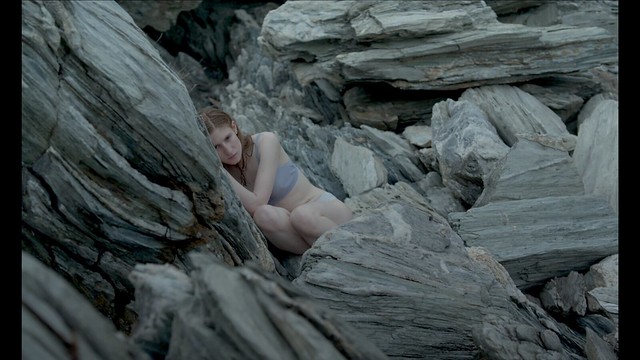
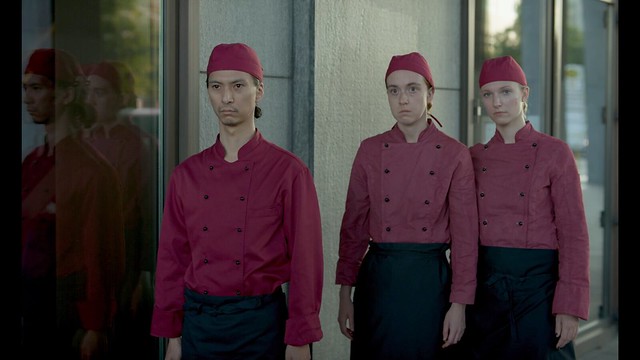
Schanelec told me once that she usually maps out an idea for a project from one or two images. This time, she takes a cue from a Greek theater. And images in Music are indeed striking. The windswept rocky Greek terrain against stunningly blue Aegean sea and sky in the first half invokes both the timelessness of nature and our impermanence in it. The static, staged scenes featuring groups of young people - street gang, wistful prison inmates, bystanders in uniformed kitchen staff strongly remind you of the world of Aki Kaurismaki. And of course, music flows where dialog would have been with the help of Canadian musician Doug Tielli in his high-pitched voice (a cross between Sigur Rós and Nick Drake). His songs not only serve as a Greek Chorus chronicling Jon's melancholy, but also as testaments to the beauty of music, transcending this fleeting dream we call human existence.
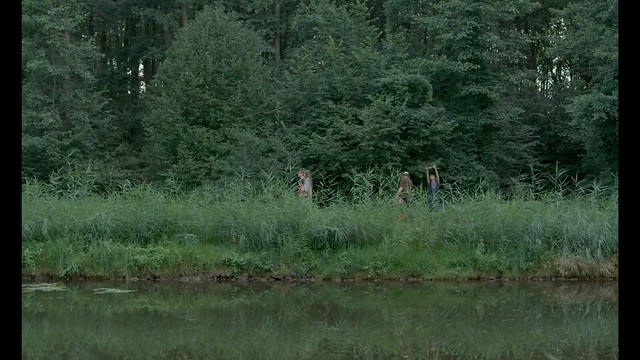
The long tracking shot that ends the film, filmed from the other side of the river embankment as the characters walk and sing in the beautiful summer day has the feeling of an eternity. It's an achingly beautiful film.
Moonage Daydream (2022) - Morgen
The Queen is dead. She lived to be 96 years old. David Bowie passed on in 2016, at only 69. There is no justice in this world.
More than any other cultural icon's death, Bowie's passing was most shocking to me. It's because I didn't think he was capable of dying. For more than half a century, his presence in our lives, in every facet of art and creativity was undeniable. Me and my wife, aging Gen Xers, have 4 Bowie t-shirts in our daily wardrobe rotations between us, Man Who Fell to Earth art print as well as Aladdin Sane vinyl album cover adorn our living room wall, and we both consider The Rise and Fall of Ziggy Stardust and the Spiders from Mars, the perfect album from start to finish. In short, our Brooklyn apartment is better equipped with Bowie memorabilia than the SoHo Bowie pop-up store.
So how do you go on about making a documentary about one of the greatest musicians of our time, whose illustrious career spans more than five decades? What should it look and sound like? How do you capture a legend who knew little boundaries?
Brett Morgen, music documentarian is best known for his innovative Kurt Cobain doc, Montage of Heck back in 2015. With the unprecedented access he got to make that film, he made sure that the film is from the subject's point of view, not anyone else’s'. Concentrating on the music itself was the key. Moonage Daydream, narrated by Bowie in his own words then, with the wealth of unseen pristine materials of him in his most gorgeous days, highly benefits Moonage Daydream. And Morgen's approach here is more resonant and better fit here than Montage with because after all, it is Bowie, whom the camera adored. I have to hand it to Morgen, to have a vision for a kaleidoscopic biographical documentary to convince the estates of these musicians to grant him compete access to the precious, never-before-seen materials.
So how this shy boy from Brixston become a music, film, theater, dance and fashion icon? From the get-go, with the 70 mm IMAX projection and Dolby sound system, Moonage Daydream wastes no time blasting Bowie singing All the Young Dudes in concert footage. Morgen jumbles the pristine footage of Bowie in a Ziggy Stardust tour, backstage interviews, talk show appearances, his days in Singapore and the Blackstar music video to set the tone. Then the film slides into a chronological career of Bowie for the next two hours. It's a loud, candid, glorious and fitting celebration of the life of an artist.
Bowie's transformations and delving into different music genre over his career is well documented. The film highlights his endless searching and candid moments of reflection; from his glam rock days where he experimented with cut-up lyrics, to his grunge Berlin days when he went there to isolate himself and find new sound in electronica, to his hugely successful pop music stint in the 80s, to industrial sound of the 90s and 2000s. In candid interviews, he regrets and self-conscious about some of the career paths he has taken. Like appearing in a glitzy Pepsi commercial with Tina Turner.
We learn that even though he dabbled in painting and sculpture (in striking German Expressionism style), he never really exhibited them in public because he didn't think they were good enough.
Morgen also uses Stan Brakage inspired animation of exploding primary colors to accompany the glorious music, punctuating the isolated beats and guitar riff that starts many of the Bowie's famed songs. More than anything, Moonage Daydream sounds and feels like a rousing concert documentary where one can't help but feeling emotional several times.
A consummate professional and entertainer, Bowie worked on Blackstar album while he was dying of cancer. The album is staggeringly beautiful in its content, contemplating his entire career, his mortality and transient human life. He also became the first musician to reach No.1 spot after his death.
Moonage Daydream is definitely the maximalist gift for Bowie fans. And no doubt, it will introduce to one of the most, if not the most, important artists of our time, who was taken too soon, to a new generation of music lovers in a big way. See it big and see it loud. It's one of the best movie going experience of the year.
Moonage Daydream opens in Theaters and IMAX globally on 9/16.
Terminal Norte (2021) - Martel
Lately I've been reading up a lot on 'queer space' - the periperal space where one can create their own utopia and at the same time, giving a middle finger to the heteronomative and highly patriarchal majority. After Zama, Lucrecia Martel, one of the greatest living filmmakers, goes back to Salta, the Nothern Andean region where she hails from, during pandemic induced lockdown, and makes Terminal Norte, a short documentary on copleras/female singers and musicians. Our guide is Julieta Laso, whose gravelly voice makes my spine tingle into the mountainous slopes and introduces many queer, trans artist dabbling in traditional and non-traditional music (Trap and Noise included). In Martel's hands, one loses themselves soon enough, and becomes multitudes of voices across gender, age and time. What a pleasure to witness an artist in her zenith of power creating something so consistent and true to her craft in the time of global crisis, where togetherness, human touch has become the enemy? As Laso sings in her moanful voice with her tiger's stare, I feel that it's only art that can help us through in tough times.
Breaking Glass (1980) - Gibson
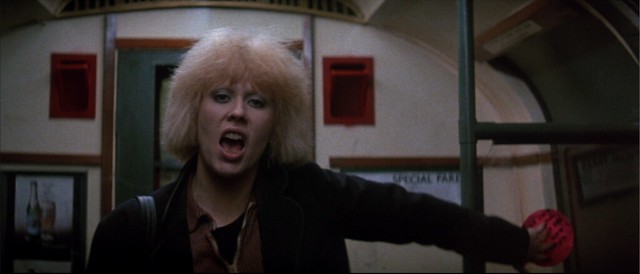
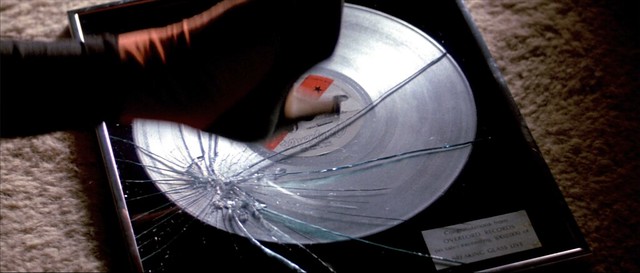
There has been a number of 'rise and fall of a rock star' movies, but nothing quite got my mojo going as Breaking Glass has. It stars Hazel O'Connor as Kate, a talented musician struggling in the dreary music landscape still dominated by disco - it's the end of disco era and the rise of New Wave, the year is 1980. Her music is just the right combination of punk and new wave, the look, the staccato singing style, energetic beats - it's extremely catchy and very awesome over all. O'Connor wrote and sings all the songs that are in the film.
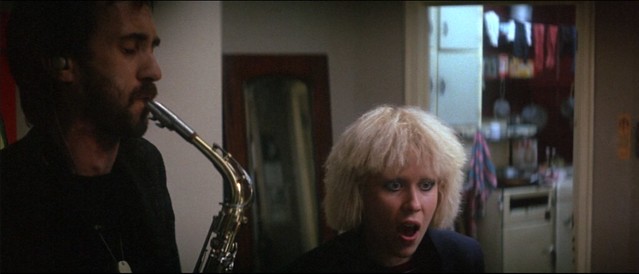
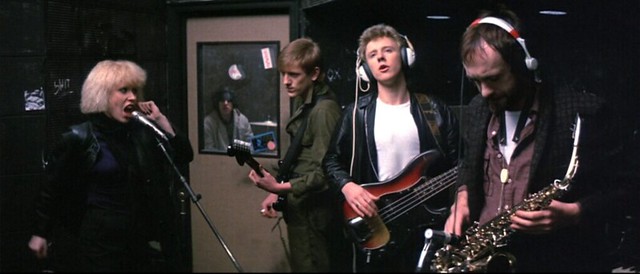
Danny (Phil Daniels who played pretty much the same character in Quadrophenia a year before), a music promoter trying to find a talent in the grimy clubs and pubs in London, finds Kate and sees great potential. After sweet-talking her to be her manager even though she doesn't believe in either manager or record deal, he forces her to hold auditions for her new band in her flat. Soon the cool band, Breaking Glass is assembled, including a quiet, hearing aid wearing junkie Saxophone player Ken (a semi-young Jonathan Price) who hits off with Kate musically.
Kate gets inspirations from the grungy, politically volatile Thatcher area streets. Breaking Glass has to fight off rowdy pub crowd and neo-Nazis while performing. Breaking Glass hits the road and gathers some new fans. A sort of romance blooms between Danny and Kate also. And all of sudden, the music industry execs who didn't give Danny any minds before flock in to sign a record deal with Breaking Glass. And they slowly interfere with the band's business and push Danny out. Danny calls it quits in the heat of argument in the tour bus and hops off. The success gets to the heads of some band members and Kate starts taking drugs just to go on stage.
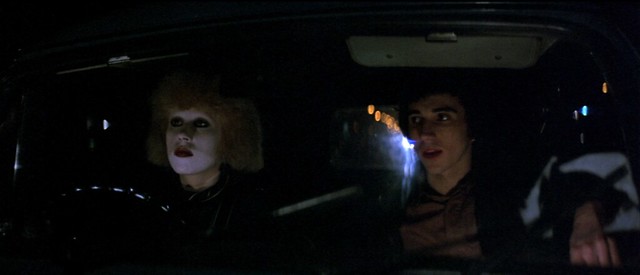
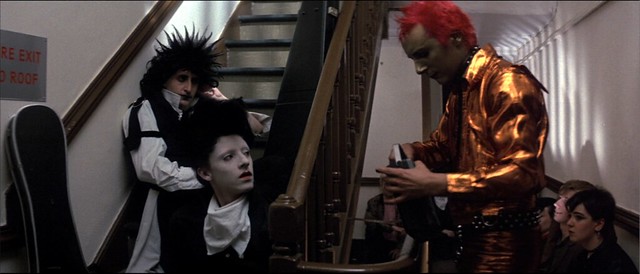
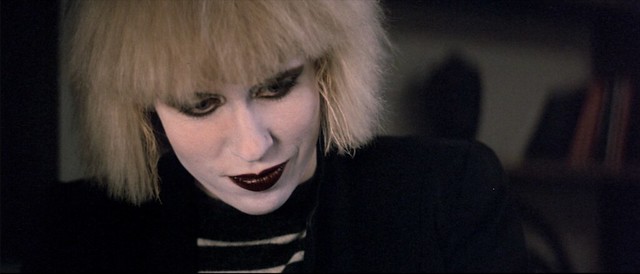
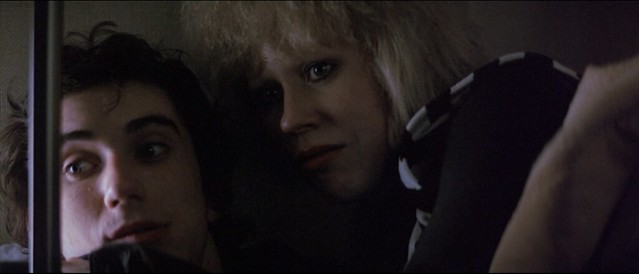
Again, the best part of the film is O'Connor's music. Her energetic presence and musical talent is undeniable. It is pretty obvious where Ridley Scott got his inspiration for Pris in Blade Runner. All the music acts, the new wave looks, the story are all so very engaging. I can't believe I haven't come across this film before. Along with Quadrophenia, Ladies and Gentlemen, the Fabulous Stains, Streets of Fire, The Commitments, Velvet Goldmine, Breaking Glass becomes one of my favorite rock films ever.
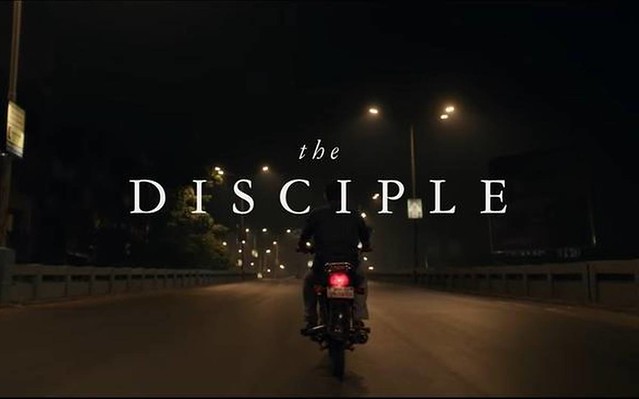
Chaitanya Tamhane's follow up to his great debut, Court, is The Disciple, about an artist struggling with a life long self-doubt. It might be a more personal subject, but it's even more nuanced observation of life than his previous film. The Disciple shows Tamhane is wise far beyond his age portraying subjects such as ambition, devotion and pride as well as realizing life's crushing disappointments as we age.
Khayal, I am told, is a classical Indian singing style that puts emphasis on improvisation and micro-tonal changes. For devotees of this art, mastering it is an eternal quest. Young Sharad (Aditya Modak), practicing this Hindustani classical music is a vocation he was sort of born into - his father was a devotee of this music tradition even though he ultimately failed as a singer. Studying under his guru/mentor (Arun Dravid) and listening to lectures, given by legendary, reclusive singer Maai, who was guru to both his father (who secretly recorded her lectures) and his mentor. Maai was almost a yogi figure, preaching purity and discipline in body and mind to truly devote to the music. She never allowed recordings of her music nor had her images taped or photographed. Tamhane provides some great night tracking shot of Mumbai, of Sharad riding his motorbike in slow motion, listening to Maai's lectures on tape. Emphasizing the lonely road the young man has chosen. The year is 2006.
Sharad practices and practices while dealing with all the distractions of life - constant nagging of his grandmother, pressure to get a job, loneliness, lust, etc. He is not winning any awards at singing competitions, at least not yet.
Sharad now is a fat middle aged man with a mustache, still trying to get his music career off the ground. He teaches music at a school, still takes care of his now ailing guru, while seeing others, more talented than him passing him by, career-wise. One of his pupil's mother comes to the school asking him for his advice: should her son join a fusion band in his college? He tells them not to come back to school if the young man joins the band. Some TV singing competition shows a young woman's transformation from a homely classical singer to a Bollywood style pop sensation. Is purity of the music and personal pride that important? Even Maai's words get warped in his mind. She directly addresses to him that his guru loves him so he doesn't have hearts to tell him that he is not talented, just like his father.
In one flashback scene, meeting with a rare music collector who seems to have dirt on everybody crushes Sharad's idols, including his guru and even Maai, whom he recalls as a self-righteous, pretentious fraud.
The Disciple deals with any artist's nightmare - total devotion is hard to achieve while living in the real world. In the mean time, self-doubt eats you away slowly over the years. Modak gives a beautiful, heart breaking performance, transforming himself from a bright eyed young man to a defeated middle-aged schlub . Both Modak and Dravid are actual singers and the music in this film is truly glorious. Tamhane again, proves himself to be one of the brightest and most talented filmmakers working today.
Félicité (2017) - Gomis
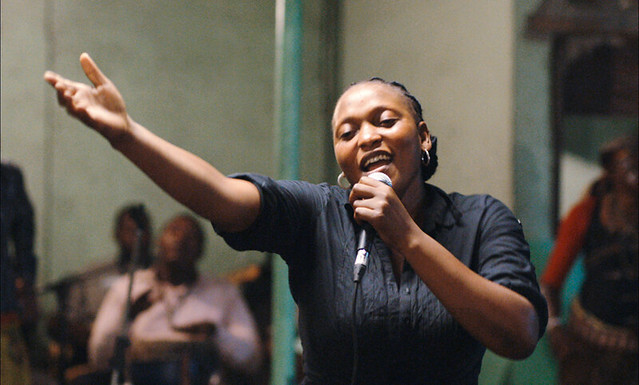
Senegalese-French director Alain Gomis's Félicité is a great patchwork of elements that are full of contradictions and contrasts. And it's beautiful, energetic and refreshing. It's about a singer in an outdoor bar, also a single mom, played by enigmatic Véro Tshanda Beya Mputu, trying to survive day-to-day life in Kinsasha, Democratic Republic of Congo. Strong willed and free spirited, she is a modern woman who doesn't need a man by her side. But life throws curve balls at her when least expected and keeps her on her toes.
As with Gomis's previous films that took place in Dakar, Senegal and its streets, the sight and sound of bustling city of Kinsasha become as much a character in the film.
First half of the film plays out like a docu-drama of the Dardenne Brothers- after a motorcycle accident, Samo, unresponsive teenage son of Félicité ends up in a hospital with a broken leg. Running against time, Félicité frantically runs across town to gather money for her son's operation by any means necessary. It means involving police to people who owe her money, swallowing her pride and asking her ex and family members for help and going door-to-door in super rich neighborhood and begging for money while making a scene.
In the latter part of the film, the tempo changes dramatically and things slow down significantly. And it concerns Félicité's on/off romance with Tabu (Papi Mpaka), a local drunkard and blowhard with a great heart. It's the budding formation of modern family in Kinshasa. Contrasting the frenetic first half, the second half is full of laughter, hope and optimism.
Félicité is a melding of many conflicting elements. There are documentary-like naturalism (thanks to handheld cinematography of a veteran DP, Celine Bozon, sister of French director Serge Bozon) mixed in with recurring beautiful dream sequence in the woods in near darkness. There is local music (featuring the Kasai Allstars) rubbing shoulders with Kinshasa Symphonic Orchestra playing classical pieces by Arvo Pärt. Félicité's strong willed, modern woman meets Tabu's womanizer and drunkard, accept each other and continue their amicable relationship.
It's the music that is at the heart of the film. Sang by earthy, smoky voiced Muambuyi, the lead singer of the Kasai Allstars, Mputu's Félicité comes to life whenever she's on stage. The "Congotronics" is an infectious, eclectic music that represents many different ethnic groups that consist the region. Arvo Pärt's somber music fills in for somber moments but it fits surprisingly well in the film.
The running joke that takes up much of the screen time is Tabu's epic struggle with Félicité's dying fridge. It's an impetus for their budding romance and also provides glimpse of the earthly concerns of Kinsasha's everyday life, as Tabu scans the bustling outdoor market for spare parts - the dirt road, pan handlers, dancing traffic signal cop, pickpockets, etc. It's a dizzing display of what it's like living in such a place and also a testament of human resilience.
Mputu ‘s broad, beautiful face with her steely gaze is the bedrock of the film. Even when things get dire, the film never succumbs to cheap sentimentalism. Papi Mpaka’s naturalistic performance also helps the cause.
Félicité is not another downbeat film about Africa steeped in miserablist tendencies. Gomis and company don't lose the sight of happiness in the daily lives of its ordinary citizens. There is much humanism and culture and joy to be had in Félicité and I am grateful for it.
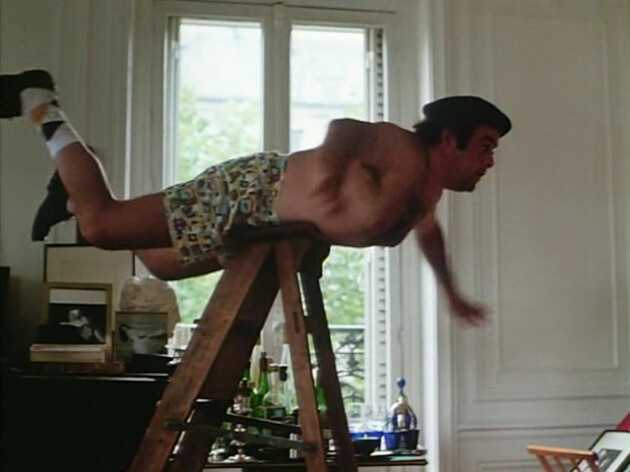
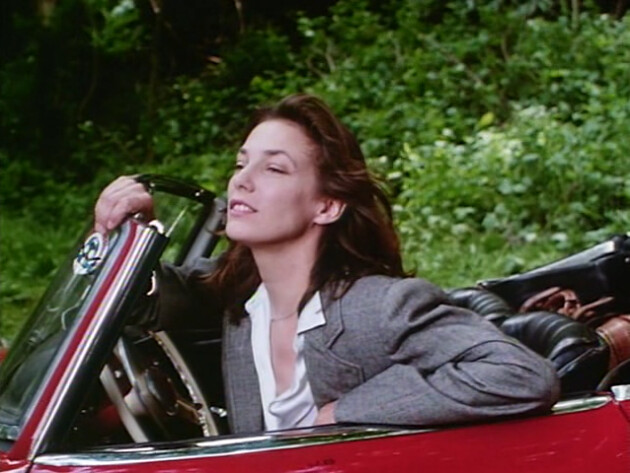
Keep Your Right Up/Soigne ta droite (1987) - Godard
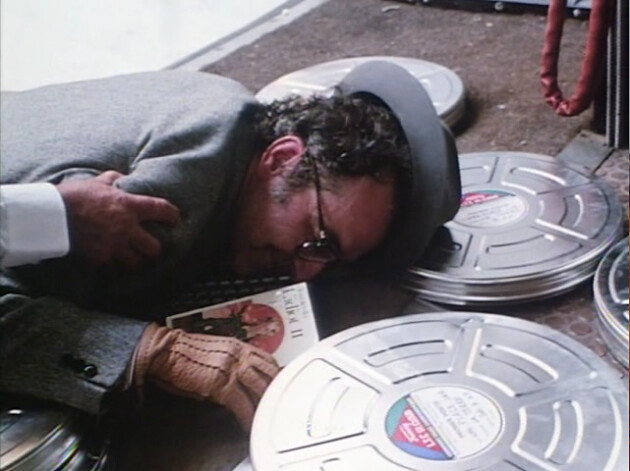
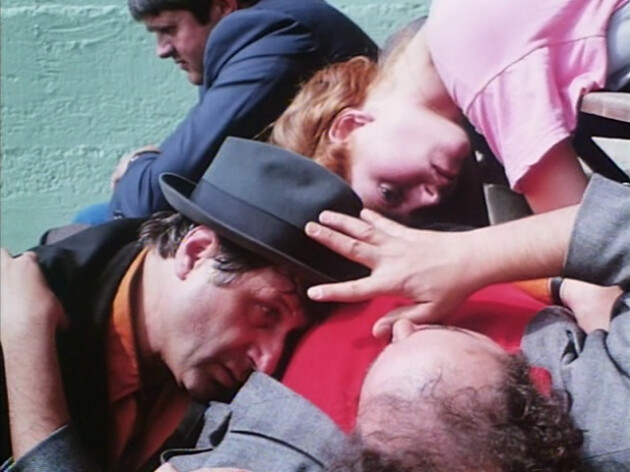
Godard presents himself as Prince Mishkin in Keep Your Right Up. He is a director who needs to deliver a finished film in a breakneck pace to some philosopher quoting industrialist who will pay top dollars for it. The director is seen as a bumbling idiot who doesn't know which way is up or down or east or west. But as always, he deals with grander themes - mortality, nature vs technology and of course, cinema.
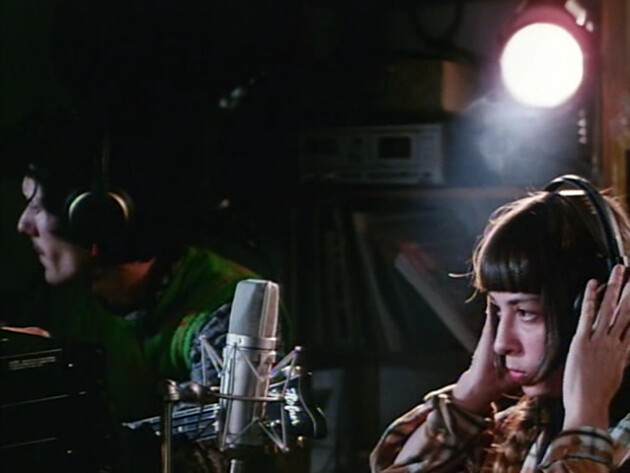
The film has three distinctive narratives running concurrently, cutting back and forth. One is with the Buster Keaton-ish idiot's journey on the road, the other one is about musicians, the 80s French pop band Les Rita Mitsouko (Fred Chichin and Catherine Ringer) as they compose and rehearse their musical numbers and lastly people going somewhere by car, plane and train, immobile and mobile at the same time.
Music is great. Les Rita Mitsouko's synth, rhythm box heavy pop is very catchy and Ringer's deep, sexy voice is infectious. Godard manipulates the sound like he does with images, using Mitsouko's recording sessions- playing with layers of studio recording. It's the creative process he is equating with music, as he had done since the beginning of his career, albeit crudely arranging two tracks of optical audio (as you remember dialog cutting off abruptly and replaced by music and vice versa). The later more sophisticated examples are Forever Mozart, Nouvelle Vague. This film would be a more polished/improved version of that experimentation. Bright primary colors are there, so as madcap slapstick, clusterfuck comedies of yesteryears. Keep Your Right Up feels freer and even more energetic than Godard's other films in the 80s- playing a fool and not taking himself seriously probably helped. It might be minor Godard, but no less fun.


 Lucky for us jazz fans, the pioneer of Direct Cinema, Charlotte Zwerlin (co-director of Salesman & Gimme Shelter with Albert Maysles) got involved making a documentary of the jazz great, Thelonious Monk, with the candid newfound footage of Monk's 1968 European tour by the Blackwood Brothers for German television in the early 80s. Straight No Chaser is that rare filmed testament of genius at work.