Showing posts with label Félicité. Show all posts

Friday, December 22, 2017

My Top 10 Favorite Films 2017

What can I say? The country has gone to the dogs. Half of the country made clear that they are racists and the government loudly declared that they don't care about the poor people. It's been a miserable year. If anything, it was cinema that got me through the tough and ugly times. It showed me that there is much humanity and beauty in the world still. Even though I watched much less films this year, the quality of the films were nothing short of amazing.

I have to say on record that I am more than happy about cable TV and streaming services chipping away at the dominance of theater going experience and blurring the line among different formats. Cinema should be a democratic experience and accessible. I say this while I can, since Net Neutrality is gone. :sad: But cinema has been alive and well this year. Viva le Cinema!

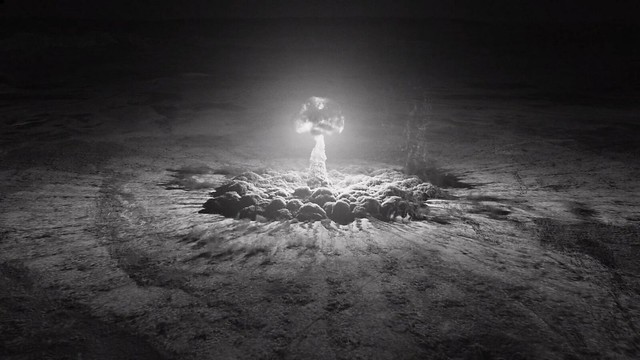
1. Twin Peaks: The return - David Lynch, Mark Frost
Screen Shot 2017-12-21 at 7.11.38 AM
Soon as the Showtime's 18 part Twin Peaks revival ended at the end of the Summer on Showtime, it was evident to me that I would't see anything that'd come close to being as cinematically audacious as this. The thought of labeling it for either TV series or a film never crossed my mind. Twin Peaks: The Return is without a doubt, the highlight of cinema of this year period (if not of all time), all 18 hours of it.

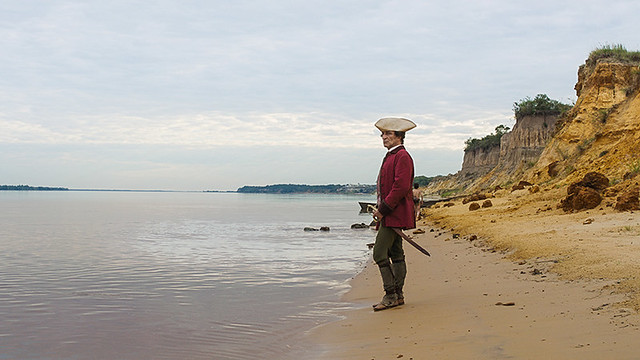
2. Zama - Lucrecia Martel
zama
As far as visual aural experiences go, there is no director working today whose greatness comes close to that of Argentine director Lucrecia Martel. Her mastery comes to full fruition in searching for El Dorado story of Don Diego de Zama, a historical epic. Beautifully contextualized and richly textured, Zama is an amazing films to watch on the big screen.

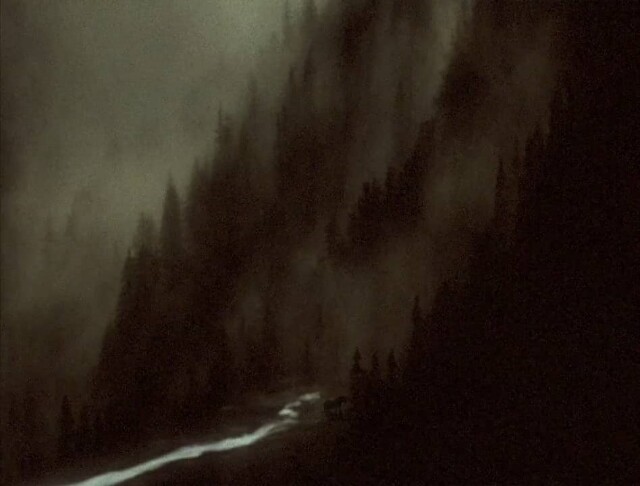
3. Sleep Has Her House - Scott Barley
592953425
Talk about immersive cinema experience, look no further than Scott Barley's Sleep Has Her House. It's his otherworldly beauty of the Scottish Highlands at night and soundscape that pull you in. But however grand and beautiful his images are, there is a familiarity and coziness to them. In Barley's world, an inner-scape and an outer-scape are one in the same. It's his ability to internalize his surroundings that is truly remarkable. Darkness can be a scary and frightening place. Embarking on SHHH might conjure up the image of a Saturn eating his own offspring at first. But once you take a leap and plunge into his shadowy, slowly moving images, the beautiful, mysterious yet familiar darkness envelops you and sucks you in. There is an ebbs and flows to SHHH, like a piece of fine music, like a taste of complex whiskey. It's truly one of a kind experience.

*My interview with Scott Barley

4. By the Time It Gets Dark - Anocha Suwichakornpong
Screen Shot 2017-10-13 at 11.16.23 PM
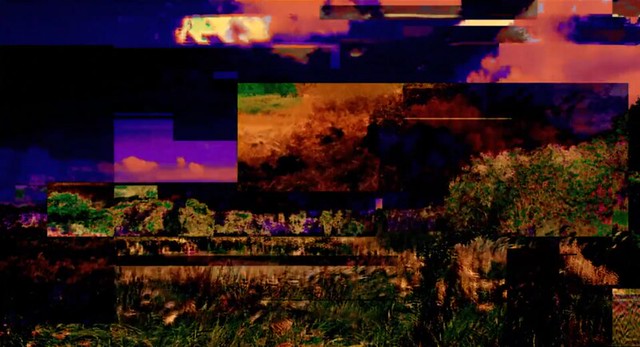
The film might sound too precious on paper - those too self-aware films in love with themselves. But the result of layers of these slightly connected vignettes and visual metaphors are anything but. Images are democratic- whether it's a trashy, seemingly inconsequential pop culture, the serious historical reenactments, Buddhist temple, disco tech and pixelated visual noise have the same value. It's a very Dostoevskian concept- like a tobacco leaves and fungi, to give them meaning and purpose, these layers Suwichakornpong presents will need to sit and rot. I am just amazed by her wisdom and skills to convey this kind of complicated thoughts through film medium.

5.Personal Shopper - Olivier Assayas
Screen Shot 2017-12-20 at 8.52.17 PM
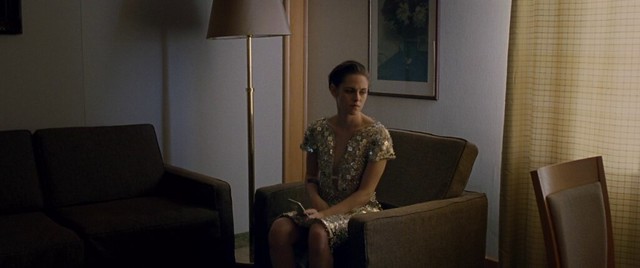
Assayas operates on his top form with his muse Kristen Stewart in their second collaboration. He uses her nonchalance, youth and this time vulnerability as a grieving young woman unsure of her judgment and emotion. Personal Shopper is a lucid, flowing, deliciously addictive concoction.

*My Interview with Olivier Assayas

6. Phantom Thread - Paul Thomas Anderson
phantomthread015
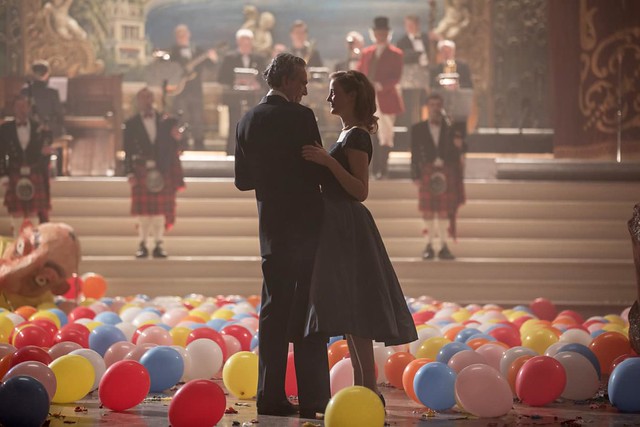
Beautifully crafted, Anderson makes a film about a woman going to extreme measures to be part of the man she loves and he finally accepting it - there is something endearing and sexy about that, even though there is no sex scene in the film.

7. The Florida Project - Sean Baker
TFP-cover
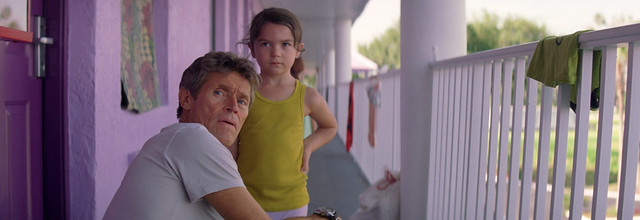
Sean Baker, a director of much praised iphone shot movie Tangerine, digs deeper into the flip side of American Dream with The Florida Project, starring kids and featuring the lives of kids on Route 192, under the shadow of Disney World. As with Tangerine, Baker uses mostly untrained non-actors to portray people on the skid and just have them run with the materials they were given. The result is stunning work of authenticity, brimming with humor, heartache and much humanism. In the end, we know it's a make-believe and that everything is going to be all right. But the final moment of the film, taking place in the real Magic Kingdom, shot on shaky iphone, really got me emotionally. It is, shall we say, pure magic.

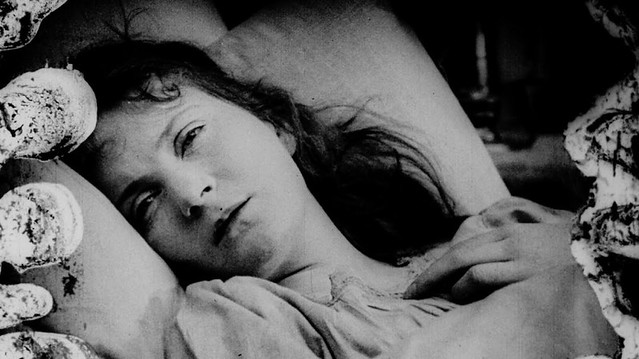
8. Dawson City: Frozen Time - Bill Morrison
973a99f2-9b26-458d-baca-20514564e08a_zpsxe1pk3wb
Bill Morrison draws fascinating paralleling histories of American prospecting days and early development of film industry and the results are quite explosive. Morrison, known for his disintegrating found footage images, creates hugely entertaining film that is both artful and informative.

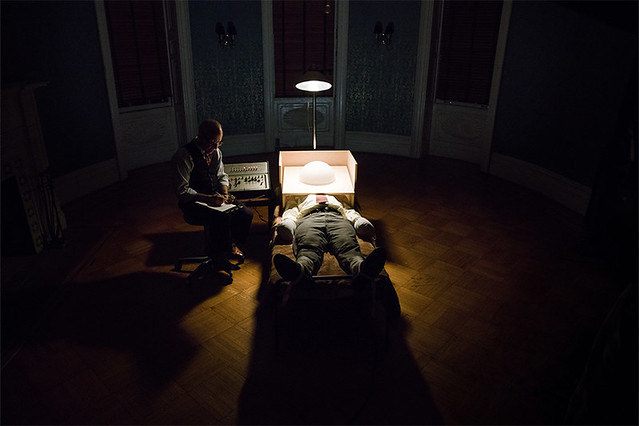
9. Wormwood -Errol Morris
Wormwood
With his journalistic candor, Errol Morris meticulously digs into America's ugly past. A 6-part series on Netflix serves the subject right for the seasoned documentarian to be much more expansive and rigorous. It is one of the most inventive, refreshing cinema events of the year.

*My interview with Actor Christian Camargo

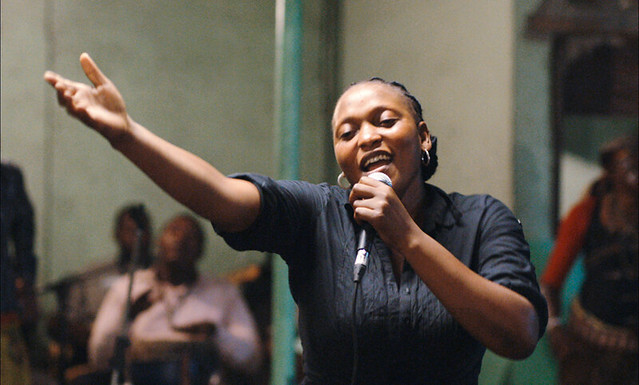
10. Félicité - Alain Gomis
felicite
Félicité is a melding of many conflicting elements. There are documentary like naturalism mixed in with recurring beautiful dream sequence in the woods in near darkness. There is local music (featuring the Kasai Allstars) rubbing shoulders with Kinshasa Symphonic Orchestra playing classical pieces by Arvo Pärt. Félicité's strong willed, modern woman meets Tabu's womanizer and drunkard. They accept each other and continue their amicable relationship. Structurally daring, beautifully down to earth but not gritty, Alain Gomis' gentle touch stands out as the biggest discovery of talent in my book.

*My interview with Alain Gomis

And the rest...

Visages Villages - Agnes Varda

Un beau soleil intérieur - Claire Denis

On the Beach at Night Alone - Hong Sangsoo

The Shape of Water - Guillermo Del Toro

The Other Side of Hope - Aki Kaurismaki

Lady Macbeth - William Oldroyd
*My interview with William Oldroyd

Beach Rats - Eliza Hittman

Thelma - Joachim Trier

A Quiet Passion - Terence Davies
*My interview with Terence Davies

Frantz - François Ozon
*My interview with Director François Ozon

Thursday, October 26, 2017

"Let It Happen." Alan Gomis Talks about His New Film, Félicité

Gomis
After winning Grand Jury Prize at Berlin early this year, Alain Gomis's Félicité played as part of the slim but always robust Main Slate at New York Film Festival. Featuring great Véro Tshanda Beya Mputu as the title role, a single mother and a singer struggling to survive in the bustling streets of Kinshasa while trying to find love, Félicité is a structurally daring, vibrant, sensual and hopeful African film that you don't get to experience often. For me it was one of the highlights of the festival.

Gomis, a Senegalese director, was in town for the festival and I was lucky enough to have a chat with him about doing a film in Congo for the first time, the state of African cinema, his relationship with his generous and talented collaborators and on his method/non method- letting things take its own course. Even though suffering from a cold, Gomis was very generous and open with his answers.

And I am very happy that the film was announced Senegal's official entry for the Oscars and is getting a theatrical run here in the States starting 10/26 at Quad Cinema in NY.

The music seems to be the heart of the film. I heard that you are a big fan of The Kasai All-stars and the whole project began with them in mind. So if you can tell me about that a bit?

I’ve heard their music a few years before, introduced by a girl I know. It was through their album called Congotronics- several music groups from Kinshasa, playing the music called ‘Tradi-moderne’ in French, a mix of traditional Congolese music and modern stuff. Most of it is traditional music but the fact it’s played in the city of Kinshasa, it’s mixed with electric guitars and… they made this music that is perfect embodiment of life in a big African city. It’s really connected to cosmogony and transcendental music, so it’s steeped in tradition but mixing with the urban way of life. So it was perfect for me to start the project with this music to portray the urban African life.

With your previous films, it was Dakar and now it's Kinshasa. These cities themselves become very important characters in your films.

It’s always interesting to see the effect of the city on its people, and conversely, how they change it. How we are played by the city and how we influence it. Africa has a very small cinema industry. And there is this need for the symbiotic relationship with cinema and the society itself to present the life on the street.

Most of the time the films are coming from the outside which is a big problem because you identify yourself with the culture that is not yours. Of course it’s cool to have relationship with the rest of the world but you also need to have access to yourself. So it’s also important to me to try to portray what it’s like there. It is part of my mission in a way.

I talked with Ousmane Cisse when he was here presenting Timbuktu. And he told me how hard it was for him to finance his films. Is it the same way with you? How did the funding for Félicité come about?

It is not easy, but it’s getting better. This film if very concretely funded by Senegalese Production Fund which was set up in 2013. We had a French production company and post-production is done in Belgium. We had some Lebanese co-production too, German, Gabonese…

Wow.


So yes, we try to get money from here and there and everywhere. But the good part of it is that I had total freedom. Because if you had one financial partner, they have much more influence on you and what you are doing. (laughs) Having little here and there, you have more freedom.

It was really interesting to see the film in distinctly two parts. The first part is like a social docu-drama in terms of pacing and everything. And the second half, the tempo slows down a lot and it’s a love story between Tabu and Félicité. I liked that a lot. Is the pacing of the film connected to the music?

Yes. First I wanted to have easy entrance to the movie. I wanted to have a simple drama structure for everybody to be able to get into it easily. And then coming in to the heart of the movie which is Félicité’s journey of falling flat on her face then coming back up. But that part of the film is not something to tell but something to live, something to experience.

So yes, its inspired by musical structure. I think that’s the relationship that I have with music and I assume everybody else too. You listen to music and you start to cry and you don’t know why. Just like a concert, like a space between the stage and the listeners, I wanted to build a relationship between the screen and the audience.

I really appreciate the handheld photography by the great Celine Bozon in the streets of Kinshasa. How was the working relationship with her?

It was a first time working with her for me. It was like love at first sight! It was an incredible relationship. She was so devoted to the film and the filmmaking. She has no fear. She is completely into creating sensations I was looking for.

It was also my first time having relationship through books. Just last week, she sent me this book and I was reading it on the plane on the way here. It’s a book about the art of archery. This relationship is like not to interfere with your sensation with your gesture in a way. We’d have incredible conversations – not about the frame or contrast, just trying to be more direct as possible. She suggested using the headphones, so she had a headphone set and I had a microphone. We had dialog during the takes, to find a good angle or sometime she would be just proposing something and I just try to say few words and she answers. sometimes it would be contrary…. The film was a true collaboration.

We have built a crew to shoot on the streets and interact with people. So we come several weeks before, talking to people. Some of them became part of the crew also while shooting. We had no boundaries. Someone was getting in the frame and it was possible. It wasn't like a traditional 'film set'.

Somewhere you mentioned that you were influenced by Yasujiro ozu. Can you elaborate on that?

I remember I was watching this film, it was a shock. I can't remember the English title of it.... It was... I Was Born But... Taking place in Tokyo about these two kids. The thing is, these kids were really me. They are trying to fit in their new surroundings, trying to fit in. I especially loved the relationship between them and their fathers. It was really shocking to me because it was an old film, black and white and a silent film at that. But it was me! That’s what cinema is for me. You can find that intimacy in a film that is made long ago on the otherside of the world. Cinema is creating that common space. The film really had a big influence on me.

I can see that in your films. Just watched Aujourd'hui. It’s very contemplative and very quiet, compared with other contemporary African cinema I’ve seen. You have a very distinctive style and approach. You possess this quiet sensitivity I admire.

Thank you.

How did you find the main actress, Véro Tshanda Beya Mputu?

She came in the audition. I’ve seen a lot of actors in theater and other auditions and so on. But this was an open casting- it was open to everybody. She came to it by chance because her friend told her to try it. She came in and I see her and I had the character in mind and she was quite different from Félicité I imagined. So OK, 'let’s try her in the part of the nurse', I thought. But she was so powerful in her performance and presence. So concrete, even when she remain silent, she had this energy that kept going through her. So I asked her to come back.

So we had these interactions for 6 months, I wanted her to come back and forth and we continued to build a character together during that time. At the end, I had to accept her as the character which meant I had to follow her. All these things- Vero, the language I didn’t speak, the fact that I didn’t know Kinshasa- what I had to do was to…just let the film happen. It was me just trying to hear, not dictate, not “this is the story I want to tell!” I had to accept the fact that it’s not about me.

It’s telling that the film has its own flow that I really like. It feels organic and natural to me.

Is it common to have kind of an open relationship between Tabu and Félicité in modern African city?

For sure. I mean, in this time of economic pressure, the traditional sense of family is blown. We have young girls with children and everything like that is absolutely new. The film was my interrogation on what it means to be a couple. It was about accepting the freedom of the other person and of yourself. 'What part of the freedom am I giving up to be a couple?' I wanted to show these kind of new situations in urban African life and ask the audiences what would they give up.

Wednesday, October 4, 2017

A Glimpse of the Life of a Modern Woman in Kinshasa

Félicité (2017) - Gomis
felicite
Senegalese-French director Alain Gomis's Félicité is a great patchwork of elements that are full of contradictions and contrasts. And it's beautiful, energetic and refreshing. It's about a singer in an outdoor bar, also a single mom, played by enigmatic Véro Tshanda Beya Mputu, trying to survive day-to-day life in Kinsasha, Democratic Republic of Congo. Strong willed and free spirited, she is a modern woman who doesn't need a man by her side. But life throws curve balls at her when least expected and keeps her on her toes.

As with Gomis's previous films that took place in Dakar, Senegal and its streets, the sight and sound of bustling city of Kinsasha become as much a character in the film.

First half of the film plays out like a docu-drama of the Dardenne Brothers- after a motorcycle accident, Samo, unresponsive teenage son of Félicité ends up in a hospital with a broken leg. Running against time, Félicité frantically runs across town to gather money for her son's operation by any means necessary. It means involving police to people who owe her money, swallowing her pride and asking her ex and family members for help and going door-to-door in super rich neighborhood and begging for money while making a scene.

In the latter part of the film, the tempo changes dramatically and things slow down significantly. And it concerns Félicité's on/off romance with Tabu (Papi Mpaka), a local drunkard and blowhard with a great heart. It's the budding formation of modern family in Kinshasa. Contrasting the frenetic first half, the second half is full of laughter, hope and optimism.

Félicité is a melding of many conflicting elements. There are documentary-like naturalism (thanks to handheld cinematography of a veteran DP, Celine Bozon, sister of French director Serge Bozon) mixed in with recurring beautiful dream sequence in the woods in near darkness. There is local music (featuring the Kasai Allstars) rubbing shoulders with Kinshasa Symphonic Orchestra playing classical pieces by Arvo Pärt. Félicité's strong willed, modern woman meets Tabu's womanizer and drunkard, accept each other and continue their amicable relationship.

It's the music that is at the heart of the film. Sang by earthy, smoky voiced Muambuyi, the lead singer of the Kasai Allstars, Mputu's Félicité comes to life whenever she's on stage. The "Congotronics" is an infectious, eclectic music that represents many different ethnic groups that consist the region. Arvo Pärt's somber music fills in for somber moments but it fits surprisingly well in the film.

The running joke that takes up much of the screen time is Tabu's epic struggle with Félicité's dying fridge. It's an impetus for their budding romance and also provides glimpse of the earthly concerns of Kinsasha's everyday life, as Tabu scans the bustling outdoor market for spare parts - the dirt road, pan handlers, dancing traffic signal cop, pickpockets, etc. It's a dizzing display of what it's like living in such a place and also a testament of human resilience.

Mputu ‘s broad, beautiful face with her steely gaze is the bedrock of the film. Even when things get dire, the film never succumbs to cheap sentimentalism. Papi Mpaka’s naturalistic performance also helps the cause.

Félicité is not another downbeat film about Africa steeped in miserablist tendencies. Gomis and company don't lose the sight of happiness in the daily lives of its ordinary citizens. There is much humanism and culture and joy to be had in Félicité and I am grateful for it.