Showing posts with label Sleep Has Her House. Show all posts

Friday, December 22, 2017

My Top 10 Favorite Films 2017

What can I say? The country has gone to the dogs. Half of the country made clear that they are racists and the government loudly declared that they don't care about the poor people. It's been a miserable year. If anything, it was cinema that got me through the tough and ugly times. It showed me that there is much humanity and beauty in the world still. Even though I watched much less films this year, the quality of the films were nothing short of amazing.

I have to say on record that I am more than happy about cable TV and streaming services chipping away at the dominance of theater going experience and blurring the line among different formats. Cinema should be a democratic experience and accessible. I say this while I can, since Net Neutrality is gone. :sad: But cinema has been alive and well this year. Viva le Cinema!

1. Twin Peaks: The return - David Lynch, Mark Frost
Screen Shot 2017-12-21 at 7.11.38 AM
Soon as the Showtime's 18 part Twin Peaks revival ended at the end of the Summer on Showtime, it was evident to me that I would't see anything that'd come close to being as cinematically audacious as this. The thought of labeling it for either TV series or a film never crossed my mind. Twin Peaks: The Return is without a doubt, the highlight of cinema of this year period (if not of all time), all 18 hours of it.

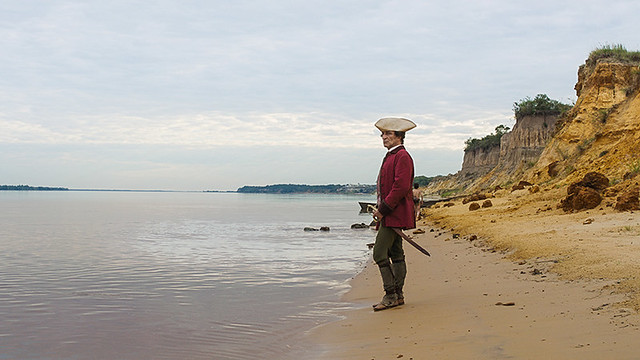
2. Zama - Lucrecia Martel
zama
As far as visual aural experiences go, there is no director working today whose greatness comes close to that of Argentine director Lucrecia Martel. Her mastery comes to full fruition in searching for El Dorado story of Don Diego de Zama, a historical epic. Beautifully contextualized and richly textured, Zama is an amazing films to watch on the big screen.

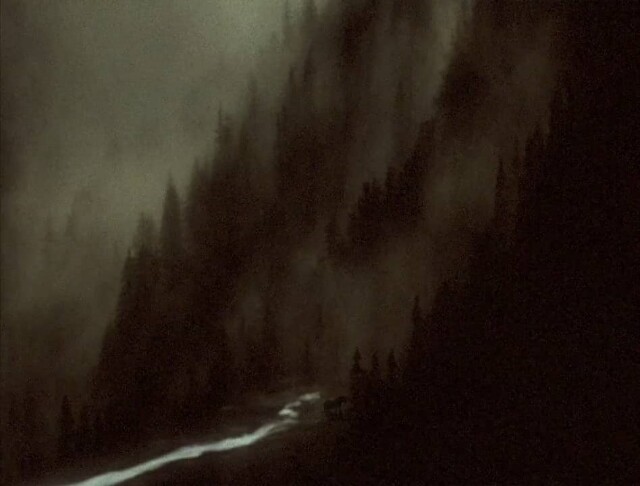
3. Sleep Has Her House - Scott Barley
592953425
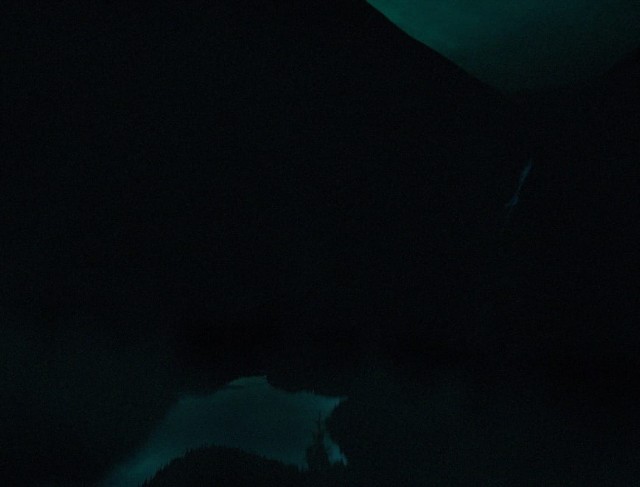
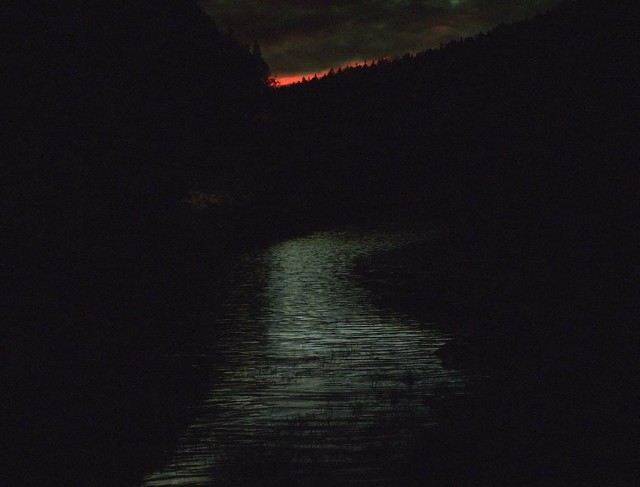
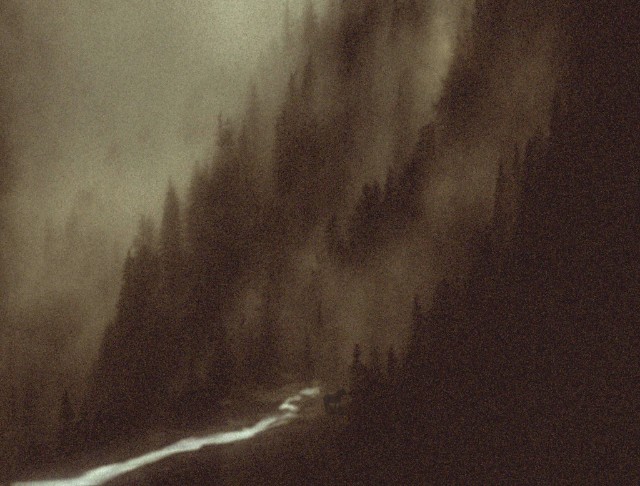
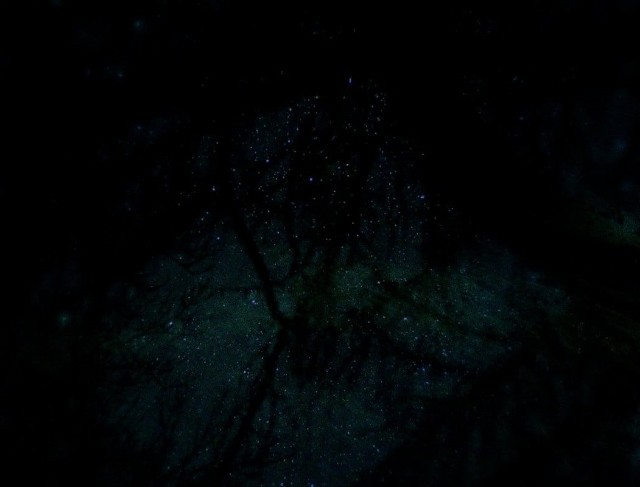
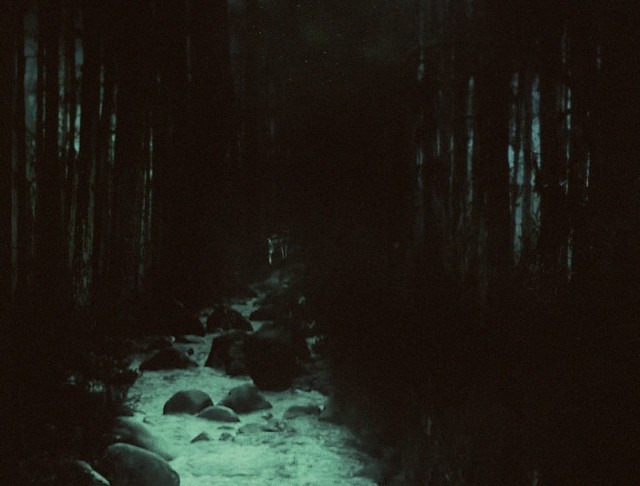
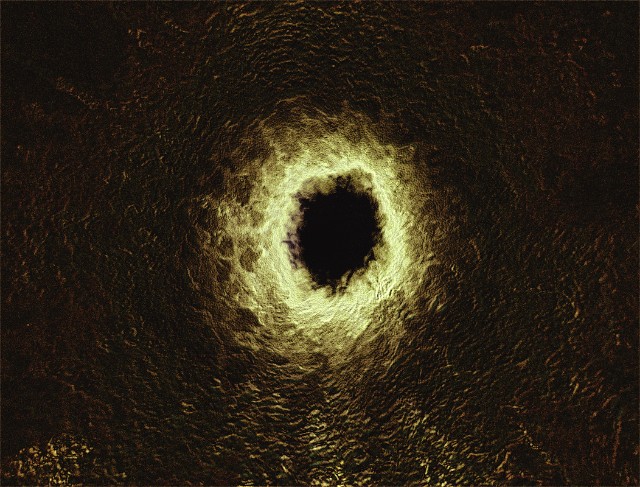
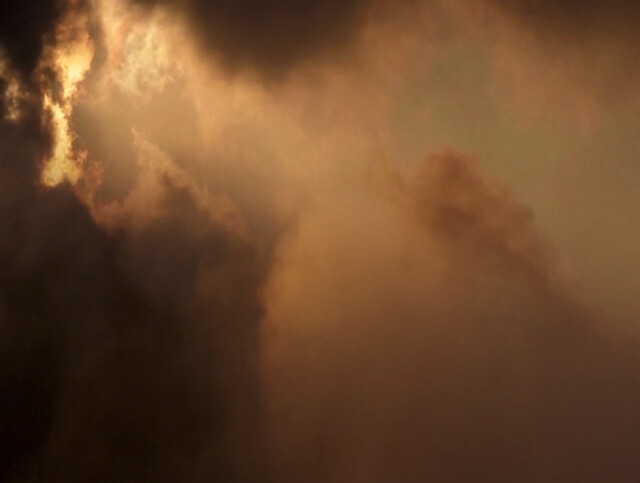
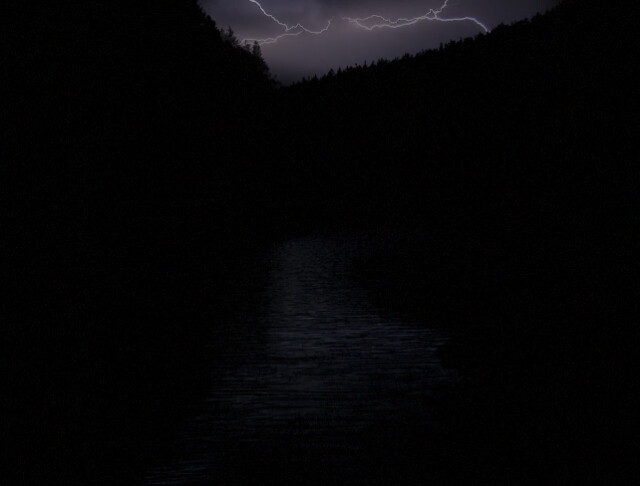
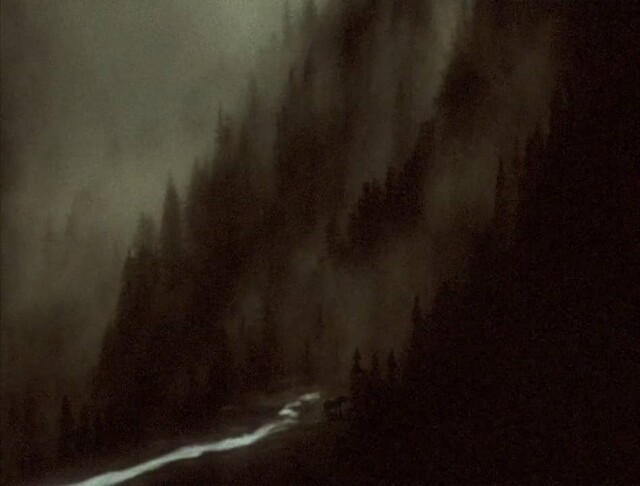
Talk about immersive cinema experience, look no further than Scott Barley's Sleep Has Her House. It's his otherworldly beauty of the Scottish Highlands at night and soundscape that pull you in. But however grand and beautiful his images are, there is a familiarity and coziness to them. In Barley's world, an inner-scape and an outer-scape are one in the same. It's his ability to internalize his surroundings that is truly remarkable. Darkness can be a scary and frightening place. Embarking on SHHH might conjure up the image of a Saturn eating his own offspring at first. But once you take a leap and plunge into his shadowy, slowly moving images, the beautiful, mysterious yet familiar darkness envelops you and sucks you in. There is an ebbs and flows to SHHH, like a piece of fine music, like a taste of complex whiskey. It's truly one of a kind experience.

*My interview with Scott Barley

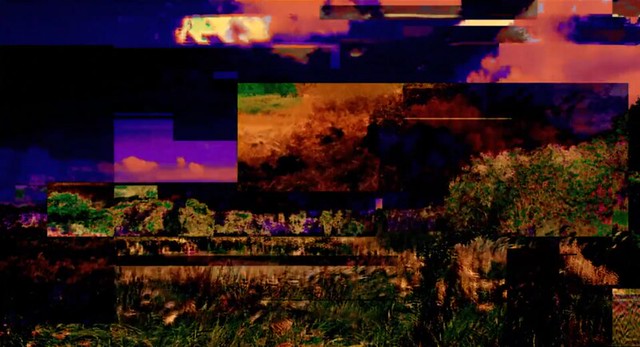
4. By the Time It Gets Dark - Anocha Suwichakornpong
Screen Shot 2017-10-13 at 11.16.23 PM
The film might sound too precious on paper - those too self-aware films in love with themselves. But the result of layers of these slightly connected vignettes and visual metaphors are anything but. Images are democratic- whether it's a trashy, seemingly inconsequential pop culture, the serious historical reenactments, Buddhist temple, disco tech and pixelated visual noise have the same value. It's a very Dostoevskian concept- like a tobacco leaves and fungi, to give them meaning and purpose, these layers Suwichakornpong presents will need to sit and rot. I am just amazed by her wisdom and skills to convey this kind of complicated thoughts through film medium.

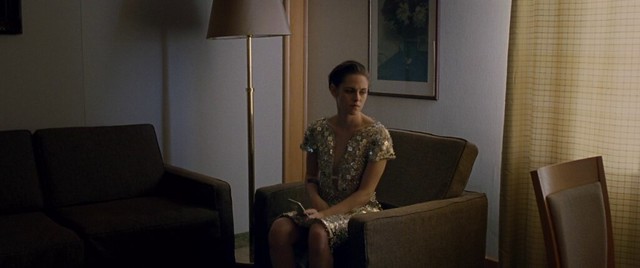
5.Personal Shopper - Olivier Assayas
Screen Shot 2017-12-20 at 8.52.17 PM
Assayas operates on his top form with his muse Kristen Stewart in their second collaboration. He uses her nonchalance, youth and this time vulnerability as a grieving young woman unsure of her judgment and emotion. Personal Shopper is a lucid, flowing, deliciously addictive concoction.

*My Interview with Olivier Assayas

6. Phantom Thread - Paul Thomas Anderson
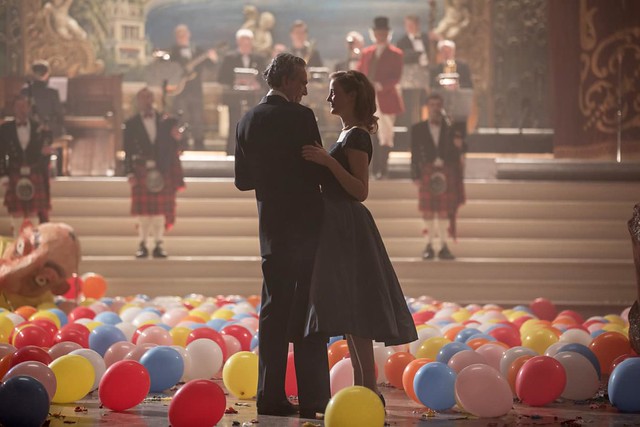
phantomthread015
Beautifully crafted, Anderson makes a film about a woman going to extreme measures to be part of the man she loves and he finally accepting it - there is something endearing and sexy about that, even though there is no sex scene in the film.

7. The Florida Project - Sean Baker
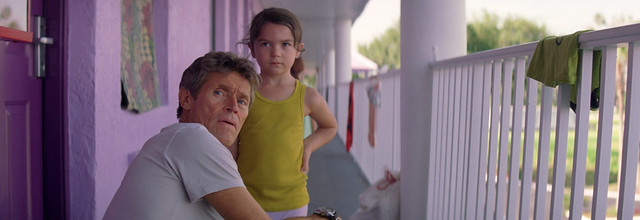
TFP-cover
Sean Baker, a director of much praised iphone shot movie Tangerine, digs deeper into the flip side of American Dream with The Florida Project, starring kids and featuring the lives of kids on Route 192, under the shadow of Disney World. As with Tangerine, Baker uses mostly untrained non-actors to portray people on the skid and just have them run with the materials they were given. The result is stunning work of authenticity, brimming with humor, heartache and much humanism. In the end, we know it's a make-believe and that everything is going to be all right. But the final moment of the film, taking place in the real Magic Kingdom, shot on shaky iphone, really got me emotionally. It is, shall we say, pure magic.

8. Dawson City: Frozen Time - Bill Morrison
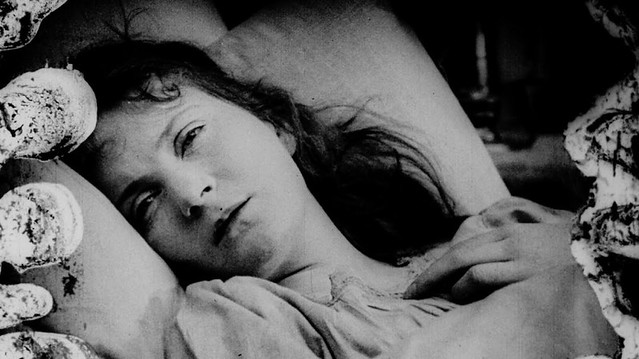
973a99f2-9b26-458d-baca-20514564e08a_zpsxe1pk3wb
Bill Morrison draws fascinating paralleling histories of American prospecting days and early development of film industry and the results are quite explosive. Morrison, known for his disintegrating found footage images, creates hugely entertaining film that is both artful and informative.

9. Wormwood -Errol Morris
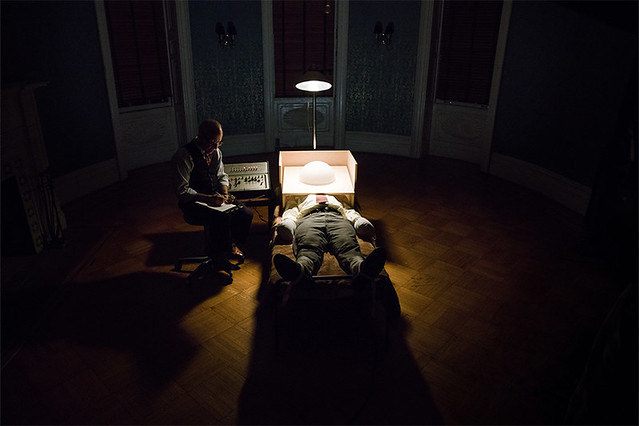
Wormwood
With his journalistic candor, Errol Morris meticulously digs into America's ugly past. A 6-part series on Netflix serves the subject right for the seasoned documentarian to be much more expansive and rigorous. It is one of the most inventive, refreshing cinema events of the year.

*My interview with Actor Christian Camargo

10. Félicité - Alain Gomis
felicite
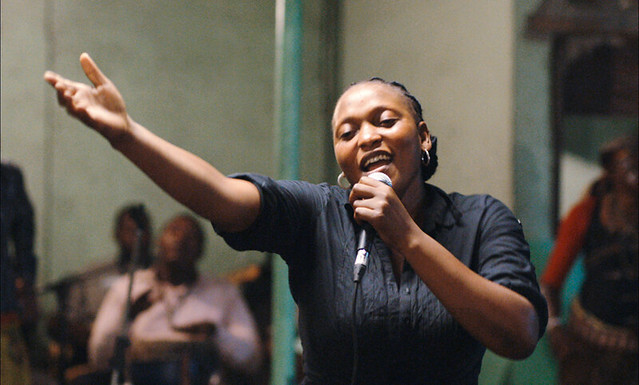
Félicité is a melding of many conflicting elements. There are documentary like naturalism mixed in with recurring beautiful dream sequence in the woods in near darkness. There is local music (featuring the Kasai Allstars) rubbing shoulders with Kinshasa Symphonic Orchestra playing classical pieces by Arvo Pärt. Félicité's strong willed, modern woman meets Tabu's womanizer and drunkard. They accept each other and continue their amicable relationship. Structurally daring, beautifully down to earth but not gritty, Alain Gomis' gentle touch stands out as the biggest discovery of talent in my book.

*My interview with Alain Gomis

And the rest...

Visages Villages - Agnes Varda

Un beau soleil intérieur - Claire Denis

On the Beach at Night Alone - Hong Sangsoo

The Shape of Water - Guillermo Del Toro

The Other Side of Hope - Aki Kaurismaki

Lady Macbeth - William Oldroyd
*My interview with William Oldroyd

Beach Rats - Eliza Hittman

Thelma - Joachim Trier

A Quiet Passion - Terence Davies
*My interview with Terence Davies

Frantz - François Ozon
*My interview with Director François Ozon

Sunday, January 1, 2017

Interview: Scott Barley on Sleep Has Her House

However dismal 2016 has been, I had a privilege to start the year discovering the work of a Welsh/Scottish filmmaker/artist Scott Barley. As it turns out that I also had a privilege to end and start another year with the work of Barley and conduct a second interview on his new work Sleep Has Her House. It's a monumental piece of pure cinema that is hard to describe in words. It was a visceral, immersive experience that I will never forget. Many of the questions I put on Barley here are about "how", since I know a bit of his background and his objectives from the last conversation we had, and mostly because the technician in me was wowed by his craft in SHHH. I was so genuinely invested in the experience, some of my questions came across as naive in hindsight. No matter.

Here is without further ado, my second interview with Scott Barley, accompanied by stills from Sleep Has Her House, courtesy of the filmmaker.


The texts in the beginning that starts with “The shadows of screams climb beyond the hills…” Can you tell me the origin of that poem?

Despite not consciously thinking of it at the time that I wrote the opening, I think that Thomas Pynchon’s, Gravity’s Rainbow was a big influence. It’s the opening line. Ever since reading it, it has remained with me like a scar – “A screaming comes across the sky. It has happened before, but there is nothing to compare it to now.”

I also work in a stream of consciousness way, and don’t overthink what surfaces in my mind. I go with what feels right, always.

1
In our previous conversation, you talked about being lost in your work and only later you understand the meaning of a particular work that you’ve done. You talked about the importance of polysemy. I am wondering if there was any difference in your approach doing Sleep Has Her House, a feature that has to sustain a greater length and structure than your previous work.

I was conscious of that, and it frightened me for a long time whilst making the film. But it came to a point where I just decided to no longer be guided, or rather, to be anchored by this fear. Ultimately, I made Sleep Has Her House exactly the same way as I have made my previous, shorter works. I feel my way in the dark. I feel what feels right, and never question it, and never deviate from it. I feel, and feel alone. I love not being fully in control when making. I want the film itself to have its own autonomy as it is being made, and for it to always be a few steps ahead of me. I want it to give birth to itself. For me, making a film is largely the same as watching one. You must not resist. Once you let go, you are no longer a captive. Just let it wash over you like an ocean. Swim with it. Drown in it.

I think that my approach is more visible in Sleep Has Her House than any of my previous works, partly due to the longer running time, but also because of the stronger presence of the liminal, the mystic, and the unknown, which I feel took root with my short film, Hunter (2015), but is also there much earlier, in works like Nightwalk (2013) for example. All I am doing is going deeper, darker, and narrower.

5
Guessing from your images, those locations in Scotland you filmed have otherworldly beauty. What is your relationship as an artist with these places?

My heart is, and always has been in the Highlands. I have family there, and it’s where I feel most at home of any where I have been. Working in these landscapes and tenebrousness is a way of articulating and sharing my biophilia and nyctophilia. It’s also about sharing an aloneness with others. As Nathaniel Dorsky said, ”Sharing aloneness with other people is a great answer to loneliness.”

We must remember the difference. And in another sense, it’s about re-establishing a relationship with what we as a species have lost; what we have ignored, taken for granted, or destroyed, and how our attempts to control nature is a folly. We are guests in Her house.

4
How many days and nights have you spent filming up there? Do you usually travel and film alone?

For Sleep Has Has Her House, it was shot over the course of 4 separate days throughout 2015 and 2016; one day in the Brecon Beacons of Wales, and 3 days of traveling around West Scotland, with around 16 months of post-production in between. It seems ridiculous, seeing that in print, but that's how it goes.

I have traveled with others on occasion, but I always work alone, apart from some university projects, where having a crew was mandatory, i.e. Shadows (2015), Ille Lacrimas (2014). I am not against working with others, but as my work becomes more personal, I have found that my own process which I have developed does not easily permit communication and collaboration with others, as I don’t always know myself why I choose to do something a certain way. As I said before, I always go with my feeling, and trust that. I traveled with a friend and colleague whilst shooting some of Sleep Has Her House, but I worked completely alone. Every part of the process, whether that is concept, shooting, editing, or sound-design is performed by me alone. I think filmmaking, genuine art-making, regardless of whether you're working alone or with a crew is always a solitary endeavour – you are pouring your soul into something. It can be lonesome. And it can hurt.

As Emil Cioran said, ”Write books only if you are going to say in them the things you would never dare confide to anyone.” The same applies to filmmaking. And I would add, you put into your work what you would never even dare to confide to oneself, or even wish to understand. It is not a reveal, or a "pouring" of logic, it is nothing but a deluge of pure, unadulterated feeling; feeling alone. And pure feeling cannot and should not be translated into rational thought.

3
I am astonished by the fact that it was all shot on iPhone. Can you tell me the process from capturing those images and how it morphs into the final piece?

Firstly, I should probably mention that I always begin a film almost like one would keep a diary. I have no idea, or agenda to make a film. I simply document. I shoot what attracts me, random things, animals, variances in light, the water, the stars; simply what draws me in on different days, different nights, in different places. Once I have built up a body of footage, I start to see connections. These pieces of footage could be taken months or even years apart – and miles apart too. Just like in Hunter (2015) there are sequences in Sleep Has Her House which are comprised of shots filmed in two separate countries that are then invisibly stitched together. But these connections between different pieces of footage all happen organically. I never force these connections. I never force a film when it doesn’t come. The films find me – not the other way round. When they come alive and start to writhe, I simply hold on. All my films have been made this way. Some happen quicker than others. Once these connections are established, a narrative - through images - begins to germinate.

Sleep Has Her House was roughly 90% shot on my iPhone, the rest being made up of some drawings I did about 5 years ago whilst studying fine art, and some more recent DSLR footage. All of that was then superimposed together. Some shots, such as the 12 minute take of the sun setting in real-time, followed by the darkness, and finally the storm corrupting the night is comprised of nearly 60 layers of footage in 2K resolution. It took two months for that shot to render.

2
One mesmerizing shot after another, Sleep Has Her House is a truly hypnotic experience. But the techie in me was wondering as to how you accomplished the look of those images. For instance, those incredibly long waterfall sequences where we very slowly pull out to reveal the full extent of the landscape in the darkness. Or the scene of mist rolling over the forest and the trees change their colors.

Thank you. I hope you don't mind me saying, but just like the films themselves, I think it is best to be kept in the dark. Once we objectify, once we understand – we kill.

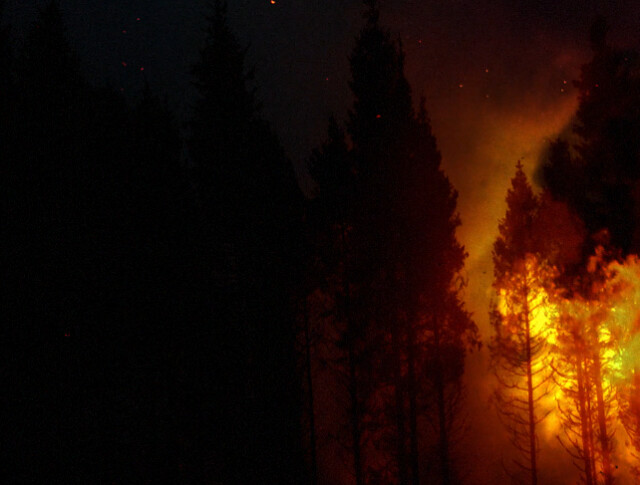
There was one visceral moment when the rainstorm passes through and from complete darkness comes the frightening (yet beautiful) forest fire which made me jump out of my seat! Even though the film is finished and obviously you are alive to tell me that it’s done, at that moment, stupidly on my part, I was very concerned about your safety and well being. Can you tell me about that experience?

As Michael Haneke said, “Film is 24 lies per second at the service of truth, or at the service of the attempt to find the truth.”
The fire is complete fakery, something that I composited, but I’m very happy - from your response - that it seemed genuine.

6
What do you think about in the middle of the night alone in the forest?

I think about the weight of the dark. Rather, I feel it. The heaviness. Sometimes you can feel the heaviness of the night. The dark - on different nights - has different colours. I feel its heaviness most when it is red or green. I do not mean that the colour of the night is red, or green, but I feel a colour around me. It absorbs me. It goes from the air into my core. Sometimes, the night has a hunger. It devours everything. In these moments, everything is unknown to me again. I listen. I hear. I feel the air. I feel the earth. The only thing I know is the earth under my feet. Everything is elsewhere. I am a child. I think about the same things that I try to show in my films. I think about all the things that are beyond me. I sense things dancing within the dark, out of reach. They disarm us. They seduce us.

I remain quiet. I remain still. Sometimes, I close my eyes, and I try to dance with them.

Sleep Has Her House has world premiere on streaming flatform, Tao Films, please visit their website

My 1st interview with Barley in February 2016

Saturday, December 31, 2016

Solace in Darkness: Scott Barley's Sleep Has Her House

Sleep Has Her House (2016) - Barley
Screen Shot 2016-12-22 at 6.51.38 AM
Screen Shot 2016-12-22 at 6.49.31 AM
Screen Shot 2016-12-07 at 10.05.23 PM
592953425
Screen Shot 2016-12-07 at 10.11.42 PM
There are images that can't be described even with all the adjectives in the world. Regarding film as a sensory medium first and foremost, experiencing Scott Barley's short films has awakened in me the deeper appreciation for the medium like no other. Now the prolific young artist comes up with his feature length work, Sleep Has Her House. And I was privileged enough to experience it before it premieres on Tao Films, an independent film streaming website on January 2017. In experiencing SHHH, awe becomes loneliness becomes concern becomes fear becomes dream. It was the most magical and visceral film experiences I've had in a longest time.

I'm a big fan of Jean-Luc Godard's use of nature shots in his films. His use of nature - water, sky, sun, trees, reiterates that there exists a greater power. And it balances out what we are presented with, in characters and their earthly musings in scattered non-plots. It puts human existence into perspective. In Barley's work, nature, often shown at night, reflects the inner-scape of the artist. However grand and beautiful his images are, there is a familiarity and coziness to them. In Barley's world, an inner-scape and an outer-scape are one in the same. It's his ability to internalize his surroundings that is truly remarkable. Darkness can be a scary and frightening place. Embarking on SHHH might conjure up the image of a Saturn eating his own offspring at first. But once you take a leap and plunge into his shadowy, slowly moving images, the beautiful, mysterious yet familiar darkness envelops you and sucks you in. There is an ebbs and flows to SHHH, like a piece of fine music, like a taste of complex whiskey. Just like a typical narrative, there is beginning, middle and end. There is even a literal thundering climax too.

"Night is for everyone, therefore more democratic," says one of the characters in JLG's Hellas pour moi. Indeed. Darkness hides our imperfections, our sins, our true self, therefore everyone is equal. But in Barley's hands, darkness is our most comfortable, safe place to be- where you can be most honest and true to yourself. Alone, together. We watch his work in the dark, alone. Yet sharing the experience of being alone, we find solace in darkness, together. Alone, together. Loneliness I feel watching in Barley's work extends to the thought of what it must be like - Barley himself as a filmmaker, alone in the woods at night. Alone, together.

I've said too much already. SHHH needs to be experienced firsthand. Hope you will have a chance to experience the dark melancholia of Barley's world too, in front of a slightly glowing computer, between a headset in darkness - your head space, your inner-sanctum, your coven - so we can cobble up our fraternity of having experienced being alone, together. And it's a beautiful thing.