Showing posts with label Greece. Show all posts

Monday, March 16, 2026

No More Memories

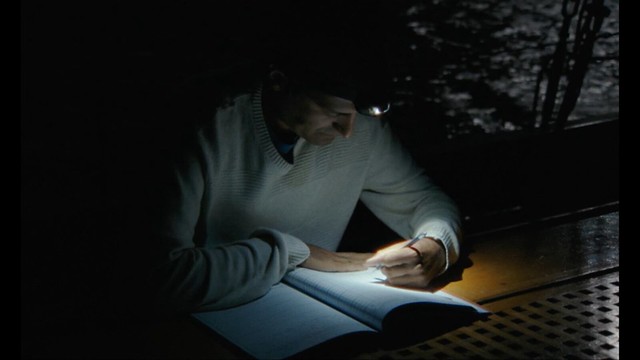
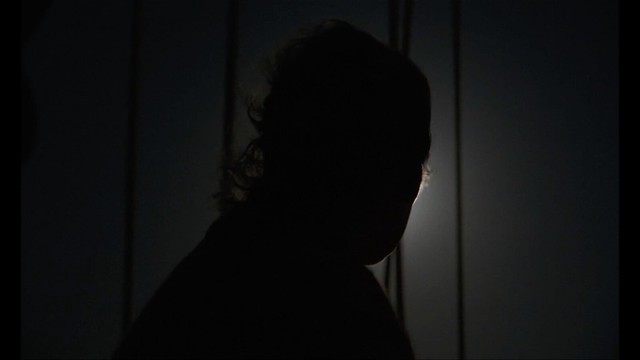
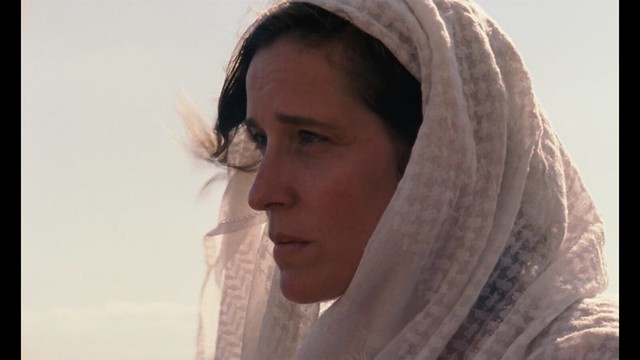
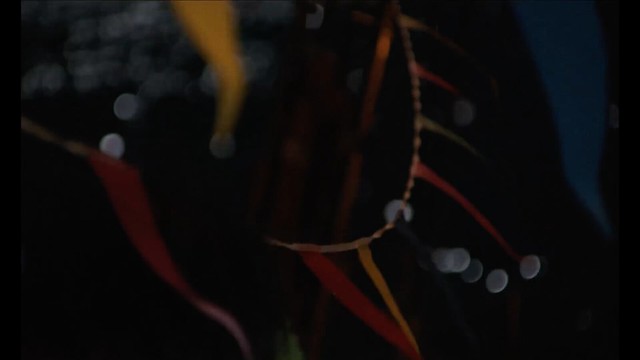
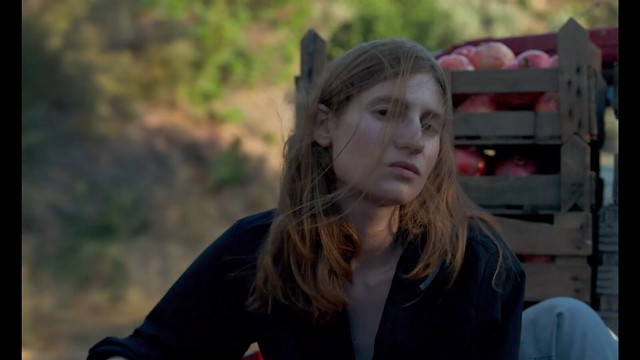
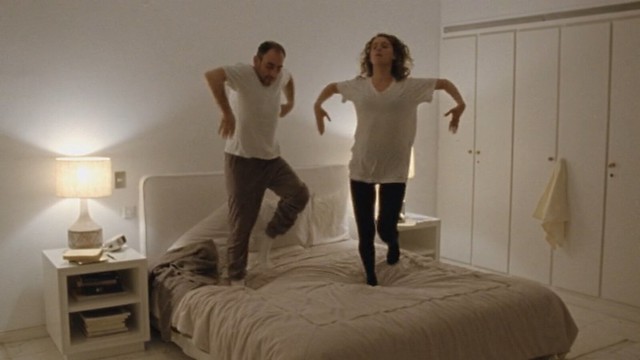
How to Shoot a Ghost (2025) - Kaufman Screen Shot 2026-03-16 at 5.41.05 AM Screen Shot 2026-03-16 at 5.50.44 AM Screen Shot 2026-03-16 at 5.56.26 AM Screen Shot 2026-03-16 at 5.59.56 AM Screen Shot 2026-03-16 at 6.06.08 AM Screen Shot 2026-03-16 at 6.02.03 AM Screen Shot 2026-03-16 at 6.03.12 AM Charlie Kaufman directs a script written by his friend and poet, Eva H.D. How to Shoot a Ghost, a short shot in Athens, Greece, is a film, unsurprisingly for Kaufman, about our mortality and anxiety of leaving something/nothing behind. Narrated by H.D., and without any dialog, the film tells the two recently departed young people, played by Jessie Buckley and Joseph Akiki, as they walk around and trying to capture the daily lives of citizens of Athens. Beautifully captured by Michal Dymek (EO, The Girl with the Needle) and melancholic score by Ella van der Woude, the film is an elegiac look at the existence of human lives and what we leave behind, in the background of dense cityscapes, old remnants of ancient civilization and liminal spaces. Mixd in is newsreel footages of tumultuous recent Greek history under dictatorship.

Buckley, donning a colorful wig, emotes a young woman as she argues with her father (?) and loses herself in a disco club and taking polaroid pictures of Athenians and the like. As two strangers in a foreign country, not fitting in with society's norms- Buckley and Akiki are soulful and magnetic in their presence, trying to leave a trace in the world that no longer belong to them. As H.D.'s narration goes, what you do in life is enough. You don't have to worry about what you leave behind. How to Shoot a Ghost is less agonizing existential trip, but more spiritually in tune with Joachim Trier's August 31st or Hirokazu Kore-eda's Afterlife.

Friday, June 9, 2023

Eternal

Music (2023) - Schanelec Screen Shot 2023-06-09 at 1.39.38 PM Screen Shot 2023-06-09 at 8.55.54 AM Screen Shot 2023-06-09 at 9.07.47 AM Screen Shot 2023-06-09 at 10.59.02 AMScreen Shot 2023-06-09 at 10.34.16 AMScreen Shot 2023-06-09 at 10.40.36 AM Screen Shot 2023-06-09 at 11.08.05 AM Screen Shot 2023-06-09 at 1.45.29 PM Screen Shot 2023-06-09 at 1.20.43 PM Screen Shot 2023-06-09 at 1.22.29 PM Angela Schanelec's new, nearly silent film, simply titled Music, is supposedly 'freely' based on the Greek Myth of Oedipus. It might be the most enigmatic offering from the esteemed German director. But its depiction of melancholy and fragility of human life is nevertheless so beautiful and timeless, I can't help tearing up by the end.

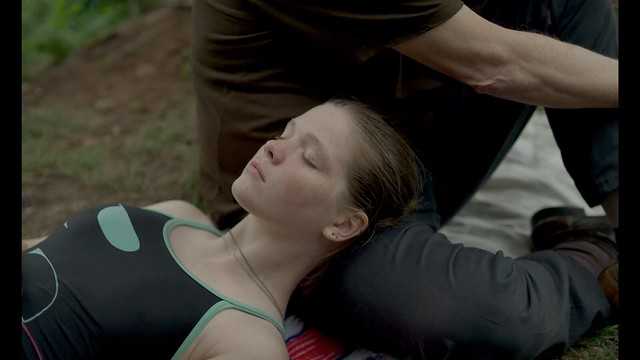
As always with Schanelec's films, there are striking images and a ghost of a narrative thread with lots of gaps that you will need to fill in yourself. Time is elastic in Music; in one scene you see an infant being found and adopted, the next we see Jon (Aliocha Schneider) accidentally killing someone (his father?) and going to prison. There's a prison guard Iro (French actress Agathe Bonitzer) who attends to his swollen feet (like Oedipus by his unsuspecting mother/lover), and gives him the list of classical composers to listen to. Then he's out of the prison, and they are expecting a baby. But fate would have it, tragedy follows Jon as his past catches up with him. He is a musician now, living in Berlin with his grown up daughter. He sings melancholic songs in falsetto on stages. And also, he is going blind.

Static framing and stoic acting that Schanelec cultivated over the years are all present here. Pivotal, life-altering actions happen mostly off frame. It's almost dialog free. And it doesn't really matter if Jon looks the same after many years, if not decades.

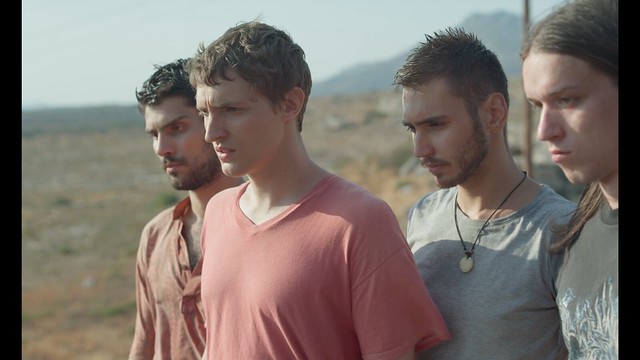
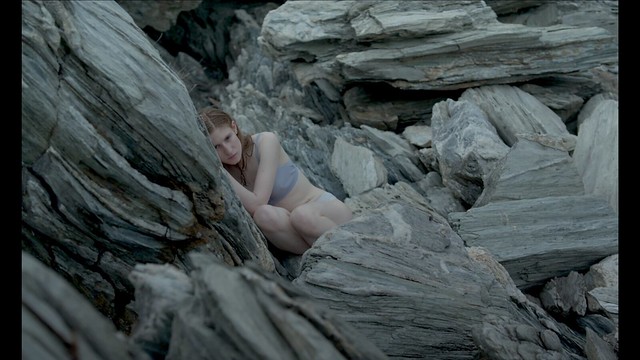
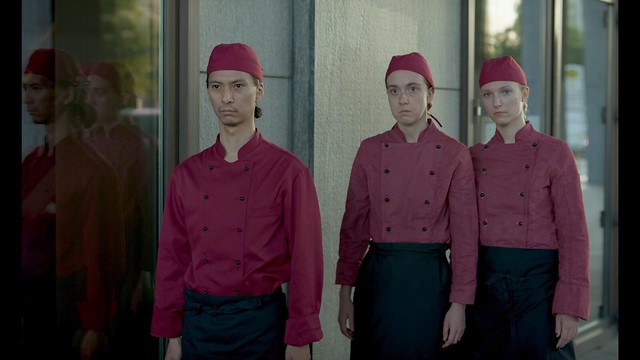
Schanelec told me once that she usually maps out an idea for a project from one or two images. This time, she takes a cue from a Greek theater. And images in Music are indeed striking. The windswept rocky Greek terrain against stunningly blue Aegean sea and sky in the first half invokes both the timelessness of nature and our impermanence in it. The static, staged scenes featuring groups of young people - street gang, wistful prison inmates, bystanders in uniformed kitchen staff strongly remind you of the world of Aki Kaurismaki. And of course, music flows where dialog would have been with the help of Canadian musician Doug Tielli in his high-pitched voice (a cross between Sigur Rós and Nick Drake). His songs not only serve as a Greek Chorus chronicling Jon's melancholy, but also as testaments to the beauty of music, transcending this fleeting dream we call human existence.

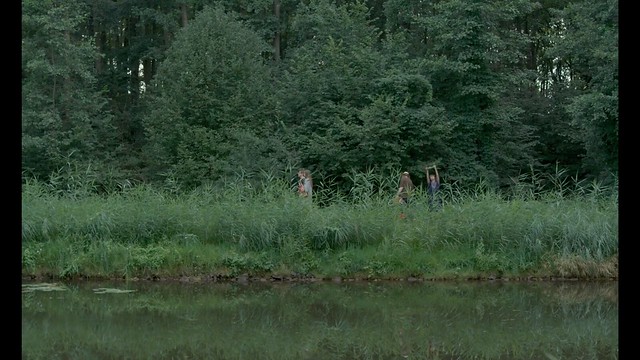
The long tracking shot that ends the film, filmed from the other side of the river embankment as the characters walk and sing in the beautiful summer day has the feeling of an eternity. It's an achingly beautiful film.

Tuesday, April 11, 2023

Legionnaire's Disease

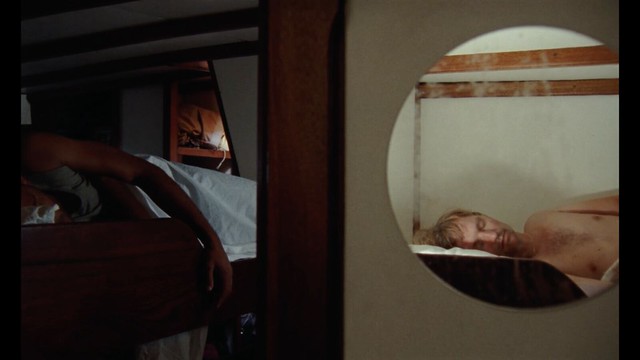
The Human Flowers of Flesh (2022) - Wittmann Screen Shot 2023-04-07 at 8.45.07 AM Screen Shot 2023-04-07 at 8.37.35 AM Screen Shot 2023-04-07 at 8.40.50 AM Screen Shot 2023-04-07 at 9.05.46 AM Screen Shot 2023-04-07 at 9.22.56 AM Screen Shot 2023-04-07 at 9.25.17 AM Screen Shot 2023-04-07 at 9.27.12 AM Screen Shot 2023-04-07 at 9.28.25 AM Screen Shot 2023-04-07 at 9.30.28 AM Screen Shot 2023-04-07 at 9.44.14 AM "When you have no home, a round world is the best you could have," is one of many poignant phrases uttered in Helena Wittmann's sopomore film The Human Flowers of Flesh. Just like her debut film Drift, Wittmann's preoccupation with being at sea continues. "A woman from Marselle who lives on her sailing ship with her crew," turns out to be Ida (Angeliki Papoulia of Dog Tooth). Most of the film we see Ida and her crew doing chores and living on the ship - cleaning, cooking, reading, exchanging annecdotes and stories and swimming.
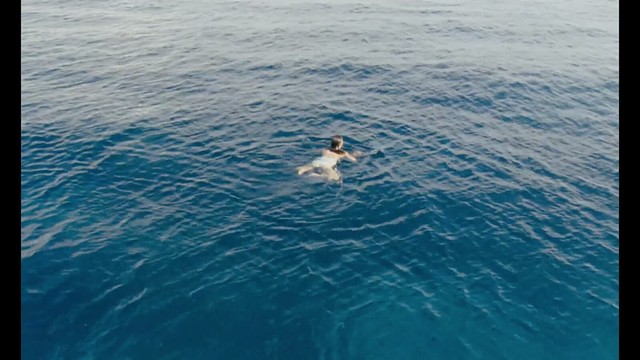
We see forever undulating sea on the deck and through the round windows from inside the ship, the horizontal sea level bobbing up and down as the ship sails through the waves. Just like Drift, the long stretches of these scenes has its own hypnotic rhythm. The crew converse in many different languages - English, German, Arabic, Portuguese, Greek and so on, yet nothing is explained about their background. Instead, Wittmann concentrates on the film's visually blissful moments - the shimmering sunlight reflected on the waves just below the deck, a piece of reef Ida brought from Antigua being passed around the crew, a dance party on the deck at night with colorful flags and lights gleaming and the blue sea as Ida swims back and forth. There are some show stoppers like the camera plunging into the blue depth to find a wreckage of a downed WWII plane at the bottom of the ocean floor. The film's full of sensual images that recalls Claire Denis films. But I think the aime here is different. In Wittmann's hands, the gleaming water and the sun are the subjects. They are vital to human life and we see that in Ida and her crew's uneroticised browned skin.

Speaking of Denis, Wittmann touches upon the legacy of colonialism and French Legionnaires in Mediterranean world and North Africa. As the ship lands on the shores of these parts, we see Ida walking past the military ports. At times we hear the military choir singing a legionnaire's hyper militaristic song of sacrifice. Then we see paratroopers jumping out of the planes, dotting the frame against the blue sky in Corsica. It's Denis Lavant's presence that accentuates this historical context cinematically. As we cinephiles are aware, Lavant played a lovelorn dancing French Legionnaire in Claire Denis's masterpiece, Beau Travail, in 1999. Lavant, almost a quarter decade older but still very much a physical presence, shows up at the end of the film in the streets of North Africa, and invites Ida, who's been following him, for some scrambled eggs in his flat. Is this Wittmann's way of commenting on the colonialism or what's left of it? I'd like to think that it's more of a kinship between two people who understand not having a home and its loneliness.

Poupolina, also starring in any less enigmatic A Little Love Package (by Argentine Gaston Solnicki), rises as a big supporter/collaborator of new talents who are pushing the cinematic boundaries into uncharted territories. And I very much welcome it.

Thursday, December 9, 2021

From Sheep to Bulldozers

Attenberg (2010) - Tsangari Screen Shot 2021-12-09 at 10.16.54 AM Screen Shot 2021-12-09 at 10.18.43 AM Screen Shot 2021-12-09 at 10.23.19 AM Screen Shot 2021-12-09 at 10.27.17 AM "From Sheep to Bulldozers," Spyros (Vangelis Mourikis), a terminally ill architect dad tells his daughter Marina (Ariane Labed) while looking outside the window overlooking the small seaside industrial Greek town where they live, as he laments about 20th century. He is worried that he will be gone with nothing to show for Marina's generation. Him being atheist, he wants to be cremated because he doesn't want to be food for worms. But Greece being strictly a Christian country, his body will be flown to Hamburg to be cremated then sent back over to Marina, when the time comes. Marina on the other hand, needs to figure out other things in life too, other than dealing with her father's illness. First, even though she is a young woman, she hasn't discovered being intimate with someone. Only person in town who can teach her how is her sexually active best friend Bella (Evangelia Randau), who works as a barmaid at a hotel.

Attenberg, along with Yorgos Lanthimos' Dogtooth, became the faces of the new Greek cinema in the late 2000s. And there are a lot of similarities between the two - generational divide, patriarchy, Lanthimos (who plays Marina's first lover), being metaphors for a country thrown into a new, globalized world in which she is not quite ready or comfortable. But Tsangari has a gentler touch and is much less cynical. Attenberg features one of the sweetest depiction of father-daughter relationship than any other films I can think of.

Sir David Attenborough, whose nature documentary program is what Marina grew up on, is her only constant companion. It's Attenborough's communing with the nature and animals, his compassion that is a contrast to Marina's banal surroundings - a mining factory with no prospects for young people.

Communication in Attenberg is not really done through dialog. With Marina and Bella, it's done through series of choreographed dance/movements/freakouts. With Spyro and Marina, it's constant word play where they top each others last words with a similar sounding word, when they are not frankly talking about the possibility of incest or body decomposition. Tender but still weird, it's a great entry point to the Greek New Wave.

Sunday, November 25, 2018

Humorous Barry Lyndon

The Favourite (2018) - Lanthimos
emma-stone-and-rachel-weisz-are-rivals-in-this-fun-and-crazy-trailer-for-the-favourite-social
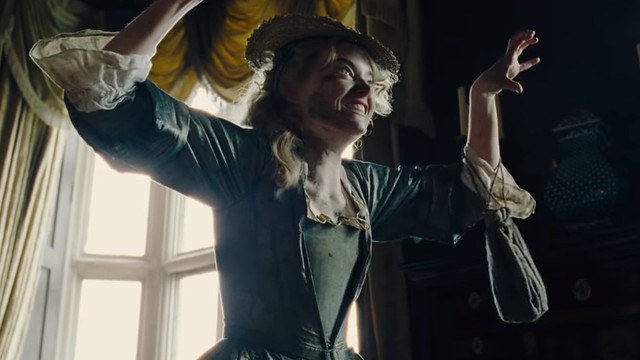
Yorgos Lanthimos' first foray into a film not written by him (and his constant writing partner Efthymis Filippou), The Favourite retains all the witty cynicism and deadpan humor that the world has become accustomed to throughout his filmography. But it has rounded the masochistic edge and made it more palatable. And it's a good thing. It is in large part thanks to his three main actresses - Olivia Coleman, Rachel Weisz and Emma Stone who shine in their respective roles.

Olivia Coleman is Queen Anne, a blubbering womanchild whose health is failing and leaves all the queen's duties to Sarah Marlborough (Rachel Weisz), who is her strict disciplinarian and also her lover. It seems that thanks to her no bullshit approach and tough love that kept the wolves (opposition party headed by pompous Harley, played by hilarious Nicholas Hoult) at bay. Enter Abigail (Emma Stone), a distant cousin of Sarah, first hired as a kitchen maid, proves herself to be a cunning social climber using her looks and quick wit. It becomes a battle between Lady Sarah and Abigail to win the favor of the ailing and temperamental queen.

Think of The Favourite as humorous Barry Lyndon. The stately glacial façade of Kubrick's film was always a stone's throw away (pun intended) from parodying comedy anyway. Costumes,opulent interiors and harpsichord music tells you that you are watching a period piece, but its sardonic wit and amped up performances are quite the contrary. Lanthimos remains to be the only filmmaker who can get away with using wide angle lens shots because his comedy calls for it. Robbie Ryan's energetic candlelit interior shots are a thing of a beauty as well.

The favourite is a wickedly funny film that hits all the right marks. It touches upon all the hallmarks of Lanthimos other films - patriarchy/monarchy, desire and perversion and loneliness. Coleman, Weisz and Stone deserve all the accolades.

Monday, February 8, 2016

Consider the Lobster

The Lobster (2015) - Lanthimos
 photo 90f40f02-df6e-4152-9d47-2a788a1dc9ab_zpswos4dqrq.png
 photo d4c9e461-9a74-41c1-b538-b3db03148383_zps7jkzn0ta.png
 photo dd5c6001-4cca-4972-b409-36ad97eebf2f_zpseyqeljlo.png photo e982c904-4326-46f5-ae8f-2f01ceed6fae_zps3k6seufo.png
 photo 5b08de85-082d-4163-b385-73dc522b33f2_zpseum7c72m.png
An absurdist satire on modern relationship, The Lobster is the first English feature, with an international cast, by Greek badboy Yorgos Lanthimos. An unnamed middle-aged schlubby, bespectacled protagonist (Colin Farrell) is relocated to a remote lakeside hotel/sanitarium after his wife of 12 years dumps him. The place is full of such rejects, trying to fall in love with someone while staying there before they turn into an animal (of their choice). Our protag wants to be a lobster if the time comes, because it lives long, blue blooded and remains fertile all its life. There he befriends with two men- the man with a lisp (John C. Reilly) and the man with a limp (Ben Whishaw), both awkwardly, desperately trying to make connection with the opposite sex any way they can to avoid turning into an animal. Then they have to hunt loners in the woods (former hotel guests who ran away to avoid turning into an animal) with tranquilizer guns to prolong their stay.

After pairing with a sexy but heartless hunting champ (Angeliki Papoulia) by faking his heartlessness and things horribly go wrong, our protag escapes to the woods, only to fall in with a group of loners, headed by Léa Seydoux. This loner leader takes a polar opposite view on relationship, prohibiting any flirting or hooking up among members and punishing them severely if they break the rules. It's as if the hotel symbolizes (it does/doesn't really) the consumerist capitalism, the loners are like the emotionless commies. There he meets a fellow short sighted person (Rachel Weisz) and falls in love.

There are bunch of rules and inner logic in the world Lanthimos creates that are just as complicated as the hidden rules of our mating rituals in the modern world. He hits home hard that our arbitrary criteria in dating and finding a companion in our world largely depends on trivial matters like putting heavy emphasis on matching attributes (nearsightedness, types of music you like, whatev). That you can just easily reject someone by not liking that person is prone to nosebleed or having a lisp. Just like his other films, Lanthimos has a mean streak (especially against animals- obviously fake but still). But I can see many people shrugging it off as a lackluster film. It is visually, emotionally subdued by design. Its black humor pitched and delivered perfectly by Farrell, Reilly, Whishaw, Seydoux, Weisz, Olivia Coleman, and two stunning Lanthimos regulars - Papoulia and Ariane Labed.

While it's never laugh out loud funny, nor extremely disturbing, the film has a lot to say about the hollow nature of human courtship. I was touched by how sweet the film was: characters in the film still abide by the social conventions, but their desire to be with someone and not be lonely is stronger than anything. It's the most romantic movie I've seen in a while.

Friday, July 18, 2014

Greek Tragedy

Phaedra (1962) - Dassin
 photo c6f339fe-3b71-49ff-a860-7bb874e62cd7_zps848fa3c3.png
 photo 663047d4-b22e-4fe7-a38d-20dfe47fe648_zps100a5de9.png
 photo 26cf4730-56a2-44f5-8fe3-c89ffaf114f7_zps57cdfe95.png
 photo 1f8dc422-08ed-4848-8d1f-dd27e806e007_zpsa8a04b60.png
 photo b37e1648-7f21-47cc-a2ed-f77de04740f1_zpsa13cb2b3.png
 photo ddf28320-4931-442f-97c0-cadfd4494eb7_zpseec0a9c7.png
 photo ca4f1d78-57ba-4962-8ba0-d8588de784e0_zps00608f16.png
Phaedra is a retelling of a classical Greek tragedy of a woman falling in love with her stepson, set in modern day Greece. Phaedra (Melina Mercoury) is a wife of a ship building magnate Thanos (Raf Vallon). She is put on a task by Thanos to bring back his art student son Alexis (Anthony Perkins) from London to join them in Greece for the Summer. Before she leaves, her long time family nanny warns her of her dream where two men were fighting over her. Phaedra is intrigued by the carefree young man who introduces an Aston Martin in the car shop windo as his 'gal'. While walking on London Bridge, in a stunt act to convince him, Phaedra throws her huge diamond ring over the bridge. They start a fiery affair after reuniting with Thanos in Paris, en route to Greece. Sensing that the affair is not going to end well, Phaedra begs Alexis not to come to Greece. He obliges while heartbroken and angry. But as fate would have it, Thanos, oblivious of what's going on, chastises Phaedra for not bringing back his son- the rightful heir of his empire and recalls him to Greece. Overjoyed yet guilt stricken, Phaedra has to content with shame, guilt, jealousy and burning desire while Alexis struggles to be free from all.

Dassin deftly directs this handsome, high melodrama. His wife and muse Melina Mercoury is marvelous as a tragic heroine with her striking features and Eartha Kitt purrs. Perkins has never been as charming and handsome as here. Loved it. I gotta check out some more Dassin.