Showing posts with label Cannes 2022. Show all posts

Wednesday, February 15, 2023

I am Here to Create the Most Fascinating Images Possible: Albert Serra Interview

AC_Website Event Hero 620 x 348  (3) - Albert Serra Headshot Albert Serra is a mad man. His latest, Pacifiction was my favorite of 2022. Its almost stupid bravado took my breath away. It's all in his digitally captured decaying grandeur of the first world; the remnants of colonialist spy game playing out in paradise, was perhaps the most audacious cinema I've experienced in a long while. Serra is a real auteur in every sense of the way. He might come across as arrogant at first, but listening to him at length, talking about his methods, you find that he is an adventurous soul, always looking for the ways to find images that goes beyond earthly concerns, yet deeply humanistic. It was a privilege to talk to him for the second time, even via Zoom.

Pacifiction opens this Friday, 2/17, Film at Lincoln Center in New York.

How are you?

I am good. I am in Dublin now. It’s late.

Are you working on something there?

I am just checking out the possible locations. Just randomly. I haven’t written any script or anything. But I shot here some years ago. (Singularity, for Venice Biennale, 2016) I dunno…I like some places I’ve seen and wanted to come here and see there’s something inspiring. I have some ideas. Sometimes I have this real place in mind. It’s an interesting thing. It helps to make the process more organic.

Was it the same for you with Pacifiction?

Well not the same because as I said, I couldn’t travel because of Covid, but in the end it was almost the same result. I couldn’t go but I was inspired by some books, you know? But some ideas are mine. Possible nuclear tests were mine! I never heard it or read it anywhere. It was totally an invention but became a visionary, because Russia invading Ukraine and all the talk of nuclear war became popular again.

True.

Everyone has forgotten it. Now it’s the center of the topic again. We went there to shoot, and I shoot very fast. With 4 weeks of preparation, we started shooting- preparation meaning, casting there, looking for locations. We do it very fast. But it was 2020.

Covid.

Because of Covid, on the third week, we had to leave.

Wow.

Because everything was locked down. So, we came back. Then I was thinking about the film in more concrete terms. I knew some of the locations and a little bit of casting and from what I saw there. So, before we started to shoot, already I had some cumulated volume in my head. But the film started very artificial, with plot being on the edge of being ridiculous. But I found it organic in a way. This is the balance I try to find: very artificial idea and setup, with the performances, the wilderness of its surroundings. It makes actors believe in everything they do even though its half humorous, half ironic, half visionary, half political, half serious…I don’t know.

Unlike your other films, this one takes place in the present. But it almost has an aura of the Cold War era paranoia and the colonial past. You said it was partly based on what you read. It feels very much like Conrad or Graham Greene.

Graham Greene perhaps. Conrad, I haven’t read it. It’s a strange thing I haven’t read the Heart of Darkness because it’s very important and good and I read a lot. Of course, there’s a link with Apocalypse Now! with this strange character that Marlon Brando plays because you don’t know if he’s good or bad – whether he is the beginning of something very bad or the end of something very good. But I think there’s something that is connected with his mental state. I don’t know if that is something specifically colonial. My film is more on the contemporary side where the savior/villain has no face. Nowadays everything is spread out, like a virus. Everything is based on total opacity of power – who makes decisions? What are the reasons behind these decisions? And which are the interest parties behind these decisions? Before, there were good people and bad people. Coppola’s film was the end of that illusion. Kurtz was the beginning of that ambivalence. Now we are in this era, and everything is flatter. Everything is less interesting, it’s more like the internet, you know. Real life dissipates, everyone has no face, and things are still going wrong and getting worse. And everyone feels it. Inequality and wealth gap keeps getting bigger and bigger. Everyone knows it and feels it. And no one knows how to correct it. This lack of humanistic approach to solve the problem brings something purely technical, they don’t take account to the souls of people therefore they don’t solve anything. Maybe to you the film feels like Conrad but it’s very contemporary. It’s something that is happening now.

How did you like Tahiti?

I don’t care. I try to force myself to think against cliché. For example, I try to think that these people are not victims of history. Because they do nuclear testing there, so they suffer from this and that. That they lead a very simple and quiet life and suddenly colonizers are sending these nuclear scientists and doing tests in paradise, whatever. But why do I want to tell that story? To say something about these injustices? These are things even a child knows. Everybody agrees. Then I force myself to go there and look for the faults of these people. Sure, they may be victims of history. But they might have bad genes and are lazy. Or maybe they receive a little too much aid. You know where I am going with this. But in order to see things the way they truly are, I have to let the images flow, let the images flow without control and without any meaning from my end. The idea that they are some hapless victims, it would be a cliché. But the reality is not so easy, especially nowadays. So, when I am in a place like this, I try to think the opposite, just to make things more complex and not to reduce the complexity of the matters. And I think it works. That everyone sees that things are unbalanced. When everyone thinks and goes the same direction, and I present the opposite, something happens. It’s a more faithful way to paint that place that you are in. I get the real inputs from the place just because I use this technique. I put myself in the position that I don’t have anything to say. I am here to create the most fascinating images possible.

Talk about being there and finding something. The character Shanna fascinated me. I am very interested in how you casted Pahoa Mahagafanau in that role and what her character means in the film?

She’s a non-professional actor, like all the indigenous people on the island. I have an intuition for people who are interesting and quite natural. They look natural and spontaneous, and I like them as human beings, you know. This is the main thing when I choose actors. There should be something in them I like as human beings. Something I respect, in order to start disrespecting them and start creating my own idea against them, but there should be this equilibrium between us. Not as much as collaborating with them but to abandon them to their own devices and this creates a little bit of tension and that generates interesting images in the film. In her case, I like her very much. She is very spiritual. This idea of transgender, from a strictly visual point of view, not moral or political point of view or anything, I think there’s some purity and ambiguity in her that was extremely fascinating and photogenic. The extraordinary thing is that there is no contradiction in her, not one single moment of tension between two human beings in one. One that was before and the one that is now. There is this pure way of being in her and I like that very much. Transgender thing always has to do with makeup and costume and attitude, you know. They don’t decide to be transgender, it's a family decision in their culture. For example, if they have two boys, depending on the places, if the third one is also a boy, they dress them and raise them as a girl. They do this at a very young age, so they don’t realize all the stigmas that we modern society have on transgender people. They don’t distinguish gender like us. There is no vindication. There’s no gender politics.

I have to ask you about the scene where the surfing contest takes place in the water. It’s so stupendous and surreal, I couldn’t stop laughing at its bravado.

Why not?

It’s so fascinating and spectacular–

It’s spectacular because he (De Roller, played by Benoit Magimel) is there. If you search YouTube, I am sure you can find much more spectacular surfing videos with great waves than this one. But you are not a motivated spectator unless you are a professional surfer. It’s because the actor is in there riding the waves. As you said, it is grotesque and makes you laugh. But at the same time, you are still fascinated by it because the actor is still not breaking out of his character. You question yourself what kind of film you are watching. It questions you a lot of different things. And this is my aim. The plot is very plastic with submarines and all that. You know him looking for a submarine with a torch light at night. And at the shady discotheque where things get very paranoid. It’s very ridiculous and dangerous and extremely cynical. It’s a mixture of all kinds of different things and layers and tonality. At the same time, it’s very compact. It’s hypnotic on the edit and the flow. For me this was the main discovery of the film. The possibility of mixing all these impossible things. And it still works.

Is this how your work usually is - you finding out as you go along?

Yeah. But other films were mainly historical, and you have to be a little bit more respectful. You couldn't open it too much for other tonalities. If it was too grotesque, it would’ve destroyed the credibility of historical ambience. You had to be much more careful with those. Too risky. too risky.

Did it take a long time for you to set that wave scene up?

One morning. 3-4 hours.

Wow.

The whole thing? 24 days of shooting. 1 day of reshoot. 25 days total.

That is fast!

Yes, that is fast. when I was 18, 19, I was working as a construction worker. My boss, who was teaching me, told me one good lesson. He said, “You have to work good and fast!” It stuck with me, and I do the same with cinema, 20-30 years later.

Pacifiction kept reminding me of Kubrick’s Dr. Strangelove.

Yes. Here is what I said before. The grotesque element is there. The political element is there. The scary future of the war is there. The humor is there but it’s a fiction and that makes him a total liar. Therefore, it's less hypnotic, less fascinating, less complex and there is less mystery. The mystery comes from how close to the truth it is or how close to the real show or fake show. The kind of images you see in Kubrick films are much clearer. I work with digital images. There is less control and therefore could be more dangerous. It means they can really capture things that are around that are even out of my control. This content can reveal something that is not so nice. I think it is important to keep the door open. But it’s also a commitment. It’s not that easy.

This is not a political question, but I am wondering is this how you see that it will all end? Unbeknownst us, a bomb goes off without warning?

Iam very pessimistic. I can tell you. Capitalism is spinning in a very harmful way. With the internet it’s even worse. All the human relationships among people are already damaged and the internet just accelerated the damages. The financial inequality and wealth gap grows exponentially and there is no way to stop it. And the tensions grow, and the revolution is not possible because power has all the instruments. The people in the colonies and who are still colonized understand this because that’s how they lived all their lives like that.

I don’t know. Maybe I will do a comedy musical next. Where people dance around and sing happy songs.

Monday, December 12, 2022

Oh Captain My Captain

Triangle of Sadness (2022) - Östlund Triangle of Sadness Good comedies are hard to come by these days. Ruben Östlund, riding the success of absurd satires like Force Majure and the Square, comes back with another over the top-class satire, with international cast, in Triangle of Sadness. He starts out with modeling tryouts with hunky Harris Dickenson (Beach Rats). At one point, a casting director tells him, “Why don't you lose that triangle of sadness between your eyebrows?" Yes, male modeling is easy to make fun of, as well demonstrated in Ben Stiller's Zoolander. But what's easier? Social influencers. They live off their good looks. They make the age-old meet and greet of asking 'what do you do for living?' completely obsolete. So, what would be the ultimate setting for a class satire? On a luxury cruise ship, of course.

So, a model Carl (Dickenson) and his influencer girlfriend Yaya (Charlbi Dean) gets invited to a luxury cruise filled with uber rich crowd. It's an old money and new money alike: a Russian fertilizer tycoon, an English arms dealer couple, a lonely internet security expert and Carl (Dickinson) and Yaya. There's a team of dedicated crew who waits on the customers hand and foot, to attend their every absurd demand - like stop everything they are doing and jump on the water slide on the side of the boat, to celebrate their class consciousness(?). There's a recluse, alcoholic, Marxist captain (Woody Harrelson) who finally emerges from his deck only to go mano a mano with the Russian on which is better- Capitalism or Communism, while looking up and exchanging memorable quotes from google. After a big storm with everybody's projectile vomiting and shitting subsides, the ship is hijacked by pirates and the ship sinks.

Only a few survivors wash up ashore in what seems like a remote island. The water and food supply are limited. Paula (Vicky Berlin) the yacht steward, tries to keep everything and everybody in order, but soon realizes that there is no hierarchy anymore. Abigail (Dolly De Leon), a Filipino crew member who oversaw cleaning the toilet, emerges to be the leader because she is the only one who knows how to start the fire, how to fish and she gets to decide who eats and doesn't. She soon chooses Carl to be her sexual pet.

The reversal of roles is cathartic and delicious, but short lived. Östlund let you not forget that we live in an overly developed world that capitalism took over every corner of the world that it can't be defeated that easily. The world of pretend, married to our phone and constant flux of information that we rely our identity on, will not let you go. With all that cringey funny business he is so good at, at heart, Östlund is true Haneke pupil. But whereas Haneke has courage to cut the cord/throat/head off, two-time Palm d'Or winning director doesn't, as the murky ending suggests. And just like the people onboard of the yacht, when the movie is over, we laugh and pat ourselves on the back because the ordeal's over and exit to the elevator.

Thursday, October 13, 2022

Unsolved Mystery

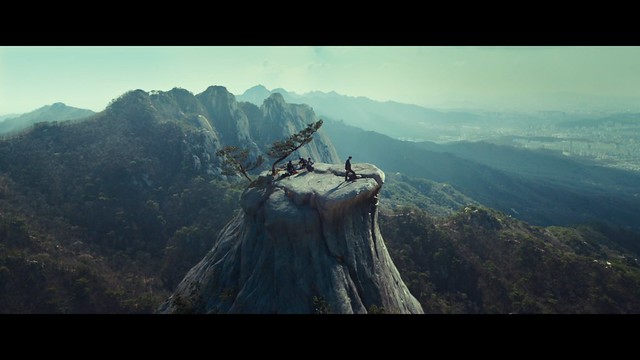
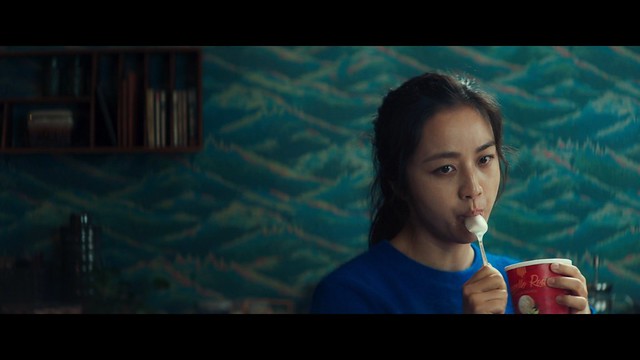
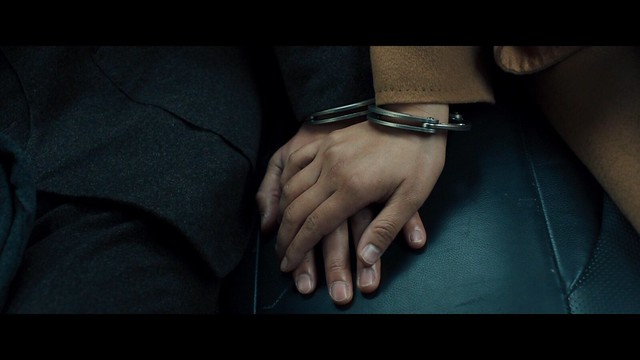
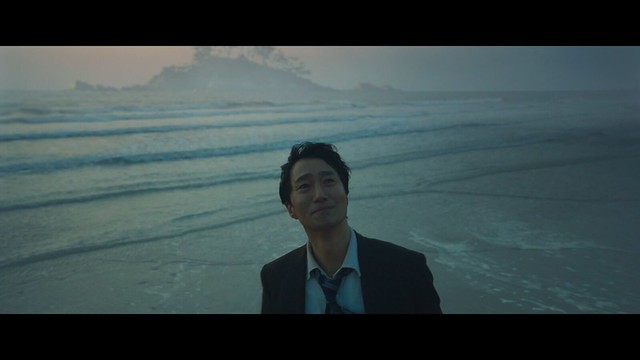
Decision to Leave (2022) - Park Screen Shot 2022-10-12 at 3.31.29 PM Screen Shot 2022-10-12 at 4.43.44 PM Screen Shot 2022-10-12 at 4.08.52 PM Screen Shot 2022-10-13 at 7.59.18 AM Screen Shot 2022-10-13 at 8.09.22 AM It is very hard for me to surrender myself into the Park Chanwook universe. It's because I've always regarded him as a visual stylist more than anything and can't help being self-conscious when I watch his films, that I am indeed watching a film, a make-believe, a fake. His every-over-the-top plot twist, every elaborate set piece, always reminds me that I am staring at the silver screen. Then it is perhaps the first time that I bought into the seductiveness of Decision to Leave, his sumptuous, yet down to earth film noir starring a luminous Chinese actress Tang Wei as the recipient of a Hitchcock heroine like obsession. Don't get me wrong, all his unrivaled trademark craftmanship is there - rapturous transition shots, highly textured production design, artful framing, etc. But it's Tang Wei's embodiment of her character, Seo-rae, a mysterious woman in foreign land that is truly the main magnetic pull here.

Detective Park (Park Hae-il of Memories of Murder) oversees investigating the death of an old rock climber in mysterious circumstances. The widow is a young Chinese woman, Seo-rae (Tang), who works at a nursing home. The focus of the investigation naturally falls on her, a young trophy wife of an old man who worked at an immigration office with a large sum life insurance. Even though she has an alibi, Park can't shake off the feeling that she is hiding something. It's more of a curiosity than suspicion. It's her beauty, and her foreignness that keeps him interested. So even after she is cleared of any suspicion in the death of her husband, he keeps surveilling her. Since he is seeing his nagging wife only on weekends because of work, Seo-rae becomes his almost companion, even from a distance. She obviously knows that she is being watched and keep their cat and mouse game going.

after she is officially cleared and the death ruled as suicide, for Park, it is over and done with. But for Seo-rae, it is just the beginning in an elaborate game to continue seeing him, at whatever the cost, because she wants to be the kind policeman's unsolved case, getting all his attention, at all times.

In Park's hand, our mundane everyday technology - smartphone, smartwatch, Bluetooth, etc., becomes something sensual, ASMR and highly hypnotic.

Once again, being a suspect of her 'next husband' murder, it culminates to Seo-rae meeting with Park on the top of a mountain. It's snowing, and their faces only illuminated by a headlamp, Park experiences Scotty's 'green dress' moment in Vertigo. Only it's the heroine who is actively making Scotty reaching ecstasy, in her own volition.

Decision to Leave's intricate plot, clever wordplays, sheer amount of visual details might be way too much to catch all in one viewing. It's so impeccably crafted and executed, yet relatively down to earth, huge thanks to Tang Wei's turn as a seductress. It's the most romantic film I've seen this year.

Sunday, October 2, 2022

Rum, Sweat and Rain Soaked Love Story in Global South

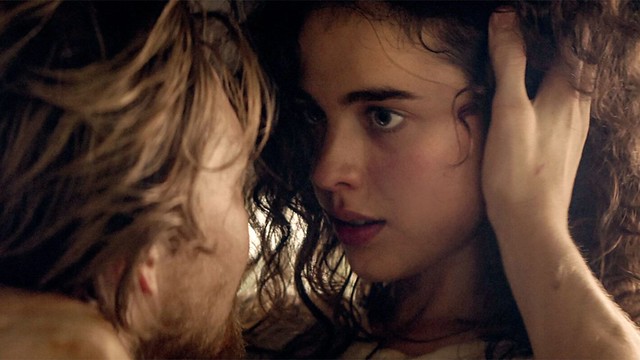
Stars at Noon (2022) - Denis Stars at Noon Margaret Qualley gives it all in a Claire Denis's Nicaragua set political intrigue, Stars at Noon, based on Denis Johnson's novel from the 1980s. In order to frame this in context, one has to wonder the filmmaker's intent on setting it in the now - during Covid 19 era. The Sandinista Revolution by FSLN versus the US backed Contra made Nicaragua the literal hell on earth in the 80s, which Johnson personally observed to write about, first conceived as a nonfiction then in fictional form.

Some forty years later, Ortega is still in charge as he serves the 4th term as the president, the economy is still in shambles, corruption and military/police oppression on activists are still being widely reported. The US intelligence and international conglomerate operatives are still very much present, and on the lookout for neighboring Costa Rica and other nations in Central America for possible disturbances. As she explored the white privilege and colonialist mentality still present in Africa with White Material, one can read Denis's new film through those eyes - a pervasive influence of the Global North playing out in an old, tired, cat-and-mouse international intrigue set in Central America, John le Carré style.

Qualley plays Trish, a self-proclaimed journalist who might have had noble intentions in coming to Nicaragua, but now marooned in sweltering purgatory with her resources cut off and passport confiscated, survives by turning tricks on a local law enforcement and political small potatoes for any types of favor, influence, money (both cordóbas and dollars), shampoo, air conditioner or just a decent shower. In her tiny bareback summer dress, she is always guzzling copious amount of rum and throwing Karen tantrums when her Spanish fails to communicate. She meets Daniel (Joe Alwyn) at a bar in the Inter-Continental Hotel, the bastion for all the white guests. Daniel says he works for an oil company executive. Giving him a tip that the sleek local interest he was meeting is a Costa Rican undercover cop, she hooks up with Daniel, and together, they move into a squalid motel Trish is staying in. They both know that they are in over their heads in a foreign country and they need to get out the dodge before they get arrested or worse, killed. It turns out the unassuming CIA agent (Benny Safdie) she meets on the road, wants Daniel and offers Trish safe passage to the Costa Rican border.

Qualley's wide-eyed, frizzy haired Trish, spitting out ridiculously hard-boiled noir lines is a revelation. If this film doesn't make her a big star I don't know what will. Alwyn is adequate as a hunky whitebread love interest, just to be dragged around by his nose. And Safdie is fantastic as cunning G-man. Eric Gautier's energetic cinematography skillfully captures the oppressing tropical climate and humidity glistening on Qualley's skin.

Stars at Noon doesn't quite work as a global intrigue espionage thriller, nor does it as a Claire Denis film. It's too old fashioned and plot and dialog heavy. Nevertheless, I can see the merit in Denis's comment on the pervasiveness of white colonialism in Central America where idealism and good intentions has gone to die. But it's an enjoyable ride in that 'rum, sweat and rain soaked, sexy love story in the jungle way' and I don't mind it.

Tuesday, May 31, 2022

Its Soul Got Sucked Out

Crimes of the Future (2022) - Cronenberg Crimes of the Future Hardly reinventing the wheel, but with Crimes of the Future, David Cronenberg reiterates his usual theme strongly- inadequacy of human bodies and our soulless society. Crimes might lack his usual titilation and shock value, but it's still quite potent in making those points, more so than his better films over the years, namely - Dead Ringers, Crash, Cosmopolis and even Dangerous Methods.

Crimes of the Future presages with a disturbing beginning where a mother murders her own child after the young boy starts chomping at the plastic garbage bin in their bathroom. It's the indescript near future where human bodies evolved to a point that they don't feel pain or in needs of anticeptics when the knives cut into them. Saul Tenser (Viggo Mortensen) is a performance artist. He and his partner, a former surgeon Caprice (Léa Seydoux) performs a sort of live autopsy on Saul's torso. It's Saul's ability to will a new organ that serves no function to his body and Caprice's tattooing and removing the organs that make them the superstars of this seemingly still unlawful and underground art form.

Saul, always shrouded in veils and hunched over, is physically not well. Either his mutations made him always brittle and ill, or his performances left him looking like a MS sufferer; he spends most of his time in the aide of a cocoon like bed hanging from the ceiling - a true cronenbergian contraption that looks like an upside down cockroach and a skeletal chair that helps him feed.

Their registering the new organs at the very literally named Organ Registy Office, a dreamy, Kafkaesque reimagining of what 'institution' looks like, connects the pair to a nebbish bureaucratic hottie Timlin (Kristen Stewart in a very comical performance), who breathlessly praises Tenser's artistry. Surgery is new sex, she declares. The dead child's father, who's also training his body to the effects of poison, approaches the pair and offers his son's body for the performance. Do they perform the live autopsy of the boy in front of the live audience or no?

Watching Crimes of the Future immediately reminded me of the famed painting by Rembrandt - The Anatomy Lesson of Dr. Nicolaes Tulp. In it, spectators surround a recently deceased corpse and Dr. Tulp is explaining the denuded musculature of the corpse's left forearm. Yet, the spectators' attention is not with the corpse but elsewhere and they are not even noticing the inaccurate arm (it's the right hand depicted instead of the left). Rembrandt was commenting on the inadequacy of seeking knowledge and truth in the human body in the Age of Enlightenment. And this is the point Cronenberg has been making all his career- our futile quests for answers in what makes us humans, in our bodies which are the most personal, tangible things that each of us possesses, and not finding it there. And pursuing so hard to find something in all the blood and guts, you lose sight of whatever the humanity that's left in us. In a way, Cronenberg is going back to the basics - to the flesh after more cerebral musings in searching for the soul (Dangerous Methods, Cosmopolis). Crimes of the Future is less kitschy and much less over the top parody like History of Violence or Maps to the Stars. And its general mood is closer to Spider and Dead Ringers. But nonetheless it's undeniably Cronenbergian and great.