Showing posts with label Film. Show all posts

Saturday, February 6, 2016

Scott Barley Interview

scott barley
I've come across many visual artists/filmmakers since I started this blog. Most of them have been for Twitchfilm during film events, such as festivals, promotions for their film releases, etc. An interview usually lasts 15 to 20 minutes. I get 30 minutes if I am lucky. The PR firms usually keep a tight schedule and you have to be very alert and ready to get what you want out of these artists. It's not always easy. There are always huddles- the New York traffic, the timing of the day (early vs later interviews), weather, technology malfunction (cell phones, skype and my 10 year old ipod with a microphone), individual characters of the artists themselves. But I'm not really complaining. I get to meet some of my heroes and discover many interesting artists. Since I've been doing this for a while now, I think I'm getting pretty good at asking the pertinent questions to satisfy my preoccupations. But at the same time, I've always felt 20 minutes is nary enough to scratch the surface: to find out someone's artistic point of views or artistic processes or personalities or crafts or philosophy on their practices, or anything for that matter.

I've come across Scott Barley's work at a film torrent site. The screen caps and description of the film look intriguing. And it was marked as KG Artist (filmmakers who upload their own work on Karagarga torrent site). Watching Barley's Hunter for me, was a watershed moment. I was immediately drawn to his beautiful, mesmerizing images. The mood and mystery and melancholy he conveyed in that short, majestic film was exactly what I've been looking for in films both as an adventurous spectator and occasional practitioner. I pm'd him immediately and to my surprise, he responded. And that's how our correspondences began.

As much as I love narrative filmmaking, I strongly believe film is a sensory medium first and foremost. And the medium still remains to be the most exciting art form, still founding its ways and holds a lot of possibilities. As I go through Barley's films one by one, they give me a strong sense of assurance in my belief that it is not foolish to think that film is not only not dead but only just have begun living despite all the naysayers.

Preparing for Barley's interview, I decided to take a different approach: I'd send him questionnaires and he'd take time to reply. There'd be less pressure and it would be more in-depth. Indeed. What you are about to read is quite a long and completely unedited correspondence, between an interviewer who is very much excited about discovering an artist & his practice and the subject who generously pouring his heart out.

Barley is a prolific artist whose background conveys wide range of artistic practices - painting, music, literature, constantly working, outputting his thoughts and visions in many forms. I just finished watching Closer- his David Bowie tribute film/poem. It's achingly beautiful. Wise and intelligent beyond his years, it has been a truly inspirational experience to communicate with him. For that, I thank him from the bottom of my heart. So without further a do:


For the readers, I can't not mention how I found your work first - at an elite film torrent site. Therefore I can safely assume that your cinephilia runs deep. For many filmmakers I know, there was one defining moment in their lives how viewing of a particular film turned them into being a filmmaker. You mentioned Stan Brakhage, Phil Solomon and Michael Snow at some point in your career. I am wondering if there was such a film that made you pursue your career as a filmmaker. And who are some of your biggest influences on your work?

Scott Barley: Well, there have been quite a few “milestones” in my life that have really defined a strong sense of a creative path for me; not just films. Please bear with me, as I trudge sporadically through them - and the in-betweens.

Cinema actually came quite late to me, when I was 14. On a whim, I went to see Pan’s Labyrinth in the cinema with my father. I had never seen a foreign film before then, and had no idea going in to the theatre what Pan’s Labyrinth was about, or even that it was in another language. But the film spoke directly to something nebulous yet very concrete, beyond the surface of my self, in a way that no film I had seen before had done. It transcended language. It was an epiphanic moment for me; this understanding: language was no longer necessary to understand or feel on a fundamental level. It was more fundamental than language. It was simply humanness. I was not a big “film person”, and Pan’s Labyrinth changed everything. I didn’t know that films could do this to you. It moved me to tears, and while watching the film, I felt like my heart stopped several times. I remember getting so frustrated with friends in school, who dismissed or ridiculed the film, simply because it had subtitles. Pan’s Labyrinth taught me something which I’ve lived by very strongly to this day, and will continue to do so for the rest of my life: let art and experience wash over you like an ocean. Submit to it. Don’t think too much. Just feel.

I felt very alone in my teenage years, and art - however - or rather, the more - dissonant, stygian, and difficult - became my refuge. I am a romantic, very sensitive and idealistic to this day, and art felt purer than the exterior world, and more in line with my own interior world. I liked simply “feeling”, whereas the exterior world - however insidiously - seemed to portray this notion that feelings were a superfluity.

Before Pan’s Labyrinth, I wrote a lot. I used to write many poems and stories. I was obsessed with language. For many years from the age of 7, I would go to bed each night, reading the dictionary from page to page, memorising the words and their definitions. I would practice my cursive for hours on end, on the same letter, for no reason other than my own unorthodox recreation. I loved the ability to express myself with exactly the right word, even if others didn’t necessarily understand what I meant; at least I knew that I was being earnest, truthful, and precise. From the age of 7, I read a lot of King and Poe. I loved Poe in particular; his eruditeness and (what the philistines call) ’verbosity’, but also the rigour to it. That has remained the same to this day; my love for Krazsnahorkai, Proust, and Joyce in particular knows no bounds. Naturally, being a lover of Poe, I was drawn to the darkness. I am a nyctophile; both literally and metaphorically. I feel most at ease under the cloak of darkness, adrift within tenebriousness and the undeterminable. I had a rule: I would only ever create, or watch, or read at night; for that was when I was at my most percipient, and when I felt most in-tune with the experiential resonance of the “art world”. The only oil that I burned was Midnight’s.
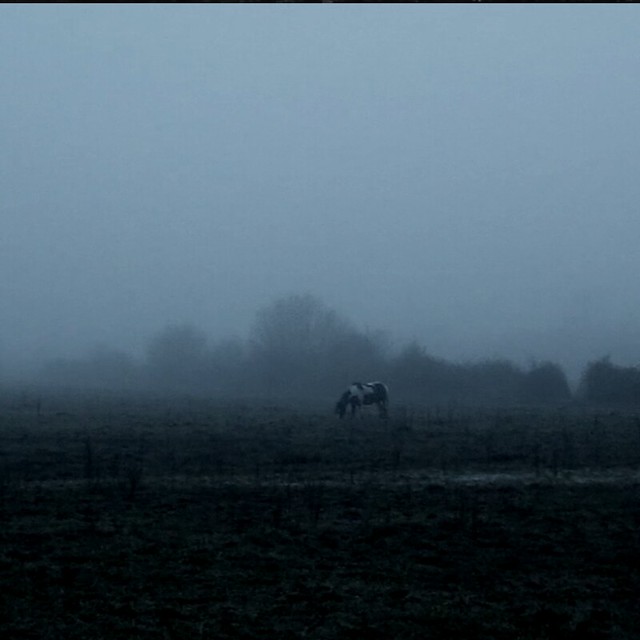
Ethereal-Melancholy-of-Horses-in-the-Cold
The Ethereal Melancholy of Seeing Horses in the Cold

I was not particularly interested in or understanding of visual arts before Pan’s Labyrinth. But after that film, I became very passionate about it, as well as mood, experimentation, and allegorical work, but I was not yet making films; not for another 5 years or so. I left writing behind a little, and from 15 on-wards, I was doing a lot of painting instead. I loved Bacon, Auerbach, Kossoff, Kiefer: the masters of emotional darkness and texture. For a little while, I was simply regurgitating the things that I loved in a lesser form. But as time went on, I found that I was able to truly draw from my own feelings, and still inherently capture what drew me to those artists in the first place: the personal, art that scarred, art that acted as a nepenthe or catharsis, and the obfuscation - either through texture, or the literal Latin origin of the word: ‘fuscus’, meaning, the ‘dark’. I believed that genuine art could only be created when you submitted yourself to - and embraced your own - vulnerability, and to be entirely authentic and honest; essentially, you had to pour your soul into it. That has remained the same ever since, and is probably the most important element of my own creative praxis. To paraphrase Cassavetes: you must dare yourself to fail. Why bother, if you’re not going to put yourself on the line?

When I was 16, I discovered Bergman. I think Persona is THE gateway drug for cinema lovers. That film changes you biologically, and by the time the film reel in the film stops, and the light goes out, your DNA is different; you are then far more perceptive to - for a lack of better words - “artistic” or “difficult” cinema. I am drawn to that sort of work: art that changes you from who you were before you experienced it. After Persona, my love for cinema became akin to a snowball gathering speed as it descends from the summit. I would watch up to 40 films of varying lengths in a weekend. I would do nothing else. It’s a miracle that deep-vein thrombosis didn’t set in. Then I discovered Tarr, and perhaps more so than any other of my personal experiences with art, it changed me. Upon experiencing Werckmeister Harmonies, I felt like I had an out-of-body experience. My body surrendered and I saw my soul, stark, fragile and utterly naked before me - for the first and only time in my life. It moved me to tears. I shook a lot. It completely changed me. Words cannot do any justice.

The-Sadness-of-the-Trees-2014-0005
The Sadness of Trees Part 2

In my first year of university, I became obsessed with avant-garde, particularly lyrical avant-garde, like Phil Solomon, Stan Brakhage, Jean-Claude Rousseau, and Nathaniel Dorsky, and they remain my favourites to this day.

As for elite film torrent sites, like Karagarga - they interest me. I don’t always fully agree with what is shared on there. An artist needs to be paid for their work, just like anybody else, but I feel very passionate about the idea of bringing down the walls of economic elitism and socio-political censorship that prevent a lot of people from accessing vistas of great esoteric cinema, music, and literature. But I still think that sites like Karagarga could do a lot more to ameliorate that problem. I would never share any other artist’s work on Karagarga. I only upload my own work - as that is the only work I have the moral authenticity and legitimacy to share with others online. I do share a lot of my cinephilia with my friends and younger students though, and throughout my degree I organised film screenings such as La Région Centrale, La Vallée close, American Falls, Meshes of the Afternoon… lots of Antonioni, Brakhage, Bresson, Godard, Yoshida, Epstein, a lot of Eastern European cinema from the 50s 60s and later too (that was my most earnest passion during that time) like Vláčil, Wiszniewski, Jan Jakub Kolski, Bartas, Tarr, Fehér, Stonys etc.

I was fighting for a more artistic environment that sadly, my university did not convey. It was a very philistine and anti-intellectual environment actually - not that I am an intellectual by any means, but I yearned for that sense of being a scholar, not simply a “regurgitatior" of other people’s “old” ideas. I wanted to embrace the new and unique, the daring. Lots of people, including the majority of the tutors, sadly, were afraid of feeling or of mystery - whereas for me, those are two of the most empowering elements of art - along with hope. Thankfully I was able to create a small Bande à part of friends who shared my passions and interests and that stopped me from going under.

As for literary influences in my life, they include Georges Bataille, Nietzsche, Camus, Barthes, Sartre, Hegel, Deleuze, Freud, Deleuze, Sontag, Blake, Beckett, Stanley Donwood, Joyce, László Krasznahorkai, Daphne du Maurier, Baudelaire, Pynchon - off the top of my head. Bataille and Sartre in particular are very present in my what I consider to be my best work (Nightwalk, Hunter, Shadows) but I don’t consciously consider any of these things when making a film. I just “feel” my way through the dark - much like the (visual) content of the films themselves.
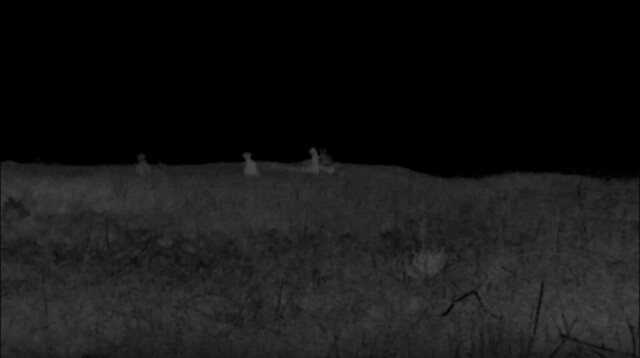
Nightwalk-2013-0039
Nightwalk

I realise this may come across as being pretentious, but I have made a list of the filmmakers that I most admire, in the order they came from memory: Jean-Claude Rousseau, Béla Tarr & Ágnes Hranitzky, Phil Solomon, Nathaniel Dorsky, Michelangelo Antonioni, Pedro Costa, Pere Portabella, Yoshishige Yoshida, Barbara Meter, Stan Brakhage, Philippe Grandrieux, Sharunas Bartas, Wojciech Wiszniewski, Peter Hutton, Jack Chambers, Franco Piavoli, Jan Jakub Kolski, Maya Deren, Pier Paolo Pasolini, Éric Rohmer, Artavazd Peleshyan, Ingmar Bergman, Veiko Õunpuu, Konstantin Lopushansky, Dimitri Kirsanoff, Jean-Sébastien Nouveau, Jean-Pierre Melville, Zoltán Huszárik, Jean-Luc Godard, Aleksandr Sokurov, Robert Bresson, Marguerite Duras, Wang Bing, Bruce Baillie, Audrius Stronys, Kaneto Shindô, Jan Němec, Chantal Akerman, Andrzej Żuławski, Paweł Łoziński, Mikhail Kalatozov, Jean Marie Straub & Danièle Huillet, Amy Kravitz, Bill Viola, Guy Sherwin, Robert Beavers, Harun Farocki, Florence Pezon, Ben Rivers, Elem Klimov, Lav Diaz, Djordje Kadijevic, Jean Epstein, Raúl Ruiz, Dušan Hanák, Bert Haanstra, Mário Peixoto, Robert Todd, Tengiz Abuladze, Yorgos Lanthimos, Margot Benacerraf, Roy Andersson, Peter von Bagh, Abel Gance, David Gatten, Darezhan Omirbaev, Aleksandr Kajdanovsky, Walter Hugo Kouri, Pierre Perrault, Joris Ivens, František Vláčil, Michael Haneke, Yves Allégret, László Moholy-Nagy, Philippe Garrel, Allain-Robbe Grillet, Sergei Eisenstein, Larry Gottheim, Frans Zwartjes, Harmony Korine, Sava Trifkovic, Marjorie Keller, Grzegorz Królikiewicz, Andrei Tarkovsky, György Fehér, Mário Peixoto, Christian-Jaque, James Benning, Teinosuke Kinugasa, Nicolas Rey, Sara Driver, Piotr Dumala, Devin Horan, Terrence Malick, Wallace Berman, Jonathan Glazer, John Frankenheimer, Sohrab Shahid-Saless, Leighton Pierce, Maurice Pialat, Vitali Kanevsky, Vittorio De Seta, Vojislav Rakonjac, João César Monteiro, Jospeh Cornell, Jean Vigo, Werner Herzog, Bill Morrison, Jan Schmidt, Jean Daniel Pollet, Raymond Salvatore Harmon, Dore O., F.W. Murnau, Frank Borzage, Jacques Tourneur, Ken Jacobs, Jonas Mekas, Aleksandar Petrović, Sergey Loznitsa, Albert Serra, Charlie Chaplin, Jem Cohen, Saul Levine, David Perlov, Georges Franju, Werner Nekes, Miguel Gomes, Alan Clarke, Mike Leigh, Julian Schnabel, Aleksei German, Juraj Herz, Peter Nestler, José Val Del Omar, Martin Arnold, Djibril Diop Mambéty, Krzysztof Kieślowski, Dušan Makavejev, Jesse Richards, Matthew Allen, Mikel Guillen, Alfred Hitchcock, Stanley Kubrick, David Lynch, François Truffaut & Sylvain George.

Can you tell me the philosophy behind Remodernist Film Movement and how you incorporate it in your practice?

Well the story of how I got involved in Remodernist film is a very strange one. It was in my first year of university and one of the few good lecturers was discussing different film movements, and he somewhat threw shade on the Dogme 95 movement and said that a more recent movement, Remodernist film, was more interesting. Remodernist film seemed to speak to me very profoundly - what the founder, Jesse Richards talked about: the authenticity, the embracement of nuance and human fallibility, the autodidactic. That was very interesting. Anyway, later that same day, I was in a careers advice meeting, and I saw that I had several Facebook notifications come through on my iPad - and they were from a guy called, “Jesse Richards”. I couldn't believe it. It was uncanny, perhaps even fate. He had found my Facebook page of my paintings and early film work the same day I had learnt about him in university. I messaged him, telling him what a crazy thing this all was, and very quickly we became good friends, and we have worked on several projects together since. I consider him to be an idol of mine, a mentor, and yet he is the most down to earth person you could ever meet. A truly great, great man who has his heart and brain wholly in the right place. I am very interested in autodidactism, wabi-wabi, making yourself vulnerable, the anti-elitist element, the purity and liberation of it all really; the idea that the most perfect image cannot exist, but if it did, it would be imperfect anyway. It’s reassuring and a breath of fresh air. I think those things are littered both in front and behind the camera throughout my filmography.

Evenfall-2015-0017
Evenfall

Certain melancholia and sadness are always present in your work, how much of it is related to your surroundings? How big nature figures in your work?

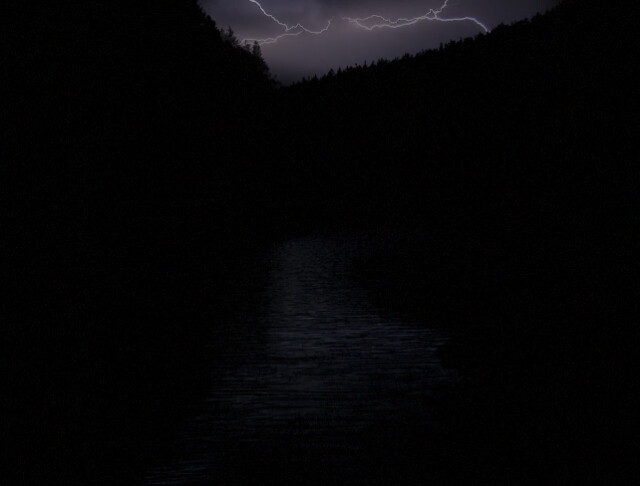
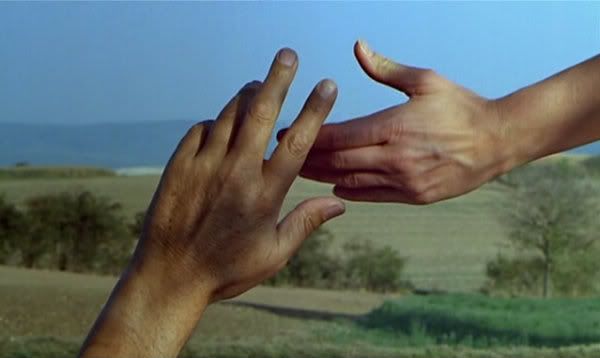
It’s related to my inner environment. I try desperately hard to speak from the soul, and for it to never be conceited. I try not to make anything if I don’t have something to say. Like I said previously, I am drawn to the darkness, I feel most comfortable in darkness, and so my films convey that, literally and metaphorically. And I believe in an interconnectedness within the universe, and so what I feel inside, I anthropomorphise and project on to the trees, the water, “the hand”, “the horse” etc. …There is an uncanny semblance of man in the spirit of the horse - the simultaneity of elegance and vulgarity… and also pathos - so I am naturally drawn to that creature in my work.

I also think that people who are self-aware can feel too much, and I am one of them, and so I purposely place myself in a vulnerable position when making films, so hopefully the process will act as a catharsis or nepenthe for what I am experiencing. It is a good way to combat negative feelings, in my experience. Whatever makes you afraid or anxious, just go for it! Hunter was a a very important film for me. I was suffering with very debilitating depression and that film perhaps saved my life. It sounds stupid, but it’s true. It gave me something to live for - just making something kept me occupied, and I poured all my feelings of utter aimlessness into something cohesive. The film itself is a mirror and meta-retrospective of my previous films and my own personal filmmaking praxis, as well as a comment on my own existential anxieties as a person and as an artist... It also mirrors life's evolution. From water, to land, to sky.

Shadows
Shadows

I remember that I had been editing Hunter for a few months - every day, all day (I am a perfectionist when it comes to editing) and I was stuck on the shot of the horse, and I knew that that shot couldn't be the ending. I was frustrated. I didn't know how to end the film. So I went to sit outside in the garden. It was nighttime. I looked up at the stars, which were very clear and bright that night, and then quite suddenly an idea came to me, that gave me a sense of purpose - however tenuous it was: We know that science has proven that we are made of stars. We are literally stardust. And we also know that if we look at the Sun, we are witnessing it in the state it was just over 8 minutes prior to how it is in reality, now - because of how far the light has to travel. And then I thought, is it possible, that we could, on a clear night, look up at the vistas of constellations and see the very star that gave birth to us?; a ghost of our former self? And it gave me a sense of purpose, that perhaps, our only aim in the vastness of time and the universe, is to one day return to the stars that gave birth to us. And it was that thought that made me decide upon the ending of Hunter that you see in the film. I try to turn my melancholy in to something beautiful, but still keep it true. I think that people don't always realise just how vicinal sadness and beauty, or horror and beauty truly are. They are very closely aligned. They can blend into each other.

Polysemy is a big thing for me too with my work, and I encourage it. I think that polysemy is too often regarded as being a weakness rather than a strength in art. Some people seem to think that when a piece of work is interpreted in divergent ways that it says something about the lack of articulation in the artist. I couldn't disagree more. Whilst all my films have very strong personal meanings for me, I embrace multifarious interpretations, and often adopt stream-of-consciousness and intuition in my praxis. To be entirely honest, I have in the past, made an entire film, released it and still not known what it was, or why I did it “that way”. But a few months later, I understand - for me. I love the feeling of being lost when I create, or when I experience art. It permits you to search deeper in to your self. Your feelings know better than your logic. People think too much. We should learn to trust ourselves more. I have a vision – but I am not a dictator, and I don’t wish to assume or force anything. I love that people are able to project their own feelings, searches and life experiences on to my work. One person in particular got into contact with me, to tell me when he watched Hunter, he saw the hand as himself, reaching out for the woman he idolised and loved, whom he felt was always out of reach; she was the beyond: the water, the mountains, the stars. Since then, we have become good friends, and he recently told me that Hunter has inspired him to make a film of his own, to communicate his feelings for/to her. I’ve have been privileged enough to have been contacted by a few people, telling me how my films have changed their life, and even inspired a few of them to pick up a camera and make a film for the first time. You cannot ask for more than that. Hearing from people you have never met, and them sharing these personal feelings with you is ineffable. It makes “whatever-it-is-that-I-am-doing” worthwhile. In a way, I make films out of hope. And hope is a tenuous but underrated thing. It’s one of the most profound and precious of all things.

In my view, the filmmaking process is mine. Once the film is finished it is no longer mine. It is yours; it is anybody’s, and it can be whatever they wish it to be, and whatever suits, pleases, disgusts, angers, or I daresay, helps them. And of course, the creation of a film or any work of art is only the very beginning. It mutates and changes, and lives on in different, brilliantly unique people, within their mind, soul, dreams… under closed eyelids. Simply, it lives… It lives on - isn’t that wonderful?! I would not have it any other way.

Polytechnique
Polytechnique

Loved the soundtrack on Polytechnique. Can you tell me your collaboration with Easychord on Polytechnique and how important is music in your artistic endeavor?

Music is a huge influence on my work too. The musician, Grouper (Liz Harris) has perhaps influenced my praxis more than anybody else. It’s that obscuration, the textures, the dark, the ethereality, the mood, and the catharsis that comes from unravelling pain and other emotions in one’s life. I could never thank her enough for what she gave me with her music. Also Radiohead, Portishead, Scott Walker, King Crimson, David Bowie, Neil Young, Ligeti, Penderecki, Death Grips - they are all very “cinematic” artists. They create worlds, characters…atmospheres. The rhythms of my films are based around music too. It is why some of my films are silent, and others are not. You have to feel the rhythm. I want to create “visual music” with my films. For me, cinema - in its purest form - is closer aligned to music and architecture in praxis than any other mediums.

For Polytechnique, I was contacted by Roberto Siguera (Easychord), asking me if I would make a film for some of his new music. It was a pleasant surprise. We had not communicated previously. For a while, we talked about what we were both interested in… I remember James Benning coming up a lot at the time, and before I had the music, I had the impression that Roberto wanted something in a similar vein to my first film, The Ethereal Melancholy of Seeing Horses in the Cold. But when I heard the music he had produced - this wonderful, low-frequency, pulsating echo chamber that resisted the corporeal and the concrete - I realised I couldn't make a film like “…Horses in the cold” for him. The music immediately made me feel like I was listening to my own body, as if I was a microscopic, lost traveller, traversing internal bodily terrain. I had recently been doing some purely recreational research into phenomenological concepts such as prisoners cinema, as well as concepts like astral planes, fundamental entity, and the primordial body (something which has become a huge part of my work as time has gone on), and I realised that the music had this quality to it of being dimensionless, but very present, abstract yet lucid too, so I worked around that when making the film. It took about four months to make, if I remember correctly. We never ever talked about it as a music video. It was always an “audio-visual collaboration”. We were both having fun, but we were serious about the project at the same time. It’s actually one of my favourite pieces of work that I have been involved in. I recently released a blu-ray of my work via my website for sale, and seeing and hearing Polytechnique on blu-ray was a revelation for me. I saw these details, light streaks, textures, and abrasions in the film that I forgot I had put in. It’s also me at perhaps my most abstract. It was an honour for both of us that Polytechnique was hand selected by Kim Kascone (assistant sound director on Twin Peaks) for his Drone music cinema film festival in The Netherlands. It has that dark, drone-like quality, I think. I would love to do another collaboration with Roberto at some point. We discuss it now and again. I’m sure it will happen. It’s just finding the right time, and music, and idea.
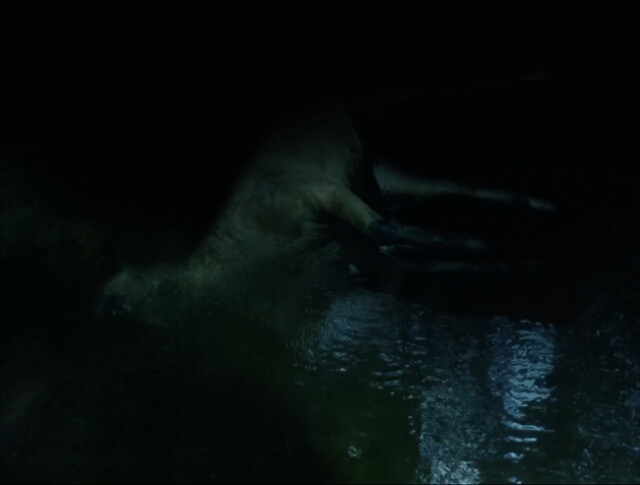
3200254a-3a7b-4526-a62a-92dfbed96449_zpsr6wtr3b4
Hunter, Shot entirely on iphone 6 Plus

Hunter is absolutely stunning. Considering it is your more recent work and having seen your (relatively) older work on your vimeo page, I can see the progress/evolution of your style if you will. I feel that there is more stately and formalist approach in Hunter. Even though I take each of your film as its own entity singular piece of work, I'd like to know, as an artist how you yourself perceive the change and your directions with each project.

First of all, thank you. There is certainly a progression there. More rigour (I hope), more attention to detail, but still very much part of the same idea, the minimalism, the nature etc. Perhaps, more than anything, I am just paring back what was there before.

I think I have somewhat distanced myself, and I think Jesse has too - perhaps not consciously - from remodernist film more recently. Remodernist film still exists, but it has changed shape and matured. The remodernist element of my early work was more superficial - more to do with the “look” of the film. I wanted it to “look” autodidactic, amateurish, and nuanced. Hunter is still very much a remodernist film, but it has transpired beyond that into something that can only be found in the cracks, in the dark - if you look for it. The films have become more professional and polished, but the human sensibility, the human searching is still very much present. The abrasion and nuance doesn’t live so much in the actual film’s images anymore, but more so in what the images project in the spectator. The films have become more liminal. They're on the threshold of something. Darkness? The unknown? There’s something mercurial beyond the threshold that I want to make palpable when people watch Hunter and my more recent films… a hidden tension, but a powerful one, perhaps. It’s become much more about the “in-betweenness” for me now. As time has gone on, I understand that “aesthetic” can become a dangerous word, because I’ve realised that great art can only exist when you cannot separate the aesthetic from the form or the substance of the piece. They co-exist, and exist as one. Without the other, the other cannot be. So nowadays, the aesthetics of my films alter from film to film, but that is because they are governed by the substance of the film itself; the idea. They are innate and inseparable; born at the hip, as it were. Some films like Shadows actually change aesthetic, canon, mood, style and form, as the film progresses - because the actuality, context and meaning of the film dictates it so. I am not really in charge - the film is. The film tells me what to do.

How does the new technology figure into your working method? Is it just another way for artists to express themselves or is it necessity in 21st century?

Artists cannot always express everything that they wish, or need to convey in just the one medium. As an example, for me, I write, I paint, I make films, I make music. There are things I can do with film that I cannot do in writing, but at the same time, there are things that I can do in writing that I can’t do in film. That excites me: having a genuine reason to explore a different medium for your expression. That is what is so wonderful about film: it is a bastard. It is a bastardised medium, and so there is more “headroom” as it were to express yourself. I embrace all kinds of tech. I see different types of tech as akin to different mediums. They can be surprisingly independent of each other, depending on how you utilise them. I’ve shot stuff on a 240p camera with a 0.3 megapixel censor, through to an ARRI Alexa. Some of those who have the money to afford expensive kit think that suddenly makes them professional. Nothing could be further from the truth. It’s nothing to do with the kit. It’s all about how you choose to use it. And sadly, those people who think it’s all about the kit usually have no creative personality. They are faceless, forgettable, and very boring. The medium and tech you choose should be governed by what you wish to express. And so, no, I don’t think new technology is a necessity - outright. It all depends on what the artist is wishing to express, and what will enable them to have that suitable form of expression. I am really enjoying trying to push the tech of the iPhone at the moment. Hunter was completely shot on an iPhone 6 Plus, and it felt really liberating, going to an iPhone after lugging a heavy ARRI Alexa around on the previous project.

A project I am working on at the moment also features some of my hand-drawn illustrations composited into actual film imagery, so that’s exciting too. I’m just experimenting, and trying to avoid complacency. I embrace digital, but love film too. It’s all great, but they are definitely two separate mediums, and I think that we are only beginning to truly see what makes them different in a formal sense, or to begin to see artists truly utilising the differences of digital to film to achieve something that was unachievable with film. Take James Benning’s Nightfall for instance, or Godard’s Adieu au Language, or Phil Solomon’s Rehearsals for Retirement. These projects are incredibly exciting - because these artists are fully embracing a medium, rather than having one foot in digital and one foot still in film. They have a courageousness and embracement for the new and unknown that most filmmakers lack.

Stills and artwork from Sleep Has Her House:
Sleep-Has-Her-House-3
sleep Screen Shot 2016-12-07 at 10.05.23 PM
592953425
Tell me about new projects you are working on.

A few different things. I’m working on what might end up being my first feature, Sleep Has Her House. It plays out very differently to my other work, in a formal sense. It's a very, very slow moving film. 10 minute takes. No camera movement. Only movement within the frame. An observation of the more profound elements of life that we don’t often pay attention to: The wind carrying the clouds across the sky… the light changing over time… animals moving through a scene… the moon being obscured by the clouds… and of course silence!… even nothing! That’s something I want to explore more: what qualities or elements does “nothing” harbour? I want to focus on that particular kind of nothing in my future work.

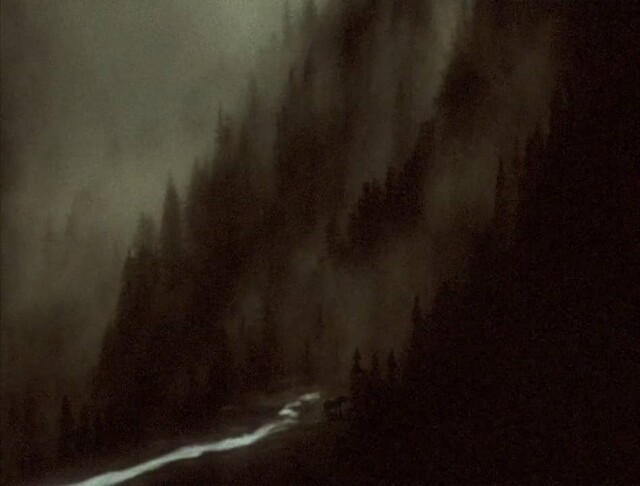
It is a film that I hope people will give themselves over too, and let it wash over them like an ocean. I embrace the idea of people falling asleep whilst watching it, and waking up later on - without that being a problem. I want it to have that very strong meditative quality. In a sense, it’s my idea of the apocalypse: how I see the world ending. It wouldn’t be violent or fast - not right at the end. People would already be long gone. The last few animals would dwell in the hills, in the fog. The film follows that idea. The animals sense that the end is coming and retreat deep into the forest. They cry out in the dark, as they fade into the black. That’s how it will end. A quiet, slow death. Not explosions or tears. Just a long quiet trill… like an elegy. Perhaps the quiet cry of the last animal, as they fade into the dark… into the ground. That’s all.
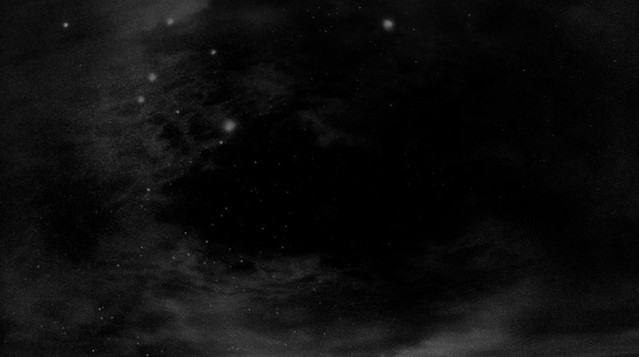
Too young to die
Too Young to Die

I have a very bad attention span, so at any time, I’m working on about half a dozen different films - most that never see the light of day. I like to switch between each project as I work through them, or when I start questioning myself too much - almost like when you stare at or repeat a word for so long that it no longer makes sense somehow. It also helps me improve each piece, as one technique that I use on one film may inspire me to do something that I had not thought of previously on another project that I had hit a creative block on. I’m sure some people will say it’s a terrible creative process, but it seems to work for me. So right now, Too Young to Die is on hold (what originally was going to be my first feature), and Sleep Has Her House is something I’m more focused on - but that might change!! I’m working on about four features right now, simultaneously.

I’ve also just finished a poem for an anthology book to celebrate the legacy of the late David Bowie. It will be published in the next couple of months, and all proceeds go to the charity, Cancer Research UK.

Closer-2016-0009
Closer, shot in 4K, in 1:1 aspect ratio

Hunter is getting a screening at The Museum of Modern Art, Mar del Plata, in Argentina on 12th February, 2016. That is a big deal for me. I started making films just a little over 3 years ago, and to have come to this point where my work is being screened in that sort of environment means more to me than I can eloquently put into words. It was around 2 years ago, that Phil Solomon and I became friends, and I am now screening a film of mine alongside his film, Rehearsals for Retirement (in my view, the most sublime digital film ever made - and one of the most embracing of the digital medium too) at The Museum of Modern Art. I can't really get my head around that, and I have so much to thank Phil for, not least his comradeship of being part of this screening along with the "little fish" like myself.


Please visit Scott Barley's website and support his artistic endeavours. Then go on over to vimeo and check out his work.

Sunday, May 12, 2013

A Heroic Misfit: Trent Harris Interview

When I heard that Trent Harris, one of America's premier cult directors, of such films as Rubin and Ed, Plan 10 from Outer Space and The Beaver Trilogy would be in New York for his traveling mini-retro, I couldn't help but feeling giddy like a little kid on his first day of school. I was an awkward kid, both growing up in Korea and later here in the US. So the outsiders, heroic misfits, if you will, in Harris's films, however over the top and ridiculous they are, always have a special place in my heart.

In person, I found Harris easygoing, guileless and incredibly open. The following interview is an excerpt from our hour-long lunch conversation: we talked about everything from his tumultuous career ("career sounds too successful," he laughed), Hollywood, Sean Penn, Mitt Romney and Mormonism, internet, guilt, art, love, to the future of filmmaking over bar food at Molly's on 3rd on a seasonably mild and sunny Saturday afternoon. In this profession, you get to meet your heroes for twenty minutes at a time if you are lucky. And I count myself very lucky to have had an hour with Harris, sharing fried calamari and even got a huge hug from him as we parted. There is nothing more I adore than never ending enthusiasm of a creative mind. Harris definitely has plenty of that.

Trent Harris Traveling show continues its journey to Austin, Denver, Seattle this summer and Chicago this fall. 


I just have to tell you that when I was in college in the 90s, Rubin and Ed was always the most popular choice for me and my friends to put on whenever we got high. So it's a real honor to meet you.

Oh well, thanks. (laughs)

How do you think the screening the other day went? This mini retro of yours is traveling from LA to New York and some other places...

Yeah I thought it really went well. Some places show two movies and some places show three. So it's gonna go, what is it, LA, New York, Austin, Denver, Seattle...

I believe Chicago is in there too.

You know this better than me. It's all Galen (Rosenthal, former film programmer of SAIFF and long time friend/supporter). That guy is amazing. He just sets everything up.

So it was Galen's idea.

It was totally Galen's idea. I would've never done it in a million years. You know,  his attitude is 'everybody thinks you are dead, so let's...' (laughs)

beaver trilogy.jpgI can't interview you without asking you about the Beaver Trilogy. For those who don't know about it, could you tell us how it came about?

I walked out into a parking lot one day, I was walking at a television station in Salt Lake, and I was testing a camera. It was the first time I picked up this brand spanking new thing called 'video camera'. I was just out there and I focused on this kid (Groovin' Gary) wandering around the parking lot. The first time you see him is the actually the first time I saw him. You know he is a funny guy, doing impersonations and stuff. Then he invites me down for a talent show and I come down.

Anyway, that movie, a little documentary, I thought it was great: it was the first time in my life that I was capturing something that was happening spontaneously in front of me.

You do a lot of documentaries though. You've been doing it for living, no?

Yeah I've done a lot. But seldom you get that kind of encounter, even in documentaries. It's usually like you interview people and they tell you about the past. Unless you were interviewing me and I was having a complete mental breakdown at that moment, then it would be a very different interview.

Right.

Anyway, he shot himself not long after I've done that original film. Then I moved to Los Angeles and I had the Beaver kid story that was bugging me that I wanted to tell, so I began to remake it. I made it with Sean Penn first and then with Crispin Glover. Each one's a little different yet all very similar. The last time I saw it ,I was thinking: you got the original kid impersonating Olivia Newton John and then you got Sean Penn impersonating the kid impersonating Olivia Newton John then you got Crispin Glover impersonating Sean Penn impersonating... you know. It's like this wild Möbius loop.

That's so meta. How did Sean Penn come into the picture? Did he audition?

I literally just called him on the phone. He was doing Fast Times at Ridgemont High at the time and he wasn't a big star yet. He wanted to work, and he thought it was an interesting idea.

Sean Penn was the choice among all the other actors you saw?

I couldn't find anybody. It was a very difficult role to cast because it comes across as pretty ludicrous if it's not done right. I read a lot of people, Eric Stoltz, Anthony Edwards, trying to find somebody that could do it. Sean Penn did it. He didn't want to audition. He told me he would be my cousin from Idaho and follow me around for couple of days in character. So he followed me around and I introduced him to people as my cousin. He did it really well. Couple years later people kept telling me, "wow, your cousin really got famous." And then Crispin came along. I was going to cast Crispin in a smaller part but when going for the third time, I thought of Crispin doing the lead instead.

rubin and ed.jpgI've been a big fan of Crispin throughout his career. You've made The Trilogy and Rubin and Ed with him. How did you find him and are you guys friends?

Well, I think I met him in the casting. After I shot him in The Beaver Trilogy, We'd become good friends for at least 10 or 11 years. Then of course he was perfect for the role of Rubin  in Rubin and Ed. I like to work with the same people over and over again, if I can, you know. There is a notion of working with family: even the crew, it's the same people who are more like family.

So you worked in Hollywood for a while. How was that experience?

It was horrible. It was the worst 13 years I've spent in my whole life. I've never been more unhappy in my entire life. Every cliché you've ever heard about Hollywood is true: the cigar chomping producers, the big breasted bimbos, the back stabbing, dishonesty- being your friend a minute and then not... all of that stuff's true. After 13 years I have one person that I cared enough about to still keeping contact with. You know in Salt Lake I have a lot of friends. But making real friends in LA is impossible.

How is Salt Lake City as a film town?

Well, there isn't a lot going on in there. I mean, Hollywood crews come in there and shoot because of the location. But as far as filmmakers in Salt Lake, no. There is one other guy but  he kind of pulled back. I mean, there are a some filmmakers who come from there and have gone on. Oddly enough, Neil LaButte-

Huh, is he from Salt Lake?

I don't know if he's from Salt Lake, but he went to BYU, the big Mormon University. Isn't that strange? His movies are so tough.

Tell me about you almost running over Mitt Romney with your car.

Your heard about that? (laughs). Yeah it was in downtown Salt Lake not too long ago. He came out of nowhere and I hit the breaks just in time. And there was Romney. My god, the expression on his face was priceless. He obviously didn't know who the hell I was, because you know, he is fucking Mitt Romney.

Does he have a house in Salt Lake?

Where doesn't he have a house? No, I think he has a house up in Deer Valley, a fancy resort town in Utah. He ain't 47 percent of us, that's for sure. It's funny when he was running for president, everyone was asking who the real Mitt Romney was. Always smiling and seeming totally disingenuous. The thing is, that's who he really is. That's how Mormons are!

How does The Mormonism fit into your career as a filmmaker? Obviously you made Plan 10 From Outer Space.

That's about it. I mean, it's not the subject I wanna repeat again. I had an idea and it was great fun to make and I liked the script. I think it might be my favorite one. People always say make Rubin and Ed part 2, make Plan 11. The thing is, I don't like to go back. I'd rather do something different every time I make new films. It's gotta really interest me to take on in the first place, because it takes a long time and energy. So I don't like to go backwards.

It seems the Beaver Trilogy wouldn't die though. It came out in 2000. Now it's coming out again. It doesn't want to let you go .

You know it's always continually playing somewhere. I mean there is no publicity behind it. It's all word of mouth. Yet there is a constant interest in that film.

How come it's not marketed widely?

There's all kind of issues- copyright issues, legal issues are not resolved because when I was shooting that I never thought anything would happen with it. It's not like we've signed bunch of papers or anything.

You didn't get the rights for the Olivia Newton John song? (laugh)

No. I mean it's so expensive. You can't even imagine. There was a DVD company which was going to do it and pick up the music rights then everything fell apart.

Was it because of Sean Penn?

Well, yeah. I couldn't quite figure that out. It's not like he doesn't like the movie. He likes the movie. I think it's because he felt like he is being exploited.

Oh come on!

No I think that's what he felt. You know that tiny piece of music, "The Happiest Girl in the USA"? Just for that section? 20 grand.

What?

Just for that. That's what they are asking.

The first time I heard of The Trilogy was when I listened to This American Life and you being interviewed there by Starlee Kine, then I saw the movie.

Oh really?

So I wasn't going in cold feet. So my experience must've been different then people who just saw the movie. The movie does have that symbiotic relationship with This American Life though. Since I've heard it before seeing it, I can not separate the two. Listening to it has really strengthened the experience at least for me. So I hear your story on how it came about first. And that story is so fascinating. I was wondering if you were making the other two movies as a sort of therapy for yourself.

Yeah. I was trying to work it out in different ways. It's not necessarily a therapy for me. But I really wanted to give the kid a happy ending. And after I did the Sean one,  it still wasn't a happy ending. I basically wanted him to win. So I made the third one and he tells everyone to piss off and drives away.

Right right.

So that was part of it for sure.

If you can tell us what really happened to the real "Gary/Larry (Richard Lavon Griffiths)" after you met him at Sundance- which is also a great story by the way?

Well, he had a massive heart attack. I'm not exactly sure the year...it might have been 2009, 2010. I can't remember now. It was a couple years back. He had a massive heart attack. During that time, he was driving  a truck, carrying pigs to a slaughterhouse. There is a big slaughter house in Beaver. Beaver is known for those big factory agro-businesses. That was his job. There is not a lot to do there.

So he stayed there in Beaver.

He was actually living in the town next to it called Minersville.

Are you friends with his family?

I know his sister and her family but only through email. They seem like a very nice people. He had some close friends. He really touched people. They contacted me for his funeral. But I couldn't go. I didn't want to be seen as this big filmmaker and them paying attention to me. I didn't want his funeral to be about me or the movie.

He was such a charming guy.

I wish I had a picture of his gravestone with me so I can show it to you. It has the engravings of his car on it.

He drove the same car? The big Chevy Impala?

Yeah. Isn't that Something?

plan 10.jpgSomewhere I read that you were the one of the first filmmakers to embrace the internet.

You know I was. I can't say definitively that I was the first but I was one of the very first. Maybe someone was doing it all along then, but I don't know if anyone else did. (laughs) When I premiered Plan 10 from Outer Space at Sundance, I can't remember what year that was...1994? we actually had an internet press conference.

Wow.

And nobody had computers back then. So there were about 3 people in the world- somebody in Australia, somebody in LA and some geek at MIT or something and we had this little internet world conference for the first time. It was through University of Utah and they had satellite set up....

The way I got into that was because the special effects people who worked on Plan 10. They were the same people who were doing effects for Star Trek the TV show. Because they were my friends, they just did it for me. They called in to show me this new thing called internet. God, it was so slow. They were trying to load Rolling Stones site and it took them ten minutes just to load. (laughs) But these guys were techies. They knew what was coming. So they created a website for Plan 10. But nobody could see them because it was just that new.

I totally understand that this is a small scale traveling show where there are only three of your films playing- The Beaver Trilogy, Rubin and Ed & Plan 10. But I really want to see your other films. They are very hard to find.

There's a couple of them on my website. Delightful Water Universe and I made another one called The Cement Ball of Earth, Heaven and Hell. And I got this another one called Luna Mesa. It's done but I haven't put it out yet. I still...I don't know, I got some really ambivalent feelings about how I feel about the movie. Parts of it are fucking cool and then other parts are like boom!

Todd Brown, the founder of Twitch, the website I write for, saw it at Raindance and really seemed to like it.

Oh really? That makes me feel better, because many people told me, "oh this is a headscratcher, really."

I'm really curious about that movie. You shot it in Cambodia, Sierra Leone, Rwanda, Thailand, Mexico, Tanzania... How did this come about?

It's a very strange movie. I mean it's a narrative but also a documentary. There is this girl (Liberty Valentine) that I care, adore, love, am just totally head over the hills, just gaga over. But there is no relationship. I am 25, no, 30 years older than she is, practically. But we get along like crazy. We are interested in the same stuff and she is very talented. So we started making this movie.

What happened was that, I'd sell a story for a documentary in Cambodia and since it's paid by the show that I'm working on, I grab Liberty and go there and shoot their documentary and I get couple of days or weeks to shoot this thing on the side. In a strange way it's about this documentary about this relationship we had but it doesn't look like a documentary as it develops. That's part of the reason that it's hard for me to know what people think because I am so close to it. I am in this because I kind of had to be, because there is no way I can take the crew to all these places. So I fell into the movie more ways than one.

So it's a really personal film.

Oh absolutely. It's actually really painful. I mean, it's an unrequited love sort of movie.

luna mesa 2.jpgMay I ask what happened after the movie, with you and Liberty?

Oh we are still good friends. I don't see her much anymore. Because I just backed away from her. It was sort of hopeless. It's not that I dislike her. I still think she is great and she thinks I'm great. But I just had to get some distance from it. But she is incredibly supportive. She is an incredibly talented world class modern dancer. She worked with Nikolais, Ririe Woodbury and other companies. She injured herself at some point, as dancers often do. But I wanted to use her dancing skills in the movie and it's all there. I'll get you a copy. Just remind me.

I'd love to get one. So what are you working on now?

I'm doing a movie called Welcome to the Rubber Room. Galen is producing it.

Is it about High School teachers?

It's the second time someone asked me that. Starlee mentioned it. No. It's a kind of a strange beatnik nightclub that's full of eccentrics, and it's the last night that this place is open. It's going to be shut down and turned into a yuppified art gallery. So it's about that and their kind of wild efforts to save it.

Sounds great!


Traveling Trent Harris mini-retro continues:

Denver Film Society
Denver, CO June 7-8

Alamo Drafthouse
Austin, TX June 10-11

Grand Illusion Theater
Seattle, WA July 26-Aug 1st

Block Museum of Art
Chicago, IL This Fall

Please visit Harris's website for more information on his films.
Listen to This American Life Episode on The Beaver Trilogy by Starlee Kine here.
My review of The Beaver Trilogy.


Monday, January 14, 2013

Top 20 Discoveries 2012

These are the choice cuts from the films I've seen in 2012 in no particular order

*click on the titles for full reviews

City of Pirates (1983) - Ruiz
city of pirates2
My first introduction to Raul Ruiz. Surrealistic and scatterbrained. Can't quite get my grip on him. Or you are not supposed to. I gave in to strange stories and visuals with my second Ruiz film 'Three Cowns and a Sailor'. But at the end it's City of Pirates which stuck with me more. More Ruiz please!

Poetry (2010) - Lee
Photobucket
Poetry is nothing like what I expected. High melodrama for sure, but it's understated and not afraid of reflecting life's nitty-gritty, ugly, awkward details. Much thanks to Yun Jeong-hie's performance as a sixty five year old woman trying to write poetry for the first time while struggling with whatever life throws at her, everything feels real and honest.

In Vanda's Room (2000) - Costa
Image
and
Colossal Youth (2006) - Costa
Image
As far as immersive film experiences blurring fiction and documentary are concerned, there is no other filmmaker than Pedro Costa I can think of. Costa's films remind me that there are still so much beauty left in the world, even in the worst circumstances.

Tren de Sombras (1997) - Guerin
tren de sombras 3
It's Guerin's masterful use of 'cinema as an investigative tool' that I admire so much. Playful and just plain gorgeous, much more so here than his better known In the City of Silvia.

Sing a Song of Sex (1967) - Oshima
Image
It must've been something to be part of Japanese New Wave in the 60s. Must've been a wild and crazy time to live in! Audacious, pointy and uncompromising, Sing a Song of Sex stands out even among the best JNW films.

Au Hasard Balthazar (1966) - Bresson
Image
Doesn't matter if it's a parable about Jesus. It's just a hauntingly beautiful film. Wiazemsky's sorrowful face is unforgettable.

Nouvelle Vague (1990) - Godard
Image
Perhaps the most beautiful of all Godard films and also most romantic.

Running in Madness, Dying in Love (1969) - Wakamatsu
Image
Another masterpiece of Japanese New Wave. Perversely tragic or tragically perverse- take your pick.


Remorques (1941) - GremillonImage
Gremillon's film is vastly different from its Hollywood counterpart in its day. I was surprised by its subtle writing and artistry. And Jean Gabin is the man.

Nostalghia (1983) - Tarkovsky
Image
As he demonstrates time and time again, Tarkovsky's faith in humanity is demonstrated in a spectacular manner.

L'important c'est d'aimer (1975) - Zulawski
Image
Romy Schneider gives it all in another one of Zulawski's emotional fireworks display.

Gespenster (2005) - Petzold
Image
Perhaps the most haunting film by Petzold I've seen so far.

Our Beloved Month of August (2008) - Gomes
Image
Whether it came about by accident or chance, I couldn't help falling for Miguel Gomes's loose, playful filmmaking.

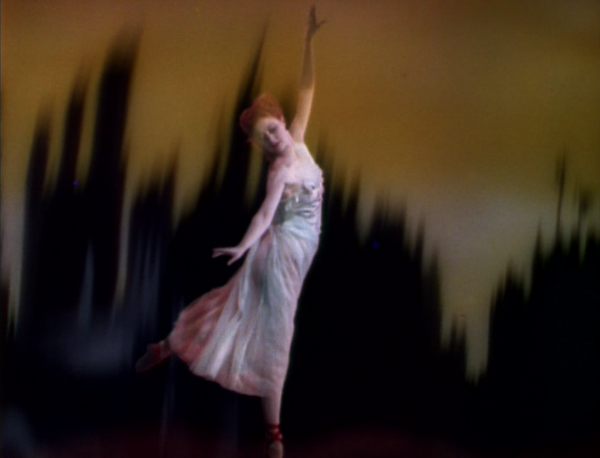
The Red Shoes (1948) - Powell & Pressburger
Image

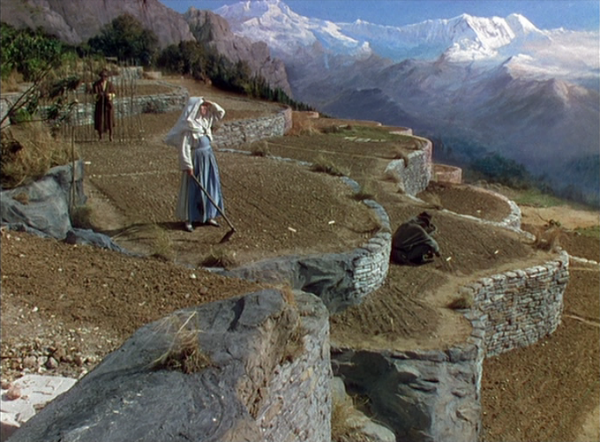
Black Narcissus (1947) - Powell & Pressburger
Image
Underneath the whole technical mastery, there is something very perverse about Powell & Pressburger films that rivals Hitchcock. But their films are much more refined, artistic and beautiful to look at.

Jai été au Bal (1989) - Blank
Photobucket
and
Dry Wood (1973) - Blank
Photobucket
I was delighted to have found Les Blank's music and booze filled Americana.

Le Pont des Arts (2004) - Green
Image
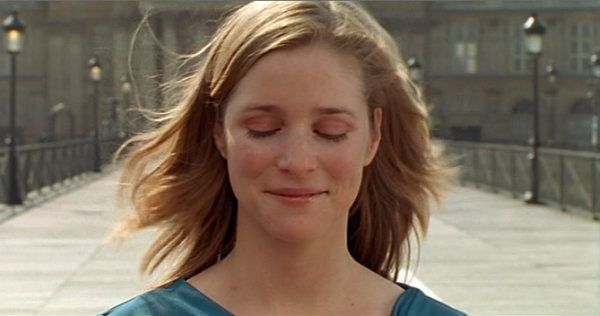
Austere, sincere, bitter, funny, touching... and many more adjectives can be applied to Eugene Green's contemplation of power of art. Natasha Régnier shines as a classical singer.

Les Chanson d'Amour (2007) - Honoré
Image
This is the film that made me reconsider watching musicals. Christophe Honoré appropriates the old into something that reflects modern world. And the result is this beautiful, touching ensemble piece.

Dustin's Top 10 Films released in 2012

Saturday, November 24, 2012

Tokyo 1955 - 1970: New Avant Garde at MoMA

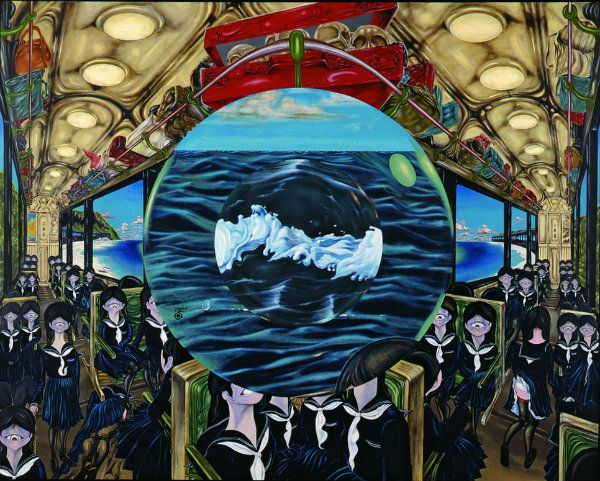
Two of the most striking things I've seen in Tokyo 1955 - 1970: New Avant Garde exhibit at MoMA:

Circular Train A by Hiroshi Nakamura
circular train a

For the Damaged Right Eye (1968) -Toshio Matsumoto


Check out MoMA Website


Wednesday, November 21, 2012

MoMA Presents: Art Theater Guild and Japanese Underground Cinema, 1960 - 1986


Oh man, this is huge!! As a big fan of Japanese New Wave, I am very excited about this upcoming program at the Museum of Modern Art. There are 70+ rarely seen films present with many guest speakers. If you consider yourself a fan of cinema, you don't have any excuse to miss this once in a blue moon event. I'll see you up there!!

MoMA Press Release: Art Theater Guild and Japanese Underground Cinema, 1960 - 1986

Guest Presenters Include Filmmakers Nobuhiko Obayashi and Susumu Hani, and Author Ian Buruma. Retrospective Also Features Works By Other Celebrated Filmmakers Including Masao Adachi, Takahiko Iimura, Shohei Imamura, Toshio Matsumoto, Nagisa Oshima, Donald Richie, Kaneto Shindo, Hiroshi Teshigahara, Koji Wakamatsu, and others.

Art Theater Guild and Japanese Underground Cinema, 1960-1986
December 6, 2012–February 10, 2013
The Roy and Niuta Titus Theaters

NEW YORK, November 15, 2012—The Museum of Modern Art and The Japan Foundation present Art Theater Guild and Japanese Underground Cinema, 1960-1986, the most comprehensive U.S. retrospective ever devoted to the Art Theater Guild, the independent film company that radically transformed Japanese cinema by producing and distributing experimental, transgressive, and genre-shattering films from the early 1960s until the mid-1980s, running from December 6, 2012-February 10, 2013, in The Roy and Niuta Titus Theaters. This exhibition is curated by Go Hirasawa, Meiji-Gakuin University; Roland Domenig, University of Vienna; and Joshua Siegel, Associate Curator, Department of Film, The Museum of Modern Art; with curatorial assistance provided by Julian Ross, University of Leeds.

Free from the strictures and conventions of the mainstream Japanese studio system, the cinema of the Art Theater Guild was characterized by its provocative depictions of sex, violence, politics, and social upheaval. The ATG also provided a fresh testing ground for collaboration among filmmakers, composers, dancers, novelists, artists, performance artists, and avant-garde theater companies. This exhibition of approximately 70 titles features such seminal Japanese directors as Shohei Imamura, Toship Matsumuro, Nagisa Oshima, Kaneto Shindo, Hiroshi Teshigahara, and Koji Wakamatsu, and runs concurrently with the gallery exhibition Tokyo 1955-1970: A New Avant-Garde. Also presented are several non-ATG programs of Japanese underground cinema of the period, including experimental films and videos by Donald Richie, Masao Adachi, Takahiko Iimura, and others. Two of the leading filmmakers of the Art Theater Guild, Nobuhiko Obayashi and Susumu Hani, will make rare New York appearances to introduce their work, as will the artist Takahiko Iimura and the author Ian Buruma.

Screening Schedule
Art Theater Guild and Japanese Underground Cinema, 1960–1986
December 6, 2012–February 10, 2013
The Roy and Niuta Titus Theaters

Thursday, December 6
6:30 Tenkosei (Transfer Student/Exchange Students/I Am You, You Are
Me). 1982. Japan. Directed by Nobuhiko Obayashi. Screenplay by Wataru
Kenmotsu, Hisashi Yamanaka. With Toshinori Omi, Satomi Kobayashi, Makoto
Sato. Obayashi, the director of the 1977 cult classic House, makes a rare
appearance for the opening weekend of MoMA’s Art Theater Guild exhibition. His
1982 film Tenkosei is a kind of Japanese Freaky Friday: an astute exploration of
gender politics disguised as a tender coming-of-age comedy. A paranormal
incident causes an adolescent boy and girl to swap minds and bodies, leading
them to discover the blessings and foibles of becoming the opposite sex. In
Japanese; English subtitles. 112 min. Introduced by Obayashi.

Friday, December 7
6:30 Haishi (The Deserted City). 1984. Japan. Directed by Nobuhiko Obayashi.
Screenplay by Chiho Katsura, Makoto Naito, based on a novel by Takehiko
Fukunaga. With Satomi Kobayashi, Kisuke Yamashita, Toshie Negishi. Obayashi’s
second ATG production is a romantic, melancholy melodrama born of the elegiac
atmosphere of Yanagawa, a city famous for its canals. After reading a newspaper
article about a tragic fire that took place in Yanagawa, a man recalls the summer
he spent there as a student and the family who gave him room and board. Secrets
of a love triangle simmering between the daughter, her sister, and her sister’s
husband return to memory. In Japanese; English subtitles. Print lent by The Japan
Foundation; courtesy Toho Distribution. 105 min. Introduced by Obayashi.

Saturday, December 8
2:00 Japanese Underground Cinema Program 1: Nobuhiko Obayashi and Yoichi
Takabayashi
Nakasendo (Nakasen Road). 1961. Japan. Directed by Nobuhiko Obayashi.
Digital projection. Courtesy the filmmaker. 17 min.
Emotion. 1966. Japan. Directed by Nobuhiko Obayashi. Screenplay by Obayashi,
Kyoko Hanyu. With Sari Akasaka, Kyōko Hanyū. Digital projection. Courtesy the
filmmaker. 39 min.
Hinanokage (The Shadow of Doll). 1963. Japan. Directed by Yoichi
Takabayashi. 20 min.
This program reunites two luminaries of Japanese underground cinema, Obayashi
and Takabayashi, who with Takahiko Iimura set up the collective “Group of Three”
and screened films together. Their innovative experimental 8mm movies were
harbingers of their subsequent feature work. Iimura is the subject of his own
program on January 12 and 13. Program 76 min. Introduced by Obayashi.
4:45 Otoshiana (The Pitfall). 1962. Japan. Directed by Hiroshi Teshigahara.
Screenplay by Kobo Abe. With Hisashi Igawa, Kazuo Miyahara, Sen Yano.
Together with The Woman in the Dunes and The Face of Another, The Pitfall marks
an astonishing and masterful collaboration among filmmaker Teshigahara, novelist
and playwright Kobo Abe, and composer Toru Takemitsu. Teshigahara described
The Pitfall as a “documentary-fantasy”: an existential murder mystery involving
3ghosts and doppelgangers that he infused with social realist depictions of
hardscrabble coal mining life. Courtesy Janus Films. In Japanese; English subtitles.
95 min.
7:30 Tobenai Chinmoku (Silence Has No Wings). 1966. Japan. Directed by Kazuo
Kuroki. Screenplay by Yasuo Matsukawa, Hisaya Iwasa, Kuroki. With Mariko Kaga,
Minoru Hiranaka, Rokko Toura. A strange and wondrously imaginative film:
Kuroki’s meditation on the history and politics of postwar Japan is told through the
fanciful and difficult journey of a caterpillar from the south of Japan to the north,
and through its metamorphosis into a butterfly and a beautiful, elusive young
woman. Silence Has No Wings has a breathtaking formal audacity, with soaring
cinematography by the great Tatsuo Suzuki and an ethereal soundscape that
interweaves voices both real and imagined. Print lent by The Japan Foundation;
courtesy Toho Distribution. In Japanese; English subtitles. 100 min.

Sunday, December 9
2:30 Japanese Underground Cinema Program 2: Nihon University Cinema
Club and Motoharu Jonouchi
PuPu. 1960. Japan. Directed by Nihon University Cinema Club.
22 min.
Tatsumi Hijikata. 1967. Japan. Directed by Motoharu Jonouchi. 1 min.
Gewaltopia Yokokuhen (Gewaltopia trailer). 1969. Japan. Directed by
Motoharu Jonouchi. 13 min.
Shinjuku Station. 1974. Japan. Directed by Motoharu Jonouchi. In Japanese;
English subtitles. 14 min.
Wan (Bowl). 1961. Japan. Directed by Nihon University New Cinema Club. 25
min.
Nihon University New Cinema Club holds a unique and significant role in the
history of Japanese experimental film, not only for its association with student
politics but also for its explicit stance against authorship. The Club, whose
members included Motoharu Jonouchi and Masao Adachi, would present films in
unconventional settings, and indeed, Jonouchi would often reedit his films and
insist on projecting them in different ways for each screening. Jonouchi works
courtesy Mineko Jonouchi; Nihon University Cinema Club works courtesy The FilmMakers’ Coop, New York. Program 76 min.
5:00 Seishun no Satsujinsha (The Youth Killer). 1976. Japan. Directed by Kazuhiko
Hasegawa. Screenplay by Tsutomu Tamura. With Yutaka Mizutani, Ryohei Uchida,
Etsuko Ichihara. Based on a true crime adapted into a short novel by Kenji
Nakagami, this debut film by Hasegawa is an operatic tragedy about the psychic
breakdown of a young man and the disintegration of his family. Hasegawa’s
mesmerizingly intense depictions of violence chart the criminal act and its
consequences. Print lent by The Japan Foundation; courtesy Toho Distribution. In
Japanese; English subtitles. 116 min.

Monday, December 10
4:00 Shura (Pandemonium). 1971. Japan. Written and directed by Toshio
Matsumoto. With Katsuo Nakamura, Yasuko Sanjo, Masao Imafuku. “The most
important and beautiful film made in Japan since Kurosawa’s prime” (Noël Burch).
Matsumoto’s second ATG feature is a pitch-black adaptation of a play by Nanboku
Tsuruya. Relentlessly pessimistic, this tale of bitter betrayal and brutal revenge is
intensified by Matsumoto’s characteristic blurring of fantasy and reality and his
4aestheticization of violence. Print lent by The Japan Foundation; courtesy the
filmmaker. In Japanese; English subtitles. 135 min.

Wednesday, December 12
4:30 Japanese Underground Cinema Program 3
Ryakusho Renzoku Shasatsuma (AKA Serial Killer). 1969. Japan. Directed by
Masao Adachi, Susumu Iwabuchi, Masayuki Nonomura, Yutaka Yamazaki, Mamoru
Sasaki, Masao Matsuda. A companion to Nagisa Oshima’s The Man Who Left His
Will on Film (also screening on December 12), AKA Serial Killer documented the
social upheaval and political oppression that roiled Japan in the 1960s. Director
Adachi, screenwriter Sasaki, and film critic Matsuda put fukeiron (landscape
theory) into practice in their profile of nineteen-year-old serial killer Norio
Nagayama. An indictment of media sensationalism, the film humanizes the young
man by situating his crimes in the larger context of his surroundings. Courtesy
Adachi Masao Screening Committee. In Japanese; English subtitles. 86 min.
7:00 Tokyo Senso Sengo Hiwa (The Man Who Left His Will on Film). 1970.
Japan. Directed by Nagisa Oshima. Screenplay by Masato Hara, Mamoru Sasaki.
With Kazuo Goto, Emiko Iwasaki, Sugio Fukuoka. Following activist
demonstrations, a student filmmaker discovers a last will and testament recorded
on film by a man who may or may not have existed. Much like Antonioni’s BlowUp (1966), the footage seems to be innocuous and visually uneventful, yet its very
banality suggests a tantalizing mystery that invites imaginative speculation. The
student concludes that the only way to understand the ghostly man’s last will is to
re-shoot the landscape locations himself. The tension between subjective
experience and historical fact lies at the heart of fukeiron, a landscape theory that
gained currency in Japan in the 1960s. Print lent by Harvard Film Archive;
courtesy Janus Films. In Japanese; English subtitles. 94 min.

Thursday, December 13
4:30 Japanese Underground Cinema Program 1: Nobuhiko Obayashi and Yoichi
Takabayashi
Nakasendo (Nakasen Road). 1961. Japan. Directed by Nobuhiko Obayashi.
Digital projection. Courtesy the filmmaker. 17 min.
Hinanokage (The Shadow of Doll). 1963. Japan. Directed by Yoichi
Takabayashi. 20 min.
Emotion. 1966. Japan. Directed by Nobuhiko Obayashi. Screenplay by Obayashi,
Kyoko Hanyu. With Sari Akasaka, Kyōko Hanyū. Digital projection. Courtesy the
filmmaker. 39 min.
Program 76 min. (See Saturday, December 8, 2:00)
6:45 Japanese Underground Cinema Program 2: Nihon University Cinema
Club and Motoharu Jonouchi
PuPu. 1960. Japan. Directed by Nihon University Cinema Club.
22 min.
Tatsumi Hijikata. 1967. Japan. Directed by Motoharu Jonouchi. 1 min.
Gewaltopia Yokokuhen (Gewaltopia trailer). 1969. Japan. Directed by
Motoharu Jonouchi. 13 min.
Shinjuku Station. 1974. Japan. Directed by Motoharu Jonouchi. In Japanese;
English subtitles. 14 min.
Wan (Bowl). 1961. Japan. Directed by Nihon University New Cinema Club. 25
min.
5Jonouchi works courtesy Mineko Jonouchi; Nihon University Cinema Club works
courtesy The Film-Makers’ Coop, New York. Program 76 min. (See Sunday,
December 9, 2:30)

Friday, December 14
4:15 Tobenai Chinmoku (Silence Has No Wings). 1966. Japan. Directed by Kazuo
Kuroki. Screenplay by Yasuo Matsukawa, Hisaya Iwasa, Kuroki. With Mariko Kaga,
Minoru Hiranaka, Rokko Toura. Print lent by The Japan Foundation; courtesy Toho
Distribution. In Japanese; English subtitles. 100 min. (See Saturday, December 8,
7:30)
7:00 Koshikei (Death by Hanging). 1968. Japan. Directed by Nagisa Oshima.
Screenplay by Tsutomu Tamura, Mamoru Sasaki, Michinori Fukao, Oshima. With
Yun Yun-Do, Fumio Watanabe, Masao Adachi. “The late 1960s marked a
remarkably productive and creatively intense period for Oshima as he began to
define a truly revolutionary approach to narrative. Death by Hanging marks a high
point of these fertile years as one of Oshima’s most potent, stylistically daring,
and intensely debated works. His first film to draw the attention of international
critics, Death by Hanging was inspired by the highly publicized death sentenced
received by a Korean youth for the strangling of two young female schoolmates.
The film opens with a gripping documentary-style reenactment of the execution
that is suddenly derailed by an uncanny and inexplicable mishap, plunging the film
into a dizzying mode of political theater where the authority of the executioners
and truth claims of cinema are brilliantly put on trial. An uncompromising ode to
Brechtian aesthetics, Death by Hanging is an awe-inspiring and urgent work of
political cinema” (Haden Guest, Harvard Film Archive.” In Japanese; English
subtitles. Print lent by Harvard Film Archive; courtesy Janus Films. 119 min.

Saturday, December 15
2:00 Tenkosei (Transfer Student/Exchange Students/I Am You, You Are
Me). 1982. Japan. Directed by Nobuhiko Obayashi. Screenplay by Wataru
Kenmotsu, Hisashi Yamanaka. In Japanese; English subtitles. 112 min. (See
Thursday, December 6, 6:30)
5:00 Haishi (The Deserted City). 1984. Japan. Directed by Nobuhiko Obayashi.
Screenplay by Chiho Katsura, Makoto Naito, based on a novel by Takehiko
Fukunaga. In Japanese; English subtitles. Print lent by The Japan Foundation;
courtesy Toho Distribution. 105 min. (See Friday, December 7, 6:30)
7:30 Seishun no Satsujinsha (The Youth Killer). 1976. Japan. Directed by Kazuhiko
Hasegawa. Screenplay by Tsutomu Tamura. With Yutaka Mizutani, Ryohei Uchida,
Etsuko Ichihara. Print lent by The Japan Foundation; courtesy Toho Distribution.
In Japanese; English subtitles. 116 min. (See Sunday, December 9, 5:00)

Sunday, December 16
2:00 Ryoma Ansatsu (The Assassination of Ryoma). 1974. Japan. Directed by
Kazuo Kuroki. Screenplay by Kunio Shimizu, Yasushi Tanabe. With Yoshio Harada,
Renji Ishibashi, Rie Nakagawa. Using the perceived failure of student
demonstrations against the Japan-U.S. Security Treaty as a contemporary
backdrop, Kuroki recounts the legend of nineteenth-century revolutionary Ryoma
Sakamoto, the low-ranking samurai who engineered a bloodless revolution against
6Shogunate feudalism and paved the way toward Japan’s rapid modernization.
Kuroki’s dramatic retelling of a timeworn popular legend focuses on the three days
leading up to Ryoma’s assassination, and is given a strikingly modernist look by
cinematographer Masaki Tamura. Print lent by The Japan Foundation; courtesy
Toho Distribution. In Japanese; English subtitles. 118 min.
5:00 Shura (Pandemonium). 1971. Japan. Written and directed by Toshio
Matsumoto. Print lent by The Japan Foundation; courtesy the filmmaker. In
Japanese; English subtitles. 135 min. (See Monday, December 10, 4:00)

Monday, December 17
4:00 Otoshiana (The Pitfall). 1962. Japan. Directed by Hiroshi Teshigahara.
Screenplay by Kobo Abe. With Hisashi Igawa, Kazuo Miyahara, Sen Yano. Courtesy
Janus Films. In Japanese; English subtitles. 95 min. (See Saturday, December 8,
4:45)

Wednesday, December 19
4:00 Ryoma Ansatsu (The Assassination of Ryoma). 1974. Japan. Directed by
Kazuo Kuroki. Screenplay by Kunio Shimizu, Yasushi Tanabe. With Yoshio Harada,
Renji Ishibashi, Rie Nakagawa. Print lent by The Japan Foundation; courtesy Toho
Distribution. In Japanese; English subtitles. 118 min. (See Sunday, December 16,
2:00)

Friday, January 4
4:00 Japanese Underground Cinema Program 4: Expanded Cinema
Tsuburekakatta Migime no Tame ni (For My Crushed Right Eye). 1968.
Japan. Directed by Toshio Matsumoto. Courtesy the filmmaker. Digital projection.
13 min.
Jidai Seishin no Genshogaku (Phenomenology of Zeitgeist). 1967. Japan.
Directed by Rikuro Miyai. Courtesy the filmmaker. Multiple projection. 37 min.
America America America. 1965. Japan. Directed by Kenji Kanesaka. Print lent
by Tokyo Metropolitan Museum of Photography; courtesy Kumiko Shimamoto.
Digital projection. 13 min.
Great Society. 1967. USA. Directed by Masanori Oe, Marvin Fishman. Print lent
by Tokyo Metropolitan Museum of Photography; courtesy the filmmaker. Digital
projection. 17 min.
Expanded cinema became a true phenomenon in late 1960s Japan. Artists began
exploring multiple projection, film as performance, and various Structuralist
investigations. This program features some of the best practitioners of the period,
including Matsumoto and Miyai, as well as early critiques of television and pop
culture by Kanesaka and Oe that offer a fascinating glimpse of Japanese expat
culture in downtown New York. Program 73 min.
6:45 Tenshi no Kokotsu (Ecstasy of the Angels). 1972. Japan. Directed by Koji
Wakamatsu. Screenplay by De Deguchi (Masao Adachi). With Ken Yoshizawa, Rie
Yokoyama, Yuki Aresa. Extreme leftist politics and candid sex collide in Art Theater
Guild’s most controversial feature, as the bad boys of “Pink Cinema,” Koji
Wakamatsu and Masao Adachi, depict Tokyo as a bombed-out city on the verge of
revolution, anticipating real-life bombings of police stations and internecine
warfare among various splinter activist groups. Courtesy Blaq Out. In Japanese;
English subtitles. 88 min.

7Saturday, January 5
2:30 Japanese Underground Cinema Program 5
Mujin Retto (The Deserted Archipelago). 1969. Japan. Directed by Katsu
Kanai. Screenplay by Kanai, Yuji Yamazaki, Yuki Miyata. With Kazumi Kushida,
Yoshihiro Kato, Shinichi Iwata, Jushin Sato. Kanai’s debut is a landmark in
experimental narrative cinema. Upon reaching adolescence, a young man escapes
the monastery where he suffered a tortured childhood. During his flight, he
encounters strange deities, including overgrown babies played by the performance
artists Zero-Jigen and his own doppelganger, spawned in an utterly creepy
manner. Courtesy the filmmaker. Digital projection. In Japanese; English subtitles.
56 min.
4:30 Ikiteiru Koheiji (The Living Koheiji). 1982. Japan. Directed by Nobuo
Nakagawa. Screenplay by Nakagawa, based on a play by Senzaburo Suzuki. With
Fumihiko Fujima, Junko Miyashita, Shoji Ishibashi. After a thirteen-year hiatus,
Nakagawa, a master of the immensely popular Japanese ghost genre, returned to
the studio one last time to make his most intense, and perhaps most beautiful,
film. Nakagawa stages his love triangle among a traveling Kabuki player, his wife,
and her lover—a drama about crimes of passion—as a theatrically stylized yet
intimate play between illusion and reality. Print lent by The Japan Foundation;
courtesy Toho Distribution. In Japanese; English subtitles. 78 min.
6:45 Shinju Ten no Amijima (Double Suicide). 1969. Japan. Directed by Masahiro
Shinoda. Screenplay by Taeko Tomioka, Toru Takemitsu, Shinoda, based on a play
by Monzaemon Chikamatsu. With Kichiemon Nakamura, Shima Iwashita, Hosei
Komatsu. In his radical updating of Chikamatsu’s classic bunraku play, Shinoda
explores the familiar tension between familial duty and individual longing through
a pair of desperately passionate young lovers sealed in a doomed fate. Shinoda’s
brilliant theatrical conceits include sets that collapse to reveal their artifice, and
the manipulations of hooded puppeteers who intervene in their characters’
destinies. Courtesy Janus Films. In Japanese; English subtitles. 104 min.

Sunday, January 6
2:30 Japanese Underground Cinema Program 4: Expanded Cinema
Tsuburekakatta Migime no Tame ni (For My Crushed Right Eye). 1968.
Japan. Directed by Toshio Matsumoto. Courtesy the filmmaker. Digital projection.
13 min.
Jidai Seishin no Genshogaku (Phenomenology of Zeitgeist). 1967. Japan.
Directed by Rikuro Miyai. Courtesy the filmmaker. Multiple projection. 37 min.
America America America. 1965. Japan. Directed by Kenji Kanesaka. Print lent
by Tokyo Metropolitan Museum of Photography; courtesy Kumiko Shimamoto.
Digital projection. 13 min.
Great Society. 1967. USA. Directed by Masanori Oe, Marvin Fishman. Print lent
by Tokyo Metropolitan Museum of Photography; courtesy the filmmaker. Digital
projection. 17 min.
Program 73 min. (See Friday, January 4, 4:00)
5:00 Shinjuku Dorobo Nikki (Diary of a Shinjuku Thief). 1969. Japan. Directed by
Nagisa Oshima. Screenplay by Masao Adachi, Mamoru Sasaki, Tsutomu Tamura,
Oshima. With Tadanori Yokoo, Rie Yokoyama, Kei Sato. Restlessly chaotic
storytelling prevails in Oshima’s brilliant homage to Tokyo’s city center of
Shinjuku—ground zero for cultural experimentation and social protest. Famed
graphic designer Tadanori Yokoo plays a young shoplifter who embarks on a
flirtatious roundelay of gender bending with the beautiful Umeko. Juro Kara’s
8Situation Theatre is one of several counterculture hotspots making a location
cameo. Courtesy Janus Films. In Japanese; English subtitles. 94 min. Introduced
by author Ian Buruma.

Monday, January 7
6:00 Japanese Underground Cinema Program 3
Ryakusho Renzoku Shasatsuma (AKA Serial Killer). 1969. Japan. Directed by
Masao Adachi, Susumu Iwabuchi, Masayuki Nonomura, Yutaka Yamazaki, Mamoru
Sasaki, Masao Matsuda. Courtesy Adachi Masao Screening Committee. In
Japanese; English subtitles. 86 min. (See Wednesday, December 12, 4:30)

Wednesday, January 9
4:45 Japanese Underground Cinema Program 6: Radical Experiments in
Japanese Animation
Ai (Love). 1963. Japan. Directed by Yoji Kuri. 12 min.
March. 1963. Japan. Directed by Hiroshi Manabe. Courtesy The Museum of
Modern Art, Ehime. Digital projection. 3 min.
Ikedaya Sodo (Battle at Ikedaya). 1961. Japan. Directed by Ryohei
Yanagihara. Courtesy the filmmaker. Digital projection. 8 min.
Kiss Kiss Kiss. 1964. Japan. Directed by Tadanori Yokoo. Courtesy the
filmmaker. 3 min.
Kamen no Marionetto-tachi (The Marionettes of Mask). 1965. Japan.
Directed by Keiichi Tanaami. Courtesy the filmmaker. 7 min.
Goho/Don (Time Gun). 1966. Japan. Directed by Akira Uno. Courtesy the
filmmaker. 11 min.
Kage (Shadow). 1967. Japan. Directed by Seiichi Hayashi. Courtesy the
filmmaker. Digital projection. 5 min.
WOLS. 1965. Japan. Directed by Motoharu Jonouchi. Courtesy Mineko Jonouchi.
18 min.
Before Japanese animation became big business, many legendary illustrators,
graphic designers, and manga artists (including the “Animation: Group of Three”
of Kuri, Manabe, and Yanagihara) experimented with the genre. Screened at
prestigious venues like the Sogetsu Art Centre, this program of independently
made animated shorts features some of their most stunning achievements.
Program 67 min.
6:45 Japanese Underground Cinema Program 5
Mujin Retto (The Deserted Archipelago). 1969. Japan. Directed by Katsu
Kanai. Screenplay by Kanai, Yuji Yamazaki, Yuki Miyata. With Kazumi Kushida,
Yoshihiro Kato, Shinichi Iwata, Jushin Sato. Courtesy the filmmaker. Digital
projection. In Japanese; English subtitles. 56 min. (See Saturday, January 5,
2:30)

Thursday, January 10
4:30 Nihon University New Cinema Club and Yukio Mishima
Sain (Closed Vagina). 1963. Japan. Directed by Nihon University New Cinema
Club. While depicting a love story between a man and a woman, this film uses
image of a closed vagina as a metaphor—by now considered sexist—for the failed
protest movement during the signing of the U.S.-Japan Security Treaty. This fifth
production of the Nihon University Cinema Club—the first late-night screening at
the Art Theatre Shinjuku Bunka—had a sensational reputation that extended to
9the larger world of experimental cinema, and had a major influence on the
development of the Art Theater Guild. Courtesy Nihon University Cinema Club. In
Japanese; English subtitles. 56 min.
Yukoku (Patriotism/The Rite of Love and Death). 1966. Japan. Written,
directed by, and starring Yukio Mishima. After receiving orders to take command
of a unit that will exterminate his rebel friends following their failed coup in the
“2.26 Incident” of 1936, a lieutenant and his wife commit double suicide.
Mishima’s chillingly nationalist adaptation of his own 1961 novel attracted
tremendous critical response and public favor, paving the way for Art Theater
Guild productions to follow. Courtesy Sakai Agency. In Japanese; English subtitles.
28 min.
6:45 Ikiteiru Koheiji (The Living Koheiji). 1982. Japan. Directed by Nobuo
Nakagawa. Screenplay by Nakagawa, based on a play by Senzaburo Suzuki. With
Fumihiko Fujima, Junko Miyashita, Shoji Ishibashi. Print lent by The Japan
Foundation; courtesy Toho Distribution. In Japanese; English subtitles. 78 min.
(See Saturday, January 5, 4:30)

Friday, January 11
4:30 Nihon University New Cinema Club and Yukio Mishima
Sain (Closed Vagina). 1963. Japan. Directed by Nihon University New Cinema
Club. Courtesy Nihon University Cinema Club. In Japanese; English subtitles. 56
min.
Yukoku (Patriotism/The Rite of Love and Death). 1966. Japan. Written,
directed by, and starring Yukio Mishima. Courtesy Sakai Agency. In Japanese;
English subtitles. 28 min. (See Thursday, January 10, 4:30)
7:00 Japanese Underground Cinema Program 7
Kurejii Rabu (Crazy Love). 1968. Japan. Written and directed by Michio Okabe.
With Okabe, Zero-Jigen, Kenji Kanesaka, Yasunao Tone. Capturing the exuberance
of 1960s Japanese counterculture, Crazy Love is an indelible record of
performance art, street happenings, futen hippie life, and wildly popular dance
halls. Performance artists Zero-Jigen, musician Tone and filmmaker/photographer
Kanesaka are among the many familiar faces of the Shinjuku underground who
appear in the film, which also features an infectious soundtrack of contemporary
pop songs. Print lent by Fukuoka City Public Library; courtesy the filmmaker. In
Japanese; English subtitles. 93 min.

Saturday, January 12
2:30 Japanese Underground Cinema Program 8: Takahiko Iimura and Eikoh
Hosoe
Heso to Genbaku (Navel and A-Bomb). 1960. Japan. Directed by Eikoh Hosoe.
Courtesy the filmmaker. 10 min.
Anma (The Masseurs). 1963. Japan. Directed by Takahiko Iimura. 13 min.
Barairo Dansu (Rose Color Dance). 1965. Japan. Directed by Iimura. 13 min.
Kuzu (Junk). 1962. Japan. Directed by Iimura. 12 min.
Ai (Love). 1962. Japan. Directed by Iimura. 12 min.
Onan. 1963. Japan. Directed by Iimura. 7 min.
Made for the Experimental Jazz Film Laboratory, a group led by the great
filmmaker Shuji Terayama (a key figure in this exhibition), Navel and A-Bomb
anticipates photographer Eikoh Hosoe’s famous collaboration with Tatsumi
Hijikata, the co-founder of Ankoku Butoh dance, for the photo-book Kamaitachi
(1968). In the beautifully choreographed Anma and Rose Color Dance, Takahiko
10Iimura transforms his camera into an extension of his body. And in Junk, Love,
and Onan, Iimura improvises with vanguard musicians Takehisa Kosugi, Yoko Ono,
and Yasunao Tone with exhilarating results. All Iimura works courtesy The Filmmakers’ Co-op, New York. Program 67 min. Introduced by Iimura.
4:45 Japanese Underground Cinema Program 9
Gingakei (Galaxy). 1967. Japan. Written and directed by Masao Adachi. With
Akira Hanaue, Rui Takemura. Adachi’s surreal masterpiece Galaxy was the very
first film to premiere at the Theatre Scorpio, with crowds thronging to get in.
Mixing memory and dreams, the film centers on a man who becomes lost within
the Möbius strip of his own consciousness. Adachi uses all manner of cinematic
experimentation—including Yasunao Tone’s chilling soundtrack—to disorient and
unnerve both his protagonist and the audience. Courtesy Adachi Masao Screening
Committee. In Japanese; English subtitles. 75 min.
7:00 Japanese Underground Cinema Program 7
Kurejii Rabu (Crazy Love). 1968. Japan. Written and directed by Michio Okabe.
With Okabe, Zero-Jigen, Kenji Kanesaka, Yasunao Tone. Print lent by Fukuoka City
Public Library; courtesy the filmmaker. In Japanese; English subtitles. 93 min.
(See Friday, January 11, 7:00)

Sunday, January 13
2:45 Japanese Underground Cinema Program 6: Radical Experiments in
Japanese Animation
Ai (Love). 1963. Japan. Directed by Yoji Kuri. 12 min.
March. 1963. Japan. Directed by Hiroshi Manabe. Courtesy The Museum of
Modern Art, Ehime. Digital projection. 3 min.
Ikedaya Sodo (Battle at Ikedaya). 1961. Japan. Directed by Ryohei
Yanagihara. Courtesy the filmmaker. Digital projection. 8 min.
Kiss Kiss Kiss. 1964. Japan. Directed by Tadanori Yokoo. Courtesy the
filmmaker. 3 min.
Kamen no Marionetto-tachi (The Marionettes of Mask). 1965. Japan.
Directed by Keiichi Tanaami. Courtesy the filmmaker. 7 min.
Goho/Don (Time Gun). 1966. Japan. Directed by Akira Uno. Courtesy the
filmmaker. 11 min.
Kage (Shadow). 1967. Japan. Directed by Seiichi Hayashi. Courtesy the
filmmaker. Digital projection. 5 min.
WOLS. 1965. Japan. Directed by Motoharu Jonouchi. Courtesy Mineko Jonouchi.
18 min.
Program 67 min. (See Wednesday, January 9, 4:45)
5:00 Japanese Underground Cinema Program 8: Takahiko Iimura and Eikoh
Hosoe
Heso to Genbaku (Navel and A-Bomb). 1960. Japan. Directed by Eikoh Hosoe.
Courtesy the filmmaker. 10 min.
Anma (The Masseurs). 1963. Japan. Directed by Takahiko Iimura. 13 min.
Barairo Dansu (Rose Color Dance). 1965. Japan. Directed by Iimura. 13 min.
Kuzu (Junk). 1962. Japan. Directed by Iimura. 12 min.
Ai (Love). 1962. Japan. Directed by Iimura. 12 min.
Onan. 1963. Japan. Directed by Iimura. 7 min.
All Iimura works courtesy The Film-makers’ Co-op, New York. Program 67 min.
(See Saturday, January 12, 2:30)

11Monday, January 14
4:00 Japanese Underground Cinema Program 9
Gingakei (Galaxy). 1967. Japan. Written and directed by Masao Adachi. With
Akira Hanaue, Rui Takemura. Courtesy Adachi Masao Screening Committee. In
Japanese; English subtitles. 75 min. (See Saturday, January 12, 4:45)

Wednesday, January 16
4:00 Nikudan (The Human Bullet). 1968. Japan. Written and directed by Kihachi
Okamoto. With Minori Terada, Naoko Otani, Yunosuke Ito. Perhaps best known for
his samurai films for Toho studio, Okamoto also wrote and directed a number of
antiwar films based on his own experiences as a soldier. The Human Bullet is the
best of these, a satire centering on a nameless soldier who on the eve of a suicide
mission meets his first—and last—love. Mixing humor with melancholy, the film
offers a conflicted vision of national duty and sacrifice. Print lent by The Japan
Foundation; courtesy Toho Distribution. In Japanese; English subtitles. 117 min.
7:00 Gishiki (Ceremony). 1971. Japan. Directed by Nagisa Oshima. Screenplay by
Mamoru Sasaki, Tsutomu Tamura, Oshima. With Kenzo Kawarasaki, Atsuko Kaku,
Nobuko Otowa. Oshima’s magisterial epic, centering on the ambivalent surviving
heir of the Sakurada clan, uses ritual and the microcosm of the traditional family
to trace the rise and fall of militaristic Japan across several decades. The film was
made in celebration of the Art Theater Guild’s tenth anniversary. Print lent by The
Japan Foundation; courtesy Janus Films. In Japanese; English subtitles. 123 min.

Thursday, January 17
6:30 Shinjuku Dorobo Nikki (Diary of a Shinjuku Thief). 1969. Japan. Directed by
Nagisa Oshima. Screenplay by Masao Adachi, Mamoru Sasaki, Tsutomu Tamura,
Oshima. Courtesy Janus Films. In Japanese; English subtitles. 94 min. (See
Sunday, January 6, 5:00)

Friday, January 18
4:30 Tenshi no Kokotsu (Ecstasy of the Angels). 1972. Japan. Directed by Koji
Wakamatsu. Screenplay by De Deguchi (Masao Adachi). With Ken Yoshizawa, Rie
Yokoyama, Yuki Aresa. Courtesy Blaq Out. In Japanese; English subtitles. 88 min.
(See Friday, January 4, 6:45)
7:00 Bara no Soretsu (Funeral Parade of Roses). 1969. Japan. Written and
directed by Toshio Matsumoto. With Peter, Osamu Ogasawara, Toyosaburo
Uchiyama. “A carnivalesque melding of documentary vérité and avant-garde
psychedelia, Funeral Parade of Roses offers a shocking and ecstatic journey
through the nocturnal underworld of Tokyo’s Shinjuku neighborhood, following the
strange misadventures of a rebellious drag queen fending off his/her rivals. Often
cited as a major inspiration for Kubrick’s A Clockwork Orange, Matsumoto’s
breakthrough film is a visually audacious and lyrically abstract testament to the
vertiginous daring of the postwar Japanese avant-garde art and film scenes.
Matsumoto orchestrates a series of quite astonishing visual set pieces, including
actual performances by the influential street theater group Zero-Jigen” (Haden
Guest, Harvard Film Archive). Print lent by Harvard Film Archve; courtesy the
filmmaker. In Japanese; English subtitles. 107 min.

Saturday, January 19
2:00 Nikudan (The Human Bullet). 1968. Japan. Written and directed by Kihachi
Okamoto. With Minori Terada, Naoko Otani, Yunosuke Ito. Print lent by The Japan
Foundation; courtesy Toho Distribution. In Japanese; English subtitles. 117 min.
(See Wednesday, January 16, 4:00)
4:45 Shinju Ten no Amijima (Double Suicide). 1969. Japan. Directed by Masahiro
Shinoda. Screenplay by Taeko Tomioka, Toru Takemitsu, Shinoda, based on a play
by Monzaemon Chikamatsu. With Kichiemon Nakamura, Shima Iwashita, Hosei
Komatsu. Courtesy Janus Films. In Japanese; English subtitles. 104 min. (See
Saturday, January 5, 6:45)
7:15 Mujo (This Transient Life). 1970. Japan. Directed by Akio Jissoji. Screenplay by
Toshiro Ishido. With Kotobuki Hananomoto, Akiji Kobayashi, Eiji Okada. Jissoji’s
feature debut was one of the Art Theater Guild’s biggest international hits, a
sensuous and daring exploration of Buddhist spirituality and eroticism that also
touched on the taboo of incest. The film’s controversial content, combined with the
breathtaking, nearly gravity-defying camerawork, captivated audiences worldwide.
In Japanese; English subtitles. 146 min.

Sunday, January 20
2:30 Gishiki (Ceremony). 1971. Japan. Directed by Nagisa Oshima. Screenplay by
Mamoru Sasaki, Tsutomu Tamura, Oshima. Print lent by The Japan Foundation;
courtesy Janus Films. In Japanese; English subtitles. 123 min. (See Wednesday,
January 16, 7:00)

Monday, January 21
6:15 Ninja Bugeicho (Band of Ninja/Manual of Ninja Martial Arts) [longer
Japanese theatrical version]. 1967. Japan. Directed by Nagisa Oshima.
Screenplay by Mamoru Sasaki, Oshima, based on the manga by Sanpei Shirato.
Voices of Shoichi Ozawa, Kei Yamamoto, Akiko Koyama. MoMA presents the longer
Japanese theatrical version of one of Oshima’s rarest and most groundbreaking
films. When budgetary constraints prevented him from making a live-action
version of Band of Ninja, an epic, 17-volume manga about the son of a defeated
warlord who joins a peasant rebellion to avenge his father’s death, Oshima
ingeniously used camera movements and voiceover dialogue to bring Shirato’s
original drawings to life. Courtesy Oshima Productions. In Japanese; English
subtitles. 117 min.

Wednesday, January 23
4:00 Ningen (Human). 1962. Japan. Directed by Kaneto Shindo. Screenplay by
Shindo, based on a novel by Yaeko Nogami. With Taiji Tonoyama, Nobuko Otowa,
Kei Sato. Four tempest-tossed fisherman, adrift and delirious with hunger, turn on
each other in their fight for survival. A pioneer of independent film since the early
1950s, Kaneto Shindo exploited the Art Theater Guild’s characteristically low
budget and skeletal crew to his advantage, deftly conjuring the desperate intensity
of a claustrophobic ship setting. Print lent by the National Film Center of The
National Museum of Modern Art, Tokyo; courtesy Kindai Eiga Kyokai. In Japanese;
English subtitles. 117 min.

13Thursday, January 24
4:30 Nagisa Oshima and Akio Jissoji
Yunbogi no Nikki (Yunbogi’s Diary/Diary of Yunbogi). 1965. Japan. Directed
by Nagisa Oshima. This ethereal montage of still images with darkly somber
undertones, Yunbogi’s Diary is based on photographs that Oshima took during his
two-month research trip to South Korea in 1965, during which he was haunted by
his encounters with impoverished street children in Seoul. The voiceover
comprises diary entries from a six-year-old Korean boy, and Oshima’s own
reflections on Japanese-Korean relations, a controversial subject that he revisited
in his later films Sing a Song of Sex and Death by Hanging (shown in December).
Print lent by The Japan Foundation; courtesy Oshima Productions. In Japanese;
English subtitles. 24 min.
Yoiyami Semareba (When Twilight Draws Near/Twilight Falls). 1968.
Japan. Directed by Akio Jissoji. Bored by the emptiness of everyday life, four
students gather to play dangerous games in an apartment. Oshima was
approached by noted television director Jissoji to adapt his script on reckless
youth, and Jissoji delivered with dramatically experimental filmmaking conceits
that influenced such later films as This Transient Life (1970) (also in this
retrospective) and Mandala (1971). Twilight had a successful theatrical run on a
bill with Oshima’s Diary of a Shinjuku Thief (1969). Print lent by the National Film
Center of The National Museum of Modern Art, Tokyo; courtesy Kodai. In
Japanese; English subtitles. 44 min.
6:45 Ninja Bugeicho (Band of Ninja/Manual of Ninja Martial Arts) [longer
Japanese theatrical version]. 1967. Japan. Directed by Nagisa Oshima.
Screenplay by Mamoru Sasaki, Oshima, based on the manga by Sanpei Shirato.
Voices of Shoichi Ozawa, Kei Yamamoto, Akiko Koyama. Courtesy Oshima
Productions. In Japanese; English subtitles. 117 min. (See Monday, January 21,
6:15)

Friday, January 25
4:30 Nagisa Oshima and Akio Jissoji
Yunbogi no Nikki (Yunbogi’s Diary/Diary of Yunbogi). 1965. Japan. Directed
by Nagisa Oshima. Print lent by The Japan Foundation; courtesy Oshima
Productions. In Japanese; English subtitles. 24 min.
Yoiyami Semareba (When Twilight Draws Near/Twilight Falls). 1968.
Japan. Directed by Akio Jissoji. Print lent by the National Film Center of The
National Museum of Modern Art, Tokyo; courtesy Kodai. In Japanese; English
subtitles. 44 min. (See Thursday, January 24, 4:30)
7:00 Mujo (This Transient Life). 1970. Japan. Directed by Akio Jissoji. Screenplay by
Toshiro Ishido. In Japanese; English subtitles. 146 min. (See Saturday, January
19, 7:15)

Saturday, January 26
2:00 Ningen (Human). 1962. Japan. Directed by Kaneto Shindo. Screenplay by
Shindo, based on a novel by Yaeko Nogami. With Taiji Tonoyama, Nobuko Otowa,
Kei Sato. Print lent by the National Film Center of The National Museum of Modern
Art, Tokyo; courtesy Kindai Eiga Kyokai. In Japanese; English subtitles. 117 min.
(Wednesday, January 23, 4:00)
145:00 Den’en ni Shisu (Pastoral: Hide and Seek). 1974. Japan. Written and directed
by Shuji Terayama. With Kantaro Suga, Hiroyuki Takano, Yoshio Harada. A
virtuoso in a great many artistic disciplines, counterculture icon Terayama drew
upon his poetry collection, also titled Pastoral, for this clever and humorous
exploration of memory and memoir. His alter ego is a filmmaker who is suddenly
confronted with his childhood self. Print lent by The Japan Foundation; courtesy
Toho Distribution. In Japanese; English subtitles. 102 min.
7:30 Sho o Suteyo, Machi e Deyo (Throw Away Your Books Get Out onto the
Streets/Throw Away Your Books, Let’s Go Into the Street). 1971. Japan.
Written and directed by Shuji Terayama. With Eimei Sasaki, Masahiro Saito,
Yukiko Kobayashi. Terayama’s Art Theater Guild debut is a breathtaking collage of
words transformed into street actions and art happenings—a devilishly disjointed
urban narrative loosely held together by a coming-of-age drama. Print lent by the
National Film Center of The National Museum of Modern Art, Tokyo; courtesy Toho
Distribution. In Japanese; English subtitles. 119 min.

Sunday, January 27
2:30 Sho o Suteyo, Machi e Deyo (Throw Away Your Books Get Out onto the
Streets/Throw Away Your Books, Let’s Go Into the Street). 1971. Japan.
Written and directed by Shuji Terayama. With Eimei Sasaki, Masahiro Saito,
Yukiko Kobayashi. Print lent by the National Film Center of The National Museum
of Modern Art, Tokyo; courtesy Toho Distribution. In Japanese; English subtitles.
119 min. (Saturday, January 26, 7:30)
5:15 Ningen Johatsu (A Man Vanishes). 1967. Japan. Directed by Shohei Imamura.
With Yoshie Hayakawa, Shigeru Tsuyuguchi, Imamura. In this genre-shattering
investigative (and investigation of) documentary, Imamura and his crew follow
one of Japan’s thousands of missing-persons cases. They find their journalistic
integrity suddenly called into question when the missing man’s fiancée begins to
fall in love with the filmmaker. “In a coup de cinéma that has been equaled only
by Abbas Kiarostami’s Close-Up, Imamura transforms fact into artifice, being into
acting, personal identity into tenuous fabrication” (James Quandt, Cinematheque
Ontario). Print lent by The Japan Foundation; courtesy Icarus Films. In Japanese;
English subtitles. 130 min.

Monday, January 28
4:30 Japanese Underground Cinema Program 10: Donald Richie and Shuji
Terayama
Senso Gokko (War Games). 1962. Japan. Directed by Donald Richie. 22 min.
Cybele (Cybele: A Pastoral Ritual in Five Scenes). 1968. Japan. Directed by
Donald Richie. 20 min.
Ori (Cage). 1962. Japan. Directed by Shuji Terayama. Courtesy Henrikku
Morisaki. 11 min.
Tomato Ketchappu Kotei (Emperor Tomato Ketchup). 1971. Japan. Directed
by Shuji Terayama. Courtesy Henrikku Morisaki. 27 min.
Donald Richie, a former MoMA curator and internationally renowned historian and
critic of Japanese culture, was also an avid participant in underground cinema in
Japan. Two of his personal and affecting films are presented in this program: War
Games depicts a sacrificial ritual enacted by children, with the participation of
butoh dancer Tatsumi Hijikata; Cybele is an outrageous naked ceremony
performed by Zero-Jigen. The theme of ritual continues with Terayama’s Cage and
15culminates in the anarchistic revolt of his Emperor Tomato Ketchup, which
scandalized the nation both as a radio play and a film. Program 80 min.

Wednesday, January 30
4:00 Noyuki Yamayuki Umibeyuki (Bound for the Fields, the Mountains, and
the Seacoast). 1986. Japan. Directed by Nobuhiko Obayashi. Screenplay by
Haruo Sato, Shinobu Yamada. With Saburo Boya, Sen Hara, Yasufumi Hayashi.
During the fervently nationalist months leading up to World War II, a rebellious
teenager is transferred to a new primary school in a small Inland Sea town. He
vies with the school’s reigning bully, who takes a romantic interest in his older
stepsister. When they learn she’s going to be sold to a brothel to pay off her
father’s debts, they form an uneasy alliance to free her. With surprising moments
of caricature and slapstick, Obayashi celebrates the anarchic world of adolescence
while also satirizing adult hypocrisy and conformism. This is the color version of a
film that was also released in black and white. Print lent by The Japan Foundation;
courtesy Toho Distribution. In Japanese; English subtitles. 135 min.
7:00 Enrai (Distant Thunder). 1981. Japan. Directed by Kichitaro Negishi. Screenplay
by Haruhiko Arai, based on the novel by Wahei Tatematsu. With Toshiyuki
Nagashima, Johnny Okura, Eri Ishida. Distant Thunder charts the urban sprawl
and corrupt materialism of Tokyo in the 1970s, as well as its devastating effect on
farming families in the outlying areas of the city. Negishi’s film, whose protagonist
is a young tomato grower, was made in the characteristically realist style that his
uncle established in the 1930s as the leading producer of the famed Nikkatsu
Tamagawa studios. Print lent by The Japan Foundation; courtesy Toho
Distribution. In Japanese; English subtitles. 135 min.

Thursday, January 31
4:00 Den’en ni Shisu (Pastoral: Hide and Seek). 1974. Japan. Written and directed
by Shuji Terayama. With Kantaro Suga, Hiroyuki Takano, Yoshio Harada. Print lent
by The Japan Foundation; courtesy Toho Distribution. In Japanese; English
subtitles. 102 min. (See Saturday, January 26, 5:00)
6:30 Japanese Underground Cinema Program 10: Donald Richie and Shuji
Terayama
Senso Gokko (War Games). 1962. Japan. Directed by Donald Richie. 22 min.
Cybele (Cybele: A Pastoral Ritual in Five Scenes). 1968. Japan. Directed by
Donald Richie. 20 min.
Ori (Cage). 1962. Japan. Directed by Shuji Terayama. Courtesy Henrikku
Morisaki. 11 min.
Tomato Ketchappu Kotei (Emperor Tomato Ketchup). 1971. Japan. Directed
by Shuji Terayama. Courtesy Henrikku Morisaki. 27 min.
Program 80 min. (See Monday, January 28, 4:30)

Friday, February 1
4:00 Furyo Shonen (Bad Boys). 1961. Japan. Written and directed by Susumu Hani.
With Yukio Yamada, Hirokazu Yoshitake, Koichiro Yamazaki. One of the great
postwar Japanese filmmakers, Hani was a seminal figure of the Art Theater Guild
and presents several of his key works at MoMA. His debut feature, Bad Boys, was
voted best film of the year by prominent critics and launched the Japanese New
Wave. A classic of the genre, it’s a tough, poignant story about teenage
16delinquency that gained its street cred through vérité camerawork, on-location
photography, improvisation, and the use of non-professional actors. Hani’s
reputation as a brilliant and vital new voice in Japanese cinema was cemented by
such films as She and He, The Inferno of First Love, and The Morning Schedule, all
screening in a special weekend with Hani. Print lent by The Japan Foundation;
courtesy Iwanami Audio-Visual Media Ltd. In Japanese; English subtitles. 89 min.
Introduced by Hani.
6:30 Kanojo to Kare (She and He). 1963. Japan. Directed by Susumu Hani.
Screenplay by Kunio Shimizu, Hani. With Sachiko Hidari, Kikuji Yamashita, Eiji
Okada. Although incontestably one of postwar Japanese cinema’s most innovative
and influential filmmakers, Hani today is unjustly neglected. His second feature
film is a finely etched, feminist study of a young modern woman (Hidari) who is
restless in her marriage to a salaryman. The couple live in a shining new
apartment building on a hill overlooking a slum. The wife finds herself strangely
drawn to a rag-picker who lives down below in a tin shack with a blind child and a
dog, and the sheltering comforts of her middle-class existence inexorably fall
away. Print lent by The Japan Foundation; courtesy Iwanami Audio-Visual Media
Ltd. In Japanese; English subtitles. 114 min. Introduced by Hani.

Saturday, February 2
1:30 Noyuki Yamayuki Umibeyuki (Bound for the Fields, the Mountains, and
the Seacoast). 1986. Japan. Directed by Nobuhiko Obayashi. Screenplay by
Haruo Sato, Shinobu Yamada. With Saburo Boya, Sen Hara, Yasufumi Hayashi..
Print lent by The Japan Foundation; courtesy Toho Distribution. In Japanese;
English subtitles. 135 min. (See Wednesday, January 30, 4:00)
4:30 Gozenchu no Jikanwari (The Morning Schedule). 1972. Japan. Directed by
Susumu Hani. Screenplay by Hani, Kanji Nakao, Ichiro Araki, Yutaka Hamada.
With Aya Kunikida, Sumei Shau, Takuji Hatano. Continuing his favorite theme of
lost childhood, Hani invented faux home movies—some shot by his own actors—
for this affecting, and somehow jarringly modern, work of nostalgia. Reiko returns
from vacation to inform Shitamura of the suicide of their friend Kusako; together
they watch 8mm holiday films that reveal the melancholic passing of friendships
that once seemed eternal. Courtesy Toho Distribution. In Japanese; English
subtitles. 101 min. Introduced by Hani.
7:00 Hatsukoi Jigokuhen (The Inferno of First Love/Nanami). 1968. Japan.
Directed by Susumu Hani. Screenplay by Shuji Terayama, Hani. With Haruo
Asano, Kuniko Ishii, Misako Miyato. One of the most powerful themes of this ATG
retrospective is that of incest and childhood abuse. The Inferno of First Love is a
particularly haunting example of this, made all the more disturbing for the erotic
atmosphere that pervades it. The film centers on an adolescent boy whose love for
a beautiful young model is corrupted by memories of sexual molestation. It
remains an unforgettable collaboration between two dramatically distinct voices of
independent Japanese cinema and art, Hani and Terayama (the latter also
represented in the MoMA exhibition with Emperor Tomato Ketchup, Cage, and
Throw Away Your Books, Let’s Go Into the Streets). Print lent by The Japan
Foundation; courtesy the filmmaker. In Japanese; English subtitles. 104 min.
Introduced by Hani.

Sunday, February 3
2:00 Kanojo to Kare (She and He). 1963. Japan. Directed by Susumu Hani.
Screenplay by Kunio Shimizu, Hani. With Sachiko Hidari, Kikuji Yamashita, Eiji
Okada. Print lent by The Japan Foundation; courtesy Iwanami Audio-Visual Media
Ltd. In Japanese; English subtitles. 114 min. (See Friday, February 1, 6:30)
5:00 Arakajime Uchinawareta Koibito-tachi yo (Lost Lovers). 1971. Japan.
Directed by Soichiro Tahara, Kunio Shimizu. Screenplay by Shimizu. With Renji
Ishibashi, Kaori Momoi, Tenmei Kano. In their feature debut Lost Lovers,
television documentarian Tahara and avant-garde playwright Shimizu offer an
energetic portrait of Japanese youth after the failed student protests of the 1960s.
While on a trip to northern Japan, a former pole vault champion befriends a young
deaf couple and learns a way of communicating beyond words. Actress Kaori
Momoi makes her impressive debut as a liberated female character that at the
time seemed refreshingly new for Japanese cinema. Print lent by The Japan
Foundation; courtesy Toho Distribution. In Japanese; English subtitles. 122 min.

Monday, February 4
4:30 Hatsukoi Jigokuhen (The Inferno of First Love/Nanami). 1968. Japan.
Directed by Susumu Hani. Screenplay by Shuji Terayama, Hani. With Haruo
Asano, Kuniko Ishii, Misako Miyato. Print lent by The Japan Foundation; courtesy
the filmmaker. In Japanese; English subtitles. 104 min. (See Saturday, February
2, 7:00)

Wednesday, February 6
4:00 Ningyo Densetsu (Mermaid Legend). 1984. Japan. Directed by Toshiharu
Ikeda. Screenplay by Takuya Nishioka. With Mari Shirato, Kentaro Shimizu, Jun
Eto. A cult favorite that deserves to be better known in the United States,
Mermaid Legend was the first feature film of the Director’s Company, established
in 1982 by nine directors, and the first of several co-productions with ATG. In this
wicked and wrathful tale of revenge, a fisherman becomes the unwitting witness
to a murder. He discovers that the victim had been mixed up in a corrupt
businessman’s scheme to construct a nuclear power plant. When the fisherman
himself is then murdered, his wife, a pearl diver, unleashes a torrent of merciless
revenge, quite literally becoming a force of nature. Courtesy Toho Distribution. In
Japanese; English subtitles. 110 min.
7:00 Tattoo Ari (Tattoo). 1982. Japan. Directed by Banmei Takahashi. Screenplay by
Takuya Nishioka. With Ryudo Uzaki, Keiko Takahashi, Misako Watanabe. A heist
drama based on a true story, Tattoo marked Takahashi’s switch from a successful
career making sexploitation films to more mainstream fare. A bank robber’s life
story is told in flashback, tracing his frustrated efforts to find his place in society
and culminating in a last-ditch, violent attempt to prove himself. In Japanese;
English subtitles. 107 min.

Thursday, February 7
4:00 Ningen Johatsu (A Man Vanishes). 1967. Japan. Directed by Shohei Imamura.
With Yoshie Hayakawa, Shigeru Tsuyuguchi, Imamura. Print lent by The Japan
Foundation; courtesy Icarus Films. In Japanese; English subtitles. 130 min. (See
Sunday, January 27, 5:15)
187:00 Furyo Shonen (Bad Boys). 1961. Japan. Written and directed by Susumu Hani.
With Yukio Yamada, Hirokazu Yoshitake, Koichiro Yamazaki. Print lent by The
Japan Foundation; courtesy Iwanami Audio-Visual Media Ltd. In Japanese; English
subtitles. 89 min. (See Friday, February 1, 4:00)

Friday, February 8
4:30 Kazoku Gemu (Family Game). 1983. Japan. Written and directed by Yoshimitsu
Morita. With Juzo Itami, Yusaku Matsuda, Saori Yuki. The illusion of familial
harmony, an undercurrent to so many ATG films, culminates in this wildly
successful and absurdist adaptation of a popular novel by Yohei Honma. Presented
in New Directors/New Films and the winner of 5 prestigious Kinema Junpo
awards—including Best Film, Best Director, and Best Supporting Actor for the
brilliant director Juzo Itami’s performance as the patriarch—Family Game was
described by Vincent Canby in The New York Times as “wickedly funny…a stylish
deadpan comedy about Japan’s comparatively affluent, utterly directionless, new
middle class…. [F]rom the opening shots until the last, it's a visual adventure. The
succession of brilliantly colored, often geometric compositions satirize the worst
aspects of what might be called Japan's economic modernism.” Print lent by The
Japan Foundation; courtesy Toho Distribution. In Japanese; English subtitles. 107
min.
7:00 Gozenchu no Jikanwari (The Morning Schedule). 1972. Japan. Directed by
Susumu Hani. Screenplay by Hani, Kanji Nakao, Ichiro Araki, Yutaka Hamada.
With Aya Kunikida, Sumei Shau, Takuji Hatano. Courtesy Toho Distribution. In
Japanese; English subtitles. 101 min. (See Saturday, February 2, 4:30)

Saturday, February 9
1:30 Tattoo Ari (Tattoo). 1982. Japan. Directed by Banmei Takahashi. Screenplay by
Takuya Nishioka. With Ryudo Uzaki, Keiko Takahashi, Misako Watanabe. In
Japanese; English subtitles. 107 min. (See Wednesday, February 6, 7:00)
4:15 Enrai (Distant Thunder). 1981. Japan. Directed by Kichitaro Negishi. Screenplay
by Haruhiko Arai, based on the novel by Wahei Tatematsu. With Toshiyuki
Nagashima, Johnny Okura, Eri Ishida. Print lent by The Japan Foundation;
courtesy Toho Distribution. In Japanese; English subtitles. 135 min. (See
Wednesday, January 30, 7:00)
7:30 Kazoku Gemu (Family Game). 1983. Japan. Written and directed by Yoshimitsu
Morita. With Juzo Itami, Yusaku Matsuda, Saori Yuki. Print lent by The Japan
Foundation; courtesy Toho Distribution. In Japanese; English subtitles. 107 min.
(See Friday, February 8, 4:30)

Sunday, February 10
2:00 Arakajime Uchinawareta Koibito-tachi yo (Lost Lovers). 1971. Japan.
Directed by Soichiro Tahara, Kunio Shimizu. Screenplay by Shimizu. With Renji
Ishibashi, Kaori Momoi, Tenmei Kano. Print lent by The Japan Foundation;
courtesy Toho Distribution. In Japanese; English subtitles. 122 min. (See Sunday,
February 3, 5:00)
5:00 Ningyo Densetsu (Mermaid Legend). 1984. Japan. Directed by Toshiharu
Ikeda. Screenplay by Takuya Nishioka. With Mari Shirato, Kentaro Shimizu, Jun
1920
Eto. Courtesy Toho Distribution. In Japanese; English subtitles. 110 min. (See
Wednesday, February 6, 4:00)
Visit MoMa website here