Showing posts with label Indonesia. Show all posts

Thursday, June 28, 2018

NYAFF 2018 PREVIEW

Dubbed as the Savage Seventeenth edition, this year's festival hosts four world premieres, three international premieres, 21 North American premieres, three U.S. premieres, and twelve New York premieres, showcasing the most exciting comedies, dramas, thrillers, romances, horrors and arthouse films from East Asia.

NYAFF 2018 runs from 6/29 to 7/13. Please visit FSLC Website for more tickets and more info.

ONE CUT OF THE DEAD
Screen Shot 2018-06-20 at 1.31.40 PM
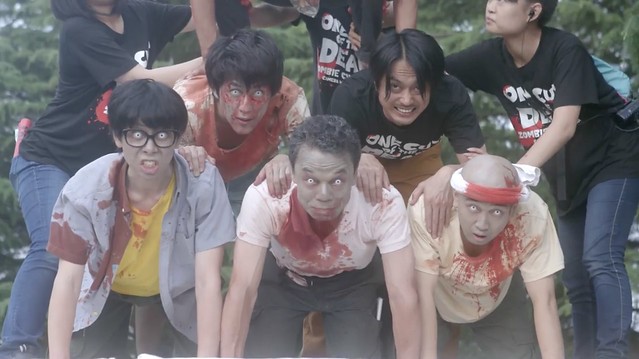
With Romero's Night of the Living Dead, the zombie genre has a humble, low-budget indie beginning. Taking the cue from this idea, Ueda Shinichiro's One Cut of the Dead serves a love letter to the indie filmmaking process as much as it works as being an entertaining zom-com.

It starts out with as an impressive 37 minute uncut zombie movie where a frazzled director screams at a young actress, who has just gone through her 42nd take. She needs to look more frightened. That she really needs to fear for life! His wish comes true soon enough, as real zombies run amok in the filming location, a large water treatment plant where the Japanese army conducted human experiment in the days of WW2.

The film rewinds and becomes a making-of documentary where it shows how the uncut movie was made in clever, comical ways. As anyone ever involved in low budget filmmaking would attest, no matter how terrible the end product turn out, there is tons of hard work and on-the-spot problem solving that goes in to each film. An interesting aside to considering: The movie gives the 'crane shot' a new meaning...

One Cut of the Dead is part zombie movie, part making-of documentary and part touching family drama. And it's hugely entertaining.

HUNGRY LION
Screen Shot 2018-06-20 at 8.18.04 PM
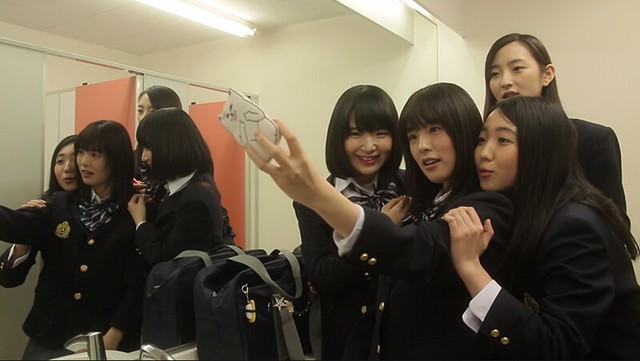
Comprised only with short static shots that cut to black, Ogata Takaomi's Hungry Lion takes a non-sensational, clinical approach to reflect on the peril of our society completely under siege by social networking. It's very Haneke yet very Japanese.

The film begins in a high school classroom where a teacher is getting led away by the police. The video of him having sex with a student went viral. Hitomi, a normal high school student who has a considerable SNS following or someone who looks very much like her was in that video. She denies that it is her. Some of her immediate circle believe that she is innocent at first. But once the rumor starts doing rounds, it spreads fast. People turn on her and the adults who are supposed to protect her innocence openly exploit her. The gossip at the school and home become too much for Hitomi and she throws herself in front of a train.

Hungry Lion digs deeper into our relationship with the world in the internet age and how we see things in a distorted way and prey on the most vulnerable. It's a compelling movie watching experience.

LIVERLEAF
Screen Shot 2018-06-19 at 11.48.20 AM
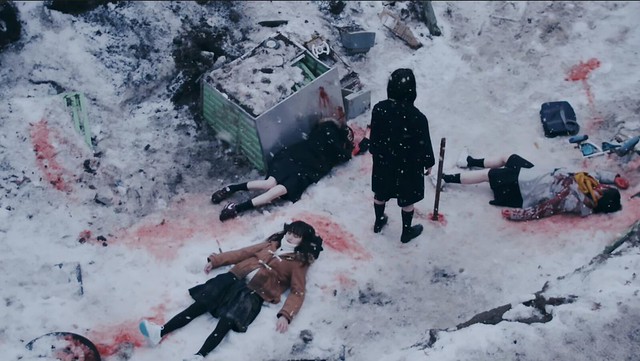
Violent Japanese schoolgirls! This is what I love about NYAFF!!

Based on a manga of the same name, Naito Eisuke's Liverleaf is a school bulling revenge movie. Haruka Nozaki (Anna Yamada) is a transfer student from Tokyo in a rural town Middle School. She is relentlessly bullied by a gang of close-knit friends, headed by cool redhead Taeko (Rinka Otani). It is said Haruka stole Aiba (Hiroya Shimizu) from Taeko. How dare she!

Things take a violent turn when Rumi (Rena Otsuka), a loner who would do anything to impress Taeko, actually carries out burning down Haruka's house with her family in it. With her parents killed and her little sister in an intensive care from burns, Haruka exacts revenge on the gang, one by one, using a rusty nail, a pair of wire cutters, a crossbow and a pocket knife. As usual, nothing is more beautiful than blood on the pure white snow in the Japanese countryside.

THE BLOOD OF WOLVES
Screen Shot 2018-06-22 at 11.30.36 AM
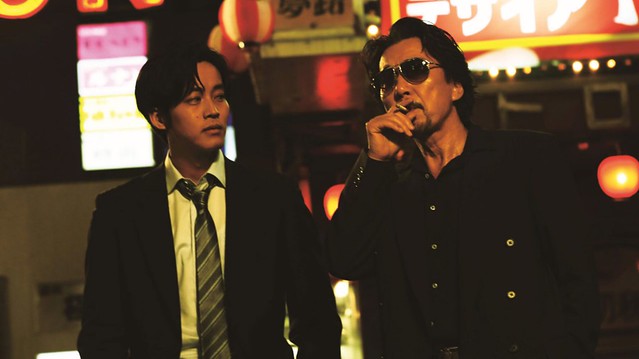
Detective Ogami (Yakusho Koji), known affectionately as 'Gami by his colleagues and yakuza friends alike, leads a colorful existence, walking a tightrope without falling to either side. He has been the key figure in keeping the peace between too warring yakuza clans. But it's Gami's method - taking bribes, getting favors, extortion, violence, etc that irks a young idealist rookie partner Hioka (Matsuzaka Tori). While investigating the murder of a civilian accountant, Hioka realizes Gami might be in too deep with Irako (Ishbashi Renji), one of the crime bosses. Would Gami find out that Hioka is an agent from internal affairs? Would they still bring down the gangs together?

As flamboyant Ogami, always dependable Yakusho is fabulous here playing against type. Without honor, loyalty or fear, his character is only interested in protecting civilians. With large, great supporting roles played by many familiar faces in Japanese cinema (including Maki Yoko of After the Storm, Like Father Like Son and Abe Junko of Still the Water), Blood of Wolves is an excellent, gritty crime film that is hugely enjoyable.

PARADOX
Screen Shot 2018-06-23 at 8.40.41 AM
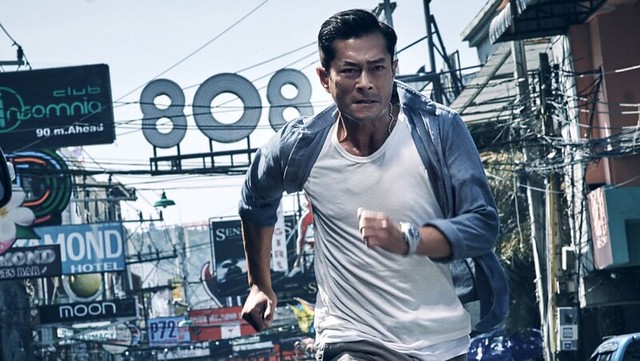
Hardened HK detective Lee (Louis Koo) sees his young daughter grow up to be a teenager. As soon as she takes up a no-good boyfriend and gets pregnant. After an abortion, she runs away to Thailand only to be kidnapped by local thugs who in deal organ transplants. Yes, just like previous SPL series, you don't watch Paradox for the plot. You watch it for a handful of heavenly action sequences!

Choreographed by Sammo Hung, with picturesque backdrops of the bay city of Pattaya, we get some glorious fight scenes involving Koo, Lue Wu and Tony Jaa (as local cops) and Chris Collins (as a sadistic organ trafficker). One set piece in the narrow hallways and rooftops with Collins and Jaa is breathtaking. So are the extended meat packing facility fight sequences, fully equipped (for your pleasure) with plenty of sharp, clanking cutlery. It's not great as the previous SPL series and the typical cheesy HK plotline drags down its greatness a notch. And you only wish you want to see more Jaa, but oh well. Vithaya Pansringarm (Only God Forgives) also shows up as a police chief.

Thursday, October 27, 2016

Herzog Vs. The Volcano

Into the Inferno (2016) - Herzog, Oppenheimer
 photo e5f3f116-3304-40fc-80b2-067bde786977_zpsorxevmnb.jpg
It's not the first time Werner Herzog has delved into an explosive subject.

In 1977, he rushed down to the Caribbean island of Guadeloupe, because he was told that La Soufrière, the island's looming volcano (and also the title of his resultant film), was about to erupt. All its inhabitants fled. But that eruption never happened. Instead, he found three people who stayed behind and ended up talking philosophically about their attitude toward death and their belief system.

During another volcano trip in 2006, this time in Mt. Erebus while filming Encounters at the End of the World, a film about Antarctica and its quirky inhabitants, he met enthusiastic young volcanologist Clive Oppenheimer. Even though Mt. Erebus and Oppenheimer never made it into the film, the two men struck up a friendship. After the volcanologist's book Eruptions that Shook the World was published in 2011, they decided to make a film together.

This collaboration here is special. Unless the person is his subject, never in Herzog films have I ever seen this kind of rapport before, but Oppenheimer, a Cambridge academic who prefers field work, does the great job being the filmmaker's surrogate. The questions he asks the various subjects here are most definitely Herzogian. It also helps that he is a big fan who is familiar with the filmmaker's filmography.

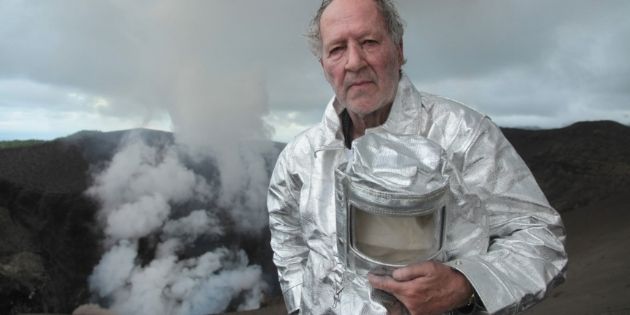
In Into the Inferno, this dynamic duo, in true Herzogian fashion, takes us to various volcanoes around the globe -- from North Korea to Ethiopia to Iceland to the Vanuatu Archipelago -- and touches upon the impermanence of human existence on literally 'thin crust' and the awesome power of nature and our belief system. Because he is armed with tons of awe-inspiring archival footage of molten lava flowing inches from the screen and exclusive access to the remote, isolated places, we are once again at the hands of a prolific master storyteller who keeps on churning out his contemplations on the vagaries of human existence every chance he gets. (The funding came from Netflix and the film will be premiering globally on October 28.)

We start in Vanuatu, where the team is looking down at the center of the active volcano. The bright orange of bubbling magma has a hypnotic effect. Herzog's long time cinematographer Peter Zeitlinger too seems having a hard time looking away from it, following its glowing, spewing trajectories over and over. Then we travel to Indonesia's Mt. Sinabung where they narrowly escape a deadly eruption, and then visit Mt. Merapi on Java, one of the most sacred volcanoes to its people. The chief and his son of the tribe, discusses the spiritual implications of living on the slopes of the volcano.

The film talks about the pivotal role volcanoes have played in everything from farming, migration and religion. So we find ourselves in an archeological dig in Ethiopia, serendipitously come across a renowned paleoanthropologist Tim White and his team, working on digging up bones of 20,000 year old human, remarkably preserved because of volcanic activity nearby. Oppenheimer helps out, brushing off dirt in Danakil desert, the lowest and the hottest place on earth.

We are hoisted over to volcanic island nation of Iceland where national identity is closely co-mingled with volcanoes: Codex Regius, Iceland's most precious posession, an ancient text that tells of a tenth-century volcanic eruption. As we all remember the 2010 eruptions of Eyjafjallajökull volcano that caused massive air travel disruptions. All these surroundings spawned religion and myth making.

Then we are in North Korea, on Mt. Paektu; a dormant volcanic mountain with a giant caldera lake. The mountain is the sacred setting for the Korean creation myth and also the communist revolution led by Kim Il-sung, the nation's eternal leader. Herzog places emphasis on how Kim co-opted the symbol of national identity to his own myth making.

Mt. Paektu garners little interest outside Korean peninsula but Herzog explains that through Oppenheimer's connections, he jumped on the opportunity to film in North Korea, the most secretive, isolated country in the world. Even though Herzog can't get personal opinions out of North Korean guides and its scientists, he and Oppenheimer gets unprecedented access (I'm sure it took Herzogian persuasion and mind-controlling of his own) into the seldom seen, majestic view of the mountain.

We move on to the religion in Vanuatu that centers around American G.I. named John Frum, who will return and bring 'cargos' of prosperity and wealth. Its literal combination of Waiting for Godot/My American Uncle is fascinating and disturbing at the same time.

Herzog, once again, demonstrates his unparalleled ability in storytelling, weaving vastly different elements from world over -- music, belief systems, natural phenomena, and contemplates the entire human existence build upon the not-so-permanent ground. It's also not short on Herzogian quotes: "The volcanoes could care less about scurrying roaches or retarded reptiles or what we are doing up here." The Ethiopian desert and North Korea scenes runs a little too long without contributing much, but they showcase Oppenheimer as our very likable guide and a scientist who can explain things in very easy terms.

Many of his films have been about man's desire to conquer nature, and failing miserably, Herzog makes a point that however benevolent the volcanic activities are to us, such as creating breathable atmosphere and nutrient rich soil for farming, it might cause the end of the world as we know it. Into the Inferno is yet another entertaining philosophical musing -- the second offering this year, after his Lo, and Behold, Reveries of the Connected World -- from the master storyteller. And I couldn't be happier.

Into the Inferno opens in select theaters in New York and Los Angeles on Friday, October 28. It will also be available to stream on Netflix worldwide on the same day.

Wednesday, July 15, 2015

Confronting Evil

*Originally Posted 9/29/14 from New York Film Festival coverage.

The Look of Silence (2014) - Oppenheimer
 photo 5b583487-cb43-48d0-82dc-73445281ffd8_zpsd73fce61.jpg
Joshua Oppenheimer finds one brave soul to be on camera and face the killers who killed his brother. He happens to be Adi, a traveling optometrist in a rural Indonesia. Just like in the eye-opening revelation that was The Act of Killing, Oppenheimer is not in a hurry to lay the groundwork for us. 'In 1965, more than a million 'communists' were exterminated by a military hired gangsters'. The first sentence of the preface is enough to go on. This time, he lets the victim's side to voice their opinions. It's not a dictatorship anymore in Indonesia, but the killers of those days are still largely in charge, living side by side with the victim's families. Teachers in schools are still teaching 'the communists were really bad people who gauged people's eyes out and therefore deserved to die.' Everyone, including the family members whose loved ones were hacked to death and their body thrown into the river, don't want to dig up old wounds. Let bygones be bygones. Even though Adi was born after 65', he can't let go without getting some kind of closure on what exactly happened to his brother, seeing his ailing, grieving parents everyday. Thankfully, Oppenheimer has recorded these killers since 2003 and shows him the footage of these killers boasting about their mass killings proudly and reenacting them, especially about his brother. One of the killers who passed on recently, actually wrote a book about his deeds with hand drawn pictures.

As they visit many of these killers, things get uncomfortable. "Josh, stop filming! I don't like you anymore!" "Why are you asking me all this? Your questions are too deep. I don't like to talk about politics too deep!" "Where do you live? What's your sub-district? You know what you are doing is a communist activity?"

Adi believes that these people on tape have guilty conscience. Otherwise, why would they openly say these things and reenact their own killings?

They drank their victims blood, in the belief that they won't go mad after their countless killings. Because some went mad, they say. It was salty and sweet.

Perhaps the most poignant moment of the movie is when they visit one of such killers at home. A young daughter, about Adi's age apologizes for her father, who is sitting right next to her. In the beginning of the interview, she tells them that she regarded her father as a hero because what they taught her in school. Then her father says he drank the blood of the victims. Her face distorts, "How sadistic." Almost crying, she says "We are like family, you can visit me any time. Look at him, he is an old man. Please forgive him."

The Look of Silence is just as strong and chilling as The Act of Killing. The fact is that Adi's story is just one of the million makes the experience all the most devastating. It's in Adi's silent stares - a complete, utter condemnation that will haunt you for days.

The Look of Silence opens theatrically on July 17. Please visit Landmark Sunshine Cinema's website for tickets.


My review of The Act of Killing


My interview with Joshua Oppenheimer (for The Act of Killing)

Thursday, July 18, 2013

Art Doesn Make a Difference...Until It Does: Joshua Oppenheimer on The Act of Killing

 photo ay_112819991_zps61b3780f.jpg
When I first watched The Act of Killing in March, I predicted that it would be a hard film to beat as the best film of the year. I still stand by that statement. It's an astonishing film that needs to be widely distributed, watched and talked about. So I jumped onto the chance to interview its director Joshua Oppenheimer when he was in New York for ND/NF. And this intense and lengthy interview is the result of it:

First, the thing is, not many people know about this side of Indonesian history, including myself. THE YEAR OF LIVING DANGEROUSLY, the country's involvement in The East Timor about ten years ago and the Bali bombing - that's the extent of the Indonesian history I know about. Can you tell me a short background history of THE ACT OF KILLING?

Well, after Japanese surrendered, Indonesia fought a war for independence against the Dutch (1945-49). It was a pretty exploitative colonial regime that was in place for three hundred years. The center of the struggle against colonialism was the Indonesian left. It included the communist party but with the land reform effort that was going on, the unions too- because Dutch had a very feudal control over the land. There was kind of fight from the beginning between the faction of the Indonesian army, which wanted to take over from the Dutch and keep everything as it was and basically not proceed with the redistribution of land or nation's wealth. The anti-colonial political class at the time included the president Sukarno, who was a left leaning socialist, and the left was doing well in the elections. The right-wing faction of the army basically wanted to put a stop to that. They saw an opportunity in the 30 September Movement in 1965 and took over. They were basically thugs whose parents worked for the Dutch. They weren't for independence and only interested in enriching themselves. So you can see there was a left wing decolonizing country with a strong right wing opposition which was no longer pro-Dutch but now anti-government. It was the beginning of the Cold War and the US, afraid of having a resource rich country like Indonesia not aligned with the West in the strategically important South East Asia, played a big role in that military coup. So when they took power, they started killing everyone on the left who was basically anybody. And the army outsourced the killing to the civilian death squads so they can wash their hands off of it and say 'it wasn't us' but also that they could implicate a whole layer of civil society- the civilians in the killings.

So between 1965-66, anywhere between half a million to two and a half million people were killed.

That's so crazy.

And it was reported in the West as good news. There was this grotesque NBC documentary called Indonesia: The Troubled Victory where they are very honest about the numbers of the people who were killed. And they show death squad leaders like Anwar, talking about how their victims would wanted to be killed, or saying things like how Bali is more beautiful without the communists.

I was showing the film in Holland. I was asked about the relationship between Indonesia and the Dutch, which I hadn't really thought about it before. Actually these guys (the gangsters)' parents were the thugs, assassins or administrators in the Dutch colonial regime. The West generally praised the genocide: the New York Times ran the headlines. "the West's best news for years in Asia". Time Magazine wrote, "A gleam of light in Asia". So I've always understood that this was forgotten in the West because the history was incoherent. I mean, how do you assimilate the story of murderers as winners? It just doesn't make sense. As human beings, supporting genocide doesn't sound good. 'So let's not talk about it' was the prevailing attitude.

Bill Moyers is writing a piece about The Act of Killing now on his blog and the New York Times where he is making another argument, which I had not thought of before, a truly apt one at that -- the fact is that in 65-66 the US was selling the Vietnam war to the public. They were selling it by appealing it to the domino theory- the communism will spread from China to Vietnam to Indonesia. Indonesia was the key, Vietnam didn't really matter, beside some rubber plantation, it was a resource poor country. Indonesia has tin mines, copper mines, oil fields, gas fields, timber... a lot of resources. Plus it was straddling all the important shipping lanes with nearby Singapore and around the Malay Peninsula. So obviously Indonesia was the prize. So once communists were wiped out, there was no risk of communism spreading to the country anymore. This victory, if you call it that, undermines the whole rationale for the Vietnam War. So that's probably another reason why we have forgotten it.

One last note about this story I have to tell you about that time is that China and the Soviet Union have already split, the us was worried that Indonesia would be under China's influence, so they published all these anti-Chinese propaganda. There always has been a big Chinese diaspora to South East Asia. But they were now saying they were secretly communists. Because of this propaganda, which stirred up anti-Chinese feelings, very much like anti-Semitism, resulted in 50,000 Chinese being killed in Indonesia.

It's just amazing to me how little we know about our involvement in atrocities around the world. Recently I had a chance to talk to director John Sayles about his film AMIGO. Timeline-wise it was earlier than when that genocide took place in Indonesia. But it's pretty much the same thing.

Were there large population of Chinese too?

It was the turn of the century so it wasn't the red scare but because of the Philippines' strategic importance to the resource rich China, the US sent troops half way around the globe to kill Filipinos.

Yeah and we learn Spanish American war and the Philippines is just a footnote, maybe a one or two sentences in our history books.

Was your previous film THE GLOBALIZATION TAPES which was shot by palm oil plantation workers, a starting point for THE ACT OF KILLING?

I was working for an agency in London and I was sent to Indonesia to do The Globalization Tapes.  It was a six month quick assignment. I could've been sent to anywhere but I was sent to this plantation community where they were trying to organize and their biggest obstacle was fear, as their parents and grandparents were in the union and were accused of being the leftist and were killed or put in concentration camps. They were afraid this could happen again and that was the first time I heard of the genocide and maybe the reason I came up with this crazy idea to make a film about it. Surprisingly no one had made a film like that. When I landed in Indonesia I was on the periphery. I didn't enter through the usual channel with the big Human Rights organizations. After landing in Jakarta I went straight up to north Sumatra and found myself in this world. It was rather full hardy to dive into this head-first. Then I was being stopped. Then I had to go back to Jakarta and go through usual channels with Human Rights groups. They told me they couldn't help but they encouraged me to keep going.

The film is basically us seeing Anwar Congo (the main subject of the film) realizing and getting his comeuppances of his actions of the past and the emotional catharsis that follows.

I would say it's more anti-catharsis because there is no release. He wants to vomit up the ghosts that are possessing him because he's trying... think Anwar from the beginning, he used the film to distance himself from what he did. To replace the miasmic horror that comes to him in his nightmares, he is trying to build up a cinematic scar tissue over his wound, just as, at the time of the killings, acting was part of the act of killing -- coming out of the movies intoxicated by whatever movie he saw across from his office. It's his way of distancing himself from what he'd done. He used that where as Adi, the other killer, actually killed off part of his conscience -- he numbed himself.

I think that Anwar's trying to replace his terror with these scenes. And every time the terror is like the reel it seeps out between the frames, between the shots and he tries to catch it, it seeps out, catch it, seeps out, catch it again, like trying to catch a genie he can't never put back in the bottle. In the end, as he becomes more and more desperate, his justifications become more and more grotesque and become more celebratory. That's another thing about this. The celebration of genocide, which looks like the symptom of their remorselessness is in fact the symptom of their humanity. Because when you hear from the perpetrators in War Crimes Tribunals for instance, they are either apologizing or they are denying, but often times we get to ask the questions when they're removed from the power. Here, these men are still in power. They were not forced to say it was wrong and nobody who killed will on their own accord admit that that was wrong because it's too dangerous. It's too painful. How can you live with yourself? If you can justify it, you will. So these men justify it as Adi says, the government gives you an excuse in the form of propaganda and you become addicted to that excuse and when you are doubtful, the justification spills over into celebration.

So I think Anwar's actually trying to make it okay by hoping that if you make it beautiful and acceptable or just contain in a movie then he can make it safe and okay for himself. The irony is that celebration of genocide is not the symptom of remorselessness, rather it's a symptom of humanity. It can be seen as a tragedy. Then, the symptom of their guilt becomes the cover for having thus corrupted themselves by killing people, the cover for committing further evil. It makes it possible to kill again. It makes it possible to extort your victims, like they do it in the market or keep them off their land as you described and enrich themselves to commit more evil. So the very thing  that is a symptom of your conscience becomes the cover by you commit further evil, I think that's the real tragedy of the film.

But going back to it being anti-catharsis, at the end when Anwar is trying to vomit up his ghosts, only to find that he is the ghost. I mean we are our past. At that moment I wanted so much as a filmmaker to have had a love for Anwar actually. I wanted to put my arms around him and say 'it's going to be ok.' Then I realized that he's chocking, his vomiting. He is feeling nauseous because he is choking over the budding realization that its not going to be ok.

Did you anticipate that happening when you started the project?

He actually had chocked one time before and I thought that would be the end of the film. The previous time was when he's watching with his grandchildren the reenactment of the interrogation scene where he played the victim and he gets choked with a wire, he actually chocked then. It was more reflexive. He couldn't breath.

As I said, Anwar, his task, his project was to run away from what he'd done. It's kind of an exercise in denial. It's not a therapy it's an anti-therapy, trying to create these scenes to distance himself from what he did and I thought my task was not at all to catalyze the psychodrama. I was working on behalf of the survivors and try to expose the regime of impunity first and foremost and Indonesians themselves that they finally acknowledge the nature of their society which is how the film is functioned in indonesia which has been fantastic.

That's good.

But the idea Anwar celebrating the genocide in the waterfall scene I'm misrecognizing that. Maybe I didn't want to see as what it was while we were shooting that this is actually the sign of his desperation and perhaps the whole regime's desperation. And yet I say it's both the sign of desperation to convince himself that it's okay and it's also an instrument of terror to keep everyone afraid and to go out and kill again. I saw it as the latter, because I was trying to expose the regime of terror.

I think the film has this kind of cross purposes- the film is not sentimental because that essential internal tension between the two of us. Had I anticipated the roof scene, the film would've been sentimental and it would've somehow made itself apparent. When Anwar said, "Now I feel how my victims felt," and if I said, "Yes good, you finally admitted to it," it would've been sentimental. And it would have been obscene, because I work for the survivors and tried to exposed the regime that is founded on genocide. Seeking the catharsis of the killers and even redemption as the goal of the film would be obscene. I think this film having a powerful impact in Indonesia and elsewhere is because it's the killers themselves showing how destroyed they are. And therefore the regime has to be destroyed. These men who should be enjoying the fruits of their victory, instead, are chocking on what they've done. Adi gazing himself in the mirror while his beautiful actress daughter getting a face massage is chilling. He numbed himself. in Indonesian, it's called mathiabasak- killing a feeling.

Adi was the scariest character in the film.

Yes, because he didn't know why it was wrong. He even says it. The thing is, his conscience has died. He has killed off his conscience and that's the way of living with what he's done.

You said the project was conceived out of collaboration with the survivors. The thing is it is a very lopsided film: you don't really get to see the survivors, you are just reflecting what's happening to the perpetrators so they can see themselves. Was it because of the lack of access, that people were afraid of retaliation?

In the beginning it was. I couldn't film the survivors safely. We kept getting stopped. But once I was working in the shadows of these perpetrators, the red carpet was rolled out for us to make this film. You see ministers from Jakarta fly up to where we were at to be in the film. The state tv producers, talk show hosts hype the film even before it existed. So then I could actually film the survivors. I had to lie about it. I had to say 'I'm going to film for NGO friends. That gave me an excuse to go to the countryside and be away from them. And I also did things that seemed boring enough that they wouldn't be tempted to come along just for fun.

And of course there is one survivor in the film- the stepson of the Chinese man. We had a multiple camera set up and I wasn't filming (with my camera) when he told the story about his stepfather and his family. And actually I think it could've been his real father who was killed with the rest of his family. If I knew this, I would've pull him aside and told him he shouldn't have been there. I only saw that footage when we were back to London, editing. Then I realized, "Oh my god his father was killed!" I felt so bad I called him and it was three years later (another year of shooting and editing was taking time) and his wife answered and told me he passed away from complications of diabetes roughly two years after the shoot. I called him was because I felt so awful. I felt exposed and dirty when putting together the film, I would've never allowed him being in the film and have him in jeopardy. I asked her if he ever talked about getting interviewed for my film. And she told me that he talked often about it and he wanted to let people know about the horrible things that happened to his family. Then I felt at least the film had help succeed in telling his story

The survivors couldn't be in the film without their face being blurred. The fundamental challenge the film makes to the viewers is for them to ask viewers to see the small part of themselves in Anwar and to see how we are all perpetrators. (looking at his shirt) Everything we are wearing is haunted by the suffering of people who make it. We know that. We depend on other people's suffering for our survival. The sweatshops are always located in countries where there's a history of terror and perpetrators have won and have not been brought to justice and that's why factories can get away with using thugs to keep workers afraid. We depend on men like Herman and Safit and anwar for our clothes for our... (pointing at my 7 year old ipod classic with a microphone attached) this thing you are recording me with, this plastic credit card, everything in our day.

True. That was my original question about catharsis. I was talking about catharsis of the audience, not Anwar's.

Just as The Act of Killing has destroyed Anwar, it harms us a little bit too. something in us must die. We must lie to ourselves. We must tell a story to ourselves just like Anwar does to cope this reality that we know about. And indeed we do. One of the stories we tell is this black and white, good guy bad guy story. The Star Wars story where we are the good guys.

If the survivors were there in the film then it's an uncomfortable place to be as a viewer to identify with Anwar. And we would seek refuge in that point of identification with the survivors and we would see ourselves as good guys and the whole project would fail.

But I'm making another film with the survivors in April. It's already shot. Its about survivors who confront the men who killed their sons.  It's not an ordinary survivors documentary.

What Adi says about us, the justification for invading Iraq and killing off Native Americans and all the things we do militarily, you think there is a difference between what Anwar and Adi did and what the US has been doing?

Each time the US gets into armed conflict, there are variations. But I think there is a commonality to them all. Our foreign policy is the armed wing of chamber of commerce. In that sense, we go and kill people and overthrow regimes on behalf of US companies and we rationalize it.

It's the same in a sense that Anwar is the part of just one US adventure. His previous job before his gangster life was guarding the US consulate. The boss of Anwar's death squad (who died before the film was made) was a very good friend and golf buddy of the US consul.

All the people who remained anonymous in the credit, they are okay?

They are all okay. I'm in touch with them all the time.

How was it received in indonesia?

the film can't be released theatrically in Indonesia. There is a political film censorship and if you submitted the film, they will likely ban the film. Then it will become a crime to screen the film. Then it will be used as an excuse for paramilitary groups to attack the screenings. So what we had was a clandestine, micro screenings. We showed it to all the editors and producers of all the biggest news outlets. Throughout the fall, we showed it to leading filmmakers, human rights advocates, historians, academics, survivor groups, journalists...and they universally loved the film. They started publishing in articles. They had to break 47 years of self-censorship and started writing deep investigative reports about the genocide. Then we told all these organizations which loved the film to go back and screen the film.  We gave them copies and whatever they need to screen the film with. It started with Human Rights Day, December 10 screening in 2012 with 50 screenings in 30 cities. It grew maybe by 10 screenings a day and now it's grown to 290 screenings in 94 cities for tens and thousands people. I'm guessing it's the most talked about and most anticipated film in Indonesian history.

The film has cracked open this facade where genocide was heroic and suddenly stories are pouring out about what really happened and what it really means in the present. Werner Herzog was a big supporter of the film and he said to me, "Art doesn't make a difference," I was like, oh that's a shame, then he looked at me for a long time and said, "...until it does." I'm so lucky to be part of the moment that it's making a difference. Only thing that's sad is that I haven't been able to safely go there for this. 


The Act of Killing opens July 19 in New York and national rollout to follow. Visit the film's website for more info and release dates.