Showing posts with label Jafar Panahi. Show all posts

Monday, September 29, 2025

Revenge and Morality

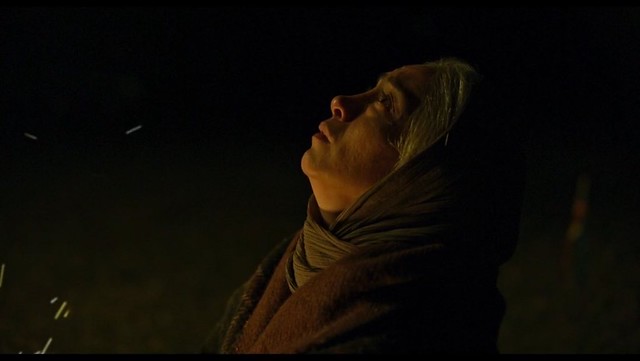
It Was Just an Accident (2025) - Panahi It was Just an Accident Jafar Panahi's new film, It was Just an Accident, starts with a roadside accident at night: a family on a trip back home, runs over a dog with their car. The father stops, gets out of the car, and determines the dog is dead. It was an accident. But his young daughter keeps egging on, "you killed him," even with the father protesting that the road was underlit and her very pregnant mother saying that these things happen all the time in life. With the sustained damage from the accident, soon the car breaks down. The father will need to take it to the garage. So begins the ominous foretelling of the simple, yet rivetting and deeply humanistic morality tale.

The garage owner Vahid is spooked when the father shows up to his garage to get his car fixed. Vahid is gripped in complete fear. He doesn't want to show his face or have his voice heard to this customer. Next thing Vahid does is pretty shocking: he stalks the man - follows him home, and when he gets a chance, knocks the man unconscious and kidnaps him and puts him in his van. It turns out that Vahid thinks the driver of the car is an intelligence officer, Eghbal, who tortured him in prison. It was the dragging sound of his peg leg, as he approached the garage, a giveaway. In a fit of rage, Vahid digs a hole in the desert, in an intention of burying his former torturer alive. Eghbal, tied, blindfolded and covered in dirt in the ground, vehemently pleads that Vahid is soley mistaken, that he is not the man Vahid says he is. Blind folded while being tortured in prison, Vahid now is unsure if he got the right man, and wants to confirm if this man is the right 'Peg Leg' maybe by asking fellow former political prisoners. Via a bookseller friend, Vahid seeks out a wedding photographer Shiva and her subjects - the soon-to-be-married couple, and later, Hamid, a hot headed blue-color worker who was also in prison, who says he can positively identify their Peg-Leg the torturer.

With all of them in the van, as it often does in Panahi films, It Was Just an Accident becomes a road movie of sorts. They discuss the morality of killing a man while their torturer is inside the box they are sitting on, gagged and tied, in the van. What makes them any different from the torturer who threatened and abused them, if they do the same? If they kill him, are they any better than Eghbal?

To make matters more complicated, Eghbal's daughter calls his phone, to inform that her mother fainted while pregnant. Now the crew has to take Eghbal's wife and daughter to the hospital and have the baby delivered safely.

Panahi, in this slow-burn thriller, brings up the concept of morality and justice in Iran. And he reveals how the totalitarian regime inflicted upon political dissenters from all social strata, an unspeakable collective trauma - constant threat of death with a noose around their necks for hours while standing on the platform, imminent sexual violence against young women and physical torture that crippled them. After being released from his jail sentence and years of house arrest in 2023, the prolific Iranian filmmaker doesn't shy away from being bluntly critical about the totalitarian regime of his country, while showing ordinary people's humanity not being lost. It Was Just an Accident is a riveting and beautiful film.

Wednesday, June 5, 2024

Ministry of Fear

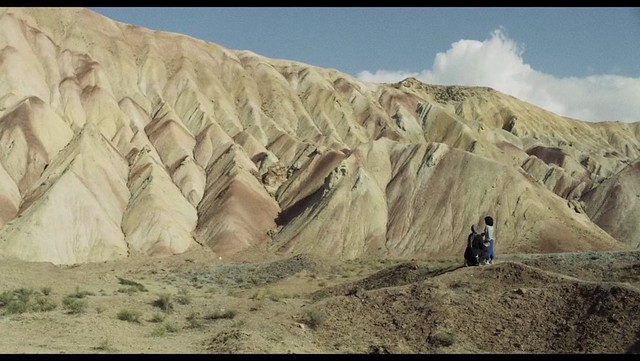
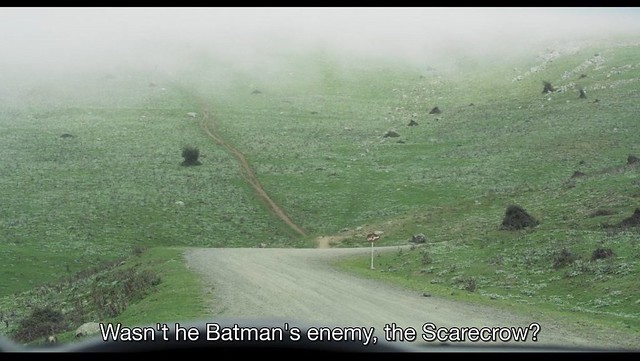
No Bears (2022) - Panahi Screen Shot 2024-06-05 at 8.44.22 AM Screen Shot 2024-06-05 at 11.09.49 AM Screen Shot 2024-06-05 at 9.11.24 AM Screen Shot 2024-06-05 at 11.08.59 AM Screen Shot 2024-06-05 at 10.29.34 AM Screen Shot 2024-06-05 at 10.35.40 AM Jafar Panahi has been steadily making films in Iran despite threats of imprisonment and bans from making films and traveling outside Iran by the government. All things considered, his films made within the parameters of draconian restrictions he faced, were subversive, comical and even life affirming. No Bears is perhaps the most damning film about the oppressive Iranian regime and perhaps the saddest Panahi film I've seen. As usual, Panahi puts himself in the middle of his creation - film director in self-imposed exile in a small border town near Turkey, directing a film about an Iranian couple waiting for their passports by human traffickers so they can escape to Europe. Things are tough because he is directing it remotely and the internet connection is bad. He also has to deal with the locals who are uneasy about a famous film director staying in their midst with a fancy SUV and cameras. He gets embroiled in controversy when he takes some pictures of the locals and being accused of recording an illicit love affair that doesn't jive with the local tradition. The locals talk and it's a matter of time that police and the Revolutionary Guards showing up at the door of his rented room.

There's a poignant and telling scene where Panahi's assistant leads him to the dirt road to the border crossing, used by smugglers at night and urges him to escape. After they reached the hill, overlooking the lights of a Turkish border town in the distance. After receiving the signal, they can cross to Turkey. It's that easy. Panahi asks where the border is. His assistant tells him that he is standing on it. The camera tilts down to his feet and Panahi retracts like a turtle, down the hill to the direction where they just came from without saying a word.

No Bears confronts the perils of documenting the truth in an oppressive society. Beyond the theme of rural traditions vs. modern life, Panahi's film illustrates the underlying fear that is dividing people and making them hostile to each other. It also shows the limits of cinema as a truth telling medium, that things still go on after the camera stops rolling/recording. The film reminded me of the news of his fellow Iranian filmmaker, Mohammad Rasoulof's daring escape from the country to show his new film at this year's Cannes film festival, as he was sentenced to 8 years in prison and flogging by the Iranian government. No Bears’ two tragedies that Panahi witnesses in the film- the death of two people, even though they are fictionalized, they take on the new meaning, considering what the revered filmmaker is facing every day in the country that he still refuses to abandon.

Saturday, July 30, 2022

Family Road Trip

Hit the Road (2021) - Panahi Hit the Road Hit the Road Hit the Road Hit the Road Hit the Road Hit the Road Hit the Road Hit the Road Hit the Road Hit the Road A family, mom (Pantea Panahiha), dad (Hasan Majuni), older son (Amin Simia), younger son (Rayan Sarlak) and sick dog are on the road in a borrowed SUV, in a picturesque Iranian countryside. Yet this is not a joyous family vacation. Something is up. Mom is overly paranoid thinking that they are being followed. Dad with one leg in a cast changes the phone's SIM card every so often. They do so while dealing with their hyperactive 8 year-old son who is just a bundle of energy and joy. The older son, whose been driving, rarely says a word. He is moody as he chastizes his doddering mom that he is not a child anymore.

It turns out that they are going to the border to see the older son off, as he is entangled in something the Iranian State deemed as unlawful. And the parents have been telling the younger son that his brother is going abroad to get married - a not-so-convincing lie that might be adding to his hyperactive state. On their journey, they meet people, talk to each other and share some magical moments together.

Panah Panahi, the son a famed Iranian filmmaker and democracy activist, Jafar Panahi, who was just sentensed 6 years in jail for criticizing the theocratic Iranian regime, makes a beautiful film here in the tradition of 'moving pictures', that usually take place in a car, of Kiarostami (Taste of Cherry, The Wind Will Carry Us) and his dad (This is Not a Film, Taxi) that emphasizes time passing and fleeting human life on earth. Hit the Road boasts perhaps the most memorable child acting in recent memory- by Sarlak as an adorable rascal. His joyful presence peaks out over the overall somber tone of the film that hangs like low lying clouds. His joy is infectious. It also features gorgeous rural Iranian vistas, humor, magical realism (relating to 2001: Space Odyssey) and poetry. It's a short, life affirming film that lingers long after watching.

Monday, September 28, 2015

Ubering with Jafar Panahi

Taxi (2015) - Panahi
 photo 05ccdf17-c9b8-41fc-ade9-43e0d7117850_zpskhrbqpef.jpg
Jafar Panahi was jailed, then put on house arrest and banned from filmmaking for 20 years by the Iranian government in 2010 when it deemed the award winning filmmaker an anti-government propagandist. This didn't stop the filmmaker from making films though.

At first, Panahi was creatively bending the absurd rules that were put on him by making unscripted films in his house with with a small video cameras and smart phones. His frustration and ingenuity were in full display in This is Not a Film and Closed Curtain. With Taxi, his latest, the Golden Bear winner at this year's Berlinale, Panahi raises his middle finger again. The film is yet another self-reflexive, droll, poignant whatsit and defies the powers that be.

In Taxi, very much in the tradition of the fellow Iranian great Abbas Kiarostami, Panahi uses the confines of a moving car to unfold the snapshot of Tehran and its inhabitants in real time. Things are little more sophisticated this time around. There are multiple angle shots, edits and the line between fiction and reality are blurrier than the previous two films.

Panahi himself sets out as a taxicab driver, picking up passengers and their interactions are all captured by small dashboard cameras. The passengers are as diverse as they get. Some get into a heated political discussion - the harshness of the Sharia Law. Ironically the one who advocates the capital punishment turns out to be a criminal.

A motorcycle accident on the street brings in a couple, an wounded man and his hysterical wife. On the way to a hospital, the bloody man orders Panahi to record his last will with his cell phone. He wants to leave all his assets to his wife. Panahi knows that his injuries are minor and will be OK. But after he drops the couple off at the hospital, he promises the wailing wife that he will make sure that she will get the footage.

Then there is an illegal DVD seller who recognizes the famed director. He is the reason how Panahi got to watch films like Once Upon a Time in Anatolia and Midnight in Paris in Iran where most of foreign movies are banned.

There are deeply superstitious old ladies who wants to go to Ali Spring to release a couple of goldfishes. They think their lives depend on the fishes being free. The hilarity ensues after the ladies break the fishbowl in the cab, due to Panahi's bad driving.

But it's Panahi's own niece Hana (Hana Saeidi), a precocious, button nosed young schoolgirl who steals the show. Armed with her tiny digital camera, she wants to make a 'distributable' film. The guideline to make a distributable film that her film teacher told her reveals a lot about the country still steeped in religious fundamentalism - respect the Islamic headscarf, no touching between opposite sex, no political discussion, voluntary self censorship ("deep down, you know what's best"), no sordid realism. After giving Panahi's human rights lawyer friend a ride to the jail where she is trying to visit a woman who is on hunger strike after getting arrested for attending a volleyball game (along with other women), bright eyed Hana asks her uncle what sordid realism means: "We are all real. And that means what we see is all truth." To this, Panahi replies, "There are some truth they don't want you to see."


I used to think that Panahi's more politically active approach in filmmaking is less elegant in portraying human conditions. With Taxi, it's either me warming up to his filmmaking or he is getting better and wiser as a filmmaker, even with much less resources and more restrictions.

The film shows regular Iranian's resilience. Many recognizes his dashboard cam and understands that Panahi is making yet another film. No one in the film hides his/her face or runs away screaming. Whatever the conditions your government put you under, the life still goes on. And the filmmaker has enough of a common sense not to put up the credits at the end of the film.

The film ends with a plain clothes government officials trying to steal the memory card from his dashboard camera while Panahi is out to deliver a purse that was left in the cab by one of the old ladies.

Deeply poignant in its simplicity and undeniably human, Taxi is one of the best non-political, political films I've ever seen.

Taxi will have its New York Premiere at BAM Cinematek on 9/29 and opens nationwide Oct. 2nd.

Monday, February 27, 2012

This Is Not a Review

This Is Not a Film (2011) - Panahi
Photobucket
This is Not a Film is not a film. Not in a conventional sense anyway. Rather, it's a 75-minute documentation of an idling film director who has been banned from filmmaking, screenwriting, leaving the country and giving interviews for twenty years. Not to mention he is also fighting a 6-year jail sentence handed down by Tehran Revolutionary Court for planning a fiction film about the disputed 2009 Iranian presidential election. Jafar Panahi, one of the key figures in Iranian New Wave cinema and perhaps the most political filmmaker among them, seems to attract media attention whatever he does simply for being who he is, and deservedly so. My first exposure to Panahi was back in 2001 when I read about his detention at JFK airport. He was in transit to a film festival in Montevideo and refused to be fingerprinted and photographed by New York police. He was simply detained because of his nationality, horribly treated by the US authority and in the end sent back to Hong Kong, his original port of departure. Last year, Isabella Rossellini read his open letter at the opening night ceremony of Berlin Film Festival. At that time, he was in jail and couldn't make it to the prestigious festival to serve as one of the jury.

One would assume that This is Not a Film is a political statement and nothing else. But this non-film (credited as an 'effort' with all the key personnel names blanked out) has plenty of humor and ingenuity, and is consistent with the Iranian New Wave tradition of blurring the line between narrative and documentary. Here, waiting anxiously on his appeal process, Panahi decides to record a one-day-in-a-life-of documentary in his Tehran apartment and turns the camera on himself. As the day goes along, he talks to his lawyer and converses with his friend & co-conspirator/cameraman Mojitaba Mirtahmasb. He has an idea. He wants to act out one of his scripts rejected by the Iranian censor board in his apartment. They said no filmmaking but didn't say anything about reading script out loud or acting. The apartment is empty because his wife and daughter are out of town to grandparents' because it's the Persian New Year. Armed with a video camera and an iPhone, Panahi and Mirtahmasb embark on this 'effort'. Only obstacles to this monumental undertaking are Igi, a family pet iguana walking into the frame and the constantly crackling fireworks outside the window.

After marking his living room floor with masking tape on all fours to imitate the setting and explaining the scene and reading lines, Panahi stops. It doesn't feel right to him. It's all lies. It is comical yet touching to see a filmmaker with very limited means (literally) trying to keep his sanity in check doing what he knows best while abiding to his artistic integrity. While the night is closing in and the fireworks intensifying, the non-film takes an unexpected turn with an appearance of a handsome janitor in the building, stopping at Panahi's doorstep to collect garbage. The young man becomes a willing participant in the experiment. He knows the famed filmmaker Panahi and he studies media in college. Art imitates life imitates art.

This is Not a Film shows that despite the precarious situation- facing censorship and imprisonment, nothing can contain an artist from creating. The result is an intimate and self-reflexive film that transcends it being a mere political statement.

This Is Not a Film was smuggled out of Iran in a cake for Cannes 2011 screening and has US Theatrical premiere Wednesday, February 29th at Film Forum, New York.