Showing posts with label Maren Eggert. Show all posts

Thursday, June 26, 2025

Trappings

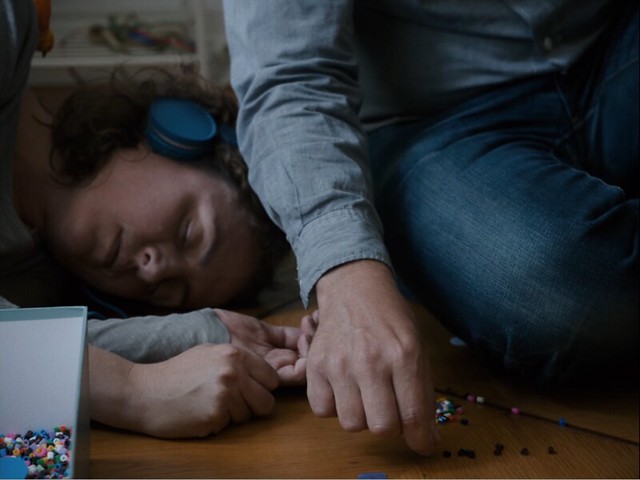
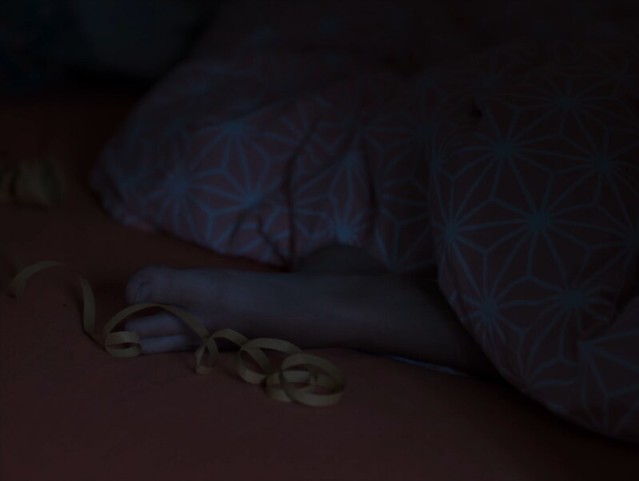
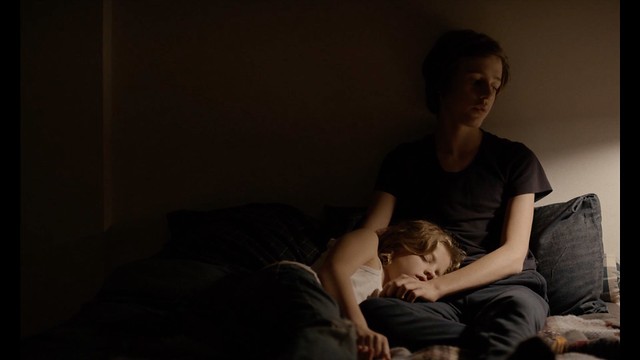
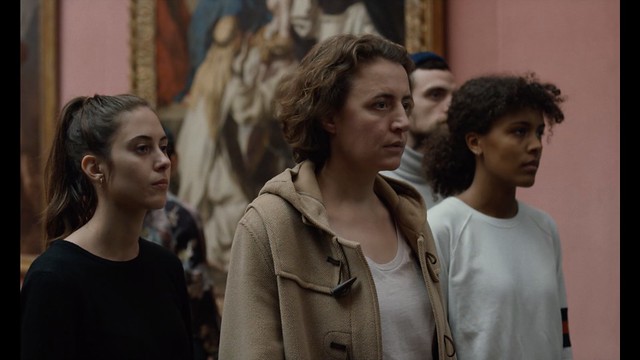
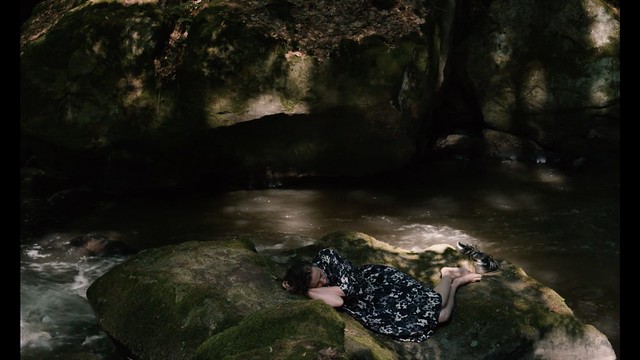
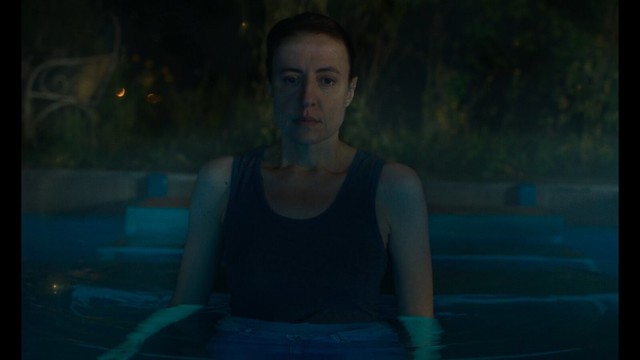
Der Spatz im Kamin/The Sparrow in the Chimney (2024) - Zürcher Screen Shot 2025-06-23 at 4.29.09 AM Screen Shot 2025-06-23 at 4.57.31 AM Screen Shot 2025-06-23 at 6.27.32 AM Screen Shot 2025-06-23 at 6.25.16 AM Screen Shot 2025-06-23 at 6.29.15 AM Screen Shot 2025-06-23 at 6.30.35 AM Screen Shot 2025-06-23 at 5.44.18 AM Screen Shot 2025-06-23 at 6.26.49 AM Screen Shot 2025-06-23 at 5.54.39 AM The Zürcher Brothers' 'animal trilogy' concludes with The Sparrow in the Chimney, another chamber piece that takes place in a summer Swiss lakeside house bathed in golden sunlight, where a simmering tension builds in a confined space as the family plans for a birthday celebration. Ramon, wearing director and writer's hat (and Silvan taking producer's role), concocts a wordy, ensemble piece around the always great Maren Eggert (a great German actress and the lead in many of Angela Schanellec’s films) as Karen, an unloved and unappreciated mother of three trying to plan a birthday party for her unfaithful husband, Markus.

The film starts with typical Zürcher fashion with static portraiture of two daughters: Johanna (Lea Zöe Voss) in her school, and Christina (Paula Schindler), the one who got away, on a plane coming home to attend her dad's birthday party. We see them behind the glass window from outside. This inside/outside theme is repeated throughout, with a sparrow flying out of the fireplace inside the house, leaving the trail of ash and leaving through the window early in the film, while the lake and its surroundings are taken over by the giant black commorants, ominously circling the sky- which beckon's the question: is outside any better?

Leon, the youngest of Karen's children, is seen prepping dinner for the whole extended family as they arrive, while Karen sleeps. Jule, Karen's sister and her husband and their baby daughter arrive. It is slowly revealed that the house Karen's family lives in belongs to Karen and Jule's deceased mother - the house the sisters grew up in, and the mother's shadow still looms large. It is also revealed that Karen's decision to move into the house after mother's death was not a favorable one for everyone else in the family.

Things are definitely not ok in Karen's household: the kids resent her. Leon is bullied in school and gets beat up a lot. Johanna, always an attention seeker, is testing her budding sexuality on any male figure around her. Christina has her reasons to be withdrawn. Markus is having an affair with Liv (Luise Heyer), a mentally unstable woman who took up residence in a cabin across from the house (used by the deceased mother and her lesbian lover) and has been watching over the family's dog.

The Sparrow in the Chimney is a densely scripted film where many things are said, yet nothing is said directly - the family dynamics here are not straightforward affairs and their feelings and thoughts are not communicated. Their cruelty to animals shows their frustrations with one another. We get the glimpse of their lives and past histories, but there's no big eureka moment until the end.

As with their last two films, Strange Little Cat and The Girl with the Spider, The Sparrow presents Zürcher's unique visual style - a blocking to create a claustrophobic atmosphere where everyone's cramped in the kitchen corridors, squeaking by each other and going in and out of static frames, and in and out of windows. The difference of The Sparrow here is that Zürcher's scope of visual filmmaking has grown and much more expansive. Karen's elaborate nightmare/hallucination sequence is something to watch, as it provides the inner workings of her fears, desires and secret wishes being manifested.

The Sparrow in the Chimney examines the familial trappings and yearning for freedom which might not be as ideal as it appears to be. Beautifully realized with sensuous visual details of inanimate objects to animals alike, the film cements the unique storytelling talents of the Zürchers.

Wednesday, June 3, 2020

This Dream We Call LIfe

Der traumhafte Weg/The Dreamed Path (2016) - Schanelec
Screen Shot 2020-06-03 at 7.00.48 AM
EY9AnTCWAAEcg_U
Screen Shot 2020-06-03 at 9.51.27 AM
Screen Shot 2020-06-03 at 9.52.17 AM
EY9AlECXgAE5pT6
EY9Ar6-WAAIpQXz
Angela Schanelec told me last year that she starts her films with one or two images in her head. Der traumhafte Weg is full of those striking images that might or might not be in communication with each other. The film is probably the most elaborate and complex film in her filmography. It can be seen as less abstract and enigmatic because there is a semblance or ghost of a narrative this time. Yet, it's still all about small gestures, disembodied framing, minimal dialog, seemingly impregnated images - pretty much everything I look for in films. There are two slightly interconnected stories. It begins in a Greek Island in 1984. Theres (Miriam Jacob) and Kenneth (Thorbjörn Björnsson) are seen busking in the street, serenading a super lo-fi version of The Lion Sleeps Tonight. In the background, there's a clumsy celebration of Greece becoming the member of EU. The young organizers lose control of their white banner and it flutters in the wind. Kenneth collapses at the phone booth at the news of her mother's fatal accident. He will need to fly back to his home in England. With little dialog they exchange, we get the aspirations of these young people before they go their separate ways- he wants to be a musician and she, probably a teacher like her mom. "Do you think that's boring?" She asks before he leaves. No, he says. Kenneth, back in England, tends to his dying mother and his near-blind father. TV is showing caravan of East Germans fleeing Soviet Bloc, taking dangerous routes. The year is 1989. The family tragedy has destroyed him pretty much. Theres, now a single mom back in Germany, gets an acceptance letter at a school in Berlin and she moves there with her young son.

A married couple is on the verge of breaking up in Berlin: they are Ariane (Maren Eggert, Schanelec regular), an actress and David (Phil Hayes), a famed photographer. They have a young daughter. It seems they both are often neglecting their parental duties, partly due to their busy career. Ariane behaves either erratically or absent-mindedly - breaking a glass display case in the bookstore to get her estranged husbands book and having toilet paper stuck to her behind like a tail, flying in the wind like some celebration banner (is she a stand-in for EU?).

These stories very slightly intermingle as if they are total strangers brushing past each other by chance. Schanelec toys with the idea of dissolution of relationship whether it's by unseen life circumstances or self-inflicted. Theres and Kenneth meet again in Berlin after unspecified time (years/decades) has passed in a heartbreaking scene. And they are wearing the same outfit they wore when they were last together. Does the time exist? Is the life all a dream or vice versa? Ken is now a street beggar with a dog. They recognize each other in silence and Theres just walks away. There are a lot of impregnated silences in Schanelec's films and this is no exception. All the things that her characters want to say or could say never get their chances to be heard. Time is a machine that chugs along mercilessly. Ariane is being interviewed at the end of the movie. She is asked if she chose acting as a substitute for conversations she didn't have growing up, as a lonely child. She answers that she is not less lonely because of acting. Der traumhafte Weg traces a path of life and its disappointments. It's very life-like. It's also a profoundly sad film done with very little drama. Grander in scale than any other of her films and much more affecting, it is undoubtedly my favorite Schanelec so far.

Tuesday, October 8, 2019

Grief and Human Folly

I Was at Home, But... (2019) - Schanelec
Screen Shot 2019-10-07 at 10.10.59 AM
Screen Shot 2019-10-07 at 8.08.13 AM
Screen Shot 2019-10-07 at 8.07.23 AM
Screen Shot 2019-10-07 at 8.20.22 AM
Screen Shot 2019-10-07 at 8.49.43 AM
Screen Shot 2019-10-07 at 10.08.48 AM
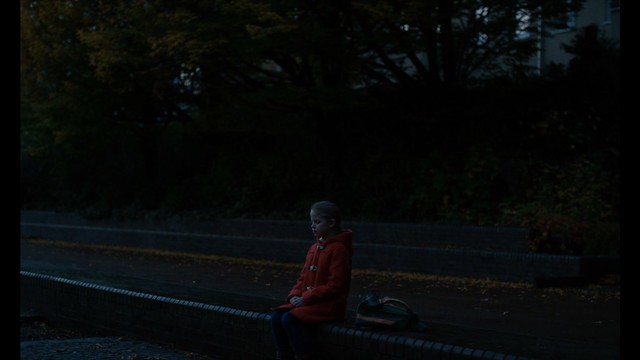
Angela Schanelec's take on the effects of grief in I Was at Home, But... might be less inscrutable than her last film The Dreamed Path, but that doesn't make it any less challenging. It mostly concerns Astrid (Schanelec regular Maren Eggert) a widowed mother of two - young daughter Flo and troubled teenage son Philip. As typical in Schanelec universe, in series of image fragments without much dialogue through out the film, we gather that the father who was in theater had been ill and died about two years ago. Philip (Jacob Lasalle) had been missing but emerges from the forest, with his yellow jacket all muddied up and an injury to his foot. Astrid is elated, as seen in a silent scene where shehugs Philip and motionless for a while until the camera cuts. One could guess that the death of the father contributed Philip's behavior.

Astrid is in a vulnerable state emotionally and acts out her frustrations outward to any human contact. There is a lengthy segment where she buys a second-hand bicycle from an old man who uses an electro-voice box to communicate. After finding out the bicycle is a junk, she tries to confront the old man and get the money back. Even though the old man offers to fix the bike, Astrid is belligerent. She assumes Philip's teachers are considering expelling him for his off screen unseen behaviors and lashes out on them. She also scolds a filmmaker friend rather harshly, on his use of a terminally ill in his film that she just saw. She says that there is no truth in acting and it was irresponsible for him to have the terminally ill person being in the scene with actors 'pretending'. She explodes at her children when they make too much noise or make mess in the kitchen (even if it was well intentioned). However the small and insignificant these interactions are, they poke at her raw emotions yet healed.

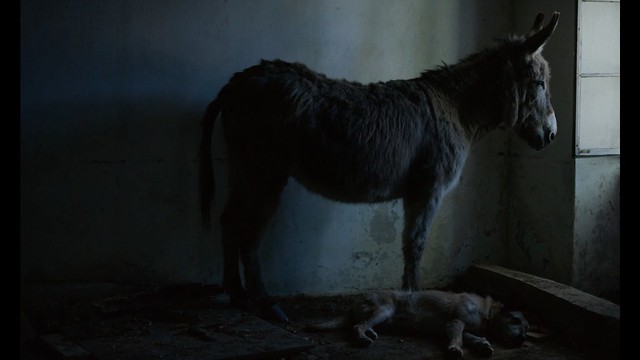
The silent pastoral scene involving a rabbit, a donkey and a dog bookends the film. Schanelec's affinity with Bresson is a known fact. But the appearance of donkey really tickles the senses here. As the dog takes apart the rabbit because it's his nature to do so, we see it laying to sleep under the watch of the donkey. In Au Hussard Balthazar, donkey is seen as an allegory for Jesus who forgives all our sins. Does Schanelec equates grief as one our natural tendencies that lashing out against death is forgivable? Then there is motive of crown keeps popping up and I can't help reverting back to the crown of thorns/flowers in the Bresson film. Then what about Hamlet high school recital where Philip plays the ill fated Danish prince?

There is a slight subplot involving Lars (Transit's Franz Rogowski), one of the teachers in Philip's school who is going through a break up. There is a heart breaking scene at night in an empty parking lot. Lars wants a child, because he is afraid of vanishing. There is nothing to show for their love ever existed. But she doesn't want to. She can't be anyone's wife, because she is on a mission. A mission to be alone and lonely. For what, exasperated Lars asks. She doesn't know.

Just like other Schanelec's work, I Was at Home, But... is a puzzle piece that is never solvable. We have opaque characters with Bresson style delivery. We instead concentrate on gestures, details inside the frame in compensation for the lack of dialogue. It's that fragmentary images and colors that we play around our heads long after we leave the theater to make sense of it. Even more so than Godard's, Schanelec's cinema concentrates on 'visual' part of the medium. It is the best kind of cinema I can think of.