Showing posts with label ND/NF 2015. Show all posts

Saturday, September 12, 2015

Where is Our Mommy?

Goodnight Mommy (2014) - Franz, Fiala *Originally Published March 26, New Directors/New Films
 photo 541673d5-6431-42b1-8173-4e70d7dcf4cb_zpsboqpdwc8.jpg
As far as creepy twins movies go, Goodnight Mommy tops it all. Impeccably executed and acted, this Austrian chiller rubs shoulders with Funny Games on cringy inducing level. It is no surprise then that the film is directed by the wife and the nephew of Ulrich Seidl. It's quite an achievement what they pulled out from the young real twin brothers Lukas and Elias Schwarz.

We are introduced to preteen twins, Lukas and Elias, playing in the corn field, then near the lake. Colors are lush and vibrant you can almost smell the warm Summer surroundings. Something dark and sinister is hiding just around the corner. You can feel it. Then there is mom (brave Susan Wuest), whose face is bandaged like a mummy. She is cold and distant and barks orders at Elias and doesn't seem to acknowledge Lukas's presence. It becomes pretty clear that Lukas doesn't really exist and that something terrible has happened before. But there is scarcely any dialog for the first half of the film. They are in the hiding in the ultra modern house in the country, away from Vienna. Lukas is feeding his brother some unspeakable thoughts: our mother isn't really our mother. We need to find out where our mother is from that woman who is not her. From then on, Goodnight Mommy slowly slips into very dark, dark territory.

Franz and Fiala know to build tension without the help of music or dialog. Goodnight Mommy is quite a feat for visual storytelling. Images, shots and editing matters. Not quite formalist approach of Seidl but the images have power in this film.

Wednesday, August 5, 2015

Silent Grief

Violet (2014) - Devos
 photo 1681c94d-4a60-4ccd-944d-ced13b3e6cc6_zpscj1rmkkn.png
 photo 4b50a562-9d8c-4154-86e5-4298a1499ab9_zpslknzrtxh.png
 photo f5b02ba4-e191-4958-a4b5-4a1384d2d893_zpsttlstcpa.jpg
Stunningly photographed in full frame, Violet expresses the physical & emotional detachment from grief and shock after a senseless murder. The film is extremely understated and somber yet 10 times more cinematic than anything Gus Van Sant has done. Use of shallow depth of field, sparse dialog and disorienting yet highly effective sound design conveying the silent grief, first time Belgian director Bas Devos achieves something remarkable here.

Devos knows just about how long to hold a mute static shot or hover over youth inhabiting suburbia to have resonance and depth. The 7 minute one shot ending is worthy of Antonioni comparison.

Monday, July 13, 2015

Sobering Look at India's Judicial System

*Originally posted on 3/25/15 for New Directors/New Films coverage

Court (2014) - Tamhane
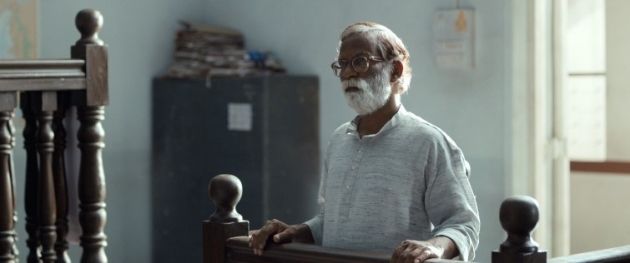
 photo 7f82bd88-acca-4fb5-80fa-ecacd8a3558e_zpsdc0az9ek.jpg
Winner of the two prizes at Venice Film Festival 2014, Chaitanya Tamhane's Court lends an earnest look at India's judicial system. The film is a sobering, eye opening experience.

It starts with an arrest of an old folk singer and tutor of children, Narayan Kamble (Vira Sathida) at an outdoor stage in a Mumbai slum, as he sings an incendiary, but deliciously catchy song about government corruption and unjust system. In the court, he is accused of abetting the suicide of a sewer worker who died in a manhole. It was one of his songs that allegedly drove the worker to his death. He was working the same job for 5 years but he was found dead without any protective gear inside the manhole, so says the prosecution.

The charges are obviously absurd and unfounded, but as we soon learn, everything needs to go through the judicial proceedings. Narayan seems to be used to this: he's been a radical activist in the slums since the 70s. When he is asked if he wrote and performed a song, "Manhole workers should suffocate and die," he wryly responds, "I haven't written that one yet, but now I might." 

It's his human rights activist attorney Vinay Vora (Vivek Gomber, who also serves as a producer) who is more affected by the arrest because without bail, the possibly lengthy trial and being in the judicial custody will undoubtedly worsen the health of 65 year old defender. The presiding judge, following the procedure by the rules, just orders that.

John Grisham Courtroom thriller it's not, Court has no star witnesses or heart stopping twists and turns. The crowded courtroom is shown in static shots where other cases are waiting one after another. Narayan's case is one of many of that day in front of the same judge. With the rigid caste system, the film paints much more complicated picture of the society than a simple white-trash-been-done-wrong-by-the-big-corporation scenario. Tamhane avoids the film becoming a melodramatic hero/villain story. We don't see Narayan in jail at all. Instead, the film follows the inner lives of Vinay the defense attorney, the public prosecutor (wonderfully played by Geetanjali Kulkani) and the judge (Pradeep Joshi) in succession.

Vinay is the face of India's global elite society: from a wealthy household, he drives an expensive car, listens to jazz and hangs out with his suave friends in chic bars where a musician sings English and Portuguese songs on stage. Still living at home, he is seen throwing tantrums at his nagging parents. Yet he is a compassionate one, trying to do right by his defendant.

We see the prosecutor taking the public transportation, talking to her friends about the latest fashion, picking up her son from a daycare, going home and cooking food for her diabetic husband. Her family time is in front of the small TV set. For entertainment, her family goes to see a comedy play that is extremely jingoistic. For the judge, he goes to a water park with his large extended family for the summer vacation.

For our public prosecutor and judge from the middle class backgrounds, even though they are socially close to the defendants they are persecuting, they process the cases by the book, lacking any kind of sympathy or considerations. The film raises questions about the nature of our society where only wealthy can afford to be compassionate and the within-the box-mentality of the judicial system.

After finding out the prosecution's witness is likely bought by the police and wife of a dead worker testifies that the dead man never wore any protective gear while cleaning the sewer and drank heavily before the job to ease the smell (these facts are revelatory for everyone involved), the case against Narayan is dismissed and the bail's granted. Vinay ends up paying for the bail.

The most powerful and telling scene plays out in a car ride. After testifying, the dead man's wife and her family is chaperoned by Vinay in his white sedan. He instructs her to fasten her seat belt which she doesn't seem to know how to. It's her bewildered expression as the car passes through the streets of Mumbai that tells thousand words. She fled out of fear to her village when her husband died and doing so she lost her job in the city. She tells Vinay that she would take any kind of job so if he knew any, please send them her way. She doesn't want his monetary help, she just wants a job. He drops them off in a slum populated by a murder of crows.

The next scene is Narayan getting picked up by the police again from a printing press factory while supervising his book, A History of Humiliation, getting printed. This time, the charge is using his tutoring place as a breeding ground for terrorist elements who are obviously into seditious activities. The police's persecution of the untouchables continue, packing up the courtrooms, making the procedure an unending cycle.

When Vinay protests that summer recess will put the defendant in judicial custody for a long time, the same judge replies, "We are closed, but you can always take it up to High Court."

All the performances are stellar, considering many of them are non-actors. In the heart of it all is Vira Sathida. A real life activist, his rhythmic, infectious, biting songs come to life whenever he performs. I would love to see him perform for hours.

Tamhane's understated, layered script highlights the lack of understanding among different social strata in a complex society which is still deeply bound in tradition in the 21st century. As the film ends with the judge falling asleep on his chair on his vacation, the audience is left to grapple with the death of a sewer worker who's already forgotten by everyone. It is also chilling to think that there isn't going to be any kind of investigation on the condition of these lowly workers. Biting and devastating, Court is one the best films I've seen so far this year.

Court opens July 15 at Film Forum in NY. Please visit their website for tickets and times.

Wednesday, April 22, 2015

Homeward Bound

White God (2014) - Mundruczó
 photo White-God_zpscrd2pxww.jpg
Despite its dumb, Sam Fuller mis-inspired title, Hungarian Kornel Mundruczó presents a simple, tugging at your heart strings tale of lost dog found or dog-finds-his-way-home-bloodily-avenging-misdeeds-along-the-way. White God is a technical marvel and dog trainers involved should get some recognition for this.

A button nosed, rebellious girl Lili (Zsófia Psotta) and her trusty brown lab mix, Hagen, have to spend three months at her divorced father's small bachelor apartment because her mother is going to Australia. Apparently there is a tax for keeping non-purebreeds in apartment buildings in Budapest, so there is a rift between father and daughter. After getting in trouble bringing in Hagen to a music practice (Lili is a trumpet player in a school band practicing Tannhauser for concert) and an argument, dad leaves Hagen in the middle of the street, much to Lili's dismay. Then the film becomes a harrowing homeward bound story. Hagen and his new stray friends on the street are persecuted and hunted by evil humans: nosy neighbors, city's dog pound, illegal dog fighting ring. Some of the film's sequences are hard to take and will undoubtedly raise some eyebrows of American viewers, however well faked they are. The question is: Will Hagen, now trained to be aggressive killing machine on the loose and hell bent on revenge, tear apart little Lili? Gotta admit though, watching hundreds of dogs flooding out the streets of Budapest and behaving the same way while Wagner blaring is at once comic, surreal and thrilling. Be nice to animals yo.

Sunday, March 22, 2015

Preparing for Apocalypse

Parabellum (2015) - Rinner
 photo 628da3f3-8e8a-49a8-b1dd-efd707c08397_zpsgngr6j1u.jpg
It's early morning. It starts with the lush landscape and the camera slowly pans to reveal a tranquil greenery. The opening of Parabellum reminds you of the opening scene of Carlos Reygada's Silent Light, except for imposing beat of electro music. You know something's gonna go down. Then a firebomb strikes down from the sky and the earth shakes, setting up the mood for the rest of the film.

In Lukas Valenta Rinner's Parabellum, the world is in turmoil - there are constant reminder of natural disasters, civil unrest on TV newscast and airwaves- "A tragic situation is developing in Argentina."

We focus on an unnamed man preparing for a journey: he quits his white color office job, drops off his cat at the pet shelter, checks on his old man at the nursing home and cancels his phone service. The whole sequence is briskly and impeccably arranged with much precision. He is going into the jungle to join a training camp designed for survival.

The camp looks like a cross between fancy eco-tourist lodge & military boot camp, equipped with a jacuzzi, pool, shooting range and staff who make beds and serve food. Ordinary looking men and women of all shapes and sizes, go through vigorous physical and theoretical training. Each morning, the compound makes an announcement through the loud speakers. Before their mandatory trainings at a set time, they can choose to take part in gardening, homemade explosives or camouflage classes.

The trainees who populate these compounds are obviously well off to be there, as if money can buy one's survival. But Rinner doesn't really linger on these trifles, for the film is, after initial chuckles, not a black comedy.

Almost free of dialog (other than formal instructions by the trainers) and divided in chapters according to the fictional "Book of Disasters", Parabellum's tone is somber and deadly serious. Nowhere is safe, the seemingly random strikes comes from the sky. Even into their camp grounds.

After the grueling, first initial training - hand to hand combat, weapons training, etc., the people are transferred by boat, to a more remote areas to train more. As the film progresses, it focuses on a handful of trainees.

The real violent act doesn't happen until after the training. After taking over somebody's house, they take up a boat. It becomes quite apparent that they would sail themselves back to the civilization. One of the younger, frail trainees seems to have a mental breakdown and lights himself and the boat on fire. But we have no idea why these people do what they do because the film provides little to no indication of what they think or feel. All we know is, most of the trainees are motivated to be prepared, to be ready for the worst.

Its minimalistic, wideshot approach and emotional muteness, Parabellum plays out like a Gus Van Sant directed post-apocalyptic film. With the spectacular reveal at the end, the film signals the arrival of a major talent emerging from Argentina.

Parabellum plays as part of ND/NF 2015 at MoMA on 3/23 and at FSLC on 3/24. Q&A with director Lukas Valenta Rinner will follow for both screenings. For more info, please visit ND/NF website.


Dustin Chang is a freelance writer. His musings and opinions on the world can be found at www.dustinchang.com

Friday, March 20, 2015

Kafka in Inner Mongolia

K (2015) - Erdenibulag, Richard
 photo 2598ef0e-0119-42a5-9eca-6e0d50435238_zpsjugqxwz8.jpg
Here is a thought: what if Kafka's Castle is transposed from the cramped, dreary, dark Eastern European city to the airy, spacious, light Inner Mongolia? It is realized by Mongolian director Darhad Erdenibulag and English born Emyr ap Richard in their simply titled film, K. They put a new twist on Kafka's unfinished, ultimate bureaucratic nightmare story (along with The Trial).

Frizzy haired land surveyor K (Bayin) arrives in a village in the middle of nowhere. He gets a very hostile reception from the locals and can't seem to get an access to either the castle or the governor Klamm who supposedly has assigned him the job. His path crosses with series of beautiful women who string him along and feed him only snippets of information at a time which don't amount to much and often contradict each other.

With his two assigned leather jacket wearing assistants (both of whom he names Jeremiah, for convenience's sake), K tries to wade through local bureaucracy and get to the bottom of the nature of his role.

Then he is told that his service is not needed anymore that there was a miscommunication. Now he has to report to the local school to be a school janitor. It seems that it's a taboo to criticize the castle and its bureaucracy because it's flawless even though it's obviously not. I mean, his whole situation is bungled.

It also seems that all the Castle employees are feared and all the girls are only at their disposal for sexual favors. A beautiful mistress of Klamm, Frieda (Jula) who works as a barmaid, becomes K's companion but ultimately leaves him for another, less important man (is it Jeremiah or Arthur?). But in order to not to piss off all mighty but unseen Klamm, she needs to go back to the being a barmaid.

Directors smartly stick to Kafka's dialog and western names faithfully and through Mongolian actors and their language, the effect is quite otherworldly. Other than K wandering windswept landscape in the opening, the rest of the film takes place exclusively in simple interiors mostly with natural lighting. It has an airy, hazy feeling of eternal morning. Everyone, including K sleeps a lot and conduct their business in their beds. With eternal sunlight seeping through the windows, K has a feeling of lucid dreaming state.

Concerning the film, only comparison I can think of is Erik Skjoldbjærg's neo noir classic, Insomnia. Of course K doesn't really work as a thriller, but with its somnambulist protagonist who finds himself lost in a moral and literal fog and paranoia is very similar to that of the Norwegian film. I didn't think of the Skjoldbjærg's film as Kafkaesque before. Heh.

K is a different, artful interpretation of the source material for sure. But Kafka's writing is usually associated with grim reality and unfathomable pressure associated with living in a certain immobile social stature: life as an entrapment. Not to mention the author being Jewish in an oppressive society.

Bureaucracy can be universal, but compare to the characters in Kafka's original writings, what Mongolian K is experiencing seems not quite hopeless enough. As one of the characters says to K in the film, "Sometimes the smallest thing can become a great irritancy"; for us, irritation seems to describe what K feels, not life-long suffering.

K plays part of ND/NF 2015 on 3/21 at FSLC & 3/22 at MoMA. Co-director Darhad Erdenibulag will be on hand for Q & A. For more info, please visit ND/NF website.

Thursday, March 19, 2015

A Charming, Deftly Surrealistic Slacker Comedy

Tu dors Nicole (2014) - Lafleur
 photo 859f46a7-169d-4d02-b020-675445d570d4_zpscymstrlf.jpg
After making an appearance at The Directors Fortnight section of Cannes Film festival last year, Tu dors Nicole screened at TIFF and was included in Canada's Top Ten feature films of 2014. It's playing as part of New Directors/New Films series at FSLC on 3/20 and at MoMA on 3/22. Please visit ND/NF website for more info.

Quebec based filmmaker Stéphane Lefleur's wry slacker comedy Tu dors Nicole (You are sleeping, Nicole) stars Julianne Côté in the title role of Nicole, a 20 something young woman with one foot still firmly lodged in childhood and the other slightly hovering over somewhere else.

It's the beginning of summer and her parents are away on vacation. She has a big house and an outdoor pool all to herself. Other than working at a local thrift shop, she spends most of her time either in bed or aimlessly walking/biking around town with her best friend, Véronique (Catherine St-Laurent) who works at an office.

Their tranquil existence is shattered when Nicole's moody older brother and his band mates set up shop in their parents' living room to practice. The band's new drummer, JF (Francis La Haye) is kinda cute in that grungy way (like their 90s style music), but it's pretty obvious that he is more interested in pretty blonde Véronique than her.

Nicole's boredom occasionally breaks with surreal moments in everyday life- the neighbor picking up her dog's doo-doo in the yard with a vacuum cleaner, a frail looking neighborhood boy Martin, whom she used to babysit before he made advances on her, now having a svelte baritone voice, for his voice broke way too early for his age (he's like 8), JF's mysterious First-Aid kit turning out to be a best tomato sandwich making kit, perching a giant stuffed toy over a used funiture and a geyser shooting up in her backyard pool, like in Iceland.

Her life gets a little brighter when she gets her first credit card in the mail. But she doesn't really know what to do with it other than paying for ice cream sundaes at the local outdoor ice cream shop. But on a whim, she buys plane tickets to Iceland for herself and Véronique. They learn Icelandic phrases in preparation - vacuum cleaner in Icelandic is ryksuga, for instance. But what's in Iceland? What would they do there? "Nothing. We do nothing somewhere else," Nicole replies wryly.

tu dors nicole poster.jpgBeautifully shot in contrasty black and white by Sara Mishara, Tu dors Nicole is especially gorgeous in exterior night scenes: as an insomniac, Nicole partakes in nighttime baseball game, standing under the park lamp dazed, while the ball drops to the ground near her. She walks around at night in the neighborhood which are only illuminated by street lamps. She hears whale songs in the night winds and hitches a ride, driven by a tired father driving in circles in the hopes of putting his baby in the backseat to sleep.

After getting fired from the thrift shop for stealing donated clothes, she resorts back to babysitting lovesick Martin who tells her he can wait for her. "Take your time, experience the world, then come back to me", he says in his velvety voice. Then they play Cowboys and Indians.

Côté beautifully underplays her character, covering up all the scruples of growing up with a wiry smile. There is glimpse of natural beauty in her when least expected - in front of electric fan or with the Indian war princess make up on.

Tu dors Nicole plays with elasticity of time- everything seems to be in slow-motion when you are young but it accelerates in speed as you grow older. Nicole's somnambulistic life gets a dose of reality check when she runs into her former High School sweetheart who's getting married. And Véronique can't get away from the job to go to Iceland because she has to pay the rent. It's not svelty Martin who's on the verge of adulthood, but it's her and she is not ready to admit that yet.

Lafleur's talent is in his delicate writing aided by droll visual composition. Small things in Nicole's life have a tendency to resurface in physical forms in surrealistic way. I find his deadpan humor and subtle, surrealist touches irresistibly charming.