Showing posts with label NYFF 2016. Show all posts

Saturday, December 17, 2016

Path to Sainthood

O Ornitólogo/The Ornithologist (2016) - Rodriguez
Screen Shot 2016-12-17 at 11.18.32 AM
Screen Shot 2016-12-17 at 11.19.15 AM
Screen Shot 2016-12-17 at 11.45.07 AM
Screen Shot 2016-12-17 at 11.25.26 AM
Screen Shot 2016-12-17 at 11.27.04 AM
Screen Shot 2016-12-17 at 11.29.22 AM
Screen Shot 2016-12-17 at 11.30.42 AM
Screen Shot 2016-12-17 at 11.31.36 AM
Screen Shot 2016-12-17 at 11.32.22 AM
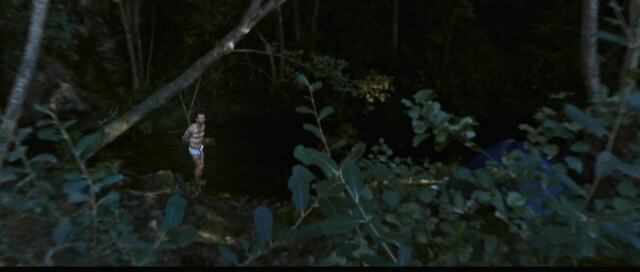
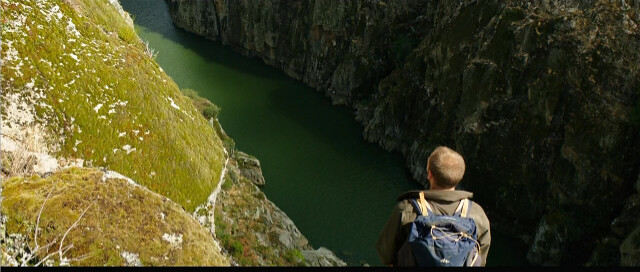
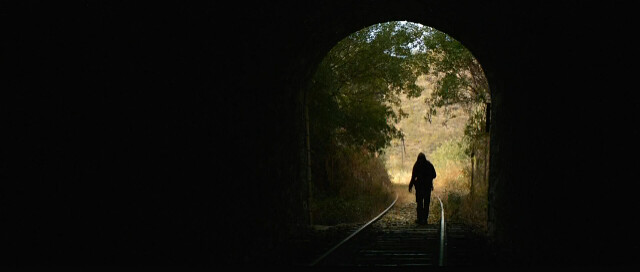
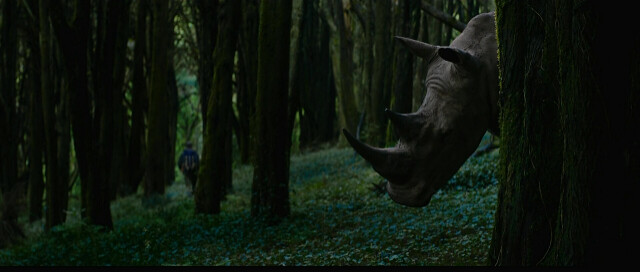
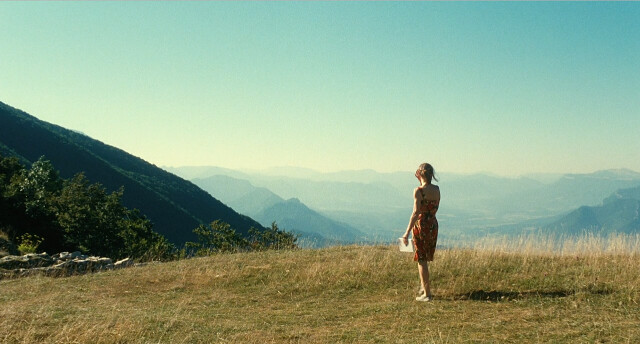
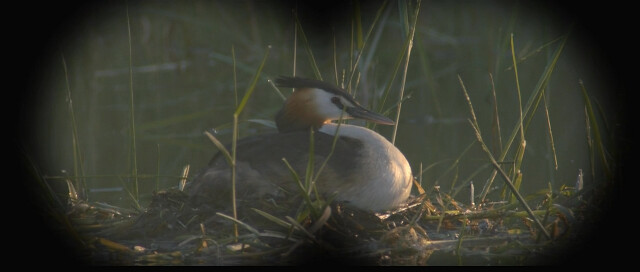
Portuguese filmmaker Joao Pedro Rodriguez's The Ornithologist strongly reminds me of irreverent, freewheeling cinema of Weerasethakul and Gomes. It tells a gay ornithologist's long and winding journey to self-discovery/sainthood in a series of misadventures while kayaking/hiking through the picturesque wilderness of Northern Portugal. Fernando is seen kayaking, observing rare birds through his trusty binoculars and communicating occasionally with his boyfriend through his cell phone. But the reception is spotty in the wilds. As he observes, there is a constant reminder that he is being observed too from the sky, the top of the cliff or trees, that this is not a one-way affair.

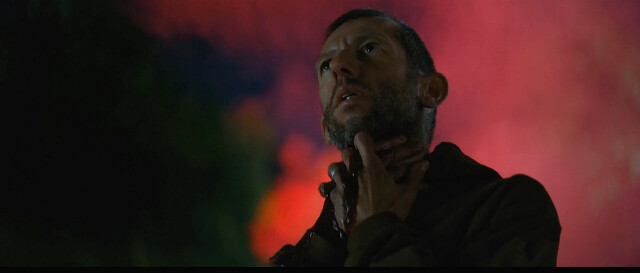
After his kayak hits the rapids and capsizes, he is revived by two chatty Chinese female hikers who are on a pilgrimage on foot to Santiago de Compostela, known as the St. James Trail. They are devout Christians who seem a little odd. There are a group of men in masks performing strange rituals in the woods at night and the girls ask Fernando to protect them and accompany them to find the way back to the Trail. But before Fernando realizes, these two 'crazy Chinese bitches' tie him up at night in St. Sebastian style to a tree and talk about castrating him in Chinese. He escapes at night and finds himself lost in the woods without a map.

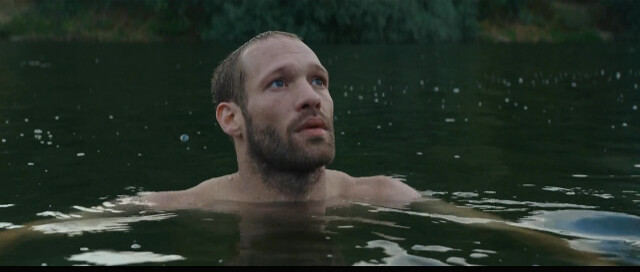
Fernando then runs into a baby-faced deaf mute goat herder named Jesus. After skinnydipping together, they have sex but one thing leads to another, he ends up putting a knife in Jesus's chest. By the time he gets his hoodie back and a having a knotted rope for a belt, Fernando slowly becomes looking more like a Jesuit priest. First with a white dove then encountering a lot of other animals (both alive and stuffed), and shedding his earthly attachment - phone, his pills, he is becoming one with his surroundings.

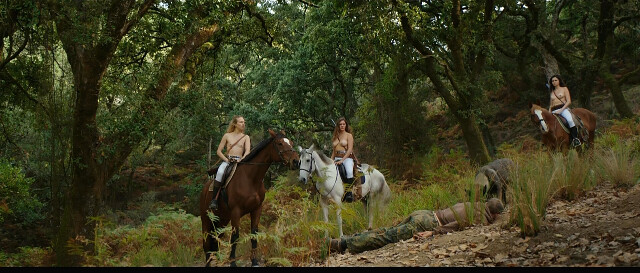
He then gets hunted by topless Amazonian women on a horseback, and meets back up with Jesus, or his twin brother who turns out to be a masked ritual performing man who had urinated on him before.

The increasing absurdity, punctuated by beautiful images of nature, this leisurely paced film is an intoxicating mix of madcap imagination and sensory cinematic experience that is truly hard to forget. It would make a great threesome with Honoré's Metamorphoses and Giuradie's Staying Vertical as examples of recent playful, eccentric and adventurous queer cinema at its best.

Thursday, December 8, 2016

Romanian Rhapsody

Bacalaureat/Graduation (2016) - Mungiu
Screen Shot 2016-12-08 at 11.03.48 AM
If nothing else, Romanian New Wave has shown that it excels at acute observations on ordinary people navigating through a chronically depressed, highly bureaucratic country- a society strewn with broken promises of capitalism after the collapse of communism. Christian Mungiu, once again, sharply yet subtly illustrates one such case with Bacalaureat. Romeo (Adrian Titieni), a medical doctor, sees his life unraveling before his eyes - having an affair with one of his patients (a single mom school employee) put a strain on his marriage (been sleeping on the couch for a year and a half), his frail old mother has fainting spells due to brain aneurism, so naturally, he puts all his hope on his pretty daughter Eliza getting a good education. Since Romania is so helpless, he is pushing hard for Eliza to go to England to get educated. In order to get a scholarship to go to overseas, she needs to ace Bacalaureat exam, a series of tests at the end of the High School year. But on the way to school one day, Eliza gets sexually assaulted by an escaped convict in a broad daylight. Visibly shaken and disturbed, she doesn't do well on the test next day. Considering all the circumstances, Romeo decides to ask for help of his police chief friend, not only for arresting the attacker of his daughter, but to 'fix' Eliza's test scores. The cop suggests a man in some higher level position in government, who needs a liver transplant. Can Romeo do anything about moving him up on the list of people in waiting ?

This doing favor in return thing and pulling strings in the system get entangled and awkward really quickly. Magda, the long suffering wife, thinks it goes against everything they taught their daughter but doesn't do anything about it since he has been always the doer/decider. To complicate matters even more, her biker boyfriend in town, Eliza also has second thoughts about going to England.

Romeo puts it grimly about the state of the country: he tells Eliza that he and mom decided to stay because they were hopeful but nothing had changed since then. That they tried but failed to move a mountain. That there is no future for the younger generation. And that she deserves better. He even tries (in vain) to revenge his daughter by following one of the suspects. He cries over the dog he ran over with his car. He tries to do right by the women in his life but life keeps throwing curve balls at him.

Bacalaureat draws Romeo's dilemma as a father, as a man, as a Romanian really well. It's an amazingly scripted film that contains all the nuances of the sticky human existence.

Sunday, November 27, 2016

Life's Curveballs

L'avenir/Things to Come (2016) - Hansen-Løve
Screen Shot 2016-11-27 at 10.57.15 AM
Natalie (the indomitable Isabelle Huppert), is a philosophy professor. She's married to a fellow academic, has two grown up kids and an aging, needy mother. They have a house in Brittany where their kids grew up, shelves full of books, in short a comfortable bourgeois life style. Natalie's life is thrown out of whack when her husband of 25 years tells her that there is another woman and he's moving in with her. Then her frail mother needs to be put in a nursing home. And she need to take care of her mother's cat named Pandora.

Mia Hansen-Løve, quite possibly the most astute observer of life and the passage of time in all contemporary writer/filmmaker, pulls off perhaps the most mature, nuanced and subtle work to date. In the Sarkozy era France background in political and social instability with student demonstrations dominating in and out of classroom (whatever the circumstances is, she makes a point that it's not unlike May 68'), the director contemplates the life that we thought we built for ourselves and the fragility of it.

And Huppert is, as always, marvelous. Her Natalie is literally losing everything- her marriage, parent, income from her text books that didn't get renewed. Surely there are some tearful nights alone in bed, but she is taking it all in strides. One of the members of her former student's collective in the mountain farm asks her political opinion on something (I don't remember what), she says she's been there and done that, that she's outgrown that ideal of her former self. Perhaps it's Natalie's experiences in life that makes her cope better with new, unexpected changes in life. That there are some values to getting old. There is a death and there is a birth in L'avenir but Hansen-Løve doesn't treat any of the life's 'big event' so dramatic.

L'avenir is also Hansen-Løve's most technically accomplished work to date. Sun drenched, warm cinematography and always moving camera make a point that whatever life throws at you, it's not as earth shattering as it seems. One of the very best this year.

Sunday, October 16, 2016

The Lost City of Z, for an adventure movie, lacks bravado

The Lost City of Z (2016) - Gray
 photo 89047dcf-1033-45a3-b998-860563e4e4bc_zpsviaivsvi.jpg
The Lost City of Z, an unabashedly old fashioned, bows-and-arrows school boy fantasy based on David Grann's non-fiction bestseller of the same name, stars Charles Hunnam as a British army officer turned explorer, Col. Percival Fawcett, who had a perilous obsession with the Amazon jungle.

Despite years of being stationed overseas and proving his leadership abilities, according to his sneering superiors Fawcett "had a bad choice of his ancestry" -- his father was a drunkard and a gambler, and therefore forfeited his advancement in the army. With the help of the uppity Royal Geographical Society, together with Britain's interests in rubber industry in the Amazon, Fawcett is granted an expedition into Eastern Bolivia to map the fuzzy Bolivian and Brazilian border deep in the jungle.

The two-year expedition means being away from his spirited wife Nina (Sienna Miller) and his young son, Jack. But man must do what he's got to do -- to restore his family name in good standing in a rigid society and be a hero and whatnot.

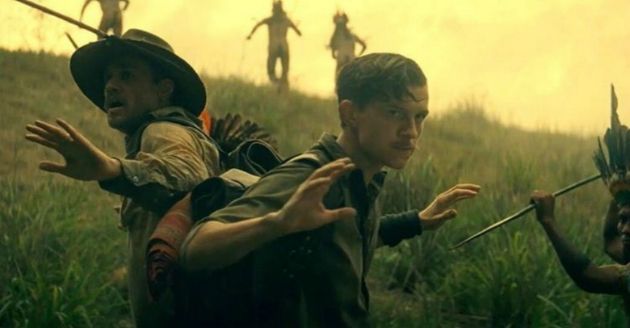
Fawcett's small team, including Costin (Robert Pattinson) and Manley (Edward Ashley) with an Indian guide, goes up the river only to be attacked by various Indian tribes and suffer diseases and hardship. But the explorers not only find the source of the river, they also find evidence of an ancient civilization: broken potteries and sculptures of human figures.

After returning home, Fawcett becomes an advocate against the general notion of the natives of America as arrow chucking, cannibalistic savages who are forever stuck in the early Iron Age. Finding the lost civilization in the Amazons becomes an obsession for him.

With the backing of rich patron/fellow explorer James Murray (Angus Macfadyan), Fawcett and his team set out a second expedition, despite angry objections from Nina. When disease and the unforgiving climate of the jungle becomes too much for out-of-shape Murray, they have to abandon the mission. At home, the accusations fly and Fawcett strains his ties with the Royal Geographical Society.

The first World War interferes with Fawcett's obsession as he is sent to the frontline, where he sees many of his friends die and himself getting injured in the horrific battle of Somme. Now nearing 50, and his son Jack a young man, father and son try once again to find the lost city.

You can't escape the shadow of Werner Herzog when it comes to making a film set in the Amazon. Aguirre, The Wrath of God and Fitzcarraldo, about a man's obsession and his futile attempt to wield the course of nature both spiritually and physically, are towering examples to measure up to. All the hardships and suffering in the making of these films are justified by the breathtaking end results.

It might not be fair to compare, since Gray is a very different kind of filmmaker, who prides himself in emotionally fine-tuned dramas. Despite all the glorious pretty picture show, well-rounded characters and fine acting don't really suit the adventure genre. But that's just it. His attempt at showing 'it's the journey not the destination' lacks a proper bravado and zeal, constantly interrupted by Fawcett struggling with domestic life and in finding his stature in the rigid society.

Shot on 35mm by Darius Khondji (who also shot Gray's period piece The Immigrant), The Lost City of Z is a very handsome movie. Gray does his best to be faithful to the source material and instill every character with humanism. But I find Nina Fawcett's proto-feminist character too propped up to be believable in otherwise this male-oriented adventure film.

There is nothing particularly wrong with The Lost City of Z. I buy that one man's obsession -- 'a man's reach should exceed his grasp' -- is a worthy subject for a movie. Obviously, it's much less offensive than that last Indiana Jones film or Apocalypto when the depiction of natives are concerned. But do we need another film about a white man's journey to validate another culture's worth in this day and age?

The Lost City of Z (and as well as The Immigrant), as a sumptuous and elegant epic it might be, doesn't quite justify all the effort put in by everyone involved.

The film had its world premiere at the New York Film Festival. It is being distributed by Amazon Studios in theaters in early 2017.

Friday, October 14, 2016

Elle: Paul Verhoeven Doubles Down on Making a Rape Comedy

Elle (2016) - Verhoeven
 photo 663223a9-a7c9-45ec-a1ca-fb514a29a667_zpshflb4nhm.png
In the age where a presidential candidate says he's grabbed women by the pussy and still has a chance to win, Verhoeven doubles down on the impossible task of making a rape comedy. The king of bad taste, known for such classics as Starship Troopers and Showgirls, Verhoeven has always been walking the fine line between vulgar entertainment and satire while enjoying pushing buttons a little too much. It's a rare gift for a filmmaker to be having a cake and eat it too -- there are no wink-wink moments or obvious strings of the puppet master seen in his films and actors all seem to play straight without irony. But whenever you watch his films, you can feel 'all the world's a stage' vibe. And Elle is a terrific entertainment.

Elle is made possible because of Isabelle Huppert. The most fearless actress of our time, she dives right into the role of Michele, a callous woman who gets raped by a masked intruder and has to deal with the aftermath. The film starts with the said rape in black screen with the sound of glass breaking and beating and moaning. After the incident, Michele carries on as if nothing has happened. She changes all the locks in her luxurious apartment, chides her cat for not gauzing the rapist's eyes out while it was happening, goes to work and dinner parties. As the head of the company which makes sexually violent video games, she complains to her much younger male programmers that the prototype graphics for the next project is not shocking enough. When she announces her experience matter of factly at the dinner party to her friends and her ex, they were flabbergasted by her not calling the police and how calm she is. She gets dirty texts from the assailant and gets somewhat aroused by them. But who is he?

Elle is not a revenge thriller per se. Not quite whodoneit either. Like many of Verhoeven's other films, it is a hard to pin down film. Not as over the top and sentimental as Almodovar nor as clinical and visceral as Cronenberg, but it's so deftly and slyly done, you can't not enjoy it even though rape is not a light subject to joke about. Destined to be controversial and definitely a conversation starter, Elle highlights two artists at the top of their game.

Wednesday, October 12, 2016

Kelly Reichardt's Back in Form with Certain Women

Certain Women (2016) - Reichardt
 photo 12a5cf08-0ed6-4cdd-81a4-67a6cef7efde_zps2n0fayck.jpg
Certain Women signals that American indie auteur Kelly Reichardt is back in form.

In my opinion, Night Moves, her attempt at an eco-thriller starring Jesse Eisenberg and Dakota Fanning, was a small misstep in her otherwise spotless filmography. Her strength lies in her minimalist approach to depicting the inner lives of lonely people inhabiting her beloved Pacific Northwest, not in complicated plots or building up tension or presentation of violence.

If her newly restored/rediscovered debut film Rivers of Grass gave a nod to Bonnie and Clyde and old noir films, with Certain Women, Reichardt does Altman -- an ensemble cast and loosely connected stories, based on short stories (by a Montana Native, Maile Meloy). But it's still very much Reichardt's film: with muted tones, a sense of melancholy and loneliness, Certain Women excels at dramatizing small, minimalistic character studies that are distinctly small town Americana. Also, many of her films placed women in precarious situations to observe, but I think this is the first time that she is exclusively telling women's stories.

Three slightly interconnected stories, taking place in Montana -- still very much Reichardt's territory -- feature Laura (Laura Dern), a small time lawyer; Gina (Michelle Williams), an overachieving professional and wife/mom; Beth (Kristen Stewart), a newly minted adjunct teacher of a nighttime adult education class; and Jamie (Lily Gladstone), a ranch hand who has a crush on her.

Laura's story has to do with a client of hers, a disgruntled mechanic (Jared Harris) who was injured at the job, but took an early settlement. So he can't sue his former employer. He keeps coming to her office, asking her to check his file again and again. Until she takes him to another lawyer for the second opinion on the case, fully knowing that the other lawyer is going to tell him what she's been telling him for months: he doesn't have any recourse; he lost.

Harris gives an extremely sympathetic performance as a man who has lost everything because of his injury and is trying to hold on to some kind of human connection. Because Dern is attractive, attentive and warm, and because he's lonely and desperate, he just wants to prolong their futile if sexist relationship. The hostage situation ensues. It is beautifully drawn by Dern, who deftly handles sexism without losing her humanity and compassion.

Gina, a high-strung woman married to a mild-mannered, less assertive husband (James Le Gros) and an unresponsive teen daughter, is trying to build a new house for her family. She wants to have a good foundation and is attempting to ask a local kook, if he could sell her a pile of historical sand stone bricks on his otherwise barren lot. The old man doesn't like her sassy attitude and her husband isn't helping much to persuade the man.

Her attempt at building a harmonious family is failing and as we the audience know something she doesn't, it involves her husband. It's delicate, fine-tuned, unhurried storytelling and all the actors involved are fantastic. Michelle Williams might play the least sympathetic character of the three, but she does a very convincing job as a tough businesswoman who has to act a certain way to survive, never letting her guard down.

The most poignant story follows Jamie, a lonely horse ranch hand in the remote town of Belfry. She leads an uneventful, repetitive life, looking after horses day after day. One night she follows some folks into a classroom and meets Beth, a brand spanking new teacher on her first day, reading off an index card full of information on school laws.

She is instantly attracted to Beth and they go to a local diner before Beth drives off to Livingston, a two-hour commute she has to make every Tuesday and Thursday. The only reason Beth, a law school student who also works at a shoe store, took the job is because she thought she got the job at Belgrade, about thirty minutes from Livingston, not Belfry.

Now Jamie has something to anticipate. Their brief late night diner encounters become some kind of ritual, at least for Jamie. They have a moment when Jamie takes Beth to the diner on a horseback. But Beth doesn't show up for the next class and Jamie is told that due to a long commute time, Beth is no longer coming back. On impulse, Jamie drives up to Livingston the same night, in the hopes of seeing Beth again.

Stewart, who's been shedding her teen-idol image by choosing various interesting roles, continues to impress here, playing a straight-laced, awkward young woman whose presence is still magnetic. But she takes a step back, allowing clear-eyed Lily Gladstone to shine in her role. Gladstone's depiction of an ordinary woman with a crush and heartbreak is beautifully realized. Her silent gaze alone speaks volumes.

With the exception of the presence of cell phones, Certain Women has that distinctive, melancholic, 70's American movie vibe. Reichardt masterfully draws these sad and poignant human encounters with the help of director of photography Christopher Blauvelt, who has collaborated with her since Meek's Cutoff, lensing underpopulated, Ed Hopper-ish small towns and the beautiful scenic vistas of Montana. Perfectly tuned for its quietude imbued in loneliness and longing, Certain Women is certainly one of her finest films to date.

Certain Women premiered at the Sundance Film Festival and will open in select theaters in the U.S. on Friday, October 14.

Death and Irony

The Death of Louis XIV (2016) - Serra
 photo c085995e-e958-42e5-8f4a-e15d28b59158_zpszw5d8s18.jpg
Death is a grisly business. It comes to all of us. Even if you happen to be the King of France who's been reining the kingdom for 72 years. From all the documented evidence indicates Louis XIV died of gangrene on his leg caused by diabetes. The year was 1715, without modern medicine, he died a painful, horrible death surrounded by physicians who were perplexed by his conditions.

Catalan filmmaker Albert Serra has been tackling literary/historical figures in his films -- Don Quixote in Honor of the Knights, The story of Magi in Birdsong, Casanova and Dracula in The Story of My Death; approaching them in minimalist, aggressively formalist fashion. Armed with extensive court medical documents and writings of Duke Saint-Simon and the French New Wave icon Jean-Pierre Léaud as the king, Serra sets out to make a straightforward account of the last days of Louis XIV.

Except for the first few minutes of the film where we see the king on the carriage outside, coming back from a hunting trip, the entire film takes place in the stuffy ornate interior bedroom of the Versailles. Gangrene has set in on the king's left leg and physicians are rubbing it with herbs, hoping it will go away. The old king mumbles and shouts in pain while eating grapes and sweets administered by the same physicians who argue endlessly among themselves what to do about the situation. People try to entertain and laugh at everything his Highness says, priests are called in to give the last lights but then sent back because he feels better, and so on. Even the learned physicians of the Sorbonne have no idea about the king's illness. His leg starts to stink and turns completely black. Everyone's waiting on the inevitable.

There are some funny bits with a snake oil salesman played by great Catalan poet and art critic Vicenç Altaió (whose turn as Casanova in The Story of My Death was hilarious) with his 'cure all' tonic made out of bull's sperm and other animal parts. After the initial success of the king's improving health after taking the tonic, the condition worsens and they order the phony physician's arrest.

Léaud, 72, has been keeping his restless, adventurous New Wave spirit alive by working with many daring contemporary filmmakers (Tsai Ming-liang, Bertrand Bonello, Olivier Assayas just to name a few) over the years. Here, he accepts the physically confounding role and fully collaborating with Serra, whose filmmaking charts new territories in cinema.

Perhaps the most poignant moment of the film is forever bedridden Louis XIV receiving his 5-year old great-grandson (the future Louis XV) and giving him advice. Having seen countless war and suffering of people in his time, he recommends the young kid to relieve his people’s suffering and avoid war as far as possible.

Even though Louis XIV’s health deteriorated quite rapidly in a month, the film feels like an eternity. But Serra never waivers in his aesthetics and keeps a straight face until the end.

The irony of the king's death is heightened by its straightforward presentation and procedural approach. The Death of Louis XIV is a very singular formalist filmmaking in its highest order.

The Death of Louis XIV is acquired by Cinema Guild for Spring 2017 release. please check their website for more details.

Monday, October 10, 2016

Bi-continental Romance

Hermia & Helena (2016) - Piñeiros
 photo 39e414c8-288a-49e2-8b47-d9de7261d200_zpstra93hgr.jpg
Matias Piñeiro's Hermia & Helena begins almost identically as his last film Princess of France, looking down at the soccer field. But they are two very different films. Even though his usual light-as-feather approach at twenty-something's bohemian lives and romantic entanglements might be the same, but the tone, the tempo, the setting of the film is noticeably different in Hermia & Helena.

Taking the cue from A MIdsummer Night's Dream, Piñeiro builds up bi-continent tales of love and friendship, in his unique way without ever heavily delving into anything resembling of a plot. Just clocking in at 70 or so breezy minutes and like his other films, it solely relies on seemingly complicated, incongruous structure and charms of his regulars (mainly María Villar and Augustina Muñoz) and some new faces Piñero acquired during his 2 years living in New York.

Divided by chapters with characters names, we loosely track the flight of two friends: first, it's Carmen (Muñoz) finishing up her writing fellowship stint at 'the institute' in New York, living in the institute provided housing in Chinatown in winter, looking over the soccer field and the Coumbus Park. Then we are back to Buenos Aires, where her friends are. It's Carmila (Villar)'s turn to go. Camila, a small time theater director, at first, seems very much in love with her boyfriend (another Piñeiro regular Julián Larquier Tellarini), but not so much as we find out later. She feels ambivalent about the trip, leaving behind all of her friends for New York, translating A Midsummer Night's Dream into Spanish for her upcoming production. She embarks on anyway, and we follow her the rest of the film.

In snowy New York, Camila meets knick-knack of characters: there is Lukas 'the tall guy' (Keith Poulson) from the institute, who is kind of cute, Carmen's secrete friend/lover Danielle (Mati Diop, a filmmaker/actress who's been popping up in many international productions), a fellow fellowship artist/writer/performer whathaveyou from France, traveling across the United States sending postcards from each state she visits to Carmen, because she doesn't know Carmen finished up her time in NY and went home, her former lover (Dustin Guy Defa) who is a filmmaker and her father (Dan Sallit) whom she never met who lives upstate.

Just like his other films, H & H is extremely talky, but the feel of the film is much slower even languid at times. It's not more contemplative, per se. Perhaps it's New York's snowy winter landscape that's bringing out certain melancholy to the film. Because of Camila's journey takes unexpected turns (in romance or otherwise) and because of the people she meets and we get to see her (sort of) motives, the film comes closer to a character study and feels more personal than any other Piñeiro films I've seen.

Shot gracefully by his long time cinematographer Fernando Lockett, but H & H showcases some other beautiful elements - long cross-fades to signify two different cities, almost Woody Allenesque, chirpy piano music, and black and white, movie-within-a-movie in the middle.

There are elements he plays with the bard's work- be that in dialog or objects that are passed around or a father figure (or an idea of one). It's not a bad choice for inspiration or starting point to be playful, intermingling his love of books, music, poetry, good friends and other personal things and project that on the screen. It seems with Hermia & Helena, Piñeiro is upping the ante a little bit and put more cinematic playfulness in his small ways. And it's lovely.

Indiscreet Charm of Bourgeoisie

Aquarius (2016) - Filho
 photo 62de6e83-1225-49fb-a049-fd1389473675_zpsspayje39.jpg
Just like Filho's Neighboring Sounds, Aquarius is a clear eyed observation of changing times in Brazil. It deals with the class differences, rapid gentrification, generation gap, among others. The film's aided by blistering central performance by the 70s sexpot Sonia Braga (Lady on the Bus, Kiss of the Spider Woman). Now 65, raven haired, tiny but extremely fit Braga commands the screen as Clara, a retired music critic, who is the family matriarch and moral compass of the film. Aquarius is a small condominium complex right on the beach where Clara lives in an affluent Recife neighborhood. The building's blue exterior has faded over the years, but it's well kept. But it's all but overshadowed by glitzy glass towers that surround it.

Clara remains the only resident (with her faithful elderly maid) of the building. She weathered her husband's death and all the children growing up and moving out. A Goliath real estate company's young, US educated project manager is trying to make an offer to buy out Clara, but she wouldn't budge. There are just too many memories associated with the place. Her furniture, her LP collections, everything inside that apartment has a backstory and meaning-- the film starts in 1980 in the same apartment where they are celebrating the birthday of Clara's mother. While people are congratulating her and having a good time, mom's eyes are fixed on a bureau in the middle of the room. She is reminiscing about great sex she had on the bureau long ago. And that bureau remains in Clara's apartment, imbued with the memories of people who are long gone.

Filho doesn't shy away from human sexuality. Even though Clara had a breast cancer and had a mastectomy on one of her breasts, she engages in a steamy sexual fling with a male escort whom her friends recommended. She accidentally walks in on her young nephew and his new girlfriend having sex in the morning. She quietly backs out smiling. She flirts with a young lifeguard friend. Sex and desire are portrayed in a very frank, healthy light.

It is clear that slowly but deliberately, the developers want to force Clara out. They start engaging in psychological warfare with her- one day it's loud music and thumping, the next its drug fueled orgy that's taking place in the upstairs apartment which is supposed to be empty. The general upkeep of the building becomes shoddy. It's also Clara's daughter Ana Paula (Neon Bull's Maeve Jinkings), a cash strapped single mom, who is approached by the company to put pressure on Clara to sell the apartment. But when confronted with accusations, the young project manager plays innocent, as if everything is one big misunderstanding, that it's Clara who is always being unreasonable.

Even though the film's perspective is from bourgeois class through and through, and Filho clearly sympathizes with the main character, he takes jabs at the rifts between haves and have-nots matter of factly. When Clara's family and friends are gathered and walking on the pristine beach, her friends points where the sewer feeds into the ocean: "This is where the rich part of the town ends and where the poor part of the town starts" she says without irony.

Dense and richly textured, Aquarius works as a strong anthropological study of changing society and proves the cultural center of Brazil is not in the south and Rio and Favelas anymore. Along with other filmmakers from the Northeast Pernambuco region, Filho shows sophisticated, nuanced yet still sensual side of Brazilian cinema. With Braga's commanding performance and the quite explosive ending, Aquarius goes down as one of the finest films of 2016.

Saturday, October 8, 2016

Juxtaposition of the Refugee Crisis and the Old Europe

Fire at Sea (2016) - Rosi
 photo e347b518-0e9b-4fd6-b13d-a88b765c88c1_zpsmfavg5x5.png
Europe's refugee crisis is perhaps the biggest humanitarian crisis the continent has ever experienced since the WWII. Gianfranco Rosi, an Italian filmmaker whose observational documentary Sacro GRA made a splash in 2014, here focuses more narrowly on Italy's refugee crisis on the island of Lampedusa, a tiny island between the African continent and Sicily- the case clearly being served as a synecdoche concerning the state of whole Europe. Fire at Sea a devastating look at the human toll juxtaposed with the old way of life the homogenic white Europe has enjoyed for years.

In a parallel action, we see the flight of refugees, mostly from North Africa and some from the Middle East crammed in on tiny ships, being rescued by Lampedusa's patrol team, armed with helicopters and patrol boats, then we follow Samuele, a typical engergetic school boy and his everyday life on the island.

Due to bad weather and communication problems, sometimes the rescue team get there too late. Reportedly 15,000 people lost their lives of starvation, exhaustion and drowning off the coast of the island.

Slingshot wielding Samuele is destined to be a fisherman, just like his father and grandfather and great-grandfather but only if he gets over his sea sickness first. He has a lazy eye problem and suffers from hyper tension.

A local medical doctor who experienced the human misery first hand, tells the harrowing account of what he witnessed - piles of dead bodies of women and children, chemical burns on bodies caused by diesel fuel mixed in with sea water, dehydration, hunger, etc. It's the same doctor who treats Samuele for his hypertension.

In a crowded refuge camp, harrowing journeys of refugees of watery death (or near death) are sung by a Nigerian preacher who continues to document their flight in oral tradition - they fled their home countries (Eritrea, Mali, Syria, Nigeria, Sudan...) because of bombs were going off, they crossed the Saharan desert, drinking their own piss, they were tortured and driven out from Libya, then they were forced out to sea.

But there are sparks of joy in the camps too, as makeshift soccer games between many different countries, resulting in momentary eruption of cheers and laughter.

We observe simple lives of the fishing village in the island - people requesting Sicilian love songs for their spouses on the radio, diving in a wet suit into a roiling sea for sea urchins, kids being kids without any interjection.

Fire at Sea refuses to be a rhetorical documentary. There are no narrations nor sit down interviews with locals or 'experts' about how they feel about the tides of Immigrants coming ashore or what could be done about it. It is more of a straight up reportage on the ground, simply showing the magnitude of the crisis that begs your attention and understanding.

And it is a gut wrenching experience at times. Bodybags, tears and wailing are as common as Samuele and his friends shooting airgun at the sky. Simply juxtaposing the crisis and the tranquil, simple, traditional lives which I'm sure have continued unchanged for hundreds of years, Rosi lets viewer to take in and think for themselves about the situation without judgment.

Fire at Sea won the Golden Bear at this year's Berlinale and was selected as the Italian entry for the Oscar for the Best Foreign Language film.

Thursday, October 6, 2016

Masks We Wear: Why Toni Erdman is the Best Film of the Year

Toni Erdmann (2016) - Ade
 photo 5e208ddf-77fd-4ca8-85c0-3e0b2e170d6e_zpsq5vuyxua.jpg
Hollywood would have made a terrible film out of the premise of Toni Erdmann- starring the late Robin Williams and Kate Mara perhaps as goofy clownish father trying to teach his uptight, humorless grownup daughter to not take life too seriously and enjoy the moment or something. He would die and there would be a funeral and it would be a tearjerker and Mara does something goofy and... the end. It would've been a comedy that is best described by its tagline, "It's the 'Take Your Father to Work' Day!"

Toni Erdmann, even with its 2 1/2hrs running time, like the practical joke prone father character's favorite word choice, "spontaneously", is full of surprises that makes you laugh at every turn. Winfried (Peter Simonischeck) and Ines (Sandra Hüller) are very real and their interaction funny and touching. But it's not daddy nostalgia type movie. It's the first film I've seen that takes the father daughter relationship between two adults: one person putting on a ridiculous persona to mirror another playing the role of icy queen in the corporate world. That's why birthday scene works so well. But Ines's unraveling, or loosening up a little comes in even earlier in another ridiculous scene involving a naughty pastries. Even in its most riotous moments, involving, ehm, Whitney Houston song, it's not nostalgia but making an ass out of yourself/letting your hair down once in a while. It goes the same way with the prolonged ending- grown ups don't change drastically. Letting your hair down once is not going to change your life. In this sense, Erdmann doesn't have a happy ending. Ade doesn't end her film in Where the Wild Things Are style. She is too smart and mature for that. But it's not a sad movie either. We live out lives hoping that we are making some kind of impact on people you expect the same from others on you. That is what we hope for anyway. Toni Erdmann deserves all the accolades. It's amazingly acted, best written film I've seen this year.