Showing posts with label Raoul Peck. Show all posts

Friday, January 16, 2026

Bad Math

Orwell: 2+2=5 (2025) - Peck Screen Shot 2026-01-16 at 5.49.33 AM Disappointing. First off, I am a big fan of Raoul Peck as a filmmaker. His astute observations both in his narrative and non-narrative films always rang true and powerful to me. But with his new overproduced (produced by Alex Gibney and distributed by NEON- both I'm less fond of) Orwell documentary, he connects the dots while ignoring others, ends in conclusion with the old saying "people have power", which in this terrible world we are living in, doesn't land as powerful and hopeful as before but almost sounds naive. I have to admit, after attending the rally against the ICE raids and everything else, I was feeling hopelessness taking over and we are fighting the battle already lost and as if feeling like I was just going through the motions, like an old habit. Yes, with Trump in power with all the craziness that he is inflicting on the world every day, Orwell's predictions of the dystopian future seems tame.

The film's whole narration is from Orwell's own words - letters to his friends and family and excerpts from his diaries (narrated by Damien Lewis). Peck starts promisingly with Orwell's background; his days as a policeman in British colonial India and how it shaped Orwell's view - the injustices of the oppressors and indignities of being oppressed. His acute description of the British class system - his family was 'middle class' pretending to be upper class and therefore the middle class disparaged the poor. But this important thread never resurfaces ever again as he juxtaposes the various film versions of his work - Animal Farm and 1984 and the past and present reality - dictators, the rise of ultra right conservatism across the globe, the atrocities in Rohingya, El Salvador, Ukraine, Gaza, January 6th and so forth.

Yes, the surveillance state and media disinformation campaign he foresaw came true. But the dignified portraits of 'everyday people' doesn't hold the power as it might have had decades ago. I don't know, maybe I am jaded and giving in to hopelessness. I will still go through the motion as that's what I know. So see you at the next demonstration?

Tuesday, June 21, 2022

Critique of Critical Critique

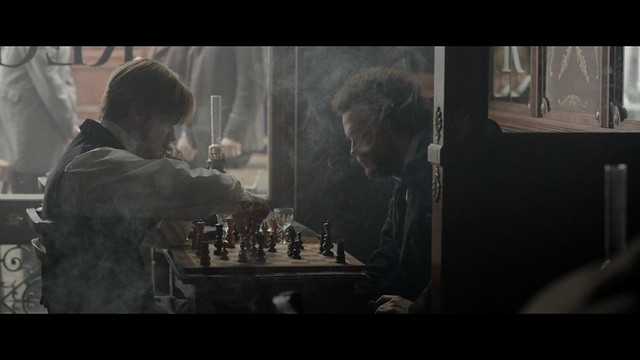
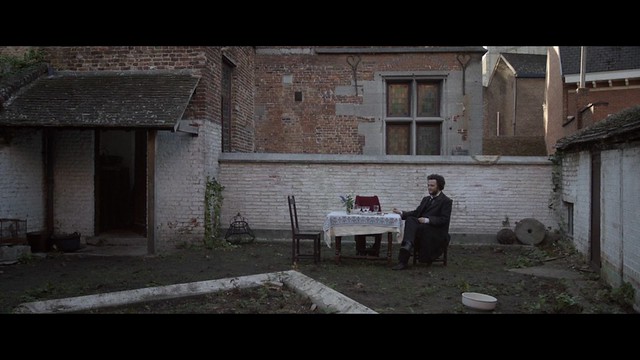
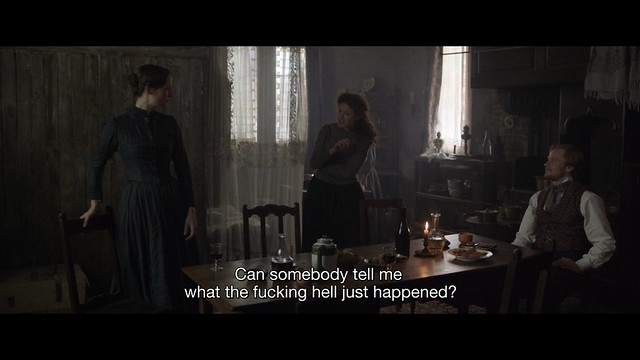
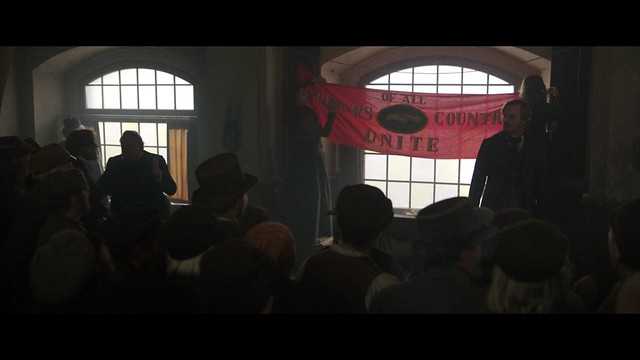
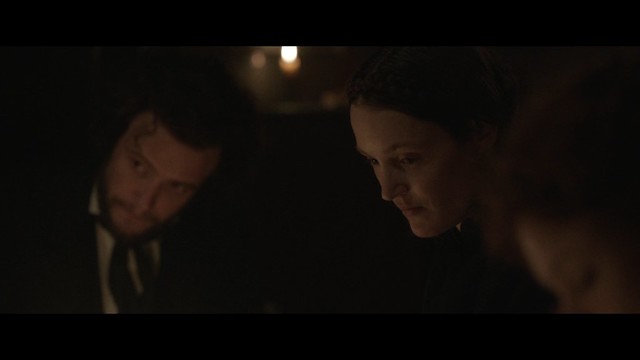
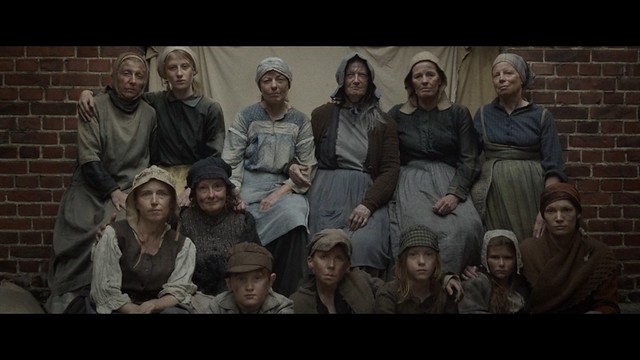
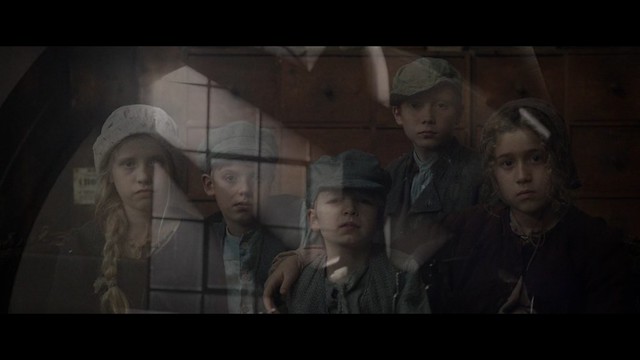
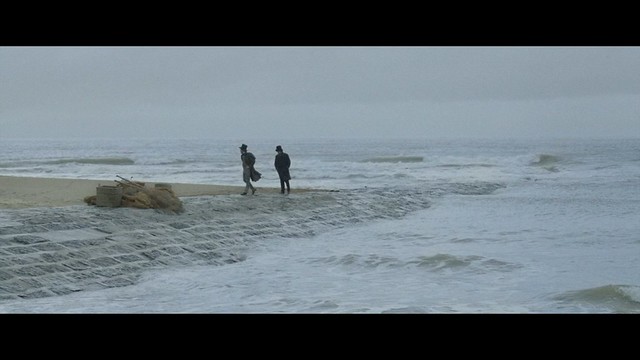
Le Jeune Karl Marx (2017) - Peck Screen Shot 2022-06-21 at 12.55.41 PM Screen Shot 2022-06-21 at 12.57.04 PM Screen Shot 2022-06-21 at 1.01.06 PM Screen Shot 2022-06-21 at 1.02.35 PM Screen Shot 2022-06-21 at 1.28.49 PM Screen Shot 2022-06-21 at 1.05.44 PM Screen Shot 2022-06-21 at 1.07.04 PM Screen Shot 2022-06-21 at 1.08.40 PM Screen Shot 2022-06-21 at 1.08.08 PM Screen Shot 2022-06-21 at 1.06.03 PM It amazes me that people still use 'commie' as a slur. That after all these years, the idea of common ownership, brotherhood among all mankind and the utopia once touted by as far back as Greek philosophers are hijacked by the powers that be and still being used as a fearmongering, scare tactic. That they don't differentiate it with state capitalism of Russia and many other who followed suit after WWII. Director Raoul Peck with The Young Karl Marx, trying to show the noble intent of a young German thinker in the start of his career as a political thinker and activist, along with his friend Fredrich Engels. The result is a soul stirring work that is emblematic of all other Peck's films - direct, clear, devoid of cheap sentimentality and emotional crescendo often associated with historical biographies.

The film starts out with illustrating the serfdom and the idea of commodity and ownership - peasants gathering fallen tree branches in the woods for fire, while being careful not to break them off from the living tree, were mercilessly raided by weapons wielding raiders who treat them all equally as thieves. This is what Marx witnessed as a child. The background of the film is the 1840s, in the wake of Industrial Revolution in England. And the working class is realizing that they are living in two class system - Bourgeoisie and Proletariat, and that their living conditions are not so different from feudalist system.

Young Marx (August Diehl), persecuted by his activities and writing, flees Germany, first to Paris where Proudhon (Olivier Gourmet), a much-respected political theorist and other prominent thinkers were at the time. Paris is also where he met and married his wife Jenny (Vicky Krieps) who is from a noble family hailing from Trier, a city near Luxembourg. He also befriends with Engels (Stefan Konarske), a 26-year-old son of a rich German textile mills owner in London. Conflicted by how wealthy industrialists, including his father, treat their workers, Engels rebels against his father and marries an Irish textile worker, Mary (Hannah Steele). Marx finds in Engels his intellectual equal and rabble-rousing partner. The two join The League of the Just, an elder statemen group of communists, a predecessor to Marx and Engels' the Communist League.

Struggling with poverty and hounded by police, Marx leads a life of a constant state of exile (Germany, France, Belgium, and England), often supported and encouraged by Engels to keep going. Where everyone's rhetoric not being supported by meaningful action - that of Proudhon, Weitling and Ruge, faltered and fizzled out, the young Marx and Engels writing and theories, based on the lived experience of the proletariat paved the way for the violent struggle, 1848 Revolution, then Russian Revolution and the concept of the trade unions, workers solidarity and eventually permanent revolution.

Peck, as always, the case, brings much humanity out of the political history and figures with great compassion and urgency. The period details are impeccably replicated and acting, from Diehl, Konarske and Krieps and the supporting cast, solid. The Young Karl Marx is not sensationalized in any way. It's a total antidote to throw in someone's face who is accusing you of being a commie, just because you don't subscribe to the capitalist way of thinking. Maybe the film is too even tempered, and that might be the reason the film wasn't widely seen, but it deserves some serious attention while our world is burning more ways than one right now.

Sunday, February 26, 2017

Make America Great Again?

I Am Not Your Negro (2016) - Peck
 photo ed937e62-bb82-4c88-8b7e-bc020de4f8a0_zpsdlsc2jiu.jpg
 photo 197044_zpsmjbf89o5.jpg
American writer James Baldwin is the subject of Raoul Peck's searing documentary I Am Not Your Negro. Baldwin, extremely articulate in his own words (narrated serenely here by Samuel Jackson), tells the world, especially whites, what it is like to be a black man in America. Through the death of Medgar Evers, Macolm X and Martin Luther King Jr., Baldwin examines the hateful history of the US, supposedly the greatest nation on earth, the land of freedom and aplenty.

Juxtaposing the footage of slavery, hanging, police brutality and what's been going on these days with Ferguson, Travon Martin and Black Lives Matter, Peck never let you forget what Baldwin taught us - being optimistic means very different in the lives Americans. Being alive is optimistic for blacks. Peck shows that nothing has changed since the Civil Rights Movement era. I Am Not Your Negro is an extremely pessimistic movie in that regard. Make America Great Again? You mean for whites? On the blood and sweat of all the others? Because America was never great to others, EVER.

I watched the film with the sold out crowd at Film Forum. It is sometimes comforting to watch a film in the room full of so-called cultured left-wing intelligencia. But I couldn't bring myself up to join them applauding at the end of the movie because I Am Not Your Negro is a definitely depressing movie, not a joyous one.