Showing posts with label UK. Show all posts

Thursday, July 13, 2017

No Washing Blood Off Hands Necessary

Lady Macbeth (2016) - Oldroyd
 photo 1539454d-09e0-4205-b380-d44618bb2840_zpsil8nwsza.png
Exquisitely acted, framed and paced, William Oldroyd's Lady Macbeth is perhaps the most accomplished debut feature I've seen in years.

Based on Nicolai Lestov's Lady Macbeth of Mtsensk District, a 19th century Russian novel which was adapted and scripted by a well regarded feminist playwright Alice Birch, Oldroyd sets out to tell a Victorian era tale of adultery and murder with a twist. The result is a riveting movie watching experience. Lady Macbeth totally does justice to its title.

Katherine (radiant Florence Pugh), a young, bright-eyed, newlywed bride, quickly learns that a marriage in Victorian era England and at large is a life of submission, humiliation and being a captive.

The Father-in-law and husband team, Boris (Christopher Fairbank) and Alexander (Paul Hilton), represents a patriarchal world so rigid, hostile and loveless, it resembles a prison run by abusive guards - Katherine is not permitted to go outside the castle. She is told that she's not in need to ask the nature of her husband's businesses nor to know his whereabouts when he's supposedly away on business for days.

When Alexander returns, the bedroom business is anything but tender -- he orders her to strip and stand against the wall, looking away from him, while he jerks off. There is no touching, no tenderness, no passion. It's just a humiliating power game. But Katherine is no damsel in distress by any means. Far from it.

When the two brutes are out on business, Katherine is finally, temporarily, free to go outside and walk around the misty moors at the expense of horrified female servants.

One of the half-breed male servants, Sebastian (Cosmo Jarvis), working in the stable and horsing around with other stable hands, catches her eye and soon they become lovers. It starts out sensual and passionate. But soon the sexual power dynamic is reversed and Katherine dominates Sebastian both intellectually and physically.

Soon Boris discovers her secret, divulged by Anna (Naomi Ackie), a terrified black servant. Boris and Katherine's confrontation becomes violent, ending in death by a premeditated poisoning. With no witnesses around (except for Anna), Boris's death is ruled as a massive coronary. When her husband comes home while she is in bed with Sebastian, Katherine daringly manipulates the men to fight, plunging Sebastian deeper into the guilty party and deeper into her grasp.

Katherine's acts are so shocking to Anna, who witnesses her lady's immoral deeds, that she soon stops talking altogether.

Oldroyd orchestrates his theater trained, extremely measured, fitting visual style reminiscent of Haneke: static long takes, visual symmetry and only a few closeups. Ari Wegner's cinematography captures the beautiful, picturesque expanse of the moors and contrasts that with the cold, confounding interiors of the castle.

Even though Katherine is a murderess and not a likeable person, it's her youthful defiance that makes us root for her. She is radiating ball of energy that can't be contained by societal restrictions or codes or morality. She does whatever she can to survive, even using her perceived femininity and her status as a lady-of-the-house, to the fullest extent.

The real victims of Lady Macbeth are the servants. Oldroyd reminds you that in England, injustices are done and seen less as a racial issue and more of a class issue.

Pugh's central performance is nothing short of phenomenal. She wears her arrogant beauty and uses it so well in both being an offender and a victim. Her turn as a wide-eyed, untamable young woman becoming a calculating femme fatale is a sight to see. We are seeing an emergence of another important British actress and a heiress apparent to Kate Winslet.

With a crackling, loaded script by Birch, Lady Macbeth is an exhilarating, radical and timely examination of being a woman in a man's world.

Lady Macbeth opens in New York and Los Angeles on July 14.

Sunday, December 16, 2012

Lovely Solitude

Two Years at Sea (2011) - Rivers
Image
Image
Image
Image
Image
Image
Image
Image
Image
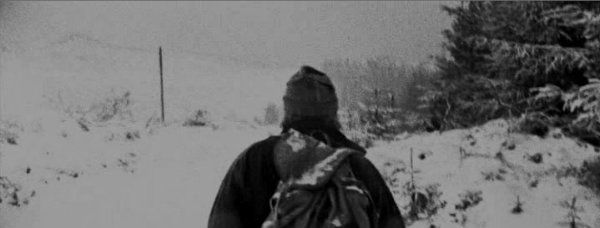
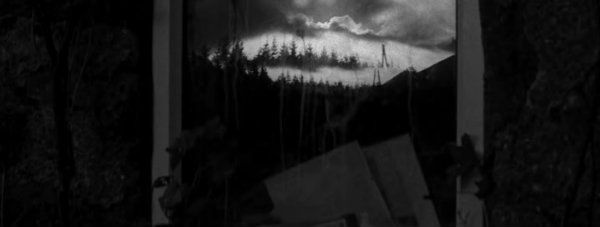
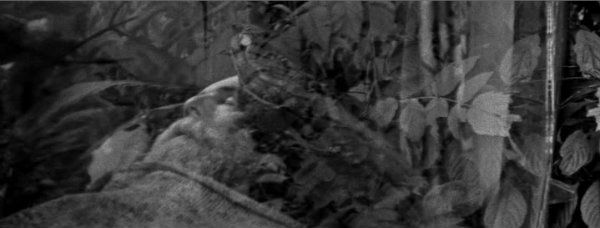
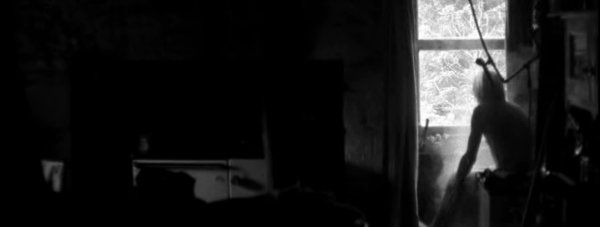
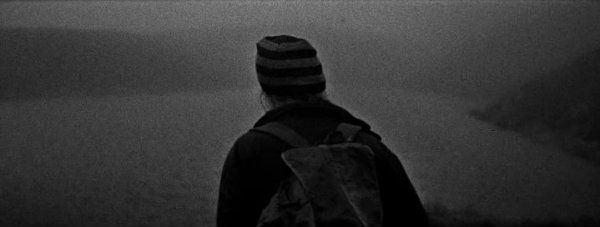
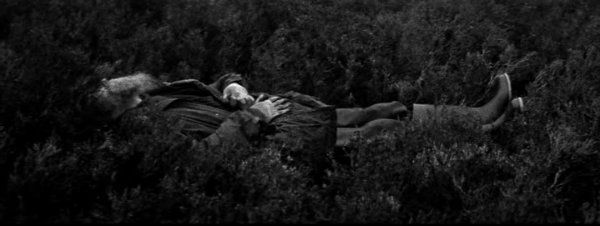
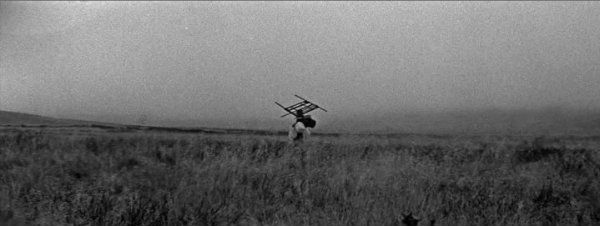
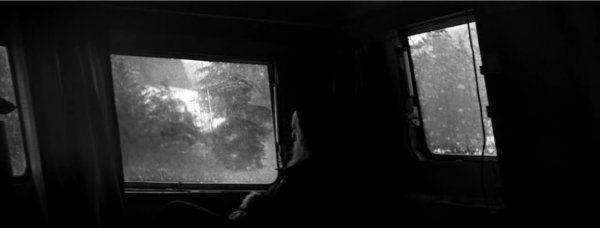
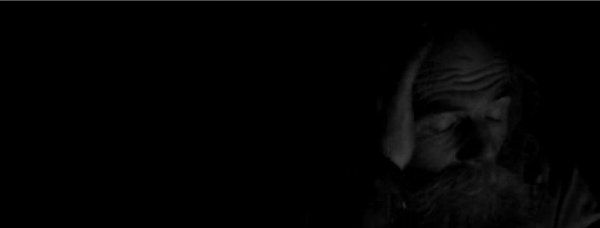
To call Two Years at Sea an observational documentary is too simplistic, inadequate description at best. We follow a bearded fellow who resembles poverty-stricken Gandalf, a wizard on skid perhaps. He lives in a dilapidated, cluttered old house in the woods. He does house chores while listening to some Ravi Shanka tinged music on his tape deck or turntable. He constantly whistles and sometimes mumbles to himself. Seasons change. He finds his trailer on the treetop one morning. Hmm, nice tree house idea. Let's do some fishing on a makeshift raft made out of window frames, an air mattress and some plastic water jugs. There are remnants of his past, shown in cutaways- the old postcards and photographs of children, women. We don't know who the bearded man is but we get to live in his house, intimately observing his life weathering seasons in the English wilderness together.

It's rarely the case for me to look into those DVD extras of any movie: the making of docs, interviews and whatnot. I honestly have absolutely no interest in seeing technical, logistical side of filmmaking in general. Ben Rivers's name was mentioned here and there before and have seen some of his experimental shorts. I hear Rivers develops his own films, often exposing the negatives to the environs each film was shot in. Two Years at Sea seems apparent that this is the case. Its grainy B & W anamorphic photography, blinking, stuttering exposure and all the blemishes and scratches are quite lovely.

But more importantly, I wanted to know more about this Jake Williams (we only get to know his name at the end credits). Unlike the title suggests, there is no hint of loneliness in Williams' life. As the film's only inhabitant (not counting his cat), Williams seems to be in complete ease at being alone. While watching the film, even though I knew some aspects of it were staged, I had a strong desire to communicate with him. I wanted to get his attention when his back was turned. What are you thinking? What are those photographs? What are you writing in that notebook? Aren't you at least a bit lonely sometimes? As the 8 minute ending sequence comes to a close where he falls asleep in front of the bonefire, I thought to myself, I'd love to be like him. This ends up in my year end top list.

Tuesday, October 9, 2012

"I want my movie to start with a big explosion..."

Ginger & Rosa (2012) - Potter
GingerandRosa
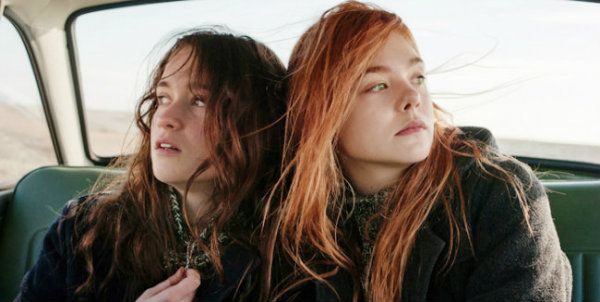
Director Sally Potter (Orlando, Tango Lesson)'s new film starts with stock footage of an atomic blast. A great way to open a film if it was an Ed Wood B-picture. But it's not. It's the story of BFFs Ginger (Elle Fanning) and Rosa (Alice Englert, daughter of Aussie director Jane Campion) both born in 1945, going through their lives in 60s London where everyone lives under the shadow of nuclear annihilation. It's also the time of the nuclear family. Rosa's father split early on. Ginger's ultra liberal dad, Roland (Alessandro Nivola), can't seem to keep his pants zipped, causing heartaches for mom (Mad Men's Christina Hendricks) and not providing any emotional support for the increasingly confused Ginger.

These feisty teenagers do everything together. Rosa usually leads Ginger to their little vices - staying up late, smoking, drinking, making out with the boys, etc. Shot by Robbie Ryan (Wuthering Heights, Red Road), these shenanigans are all blissful close-ups and sun flares and the camera obviously adores the two young leads: ethereal redhead Ginger and pouty vamp brunette Rosa.

Things get a little hairy when the atheist, pacifist, autonomy of mind-and-body preaching Roland takes a shine on Rosa, leaving Ginger jealous and very confused. She tries to take solace in the company of adults- her two fairy godfathers Mark 1 (Tim Spall) and Mark 2 (Oliver Platt) and Bella (unrecognizable Annette Benning). But you can see the emotional waterworks coming from miles away with tearful confrontations and a lot of finger-pointing.

Potter gets the 60s setting right and the largely non-British cast does a great job, especially newcomer Englert, who exudes a certain charisma and confidence. I understand Potter's desire not to make anyone antagonistic in Ginger & Rosa, but Roland is an irrevocably contemptible, immoral man. Just because of that, the film suffers greatly in the second half. Too bad, because it could've been a great film about finding one's identity in the time of imminent destruction. Instead, it gets bogged down in high melodrama and never recovers.

Ginger & Rosa premiered at this year's TIFF and plays NYFF on October 9 and 10. For more information and tickets, please visit NYFF 2012 website. It will open theatrically in the UK and Ireland on October 19.

Wednesday, October 3, 2012

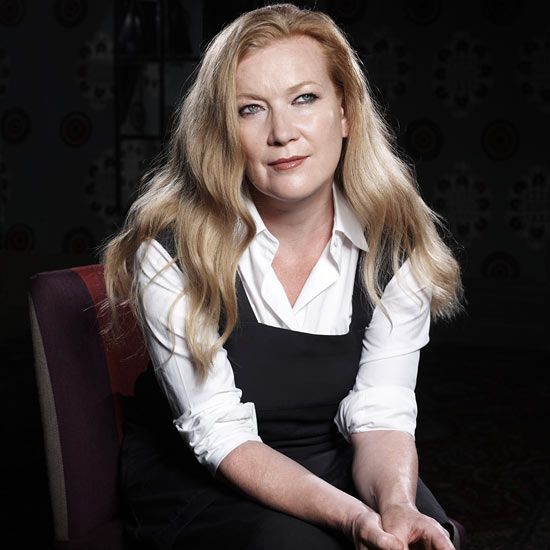
Andrea Arnold Interview

Photobucket
With only three feature films under her belt, Andrea Arnold has already established herself as one of the most prominent British film directors currently working today. Her brooding, sensual, class-conscious dramas, Red Road and Fish Tank, were well received by cinephiles world wide. But I wasn't really ready for her thrilling adaptation of Emily Brontë's gothic novel Wuthering Heights. It's an enrapturing experience to watch, especially on the big screen.

After making the festival rounds, it is finally getting a release in New York this weekend with further cities to follow. Even though jetlagged, Arnold was very friendly and chatty in discussing her breathtakingly beautiful re-conceptualization of the classic.  

You were known as a writer/director prior to Wuthering Heights. I was surprised that your next film after Fish Tank was an adaptation and also a costume drama. Why adaptation? How did it come about?

I often wonder why too. (laughs) It was a strange journey in a way. I was writing something else on my own and out of the blue I got an email from my agent if I was interested in doing Wuthering Heights. I knew it was in the works with a different director attached. I was quite jealous thinking, 'oh, I wish I could get my hands on that!' So I immediately stopped what I was doing and asked about the project a little bit more. Then I went on a journey, I just couldn't put it down. I couldn't stop. It was as if something possessed me. It wouldn't let me go. My first thought was of Heathcliff: In the book, Heathcliff turns out to be quite a dark character and that he had a really abused childhood. And I remember thinking, yes, his story needs to be told. But it was a difficult journey. I knew at some level it was a stupid thing to do because it is such a famous book, and I was joining something that had already been in production with two directors and actors attached, [it] had history and momentum and there was a script. There were producers who had been involved developing it and wanted to take [it] on quite fast. In hindsight, I don't want to join something in the middle of it ever again. But I couldn't put it down, worrying about Heathcliff and telling his story.

Was it a fast process? How long did it take you to do the project?

I think it took longer than they expected to. I wanted to get things right from script to everything. I remember when I first had a meeting with producers and they asked me about the crew and I hadn't even looked at the script properly. And I remember thinking, 'oh, this is a bit quick'. I remember feeling a bit alarmed by that. So there was this constant push to do it fast and there was a constant pull back from me trying to do the way I wanted to do it. And at the same time you try to do it right by everyone else. So you get into a muddle. It was tough actually and I wouldn't want to repeat that really.

So when I have an image in my mind, I can't just leave it alone and that's what happened. I always have an image that keeps me on track when I'm passionate about something. My image for this (which was never realized in the film), was on the moor in the twilight when the sky is blurring the land and in the middle of that is this large animal, you don't exactly know what kind of animal until you come closer and realize it's a man with rabbits on his back: that was my image of Heathcliff. That was the image! And every time I lost my way I would remember this and it would keep me going. But when it came to film that scene, we had ten minutes to film it and there was bright sunshine with blue skies and we didn't have very many rabbits to cover Solomon (Solomon Glave, who plays young Heathcliff)'s back. The string broke on the rabbits, so they kept falling off and we didn't have time to wove them back up to get a wide shot. The moor was not the moor I imagined that day. The shot came out completely different. But it's in the film.

I love it though. It's all hand-held, we see the back of Heathcliff with rabbits.

It was completely different than how I imagined. But you know the essence of it is in the film. But that's filmmaking for you.

Obviously the second half of the book is omitted from your film. How did you decide where to stop?

Yeah somebody asked me if there was anything that I missed out from the book that I feel sorry about, I say the whole second half (laughs). Partly it was because I joined something that was already going. But I actually believe that it's good to be instinctive. The filmmaking is such a deliberate process, especially [since] there is a lot of money and people involved. I do like when things are moving fast, that can bring about some interesting, instinctive decisions. And I always felt that the second half of the book was too complicated. I never intended to make a 'faithful' adaptation anyway. I just wanted to capture the essence of what Emily was going for. The kind of film I like to make is where I can explore details. For that, the book was just too much to deal with. I do love the second half of the book. It comes a full circle with Heathcliff's death and as a book it's fantastic. I don't like Heathcliff wandering by himself on the moor. That's sad. I'd rather he died. So I wasn't happy about leaving it out. But I couldn't see a way to include that in unless I had a resource and the right circumstances to do a ten-hour film. (laughs)

About casting black actors as Heathcliff...

Right.

I mean it's about time, I thought. We are not living in the time of Laurence Olivier...Where they put cocoa powder on his face. (we both laugh)

I know that the movie came out in the UK last year. I was wondering how it was received with a black Heathcliff.

I can only go by Q&As (where people are always nice) I did, because I don't read reviews or anything. And people always ask me about that. There must be a big debate about that on some Brontë webpage, I'm sure. It's always mixed.

I think having a black man playing that role was the right choice. I mean, he is describe as a foreigner in the book. It's very topical for this day and age.

I wanted to ask you about your process with non-actors in this film. I remember you describing the process in Fish Tank in a Q&A session a couple years back. You said you were holding back parts of the script from actors until just before the shoot, and encouraged them to improvise. Did you do that with Wuthering Heights?


Well, it's a famous book everyone knows. Everyone knows what happens at the end. So I didn't really do that too much in this. Obviously with Solomon and Shannon (Shannon Beer, young Cathy) I did that a bit because they are new and I didn't want to overwhelm them too much. We couldn't afford to shoot it in chronological order anyway. So no, not really on this one.

The look of the film, my god, it's so gorgeous.

Probably too gorgeous actually.

Too gorgeous?

If the style sticks out that much, you failed a bit actually. That's what I think. (Dustin laughs) I always think that if one of the disciplines sticks out, I failed to bring all the elements together. But I think there is no music and much of the dialog taken out, it relies on the images even more and sticks out more. But I can't really tell if it's sticking out the right way or wrong way.

It's stunning. For me, definitely the right way. I mean it takes place on the moor where everything is elemental. It has rain, wind, mud, blood, sweat and tears. It has to be cinematic. I first saw it on a smaller screen, then I saw it on the big screen.

Yeah, it has to be seen on the big screen.

That's what I mean! The emotional impact is much stronger when you see it on the big screen.

I wonder how your collaboration process with your DP Robbie Ryan went. I mean, he will be known for this film (he won various cinematography awards for Wuthering Heights). There are some absurd amount of hand-held scenes.


He loves to run around. He gets a little depressed when he can't run around. Yes, we've done four films together now. We have a shorthand: he pretty much knows what I want. We did a lot of tests with different stocks and we talked about what we try to achieve. The moment I worked with him, I immediately felt in tune with him in terms of aesthetics from the very first film together.

So will you always choose shooting full frame (4:3 ratio) from now on?

I've done it twice now (starting with Fish Tank). I didn't think about shooting this in 4:3. But we did some tests and we projected on the screen. You know 35mm in raw form is 4:3 and it looks so beautiful. It's great for portrait. It's very respectful for one person, like in Polaroids. I also like that you are not cropping anything. You are using the whole negative. So you get all that information. It feels more honest. It is quite hard to frame a two shot. But because I'm always telling the story from one person's point of view, I think it works. Also, it gets more sky. If you go this way (pointing to the sides), you get more green shooting on the moor. With full frame you get a different version of landscape. For me it takes away nothing. I think it adds more.

Was there any inspiration for the look of Wuthering Heights?

I showed Robbie some Todd Hido photos. I love his pictures, especially the ones through the glass. We did some of it for the film but didn't keep it in too much. I always like the shot of a person looking in from outside and vice versa. For some reason there are a lot of scenes like that in the script and that's why I thought of Hido's photographs. Back then, the glasses were pretty thick and they obscured the image and gave sort of water color feeling- things blurred into each other or [were] hard to see. For some reason that was very important to me. So I encouraged that sort of look.

It must've been tough shooting on the moor.

Yeah really. I think everyone on the crew said it was the hardest thing they've ever done. But they were a really great crew. Without their perseverance and their determination I don't know how I would've gotten it done really. The mud was really deep and it got deeper and deeper as more people trudged along in it. And we couldn't take vehicles so we had to carry all the camera equipment. So if we wanted a wide shot, we had to walk with the heavy camera boxes on our heads. That was very physical. And we had a lot of heavy layers of clothes and big boots because it was always cold and wet. And if you are unlucky, you get boxes with all the lenses in, which was really heavy. Nobody wanted to get that one. (laughs) and you always want to be fair and take what's handed to you. I remember it was the last week of shooting, I think. I was climbing up the hill with a heavy camera box on my head. I was really tired. And my knees gave in and I collapsed, with the box still on my head. I started to cry because I couldn't get back up. I pulled down my hat so no one would see me cry. When I finally got to the top of the hill I saw Rachel (Rachel Clark), Robbie's Camera Assistant, also crying with a camera box on her head (we both laugh). I mean, we were physically exhausted. It was mud everywhere, so we didn't have any place to sit and rest, really. And I don't know why they built the house up there. Because when it rained, all the water came gushing in to the house. And there were all these dead round moles from the ground washed up everywhere. They were so fat gauging on all the earthworms, I imagine. God, it was a tough, tough shoot.

So when we saw the film for the first time projected on the screen, we said, "damn it, that doesn't look nearly as bad as it was. How can I make you feel as bad as it was? You sit there for an hour and a half while we were out there ten hours a day?

Oh, it's beautiful (we both laugh). It's a great story. Do you plan to do another period piece?

No. I don't think I'll ever do it again. It was an experiment and an adventure and in some ways quite liberating for me to do something completely different.


Wuthering Heights opens in New York on Oct. 5 with a national roll-out to follow. For more information, please visit the Oscilloscope website.

My Wuthering Heights Review

Monday, April 4, 2011

Lust for God

The Devils (1971) - Russell
8-devils-russell Heavily censored and outright banned in many countries upon its release, Ken Russell's The Devils tells a story of witchery and political intrigue in the plague ridden 17th century France in true Ken Russell fashion - operatic, vulgar and very very entertaining.

Father Grandier (Oliver Reed) of city state Loudun becomes the leader against the Cardinal (and King Louis XIII's consort) who wants to consolidate power in all of France in order to suppress protestant revolts. Well regarded and loved by many women (including all the nuns at the local convent), Grandier is a very vain man. Mother Jeanne (Vanessa Redgrave), a deformed nun in charge of the local convent is sexually obsessed with Grandier. The news of his secret marriage tips her over the edge and into madness. Other nuns follow suit. Baron Loubardemont, under the cardinal's order to demolish Loudun takes this opportunity to carry out despicable exorcism (forced enema among others) on the nuns in their religious/sexual frenzy and therefore accusing Grandier of bewitching the lustful nuns. It all culminates to the raping of the statue of Jesus in the convent by naked crazy nuns and Grandier burning at the stake.

While poking fun at the organized religion and its faithfuls, Russell's bombastic filmmaking can be too much at times (especially crazy zoom-in/out shots in the orgy scene). Derek Jarman's set design - white tiled Loudun and David Watkins's hot-lights-in-your-face cinematography heighten the craziness. But it's Reed's performance (of his career) as a complex man of god that gives the film its gravitas. And orchestrating this much madness is an achievement in itself.

Monday, February 21, 2011

The Knack

The Knack... and How to Get It (1965) - Lester
the knack
the knack 2
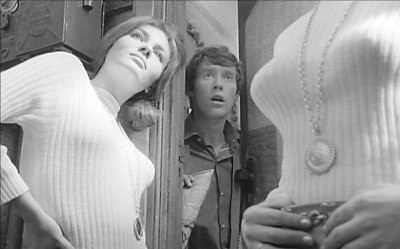
Richard Lester's playful sex romp from the 60s can be hard to understand sometimes. But it doesn't make the film any less fun. Michael Crawford is Colin, a Ron Weasley-like school teacher who doesn't have the knack. He tries to learn from his suave, motorcycle riding housemate Tolen the ways of seduction but fails because he just doesn't have it. Enter Nancy Jones (Rita Tushingham), a new arrival in town, looking helplessly for YWCA, ends up with Colin and another of his eccentric housemate Tom while they are out to get a gigantic bed frame for Colin (just in case he scores). The following scenes are reminiscence of Jules et Jim but sillier.

With sight gags and plenty of physical comedy and playfulness, it strongly reminds me of early Woody Allen films. Fun film.

Monday, November 29, 2010

The Lamest. Motorcycle Gang. Ever.

Psychomania (1973) - Sharp
Photobucket
Photobucket
Photobucket
Photobucket
The devil (frog god) worshiping motorcycle gang, 'The Living Dead' roams the English countryside, wrecking bloodless, Monty Python skit resembling havoc- cruising through supermarket and terrorizing old ladies by ripping off sideview mirrors and breaking windshieldsof their cars. Their leader, a suave young man believes, with the approval from his ghost channeling medium mother, that they will come back as invincible after they kill themselves. All the members follow his suit in very comical ways and leaving dry corpses everywhere (they just fall down), but our heroine Abby is still undecided because she loves life!

Not hokey enough to be a cult classic and bike stunts are pretty lame. There is a disclaimer about the film's original negative being lost that they had to transfer from 'the best available sources'. Picture quality wasn't too bad though. And the film is chuckleworthy.

Monday, November 22, 2010

Tony Chestnut (see the movie to get the joke!)

Mumsy, Nanny, Sonny and Girly (1970) - Francis
PhotobucketPhotobucket
Photobucket
Photobucket
The children, Sonny and Girly dressed in English school uniforms find homeless people in the park and bring them home, to Mumsy and Nanny, to make them family playmates. When their playmates break the rules, they send them to the angels. This nursery rhyme filled, giggly family slowly disintegrates when they bring home a new feisty friend.

Part Teorema and part Wicker Man, Mumsy and Co, features some of the most delicious dialog and bewitching Vanessa Howard as Girly who can sing Siamese National Anthem. Another great Brit class satire borne out of the clash of the traditional family values of the war generation and 60s free love/anti anything generation. Great fun.

Saturday, September 18, 2010

Everyman Blues

This Sporting Life (1963) - Anderson
Photobucket
Richard Harris is Frank, a miner turned rugby player trying to woo the cold widow Margaret (Rachel Roberts) of the lodging house. Frank is a good man, but not totally innocent when he wants to get ahead. Grieving Margaret won't budge at his advances though, no matter how hard he tries. He becomes successful, buys things for the widow, goes to ravish parties his boss throws after the games, even takes up on the seduction of his boss's old wife. But he soon finds that he is looked down on by the poor and the affluent alike: "You are just a big ape in the football field!", Margaret pronounces it for him on everyone's behalf. He can't have one thing he wants the most, the affection of the widow.

Harris shines in this film about everyman trapped in the rigid hierarchical society- a man who thinks he got a handle on things even though he has no control over anything. It's amazing how much he resembles young Brando: his hulking physicality, boyish vulnerability, add Paul Newman's soulful eyes and there you have Harris.

There are a lot of great scenes with Harris. My favorite would be him singing at a club- arms crossed and awkward, he exudes his vulnerable charm the best. Anderson makes the most of Harris's great performance, accompanying with almost documentary like, natural filmmaking. This Sporting Life is a heartbreaking film. The ending really got to me.

Sunday, September 5, 2010

Insinuendo

The Ruling Class (1972) - Medak
Photobucket
Lord Earl of Gurney, an important parliament member, dies in an autoerotic asphyxiation accident in a tutu, leaving his estate to a schizophrenic mental patient son, Jack (Peter O'Toole) who thinks he is Jesus Christ. It's a natural progression really, his German psychiatrist explains- what could be more holier than the British ruling class? Only god himself.

The power hungry relatives of the deceased has a plan: they will declare Jack insane soon after he produces a son. So they introduce us to lovely Grace (Carolyn Seymour), the implant of Charles Gurney, the brother of the deceased. She immediately falls for love-preaching jolly, silly JC. She does a very hot striptease on her wedding night, not for Jack, but for us audiences.

There are many great scenes in this 2 hr 30 minute extravaganza. One has to do with when Jack is asked to perform a miracle. Another is when Jack is confronted with another delusional false god, angry one at that (he proclaims to be the vengeful god from the Old Testament). If there is only one god, which one is the fake?

This satirical look at upperclass snobbery and the rise of conservatism is filled with plenty of sudden musical numbers and O'Toole's eyebrows. It starts out pretty impenetrable with all the wide angle crane shots of gilded interiors and British twit talk. Then it settles nicely into outrageous black comedy that resembles Monty Python on a quiet day, with a set of fangs.

The Ruling Class is the flip side of A Clockwork Orange in a sense. Jack's transformation as the remnant of the innocent flower child of the '60s to the fear mongering conservative with Jack the Ripper undertones while maintaining his god complex is needless to say, pretty heavy handed. But it's O'Toole's show: he is a great physical comedian!

I wonder why Brits are so good with satires but not Americans, especially about class differences. Is it the good old American Dream that prevents us from making fun of them? The American ruling class is not funny?