Showing posts with label Visual Essay. Show all posts

Wednesday, September 1, 2021

Artful, Spiritual Anthropological Survey from Ethiopia

Faya Dayi (2021) - Beshir

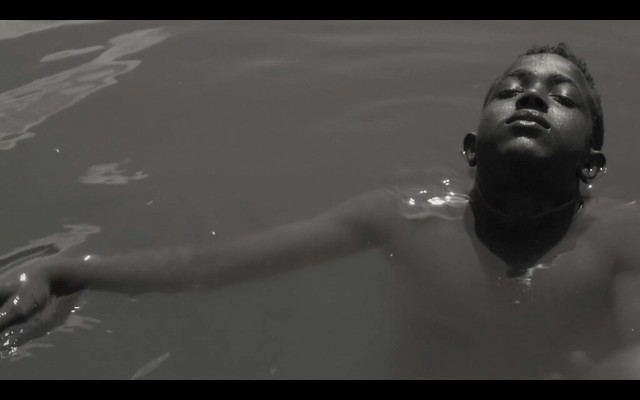
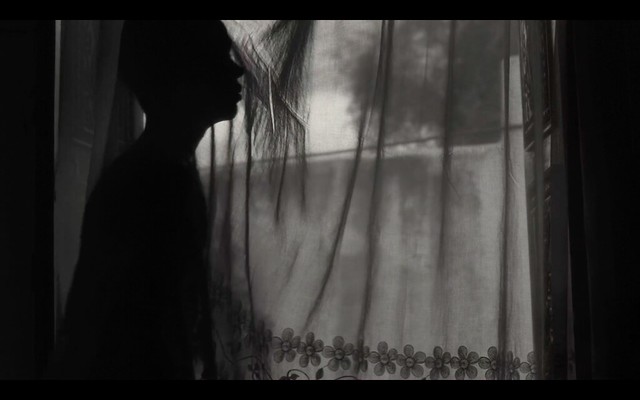
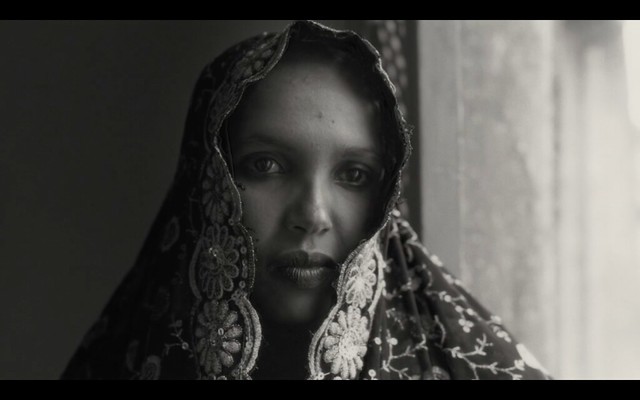
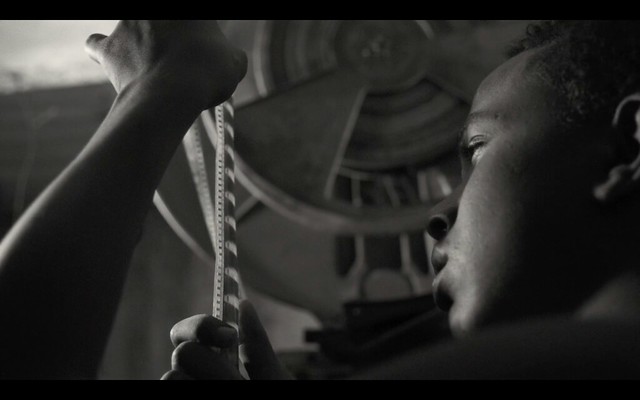
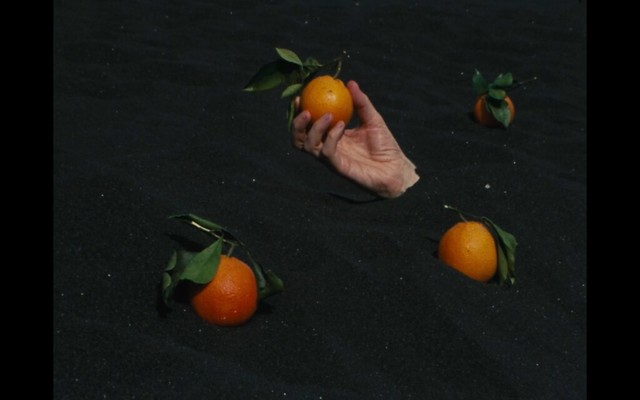
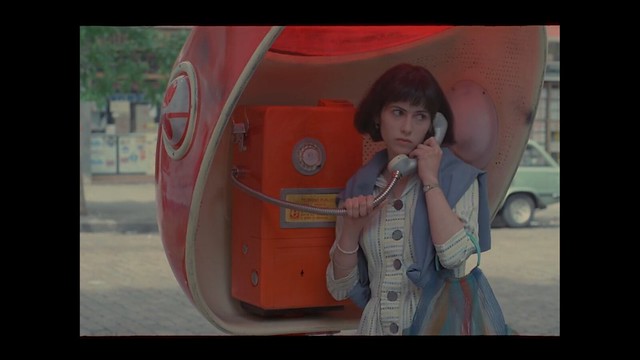
Screen Shot 2021-08-28 at 8.42.41 AM Screen Shot 2021-08-28 at 8.54.16 AM Screen Shot 2021-08-28 at 8.57.57 AM Screen Shot 2021-08-28 at 9.01.51 AM Screen Shot 2021-08-28 at 9.04.43 AM Screen Shot 2021-08-28 at 9.06.43 AM Screen Shot 2021-08-28 at 9.22.25 AM Screen Shot 2021-08-28 at 9.23.08 AM Screen Shot 2021-08-28 at 9.23.31 AM Screen Shot 2021-08-28 at 9.48.38 AM Screen Shot 2021-08-28 at 10.04.39 AM Screen Shot 2021-08-28 at 10.17.00 AM Could an anthropological study of the effects of khat, a flowering plant that has euphoric property when chewed, in Hararar, the walled city in Ethiopia, also be a stunning art film? Mexican-Ethiopian director Jessica Beshir proves that it can, with Faya Dayi, her mesmeric, immersive patchwork, shot mostly in silvery black & white. In here, every one of its hazy frame is a work of art. The film is visualized version of the phrase of a mystical sage or a lofty philosopher - Life is nothing but a waking dream. 

Along with dreamy images and scattered narrations, Beshir languidly builds upon the creation myth of khat, which involves the quest for Maoul Hayat, the water of eternal life. It seems every adult chews khat in Ethiopia, to get away, to escape harsh reality. For the younger generations though, for their future, they dream of fleeing to Europe, to Middle East, to other countries, even if it means risking their lives in an often perilous and costly journey and enduring lifetime of solitude and homesickness in a foreign land. 

There is a loose narrative, which concerns a young boy named Mohammad. He is a thin thread connecting the filmmaker's intergenerational observations. Mohammad is first seen with an older boy who fled the dreadful khat dominated life (to Egypt) only to come back to take care of his mother. For Mohammad, living with an abusive khat addicted father and missing his mother who fled to Saudi Arabia for better life, Hararar doesn't hold a future for him.

We see the full picture of the local economy based on khat, from its harvest to processing to distribution to consumption. And it's a long grueling process all done manually. It’s the industry’s berth, employing vast section of the country’s labor market that is truly astounding.

We are introduced to many of Hararar's inhabitants - there are women pining for lost love, a young man thrown into the khat industry because of the family tragedy that has befallen, the local sheiks with their prayer beads and scriptures, young naked children playing in ever receding ankle deep river. There's also a talk of street demonstrations and political prisoners among Oromo people, an oppressed ethnic minority trying to get by under the hostile Ethiopian regime. 

Beauty is in the shadows and silhouettes. It's in billowing curtains and in smoke of the ceremonial incense, in a group of black birds perched precariously on the tree branches on a windy night, in the water ripples, in the blackness of a woman's hijab against the white wall, in sleeping stray dogs, in cheap strobing lights on Mohammed's face, even in newly harvested shiny khat leaves. 

Khat as the myth goes, was a compensatory prize from god, for the journeyman who missed out on Maoul Hayat, to forget his sorrows. 

Dry anthropological documentaries are dime a dozen. Bashir in her debut film, with immersive and stunning visuals, achieves something extraordinary here. Faya Dayi transcends its filmic categories and achieves a deeply spiritual and contemplative viewing experience.

Saturday, June 19, 2021

Fluidity

The Seismic Form (2020) - Zwirchmayr

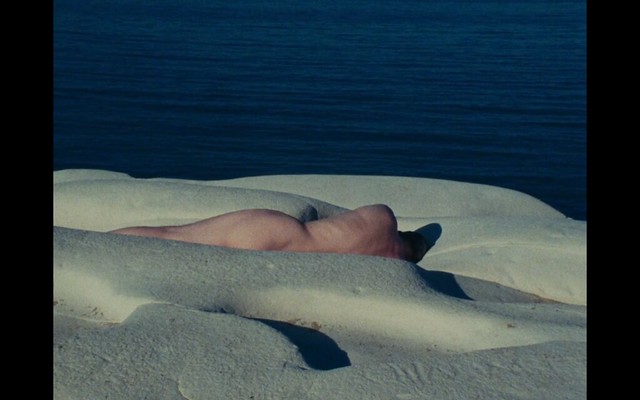
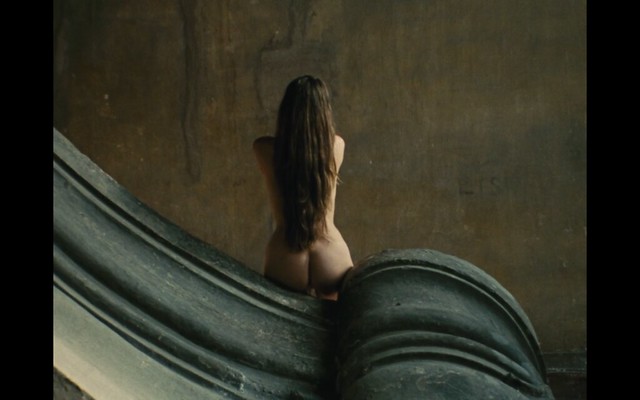
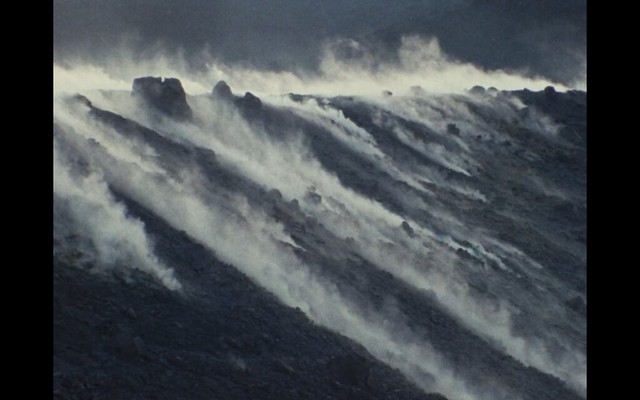
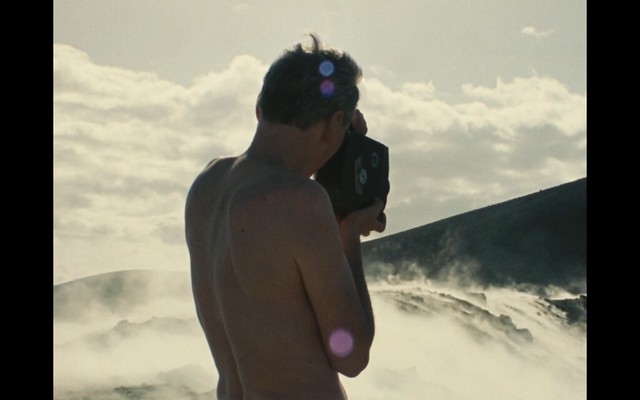
Text by Jean Baudrillard, Antoinette Zwirchmayr's short The Seismic Form visually examines the impermanance of life on earth in very elegant visuals, often juxtaposing human bodies with environments formed by seismic activity. It's beautiful. Some screen grabs: Screen Shot 2021-06-19 at 9.15.42 AM Screen Shot 2021-06-19 at 9.15.51 AM Screen Shot 2021-06-19 at 9.16.02 AM Screen Shot 2021-06-19 at 9.16.55 AM Screen Shot 2021-06-19 at 9.17.06 AM Screen Shot 2021-06-19 at 9.17.18 AM Screen Shot 2021-06-19 at 9.17.29 AM Screen Shot 2021-06-19 at 9.17.38 AM

Saturday, February 15, 2020

Eternal Cinema

La Película infinita/The Endless Film (2018) - Listorti
Screen Shot 2020-02-08 at 11.24.45 AM
Screen Shot 2020-02-08 at 11.25.55 AM
Screen Shot 2020-02-08 at 11.23.33 AM
Screen Shot 2020-02-08 at 11.31.36 AM
Screen Shot 2020-02-08 at 11.29.58 AM
Screen Shot 2020-02-08 at 11.27.56 AM
Screen Shot 2020-02-08 at 11.26.36 AM
Screen Shot 2020-02-08 at 11.35.05 AM
Screen Shot 2020-02-08 at 11.33.42 AM
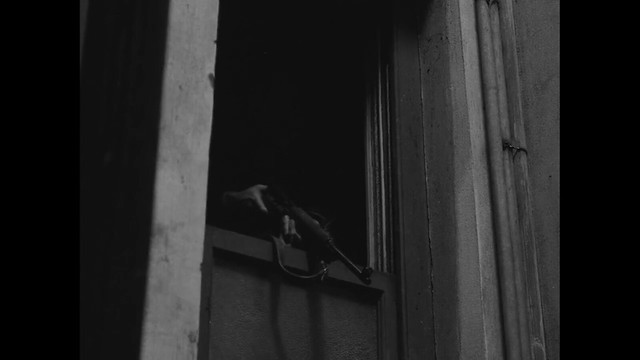
Leandro Listorti, filmmaker and curator of the film museum in Buenos Aires, makes a non-narrative film culled from never completed, abandoned Argentinian films. La película infinita Shows you the power of cinema, purely in visual terms (sometimes accompanied by music, bits of dialog, minor sound effects, some synced with the original footages and others not). The lure of these images are undeniable - the way they demand your full attention suck you in is nothing short of miraculous. We all know that these are unfinished films. We are all aware that it's not going to go anywhere. But it doesn't matter. The pull of the scenes are so strong and mysterious, whether it's a barrel of a gun pointing, a shadowy figures in the background, the chalk marks on the floor.... A scene is a great promise: a start or in the middle of mystery that will never be solved. We want more. La Película infinita will make a great double feature with another essay film, Ne croyez surtout pas que je hurle/Just Don't Think I will Scream.

Sunday, December 15, 2019

Mirror Not Window

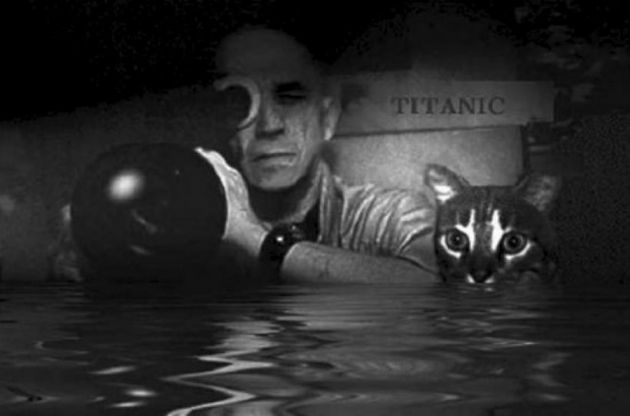
Just Don't Think I'll Scream (2019) - Beauvais
just_dont_think_ill_scream_-_cat
I love people who are obsessive –both in real life and in films. Whether they are passionate about their craft, or just plain nutty about a specific thing in life that they are really into. This is why I love Herzog documentaries. These are film subjects who are endlessly fascinating to me. Watching them enthusiastically talking about something they are super passionate about, whether it’s a flying hot air balloon over a rainforest canopy or tracking grizzly bears, gives me a necessary jolt in my life. I take the same pleasure watching Just Don’t Think I’ll Scream. 

French experimental filmmaker Frank Beauvais, after a bad break up with his partner, retreated to his childhood home in Alsace region near the border with Germany and Switzerland in 2016. This is also the time of the Bastille Day terror attack and War in Syria. France declared the State of Emergency and military troops and law enforcement flooded the streets. In the self imposed isolation, Beauvais obsessively watched hundreds of movies, as many as 5 per day for 6 months, made Just Don't Think I’ll Scream out of 400+ movie clips he and his editor Thomas Marchand, meticulously archived, catalogued and curated, reflecting his mood and the world around him. And it’s maddeningly seductive. 

Part compilation film, part very personal film essay, Just Don't Think is a 'mirror rather than window' type of film – a fleeting reflection by way of short visual day-to-day diaries rather than deep philosophical introspection with long ethereal takes and silent moments. Ranging from pre-code Hollywood, gialli, Swedish erotica, pinku, Soviet and East German cinema to countless others, the images, lasting no longer than few seconds (staggering 1,700 cuts – but still fewer than in average Michael Bay movies), feature gestures, objects and actions while never lingering long enough to see the faces of recognizable actors or persons. Nonetheless the images match up Beauvais's continual monologue. It’s more based on free associations and intuition based on personal feelings, rather than obligatory narrative machinery. It's as personal as a film gets: Beauvais bonding with his estranged father, after taking him in because of the old man’s failing health, over a Gremillon film, The Sky is Yours, only to witnesses his death while watching the film. And procrastinating in getting rid of personal belongings he obsessive compulsively collected over the years - records, books, CDs and DVDs, furniture, which I can totally relate to. 

Beauvais also narrates the tumultuous world we've been witnessing in recent times- the rise of Islamic terrorism in Europe, the rise of right-wing violence, French elections and anxiety over uncertain political future and his middle aged, non-committal self even he can’t hide his infatuations for the left wing movement like Nuit debout against labor reforms. In these instances, we can see the glimpse of its creator. 

But mostly, Just Don’t Think is about an addiction to the moving image, its seductive nature, its thrilling suggestiveness or lack there of, its subtle/blatant symbolism…that we, as cinephiles, relish in order to escape the often horrendous reality called life. Not since Godard's essay films, have I encountered a purely visual film that is culled from existing material that is also immensely pleasurable. Just Don't Think I'll Scream works beautifully, precisely because it's so personal. This is what an essay film of a true cinephile should look like.

Monday, October 19, 2015

Beautiful Conceit

Letters to Max (2014) - Baudelaire
 photo f37a5a8d-012a-456b-9e73-14fb0eaafdd6_zpsjdtl91ws.jpg
The film's initial conceit- using old fashioned snail mail (in blue and red edged airmail envelopes no less) to communicate with an old friend Max Gvinjia who is a diplomat in the Republic of Abkhazia, in the internet age, doesn't damper the loveliness of this essay/docudrama on national identity, collective memories/forgetfulness and cinematic inventiveness. After the fall of the USSR, Abkhazia, a small nation on the Black Sea bordering Georgia, fell short of declaring independence, fought a war against invading Georgia in 92-93 and won and still in a international diplomatic rigmarole to be recognized as a country (only a few nations recognize it as such). Only appearing in white text of his letter, Baudelaire wonders if his letters are actually finding their way to his long time friend living in a diplomatically non-existing country. In response, affable Max, a devorcé and father of 3, reads his letters and answers, then takes us on a tour of often beautiful scenery of Abkhazia. There are signs of war everywhere too - decaying buildings covered with vegetation, abandoned tanks and artillery, monument to the national heroes and such.

It is pretty apparent with all the western chain shops and cell phones that Abkhazia is just like any other developed Eastern European country, but through Baudelaire's honest and sometimes pointy questions, it's as if he is creating his imagined view of the country, steeped in nostalgic history (albeit recent). He admits that he might be asking the questions to himself since he doesn't know if the letters are getting to their destination. Max plays along, having personal/national triumphs and losses during the span of the film (was a Deputy Foreign Minister, celebrated independence declared by then Russian Prez. Medvedev, becomes a Foreign Minister then loses the post with the regime change).

Thoughtful, intriguing, relevant and intimate, Baudelaire (Anabasis of May and Fusako Shigenobu, Masao Adachi and 27 Years Without Images) is doing something that really speaks to me in testing the boundaries of cinema.

Wednesday, August 13, 2014

Memories of the Future: Chris Marker Retro at BAM

 photo 61744628-9734-453f-b1e9-e4e13c027744_zpsb16a05d3.jpg
With theatrical release of the digitally restored 1997 film LEVEL 5, Brooklyn's own BAM Cinematek is hosting a rare retrospective of Chris Marker, one of the most singular voices in cinema history.

Marker passed on in 2012. But as a writer, photographer, visual essayist and multimedia artist, Marker leaves impressive body of work that spans more than a half a century. His uncategorizable cinematic oeuvre touched upon politics, technology, cinema, artists, time and memories. He was an acute observer of the past and present and cinema's own soothsayer.

The retro includes Sunless: one of my absolute favorites, La Jetée: a seminal time-travel Sci-fi classic, Bestiary Series: his short visual haikus on animals, Statues Also Die (with Alain Resnais) and Valparaiso (with Joris Ivens): his collaborative efforts, The Six Side of the Pentagon, Le Joli Mai and other politically themed time capsules, One Day in the Life of Andrei Arsenivich, Remembrance of Things to Come: biographical sketches, and a lot more.

Chris Marker Retrospective runs 8/15 - 8/28. For tickets and more information, please visit BAM Cinematek website.

Level Five (1997)
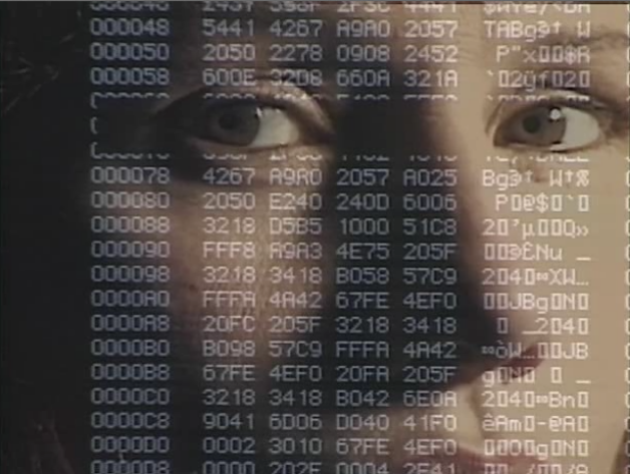
 photo 0514d4a4-5a81-4ece-b427-a734fd893afd_zpsdaabf3d8.png
The act of remembering has always been Chris Marker's theme. Using the then relatively-new technology called internet, the famed visual essayist equates information/misinformation with distorted history in the sci-fi mold. Yes, DOS era graphics are laughably outdated, but Marker's prediction is alarmingly accurate: masks (avatars), OWL, short for optional world link (a stand in for world wide web), skyping, internet anonymity, personal connection/disconnection....

Laura (Catherine Belkhodja), named after Otto Preminger's heroine by her internet correspondent, inherits the research on the largely forgotten Battle of Okinawa for creating a computer game. So day in and day out, in her pajamas, Laura sits at her computer table researching that fateful battle in a windowless, dark room, looking and addressing directly to the camera.

Marker also inserts interviews with Oshima Nagisa , author/scholar Tokitsu Kenji, the survivors and war/tour footage of Okinawa. As Oshima says in the interview, Okinawa was sacrificed in the hopes of saving the mainland. The battle was already a foregone conclusion. The civilians were ordered to kill themselves ahead of the battle, to avoid being captured by evil enemies. As a result 130,000 civilians died on that island. They killed their loved ones and killed themselves. Japanese commanders were banking on the resolve of civilians deterring the enemies. Instead, atom bombs were dropped on the mainland two months later.

Marker's contemplation on people imbued with the new technology (William Gibson style) and the history falling into oblivion is not always successful. But it is a potent film with a long lasting implication on the matter.

Digitally restored, Level Five has a week-long theatrical release August 15-21, running concurrently with the retrospective.


Statues Also Die (1953)
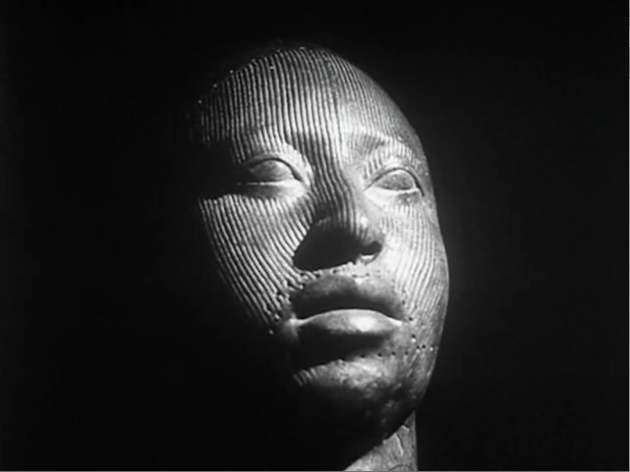
 photo 8d13a145-c340-4a9a-8629-3a68cda41c4b_zps9eb1cd27.png
In this short docu-essay commissioned by Présence Africane journal, the filmmakers examine African art and its commercialization by way of colonialism. Marker, who handled the camera, shoots African statues and masks like they are human beings, not museum pieces on a mantel, since they are not represented in museums like Louvre.

Resnais and Marker make a case that a statue loses its meaning when it ends up on text books or taken completely out of context (mass produced or becomes an ashtray). That's how they die. Their utilitarian and cultural applications aside, African art doesn't get no respect as art.

I don't know if the footage of the Harlem Globetrotters is meant to be cynical or genuine adoration of athletic prowess, but the filmmakers cover the ugly side-effects of colonialism -- Disney-fying Africa. It is remarkable considering it was made in 1953, way before many African nations' independence from its European colonizers or American Civil Rights movement. No wonder it was banned from the French public until 1963.

In its entirety:


Sunless (1983)
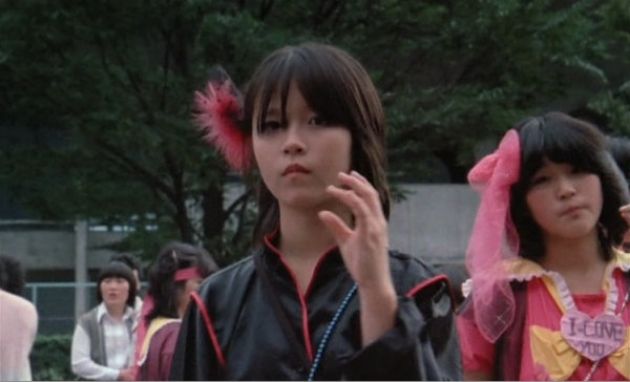
 photo 5536d525-d13d-48a8-981e-09797961949d_zpsf9f5129c.jpg
Sublime. Marker's musings on impermanence of human existence and memories narrated by a female narrator are both poetic and thoughtful. The 80's Japan takes the center stage as an alien world where a thousand years of time criss-crossing in every street corner, Kilgore Trout style.

While Godard tries to cram a lot of the same ideas in his films but never manages successfully to fully articulate them, Marker does it so effortlessly here. Beautiful and wise beyond anything I've seen or read.


The Koumiko Mystery (1967)
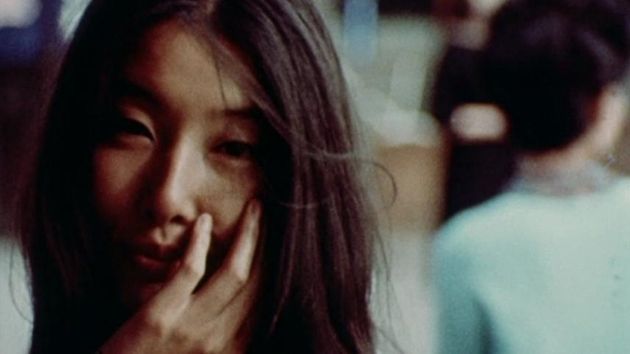
 photo 8537fe6f-c92e-4916-a7b6-ffbccaf20ab3_zps89975887.jpg
It's Koumiko, a twenty-something Japanese beauty who fast derails Marker's coverage of the 1964 Tokyo Olympics. He can't take the camera away from her angular, very traditional Japanese face. The film consists of some narration by the filmmaker, newscasters and Koumiko herself as she answers Marker's barrage of questions honestly with that typical Japanese modesty, but always with a hint of mystery.
The film is an anthropological travelogue, documenting post-war Japanese psyche in the shadow of the greatest economic miracle the world has ever seen. Koumiko, an apolitical woman whose ancient face betrays modern sensibilities as she talks about her life and men is at once traditional and contemporary.

As the title suggests, Marker knows the seductive power of something hidden. You can't possibly find out about someone in 46 minutes, let alone a whole country. He knows this. But the film is a lyrical, beautiful ode to that first glimpse, peeling off that first layer. Beautifully shot and edited, I long to see this film on the big screen.

Koumiko marks the beginning of Marker's fascination with Japan, the setting of many of his later films. It also introduces cats, a constantly recurring motif in his work.


One Day in the Life of Andrei Arsenevich (2001)
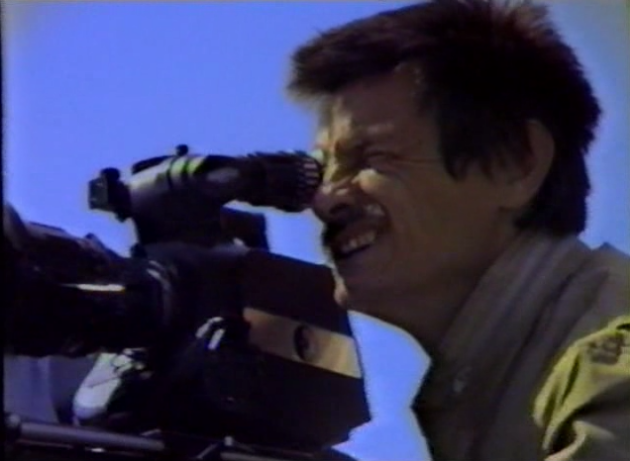
 photo bcc8da3d-8bef-4d42-bb59-4291a2078e62_zpse08e4c21.png
Made for French TV, Cinema de notre temps, Marker faithfully records the last days of the Russian master, Andrei Tarkovsky, who died in a Paris hospital in 1986, soon after completing his last film, The Sacrifice. With footage from Tarkovsky's other films, Marker assembles an intimate and revealing documentary about the Russian master's philosophy, techniques and intersection of his life and art.

One Day in the Life... is a top rate analysis of Tarkovsky's mastery and contains many precious glimpses of the master at work, especially in filming bravura ending of Sacrifice where continuous long shot of burning house and Alexander (played by Ingmar Bergman regular Erland Josephson) running left and right. On camera, captured by Marker, unlike the solemnity of the scene, Tarkovsky is joyful and energetic, dictating every inch of action and camera movement to actors and Sven Nykvist (master DP, also a Bergman cohort). This is a great doc on one of the greatest filmmakers ever lived.

Monday, March 17, 2014

The Witch of the East

The Vanquishing of the Witch Baba Yaga (2013) - Oreck
 photo eaa60c6c-5010-4192-ae33-cbb21e71a74a_zps826080bd.jpg
 photo afbe4aec-7a3e-47da-a023-ae92e8d54c88_zps99250d88.gif
As a lover of old, rustic folktales and being married to a descendant of an eastern European Jew, Baba Yaga holds a special place in my heart. Creepier and more twisted than the Grimm Bros' tales, Baba Yaga tells a story of a witch who lives in a hut that stands on giant chicken legs and eats children who get lost in the forest. In its many variations, the witch is often perceived as both venerable and monstrous.

Jessica Oreck's ravishing new film is not a mere anthropological documentary on Eastern Europe. As with her first two beautiful films, Beetle Queen Conquers Tokyo and Aatsinki: The Arctic Cowboy, Baba Yaga also falls neatly into region specific ethnographic study at first, this time, of the Slavic world. Of course, there is the region's bloody history with the footage of wars, destruction and remnants of The Soviet empire everywhere throughout the film. But then we realize how universal these images are -- cutting down trees, a wedding, highrise apartments, urban decay....

Mixing carefully selected quotes and voiceovers (in Russian and Polish) over soft, faded 16mm film shot footage of Russian landscapes (both city and forest) and animated sequences of a stunningly illustrated old storybook (its images strongly resemble the famous Russian illustrator Ivan Bilibin's work), Baba Yaga takes on that magical, dreamy quality I've only experienced in watching Chris Marker's Sans Soleil.

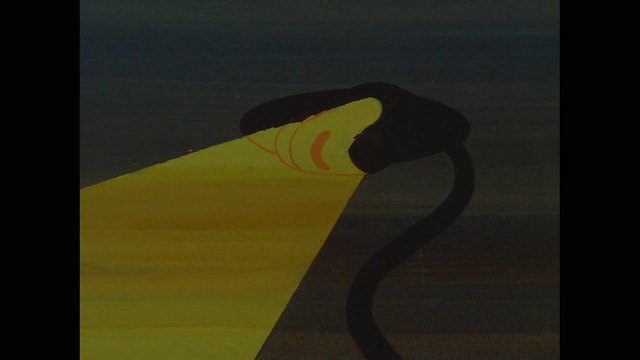
Aided by woodland critters and magical beings in the forest, the two lost children escape Baba Yaga's spell. Is Baba Yaga a mere villain or the gate keeper of nature against human civilization encroaching upon its borders? Oreck gently equates the ambiguous folktale with modern day human existence where we face increasing man-made (un)natural disasters. The common theme coursing through all of her films has always been our relationship with nature: that nature is our friends, not enemies. Without ever being didactic, the filmmaker presents us with a meditative visual essay with much grace and beauty.

Memories, legends, nostalgia, dreams all intermingle in The Vanquishing of the Witch Baba Yaga. The film hypnotizes you for 72 short minutes that seem eternal -- in a good, waking-dream way. Baba Yaga is perhaps the most mature work to date from Oreck. Her infinitely wise, deeply philosophical approach to film, aided by Sean Price Williams's lyrical cinematography, is exactly what I look and hope for in documentary filmmaking. It's one of the first great films I've seen this year.

I can't wait to see this film again. Someone please pick it up and put it in theaters. In doing so, you will be making a great contribution to the world!

The Vanquishing of the Witch Baba Yaga will be shown as part of FSLC and MoMA's New Directors New Films series. The showtimes are on March 22 at 1:30pm and on March 24 at 6:15pm. For tickets, please visit ND/NF website.

Tuesday, July 31, 2012

The Art of Remembering

Sans Soleil/Sunless (1983) - Marker
sans soleil
Sans Soleil1
sans soleil2
sans soleil3
sans soleil4
Sublime. Marker's musings on impermanence of human existence and memories narrated by a female narrator are both poetic and thoughtful. The 80s Japan takes the center stage as an alien world where a thousand years of time criss-crossing in every street corner, Kilgore Trout style. While Godard tries to cram a lot of the same ideas in his films but never manages successfully to fully articulate them, Marker does it so effortlessly here. Beautiful and wise beyond anything I've seen or read. Easily one of my new favorites of all time if not the favorite. Perhaps I should check out some Jonas Mekas?


*Chris Marker passed on at age 91, July 30th, 2012. R.I.P.


Saturday, April 28, 2012

Lonely Hearts Hotel

Hotel Monterey (1972) - Akerman hotel monterey 2 hotel monterey 4 hotel monterey 5 hotel monterey 6 hotel monterey 7 Interesting. It starts on the lobby level with the shots of (mostly elderly) patrons coming and going. Then it's from inside the elevator going up and down, its door occasionally opening up to reveal ill lit, narrow, empty hallways. The hotel patrons disappear after ten fifteen minutes and it's kind of a slog with endless static/tracking shots of corridors in grainy 16mm. This 1 hour silent tableaux, documented entirely inside the New York hotel, evokes (as with Akerman's other NY films) the same loneliness and longing as Ed Hopper paintings or Robert Frank's America photographs. It's a rare time capsule of the 70s New York from an outsider's perspective. I liked it a lot.