Thursday, April 13, 2017

Heart Wins Over Brain

Heal The Living (2016) - Quillévéré
heal-the-living-reparer-les-vivants-venice-2
A young blonde boy Simon (Gabin Verdet) wakes in the pre-dawn winter morning, kisses his girlfriend who's still in bed, sneaks out of the window that’s facing the ocean in the distance, bikes to join his buddies to go surfing. The whole beginning sequence of Katell Quillévéré (Love Like Poison, Suzanne)'s Heal the Living has a fluidity of a movement and detached youthful spirituality of a Gus Van Sant movie.

The surf and the youthful bodies against the waves are all beautifully captured by her regular cinematographer Tom Harari. And this is what makes the following scene so tragic. On their way back from the beach, Simon’s friend falls asleep at the wheel and the car veers off the road and crashes. The crash is also almost poetically realized: capturing the boys’ lucid stage simply overlaying the image of the waves on the flat surface of the open road and its surroundings. Simon wasn’t wearing a seat belt. He falls into a coma and is pronounced brain dead.

The film is an organ transplant weepy: 'An accident cuts a young man's life short and gives another person a second chance in life' story. We've seen this before, many times. But Quillévéré elevates this Lifetime Network movie of the week premise to a higher level with her strong ensemble cast, including Emmanuelle Seigner, Kool Shen, Tahar Rahim, and Alice de Lencquesaing. She orchestrates them beautifully, as she did with her previous films. As usual she is gifted with making every one of her characters shine.

Based on a bestselling book by Maylis De Kerangal, Heal the Living examines Quillévéré’s familiar territory: the death of a loved one and how it affects the living. Through Simon, one way or another, we see the glimpse of other lives, both professional and private in equal measure.

There is a middle-aged rapping head surgeon (Bouli Lanners), an overworked nurse (Monia Chokri) daydreaming a sexual tryst in a hospital elevator, a good-hearted transplant specialist (Tahar Rahim of A Prophet, The Past) who has a tough job of convincing a grieving family to give consent, a mother of two grown-up sons who needs a heart transplant (Anne Dorval of Xavier Dolan's films)… the list goes on and on.

Then there is the film’s odd couple, French rapper Kool Shen (Abuse of Weakness) and Emmanuelle Seigner (Frantic, Diving Bell and the Butterfly) as the grieving parents of Simon, who are left with hard decisions. And they are improbably fantastic together. Shen’s working class, everyman attitude matches well with Seigner’s soft-featured maternal figure.

It's the space between the brain and the heart that makes us human. That's the space Quillévéré also explores. It can definitely turn corny in less assured hands. But the fluidity of the scenes, accompanied by Alexandre Desplat’s gorgeous score, shows what she is capable of if she has means to realize something more deep and complex through a visual, aural language.

Science has decided that the death of the brain is the end of a person. But it’s the stopping of the heart beat which has more of emotional resonance to us, as it is synonymous with love.

Quillévéré understands those connections and implies that in Heal the Living in a cinematic way. Every movement in the film has to do with being alive. Every stillness implies death. She understands that death is part of life. We lose somebody close and feel like time is standing still -- the camera movement becomes static.

But we go on living again -- and the camera moves again. I thought Suzanne was a flat-out masterpiece, even though it perhaps lacked cinematic flare. Deeply moving and thoughtful, Heal the Living is definitely her most mature work to date.

Heal the Living opens in New York on April 14 at the Quad Cinema.

Wednesday, April 12, 2017

Katell Quillévéré on Heal the Living and Always Challenging Herself as a Filmmaker

Katell
Katell Quillévéré is a rising star writer/director in French cinema. With only three feature films under her belt, she's gaining quite a bit of critical acclaim ever since her coming-of-age debut film Love Like Poison in 2010. Her second film Suzanne, a true masterpiece, starring two of the biggest names in French cinema now -- Sarah Forestier and Adele Haenel -- put her in the league of other great contemporary women directors such as Mia Hansen-Løve, Céline Sciamma and Alice Rohwacher.

Quillévéré's strength is in her ability to make all of her characters shine. Her new film Heal the Living (original title: Réparer les vivants) is a big leap in terms of cinematic filmmaking and the most mature one to date. I got a chance to talk with her during the Rendez-vous with French Cinema series here in New York. In person, she is so lovely and charming.

Heal the Living opens in New York on April 14 at the Quad Cinema.

I’ve seen all your films. So I know a little about the preference of your subjects. I am more curious about your background. You were born in Ivory Coast. Did that influence you in any way as a filmmaker?

Katell Quillévéré: Well, I don’t know. (Laughs.) I have memories but, they are from early childhood… so it’s not really possible for me to make that link with anything. But I remember watching cartoons there. They were American cartoons. I was really fond of the Tom Sawyer and Huckleberry Finn cartoons. It was my first time seeing images and fell in love with those two boys and their insolence…

I don’t think I was really programmed to be working in movies, because there were no artists in my family. Both of my parents are scientists. So my way to avoid school in a way, playing hooky, was cinema. Sorry, that’s not a specific African memory. (Laughs.)

That’s fine. Your previous two films are co-written by Mariette Désert. But HEAL THE LIVING is quite different. It’s an adaptation of a pretty well known, popular book. How did it come about that you decided to do an adaptation?

I started writing a new original script. So I was not looking for an adaptation for a movie project. It came almost by accident, to me. Its meaning was so strong for me in an emotional way. So I decided to put aside the script I was writing and meet the author, Maylis de Kerangal. So I just followed my instincts, actually.

After that, during the process of writing, I discovered that this movie would be as personal as my previous ones. For me it’s a continuation; the story of Heal the Living is the story I’m always telling, the story of the way you survive losing someone, by separation or death. The loss of someone you love and life goes on. It’s always about love, you know. Even though that person is no longer with us, the link between them are still alive. So for me I tell the same story but in a different way. It’s also a way to renew myself in a new environment, in a new narrative way also.

It was really interesting when I was making Suzanne, I had to compress someone’s 25 years of life into a two-hour film. Heal the Living takes place in the timespan of 19-24 hours. So it was an opposite challenge. I also had to deal with it emotionally in the opposite way, because with Suzanne, the main events in her life happens outside the screen -- the loss of her mother, the loss of her child, the day she runs away with this guy -- and here in Heal the Living, everything pretty much happens almost in real time in front of the camera: you have the death of the child, you have to say yes or no for organ donation, you have to accept the transplant, all that. So, that was really interesting for me to confront myself to a new way of dealing with emotions.

For me it did seem like a departure, even though you said the same theme courses through all your films. Cinematically speaking, I think it’s a lot more sophisticated, if you don’t mind me saying so. Even though SUZANNE had very distinctive storytelling style, it didn’t seem to me as cinematic as HEAL THE LIVING. It starts with the boy waking up and going to the beach on his bike. And it’s so gorgeously done. It reminded me of Gus Van Sant's films.

I love Gus Van Sant.

And the surfing scenes with waves. Really beautiful stuff. You used the same cinematographer, Tom Harari, as you did on your previous films. Did you talk about the look of the film with him extensively for this film?

Yeah, but we did it for every movie we made. We’ve known each other since we were at university when we were 20, he shot all my movies, even shorts. Before shooting we kind of make a book with every shot of the movie mapped out and described, even if we change things on location, you know. We prepare a lot because it takes a lot of money to make movies. Time is money. So if you are well prepared, you can save time, therefore save money.

As you say, it’s more sophisticated but we progressed together; he’s better and I am better than before too. We learn our jobs. Every movie we tried to do it better and challenge us. We did have more money for this. We could do more travels, camera movements. We could afford…

Steadicam?

Yes, cranes and steadicam which I couldn’t afford it with Suzanne. The sophistication of mise-en-scene really depends on the money you have.

Right.

But if you want me to tell you about the image more?

Yes, of course.

We were really thinking about constructing the figure of a circle. Like a movement of the waves. Death is not the end. It is part of the living. So we built a movie with the heart in the center and it echoes throughout. The image of the waves is also important in de Kerangal’s book.

So if you pay attention, you can see the construction of those images. I played with symetricity too; in the beginning, those two young guys in the car, the two heads sleeping -- one leaning against the other before the accident, -- there were two young guys sleeping in the waiting room at the end of the movie waiting for their mother to come out of the surgery.

Ah, that’s right.

Two teenagers on the bed in the beginning and the two women in bed later, those are the ways to create the links between characters to create that organic feeling in the movie and to create these waves. Waves are also like the rhythm of the heart.

Moving and traveling were also like DNA of the movie or like the blood circulating inside the body. Them traveling the inside of the body of the movie. When movement stops, it’s always about death. The accident, diagnosis at the doctor's office, confrontation with the question of death, all have stillness. Everything stops. And then when the questions are resolved, the life goes on again. It’s a pretty simple idea but I thought it would go well with the theme of the movie.

Very interesting cast. I know you’ve worked with some of the top actresses in France before. Now you have Tahar Rahim, Emmanuelle Seigner, Kool Shen…

You know Kool Shen?

I know his music a little bit. And I’ve seen him in ABUSE OF WEAKNESS. You also have Anne Dorval, the French Canadian actress… You have all these different actors. How was it dealing with all these different actors?

Okay. First, I wanted to have strong personalities in my movie because it deals with a tough, strong subject. I really wanted to bring this movie to the audience. I wanted people to see it. But I knew the subject is kind of hard. It’s not typical to go see a movie about death and the death of a child.

Right.

So I need them [the actors] to help me to bring the movie to the audience. But I also wanted them to be really different from each other, kind of representing diversity of the society. People from different kind of movies, different countries, different everything. And some are really famous, some are not famous at all. Young actors: some are not professional; for Simon (Gavin Verdet), it’s his first movie, you know.

So that’s what was interesting to me, to choose these people and also, every actor I chose, they have never done the kind of role they play in this movie before. I always pay attention when proposing a role to an actor as kind of a challenge.

But they really look great together. Kool Shen and Emmanuelle. I never dreamed of them being a couple in anything but they are really great together!

Yeah. When I proposed it, “Kool Shen’s going to be the husband of Emmanuelle Seigner.” Everyone was like, "Are you sure?" (Laughs.) No one really believed it.

It really works!

I do like surprises. It’s one of my missions to have surprises like that. Bringing actors to another universe that they are not familiar with is also cool thing to do. And they both are singers.

That is true.

Maybe they will work on an album together. (Laughs.)

What I find interesting is that it has heart and brain connection. Obviously those two things makes us human. Which one, for you, makes us human? Heart or brains?

One can always replace the other. The science decided that the death occurs not when heart stops beating but the death of the brain. That’s what’s changed the definition of death. What the movie is saying is that death of the heart will have a symbolic importance for a human being, for the people left behind.

So that’s why the ritual seems so important, like when Thomas puts the headphones on the boy. Because technically the boy is dead, but in a spiritual way and for his parents who can’t say good bye, the ritual aspects of death will always have an importance, in spite of the question.

So you have to take care of the heart, that’s what I’m trying to say.

Great music always in your films.

Oh thank you. I love music. It’s really important for me.

Yeah so there was a Radiohead song in the end of LOVE LIKE POISON…

Yeah. It’s so cool to meet someone who’s seen all three of my movies.

Yes, of course! (We all laugh.)

But you didn’t think that Heal the Living is not really different than the previous ones.

I didn’t. But I was thinking about it when I was watching it.

Because for me, I really planned it carefully that there is a continuation.

I felt that you have something for each character to explore. That you care about each one of your characters. But I didn’t necessarily think that there were connections between the first two and the third one.

The thematic similiarities I talked about?

Yep. I get it.

You get it now?

Yes. After talking to you, yes definitely.

(She laughs.)

So Suzanne is the Leonard Cohen song, sung by…

Nina Simone.

Yes, the great Nina Simone. And this you have Alexandre Desplat. A beautiful score. Can you tell me a bit about your collaboration with him?

I don’t know if many directors do it this way. Not sure about how they do it in the States. But I have a music consultant who is a friend of mine, and he makes a compilation. So I listen to it before the shooting, during the writing and everything, and we discuss together, then I choose all the music for the movie -- the ones which are going to stay, and also the ones that will be replaced with the new musical composition. I play music on set, too. It can affect the camera movement and emotions of actors and many other things.

Then I work with it in editing. Sometimes it stays on its right place, sometimes it moves when it doesn’t need music or need more and everything. Then I do final edit. Then I give the film to a composer.

A composer knows exactly where the music is needed, from that frame to that frame. He is free to listen to what I used and decide if it works or not. He can do whatever he wants to do and we stop. That’s what Alexandre did. He wanted to listen to what influenced me. But then he forgot it and put it in the garbage and used his own music. And this is really important time for me because I discover that composer is like the first viewer of my movie really.

True.

Because he sees it and he digests it. And he gives it back to me with normal music. And it’s really scary because you know the importance of the music in a movie. It’s also very exciting. We went back and forth a little to find some right melodies but Alexandre is very quick. I don’t know, I think it was two or three weeks. He works so fast. He’s so good at finding the right melody. I can’t really explain how he does it.

What impressed me was that he worked with so many incredible directors, but he is always completely dedicated to a director he is working with, even if the director's young and not famous like me. ‘What is important for me is the movie and intention of its director,’ not his own music. And I think that’s why he is so good. He is really in love with cinema and incredibly generous.

Dustin Chang is a freelance writer. His musings and opinions on everything cinema and beyond can be found at www.dustinchang.com
Interview: Terence Davies on A Quiet Passion and His Love of Poetry

© A Quiet Passion/Hurricane Films/Courtesy of Music Box Films.
With A Quiet Passion, coming out in theaters this weekend, Terence Davies, one of the greatest living filmmakers finds himself prolific all of sudden, having two films back to back (with last year's Sunset Song). The film is about Emily Dickinson, a 19th century American Poet. It's an exceptionally well written and acted film even in Davies' standards. I got a chance once again to talk to him about the poet and his love of poetry.

Was A QUIET PASSION your passion project? How did it come about?

It was sort of four and a half years in the making really. But I discovered her (Emily Dickinson) when I was 18. About 12 years ago, I started rereading her. Then I wanted to know a little more about her. And I read 6 biographies. (chuckles) And it was…I felt that things in her life I could really respond to. Oh she didn’t go anywhere but her life was very rich. These were very intelligent people and in her life, she was I think, a little afraid of the world.

But someone said, 'but why make a movie about someone who didn’t go anywhere?' I thought, but that’s sets power if you think of it in terms of string quartet, it’s a chamber piece: simple things become very very powerful. Even little trivial things become very powerful because you got this enclosed world. And all the things that go on in that very close family. and an idea of how to behave morally and ethically and if you fall below that there is huge rouse. So it wasn’t, it didn’t seem like a dull life to me because she had this rich inner life. But she also, you know, was an ordinary person. She baked, she gardened, played piano. She wrote three volumes of letters and over seventeen thousand poems as well and she was ill. I mean, my god if that wasn’t rich, I don’t know what is.

In our previous conversation that you said making SUNSET SONG was very difficult but process of A QUIET PASSION was a really pleasure from beginning to end. What was the difference?

Money. (laughs)

We didn’t have enough money to shoot Sunset Song. We really didn’t. It was the most difficult thing I think I;ve ever done. Every time when the phone rang, I though, O god what’s gone wrong now? Even going out to New Zealand, hoping to have some hot weather and they give you good tax break.

Right.

And we get there and have the worst weather there in 50 years. I thought, I could stayed home and got this weather for free! Anyway the weather broke and we got those scenes. But there wasn’t just enough money. The post production dragged on for a long time and we had to keep on raising money to finish it. And by the time that happened, A Quiet Passion was already shot and ready to go. (chuckles)

My god.

Sheer accident. And it was a joy. I love working with actors and my crew on Sunset Song but it was hard for all of us. And it was physically unpleasant. Being on a scottish farm and it's pouring with rain and there was mud everywhere and it stank. Where is the glamour, where is the glamour in this? I asked. But this was a complete joy from beginning to end. Nothing went wrong.

I’m very glad to hear everything went smoothly. How long was the shoot?

Actually I can’t even remember. I think it was 8 weeks.

Only 8 weeks?

8 or 9 weeks. What I always say is 'can we have a 5 day working week?' The crew got to have two days off, they got to. Otherwise they will be exhausted. So we got a longer period but it was probably the same amount as the shooting for every independent film. But they got to have two days off.

That’s very nice of you.

Well their hours are so long.

The thing is…I mean there are always showstoppers in your films, like visually striking moments, but this showstopper came in early in this movie for me. It was the portraitures of Dickinson family morphing from younger selves to older, in the beginning of the film. I thought it was very beautifully done in a pure Terence Davies fashion. I thought, oh my god, there is another one!

(Davis laughs)

It’s the same Director of photography you always work with, no? the German cinematographer, Florian…

Florian Hoffmeister. It’s either Florian or Michael McDonough who shot Sunset Song.

Right.

It's because I think they are really really gifted. But I was gifted with a wonderful crew anyway. They do work so hard. Most of the crew in Sunset Song were in Luxembourg and A Quiet Passion in Belgium because we built the replica of the Dickenson house there, obviously we could't shoot in the original house where they lived in.

But no, I had wonderful wonderful people. They don’t do their job, they feel it. You know what I mean? Florian puts on the lens…I can never tell you what lens it is. I just it’s the right one. But Florian is a wonderful man and a great artist.

I know it was shot on digital but I really couldn’t tell. It’s beautifully done.

Isn’t it?

Yeah. Especially in the beginning where young Emily is standing against the window and all the light coming through the window. I really couldn’t tell. So I doesn’t make much difference to you.

I think digital is really fantastic now. Sunset Song was shot on 65mm because digital really wasn’t up to it. But that’s two three years ago. Coming of digital is like coming of sound. It would change everything cause the things that they can do. It’s breathtaking. Some of the scenes in Sunset Song the teams of horses needed to be led by a leader. Because the actors aren’t used to plowing. So I said 'what do we do?' And the manager of all the digital management says 'we will take them out'. I said 'how do you take someone out?' I was completely bewildered. As long as they can do it, I don’t even wanna know.

This film however, is beautifully written. How much of Emily Dickinson’s dialog is based on her actual writing?

I invented most of it. I used some of her dialog but not a lot. The reason I did it like this was because 19 century american english was very formal cause they were trying to imitate England. We were still the dominant power and now it’s the totally the other way around. But also things like The Heiress which has a wonderful dialog, you know. And I wanted it to be good. These were very intelligent people. So I wanted it to be good and funny and shocking and unpleasant. So I constructed it around the idea of American English back then. It was more formal. I used some of her dialog, the dialog of the looming man. It’s almost all hers. I added a sentence I think. But that is all hers. I read that on the footnote of Seawall’s biography of her.

Once you see the characters, you got to speak in their voices. Sometimes you think, 'no she wouldn’t say that. I think she’d say like this or like that'. I wanted it to be good in terms of dialog and I wanted it to be funny.

I think Cynthia Nixon really deserves and Oscar for this. You said something about Nixon becoming Emily Dickinson that she is Emily Dickinson in this film. How did decide on her to play the role?

Well I met her from the film that didn’t come off about four five years ago. And I never forgot her. When we found a little deguerrotype of Emily Dickinson taken when she was seventeen, one of my producers who used to be a still photographer, superimposed Cynthia’s face on her’s and she looks like an older version of Emily. I just knew she’d be right. And when we were talking, she said she had grown up with listening to the disc of Julie Harris reading her poetry. She knew her poetry and more importantly, she could read poetry as well. I just knew she was right. It’s as vague as that. And god bless her! She stayed there for four and a half years. I don’t know what I would have done if she said no. I’d have no idea who to cast.

You cast always perfectly though, especially female characters in your films.

It’s nip and tuck though, I mean we haven’t cast Miss Boffam, five days away from shooting.

Wow.

We were really worried, I couldn’t tell you. The casting company in Britain told me, we will send you another three. But when Catherine Baily came on, I said we found her at last. That was it.

Baily is wonderful, she’s so funny in this.

But it was nip and tuck, I tell you.

How did Keith Carradine come on board?

We were in Los Angeles, auditioning. One of my producers said, 'listen, Keith Carradine isn’t coming in. He won’t read'. I said, 'fine, I don’t understand why but fine'. Then he comes in. So I asked, 'but Mister Carradine, we were told by your agent that you don't read'. 'No i don’t because I’m a terrible reader. All the jobs I’ve gotten, if I read at the auditions, I wouldn't have gotten the job'. I said, 'would you mind?' he said, 'no'. And he read. And I said 'would you do it?' And he said, 'again?' I said, 'no, the movie'. His agent was very grand. My client doesn’t read. Such nonsense.

Carradine is a lovely lovely man. He has the most beautiful voice. He’s a singer as well. But the thing that always touches me even when I think it in my head, after he has told Austin that he can’t go to the war- that close up he does it at the end of that scene, what a wonderful piece of playing. It leaves me speechless.

Unlike many fathers in your films who are portrayed as brutish, abusive men, Edward Dickinson is gentle, supportive man. A little bit of a discinplanarian but nevertheless, very warm father. I haven’t seen that kind of father figure in your films.

Yes, he is the traditional head of the family and so he words are to be obeyed. But I wanted him to be tender as well. He does answer beautifully to Emilly when she goes, 'but it is your house father'. And he says, 'but it is your home emily'. I mean you hear such love in his voice. and I wanted that. But he can be very determined. He says, 'no you are not going'.

Right.

Emily dickinson deals with death and immortality a lot. Do you deal with death and immortality as an artist?

I’m afraid I do. When I was between five and six, my father who was very violent, died. He died at home and his body was in the house for ten days. I was awful. I’ve seen very early on what really horrible deaths are like. I must’ve put in me that nothing is stable. That’s why in primary school I wanted my family to stay together forever. They were the most wonderful family. They were just like the one in Meet Me in St. Louis. I never wanted to change. But then as you grow older, you realize that’s a myth. They get married, have children and die.

When I was eighteen or nineteen, I discovered The Four Quartets (by T.S. Eliot) read by Alec Guiness. He read it from memory. I was absolutely knocked out by it. I had no idea what they meant. I read them and they are my template now. I read them at least once a month. It’s some of the most fabulous poetry written in English. He writes in this rather melancholic way about the nature of being and the nature of time. In Prufrock, he’s much more terrified. He is really frightened of just being.


In the room the women come and go

Talking of Michelangelo.


And when it’s repeated, it’s just terror.


In the room the women come and go

Talking of Michelangelo.


Yes, you may not know but Michelangelo, you usually feel inferior and his terrror of coming down the stairs… that is also true. I could respond to that. Because… I live alone and I do things alone and sometimes having to go to places where people I don’t know, it’s so terrifying. I’ve just got no small talk. I just haven’t. I find that very very hard.

But the nature of time in film anyway is always in the eternal present. Where you cut from and to, it’s the next thing which happens but what’s more interesting is cutting to the next emotional thing that matter and leaving out the middle because that’s not really interesting.

No.

I’ve always been obsessed about that and I always will be. Perhaps I will reconcile with The Four Quartets as much as I love. I still find very difficult,


And all shall be well and

All manner of things shall be well

When the tongues of flame are in-folded

Into the crowned knot of fire

And the fire and the rose are one.


Beautiful. I think that about wraps it up.

Thursday, March 30, 2017

Interview: Albert Serra on The Death of Louis XIV and His Beautiful Method

albertserra
I saw Albert Serra's new film The Death of Louis XIV at New York Film Festival last year. The French New Wave legend Jean-Pierre Léaud plays the title chracter which is unusual for Serra, who mostly works with non-actors in his previous films. As part of FSLC's 20 film Léaud retrospective: From Antoine Doinel to Louis XIV (which runs from 3/29 - 4/6), the film opens this friday 3/31.

Serra is batshit crazy. Once he starts talking, there is no stopping him. As an admirer of his singular artistry, it was a pleasure talking to him at length, even though he did most of the talking. Fair warning. He might sound a tad bit arrogant or non-sensical in this interview. Bear in mind the English is not his first language. But he is a true artist and very passionate about his goal to create something that is truly different and original. He is a searcher and explorer of the cinematic realm. And I respect that.

I’ve been enjoying your work over the years. Bird Song was about the story of Magi, History of My Death was about Casanova & Dracula and now you have The Death of Louis IV. You take inspirations from literary and historical figures both imagined and real. I’ve read about your filmmaking approach where you said ‘Living the present through the past’. What does that mean?

That’s a beautiful quote.

Well, that’s your quote.

It's beautiful. This is true in The Death of Louis IV. You start by asking questions - how the Thirty Years’ War was, what happened or I don’t know, the problems of the state… all these things are like information or clichés. The point is that these meanings are created in front of you when you are shooting the film - OK, you have obviously have to dress an actor like Louis XIV. But then who was really Louis XIV? How did real Louis XIV move? How did he look at people? I don’t know. This has to be created within… I don’t have any idea about that. So the idea that the past can be lived with the same kind of mystery as if it were in present times without any kind of information about the future. So now we are living the past but as we know the future of the past is our present so we can use this.

But to come back and try to live this past in present time with all the innocence and all the mystery of living in the present… this was the point.

So in this sense Jean-Pierre was very good to do that in the film because he keeps the mystery alive. It doesn’t matter how much information you have on Louis XIV. You have the real Louis XIV. Because you never had a moving image of Louis XIV.

This is true.

The only true Louis XIV in cinema is he. Not anything we have in our minds. It was also because of my methodology of using 3 cameras because he (Jean-Pierre) has a really deep relationship with the camera. Since the very beginning we didn’t talk about the subject of the film or even about his character. We didn’t do any rehearsal. It was him realizing facts on set- three cameras, very long takes- chaotic because cameras are moving independently during the shots. So he really couldn’t establish relationship with the camera. As an actor, with one camera you establish relationship and you know what the camera is doing. You want to offer something to it. You want to give something. With all the experiences you have as an actor, you might want to fall back on that relationship you had before because you want to give something concrete. Then it’s quite easy to you fall into cliché to something you already know.

Jean-Pierre was so used to shoot with one camera set up, and suddenly he discovered that there were three cameras- he didn’t know which camera we were rolling, the cameras had freedom to move for the best positions because it’s impossible to move the position with one camera because of the lighting.

So it’s very dark and sometimes I don’t say anything- it was like a performance in some sense. Because there was no previous meaning that he could think about. There was no meaning he can build something around with.

So those two things: Not being able to establish relationship with the camera and not being able to give something made him introspective. Yet all the connections, his link to Louis XIV physically and spiritually was there within him. I imagine he was obsessed playing that role and he gave us all these peripheral, off the frame content that was not cliché, more interesting. He created new gesture for anything. Everything was new. And it’s not even linked with his persona as an actor.

Just one single time or two I allow him to give some of his traces, but in general he was living and breathing the past in present time.

Was Jean-Pierre you only choice for this role?

Yes.

I am wondering how the project came about, because I heard that it was an on going process for four five years.

Yes because it was a commissioned by the Pompidou museum to do it as a performance with Jean-Pierre as Louis XIV dying live in front of the visitors of the museum and we were there shooting also. In a crystal cage with the bed blahblahblah.

But then it was canceled five years ago and we forgot it a little bit and then a producer said two years ago, 'OK why don’t we do it in cinema?' But the idea was a live performance. You know, death and life live. So the film was by chance. It was done in fifteen days. So it was more like performance. I mean it wasn’t shot chronologically obviously because of practical reasons but also I prefer not to shoot chronologically.

I don’t know it was really ambitious spirit of a performance. To look at the history as it was, I don’t know, opaque, no? All the information regarding the death of Louis XIV was opaque. There was nothing really relevant on the subject. Only relevant thing there was was in front of us: Jean-Pierre himself, his body, the decor… there was no meaning, just some three or four facts but without meaning, to have something to do, to shoot--

Medical facts?

Medical facts, you know it’s quite historical. But… So Okay, we will fulfill all this traces of history not as transparent offering as meanings but we will create. We will put volume on it in a very spontaneous way.

Got it.

It’s a historical film. A brilliant film but it’s much more interesting than typical historical dramas. People, not cultivated people who are not specially cinephile are there and really, really into it. I don’t know, It’s the mystery of the performance itself. What is the meaning of everything - the movement, the gesture, every sentence, everything. He gradually moves less and less into total immobility.

What I take away from the film is that everyone dies at the end. Even the king of France who rule the kingdom for more than 70 years dies a horrible death that could have been prevented with modern medicine.

Yeah.

This film is very different from your other films. Your two films I’ve seen, the bird song and the History of My death both take place in mostly outdoors. This one is very confined.

The nature is another character isn’t it? I think as my methodology evolved and matured, I thought I could do different things. It’s the same chaos and same craziness if you think about it. The nature helped in previous films. And there was some kind of spiritual approach. But as my methodology evolved and became more sophisticated, I felt confident that I can do the same kind of things here. Maybe it feels different because it’s a little bit more controlled because the subject demands you more control. If it was Casanova, it doesn’t matter what you do, you can always apply ‘Casanova’ to him- he can do almost everything and get away with it. You can’t do that with Louis XIV. For French people, that would be a sacrilege. Not because it’s not historically accurate, but it’s not…

(I started to laugh)

You know what I mean.

Yes.

You can’t show Louis XIV using toilet.

No no.

I could’ve done something a little crazy and unexpected way, like my other films, more ironical and more physical, more lyrical to break the narrative. But it seemed too risky on this project to do that. Without that, film has some unity of space-time and action. So this is more coherent and calm and sensitive.

It is more coherent.

But it’s wild. (laughs) Shooting with Jean-Pierre was wild. The edit was very well done and it’s very smooth. All the crazy things and the irony are on the side of the doctors.

Irony. Yes.

But I love what was said about the film. The originality of the film is in the clinical approach to death, but the death of very important and dramatic historical figure. It’s quite uncommon to apply clinical approach to human. I like what the New York Film Festival’s catalog said about the movie - there was a beautiful sentence that said it’s a film about the banality of the court and the final moment of the king, but also a film about the banality of death itself.

That’s right.

It’s not something that is applied to Louis XIV.

Tell me about Vicenç Ataio. He is not only hilarious in this but he was great as Casanova in History of My Death. I hear he’s not an actor. He is a scholar, poet and the director of a museum. How did you get him act in your films?

Well because of the physical likeness: I saw some drawings of Casanova. Physically with his face and his nose and everything, he looks a little bit like Casanova. I do like working with non-professional actors because their lack of knowledge of methodology in cinema. It was important to use actors who don’t know how the film was done.

I do have a good intuition for that I think. I never make big mistakes in casting: maybe with secondary actors but never with the leading roles. It’s more challenging. The problem working with professional actors is that they always put some images they already have in their minds between you and them. With unprofessional actors, that doesn’t exist. It’s very beautiful. You work with them without and barriers in a very artificial environment, so you have to be very precise but the end result is very, how to say, it’s more. These characters are born in front of your eyes. It’s really something.

He is really fantastic.

Yeah, yeah. He is the best Casanova ever and probably the best libertine ever in the history of cinema. First or second best. But the best Casanova for sure. This is because of speed. I’ve read Memoirs of Casanova. He is always doing four things at the same time - I’m thinking about this - moving and controlling some women and eating, telling anecdotes and filling categories and going back to anecdotes all at the same time. Living this bright sensation of the moment, mixing great ideas and transforming everything...and this is gorgeous stuff.

You can have this only with actors who have no preconceived ideas, then you can deal with his body and his mind directly.

Was it a lot different directing such an iconic movie legend, Jean-Pierre Léaud?

There was a lot of respect. Even though I didn’t have a lot of authority but to Jean-Pierre, a director is like myth, a god. Because he was born in the era auteur cinema, of the New Wave. For him, the director really creates style of the film. So for him, director is god. But even with that, out of respect I have for him, I couldn’t push him as much as I wanted to. With other professional actors and such, he wasn’t there just because of me. Me but also for himself- because of his career. I mean he worked with the greatest filmmakers in cinema history.

If there were some mistakes in the film, if there was, it was not because I didn’t push him hard enough. It’s just because, I don’t know, chance or something else. And with this methodology I told you- shooting with three cameras, long takes, not telling him exactly what we are shooting, never repeating the same shot again, always mixing the content of different scenes and making variations. It was a fluid atmosphere. Blurring psychologically, blurring narrative, blurring movement, no?

The force of this methodology is so messy. But even an actor with previous experience and knowledge can’t go against that. You can stand up but can’t go against it or you fall down. It’s just a matter of time. He resists. And his resistance becomes the form of the film. He tries something different, yet he doesn’t know what.

In my point of view this film is very deep, very mysterious and very original. He was opposed to that. He couldn’t be in the same exact direction with me. But I hate when they go on same direction as me in the film. It’s a lot more interesting when people go against me. Growls. They give you much more interesting, subtle performances when that happens. But it’s not possible to win for the actors with me.

Are you going to use the same methodology in your next film? I don’t know what you are planning…

Every time it will be evolved, more sophisticated. That is my goal to create something new that’s never been seen before. There are several scenes like that in History of My Death: atmosphere was known because you have seen some of that same atmosphere in other films. Subject wise it shares with other films too. It’s beautiful and well done but it’s not completely new. There are scenes in that film that is completely new, that is not tethered to anything- the acting, the atmosphere, everything.

I really love that film.

I would say 6 or 7 scenes in that film. In Louis XIV maybe two or three.

What’s next for you?

It’s called I am an Artist. It’s about a young artist in present day. It’s the portrait of the contemporary art world.

Wow, OK.

It deals with important subjects - what’s the role of art in our society. Sometimes it’s grotesque but sometime we have frankness of true artist? So I don’t know. It’s tricky.

The Death of Louis XIV opens on Friday, March 31 at the Film Society of Lincoln Center concurrent with Léaud Retrospective.

My review of The Death of Louis XIV

My review of History of My Death

My Review of Bird Song

Monday, March 27, 2017

Collective Hypnosis

Get Out (2017) - Peele
getoutic
It's a long overdue to point out and verbalize awkward race relations in this country. The Obama presidency was supposed to be a pivoting moment to usher us into more harmonious, color-blind society (or so we wished). Now we find out that the racism and bigotry hasn't diminished since the Civil Rights era by one iota, but now with the hate-filled orange blob as our prez, that show of racism and bigotry is more out in the open than ever before - just over last week, I saw a news that a white man from North Carolina came up to New York to kill black men.

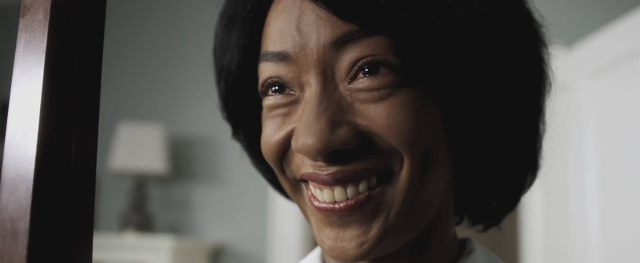
Get Out seems to be coming out at the right time and place to visualize this awkward, shaky race relationship almost at a tipping point of all out civil war we have got going. Success of it at the box office is completely justified. This is not some Wayans Bros' buffoonery of the 90s. Jordan Peele is a little more sophisticated than that. He wisely taps into horror genre where he can be more subversive (more like Romero's Night of the Living Dead and less like Guess Who's Coming to Dinner) and get away with killing white people in various ways. His comedic sensibility helps too. Loved Peele rehashing the idea of a generation collectively hypnotized by TV screen (think of Halloween II, Poltergeist, They Live, Videodrome, etc). Definitely the scariest part of the movie is the scene pictured above.

Not perfect or complete by any means, but Get Out touches upon a lot of issues this country is suffering and give them a voice. Unfortunately, it remains urban/Northeast movie that would never make an impact in flyover states.

Thursday, March 23, 2017

Dancing Lights

White Ash (2013) - Pierce
White ash 2
977309a0-ce66-41d7-b20b-d14534ae5d6d_zpsxsboydem
f4cf8a60-6f0b-4404-8729-f96ed23e7006_zpsflyyq5wi
white ash 5
white ash 6
Leighton Pierce's long exposed vivid images go from familiar cityscapes (subway platform, lighting fixtures, neon streets at night) to nature - trees, clouds, night sky and water. Everything is heightened with the help of appropriate location sound - the moon and the stars dance around making squiggly lines across the sky. Distant car headlights leave multi-color trail-marks in the dark forest. The images become more and more dizzing and impressionistic. White Ash is a beautiful study in different lights and the effects of long exposure: soft lights, like indoor household lights and the daytime sky, flourescent lights in the subway make vivid squares, harder lights make trails. Besides scapes and nature, we have sketches of human bodies in water and cloud formations from the plane. Gorgeous stuff.

Honoré's Metamorphoses is Dirty, Playful Romp

Metamorphoses (2014) - Honoré
image_metamorphoses_honore-001
Christophe Honoré (Love Songs, The Beautiful Person, Making Plans for Lena)'s interpretation of Roman poet Ovid's Greco-Roman mythic tales of god and demigods starts out with a modern day hunter in the forest, running into a flame haired nude transgender person who graces him with pixie dust and turns him into a deer. The hunter becomes the hunted. From the get-go, Metamorphoses promises to be a very playful, dirty fantasy where anything can happen.

Filled to the brim with young nude bodies (usually full frontal), the film tells a high school girl, Europa (Amira Akili), skipping school and being kidnapped by Jupiter in the form of a charming truck driver. It's a sexual, spiritual awakening for Europa, as she mingles in turn with Jupiter, Bacchus and Orpheus.

Story within a story within a story plays out, some funny, some dark, but all enjoyable, putting emphasis on sexual ambiguity and transformation in human beings. The film is something like a dream of a horny teenager who has fallen asleep in a literature class.

As Honoré told me in an interview before that he is not the type of director who'd want to make nice movies to be remembered fondly by the next generation of film-goers. He's the sort of a filmmaker/dad who'd rather make things which his own daughter would be a little ashamed of. Working with mostly non-actors, he charges on bravely, with lots of nudity, challenging today's ridgid, conservative society and reminds us that, ironically, things were much more transgressive and open, more than two thousand years ago, when Ovid first wrote those poems.

Shot in widescreen and vivid colors by André Chemetoff (Our Day Will Come), featuring many salacious images, Metamorphoses is a great visual feast. It also includes a breathtakingly gorgeous under-water scene where Orpheus attempts to retrieve Eurydice from the underworld.

There are many idyllic nature settings, most of them near the water which is the running theme of the film. These ordinary settings take on a heavenly significance as young gods and demigods christening themselves in the torquois water. Diverse cast of young non-actors engage in tug-and-pull rituals of love and physical, feral courtship. One such dance-like courtship on a river bank involves the rising French star/circus trained actress Vimala Pons and it's a sight to see.

In death of the skateboarding Narcissus (Arthur Jacquin) chapter, you can see the same theme coursing through many of Honoré's films: a love-sick character's self-destructive demise (as the case in Love Songs, Beautiful Person and so on).

Playful, dirty, edgy, organic and beautiful in its micro-budget way, the film has a lot in common with Gomes's Arabian Nights Trilogy which came out a year after. Honoré doesn't bother with elaborate mise-en-scene or special effects. Human to Animal transformations are usually done in simple edits.

Honoré delved into many different genres over the years, working with who's-who in French cinema as well as non-actors, dipping back, from time to time, to his indepedent roots. I saw his adorable new film Sophie's Misfortunes at this year's Rendez-vous with French Cinema. Given that it's a straight up children's film right after Metamorphoses, it shows Honoré's dexterity as a filmmaker.

Metamorphoses works as a dreamy poetry. It's an ode to youth and an abashed celebration of amorphous nature of human sexuality. I am so glad it is getting a theatrical run here in the States. It's an absolute blast!

Tuesday, March 21, 2017

Human Warmth

Montparnasse (2009) - Hers
Monparnasse 1
Montparnasse 2
Montparnasse 3
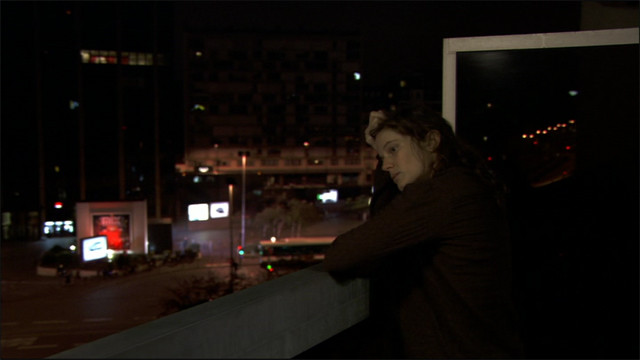
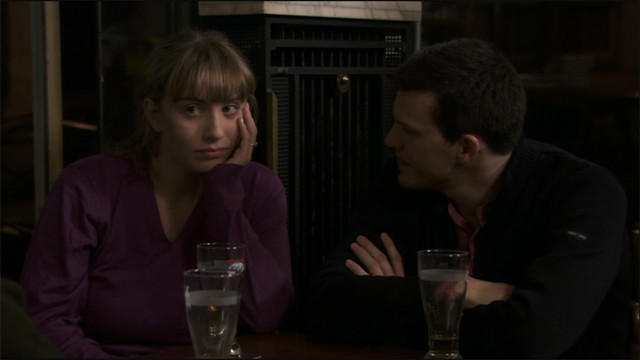
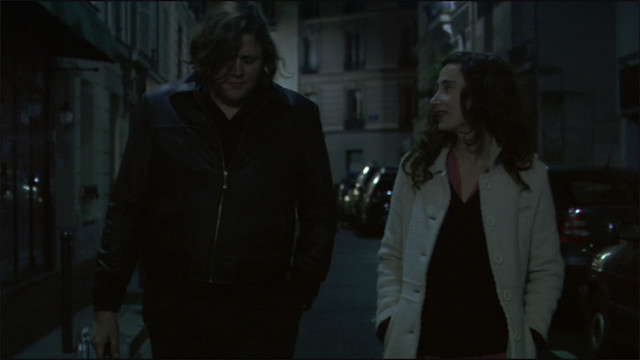
There is something genuinely beautiful about how Mikhaël Hers draws these human interactions: its downplayed characters- imperfect, shy, introverted- finding themselves somehow connecting together in whatever the circumstances. Its massively underlit interiors and exteriors can't undermine the human warmth emanating from the film. Watching Montparnasse gives you that euphoric feeling that you are not alone in this world, not from some misplaced sense of nostalgia but rather from the possibilities of real human connections with someone you already know or someone new. And that someone doesn't have to be striking looking or extremely clever or funny or well-educated. Even though most of the characters are twenty-something, there is no movie-ness about Montparnasse, just guilelessness and honesty, but fleeting enough not to get bogged down and becoming faux-serious docu-drama. The mood is just right, the music's great and the night is short. And after watching it, you can take that beautiful feeling with you to last at least all through the night.

Tuesday, March 14, 2017

Frantz is Ozon's Best Film to Date

Frantz (2016) - Ozon
frantz_03
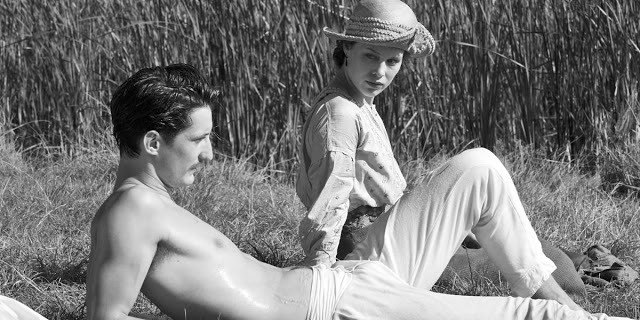
The year is 1918. The Great War has just ended and Germany and France were licking their wounds, hopped up on their respective national fervor. Anna (Paula Beer), a young German woman who lost her 23-year old fiancé, Frantz in the trenches, is living in a mountainous rural German town with his parents, the Hoffmeisters, out of love and duty. One day she notices a frail looking stranger putting roses on Frantz's grave.

Soon the stranger knocks on the doorstep. His name is Rivoire (Pierre Niney), a French soldier who claims to be a friend of Frantz from their school days in Paris. At first apprehensive with anti-France sentiments around the country - 'any Frenchman could have killed my son', but the Hoffmeisters soon open their arms to the charming, tall and melancholic man. Young Anna too, ignoring other suitors, gets smitten by the long eye-lashed, sexy mustachioed Frenchman.

Rivoire confesses to Anna that it was he, who killed her Frantz and learned about Anna and the Hoffmeisters through a letter in the dead man's pocket- that he lied to them. His intention of coming to Germany was to ask for forgiveness. Heartbroken, Anna takes ill right after Rivoire leaves and doesn't have the hearts to tell the Hoffmeisters the truth.

Ok. The synopsis for the first half of the film sounds very much like an old overblown melodrama. Based on an old French play The Man I killed by Maurice Rostand which was adapted by Ernst Lubitch in 1932 as Broken Lullaby. But Ozon, the master of a twisty narrative, packs much more interesting development in store in the second half- part detective story, part romance and part reflecting the current climate of the rise of nationalism where the relationship between two old neighbors - France and Germany and Europe as a whole is being tested.

Frantz is as usual for Ozon, a seductive concoction. Disguised as period costumes and sumptuous monochrome cinematography that bursts in to color in pivotal moments, but the film holds some sinister undertones of lost innocence and pain/joy of growing up.

Beer, a young German actress is marvelous here to carry the whole movie on her shoulder. It's perfectly natural to see the film from a female perspective in Ozon's films, and obviously he flirts with sexual attraction and sensuality (albeit very subtly). But Anna being a German lost in unforgiving world of its enemy gives another layer to this delicious concoction.

As a provincial country girl discovering the world in Paris, a bustling, decadent culture capital of the world, heartbroken but wiser and more world weary, Anna is a thoroughly a modern woman. As the last shot suggests that now she is accustomed to the city living, comfortable in her cosmopolitan surroundings. We feel for Anna. But we all know that wouldn’t last long, as we are aware of the world history of what comes next to France and Germany and she doesn’t.

Beautifully nuanced and poignant and still encompassing all the Ozon film characteristics – secrets, sexuality, twisty genre conventions and its searing political undertones, Frantz is Ozon’s most accomplished film to date.

Frantz is scheduled to open in New York on Wed, 3/15 at Film Forum and Lincoln Plaza Cinema, followed by a national roll out.

Monday, March 13, 2017

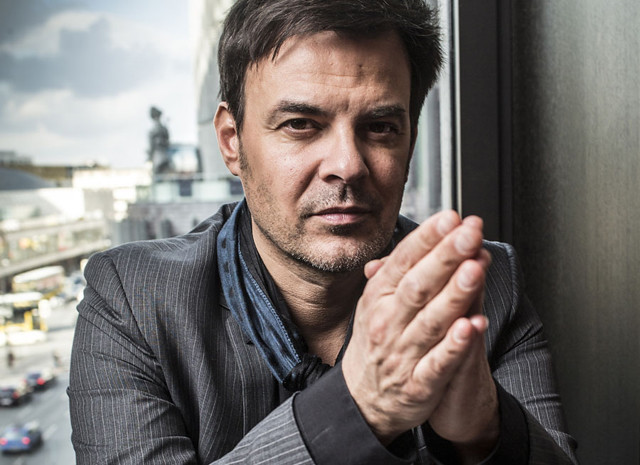
François Ozon Interview: Secrets and Lies and the Rise of Nationalism

ozon
One of the France's most prolific writer-filmmakers, François Ozon (Sitcom, Swimming Pool, 8 Women) has been delighting movie-goers while exploring and subverting many genres for almost three decades with 30 features and shorts. His new film Frantz, a sumptuously shot period piece, just might turn out to be his best film. I had a chance to sit down with him during Rendez-Vous with French Cinema Series here in New York.

There is a lot of talks on Frantz being the remake of Broken Lullaby, an old film by Ernst Lubitch. Was that the starting point for your film when you first conceived the idea for the film?

No, the starting point was the play. Broken Lullaby was a play that was written just after the WWI. I discovered the play first because a friend of mine told me about it. The play was very successful in France at that time but forgotten today. And it’s author Maurice Rostand wrote Cirano de Berzerac which was a huge success. Rostand is also totally forgotten.

For a long time I wanted to make a film about secrets and lies and a friend told me that there is a good play so I went to see the play and I really loved it. I thought it was very touching you know. This French soldier goes to Germany and put some flowers on the grave of a German soldier. And so I decided to make and adaptation then I realized that another director already did it before me and it was Lubitch, so I was destroyed you know, totally depressed. How can I make a film after Lubitch? (Laughs)

Finding Broken Lullaby was a challenge. It was quite unknown, forgotten Lubitch: it was a drama and it wasn’t successful at all. After seeing that, I realized that like the play it was based on, the film was from the point of view of a French soldier. My idea was to tell the point of view of the loser of the war- from the Germans point of view: especially the point of view of Anna. From the moment they start, you know what the main character has done. So I changed totally from the play and Lubitch. I turned that around to concentrate on the German girl, there is suspense of unknown - no one knows why this French guy is in Germany.

The challenge of writing the script was how to create suspense until the twist in the middle and how it will turn out the next half of the film. So it was quite a challenge to write it. It was good to know what Lubitch did with the same material and because he made the film in the 30s, he didn’t know the coming of WWII. So his film was more optimistic than mine. After the WWI, everyone was a pacifist and nobody thought nothing like that would happen again. What’s the expression? ‘Never Again!’ Lubitch’s film was about the true reconciliation between France and germany. But I knew, for me it was impossible to have the film like that with an optimistic ending. Well, my film has a happy ending too, but quite different.

The film was shot in black and white. I don’t recall any of your films shot like that.

No. It’s the first time.

It was still shot on film, no? So how did it come about?

The film was supposed to be shot in color. But two weeks before the shoot I decided to put everything in black and white. My producers were very nervous. (laughs) But I had a feeling it would be stronger for the story that it would involve audience into the film more and to believe in this small city. Because of all the memories of this period is in black and white: there are a lot of documents in the archives- films shot in black and white. I had a feeling that it would be more realistic.

My natural tendency is shooting in color of course. I love technicolor and all that. It was impossible to give up color totally. So I decided to put some moments in color when things get emotional.

Like that music scene?

Yes.

A lot of shots in Germany resemble the German Romanticism era paintings.

You know it’s very strange when you shoot in black and white. Because I shot everything in color on film. It’s during color correction that you make the footage black and white. So when I was looking through the viewfinder, I saw everything in colors. But after the take, I’d go and take a look at the monitor to see my shot in black and white and I had a totally different vision - it looked like some 30s Max Ophüles movies. It was not my goal! But seeing the black and white imagery wakes the cinephilia in you. Despite what I wanted to make, black and white adds something that you didn’t anticipate. It was quite strange.

Paula Beer, a young German actress who plays Anna, is wonderful in this. How did you cast her in the role?

I didn’t know her. I’m not familiar with young German actresses that well these days. So we did a big casting. I had this version of young German actress in mind who was very popular in France in the 70s, Romy Schneider.

Oh, of course.

She was the favorite actress of the French at the time. And when I met Paula, she was just 20 years old. She’s quite different than Schneider obviously. But very mature and beautiful and clever and able to speak in French so it was a miracle. I was very happy to find her because the whole film is on her shoulder. It was important to have someone strong to play Anna and she was perfect.

I don’t think I saw any of your films where characters speaking in German. Was it the first time also?

Yes, it was the first time also. I can speak German. I travelled a lot in Germany when I was young. I did the Fassbinder adaptation of Water Drops on Burning Rocks, but the play was in German, which I translated it to French. It was very stylized because these French actors are playing Germans. There were very short lines spoken in German but that was about it.

Was it difficult for you to direct in German?

Not so much. I was very lucky because actors were very good you know. The actors who play the parents, they both are from theater background and involved in German film industry for a long time. I think they were very happy to be in a French movie, because German film industry is (comparably) smaller. But they do a lot of television and a lot of theater. But they really loved the story. Usually Germans in French movies are not well portrayed - they are usually the bad guys, you know. This time they are the nice guys of the story. So they were very involved and happy.

Actually it was easier for me to direct them in German than English. Accent in English language is quite difficult for French people. We don’t really know where to put the accent in an English word. German and French are (rhythm-wise) closer that way. Usually French don’t like German language. They think it’s aggressive. But to me when girls speak German, it’s very sexy and very charming.

As you told me that there is a revelation in the middle, but what’s more interesting about the film is what happens after. It becomes kind of a detective story about this naive young country girl going to this big unknown city and everything. And she finds that her presence is not welcome and as uncomfortable as Rivoire has been when he was in Germany and how he was treated there. Also noticed that when Anna first arrives in Paris and she finds out that her young husband was staying in this kind of a sleazy area full of prostitutes and vice. I found that interesting.

Yes. I think Frantz is about disillusionment and facing the truth: do you want to face the truth or stay and live in lies forever? It’s the big conflict for Anna. Does she want to know who Frantz was exactly? Maybe Frantz wasn’t as ‘prince charming’ as she thought. So the idea was to make Anna face the reality. So she suffers a lot. But at the end she finds peace within herself. She finds that Adrien wasn’t for her and she might find another man in France. We just don’t know. But for me, she learns a lot. This film is really about an emancipation of a woman.

Because Adrien was played by Pierre Niney, who played Yves Saint Laurant among other things and is a very handsome with very effeminate features, and since I didn’t know much about the play or Lubitch film the premise was based on, and since because it is your film, I thought, ‘oh maybe Adrien’s presence is a stand-in for repressed homosexuality, especially with the setting and time and everything. Am I stretching it too far?

No not at all. I play with that of course. I knew that my audience would expect me to put a red herring in my film, so I play with that. Actually, we have revelation in the middle, maybe it wasn’t what you as an audience had in mind, but at the end, maybe it was. Because we see this guy is totally lost. With his identity, his sexuality, he doesn’t know what he wants.

Right.

He prefers to stay with his mother, with the girl he’s known from his childhood. So life is ambiguity, you know.

But I think it comes from today’s perspective. In the original play and even in Lubitch’s films, that subtext at that time, people didn’t see that. Today we know and think about homosexuality more openly. I don’t think Lubitch was aware when he was making Broken Lullaby. But in the play, it lies underneath and between the lines because when I was doing the research I found out the writer was gay and he lived with his mother until the death of his mother. That’s why I created that part of Rivoire in the later part of the film.

It makes sense.

Frantz also reflects what’s going on in the world -especially Europe and here in the States. I mean there has always been tension and friendship between the two countries. But the rise of nationalism is really visible in France and Germany.

I didn’t know my film would become political. It wasn’t my goal. But I realize it echoes what you just talked about. I didn’t know that Brexit would happen in Europe, I didn’t know Trump would be elected. I didn’t have all that in mind. But I felt something. We had a lot of attacks in France. You could feel all the tensions. Some politicians are asking drawing up new borders based on old boarders, the fear of foreigners, all that’s happening now. It was interesting making this film with all these in mind. We know that history repeats itself. To understand it, we need to ask ourselves what happened before.

I realized showing the film to many different audiences, that people were very touched, both old and young. And they were quite concerned about what’s been going on. I was quite surprised because it was quite difficult to finance the film - my producer, especially shooting in black and white, the fact it was taking place right after WWI, it wasn’t quite easy. But I had the feeling that it could touch people. The history would prove me right. But I’m afraid my film will change anything.

I mean, let’s hope so. (laugh)

It’s a great film. This is the prime time for artists to rise up. no?

Yes absolutely.

And reflect the society we are living in and do something about it.

Yes.

So I think it’s a good time for you to make more films to touch people. I’m a big fan and thank you very much for talking to me today.

Thank you.

Sunday, March 12, 2017

Hyper Capitalism vs. Spirituality

Personal Shopper (2016) - Assayas
personalshopper2
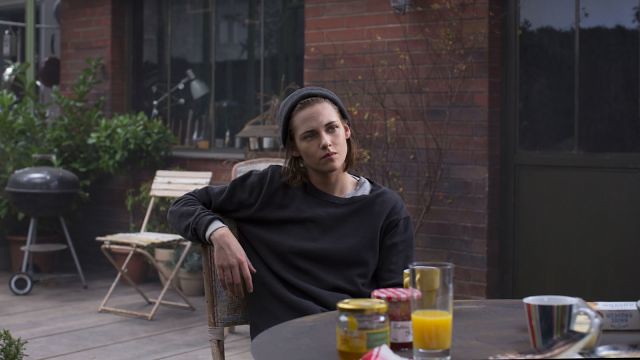
Loved it. With a lucid, flowing script, Assayas lets out the best in Kristen Stewart. The film's more Demon Lover or Irma Vep than Summer Hours. Assayas sketches out the general framework of the film in broad strokes - Maureen (Stewart), a girl who can't let go of her twin brother's death, comes to Paris where he died and waits for his signal (they were both mediums). In the mean time, she works as a personal shopper for Kyra (Nora von Waldstätten), who can't do normal things for herself because of her celebrity status. The result is a delicious, genre bending whatsit that highlights Stewart's best assets - her nonchalance and youthful physical beauty. Added on here is her vulnerability. She is pretty much the same character here as she was in Clouds of Sils Maria or anything she's ever done that I saw her in, except here she is a fully flesh and blood, a young woman unsure of her judgment and emotion.

After determining the presence who vomits ectoplasm in her brother's house is not her brother and giving up the hopes of contacting her brother again, Maureen starts getting text messages from an unknown caller. He is watching her every move, and making her do things. Things turn darker and scarier for Maureen.

Assayas is operating on his top form with Personal Shopper. Forget about his penchant for portraying flash subjects and celebdom. No other European filmmaker better keeps balance in catering toward box office appeal while not compromising his/her artistic vision than he (Lars von Trier is the other I'm thinking of, but to lesser extent). As usual for Assayas standards, there are many international actors showing up - von Waldstättten (October November), Lars Eidinger (Everyone Else, Sils Maria), Anders Danielson Lie of Joachim Trier films. And of course in the middle of it all is Stewart. She plays her character with so much disdain. She doesn't need a man to be sexy (no pun intended). Her eyes reading the text message, "you are afraid because it's forbidden?" alone makes her sexy. And where else would you see her changing clothes and putting on expensive dresses so casually? One of the year's best.

Saturday, March 11, 2017

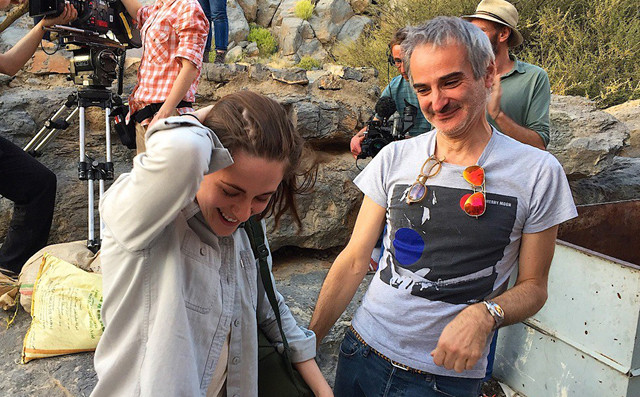
Interview: Olivier Assayas on Kristen Stewart and Breaking the Boundaries of Filmmaking in Personal Shopper

Assayas Stewart1
French writer/director Olivier Assayas, turned 62 this year. He doesn't look it though. He is an ultimate cinema geek- when he talks about filmmaking, you can easily be overpowered by his enthusiasm and fast talking. He hasn't lost twinkle in his eyes. Only giveaway of his age might be his short graying hair.

Assayas diverse filmography (including Irma Vep, Summer Hours, Demon Lover, Carlos) reflects his tireless exploration of film as a medium. Clouds of Sils Maria, a delicious hall of mirrors meta-film, made an international splash two years ago and made its young American actress, Kristen Stewart a darling of French movie goers. Assayas and Stewart, an unlikely pair, hit it off and now we have Personal Shopper, a delicious whatisit, that is 100 percent Assayas (for me, as of now, the hard to beat movie of the year). I met him in blustery snowy day in March in New York for a brief chat. Honestly, I could listen to him for days.

There is always this fluidity in your films but especially in Personal Shopper, there seems to be surprises in every turn. It was really fun to watch the film! How did this particular script developed?

I think I’ve been experimenting more and more in terms of screenwriting. I’m just trying things. I've kind of lost interest in the classic dynamics of the narrative, of linear narrative, I would say. For some reason there is something frustrating about it for me, so I’m just trying to see by twists and turns and putting on layers, whatever, so I can come up with something that’s more exciting for me. I always have this notion that if I’m having fun writing it, quite possibly the audience will have fun watching it.

I can’t deal any more with ‘traditional steps’ when you are telling the story. I just want to go straight to moments - I need to write cinematic moments that would make sense once connected together. It feels somehow stronger. I need to feel that because there is so much of corporate industrial filmmaking going on, movies have become totally predictable. Because you have to adopt to standards and if you don’t they will think it will have problems with the audiences.

I think it’s important to move on because filmmaking has so much potential. So I have been describing this movie as a collage which in a way it is - I’m using mixed materials to tell my story.

You know when people say ‘cut to the chase’ and I’m constantly cutting to the chase. I am constantly moving to the next exciting moment. But I don’t really deal with the connection, I just, (hitting his hands together) hit the two things together. It would be like hitting two stones together to create a spark or something like that.

I think that’s the best kind of cinema.

Kristen Stewart is obviously the main character in this and you’ve made her a big French star now with two back to back films. In our previous conversation when you were presenting Clouds of Sils Maria, you said that Stewart’s biggest assets are her youth and her power to go against a legend like Juliette Binoche in that film. How did this continued working collaboration come about?

I think so much of filmmaking is about grabbing opportunities when they come to you. I’m not sure why— well I kind of know why. Connecting with Kristen has been an inspiration in a sense that, I would not have imagined that we would click the way we clicked. I mean we met and talked. I liked her work and she’d seen couple of my films that she liked. I thought that it was interesting that this young American actress is interested in my work. I thought if we were gonna work together, something interesting would come out of it. But then I realized that we connected way beyond that. There was something deeper- how we approach filmmaking, how we idealize filmmaking in a certain way, how we live for movies.

There is something very genuine in her in approaching filmmaking. And she is very ambitious in the best sense of the word. She always wants to go beyond whatever she knows how to do or have been doing. She has this feeling that filmmaking is an open space for her.

I’ve been trying to break the boundaries of French filmmaking. I always felt trapped, not as much as limited. I am a product of French independent filmmaking in many ways. But simultaneously, it’s been frustrating to see that there are certain things you can do and can’t do in any film culture. At some point there is this framework and I’m always excited by what’s beyond the framework.

Kristen brings another dimension which is youth. It’s essential. It’s vital. Independent filmmaking is kind of losing touch with the young audience.

True.

You know I think it’s happening all over the world - the indie film crowd is aging. But I think filmmaking has so much to do with youth because the youth is the real audience for cinema. It’s a medium for young people so you don't want to lose that audience. You just hope that you connect with it. Beyond anything we do together, Kristen brings me that.

And as a director and an actor, it goes both ways right? And what I can give her is space, time and freedom. Like my movies, indie European films- often we create then while we are doing it. It’s not always possible to do that in American indie framework, unless you are Malick or someone who has been doing that for all his life.

What did she first think about the Personal Shopper script?

She was in Paris for couple of days. And we were like 'lets have a drink together'. We kind of sat down and she asked me what I’m up to and I said I was working on a screenplay and she was like, 'oh can I read it?' 'well, yeah sure.' (laughs) And she sent me the document saying that she loved it and would love to do it. And that was pretty much it. I supposed we had couple of short conversations afterwords but nothing much.

What I love about Kristen is that she doesn’t ask questions. Most actors, including most interesting, great actors I’ve worked with, wants me to discuss the psychology of the characters and why this and why that. Kristen doesn’t function like that. She connects physically with a character and she considers making sense of it as an actor which is their job. Other actors would take it as that they ‘should somehow contribute’. Because I’m the director and writer, they want to please me and want to go in my direction. But I don’t want that. I want them to bring their own imagination to bring the spark of life to my screenplay. When I finish writing a screenplay, I already went as far as I can go. I need someone to take over the character.

The supernatural element of the film reminded me of Irma Vep. Despite all the glamorous settings, there is something sweet about Maureen being a medium and waiting for her brother to give her a sign. I’d call it sweet spirituality. Is it what you were exploring? Some kind of spiritualism against this rather vacuous materialism?

That’s what I was aiming at, I suppose. I wanted to make a movie that dealt with invisible, whatever that invisible is - you can call it spirituality, you can call it ghosts, parallel reality, alternative facts! (laughs). The thing is, there is the material world and there is our inner world however we project ourselves -longing, imagination, into this outside world. All through the ages, every culture in the world, people have had visions, heard voices or projected some of these tendencies to the outside world. So I wanted to deal with that. I was always convinced that cinema was a way of capturing things that are ultimately beyond perception.

Something intangible.

Intangible. And I wanted to explore that. Once you decide to go in that direction, you will be using genre element because cinema had invented the ways of dealing with that dimension of human experience which is genre filmmaking. I’m saying that in terms of films like Vampyr by Dreyer or Nosferatu by Murnau would be considered horror movies today but they are not horror movies. They are films by those directors who tried to cross the dimensions of reality through those specific stories.

So there is Nora Von Wal--

Walstäten.

Who is an Austrian actress, there is Lars Eidinger--

German

Anderson Danielson Lie who is Norwegian in that group as well. Once again, you have this whole international cast working for you. How do you come up with such great actors from all over? Do you cultivate relationships over the years?

You know, I love working with people that I love. Nora has been a friend since we did Carlos together. I've known Lars since Sils Maria and I hope to keep working with those guys. I think it’s so precious to establish those kind of friendship with your actors. And they happen to be great actors.

When I was talking about opening the boundaries of french filmmaking, it mostly involves working with the actors I love. And making my films in English helps me with that. It’s because I’ve done few films in English, all of sudden I can work with German actors and I can work with Anders Danielson Lie whom I think is an amazing actor.

Yes.

You know, I saw him in Oslo, August 31. I thought he was amazing. He has something specifically modern about him that fascinates me. I can’t imagine a French actor who would’ve brought the same vibe to that role. So shooting in English opens the possibilities of working with the broad range of actors and in that sense broad range of colors that I can use it in my film.

We talked about this before but you were always on the forefront of pushing and discovering film culture from other parts of the world and I still feel you are the only one as a French director who continue to do so.

One thing I found interesting thinking about your filmography - Demon Lover, Boarding Gate and now Personal Shopper. There is this hyper-capitalist element in the background. And I can't help myself thinking that oh Assayas perhaps is satirizing the highly advanced capitalist society. Is that the case?

Ha ha. Yes. I think it’s totally over the top ridiculous about fashion world or celebrity worshiping culture but I wouldn’t say I am satirizing them. I am presenting them as reality. That there is the side of the world that actually exists.

Personal Shopper is now playing in New York and LA. National roll out will follow next week.

Wednesday, March 1, 2017

Suzanne takes you down to her place near the river...

Suzanne (2013) - Quillévéré
 photo f2daaa27-4129-4959-ab37-c7ede8a77d13_zpsd8aeuv2t.jpg
Gritty and succinct in its presentation, the film paints about 20 some years of a woman and her immediate family and friends in a fleeting style. Suzanne (Sarah Forestier) is a daughter of a blue color 18 wheeler driver Nicolas (beautifully played by François Damiens) and an older sister of Maria (Adéle Haenel). You can only tell a passage of time by Nicolas's thinning hair on top. Main attraction here is of course, Forestier. As a young woman who makes some really bad choices early on, her Suzanne is an ordinary girl who has no luck in life.

With co-screenwriter Mariette Désert, Quillévéré moves the film briskly, jumping time forward in major way, leaving the audience to catch up both narratively and emotionally. We never get to see a botched home invasion/robbery that sends Suzanne to prison, we never get to see her young son growing up in foster care, we never get to see Maria's social life. We only get the glimpse of Suzanne's life every 5 or so years, not in a calculated, 'the super hit medley of my life' but more fleeting, observing someone's life with a sense of melancholy. This way, Quillévéré eliminates a sense of that false expectation/manipulation that comes with moviemaking. We see excellent actors portraying beautiful characters and we share their regrets, loves and their sadnesses together. Suzanne is a massively affecting film, much more so than any of Dardenne Bros. films.

Soft Touch

Love Like Poison (2016) - Quillévéré
 photo 8169c961-d05c-46c3-940c-9a6035d3d5c9_zpsknf9fwfm.jpg
14 year old Anna (Clara Augarde) comes home from the boarding school for the Summer. With her parents being separated, she has to contend with being with her depressed mother and a bedridden grandpa. But she is generally a good girl. She hangs with a local choir boy Pierre. Her confirmation at the church is approaching but she is having doubts, struggling with her body changing and earthly desires. Quietly being repulsed by adults' behaviors, she and perhaps us audiences learn that the line between childhood and adulthood is pretty thin.

Quilévéré's strength is in her paying attention to every character in the film, from Anna to the conflicted local priest to Ana's deadbeat father to the dirty grandpa. Also I do like Quillévéré's gentle approach. Let's face it, coming of age story is a dime a dozen in French cinema. But she has perhaps the gentlest touch in all female directors of her generation (Mia Hansen-Løve, Rebecca Zlotowski and Alice Rohrwacher come to mind).

Tuesday, February 28, 2017

Sneak Preview: Rendez-Vous with French Cinema 2017

In its 22nd edition, Rendez-Vous with French Cinema at FSLC remains to be one of the main attractions for cinephiles in a crowded New York Spring film event season.

This year's lineup features 23 films from established filmmakers and newcomers alike, including - François Ozon, Bertrand Bonello, Bruno Dumont, Rebecca Zlotowski, Jérome Salle, Chrstophe Honoré, and the list goes on.

In conjunction with Rendez-Vous with French Cinema, FIAF presents Agnès Varda: Life as Art, taking place February 28–March 21.

A special exhibition imported from the esteemed photography festival Les Rencontres d’Arles will be on view in the Walter Reade Theater’s Furman Gallery throughout the festival, displaying newly discovered color photos from behind the scenes of Fellini’s black-and-white masterpiece 8 1/2, shot by the late Paul Ronald and accompanied by recollections from the film’s co-star Anouk Aimée.

And, for the first time, a Film Comment magazine presentation within Rendez-Vous with French Cinema: Julia Ducournau’s cannibal thriller Raw which titillated audiences at Toronto and Cannes.

The series runs March 1 - 12. Visit FSLC website for tickets and more info. And here are my samplings this year:

FRANTZ
 photo frantz_03_zpsa9aqmctd.jpg
Frantz is as usual for Ozon, a seductive concoction. Disguised as period costumes and sumptuous monochrome cinematography that bursts in to color in pivotal moments, but the film hold some sinister undertones of lost innocence and pain/joy of growing up.

Paula Beer, a young German actress is marvelous here to carry the whole movie on her shoulder. It's perfectly normal to see the film from a female perspective in Ozon's films, and obviously he flirts with sexual attraction and sensuality (albeit very subtly). But Anna being a German lost in unforgiving world of its enemy gives another layer.

Ozon, the master of a twisty narrative, packs much more interesting development in store in the second half- part detective story, part romance and part reflecting the current climate of the rise of nationalism where the relationship between two old neighbors - France and Germany and Europe as a whole is being tested. One of his very best films in years.


STRUGGLE FOR LIFE
 photo 69edb538-70e1-44e8-9cbc-464067f5f9a7_zps3zqtmvhx.jpg
Because of subway delays Chataigne (French comedian Vincent Macaigne), a thirty-something portly intern of Ministry of Standards, is assigned to French colonial Guiana to report on the progress of an absurd public works project titled Gui-snow, the first ski resort which will be built in the jungle of the tropical country. With a resilient tax agent mistaking him for tax evader and nothing really to live for, Chataigne head for Guiana with a second grade computer and a thick red French standard guide book. In Guiana, because he doesn't have a license, he is assigned a driver named Tarzan (Vimala Pons), another intern from the Ministry of Versailles, seeing over the completion of French style garden. With humidity, mud, millions of manacing insects, allegators, monkeys and other jungle elements hostile to humans, the duo soon gets lost in the jungle. They have to survive by their wits.

It's another madcap comedy by Antonin Peretjatko and starring Pons, a circus trained actress who worked with Peretjatko and Macaigne in The Daughter of 14th of July. Taking a jab at absurd notion of taming the jungle and the first world arrogance, Struggle for Life thrives on slapstick comedy and racy humor a la Woody Allen's Bananas and largely rides on the charm of Pons who dons hot pants with cigarette forever dangling from her pouty mouth. Macaigne is a very lucky man to be paired up with Pons and spend entire film with her in the jungle alone. Oh, Mathieu Amalric shows up as a swinging bureaucrat in charge of Project Gui-snow in Guiana.

DAYDREAMS
 photo 8aa4e07b-9cdf-4e5b-b3ef-4f095a3615d7_zpsgruf5hux.jpg
One year artist residency in an ancient villa in sunny Medici is the setting for a delicious daydream that involves a budding writer Camille (Clotilde Hesme) and a photographer Axéle (Jenna Thiam).

There are illicit affairs, artistic jealousy, moving statues and ghosts. Camile's older and more successful writer husband (Tchkéy Karyo) tags along for the trip with their young daughter. But soon she finds his presence overbearing. Axéle's affair with a married man doesn't lead her anywhere and she soon has an artistic identity crisis.

Daydreams has self-reflexiveness of Philippe Garrel (director Caroline Deruas' older, more established husband) and Ozon's playfulness. It's a very accomplished debut of a talented writer/filmmaker. Daydreams also allots ample screen time for Hesme's big green eyes in series of close ups. Great.

HEAL THE LIVING
 photo 3be38fdc-f345-4c8a-9960-c8fe91d4ae56_zps0ssy2oid.jpg
A young blonde boy, Simon, wakes. He kisses his girlfriend who's still in bed, sneaks out of the window to join his buddies to go surfing. It's winter. The whole beginning sequence of Katell Quillévéré's Heal the Living has a fluidity and detached youthful spirituality of Gus Van Sant movie.

It's an organ transplant weepee - 'An accident cuts a young man's life short and gives another a second chance in life' story. We've seen this before, many times. What elevates this lifetime movie of the week premise is its ensemble cast which includes Emmanuelle Seigner, Kool Shen, Tahar Rahim and Alice de Lencquesaing.

Through Simon, we see the glimpse of other's lives - both professional or private in equal measure. It's the space between the brain and the heart- which makes us human that Quillévéré explores. It would've definitely turned out corny in less assured hands. It's remarkable that Quillévéré, with just 2 other films under her belt achieves something so graceful and thoughtful.

SOPHIE'S MISFORTUNES
 photo 4379725_berlin-gaumont-brings-kiddie-lits-sophie_117a9a7e_m-1_zpslh4ps6ho.jpg
Sophie (Caroline Grant), a mischievous young girl leads a normal bourgeois life in a chateau with a beautiful but sickly mom (Golshifteh Farahani). Sophie's antics could be sometimes too much for her mom and friends who could tolerate her as girl with the too much imagination and energy. But her journey to the new world (America) ends in tragedy and leaves her orphaned. She now comes back to the country under the care of strict, unloving stepmother Mme. Fichini. She rejoins with her best pals and their kind hearted mother Mme. de Fleurville (Anaïs Demoustier).

After sexually charged interpretation of Greek mythology, Metamophorses in 2014, Honoré returns with unabashedly unadulterated kid's movie, Sophie's Misfortune, based on a beloved 19th century children's story by Countess of Segur. He gets mindbogglingly true to life performances by youngsters. It reminded me of Jacques Doillon's Ponet. Great use of seamless animation too to portray kid's imagination running amok. I didn't expect this from Honoré and it's a nice surprise.

Monday, February 27, 2017

Eat the Old

The Girl with All the Gifts (2016) - McCarthy
 photo girl_with_all_the_gifts4_zpsrtmhzxfq.jpg
Now this is much better. There is fungal infection going around that turns people into a flesh eating zombies. In the bunker, scientists and military officers are trying to find a cure dissecting kids who are born infected and immune to zombies but can still think and talk like a normal human being. The carers have to be very careful handling these kids and follow strict regimen (tethered to a wheelchair days and nights at gunpoint), otherwise there will be hell to pay. One such carers, Ms. Justineau (Gemma 'sexy in Military sweater' Arterton) develops attachment with one of her subjects, Melanie (Sennia Nanua), the smartest girl in class. The inevitable happens and the base becomes overrun by zombies. Justineau, Melanie, no nonsense Dr. Caldwell (awesome Glenn Close) and hardass Sgt. Parker (Paddy Considine) escape and try to reconnect with civilization. Except urges to eat warm flesh here and there, Melanie is quite helpful and resourceful because she loves Justineau. But Caldwell wants to dissect her to save the humanity.

With such a premise, Colm McCarthy goes about his business serenely and slowly. There are jolts of violence but it's a thoughtful film without being corny. Gifts in the title doesn't refer to the kid's superpower or anything, but the ability to think for herself and it proves to be her best asset at the end. Great film.

Fishy

The Lure (2015) - Smoczynska
 photo 640_zpsgq4ln7pd.jpg
Half baked ideas and intentionally campy approach, The Lure is an epitome of an amateur hour at international film festival circuit. The title is an apt one. You are supposed to be lured in by a pair of young topless girls and candy colored palette and catchy 80s music numbers only to find there is nothing else in it. There isn't an ounce of creativity or originality.