Thursday, July 1, 2021

Socio-politi-cultural Layers and Beyond

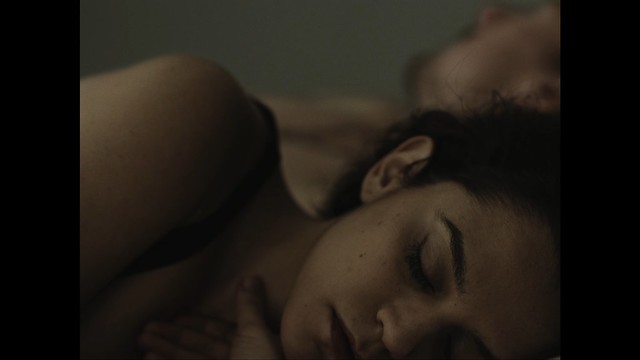
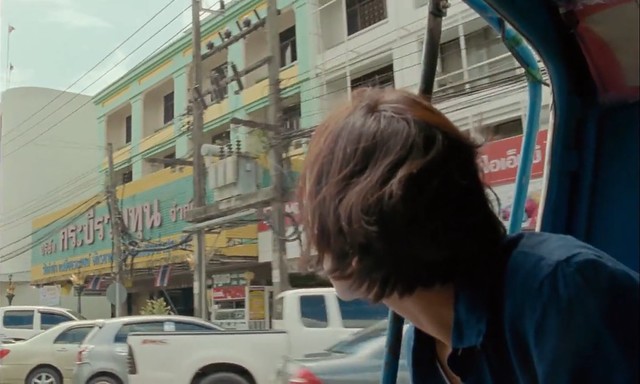
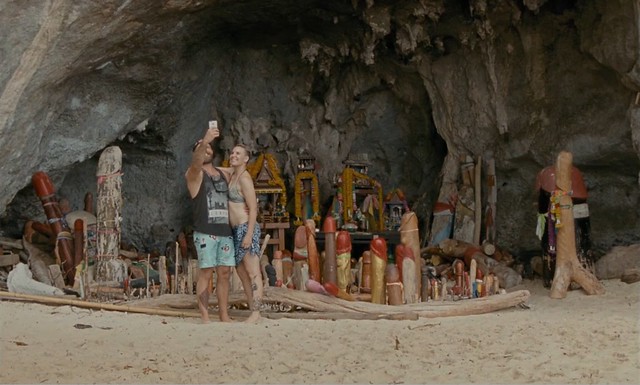
Krabi, 2562 (2019) - Rivers, Suwichakornpong Screen Shot 2021-07-01 at 10.55.43 AM Screen Shot 2021-07-01 at 10.59.18 AM Screen Shot 2021-07-01 at 11.01.17 AM Screen Shot 2021-07-01 at 11.02.08 AM Screen Shot 2021-07-01 at 11.03.36 AM The filmmakers Ben Rivers and Anocha Suwichakornpong met at the Thailand Bienniale and decided to work together on a project: specifically on Krabi, a touristy Southwestern town. And no Doubt, the collaboration between two of the most adventurous contemporary filmmakers produces a multi-layered and intoxicating work that is a part travelogue, part ethnological study, part Antonioni-esque mystery, part contemplation on artificiality of cinema and part Spatial-temporal musing on human existence.

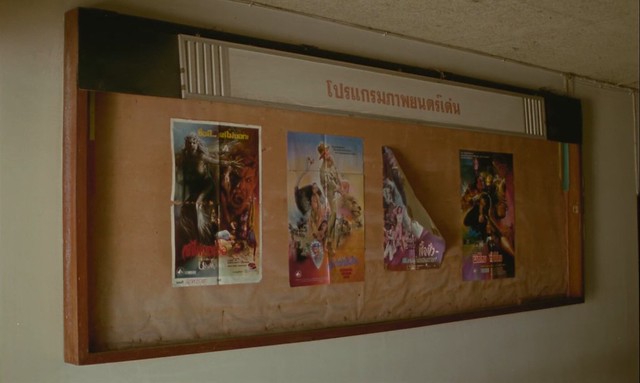
Krabi concerns a nameless woman (Siraphan Wattanajinda), tall and slender with the central Thai dialect who comes in to the touristy beach town. She looks like she is in 'pictures'. She is location scouting for a movie, or she is doing market research, or she is tracing steps to her parents honeymoon where she is conceived.(?) She hires a local tour guide who also dubs as a film crew for a commercial shoot. The mystery woman visits the famous fertility shrine located on the beach, takes a kayak ride into one of the numerous dark water caves along the shoreline, then visits a shuttered movie theater, now a home of hundreds of flying starlings and warn out B-movie posters. Then she disappears. The interviews with the tour guide and the movie theater manager and various others confirm this incident.

Collision and blurred line between the artificial and the real - the actors playing their parts mixed in with the locals, cinema as both business and nostalgia, neanderthals both reanacted and parodied, first world and third world, the symbiotic relationship of tourists and locals in popular tourist destination are all presented, in layers upon layers and they are delicious. Rivers and Suwichakornpong are less interested who is exploiting who, but the delicate dance that is human existence between real and imagined world both in physical and spiritual sense. Injected are the hint of Thailand's militant history, as the woman rides with gaggle of school children in the back of the truck in city proper with the sound of military marching, reminiscent of her masterpiece By the Time It Gets Dark, grounding the film from more surreal elements usually associated with Rivers work. Krabi, 2562 is one of the most exciting cinematic endeavor I've encountered in recent memory.

Monday, June 28, 2021

Performative Lives

Fauna (2020) - Pereda Fauna Fauna, Nicolás Pereda's new film, starts with a couple, Paco (Francisco Berreiro) and Luisa (Luisa Pardo) arguing in the car on the way to Luisa's parents's house. It's an arid rural area with no wi-fi reception. When they finally arrive at their destination and soon finds Gabino (Gabino Rodriguez), Luisa's brother, also marooned because their parents are not home. Paco takes off to get a cigarette and this sets up one of the most awkward meet and greet of a boyfriend & parents of all time. And it's not a good start for Paco who has to endure many awkward, long stretched moments with Luisa's family.

Paco is a bit actor from the TV series Narcos. And he has to 'act out' a scene from the show again and again by Luisa's dad's request. And in the middle of Fauna, Pereda shifts the narrative to concentrate on narrative within the narrative, enacting a pulpy book Gabino was reading. Pereda toys with the stereotypical roles in these scenarios from countless narco shows that dominate and perpetuate Mexican roles, mixing with reality in rural towns where local mine owners perpetuate violence on its citizens on a regular bases. There's telling scene where anxious Luisa wakes up her mom (Pereda regular Teresa Sánchez) to recite the lines with her for an audition, highlighting the difference between acting and lived in experience. Clocking in short 71 minutes, Fauna is another delicious experiment on identity and performance from Pereda.

Thursday, June 24, 2021

Police Violence in the Yellow Vest and BLM Era

The Monopoly of violence (2020) - Dufresne Monopoly on Violence The Monopoly of Violence is showing as part of Big Screen Summer: NYFF58 Redux at Film at Lincoln Center. The series is sort of making up for the lost times- because of Covid shutdown, the New York Film Festival held only virtual screenings last Fall. The redux includes many of festival titles, including this film. It is currently playing at the Lincoln Center's Walter Reade Theater.

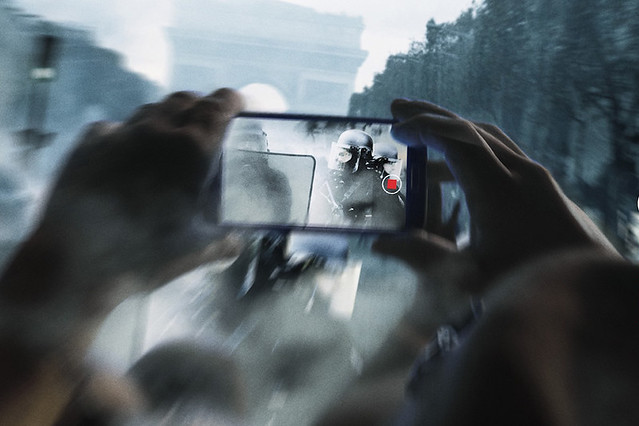
In the middle of the new, very timely French documentary The Monopoly of Violence, directed by David Dufresne, academics talk about the power shift or equilibrium of the playing field between the French National Police and the protesters with the proliferation of representation with the smart phone videos and social media. The documentary footage is mostly assembled from smart phone footages from protesters.

Violent protests in the streets in France are not new. The modern France, born out of a revolution, general strikes and student protests, which shuts down the country for months, have been regarded as normal occurrences. After all, France is an exemplary Western democracy where everyone can freely express himself or herself. Or is it?

The Monopoly on Violence takes a hard look at the police violence captured on camera during gilets jaunes (The Yellow Vest) movement - a nationwide populist movement which started as protesting the rise of fuel costs, high cost of living and Macron government's tax reforms which is seen as favoring the very rich, which started in 2018.

Does maintaining public order in a republic equals use of violence? This is the heart of the question of the film. Against the smartphone-captured videos projected on a giant screen, French academics, politicians, philosophers, protesters and police offer their reactions to the images that are playing out. "The State claims monopoly of the legitimate use of physical force," said Max Weber, an influential German Socioligist in 1919. But what happens if the legality of the power exercised by police becomes illegitimate with abuse, captured by ever-present smart phones? Yes there should be context to the images, and yes there are violence perpetuated by protesters as well. But there's an undeniable truth in a footage where young people are cornered and bludgeoned with clubs by police. A lot of protesters lost eyes, limbs and even their lives.

Many of the interviewees wear eye patches and glasses obscuring their eyes shot out by tear gas canisters or rubber bullets. They see the images of themselves being struck, bleeding profusely and talk about it. Their family members or friends talking about them being hurt on camera makes them emotional. Yellow Vest, born out of frustrations against economic inequality, doesn't have that romantic notion of the May 68'. The systematic violence and brutality is all about instilling fear and power play, more than anything else. Some of them admit that damaging property, holding out that broken corporate logo gives you a sense of power (by wounding its pride), however fleeting.

Finger pointing, as we've seen on mainstream media and heard from rightwing pundits about BLM protests here, towards protesters as if they are the sole perpetrators of these violence, as one of the academics points out, is misleading, as there are three types of violence which are all entwined:

1. Institutional violence (State violence), 2. Revolutionary/reactionary violence (protests) and 3. Repressive violence (police). You can't only point out the violence perpetuated by protesters because it means you are not recognizing the other two.

The Monopoly of Violence ends with the analysis of Macron and Putin meeting where Putin jabs on Western democracy by pointing out all the riots in the streets of Paris. Macron angrily retorts that only in democracy people can protest in the streets. So we have only two choices? Either we live in Minority Report style police state of Russia or China where they curtail protests preemtively, or state violence prone, chaotic, capitalist Western style democracy?

As we witnessed in BLM movement and its urging for the police reform and community policing, for the sake of the younger generation, one would hope another way is possible. I think the film is an exemplary in reflecting these thoughts after one of the most violent and prolonged civil unrests in France's modern history. And I hope we can learn from that.
Tuesday, June 22, 2021

Throwback to the Golden Age of the New Hollywood

Uncut Gems (2019) - Safdie Uncut Gems I gotta admit, now I am in full Safdie Bros. team. It took me this long to see Uncut Gems but I am convinced that the Safdies will save American cinema. A total throwback to the good old days of New Hollywood, where gritty Nooo York movies ruled, Uncut Gems tells the few days of NY jewelry dealer Howard Ratner (Adam Sandler). He is in deep shit since he owes money all over town via gambling problem. He has uncut opal rock the size of your fist coming in from the Ethiopean jew connection. He is expecting a big payday unless the goons get to him first.

Tension filled, constantly moving camera and close ups resemble early Michael Mann and Sydney Lumet with films such as The Thief and Dog Day Afternoon (lensed here by Darius Khondji). Sandler is marvelous as da playa whose wheeling and dealing digs deeper into his grave by the minute, so are the supporting players that includes Lakieth Stanfield, Judd Hirsh, Eric Bogosian, Julia Fox, Kevin Garnett and Weeknd.

Uncut Gems is real gem of a movie. Yes it is stressful and at the same time wickedly funny. Definitely one of the best American films I've seen recently.

Monday, June 21, 2021

Appetite

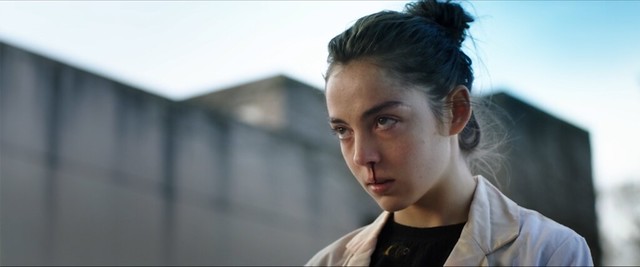
Raw (2016) - Ducournau Screen Shot 2021-06-21 at 7.09.07 PM Screen Shot 2021-06-21 at 8.07.47 PM Screen Shot 2021-06-21 at 7.10.07 PM Screen Shot 2021-06-21 at 7.10.34 PM Screen Shot 2021-06-21 at 8.09.00 PM Julia Ducournau's the rite of passage through cannibalism movie, Raw, is an icky and messy business. But with Garance Marillier's dedicated, feral performance as virginal Justine who has to find herself through series of trials, Ducournau makes her mark with her debut film that is unlike anything else. Sure it's not flawless, and the ending is a little bit conventional than I had hoped, but the ferocity and raw energy of the film is really something else.

Justine gets dropped off to a veterinary college by her dotting parents. Her older sister who is already attending the college is supposed to guide through her freshman years. Right away Justine is thrown into a over-the-top hazing rituals by class 'elders' (including her sister), starting by eating a raw kidney of a rabbit - Justine is a vegetarian, or at least she thought. Move over UPenn, this college happens to be a hardest party school ever! You really don't want to take your cats to a graduate of this college.

It's all bodily fluids and raging hormons everywhere. Justine discovers that she likes human flesh while getting a botched bikini wax from her sister - I don't wanna give anything away, but the scene's hilarious and terrifying at the same time.

Mixing not so subtle metaphors of cannibal and carnal, Ducournau charges ahead like a juggernaut, one gross incidents after another with the similar energy that is usually reserved for macho directors (Gaspar Nöe comes to mind). It's a remarkable achievement and I can't wait to watch her new film Titane.

Sunday, June 20, 2021

The Whole Wide World

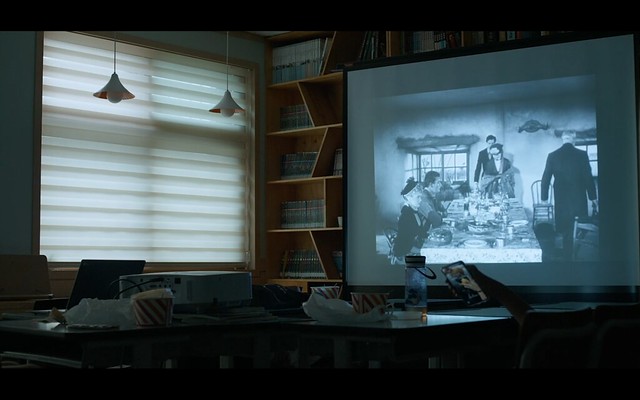
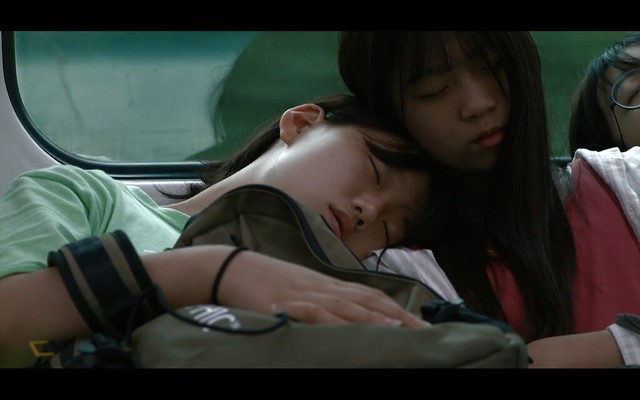
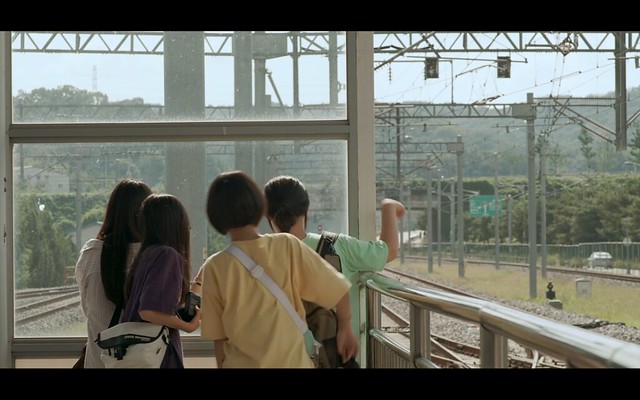
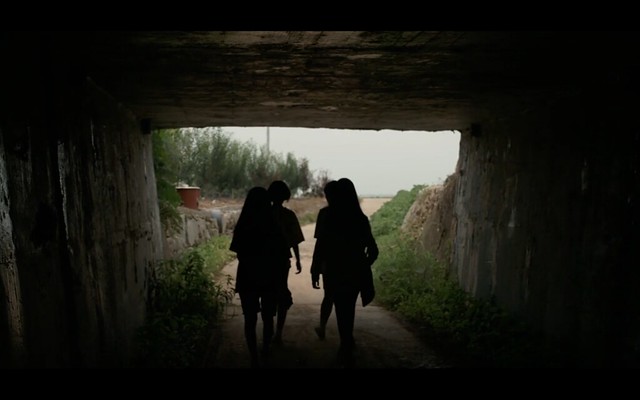
Short Vacation (2020) - Kwon, Seo Screen Shot 2021-06-19 at 9.40.30 AM Screen Shot 2021-06-19 at 9.46.21 AM Screen Shot 2021-06-19 at 9.55.31 AM Screen Shot 2021-06-19 at 10.02.55 AM Screen Shot 2021-06-19 at 10.13.42 AM Screen Shot 2021-06-19 at 10.26.55 AM Screen Shot 2021-06-19 at 10.31.05 AM Screen Shot 2021-06-19 at 10.38.55 AM Screen Shot 2021-06-19 at 10.52.24 AM Screen Shot 2021-06-20 at 7.29.10 AM How do you capture the end of the world on a photograph - is the question that hangs over the heads of four middle school freshman girls in Short Vacation. It's the school's photography club and that is the summer break assignment. The teacher gives them disposable cameras, the ones that you have to crank up to advance to take each picture: the ones with no exposure control so everything comes out super grainy. "When I was young, we didn't have phones to take pictures," he explains.

Siyeon, a transfer student, just joined the club of three girls - Songhee, Yeonwoo and Sojung. The club's name is "Shine", because of the principal's bald head, they speculate.

They can't phathom the idea of the end of the world or how to capture it. Siyeon has an idea- Shinchang is a place at the end of the 1 train line. They should go there and take pictures. In their little minds, it's the end of the line, the semi-official boundary of the world they know. Beyond that is unknown. This sets out the road movie, Short Vacation: a movie full of wonders and possibilities. It's a rare glimps of what it's like to be 14 years old, feeling for the first time that the world is large and vast.

As the girls, playing themselves, endlessly chatter during the entire trip- getting lost in the rural area, finding an abandoned station, getting separated then finding each other again, losing a phone, phone batteries running out, being marooned and spending the night in an empty community center for old folks in heavy summer rain, we get to witness each girl's personality developing and their possible lifelong friendship forming. The film in its short running time, 114 minutes, captures so much natural greatness. It also makes us feel very nostalgic about the childhood, its endless possibilities and portentials and a sense of wonder. One of the best films I've seen this year.

Saturday, June 19, 2021

Fluidity

The Seismic Form (2020) - Zwirchmayr

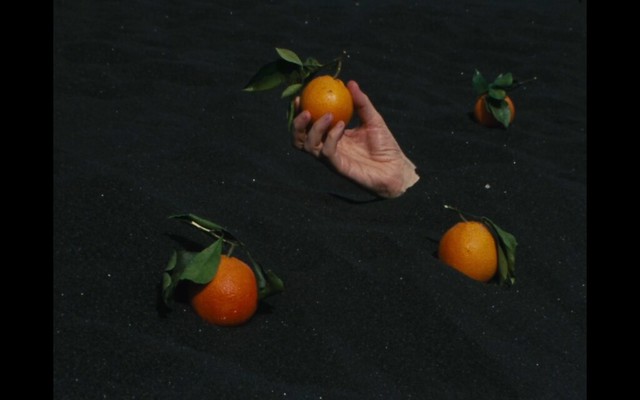
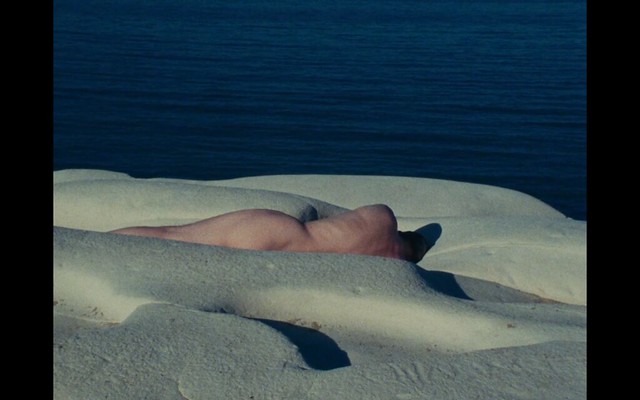
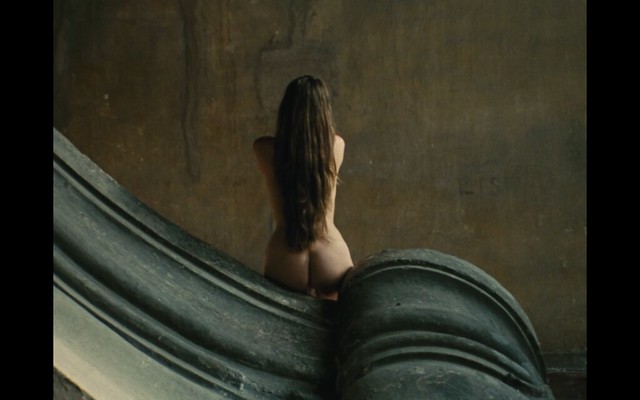
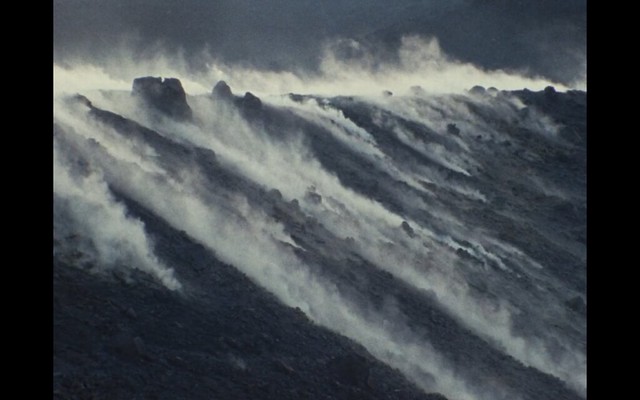
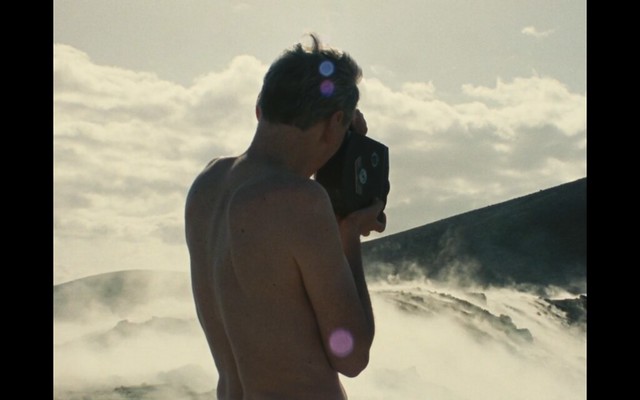
Text by Jean Baudrillard, Antoinette Zwirchmayr's short The Seismic Form visually examines the impermanance of life on earth in very elegant visuals, often juxtaposing human bodies with environments formed by seismic activity. It's beautiful. Some screen grabs: Screen Shot 2021-06-19 at 9.15.42 AM Screen Shot 2021-06-19 at 9.15.51 AM Screen Shot 2021-06-19 at 9.16.02 AM Screen Shot 2021-06-19 at 9.16.55 AM Screen Shot 2021-06-19 at 9.17.06 AM Screen Shot 2021-06-19 at 9.17.18 AM Screen Shot 2021-06-19 at 9.17.29 AM Screen Shot 2021-06-19 at 9.17.38 AM

Thursday, June 17, 2021

Naughty Summer

Benjamin Voisin (left) and Félix Lefebvre (right) in François Ozon’s Summer of 85. Courtesy of Music Box Films. After delving into serious subjects recently with Frantz (WWII) and By the Grace of God (Catholic priests sexual abuse), François Ozon (Swimming Pool, Criminal Lovers, Sitcom) goes back to his roots and concocts a naughty and delicious Hitchcockian summer fling movie based on a 80s British YA novel Dance on My Grave by Aidan Chambers. 

With a sunny resort town on the French Riviera as a backdrop, Summer of 85 blasts off with the Cure's In Between Days and introduces our young protagonist, Alex (Félix Lefebvre), an angel faced 16 year old high school student on the verge of self discovery. Alex is accused of some grievous crime that might have caused the death of his friend David Gorman (Benjamin Volsin). 

As usual, in a true Ozonian fashion, the director throws in a red herring, leading us to believe that it's a murder mystery. The film slowly reveals what really happened that fateful summer in flashbacks as Alex narrates his side of the story within the story. 
In the flashback, Alex doesn't really know what to do with his life yet. He has a great potential as a writer, confirmed by his teacher. But he will need to decide soon, to either stay in school or get a job to start supporting his working class parents. His life is an open book and it a glorious summer. And everything changes when he meets charismatic David. Alex takes out his friend's sailboat to the ocean and soon runs into trouble when an unexpected thunderstorm capsizes the boat. David, who has a boat rental and souvenir shop on the shore shows up to rescue him. David swiftly instructs him what to do, and invites him into his house after they dock. And it turns out that David is not the only overly friendly person to complete strangers in the Gorman household. Madam Gorman (Valeria Bruni-Tedeschi) has no problem stripping Alex's wet clothes and ordering him to take a bath in her house, all the while calling him "my little bunny." 

A little bit older than Alex, David takes charge of their relationship and aggressively throws himself into young Alex's life. Soon they become inseparable. They go to movies, take rides in David's motorbike and hang out on the beach. Soon after the urging of Madam Gorman, Alex takes a part time job at David's shop, David presents Alex with a cool red & white bike helmet. Now they can ride together all the time! Alex feels their friendship is developing way too fast but can't deny his attraction to David. He also notices that David seems extremely friendly to any attractive young people in general and can't help feeling the fangs of jealousy. 

They become 'more than friends'. Their romance scenes are tender and not overtly graphic. "What happens behind closed doors, stays behind closed doors." Alex narrates. 

The rest of the film involves a supposed grave desecration and cross-dressing and Rod Stewart's rendition of Sailing. And they are all glorious. 

Playing with the idea of innocence/deviance and eroticism has been an Ozon specialty. Summer of 85 nostalgically invokes the innocent times before the AIDS crisis and harkening back to his more salacious, hormone overloaded earlier works that he is best known for. The film is an erotically charged period piece, filled with pastel colors and 80s pop songs. It’s a deliciously seductive summer fun movie. 

Summer of 85 will be showing in 35mm in select theaters including the Angelika Film Center and the Village East in New York. It starts theatrical run on 6/18. Please visit Music Box Films for theater rollouts and dates.

Monday, June 14, 2021

Blu-ray Review: Digitally Restored in 4K, Stanley Kwan's Masterpiece CENTER STAGE is a Beauty to Behold

center-stage_cover 

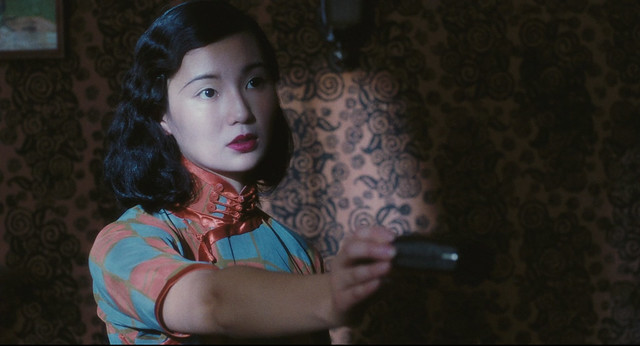
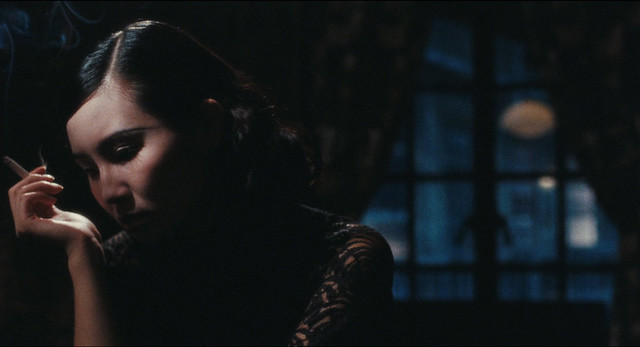
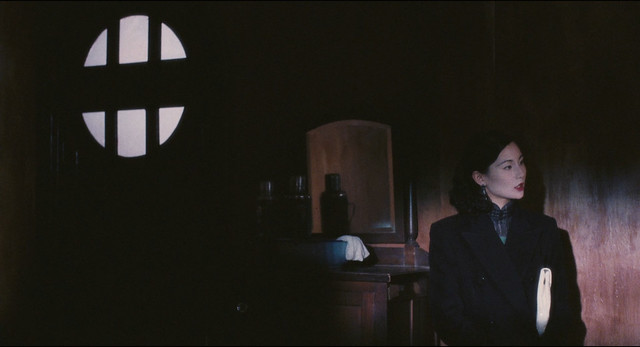
With the news of China's Censorship Board broadening its reach to Hong Kong's film industry (some dubbed as the end of Hong Kong cinema as we know it), here comes Center Stage, regarded as one of the best films Hong Kong cinema ever produced, featuring superstar Maggie Cheung and directed by HK New Waver Stanley Kwan. Digitally restored in 4K, the film is now out in North America for the first time from Film Movement Classics.

Center Stage concerns the life of Shanghainese silent film starlet Ruan Lingyu who starred in ten films between 1930-1935. Working with Lianhua - a thriving studio in the golden era of Shanghainese silent cinema known for making politically progressive films, Ruan played various tragic heroines. She was known for her trademark facial expression of "looking up at the heavens with a forlorn wordlessness." Hounded relentlessly by the tabloids for her affairs with two married men, Ruan took her own life at age 24.

Rather than making a straight forward biopic, Stanley Kwan opts for digging deep into telling a story about a complicated woman who lived in a time in a country at the beginning of modernization and political and social upheaval, using footage from the few surviving films from that era (most of Ruan's films didn't survive), interviews with people who knew Ruan, reenactments, and on-screen candid discussions with actors about the characters they are portraying.

In the center of it all is Maggie Cheung, in the zenith of her beauty and career as an actress, portraying Ruan Lingyu, the tragic heroine both on and off stage with utmost sensitivity and nuance, all captured luminously by veteran Hong Kong cinematographer Poon Hang Seng (Peking Opera Blues, A Chinese Ghost Story, Heroic Trio, Kung Fu Hustle).

Aliza Ma, program director of Metrograph, in a 16-page essay that accompanies the Blu-ray, gives a very thorough back story to Ruan Lingyu's tragic death by examining the social and historical context in what it was like being a woman and an actress in Shanghai in the 30s. She also lays out the climate of Hong Kong cinema and the freedom filmmakers were endowed with, thanks to Lianhua studio's relocation to Hong Kong as well as many artistic luminaries before the war and the subsequent Japanese Occupation.

The new Blu-ray is loaded with exclusive extras, including all-new interview with director Stanley Kwan.

Bonus Features:

  • New Introduction by Stanley Kwan 
  • Interview with Stanley Kwan 
  • Interview with Hong Kong cinema expert Paul Fonoroff (Blu-ray only) 
  • 16-page booklet with a new essay by Aliza Ma, Head of Programming at Metrograph


Center Stage is a breathtakingly gorgeous film and lives up to its reputation as one of the most revered masterpieces of the Hong Kong cinema. Gone are the heavily tinged teal from the previous releases- warm and saturated colors and soft smokey palette dominate the screen. The digitally restored film is now available on Film Movement website. 


Center Stage1 Center Stage2 Center Stage3 Center Stage4 Center Stage5 Center Stage6 Center Stage7 Center Stage8

Tuesday, June 8, 2021

Extinction, Evolution or Devolution

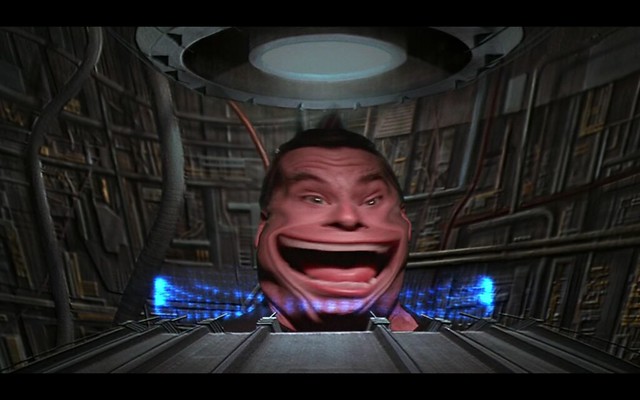
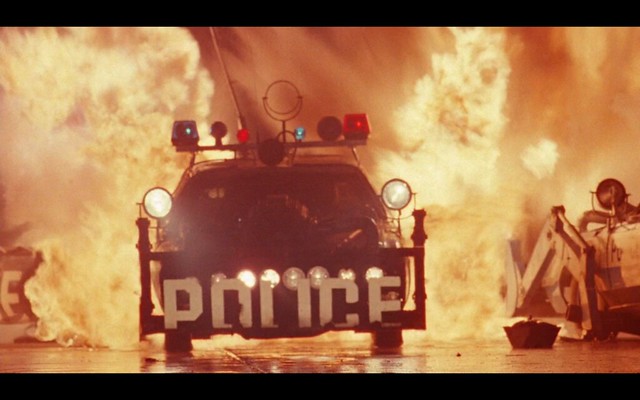
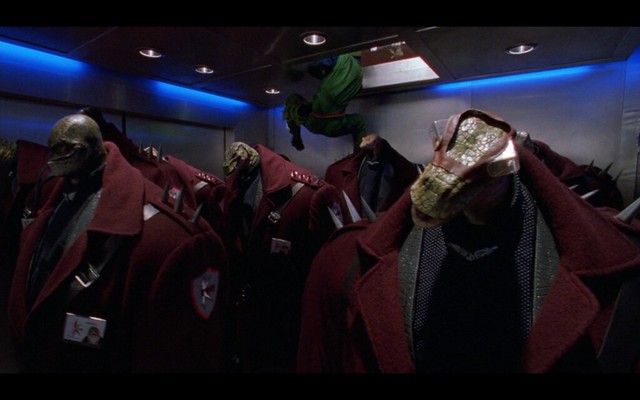
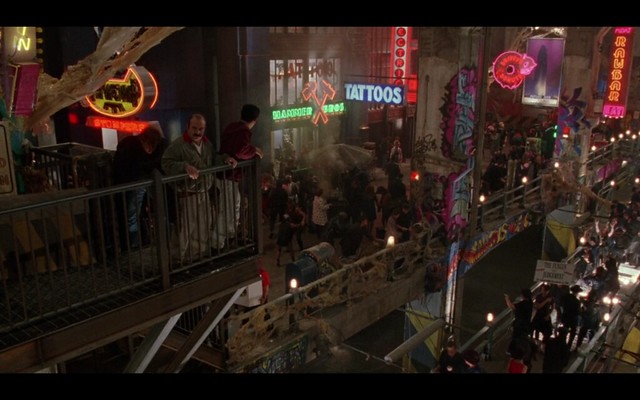
Super Mario Bros. (1993) - Jankel, Morton Screen Shot 2021-06-07 at 8.31.06 AM Screen Shot 2021-06-07 at 8.31.27 AM Screen Shot 2021-06-07 at 8.33.45 AM Screen Shot 2021-06-07 at 8.44.13 AM Screen Shot 2021-06-07 at 8.51.02 AM Screen Shot 2021-06-07 at 8.59.20 AM Screen Shot 2021-06-07 at 9.33.31 AM Since I am not a gamer and didn't spend my childhood in the 90s, perhaps not a good judge of the faithfulness of this movie adaptation based on a famous Nintendo game. But what I can say is that for big budget children's movies go, Super Mario Bros., directed by commercial/MV directors couple Annabell Jankel and Rocky Morton, is bonkers for Hollywood standards.

The movie concerns an alternate universe where dinosaurs are not extinct from the Asteroid hitting the earth some 66 million years ago. In this universe, people who inhabit there are evolved from reptiles. The earth is a vast desert except for uh, Mushroom Kingdom (New York City Doppelganger). The resources is running out and King Koopa (Dennis Hopper), wants to merge the two universes with the help of princess Daisy (Samantha Marthis) who possesses a necklace made out of a fragment from the asteroid. Then he wants to devolve our population to apes with his mobile devolving machines with his reptilian army.

This set up manifests the most cyber-punk dystopian production design since Blade Runner. Mario (Bob Hoskins) and Luigi (John Leguizamo) are hapless plumbers from Brooklyn who get somehow thrown into the situation to save the world from King Koopa. It spouts some snappy dialog, environmental and animal rights messages, among others.

The aesthetic is kitchy and bright, but definitely not Nickelodeon. With commmited performances from Hoskins, Leguizamo, Hopper and Fiona Shaw, as Koopa's evil henchwoman, Super Mario Bros. is an entertaining, twisty game adaptation worthy of its cult status.

Friday, June 4, 2021

Voluntary Game

La Collectionneuse (1967) - Rohmer


Screen Shot 2021-06-04 at 8.01.44 AM Screen Shot 2021-06-04 at 7.56.34 AM Screen Shot 2021-06-04 at 8.00.08 AM Screen Shot 2021-06-03 at 11.22.25 PM Adrien (Patrick Bachau)'s love interest is going to London. He doesn't want to. His friend Rodolph is letting him stay in his villa in sunny French Riviera. His plan is to go there and do nothing, except for selling a Chinese antique vace to a collector who can help him set up his art gallery. Easy-peasey. Even though Adrien wants to be alone, his painter friend Daniel is also there at the villa. But he is harmless and tolerable for the most part. Enter Haydée (Haydée Politoff), a young woman with a bobbed hair and round face, whom Adrien saw the glimpse of before when he accidentally entered a room at one of Rodolph's parties. She was having sex with someone.

Haydée's routine at the villa is to be picked up in the morning and coming home at dawn with a different man every time. Even though he says he is not interested in her, she intrigues Adrien. So starts La Collectionneuse, a mutual game where an older man plays with a younger woman to sleep with him. It's not really about who is having an upper hand or the assumed roles people play. It's not some sinister mindgame or manipulation. Adrien and Daniel name her a collector, of men. Even she doesn't think about it that way. Even the Adrien's self-centered narration rings hollow to what's actually occuring on screen. Haydée is her own woman. She's not that easy to figure out. Largely dependent on Haydée Politoff's charm, the film is light and airy, like those water dropplets on Haydée's skin evaporating under the summer sun.

Wednesday, June 2, 2021

Ugly Masculinity

The Killing of Two Lovers (2021) - Machoian Screen Shot 2021-06-02 at 11.49.18 AM There is nothing more ugly than the desplay of toxic masculinity on or offscreen. Robert Machoian's The Killing of Two Lovers zeroes in on David (Clayne Crawford) as he thinks of killing his etranged high school sweetheart wife and her lover while they sleep in bed. Yes David and Nikki (Sepideh Moafi), married with 4 kids in rural Utah, are separated and David has moved in with his ailing dad for the time being while they figure out their situation. Boys are too young to know what's happening, but their teen daughter is deeply unhappy. Machoian places us in David's head who can't really think about anything else but getting back together with Nikki even though they can't really communicate with each other without every conversation ending in a shouting match.

Letting-out-of-steam sequences - punching the exercise dummy (Body Opponent Dummy) until his knuckles bleed and taking BOB out to the field to use as a target practice tells everything about David's mindset and it's ugly. Him serenading a song about their breakup and hopes for getting back together during a date night is both pathetic and pitiful. At the end, his toxic masculinity is undone by another toxic masculinity. And Nikki choosing over lesser toxic of the two is... well, less than desirable outcome and says a lot more about her than needed.

It doesn't really matter that the movie was shot in full frame with painterly gaze. I don't care about the long takes or effective extreme close up photography, because the theme of the film is so cliché, uninteresting and undeserving. If Machoian's job was commenting on the pervasiveness of toxic masculinity in America, it's fine. But that doesn't have to be a movie- because we live with it in our daily lives.