Tuesday, December 21, 2021

Favorite Performances 2021

In alphabetical order:

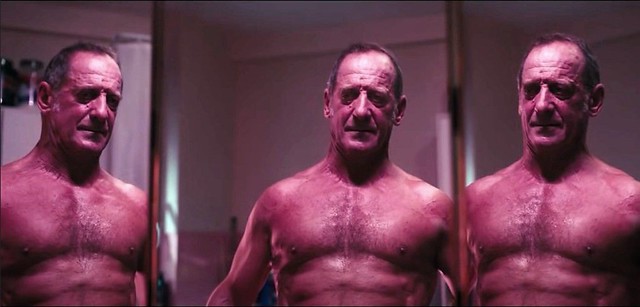
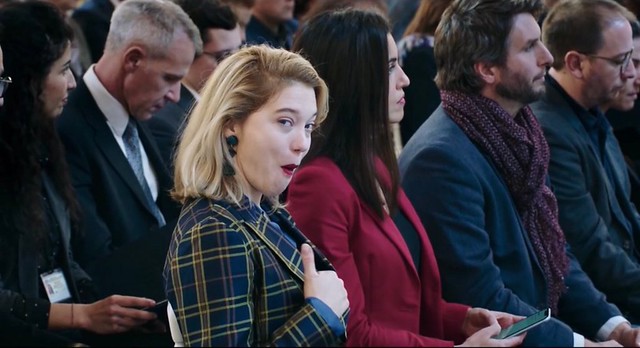
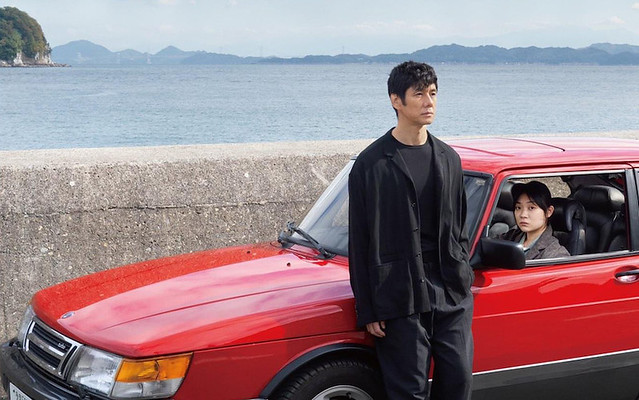
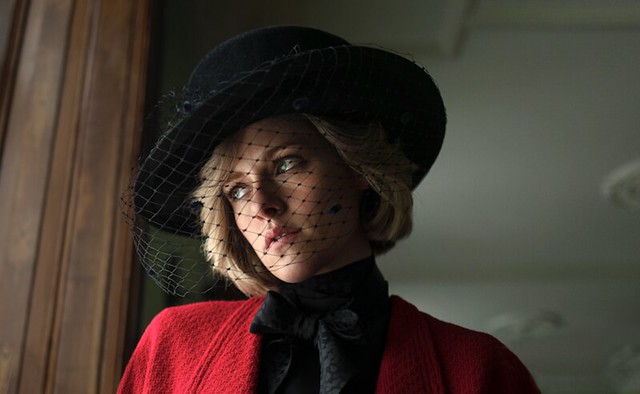
Richard Aoyade for Souvenir Part II Aoyade 1 Lee Haeyoung for In Front of Your Face In front of your face Vincent Lindon for Titane Screen Shot 2021-12-21 at 4.30.23 PM Park Yoorim for Drive My Car Screen Shot 2021-12-20 at 3.04.24 PM Renate Reinsve for The Worst Person in the World The-worst-person-in-the-world-interview-with-Renate-Reinsve Agathe Rousselle for Titane Agathe Rousselle Léa Seydoux for France Screen Shot 2021-12-21 at 4.40.43 PM Kristin Stewart for Spencer spencer Hisako Urabe for Wheel of Fortune and Fantasy Hisako Urabe Mia Wasikowska for Bergman Island Mia Wasikowska

Sunday, December 12, 2021

Top 30 Favorite films 2021

The pandemic continues with no end in sight. Had some health issues and some family emergencies to take care of. And I am just grateful that there was cinema and a lot of it. Yes I miss going to the cinema. But even though the experience was just streaming and viewing at home, I had to make do. Viewing a film is a lonely experience anyway; together alone, but always comforting.

2021 was a good year for cinema lovers, partly because of many films that didn't come out last year because of Covid 19, has seen the release this year. Hence directors with two films represented on the list. I was privileged to watch many outstanding films.

I missed some I really wanted to see - Un Gran Movimiento and The Worst Person in the World, just to name a few, but because of sheer numbers of the films that came out this year, I feel more at ease of not catchimg them them until next year. Time is not as relevent as before these days. Que Será Será, whatever will be will be...

*Click on the title for full reviews

1. Memoria - Weerasetakul Memoria The remnants of the violent past have always been present in Weerasethakul's work, as the titular character in Uncle Boonmee talked about killing communists in his days in the army or soldiers waging war in their sleep in Cemetery of Splendour, to just name a few. With Memoria, he is mapping the ripples of violence more explicitly through sound and shows the universality of past trauma. In this way, the film is not all that different than what he always has shown in his films.

2. Atlantis - Vasyanovych Screen Shot 2021-01-19 at 3.59.17 PM The visual symmetry in wide ratio shot Atlantis is awe-inspiring. The industrial landscapes and machinery, as well as decay of abandoned houses (think of decay porn of Detroit, but doubling here as the war aftermath) have common with Ed Burtynsky's photographic documentations of the late stages of capitalist society - Manufactured Landscapes (2006), Anthroposcene (2018) and other documentaries that focuses on ecological devastation and human footprints on earth. Charting the country's recent history with human elements, Vasyanovych also finds common spirits with Jia Zhangke, the master chronicler of China and its people.

3. Drive My Car - Hamaguchi Drive My Car Hamaguchi Ryusuke's new film, Drive My Car, based on a short story by famed Japanese author Murakami Haruki, from the collections Men Without Women, is a skillfully adapted and directed tale of human connection and redemption. The film more than justifies its three-hour running time, by developing relationship among its characters and audiences in a natural, unhurried pace. I can't think of any contemporary directors who have this much care and patience in creating illuminating characters like Hamaguchi.
4. The Souvenir Part II - Hogg Souvenir pt 2 A long, fantastical sequence of Julie's thesis film hilariously highlights how an artist sees her creations and how she remembers her experiences versus reality of what happened. The Fellini-esque sequence and out of body experience portrayed in Julie's film has nothing in common with how we perceived her relationship with Anthony in somber The Souvenir, at least in its visual presentation. But it strikes the cord on an emotional level- his death and her heart being shattered to millions of pieces remain true. All the people we encounter, those little memorable moments we pick up throughout life shape us who we are. The Souvenir: Part 2 is a celebration of that achievement. It's a marvelously inventive, self-effacing film that is also immensely affecting and moving.
5. Felkészülés meghatározatlan ideig tartó együttlétre - Hovát preparations-to-be-together-for-an-unknown-period-of-time-movie-review-2021 The delicious juxtaposition of being a brilliant neurosurgeon where she can diagnose and eliminate illness of the brain which affects both body & mind and letting the whim of her own heart set the course for the unknown is ahem, what's at the heart of the film.
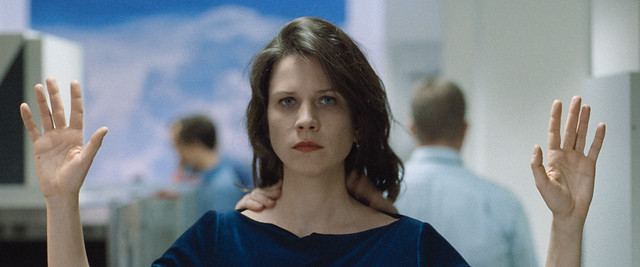
6. Verdens verste menneske - Trier 01-Verdens-Verste-Menneske-©-Oslo-Pictures-900x600-1 Layered and richly textured in presenting and contrasting the object oriented Gen-Xers and the Millennials who grew up plugged into the internet and social network - tangible vs. intangible, nostalgia vs. impending doom, the film speaks volumes on modern life and its seeming purposelessness. When it's all said and done, what remains is our relationship with each other, the love we have for one another. Not my swanky vinyl collection nor books on my bookshelf nor how many times I watched Dog Day Afternoon, nor a clever article I once wrote online.
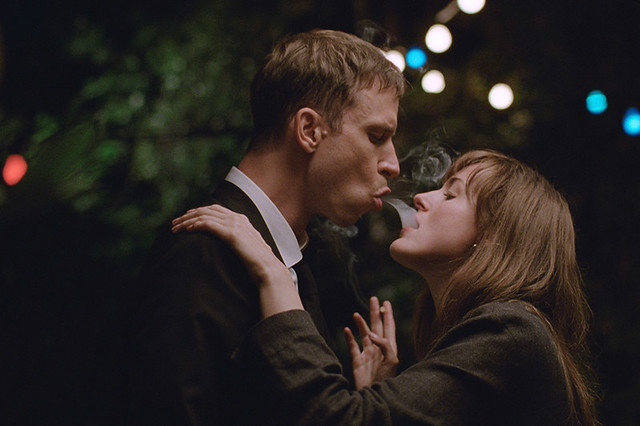
7. Exterminate All the Brutes - Peck Brutes Raoul Peck's 4-hour essay film on the western colonization of the world and preordained (by the conquerors) white supremacy is a vast and pointed lecture of human history you do not want to miss. Using every cinematic tool there is for documentary- reenactment, animation, voice-overs, archival footage, the esteemed filmmaker gives an scathing view of Western civilization and manifest destiny built upon the blood and tears of the rest of the world. Peck injects his family history and what he has witnessed growing up make this lecture distinctly personal (with his own raspy voiceover throughout), therefore universal and it really pays off.

8. Procession - Greene unnamed There's a lot to be said about the hypocrisy of being 'men of god' and those in power in these pedophile priest cases. It was the sense of powerlessness as a young boy many victims felt that led to much undeserved self-blame and shame. By writing their own scenario and directing their own reenactments, Greene recognizes the power shift that can be beneficial and even cathartic for those who are participating. And a lot of catharses and breakthroughs happen before your eyes in Procession.


9. Faya Dayi - Beshir Faya Dayi Could an anthropological study of the effects of khat, a flowering plant that has euphoric property when chewed, in Hararar, the walled city in Ethiopia, also be a stunning art film? Mexican-Ethiopian director Jessica Beshir proves that it can, with Faya Dayi, her mesmeric, immersive patchwork, shot mostly in silvery black & white. In here, every one of its hazy frame is a work of art. The film is visualized version of the phrase of a mystical sage or a lofty philosopher - Life is nothing but a waking dream.

10. Petite Maman - Sciamma Petite Maman You wouldn't have expected Céline Sciamma doing a miniscule scale project like Petite Maman after riding high on the international success of The Portrait of a Lady on Fire. But without big stars or a grand production, she is back to what she does best, directing an intimate story of growing up and getting unbelievable performances out of young actors. Clocking at astonishingly short 72 precise minutes, Petite Maman is a marvel of a movie in its storytelling, execution and acting. Sciamma is proving herself to be, once again, one of the best directors working today.
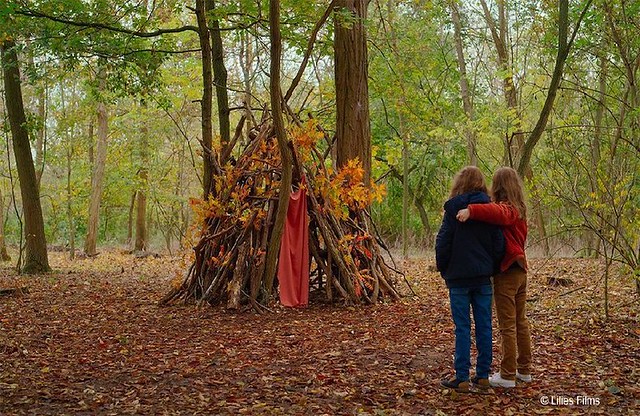

11. Spencer - Larrain spencer Larrain, a good tactician he is, knows how to go about tackling the subject who is so well known and overly exposed. Like in Jackie, it's all about contrasts and in all the small things. A trapped woman, like Jackie O in the room full of dark suited men after the assassination of her husband, her bruised leg, trying on various clothes. Casting has to be right. Portman was perfect for that measured, educated woman from a well to do upbringing. In Spencer, thanks to Stewart, there's a sense of abandon - sweet yet scarred with the hint of rebellion still left in her. Larrain understands exactly what more can be said about in these world famous tragic women. It's their humanity.
12. What Do we See When We Look at the Sky - Koberidze What do we see The film is about training our gaze on ordinary things. There are so much violence and hate in the world, why don't we focus on the beauty and wonder of our daily lives, the omniscient narrator seems to suggest. Gentle, joyous, and beguiling, What Do We See When We Look at the Sky? floats like a calm river over you and makes you forget about the ugliness of the outside world for a short while and embrace the power of cinema in revealing the beauty of everyday life.

13. Wheel of Fortune and Fantasy - Hamaguchi Wheel of Fortune and Fantasy We all have regrets and wish for do-overs sometimes, Hamaguchi exercises these second chances and fantasies in intimate human stories in Wheel of Fortune and Fantasy. It's funny and touching and very well acted. Maybe it's the Covid time thing, but there is a pleasure seeing characters just talking to each other at length in Hamaguchi's delicately written dialog. It's one of those films you want to see it again immediately after finishing it.

14. Ema - Larrain Screen Shot 2021-01-06 at 9.57.58 AM Energetic with fuck-all attitude, Ema is a new breed of filmmaking that signals the arrival of the next generation who are more empowered and care-free, as if saying "whether we like it or not, the future is ours." I tend to agree.
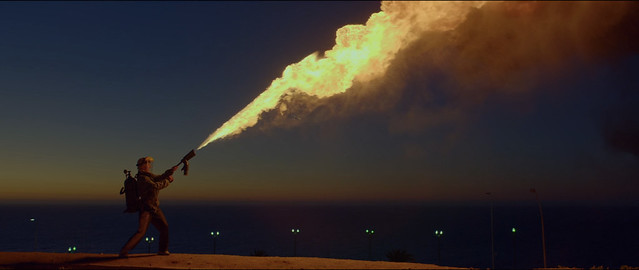
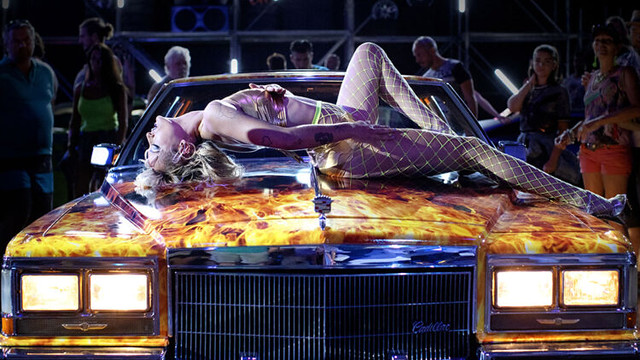
15. Titane - Ducornau Titane-750x422 How do you describe Titane, Julia Ducournau's Palme d'Or winner, a follow up to sensational debut, Raw? A Cronenberged feminist fever dream? A J.G. Ballardian vision of the future? A sexed up version of Electra Complex with Twelfth Night thrown in? Remove all the glitzy exterior and many cringe worthy moments from it, Titane is a sweet father-daughter story. But it is how it is told. And it is told with gusto. Ducournau has an agenda to fulfill, to bring down the patriachy to its knee in the most shocking way while rubbing male gazing sexism in its face. And it is glorious.
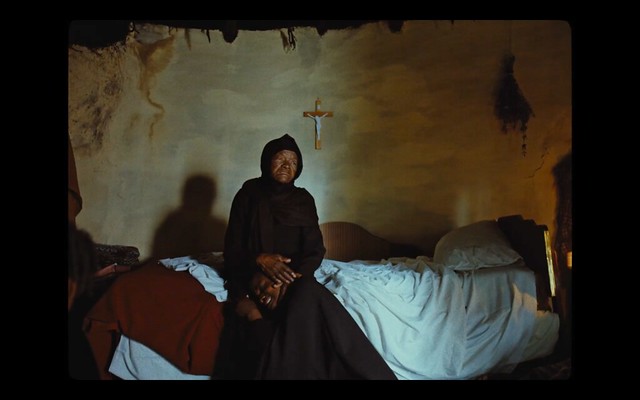
16. This is Not a Burial, It's a Resurrection - Mosese Screen Shot 2021-03-17 at 9.40.42 AM It's Marytwala Mhlongo's weathered old face that speaks thousand words here. Her dignified stand in her forever black mourning dress stands out like a sore thumb in the frame mostly populated by giant Lesotho sky. Nature, however beautiful, doesn't let you forget that human are insignificant in Mosese's expressive framing. There are so many memorable scenes but Mantoa dancing in her best dress dancing with the dead - shot in close handheld camera, and women in black choir singing at Mantoa’s son’s funeral, stand out for me.
17. The Tsugua Diaries - Fazendeiro, Gomes tsugua diaries Wryly reflecting the nature of 'expect the unexpected' in both life and filmmaking, Fazendeiro and Gomes create a delightful little summer movie that is cinematically inventive while reflecting the state of the worldwide pandemic and its effect on filmmaking. The Tsugua Diaries is a perfect antidote of a movie in our trying times.

18. Short Vacation - Kwon, Seo Screen Shot 2021-12-03 at 5.47.15 PM How do you capture the end of the world on a photograph - is the question that hangs over the heads of four middle school freshman girls in Short Vacation.They can't phathom the idea of the end of the world or how to capture it. Siyeon has an idea- Shinchang is a place at the end of the 1 train line. They should go there and take pictures. In their little minds, it's the end of the line, the semi-official boundary of the world they know. Beyond that is unknown. This sets out the road movie, Short Vacation: a movie full of wonders and possibilities. It's a rare glimps of what it's like to be 14 years old, feeling for the first time that the world is large and vast.

19. Flee - Rasmussen FLEE_still_2_Amin_carpet_copyright_FinalCutforReal There are many touching moments, but I teared up when young Amin asks the attending doctor in Copenhagen if he could get a medicine to cure his attraction to men. Coming out as gay to his supposedly conservative Afghan family later on is another tender, heartbreaking scene that really struck me.


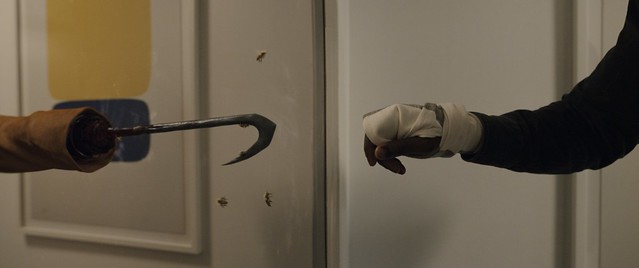
20. Candyman - DaCosta Candyman Nia DaCosta's Candyman pays a great deal of tribute to Bernard Rose's 1992 cult classic and builds upon it for the BLM era with much more agency. She and co-writer/producer Jordan Peele acknowledge the progresses the African Americans have made in the US over decades but also remind us that we still live in a white society and it is important not to forget the past.
21. Bergman Island - Hansen-Løve Bergman Island We all process our surroundings differently and express ourselves in unique ways. Contrasting oneself to others might be one way. Perhaps Bergman Island is Hansen-Løve's most personal film to date, showing her incongruities and subtle ways towards filmmaking.

22. All Light, Everywhere - Anthony All Light, Everywhere The future technology that the film presents is here already - face recognition, the prevalent of police bodycam and CCTV is part of our modern life. The question is how much we could live with it in a so-called democratic society. And who is most affected by this invasion of privacy? Always mindful about racist American history, Anthony connects the dots to expose the uneasy relationship among technology, commerce, race and power dynamics of the eyes of the beholder. And it's a fascinating one.

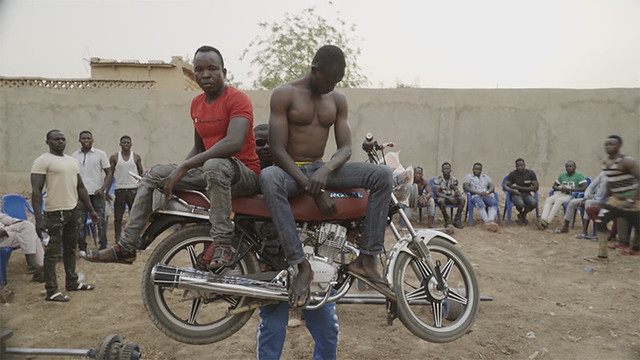
23. Zinder - Macky Zinder Director Aicha Macky is from there. And she gets an unprecedented access to the inhabitants of Kara Kara, the city's most dangerous slum. She interviews former members of palais, the youth gangs, and examine how poverty and unemployment perpetuate the unending macho culture.
24. In Front of Your Face - Hong In Front of Your Face In Front of Your Face may lack Hong's narrative and structural inventiveness but it has a nasty hook that gets you at the end, defying the conventional romance narrative. It's wickedly funny too. Lee Hye-young, who started her career in Lee Jang-ho's salacious Korean classic Between the Knees (1984) and starred in countless TV dramas, is a revelation here. Her graceful features and beauty dominate the screen in a bittersweet performance. Her hysterical laugh at the end listening to a voicemail over and over, is the funniest/saddest film moment of the year. I really adored this film.
25. France - Dumont p Underneath all the glitzy and bougie shenanigans of a celeb news personality, Dumont finds the post-irony era belief system we deserve in France de Muers, the flawed infotainment queen, as our new god. And a nation, still holding on to the colonial mindset of military presence in the world’s hotspots, embodied by a pretty woman in nice clothes, in whom the French public still put their trust, whether the motto of the revolution -- liberty, equality and fraternity -- still rings true in an ever changing world we live in or not.

26. Fauna - Pereda Fauna Pereda shifts the narrative to concentrate on narrative within the narrative, enacting a pulpy book Gabino was reading. Pereda toys with the stereotypical roles in these scenarios from countless narco shows that dominate and perpetuate Mexican roles, mixing with reality in rural towns where local mine owners perpetuate violence on its citizens on a regular bases. There's telling scene where anxious Luisa wakes up her mom (Pereda regular Teresa Sánchez) to recite the lines with her for an audition, highlighting the difference between acting and lived in experience. Clocking in short 71 minutes, Fauna is another delicious experiment on identity and performance from Pereda.

27. Neptune Frost - Uzeyman, Williams Neptune Frost Originally conceived as a graphic novel and a stage play, Neptune Frost has its faults: Its ethereal dialog and not well-defined narrative structure might throw people off the track. The film might lack the political urgency of Afrofuturist classics like Born in Flames, or Space is the Place but it's a grand experiment that requires attention and participation. Think of it as a spiritual, joyful lo-fi cousin of Matrix and Bacurau. The message might be the same here, but with more music and dancing. And it still manages looking like a badass cyberpunk film. Neptune Frost is a future cult classic in the making.

28. The Village Detective - Morrison THE VILLAGE DETECTIVE still The Village Detective: A Song Cycle submerges itself into an intriguing film history and does its own diligent history detective work. Morrison, along with producer/film scholar Maria Vinogradova, set out their own investigation, giving context to the movie reels found at the bottom of the sea. Like good detectives, they peel away layers of mud and dirt and debris the time has accumulated and connect the dots- the images on the film, its actors, the political climate, film archiving practices (or lack there of), while highlighting the beauty of the physicality of film print as an art object.

29. The Inheritance - Asili Inheritance in Asili's hands, The Inheritance doesn't feel like a dogmatic film. There are many funny moments as the residents of the 'house of Ubuntu' have to deal with any communal living, following such strict rules as 'no shoes inside the house', 'don't eat someone else's food in the fridge without asking' and so on. Rather, this airy fusion of filmed experiment gives opportunity to its unsuspecting viewers the window to unseen/under seen, unheard/under heard pieces of American history that give them the proper context to understanding the current political climate - the continuing police brutality against black community, the BLM movement and the white supremacists storming of the Capitol building.

30. Quo Vadis, Ida? - Zbanic Quo Vadis Considering estimated 100,000 people killed, and 1.3 million displaced in The Bosnian War, I have to say right off the bat that the outcome in Quo vadis, Aida? is not a positive one. But it says a lot about how horrific the war actually was. It is a searing indictment of war and the West's naiveté and hubris as to believe in their moral superiority but complete impotence when it comes to decision-making and action. The kicker of the film is that this life and death situation it depicts has actually taken place merely 26 years ago.


First Cow, The Disciple, Days, Undine, The Two Sights, Beginning and American Sector made my favorite list of 2020.

Saturday, December 11, 2021

Top 10 Discoveries 2021

2nd year of the Covid 19 Pandemic. Still no end in sight. Wow. But I watched some good films....

The best director discovery this year for me was Carlos Saura and his collaborations with his partner Geraldine Chaplin and I'd like to watch more of their collabs in the near future. I'd like to see more Rohmer as well.

Found classics like Billy Wilder's Apartment and Ozu's An Autumn Afternoon way too old fashioned and botherline offensive, but 80s and 90s offerings like Breaking Glass, Moving, Deep Cover and Chameleon Street very satisfying and intriguing. Should revisit 80s and 90s cinema more often.

So here are 10 Discoveries in alphabetical order.

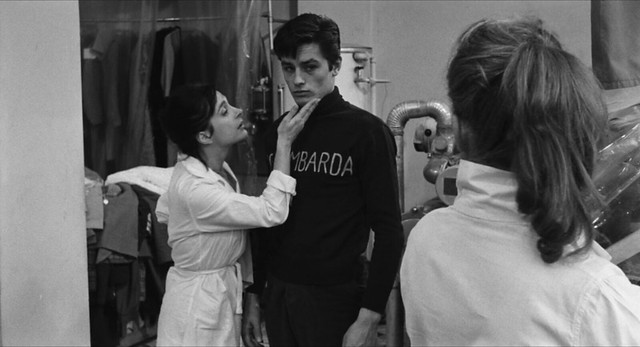
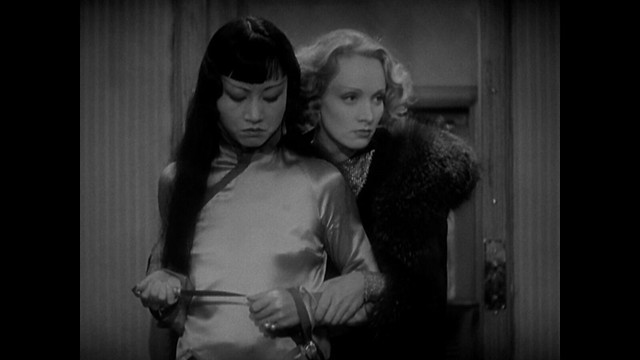
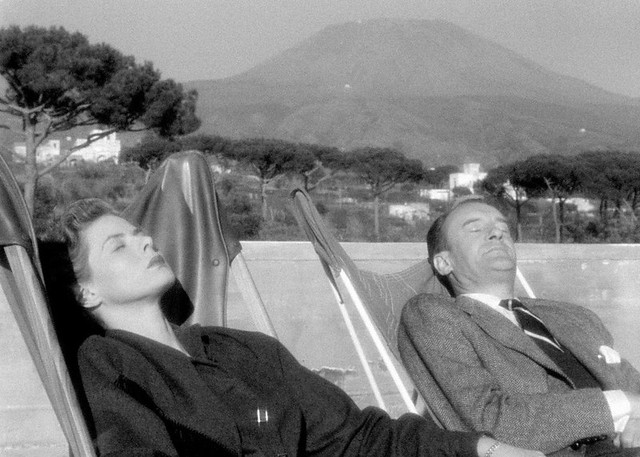
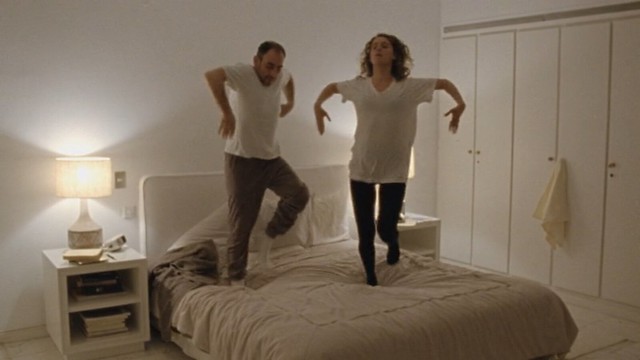
Attenberg (2010) - Tsangari Screen Shot 2021-12-09 at 10.27.17 AM Breaking Glass (1980) - Gibson Screen Shot 2021-03-16 at 9.03.42 AMChameleon Street (1989) - Harris Jr. Chameleon Street La Collectionneuse (1967) - Rohmer Screen Shot 2021-06-04 at 7.56.34 AM Deep Cover (1992) - Duke Screen Shot 2021-02-10 at 11.12.09 AM Moving (1993) - Sômai Screen Shot 2021-02-01 at 8.12.21 AM Peppermint Frappé (1967) - Saura Screen Shot 2021-01-09 at 11.24.31 AM Rocco e i suoi fratelli/Rocco and His Brothers (1960) - Visconti Screen Shot 2021-05-01 at 11.08.56 PM Shanghai Express (1932) - Sternberg Screen Shot 2021-01-01 at 9.39.19 PM Viaggio in Italia (1955) - Rossellini Journey to Italy

Thursday, December 9, 2021

From Sheep to Bulldozers

Attenberg (2010) - Tsangari Screen Shot 2021-12-09 at 10.16.54 AM Screen Shot 2021-12-09 at 10.18.43 AM Screen Shot 2021-12-09 at 10.23.19 AM Screen Shot 2021-12-09 at 10.27.17 AM "From Sheep to Bulldozers," Spyros (Vangelis Mourikis), a terminally ill architect dad tells his daughter Marina (Ariane Labed) while looking outside the window overlooking the small seaside industrial Greek town where they live, as he laments about 20th century. He is worried that he will be gone with nothing to show for Marina's generation. Him being atheist, he wants to be cremated because he doesn't want to be food for worms. But Greece being strictly a Christian country, his body will be flown to Hamburg to be cremated then sent back over to Marina, when the time comes. Marina on the other hand, needs to figure out other things in life too, other than dealing with her father's illness. First, even though she is a young woman, she hasn't discovered being intimate with someone. Only person in town who can teach her how is her sexually active best friend Bella (Evangelia Randau), who works as a barmaid at a hotel.

Attenberg, along with Yorgos Lanthimos' Dogtooth, became the faces of the new Greek cinema in the late 2000s. And there are a lot of similarities between the two - generational divide, patriarchy, Lanthimos (who plays Marina's first lover), being metaphors for a country thrown into a new, globalized world in which she is not quite ready or comfortable. But Tsangari has a gentler touch and is much less cynical. Attenberg features one of the sweetest depiction of father-daughter relationship than any other films I can think of.

Sir David Attenborough, whose nature documentary program is what Marina grew up on, is her only constant companion. It's Attenborough's communing with the nature and animals, his compassion that is a contrast to Marina's banal surroundings - a mining factory with no prospects for young people.

Communication in Attenberg is not really done through dialog. With Marina and Bella, it's done through series of choreographed dance/movements/freakouts. With Spyro and Marina, it's constant word play where they top each others last words with a similar sounding word, when they are not frankly talking about the possibility of incest or body decomposition. Tender but still weird, it's a great entry point to the Greek New Wave.

Wednesday, December 8, 2021

France Finds Faith in a Celeb TV News Personality

France (2021) - Dumont p Bruno Dumont has tried everything, from a sobering police procedural (Humanité) to a symbolic take down of the US hegemony and violence (Twentynine Palms) to an unflinching biography (Camille Claudel 1917) to a slapstick comedy TV series (P'tit Quin-Quin) to heavy-metal period musical(s) (Joan of Arc Series), all the while working with non-actors and big time movie stars alike. His diverse filmography has drawn comparisons to works of such auteurs as Bresson and Dreyer, both in method, form and spirituality. 


With French superstar Léa Seydoux in a title role in France, he surprises us once again, with an astute take on the role of the media in our complicated world where trust and belief are hard to come by. 


Seydoux fits right in as glamorous France de Meurs (rather unsubtle wordplay and metaphor), a big haired, famed TV personality in designer clothes and posh apartment. She practices combat journalism where she throws herself into the world's hotspots and edits news segments in such a way to be seen as a brave, noble and caring journalist.

Her tit-a-tat with politicians -- including cleverly edited actual TV conference footage of French President Emmanuel Macron, and a Crossfire-style news segment she hosts with political pundits -- bring her fame and fortune. She indeed is the defacto face of French TV infotainment.


But a fender-bender with a delivery man on a bike puts France into a mid-life crisis where she questions every choice she has made in her career, including her loveless marriage to a semi-famed writer Fred (Benjamin Biolay), and parenthood. Meeting with the man's parents, who are disabled and unemployed, takes her out of the affluence bubble a bit as well.

Is she playing the part of a saint on camera or is she trying to get some instant points on her karma? Dumont, with many of the film's slow zooms into the close-up of Seydoux's alabaster face and painted lips, in which she looks straight at the camera, never makes it clear.

One thing for sure is that she is unhappy. France declares her retirement from her TV career in her show while tears stream down her face.


To avoid public scrutiny, and trying to figure out her next step, France flees to the German Alps, into a very exclusive mountain retreat health clinic where the rich and famous go to rest and rejuvenate. She meets a charming and unassuming young man, Charles (Emanuele Arioli), there and they have an affair, only to find out he is a journalist implanted to write about France in a magazine.


TV and being famous are the only things she knows how to do, so she gets back to the TV world, only to stumble when her carefully organized boat ride with immigrants fleeing their 'oppressive regime' segment goes on live with an off-screen conversation between her and her wisecracking producer Lou (Blanche Gardin), in which they disparage immigrants, without knowing their mics were still on.


France is not quite a media culture, first-world liberal satire. Sure, there are few laughs here and there, including a slo-mo car crash that are too stupendous to be taken literally, but that’s not where Dumont’s interests lie. And the film's second half veers more into a melodrama of the classic Holywood style 'women's movie' territory where a female protagonist have to choose between her career and love, calling to mind Broadcast News.


Based on his track record, Dumont is always searching for a spiritual side of things in unlikely places, across time and the class divide. In France he seems to be likening the news celeb culture to a new religion, with France's garishly decorated apartment, including stained glass wall featuring some mundane pop art pastoral, as our new altar. 


France herself -- a blonde, blue-eyed white beauty in designer clothes -- is perfect for being our flawed, needy god, in our wired, neo-liberal capitalist society. Her simultaneously fake and sincere demeanor both in public and private, her desire to love and be loved, her ability to cry on cue are all the attributes the new news anchorwoman needs: France is 'fair and balanced,' 'the most trusted name in the news,' and so forth.

Underneath all the glitzy and bougie shenanigans of a celeb news personality, Dumont finds the post-irony era belief system we deserve in France de Muers, the flawed infotainment queen, as our new god. And a nation, still holding on to the colonial mindset of military presence in the world’s hotspots, embodied by a pretty woman in nice clothes, in whom the French public still put their trust, whether the motto of the revolution -- liberty, equality and fraternity -- still rings true in an ever changing world we live in or not.

France opens in theaters in New York on Friday, December 10, followed by a national roll out, via Kino Lorber.

Monday, December 6, 2021

Eyes of the Beholder

All Light, Everywhere (2021) - Anthony All Light, Everywhere Baltimore based filmmaker Theo Anthony (Rat Film), comes out with All Light, Everywhere: another philosophical musing/exposé, mapping and connecting dots exercise, pointing out discrepancies in the underserved community (Urban black) overburdened with profit based surveillance system - police bodycam and satellite surveillance. Just like Rat Film, All Light feels like a watching a well-drawn out Film Studies Thesis on screen and I mean that as a compliment.

It's interesting to see the executives, spokesperson and enforcers of various organizations are all white male. The workers and the community the military's eugenics based technologies are being tested on are people of color. There is a heated debate in a community meeting that Anthony films, between the guy trying to sell satellite technology to deter the crime and some community members objecting to invasion of privacy- making a point that security cameras don't deter crimes unless you fix the racist system.

The future technology that the film presents is here already - face recognition, the prevalent of police bodycam and CCTV is part of our modern life. The question is how much we could live with it in a so-called democratic society. And who is most affected by this invasion of privacy?

Always mindful about racist American history, Anthony connects the dots to expose the uneasy relationship among technology, commerce, race and power dynamics of the eyes of the beholder. And it's a fascinating one.

Wednesday, December 1, 2021

Animation as a Buffer

Flee (2021) - Rasmussen FLEE_still_2_Amin_carpet_copyright_FinalCutforReal Jonas Poher Rasmussen's animated documentary, Flee, chronicles harrowing journey of Amin Nawabi (pseudonym used for protection and privacy), an Afghan war refugee to the West, as he recalls his traumatic childhood experiences.


Rasmussen, a Danish radio-documentarian, teaming up with Copenhagen based animation studio, Sun Creature Studios, concocts layered, delicate, personal story that is as haunting and powerful as any live action narratives and documentaries about war and refugee crisis in the last couple of years - Fire at Sea, Human Flow, The Load, Quo Vadis, Ida and Limbo.


Flee owes a lot to Ari Folman's groundbreaking auto-biographical animated documentary, Waltz with Bashir, about Sabra and Shatila Massacre and Marjane Satrapi's Persepolis, from the perspective of her Iranian upbringing. Like with Bashir and Persepolis, Flee uses animation to elucidate one's memory. But if the former are culled from directors' own life experiences, subjects who were willing to express themselves as artists in a specific medium, the latter is using the medium to give a distance from its introverted subject: Rasmussen thought in telling a story of his shy, refugee friend since middle school, using animation was a good way to provide him a buffer and anonymity. With muted colors, simply but functionally rendered style only the Scandinavians can offer (overseen by animation director Kenneth Ladekjær, characters storyboarded by Simon Rouby then animated by Gilles Cuelier), balances out perfectly with a very heavy subject. Flee draws on highly subjective and personal memories of war, using both figurative and more abstract style to depict them.


Flee is about a young Afghan boy, Amin, who liked to run around in his sister's dress, embroiled in Afghan conflict in the late 80s - Taliban's take-over the country as Soviet troops retreated. Amin's father who was an intellectual and deemed a threat to Taliban, one day got arrested and disappeared, and his aging mother and siblings had to flee the country and to go to the West.


Some of Amin's traumatic memories and secrets were never revealed to anyone before - especially about his family and him being gay. It all comes out in the interviews his friend Rasmussen conducts, a casual interviewing method where subjects are lying down, like in a therapy session. So the preliminary interviews with Amin stayed intact in the film, with the subject's real voice. Flee moves freely in and out of those interviews making temporal leaps as Amin recalls his painful memories and at times, memories that are hard to articulate in words.

Amin's mother and his siblings took a plane out of Kabul on the eve of Taliban takeover and landed in Moscow, the only destination that accepted their tourist visa. This is the time where Soviet Union dissolved and was in complete chaos. Corrupt cops were shaking anyone for money and abusing its frightened citizens.


Amin's oldest brother, then living in Sweden, arranged an apartment for them to stay and sent money for them to get the smugglers to cross the border to the West. The smugglers turn out to be the worst people in the world, as bad as corrupt Russian cops. Their words took roots in Amin's brain forever: "When you get to your destination, tell them you don't have a family that they are all dead." This was the only sure way to get a refugee status. And this is what Amin would later tell anyone, even to his closest friends.


Two sisters went first, trapped in shipping containers for months with sixty other people off the coast of Sweden in the Baltic Sea. The experience was so traumatizing, they can't even speak about it to this day. Marooned in Russia with threats from cops to deport them back to Afghanistan, Amin, his older brother and his mom takes off again, leaving their fate in the hands of vicious, inhumane smugglers. After crossing the snowy border and a boat ride, witnessing human miseries everywhere, they get captured by the Estonian coastguards and end in a refugee camp where nothing works. Time stand still, after many months, they are given two choices - either rot in Estonian refugee camp forever or back to Moscow.


Flee is accompanied by some 80s and early 90s news reel footage of post-USSR world, of the horrendous human suffering in captured refugee boats, refugee camps and it reminds us once again, how the West and its media devoted too little time and attention to the humanitarian crises at hand, same as today.


Marooned what seems to be forever in Moscow, it lends some time for some tender moments as Amin discovers his sexuality, however repressed his was, accompanied by the opening of the first ever McDonald's in Moscow and its creepy celebration with the real news footage.


After many years in Moscow, they decide that it will be Amin who should be first to go: this time, with the more expensive smugglers route. Leaving behind his mother and older brother, Amin is instructed by the smuggler that he has to rip off his fake Russian passport as soon as he gets to the West and declare his family dead. He finally gets to Copenhagen- a wrong destination, but the Western city in a Western country nonetheless. 


There are many touching moments, but I teared up when young Amin asks the attending doctor in Copenhagen if he could get a medicine to cure his attraction to men. Coming out as gay to his supposedly conservative Afghan family later on is another tender, heartbreaking scene that really struck me.


Flee is an intimate, compelling account of a refugee story and a beautiful coming of age story told in a friendly, easier to digest way, via animation. But it's an important reminder that there are thousands of stories like Amin's and refugee crisis hasn't really ever stopped, if not vastly intensified with the whole world in sociopolitical crises for the past decades.

Wednesday, November 17, 2021

Outdated Sacrilege

Benedetta (2021) - Verhoeven Screen Shot 2021-11-17 at 2.01.19 PM There were Catholics demonstrating outside Film at Lincoln Center during the screenings of Benedetta, calling it a sacrilege. They really should focus more on pedophile priests. Please Catholics, picket at the churches and the residence of pedophile priests and bishops and grow some thick skin. You are way too sensitive, because Verhoeven's new nunsploitation is not half as outrageous or sacrilegious as you claim it to be. However, Benedetta shows the church's hypocrisy as it existed in the Middle Ages and begs the question - who is to say that there is only one way to serve god?

Benedetta, a daughter of a wealthy merchant, enters the convent in the town of Pescia in Tuscany. The convent is like an expensive private school for rich girls back then, paying top dowry to be married to a church/Jesus. As a child, Benedetta has a very active imagination and thinks Jesus speaks to her.

Eighteen years has passed and Benedetta is fully grown woman, played by Virginie Efira, the Abbess Felicia (Charlotte Rampling) and her daughter Christina (Louise Chevillotte), a nun in the same convent, see Benedetta as a growing threat to their grip on power. After a commoner Bartolomea (Daphne Patakia) was spared and welcomed into the convent at the mercy of Benedetta and her rich parents, the two women develop a sexual relationship. This is the time when Benedetta shows the signs of stigmata and having vivid visions of hot, sword wielding Jesus protecting her. The local high priest declares Benedetta the new abbess after Benedetta shows the signs of stigmata and speaking of prophesies in a different voice, despite Felicia and Christina's doubts. Now Benedetta and Bartolomea can freely enjoy their sexual escapades with a hand carved dildo, made out of the Virgin Mary statuette. But what about the peephole you say? Oh, did I mention this is the time of the plague?

Benedetta is neither as scandalous nor provocative as one might think. Whether she faked her Stigmata or her resurrection, who is to judge her devotion to god? Escaping punishment for her sacrilege - burning at the stake, Benedetta goes back to her convent and stays there until her death, the prologue tells us.

As a film, Benedetta is not subliminal enough to be taken seriously, nor scintillating or flirty enough even for Verehoven standards. Sure there are plenty of nudity but the subject seems tame and dated for 21st century standards. Verhoeven is more often than not, only a few directors who can have the cake and eat it too. But he is no Ken Russell.