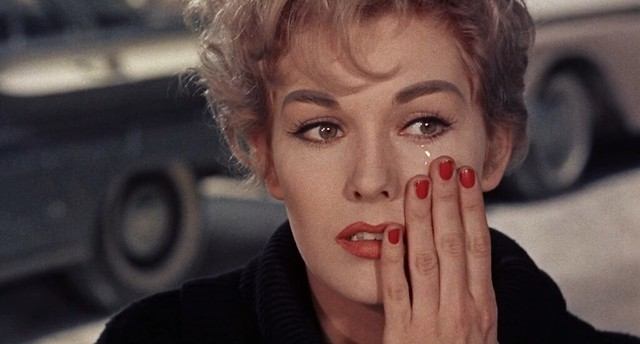
Friday, March 8, 2019

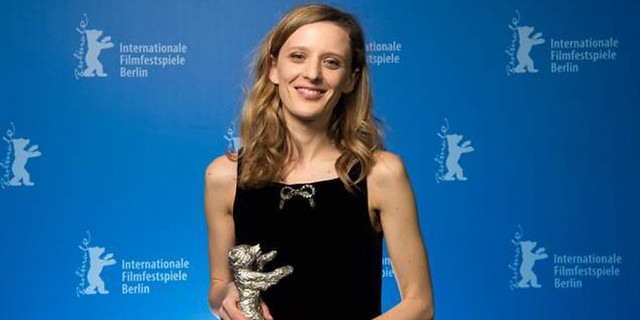
Interview: Mia Hansen-Løve on Her India Set, Daring New Film Maya

mia_hansen-love
Mia Hansen-Løve is one of my very favorite directors working today. Her infinitely wise films about time passing, beautiful characterization of people who inhabits her films and her willingness to always expand her cinematic universe at whatever the cost, leave me in awe. Her new film Maya isn't an exception to this rule. Structurally daring, logistically ambitious but always heartfelt, the filmmaker is reaching a new height. I got a chance to talk to her while she was in town for Rendez-Vous with French Cinema. Stuck in traffic and suffering from a cold, I was about ten minutes late for our appointment but she was so accomodating and kind to me. I thank her from the bottom of my heart.

So here is how our conversation went:

Throughout your filmography you try to do something different and something bigger, grander in scale each time. I like that about you.

Oh thanks for saying that. Not many people notices that.

Gabriel, one of the main characters in MAYA, played by Roman Kolinka, is a war journalist. Is he based on anybody?

Not really. I got some of… my inspiration from a former hostage but it stops when the trip to India starts. The only thing you could say is his story was inspired by true events and it has to do with captivity but film doesn’t deal so much with that. I mean it’s just the starting point of the film. But this trip to India to me is mostly an inner journey. And the film is really about invisible transformation... of not anyone in particular, maybe only pertains to me, in a more indirect way. But the character is not certainly inspired by someone in particular.

Speaking of something that is more personal and has more direct relationship with you, does India and especially Goa, have special connection to you?

It does. I’ve been traveling to India for the last ten years or so. I’ve been there almost every year. I’ve written one of my films there. But I’ve been attracted to india since I was in my 20s. Of course it had to do with me wanting to move on and do something different and so on. But I actually needed it, both as a person and as and artist. And at some point it made sense to me to try to confront my sensibility to India. It wasn’t like I wanted to make a film about or taking place in India then make up the story. This story for the film came to my mind first.

Right.

The story and characters came first and I thought it would make sense at this point, especially after Things to Come which was a such a ‘home movie’ in a way. (laughs) In another way, but you know what I mean. I wanted to go to a very different place and take that risk. I think risk somehow always excites me too. It was a way to get close to India and to go further in my relationship to India and not stay on the surface of it. Because you go there as a tourist, even if you go many times, it’s hard to go beyond the surface, unless you live there and….

But I thought to myself what’s the best way to know india better? Maybe to shoot a film there. That’s a great way to experience the place - to know places and people and experience things that I would never get to do otherwise. It’s challenging but also very exciting. I think it’s a very good way to go deeper into different culture and a country.

Did it feel like that when you were shooting part of EDEN, in New York?

I think all of my films somehow have been ways to get deeper into certain world. There are never documentary because I am really into fiction but somehow there was always this dimension in my films using fiction and making films as a way to further my experience and my knowledge. I think that’s what films should do anyway.

Right. Definitely. I have to tell you that EDEN is one of my favorite films of all time. It’s a masterpiece and I really really love that film.

Oh thank you. I will tell my brother (Sven, whose DJ career was the basis for Eden) will be happy to hear that.

How was shooting in India?

I think it was both amazing, extremely how do you say…joyful and also very tough. I mean it was actually amazing to be so far away to work with Indian people, to work with an Indian actress - just to lose myself and Immerse into such a different world. I got so much from it and I feel I am so much stronger since I made that film.

Gotcha.

For me there is before and after Maya. So the experience will stay forever with me. But on the other hand it was tough. When I started shooting I was already exhausted. both physically and mentally. I had tons of health issues at that time.

Oh sorry to hear that.


Nothing really bad but you know when you have that and when you are about to shoot a movie in India, it's not the best moment to have these kind of issues. Mentally also because the film was so difficult to finance. I felt huge responsibility toward my producers. I felt I had to not to do any overtime…, I'm always pushing for time. I felt I had great weight on my shoulders because all the risk they had taken to make that film. Maybe that was the most difficult thing on that shoot - this guilty feeling on some level. (laughs) But months after shooting, looking back what stays the strongest is a what unique experience it was.

It’s a unique movie too in a lot of aspects.

Oh thank you.

How did you find this beautiful actress, Aarshi Banerjee, who played Maya?

It took me some time to find Aarshi. We spent months looking for girls mostly in Mumbai but also around Mumbai, Maharashtra, but also in Goa and even in London, because we had some connections there, so we were looking though the Indian community- I was looking for a girl who speaks English. So it was casing but also in Facebook and social media. In many videos I got, I thought the girls were too much like actresses and too elegant. And I received this video of Aarshi where she filmed herself in a living room with a dog and she was so raw… I mean on the one hand she is extremely beautiful, in my head the character had to be, but on top of that she was so direct and so authentic. She moved me a lot with her maturity and depth and authority but at the same time she is also very much rooted…how do you say in…

Grounded.


Grounded, you know? she is really into her Indian reality. She’s not like ideal or romantic figure. she’s a real girl. And because my character Gabriel is a such a ghost when he arrives in India, I felt it was important that she shouldn’t be a ghost. She would have to be very real. I love the fact that she has a very timeless beauty but she also has a very contemporary quality to her. I think I used that a lot in her character.

That makes a lot of sense because I was wondering about the title because it could well have been Gabriel. Because the film starts with him and it’s his journey. But talking to you it makes sense that it’s called MAYA.

I think it is a poetic choice. The film doesn’t have to… the film is not a summery or… The title of the film is Maya and it says something. She brings something essential to the film and yes the main character is definitely Gabriel and you could say she just passes through the film, but she brings him back to life somehow. She bring him grace in his life. I thought it was beautiful to call the film Maya - the beauty and the fragility and youth that she symbolizes. She is the direction. She is the starting point. He might be the main character but she’s what the film looks at.

Is that also about that special person when we think back our lives there was this one person who changed the course of my existence somehow, that Gabriel can be that person for Maya by meeting her?

Totally. Maybe that was the starting point of the film. Also when I look back my own life I think of some persons I have met when I was a teenager and maybe they made me suffer at some point but they meant so much too and they helped me grow up and become aware of who I was and… So I am happy to hear that you understood that because that’s what the film is about. It’s a love story in a way but It’s more than a love story. The film is less conventional than that. Of course there’s love involved but even more than that, it’s about just what you said. Like how at some point two people who are very different who can’t really live together or make a couple… why they had to meet, why, there is something crucial that has a deep impact on your life coming out of this encounter, even though they go separate ways at the end.

That’s how I took it when I watched it. Why I admire you as an artist is that your film’s scale is getting bigger even though your theme - time passing and meeting someone important in your life. You always try something that is more difficult to achieve. You once told me that you were having hard time financing these films because they are grander in scale.

It’s the guilt I feel when I make these films because they are not financially viable. I obviously don’t want them to be expensive but the fact is I fight for shooting on 35mm film which is personally very important to me. And I struggle to keep a certain time, to have possibility of minimum of time because I have so many locations, I keep running from one place to another. I mean they are still cheap compared to 90 percent of films that are being made in the world but economically viable while still being free creatively like some other directors I know, I’m not smart on that side of things yet. I know I should be because it is vital to keep doing what I love doing.

No I think with all your films you show the audience that you really suffer for your art. I am grateful for it. I am grateful for watching these.

Thank you so much. Because it makes all worth it when people tell me this. It give me courage and confidence and we actually need it.

Keep doing it by all means. I don’t want to downplay the importance of this film but I’d love to see a sequel to this film. The way it ended, I want to see more of Maya since she is just starting her life.

I don’t know. it is hard to predict for myself what I’m going to do next but I enjoyed so much working with Aarshi and Roman that one thing for sure is I’d very much to work with them again at some point. I still feel frustrated about not getting enough from them.

Goa, the way you portray it, it’s going through a radical transformation with all the new constructions and all that. Is it actually happening? That the gentrification of Goa is real?

It’s maybe one thing that I’m the most proud of of the film. How faithful it is to today’s Goa. It’s a fiction and definitely not a documentary. But I’d like to frame it in such a way in fiction that I reflect the reality and capture the moment in time. I’ve seen Goa change a lot within the last 15 years and I’m not sure if I would go back there again anymore now because of these changes. Goa is certainly not a paradise but more like paradise lost. And that’s what I tried to show because there are still beauty and charms in many ways but you have so much mixed feelings when you are there because I think there are still a lot of poetry there in its heterogeneity in cultures and people all mixed up and magical because it’s still india but it’s ruined by tourism and corruption. It’s spoiling away literally both physically with pollution and mentally. I think in a way the film was my goodbye letter to Goa.

Thursday, March 7, 2019

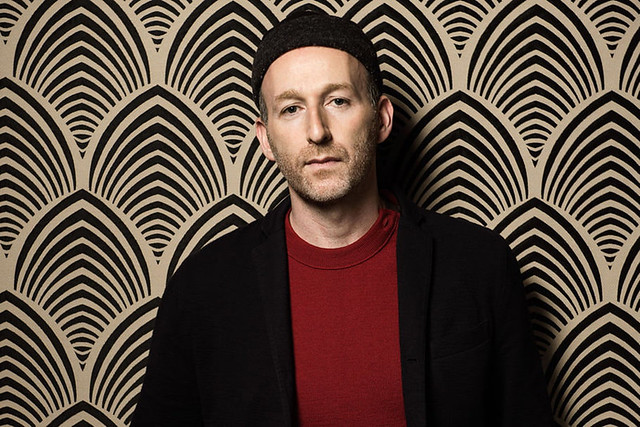
Interview: Mikhaël Hers on Grief, Music and Summer in Amanda

Mikhaël Hers
With his thoughtful presentation of loss, grief and human connection and youthful melancholy in medium length films (just around 1 hour mark) Montparnasse and Primrose Hill, I was hooked on Mikhaël Hers’ gentle artistry. With the two features that followed, Memory Lane and That Summer Feeling, he claimed his spot in a little corner in the hearts of many cinephiles as a young talent and best kept secret in contemporary French cinema. With his new film Amanda, another film dealing with the loss of a loved one in the era of ISIS and terror attacks, I had a chance to sit down with the filmmaker when he was in town for Rendez-Vous with French Cinema this year.

Your films always deal with loss and grief in some way. But it seems it is very much on the forefront in your last two films- That Summer Feeling and now Amanda. It’s interesting contrast, since your main characters are all 20 to 30 something people in their primes. I’ve always wanted to ask you where that death and grief in your work coming from.

Maybe I make films to answer that question. In any case, as soon as I start writing, that question is what drives me. It’s usually a specific locations and also the question of absence, as you described, that plays out both full, head on manner and also metaphorically. In Amanda it’s a bit more head on. It’s something I can’t really explain but, in a sense, the question has been always there in me.

We are obviously living in a pretty chaotic world- the refuge crises and the terrorist attacks and so on. It was interesting to see in Amanda that this terror attack is portrayed as an every day occurrence, something we just live with. I am wondering what you make of the state of the world we are living in.

It’s hard to answer that question. Here too, we are talking about absence. Perhaps we make films to find serenity, if serenity is possible in dealing with these things. And in cinema, in fiction, I’d rather make you to deal with those things more on a personal level, rather than making things that are completely saturated with political or social discourse. I think it is maybe possible to look at the state of the world through intimate tragedy, through daily life of these characters rather than dealing with it in an obsessed manner torn straight from the news headlines. I hope that answers your question.

Amanda was co-written by Maud Ameline not your usual collaborator Marietta Desert. How did you get to collaborate with her and what was the experience?

For this particular movie or in general?

In both cases?

I always start by writing the first draft alone. Even before that, there is rather a long maturing process which is full of wondering and false leads. But then I write fast. It’s not in me to drag writing process two or three years. When I’m done with this incubating process then I write the first draft very fast. After that I bring in a co-writer Marietta Désert or Maud Ameline. And of course they bring in much needed outside view and structure. Generally my first version is very dense and goes a lot of different directions and they help me kind of purify things and cut them down.

Vincent Lacoste is a rising star of the French cinema it seems. You have your usual actors to choose from (Thibault Vinçon comes to mind). How did you come to choose Lacoste in the role of David?

When I was writing the first draft, the age of the character was less clear whether David should be in his twenties or thirties. Once I realized the right age for the character was in the early 20s, it was quite obvious to me that it had to be Vincent Lacoste. He is the one who has the ability to create empathy. And there is something ordinary about him: one the one hand he is handsome and full of grace but he also has something rather awkward about him. It was an obvious choice for me. Once he accepted a role, our work came very naturally. It was as if the melodies we had in our heads immediately corresponded. We’d do one or two takes but very quickly we found a common note and tone.

The young girl, Isaure Multrier, who plays Amanda is also great. What was the casting process like and how did you get the performance out of her especially in those emotional scenes?

We did what we call in French ‘Casting Sauvage’, a ‘wild casting’, basically a street casting. Of course we saw some professional child actors, but there is always that uncomfortable feeling working with professional child actors. They are there to perform more of a parents’ dream than anything else. So I really counted on street casting. We went to schools. We went to sport classes and so on and when we saw this young girl we gave her this little piece of paper with the address of the production company and she came in did a screen test. I really liked the kind of mix that she is - that she is still a young child and can be very juvenile but also has a real maturity. she has an ability to express her thoughts in words. I liked those two dimensions about her.

In terms of emotional sequences, we worked as the way you’d work with adults. One tries to create an atmosphere and ambience of trust and welcoming around the actors. And I also tried to make her understand to draw from her own person and experience. That Amanda was a character and a shell and she only could play this through her own experience.

You worked with international cast before. Anders Danielsen Lie and Josh Safdie in That Summer Feeling. You have Stacey Martin and also Greta Scacchi in Amanda. How did you get to cast those roles and how did they come onboard?

I wanted some one to counter Vincent Lacoste and found it in Stacey Martin. Vincent Lacoste is a very intuitive, natural actor. Stacey is more of a cerebral actress and I like that kind of disjointed counterpoint to very intuitive Vincent. And maybe due to her dual nationality, she has a singular musicality in her speech. I don’t know if foreigners can hear but for us French, we hear in how she speaks.

As for Greta Scacchi, I was a fan of her growing up in the 80s and 90s. We needed someone who spoke English but also French to play the role of the mother. There was an opportunity to meet her. I had lunch with her few months before. But she was on the set for only one day. It’s funny she had become this person who was very important but the shoot and she came for one day and it was done. And she disappeared like that. It was like a dream.

Speaking of musicality, I love the soundtrack of your films. (Hers Laughs) How does the music factor in to your films? And how important is music for you?

Music is my first passion. It’s something that I listen to everyday unlike cinema which I can do without for weeks at a time. So it is very important. It generally comes in in the editing stage. Very quickly we find spots in the movie where the music is going to be placed. In Amanda, we called on a composer Anton Sanko who had done the music for a Nicole Kidman film called Rabbit Hole. I had really like the music in that film. The film is very interesting too but the music really spoke to me. And it stuck with me for a long time. We borrowed it for the edit then said to ourselves that we should contact him to write some original music for us. It is very interesting what he did because there’s kind of minimalist parts with an unusual string instrument and also more ample orchestrated parts. Also in my films that you seem to appreciate, a lot of indie pop songs that are from my teenage years which I enjoy paying tribute to by bring them in to my films.

Most of your films are taking place in the summer. is there a reason for that? I mean it’s really interesting contrast when you think about your subject matters you usually deal with.

For one thing it’s a very pragmatic choice. Summer is a the season that allows you to shoot in the lightest manner even though I tend to work with traditional crew. Summer allows you to work with less lighting equipment to make things faster. Also like you said, all my films has this starting point of absence. I find it more painful and powerful under a blue sky to experience that. It’s paradoxical on the one hand that Summer is about possibilities and renewal but there[’s something tears you apart a little more if you are dealing with absence. I like that ambivalence.

There is a scene, the day after the terror attack, the streets of Paris is completely empty. How did you manage that?

We shot that in the early morning. We have relatively small budget. It was not in our budget to empty a street in paris so we had to find compromises. We get PAs to maybe make a few people go different way. These are arrangement with reality.

So you’ve done films in Paris, Berlin, New York and London. Do you have any plans to shoot anywhere else?

I love Lisbon. It would be great to do a film in Lisbon and all other wonderful places but for the moment I have yet a new project. So I don’t know.

In your last film That Summer Feeling, I’ve never seen New York portrayed that romantic before. (Hers Laughs, embarrassed)

Yeah I know. That maybe because of my limitation of knowledge of the city. When you arrive in a new city you lack acuity in your gaze of someone who lives there. So there’s something a little exotic and a little romantic about how I filmed New York and in Williamsburg. Though to be perfectly honest, I didn’t know it at the time but I realize now that maybe I would film a little differently. I think I was a little bit naive. I do like the New York sequence of the film but perhaps I was a little naive.

It was fine. Job well done. I enjoyed it a lot.

Wednesday, March 6, 2019

Melancholic Inspiration

Ce sentiment d'lété/That Summer Feeling (2015) - Hers
Cesentimentdelete
The film starts in Berlin with Sacha (Stéphanie Daub-Laurent, Hers' regular) sleeping in bed with Lawrence (Anders Danielson Lie), getting up and going to a printing studio where she vigorously works with her screen print. It's a beautiful Summer day. On her way back in the park, she falls to the ground. She is pronounced dead in the hospital and her parents and Zoë (Judith Chemla), her sister who flew in, are in shock, as well as Lawrence. Sacha's death affects her immediate surroundings greatly. The film unhurriedly and beautifully show how they slowly recover from their grief but will carry their sadness with them forever.

Hers here expands his horizon, first Berlin, then Paris, Southern France and ends in New York. Zoë with her young son has moved back to her parents in the south. The separation from David (Thibault Vinçon), her husband was a mutual decision but with death of Sacha and everything, she is in limbo, trying to figure out her next move. Lawrence visits them and there is slight attraction between them. Zoë reminds him of Sacha.

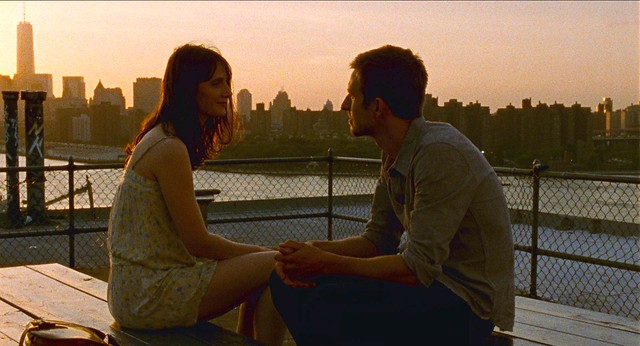
Couple of years later Lawrence is back in New York. He had a past there. Working as a translator for a book company while writing his novel, he is surrounded by group of people including June (Lana Cooper), his sister and Thomas (Josh Safdie), his wise cracking, goofy friend. Then there is Ida (Dounia Sichov) in the group he hangs out with. Their mutual attraction is palpable. Liked all the sequences but NY part I loved it. He paints NY distinctly romantic. Williamsburg in the Summer has never been portrayed this cool in grungy eclectic ways.

Zoë visits Lawrence on the way to Kentucky. She has a long lost flame there who recently resurfaced in her life. They have a good time hanging out. Their gazes are tender and caring, sharing the same grief together. Zoë sees Lawrence having a good time with Ida, how they look at each other. There are no words exchanged but you feel the sadness and also relief in Zoë's gaze.

We grieve for the loss of loved ones. It is part of human life. It's always a matter of when. Preferably later in life, but it's not always that way. For Hers, the subject seems to be a constant source of melancholic inspiration for all of his small, delicate films concerning a group of mostly young twenty, thirty something people. I like Hers' contrast - these sensitive, intelligent Parisians in their prime with their hopes and dreams connecting with one another despite, or perhaps because of losing someone close. It's always Summer. The time of rejuvenation. Their sadness has not tainted their youthful exuberance but enhanced it by putting another layer on their characters, wizened them up, if you will. Ce sentiment d'lété is perhaps the best Hers film that epitomizes this youthful melancholy.

Monday, February 25, 2019

Preview: Rendez-Vous with French Cinema 2019

The Film Society of Lincoln Center and Uni France again team up for the 24th edition of Rendez-Vous with French Cinema at Lincoln Center this year, 2/28 through 3/10.

This year, the series puts an empasis on showcasing new and up and coming voices across French cinema and includes Romain Laguna (Meteorites), Sébastien Marnier (School's Out), Virgil Vernier (Sophia Antipolis), Gaël Lépingle (Time of the Pirates) and Judith Davis (Whatever Happened to My Revolution). Also represented here are seasoned Rendez-Vous alums such as Bruno Dumont (Coin Coin and Extra Humans), Mia Hansen-Løve (Maya) and Gilles Lelouche (Sink or Swim).

The series also highlights number of French comedies this year, opening the series with the multiple César Award nominated The Trouble with You, starring comedian Pio Mamaï and two of the top leading actresses in French cinema - Adele Haenel and Audrey Tatou, directed by Pierre Salvadori.

It might be less star studded year without the presence of Deneuve, Huppert or Binoche for the first time in a long while, but there are plenty of little gems to be found as usual if you knew where to look.

So here's my guide to this year's Rendez-Vous with French Cinema. Enjoy:

TROUBLE WITH YOU - Pierre Salvadori *Opening Night Film
TheTroublewithYou_1200x600
After police Lieutenant Yvonne (Adele Haenel) finds out that Santi, her decorated dead cop husband was a bent cop, that everything she owns is from dirty money, she actively tries to make things right. She especially feels bad for Antoine (Pio Marmai), a young man who was wrongly accused and went to jail for 8 years because of Santi's fake bust at a jeweler, which was a insurance scam. After Antoine is released, she obsessively stalks him. Antoine, traumatized by the incarceration, can't stop acting out his bad impulses and commit violent crimes. Ever so guilt stricken, Yvonne helps him in his endeavors and tells him that she understands what he is going through while hiding the secret of who she is.

Thinking Yvonne is a salvation to all his anger and resentment, a person who finally frees him from being 'innocent', Antoine decides to leave his long suffering girlfriend (Audrey Tautou) and get freaky with Yvonne in a S&M den (a vacated crime scene where she took him after he burned down a restaurant) and keep committing crimes.

Trouble with You is a mad cap comedy. It has its moments but the jokes are stale and gags can be seen too easy and regressive- high heels = a prostitute, S&M body suit and sex toys oh-so-funny, etc. But affecting performances by Haenel, Mamaï, Tautou and Damien Bonnard make up for it.

MAYA - Mia Hansen-Løve
2018-maya
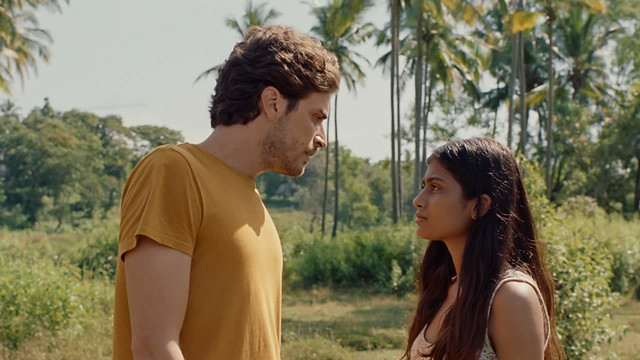
Mia Hansen-Løve's new film starts with a French war journalist, Gabriel (Roman Kolinka) being released from captivity with a fellow journalist Frederic (Alex Descas) by the ISIS in Syria. He gets a hero's welcome in Paris. The year is 2012. Even though he was beaten and tortured, he refuses to be treated by psychologists or take pills for his trauma. Only thing he feels is guilt because the third journalist is still not released. He decides to take off to Goa, India, just to get away from everything for a while. He knows that only thing he knows is being a war journalist and will need to go back. But for now, he will take some time off and travel India. Goa is where he spent his childhood with his mom (Johanna ter Steege) who now lives in Mumbai.

In Goa, Gabriel meets Maya (Aarshi Banerjee) a young woman who is a daughter of his Indian godfather, Monty (Pathy Aiyar), who runs a hotel business. But touristy Goa is in transformation and people are being forced out by land developers and Monty doesn't see the future for Maya to stay in Goa forever. Gabriel is an intense, brooding man and the news of the fellow captive's beheading doesn't help the matter.

At first, Gabriel refuses Maya's advances, waving off her as still too young. But they hook up and she is left heart broken. Gabriel can't reciprocate her love and he will go back to the war zone.

The film could easily be called Gabriel since it's mostly about him. We get his back story, his family and love life and Maya is just a young girl who falls in love with a hunky, intense French guy. She is just starting out her life. So this is why the film is an interesting narrative departure for Hansen-Løve, who's been making thoughtful observations on people in transitional period. Maya is not unlike Camile character in her Goodbye First Love, except she is not the main character. Or is she? Maya is a movie about that special person who had made a big impact on your life. He or she pretty much made what kind of a person you are now.

Again, beautifully scripted and ambitious in its scale, Hansen-Løve keeps expanding her territories while not losing sight on where her priorities are - portraying melancholy of growing up and acknowledging that there is a price to pay for following your passions. Kolinka's hunkiness almost derails the film. But what can you do? He's French.

METEORITES - Romain Laguna
meteorites_03
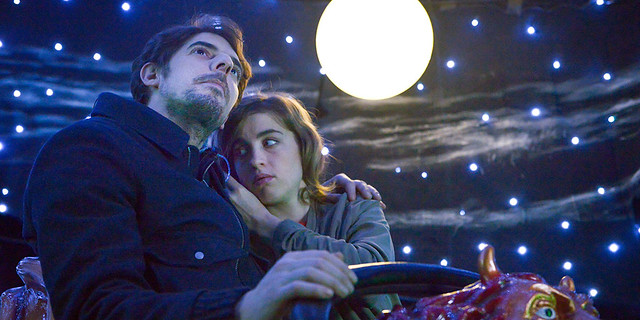
A young girl's search for her place in the universe is the theme of Meteorites, Romain Laguna's sensual debut feature. Nina (Zéa Duprez) is a High School dropout working at a dinosaur theme park in the south of France. One night, she witnesses a meteor charting across the sky and crashing over the rugged mountain. It seems only she saw the celestial event and no one else. She starts hanging around with Morad (Billal Agab), a good looking Algerian boy from a nearby project, who happens to be her co-worker Djamila's brother. Djamila warns her that she will get dumped. But their sexual attraction is palpable. She thinks the meteorite was the sign of their encounter.

It's a rocky relationship. Morad's aloofness and Nina's stubbornness clash in every turn. After Morad leaves for Algeria without notice and her old friend Alex declares joining the military and Nina finding out that she's not pregnant, she falls into a case of melancholy. Only searching and finding the meteorite that crashed will give her a peace of mind.

Shot in full frame with vibrant colors, lush sun drenched surroundings and with Duprez's sultry presence, Meteorites is an affecting, lyrical coming of age film.

SOPHIA ANTIPOLIS - Virgil Vernier
Screen Shot 2019-02-16 at 2.31.11 PM
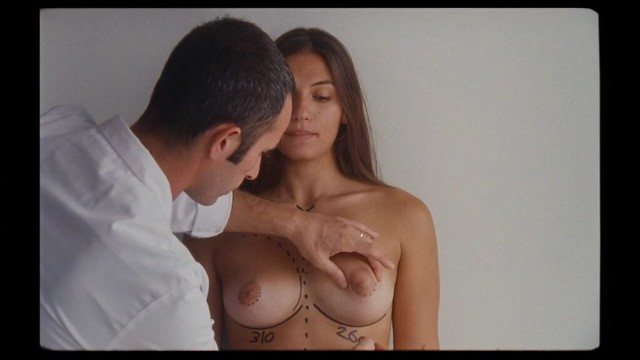
Sophia Antipolis is a name of a southwestern French industrial park in French Riviera, known for its tech industry complexes and low lying office buildings and chain stores. It's a back drop of Filmmaker Virgil Vernier's new film of the same name. It starts with a plastic surgeon talking to several young women about the their breast argumentation options. An impatient young woman tells the reluctant surgeon that she needs to have them done fast before her job interview. The surgeon drily tells her the ethical implication of him letting her walking around without proper healing time, even with her own consent. Then there's a young black navy man trying to get a job at a security firm in town. The combat training they go through is grueling, conducted by drill sergeant types who yell at you racist things in your face if you were people of color or threatening rape if you were a woman to get you riled up. The young man befriends with an older man who introduces a group of vigilante security force believing in doing the jobs police wouldn't do, like raiding and destroying illegal camps or makeshift shacks by slashing and burning their tents down. The older guard tells him a story of him and his old partner finding a charred body in one of the empty office space. During a bust of a suspected child molester, it becomes too much and the young navy man who runs away.

Police gets involved in the burned body case and determines it's the body of a young woman who had breast implants. That she might have been killed and set on fire by some shady characters whom she owed money to. The story then pivots to a girl who was a High School friend of the dead girl. She is found holding a candle lit vigil where the girl had died.

Just like his previous film Mercuriales, Vernier's elliptical, loosely connected stories, Sophia Antipolis examines the seedy underbelly of a shallow modern society, urban isolation and loneliness and human connection. Daring, cerebral and playful with some lyrical 16mm shot images, it's one of the most invigorating film experience I've had in a while.

AMANDA - Mikhaël Hers
amanda
Reading only the plotline of Mikhaël Hers new film Amanda might not entice you because it is extremely conventional, lifetime channel movie material. But knowing the film is his, you know you are in good hands.

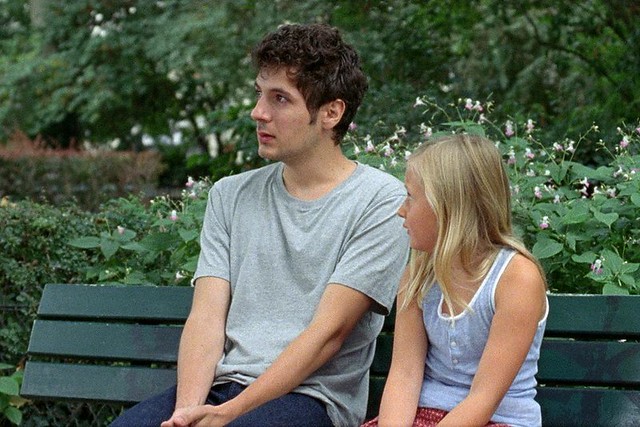
David (Vincent Lacoste) is a young Parisian scraping by doing menial jobs - as a middle man for the landlords, arranging pickup and introduction to places for travelers and as a seasonal park employee, trimming tree branches around the city. He has a loving older sister Sandrine (Ophélia Kolb) and an adorable 7 year old niece Amanda (Isaure Multrier) whom he picks up at the school when single mom Sandrine is busy. David meets Lena (Stacy Martin), a newly transplant from the countryside through his job and falls in love. Other than their father not in the picture and their estranged English mother (Greta Scacchi) reaching out to reconnect, they live in quiet, relatively uneventful life.

A sudden death of Sandrine and many others in a terrorist attack in the park shatters David's tranquil existence and affects Amanda greatly. Young and short on resources, David has to decide the fate of his young niece.

It might draw some flags for its non-political stance in the time of the extreme polarization, hate and fear for portraying the post-Islamic terrorism France, but Amanda is not about that. It's not about a young man's journey through adulthood either. Nor is it Doillon or Pialat-esque acting/directomg genius extravaganza. Just like Hers's other films, Amanda is all about human connections. And it's drawn beautifully. And also like his other films, loss and grief figure greatly in to it. But if they were on the periphery and overhanging cloud in films like Memory Lane and Montpanasse, they take the center stage in Amanda. Lacoste (seen in films of Mia Hansen-Løve and Christoph Honoré), a cross between Jean-Pierre Léaud and Andrew Garfield, has a great range and has a bright future ahead of him. He is also representing Freshman in this year's series.

TIME OF THE PIRATES - Gaël Lépingle
cf-seuls-les-pirates-photos-608257
It's Orleans suburbs where city officials are planning a new housing development. They hold town hall meetings and try to gather up the support. But this means Géro (Ludovic Douare), an aging, eccentric theater actor/director who lost his voice due to cancer and only whispers, will get evicted from his cluttered house and from his theater space too. So starts Gaël Lépingle's humanistic characters study Time of the Pirates. Géro gladly invites Leo, his fresh faced 18 year old nephew who wants to learn the theater craft and write, to live with him. Then there is a lonely city clerk who is fighting for the custody of her kid whom Géro has a hots for.

Leo turns out to be a young man who is politically aware and doesn't buy into Géro's romantic notion of "pirates are origins of revolutionary anarchists." The film takes a sly turn as one of Géro's 'associates' gets into trouble and flees to the country and Leo accompanies him. On the run and tall and handsome, for Leo, the fugitive is an ideal model for his writing. Then he finds out the man makes money off of smuggling refugees in. The boy is learning.

With finely tuned, naturalistic performances that don't resort to stereotypes and it's tone just pitched right - not too serious and not too silly, Time of the Pirates occupies a specific place in French cinema by portraying middle-class people and their lives with humor and warmth. I am definitely going to check out Lépingle's Julien next.

Tuesday, February 19, 2019

Sexual Politics

À ma Soeur! (2001) - Breillat
548id_083_primary_w1600-800-800-450-450-crop-fill
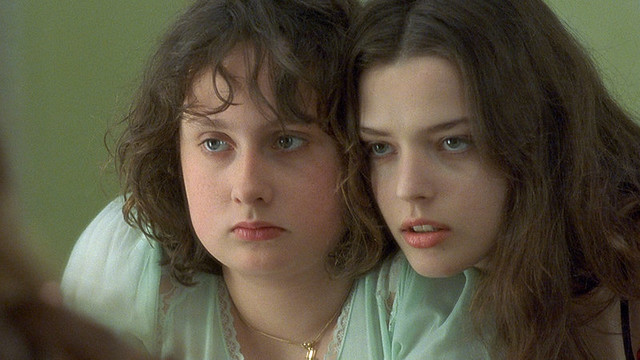
More of a statement than a movie in line with Catherine Breillat's rest of the filmography yet it raises some interesting questions from young women's point of view. Sisters Elena (Roxane Mesquina) and Anais (Anais Reboux) are vacationing with their parents in a small town near the sea. The archetypes are set - Elena, a 15 year old is a slutty, pretty one and Anais, a chubby jealous younger sister. But when it comes to boys, Anais turns out to have a more pragmatic view on things. When Elena is contemplating going all the way with a good looking twenty something Italian boy, Anais declares that she will only have sex with someone she isn't in love with. But naturally, Elena gets all the attention and sharing the room with her sister, Anais tearfully gets to witness her sister banging and all. Is she crying because of jealousy or is she crying for all the girls being coerced to give in even though they didn't want to?

À ma soeur presents a bleak view of male/female relationship. Sexual coercion and pressure tactics are painfully demonstrated by the Italian boy. Sibling dynamics are also examined - disturbing since Breillat has expressed her relationship with her older sister in her other films. The worst possible scenario that could possibly happen to a little girl happens, out of nowhere. It's too cartoon-ish to be taken seriously. I can only take it as a big middle finger to anyone who was expecting anything other than that ending.

Tuesday, February 5, 2019

Preview: Film Comment Selects 2019

In its 19th edition, Film Comment Selects provides various films around the world, deemed their contributions to cinema as important and vital by Film Comment Magazine's esteemed editors. This year's lineup includes Steven Soderbergh's another iphone shot non-sport sport movie High Flying Bird, László Nemes' Sunset, his follow up to Son of Saul, Flight of a Bullet, a one-take docu into the heart of Russia-Ukraine conflict, Up the Mountain, Zhang Yang's formally daring portrait of the Bai people in Western China and The Hidden City, an audio-visual sensory tour of Madrid underground.

Most of these films in the selection are not masterpieces, but each brings a spark, its unique colors to cinema. This is the reason why I love the series. It keeps me on my toes and makes me giddy with joy because it reminds me time and again that cinema is indeed an great art form, not because of its consistency but rather its fluidity.

Film Comment Selects runs Feb 6 thru 10th at Film Society of Lincoln Center. Please visit their website for tickets and more info.

I had a privilege to sample the following:


Sunset
- László Nemes
46012-Napsz__llta__Sunset__-_L__szl___Nemes__film_still___33_-e1535984118277
László Nemes' follow up to a haunting holocaust drama Son of Saul, Sunset is yet another period film that is equally brilliant and challenging. It tells a story of Írisz Leiter (Juli Jakab), a young heiress to the famous hat maker parents who perished in a fire. She came to Budapest, to her parents' hat making showroom/shop to get a job as a milliner. But the manager of the shop Oszkár (played by great Romanian actor Vlad Ivanov of 4 Months, 3 Weeks and 2 Days, Police Adjective and Snow Piercer) doesn't want her there, saying the city is not for a country girl like her. But Írisz is determined to stay and find a brother she never knew she had.

The time is the height of Austro-Hungarian empire in the early twentieth century, on the eve of World War I. Soon Írisz finds herself in chaotic social upheaval where dangers and mysteries are around every corner where nothing is what it seems and everything is layered. Nemes keeps his Son of Saul subjective perspective - focusing closely on Írisz on steadicam, following her exclusively. It's a startlingly absorbing theater experience. As well as the visuals, Nemes put an emphasis creating soundscapes that reflects the tumultuous times with off the frame whispers, conversations and ominous soundtrack.

Sunset juxtaposes a society on the brink of self-destruction with setting the film around something trivial and decadent as a designer hat shop. There is something creepy about all the beautiful, young women hat makers preparing for the dance party for the crown prince and princess and be chosen as a personal milliner and move to Vienna. Is Írisz's brother an anarchist bent on toppling Oszkár and the ruling class? Nemes doesn't give an easy answer to any of these intrigue. Instead, he makes us work for it and it's great.


Flight of a Bullet - Beata Bubenec
Screen Shot 2019-02-02 at 10.15.54 AM
Flight of a Bullet, an uncut 80 minute footage of a village and its soldiers in Ukraine starts out like a typical political thriller where a innocent civilian gets caught between two factions - in this case Russia backed separatists and pro Ukraine forces, then eases into a glimpse of the effects of war on people, especially on young macho military men in the army barracks where director Beata Bubenec is embedded with.

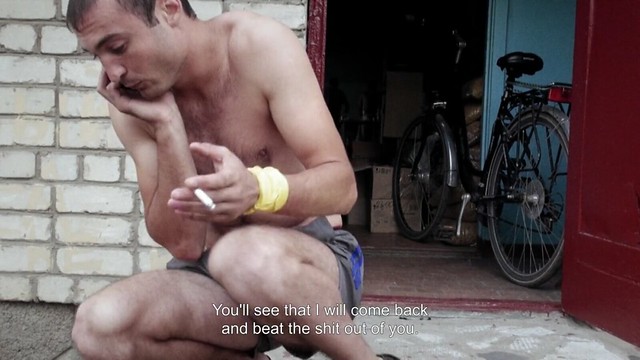
We see a man taping a partially collapsed bridge. Some bystanders are making jokes and hitting on Bubenec who is behind the camera. The ski masked soldier takes a man into custody with Bubenec in tow, starts interrogating him to see whether he's a separatist or not. It's tense and realistic since it's real. After the intense scene dissipates, Bubenec moves outside and tracks a shirtless soldier on the phone with his girlfriend. He keeps on accusing his girlfriend, threatening violence once he gets home. The banal conversations that goes on through the rest of the film always carries tinge of violence. Flight of a Bullet is an interesting case study of the effects of the war.


Los Reyes
- Iván Osnovikoff, Bettina Perut
idfareyes-h_2018
Los Reyes is an oldest skate park in Santiago, Chile. Kids come and go with their skates and hang out. But the documentary focuses on two mangy dogs (Football and Chola) who live in the park and spend most of the time there, chasing tennis balls, napping, barking at cyclists, howling at the passing police sirens. Skaters are only present in voice overs here and there, mostly talking about smoking and selling pot.

Iván Osnovikov and Bettina Perut's documentary is an ode to street dogs. In extreme close ups, we see Football's aging features - matted shaggy hair, bloodshot eyes, teeth ground to the base, fly ridden ears, jagged paws, limping. But Football and Chola are energetic pair and owns the park as their territory. The filmmakers juxtaposes passing of time of dog days with aimless youth growing up and realizing that they have to face the real world in voice overs. Gentle, contemplative and beautiful.


Jessica Forever
- Bettina Poggi, Jonathan Vinel
Jessica-Forever
A young man is being chased in the suburban neighborhood. He suddenly lunges into the window of one of the houses. The glass shatters and the man motionless. So starts ultra slick Jessica Forever, a sort of a gamer's answer to all YA dystopia novel adaptations. Jessica (Aomi Muyock, last seen in Gaspar Noë's Love), is a surrogate mother of a pack of orphans all of whom are violent young man. We gather from various brief narrations that these baby faced non-emotive orphans have committed horrible deeds and hunted by the oppressive government forces (in the form of a swarm of armed drones). Jessica is apparently the only one who can calm them down and trying to build a makeshift family out of them by hugging them and whispering to them that everything will be okay.

There are some very nice visually orchestrated scenes and visual effects. But I don't know whether I need to take these hunky boys in kevlar vests and hockey pads, listening to Deathmetal ballads seriously or is Jessica Forever some sort of Verehoven-esque parody and I'm not getting it.


Up the Mountain - Zhang Yang
Up the Mountain
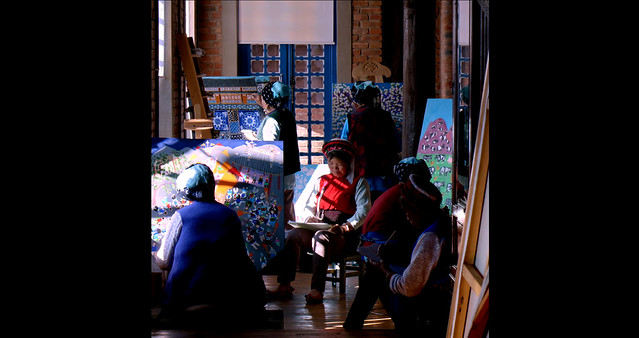
Gorgeous. Master painter Shen (Shen Jianhua) and his family relocated from Shanghai to Shuanglang, a lakeside village in Yunan Province, Southwest China, some time ago. His modern, airy residence is up on the hill overlooking the stunning view of the lake and the mountains. His art studio is always open to local grannies in their colorful traditional Bai clothes who flock to paint colorful scenes from their daily lives. Painting in his studio for the grannies has been sort of a communal retreat, away from their daily grind and a chance to express themselves creatively. Framed in the same manner as the square canvases used by these painting pupils, Up the Mountain unhurriedly observes the daily routines of the villagers. They tend to their barnyard animals, harvest their crops, cook, paint and chat about their lives.

In that static square with gorgeous nature backdrop, every frame is a work of art. Births, a funeral, a new year's celebration, a wedding occur in this documentary. Master Shen's studio is always busy - there are always people coming and going: they paint, they chatter, they cook and eat communally. You get used to the quiet rhythm of life. Master Shen and his family, even though thoroughly modern, cosmopolitan, somehow fit right in the region where modernization just has begun - many roads are still not paved, ancient traditions still performed. Up the Mountain also reflects on the harmonious side of changing China.


The Hidden City
- Victor Moreno
hidden_city-h_2018
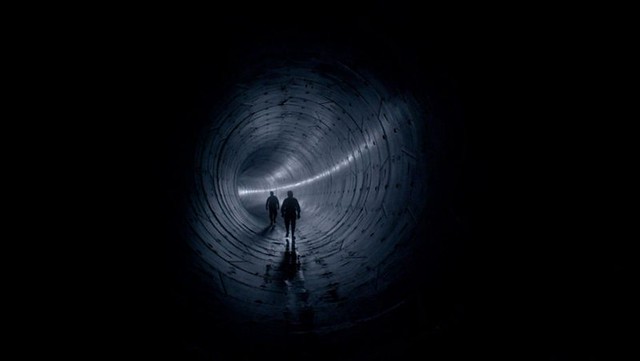
Darkness, then blinking stars slowly appear and fill the screen. Is this another lyrical film that makes you contemplate on our place in the universe? No. It turns out to be an underground system below the streets of Madrid. The stars turn out to be the reflection of the lights on the centuries of filth on the grimy tunnels. The Hidden City starts out with abstract images with familiar sounds of clink-clank of man made machines. And it's oh so dark. It's disorienting at first, the same way human eyes take some time to get used to in the complete darkness. It gets familiar - workers communicating through walkies, subway trains, grainy surveillance camera footage of rats, cockroaches and stray cats, commuters both above and below.

The Hidden City
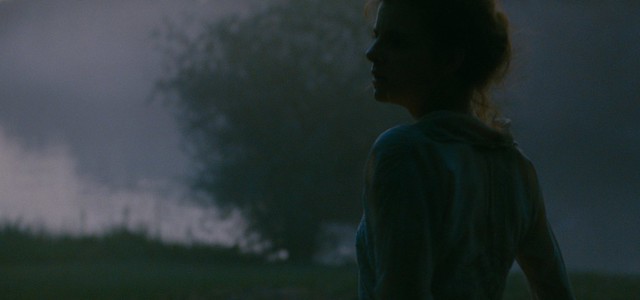
charts somewhere between a sensory experimental art film and documentary. Darkness underground often provides truly cinematic shots - a single light source illuminates particles swirling around in the wild air flows, welding flames dance around like a Disney animation. Both beautiful and unreal.


Los Silencios
- Beatriz Seigner
ls_still_bloco_ii_print-101
Beatriz Seigner's somber refugee drama takes place in an island shanty town community bordering Brazil, Colombia and Peru. Amparo (Marleyda Soto), a mother fleeing Colombian civil war with her two young children, Nuria and Fabio, after her husband disappeared, arrives the Fantasia island by boat at night. It's a small fishing village with wooden shacks on stilts connected by wooden planks. There, Amparo needs to navigate through the system to get her refugee status, provide school supplies for kids, find a job. Her old auntie tells a story that the island is full of ghosts, living among the grieved. Amparo's husband's ghost appear - eating and communicating with the family.

Los Silencios
plays out lyrically in making its case for violence stricken community, where they are semi-permanently in limbo stage, where nothing is certain. Mixing professional actors and its real inhabitants in a improvised script, Beatriz Seigner achieves rare authenticity in real life situations and makes a deeper impact.

Wednesday, January 2, 2019

Reaching for the sky just to surrender...

McCabe & Mrs. Miller (1971) - Altman
Screen Shot 2019-01-01 at 4.25.55 PM
Screen Shot 2019-01-01 at 4.31.29 PM
Screen Shot 2019-01-01 at 5.04.18 PM
Screen Shot 2019-01-01 at 5.13.38 PM
Screen Shot 2019-01-01 at 5.15.07 PM
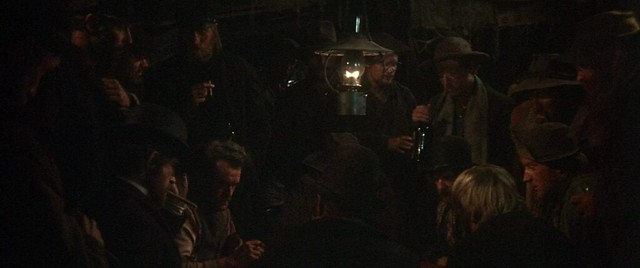
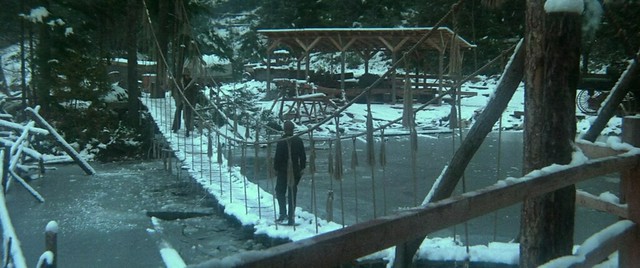
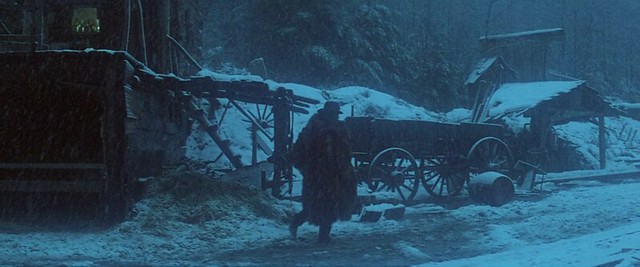
A rumored dangerous gunslinger John McCabe (Warren Beatty) arrives a snowy mountain town to open up a salon and a whore house. His affable manner wins the villagers over soon enough. Words travel fast and enterprising whore house madam Mrs. Miller (Julie Christie) offers her service and business partnership. She convinces him to upscale the whore house equipped with baths for hygiene. McCabe is smitten by no-nonsense Miller who still keeps everything business-like.

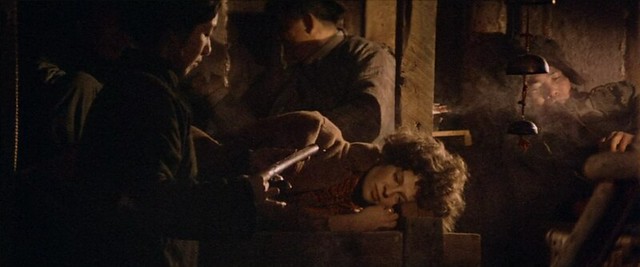
A powerful local mining company tries buy McCabe out but out of boyish pride, he refuses their offer. Soon they will dispatch hired thugs to kill him. Miller, sensing danger of losing her share and perhaps fearing for his life, tried dissuade him to no avail, falls back into her opium habits.

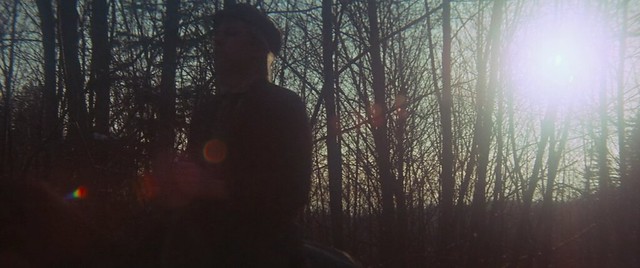
Beautifully shot by Lazlo Kovacs, imitating old velvet paintings of yesteryears with a melancholic soundtrack by Leonard Cohen, cold, dark and brooding, McCabe & Mrs. Miller is one of the best westerns I've seen.

Thursday, December 27, 2018

I Put a Spell on You

Bell, Book and Candle (1958) - Quine
Screen Shot 2018-12-25 at 10.11.44 AM
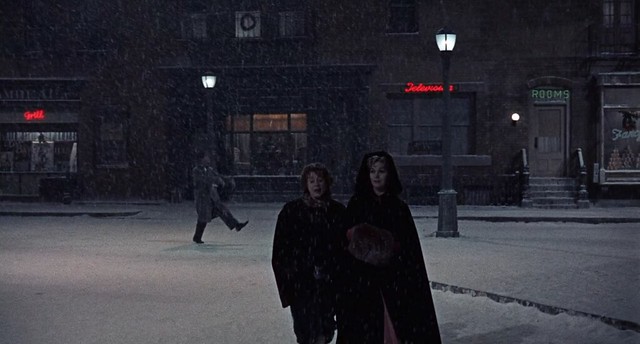
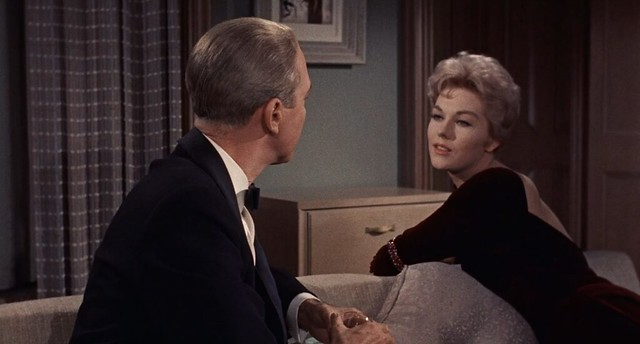
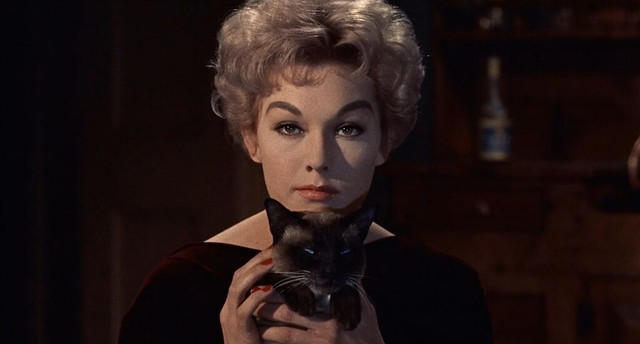
There is a witch family, the Holroyds living in Manhattan. There is Gillian (Kim Novak) who owns a African artifact gallery, her fun loving jazz percussionist brother Nicky (Jack Lemmon) and their nosy aunt Queenie (Elsa Lanchester). Gillian, ever so lonely and yearning to be loved, has hots for her upstairs neighbor, Shep (Jimmy Stewart) who is planning to marry his girlfriend Merle (Janice Rule) any day now. It's almost Christmas time. The Holroyds are harmless: they sometimes turn off street lamps for fun. They are that kind of witches.
Screen Shot 2018-12-25 at 10.17.06 AM
Gillian seducing Shep in her shop with her bareback dress
Screen Shot 2018-12-25 at 10.00.57 AM
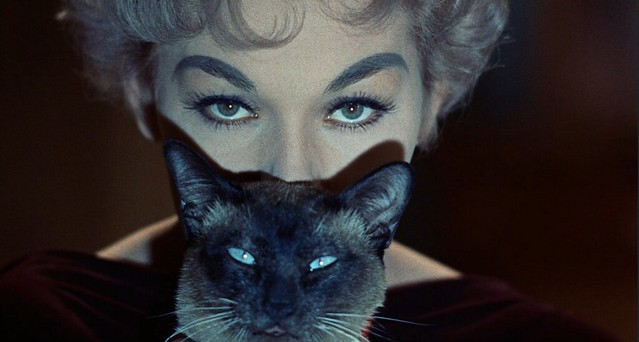
Witch spell with her familiar- a siamese cat named Pyewacket
Screen Shot 2018-12-25 at 10.15.47 AM
Jimmy Stewart trademarked 30 degree angle "I'm so confused" expression
Screen Shot 2018-12-27 at 10.02.38 AM
Just look at those eyebrows!
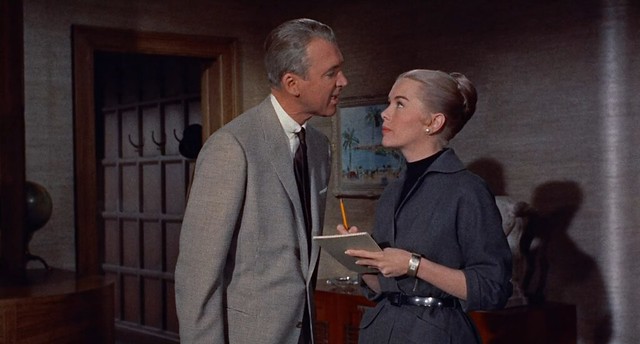
Screen Shot 2018-12-25 at 10.27.45 AM
A typical example of 50s workplace sexual misconduct:
Shep telling his hot secretary, Tina, that his wedding is off:
Tina: But sir, what about that negligee order?
Shep: Why don't you wear it? Now we don't want a good negligee go to waste, do we?
Screen Shot 2018-12-27 at 10.03.18 AM
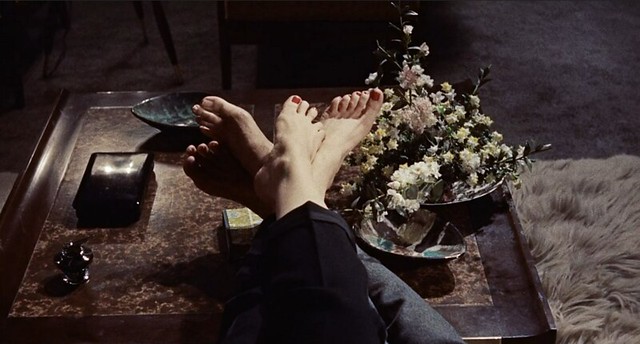
Witches apparently like to run around barefoot, and have no feelings. *note: Jimmy Stewart has nasty looking feet
Screen Shot 2018-12-25 at 10.17.53 AM
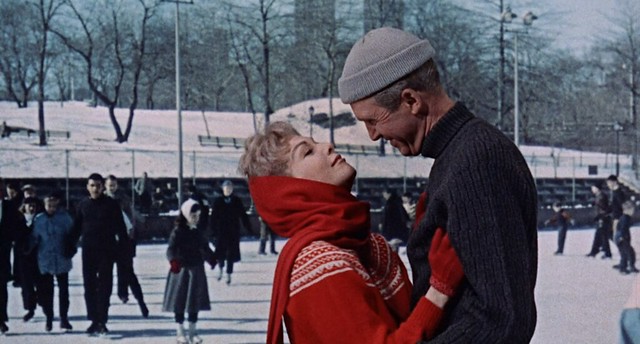
Skating in Central Park
Screen Shot 2018-12-25 at 10.24.36 AM
"I put a spell on you but I didn't mean to. Merle was mean to me at Wellesley College so I just wanted to fuck with her! But then I fell in love with you."
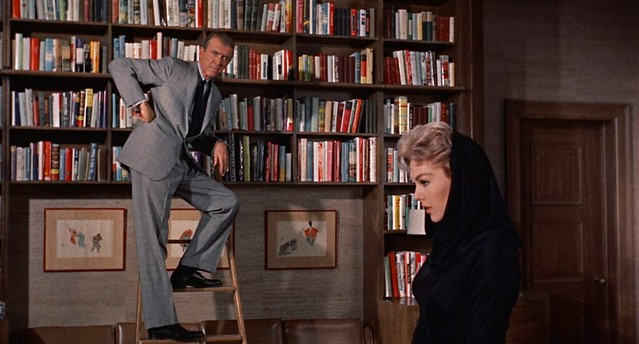
"I am gonna pose uncomfortably on this ladder and mansplain to you that there's no such thing as witches!"
Screen Shot 2018-12-27 at 10.04.23 AM
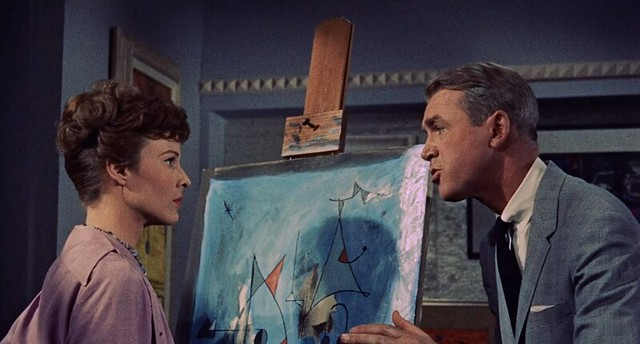
She’s not even a good artist. Dump her Shep! Dump her!
Screen Shot 2018-12-25 at 10.20.32 AM
Tears. Ah fuck, I turned into a human!

THE END

Tuesday, December 25, 2018

Top 30 Favorite Films 2018

It seems that there is a light at the end of this god forsaken land after two years of pure chaos and unparalleled stupidity in Washington and the world over? Let's hope so. Thankfully, there has been some great cinematic outputs in 2018 for me to take solace in. Unfortunately, my viewing scope is getting smaller and narrower each year and I wasn't as active enough to seek out more adventurous cinema. But reliable veteran voices were out in force this year - Jia, Denis, Kiarostami(RIP), Ramsay, Ceylan, Petzold, both Lees, Godard, Schrader, etc. Some of the new voices also fared well with their recent offerings. All in all, it's been a memorable year for cinema. Here is hoping that the next year I would be more of an active participant!


Click on the titles for full reviews:

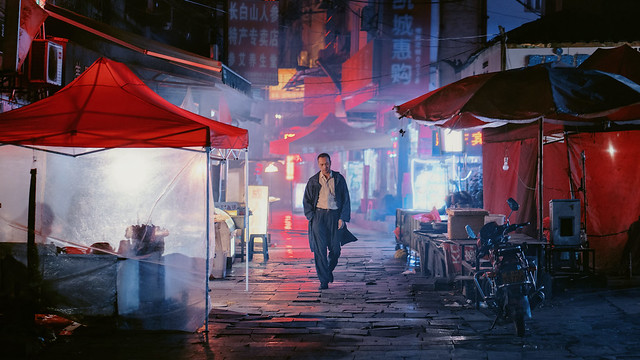
1. Long Day's Journey into Night - Bi
NYFF_MainSlate_LongDaysJourneyIntoTheNight_01-1600x900-c-default
Bi Gan's sophomore effort, Long Day's Journey into Night, after his phenomenal debut Kaili Blues (2015), doesn't disappoint in terms of ambition, technical prowess and sheer ecstatic beauty. I've never experienced anything quite like it as far as an immersive movie going experience goes. If the uncut 40 minute shot in Kaili Blues took your breath away, just wait until you see a continuous hour long 3D scene in the later half of the film. Its pure cinematic power let you believe that cinema is still alive and well. Bi Gan is no joke folks. He is that rare combination of a filmmaker who really knows how incorporate technology into an artistic medium and runs amok with it.

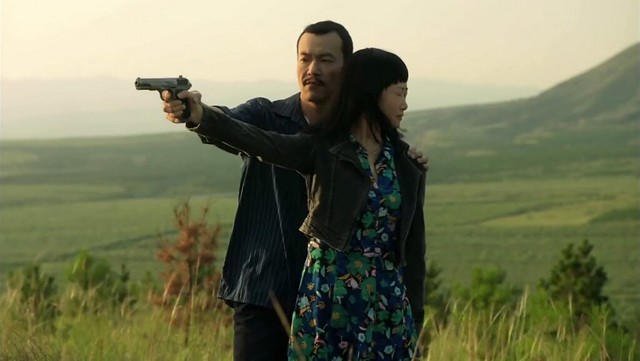
2. Ash is the Purest White - Jia
Screen Shot 2018-09-22 at 10.22.58 AM
Ash is the Purest White is a full-on (un)sentimental melodrama in epic scale. It's perhaps Jia's most down to earth, character study work. The long stretch in the middle gains more poignancy as the film goes along and afterwords. Some people reinvent themselves along with the changing times and some people don't. Some things in them though, remain the same. Jia expertly juxtaposes these conundrums, reflecting the soul of a changing nation. Ash is the Purest White is a deep and poignant masterpiece from a seasoned filmmaker.

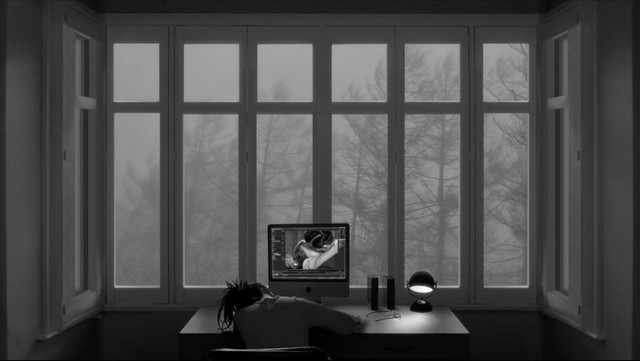
3. 24 Frames - Kiarostami
Screen Shot 2018-12-18 at 9.43.08 AM
The whole film closes with the powerful and one of the most striking images in cinema. Image can't move people is a lie. Accompanied by Andrew Lloyd Weber's "Love Never Dies", the last 'frame' will go down in cinema history as perhaps one of the most iconic and most beautiful imagery in history. It's even more sublime than the last scene of his film Taste of Cherry which ends with Louis Armstrong's "St. James Infirmary". His son Ahmad did an admirable job choosing these 24 out of 30 'frames' or so Kiarostami considered using in the film. Sad fact is that there is no finality to the film. It's as if it can go on forever, completely consistent with what he had been doing all his artistic life. Nothing is and ever will be comparable to his artistry.

4. High Life - Denis

i29623Y-1
Denis pushed the limit of what is considered good taste with The Bastards. With High Life, she pushes even further - Taboo isn't taboo anymore. It has sharp edges like her other films. And It's those ecstatic moments, like in many of her other films - frozen bodies floating in space, meteor showers, baby eating dirt in the vegetable garden, dead dog in the stream, sudden burst of violence and emotions that puts High Life very much in the top tier of all Claire Denis-ean film.

5. The Wild Pear Tree - Ceylan
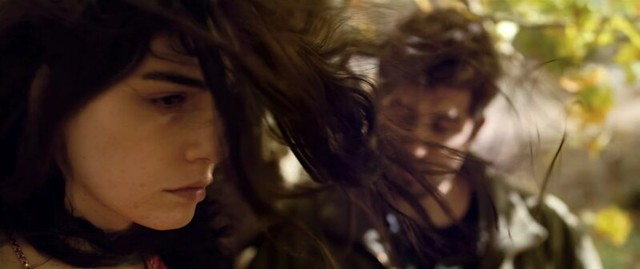
Screen Shot 2018-12-02 at 4.03.36 PM
The Wild Pear Tree is that rare film that captures the trial and tribulations of a young person who is intelligent enough to be both self aware and pessimistic. His disdain for his father hides his own disenchantment about the dim future prospects. The film's title, also the title of Sinan's book which is supposed to be an honest observation of humanity, filled with colorful characters, not a travel brochure. And unironically, that's what you see in the film. Ceylan remains to be the most literary filmmaker working today. And thank goodness for that.

6. Burning - Lee
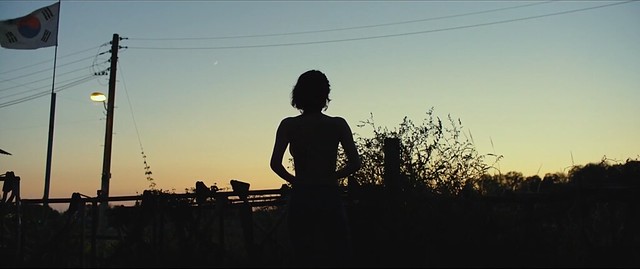
Screen Shot 2018-08-24 at 6.47.42 AM
Even though Burning is based on Haruki Murakami's short story Barn Burning, it's a very Korean film in every way. Yes, Murakami's typical - disaffected, nihilistic, don't-ever-have-to-worry-about-money hero is there, superbly embodied by Korean-American actor Steven Yeun- his slight otherness is perfect for the role. But Lee Chang-dong's emphasis is on the society's deep chasm between haves and have-nots, city vs countryside, living under the shadow of capitalism and the always imminent threat of war are all very Korean.

Burning is a slow-burn thriller that is utterly captivating from beginning to end. It's economic emasculation that brings inevitable violence at the end. Once again, it's Lee's script that shines: layered with hefty metaphors and symbolism, yet the film is surprisingly subtle and never loses its magnetism.

7. Les garçons sauvages/Wild Boys - Mandico

Screen Shot 2018-01-27 at 11.33.06 AM
A gaudy, sensual, daring and inventive take on both Goto: Island of Love by Polish master Animator/filmmaker Walerian Borowczyk and Lord of the Flies, The Wild Boys is a lot of fun. It plays out like a prettier, sexier Guy Maddin film. And its pan-sexual theme is not without a dash of humor. The beach fight/orgy scene complete with flying feathers and sand alone is worth the price of admission.

8. The Favourite - Lanthimos
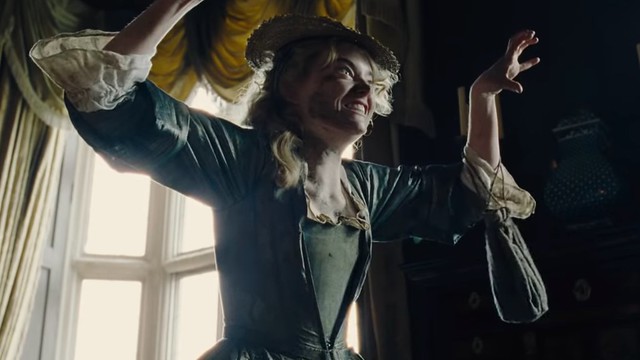
emma-stone-and-rachel-weisz-are-rivals-in-this-fun-and-crazy-trailer-for-the-favourite-social
hink of The Favourite as humorous Barry Lyndon. The stately glacial façade of Kubrick's film was always a stone's throw away from parodying comedy anyway. Costumes,opulent interiors and harpsichord music tells you that you are watching a period piece, but its sardonic wit and amped up performances are quite the contrary. Lanthimos remains to be the only filmmaker who can get away with using wide angle lens shots because his comedy calls for it. Robbie Ryan's energetic candlelit interior shots are a thing of a beauty.

The favourite is a wickedly funny film that hits all the right marks. It touches upon all the hallmarks of Lanthimos other films - patriarchy/monarchy, desire and perversion and loneliness. Coleman, Weisz and Stone deserve all the accolades.

9. Transit - Petzold
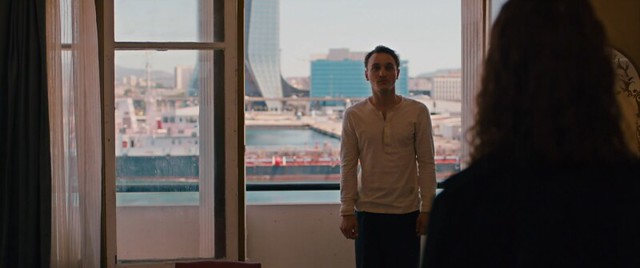
Screen Shot 2018-11-07 at 11.24.10 PM
Transit's got a lot to do with guilty conscience: Guilt of leaving someone behind. Guilt of forgetting. Guilt of being indifferent. With this, Transit is a great companion piece to Phoenix, the director's last film, taking place in post-WWII setting. It also is in line with Petzold's usual themes - people in transit, state of uncertainty caused by outside force, by something bigger than an individual, while not losing sight of its characters' humanity. Also because of this setting and themes, even though contemporary, it reminds me strongly of Nouveau Roman writers' works.

10. Roma - Cuaron
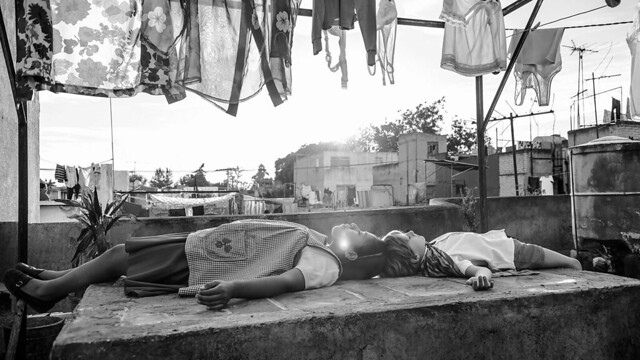
Roma-1-1600x900-c-default
The underlying theme of Roma is giving love and respect to people who we take for granted – those unsung heroes, the backbone of our society. We make movies of spectacles and amplified emotions. Cuarón focuses on miniature crises in one year in the life of Cleo. Roma is a guileless, subtle, deeply felt human story that is definitely Cuarón’s best and most mature work.

11. Jeannette, l'enfance de Jean D'Arc/Jeannette, Childhood of Joan of Arc - Dumont
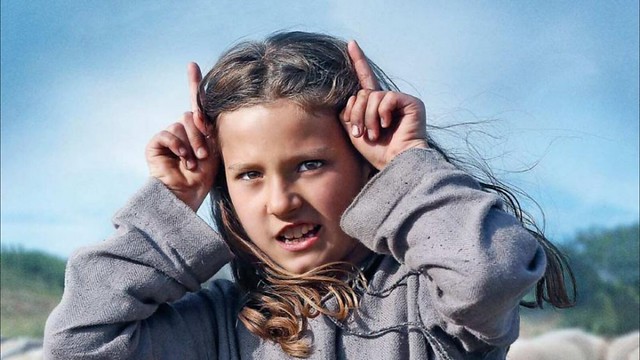
Screen Shot 2018-03-06 at 9.29.00 AM
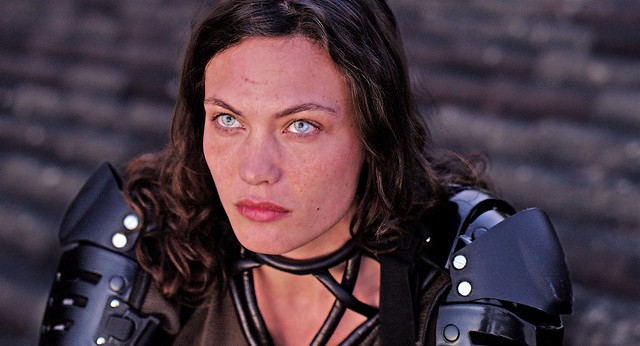
Jeannette is a real gamble of a film. In theory, with everything Dumont is striving for, spiritually and artistically, it should satisfy fans of his work. But intellectually understanding what he is up to and enjoying the actual piece are two different things. As a big fan of Dumont, and was taken aback by his ‘comedies’ and repulsed by Slack Bay (I have to say that I’m not a big fan of seasoned actors playing over-the-top characters or acting like retards), I had a lot of reservations going in. But considering Dumont’s intensions with the project, Jeannette gets a lot better in second viewing. You just have to work a little harder to dig through its genre trappings to see its austere beauty: the beauty in a young girl’s unwavering, sacred devotion to god in free form.

12. First Reformed - Schrader
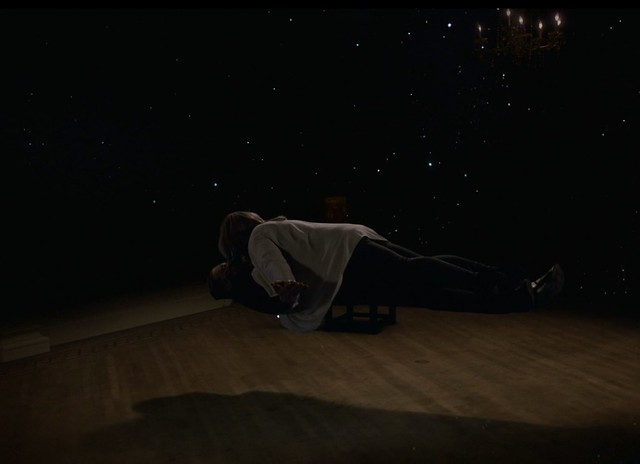
3-4
I believe Schrader mentioned Bergman's Winter Light as a source of inspiration. And yes, there is more than the narrative thread with the suicide and everything in the beginning, that the film has its affinity with. But also that sinewy human entanglement that many Bergman's characters see as a prison is there too - definitely Bergman-esque. But whether you consider Schrader's filmography spotty at best, he is responsible for penning Taxi Driver. First Reformed is definitely not a rehash of the masters' older films he is inspired by. Dealing with the contemporary issue that we all face (it was the threat of atom bomb in Bergman's film), Schrader squarely puts the ball on our court to toil with.

13. Happy as Lazzaro - Rohrwacher
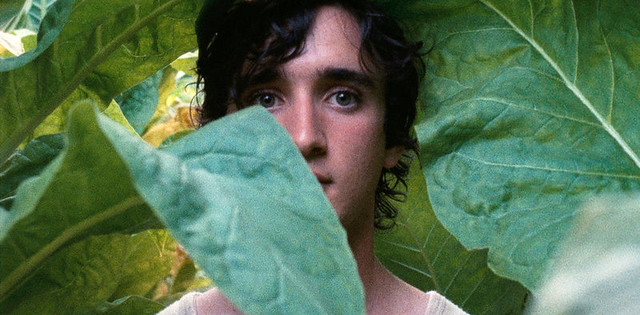
Heureux comme Lazzaro (Lazzaro felice)
One can regard Lazzaro as Chance character in Being There. Almost saint like, Lazzaro is a metaphysical being that is too good to be true. Rohrbacher makes a point about the current immigration situations that it's just as exploitative as the middle ages. Lazzaro is someone who is desperately needed in this cynical, cruel world. Rohrbacher's writing shines in bringing out humor and humanity in an whimsical yet pointy allegory full of wonders.

14. Mandy - Costamos
Screen Shot 2018-09-17 at 6.43.14 AM
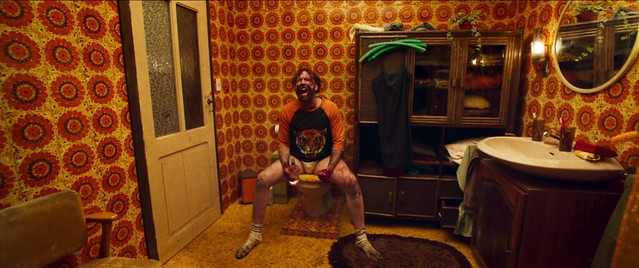
Mandy's death propels the movie descending rapidly into total mayhem and provides perhaps Nic Cage's Nic Cagest performance in years. That long take rage scene in his underwear in the bathroom is a sight to behold. There are Hellraiser type demons, a tiger, axe smelting, a King Crimson song, a chainsaw fight, multiple title and animation sequences thrown in. Normally a concoction this wild and unwieldy wouldn't work at all, but Costamos manages to make Mandy, through dark brooding visuals and Jóhan Jóhansson's soundtrack, a visual tone poem akin to Valhalla Rising, with Cage as our avenging angel, slogging through hell and back (or not). It's an amazing visual feast and a cult classic in the making.

15. Les fantômes d'Ismaël/Ismael's Ghosts - Desplechin
Screen Shot 2018-03-11 at 11.08.01 AM
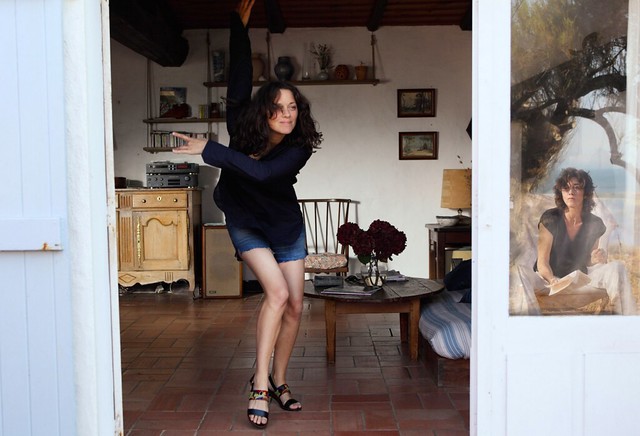
Desplechin deals with a lot of complicated thoughts and emotions on screen, acted out by three very good actors on the top of their game. And as usual, his writing is excellent. His preoccupation with an international spy in the name of Dedalus is still there, this time Ivan, not his alter ego, Paul. Deliciously self-reflexive and touching, Ismael's Ghosts is another great testament of Desplechin's unique talent as a film enthusiast and a great writer.

16. Shirkers - Tan
e188da4065df55139adfae2b7113833397eb24a1
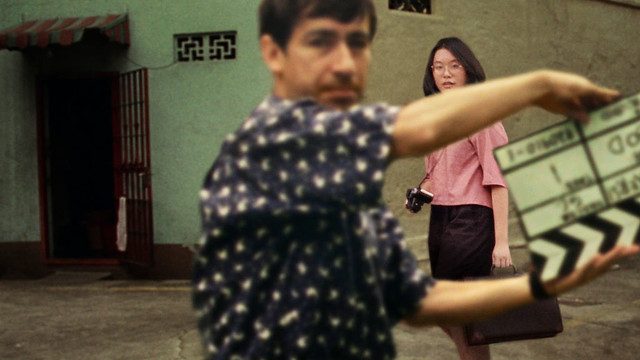
I know that filmmaking is hard. Finishing it takes a lot of effort and determination. Shirkers spoke to me in a lot of different ways and invoked a lot of different emotions in me that I hid it from myself over the years. Independent filmmaking is truly a medium of self expression but because it's a communal medium as well, being an asshole is an absolute necessity- I don't care what others say, it's a very narcissistic endeavor.

Shirkers is a very entertaining, touching concoction film about filmmaking. It works because it's so personal.

17. Le livre d'image/Image Book - Godard

article_1064x
Godard's latest offerings are hard nut to crack, even more so than usual. Image Book is also the ones that needs to be mulled over after viewing. I didn't know about Cossery's book. I had to look it up. Even as an avid fan of his filmography, most of the stuff he talks about go over my head. But with Image Book, there seems to be a concerted effort for Godard to point us in the direction where he sees a corner of the world that is underexposed, underseen and misrepresented by the western world. He references his 1987 film King Lear a lot in Image Book, especially a shot of Cordelia (Molly Ringwald)'s dead body lying on the rock - as if telling us that Cordelia, the righteous, virtuos one, is dead and there is no good one left in the world. He also leaves in his coughing fit during the middle of voice over. Godard knows his time is almost up. There is a sense of urgency in his gravelly voice. Say what you will about cranky attitude, his stubbornness all these years not to conform, his perceived snobbiness. Yes, the representation and how you tell the story matters. But I'd rather get dictation from Godard and have him point me to the right direction than from anybody else. I sincerely hope Image Book is not his farewell message to the world.

18. Barbara - Amalric
474907
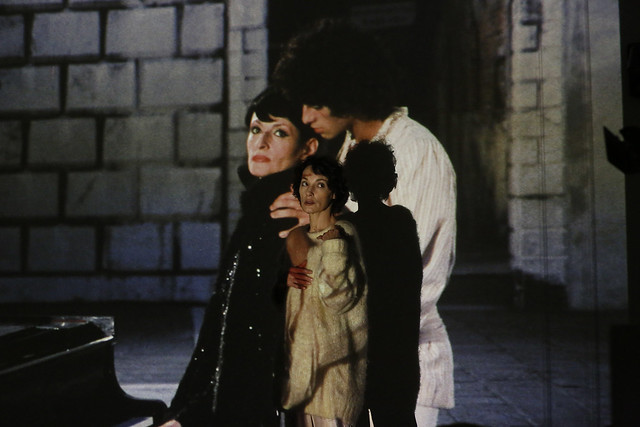
Mathieu Amalric's continues to show his impressive directing chops with Barbara, starring his ex, the immensely talented singer and actress, Jeanne Balibar. As the case with his award winning On Tour, Amalric's kaleidoscopic reverie on show business is a Fellini-esque controlled madness. Still, his deep love for performers is always palpable. And it's Balibar front and center here. She plays Brigitte, an actress interpreting the details from the legendary french singer's life, being directed by aimless, but passionate film director Yves (Amalric). As the film moves along, it becomes hard to distinguish Brigitte from Barbara and vice versa.

Amalric is an astute student of cinema. He is keenly aware of the medium and knows how to benefit from its possibilities but not in a showy way. His aimlessness is also his best asset. The film is rhythmic, fluid and free.

19. Cold War - Pawlikowski
Cannes-5
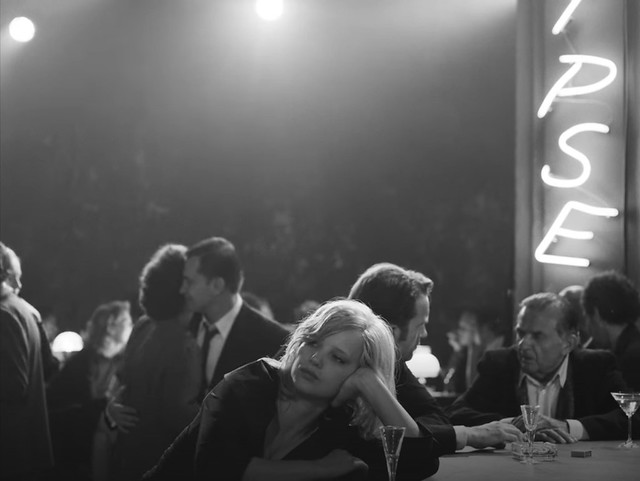
Pawlikowski deftly directs, like his previous film, Ida this 90 minute film in a breeze. But whereas this quick, no moment to spare, no time to contemplate pace worked for a young woman coming of age story, for something like Cold War and the subject like tragic love, I wish the director spent a little more time with Wiktor and especially more with Zula, since Kulig, resembling Slavic Léa Seydoux, is very lovely to look at and listen to. Constant fade to black after pivotal moments in their lives doesn't feel like just times passing or mere transition but more like we've missed out on a lot of details. I understand Pawlikowski's driving idea of 'love has no ideology or borders', but the absence of the couple's political allegiance/aversion as 'artists' bothered me (same way as Ida wearing religion on her sleeve in Ida), especially no background for either of them were ever fully explored. The ending is beautiful but I feel like the rest of the film didn't quite earn it.

20. Bisbee '17 - Greene
bisbee17_credit_jarred_alterman_courtesy_4th_row_films
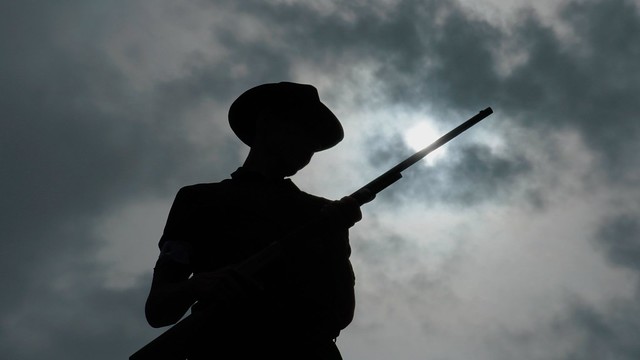
Robert Greene's engrossing historical reenactment, Bisbee '17 serves as not only a forgotten history lesson but also perhaps the largest scale role playing art therapy session. Bisbee, Arizona, a dusty small town near Mexican border, once was a richest town in the state, is also dubbed as Copper Queen for its mineral resources during WWI military effort. A large open pit mine with the blood red contaminated water in the middle, now closed, serves as a reminder of its history in its not so subtle metaphor. And yes, there is nothing like a large scale war to trigger its citizens of their sense of patriotism and unfettered exploitation by the government and industry.

Greene, always interested in the nature of playing a role in fiction and in real life, once again blurs the line here with Bisbee '17. As the centennial celebration and its enactment approaches, things get tense and emotional. And it reflects perfectly the current nightmare we are living in where immigrant children are in cages and their parents deported. History repeats itself. But the film ends on a hopeful note. Greene is not only a good filmmaker but a great teacher. Serrano belongs to the generation which will inherit this country very soon, is awoke. The film deeply affected me deeply on an emotional level.

21. You were Never Really Here - Ramsay

Screen Shot 2018-05-26 at 11.27.38 AM
The film is a technical marvel on all levels - from the memorable opening title sequence to minimalist action sequences taking place in dark alleys and corridors, to weird Ramsay moments - as an assassin lay dying in Joe's kitchen, they sing along a sentimental old tunes together. Prevailing sunny 50s tunes against heart thumping ultra modern soundtrack by Jonny Greenwood clash and show Ramsay's point about dated white male heroism and the melancholy it represents. Naturalistic setting (Queens) and Phoenix's understated performance balances out her poetic, dreamy visual flourishes later on in the film. Completely unsentimental and rapturously understated and subtle, Ramsay operates in her top level with this film.

22. Laissez bronzer les cadavres/Let the Corpses Tan - Cattet, Forzani
Screen Shot 2018-05-28 at 9.25.07 AM
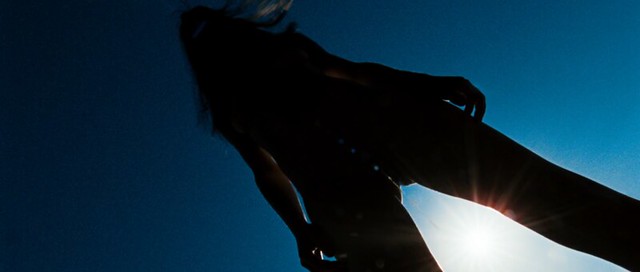
As usual, Belgian visual stylists duo, Hélèn Cattet and Bruno Forzani, creates unapologetic visual feast. Good to see Elina Löwensohn becoming a European arthouse queen in recent years as she plays an aging matron of a group of criminals hiding in some sunny Island here. It seems she has been wielding some cult like sexual power over these men and a writer (Marc Barbé), as she struts around with very little clothing. Things get a little crazy after the gang's gold heist and unexpected visit from the writer's wife, kid and a pretty nanny.

But really, story has little importance here. It's all to do with ultra stylized assault on the senses. Sex and violence mingles. Rapid editing, colors, shadows, sound design... Cattet and Forzani know what they are doing. Their craft pushes its giallo trappings on to another level, elevating it to an art form.

23. Like Me - Mockler
Screen Shot 2018-07-01 at 6.44.35 PM
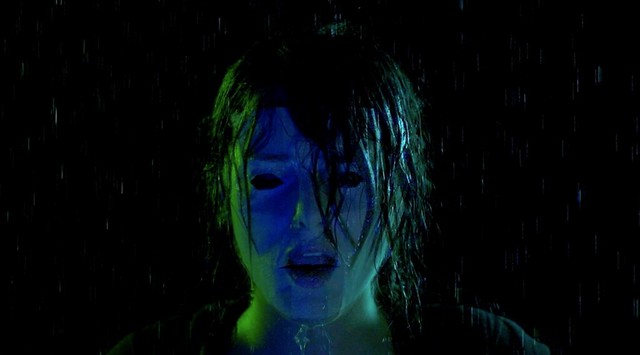
Unlike other didactic take on loneliness and isolation in the age of social network, Like Me lets its loose narrative be and compensates it with candy color palette and dizzing edits. Fassenden has become as reliable of a presence in the indie world as Gary Oldman is to the mainstream films now. With all the excess style, I liked Like Me much more than I thought I would. Its textural, rough around the edges aesthetics really works for its there/not there theme.

24. Bloodlight and Bami - Fiennes
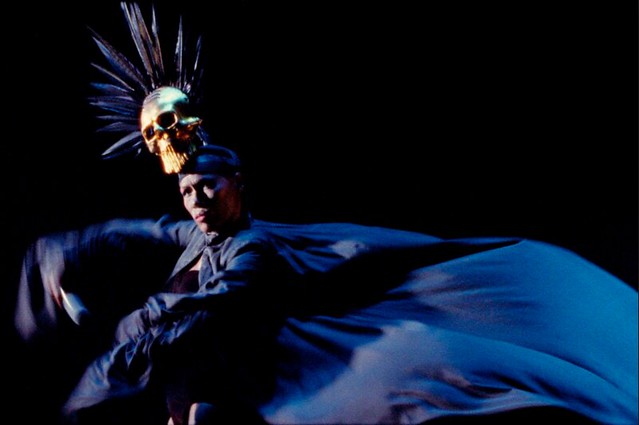
Screen Shot 2018-04-16 at 9.08.06 PM
How do you demystify someone without sacrificing all the enigma and mystery around the subject? Sophie Fiennes, documentarian extraordinaire behind two highly entertaining Zizek docs and one on artist Alselm Kiefer just does that with one of the most iconic figure in fashion and music, Grace Jones. Instead of doing typical chronological biography highlighting her hits and movie appearances over the years with bunch of boring sit-down interviews, Fiennes just follows Jones around on stage, behind-stage and hotel rooms as she treads in her stilettos. Bloodlight and Bami shows the cultural icon dealing with musicians and others on the phone herself to make the record. Her phone manners in her booming bariton are sometimes aggressive, sometimes cloying, other times aggressively cloying.

Then we follow her to Jamaica, where her family is. She goes to church where her brother is a pastor and her mother sings, eats jerk chicken, slurp oysters and takes care of her grown up son. At age 69, Jones is still electrifying on stage and still stunning as a bronze statuette. Fiennes just let her be her magnificent self.

25. The Crescent - Smith
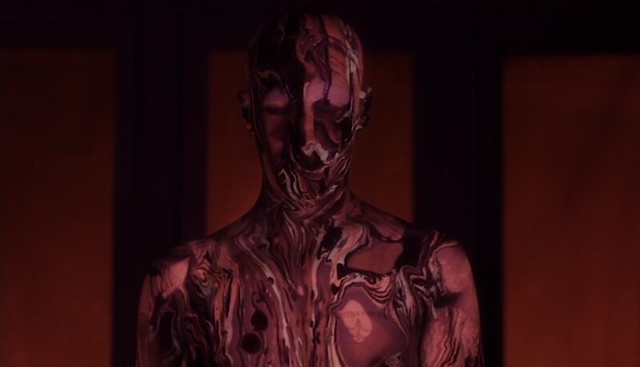
Screen Shot 2018-07-31 at 2.39.30 PM
There are a lot of modern horror films about death and grief and such. But The Crescent is a special film. Seth A. Smith, a visual artist and a filmmaker from Nova Scotia, is a real talent in creating certain quietude and sensitivity that is lacking in today's loud and obnoxious horror. Combined with his artistic skills, Smith evokes something that is deeply felt and memorable. Never a horror movie I watched recently that stayed on for days in my head- the visuals, details, the over all impact, and the sadness it carries.

26. La Douleur - Finkiel
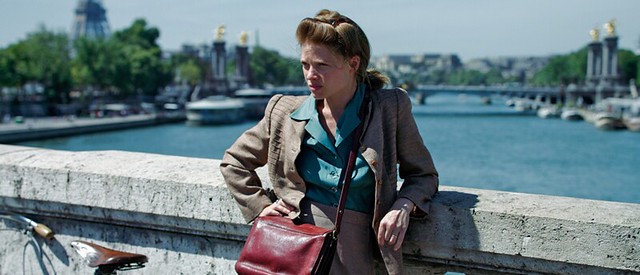
Screen Shot 2018-03-02 at 6.49.25 AM
French director Emmanuel Finkiel takes on semi-autobiographical book, La douleur by writer & film director Marguerite Duras. It's an ambitious project to tackle, since Duras is a key figure in Nouveau Roman, one of the most significant French literary movements in the 20th century. She scripted Alain Resnais' Hiroshima mon amour and saw several of her books adapted for the screen. She also directed many films including Natalie Granger, India Song and Drive, She Said.

Mélanie Thierry is a revelation as Marguerite, a learned, intellectual woman who slowly gets broken emotionally. She proves that she is much more than just a pretty face. The film signals the arrival of another major French star actress. Memoir of War is a great film.

27. BlackKklansman - Lee
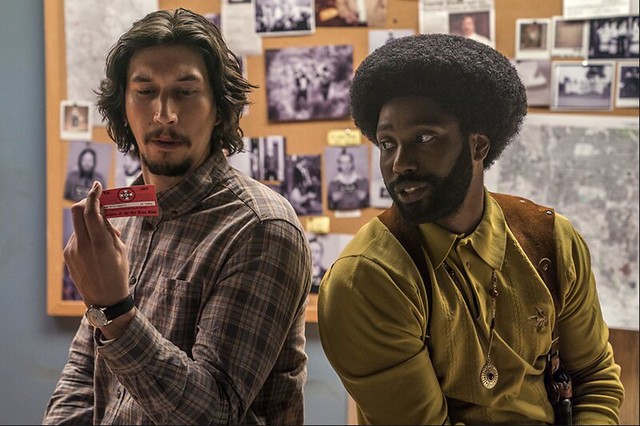
Screen Shot 2018-08-12 at 12.24.44 PM
Spike Lee has a reason to be smiling. BlackKkansman is his best film since Malcolm X. It's both entertaining and pointy about the Trump's racist administration. Well timed for anniversary of white nationalist march in Charlottesville where activist Heather Heyer was killed, Lee doesn't shy away from linking the past and the present this unsubtly and directly, like no other major American filmmaker.

Adam Driver, playing Flip Zimmerman, a non-practicing Jewish detective in Colorado, proves himself that he's a solid actor here. Lee even pushes the idea of solidarity, a smack in the back of the head that we are all in this together, by making Zimmerman/Jews think about how extremely racist the view of the white nationalists against anyone other than Anglo Americans really is.

28. El mar la mar - Bonnetta, Sniadecki
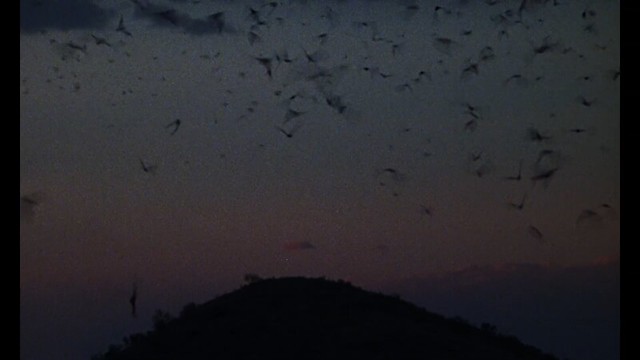
Screen Shot 2018-07-15 at 6.52.38 AM
As Trump's cruel zero tolerance immigration policy and its inhumane consequences play out before our eyes, El mar la mar, Joshua Bonneta and JP Sniadecki's audio visual essay on the south of the border arrives. It's abstract, artful approach to the subject might infuriate some of the viewers who are inclined to witness emotional catharsis through human suffering for sure. But its deliberate omission of identifiers (other than some of the silent inhabitants on the north of the border) is perhaps the point - the film can emote without seeing the human faces.

29.Taste of Cement - Kalthoum
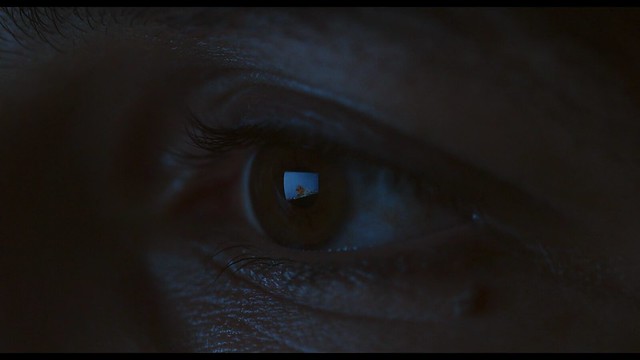
Screen Shot 2018-06-07 at 8.01.46 PM
With close ups and silent moments, Kalthoum's visuals have lyricism and sensuality of Claire Denis' work. But once it gets to the matching POV footage of construction cranes slowly panning over the Beirut skyline and tank gunner pointing at its next target, and the real footage of rescue effort to dig out the civilians trapped in collapsed concrete buildings, you realize that Taste of Cement is much more than, say, Terry Malrick's pretty, contemplative picture show.

Concrete smell is the smell of travel and also the smell of death. It's also the smell of rebuilding and smell of destruction. Kalthoum achieves something miraculous here. Something tangible and important. Something that is arty enough for the public already jaded and numbed by the sheer stupidity of the world and don't care anymore, to care.

30. Non-Fiction - Assayas
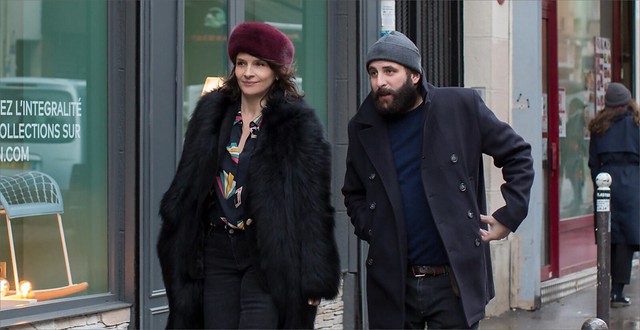
Screen Shot 2018-09-20 at 6.49.20 AM
Where it lacks Assayas' languid visual language, Non-fiction makes up with his sharp, witty dialog and humor. Macaigne, a comedian with his unkempt hair and portly disposition, appearing in many of quirky French comedies of late, is becoming a major figure in French cinema. He has worked his way up to having a full nude love scene with Juliette Binoche here.

In this fictional light comedy with its English Title Non-Fiction, along with its French Title Double vie, Assayas once again rightly reflects our society in real time. To top the movie's meta-ness, Alain tells that he is in negotiation with Juliette Binoche to do an audio book of Full Stop. This got the biggest laugh from the audiences at the film's press screening.