Showing posts with label Alice Rohrwacher. Show all posts

Monday, May 20, 2024

Robber of the Soul

La Chimera (2023) - Rohrwacher Screen Shot 2024-05-20 at 8.42.41 AM Screen Shot 2024-05-20 at 8.49.23 AM Screen Shot 2024-05-20 at 8.49.55 AM Screen Shot 2024-05-20 at 8.50.23 AM Screen Shot 2024-05-20 at 9.34.39 AM Screen Shot 2024-05-20 at 9.35.19 AM Screen Shot 2024-05-20 at 9.57.01 AM Screen Shot 2024-05-20 at 10.00.00 AM Josh O'Connor plays Arthur who has talent for locating ancient graves to loot in rural Italy. This tall English man with unknown past has roots in this part of the world with connections with its common country peasants. He is also in greiving process of his love, Benjamina, who was one of the many daughters of an aging local matriach, Flora (Isabella Rossellini), who reside in a decrepit mansion with her singing pupil Italia (Carole Duarte).

Rohrwacher belongs to ta generation of new filmmakers who embraces the traditional film technology and even older storytelling techniques which is abundantly displayed in La Chimera - Soft edges, speeding up for comic effects, fable like script, etc. But what makes Rohrwacher films unique is her modern sensibility, thanks to her transnational background. It is in her casting of O'Connor, Rosellini and Brazilian actress Duarte for thr roles and music choices as well. She is much different filmmaker than, say, Pietro Marcello.

As usual, Alice Rohrwacher's fable like story is filled to the brim with the colorful rural characters as they scheme, sing and dance around. Arthur finds some sort of redemption after Italia's objection that what he is doing is robbing the souls of the dead people that he is digging the trinkets out of earth where they are not meant for the eyes of the living. La Chimera is a charming film full of hearts and human warmth.

Saturday, October 6, 2018

Allegorical Tale of Haves and Have Nots

Happy as Lazzaro (2018) - Rohrwacher
Heureux comme Lazzaro (Lazzaro felice)
I've come to love folksy, good hearted nature of Alice Rohrwacher's delicate, charming films about rural Italian villages and their eclectic inhabitants peppered with her brand of unsentimental magic realism. Happy as Lazzaro, her latest offering is an allegorical tale that goes wonderfully unexpected ways.

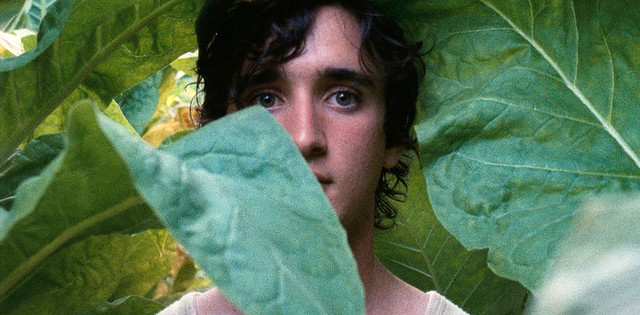
Inviolata is an isolated mountain village that seems like it is stuck in the middle ages. The farmers are seen tending livestock, harvesting tobacco plants and living in squalid conditions. Electricity seems to be scarce as they complain when the only light bulb in the common area of the house goes out. Everyone in the village, young and old, is working from morning to dusk non-stop. A wide eyed, good natured boy, Lazzaro (Adriano Tardiolo), seems to be in everyone's demand. Whatever the task, he is there to do it without questioning.

Nicola, in a funny suit and tie who seem to be in charge of the whole production comes in to collect the villager's tobacco harvest, does the calculation and tells them that they are in the red again after all the expenses that he brings in - light bulbs, supplies and what not. The villagers complain but quiet down soon enough. It seems their arrangement has been like this way for a long time. Nicola's wife, marquise de Luna (Nicoletta Braschi of Life is Beautiful and Johnny Stecchino) and their spoiled children Tancredi and Maria are in town, staying in their opulent mansion. Tancredi, a blonde boy who is clueless about the villager's living conditions, strolls around in his fancy clothes and his walkman, bored out of his skull. But he takes a liking to Lazzaro who obliges to his every whim.

After Lazzaro showed Tancredi his secret hangout up on the dusty hill, the rich boy comes up with an idea of kidnapping himself and sending a ransom letter to his parents. Days go by. Nicola suspiciously refuses to call police and marquise refuses to pay the ransom. Lazzaro, busy working, but also worried about his new friend up on the hill all by himself, worries himself sick and falls ill. Maria secretly calls the police and all hell breaks loose.

See, the first half of Happy as Lazzaro plays out like a gritty yet affable tale of small folks up in the mountains. Everything is very authentic and natural, showing their way of life- Young people fall in love and want to leave the village. They have to protect livestock from marauding wolves, tobacco plants need to be harvested and smoked and dried. It plays out something like humorous version of Ermano Olmi's realist film, except some strange inconsistencies like the presence of Tancredi's walkman and flip phones (Rohrwacher deliberately makes the time period obscure). You think it's a throw back of old, folksy yarn so far, then the film turns into something different altogether.

After the arrival of police, it is revealed that the town of Inviolata has been taken advantage of by the marquise and Nicola: after the historic flooding long ago, the town was cut off from the outside world and unbeknownst them, the marquise family continued to exploit them for their labor in their little modern feudal system. By the time our Lazzaro, who had fallen ill and in his delirium, fell from the cliff looking for Tancredi, regain his consciousness, many years had gone by and Inviolata had been emptied out.

Lazzaro meets two thieves, Ultimo (great Sergi Lopez) and Pippo, at now abandoned villa of the marquise and hitch a ride with them to their house, an old tanker beside the railroad tracks. There Lazzaro reunites with Antonia (Alba Rohrwacher, sister of director Alice), who was a little girl back in Inviolata and now is a grown up. In fact, most of the villagers who live in the same place, are all old now. They are scraping by, by way of stealing and scavenging. They regard Lazzaro, who hadn't aged a bit, with great deal of skepticism at first, calling him a ghost. But recognizes his innocence and good heartedness. Lazzaro, who had sworn his friendship with Tancredi, would never stop looking for him.

One can regard Lazzaro as Chance character in Being There. Almost saint like, Lazzaro is a metaphysical being that is too good to be true. In fact, all the villagers are. What's done is done. They don't hold the grudge against the marquise and her family. They are even willing to give them expensive pastries.

Rohrbacher makes a point about the current immigration situations that it's just as exploitative as the middle ages. As Lazzaro and Antonia watches, there is a scene involving a sort of reversed slavery auction: The recruiter shouts that a job pays four euros and 50 cents. Migrant workers grumble that the wage is too low. But instead of asking for higher wages, they compete for lowering their wage demands just to get a job.

Child actors are great, so is always excellent Alba Rohrbacher. And Hélène Louvart lensed 16mm cinematography is gorgeous. But the real star is Tardiolo. There is sense of decency in that babyface and wide fawny eyes. Lazzaro is someone who is desperately needed in this cynical, cruel world. Alice Rohrbacher's writing shines in bringing out humor and humanity in an whimsical yet pointy allegory full of wonders.

Wednesday, October 28, 2015

Camel in My Backyard

Le Meraviglie/The Wonders (2014) - Rohrwacher
 photo 0349f295-57c3-4244-babc-091199944f05_zps94a9b856.jpg
Just like her debut film Corpo Celeste, Alice Rohrwacher deals with an eccentric German-Italian working class family in Le Meraviglie (The Wonders). The story centers around Gelsomina, the oldest of the 4 young daughters in a beekeeper household. By how these rambunctious girls are treated by their disheveled, bug eyed, stressed out dad Wolfgang (excellent Sam Louwyck), it is pretty clear that they are the result of daddy and mommy (played by Alba Rohrwacher, the director's older sister) tried and failed to conceive a son. Gelso is a heir apparent to her father's business, as she accompanies him in his daily operations. Even though she is always a child in her daddy's eyes, she is growing up and it's pretty obvious that she doesn't want to be a farmer. Two events rock her world - there is 'village wonders' contest hosted by beautiful and glamorous local TV personality Milly (Monica Bellucci) where people showcase their farm products to win money. And the appearance of Martin, a young, troubled, almost mute German boy the family decided to foster for money. While Wolfgang is distracted and enchanted by the young boy whom he can put to work, Gelso secretly enrolls the family business to the contest.

Rohrwacher observes this chaotic family with much warmth and care. It turns out that the brutish dad actually loves his family deeply. He just wants to protect them at all cost from the end of days. He is just nutty that way. Kinky haired, even tempered mom is the bedrock of the family that everyone gravitates to. Gelso's chubby younger sister Marinella is one of those dreamer siblings, not made for the real world. Then there are two young runts, who gets into everything and everywhere, screaming their lungs out most of the time. Add to the mix is Coco (wiry Sabine Timoteo), another cooky German transplant who helps around the house and butt heads with Wolfgang. And there are real life wonders, all around Gelso's life, from Martin's magical whistling to presence of a camel in the back yard to white haired Milly to bees in her mouth. Rohrwacher reminds us that whatever the circumstances we are in, life is filled with full of wonders. Le Meraviglie deserves all the recent accolades.

The Wonders plays as part of NYFF 2014, on Oct.3 & 4. For more info, please visit FSLC website.

Tuesday, October 27, 2015

'The Treasure is Already on Your Back': Alice Rohrwacher Interview

Previously published in Oct. 2014. The Wonders opens theatrically in Oct. 30th.
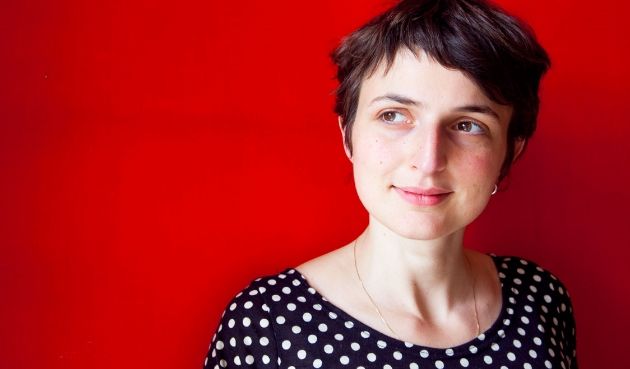
 photo 6990735c-f5f4-41fd-9a71-c3b925f602fd_zps676b72d5.jpg
Alice Rohrwacher's The Wonders (Le Meraviglie), a dramedy about a rural Italian agrarian community, took home the Grand Prix at this years Cannes Film Fest. It's an amazing feat considering it's only the second feature of a 33 year old director. So I was expecting a mousy, serious artist type. Bur Rohrwacher turns out to be a bright, spunky, rambunctious young woman with a great sense of humor. As we talked about her film making, it was hard not to fall for her. Thank you Alice, you made my day.

There always seems to be a sibling rivalry in your films. How much of it is based on your relationship with your older sister (Alba Rohrwacher of I AM LOVE, DORMANT BEAUTY)?

Alice Rohrwacher: Not so much. I'm always fascinated by the relationship between brothers and sisters. My sister is the most important person in my life and this is something very personal. But I didn't make this film to analyze our relationship. If I wanted to analyze our relationship, I would've just gone on a vacation with her. I wouldn't have gone all the trouble putting together a production, crew and getting finance and all that.

How was directing Alba? I mean, now she is becoming a big star in Italian cinema.

First of all, it was marvelous really. Let me say that I choose to work with good people. My sister is a really great person so the first step was already completed. She is a great actress with a lot of irony and a lot of imagination. The most important thing is that I've never had an opportunity working with someone who had same imagination before. My sister and I do share the same imagination.

[She stops her interpreter at this point to clarify. She gets very animated.]

Not imagination but a set of imaginations. The collection of the world that we share. In any films, there is going to be autobiographical elements in the images you use and the archetypes you draw on to create those images. Let me give you an example: Let's say I tell an actor to wash dishes and they'll start washing dishes. And I say, "No what are you doing? That's not how you wash dishes!" "First you do the glasses and the plates." When I give directions to my sister to wash dishes, she will do exactly the way I'd do the dishes. [we laugh]

So having her there is both surprise and also confirming something. It was a great experience.

The character of the father, Wolfgang really fascinated me. Did you base him on someone you knew? Is it German characteristics in him that make him that way?

I'm very glad you asked that question because most men are afraid of the figure Wolfgang. He represent a kind of phantom, a masculinity. He is a self-righteous man. But like any self-righteous men, he fears two things about himself: being ridiculous or being violent. The press often talks about Wolfgang being German, but I don't think that's really true. The truth is that he speaks German very badly. He doesn't speak any language well - he speaks German badly, Italian badly and French badly. So in a certain sense he speaks nothing. He is a person who knows what he wants to say but doesn't have the words to say it. He is a foreigner. He is a foreigner par excellence. You can tell the way he speaks languages that he's lived in many different countries but he doesn't speak any of it properly.

I didn't quite get Wolfgang's fascination with the end of the world. Why is he so obsessed with that? Can you give me a backstory on that?

It's mine. [We laugh]

[In English]It's going to be worse and worse my friend! So we need a lot of humor.

I agree.

It seems in your films, Italy is a very conservative society. Religion is still a big part of life and I am wondering if that affected you growing up.

But I would say the right of the conservative, I think they lost. They really don't know what to conserve. It's like some were to write a book and don't know what to put in it. Or to set the table they don't know where to put the silverware or dishes. They don't know what to save or what to throw away. It's all lost in the mess. There are no good or bad people, they are all lost in the same boat, attaching the cult of tourism as kind of a redemption.

There are some big actors in this film, Monica Bellucci and also Sabine Timoteo, of whom I am a big fan. How did you get them involved?

I went looking for them. I recognized them when I saw them. [Laugh]

Monica, she is an actress I admire very much but i wanted to look at her with wide open eyes. I mean she's been given this label , the iconic beauty. so I wanted to open that Pandora's Box. So I put her in the film. And she is very ironic about the way men look at her and she can joke about that. Although everything is fiction, her presence kind of created a different dynamic because people knew that she was coming, there was sort of excitement in the village and all around it. It brought in the true element into the film. Sabine, I like her films a lot and when I met her I had no doubts about her.

And Sabine just said yes?

I think it's important that we create a very collective atmosphere. Before shooting I let everyone come in and live in my house and for children, we basically created a family. And I think Sabine was very generous.

How difficult was it shooting with live animals - bees, a camel, cows all that livestock?

The worst animal is the men. [we laugh]

If you can shoot human beings, you can shoot anything.

It seems that there is a resurrection of Italian cinema in recent years. I am wondering if this is helping you to fund your projects and making things easier for you?

[Coyly]Speriamo (I hope so).

The theme of being foreigners, about being immigrants in a foreign country. Is it something you always have in the back of your mind when you write your scripts?

I always like hybrids. People who are in the border area. Whether the border be age, geographical place, I find these junctures interesting. And it might also depend on the fact that I too am of a double ethnicity. But I hope it doesn't depend only on that. I don't know if you know the book called the Island of Arturo by Elsa Morante. It's one of my favorite books. It's a great source of inspiration for me: what she talks about what it means to be a mixed blood. She says that you are living with this mixed destinies inside of you. There is a man, a thief, looking for treasure everywhere not knowing the treasure is already on his back.

What's next for you?


It's hard to say because I am still in the writing stage. But it's going to be about some kind of community- in Corpo Celeste, it was church and in The Wonders it was agrarian community. Here again will be another community but I still don't know who they will be. It's too early to say. But what it is in the world that moves me, that attracts me, that also pains me, is the way people live together.

I'll seek out that book. I'll read it. Thank you very much. Your presence really made my day. You are so vibrant.

Oh no I feel so tired this morning but I am very happy.


The Wonders opens in New York on Friday, October 30 at Lincoln Plaza Cinemas with a national rollout to follow.

Thursday, September 11, 2014

Forsaken

Corpo Celeste (2011) - Rohrwacher
 photo 741d9ebc-f1a4-43fb-a4f5-c9d9a3effef3_zpsf735728e.png
 photo 9a98178f-db88-4d19-a279-b8ca099ccad5_zpsd4447c19.png
 photo f37b0f6c-a91e-4400-99a3-3b6a26028357_zpse45ebb04.png
 photo 0f5da67b-c6cf-43da-9f17-f373ffc1c9cf_zpse53edbfa.png
 photo 4cc3ab23-190c-463f-a80c-274bbf5f83af_zps2144598f.png
Drawing from her childhood experiences, Alice Rohrwacher makes a delicate, affecting coming-of-age film. Martha (Yle Vianello), a fair skinned 13 yr-old girl, is about to hit puberty. She has been secretly wearing her older sister's bras. She and her family just arrived from living in Switzerland. At home, with her single mom always out working and her pretty, domineering 18 yr-old sister ever present, Martha is left to her devices, wondering wintry small coastal town by herself.

A girl with serious disposition, Martha challenges happy-go-lucky aesthetics of the church and asks tough questions: what does Eli, eli, sabahktani mean, to a non-commital, frivolous teacher. On the faithful day of the communion, finding box full of kittens in the storage of the parish while preparing for the big communion celebration, and parish workers' cruel decision to dispose them sends Martha to a wild goose chase through the town and leads her lost in the busy motorway. Mario, a stern priest who lost his way by his own ambition, spots Martha and picks her up. He has to pick up an old cross from his old parish, up in the mountains and back before the ceremony. It becomes a spiritual journey of sorts for both.

Rohrwacher proves herself as a fine observer of human emotions. No one in Corpo Celeste is entirely evil. However imperfect and cruel they seem to be, there is a side to each that is undeniably human. In the confines of a very religious, working class community, those small desires, jealousy, envy, solitude, Rohrwacher captures them with much compassion. She has a sharp eye for composition too. Beautiful grainy 16mm is lovely.