Saturday, March 10, 2012

Bareback of Romy Schneider

That Most Important Thing: Love/L'important c'est d'aimer (1975) - Zulawski
Photobucket
Romy Schneider plays Nadine, a washed-up, thirty something actress who does films like "Nympires" to sustain a living. She is married to Jacques (young Jacques Dutronc), an eccentric, old movie memorabilia collector in a big townhouse borrowed from a friend. Enter Servais (Fabio Testi), first seen photographing Nadine in compromising positions in her latest movie set. Whether he wanted to make a quick buck or blackmail her with his photos is unknown, but surely he is drown to the aging yet still radiant actress. Thus begins the love triangle.

Just like other Zulawski films, L'important C'est d'aimer provides plenty of emotional fireworks. Love leads to madness, self-pity, sacrifices and repeated punches in the gut. Three leads are all very good but it's all about Schneider's bare back. Comparably, her role might not be as physically demanding here than in Zulawski's other, later films with more sex and violence, but Nadine's emotional intensity is just as great, if not greater. Schneider's performance is rapturous. With energetic handheld cinematography, Zulawski captures his usual theme- frantic, crazy love, like no other. Klaus Kinski, with his short screen time, truly makes every minute count as a charismatic German actor. The film is exhausting. Its 1 hour 42 minutes runtime feels more like 3 hours. But it's all worth it.

Monday, March 5, 2012

Hysterical Excess: Andrzej Zulawski Retro at BAM

BAM Cinematek is hosting the complete filmography of Polish director Andrzej Zulawski, from 3/7 to 3/20. It is a rare treat, because many of his films are not available on DVDs and seldom screened on big screen. This is your chance to see many of the most maniacal emotional outbursts ever captured on film.
Photobucket
*Sophie Marceau in L'amour Braque, Zulawski's interpretation of Dostoevsky's The Idiot

From BAM's Series Description:
Dubbed the enfant terrible of Polish cinema, Andrzej Zulawski is one of the most controversial and polarizing filmmakers in the world. BAMcinématek is proud to present the first US retrospective of the uncompromising auteur’s complete work in partnership with the Polish Cultural Institute.
The series includes two rare, early shorts Zulawski directed for Polish television—Pavoncello and The Song of Triumphant Love—along with a new 35mm print of his first feature, The Third Part of the Night. A true cinematic agitator, Zulawski squeezed fervent performances from all of his actors in these films that rise to ecstatic heights yet dive deep into the nadirs of the human condition: birth, love, loss, death, and everything in between.

As a big fan of Zulawski, I've seen Possession, The Devil, L'amour Braque, My Nights are More Beautiful Than Your Days and On the Silver Globe, but none on the big screen. Be sure to check out Possession with Isabelle Adjani and Sam Neil and That Most Important Thing, Love with Klaus Kinski and Romy Schneider.

Possession Review


Limpet Love/L'amour Braque Review


For more information and tickets please visit BAM Cinematek.

Sunday, March 4, 2012

Debunking American Myth

Twentynine Palms (2003) - Dumont
Photobucket
My god.... Zizek would have a field day with this film if he ever saw it.

David (David Wissak) and Katia (Katerina Golubeva) are driving down to Joshua Tree National Park from LA in their red Hummer. Seems David is involved with filmmaking (he's scouting for locations). With slow pacing, we get to witness their mundane routine- driving, trekking, eating, swimming in a motel pool, fucking, fighting and making up. There is a sense that David and Katia are not communicating well (Katia only speaks in French and David always yells at her, "I understand only a half of what you say!") On the outset, Twentynine Palms plays out like another Antonioni-esque film about disconnection and isolation in modern society. But that's not what Dumont is interested in here. As its sudden, grotesque violence that befalls on our protagonists at the end of the film, it is clear that he is after something else.

Given the context of 9/11 and Invasion of Iraq, Dumont is set out to debunk American machismo- Westerns & military power (Hummer) and also throws in sexual politics: David constantly demands sex and Katia accuses him of not having a heart. When he lets her stir(!) his Hummer, to his horror, she scratches the shit out of the car. We spend copious amount of time watching him looking at the dents and them looking for a car wax in following scenes.

Twentynine Palms is a difficult film to like. Dumont's blunt use of symbolism and sudden violence to illustrate the point rub me the wrong way. Yet I prefer this to von Trier's Dancer in the Dark or Haneke's Funny Games remake. His talent is undeniable.

Saturday, March 3, 2012

More Real than Real

The Pervert's Guide to Cinema (2006) - Fiennes
Photobucket
The three part lecture on cinema from past to present presided by philosopher Slavoj Zizek is an wild ride. 'Pervert' refers to the moviegoer as a peeping tom living out his/her desires from a safe distance. You can take it face value, or not. Take your pick. Either way, it's super entertaining.

The bathroom scene in Psycho after the killing is an example Zizek gives, where Norman Bates scrubs the blood stain off of the tub. Bates meticulously gets rid of all the evidence. It goes down the drain to the other side, to netherworld, never to be seen again. In Coppola's Conversation, the clogged toilet overflows with blood to confront the audience with an uncomfortable secret. When "The shiiiit comess back up!," the distance of our fantasy and reality gets compromised.

Then there are fantasy and sex. You can't have sex without fantasy in films. But when fantasy is realized or being close to being realized, it becomes a nightmare. Lynchian world is a prime example, so is Hitchcockian universe.

There are layers in films where fantasies become more real than reality. Zizek's analyses of films become more relevant in the internet age and transcends beyond simple Freudian interpretations. I don't have to tell you about 'putting on a persona' in social networking or role playing games.

The very recent incident in my life is a testament of this. Someone hacked my email account and sent everyone I know a spam, causing a huge embarrassment for me. Then there is a guy who has been stalking me on the internet forums. Even though I hardly know him other than from some tit-a-tat sessions on these boards, he used that spam mail against me on a website I regularly write for which has no connection to him at all. The anonymity gives you carte blanche to be whatever on the internetz, and it always ends up on the naughty side. The films tell you a lot about yourself- your darkest, dirtiest desires, Zizek informs us with his unmistakable thick Eastern European accent and wildly gesticulating hands. Now this is my kind of entertainment!

Friday, March 2, 2012

"Love Will Tear Us Apart" film Series at Japan Society

March is a golden month here in New York, if you are a movie buff like me. All around town, there are plenty of film series to satisfy all your nitty-gritty cinephiliac tendencies. At Japan Society starting today, some amazing films from the past and present under the loose theme of amour fou are present, included are some recent Korean films too. I've seen many of these films and I strongly encourage you to go check them out.

From Love Will Tear Us Apart Press Release:
Bad romance, blind love, amour fou! This spring, we screen a series of twisted, obsessive, heart-blazing love stories from Japan and Korea, because, after all, it takes two to tango and at least two to tumble. The 20+ film lineup, mostly from the past decade, includes the U.S. premiere of Shinya Tsukamoto's latest film, KOTOKO, and the world premiere of Koji Wakamatsu’s Petrel Hotel Blue, as well as Hirokazu Kore'eda's Air Doll, Nagisa Oshima's arch-classic In the Realm of the Senses, Yukio Ninagawa's Snakes and Earrings, Lee Sang-il's Villain, Lee Chang-dong's Oasis, and Kim Ki-duk's Bad Guy, among other twisted tales. The complex relationship between Korea and Japan provides a fascinating coupling of national cinematic identities. Although both Japanese and Korean films and filmmakers demonstrate their own unique preoccupations, narrative traditions, structures and cultural sensibilities, a considerable amount of shared ground leads directly to unique avenues of artistic collaboration (Korean actress Bae Doo-Na and director Hirokazu Kore'eda, Kim Ki-duk and Joe Odagiri), ultimately revealing a similar visual grammar and inclination towards the emotional violence that flows beneath the quiet surface of societal restraints.

I'd personally recommend following films:

Vital - Tsukamoto
Photobucket
Shinya Tsukamoto's experimental horror at its most elegant, touching form.

Running in Madness, Dying in Love - Wakamatsu
Photobucket
One of the Japanese New Wave giants Koji Wakamatsu's examination of the world in turmoil in still rigid society and desperate people in love. One of my favorites.

My Review


In the Realm of Senses - Oshima
Photobucket
Nagisa Oshima's controversial 1976 film. Still shocks with its depiction of graphic sex and obsession.

Tale of Cinema - Hong
Photobucket
Hong Sang-soo's love, jealousy and all its pettiness, excessive drinking and public drunkenness, mountain of cigarette butts are an acquired taste. But once you get into it, it's very funny.

The series runs March 2-18

For more information and tickets, click here.

Thursday, March 1, 2012

Rendez-vous with French Cinema 2012 Preview:

Coinciding with The Artist grabbing the Best Picture at the Oscar, Rendez-vous with French Cinema 2012 kicks off tonight with fluffy Intouchables (dir. Olivier Nakache and Eric Toledano) at Alice Tully Hall, Lincoln Center and continues through March 11. I got to see only a couple of films this year at Rendez-vous preview screening. To be honest, the roster this year doesn't seem that exciting.
Here is the complete line up of Rendez-vous with French Cinema 2012, March 1-11

My to see list was like this:

17 Girls - Coulin
Farewell, My Queen - Jacquot
The Last Screening - Achard
The Screen Illusion - Amalric
Unforgivable - Téchiné

In the end, I only got to see these two stellar films:

Farewell My Queen
(2012) - Jaquot
Photobucket
Diane Kruger (Inglorious Basterds) is Marie Antoinette. Yes it's yet another one of those, but as if Léa Seydoux (Beautiful Person, Inglorious Basterds, Midnight in Paris)'s loveliness wasn't enough, Jaquot had to throw in Virginie Ledoyen (8 Women, Late August Early September, A Single Girl). The screen sizzles.
Full Review pending upon its own theatrical run.

More info and tickets, click Here

17 Girls (2011) - Coulin
Photobucket
16 yr old high school girls in a declining sea port town decide to form a pregnancy pact. Taking a cue from an American tabloid headline, 17 Girls falls somewhere btwn Andrea Arnold and Sophia Coppola territory. Still, no one does better doing films about being adolescents than French. Directed by sisters Delphine and Muriel Coulin.
Full Review pending upon its own theatrical run.

More info and tickets, click here

If you are a fan of French cinema and wondering about what films to watch this weekend, try the above films. You won't be disappointed!

Monday, February 27, 2012

This Is Not a Review

This Is Not a Film (2011) - Panahi
Photobucket
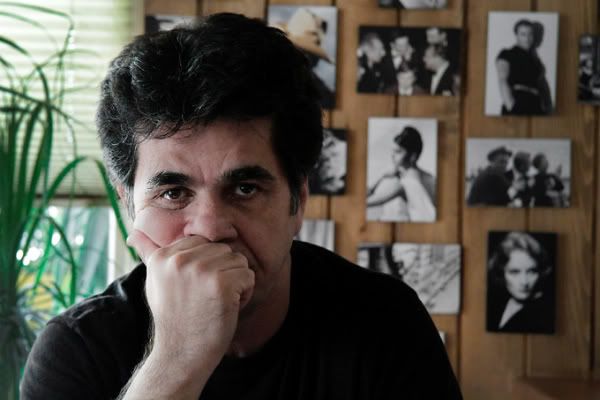
This is Not a Film is not a film. Not in a conventional sense anyway. Rather, it's a 75-minute documentation of an idling film director who has been banned from filmmaking, screenwriting, leaving the country and giving interviews for twenty years. Not to mention he is also fighting a 6-year jail sentence handed down by Tehran Revolutionary Court for planning a fiction film about the disputed 2009 Iranian presidential election. Jafar Panahi, one of the key figures in Iranian New Wave cinema and perhaps the most political filmmaker among them, seems to attract media attention whatever he does simply for being who he is, and deservedly so. My first exposure to Panahi was back in 2001 when I read about his detention at JFK airport. He was in transit to a film festival in Montevideo and refused to be fingerprinted and photographed by New York police. He was simply detained because of his nationality, horribly treated by the US authority and in the end sent back to Hong Kong, his original port of departure. Last year, Isabella Rossellini read his open letter at the opening night ceremony of Berlin Film Festival. At that time, he was in jail and couldn't make it to the prestigious festival to serve as one of the jury.

One would assume that This is Not a Film is a political statement and nothing else. But this non-film (credited as an 'effort' with all the key personnel names blanked out) has plenty of humor and ingenuity, and is consistent with the Iranian New Wave tradition of blurring the line between narrative and documentary. Here, waiting anxiously on his appeal process, Panahi decides to record a one-day-in-a-life-of documentary in his Tehran apartment and turns the camera on himself. As the day goes along, he talks to his lawyer and converses with his friend & co-conspirator/cameraman Mojitaba Mirtahmasb. He has an idea. He wants to act out one of his scripts rejected by the Iranian censor board in his apartment. They said no filmmaking but didn't say anything about reading script out loud or acting. The apartment is empty because his wife and daughter are out of town to grandparents' because it's the Persian New Year. Armed with a video camera and an iPhone, Panahi and Mirtahmasb embark on this 'effort'. Only obstacles to this monumental undertaking are Igi, a family pet iguana walking into the frame and the constantly crackling fireworks outside the window.

After marking his living room floor with masking tape on all fours to imitate the setting and explaining the scene and reading lines, Panahi stops. It doesn't feel right to him. It's all lies. It is comical yet touching to see a filmmaker with very limited means (literally) trying to keep his sanity in check doing what he knows best while abiding to his artistic integrity. While the night is closing in and the fireworks intensifying, the non-film takes an unexpected turn with an appearance of a handsome janitor in the building, stopping at Panahi's doorstep to collect garbage. The young man becomes a willing participant in the experiment. He knows the famed filmmaker Panahi and he studies media in college. Art imitates life imitates art.

This is Not a Film shows that despite the precarious situation- facing censorship and imprisonment, nothing can contain an artist from creating. The result is an intimate and self-reflexive film that transcends it being a mere political statement.

This Is Not a Film was smuggled out of Iran in a cake for Cannes 2011 screening and has US Theatrical premiere Wednesday, February 29th at Film Forum, New York.

Sunday, February 26, 2012

Lilith's Garden

Over Your Cities Grass Will Grow (2010) - Fiennes
Photobucket
Photobucket
Photobucket
Anselm Kiefer, a well regarded post-war German artist who is known for his metaphoric, history resonating (especially German war past) work, using paintings and sculptures made with organic/inorganic materials. Fiennes documents Kiefer's large scale projects in Barjac, Southern France. With tunnels and burrows and glass boxes, it's a labyrinthine industrial space where every room is filled with Kiefer's rough and organic creations. Anchored by an interview in the middle of the film between Kiefer and a German Journalist where we get most of the information from (his artistic intentions, philosophy, etc.), the doc is not a biographical one. Except when the artist is at work, giving his team and assistants various instructions (mostly in French) on location filled with fork lifts, kilns, cranes and cement mixers, the film is without narration.

Fiennes leaves the process and the work speak for themselves, and it's fascinating. The combination of long smooth tracking and crane shots and the nature of Kiefer's post apocalyptic, industrial work involving concrete, twisted metal and lots and lots of broken glass with the György Ligeti soundtrack are comparable to Tarkovsky images.

I really liked him making connections with the sea (where we all come from) and the books (human knowledge, which serves as foundation literally and figuratively in his works) and the giant cement towers surrounded by nature, invoking Lilith from the bible (hence the title). A great doc.

Thursday, February 23, 2012

Heaven or Las Vegas

Some pictures from our Vegas trip:

Freemont
Photobucket
Vegas Strip
Photobucket
Photobucket
Photobucket
Shark Reef at Manderlay Bay
Photobucket
Photobucket
Red Rock Canyon
Photobucket
Photobucket
Photobucket

Wednesday, February 22, 2012

Criterion Cover Art #2

#2 Andrei Rublev
Photobucket

Bruegel on Film

The Mill and the Cross (2011) - Majewski
Photobucket

Jesus and the cross is right underneath the mill on top of the protruding rock in the middle, obscured by commotions among the crowd. Bruegel (Rutger Hauer) with his big black canvas and his patron in a top hat (Michael York) are in the foreground on lower right corner.

Polish director Lech Majewski's recreation of Bruegel's Procession to Calvary with the stories and characters surrounding it is first and foremost a visual feat & a technical marvel. Rutger Hauer gives us a grand tour of hidden meanings and messages in said painting, as the famed Flemish renaissance painter. Like many of the renaissance paintings, Procession is an update on the Passion Play and features ruthless Spanish mercenaries in red tunic in place of Roman soldiers. With every frame a work of art, you can't look away from its beauty.

I like Majewski's unobtrusive, less bombastic filmmaking when compared to Greenaway's Night Watching, in making a scholarly investigation in art. And I'm a sucker for tableaux in films (von Trier uses in his films quite a lot, I even like Tarsem's slick, cartoonish ones) and this one doesn't disappoint.

Friday, February 17, 2012

Criterion Cover Art #1

Hand Drawn DVD Covers Series:

I've been thinking about doodling dvd covers of my favorite movies for a long time. Something simple and something that would take not much effort. There are a lot of homemade Criterion Designs out there so these are my versions.

The first one happens to be one of my all time favorite, Robert Altman's The Long Goodbye.

#1 The Long Goodbye
Photobucket
Expect a lot more of these in upcoming days.

Thursday, February 16, 2012

Classics on Video

Prénom Carmen/First Name: Carmen (1983) - Godard
Photobucket
Photobucket
Photobucket
Photobucket
Godard himself stars as uncle Jean, a burnt out movie director in a mental asylum and the uncle of a beautiful girl named Carmen (Maruschka Detmers), just like the femme fatale in Bizet's opera. Here Godard equates filmmaking to armed robbery and playing a piece of music. During a bank job, Carmen falls in love with the security guard Joseph (Jacques Bonnaffé) and they run away to the coast and lay low before the gang reunites. There is parallel storyline simultaneously happening- a quartet is rehearsing a Beethoven. They constantly stop and readjust because they make mistakes, are not playing violent enough, too slow, inaudible, etc,. It's the usual Godard stuff- fragmented, playful narrative with the mesh up soundtrack of tides, trains, Beethoven and Tom Waits.

It's Godard's reflection on filmmaking in the 80s where video ruled -there are constant references to videotapes and video cameras. It's not quite successful as his later attempts looking at art, film, the world. Here he tries many different things. It has a lot of physical slapstick comedy in it. Too bad I'm not really a big fan of that. But Godard is funny here in a similar way Woody Allen is in his films. All in all, Carmen plays out like a rehearsal for better things to come.

Wednesday, February 15, 2012

Open Book

Reprise (2006) - Trier
Photobucket
Photobucket
Photobucket
Reprise focuses on two lifelong friends Philip (Anders Danielsen Lie) and Erik (Espen Klouman-Høiner) among a group of modern day, Norwegian city dwellers. The film starts with them sending out their first book manuscripts together to a publisher, hoping to launch their literary careers. It's sullen Philip whose work gets published first, leaving Erik somewhat disappointed but relieved at the same time. But soon after that, Philip has a breakdown and gets committed to a mental hospital, thanks largely to his obsessive relationship with lovely Kari (Viktoria Winge). Erik finally gets his piece of spotlight with his book titled Prosopopoeia. Then they deal with relationships, growing up and letting things go, sophomore syndrome, etc,.

A drama about writing/writers is very hard to pull off. Most of the time it comes across as excessively self indulgent or worse, pretentious. Trier's crisp staccato style, gorgeous cinematography (by Jakob Ihre), the literary world it portrays, and attractive actors all give an air of sophistication and can be easily mistaken as an urban hipster fantasy. But Reprise is a celebration of possibility of life. Their world is an open book and life takes them in many unexpected ways. Trier faithfully captures all those moments of nervousness, excitement and awkwardness of Philip and Erik without cliché required in movies about young adults. From the punk band concert days to meeting your hero to experiencing love and its complications, Trier seems he knows what he's talking about. There has never been a film about twenty-somethings this mature and sophisticated. Loved it.

Tuesday, February 14, 2012

Siberian Legends

Glocken aus der Tiefe - Glaube und Aberglaube in Rußland/Bells from the Deep - Faith and Superstition in Russia (1993) - Herzog
Photobucket
Photobucket
Photobucket
Photobucket
Herzog observes these deeply religious folks steeped in mysticism and legends in Siberia. He doesn't judge them in any way or cut in. He knows when to shut up and let his subjects talk, or sing or preach. We hear his delightful voice only in English translation. With great combination of music and visuals, Bells from the Deep has that Herzogian tranquility and clarity to dig deeper into human experience. Endlessly watchable and fascinating, it's another great doc by him.

Saturday, February 11, 2012

Mac-job Romance Horror Story

The Innkeepers (2011) - West
Photobucket
Ty West's follow up to his superb 80s horror homage, The House of the Devil, The Innkeepers is a horror film in its hokey premise only. Rather it's a thinly disguised twenty-something mac-job romance between a cute Claire (Sarah Paxton) and dweeby amateur paranomal expert Luke (Pat Healy). For three days, the two are taking care of Yankee Pedlar Inn, a quaint three story establishment in the process of going out of business while the owner is kicking sand in Barbados. Other than a couple of quacks, the place is almost empty. It is quite visible that Luke's secret crush on aimless, restless Claire. West's talent as a writer sparkles in their effortless witty, silly exchanges. Their drunk on Schlitz confession session is so accurate and charming, that alone is worth the ticket price. Horror element is secondary and not so groundbreaking. I'm eagerly looking forward to his next project.

Dangerous Lives of Catholic Schoolgirls

Don't Deliver Us from Evil/Mais ne Nous Délivrez Pas du Mal (1971) - Séria
Photobucket
As far as the 'catholic schoolgirls swear their allegiance to the devil' genre goes, Don't Deliver Us from Evil is a slow burn and a pretty classy one. It concerns bff Anne (brunette) and Lore (Blonde) doing all sorts of little evil deeds - killing birds, setting haystacks on fire, reading dirty books, seducing various men (usually village idiots).... It's all for laughs though, even at times they are in physical danger of getting raped. They are not completely remorseless. Anne cries her hearts out after killing her family servant's pet bird. Director Joel Séria treads lightly on the girls psychology or characterization. You don't really get the sense of who they are. What you get is constant underlying tension as the 'innocent' girls dig deeper into their graves without ever knowing the full consequences. I still prefer Alucarda and Heavenly Creatures over this, but Don't Deliver Us from Evil has some good moments.

Silent Type

Drive (2011) - Refn
Photobucket

"A real human being, and a real hero....:

From its scribbled pink title sequence to the intoxicating pop soundtrack, Nicolas Winding Refn's latest is decidedly retro- very 80s Michael Mann. It's solid entertainment but will easily be forgotten. Albert Brooks steals the show. Kids, watch Walter Hill's Driver first.

Sunday, February 5, 2012

Snow Country

Running in Madness, Dying in Love (1969) - Wakamatsu
Photobucket
Photobucket
It starts out with newsreel footages of the 60s violent student demonstration against the riot police, double exposed with our protagonist (Ken Yoshizawa) getting bashed in the head. He flees but only to get into an argument with his belligerent older brother who is a cop. During the struggle, the brother gets shot by his subservient wife (Yoko Muto). The two flees to the snow covered North Country haunted by guilt and the ghost of the dead man. They become sullen lovers. Despite his reputation as a pinku exploitation film guy, Wakamatsu is a thoughtful, subversive filmmaker and a competent craftsman. Running in Madness is presented in beautiful anamorphic format. The public's sympathy with the student protesters who cried out for revolution is the one that was tied to rigid, conservative social structure. This is embodied wonderfully by Muto.

Then there is a scene where the lovers witness a naked girl being chased by small village mob on the snow swept beach. The men proceeds to beat the girl with a whip, because she eloped with an outsider. She will be gang raped by all the village men, to teach her a lesson. As for the outsider, he will be tied to a tree in the snow overnight (invoking the image of St. Sebastian). The people who help the cause will be ostracized and punished.

Not as showy or colorful as some of the other New Wavers, but Running in Madness... is a heartbreaking masterpiece that deserves attention.

This is Where Rhodes Jumped!

Throw Away Your Books, Rally in the Streets (1971) - Terayama
Photobucket
Photobucket
Photobucket
Photobucket
A college student talks to the camera in the beginning, that we the audience are sitting here doing nothing. He starts smoking, because he is free. We can't because we are not. Terayama was directly addressing young moviegoers in Japan in the late 60s early 70s, in the height of Vietnam War, when the US was using Japan as a one big military base. He addresses the audience time and time again, not so subtly- "I had a lizard I kept in a Coca Cola bottle. I fed it and it grew. It got too big and I couldn't get it out of the bottle. After years of humiliation, do you have to guts to stand up for yourself, Japan?," "This is where Rhodes jumped!" and so on and so forth. Throw Away also highlights the post-war dysfunctional Japanese family- senile granny is a shoplifter and liar, war criminal father is a pervert and a wimp, once innocent younger sister now nothing but a whore in training (after a gang rape in a soccer team's locker room). With the hodge-podge visual style and Holy Mountain style conclusion ('This is all movie, it's all bullshit'), Throw Away Your Books is kind of a let down. Surely the movie is filled with ideas and messages to the brim and extremely playful. But like Jodorowsky who incidentally was making films around the same time and shares the same experimental theater background with Terayama, it is more of the same as Pastoral. So unfortunately the first impression/impact isn't there anymore. I guess I gotta move on to Wakamatsu and Yoshida.

Monday, January 30, 2012

Live and Let Die

Source Code (2011) - Jones
Photobucket
Isn't it ironical but also fitting at the same time that David Bowie's son grew up to be a chubby sci-fi film geek? Duncun 'Zowie' Jones' Source Code tells a group of gov scientists using a clinically dead Afghanistan War vet (Jake Gyllenhaal) to find a dirty bomber in a crowded commuter train bound for downtown Chicago, using 'Source Code': reliving the last 8 minutes of one of the victims on the train over and over again. This ain't no anti war film with grand messages (Johnny Got His Gun, Caterpillar) or not even Groundhog Day. But in Duncun Jones' hands, the material seems much less incongruous and almost commendable in its optimism overlooking the laws of quantum physics. It's another solid popcorn movie by Jones after much coveted Moon. Enjoyed it a lot.

Saturday, January 28, 2012

Fluffiest Pancakes Ever!

I've heard a lot about Clinton St. Bakery's legendary blueberry pancakes. So I decided to make them myself and found the recipe online. It might not be exactly the same recipe but it came out beautifully and tastes wonderful. So without further ado:

Blueberry Pancakes with Maple Butter
Photobucket

Pancakes:

2 eggs
5 tbsp butter melted
1 cup buttermilk or half & half
1 1/3 cup flour
1/2 tsp salt
1 tbsp sugar
2 tsp baking powder
1/2 tsp baking soda
1 cup blueberries

Maple Butter:

3 tbsp butter
1/2 cup maple syrup

Separate egg yolks from whites in two different bowls.

Add butter and milk in egg yolks, beat together. In another bowl, mix all the dry ingredients.

Beat egg whites with a whip until it's foamy and fluffy (about 5 minutes).

Pour liquid mixture into the dry ingredients and stir lightly until just combined. Add blueberries. Lumps are ok. Fold in the egg whites until just combined. Remember, you want the fluffy pancakes. You don't want to overmix it.

Melt some butter on a hot frying pan. Add batter, each about half a palm size. Pancakes are ready to flip once a few bubbles appear on the surface. Flip and cook another minute or two.

Microwave butter and maple syrup together for about 30 sec. Pour it on pancakes.

Serves about 3-4. Enjoy!

Tuesday, January 24, 2012

Drama

Poetry (2010) - Lee
Photobucket
Loved it. I normally would not touch Lee Chang-dong's high melodrama with a ten foot pole, especially when it's titled 'Poetry'. I wasn't too sure in the first thirty minutes and thought about turning it off many times. The icky subject matter, an invalid old man, Alzheimer's, all competing for my prejudices in movies. Oh god, what am I getting myself into, I thought. Waterworks probably. But I stuck with it.

Poetry is nothing like what I expected. High melodrama for sure, but it's understated and not afraid of reflecting life's nitty-gritty, ugly, awkward details. Much thanks to Yun Jeong-hie's performance as a sixty five year old woman trying to write poetry for the first time while struggling with whatever life throws at her, everything feels real and honest.

It could've been handled horribly, but no. Compared to other humanist filmmakers like the Dardennes and Koreeda, Poetry lacks the smooth narrative that has clean emotional closures and certain visual style or flare. It feels rough around the edges. What the film does is making you smooth those edges yourself. It makes you breathe. That's perhaps the best way I can describe it. But it feels much more real and honest and even wiser than the said filmmakers' work. I'm very taken by it.

*Thank you Ari for letting me to keep the film all this time. I finally got around to it and you were right. It's a beautiful film.