Wednesday, October 8, 2014

Passion for Greatness

Rendez-vous (1985) - Techiné
Rendezvous1 Rendezvous2 Rendezvous3 Rendezvous4 Young aspiring stage actress Nina (baby Juliette Binoche) walks into a real estate agency, looking for a cheap apartment. She just got to Paris 3 month ago. She makes a big impression on Paulot (Wadeck Stanczak), a lowly young real estate agent there. He follows her, suggesting a dirt cheap dump that just came in. Lovelorn Paulot accompanies to Nina's apartment where she breaks up with her current boyfriend who warns Paulot of her loose morals. Then Paulot brings her to his flat where he shares with charismatic Quentin (Lambert Wilson) who takes an interest in Nina also. After that encounter, Quentin stalks her with ferocious intensity, taunting her for her short comings as an actress and not knowing what true love means. He's an whirlwind of emotions that Nina didn't ask for, but she can't shake him off easily. Paulot's puppy dog love becomes an obsession and acts out his frustrations/jealousy and angrily at Nina. Then Quentin throws himself under the car.

Enter Quentin's mentor Scrutzler (Jean-Louis Trintignant), a theater director. He had worked with Quentin in his theater production of Romeo and Juliette. Since he's gone, there might not be another production. Nina auditions for the part of Juliette. Once she gets the part, she is having a hard time. How would she know to play the role if she's never been in love? Quentin's ghost haunts her.

Rendez-vous, is a beautiful film about passion. It's also about youth. It sounds like bullshit but in order to be great at whatever you do, you need to experience passionate love. Binoche looks so innocent in this great, breakout role. Top tier Techiné for sure.

Sunday, October 5, 2014

Surf Noir

Inherent Vice (2014) - Anderson
 photo 834f5b9d-30c4-4da0-8b2e-3167d36e428c_zps657e9a6b.jpg
P. T. Anderson faithfully adapts Thomas Pynchon's most accessible novel, the zaniest surf noir, Inherent Vice. It is also the first time he's worked with a large ensemble cast since Boogie Nights. The result is often hilarious, a laborious snapshot of the end of the groovy 60s.

The film centers around Larry 'Doc' Sportello (Joaquin Phoenix), a dope smoking Private Eye, as he helplessly gets mired into what seems to be an unsolvable case. It all begins with the visit from his ex-girl friend Shasta Fay Hapworth (Katherine Waterston) whom he still carries the torch for. She tells him that her new fling, a billionaire construction tycoon Mickey Wolfmann (Eric Roberts), who inexplicably hangs out with Aryan Brotherhood, is about to get kidnapped by his wife and her body building 'spiritual coach' boyfriend and put into a looney bin. But even before Doc has a time to react, Mickey and Shasta go missing.

With the clue "Beware of The Golden Fang!", left by remorseful lesbian masseuse who put him in the hole in the first place, Doc leisurely seeks out people who might have a hand in the disappearance. Is The Golden Fang a rock band? A front for money laundering association of dentists? Is it a schooner? Trained killer dogs with golden teeth perhaps? He digs deeper and deeper into the labyrinthine conspiracies while jotting down (un)helpful words and phrases- "Paranoia Alert!", "Spanish?" on his small notepads along the way.

Doc's biggest obstacle in solving anything, other than his pot fizzled brain and constant paranoia, is famed, hippie hating Lt. detective Christian 'Bigfoot' Bjornsen (Josh Brolin). As far as Doc and his mellow friends are concerned, the civil rights chomping Bigfoot is in cahoots with the environmentally irresponsible, now missing billionaire. To make the case even more complicated, the feds are involved and Doc enlists the help of his one-time girlfriend now a deputy DA Penny Kimball (Reese Witherspoon). But everybody has his/her own angle on this and everybody preys on Doc.

Dialog, with few exceptions throughout his filmography, hasn't been Anderson's strong suit (nor has he seemed to care). Here Anderson strictly sticks by Pynchon's snappy prose line by line with more than 30 speaking parts. The only big difference from the book is its narration by Sortilège (Joanna Newsom), or Leej, as Doc calls her. She is Doc's spiritual hippie gal pal who has that special touch. The whole time, I was thinking of Newsome as young and hippie version of Thelma Ritter from noir classic Pick Up on South Street. Her nasal, soft voice somehow works in a typical masculine world of Anderson and gives the film its lightness.

There is no shortage on noir references, or should I say noir archetypes here - you can find lineage all the way from The Big Sleep to The Long Goodbye to The Big Lebowski. The concoction of Pynchon's wacky characters with typical long takes that Anderson prefers, provides the actors plenty of room to shine. Its chaotic pace gives way to long monologues and long takes that last up to 5-7 minutes, the flow of the film matches with Pynchon's prose well also.

Phoenix, with messy hairdo and mutton chops, again, is brilliant in another bravura performance as doped up hippie PI. Brolin is a pure comic gold here as Doc's nemesis and also secret confidant. Other outstanding notables are Martin Short as a drug addled Dr. Blatnoyd who goes wild in the funniest scene in the film and Owen Wilson provides perhaps the most poignant moments as a confused sax player in a surfer band who got finagled to be a double/triple agent by various antisubersive groups.

As the drug infused haze/smog lifts from the City of Sinners (with their inherent vices), what's left is Doc and his dignity as the last vestiges of innocence and goodness in the flower child generation. As Leej says, "Doc may not be a do gooder but he's done good." I'd be lying if I like Inherent Vice more than The Master or There Will Be Blood. But it is an enjoyable romp. It definitely solidifies P. T. Anderson as a great chronicler of American psyche though out the decades.

Inherent Vice is the Centerpiece selection at this year's NYFF.  It opens limited on 12/12 in NY and LA, then sees the general release in 1/9/15.

Saturday, October 4, 2014

Crazy For You Mr. DJ

Eden (2014) - Hansen-Løve
 photo a5ea7dc2-7a84-4c07-9fb4-5f55d82e5cce_zpsb5621cae.jpg
The other day, I saw a some college kid wearing a T- shirt that said, "In school now just to be a wage slave later." I seriously considered giving the kid a hug. I could've easily regarded it as some ironic hipster shit. But after watching talented Mia Hansen-Løve's new film Eden, it hit me as extremely poignant. Co-written by her brother Sven, the film is a sprawling and epic look back at the 90s' French electronic dance music scene. And they do an amazing job capturing the look and feel of that decade. But more so, the film is about life.

Eden charts about 20 years of the life of Paul (Félix de Givry), starting in 1992. He is a big raver and into music. He and his friend Stan (Hugo Conzelman) form a garage (Paul affectingly explains - house music with more soul and disco) DJ duo called Cheers, despite his mom (Atom Egoyan regular Arsinée Khanjian)'s disapproval. Their group of friends includes talented graphic artist Cyril (enigmatic Roman Kolinka), a fellow DJ team, Respect (Paul Spera and Laurent Cazanave) and a drugged up, wayward producer Arnaud (comedian Vincent Macaigne in a role that is tailored for him). It's around this time they also acquaint Thomas and Guy-Man, the duo later known as Daft Punk (who provides much of the music for the film). We observe as they all strive for the limelight. Time slips by. Paul has a brief fling with a cute American girl, Julia (Greta Gerwig), then gets involved with a wild but moody tomboy, Louise (Pauline Etienne). Cheers becomes a moderate success in the Paris club scene. It's an exciting thing to follow one's passion and become successful.

The signs of decline appear when the fame takes Cheers to America. They get to perform at P.S. 1-- a former public school turned into one of the hottest New York cultural institutions, and which has been hosting outdoor dance parties since the 2000s. Then they go to Chicago. Paul reunites with Julia who is now married (husband played by Simon Killer's Brady Corbet) and visibly pregnant. She commends him for still pursuing his passion after all these years. Jealous and tired of the scene, Louise has a breakdown. Then Paul gets the news of Cyril's suicide.

Even though they pack the club, night after night, with their music and DJ skills, it's a profession that doesn't make tons of money. To keep up the appearances, Paul gets deeper and deeper into a financial hole and his drug habits gets out of hand. Friendship falters and people around him grow up and get real jobs. Paul and Stan's passion remain, but it's the times and music that are changing.

Eden's scope and ambition are massive. But Hansen-Løve pulls it off with grace. With the beats pumping constantly and large crowd having a good time, you can easily feel that DJ-ing is like an addiction you can't get rid of easily. Sadness of time passing is there, but Hansen-Løve refuses to make it sentimental. This was the part of one's life and passion. There are no regrets for doing something you loved and believed that it was a right path to take.

Every cultural phenomenon eventually fades and falls out of favor. The film follows the typical movie trajectory of the rise and fall of a protagonist. But the film is not a nostalgia trip. What's amazing about Eden, just like her last film, Goodbye First love, is Hansen-Løve's ability to make you aware the poignancy of passing of time in an extraordinarily personal way. Obviously the film is not for everyone. The specificity of the film's setting and subject matter might hinder your interest in seeing it. But for me and many others like me, who lived through the 90s, that culturally bleh decade, as a young adult full of hopes and dreams, Eden will linger in your head and gain its poignancy over the years to come.

Eden plays part of NYFF on 10/5 and 10/7. Please visit FSLC website for more info.

Discovering Solidarity

Two Days, One Night (2014) - Dardenne
 photo 6ea46fa9-d47a-4fd1-9a38-2710e924f1c6_zps0bf2872e.jpg
Take it as the Dardenne Bros thriller with the time ticking away. They even put human face in that genre. It's Friday. Sandra (Marion Cotillard), a working class mom struggling with depression, is just told that she is getting laid off from a solar panel manufacturing company. The management framed it so that it's either her job or one thousand euro bonuses each for remaining 16 workers. But her two friends at work asked the manager to get another vote to keep her job on Monday. That means she has two days to convince 7 out of 14 co-workers to give up their bonuses and vote to keep her job.

Dardennes puts the dilemma squarely on us. What would we do if we were in Sandra or co-workers shoes? Unsurprisingly in the beginning, Sandra gives up the fight. For her, there is no dignity in begging for her job back. The bonus is a lot of money and she can't blame her co-workers who are pretty much in the same boat as she is: struggling to make ends meet. She just wants to give up and go to sleep. But it is her supportive husband (Fabrizio Rongione) who keeps pushing her to fight. He will help her to gather everyone's address and drive her to each co-worker's house to make her case.

As usual, the set up here is super simple, but it works like gangbusters. Cotillard is amazing, so as every actor in the film. By the end, without ever being didactic, Sandra learns a thing or two about solidarity. For many North Americans who are opposed to any kind of welfare system and firmly believe in pulling-at-your-bootstraps, Deux Jours is a terrible movie and Sandra a horrible character. It's definitely not a kumbaya kind of movie but I thought singing Van Morrison's Gloria with a newly converted to her cause co-worker in the car was a bit too much.

Two Days, One Night plays part of NYFF 2014 on 10/5, 10/6. Please visit FSLC website.


Thursday, October 2, 2014

Hot and Cold: Mathieu Amalric Interview

 photo 4de0eee6-f726-4745-b3dd-166dd49c12cc_zps475be219.jpg
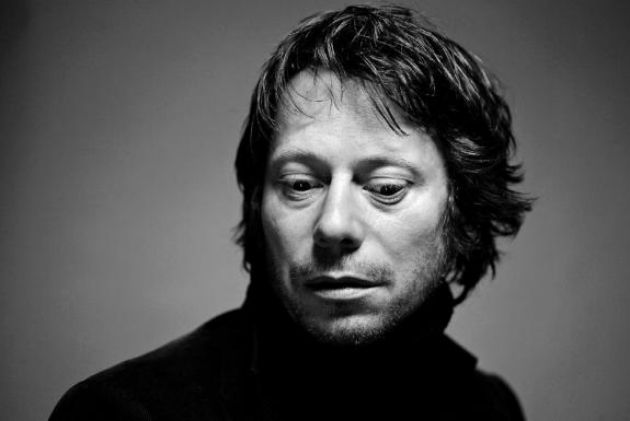
Mathieu Amalric, a superstar of French cinema is in town for NYFF, promoting his new film THE BLUE ROOM, which he co-wrote, directed and stars in. It's also co-written by his wife, playwright, Stephanie Cléau who also co-stars. As an admirer, I was relieved for the fact that Amalric was exactly how I imagined him to be - a piercingly bright, yet chaotic little Frenchman who reeks of cigarette smoke, just like many endearing roles that he played over the years. Listening to his all-over-the-map responses with wildly gesticulating hands, I couldn't help but smile. I could've easily listen to him speak all day if I was given time.

This is how my 25 minute went with Amalric:

You are known as an actor more so than as a director at least in the States, even though you've been making films as a director as long as you've been acting.

No even before. Acting came afterwards.

Was being an actor just incidental?

It was (Annaud) Desplechin who saw something that I was in and... as I always say, he invented me as an actor, as a guy who plays a role in films, you know? Acting is not that complicated...it's just films. Now I act on stage and that's something else. So Stephanie (Stephanie Cléau-- Amalric's wife irl, co-writer and co-star of The Blue Room) is inventing me 'cause we are on stage, on tour, she is inventing me as a stage actor. And woah, that's something else.

Which do you prefer-- directing, acting or stage?

Since I was 17, always shy, always hiding, I've been constructing small films as a 'director' as you call it, to watch and to observe. Acting came as a surprise. And now I don't see the differences in those, really, anymore.... I do it when I am in love or in such an admiration for the directors. I am a construct of all these experiences.

What was the reason for adapting THE BLUE ROOM the book, written by Georges Simenon after doing ON TOUR? It's a very different film altogether.

It's because my great producer (Paulo Branco). A great producer would see and feel where you are in your life. Paulo, I've worked for him since I was 17, as a trainee, AD and Assistant Editor... all different jobs in movies.... He knows me. And he produced one of my films (La Stade Wimbledon) also. It's that I've been trying to adapt this Stendhal's book The Red and the Black for three years. And he says, "stop with that bullshit! Just do a film! You have to shoot now. Stop that and just shoot! " And I thought that he was right. He says, "shoot a film in three weeks". "Ah ok. You are right. But what...."  "Go home and read something, I'll search for something also". So back home, I see La Chambre Bleu/The Blue Room, the book that's been obsessing me for such a long time, not really to do a film about it, but when I read that book, I was so struck by the opening of that book. I remember the sexual description of it was so close to the painting of Corbet, called  Le érogène du monde where you see feminine sex. And there is that exact description, the cunt and the sperm and all that, so you just don't come back empty handed from something like that. And maybe I was at the moment in my life...it's just I....

Yes it was a commission - doing a film in three weeks, I told him, "ok, I can do it in four weeks". And we had some money from Pathé and we were able to shoot in five.

Wow. that's short.

Two weeks in july and 3 weeks in november. But everything went so quickly. So I met Georges Simenon's son, John, a wonderful guy. Immediately in a sort of confidence, he said to go with it. So I called Stephanie and she was in Paris, cause I was shooting the Larrieu Bros film (Love is the Perfect Crime, read my review here) in Switzerland. As her job for stage, she adapted a lot of novels before. So I told her about the book and she had already read it.

Interesting bit of coincidence here: the last scene of On Tour, when after the man and the woman make love and she is very tenderly closing the shutters so the man can sleep. That scene I named it the blue room! It came from the first scene of that book. It's funny eh? There are these sort of links everywhere.

And then I think I was attracted by how it was produced-- with not a lot of money which was fine. But it had to be done quickly. I thought about the old RKO films. Those b-pictures. Tried to be a b-picture and tried to be very honest. So I worked with the real police, real attorneys, real crime lab people so the audience would never ask about their authenticity. And that the plot is not the center, you know. So your mind can go like in great b-pictures, where you think it's one thing but it's really about something hidden behind. This desire, this monster you have to deal with everyday, which is sexuality. How do we manage to live with those horrible moments where you go to bed with your companion without any feelings or thoughts? Many of us do live like that because we have to keep up responsibilities. Simenon was very precise about that in the book: a self made man who worked so much to achieve the dream-- the house, with pretty wife and a daughter, like the perfect world, but the house is terrible and cold. I wanted to give the film both cold and hot. Like Stephanie.

So tell me about Stephanie--

Well, I don't know who she is. I think that's what makes men crazy: something that has to do with illegibility that you can't read someone. There were those descriptions in the book, "Why didn't you kiss her before?" "I wouldn't have thought about it." "Why not?" "Because she was too tall." Well Stephanie is taller than me. And she has this quality. I thought she was this statuette and that she was cold. But the miracle of chemistry between two bodies is that you feel like yourself and feel alive. That doesn't happen that often.

Did she agree to do the movie right away? Did you have to do a lot of convincing?

We've both read the book. And it's been 9-10 years we've been together. She is not an actress and very shy. Then I ran into Paolo. What happened was that I was going to leave for Switzerland for two month to do that Larrieu film. She was in Paris. I don't know why she made this joke: She told me that she can play the unfaithful wife and I can play the lover. I didn't like that because I was leaving Paris for 2 months. I go on a shooting and she knows that the Larrieu's film's about 3 women fighting over me and sexual desire and all that. So after she made that joke, I couldn't concentrate. Then when I was thinking about who could play the roles, if it's me to play the title role, people know my face, then I felt my wife in the film also has to be a face people know. Léa Drucker is a famous actress in France so she is well known. But if the mistress also had been an actress with a well known face, it would have been the usual film. Two actresses fight over a man is too typical. It becomes a competition- Who is more seductive? Who is the best actress? Then I thought if I make Stephanie play the role, I can protect her from all this. This was the fantasy I had. It would be more interesting if I made her 'the threat of the unknown', she would be the face that nobody knows. like ones you see on tv who is suspected of crime and you project the worst thoughts on them. Stephanie has that. You can project terrible thoughts on her face.

That really worked out. Did she say yes right away?

She did. She was rehearsing her own play working with actors and I think she was attracted by the thought of finding out what acting is which you can only know by living it. And that really helped her doing her play in dealing with her actors because she did it herself. Many scenes naked of course! It was a comfortable environment though. I always use the same crew and they are all our friends. We had a lot of laughs on the set.

Also the film has nothing to do with harmony and nothing to do with camera caressing the body or anything warm like that. It had to do with the feeling a bit morbid. It's not about eroticism. It's a battle between sound and the image with voice over and everything. Yo don't know why he is arrested but you know somebody has died. But who? of course in the beginning you think, so, he killed her. So you see the scenes differently with only pieces presented to you bit by bit. So the there is no harmony in Simenon's writing.

That's the reason why we went with 1:33 aspect ratio. Because it has to do with isolation. You get not only the body but...

Yeah I thought your choice of aspect ratio was a psychological choice not an aesthetic one.

Yes. with the plenty of head room you have,  you don't know what's in the head of the other person. It seemed that that aspect ratio is the right one for Simenon's honesty.

The Blue Room.jpgDid you take any big liberties on adapting the book?

No. I've read a lot on other filmmakers adapting simenon because there were quite a lot. It all said that you have to be faithful to Simenon, you can't change it. This one is a peculiar one because it's not linear. because there are a lot of flashbacks and you don't know who's dead. we tried to keep that intact when Stephanie and I wrote the script. In fact when we were writing it there were two colums: on screen and off screen. so they have to fight for our attention. It was as if we were reading two scripts at the same time. And of course the provincial life never change but And we shot it like that. Only thing we had to update was the police procedure, the crime scene investigation with DNA evidence, cell phones and all that. It was a lot of fun to work with the real police. The forensic files were really done by the police. You see it in the courtroom. the file they have on the desk are real ones compiled by the police. the trial was a real trial with real lawyers and real audience. we shot it for 3 hours just for the sound of proceedings.

I can just listen to you all day.

No no no. Just talking to you reminded me all these things we did. We did everything in 11 months-- from the day Stephanie started writing and the film's release in theaters.

One last question is about the music.

Oh yeah.

It reminded me of a Hitchcock film. Very Bernard Herman.

But in fact, it comes from Ravel. 'cause Bernard Herman comes from Ravel. it's the Spanish Rhapsody. Grégoire Hetzel who is a genius did the music for us. Again I told him that I want some cold and some hot. Something that burns and something that is scary. So the ostinato...(starts singing the repetitive melody) that everyone thinks Hitchcock is, indeed, comes from Ravel. And we recorded at Abby Road and it was great. I felt that the film could accept the music. In the beginning I worked with the Stockhausen music box, with that tinkling sound, an obsessive sound that you can't get it out of your head. But I discovered during editing with Francois (editor François Gédigier) that it was cold on cold. Then I thought the music has to provide some warmth. So in that kiss scene that is the only time you see where there is a swooping camera movement and swelling music. we pulled off that scene because of incredible light.

Yeah I remember the sunset in the film.

Yeah it was raining all day and all of a sudden there was this incredible warm sunlight for about 20 minutes. A miracle. so we have light we have kiss we have music.  It's Hollywood I know and we are not  allow to do it. but it works for that scene.

After appearing at various festivals, THE BLUE ROOM opens Friday, October 3rd in New York at Lincoln Plaza Cinema and IFC Center. It will also be available on Cable and On Demand.
Tuesday, September 30, 2014

A Strong Condemnation of Religious Extremism

Timbuktu (2014) - Sissako
 photo 59dc077c-18de-4e76-be8b-989a801919b9_zps979acb1a.jpg
Timbuktu, that faraway place, the end of the world, is an actual city in Northern Mali in Africa, being once the bustling trade town in sub-Saharan Africa and famous for its fabulous architecture, libraries and scholars. Abderramane Sissako (Bamako) tells a tragic tale based on true events, taking place in this famed city.

The film starts with traditional wooden African statues being used as targets in a target practice by the Islamic militants who just rolled into town. When Alain Resnais and Chris Marker made Even Statues Die, I don't think this was the image they had in mind: they were talking about reappropriation of those artifacts being mass produced for Western consumption, losing its intended cultural significance, not being literally blown to pieces. Now times have changed. These so called jihadists, walks around with AK-47s across their chest, warning the townsfolk that they are under strict sharia law from now on - no smoking, no music, women have to cover their hands, faces and feet, no public gatherings, the list goes on. Despite city imam's pleading, they start arresting people and carrying out the punishment - public lashings or executions for playing music, unmarried men and women hanging out together, playing football, women washing their hair in public.... They even start marrying their young soldiers (who don't even speak the language) to local girls without their parents' consent.

In the midst of all this, is a story of Kidane, a nomadic herder with his beautiful wife and daughter, living in the desert. All their friends and neighbor are gone, fearing these rude Arabs from the north. But he and his family have no intention of moving on. They have seen many occupiers come and go, so this also will pass. Besides they don't have anywhere else to go. A tragedy strikes when one of his cows gets killed by a local fisherman and during heated dispute, Kidane accidentally kills the fisherman. He is promptly arrested and condemned to death by sharia law.

Timbuktu's tragedy is accentuated by achingly beautiful surroundings shot in widescreen format by cinematographer Sulfiane El Fani (Blue is the Warmest Color). There is a lyrical sequence of young people playing soccer without the ball in the sun drenched desert. They sprint, pass the invisible ball, score or block and cheer. A sort of an impromptu in-your-face defiance and condemnation, highlighting the ridiculousness of the law. The sequence is both comical and sad.

Sissako paints a complex society where several different languages are spoken. Even though all of the inhabitants of Timbuktu are people of faith, the director makes it clear that they have different cultural backgrounds and customs. Timbuktu is a strong statement against the extreme Islamic militants who seem to take the moral high ground and impose their laws upon people they don't understand. It's even more disgusting when they don't even try to understand. We've seen this kind of hubris time and time again in any types of colonial occupying forces. And we know that it breeds human tragedies everywhere.

As the film builds up to its heartbreaking conclusion, one wonders the true fate befallen on Timbuktu and its inhabitants in 2012 when it was briefly taken over by Islamic rebels - many were killed and maimed. Its famed Ahmed Baba Institute which housed many invaluable manuscripts was set on fire. The film is a beautifully told human tragedy and strong condemnation of religious extremism.

Timbuktu won Prize of the Ecumenical Jury and François Chalais Prize at this year's Cannes Film Fest. The film screens on 10/1 at 6pm and again 10/2 at 4pm. For more information, please visit FSLC website.

Sunday, September 28, 2014

Enigma

The Blue Room (2014) - Amalric
 photo 2fc007e3-0d83-4390-8128-1a034947d3d8_zps87380fb3.jpg
The Blue Room is a hard film to like-- its tone is cold and distant. But it is designed that way to accompany the mind of its passive protagonist. Based on the book of the same name by popular French novelist Georges Simenon, the film tells a brief obsession that causes double murder and ensuing courtroom drama. It harkens back to the olden days of film noir with hidden motives, loose morals and a (unlikely) femme fatale. The film is a Hitchcockian intrigue coupled with Chabrol's breeziness. Even the film's score (beautifully composed by Grégoire Hetzel) reminds you of Bernard Herman.

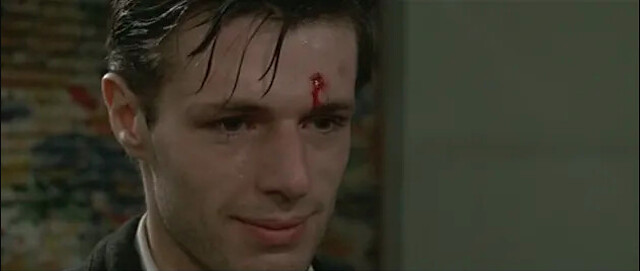
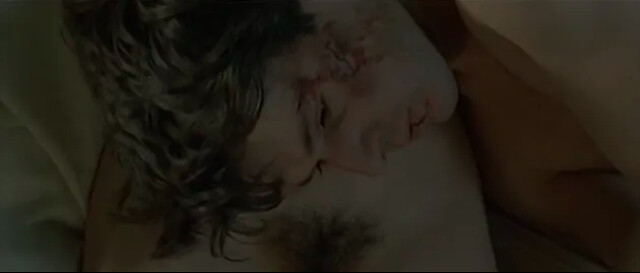
It starts with Julien and Esther in the throes of sweaty, passionate lovemaking in a French door shuttered, stifling hotel room. In the heat of passion, she bites his lips and he bleeds. "Did it hurt?" "No, it's fine." "Would your wife notice it?" "I'll just tell her that I ran into a post." They tell each other sweet nothings. It's a thoughtless pillow talk for him, but for her, it's something more. "Could you spend the rest of your life with me?" "Sure." Julien has a comfortable life, he manages a successful John Deere dealership, has an upbeat blonde wife and a daughter. It's his passivity that becomes his downfall. It's not that he is unhappy with life, but he finds the enigma of Esther too irresistible. Before we know it, Esther's ill husband is found dead and Julien's wife strangled. All the things Esther said, as Julien recalls in a series of police interrogations, have ominous significance for the crime(s). "If I am suddenly free, would you be free too?" After Esther's husband's death, he gets a cryptic message from her in two words, "Now You."

The Blue Room feels completely opposite of much improvised, free wheeling, 8 1/2-esque, On Tour, a film which Amalric won the Best Director award for at Cannes, few years back. It is an extremely measured film with subtle performances.

The 1:33 aspect ratio comes across as not an aesthetic choice but a psychological one, to show Julien's unwitting confinement in the situation. Stéphanie Cléau who co-adapted the book with Amalric, and not a trained actor, plays the role of Esther. There is not a hint of dark side in her unassuming beauty. But that's why she is so perfect for the role who is completely illegible. It still works as a whodunit thriller, but we never get to find out who killed who. In a breezy 76 minute running time, Amalric rightly concentrates on the Julien's distant passivity rather than making a psycho killer out of Esther. It's a hard to film to enjoy but to admire, because there are a lot to admire in this film. It definitely shows Amalric's ability as a director, a great one at that, proving himself that he's not only a mere actor.

The Blue Room plays part of NYFF 2014. It plays on 9/29 and 9/30. Please visit FSLC website for more info.

Friday, September 26, 2014

3D as an Art Form

Adieu au Langage (2014) - Godard
 photo e23a51b0-f430-431b-a05c-b561f69279c2_zps70389ac9.jpg
3D seems like it is here to stay, for now. It was a gimmick to win back the audiences the film industry lost to the emergence of TV in the 50s', now it is revived as a last ditch effort to save the ailing industry, probably until TV starts broadcasting its contents in 3D (as we all know, it's only a matter of time that we'd be enjoying our football games and movies at home with silly glasses on). But can this new/old technology be elevated onto an art form, rather than being used exclusively to show us a mangled hunk of metal/asteroid as it hurtles toward us? If Herzog's awe inspiring Cave of Forgotten Dreams and now Godard's Goodbye to Language were any indications, the answer is yes. Yes it can.

Always on the forefront of visual experiment and testing the limits of cinema, 3D seems to be a logical next step for Jean-Luc Godard to sink his teeth in. After his test run with the technology in a short Three disasters (his contribution to an omnibus project, 3X3D), JLG, at 83, is fully committing to the 3D technology with Goodbye to Language.

The film starts with a quote, "Those lacking imagination take refuge in reality." With that, there is a slight narrative, concerning a couple (or two) as they bicker and contemplate murder. Women in the film are very much alike (a typical Godard heroine archetype- brunette with dark eyes) and tend to shed their clothes often. An outdoor book market becomes the flash point for the old and new. While browsing for books by Dostoevsky, Solzhenitsyn, people furiously text and exchange their mobile devices. The bookseller shouts from his chair, "Don't bother googling Solzhenitsyn!"

"One day everyone will need an interpreter for what he says." One of the characters utters in the film. Its biblical implication of the world in chaos aside, the film is packed to the brim with visuals. Divided in 2 parts or at least in that Godard's typical chapter headings - Nature and Metaphor, the film grimly/comically announces the death of language.

The most vivid character is perhaps a dog named Roxy (Godard's beloved mutt), who graces the screen with his adorable face in about half of the 70 minute feature, playing around in nature, in all four seasons - near lake Geneva I'm assuming, generally having a good time. 

Godard's contemplation of war is there, but this time, not as specific or pointy as in his earlier films. Still, playing cinema's enfant terrible, he includes shots of burning bodies, and even graphic sex images. The sporadic, jumbled subtitles and dialog appear and repeat, accompanied by equally disjointed soundtrack - Beethoven and Tchaikovsky.

Layering clear HD, pixelated DV, and other grainy archival footage as thick as Dostoevsky novel, Goodbye is denser, more uncompromising, more impenetrable and less coherent than Godard's last outing, Film Socialisme (which I adored). But it's still a marvelous trip. OK. let's talk about the 3D aspect of the film. There is the usual JLG droll word games with his trademark bold titles-- Adieu (in Adieu au Langage) becomes AH, DIEU (Oh, God). Only this time, it's in 3D! People's everyday actions and nature scenes, like drinking from outdoor water faucet or a sunset or sunflower field on a windy day, become cinematic events.

Imagine some of the most visually sumptuous JLG films from his later period. Nouvelle Vague (1990) or Hellas Pour Moi (1993) for example - the ship sailing by in the background, the foggy field, swinging light bulb overhead, a long dolly shot looking through the window. Now picture them in 3D. This is what Goodbye to Langauge is like. It's a thrilling visual experience and I thank god for JLG embracing the gimmicky technology and using it in his tireless exploration of the boundaries of cinema. Ah-Dieu indeed. It's certainly one of the year's best.

Goodbye to Language made its debut at this year's Cannes Film Fest, then TIFF. It is playing at NYFF on 9/27 and 10/1. Please visit FSLC's website for more info.

Wednesday, September 24, 2014

Hardboiled

Détective (1985) - Godard
 photo 1069d177-1a50-473d-b86d-386335e5e5a6_zps77f15dc0.png
 photo f15bfa3c-8dc3-49bf-94a6-9413a16c41cd_zps494ab983.png
 photo 12dc78cd-8a4a-486a-b3e7-0e19ec8ff285_zps10dbc4f0.png
 photo 3e474df5-022f-4b8c-acc7-10e19d35456b_zpsa3c9ebcc.png
 photo e1c857ea-0fb3-407c-86cf-ceb4249e4cb4_zps451070e2.png
 photo bcd2a96b-943d-4f49-b5a5-465e109e160f_zpsca5014ce.png
 photo 7c3cec79-40a4-431f-a02c-437bca5a0986_zpsad90cb18.png
 photo dca763c2-7d37-4ea3-9b7e-0e2af925aec3_zps13242452.png
 photo 2664ba86-71af-47c1-a58c-c5a58e3ae021_zps93ef3129.png
This all-star cast hard hitting noir riff is perhaps Godard's most playful film from the 80s. It concerns monsieur Jim (Johnny Holliday), a two-bit boxing promoter who owes money around town and a lonely wife, Françoise/Geneviéve (Natalie Baye) of a sad faced pilot (Claude Brasseur) of whom Jim owes money to. They are closely monitored 'with the shitty little Japanese video camera' by a gang of amateur inspectors - uncle Prospero, Neveu (Jean-Pierre Leaud) with the help of a perky little thing/would be Neveu's fiancée after she takes the school exam, Arielle (Aurelle Doazan). Jim has a posse of his own - Tiger Jones, a young boxer whose worst enemy is himself, princess of Barbados (Emmanuelle Seigner) and a young botticelli beauty (Julie Delpy) and an accountant who literally asks computer for solutions to every problem.

Jim not only owes money to the couple but also to a mafioso boss called Prince (Alain Cuny) who happens to be staying at the same opulent Paris hotel where everybody seems to be staying in. Actually, the whole film takes place in and around the hotel. The plot is way too discombobulated to follow along. There are some slight comments on technology and porn, but it's all about characters interactions, funny lines ('Damn Italian legs!'), mad slapstick energy (thanks to Leaud) and beauty of youth. Détective is an unabashedly silly, fun film reminiscent of Breathless.

Saturday, September 13, 2014

Song of Sorrows

Bamako (2006) - Sissako
 photo fa424eb2-1339-4cc6-a54d-49871340a785_zps68a2b10d.png
 photo 8e1e88f5-4c37-4551-87e7-eb18b016ce35_zps4077c795.png
 photo 5dbbf0e0-d8b8-42f8-8801-808246e9ebcb_zps5468a90c.png
 photo 9fb3e738-5d5f-4a22-8144-b5bff877ff1b_zps6335da63.png
 photo dcdaf07b-bb8b-41e4-b914-a3ad814d22e6_zpsa10ec232.png
 photo 88bc2fc1-9b93-4b8e-9807-94c0b2ce83a7_zps165cf200.png
Bamako is a seething indictment on policies of 'structural adjustment' imposed by IMF and The World Bank on Africa. The setting is an outdoor trial, a courtyard of ordinary Malian households where everyday life happens simultaneously with the proceedings. The witnesses, from all walks of life, testify against how the astringent policies of the western institutions that started 25 years ago brought more poverty, deaths and unpayable debt to many African nations including Mali, instead of development and prosperity. In the meantime, there is a slight narrative with an impoverished, emasculated husband and his beautiful wife who sings at bars for their income. He is learning Hebrew in the hopes of becoming a guard for an Israeli embassy in Mali that doesn't exist. A wedding and funeral happen in the same courtyard, life goes on still. Sissako playfully exerts film within a film called Death in Timbuktu, where cowboys are played by Danny Glover, Elia Suleiman and other film directors from developing countries doing OK corral style gunfights bearing not so subtle outcome - dead are the innocent local bystanders. Music in Bamako, traditional or otherwise, is a big part of expressing people's frustrations rather than dialog. It's a pointy yet poetic film that needs to be seen by anyone who has interests in the state of Africa.

Thursday, September 11, 2014

Forsaken

Corpo Celeste (2011) - Rohrwacher
 photo 741d9ebc-f1a4-43fb-a4f5-c9d9a3effef3_zpsf735728e.png
 photo 9a98178f-db88-4d19-a279-b8ca099ccad5_zpsd4447c19.png
 photo f37b0f6c-a91e-4400-99a3-3b6a26028357_zpse45ebb04.png
 photo 0f5da67b-c6cf-43da-9f17-f373ffc1c9cf_zpse53edbfa.png
 photo 4cc3ab23-190c-463f-a80c-274bbf5f83af_zps2144598f.png
Drawing from her childhood experiences, Alice Rohrwacher makes a delicate, affecting coming-of-age film. Martha (Yle Vianello), a fair skinned 13 yr-old girl, is about to hit puberty. She has been secretly wearing her older sister's bras. She and her family just arrived from living in Switzerland. At home, with her single mom always out working and her pretty, domineering 18 yr-old sister ever present, Martha is left to her devices, wondering wintry small coastal town by herself.

A girl with serious disposition, Martha challenges happy-go-lucky aesthetics of the church and asks tough questions: what does Eli, eli, sabahktani mean, to a non-commital, frivolous teacher. On the faithful day of the communion, finding box full of kittens in the storage of the parish while preparing for the big communion celebration, and parish workers' cruel decision to dispose them sends Martha to a wild goose chase through the town and leads her lost in the busy motorway. Mario, a stern priest who lost his way by his own ambition, spots Martha and picks her up. He has to pick up an old cross from his old parish, up in the mountains and back before the ceremony. It becomes a spiritual journey of sorts for both.

Rohrwacher proves herself as a fine observer of human emotions. No one in Corpo Celeste is entirely evil. However imperfect and cruel they seem to be, there is a side to each that is undeniably human. In the confines of a very religious, working class community, those small desires, jealousy, envy, solitude, Rohrwacher captures them with much compassion. She has a sharp eye for composition too. Beautiful grainy 16mm is lovely.

Monday, September 8, 2014

Sunday

Demanche à Pekin/Sunday in Peking (1956) - Marker
 photo d05a8b8b-b9d2-4615-bc87-d9e9f4018e6f_zpsbf01325c.png
 photo 1754a535-d818-4c51-ad25-c963e324c507_zps1be16a87.png
 photo 79d041fa-86c3-40e2-b3c7-cb1d64b5c1dd_zps1bba4dbe.png
 photo f6242c17-ecce-4eb6-bca6-bc3c494e7584_zps33330279.png
 photo 72ff8fb2-bcca-4eaa-af26-6884119213c0_zps5af04572.png
 photo 9f931850-f8d8-44c8-a277-cdeef18ead87_zpscedb4272.png
Beauty. Marker's outsider's point of view of China stresses similarities of human existence rather than contrasts while not losing the Western curiosity of the Far East. "The revolution was against capitalists, dusts and flies..." narrates the Marker surrogate wryly. He finds in Peking that there are no more capitalists than there are flies. Sunday activities of regular people are captured in beautiful Kodachrome, restored in 2013 by The Eclair Group. I might have to get this Marker shorts collection (contains Pékin and Lettre de sibérie).

Saturday, September 6, 2014

Tilda Swinton Show

I Am Love (2009) - Guadagnino
 photo cbdd73d0-a4d7-4b48-9b2f-02c6c369fe97_zps903138c5.png
The film is an elaborate, visually elegant melodrama set in Milan. It tells the fall of the Recchi family, of textile fortune. Starts with the patriach(grandpa Recchi)'s birthday dinner in an opulent mansion where grandpa announces his retirement and leaves the company in the hands of his son Tancredi and grandson Redo (you will need two to replace me!). Tancredi's elegant Russian wife Emma (Tilda Swinton) is smitten by Antonio, a chef friend of her son Redo's. Tancredi is a ruthless businessman who is unafraid of laying off workers or selling the company to the highest bidder, while Redo falls on the sensitive side of the family, along with his artistic, burgeoning lesbian sister Ellis (Alba Rohrwacher, sister of Alice I found out).

It's a complete Tilda show though. Including Emma, every character is very lightly sketched out and two dimensional. But who wouldn't want to see Tilda speaking Italian and Russian and looking chic for two hours? The movie is truly a director's film, it's all about meticulously choreographed swishing tracking shots and movement and editing. There is a rhythmic, fluid quality in Guadagnino's sumptuous filmmaking, reminiscent of Bertolucci and the 70s Italian cinema. The tragedy strikes the Recchis brought upon by Emma's affair with the young chef and the film builds up to virtuosic, heartpounding climax. Too bad that small gestures and subtlties of characters get lost in all the grand technical prowess.

Sunday, August 31, 2014

Going Upstream

Night Moves (2013) - Reichardt
 photo 49124d0e-ba89-4293-9116-4c07971668dc_zps13901a52.png
I like where Kelly Reichardt's headed with each of her films. I appreciate her intimate knowledge of the surroundings in her films. Night Moves is a moody character study with exceptionally written script and impeccable acting by three principals (Jesse Eisenberg, Dakota Fanning and Peter Sarsgaard). It concerns 3 eco-terrorists in Oregon, planning to blow up a dam. Because it's killing salmons. As one of the characters says that we don't need to check on our facebook or use our iphone every goddamn minute. We don't need another dam to generate electricity. But the politics of these peoples are peripheral.

Reichardt shows that she is very much capable of doing a superb thriller - tension she creates from these characters paranoia and the act of going upstream to blow up the dam is extremely well realized. Everyone they encounter, every car passing by makes them extremely cautious. After all, the job is not a rewarding one. Those days of becoming a hero or martyr for the cause is over. In this day and age, activism as we all know, is mostly theoretical and isolated to taking small actions. These random acts of violence are carried out discreetly and unceremoniously by only few committed individuals who truly believe that they can shake the system and wake people up. You can't talk about your accomplishments, you have to keep a low profile, probably for the rest of your life.

The fallout begins after the act. There is a camper missing after the dam break. Dena (Fanning) is guilt stricken and having anxiety related illness and keeps contacting Harmon (Sarsgaard), even though three of them agreed to not to talk with each other after the job. Harmon tells Josh (Eisenberg) to calm her down. Josh, having doubts about what they have done himself ('there are 21 other dams, blowing up one won't make any difference') gets even more paranoid about the prospect of Dena yapping to the authorities.

I know that Reichardt is a smart enough director not to blurt out an obvious message or anything. But the third act, the confrontation of Josh and Dena really didn't work for me. I also know that Reichardt's not into violence against women, but the whole sequence is pretty awkward. Even though the whole film is subtle, one would draw a conclusion that the film is about 'violence begets violence', instead of taking it as a fascinating character study. Yes it is unnecessary to have 23 golf courses in the middle of the desert community. We live in an excessive culture for sure. Knowing all these place and people who inhabit these parts of the world- Eugene, Bend, Lake of the Woods, Ashland, activist scene, communes, organic farming, I can tell you without any doubt that Reichardt has no disrespect for their political beliefs or way of living. But she is not the master of capturing the act of violence and murder. This is where her minimalistic approach hits the wall. Maybe I'm too critical of this one scene but I can't help noticing it, as it sticks out like a sore thumb.

Saturday, August 30, 2014

Poor Man's 8 1/2

Tournée (2010) - Amalric
 photo 15d0fb29-373e-4ca8-b1fd-d70aa2c78dee_zps8532f908.png
The art of burlesque is in the tease- expectation of the big reveal that would never arrive, earthly desires go unfulfilled. Indeed, it retains all the mysteries of life. It's a magic act. A mirage. With that, Mathieu Amalric, an esteemed French actor, directs a group of buxom non-actors in telling the life of a washed up producer and his wayward attempt at redemption. It's a scaled down, poor man's 8 1/2.

Joachim (Amalric) is a producer and manager of American burlesque performers touring the coastal towns of France. We don't know why they are there. We don't know what was promised by Joachim (perhaps a show in Paris?). Constantly on the move, the group does a show after another in these lonely, sleepy, all too familiar (gas stations, malls, hotels, chain grocery stores, etc) towns. We don't get to know any of these performers inner lives or anything. But they are all likable gals and fully formed, ahaha, characters. Joachim is a mess of a man, trying to make a comeback of sorts in show business that is just as hostile as when he left it. He is also a terrible father. He picks up his two adorable sons and takes them with him to the tour.

With a ridiculous mustache and unkempt hair, Amalric is great as a loser who is taking everyone around him on an aimless tour to the 'end of the world'. But Tournée avoids all the cliché associated with melodramas. There is no big reveal. There are no emotional breakdowns. But there are many small fleeting moments that suggest characters' past, their connections without elaboration. It's in Joachim's glance at Mimi (Miranda Colclasure)'s tattoo of the creature from The Creature from the Black Lagoon, it's in Joachim's two sons reactions when they were given stuff toys, it's in Julie Atlas Muz's shapely legs as she makes room in the train aisle, it's in the unbuttoned shirt of a lovely gas station attendant. With an air of improvisation, Tournée first entice you with some t & a action, but it's far wiser and classier fare than at first glance.

Thursday, August 28, 2014

Children of War

The Notebook (2013) - Szász
 photo 3ca9fa6c-042d-4556-a3bc-43fba90822b8_zpseac51b19.png
Loss of innocence and humanity during war times through the eyes of children has its shares of cinematic treatment over the years. Based on a prize winning novel of the same name, Hungarian director János Szász adds The Notebook/Le Grand Cahier to that list. It's a WWII drama that has a darker, much more sinister tone in reflecting human survival than, say, Steven Spielberg's JG Ballard adaptation, Empire of the Sun (1987), starring baby Christian Bale.

The film tells a story of young twin brothers (played by András and Lázló Gyémánt), singularly known only as bastards by their cruel grandmother who reluctantly takes the boys into her care in her rural farm. It was their parents' decision. They thought the kids would have a better chance in surviving the war there than staying in their opulent home in Budapest. They quickly learn that life at the farm is no picnic. They have to earn their meals and lodging. They also give up the hope that their loving mother will come back to fetch them soon. Completely cut off from the world and lacking any kind of adult supervision, the boys retreat into their own world full of strict rules and structures. Their only moral guide is the bible (the only book they have) and a blank notebook which they fill up with everything they experience.

After a Nazi camp moves in next to grandma's property, and witnessing people's suffering and cruelty, morality of the twins becomes warped, as they concentrate on 'punishing the wicked'. Armed with the grenades they found on a dead soldier in the woods, the boys train to be physically strong and cruel - they whip and punch each other until they bleed, kill bugs and small animals. In their minds, these are the things they have to do to survive.

They have occasional contacts with other people: a harelipped girl who teaches them how to steal, a Jew-hating blonde maiden whom they have their first sexual encounter with, a dirty priest whom they blackmail and a Nazi officer (played by always dependable Danish actor Ulrich Thomsen) who take interests on the twins who seem to finish each other's sentences and don't seem to be afraid of anything.

The most chilling moment in Spielberg's tearjerker Empire of the Sun comes after Jim gets released from the internment camp, telling the grownups that he can no longer remember his parents' faces. In The Notebook, the twins' parents come back (albeit separately), only to get the coldest, most unthinkable receptions from the boys who not only have lost their youth, but their humanity as well.

The young Gyémánt brothers, playing the leads are revelations here. Their disarming sweet smile can just as quickly be replaced by bone-chilling, evil stares. Their portrayals of young boys' scary descent into deeply-scarred-sociopaths-in-the-making is never melancholic but endlessly fascinating. The Notebook plays out like a grimmest of the Grimms' fairytale.

Imbued with elements from JG Ballard, Spirits of the Beehive, Lord of the Flies and even Dead Ringers, the film tells how the ultimate survival instincts kick into gear when faced with horrific, soul crushing nature of war.

Winner of Karlovy Vary Film Fest 2013, The Notebook opens in NY and LA on Aug 29th. National roll out will follow.

Thursday, August 21, 2014

Visual Feast

The Strange Colors of Your Body's Tears (2013) Cattet, Forzani
 photo e0c15ce8-753a-4c20-b231-b019edd816f9_zpsa53703fd.png
 photo ec979962-4d98-4d4c-8b57-803f12517ff6_zpsb603213b.png
 photo 7351a237-ced2-4c64-8f77-d9fb0ba0d062_zpsec8ac6f3.png
 photo 69172e93-0759-4875-8a87-e9a652f7c275_zps735d130b.png photo 035ae1e6-4f02-401b-8520-d220f1af0ff7_zps60e50627.png
 photo 1048943c-bb74-43d6-a63b-e97d73910bda_zpsda5c7b68.png
The dynamic visual stylist duo Hélèn Cattet and Bruno Forzani (Amer) offers here again, the most inventive and gorgeous visual feast ever put on screen. The Strange Colors concerns a man named Dan whose wife has disappeared, a suspicious cop named Vincentelli, a sexy woman named Laura and other tenants living in a gorgeous art nouveau apartment building adorned with Mucha style paintings, gilded colums and colorful stained glasses. There is a serial killer roaming around decapitating his victims or something. The apartment has secret passageways behind the walls and whatnot.

It's all about giallo inspired visuals and sound design. It's all leather, switchblades, the shape of the female genitalia, colors, voyeurism, texture.... The black and white stop motion sequence in the middle is to die for. Who cares if it doesn't make any sense? It's gorgeous!

Wednesday, August 20, 2014

Not Just Anybody

Le premier venu/Just Anybody (2008) - Doillon
 photo 50af0c2c-0417-49c6-bb17-cdf49753be8c_zpsdc2b4f49.png
Just Anybody follows Camille (Clémentine Beaugrand), Costa (Gérald Thomassin) to a windswept small coastal town. They had some unpleasant sexual encounter and she wants him to apologize, sincerely. It's clear that they are from a very different background: she, an alluring Parisian and he, a trouble-prone street urchin. Costa has a daughter whom he hasn't seen over 3 years and an estranged wife in town. She wants him to see his daughter. She sees a decency in him that no one, not even he himself sees and sticks with him. Things get complicated when a cop and Costa's childhood friend, Cyril (Guillaume Saurrel) becomes intrigued and smitten by Camille, too.

All the characters actions don't seem premeditated, since they don't have definite plans and their motivations obscured. And for that, the film unfolds in unexpected, pleasantly surprising ways. Acting and script are superb. Things seem unruly and unfocused and you feel it's on the edge of devolving into a typical noirish amour-fou with assault and kidnapping (which happen in this). But Doillon takes you to a completely different place that is thoroughly absorbing and human. He allows each scene to play out, bumps and all, and refrain from cutting any corners on showing, developing these characters. Beaugrand is beguiling as a young woman who is 'tired of being loved and misunderstood' and wants to love. Thomassin, looking like a Dumont character with his scarred face and rough ways, shines as a volatile but decent man who is trying to work out his various issues. Just Anybody could be a slog with 2hrs + running time, but it is totally rewarding to stick with it until the end.