Showing posts with label Juliette Binoche. Show all posts

Wednesday, May 22, 2024

Food porn at its finest

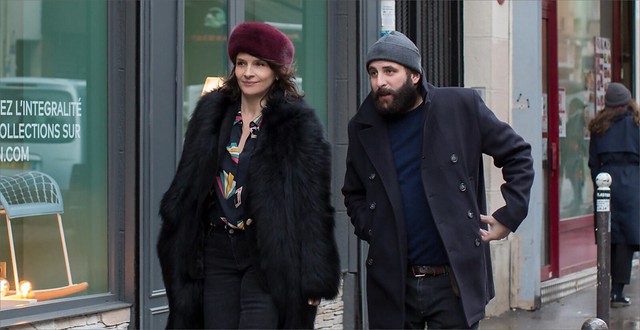
La passion de Dodi Bouffant/Taste of Things (2023) - Tran Screen Shot 2024-05-22 at 9.31.08 AM Screen Shot 2024-05-22 at 8.53.42 AM Screen Shot 2024-05-22 at 9.17.30 AM Screen Shot 2024-05-22 at 9.27.18 AM Screen Shot 2024-05-22 at 9.27.30 AM Screen Shot 2024-05-22 at 9.27.40 AM Screen Shot 2024-05-22 at 9.53.12 AM Screen Shot 2024-05-22 at 10.06.19 AM Sumptuous filmmaking for food lovers. Tran Anh Hung pleases the senses with always moving camera, capturing delectable food preparations with very handsome couple Juliette Binoche and Benoit Magimel, who were in relationship in real life. They obviously have a good chemistry together. The terminal illness plot aside, Taste of Things is about passion and passion for food that transcends love. Tran seems to be settling in for more soft-edged, traditional, French costume dramas, akin to Scent of Green Papaya, his Vietnam set debut. I'm not complaining, since he seldomly makes films and I welcome all his gorgeous offerings. But still, I'd love to see a spark in his filmmaking again, once displayed in Cyclo (1995) and I Come with the Rain (2009) and even in his Haruki Murakami adaptation of Norwegian Wood (2010).

Wednesday, July 6, 2022

Old Love Never Goes Away

Both Sides of the Blade (2022) - Denis Both Sides of the Blade Shot during the pandemic, with her frequent collaborators, Claire Denis's moody chamber piece, Both Sides of the Blade, might be seen too wordy and conventional for the die-hard Denis acolytes who prefer her blissful visual filmmaking with colors and textures. But rest easy, because the film is nothing but. It contains enough visual/aural power and beauty, combined with blistering performances by Juliette Binoche and Vicent Lindon. It's a damn near masterpiece in my book.

Sara (Juliette Binoche) is a radio DJ, wading through the news the world in turmoil in between playing music. With people wearing masks in public places and on the streets places the film firmly in the now. She is with Jean (Vincent Lindon), a former rugby player and an ex-con, trying to rebuild his life. They are very much in love. They have a history together and that history involves François (Grégoire Colin), Sara's former lover, who resurfaces in their lives, shattering their relatively tranquil existence.

It is implied that something went down, Jean took the rap and went to jail and François disappeared. Sara chose Jean, stuck with him and supporting him financially while he is trying to get his life on track. He has a teenage son with his ex, whom he left for Sara and a doddering mom (played by Bulle Ogier) who has the custody of his son.

The mere mention of François brings back a tidal wave of emotions in Sara. Jean politely asks her if it's okay for her to see him and François work together again in a sport recruiting service venture. She, hoping to get a glimpse of her former lover and reignite their passion, says, "do what you think is best for you." It's the physical reaction of Sara that's telling. She trembles in private, thinking of her former love. Even mentioning his name takes her breath away.

While Jean constantly is absent to deal with his troubled son and with business, Sara and François slowly reconnect. She resists the temptation at first. Jean accuses of her cheating on him and they have emotionally charged arguments. This is not going to end well.

Colin, who has been playing objects of desires in Denis's films over the years, is appropriately charismatic. His sharp features may have dulled over the years, but his intense stares still holds enormous power and mystery. Does he really want Sara back? Or is he there to destroy Sara and Jean's happy lives as revenge?

Co-written by Christine Angot (Let the Sunshine In), Both Sides of the Blade treads somewhere Denis has not explored before, a domestic chamber piece mainly taking place indoors. It's a boiling teakettle that never spills over unlike the kitchen fire that is Bastards, nor nice cup of tea that is Friday Nights (both with Lindon, by the way). Angot seems to be the anchor for Denis to put her feet firmly on the ground, giving Claire Denis films more realistic depiction of life, before the esteemed director again goes off to do a bigger, higher concept, English language productions like High Life and Stars at Noon. But by no means Both Sides is lesser Denis. Both Binoche and Lindon are on top of their games. Strong, mature yet vulnerable - regular people buckling under the pressure of so called modern life, which seems to be going crazier by the minute. Stuart Staples (of the Tindersticks)'s moody score permeates every scene and keep the tensions high and Eric Gautier's tight lensing adds to the emotional state of these tragic characters embroiled in love triangle.

It's also great to see all the familiar Denis collaborators' faces in bit parts - Lola Creton (Bastards) turns up as a wordless girlfriend of François who shoots dirty looks at Binoche, Alice Houri (Nette and Boni) as a kindhearted bureaucrat and Mati Diop (35 Shots of Rum) as a family friend of Jean's mom.

Both Sides of the Blades might be the few happier results (at least for cinephiles) the Covid-19 pandemic has produced and I am glad for it.

Both Sides of the Blade opens in theaters on 7/8 via IFC Films.

Thursday, July 2, 2020

Familial Truth

The Truth/La Vérité (2019) - Kore-eda
The Truth
Born out of forever adventurous French actress Juliette Binoche's years of insistence to work with Kore-eda Hirokazu, The Truth marks the famed Japanese writer/director's first film shot outside Japan and in non-Japanese language with international cast. And still, it is, in many ways, a very much Kore-eda film: about family dynamics with thorns and all, yet unmistakably gentle and humanistic. The only departure from his filmography I detect (other than not being Japanese) is that the characters aren't ordinary middle to lower class people that he usually portrays in his films. But I guess the prospect of working with a legendary French film star, Catherine Deneuve, made Kore-eda taking on a different direction. If the appeal of Kore-eda's films is in their universality, especially concerning adults in his films such as Still Walking and After the Storm - the innate goodness in people, admitting their shortcomings, small redemptions and letting the past go, The Truth shows that no matter the class distinctions, the concept of a 'family' still rings true to all of us.

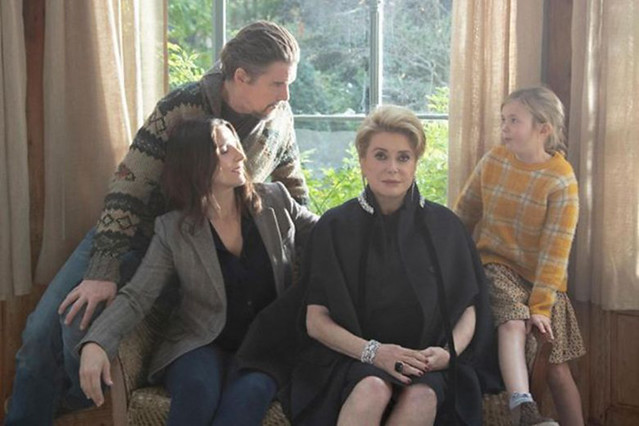
The story concerns Fabienne Dangeville (Deneuve), a legendary French film star and her screenwriter daughter Lumir (Juliette Binoche). Fabienne's memoir titled The Truth is coming out and to celebrate the occasion, Lumir and her American, second-rate TV actor husband Hank (Ethan Hawke) and their bi-lingual preteen daughter Charlotte (Clémentine Grenier) pay her a visit in a secluded grand mansion where Lumir grew up.

Upon reading the memoir, Lumir finds there are glaring omissions and falsehood from her childhood. For instance, Fabienne never picked up Lumir from school, like ever, unlike she says that she always picked her up even during her busy schedule. Fabienne's defense is , "Actors never tell the naked truth" in public. Everyone's memories are subjective anyway, she quips.

To make the matters worse, Luc (Alain Libolt), a long time devout assistant to Fabienne, calls it quits over not mentioning one word about him in the memoir. Now all the personal assistant duties fall on Lumir - receiving messages, accompanying Fabienne to movie sets, etc., whether she likes it or not- after all, she is her mother.

The catalyst for Fabienne happens when she takes an acting job, a supporting role in a low budget Sci-fi movie, aptly titled Memories of My Mother, by an unknown young director. Her co-star, a rising actress Manon (Manon Clavel), reminds her of her acting rival and close friend Sarah back in the day. It was kind-hearted Sarah who became a mother figure for young Lumir in Fabienne's absences.

Memories of My Mother, this movie-within-a-movie, is about a woman who is terminally ill, so she takes off to space in order to stop the advancing disease. She only comes down to earth every seven years to see her daughter, Amy, grow. She, herself forever young, gets to witness her daughter grow old. Fabienne is playing the old Amy part.

First, Fabienne tries to outdo her perceived rival in acting, scoffing and jabbing with pointy remarks at everyone around her, using her diva status indiscriminately. Then she realizes that Manon, like Sarah, is a genuinely warm-hearted soul and also a talented actress with great potential. This makes her to reassess her relationship with her daughter and people around her.

Is Fabienne character a thinly disguised reflection of Catherine Deneuve? Is The Truth a sly take on real life and movie industry and stardom in the likes of Postcard from the Edge? It is pretty clear that Kore-eda's interest is elsewhere. Given the opportunity to utilize a screen legend, he makes it larger than life, but at the core, The Truth is a superb family drama full of heart.

Fabienne says to Lumir in her defense things like, "I'd prefer to be a bad mother, bad friend but a great actress." It is true that we say the meanest, most hurtful things to those closest to us. Like it or not, we've all experienced it in our family. It's not because we mean it, but rather, because we can (and often shouldn't), precisely because we are family. For Kore-eda, who often examines the concept of family, understands this and creates beautiful, three-dimensional characters and great dynamics here. Deneuve is flawlessly in the role of aging diva. Binoche, a struggling daughter always in the shadow of her mother is also great. Ethan Hawke assumes his goofiness and brings in much needed (self-deprecating) humor and warmth.

With no huge emotional explosions and tearful scene-stealers, The Truth might come across as too subtle. But that's how Kore-eda always has been operating. Even though there is nothing Japanese about the film, he proves that there is universality in family dynamics anywhere. Quietly affecting with superb performances, The Truth is a welcome variation from always reliable Kore-eda.

The Truth opens July 3. Please visit IFC Films for more info.

Dustin Chang is a freelance writer. His musings and opinions on everything cinema and beyond can be found at www.dustinchang.com

Thursday, October 4, 2018

Being Relevant

Double vies/Non-Fiction (2018) - Assayas
Screen Shot 2018-09-20 at 6.49.20 AM
It seems, along with Godard, Olivier Assayas is one of the cinema's keenest chroniclers reflecting the soulless modern world in the late stages of capitalism. He reflected on the internet porn industry and shady side of desire in Demon Lover, corporate espionage and power politics in Boarding Gate, Hollywood & stardom in Clouds of Sils Maria and fashion industry in Personal Shopper. Now he takes on the fate of the print media with a biting new comedy, Non-Fiction. Unlike his last two collaborations with Kristen Stewart with international cast and locations, Non-Fiction takes place mostly in Paris with an ensemble cast of French actors - Juliette Binoche, Guillaume Canet, Vincent Macaigne and Nora Hamzawi. Although the scale of the film might seem smaller and less glamorous, Assayas' observation on the publishing industry and the rising popularity of TV are, as usual, spot-on.

Canet plays Alain, a book publisher. He is not too hot about the new manuscript of his long time client, Leonard (Macaigne), a semi-respected author. Alain used to like Leonard’s books, but the author's thinly veiled, self-aggrandizing autobiographical works have been getting on his nerves lately. So he decides to pass on his latest. Alain is also dealing with office politics with physical books transitioning into digital format and sales figures where prestige doesn't necessarily produce profit anymore. And there is a rumor of a large media conglomerate taking over the company he works for.

For Leonard, who is going through a hard time with his live-in girlfriend Valerie (Hamzawi), a sharp tongued political consultant for a major political candidate for the upcoming election, the news of Alain's refusal to publish his new book (titled Full Stop) is a big blow. Leonard also happens to be having a long term affair with Alain's actress wife Selena (Juliette Binoche) who also appears (thinly veiled of course) in Full Stop and she is deathly afraid of Alain finding out.

Valerie is getting frustrated because her earnest candidate's message is not getting through to people. In this post-Trump, post-truth era, there’s just too much noise for people to filter out, Leonard tries to console her to no avail. It doesn't help that when the allegation of sexual harassment turns up from the candidate's past.

Selena talks about a policier TV series that she has been starring for 4 seasons. It's physical work and kind of cool to be a feminist heroine but she doesn't feel any joy doing it anymore. Any TV show is something to put on when working stiffs get home after long day of work and binge watch and relax, she says. Alain chimes in that it's like those adult coloring books that are money-makers for publishing companies. They are for relaxation, nothing more. Selena complains that only other job offers she gets is Phaedra on stage, obviously because of her age.

All of these characters are trying very hard to make a mark in their own field. They want to desperately matter in an internet age where people prefer blogs instead of esteemed magazines and a twitter rumor can ruin someone's reputation in an instant.

Non-Fiction is a very wordy, very French film. In cafes, apartments and hotel rooms, they smoke, drink and talk non-stop. Leonard quips that because of twitter's narcissistic nature, it’s very French.

Printed literature versus e-book and the intellectual property rights versus the internet being the purveyor of democracy are all hot topics these days. Do we really prefer that digital media you bought, which eventually disappears from your computer’s digital library, to physical media that can never truly disappear? I feel that Assayas is the only major director who actually verbalizes these issues on screen.

A lot of big words are thrown about and discussed among these urban, cultured professionals - Unwitty witticism, auto-fiction, dematerialization, post-truth, etc. These characters embody the anti-thesis to the anti-intellectual world where everyone is free to spout three sentence haikus on twitter without any consequences.

Where it lacks Assayas' languid visual language, Non-fiction makes up with his sharp, witty dialog and humor. Macaigne, a comedian with his unkempt hair and portly disposition, appearing in many of quirky French comedies of late, is becoming a major figure in French cinema. He has worked his way up to having a full nude love scene with Juliette Binoche here.

In this fictional light comedy with its English Title Non-Fiction, along with its French Title Double vie, Assayas once again rightly reflects our society in real time. To top the movie's meta-ness, Alain tells that he is in negotiation with Juliette Binoche to do an audio book of Full Stop. This got the biggest laugh from the audiences at the film's press screening.

Wednesday, October 3, 2018

Basic Human Needs...in Space: Claire Denis' Rapturous New Film, High Life

High Life (2018) - Denis
i29623Y-1
Hazy mist sprays over the vegetable garden from a sprinkler system. Monte (Robert Pattinson) in space suit is seen outside the space craft, doing some sort of repair. There is a baby in a makeshift crib. He is cooing the baby through the speaker system. As she cries louder and louder, he loses his concentration and drops his wrench into the void. So starts a rapturous new film by Claire Denis, High Life.

With jumbled timeline and voiceovers over the course of the film, we gather this square, retro looking spaceship once was populated by convicts on death row being subjects to medical experiments as they get close to the nearest black hole. Doctor on board is Dibs (Juliette Binoche) who apparently killed her entire family on earth. She administers drugs and experiments to the crew mostly comprised young people of all genders and races. It's their reproductive abilities near the black hole she is most concerned about. The experiment can't fail because the ship is programmed to cut off life supplies if it does. It's now Monte's job to keep it going. So this is the basic idea for High Life.

It's all about basic human needs- eating, shitting, fucking and making little babies, in space. It's all about the human bodily fluids. Shit happens and people die. The ship's interior is beige colored and stained (with human fluids) and worn out in that queasy 70s way. Doing Science Fiction, Denis goes about it with bare minimum - no grand establishing shots of the interiors, no extreme high-tech, anticeptic looking dingerdos, just because it's not her concern. There is a 'fuck box' where crew uses to get their rocks off. Monte is practicing celibacy because he wants to control himself. But Dr. Dibs has other ideas about that. Denis pushed the limit of what is considered good taste with The Bastards. With High Life, she pushes even further - Taboo isn't taboo anymore. It has sharp edges like her other films. And It's those ecstatic moments, like in many of her other films - frozen bodies floating in space, meteor showers, baby eating dirt in the vegetable garden, dead dog in the stream, sudden burst of violence and emotions that puts High Life very much in the top tier of all Claire Denis-ean film.

Saturday, October 7, 2017

Claire Denis Does Hong Sang-soo?

Un beau soleil intérieur (2017) - Denis
Screen Shot 2017-09-28 at 6.18.13 AM
I think Claire Denis has been hanging out with Hong Sang-soo a little too much because I never expected her to do a wordy romantic comedy! And the result is delightful! It boasts the best rolling end credit of any movie ever.

Let the Sun Shine In concerns middle aged divorcée painter Isabelle (radiant Juliette Binoche). The film starts with her having sex with her regular lover, Vincent (Xavier Beauvois), a portly, pompous banker with terrible bedside manner. Some off-handed comment he says makes her cry. In fact, our disheveled heroine cries a lot, out of loneliness, in bed at night alone. Vincent is a married man and constantly says he won't ever leave his wife and family. He just want to bang her regularly is all.

Then there is a brooding stage actor (Nicolas Duvauchelle) Isabelle hits up on at the bar. They are about to work professionally together. But she is very anxious to know if he's interested in her as much as she is in him. But he rambles on about his acting, his identity whatev, finishing what seems to be his 15th beer. After hilarious and super awkward exchange in the car, Isabelle pretty much passive-aggressively makes him to 'come up for coffee' and stay the night. The next day, she is super happy about what happened but he's not. He's full of regret.

Then there is François (Laurent Grévill), Isabelle's ex, whom she has a 10 year old daughter with. She constantly regrets that she left him. He sometimes comes over and they screw. But they say some hurtful things to each other. They go their separate ways unhappy.

Always on the verge of tears, she confesses to her friend that she is deathly afraid that she'd pass the age to meet the love of her life, that she'd live the rest of her life alone and die alone. Easily swayed by other's opinions, whoever she meets, she asks for advice and second guess herself if she's doing the right thing.

Frustrated with her current relationship arrangement, Isabelle takes a trip to the countryside with her art circle acquaintances where they are invited to a little art festival. While taking a walk with the group, their pompousity and forced social niceties become too much for her and she blows up on everyone. Yet she finds herself in the arms of a soulful country bumpkin on the dance floor. Would that fling last?

We've all been there. The relationship is a fickle business and there are no easy answers. As you grow older, the need for companionship grows. Loneliness is a terrible thing. In a rom-com setting, Isabelle embodies a middle aged woman in the city dealing with these issues perfectly. With co-writer Christine Angot, Denis wrote a very funny script and created a very funny character that is unlike anything she created previously. The only comparable film she made would be Friday Night (2002). But that was a mood piece more than anything else with little dialog.

Since it's shot by the great Agnes Godard, Let the Sun Shine In is filled with gorgeous close-ups. As the arresting images unfold with jazzy soundtrack (by Stuart Staples of Tindersticks), you are safely in Denis territory. And the familiar faces show up - Alex Descas plays one of Isabelle's lover to be (there is a lot of potential), Valeria Bruni Tedeschi briefly shows up too.

The biggest suprise, figuratively and literally, is the appearance of Gerard Depardieu as a fortune teller who's motives are suspect. His long, meandering exchange with Isabelle got hearty laugh from me.

After a couple of very dark films (White Material and Bastards), Denis is trying something different. Let the Sun Shine In feels much looser and lighter than her other films but it still retains all of her visual language and style. With her announced English Sci-fi project with Robert Pattison, I welcome this change. Someone please give this woman a best director prize already!

Let the Sun Shine In plays as part of NYFF 2017 at Film Society of Lincoln Center on 10/7 and 10/8. Please visit FSLC website for tickets and more information.

Tuesday, February 14, 2017

Bressonian Comedy Fail

Slack Bay/Ma Loute (2016) - Dumont
94aecab6b30ce0e76c6bf87b3c120fd5
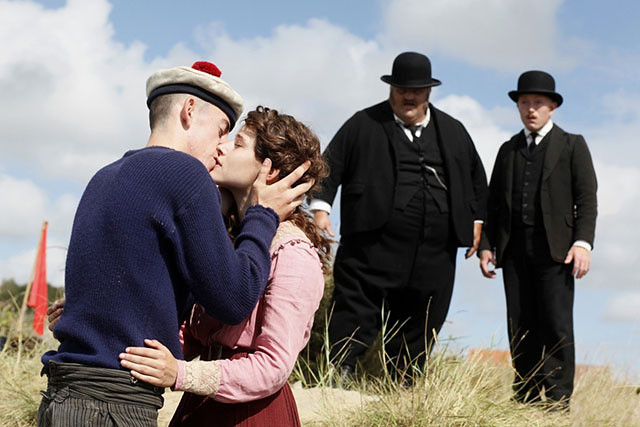
Dumont does Discreet Charm of Bourgeoisie? Known for his austere films about human conditions or religious faith being tested, Dumont, hailing from Northern France, sets Slack Bay in Channel Coast, just like in most of his films. So how do I feel about Dumont doing comedy... I quietly bailed out on his 4 part TV series Lil' Quin Quin. I found its weird sets of characters (played by non-actors, true to Dumont tradition) coming across as extremely inauthentic, opposite of his dramas. He does another all-out comedy here, but this time with big French movie stars pitted against another set of weird looking non-actors.

The Van Peteghems, (Fabrice Luchini and Valeria Bruni Tedeschi) with their two daughters are vacationing on the coast in their 'Egyption style' mansion, overlooking a picturesque bay consist of sand dunes and cliffs. They are soon joined by Aude (Juliette Binoche), M. Peteghem's sister with her tomboy daughter/son Billie (stunning newcomer Raph) and mentally challenged Christian (Jean-Luc Vincent), Mme. Peteghem's brother. Down below, the Bruforts, a long faced hearty fisherman clan live, making extra pennies by carrying visitors (man and woman) across the channel in their arms slogging through knee deep water- I guess rich doesn't want their clothes wet? People have been disappearing in the bay and Laurel and Hardy of a bumbling police inspectors are dispatched to solve the mystery. Just like the police in Lil' Quin Quin, the duo in Slack Bay are also extremely inept and disarmingly peculiar in their behavior and mannerisms.

The thing is, it's really uncomfortable to see all these esteemed actors acting grossly over the top characters- Luchini slurrs his lines in his hunchback posture, Tedeschi is overly hysterical, Binoche's acting, with rolling eyes and over-exaggerated faint spells, can only be described as camp.

Yes, the notion of 'Eat the rich' is literally fulfilled in Slack Bay. The Van Peteghems are nothing but snotty nosed inbreds. But Dumont doesn't show how the Bruforts are any better. There is a scene where Ma Loute Brufort (Brandon Lavieville) brutally beating Billie after he finds out she is a he. I find that very disturbing. The faces of Dumont's Bruegel-esque non-actors worked to his advantage to ground his films firmly on the ground. With well known actors acting like retards in Slack Bay, it loses grip on its reality and floats away like the obese police inspector does in the movie.

M. Dumont, you've proven that your Bressonian filmmaking doesn't work on comedies. Can you go back to searing dramas now?

Thursday, October 9, 2014

Hall of Mirrors

Clouds of Sils Maria (2014) - Assayas
 photo clo_article_story_large-630x420_zps4e9aad0c.jpg
Delicious! Assayas' take on celebrity, acting, time passing is an extremely entertaining hall of mirrors. It concerns an aging movie star Maria (Juliette Binoche) and her personal (very)American assistant Valentine (Kristen Stewart) heading over to Switzerland to celebrate the life and work of the great stage/film director Wilhelm Melchoir who gave Maria her first big break in Maljora Snake, a mythical tale of two women, only to find out that he just passed on. Now Maria has to improvise an eulogy instead of tribute. Valentine is a very able assistant, always on her mobile devices arranging everything for Maria. She informs her movie star employer that a young hotshot director (Lars Eidinger of Alle Anderen), wants her to be in the stage production of Maljora Snake revival, but this time, he wants her to play the older part. The younger part Sigrid, the part that made her famous, is going to be played by Hollywood's rising star and the center of the gossip world, 19 yr old Jo-ann (Chlöe Moretz). This proposition takes Maria through a whirlwind of emotional turmoil. She hated the character of Helena who commits suicide after getting dumped by Sigrid. Time has passed: no longer young, she has to endure the fate of her predecessors. With much Valentine's urging, she accepts the role and immediately regrets it right afterwards. She googles Jo-ann's latest shenanigans where the little brat assaults police officers, blabbering her mouth off at various talkshows, etc. But nevertheless, she starts rehearsing the play with Valentine in the remote house (Wilhelm's) on the mountains in Switzerland. As they say the lines back and forth, the material strongly resembles their relationship without them noticing it.

This multi-layered reflections on real life situations with all the principals involved is wickedly entertaining. In Assayas hands, these materials are never trash but playful. There is not an ounce of wink-wink sarcasm of typical Hollywood satire. There is no surprise in the great Binoche, showing wide range of emotions of a seasoned actress as she grapples the idea of time passing and celeb-dom but it's Stewart who steals the show. That cocky confidence, that one note delivery is a perfect match for the role. Their back and forth banter is extremely believable and nuanced. Assayas never makes it over-the-top: the sexual tension between the two women are subtly presented, never vulgar. And the storytelling is brimming with intelligence but never feels trickery. One of the most entertaining, engaging films I've seen by Assayas.

Clouds of Sils Maria
plays as part of NYFF on 10/8 and 10/9.

Wednesday, October 8, 2014

Passion for Greatness

Rendez-vous (1985) - Techiné
Rendezvous1 Rendezvous2 Rendezvous3 Rendezvous4 Young aspiring stage actress Nina (baby Juliette Binoche) walks into a real estate agency, looking for a cheap apartment. She just got to Paris 3 month ago. She makes a big impression on Paulot (Wadeck Stanczak), a lowly young real estate agent there. He follows her, suggesting a dirt cheap dump that just came in. Lovelorn Paulot accompanies to Nina's apartment where she breaks up with her current boyfriend who warns Paulot of her loose morals. Then Paulot brings her to his flat where he shares with charismatic Quentin (Lambert Wilson) who takes an interest in Nina also. After that encounter, Quentin stalks her with ferocious intensity, taunting her for her short comings as an actress and not knowing what true love means. He's an whirlwind of emotions that Nina didn't ask for, but she can't shake him off easily. Paulot's puppy dog love becomes an obsession and acts out his frustrations/jealousy and angrily at Nina. Then Quentin throws himself under the car.

Enter Quentin's mentor Scrutzler (Jean-Louis Trintignant), a theater director. He had worked with Quentin in his theater production of Romeo and Juliette. Since he's gone, there might not be another production. Nina auditions for the part of Juliette. Once she gets the part, she is having a hard time. How would she know to play the role if she's never been in love? Quentin's ghost haunts her.

Rendez-vous, is a beautiful film about passion. It's also about youth. It sounds like bullshit but in order to be great at whatever you do, you need to experience passionate love. Binoche looks so innocent in this great, breakout role. Top tier Techiné for sure.

Wednesday, June 19, 2013

Passing Times

L'heure d'été/Summer Hours (2008) - Assayas
Image
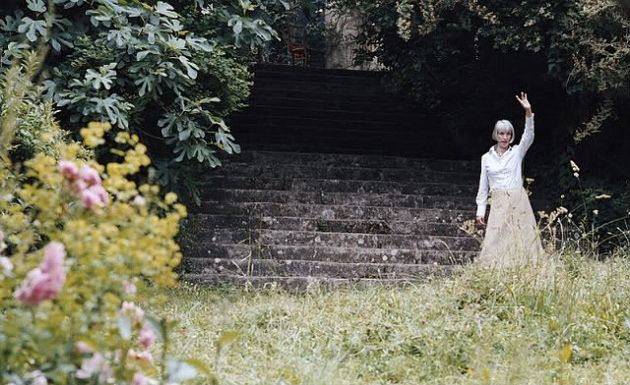
Light touches, a lot of room for actors but mostly Olivier Assayas's Summer Hours is about feelings, nostalgia without sentimentality. Three grown up siblings, an economics prof. Frederick (Charles Bering) the eldest, NY based designer Adrienne (Juliette Binoche) and Jeremie (Jérémie Renner), a Puma factory manager in China, gather with their children and spouses for their mom Helen (Edith Scob)'s birthday at an idyllic summer house filled with precious art and furniture. It is their childhood home with many personal memories and secrets. Helen, at 75, knows that her days are numbered, so she starts arranging things and pesters her children about divvy-ing up the the house and assets. They wouldn't hear any of it. But after Helen dies, with financial instability, they decide to sell the house and have all the art liquidated- many of them being donated to Musée d'Orsay for tax purposes. The grown ups don't have much attachment to the house anymore and too busy with their own lives.

In a typical Assayas fashion, the director orchestrates the star studded cast with balance and care. The result is a warm, mature, harmonious film that reflects human experience.  But heart of the film belongs to Edith Scob's presence and grace in the first 30 minutes. Loved Binoché's bitchy, unsentimental Adrienne. Also loved two contemplative moments: one with Helen sitting alone in the dark and one with Frederick alone in the shadows. And what a finale: Alice de Lencquesaing from Father of my children, now a slightly mischievous teen, provides the well deserved, poignant, fitting ending sequence to the film.

Sunday, August 19, 2012

The Rat is the New Unit of Currency!

Cosmopolis (2012) - Cronenberg
cosmopolis
Faithful word by word to Don DeLillo's source material, Cronenberg breezes through the one day in the life of the master of free market Eric Packer (Robert Pattinson). Spending most of his screen time in an indistinguishable white stretch limo, surrounded by glowing screens of charts and numbers and the interior design straight out of Prometheus, Packer conducts his daily business there. The president is in town. The streets are packed, with cars, protesters and ordinary people you will barely see or hear. It is Packer's universe we are living in, not the other way around.

There is a tangible threat to Packer's life, according to his high-tech security team. But he really need to go across town to get a haircut. Dialog is stilted and encounters are stagey just like in many of the other Cronenberg films. He is betting against Yuan (whatever that means) and by the end of the film he would be penniless. His demeanor doesn't change- he doesn't get hysterical or have a sudden epiphany. Detached as ever, his death wish gets fulfilled in the hand of a former employee (Paul Giamatti) living in a squalid building.

Cronenberg brilliantly captures DeLillo's take on the hideous amount of wealth accumulated by the Wall Street types before the crash. Packer's glass kingdom is done in not by the global protest movement, but by him questioning himself 'what's all this for?' He needs constant physical act to feel something- screwing, being voluntarily tased , shooting through his own hand. Juliette Binoche shows up for a quicky, only to be told by him to make an offer to buy an entire chapel filled with Rotko paintings, Samantha Morton drops in as his chief theorist and Matthieu Amalric cameos as the world's greatest pieing activist. Pattinson is perfect as a dead-eyed 28 year old master of the universe and the rest of the casting, impeccable like everything else about the film- sound design, cinematography, etc. You can take Cosmopolis as the driest black comedy in years- it's hilarious. One of the year's best.

Wednesday, January 5, 2011

Before Sunset for Grown Ups?

Certified Copy (2010) - Kiarostami
certified-copy-from-car-2
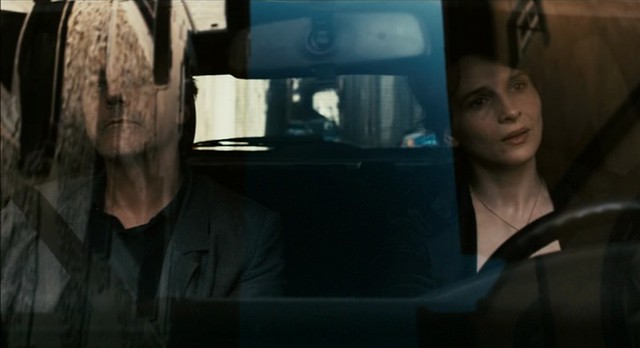
Is it safe to say Certified Copy is Before Sunset made by Abbas Kiarostami (Taste of Cherry, Wind Will Carry Us, Close-Up) starring middle aged people? Well, not really. It starts out with an Englishman James (William Shimell, resembling David Strathairn) giving a talk on his new book about the legitimacy of copies compared originals in art in picturesque Tuscani. As an infatuated antique dealer (Juliette Binoche, reviving her frazzled single mom in Hou Hsiao-Hsien's The Flight of the Red Balloon) picks James up and drives him around town as a guide, the film becomes something else: deconstruction of a marriage. Even though it's the first film set outside Iran, there are Kiarostami touches everywhere- long driving shots, actors talking while looking at you straight in the eyes, blurring the lines of what's real and what's not. As the couple exchange tit-a-tat, we witness the copy of the real married couple breaking apart.

I realized while watching it, that Kiarostami was at it with his magic again, completely blowing away my expections of what the movie was going to be with his elegance in simplicity.