Wednesday, May 30, 2018

A Love Letter to American Cinema

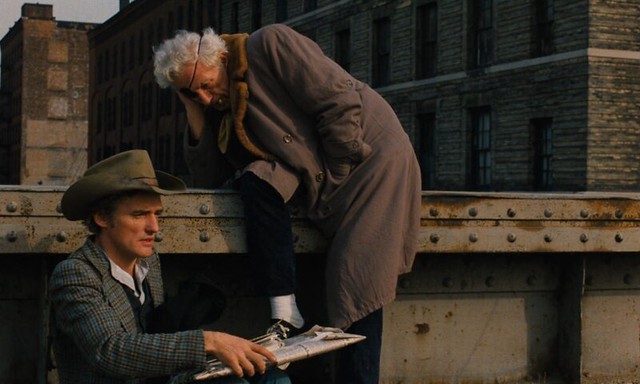
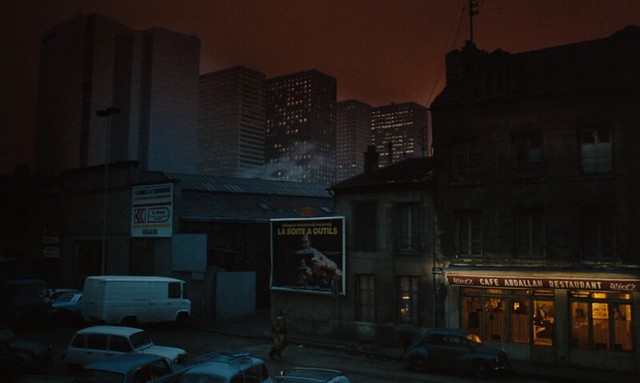
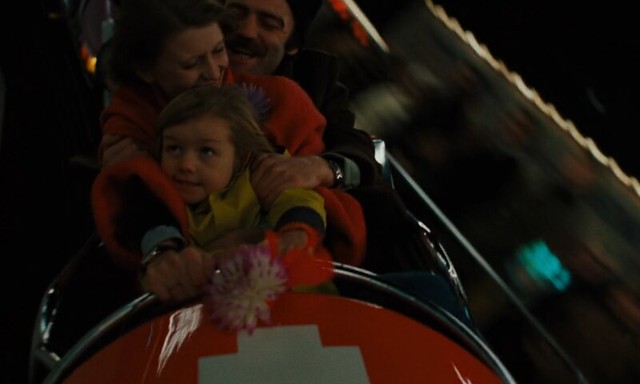
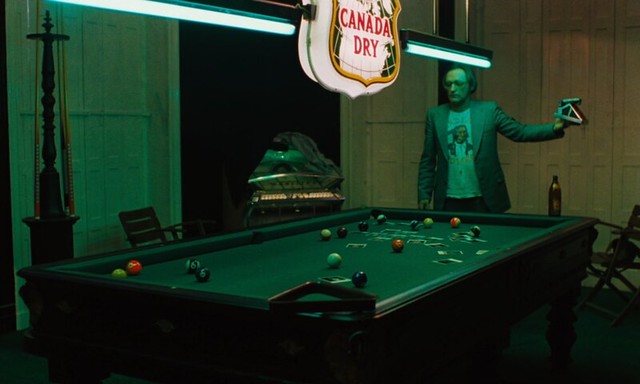
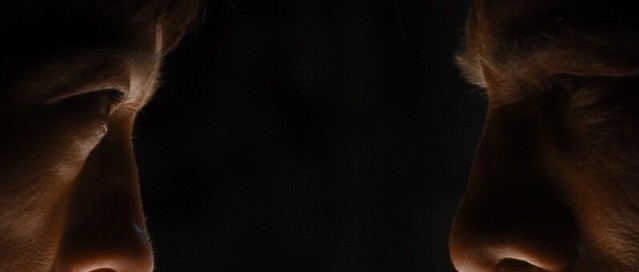
The American Friend (1977) - Wenders
Screen Shot 2018-05-30 at 9.55.16 PM
Screen Shot 2018-05-30 at 9.41.44 PM
Screen Shot 2018-05-30 at 9.58.23 PM
Screen Shot 2018-05-30 at 9.55.50 PM
Screen Shot 2018-05-30 at 9.48.37 PM
Screen Shot 2018-05-30 at 9.56.52 PM
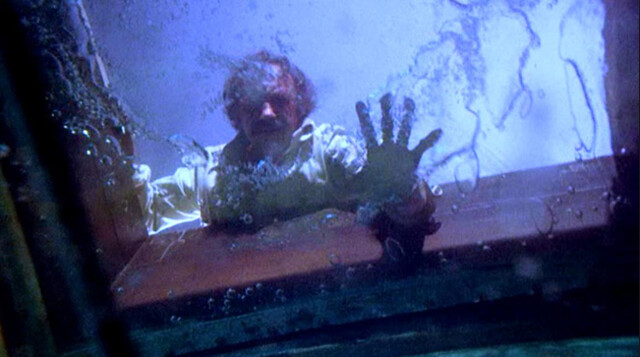
Unlike a lil sociopath playing elaborate games in Patricia Highsmith's novels, in Wenders's hands, Ripley is a quiet enabler, trying to stir shit up from a distance because someone stiffed him. But he is no less psychologically complex here. With all his American director heroes making a cameo - Nicolas Ray and Sam Fuller, admired for their hard hitting noirs and under-appreciation stateside, I'm sure, The American Friend is Wenders's thinly veiled love letter to American cinema.

Jonathan Zimmermann (Bruno Ganz) is a soft spoken, picture framer/art restorer leading quiet life in Hamburg with his wife and son. He has a rare blood disease that he regularly visits his doctor for. He invites the ire of Ripley (Dennis Hopper), a cowboy hat wearing American con-man, when he disses him (wouldn't shake his hand) at an art auction where Ripley is selling one of the counterfeit paintings (painted by Nick Ray in Manhattan studio). In revenge, Ripley and a French gangster Minot (Gérard Blain) starts a rumor that Zimmermann's health is serious and don't have long to live.

Freaked out by his health concerns, he reluctantly accepts Minot's proposal - killing a couple of no good gangsters from New York for large sum of money for his soon to be widowed wife and fatherless son. The following Paris underground subway assassination sequence is thrilling to watch.

The killing takes a toll on mild mannered Zimmermann, physically and emotionally and when he's forced to do it again, this time in a moving train in Munich, Ripley, who's been mumbling, questioning himself who he really is, decides to help Zimmermann to be his friends.

The plot line makes little sense but it's Robbie Müller's cinematography that really shines here. It's all about mood and atmosphere - Zimmermann's childlike red and white stripe scarf pops, red Voxwagon Beatle glows, dingy green flourecent lights adds character indoors, and soft crushed blacks and oranges are all gorgeous. With Fuller and Ray playing dangerous seedy characters, you can easily guess the romantic notion of gangsterism and its thrill equal American movies in the mind of impressionable German director. Ripley in a cowboy hat is the instigator who plants the seeds in an unsuspecting German man, but he himself can't avoid jumping in the action because it's so fun in the end.

I do not have a reference point here since I have not seen Wenders's 70s movies before they were restored. But along with Wrong Move, The American Friend is one of the most beautiful color film I've seen. It's like William Eggleston photographs reversal, saturatated Kodachrome photos. Bright, warm and gentle. I don't know if those were enhanced since it was shown in theaters in film print. But it's up there with A Woman is a Woman in terms of beauty.

Monday, May 28, 2018

Unapologetic Visual Feast

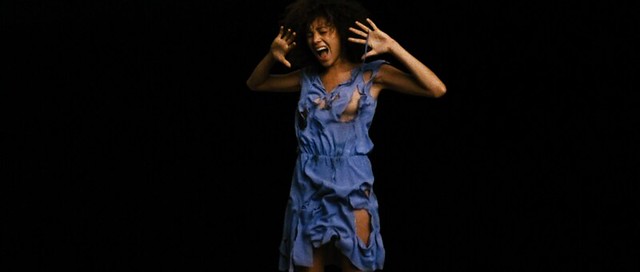
Let the Corpses Tan/Laissez bronzer les cadavres (2017) - Cattet, Forzani
Screen Shot 2018-05-28 at 10.27.23 AM
Screen Shot 2018-05-28 at 9.37.14 AM
Screen Shot 2018-05-28 at 9.38.13 AM
Screen Shot 2018-05-28 at 9.41.49 AM
Screen Shot 2018-05-28 at 10.28.35 AM
Screen Shot 2018-05-28 at 9.33.53 AM
Screen Shot 2018-05-28 at 9.25.07 AM
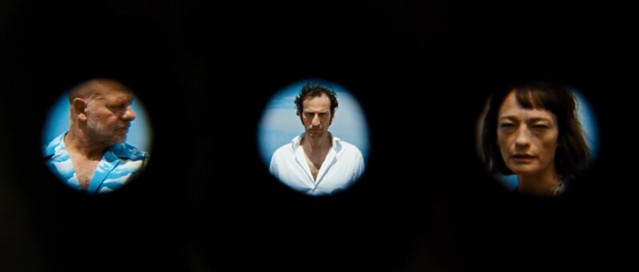
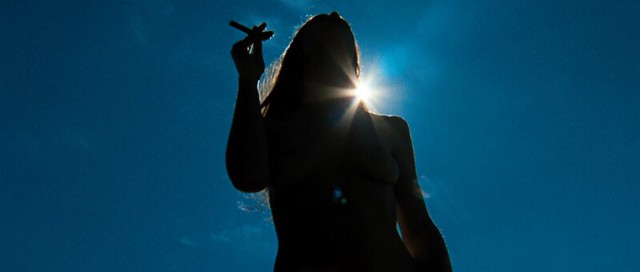
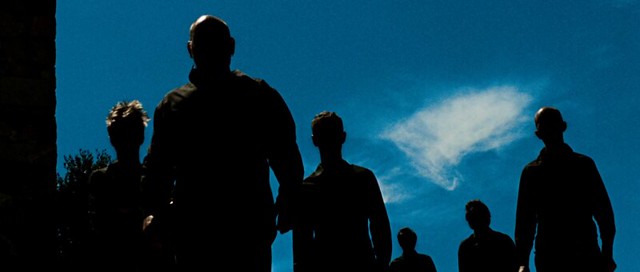
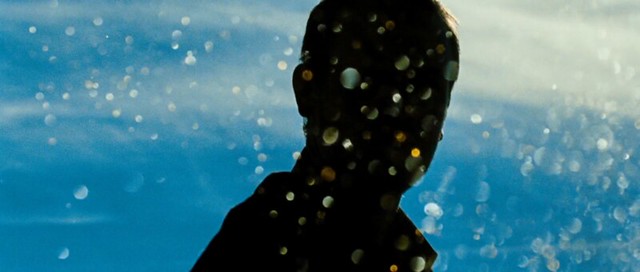
As usual, Belgian visual stylists duo, Hélèn Cattet and Bruno Forzani, creates unapologetic visual feast. Good to see Elina Löwensohn becoming a European arthouse queen in recent years as she plays an aging matron of a group of criminals hiding in some sunny Island here. It seems she has been wielding some cult like sexual power over these men and a writer (Marc Barbé), as she struts around with very little clothing. Things get a little crazy after the gang's gold heist and unexpected visit from the writer's wife, kid and a pretty nanny.

But really, story has little importance here. It's all to do with ultra stylized assault on the senses. Sex and violence mingles. Rapid editing, colors, shadows, sound design... Cattet and Forzani know what they are doing. Their craft pushes its giallo trappings on to another level, elevating it to an art form.

Sunday, May 27, 2018

Memories and War

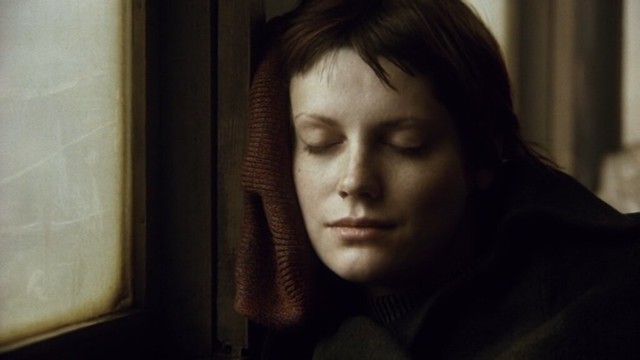
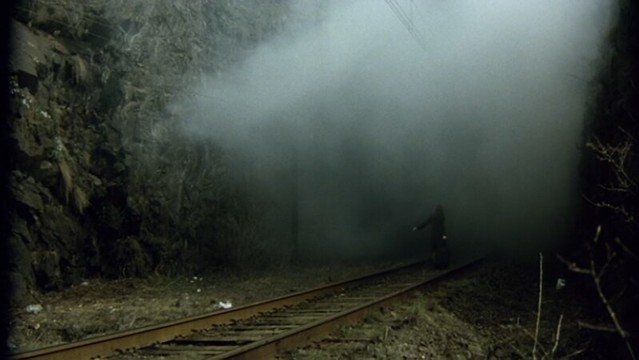
Mayak (2006) - Saakyan
Screen Shot 2018-05-27 at 10.18.03 AM
Screen Shot 2018-05-27 at 10.20.18 AM
Screen Shot 2018-05-27 at 10.24.26 AM
Screen Shot 2018-05-27 at 10.42.54 AM
Screen Shot 2018-05-27 at 10.44.24 AM
Screen Shot 2018-05-27 at 10.31.12 AM
Screen Shot 2018-05-27 at 10.29.44 AM
Screen Shot 2018-05-27 at 10.23.09 AM
Lena (Anna Kapalena) comes back to her hometown, a small mountain town in war torn Armenia. The electricity is scarce, gunfires and military helicopters are heard day and night. Lena can't convince her grand parents to leave with her and go to Moscow. And the train station is swamped with people trying to leave but no trains are coming.

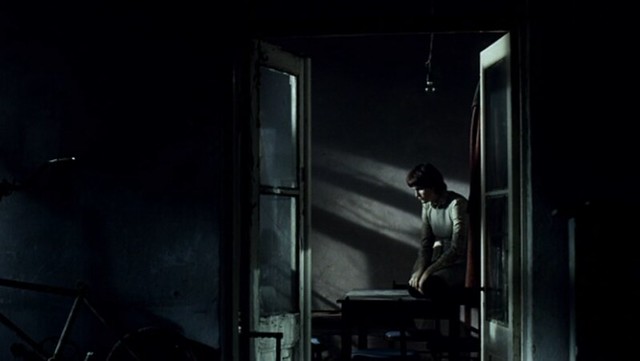
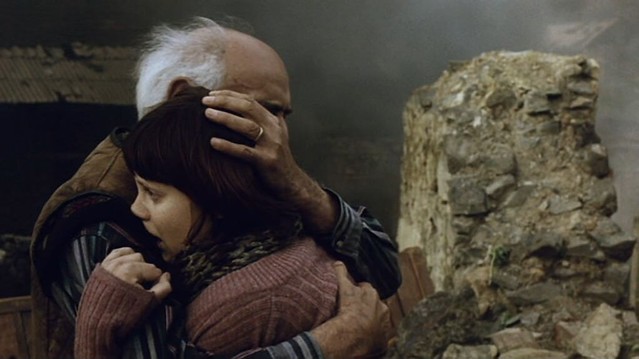
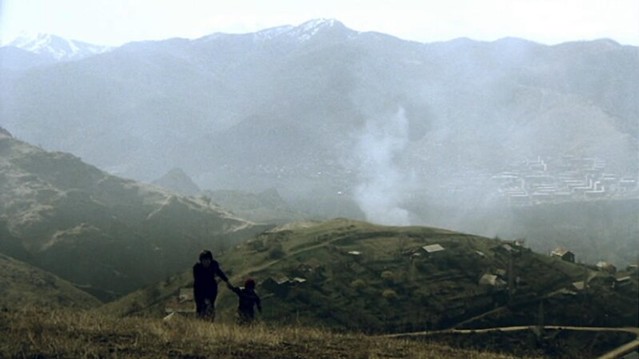
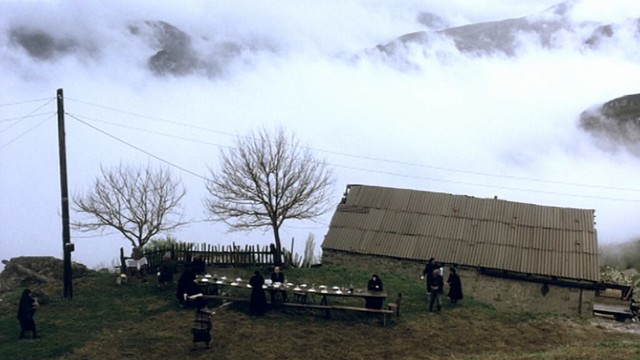
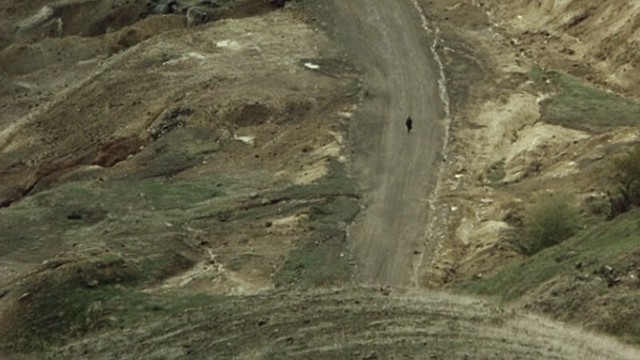
Mayak is a simple story: a young woman comes home, sees the devastation of war and leaves. But in this semi-biographical film taking place in 1990s Caucasus conflict, director Maria Saakyan lets stunning cinematography do the talking. In its dreamlike opening as Lena wakes up on the train and walking into the fog, her hometown in the mountains is like a time trapped mirage. Lena gets to enjoy her past life- gets drunk on the dinner table and shoots off a dresser by mistake. But the reality of war is near by- neighbors die, a helicopter swoops in, trains never stop.

Saakyan prefers non-chronological approach and includes documentary footage of the conflict and flight of the refugees. It's deeply moving, poetic contemplation of memories and war.

Saturday, May 26, 2018

Rudderless

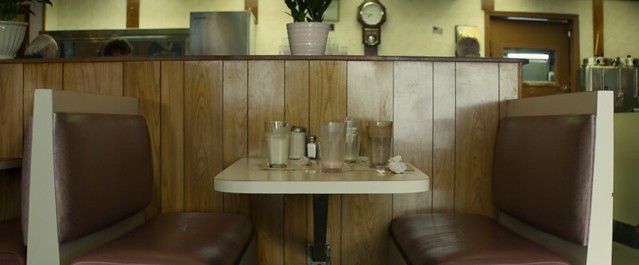
You Were Never Really Here (2017) - Ramsay
Screen Shot 2018-05-26 at 11.20.45 AM
Screen Shot 2018-05-26 at 11.27.38 AM
Screen Shot 2018-05-26 at 11.24.26 AM
There is nothing that is new or revolutionary in Lynne Ramsay's latest, You Were Never Really Here. It's a rehash of noir and gritty New York movies of yesteryear, albeit extremely well done. What she does here is slightly subverting that tired angry white male hero genre - rescuing an underage girl against the sleazy high echelons of society, into an white male identity crisis. If Travis Bickle is an angry vigilante who only goes by his own moral code whether society accepts him or not, Joe (played by Joachim Phoenix) is a lost man who never shows his emotions or thought process. With his abusive childhood or Afgan vet trauma shown in bursts of flashbacks, he is just a simple hired hammer (his preferred weapon), completely rudderless who has no capacity in thinking what lies beyond the job when confronted with the prospect of future.

Stunted in his thick body and cotton mouth speech patterns, Joe is only a flesh and beard. Only company he keeps are his own old mother, his old PI boss and a cat. Things become a little more complicated when he rescues Nina, a state senator's daughter from a underground brothel operating out of a glitzy midtown townhouse. There is a bigger conspiracy as Nina is napped by NYPD goons in front of Joe and all of his associates are killed.

The film is a technical marvel on all levels - from the memorable opening title sequence to minimalist action sequences taking place in dark alleys and corridors, to weird Ramsay moments - as an assassin lay dying in Joe's kitchen, they sing along a sentimental old tunes together. Prevailing sunny 50s tunes against heart thumping ultra modern soundtrack by Jonny Greenwood clash and show Ramsay's point about dated white male heroism and the melancholy it represents. Naturalistic setting (Queens) and Phoenix's understated performance balances out her poetic, dreamy visual flourishes later on in the film. Completely unsentimental and rapturously understated and subtle, Ramsay operates in her top level with You Were Never Really Here.

Phoenix is great as the embodiment of emasculated, bruised male ego and does his hammer do the talking. The diner scene at the end is every bit as memorable as the ones in Good Fellas or Five Easy Pieces from a complete opposite spectrum.

Thursday, May 24, 2018

Tale of Childhood, Tragedy and Love in the 90s

Summer 1993 (2018) - Carla Simón
summer1993
Catalan director Carla Simón's first feature, Summer 1993, is a touching autobiographical film about the AIDS crisis in the 90s seen through a child's eye.

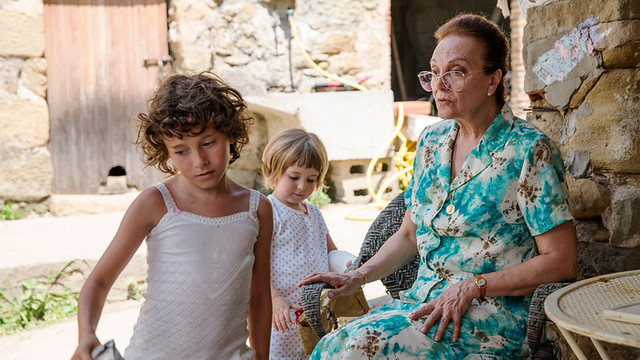
Subtly drawn and quietly devastating, Simón creates a delicate children's film that is not really a children's film, but a memoir of that specific decade in a country that was and is still very religious. It also benefits from stunning lead performance by young Laia Artigas, who plays a 6-year old city girl, Frida, who lost her mother to the epidemic but too young to understand the social stigma it carries.

It starts with Frida leaving her Barcelona home where she lived with her extended family. She is to live with her uncle Esteve and his wife Marga and their 3-year old daughter, Anna, in an idyllic country home. The apartment in the city will be rented out. The sun-drenched countryside is a big change for Frida. But her new family - new mom and dad are loving and understanding, plus she now has a new playmate, Anna.

But she doesn't understand why she is being subject to series of tests in the hospital and other parents freaking out and grabbing their kids around her in the playground when she scrapes her knee and bleeds, and why Marga wears rubber gloves tending her wounds.

Spoiled rotten in her life in the city, sullen Frida is very hard to please. She acts out in ways she doesn't quite understand herself. Good-natured Esteve and Marga do their best, but it seems pretty obvious that the spoiled city girl is a bad influence on Anna. Tired of having a problem child in their household, they argue.

Taught by her grandma, Frida say prayers daily for her mom and leaves things (that she stole from Marga's closet) at an altar of Virgin Mary near the house. Constant visit from her unconditionally loving grandparents and other relatives doesn't help Esteve and Marga's situation, as they spoil the girl to no end and she throws tantrum every time they visit. To make things worse, Frida leaves Anna in the forest and lies to Marga her whereabouts. It is a harmless child’s play, but Anna ends up with a cast on her arms.

After clean bill of health declared by the doctor, Marga lets her guard down a bit, and young Frida soon eases into the country living calling Esteve and Marga mom and dad. But sometimes she falls into fits of melancholy.

The word AIDS or HIV is never uttered in the film. Grown ups in the film obviously have some understanding of what's going on and they speak in hushed tones in front of oblivious Frida. She is a child indelibly marked by tragedy, a product of a specific decade that was marred forever by devastating disease that swept the world.

Handheld, sun-drenched photography provides intimacy and warmth and contrasts our moody heroine and subject matter. It's an incredibly difficult role to play for a child and bright eyed, wild haired Artigas is a revelation. Carefully put together and wonderfully acted, Summer 1993 is a beautiful film not only to reflect on the fearful period of 90s and the generation it affected but also highlights unconditional love of the tight-knit family overcoming tragedy.

SUMMER 1993 opens in New York and Los Angeles on Friday, May 25, with a national rollout to follow. Please visit Oscilloscope Laboratory for mor information.

Dustin Chang is a freelance writer. His musings and opinions on all things cinema and beyond can be found at www.dustinchang.com

Sunday, May 20, 2018

End of an Era

Night Moves (1975) - Penn
Screen Shot 2018-05-20 at 12.27.05 PM
We've seen this before, or at least, reiteration of the same scenario time and time again: a washed up P.I. taking the job of missing daughter case from a seemingly wealthy woman in LA, and along the way, he gets embroiled in a bigger conspiracy with lots of ins and outs. It's your typical LA noir. But it's the 70s and cynicism and rudderlessness is rampant. And it's that palpable melancholy that presides over Night Moves that makes it memorable.

Harry Moresby(Gene Hackman), a two bit P.I. and a former football star, takes on the case from Arlene, a past-her-prime actress looking for her 'free spirited' teenage daughter Delly (short for Delilah "my husband was fond of biblical epics back in the day" Melanie Griffith). With a little clues given about Delly's crowd - movie stuntmen and mechanics, the case takes Harry to film sets in New Mexico then to the Florida Keys where he finds her, living under Arlene's second husband Tom and his alluring companion Paula (Jennifer Warren). The couple operates small charter plane/boat business, living in relative obscurity. Harry also has to deal with his marriage falling apart. He is trying to solve other people's lives but can't deal with his own.

There are some great scenes with Hackman and Susan Clark (Ellen Moresby) and also Warren. It's the 70s. Harry can't beat his way out of his troubles like Sam Spade used to. Dialog is terrific in that muddied up 70s way (Kennedy assassination was mentioned after seeing a dead body) instead of snappy one-liners. Sex and drugs of the counterculture is summed up in Melanie Griffith's 16 year old nude body. With all the macho posturing of rugged stuntmen and sport heros, Night Moves perfectly signals the end of an era, the way Inherent Vice or Fear and Loathing in Las Vegas was supposed to capture, all back in 1975 only to be revived by Reagan era action movies without any scruples. Night Moves would make a terrific double feature with The Conversation.

Tuesday, May 15, 2018

New York African Film Festival Celebrates Its Magnificent 25th Year! 5/16 - 6/10

With plenty of evidence of the decline of Western Civilization presenting itself on TV news these days, NYAFF (not to be confused with New York Asian Film Fest) , in it's 25th year, with more than 30 films on its slate, criss-crossing 3 of New York's venerable film institutions (FSLC, BAM and Maysle's Cinema), gives filmgoers a chance to experience fresh perspectives on the world.
This year's festival includes new films from emerging filmmakers, shorts programs, revivals, panel discussions and an art exhibition.

Opening Night will spotlight Apolline Traoré’s award-winning film, Borders, which speaks to migration as well as to African women’s struggles, in a timely echo of the #MeToo movement. French director Berni Goldblat’s Wallay will have its New York premiere as the festival’s Centerpiece film.

The festival tips a hat to key figures in the history of African film with the U.S. premieres of Abderrahmane Sissako: Beyond Territories, Valérie Osouf’s intimate portrait of the acclaimed director of Bamako and the Oscar-nominated Timbuktu; a 2017 version of the 1983 classic Selbe: One Among Many, by Safi Faye, the first sub-Saharan woman to direct a theatrically released film, now restored to its original Wolof language; and Mohamed Challouf’s Tahar Cheriaa: Under the Shadow of the Baobab, which documents the career of the founder of the Carthage Film Festival, Africa’s first film festival. The festival will include the 1989 documentary short Parlons Grand-mère by the late Senegalese director Djibril Diop Mambéty.


These are the dates for this year's New York African Film Festival:


FSLC: 5/16 - 5/22, Brooklyn Academy of Music: 5/24 - 5/28 & Maysle's Cinema: 6/7 - 6/10

Make no mistakes, below outstanding, touching, funny, powerful and hopeful films are definitely not made in shithole countries:

Borders - Apolline Traoré *Opening Night Film
AFRICAN_Borders_01
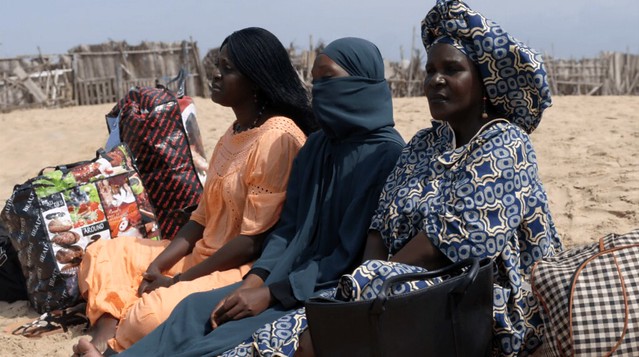
Adjara, a Senegalise woman with her savings in her waste bag, travels to Lagos, Nigeria in the hopes of becoming a trader. Along the way, she meets 3 other female travelers in various situations.

This six day journey from Senegal through Mali, Burkina Fasso, Benin to Nigeria is an arduous one as they face rampant border corruptions among the sub-Saharan countries, violence, rape and fighting with other passengers, shady transportation and breakdowns.

Borders highlights pan-West African sisterhood and imagines the better future for its female citizens.

Wallay - Berni Goldblat *Centerpiece

Screen Shot 2018-05-15 at 8.52.46 AM
I've seen quite a few films over the years about a troubled youth going through right of passage visiting and connecting with his/her ancestral homeland, but none as funny and touching and joyous as Wallay.

Wallay takes place in small village in Burkina Fasso, where Ady, a troubled 13 year old city kid from Paris is sent to by his father, after stealing money from his home to buy a shiny pair of red sneakers. Decked out in street gear, an iphone and fancy headphones, the spoiled brat faces reality of no electricity and two buckets of water per shower in the African village. Add to this unimaginable hardship, his uncle Amadou, a respected village elder, is a hardass and wants him to work on a fishing boat for 2 euros per day to pay off his debt. Not only that, after finding out Ady is not circumcised, the uncle wants the local doctor to perform circumcision on the boy to make him a real man.

At Amadou's urging, Jean, Ady's grown up distant cousin and a guide, takes the boy to meet his grandma who lives in a remote mountain town. Ady becomes grandma's instant favorite who calls him 'Little Hubby'. With the help of 'chilled out' grandma, Ady slowly learns the importance of family, discipline and respect. He gets to experience a bit of romance too with Yeli, grandma's little helper.

Shot beautifully on film, Wallay benefits from amazing performance by Makan Nathan Diarra as Ady, an insolent city kid with an attitude, slowly turning himself into a man. Goldblat doesn't rely on its spectacular locale or its customs, he doesn't have to. The story of Ady is universal enough. Everything plays out naturally. Hugely captivating and entertaining, Wallay is one of the best films I've seen this year.

Abderrahmane Sissako: Beyond Territories - Valérie Osouf
AbderrhamaneSissakoBeyondTerritories_05 copy
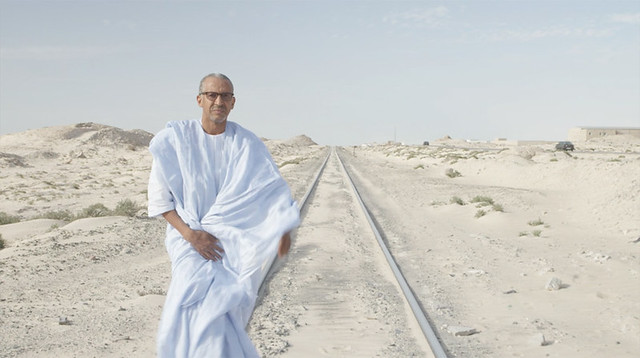
Valérie Osouf's documentary on one of Africa's most revered filmmakers, Abderrahmane Sissako, is not only an intimate portrayal but an essential viewing in understanding the man behind the camera. Widely regarded as a modern day master filmmaker with his simplicity, directness, colors and movement in films like The Life on Earth, Bamako and Timbuktu, highlighting the lives of fellow Malians in the age of global capitalism and ISIS, Sissako elevated modern African cinema to the world stage. Thankfully, with the help of Western admirers - Martin Scorsese and Danny Glover (both are interviewed for the film), he keeps on making gems reflecting the world with Africa at its center.

In an informal open house setting, Sissako invites and talk with everyone - a film enthusiast cop, a philosopher, scholars, actors, dancers while the life is happening all around them - roosters walk across the court yard, children play around, a woman gets water from the well. His background gets revealed - from his Moscow film school days - his mentor Marlen Khutsiev reminisces that he knew Sissako would be a great filmmaker because he noticed his thoughtful gaze when they first met. He gets his intellectual side from his father's family and warrior side from his mother's who are from very different parts of Mali, therefore his deeper understanding of different cultures.

The last segment of the film takes place in China, where he's researching for his new film, a love story about a Chinese man and an African woman, tentatively going to be taking place in China, Ethiopia and possibly Nigeria. He chats with his good friend Danny Glover over skype about his project. The film ends in an optimistic note. The influence of China is already felt globally. But Africa can't be recolonized. Connecting these elements, it's more like Silk Roads connecting different worlds with mutual respect than one side dominating the other.

As we witness the obvious decline of Western civilization every day, I can see Sissako's vision and it's pretty bright.

*My interview with Abderrahmane Sissako last year

Five Fingers for Marseilles - Michael Matthews
Five Fingers of Marseilles
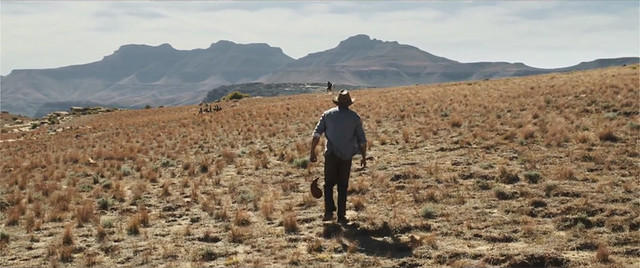
Marseilles is a railroad town in South Africa which still bears the name of its colonial days. Michael Matthews' sumptuously shot Western Five Fingers for Marseilles starts with 5 young friends making an oath to protect their town as freedom fighters, even if it means from each other. Tau, nicknamed Lion of Marseilles, one of the five, flees town after killing corrupt and abusive white police officers, leaving his friends and lovely Lerato behind to fend for themselves.

Now a grown man and a small time outlaw, Tau (Vuyo Dabula) comes back to town. The 'New Marseilles' is a booming town with Pockets, one of the five friends, as a mayor who is keeping uneasy peace by making pact with Lepoko - a ruthless, one eyed super-villain who wants to bring chaos at any cost with his marauding gang known as Nightrunners. No one notices Tau, and start calling him 'Nobody' except for 'Pastor', a storyteller of the five. As the Lepoko's grip on the town becomes tighter, and everyone needs a savoir, Tau, the cowardly, disgraced freedom fighter rise to the occasion?

Just like a typical Western genre film, there will be bloodshed, sacrifices will be made, reckoning, redemption.... With the stunning backdrop of Lesotho Valley, Matthews morphs post-apartheid South Africa into a gripping Western.
Saturday, May 5, 2018

Bearing Witness

Ivan's Childhood (1962) - Tarkovsky
Screen Shot 2018-05-05 at 1.59.47 PM
Screen Shot 2018-05-05 at 1.34.04 PM
Screen Shot 2018-05-05 at 1.36.06 PM
Screen Shot 2018-05-05 at 1.37.22 PM
Screen Shot 2018-05-05 at 1.38.31 PM
Screen Shot 2018-05-05 at 1.40.56 PM
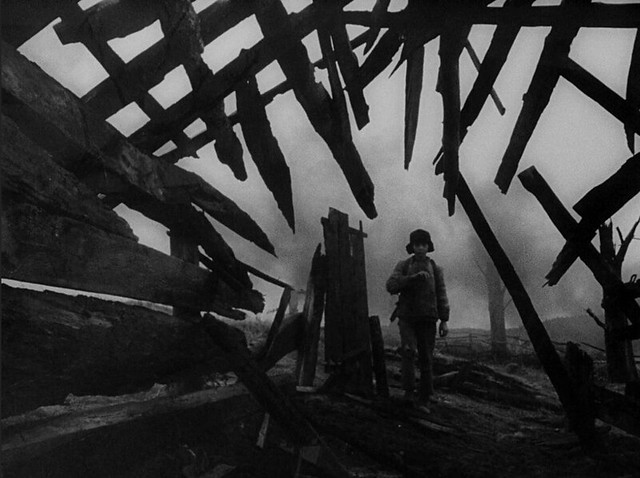
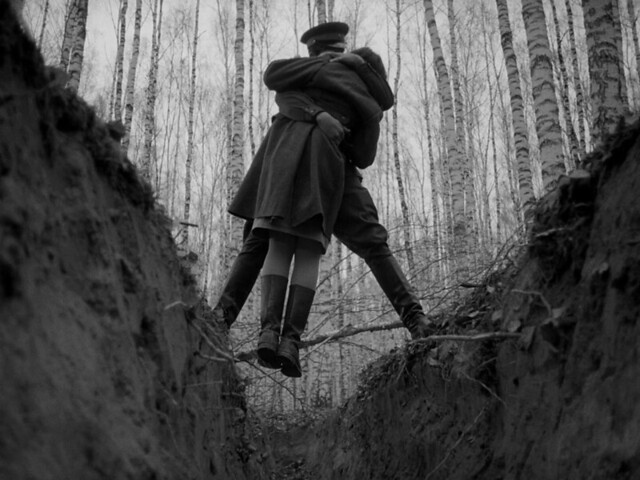
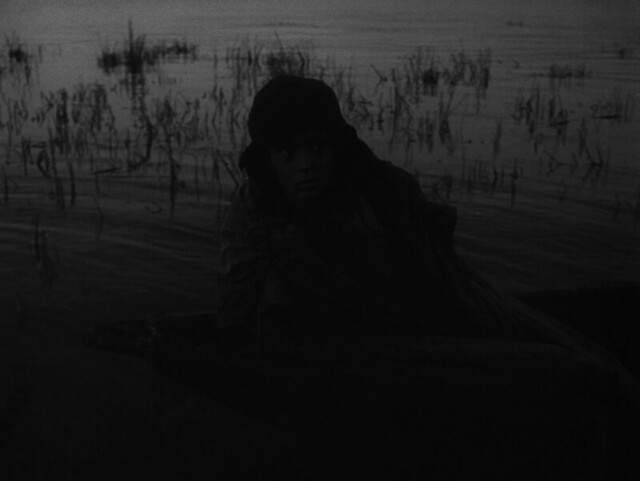
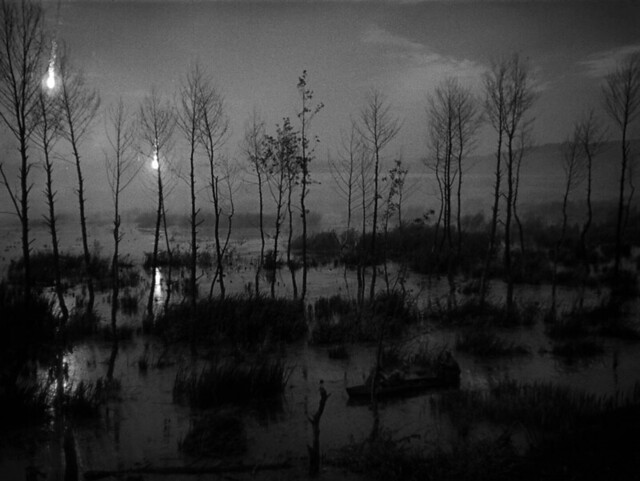
The film starts with an impressive crane shot of young Ivan (Nicolay Burlyaev) playing in the piney forest. It's all idyllic and whimsical. This is what this young man dreams of when he closes his eyes shut for brief nap while scurrying around the burnt out surroundings and murky swamps of the WW2 frontline. He is volunteering reconnaissance work- because he is small and nimble, he crosses the river to the German side and report back to the Russians with the enemy's movements. The last one was a tough one and Ivan is exhausted mentally and physically. The young lieutenant Galtsev (Evegeni Zharikov) who took him in after such mission, not knowing who the kid was and what he was up to, voices his opposition to the idea of child soldier to his superiors. Kholin (Valentin Zubkov), a veteran of war and Ivan's friend agrees that Ivan needs to be sent to the military school or boys home, far away from the war front. But he also knows that Ivan's going to run away eventually and end up in the war front. Ivan's mother and sister was killed in the war and he has only one thing in his mind - vengeance. No one can stop him.

After Ivan runs away from the Military school and ends up on the front, Kholin, Galtsev and the boy decides to go across the river for yet another dangerous mission. In the middle of it, they realize that Ivan is the only one small enough not to get caught and they let him go alone for the mission.
Ivan's childhood is a staggering debut of Andrei Tarkovsky. In it, his signatory visual prowess in the later films is evident here. The measured framing and dolly and crane shots are out of this world! The brief romance in the white birch forest between Kholin and military nurse Marsha (Valentina Malyavina) are lyrical and breathtakingly beautiful. The seemlessness of editing and transition from dreams/flashbacks to reality, especially the Ivan and the mother in the well is just astonishing. The point of view change from Ivan then later to Galtsev is also very impactful- the war burden is on the survivors to witness the devastation of the innocents, not the innocents themselves.

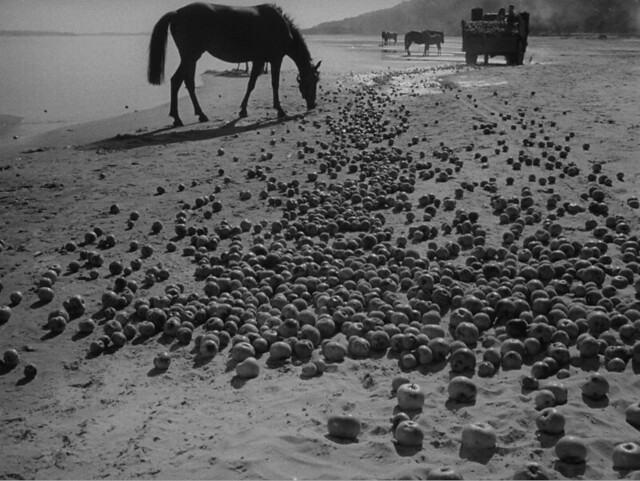
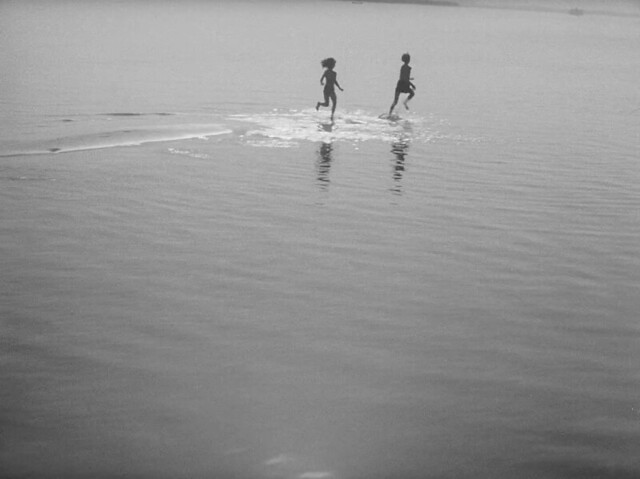
Tarkovsky knows that he doesn't need to put emphasis on the theme of child soldiers and women in war. Earlier scene with Ivan writing down what he learned from the mission counting different seeds he collected and sending them in envelopes suggests that his recons might be a fool's errand that the superiors are letting the war scarred child play his spy games however irrelevant to the realities of war. In fact, there is knowing looks and smiles exchanged between adults when they talk about him. But Ivan's Childhood is not overtly melancholic or dramatic. The evidences of the war themselves - photographs of the war dead, of the defeated - photos of laid out bodies of Goebel's young daughters who were poisoned by him before he killed himself after Germany's surrender, speak volumes already. It ends in one of the most aching scenes of film history - eternal summer on the beach with the tracking shot that seems to go on forever. It's a beautiful film.

Monday, April 30, 2018

Delicate, Micro Melodrama

L'Amant d'un jour/Lover for a Day (2017) - Garrel
Screen Shot 2018-04-29 at 9.21.27 PM
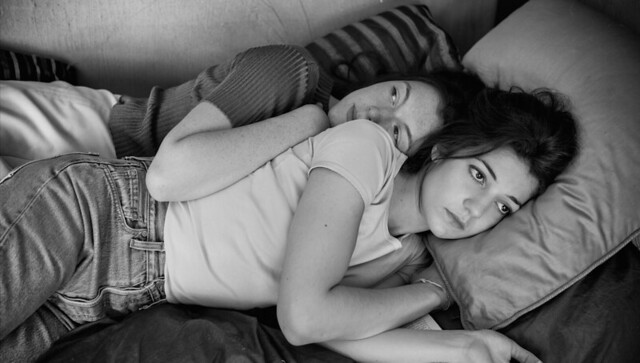
The film starts with Jeanne (Esther Garrel) in emotional and physical shambles. She just left her live-in boyfriend. She can't believe it is over. With a luggage bag in tow, she rings at the door of her professor father (Éric Caravaca), Gilles. Somewhat awkwardly, she is introduced to his girlfriend Adriane (Louise Chevillotte) who is about the same age as she. As Jeanne slogs through post-breakup phase, the two girls bonds over their love for Gilles (one romantic the other as a daughter). Unlike Jeanne, who is going through experiencing the first big love of her life and its aftermath, Adriane seems to be in control of the situations at first - unlike Jeanne who was pursued by her beau and finally relented then fell hard, Adriane was the aggressive one on Gilles who finally gave in. Even though their relationship in campus is hush-hush.

Adriane also turns out to be a big flirt. But Gilles tells his daughter that their relationship won't be affected by one's infidelity and that they will stay together even though they might cheat on each other. But in reality, it doesn't turn out the way we tell each other, even though one thinks oneself as wiser, mature one.

As usual, shot on B & W 16mm without any bells and whistles, Garrel continues his own delicate, micro melodrama of man-woman in varying degrees and it's lovely. You gotta give him credit for his consistency. At 70, without wordy dialog or help of cigarette and alcohol in portraying young love and heartache, he gets it right emotionally. He makes Hong Sangsoo's films feel like Avengers movie.

Sunday, April 29, 2018

Estonian Folklore Stunner

November (2017) - Sarnet
Screen Shot 2018-04-29 at 8.37.27 AM
Screen Shot 2018-04-29 at 8.39.57 AM
Screen Shot 2018-04-29 at 8.42.31 AM
Screen Shot 2018-04-29 at 8.43.18 AM
Screen Shot 2018-04-29 at 8.56.05 AM
Screen Shot 2018-04-29 at 8.48.19 AM
Screen Shot 2018-04-29 at 8.57.09 AM
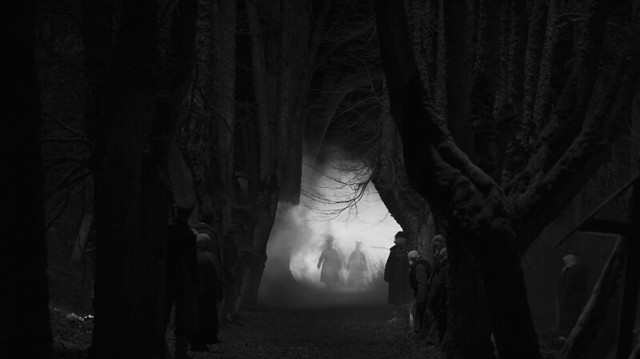
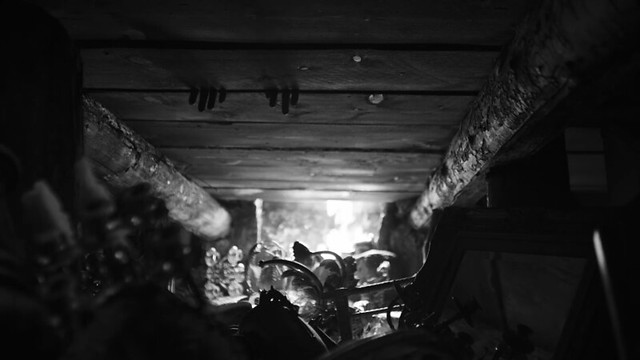
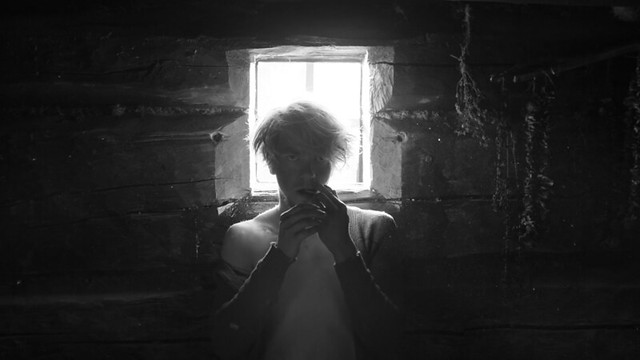
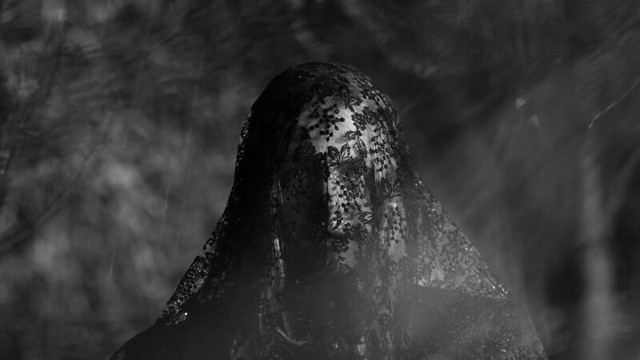
Weaving several Estonian folklore into the narrative, Rainer Sarnet's black and white shot, darkly comic November is a stunner. It's all mud and shit and grit in a feudal village. People barely survive by eating tree barks and dependent on kratt - a servant made out of inanimate objects from discarded farm equipment which is given a soul by the devil in the forest in exchange for 3 drops of blood. Two young childhood friends Liina (Rea Lest) and Hans (Jörgen Liik) are of marrying age but Hans is enchanted by a German baroness (Jette Loona Hermanis) whose father owns the land and a big manor on the top of the hill. Even though the village witch tells Liina to kill the sleep walking baroness, she can't, because it will break Hans's heart.

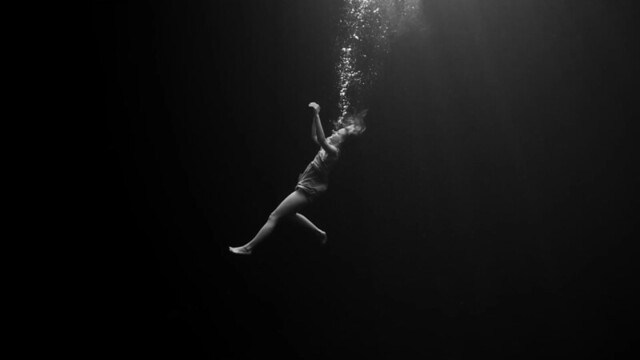
November features some stunning visuals - All Souls Day procession where the deads in white are emerging from the forest, marching in unison, story within a story (told by kratt, which happens to be a snowman created by Hans) about Venetian lovers on a gondola, underwater scenes, etc, etc. But really, every frame in the film is gorgeous to look at.

Just like any folklore, the bittersweet unrequited love ends more bitter note than sweet. But November is a real visual feast and certainly worth a look.

Wednesday, April 25, 2018

Art of the Real 2018 Preview

Art of the Real, FSLC's annual celebration of non-fiction cinema is back and remains my most anticipated cinema event even in the city that is not in short supply of great film series all year round. An amazing array of genre-defining, ever expanding cinematic experiments are presented to satiate your inquisitive cinematic minds! This year's lineup includes Infinite Football by Corneliu Porumboiu, Sergei Loznitsa’s Victory Day, Kazuhiro Soda's Inland Factory, and many more.

Again, Art of the Real is an immensely rewarding cinematic experience both in form and content. Don't miss it!

Art of the Real runs from April 26 through May 6, 2018 at Film Society of Lincoln Center in New York. Please visit FGSC for more info.

Here is preview of six notable films for your pleasure:

John McEnroe: In the Realm of Perfection *Opening Night Film
Screen Shot 2018-04-14 at 3.04.00 PM
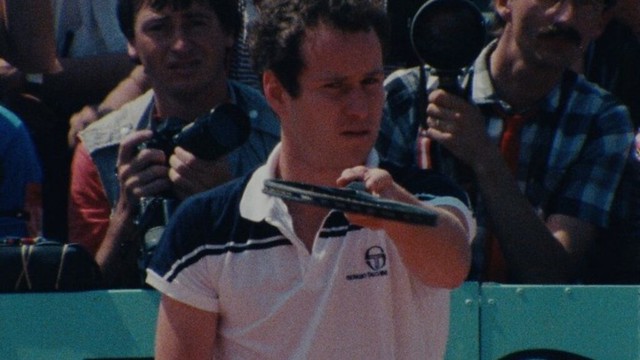
This terrific, archival footage documentary starts with a Godard quote - "Cinema Lies, Sport Doesn't." A French archivist Julien Faraut stumbled upon hours and hours of 16mm shot French Open matches at Roland Garros, initiated by Gil de Kermadec, the first director of French Tennis Federation, to study and make instruction films for aspiring athletes. But what Faraut saw was a compelling, verité style portraits of each players, and especially of McEnroe, who was at the time, the number one player in the world.

It happens that McEnroe wasn't a good model as an athlete who had atypical style for these often rigid, dry instructional films. His form was unusual and his methods were unpredictable, which gave his opponents a hard time. As a perfectionist of the game, he hated incompetency of people in the court and as a result, we've got to know him as who shouted and argued with umpires endlessly. He also hated being filmed or photographed. There are several moments where he stops the game to complain that the rolling cameras were bothering him while looking straight into camera.

Like last year's Dawson City: Frozen Time which uncovered the intersection of Gold Rush and cinema, In the Realm of Perfection finds the intersection of sport and cinema. Drolly narrated by Mathieu Amalric, Faraut creates Chris Marker style film that is both entertaining (thanks largely to McEnroe being himself) and thoughtful. The epic match between McEnroe and his long time nemesis Ivan Lendl in 1984 captured in grainy 16mm is literally, epic.

Casanova Gene
Screen Shot 2018-04-15 at 11.12.14 AM
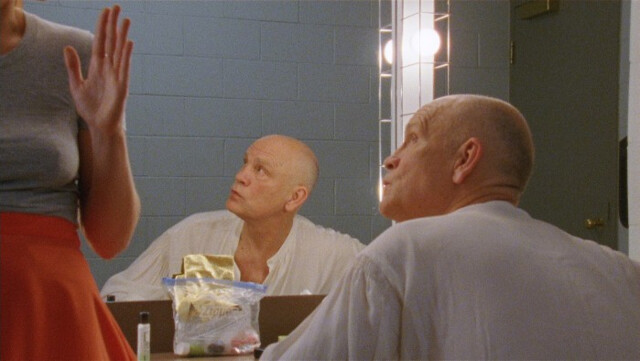
German filmmaker Louise Donschen examines desire of all forms in Casanova Gene and it's a fascinating one. In evolutionary biology studying finches in a science lab in the woods, an ornithologist tells us why female finches cheat on their partners - they inherited the Casanova gene from their fathers, as male finches are polygamous. "Is it beneficial to female finches?" the filmmaker asks off the frame and the ornithologist doesn't have an answer. John Malkovich plays Casanova or Malkovich the actor playing one, as he is interviewed by the filmmaker. He simply describes himself as a slave to his senses and explains the difference between character and temperament.

Carnival in Venice is juxtaposed with a church and the clergymen. Kids play in the forest, lights change, illuminating the rooms through the window, a dominatrix in SM studio holds a session, a hypnosis takes a place where a woman experiences intense orgasm. Then there is staged bar scene where transman complains that he misses uterus.

The colors - the red of the roses, orange beak of the finches, grey and red of the clothes- everything surreptitiously intermingles in this seemingly fragmented, yet arresting film that reminds me of the work of Alexander Kluge. A real gem.

Infinite Football
Screen Shot 2018-04-17 at 9.12.33 AM
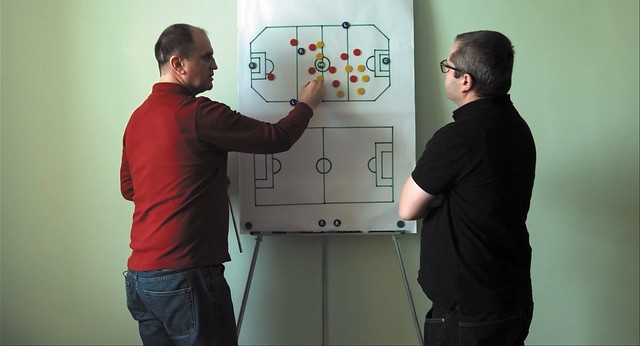
Romanian helmer Corneliu Porumboiu (Police Adjective, 12:08 East of Bucharest) makes a wacky yet poignant documentary about his childhood friend Laurentiu Ginghina, a middle aged bureaucrat who is obsessed with changing the rules of soccer to make the sport safer. At 19, he fractured his right fibula as many players in the opposite team ganged up on him in the corner when he had the ball. Because of the injury, he had to give up hope of going professional. Now he is hell-bent on changing the game - he wants to implement octagonal shaped soccer field with sectioned groups where 5 offensive and 5 defensive players can't cross each other's lines and no offsides. He says this improvement will speed up the game and make it smoother and safer.

He wanted to go to Forestry university but it required physical where you had to run which he couldn't do with his leg. His dream of coming to the US twice - first to run the ranch out in the West, then in Florida, gets thwarted by 9/11 and its aftermath with tighter restrictions. He ended up where he is, some desk job which is not that exciting. Ginghina's sad sap story, told in his office where he keeps getting interrupted with his daily tasks- an old lady with her inheritance questions, paperwork, meetings and appearances, brings out chuckles rather than sympathy.

Porumboiu prods his friend's obsession about 'the ball being free' in a sport where beauty is in player's skills and the ball is just an object. Our bureaucrat obviously is self aware, that deep down he equates himself with the ball and trying to escape from tight corners. That he sees himself as a superhero from comic books, like Superman or Spiderman who has a normal boring dayjob. Is his situation a stand-in for the general disillusionment with European Union, felt by majority of its members? Maybe.

After seeing his plan implemented on the indoor soccer field to not so enthusiastic results, he keeps changing his rules and therefore his creation being tagged as Infinite Football by Porumboiu. The film ends with Ginghina's poignant and touching monologue about the world where there is less violence which the director equates for political utopia. There is no fast zoom in/freeze frame or zany music for cheap laughs. Nor the film intentionally demeans our silly bureaucrat. Just like other Romanian new wave compatriots, Porumboiu knows how to justly reflect the lives of ordinary Romanians finding themselves riding along in a rapidly changing world and facing mildly amusing situations.

Braguino
Braguino
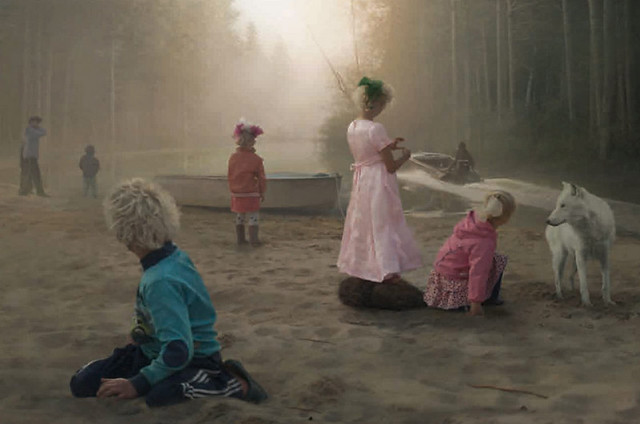
A French visual artist and film director, Clément Cogitore whose supernatural tinged Afgan war thriller, Neither Heaven Nor Earth, made waves at the film scene few years back, travels to remote Eastern Siberia to document the Braguinos, a family living off the environment. The head of the family tells us that they wanted to get away from it all, so they just packed up and left on their boat. Their 6 children were all born in the taiga. It is clear that the Braguino clan is not only dealing with family rivalry with the neighboring Kilins just other side of the river, but dangerous animals - especially bears and also ever expanding human presence in the region.

Cogitore and his cinematographer Sylvain Verdet is there to capture what can only be described as Tarkovsky-an beauty in rather dream-like Siberian taiga. The natural beauty is only accentuated by fair-haired Braguino children in their colorful dresses and clothes. As the helicopters full of heavily equipped newcomers landing on their territory, we all know that the happy days of the Braguinos are numbered. It's a striking non-fiction filmmaking featuring otherworldly beauty.

Milford Graves Full Mantis
Screen Shot 2018-04-21 at 10.06.50 AM
Milford Graves, a free-jazz percussionist, records his heartbeat with a self-made EKG machine hooked up to the computer and makes electronic melodies out of it. He is also a martial art enthusiast and practitioner- he learned his moves through studying preying mantis instead of going to a local dojo. His style is Yara, a yerba word for 'Nimble', a mixture of West African dance moves and martial arts. In the labyrinth of books, machines, instruments, artifacts of his house/studio in sunny South Jamaica in Queens, Graves reminds you of your eccentric uncle- a smart person with full of self-taught knowledge who forms a philosophy of life with first-hand experience. And when he plays, it's electrifying.

Relying completely on Graves' words, Jake Meginsky and Neil Young creates a compelling portrait of a modern day sage and a fantastic storyteller who is approachable and very down to earth. As he talks about his music being the conduit of vibrations of cosmos, you listen. He might be the remnants of 60s mind-body-spirit mumbo jumbo, but the way he is so in tune with nature, as he does gardening in his back yard, as he in tune with his body- his world view makes sense, especially now, when the whole world seems to have gone crazy.

All That Passes Through a Window That Doesn't Open
ALL THAT PASSES BY THROUGH A WINDOW THAT DOESN'T OPEN
Martin DiCicco's film charts transcaucasian trail on two side of tracks - Azerbaijan and Armenia. Once a vibrant railway system linking Turkey - Georgia - Armenia and Azerbaijan which served as the crossroads of Eastern Europe and West Asia left in ruins by decades of neglect and regional conflict. Without saying much of its very complicated geo-political history, DiCicco elegantly concocts tale of two countries, one with full of hope and looking forward, the other reeling from the ghost of the past.

In the first 2/3rd, it concentrates on Azerbaijani side, where mostly young migrant workers living on the train cars while they travel to upgrade the railways. Voices of some of its workers narrates their days on the rails, how it's lulling affects their bodies own senses and memories. One says he likes railway works because it's measurable against time. That there's sense of accomplishment as he and his co-workers go closer to their destination. There's dancing, drinking and sense of camaraderie and dangers of accidents too.

After the war between two countries and neighboring Turkey supporting the muslim Azerbaijan and closing off its borders in 1993, Armenian side of the tracks which was a lifeline for trade to the west and east, left to rot. The last 1/3rd of the film features an Armenian station agent guarding the one such neglected station, waiting for it to be open again. His words and accompanying visuals are poignantly drawn out.

All That Passes Through... invokes the poignancy of Kiarostami's road films in contemplating on the time passing. DiCicco and his editor Iva Radivojevic draw a evocative picture of the region full of history, longing and hope.

Tuesday, April 17, 2018

Amazing Grace

Grace Jones: Bloodlight and Bami (2017) - Fiennes
Screen Shot 2018-04-16 at 9.08.06 PM
How do you demystify someone without sacrificing all the enigma and mystery around the subject? Sophie Fiennes, documentarian extraordinaire behind two highly entertaining Zizek docs and one on artist Alselm Kiefer just does that with one of the most iconic figure in fashion and music, Grace Jones. Instead of doing typical chronological biography highlighting her hits and movie appearances over the years with bunch of boring sit-down interviews, Fiennes just follows Jones around on stage, behind-stage and hotel rooms as she treads in her stilettos. Bloodlight and Bami shows the cultural icon dealing with musicians and others on the phone herself to make the record. Her phone manners in her booming bariton are sometimes aggressive, sometimes cloying, other times aggressively cloying.

Then we follow her to Jamaica, where her family is. She goes to church where her brother is a pastor and her mother sings, eats jerk chicken, slurp oysters and takes care of her grown up son. At age 69, Jones is still electrifying on stage and still stunning as a bronze statuette. Fiennes just let her be her magnificent self. The result is one of the best documentaries in recent years.

Thursday, April 12, 2018

Devotion in Free Form

Jeannette: The Childhood of Joan of Arc (2017) - Dumont
Screen Shot 2018-03-06 at 9.29.00 AM
It does makes sense that Bruno Dumont's latest is about Joan of Arc. She personifies the religious devotion and spirituality, so it comfortably fits in his filmography - alongside Hedewijch, Outside Satan and Camille Claudel 1915. It also seems like a logical progression that Jeanette: The Childhood of Joan of Arc is a musical comedy: as he brazenly makes it clear since his first foray into comedy with Li'l Quinquin that comedy is just a flip side of a coin - that his austere films (dotted with bizarre surrealist moments) can easily be rip-roaringly funny when they go two millimeter off center. So why not venture into a musical genre?

Based on Charles Péguy’s The Mysteries of the Charity of Joan of Arc and heavily borrowing his simple but direct ‘musical verses’, Dumont creates a Bressonian musical that is as emotionally resonant and cinematically daring as his other films.

Young Jeanne(tte) (Lise Leplat Prudhomme, and later played by Jeanne Voisin) is a precocious girl living in Domrémy, North-east France (Dumont's beloved home region). She has been praying to god to save France from English invaders to no avail. She converses (in songs of course) with her best friend Hauviette (Lucile Gautier and later Victoria Lefebvre) who counters sharply to her beliefs. Jeannette seeks wisdom of Madame(s) Gervaise – two identical twin dancing nuns and has a religious epiphany of Ste. Marguerite & Catherine (played by the same twin). They sing to her to lead the French army. They conclude their meeting with a choreographed headbanging with heavy metal music.

Then there is Jeannette’s rapping young uncle, Durand Lassois (played by fresh faced Nicolas Leclaire) who serves as a comic relief character. And he’s uproarious.

You have to keep in mind that this is a Dumont film. Everyone involved are non-actors and not trained singers or dancers. When they sing, their abilities are earnest at best. The choreographed dance numbers come across as completely out of place and therefore often hilarious.

Dumont’s full-framed beautiful composition is there, so as the windswept, soft lit sand hills of Brittany, lensed by Guillaume Deffontaines who worked all of Dumont’s comedies since Li'l Quinquin.

No doubt, Jeannette will draw sharply divisive reactions from audiences. For some, the film would come across as a grade school level musical. For others, deeply moving contemplation on devotion- In Péguy’s words, young Jeannette wanted to be a better savior than the savior.

When you think of Joan of Arc, it's usually the haunting close ups of Renée Falconetti's face in Dreyer's poetic masterpiece, The Passion of Joan of Arc that come up to mind. It might rub some the wrong way to have a b-boy moves and falling off a horse in Joan of Arc movie.

Jeannette is a real gamble of a film. In theory, with everything Dumont is striving for, spiritually and artistically, it should satisfy fans of his work. But intellectually understanding what he is up to and enjoying the actual piece are two different things. As a big fan of Dumont, and was taken aback by his ‘comedies’ and repulsed by Slack Bay (I have to say that I’m not a big fan of seasoned actors playing over-the-top characters or acting like retards), I had a lot of reservations going in. But considering Dumont’s intensions with the project, Jeannette gets a lot better in second viewing. You just have to work a little harder to dig through its genre trappings to see its austere beauty: the beauty in a young girl’s unwavering, sacred devotion to god in free form.

Jeannette: The Childhood of Joan of Arc opens 4/13.

With Jeannette: The Childhood of Joan of Arc, Bruno Dumont Charts Yet Another Cinematic Territory

Screen Shot 2018-04-08 at 9.21.24 AM
Full disclosure: I've regarded Bruno Dumont as one of the most exciting figures in current cinema ever since I saw his debut Humanité (1999). His Bressonian approach to human conditions and faith in somber, beautifully tragic stories spoke to me and touched me like no other contemporary filmmaker's work ever have. Then it was his foray into comedies, starting with his TV mini series Li'l Quinquin (2014) that my enthusiasm started to wain a little. I just couldn't buy into his new world filled with odd looking characters and their slapstick antics. Then last year's star studded Slackbay really rubbed me the wrong way. I really had problems with the film's grotesque over-the-topness of its characters.

So when I heard his new project was a musical comedy about Joan of Arc, I was more than skeptical. It was hard for me to bridge the gap between intellectually understanding what the director was doing and actually enjoying his comedies.

I watched Jeannette: The Childhood of Joan of Arc early this year and was still on the fence about how I felt about it. I thought talking to Dumont would help me to accept the direction he was going. And it did. Borrowing the texts from Charles Péguy's The Mysteries of the Charity of Joan of Arc, Jeannette is a singular cinematic experience, completely in tune with his rather serious, somber masterpieces. I'd recommend seeing it in theaters to get the full experience of his unique, direct approach to cinema.

Jeannette: The Childhood of Joan of Arc opens 4/13.

I have to tell you that I am a big fan.

He makes a cross with his fingers.

No seriously.

Help! (laughs)

It does make sense that you would tackle Joan of arc story since you have made films about pure faith before. But I never would’ve thought it would be a musical comedy. Did you conceive the film as musical to begin with?

Yes of course. I would never have conceived doing Péguy without music because Péguy without music is inconceivable. I like musical comedies very much. I was looking for a subject that needed that balance, that needed the music. I was looking for a text that would be pertinent to use music.

Some texts don’t need music because they are very clear as they are. Péguy is a complicated, complex writer and my hope was that music would give access to him. That we don’t have to give up on Péguy because he is too hard to get into. It’s like we don’t throw away a rose because it has thorns- the idea is to keep the thorns but somehow pacify things with music.

So in most musical plays, they mostly turn to poets to complete their work so there is nice relationship, one could even call it, a friendship between poetry and music. A companionship.

There is a repetitive rhythmic quality almost like Philip Glass in the text when they sing.

Absolutely you are right.

Why portray the childhood of Joan?

Once I had the music and the rhythm, I needed the subject. Joan of Arc is major French myth. But the fact is the subject is secondary, since we have the music. So the subject should be not too complicated. Joan of Arc is very well known. I needed to combine that with this new kind of experience in cinema. It happens that her childhood is not very well known that Péguy brings us luckily for us. So we have a known element Joan of Arc and not too well known – her childhood. So combining all these things together, I wanted to make something interesting. It’s more like a composer looking for a book for his next opera. But for me the subject herself was not that important.

One could not think of Joan of Arc story without the close ups of Renée Jeanne Falconetti in Dreyer’s The Passion of Joan of Arc. Is there any correlation between your Jeannette and Dreyer’s Jeanne?

Not immediately. The fact that I was dealing with the childhood, it created sharp break. So I didn’t have to deal with this major figure of Dreyer, who is always lurking around. The fact I am dealing with the nine year-old, means that I am, perhaps naively, cutting that influence.

Tell me about the work you’ve done for this movie with the choreographer Philippe Decouflé.

Dance is a way of expressing Péguy’s mysticism- it’s the way of embodying it. So for example, the little girl would say to me, “I don’t understand this part.” Then, I would say, “ Well, then dance.” Dance becomes another way of expressing the inexpressible. There are a lot we don’t understand in Péguy's texts. What we have in there is the rhythm, and that’s where the correspondence is.

Like the headbanging. There is not explanation for that. It’s a form of expressing grace. In a Heavy Metal concert, there is that absolute grace in that energy. So when we came to the part we didn’t understand, we’d go, “Girls, go ahead. Headbang!”

What we are looking for is harmony. It’s the dance, the shots, in the editing… it’s the effigy of harmony, whether it’s in the words, in the movements. It’s the formal thing that is an absolute quest and the meaning doesn’t matter. We are looking for beauty, we are looking for the shots to be happy between themselves.

So it doesn’t really matter to you whether they are real singers or not. Or they sing well.

They shouldn’t be real singers. It mustn’t be sung well. There is something inhuman, something false about perfection. We need the flaws in the little girl. You know she has to go down so she can go up. She has to sing badly, so that when she sings well, it’s something special. It’s not interesting to hear someone sing well all the time.

It’s like listening to the record and listening to the concert. It’s powerful to hear a singer in concert because you hear the flaws in their voices. It has to be a live spectacle, live sound. Records in perfect dolby sound, I don’t listen to them anymore. It’s boring. My cinema is live.

How did you cast the young actresses? What quality were you looking for?

I was looking for the heart of Joan of arc. The part was an effigy of all little girls. I was looking for the process from sowing to blossoming of all the hearts of little girls. It’s an extraordinary thing. If you put a little girl in Péguy’s texts, you just watch her grow. You water her a little bit and she blossoms.

She is intelligent, gracious and peculiar – she was herself. She had her own ways and when you put some Péguy, then you really hear Joan of arc.

It’s the contrary to idealization. It’s not believing in the idea of Joan of Arc but making a regular little girl and it’s the regularity that will take us to the thing I am looking for.

So you didn’t have to convince them about what Joan of Arc has decide to do? That she wanted to save the damned? that she wanted to be more savoir than jesus?

Yes. She did learn the texts. She had questions and we accompanied her. But the real questions were them as a musical interpreter- how they are going to sing. She was more interested in how to sing than what the text means.

Nicolas Leclaire, who plays Jeannette’s uncle, how did you find him? He is hilarious.

One of the main criteria for our casting was looking for someone who could sing, obviously. So I met this young man who’s a rapper. The music composer didn’t want him. He said, “What do I do with him? He’s a rapper.”

We took in what’s beautiful and marvelous about him. He was a bit off. But we accepted that and took that quality in him in. He was touching and also funny which is rare. He is never ridiculous. He has his own poetry and musicality. He couldn’t sing and only rapped. But we took that in and he was extraordinary. There was something very audacious about us taking Nicolas in, who didn’t fit at all in what we were trying to do. He had his own dance practices and our choreographer found a way to integrate him.

He was a counterweight to Peguy’s over seriousness and that’s where we found the balance.

Speaking of overseriousness, I am a big fan of your serious dramas. I haven’t gotten accustomed to your comedies yet. (Dumont laughs)

I think I understand what you are doing with these comedic films since P’tit Quinquin, that these are just a flipside of a coin to your more austere dramas that they are always on the verge of becoming comedies. Would you plan to do more comedies or are you going back to serious dramas?

I find balance in tragicomedies but not in outright comedies. I needed to go off from tragedy. I wanted to find balance. And I find it in tragicomedy. It’s like the presence of the uncle in Jeannette. Because Jeannette is too heavy. It becomes too pontificating. It’s just like what you find in the paintings of Bosch and Brueghel – you have these grotesque images but inside them there are humorous bits.

I think you can really express deep thoughts and feelings in comedies. You can go really profound in ways you can’t do in dramas. Funny is deep, rich and surprising. What counts is to surprise the viewer.