Thursday, June 27, 2019

NYAFF 2019 Preview

Film at Lincoln Center and the New York Asian Film Foundation present the 18th edition of the New York Asian Film Festival (NYAFF), which runs from June 28 through July 14, 2019.

This year's program features another extensive survey of East Asian Films, including five international premieres, 23 North American premieres, four U.S. premieres, and eight New York premieres, showcasing the most exciting action, comedy, drama, thriller, romance, horror, and art-house films from East Asia, and bringing close to 30 directors and nine actors from Asia.

The Opening Night is the North American premiere of Bernard Rose’s Samurai Marathon, featuring a star-studded cast and a score by Philip Glass. Eguchi Kan's irreverant action pop comedy The Fable is the Centerpiece.

The Star Asia Lifetime Achievement Award will go to Hong Kong action choreographer and director extraordinaire Yuen Woo-ping and the festival will honor him by screening three films featuring his work: Iron Monkey, The Miracle Fighters and Master Z: Ip Man Legacy.

Here are five films I got to sample:


Samurai Marathon *Opening Night Film*
samurai-marathon
Samurai Marathon dramatizes a little known fact in Japanese history, where the arrival of Commodore Perry, samurais, and ninja spies all take part in a tale of love, loyalty and tradition at the end of an era. An all-star cast, compelling storytelling and technical craftmanship contribute to the film all the markings of a prestige jidaigeki (period film).

The Annaka clan's feudal lord Itakura (Hasegawa Hiroki) is concerned about the readiness of his men upon hearing about the inevitable prospect of foreign invasion because Japan's been enjoying relative peace for the last 300 years. The brash Commodore Perry (Danny Huston) lands on the Japanese shore and offers the shogunate Western trinkets -- daguerreotype, bourbon and guns -- in the hopes of opening up the isolated country. The year is 1855. So Itakura devises a plan.

He will hold a long distance running contest through the steep slopes and reward the winner with whatever they wish. Jinnai (Satoh Takeru), a ninja sent by the Shogunate to spy on the Annaka clan and currently living as an accountant, is alarmed by the sudden mobilization and mistakenly sends a message to Edo to dispatch the assassins armed with a Colt 45. The rest of the movie is a race against the clock as samurais and foot-soldiers alike make a dash at completing the marathon, then, halfway through, realize the assassins are after their town and the lord, so they have to hastily return to save their town.

Samurai Marathon has plenty of intrigue. For example, Itakura's rebelious daughter, Princess Yuki (Komatsu Nana) joins the race in disguise; and Uesugi (Sometani Shota), a lowly foot-soldier who's known for his speed, will need to compete with Tsujimura (Moriyama Mirai), a spoiled but loyal samurai, for the race. There is Kurita (Takenaka Naoto), a retired old guard who brings much needed humor to the film. And Jinnai's loyalty shifts as he realizes his mistake.

With Phillip Glass' rousing score, Bernard Rose, a British director who is known for his vividly visual films (Candy Man, Paper House) deftly plunges into jidaigeki without losing a beat. Many heads will roll, rice fields will be painted with blood, arrows and ninja stars will fly, and bullets will be fired. Samurai Marathon's got everything you need in a great, enjoyable martial arts film.


Dare to Stop Us
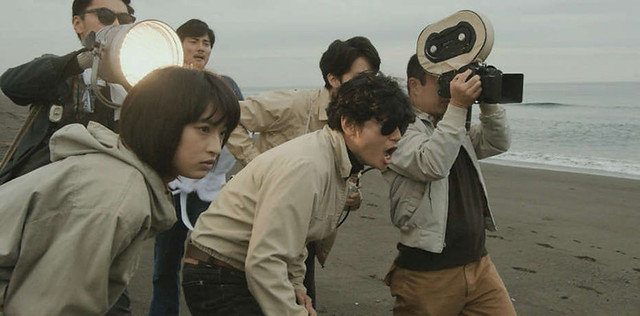
Dare to Stop Us
Choosing this title to watch was a no-brainer for me. As a huge fan of Japanese New Wave, Wakamatsu Koji, and his screenwriter and comrade Adachi Masao, I was eager to watch the film. It didn't disappoint. Not only is the film a great reflection of the bustling, energetic Japanese cinema scene of the past that is rarely depicted on screen, it is also an acute observation of a young woman struggling in a male-dominated field.

From the point of view of a 21-year old Shinjuku hippie girl, Shiraishi Kazuya depicts one of the Japanese New Wave greats, Wakamatsu Koji and his gang at the height of their most prolific period, 1969 - 71, which was a socially and politically tumultuous time in Japan.

Megumi (Kadowaki Mugi), a young woman who is still unsure about her place in the world, is a big fan of Wakamatsu's sex- and violence-filled, edgy, politically charged underground films. She wants to be his assistant director because her friend, Spook, happens to be working at the director's tiny production company. Before she gets introduced, Spook warns her that the gig will be tough.

As expected, the notorious director of Embryo Hunts in Secret, I-make-films-that-put-audiences-at-knifepoint Wakamatsu turns out to be a larger than life character. He's loud, egotistical, and always yelling at everyone on set that they are doing a terrible job. Forever donning sunglasses with a cigarette dangling on the side of his mouth, he keeps calling her by wrong names. But Megumi slogs through all the verbal abuses in the predominantly masculine film set culture.

First, her main duty is getting actresses who can pass for High School girls to be in pinku (softcore porn) movies. But over time, her diligence and hard work pay off and she becomes indispensable for Wakamatsu Productions.

In its two-hour running time, Shiraishi manages to make caricatures of these historical figures into well-rounded, likable individuals. He doesn't depict his mentor Wakamatsu as either good or bad, just a human with blemishes like any other. Kadowaki gives a sterling performance as a young woman swept up in exciting, yet dangerous times where certain things were still seen as taboo and frowned upon.

There are many juicy details both behind and on set scenes that will delight the students of that era, including the shooting of Go,Go, The Second Time Virgin on the rooftop from the script from 'that crazy guy Adachi'; Wakamatsu's penchant for making friends with everyone, even the critics and enemies at screenings, bars, and offices; Megumi getting her hands on directing part of Kama Sutra and her first 30 minute pinku film commissioned by love hotel industries; her making advances at the more stoic and gentle Adachi; appearances of studious Oshima Nagisa, Wakamatsu and Adachi's trip to Palestine; and the creation of a traveling screening on a red bus of The Japanese Red Army - PFLP: Declaration of World War, and so forth.

Dare to Stop Us is a sprawling, heady film full of historical and cultural details. It's also beautifully-acted.


Winter After Winter
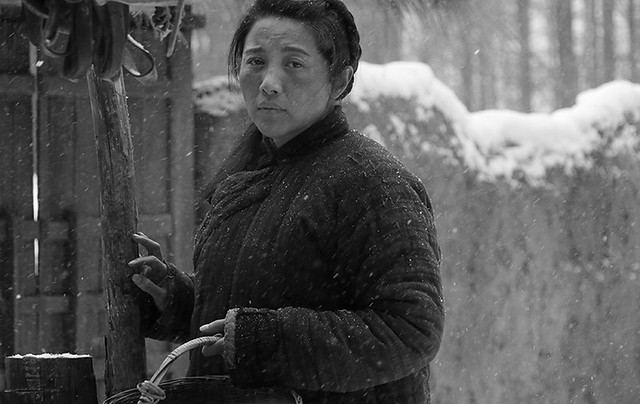
Winter After Winter
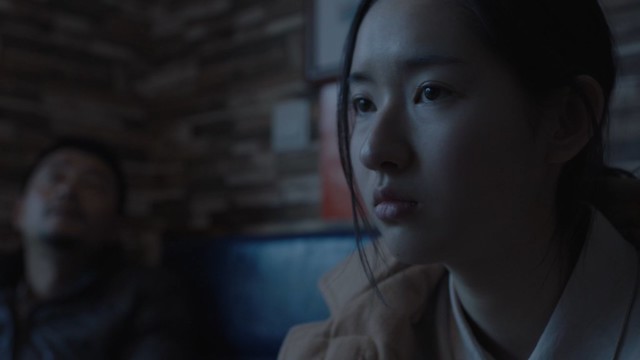
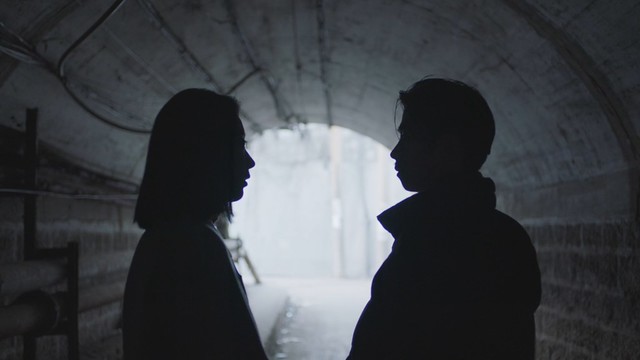
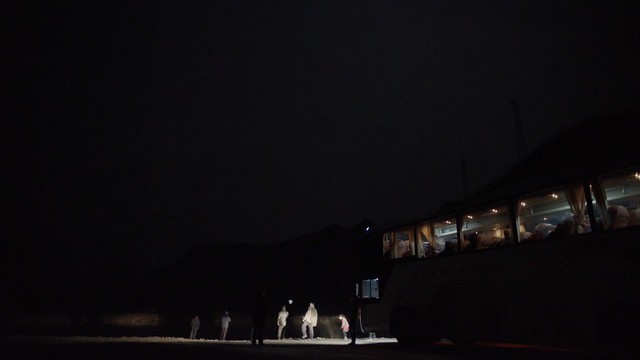
Xing Jian's Winter After Winter starts with a 20-minute one-take sequence about the Lao family household, as the patriarch Lao Si (Gao Qiang), desperately tries to postpone the immediate forced recruitment of his three sons by the occupying Japanese army. He is determined to keep his family lineage alive by having Kun (Yan Bingyan), his daughter-in-law, impregnated by one of his younger sons before they get taken away (his eldest is impotent).

The second eldest son, Lao Er, runs away in disgust, joining the resistance in the woods; the youngest Lao San, tries but fails and gets taken away along with his older brother. It is 1944 in rural Manchuria.

So starts a formally rigorous, rural miserablist drama. Shot mostly in black and white, Xing has a keen eye for composition and mise-en-scene. The devastating and inhuman effect of the late stage of the Japanese occupation is deeply felt in every character as they try to survive, especially in Kun. Yan's muted performance as a woman quietly suffering from the follies of war and of men is most touching, without being too melodramatic.

The color comes into the picture only after the end of the occupation, but little has changed for these small folks. Their lives are still harsh under the falling snow, and the color remains muted.


Hard-Core
hardcore
Based on a cult manga Hardcore Heisei Jigoku Bros., this wacky film is a collaboration between director Yamashita Nobuhiro (Linda Linda Linda) and versatile actor Yamada Takayuki (13 Assassins, Milocrorze: A Love Story) who also wears a producer's hat. Its sci-fi tinged, overly complicated storyline doesn't quite capture the aloofness of the comic book nor justifies its two-hour running time, but it has its moments and charm.

It tells a story about Ukon (Yamada), an outcast with a bad temper. He works for an ultra-nationalist nutjob whose goal is to find a shogun's gold buried in a mine so he can re-educate today's youth with the money. Ukon meets hulking, homeless man-child Ushiyama (Arakawa Yoshiyoshi) and feels the fang of kinship.

Things slowly change when they find a robot in the basement of an abandoned chemical factory where Ushiyama sleeps. Ukon's salaryman brother Sakon (Satoh Takeru) wants to make money off of the robot, but Ukon threatens him with violence.

The Robot (Robo-o, Ukon calls him), may not speak, yet it's a sentient being and, when necessary, grabs his friends and flies out of danger. Unfortunately, Robo-o is not the main part of the film.

Not quite as crazy as one would hope from a film featuring a guy in a tin-man suit breakdancing, its multiple plotlines don't help the matter much either. Yamashita's distant approach has its charm, though, and Yamada's semi-serious face is a deadpan comedy delight.


Fatal Raid
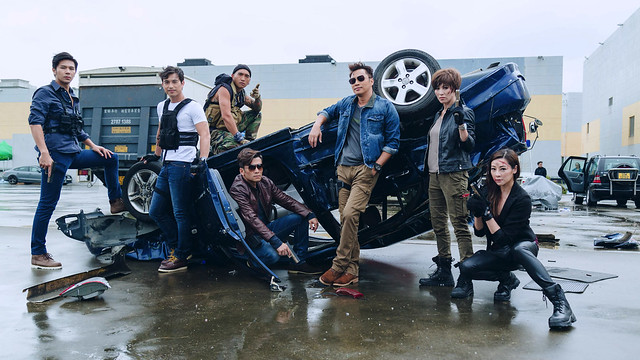
flc-asian_thefatalraid_1600x900-1600x900-c-default
No amount of sport bras and flying neck scissor chokes can save this middling Hong Kong actioner fashioned off of Michael Bay-type shoot 'em up visual porn: all shaky cam, discarded shell casings and slow mo fight in the rain kind of stuff.

Fatal Raid involves a raid by an elite HK squad going horribly wrong, resulting in a major friendly fire incident and heavy collateral damage (witnesses are killed), and scarring core members psychologically for life. Twenty years later, the same surviving members are involved in another raid taking place in Macao, now with a new generation of a special force made up of barely distinguishable babe cops.

Things go wrong as they usually do in these movies. They take casualties. And the PTSD comes back on strong to haunt them.

Sunday, June 9, 2019

They Deserve Better

Shoplifters (2018) - Kore-eda
npzqw0jyoi31pfi0m8dd
When you talk about films of Kore-eda Hirokazu, they are typically self contained, uncomplicated, affecting little perfectly made films. There is usually a crisis in the family - death, disappearance, divorce, economic hardship etc. The emotional clutch always is the innate goodness in children that gets us teary eyed at the end. The grownups in his movies learn something from children. The world is good again. The end. But the children in turn are left with their own devices to deal with agony of time, of growing up. In lesser successful (if you could call them that because he never makes bad movies) Kore-eda films tend to end with unresolved issues, narratives, feelings. Adults are children themselves who were forced into adulthood. Those are usually the best of his films. After the Storm, with a less than perfect, slight and messy narrative (for Kore-eda standard), upon reflection, is one of his best.

He has always been a supporter for concept of choosing the family instead of family through blood- nurture over nature. So is the premise of Shoplifters - a widely uneven lecture about 'the family is what you make of it' in modern society. A couple with a dark past, played by Franky Lily and Ando Sakura, has been collecting neglected, abandoned children along with a not blood related grandma (Kiki Kirin), as a makeshift functioning family unit, working menial jobs in a squalor. They substitute their meager incomes with shoplifting. You know something is gonna go wrong. You know this won't end well.

As always, child actors are spectacular in Shoplifters, especially Kairi Jyo who plays Shota. An abandoned young boy who got picked up by the couple, only knew them as family and shoplifting as only means of survival, Shota has a revelation that something is not right when the couple brings in Yuri, a neglected, recipient of domestic violence from the neighborhood. He feels it's wrong to be teaching Yuri how to shoplift. She needs something better than this. And oh god, Ando Sakura is a national treasure. She is amazing in this.

'Something better than this' is the theme in Shoplifters. Adults in the film are not angels. They consciously or unconsciously shoplifted children to make a family. But Kore-eda doesn't want to go psychoanalytic here. When it's all said and done, again, we adults learn things or two and children are left with their own devices to fend for themselves, like, for real. The film is unusually messy for Kore-eda. The ending is just as harrowing as Nobody Knows and not emotionally satisfying at all. But I'd take messy Kore-eda anytime over tidy Kore-eda.

Wednesday, June 5, 2019

Preview: Open Roads: New Italian Cinema 2019 @ Film at Lincoln Center

Film at Lincoln Center and Istituto Luce Cinecittà present the 19th edition of Open Roads: New Italian Cinema, which will unfold from June 6-12.

These new crop of films reflects diverse issues facing the country, embroiled in social and political upheaval (like in many other European countries are facing, but very Italian) - prevalence of the comorra (modern mafia), African immigration, satirical look at Bellusconi years and others.

Some of more notable film titles presenting this year are Loro starring Toni Servillo by Paolo Sorrentino (The Great Beauty), Piranhas, the opening night selection, about the rise and fall of Naples' youth gangs, actress Valeria Gollino takes another great directing effort with Euforia and the great Alba Rohrwacher stars in a religious dramedy, Lucia's Grace.

The series also pays tribute to the late Bernardo Bertolucci (passed away last November) by screening his debut film La Commare Secca which he made when he was 21.

So without further a do, here are my 4 films preview of this year's Open Roads:

Piranhas *Opening Night Film
Screen Shot 2019-06-01 at 1.10.22 PM
The camorra/gangs of Naples are the subject of Claudio Giovannesi's sprawling coming of age story, Piranhas. It tells the story of Nicola (Francesco di Napoli), a fresh faced 15-year old and his scooter riding friends' ascent in the local gangland. Seduced by the glamorous bling life of the legendary local gangs, Nicola slowly climbs up the ranks by smartly navigating through the sinuous web of different underworld factions. But he and his friends are still kids, even though they can afford chandeliers and the best seat in nightclubs, they still complain about running out of pop tarts to eat in the morning.

Fluid camera captures some excellent, natural ensemble acting, Piranhas is at times exhilarating, heartbreaking experience.

Lucia's Grace
203625008-79113ade-0585-4b9f-8fce-f0ce0d41a768
Lucia (Alba Rohrwacher) is a young single mom struggling with life - her relationship with unfaithful Arturo is on the rocks, her fencing teenage daughter is growing up too fast, and her meticulousness is getting in the way as a land surveyor for Paolo, a local developer who wants her to rubber-stamp a big, opulent project on the hill.

To make matters worse, Lucia starts to seeing the vision of Virgin Mary telling her to stop the project and instead build the church on the same spot. Freaked out and fearful, she relocates to a friend's house and seeks out the help of a psychiatrist. People around her start noticing her erratic behavior- talking and fighting with herself (Holy Mother is invisible to others). And with the help of social media, she starts having worshipers following her around. But this mother of god not only insistent, but is downright physical, pulling and knocking Lucia around into submission.

Lucia's Grace touches upon environmental issues and the nation's anxiety of influx of refugees, but it doesn't quite go deeper in either directions. Script could have been tighter. But Alba Rohrwacher continues to impress here with her physical comedic turn, compensating for the film's weaker points.

Twin Flower
1543955200003
Laura Luchetti's lyrically lensed Twin Flower concerns a budding friendship between Basim (Kallil Kone), a teenage boy from Ivory Coast traveling by foot through Italy to find a better life in Nothern Europe and Anna (Anastasiya Bogach), a teen girl fleeing from Manfredi, a predatory man involved in human trafficking whom her father worked for.

After a harrowing experience, Anna loses her voice and becomes deeply mistrustful of any men. It takes some time for Anna to open up to good natured Basim who always seem to have positive spin on any situation even though things are dire and people can be unfriendly. With Manfredi still looking for Anna, the two young people find their shelter in the streets, fields and abandoned houses.

Anna gets a job working for an kind old florist in town who seem to understand her situation in silence while Basim sells his body to strangers to put the food on the table in their santuary - an abandoned house near the salt flats. But things are not going to stay as they are for long.

Luchetti's delicate direction with two young first time actors is the marvel of Twin Flower. She touches upon post-me too generation concerns and also immigration issues the country is facing. Kone and Bogach both give soulful and touching performances. But fragile as young people generally are regarded, I wished that Anna and Basim were not as helpless as they were portrayed here.

Normal
normal-publicity_still_2-h_2019
Gender roles are social construct from early age, filmmaker Adele Tulli seems to say with her ironically titled documentary, Normal. In the beginning few shots, Tulli establishes the gender norms - a little girl getting her ears pierced. It's an old man who is doing the piercing. He says to her that now she is just like her mother. Then there are screaming dads at the tiny motor bike race for boys decked out on race gears from head to toe.

From the toy industry to wedding industry, from violent video games to faux combats in the woods, from baby carriage aerobics to the pole dancing on a beach stage, from a 'husband cheating is a fault of both him and wife' church sermon to a conventional gay wedding, Tulli paints a disturbing 'normal' snapshots around Italy that is all too familiar and universal. Normal shows us that there's still a long long way to go.

Wednesday, May 29, 2019

Fixed Gaze

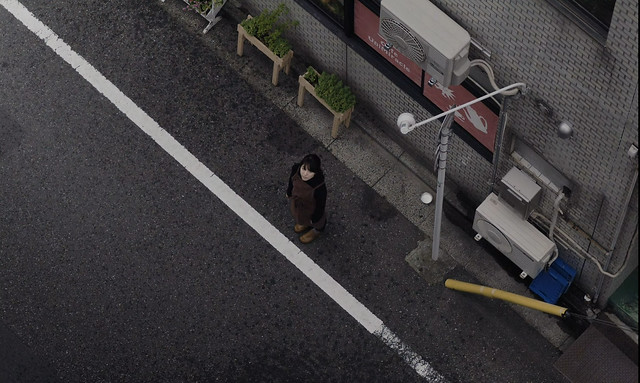
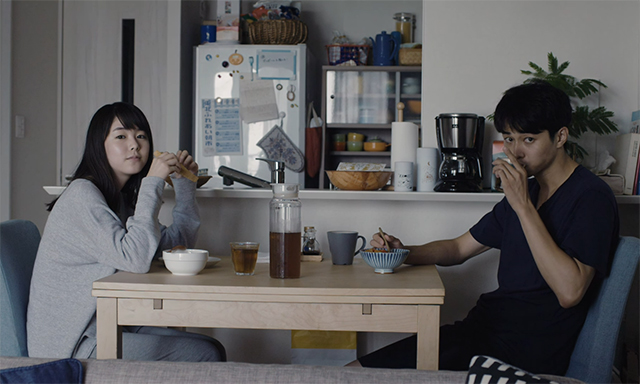
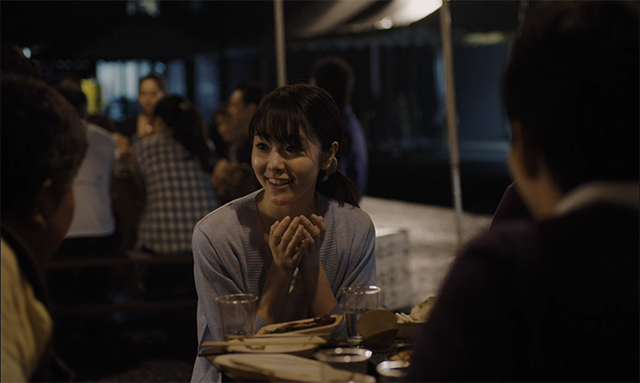
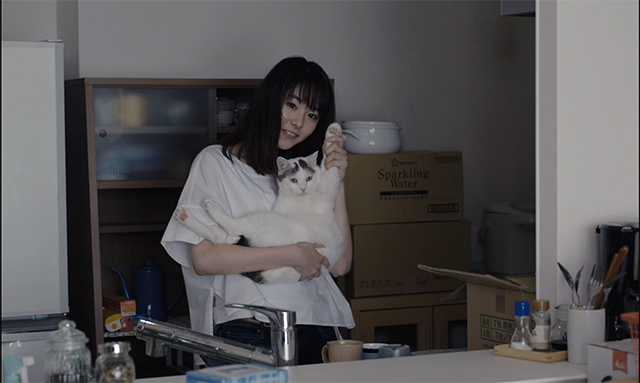
Asako I & II (2018) - Hamaguchi
Screen Shot 2019-05-29 at 12.29.07 AM copy
Screen Shot 2019-05-29 at 6.37.50 AM copy
Screen Shot 2019-05-29 at 6.41.33 AM copy
Screen Shot 2019-05-29 at 6.42.05 AM copy
Screen Shot 2019-05-29 at 6.42.51 AM copy
Screen Shot 2019-05-29 at 6.43.25 AM copy
Screen Shot 2019-05-29 at 6.45.28 AM copy
Screen Shot 2019-05-29 at 6.45.57 AM copy
Screen Shot 2019-05-29 at 6.46.32 AM copy
Screen Shot 2019-05-29 at 6.47.08 AM copy
Asako (Karata Erika), a passive young girl eyes a tall, good-looking boy, Baku (Higashide Masahiro) at a gallery. With the sound and smell of firecrackers set by rowdy school boys still ringering in the air, they kiss and hook up, just like that. They become a young couple very much in love. Asako's dependency on Baku is total. But always aloof, he disappears for days on end without explanation. Her friends warn her that he will break her heart one day. And one day, Baku goes out for errand and never comes back. At this point, I am expecting some existential, poetic drama along the lines of Maborosi or Before We Vanish. But I'm wrong.

It's been five years. Asako relocated from Osaka to Tokyo, has an stage actress roomate and works at a coffee shop. While delivering coffee at a coporate conference at the building across, she is shocked by a presence of Baku. But it's not him. His name is Ryohei (Higashide again in a double role) who works for a sake sales company. In turn, Ryohei is extremely intrigued by Asako who seem to have an extreme aversion to his presence. It's her shy but clear, direct stares that draws him in. After multiple attempts with the help of his Chekov quoting, English speaking colleague as a wingman, they hook up. It takes a long time for Asako to finally get over her first love and fall in love again to another man, a very different man who is down to earth and real.

Then Baku shows up in Asako's life again. Now a famous model, he turns Asako's life upside down.

Based on Shibasaki Tomoka's novel Netemo sametemo - Waking and Dreaming, the film tackles on letting go of the first love from a woman's point of view in a very unique way. Hamaguchi has a great sensitivity dealing with delicate subject and make his actors shine. Young Karata embodies depth and mystery of a young woman coming out of her shell without compromising her core self, while Higashide shines in dual roles with great empathy and maturity. All the supporting roles are also great and well drawn out. It is refreshing to see a Japanese film that is modern and direct and not trying to be overtly Ozu-y or arthouse poetic or genre-y, yet very Japanese. I very much appreciate Hamaguchi Rusuke's work.

Monday, May 27, 2019

Football + Puppies = Political Satire

Diamantino (2018) - Abrantes, Schmidt
Screen Shot 2019-05-27 at 9.10.20 AM
Gabriel Abrantes and Daniel Schmidt, a duo behind satirical shorts A History of Mutual Respect and Palace of Pity, comes up with another absurdist political satire Diamantino. It's one of those one joke comedies that you usually wouldn't think is sustainable as a feature in the beginning. But it succeeds in providing enough enjoyment whole throughout with the duo's usual lush film cinematography and visual effects and by following through with the silliness of the premise until the end.

Diamantino (Carloto Cotta, seen in Miguel Gomes' Tabu), is one of those impossibly good looking football superstar, a Portuguese national hero. But he turns out to be a sexless, brainless imbecile who lives in an opulent bubble and thinks of fluffy puppies when he is on the field. One day on his yacht with his beloved manager father and his two scheming evil twin sisters, he encounters a boat full of refugees from Africa. Our good hearted Diamantino has an epiphany: he will adopt an African boy and love him forever.

In the meantime, zealous government agents surveilling Diamantino for possible money laundering, sends agent Aisha (Cleo Tavares) to go undercover as the African boy to be adopted into Diamantino's estate despite objections from her fellow agent/lesbian lover Lucia. Diamantino spoils his newly adapted son (Aisha in cornrows and wrapped up boobies) with nutella desserts, sweet fruit soda called Bongo and all the toys any boys would want in an ornately decorated room in his castle. After killing their old father, the evil sisters who's been embezzling all his money to offshore accounts, makes a deal with Dr. Lamborgini and the nationalists to put Diamantino through gene experiments where the mad doctor wants to clone him and make the best football team in the world that will ultimately rile up enough Portuguese national pride in people to exit European Union. Still follow?

As one can expect, things go wrong. Diamantino grows pair of boobs, Aisha falls in love with him, the sisters finds out Aisha's identity...

Visually intoxicating and politically sharp, Diamantino is a fun movie to watch.

Tuesday, May 21, 2019

'Tis a Pity, No Elephant

An Elephant Sitting Still (2018) - Hu
Screen Shot 2019-05-21 at 10.35.06 AM
Screen Shot 2019-05-21 at 11.06.31 AM
Screen Shot 2019-05-21 at 12.29.04 PM
Screen Shot 2019-05-21 at 12.43.00 PM
Its a day in a grey and cold border town in China. With always moving camera with long takes, the film closely trails the lives 4 of its citizen's ultra depressing lives. There is a bullied high school boy (Peng Yuchang) with unsympathetic parents, a local gang leader (Zhang Yu) who is out to get the boy after his younger bully brother gets pushed down the stairs and dies, a classmate/love interest (Wang Uvin) of the boy, whose afraid of her affair with vice principal ever being discovered and an old man whose family is passive=aggressively pushing him to go to a retirement home. Suicide of a jilted lover, death of a pet dog, uploaded scandalous video and social media stigma, betrayed friendship, their lives never lets up.

Director/writer Hu Bo portrays these down in luck, relentlessly bleak lives with much empathy and tenderness. Honestly I didn't think I would like An Elephant Sitting Still. But after an hour and a half in, I was drawn to their flight, their impossible, inescapable situations. With very intimate, highly subjective camera and lens work, An Elephant achieves a rare familiarization with the audiences. Its one day in the life of... premise really works to the benefit of its 4 hour running time. There is even Nolan style (but not used as a stupid plot device) time bending with character story lines crossing, overlapping timelines.

It's a substantial human drama with deeply felt characters with their crushed, burdened souls. The idea of using an immobile circus elephant (which never materializes on screen) as a wised out Buddha who silently observes human follies play out around him as some sort of metaphor for happiness/salvation has a direct lineage from that of a whale in Werkmeister Harmonies. It's better off that we don't get to see it. Only hear its roar during its end credit, just like that that donkey's cry in the beginning of Au Hasard Balthazar. The beast of hopes and dreams. The beast of burden. An Elephant Sitting Still is beautifully tragic. And it a major film that came out in recent years that I can recall.

Monday, May 20, 2019

Art of Seeing

Im Lauf der Zeit/Kings of the Road (1976) - Wenders
Screen Shot 2019-05-18 at 10.26.57 AM
Screen Shot 2019-05-18 at 10.25.36 AM
Screen Shot 2019-05-18 at 10.23.04 AM
Screen Shot 2019-05-18 at 9.04.12 AM
Screen Shot 2019-05-18 at 10.24.17 AM
Screen Shot 2019-05-18 at 9.22.04 AM
Screen Shot 2019-05-18 at 9.29.34 AM
Screen Shot 2019-05-18 at 9.40.05 AM
Screen Shot 2019-05-18 at 9.51.34 AM
Screen Shot 2019-05-18 at 10.16.20 AM
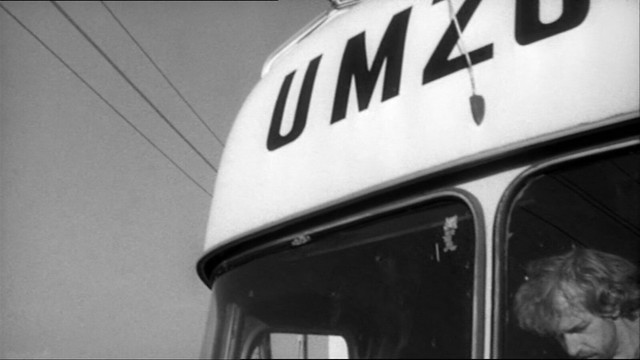
A man drives his volkswagon bug into a lake while another man, preparing his morning shave in his van, looks on. The man in the volkswagon emergies from the water with a dripping suitcase, strikes up the conversation with the man with a van who happens to be a traveling film reel deliveryman/projectionist. They take off together in the van. So starts Wenders' ultimate road movie KIngs of the Road.

Clocking at 2 hours 48 minutes, this leisurely paced, sort of midlife crises movie encompasses a lot of Wenders' preoccupation in his long illustrious filmography - desire to love, Germany's war past, rootlessness, American rock'n'roll, aversion to sex and violence in films, etc.

It would be a hard sell in this day and age to pitch the idea of where two complete strangers going on a long journey together without revealing their backgrounds or their innermost thoughts. But that's exactly what this film is - short on backstories, mutual unspoken understanding of heterosexual male anxiety in the material world Germany in the mid 70s.

It is revealed in the middle that Robert the Kamikaze (because he rammed his car directly into water, played by Hanns Zischler) who has left his wife and is afraid to call her, has also some unfinished business with his type-setter father, whom he visits. Then there is Bruno Winter (Rüdiger Vogler) the traveling projectionist and recurring character in many of Wenders' films. However rootless, traveling from small town to small town, floating through life, Winter has no worries in the world. He is also a walking contradiction - He wants to connect and love but he also wants to be left alone. He visits where he grew up, a dilapidated house on the river Rhine, and while kamikaze sleeps, he cries on the edge of the river.

Kings of the Road is a snapshot of Germany's post-war generation from a male perspective. They are silent, emasculated types who has trouble expressing their feelings. There is no conviction in Robert exclaiming "Yanks have colonized our subconscious!" while listening to rock'n'roll, either. It's that mutual silence and understanding that bond them together.

Oddly, for a film about projectionist, Kings isn't about cinema. It's more to do with changing times. Typesetter, projectionist, these dying professions are regarded fondly with much melancholy. It ends with Winter visiting a shuttered theater. The owner laments that her late father would not allow to show 'whatever passes as film nowadays'. 'Film used to mean art of seeing.' A lot of pregnant silences in Kings of the Road. Things left unspoken. Art of seeing it is. We see a lot of mundane stuff - casual male nudity, shitting, jerking off, vomiting, making coffee, driving, sleeping, etc. And it's us who needs to find meaning in everyday life.

Sunday, May 5, 2019

A Journey Not a Destination

Notes from a Journey (2019) - Fawcett, Pais
Screen Shot 2019-05-05 at 10.02.44 AM
Screen Shot 2019-05-05 at 10.28.21 AM
Screen Shot 2019-05-05 at 10.29.03 AM
Screen Shot 2019-05-05 at 9.58.33 AM
Screen Shot 2019-05-05 at 12.22.19 PM
Screen Shot 2019-05-05 at 10.05.39 AM
Screen Shot 2019-05-05 at 12.16.30 PM
Screen Shot 2019-05-05 at 10.32.20 AM
Screen Shot 2019-05-05 at 10.03.34 AM
Screen Shot 2019-05-05 at 10.32.02 AM
Daniel Fawcett and Clara Pais, a pair of experimental filmmakers who describe themselves as two halves of a one artist, present their latest work, Notes from a Journey: a travelogue of sorts filled with startling visual and aural landscapes. And it's a thing of beauty - an examination of internal psyche through nature and vice versa. It's a great companion piece to their Studio Diaries, a series of 100 visual essays documenting their creative processes for a period of time.

Notes from a Journey starts out like a typical travelogue. We see the horizon from the train window. It's various English pastoral of greens and yellows. It's comforting to follow the outlines of the gentle hills. The uninterrupted outline of the hills and lulls of the locomotive give the sense of calm and continuation. Then the thin red line appears, going across the frame. The background color slowly changes from sky blue to black then back to blue. The line's angle changes and it moves up and down. It tricks your vision as if the line is not straight. There are hues, there are textures, there are natural and artificial soundscapes.

There is a shift in the middle of the film. The double exposure of a thorny trees with scathing noise changes the perspective of the film from our passive pair observing to them on the forefront. We see them searching and listening with modern equipment in their tent at night. What are they looking for? Merely recording the sound of nature at night, a paranormal activity, a reenactment of what field zoologist do...? We are still at the infancy of the great visual & aural medium. Daniel & Clara makes a point that they are always searching.

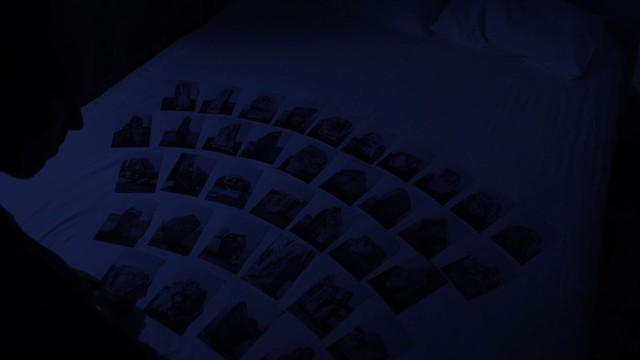
It's not the destination but it's the journey. Daniel & Clara flip through the pictures of countless standing rocks of Avebury, lay them down on the bed. It's as if they are searching for something solid, something permanent, something that will ground them. Silbury Hill in Avebury, a landmark prominently featured many times in the film, shot in different methods and formats is a man-made monument from ancient times. It's physicality and presence is tremendous, yet it is artificial. Whatever we see and feel solid and permanent, they are not. We see the silhouette of Daniel & Clara's sharp features in the dark room, then there is smoldering smoke hanging above the bed. Notes from a Journey reminds you that the illusive el dorado of cinema is not the destination but the journey itself.

Friday, May 3, 2019

Preview: Panorama Europe 2019

Museum of Moving Image (MoMI) hosts the 11th edition of Panorama Europe, showcasing current crop of best European films- both narrative and documentary works. The series presents a portrait of contemporary Europe during a period of tremendous flux. Also, though some of the films are by established directors many are by first-time and emerging artists, and 9 of the 17 films presented here are directed by women.

This year's lineup includes Mademoiselle Paradis, involving blind pianist protege and Dr. Mesmer, Fugue, a new film by Agnieszka Smoczyńska (The Lure) and Several Conversations about a Very Tall Girl, an intimate Romanian lesbian romance in the age of social media.

Panorama Europe runs May 3rd through 19th.

A Festival Pass (good for all MoMI screenings) is available for $50. All films will be shown in their original languages with English subtitles.

Here are four outstanding films I had a chance to see:

Madmeoiselle Paradis - Barbara Albert **Opening Night Film
Madmoiselle Paradis
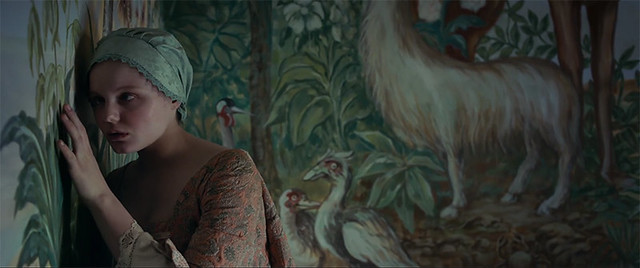
Maria Dragus (Graduation, The White Ribbon) gives a virtuosic performance as Therese Paradis, a blind pianist protege in 1777 Vienna in Barbara Albert's period piece.

Therese, a young woman who became blind at young age, is administered to the care of Dr. Franz Mesmer (Devid Striesow), a controversial figure, whose idea of animal magnetism that there is natural energy transference among all living creatures, still met with skepticism in Viennese social circle. But thanks to his unusual method, Therese slowly regains her sight, albeit fragile and weak still. All the new stimuli interferes her playing piano and her parents who are more worried about losing her disability pensions bestowed by the queen, scolds her that she is better off being blind.

Young and naive, Therese needs not only to contend with her newfound sense but also social, sexual and class dynamics. Also she is pushed to question her purpose in life for the first time. Albert expertly demonstrates the disparity in treatment and struggles of those who are disabled in the 18th century.

3 Days in Quiberon - Emily Atef
3 Days in Quiberon
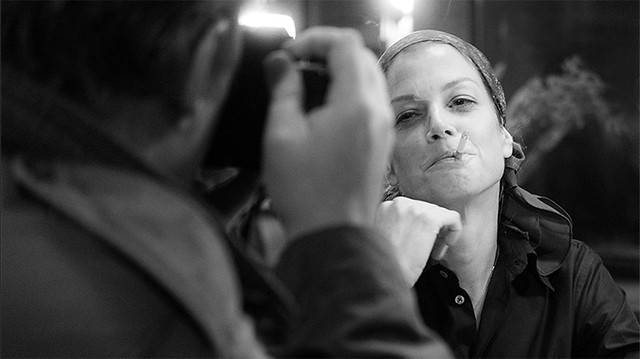
Romy Schneider, a luminous movie star of the 60s and 70s, died at age 43. In her private life, unlike her coquettish on-screen persona, she struggled with fraught relationships, family tragedies and alcoholism and hounded by tabloids. Filmmaker Emily Atef and actress Marie Bäumer tackle the brief days of her life a year before her death, when she was being treated at a spa in Brittany. Based on the interview and a photoshoot she gave to a German magazine crew in Quiberon, Atef builds an intimate, humanistic and respectful portrayal of a tortured artist.

Bäumer's uncanny resemblance to the late actress only enhances her soulful performance. Her Frau Schneider is a guilt stricken workaholic mom, fragile lover, victim of her own fame, broken soul by tragedies and who yearned to be left alone. The film also stars Charly Hübner as the photographer/former lover, Robert Gwisdek as a sharky reporter, Briggitt Minichmayr (Everything Else) as Schneider's best friend and Denis Lavant shows up as a superfan who ends up drinking and playing accordion together.

Several Conversations about a Very Tall Girl - Bogdan Theodor Olteanu
Several Conversations
Bogdan Theodor Olteanu's simple lesbian romance in the social media age hits all the right notes. Mainly dependent on two leading actresses Silvana Mihai and Florentina Nastase, Olteanu sketches out the beginning and end of a new short relationship as intimate and real as one can be. The two nameless women - Mihai as an older, urbane film student who is more experienced of the two and Nastase as a fresh faced web content writer from the countryside, bond over Facetime with their former shared fling - a very tall girl. They meet irl and start seeing each other. In the beginning, it's tender and sweet. But soon the shier, passive younger woman, after aggressive advances from the older one, withdraws herself, telling the other to be patient. Their budding relationship seems all too real and spontaneous.

The film student's video documents of her friends - a lesbian couple seen in the above picture gives the performance aspect of human relations, as a film within a film. But unlike other meta themed movies, that aspect of the film doesn't overshadow the relationship of its characters which feels genuine and real.

Olteanu and co.'s portrayal of homosexual relationship is an astute reflection of a country still very much steeped in traditions in modern age and a tender, intimate take on a slice of life.


Extinction - Salomé Lamas
Extiction
Falling somewhere between Chris Marker and Ben Russell's work, Portuguese director Salomé Lamas' 'parafiction' Extinction charts the complicated history of Transnistria which fell victim to be an unrecognized state after the dissolution of USSR. With a young man named Kolya, the unseen crew travels travels through borders, accompanied by monologues and unseen conversations at various checkpoints that give some background about ominous influences Russia holds in the region.

Shot in grainy black and white with old Russian architecture, Extinction gives that distinctive cold war era dystopian Sci-fi vibe even though it concerns the present and real life situation. Lamas examines the concept of borders in people who belongs to a country that is semi-permanently in limbo. But instead of being didactic, she raises more questions and asks audience's active participation in answering those questions.

Wednesday, April 17, 2019

Preview: Art of the Real 2019

As an adventurous spectator of cinema who writes about films and very much interested in where cinema is headed as an art form, I can say enough that Art of the Real, a film series that showcases innovative, daring, non-narrative films, has been a great wealth of resource and a place of discovery over the years.

Since its inception in 2013, Art of the Real at New York's Film Society of Lincoln Center has been celebrating genre-bending, non-narrative filmmaking. In its 6th year, the series presents new such works by filmmakers from around the world, plus retrospective by Japanese experimental filmmaker Toshio Matstumoto's non fiction work and a tribute to the late Lebanese filmamker Jocelyne Saab. If you are a curious about the possibilities of cinema as an art form, and hungry for something new and thought provoking as well as entertaining, Art of the Real series is the place to be.

The series runs 4/18 - 4/28. For tickets and more info, please visit FSLC website.


Closing Time
4638fdcd-1f86-46cc-8677-11626e4f5420
Swiss filmmaker Nicole Vögele's observational film Closing Time focuses on a tiny late night food stall owned by Mr. Kuo and Mrs. Lin, under freeway overpass in Taipei. The film leisurely explores the surroundings of this night neighborhoods - an arcade parlor owned by a young couple, a dollar store next door, a wayward dog waiting for its long lost owner, a late night/early morning market where Mr. Kuo shops. Stragglers converse over a rice porridge with side dishes about the weather - the recent strong typhoon destroyed domestic produce, leaving not too much choices for Mr. Kuo to shop for ingredients, about the changing neighborhoods, about working too much... The couple prepares and cooks 6 nights a week. We barely get to see them in daytime. The sky is always dawn violet, the street is filled with thousands of mopeds, traffic lights and signs of the shops reflected on the puddles, with the sounds of the night. You get used to the rhythm of this working class microcosm. It's quiet and somnambulistic.

On his moped, Mr Kuo takes off on the road in the later part of the film and ends up in a small town down in the south of the country. We don't know what conspired for him to take this path. Was he tired of his daily routine? Did he want to get away? Don't matter. We are afforded to a lush scenery of Taiwan's countryside. Beautifully composed in Super 16mm in a rainy season of Taiwan, Closing Time is a contemplative film shedding a light on a part of the world that rarely gets attention.


Those Who Desire
Elena-Lopez-Riera-853x480
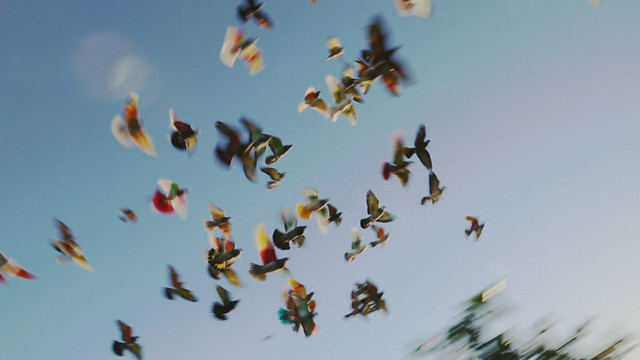
Valencia in southern Spain is a home of the Colombicultura, an exclusively male subculture where brightly colored male pigeons train and compete. Filmmaker Elena López Riera who grew up in the region, documents one of these competitions. The lone female pigeon is released in the air. Soon all male pigeons take to the air, chasing after her. There are amazing amount of rules and all these judges with walkies, watch intently every single move of these horny pigeons. It's not the speed, the narrator say, but lust and ability to conquer. I don't know what that means exactly. We see the swarm of pigeons in the air, on the ground. It's an orgiastic sight. But the competition ends due to bad weather before anything is determined.

Those Who Desire is the grossest projection of macho culture I've ever seen, but it's also fascinating.


Karelia: International with Monument
e07ee764-1d61-43ef-9458-bb97b92917b2
Karelia, the Northwest republic of The Russian Federation, bordering Finland has a rich cultural, political history. It had been occupied by Sweden, Finland and Russia. Spanish filmmaker Andrés Duque tries to link the cultural significance- the origins of Finnish epic where legends and magic with today's Karelia and ends up with documenting Orthodox Christian family, the Pankratevs, living in the remote area surrounded by nature, practicing some of the shamanism rituals handed down from generations. This first part of planned two part film about the region, Duque also digs up the not so flattering history of Stalin era massacres that took place in the same woods where Pankratev children play, and the Putin regime's effort to rewrite the history. Interesting history lesson contrasts with idylic family life in Karelia.


Movement of a Nearby Mountain
0xF12E1760863CFB1C13C8BC8AEB7095A4
Movement of a Nearby Mountain starts with a narration which tells a water fairy who was captured by hunters. In order to free from impending enslavement, the fairy promises the eternal riches pointing to the mountains. Iron. "Gold lasts a breath, silver lasts a lifetime and iron lasts forever". Soon as fairy was let go, it disappears into the water laughing. Its laughter forever lingering in the forest. This narrations repeats at the end of the film. Once in German, the other in Igbo.

Cliff is a Nigerian man who owns and operates a chopshop in the Austrian Alps. He works there, cooks and eats there, shaves there - seems like his spends his waking life there. He buys cars, refurbishes, sells them whole or parts and also exports them to Nigeria. He deals with Hungarians and other Eastern European customers, sometimes in English, sometimes in German. Sometimes things heat up haggling the prices, but he seems to have his usual customers and well liked. But he is usually alone, spending days working. He sings Christian hymns under his breath.

We see a man of two worlds, bound by metal. The chorus of insects in the Nigerian jungle at night carries over the driving shot in the snowy Austrian Alps on autobahn. Sebastian Brameshuber's contemplation on these contrasts and the intimate portrait of one man against the stunning forest backdrop speaks volumes without saying much.


Swarm Season
Swarm Season
Hawaii's Big Island at a glance, is both a paradise and hellscape: the luscious vegetation along the coast contrasting vast black volcanic field created by overflowing volcanic activity inland that resembles the surface of Mars. Filmmaker Sarah Christman examines the intersection of elemental and superficial, nature and technology, ancient traditions and development, looking inward and space exploration, extinction and survival through the eyes of Manu, a preteen girl and her family who are in beekeeping business.

Manu helps out with her mom's honey producing by tracking wild bees and locating their beehives and relocating them. But she is also an average girl of her age, playing with My Little Pony toys in the sand and daydream while laying in the field. There are biologists collecting queen bees from the hives to study their swarming patterns and their survival.

Manu's dad is a tribal activist protesting the construction of another large telescope on top of the sacred volcanic mountain, Mauna Kea (13,803 ft). Then there is a group of astronaut training for Mars exploration in isolation on the mountain- ideal training ground because of similar climate (lack of oxygen and rough, barren terrain).

Swarm Season features some spectacular scenery of molten lava flowing out to sea, miles of barren black field created by volcanic eruptions, the underwater explosions as well as intimate tender moments with Manu and her family. The film's philosophical musings and seeing the bigger picture don't overshadow its anthropological study of its people and surroundings. It's a great film.


Accession
AOTR_Accession_01-1600x900-c-default
I've seen filming process as germination in one other film recently. It was Anocha Suwichakornpong's superb By the Time It Gets Dark. Where as the idea of film relating to germination was more of metaphorical one in By the Time, Tamer Hassan, Armand Yervant Tufenkian's Accession is more of a literal one. 13 correspondences in letter form about sending seeds are read mostly by someone related to the persons who wrote it, in various places and times in America, over the lovely hand processed 16mm footage. There are no other diegetic sound or effects sound to accompany these images and the narrations.
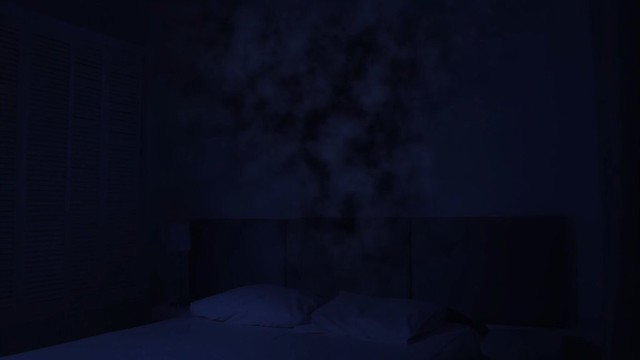
Accession is a testament of America as an agricultural society. Seed keeping, passed down to generations in families, is a dying tradition, so is the celluloid. Bringing forth new life year after year and the nurturing those who sow is somewhat equated here with the tradition of filming and creative process of so called 'experimental films'. Lovely, melancholic and resonant, Accession is a lovely piece of cinema.


Acid Forest
Screen Shot 2019-03-31 at 7.22.10 AM
Curonian Spit, a scenic peninsula in Lithuania is a Unesco Heritage site. It's also the home of Curonian Spit, a scenic peninsula in Lithuania is a Unesco Heritage site. It's also the home of Acid Forest, a swat of forests full of dead pine trees occupied by thousands of big, black, migrating cormorants who made those trees their homes. It's a tourist attraction. There is an elevated wooden platform to take in the scenery. Many tourists from all over the world climb up the wooden stairs to witness the devastating view. They all have something to say in their native language. Some comments that it looks like a nuclear fallout, or tornado aftermath. The guide explains to gaggle of Japanese tourists that trees died of the birds shitting on them constantly, to their amazement. Some invokes Hitchcock's Birds.

Many of these observations and amateur theories are downright hostile. Many jokes about having a gun and shooting them all down. Many complain that the birds are protected by the EU laws. Filmmaker Rugilė Barzdžiukaitė observes all the human activities from above, from a bird's eye view. Constant fly over shots of the whitened branches of the pine trees reveal thousands of these birds making home in Curonian Spit, oblivious of human crowing with their opinions down below.

A biologist is heard explaining to a TV crew that many of misconception about the birds are untrue, making a point that cormorants have existed since the ages of dinosaurs and it's not only their droppings that kill the forests. But we see the human interference at the end as we control much of our nature's destiny, unfortunately.


Walden
Walden
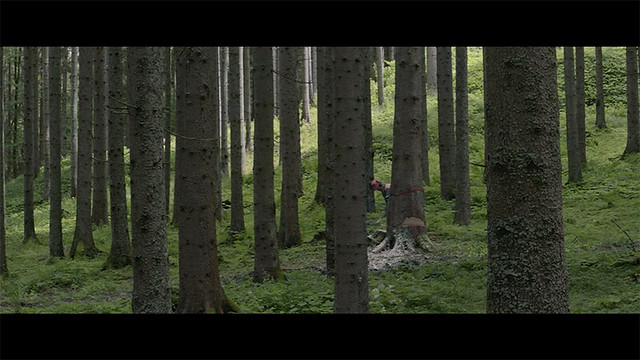
Walden consists of 13 slow 360° controlled panning shot from left to right. Each shot lasts about 10 minutes. It starts from Austrian forest where trees a being cut down with a buzz saw. Then the lumber is transported by trains, trucks, boats all the way to the Amazon, the lumber is finally transported by hands deep into the jungle. The film can be a slog for someone craving for a narrative or character to hold on to, but the key here is giving yourself up to the flow as the panning, moving picture creates its own steady velocity.

Each stage strategically stationed and shot in wide format and 50 fps for maximum coverage and the smooth movement, Swiss filmmaker Daniel Zimmerman's film takes an ironic, paradoxical look at a journey of timber in a global economy we are living in, done in a vigorously formalist approach.