Thursday, May 10, 2012

Sadism

Justine (1977) - Boger
Justine6
Justine
Justine5
Justine3
Justine4
Justine7
Justine1
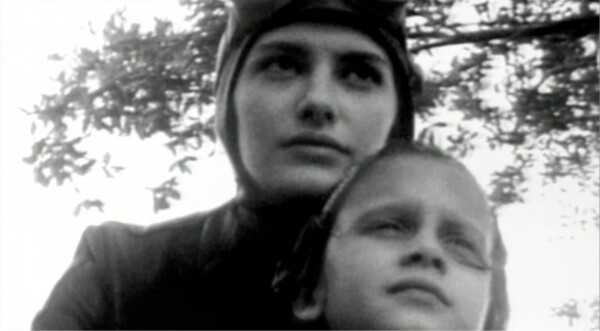
Maquis de Sade's infamous tale of moral depravity gets an arty treatment (not to be confused with Jesus Franco production with Klaus Kinski) by a Brit Chris Boger. Justine and Juliette, two orphaned young sisters get kicked out of convent school full of lusty nuns and a randy pastor. The sisters couldn't be more different- Justine is the epitome of virtue and innocence while Juliette delights in school of flesh. As Juliette skools herself in a brothel in London, Justine goes back to the pastor, gets almost raped, then falls in with thieves and murderers under threat of violation. Juliette chose to live in sin and things are working out for her whereas Justine, the proud and virtuous one, the life is torturous and under constant threat. Sade's philosophy was not only anarchistic in rigid society but also extremely cynical. In Justine, he makes sure the virtues people hold dear get completely destroyed by the end.

Interesting to see even a great DP had a humble start doing softcore porn. Justine has some great visuals rivaling Ken Russell's The Devils, especially in the dream sequence. Cynical and dark. Koo Stark is mind bogglingly beautiful as Justine.

Tuesday, May 8, 2012

Which came first: Music or Whiskey?

Sprout Wings and Fly (1984) - Blank
sproutwingsandfly 1
sproutwingsandfly
sproutwingsandfly2
sproutwingsandfly3
A clip from Sprout Wings and Fly:
Les Blank features fiddler Tommy Jarrell of the Appalachian mountains in North Carolina. It takes some time to understand what he's saying. Once you settle in though, Sprout Wings and Fly is filled with fascinating stories- there is Austin who got drunk and fell asleep on the road and got ran over by a truck, there is a family dining table thick with table clothes on top of each other, dating back to 1937- when Cuba was celebrating better times by eating bread and there's lots and lots stories involving whiskey. Some of them should sound a little sad or downright grotesque, but they don't in Jarrell's words. The mountain folks in this doc, including Jarrell are always upbeat and funny. Again, Blank and Co. document and revive Americana that predates white hipsterism by 40 years and still come across as authentic and sincere in every way. A beautiful doc. So when is Criterion gonna put out Les Blank collection?

Monday, May 7, 2012

Unless a Seed Falls to the Ground and Dies...

supreme
The TV anchorwoman’s trembling voice announced the passing of the Supreme Leader over the images of hysterical mourners gathered at the Kumsusan Memorial Palace, where the body was laid in a glass casket. Everyone was crying their eyes out: the TV anchors, the thousands of spectators including everyone watching TV.

 “…As he ascended to heaven, the skies glowed red above sacred mount Paekdu and the impenetrable sheet of ice at the heart of the majestic volcano cracked with a deafening roar…” continued the anchorwoman, dabbing her eyes with a white handkerchief.

Hong-jin was astonished that even his father, a reserved man who rarely showed his emotions, was wiping the tears away under his thick glasses. But the boy didn’t cry. Not because he wasn’t sad, but because he just didn’t believe that the Supreme Leader was actually dead. He couldn’t be. He was the one and only, the most illustrious commander born under heaven. He was supposed to be invincible!

There was a long line to the entrance to the mausoleum. The mood was decidedly somber and many of Hong-jin’s classmates were sniffling under their breath, quietly wiping away tears and snot with their dirty coat sleeves. He noticed that even the guards at the gate had puffy red eyes from crying. No one talked. No one complained waiting in line in freezing January weather. Once they were inside, the sound of the wailing coming from the mausoleum intensified. The emotions ran high. Many of the boy’s classmates started crying too. It was contagious. Still, he didn’t shed a tear. He still couldn’t accept the idea of the Dear Leader dying like a normal human being. He had to see the body himself.

There he was in a glass casket, surrounded by thousands of white irises. The Great Comrade was a tiny man, much shorter than Hong-jin had seen in pictures and photographs. As he placed his iris near the casket, he was able to see the Illustrious One’s face. It was as if he was in deep sleep. His lips were ever so slightly curled at one end. A stern looking guard gestured the boy to the exit, since there was still a long line of sobbing children behind him with irises in their hands, waiting for their turn to pay respect. As Hong-jin exited, he was convinced that he caught the Leader’s right eyelid twitching for a millisecond. I was right: the Supreme Leader wasn’t dead! He was just sleeping! He told himself.

Hong-jin sneaked out of the group and hid himself in a nook in that grand memorial palace. It wasn’t too hard since he was a very small boy even for his age. Besides, everyone’s attention was elsewhere. As he was squatting under the marble staircase silently, flood of people swept through the mausoleum all in terrible distress. It felt like ages. It was cold in that climate controlled room and after a while, the boy fell asleep on the marble floor.

When Hong-jin woke up, he found himself alone in the palace. The lights were dimmed and the sun was setting outside the big glass windows, painting the sky scarlet. The door to the mausoleum was shut. But Hong-jin saw the bright light leaking out from the bottom of the door. He cautiously pushed the door in and it opened with a prolonged eerie creak. The fluorescent light was blinding. The boy took off his black rubber school shoes and placed them neatly near the door. He tiptoed toward the glass casket in the middle of the mausoleum. “Dear Leader,” the boy called out, in an almost inaudible voice. The Supreme Leader was still motionless. After a little bit of hesitation, the boy decided to gently tap on the casket. No effect. He tapped on it a little harder. Dear Leader’s eyes didn’t open as he expected to. But the boy was determined to wake him out of his deep sleep.

He undid the latches on four corners of the casket and started to push the glass top off. It was heavy and the boy had to lean his whole body against it with all his might to have it move. He was trampling irises  with his feet.

Thunk.

As the glass top rolled over and hit the iris strewn marble floor, an amazingly awful smell hit the boy’s nostrils. It was coming from the casket. The horrified boy fell backward and retreated until the back of his head hit something. He looked up. It was that stern looking guard from earlier. From the look on his face with his mouth agape, the situation was pretty serious.

Being a mischievous young boy is one thing, but he had sneaked in and desecrated the sacred body of the Supreme Leader!

His parents should be put to the public trial and punished severely!

It’s almost treasonous!

Kyu-nam, a sympathetic old guard, came into the interrogation room where Hong-jin was held. He carried the boy’s black rubber shoes in his hand. He didn’t believe that the boy had malicious intentions in the mausoleum. After all, the kid was only eight. He glanced at the boy’s feet. There were remnants of white irises stuck on his white socks. He placed the boy on the table and sat down in front of him.

Don’t cry, comrade, he said.

He gently brushed off the irises from the boy’s feet and put the shoes on.

Just like these irises, our bodies are weak and fragile. Our Supreme Leader knew that his was fading.

The old guard explained to the boy that the Supreme Leader had indeed passed on. That it was his own wish to serve his beloved country and his people by going back to earth quickly so he could bring forth fruit for the new generation, for children like Hong-jin. Kyu-nam had seen enough things during his lifetime, so he was exceptionally good at lying.

Monday, April 30, 2012

Helping Hand

Nouvelle Vague (1990) - Godard Nouvelle Vague 1 Nouvelle Vague Nouvelle Vague 2 Nouvelle Vague 7 Nouvelle Vague 3 Nouvelle Vague 6 Nouvelle Vague 5 Nouvelle Vague 8 Nouvelle Vague 4
Could Nouvelle Vague be perhaps the most romantic and hopeful Godard film I've seen so far? With stunning visuals and constant, beautiful soundtrack, this new new wave tells a love story between Elena, a rich industrialist (Domiziana Giodarno) and Roger/Richard, a bum (Alain Delon), whom she picks up in her red sports car on the side of the road. She offers him a helping hand. This theme repeats throughout the film. At first, Roger is a quiet fellow and a confused fool who is buried in the background of a giant mansion by the lake filled with the crowd of business people who mostly converse in quotes and business jargons. This scruffy sage becomes an anchor of Elena's hectic life. But when they go boating, Roger falls in the water and Elena refuses to help him. He drowns and comes back as Richard- a business genius overseeing acquiring Warner Bros. Now it's Elena who needs to be saved.

Nouvelle Vague concerns many of Godard's usual themes: masters and servants, rich and poor, dualism, etc. Beautifully realized and impeccably put together (with the forever autumnal Switzerland countryside background and a constant, beautiful soundtrack), the film boasts a lot of stunning images, even for Godard's standard. The rebirth aspect of the film has multiple meanings here- paralleling lives, positive and negative making a whole, repetition of the waves (hence the apt title, not only referring to French New Wave Godard started in the sixties), resurrection of an old icon (Delon, his sharp features and beauty dulled by age), and perhaps the renewal of the First World in the last decade of the century, letting go of its ugly past and prejudices, lending a hand to the world in turmoil. Nouvelle Vague is an engrossing film and certainly is one of the most beautiful Godard films.

 *Just found this article about Nouvelle Vague Soundtrack. The soundtrack itself (entire film- sound, dialog in two discs), is put out by ECM. It's a magnificent record.

Click here for the article

Visit ECM Records for ordering CD

Sunday, April 29, 2012

NY Street Photos

I don't like carrying things around. But It's very hard not to carry my camera when I'm out because there is always something in the streets that beckons me to take pictures.  For instance, this weekend...

The Red Dress on the Fire Escape
West 17th Street, btwn 6 & 7 4/27  IMG_1813 IMG_1820  
Wholesale Flowers and Plants Storefront with a Cat
Chelsea at night 4/27 IMG_1832  
Air Plant Display at DeKalb Market
Brooklyn 4/28IMG_1867  
You Go Girl Graffiti
on Manhattan Bridge 4/28IMG_1902

Saturday, April 28, 2012

Lonely Hearts Hotel

Hotel Monterey (1972) - Akerman hotel monterey 2 hotel monterey 4 hotel monterey 5 hotel monterey 6 hotel monterey 7 Interesting. It starts on the lobby level with the shots of (mostly elderly) patrons coming and going. Then it's from inside the elevator going up and down, its door occasionally opening up to reveal ill lit, narrow, empty hallways. The hotel patrons disappear after ten fifteen minutes and it's kind of a slog with endless static/tracking shots of corridors in grainy 16mm. This 1 hour silent tableaux, documented entirely inside the New York hotel, evokes (as with Akerman's other NY films) the same loneliness and longing as Ed Hopper paintings or Robert Frank's America photographs. It's a rare time capsule of the 70s New York from an outsider's perspective. I liked it a lot.

Wednesday, April 18, 2012

Agony/Ecstacy

Goodbye First Love (2011) - Hansen-Løve
Photobucket
We all remember our first kisses and heartbreaks, the alternating agony and ecstasy. Mia Hansen-Løve (All is Forgiven, Father of my Children), the gifted French writer/director tackles the delicate subject head on in Goodbye First Love and the result is one of the most truthful and heartfelt films about first love.

Camille (Lola Créton, first seen as a child bride in Catherine Breillat's Bluebeard) and Sullivan (Sebastian Urzendowsky) are a young couple very much in love. Naturally, for Camille, their love is the greatest love ever existed in the history of mankind. So when Sullivan decides to quit school and embark on a journey to self discovery in South America, she is devastated. Their affair ends in Camille's failed suicide attempt.

Five years pass by and after many menial jobs, Camille finds her calling in architecture and gets romantically involved with her much older professor, Lorentz (Magne Håvard Brekke who played Lars von Trier surrogate in Hansen-Løve's Father of My Children). This mature relationship is based on mutual and professional respect. Then Sullivan reappears and Camille is once again enamored by the same love that just won't let her go.

Much credit of the film's success should be bestowed upon young Créton. Portraying Camille from age 14 to her early twenties with such honesty and guilessness, she could easily break your heart into a thousand pieces. Hansen-Løve's daring choice of letting her 17 year-old actress playing the same character over five-year span in the film pays off: times and circumstances have changed, so has her hair style. But it's still the same baby-faced, sullen Camille, with her same insecurities and old feelings intact.

Hansen-Løve's careful and patient layering of nuances, visual details and non judgmental eyes, all add up to a beautifully observed growing-up film that is alluring and mature. She continues to be a real talent in capturing life's precious moments with much warmth and care despite their intangibility. Definitely one of my favorites of the year.

Goodbye First Love opens at IFC Center 4/20. For tickets and more info, visit IFC Center website.

Monday, April 16, 2012

Løve unlike any other: Mia Hansen-Løve Interview

Photobucket
Mia Hansen-Løve's third film, Goodbye First Love is being released in New York and LA on 4/20. This is my interview with her, conducted last year during the New York Film Festival.

Hansen-Løve, the 30-year old gifted French writer/director, made her film debut first as an actress at 17, in Late August, Early September, directed by her future husband, Olivier Assayas. But it is her acute, clear-eyed depiction of growing pains in her own films that has been garnering critical acclaim (her second feature, Father of My Children, won the Jury Special Prize in the Un Certain Regard section at the 2009 Cannes Film Festival). Goodbye First Love tells that universal theme of young love with a great deal of insight and maturity. It is definitely her best film to date.

There are differences writing three-dimensional characters on paper and working with actors to bring them into life. I am just amazed by how you were able to facilitate those amazing performances from young actors in Goodbye First Love. I am very curious to know if you have a different method dealing with young actors.

I get a great pleasure working with young people, not only adolescents but also children. But it has to do with working with non-film actors and actors with little experiences. I had a lot of pleasure working with Magne (Magne-Håvard Brekke) who is a stage actor and has had very little experience in film previously. There is certain innocence in non-film actors, young or old. It gives me great joy in seeing how they respond to the camera, and capturing that is very essential to my films.

Honestly, I find that working with known actors and big trailers and all that business very depressing. Surely there are some famous actors I'd love to work with, but for me it's all about the uncluttered relationship between me and the actors. The simpler relationship, the better. It makes me very happy to have that intimate relationship, especially with young actors and children.

That's what struck me at the Q & A session yesterday with Lola (Lola Creton). Because she is extremely shy. But in your film, she is completely open and free.

You know, I have to say something about that because it reminds me so much about myself. When I was 16, 17, I was really unhappy with my life. As the case with many other adolescents, I was extremely melancholic. Then by chance I was in this film (Late August, Early September), I say by chance because I was in theater school and I was chosen to be in the film. The experience changed my life. It is difficult to interact with so many people on a movie set, but there is something to be said about finding yourself through another character. It's like being your self by not being yourself, if that makes any sense. Cinema gave me that freedom. The experience never left me. I think that's the reason why I want to go through it again and again to relive that experience through young people.

I see myself in Lola. She has the same double personality. In real life she can be very shy and introverted but on set, she becomes extremely generous and wants to give you everything. It really moves me to see people who can't communicate well in real life, but through power of fiction and playing characters, they blossom. I think this is particularly true with adolescents.

Maybe that's why they respond to you because they can feel that you understand what they are going through. There are not many directors I can think of who can bring out that kind of performances out of young people.

Thank you. But it's not like I would be going around filming every adolescent. (laughs) I think Lola is different. Unlike other non-actors I've previously worked with, she is still very much an actress. Maybe not one of those who are self assured and can discuss about characters and scenes in depth. She can be professional, but there is a certain uniqueness, certain mystery about her that makes me just want to film her all the time. What I am interested in, when I choose an actor for a project, is not what she's done before, but what I imagine I can project on her. It's very scientific in a way. A little confidence you give the actors makes them capable of everything, every time without fail.

For instance, I had children crying in my previous film. You can't make them cry on command. You have to build your trust in them. Alice (Alice de Lencquesaing, a young actress in Father of My Children) told me about meeting Jacques Doillon and asking him about this great little film he did and how he got this amazing performance out of a 4 year old girl.

Ponette? That was unbelievable!


Yes. Doillon said the girl did it because she wanted to please him. It's that kind of love and tender relationships I want for my films. I learned that from Olivier. That look he gave me when I was sixteen, the trust he had in me, things he saw in me that I myself wasn't aware of, made me come through.

First love is such an universal theme. When you were writing it, did you write it from the personal perspective or have broader approach?


I totally wrote it from my personal perspective. I think the more specific you get, the more universal it becomes. If you see the first love in a larger context, you'd lose all the nuances. I'm talking about layers and deeper nuances in relationships not the little practical details. For me those nuances reveal truth about the relationship. I try to stay away from all the archetypes in literature and in films about first love that we are influenced by, consciously or unconsciously. So when I reread my script, I struck all the lines that sounded typical. I am very strict and rigorous with myself to watch out for those kind of dialog. Also more often than not, it's those dialog that are deceptively more efficient and therefore tempting. So I try to veer away from efficiency and stay truthful.

Even though it is from your personal experience, it is universal though. The film really hit me right in my heart.


Thank you. That's what any director can hope for. You write something and try to make it as personal as possible and hope that it would somehow transcend your own experience.

Can you tell me the current climate of French cinema after the passing of Humbert Balsan (independent producer of such directors as Claire Denis and Lars von Trier and the subject of Father of My Children)?


It was depressing times after Humbert's death. But the industry came back and it's business as usual. That's life. But the budget gap between big films and independent films are getting wider. I've been very fortunate because I was kind of an exception to the rule. My films have very little commercial appeal. Somehow I fell in the cracks and was able to sidle up between the cracks. I have to tell you that my films are not cheap. It may not show, but I have a lot of sets in my films and they cost money. I am very lucky I found money for this film. But I'm not very optimistic about the new one I'm planning on making, since it will be expensive and not very commercial. I don't really know how this miracle will happen.

It will happen. It will happen. So what is this next project?


It's called Eden. It will be a two part film, like Carlos (directed by Assayas). (laughs) No, it's about a destiny of a French DJ in the 90s. Part one will take place in the 90s with the rising popularity of electronic music in France and the second part in the 2000s till now.

That sounds expensive. Good luck.

It is. Thanks. (laughs)

Saturday, April 14, 2012

Virtual Connection

Happy Here and Now (2002) - Almereyda
Happy Here and Now 2 Happy Here and Now 2 Happy Here and Now 2 Happy Here and Now 5
Never seen internet age portrayed this intriguing and gentle. Almereyda succeeds where Wenders has been failing over and over again with his mushy, pretentious films about human disconnections in a world saturated in technology. Amelia (Liane Balaban) comes down to New Orleans to look for clues in the disappearance of her computer obsessed sister (Shalom Harlow). With the help of her cousin Bill (Clearance Williams III), she attempts at tracking down down her sister's videochat correspondent, a philosophizing cowboy named Eddie Mars (alternatedly played by Karl Geary and David Arquette). Almereyda diddles with ideas like avatars, youtube and internet relationships playfully, using Fisher-Price b&w camera and other medium and laid-back philosophizing. Watching this, I feel like everyone (including me) has been paying too much attention on negative aspects of the internet. Yes we might not know our mysterious friends that well. Yes the universe is larger than we are and may crush us, but sharing ideas and exchanging thoughts are what counts. Let us be happy here and now.

Hawkeyed Badassery

Get Carter (1971) - Hodges
Photobucket
This was on TCM last night and it was the reason I stayed up until 2am. The godfather of all contemporary revenge flick, ain't it? You can see its influences everywhere from Scarface to countless Nic Cage movies. And of course it's Michael fucking Caine.

Caine plays Jack Carter, a small time crony hell bent on finding out just who killed his brother. His no-nonsense, hawkeyed badassery slowly but surely penetrates the tight lipped small time organization and easy broads alike. But its Hodges' abrupt style in dreary industrial, row houses set England that makes the movie great. His paralleling action sequences are not that of smooth, time defining, showy nonsense we are now used to by talentless hacks but has real sense of rhythm and purpose. The phone sex scene (with sexy Britt Ekland of Wicker Man, no less) is obviously way ahead of its time. And of course the legendary ending at the muddy beach.... They don't make 'em like this anymore.

Nostalgia

Midnight in Paris (2011) - Allen
Photobucket
The last Woody Allen movie I've seen was Sweet and Lowdown. Dunno, lost my interest along the way I guess. Someone gave me a copy of Midnight. Finally opened it up and watched it. I knew what it was about. I knew what to expect. And I had my reservations. It took me a while to start enjoying it. Owen Wilson is still Owen Wilson, I don't care what anybody says. Allen's dialogue doesn't hit my funny bones as hard as before. His routine edit of setting up jokes and cutting for laughs doesn't always work. A lot of the jokes fall flat and feel corny as hell. Many actors seem very uncomfortable in their roles, especially Léa Seydoux. But the film about being nostalgic about the past while embracing the present is still excessively charming. Loved Adrian Brody. But I don't think I will seek out other recent Allens actively any time soon.

Monday, April 9, 2012

Disappearing Act IV - European Film Festival in NYC April 11-22

Disappearing Act, the only European Film Festival in NY is celebrating the fourth year April 11-22 with undistributed gems from emerging European filmmakers including Michael Hers, Miguel Gomes and Nanook Leopold. I am honored to be part of this year's event with my colleague Ben Umstead at Twitchfilm.

From Goethe Institute's press release:

The Czech Center New York and the Romanian Cultural Institute in New York, in collaboration with 23 other European cultural institutes and consulates in the framework of the European Union National Institutes for Culture (EUNIC), present the Disappearing Act IV European film festival in New York. This year, the series presents films in three venues with an opening night event, the screening of Marc Bauder's film The System, at the IFC Center on April 11; two days of screenings at Tinker Auditorium at the French Institute Alliance Francaise (FIAF) on April 13 and April 14; and in the digital cinema at Bohemian National Hall, from April 12-22.


The festival will present 25 contemporary European films from Austria, the Wallonia-Brussels and Flanders regions of Belgium, Bulgaria, Croatia, the Czech Republic, Estonia, France, Germany, Greece, Hungary, Italy, the Netherlands, Poland, Portugal, Romania, Serbia, Slovakia, Slovenia, Spain, Sweden and Switzerland.
  
Here are three films I covered:

The Little Room (2010) - Chuat/Raymond
The little room
The Little Room is a film about aging and loss, directed by two female Swiss filmmakers (Stephanie Chuat and Veronique Raymond). Unfortunately for them, it invites inevitable comparisons with The Mourning Forest, the Cannes Grand prix winning film directed by Naomi Kawase, which shares the same subject matter. Here the setting is snow covered Switzerland and the Alps instead of the green forest of Japan in summer. Sad faced Florence Loiret Caille plays a nurse and grieving mother and the great Michel Bouquet plays a stubborn old man who refuses to be looked after. It would've been a lot better if the directors restrained themselves on exposition through dialogue.

Wasted Youth (2011) - Papadimitropolous/Vogel
wasted youth
The financial crisis in Greece is leaving an indelible mark on its citizens' psyche. Argyris Papadmitropolous and Jan Vogel's Wasted Youth reflects this grim mood, leading up to the riot that erupted in 2008. There are two story lines: one about an aimless young skater and the other, an overworked, underappreciated cop. You can already draw a conclusion. With long, handheld takes and a realistic approach, the film strongly resembles Gus Van Sant's work. Brooding yet not too distanced for us to feel alienated, Wasted Youth is a subtle and poignant work that is a stark contrast to the current crop of mischievous, sensationalistic Greek films (Dogtooth and Attenberg come to mind).

Medal of Honor (2009) - Netzer
Medal of Honor
Romania, at least in films, seems like the bureaucratic purgatory discarded by the former Soviet Union, while its citizens are left to fend for themselves. In this Tuttle/Buttle black comedy, an aging pensioner Ion Ion (Victor Rebenguic) is falsely awarded a medal of bravery in WWII that he does not recall. He at first is suspicious about it, then elated, then outraged by the government recalling the medal because it was supposed to be given to a different Ion. Filled with funny little details about living in a squalid former communist country, and with plenty of humanism, Medal of Honor is definitely worth checking out for the fans of Romanian New Wave.

Read the whole preview of Disappearing Act IV at twitch

For more info and film schedule please visit Czech Center

Thursday, April 5, 2012

Creole

Dry Wood (1973) - Blank
Photobucket
Photobucket
Photobucket
Photobucket
Photobucket
With intoxicating fiddle and accordion, Blank briskly chronicles Southwest Louisiana creole culture. From a beadless Mardi Gras celebration to no frills Ash Wendnesday, to a social dance, to Marx Bros. style physical comedy, to butchering of a hog, Blank gives each moment same amount of attention and warmth. It ends with Ms. Fontenot of Eunice, LA, lamenting about the changing times that 'life is too fast' for a family (she had 18 kids and raised 16) to sit down and have dinner together anymore while cooking head cheese. Laid back and extremely intimate, Dry Wood shows what a cultural documentary ought to be.

Monday, April 2, 2012

Being Normal

The Conformist (1970) - Bertolucci *rewatch*
Photobucket
Photobucket
Photobucket
Photobucket
Marcello Clerici (Jean-Louis Trintignant) tries very hard to be normal in Italy in the 30s. This means he will become a perfect petit-bourgeois fascist. He marries a ditzy doll Giulia (Stefania Sandrelli) and takes up an assignment to kill his former teacher, now a political dissent living in Paris. He gets tangled up with beautiful and mysterious Anna (Dominique Sanda), the young wife of his teacher. The fact that Anna is a total opposite of Giulia is the main attraction to Marcello.

Trintinant's cold demeanor and small physique is perfect for the role of a weak willed man who wants to assimilate. On this viewing, it's delightful to find that Giulia and Anna's lesbo alliance has got to do with their bourgeois tendencies whether they are fascists or left-leaning intellectual dissenters against the rise of communism (there is a scene where 'Internationale' is sang by a couple of street flower sellers making underhanded mockery of Marcello and Anna's affair). Also, the inclusion of the party scene of the blinds in the basement was pretty cool. If anything, The Conformist is all style. But all the carefully composed shots last a lot shorter, and editing a lot clunkier than I remember. Marcello's memory of killing a pedophile chauffeur being a stand in for all those who followed war atrocities like a sheep doesn't have that much of an impact.