Sunday, November 13, 2016

Music, Hair, Drama & Death

We Are X (2016) - Kijak
 photo 097c59e1-7c1c-4b5d-883d-1e44a844d6c5_zpshaeg94eu.jpg
This documentary about X Japan, a Japanese mega heavy metal band headed by Yoshiki, the bandleader/drummer/songwriter was a complete antidote for the gloomy mood I have been feeling and also lackluster film viewing of late. There are plenty of glitz, suicide, tears and drama in this doc and very loud music, mostly sung in Japanese. It also involves brainwashing by cult and copious make up and crazy hair. Good times.

Pettiness of Being Old

45 Years (2015) - Haigh
 photo 4c22d58c-b1bf-49af-b2c2-edcd2ff9b5c7_zpsmvzsc4qw.jpg
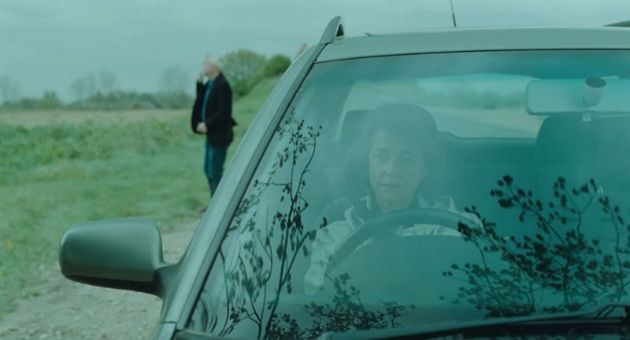
Can memories of an old flame break up the 45 years of marriage? A brit director Andrew Haigh supposes with two of the acting greats - Charlotte Rampling and Tom Courtenay as the Mercers, on the eve of their 45 year anniversary celebration.

As far as any art when the old age is concerned, it almost always becomes pettily inward. There is no wondering about the grander meaning of life anymore. We hold on to individual memories because there is nothing else left when your life is almost at an end. And that is 45 Years comes across as, despite terrific characterizations by Courtenay and especially Rampling, who is as usual, fantastic.

The beginning of the week of their anniversary, Geoff (Courtenay), a retired upper-middle class man gets a letter written in German, informing they found the frozen body of his girlfriend in the Swiss Alps, who fell to her death in the crevice of a glacier some 50 years ago. The memories rush back and he is gripped by them for days on end. Kate (Rampling) is also gripped, but by jealousy and doubt that their collective years were built on unstable ground littered with secrets.

Shot on ugly digital, 45 Years looks the epitome of British realist drama. But it's criminally unflattering, considering Haigh is not going for Who's Afraid of Virginia Wolf honesty or Mike Leigh revelations here. Haigh prefers series of long takes, obviously for the benefit of the esteemed actors. The ending dance sequence is quite devastating. But one can't shake off its pettiness (on Kate's part). Adult themed cinema should be much better than this.

Wednesday, November 2, 2016

Supreme Male Gaze posing as a Sweet Love Story

The Handmaiden (2016) - Park
 photo 30574302-e6d1-4be8-8468-dda98b14294b_zpsdwtrzhqu.jpg
Park Chan-wook made name for himself creating one elaborate psycho-sexual set piece after another. He never shied away from over-the-top garishness or so called social taboos. But in the age of highly scrutinized sexual politics of the 21st century, he is walking a tightrope with The Handmaiden, an abashedly male gazed lesbian wet dream guised as a sweet lovestory. But we will see if it gets a pass on political correctness just because it's a subtitled foreign arthouse flick.

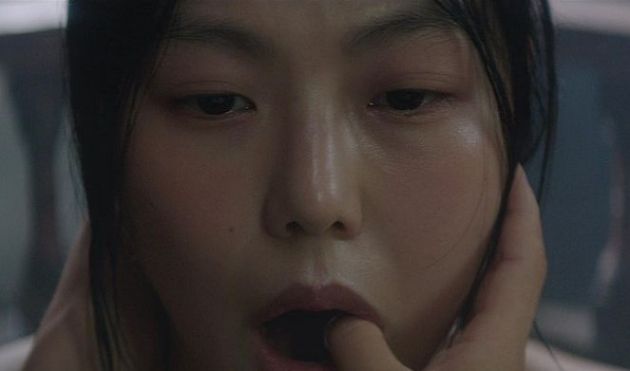
My takeaway is that it's a way over the top comedy bordering on (albeit lavishly done) lesbian porn-- how do I take the lovelorn/lusty expression of young Kim Tae-ri, as she protrude her tongue to lick her lover's vagina (the scene was repeated twice for viewing pleasure) from an angle that can only be described as pussy POV?

Park transports a Victorian era set novel Fingersmith, about a young but not so innocent heiress bred to recite pornographic writings in front of rich aristocrats, arranged by her perverted uncle who is set to marry her and a couple of low-life swindlers trying to trick them out of her fortune, into Korea under Japanese rule. But he consciously skips all the geopolitical implications and nationalism of that era in favor of cultural superiority which is completely hypocritical (remember incest in Old Boy?): as we advance with the story of seduction, fake marriage and triple cross into tentacle porn in the third chapter, we are already thoroughly exhausted by graphic scissoring and 69ing and an almost rape, the outrage over reciting pornographic novels doesn't really land its intended punch in the gut. Park's mechanism here is as usual, so elaborate and opulent, it's almost too rigid to embrace it fully. It's a fun movie. But its veneer is too shellacky, just like Wes Anderson's pastel colored papier maché doesn't do it for me.

Boy in Red

Don't Call Me Son/Mãe Só Há Uma (2016) - Muylaert
 photo fd85d2db-5062-4de6-bf82-dc13c1751018_zpsjqoa9ndp.jpg
What's concerns more to a teenager -- a family or personal identity? Anna Muylaert (Second Mother)'s new Brazilian drama, Don't Call Me Son, examines this conundrum and finds a good balance in an astonishingly swift 82 minute film.

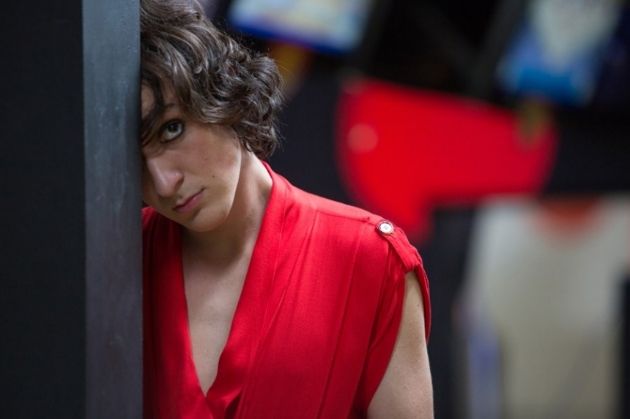
Pierre (Naomi Nero), an eyeliner wearing 17year-old High Schooler is first seen flirting and making out with both sexes in a night club. His trousers are on the floor, revealing he is wearing a g-string and garter belts. He paints his nails and plays guitar in a rock band. He tries on lipsticks and dresses secretly in his tiny room.

Pierre lives with his busy single mom, Aracy (Daniela Nefussi) and his younger sister, Jaqeline (Lais Dias). But one day, their normal lives get turned upside down when Aracy gets arrested for child abduction. It turns out Pierre was stolen from his crib 17 years ago and his biological parents were searching for him ever since. Through well-meaninged, but ineffectual social workers, his well-to-do real parents are anxious to reacquaint with him and make up for lost times. It turns out Pierre, now Felipe, has a brother Joca (Daniel Bothelho), a well-adjusted, normal kid who seems a little lonely.

At first, the interactions between the real parents, Gloria (again played by Nefussi) and hot-tempered Matheus (Matheus Nachtergaele) and Pierre/Felipe are polite and awkward. But after the teen moves in to their opulent house, they realize that their long lost son is not what they imagined him to be. Gloria's constant mommying and pampering and Matheus' frustrations with the effeminate nature of Pierre/Felipe soon boil over.

There is a hilarious scene at the mall concerning Pierre/Felipe trying out clothes while Gloria, Matheus and Joca look on. The parents pick out clothes for him to try on - polo shirts and slacks, the usual stuff teens would wear. He comes out of the dressing room in a black and white, skin-tight frilly dress. They think it's a joke or perhaps a rebellious teen angst statement-- haha funny, now change back to your polo shirt. But Pierre insists the dress is what he wants and they will buy it for him.

The film's original Portuguese title is Mãe Só Há Uma- There Is Only One Mother. But even though Daniela Nefussi plays both mothers, the film’s focus is exclusively on Pierre. Nero, with his good looks and natural performance, is magnetic as a teenager who is finding himself as an individual.

Don't Call Me Son doesn't dwell on nature vs nurture or rely on cheap sentimentality. The film doesn't even try to make any big statement on gender equality or social justice. It focuses on a young man who is very comfortable with his identity even though his life has become chaotic. But he's not a helpless victim who's unsure about his place in the world. And he also has a great, caring heart.

Beautifully acted and superbly written, Don't Call Me Son is a little gem of a film that needs to be seen widely.

Don't Call Me Son, has a two week exclusive engagement at Film Forum in NYC, starting 11/1.

Thursday, October 27, 2016

Herzog Vs. The Volcano

Into the Inferno (2016) - Herzog, Oppenheimer
 photo e5f3f116-3304-40fc-80b2-067bde786977_zpsorxevmnb.jpg
It's not the first time Werner Herzog has delved into an explosive subject.

In 1977, he rushed down to the Caribbean island of Guadeloupe, because he was told that La Soufrière, the island's looming volcano (and also the title of his resultant film), was about to erupt. All its inhabitants fled. But that eruption never happened. Instead, he found three people who stayed behind and ended up talking philosophically about their attitude toward death and their belief system.

During another volcano trip in 2006, this time in Mt. Erebus while filming Encounters at the End of the World, a film about Antarctica and its quirky inhabitants, he met enthusiastic young volcanologist Clive Oppenheimer. Even though Mt. Erebus and Oppenheimer never made it into the film, the two men struck up a friendship. After the volcanologist's book Eruptions that Shook the World was published in 2011, they decided to make a film together.

This collaboration here is special. Unless the person is his subject, never in Herzog films have I ever seen this kind of rapport before, but Oppenheimer, a Cambridge academic who prefers field work, does the great job being the filmmaker's surrogate. The questions he asks the various subjects here are most definitely Herzogian. It also helps that he is a big fan who is familiar with the filmmaker's filmography.

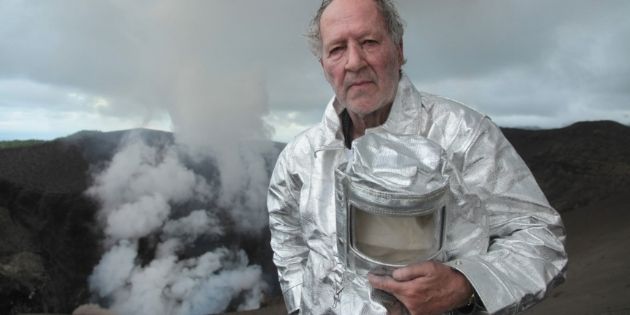
In Into the Inferno, this dynamic duo, in true Herzogian fashion, takes us to various volcanoes around the globe -- from North Korea to Ethiopia to Iceland to the Vanuatu Archipelago -- and touches upon the impermanence of human existence on literally 'thin crust' and the awesome power of nature and our belief system. Because he is armed with tons of awe-inspiring archival footage of molten lava flowing inches from the screen and exclusive access to the remote, isolated places, we are once again at the hands of a prolific master storyteller who keeps on churning out his contemplations on the vagaries of human existence every chance he gets. (The funding came from Netflix and the film will be premiering globally on October 28.)

We start in Vanuatu, where the team is looking down at the center of the active volcano. The bright orange of bubbling magma has a hypnotic effect. Herzog's long time cinematographer Peter Zeitlinger too seems having a hard time looking away from it, following its glowing, spewing trajectories over and over. Then we travel to Indonesia's Mt. Sinabung where they narrowly escape a deadly eruption, and then visit Mt. Merapi on Java, one of the most sacred volcanoes to its people. The chief and his son of the tribe, discusses the spiritual implications of living on the slopes of the volcano.

The film talks about the pivotal role volcanoes have played in everything from farming, migration and religion. So we find ourselves in an archeological dig in Ethiopia, serendipitously come across a renowned paleoanthropologist Tim White and his team, working on digging up bones of 20,000 year old human, remarkably preserved because of volcanic activity nearby. Oppenheimer helps out, brushing off dirt in Danakil desert, the lowest and the hottest place on earth.

We are hoisted over to volcanic island nation of Iceland where national identity is closely co-mingled with volcanoes: Codex Regius, Iceland's most precious posession, an ancient text that tells of a tenth-century volcanic eruption. As we all remember the 2010 eruptions of Eyjafjallajökull volcano that caused massive air travel disruptions. All these surroundings spawned religion and myth making.

Then we are in North Korea, on Mt. Paektu; a dormant volcanic mountain with a giant caldera lake. The mountain is the sacred setting for the Korean creation myth and also the communist revolution led by Kim Il-sung, the nation's eternal leader. Herzog places emphasis on how Kim co-opted the symbol of national identity to his own myth making.

Mt. Paektu garners little interest outside Korean peninsula but Herzog explains that through Oppenheimer's connections, he jumped on the opportunity to film in North Korea, the most secretive, isolated country in the world. Even though Herzog can't get personal opinions out of North Korean guides and its scientists, he and Oppenheimer gets unprecedented access (I'm sure it took Herzogian persuasion and mind-controlling of his own) into the seldom seen, majestic view of the mountain.

We move on to the religion in Vanuatu that centers around American G.I. named John Frum, who will return and bring 'cargos' of prosperity and wealth. Its literal combination of Waiting for Godot/My American Uncle is fascinating and disturbing at the same time.

Herzog, once again, demonstrates his unparalleled ability in storytelling, weaving vastly different elements from world over -- music, belief systems, natural phenomena, and contemplates the entire human existence build upon the not-so-permanent ground. It's also not short on Herzogian quotes: "The volcanoes could care less about scurrying roaches or retarded reptiles or what we are doing up here." The Ethiopian desert and North Korea scenes runs a little too long without contributing much, but they showcase Oppenheimer as our very likable guide and a scientist who can explain things in very easy terms.

Many of his films have been about man's desire to conquer nature, and failing miserably, Herzog makes a point that however benevolent the volcanic activities are to us, such as creating breathable atmosphere and nutrient rich soil for farming, it might cause the end of the world as we know it. Into the Inferno is yet another entertaining philosophical musing -- the second offering this year, after his Lo, and Behold, Reveries of the Connected World -- from the master storyteller. And I couldn't be happier.

Into the Inferno opens in select theaters in New York and Los Angeles on Friday, October 28. It will also be available to stream on Netflix worldwide on the same day.

Tuesday, October 25, 2016

Top Ten Great Underseen Horror Movies Suggestions for Halloween 2016

I've been thinking of compiling list of some great, underrated, underseen horror movies for Halloween for the longest time. But I never got around to it. This year, before October is over, I decided on accomplishing this task, even if it takes my precious weekend or two. So without further a do:

Pontypool (2008) - McDonald
 photo d0eaa4cbd218cbc2fdbbf279f97e3ff0_zpsbpiy3v95.jpg
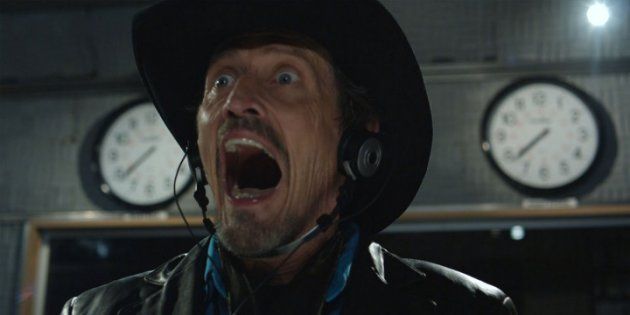
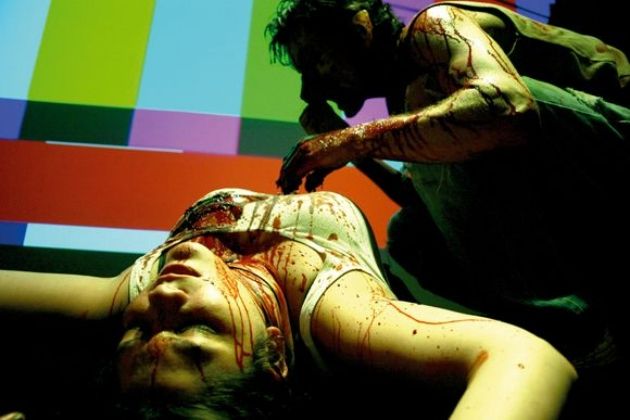
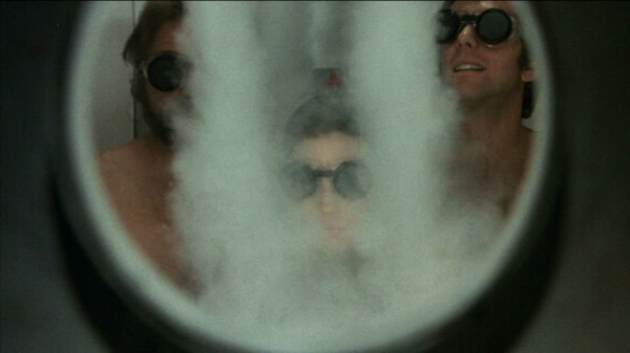
Pontypool gets played more than any other film in my household. A virus in the language is making people get stuck in the loop and turning them violent. It has great, always watchable Stephen McHattie (poor man's Peter Weller or vice versa) as Grant Mazzy, a redneck shockjock in Pontypool, some snowy north nowhere up in Ontario, holed up in his radio station with his producer Sidney (McHattie's real life partner Lisa Houle) and their young assistant. They have to figure out how to stop the outbreak before hordes of infected break in to the station. Snappy dialog, claustrophobic setting and plenty of great humor, Pontypool is a great example of what can be achieved with very little. It's so much fun!


Wolfen (1981) - Wadleigh
 photo 27b927c3-afd3-4ffb-938f-11ad40289da5_zpsxgflaxr8.png
A surprisingly elegant urban legend film. Drawing a parallel btwn gentrification and territorial war, Wolfen is a very well done atmospheric supernatural horror. A lot of great 80s actors- Al Finney (cop), Tom Noonan (zoologist), Gregory Hines (coroner), young Diane Venora(looking like a brunette nastassja kinski and not annoying for a change), and Edward James Olmos (sexy Native American construction worker) all take parts in the plot with a strong environmental message. It also has a lot of great visual details and gritty NY settings. The Bronx looked like a war zone back then, victim of years of neglect, drugs and landlords intentionally burning down tenement buildings for insurance money. And there are spectacular shots of Manhattan skyline from the top of the Brooklyn Bridge. With lots of dusk and morning shots, New York looks all very empty and lonely. And how they managed to wrangle all these real wolves in Battery Park is anyone's guess. Pretty awesome movie.


Mulberry St (2006) - Mickle
 photo 4a98ae1e-d2a4-470a-96c7-f65f8bab5735_zps9qw5oxgs.jpg
Nowadays I find surprises and originality in low budget horror movies more often than not. I hate movies which I can guess where it's going within 5 minutes. Just like this year's some of my favorites, Mulberry Street surprised me. It is shot in such a way even snobs would find pleasing: natural lights, minimal showyness and meandering tracking shots. Unknown actors look like they came off the set of a new Carlos Reygadas movie with a dash of New York ugly realism. And they are all very good.
Mulberry St concerns a group of working class families in a tenement house about to get evicted because of a big time developer. Rats are gone crazy and start attacking people and turning them into a ravenous rat zombies! Sounds ludicrous I know and the sappy ending was disappointing but it has a lot in it that you don't see in movies much these days. I recommend this.


As Above, So Below (2014) - Dowdle
 photo b4bbc869-59a3-481f-8955-7f15e11e1f43_zpsjk4rfoop.jpg
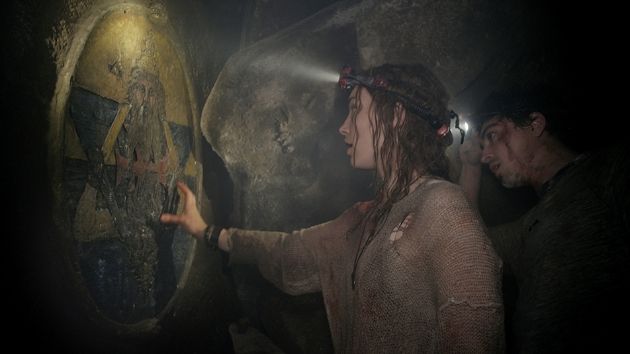
The concept of As Above, So Below poses a metaphorical quandary- dig deep and you will find a personal hell, deeper still then, you will find your way out. All the genre trappings and stupidities aside (a token black dude, attractive 20 something professionals with multiple Ph.Ds, the Philosopher's Stone, etc.), the film is an effective and creepy horror thanks largely to its narrow, snug, claustrophobia inducing underground tunnel setting.


Phase IV (1974) - Bass
 photo 8a2d555b-879d-44a9-8f26-add2e9009679_zpsh17uvvub.png
The planets' unusual alignment in the solar system causes ants in New Mexico desert to gather collective intelligence and advance their territories, killing off all the other animals around them. From a shiny, teched-out bio-dome, Dr. Hubbs (Nigel Davenport, sort of workingman's James Mason) and his reluctant, number inclined assistant James (Michael Murphy) are trying to gather information on these super ants. Hubbs is a determined man and he will stop at nothing, even if it means sacrificing other humans around him. And soon they find that they are no match for these pesky creatures.

After being (accidentally) orphaned, a young, horse-riding, luminous country girl (Lynne Frederick) from the nearby ranch, also becomes marooned inside the dome and under attack.

Phase IV is a fascinating film. It's like Jaws but instead of one shark, you got thousands of ants trying to outsmart you. With effective extreme closeups and unexpectedly gorgeous visuals and the 70s pseudo science wtf-ness, it is a thoroughly enjoyable film.


Parasomnia (2008) - Malone
 photo 78d41aef-476d-45a4-95b9-7e87f373078d_zps1zkenyjx.png
A creepy 90s throwback of a movie in terms of tone and look, Parasomnia is an all together a different, fresh horror film compared with the current, too-clever-for-its own-good horror trend. While visiting his friend at the hospital, art student Danny falls for Laura (Cherilyn Wilson), a virginal sleeping beauty who suffers from a medical condition which makes her sleep away most of her life, only waking up for short period. Determined to 'save' her, Danny sneaks her out of the hospital into his pad, only to find out that she is under the spell of mass murderer and mesmerist Volpe, who is chained and gagged in the same hospital she's been staying at. Bloody murders are happening around Danny and Laura even attacks him in her sleep state. And cops are looking for Laura and the murderer. Danny has only one way to save Laura, kill Volpe!

Part Nightmare on Elm St., part deranged Tim Burton movie charting almost Clive Barker territory, Parasomnia is a totally above average horror/fantasy flick. Willam Malone's imagination is up there with early Bernard Rose (Paper House, Candy Man) in my book. Oh, horror great Jeffrey Combs shows up as a cop.


Starry Eyes (2014) - Kolsch, Widmyer
 photo 5ea1a127-84ab-4039-8c3d-1abf7ccbdd17_zps5rbsxnaf.jpg
Perhaps the best satire on Hollywood since Mulholland Dr. Alex Essoe kills it as Sarah, an aspiring actress dreaming a big break while working at Tatertots (fictional equivalent of Hooters) and sharing a bungalow apartment with other twenty something dreamers who spend their time talking about making it near the pool. It's a life of daily humiliations and heartbreaks. Lanky and awkward, Sarah suffers from anxiety attacks where she distorts her long body and pulls her hair out. She auditions for a mysterious horror project, Silver Scream. The audition doesn't go well, but a scary lady who was at the audition witnessing Sarah's fit in the bathroom gives her a second chance. She has a meeting with a sleazy, old producer of the project. He wants her to bare it all, body and soul. He wants her to go all the way and she gets scared and runs away.

Starry Eyes is part body horror, part devil worshiping cult and part boulevard of broken dreams movie. Essoe's pretty amazing in a demanding role with unusual vulnerability and ferocity. She is our new Barbara Steele. A superb horror.


Eddie, The Sleepwalking Cannibal (2012) - Rodriguez
 photo 781617f1-c8e7-4d0e-bb98-1f8335b700a3_zpsy8h3mkvu.jpg
A once famous Danish painter Lars (Thure Lindhardt) gets a job in some snowy art college in a small town Canada. His intention is pure - he wants to teach and maybe start working on a new project ten years after his initial success in a tranquil, solitary environment. The town's suspicious inhabitants are hostile and the college folks are eager to use him as a savior as the school is in need of cash. In order to make good with the folks at college, he agrees to take care of Eddie, a big mute manchild whose aunt had been a sole funder for the school. There is one problem though. Eddie has a tendency to sleepwalk in his underwear and eat small animals in the woods.

Lars finds his new friend's appalling habit but also compelled by the carnage the sleepwalker leaves behind. He finds an inspiration for blood and gore for his new painting, just like he broke out in the art scene ten years ago after experiencing a catastrophic accident. In order to pump out new paintings, he needs to encourage Eddie to sleepwalk and ...kill. The great Stephen McHatty and his Pontypool co-star Georgina Reilly make an appearance. Another fun,wry horror comedy from Canada.


Triangle(2009) - Smith
 photo 22047943-ee81-4beb-b3ec-2a4edb441410_zps5wq4ey8o.jpg
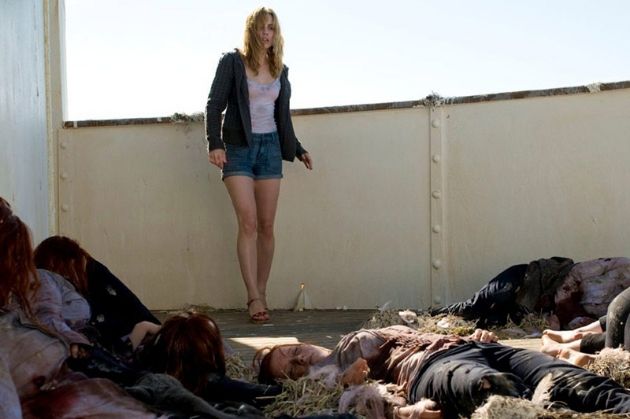
Jess (Melissa George) is having a bad day. She is invited to take a day trip with a group of people on a yacht by Greg who frequents the restaurant she works at. But by the time she gets to the harbor, she is exhausted by taking care of her autistic son at home. Not long after they set sail, a freaky electrical storm capsizes the boat, the crew gets on board of a giant, empty ocean liner that appears out of nowhere. For Jess, everything seems so familiar. She is experiencing nightmarish deja vu.

A talented Brit Chris Smith (Creep, Black Death) directs this tightly done mindfuck of a movie, reminiscent of Time Crimes and Memento. The logic and moral of the movie are highly questionable if you think about it too hard, but while watching it, it's great shameless fun. Aussie George is fast becoming my favorite scream queen, ever since her appearance in Mulholland Dr. as the freaky 'it' girl.


Goodnight Mommy (2014) - Franz, Fiala
 photo 541673d5-6431-42b1-8173-4e70d7dcf4cb_zpsboqpdwc8.jpg
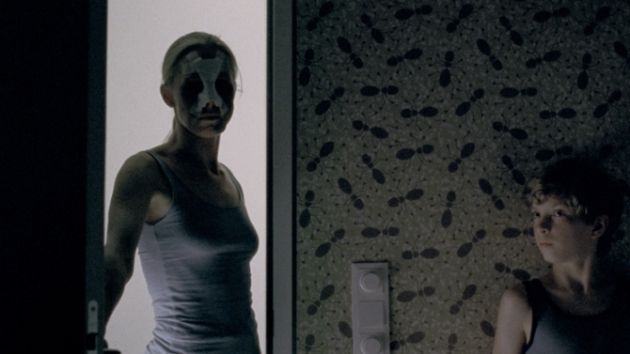
As far as creepy twins movies go, Goodnight Mommy tops it all. Impeccably executed and acted, this Austrian chiller rubs shoulders with Funny Games on cringy inducing level. It is no surprise then that the film is directed by the wife and the nephew of Ulrich Seidl. It's quite an achievement what they pulled out from the young real twin brothers Lukas and Elias Schwarz.

We are introduced to preteen twins, Lukas and Elias, playing in the corn field, then near the lake. Colors are lush and vibrant you can almost smell the warm Summer surroundings. Something dark and sinister is hiding just around the corner. You can feel it. Then there is mom (brave Susan Wuest), whose face is bandaged like a mummy. She is cold and distant and barks orders at Elias and doesn't seem to acknowledge Lukas's presence. It becomes pretty clear that Lukas doesn't really exist and that something terrible has happened before. But there is scarcely any dialog for the first half of the film. They are in the hiding in the ultra modern house in the country, away from Vienna. Lukas is feeding his brother some unspeakable thoughts: our mother isn't really our mother. We need to find out where our mother is from that woman who is not her. From then on, Goodnight Mommy slowly slips into very dark, dark territory.

Franz and Fiala really know how to build tension without the help of music or dialog. Goodnight Mommy is quite a feat for visual storytelling. Images, shots and editing matters. Not quite formalist approach of Seidl but the images have power in this film.


Sunday, October 16, 2016

The Lost City of Z, for an adventure movie, lacks bravado

The Lost City of Z (2016) - Gray
 photo 89047dcf-1033-45a3-b998-860563e4e4bc_zpsviaivsvi.jpg
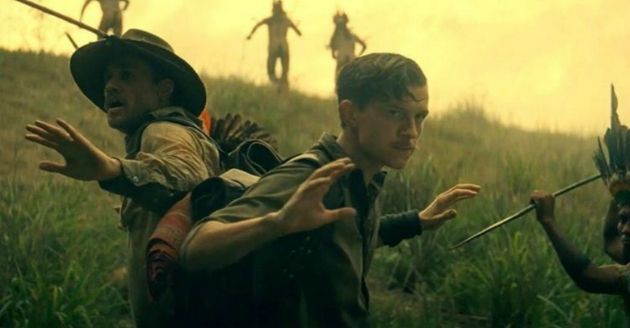
The Lost City of Z, an unabashedly old fashioned, bows-and-arrows school boy fantasy based on David Grann's non-fiction bestseller of the same name, stars Charles Hunnam as a British army officer turned explorer, Col. Percival Fawcett, who had a perilous obsession with the Amazon jungle.

Despite years of being stationed overseas and proving his leadership abilities, according to his sneering superiors Fawcett "had a bad choice of his ancestry" -- his father was a drunkard and a gambler, and therefore forfeited his advancement in the army. With the help of the uppity Royal Geographical Society, together with Britain's interests in rubber industry in the Amazon, Fawcett is granted an expedition into Eastern Bolivia to map the fuzzy Bolivian and Brazilian border deep in the jungle.

The two-year expedition means being away from his spirited wife Nina (Sienna Miller) and his young son, Jack. But man must do what he's got to do -- to restore his family name in good standing in a rigid society and be a hero and whatnot.

Fawcett's small team, including Costin (Robert Pattinson) and Manley (Edward Ashley) with an Indian guide, goes up the river only to be attacked by various Indian tribes and suffer diseases and hardship. But the explorers not only find the source of the river, they also find evidence of an ancient civilization: broken potteries and sculptures of human figures.

After returning home, Fawcett becomes an advocate against the general notion of the natives of America as arrow chucking, cannibalistic savages who are forever stuck in the early Iron Age. Finding the lost civilization in the Amazons becomes an obsession for him.

With the backing of rich patron/fellow explorer James Murray (Angus Macfadyan), Fawcett and his team set out a second expedition, despite angry objections from Nina. When disease and the unforgiving climate of the jungle becomes too much for out-of-shape Murray, they have to abandon the mission. At home, the accusations fly and Fawcett strains his ties with the Royal Geographical Society.

The first World War interferes with Fawcett's obsession as he is sent to the frontline, where he sees many of his friends die and himself getting injured in the horrific battle of Somme. Now nearing 50, and his son Jack a young man, father and son try once again to find the lost city.

You can't escape the shadow of Werner Herzog when it comes to making a film set in the Amazon. Aguirre, The Wrath of God and Fitzcarraldo, about a man's obsession and his futile attempt to wield the course of nature both spiritually and physically, are towering examples to measure up to. All the hardships and suffering in the making of these films are justified by the breathtaking end results.

It might not be fair to compare, since Gray is a very different kind of filmmaker, who prides himself in emotionally fine-tuned dramas. Despite all the glorious pretty picture show, well-rounded characters and fine acting don't really suit the adventure genre. But that's just it. His attempt at showing 'it's the journey not the destination' lacks a proper bravado and zeal, constantly interrupted by Fawcett struggling with domestic life and in finding his stature in the rigid society.

Shot on 35mm by Darius Khondji (who also shot Gray's period piece The Immigrant), The Lost City of Z is a very handsome movie. Gray does his best to be faithful to the source material and instill every character with humanism. But I find Nina Fawcett's proto-feminist character too propped up to be believable in otherwise this male-oriented adventure film.

There is nothing particularly wrong with The Lost City of Z. I buy that one man's obsession -- 'a man's reach should exceed his grasp' -- is a worthy subject for a movie. Obviously, it's much less offensive than that last Indiana Jones film or Apocalypto when the depiction of natives are concerned. But do we need another film about a white man's journey to validate another culture's worth in this day and age?

The Lost City of Z (and as well as The Immigrant), as a sumptuous and elegant epic it might be, doesn't quite justify all the effort put in by everyone involved.

The film had its world premiere at the New York Film Festival. It is being distributed by Amazon Studios in theaters in early 2017.

Friday, October 14, 2016

Elle: Paul Verhoeven Doubles Down on Making a Rape Comedy

Elle (2016) - Verhoeven
 photo 663223a9-a7c9-45ec-a1ca-fb514a29a667_zpshflb4nhm.png
In the age where a presidential candidate says he's grabbed women by the pussy and still has a chance to win, Verhoeven doubles down on the impossible task of making a rape comedy. The king of bad taste, known for such classics as Starship Troopers and Showgirls, Verhoeven has always been walking the fine line between vulgar entertainment and satire while enjoying pushing buttons a little too much. It's a rare gift for a filmmaker to be having a cake and eat it too -- there are no wink-wink moments or obvious strings of the puppet master seen in his films and actors all seem to play straight without irony. But whenever you watch his films, you can feel 'all the world's a stage' vibe. And Elle is a terrific entertainment.

Elle is made possible because of Isabelle Huppert. The most fearless actress of our time, she dives right into the role of Michele, a callous woman who gets raped by a masked intruder and has to deal with the aftermath. The film starts with the said rape in black screen with the sound of glass breaking and beating and moaning. After the incident, Michele carries on as if nothing has happened. She changes all the locks in her luxurious apartment, chides her cat for not gauzing the rapist's eyes out while it was happening, goes to work and dinner parties. As the head of the company which makes sexually violent video games, she complains to her much younger male programmers that the prototype graphics for the next project is not shocking enough. When she announces her experience matter of factly at the dinner party to her friends and her ex, they were flabbergasted by her not calling the police and how calm she is. She gets dirty texts from the assailant and gets somewhat aroused by them. But who is he?

Elle is not a revenge thriller per se. Not quite whodoneit either. Like many of Verhoeven's other films, it is a hard to pin down film. Not as over the top and sentimental as Almodovar nor as clinical and visceral as Cronenberg, but it's so deftly and slyly done, you can't not enjoy it even though rape is not a light subject to joke about. Destined to be controversial and definitely a conversation starter, Elle highlights two artists at the top of their game.

Wednesday, October 12, 2016

Kelly Reichardt's Back in Form with Certain Women

Certain Women (2016) - Reichardt
 photo 12a5cf08-0ed6-4cdd-81a4-67a6cef7efde_zps2n0fayck.jpg
Certain Women signals that American indie auteur Kelly Reichardt is back in form.

In my opinion, Night Moves, her attempt at an eco-thriller starring Jesse Eisenberg and Dakota Fanning, was a small misstep in her otherwise spotless filmography. Her strength lies in her minimalist approach to depicting the inner lives of lonely people inhabiting her beloved Pacific Northwest, not in complicated plots or building up tension or presentation of violence.

If her newly restored/rediscovered debut film Rivers of Grass gave a nod to Bonnie and Clyde and old noir films, with Certain Women, Reichardt does Altman -- an ensemble cast and loosely connected stories, based on short stories (by a Montana Native, Maile Meloy). But it's still very much Reichardt's film: with muted tones, a sense of melancholy and loneliness, Certain Women excels at dramatizing small, minimalistic character studies that are distinctly small town Americana. Also, many of her films placed women in precarious situations to observe, but I think this is the first time that she is exclusively telling women's stories.

Three slightly interconnected stories, taking place in Montana -- still very much Reichardt's territory -- feature Laura (Laura Dern), a small time lawyer; Gina (Michelle Williams), an overachieving professional and wife/mom; Beth (Kristen Stewart), a newly minted adjunct teacher of a nighttime adult education class; and Jamie (Lily Gladstone), a ranch hand who has a crush on her.

Laura's story has to do with a client of hers, a disgruntled mechanic (Jared Harris) who was injured at the job, but took an early settlement. So he can't sue his former employer. He keeps coming to her office, asking her to check his file again and again. Until she takes him to another lawyer for the second opinion on the case, fully knowing that the other lawyer is going to tell him what she's been telling him for months: he doesn't have any recourse; he lost.

Harris gives an extremely sympathetic performance as a man who has lost everything because of his injury and is trying to hold on to some kind of human connection. Because Dern is attractive, attentive and warm, and because he's lonely and desperate, he just wants to prolong their futile if sexist relationship. The hostage situation ensues. It is beautifully drawn by Dern, who deftly handles sexism without losing her humanity and compassion.

Gina, a high-strung woman married to a mild-mannered, less assertive husband (James Le Gros) and an unresponsive teen daughter, is trying to build a new house for her family. She wants to have a good foundation and is attempting to ask a local kook, if he could sell her a pile of historical sand stone bricks on his otherwise barren lot. The old man doesn't like her sassy attitude and her husband isn't helping much to persuade the man.

Her attempt at building a harmonious family is failing and as we the audience know something she doesn't, it involves her husband. It's delicate, fine-tuned, unhurried storytelling and all the actors involved are fantastic. Michelle Williams might play the least sympathetic character of the three, but she does a very convincing job as a tough businesswoman who has to act a certain way to survive, never letting her guard down.

The most poignant story follows Jamie, a lonely horse ranch hand in the remote town of Belfry. She leads an uneventful, repetitive life, looking after horses day after day. One night she follows some folks into a classroom and meets Beth, a brand spanking new teacher on her first day, reading off an index card full of information on school laws.

She is instantly attracted to Beth and they go to a local diner before Beth drives off to Livingston, a two-hour commute she has to make every Tuesday and Thursday. The only reason Beth, a law school student who also works at a shoe store, took the job is because she thought she got the job at Belgrade, about thirty minutes from Livingston, not Belfry.

Now Jamie has something to anticipate. Their brief late night diner encounters become some kind of ritual, at least for Jamie. They have a moment when Jamie takes Beth to the diner on a horseback. But Beth doesn't show up for the next class and Jamie is told that due to a long commute time, Beth is no longer coming back. On impulse, Jamie drives up to Livingston the same night, in the hopes of seeing Beth again.

Stewart, who's been shedding her teen-idol image by choosing various interesting roles, continues to impress here, playing a straight-laced, awkward young woman whose presence is still magnetic. But she takes a step back, allowing clear-eyed Lily Gladstone to shine in her role. Gladstone's depiction of an ordinary woman with a crush and heartbreak is beautifully realized. Her silent gaze alone speaks volumes.

With the exception of the presence of cell phones, Certain Women has that distinctive, melancholic, 70's American movie vibe. Reichardt masterfully draws these sad and poignant human encounters with the help of director of photography Christopher Blauvelt, who has collaborated with her since Meek's Cutoff, lensing underpopulated, Ed Hopper-ish small towns and the beautiful scenic vistas of Montana. Perfectly tuned for its quietude imbued in loneliness and longing, Certain Women is certainly one of her finest films to date.

Certain Women premiered at the Sundance Film Festival and will open in select theaters in the U.S. on Friday, October 14.

Death and Irony

The Death of Louis XIV (2016) - Serra
 photo c085995e-e958-42e5-8f4a-e15d28b59158_zpszw5d8s18.jpg
Death is a grisly business. It comes to all of us. Even if you happen to be the King of France who's been reining the kingdom for 72 years. From all the documented evidence indicates Louis XIV died of gangrene on his leg caused by diabetes. The year was 1715, without modern medicine, he died a painful, horrible death surrounded by physicians who were perplexed by his conditions.

Catalan filmmaker Albert Serra has been tackling literary/historical figures in his films -- Don Quixote in Honor of the Knights, The story of Magi in Birdsong, Casanova and Dracula in The Story of My Death; approaching them in minimalist, aggressively formalist fashion. Armed with extensive court medical documents and writings of Duke Saint-Simon and the French New Wave icon Jean-Pierre Léaud as the king, Serra sets out to make a straightforward account of the last days of Louis XIV.

Except for the first few minutes of the film where we see the king on the carriage outside, coming back from a hunting trip, the entire film takes place in the stuffy ornate interior bedroom of the Versailles. Gangrene has set in on the king's left leg and physicians are rubbing it with herbs, hoping it will go away. The old king mumbles and shouts in pain while eating grapes and sweets administered by the same physicians who argue endlessly among themselves what to do about the situation. People try to entertain and laugh at everything his Highness says, priests are called in to give the last lights but then sent back because he feels better, and so on. Even the learned physicians of the Sorbonne have no idea about the king's illness. His leg starts to stink and turns completely black. Everyone's waiting on the inevitable.

There are some funny bits with a snake oil salesman played by great Catalan poet and art critic Vicenç Altaió (whose turn as Casanova in The Story of My Death was hilarious) with his 'cure all' tonic made out of bull's sperm and other animal parts. After the initial success of the king's improving health after taking the tonic, the condition worsens and they order the phony physician's arrest.

Léaud, 72, has been keeping his restless, adventurous New Wave spirit alive by working with many daring contemporary filmmakers (Tsai Ming-liang, Bertrand Bonello, Olivier Assayas just to name a few) over the years. Here, he accepts the physically confounding role and fully collaborating with Serra, whose filmmaking charts new territories in cinema.

Perhaps the most poignant moment of the film is forever bedridden Louis XIV receiving his 5-year old great-grandson (the future Louis XV) and giving him advice. Having seen countless war and suffering of people in his time, he recommends the young kid to relieve his people’s suffering and avoid war as far as possible.

Even though Louis XIV’s health deteriorated quite rapidly in a month, the film feels like an eternity. But Serra never waivers in his aesthetics and keeps a straight face until the end.

The irony of the king's death is heightened by its straightforward presentation and procedural approach. The Death of Louis XIV is a very singular formalist filmmaking in its highest order.

The Death of Louis XIV is acquired by Cinema Guild for Spring 2017 release. please check their website for more details.

Monday, October 10, 2016

Bi-continental Romance

Hermia & Helena (2016) - Piñeiros
 photo 39e414c8-288a-49e2-8b47-d9de7261d200_zpstra93hgr.jpg
Matias Piñeiro's Hermia & Helena begins almost identically as his last film Princess of France, looking down at the soccer field. But they are two very different films. Even though his usual light-as-feather approach at twenty-something's bohemian lives and romantic entanglements might be the same, but the tone, the tempo, the setting of the film is noticeably different in Hermia & Helena.

Taking the cue from A MIdsummer Night's Dream, Piñeiro builds up bi-continent tales of love and friendship, in his unique way without ever heavily delving into anything resembling of a plot. Just clocking in at 70 or so breezy minutes and like his other films, it solely relies on seemingly complicated, incongruous structure and charms of his regulars (mainly María Villar and Augustina Muñoz) and some new faces Piñero acquired during his 2 years living in New York.

Divided by chapters with characters names, we loosely track the flight of two friends: first, it's Carmen (Muñoz) finishing up her writing fellowship stint at 'the institute' in New York, living in the institute provided housing in Chinatown in winter, looking over the soccer field and the Coumbus Park. Then we are back to Buenos Aires, where her friends are. It's Carmila (Villar)'s turn to go. Camila, a small time theater director, at first, seems very much in love with her boyfriend (another Piñeiro regular Julián Larquier Tellarini), but not so much as we find out later. She feels ambivalent about the trip, leaving behind all of her friends for New York, translating A Midsummer Night's Dream into Spanish for her upcoming production. She embarks on anyway, and we follow her the rest of the film.

In snowy New York, Camila meets knick-knack of characters: there is Lukas 'the tall guy' (Keith Poulson) from the institute, who is kind of cute, Carmen's secrete friend/lover Danielle (Mati Diop, a filmmaker/actress who's been popping up in many international productions), a fellow fellowship artist/writer/performer whathaveyou from France, traveling across the United States sending postcards from each state she visits to Carmen, because she doesn't know Carmen finished up her time in NY and went home, her former lover (Dustin Guy Defa) who is a filmmaker and her father (Dan Sallit) whom she never met who lives upstate.

Just like his other films, H & H is extremely talky, but the feel of the film is much slower even languid at times. It's not more contemplative, per se. Perhaps it's New York's snowy winter landscape that's bringing out certain melancholy to the film. Because of Camila's journey takes unexpected turns (in romance or otherwise) and because of the people she meets and we get to see her (sort of) motives, the film comes closer to a character study and feels more personal than any other Piñeiro films I've seen.

Shot gracefully by his long time cinematographer Fernando Lockett, but H & H showcases some other beautiful elements - long cross-fades to signify two different cities, almost Woody Allenesque, chirpy piano music, and black and white, movie-within-a-movie in the middle.

There are elements he plays with the bard's work- be that in dialog or objects that are passed around or a father figure (or an idea of one). It's not a bad choice for inspiration or starting point to be playful, intermingling his love of books, music, poetry, good friends and other personal things and project that on the screen. It seems with Hermia & Helena, Piñeiro is upping the ante a little bit and put more cinematic playfulness in his small ways. And it's lovely.

Indiscreet Charm of Bourgeoisie

Aquarius (2016) - Filho
 photo 62de6e83-1225-49fb-a049-fd1389473675_zpsspayje39.jpg
Just like Filho's Neighboring Sounds, Aquarius is a clear eyed observation of changing times in Brazil. It deals with the class differences, rapid gentrification, generation gap, among others. The film's aided by blistering central performance by the 70s sexpot Sonia Braga (Lady on the Bus, Kiss of the Spider Woman). Now 65, raven haired, tiny but extremely fit Braga commands the screen as Clara, a retired music critic, who is the family matriarch and moral compass of the film. Aquarius is a small condominium complex right on the beach where Clara lives in an affluent Recife neighborhood. The building's blue exterior has faded over the years, but it's well kept. But it's all but overshadowed by glitzy glass towers that surround it.

Clara remains the only resident (with her faithful elderly maid) of the building. She weathered her husband's death and all the children growing up and moving out. A Goliath real estate company's young, US educated project manager is trying to make an offer to buy out Clara, but she wouldn't budge. There are just too many memories associated with the place. Her furniture, her LP collections, everything inside that apartment has a backstory and meaning-- the film starts in 1980 in the same apartment where they are celebrating the birthday of Clara's mother. While people are congratulating her and having a good time, mom's eyes are fixed on a bureau in the middle of the room. She is reminiscing about great sex she had on the bureau long ago. And that bureau remains in Clara's apartment, imbued with the memories of people who are long gone.

Filho doesn't shy away from human sexuality. Even though Clara had a breast cancer and had a mastectomy on one of her breasts, she engages in a steamy sexual fling with a male escort whom her friends recommended. She accidentally walks in on her young nephew and his new girlfriend having sex in the morning. She quietly backs out smiling. She flirts with a young lifeguard friend. Sex and desire are portrayed in a very frank, healthy light.

It is clear that slowly but deliberately, the developers want to force Clara out. They start engaging in psychological warfare with her- one day it's loud music and thumping, the next its drug fueled orgy that's taking place in the upstairs apartment which is supposed to be empty. The general upkeep of the building becomes shoddy. It's also Clara's daughter Ana Paula (Neon Bull's Maeve Jinkings), a cash strapped single mom, who is approached by the company to put pressure on Clara to sell the apartment. But when confronted with accusations, the young project manager plays innocent, as if everything is one big misunderstanding, that it's Clara who is always being unreasonable.

Even though the film's perspective is from bourgeois class through and through, and Filho clearly sympathizes with the main character, he takes jabs at the rifts between haves and have-nots matter of factly. When Clara's family and friends are gathered and walking on the pristine beach, her friends points where the sewer feeds into the ocean: "This is where the rich part of the town ends and where the poor part of the town starts" she says without irony.

Dense and richly textured, Aquarius works as a strong anthropological study of changing society and proves the cultural center of Brazil is not in the south and Rio and Favelas anymore. Along with other filmmakers from the Northeast Pernambuco region, Filho shows sophisticated, nuanced yet still sensual side of Brazilian cinema. With Braga's commanding performance and the quite explosive ending, Aquarius goes down as one of the finest films of 2016.

Saturday, October 8, 2016

Juxtaposition of the Refugee Crisis and the Old Europe

Fire at Sea (2016) - Rosi
 photo e347b518-0e9b-4fd6-b13d-a88b765c88c1_zpsmfavg5x5.png
Europe's refugee crisis is perhaps the biggest humanitarian crisis the continent has ever experienced since the WWII. Gianfranco Rosi, an Italian filmmaker whose observational documentary Sacro GRA made a splash in 2014, here focuses more narrowly on Italy's refugee crisis on the island of Lampedusa, a tiny island between the African continent and Sicily- the case clearly being served as a synecdoche concerning the state of whole Europe. Fire at Sea a devastating look at the human toll juxtaposed with the old way of life the homogenic white Europe has enjoyed for years.

In a parallel action, we see the flight of refugees, mostly from North Africa and some from the Middle East crammed in on tiny ships, being rescued by Lampedusa's patrol team, armed with helicopters and patrol boats, then we follow Samuele, a typical engergetic school boy and his everyday life on the island.

Due to bad weather and communication problems, sometimes the rescue team get there too late. Reportedly 15,000 people lost their lives of starvation, exhaustion and drowning off the coast of the island.

Slingshot wielding Samuele is destined to be a fisherman, just like his father and grandfather and great-grandfather but only if he gets over his sea sickness first. He has a lazy eye problem and suffers from hyper tension.

A local medical doctor who experienced the human misery first hand, tells the harrowing account of what he witnessed - piles of dead bodies of women and children, chemical burns on bodies caused by diesel fuel mixed in with sea water, dehydration, hunger, etc. It's the same doctor who treats Samuele for his hypertension.

In a crowded refuge camp, harrowing journeys of refugees of watery death (or near death) are sung by a Nigerian preacher who continues to document their flight in oral tradition - they fled their home countries (Eritrea, Mali, Syria, Nigeria, Sudan...) because of bombs were going off, they crossed the Saharan desert, drinking their own piss, they were tortured and driven out from Libya, then they were forced out to sea.

But there are sparks of joy in the camps too, as makeshift soccer games between many different countries, resulting in momentary eruption of cheers and laughter.

We observe simple lives of the fishing village in the island - people requesting Sicilian love songs for their spouses on the radio, diving in a wet suit into a roiling sea for sea urchins, kids being kids without any interjection.

Fire at Sea refuses to be a rhetorical documentary. There are no narrations nor sit down interviews with locals or 'experts' about how they feel about the tides of Immigrants coming ashore or what could be done about it. It is more of a straight up reportage on the ground, simply showing the magnitude of the crisis that begs your attention and understanding.

And it is a gut wrenching experience at times. Bodybags, tears and wailing are as common as Samuele and his friends shooting airgun at the sky. Simply juxtaposing the crisis and the tranquil, simple, traditional lives which I'm sure have continued unchanged for hundreds of years, Rosi lets viewer to take in and think for themselves about the situation without judgment.

Fire at Sea won the Golden Bear at this year's Berlinale and was selected as the Italian entry for the Oscar for the Best Foreign Language film.

Thursday, October 6, 2016

Masks We Wear: Why Toni Erdman is the Best Film of the Year

Toni Erdmann (2016) - Ade
 photo 5e208ddf-77fd-4ca8-85c0-3e0b2e170d6e_zpsq5vuyxua.jpg
Hollywood would have made a terrible film out of the premise of Toni Erdmann- starring the late Robin Williams and Kate Mara perhaps as goofy clownish father trying to teach his uptight, humorless grownup daughter to not take life too seriously and enjoy the moment or something. He would die and there would be a funeral and it would be a tearjerker and Mara does something goofy and... the end. It would've been a comedy that is best described by its tagline, "It's the 'Take Your Father to Work' Day!"

Toni Erdmann, even with its 2 1/2hrs running time, like the practical joke prone father character's favorite word choice, "spontaneously", is full of surprises that makes you laugh at every turn. Winfried (Peter Simonischeck) and Ines (Sandra Hüller) are very real and their interaction funny and touching. But it's not daddy nostalgia type movie. It's the first film I've seen that takes the father daughter relationship between two adults: one person putting on a ridiculous persona to mirror another playing the role of icy queen in the corporate world. That's why birthday scene works so well. But Ines's unraveling, or loosening up a little comes in even earlier in another ridiculous scene involving a naughty pastries. Even in its most riotous moments, involving, ehm, Whitney Houston song, it's not nostalgia but making an ass out of yourself/letting your hair down once in a while. It goes the same way with the prolonged ending- grown ups don't change drastically. Letting your hair down once is not going to change your life. In this sense, Erdmann doesn't have a happy ending. Ade doesn't end her film in Where the Wild Things Are style. She is too smart and mature for that. But it's not a sad movie either. We live out lives hoping that we are making some kind of impact on people you expect the same from others on you. That is what we hope for anyway. Toni Erdmann deserves all the accolades. It's amazingly acted, best written film I've seen this year.

Thursday, September 29, 2016

Youth and Optimism Through Female Gaze

American Honey (2016) - Arnold
 photo 583f2b91-9c6e-4644-86ee-4893f5e27e71_zpsfvcnqv4c.png
A modern day Wizard of Oz but Dorothy here is played with gusto by newcomer Sasha Lane. Her Star is a tough as a nail firecracker with a good head on her shoulders and a heart of gold. American Honey tell the rowdy group of traveling kids selling magazine subscriptions door to door. Only recognizable actors (I use the term loosely here) are Shia Labeouf and Riley Keough. But even they disappear into their respective roles as a slightly sexy older kid who show Star the ropes and young creepy, scary matriarch of the gang. The setting here is American south-midwest, but it isn't much different than Arnold's previous film Fish Tank, in terms of its theme- on the verge of womanhood, a girl from a poor family journeying through self-discovery. The hope Arnold portrays in those two films has less to do with its setting but with youth. This is what separates Arnold from other filmmakers. American Honey is being compared with Larry Clark's Kids. Yes there are plenty of graphic sex and violence. But whereas Clark's film unabashedly, proudly comes across as nothing but exploitation, Arnold's film shows real compassion toward its characters while not losing sight on the youthful passion. Arnold acknowledges physical, almost feral attractions that exist among people (even in adults in Red Road) but understands that she doesn't have to exploit it by showing boobies every other scene. For this reason, I think this film can be a great counterpart example to so-called 'male gaze' films by all these 'macho' directors.

Charging tirelessly through almost 3 hour running time, Arnold and co achieves something truly special here. It's a director's film through and through, not in any artificial David Fincher way. She even knows how to perfectly use actors like Labeouf who fits the role like a glove. She deserves every best director awards this year period.

Thursday, September 22, 2016

Stranger than Fiction

The Lovers and the Despot (2016) - Canaan, Adam
 photo 062e5ff8-cd33-45ca-bfb1-64f05e6c903e_zpswtodncqf.jpg
Truth is stranger than fiction. In 1978, famous South Korean director Shin Sang-ok and his ex-wife, actress Choi Eun-hee were kidnapped in Hong Kong by North Korean agents under order of Kim Jung-il, the future leader of North Korea. While they were held as captives, they made 7 movies in the hermit kingdom, until they made a daring escape in 1986 to Vienna. This bizarre and fantastic experiences that Shin and Choi went through reads like a crazy combination of a high-flying political thriller and a lurid tale from the dark underbelly of the movie business. And it's totally ripe for a movie adaptation that could easily be much more fascinating and entertaining than Ben Affleck's Argo.

Two British filmmakers, Robert Canaan and Ross Adam, have a go at it in documentary form. Their approach here is pretty straight forward, using tons of archival footage, movie clips from Shin's filmography, tastefully staged reenactments shot in the style of grainy super-8, and interviews with the full participation of survivors surrounding the story.

In the center of it all is director Shin. Once described as the 'Prince of the Korean cinema', Shin had a string of successes in the 50s and 60s with titles like A Flower in Hell, The Prince Yeonsan and Eunuch. Choi, his starlet, couldn't help but fall in love with the dashing movie director on set. They got married and had two children together. But because he was too much of an artist and not enough a realist and had no head for business, he fell into hard times after a couple of flops. Debtors sent gangsters to his office and house, ready to break his legs.

It was President Park Jung-hee (father of current South Korean President Park Gun-hae)'s strict miltary dictator regime which censored his films and eventually shut his film company down in the 70s. Choi and Shin split up when she found out that Shin had a secret family with a younger woman. He hit rock bottom. After his ex-wife's abduction, he went looking for her in Hong Kong but also disappeared under mysterious circumstances. Was he also kidnapped or did he willingly defect? The film only speculates, but chooses not to elaborate further. And Shin, who died of complications after a liver transplant in 2006, isn't here to defend himself.

On camera, Choi, now 89, comes across as an earnest, emotional person when remembering her harrowing (but also at times humorous) experience. She recounts her abduction clearly- She was chloroformed and taken by boat to the North. When she landed on the North Korean shore, she was welcomed by none other than the Kim Jung-il. He treated her like a VIP, all the while she was fearing for her life. Her preconceived notion of Kim, the heir apparent to the most feared regime in the world, was somewhat dulled by his self-degrading humor- "Are you surprised by my height? As short as a midget's turd, eh?" (He was 5'3" reportedly)

After 5 years of captivity and re-educationing, Shin and Choi were finally reunited. In an audiotape, we hear Kim Jung-il admitting the abduction of the two and mistreatment of Shin as all 'but-a-big-misunderstanding'. Shin tells her his several escape attempts and imprisonment. Soon they start planning an escape. But in the mean time, with unlimited support and resources provided by Kim, Shin excels as a movie director, resulting in 7 feature films for their captors.

The film touches upon many intriguing facts but none more so than a glimpse into the cult of Kim Jung-il. It is widely known that he was a movie buff- he was in charge of Ministry of Culture before he became the leader, overseeing every cinematic output of the communist country. Deeply unsatisfied by the lack of talents and typical lackluster sob stories the country's film industry was producing, he had ordered to kidnap South Korea's top talents - Shin and his muse Choi.

Through the secret audiotape that Choi recorded, we hear Kim's giddy, accommodating voice that doesn't really go with the image of the secretive, all powerful dictator. When Choi and Shin sought an asylum in the US, those tapes were valuable to the CIA. It was the first time any Westerners heard the voice of Kim.

The Lovers and the Despot is filled to the brim with amusing, entertaining anecdotes. But it could've been even better, considering how fantastic its subjects are. With all that great intrigue related to the abductions, one could easily make several films out of it. The life story of Shin would make a fascinating biopic alone, for instance.

I wish the filmmakers asked Choi, Shin's lifelong partner who went through those troublesome, fantastic years with him, some pertinent questions regarding the real motives of his being in North Korea instead of softball questions. Yes, Kim Jung-il's statement on tape might prove that he was also abducted, but South Korean intelligence didn't buy it and Shin couldn't come back to South Korea until the 90s. It would have made a fantastic love story if Shin willingly went to North Korea to find his estranged but missing ex-wife and remarry her with Kim Jung-il's blessing.

The Lovers and the Despot opens in Theaters in NY, LA, DC, Boston & Philadelphia and On Demand on Friday, September 23.

Thursday, September 15, 2016

Better Living Through Chemistry

To Have and Have Not (1944) - Hawks
tohaveandhavenot
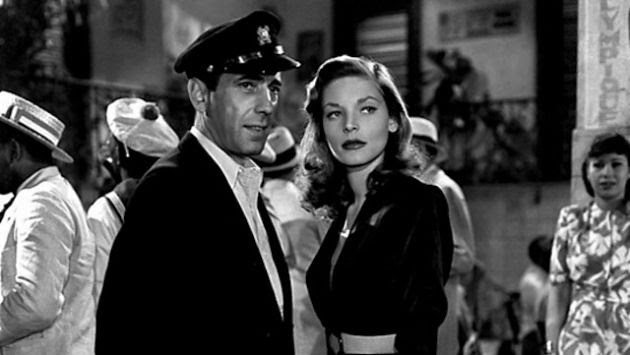
Its WWII French Martinique in the Caribbean sea setting is pretty similar to Casablanca in Nothern Africa for cynical, overly neutral business owners - Rick, a bar owner, Harry/Steve, a captain of a fishing charter boat. They are both played by wry Humphrey Bogart who always ends up doing the right thing. But its war intrigue is just a basis for Bogart to do his thing. To Have and Have Not is more of a comedy than melancholic love story. With 19-year old scene chewing Lauren Bacall, called 'Slim' here, you have two Bogeys running around wisecracking all of the time. Exchanging crackling banters when not singing while drinking or smoking, comfortably wearing righteousness on their sleeves, the backstory-less dynamic duo is just too goddamn cool for everything around them. Yeah corrupt cops can shake me but I won't even blink, oh you want me to pick up this person for the French Nationalists on my boat under the nose of Vichy royalist cops? Sure, gimme some money. We get caught by patrol boat? Oh we just shoot at their searchlight and run. Oh the dude got shot and we don't have a doctor? I'll dig the bullet out of his shoulder no prob. Honey, fetch me my first aid kit. Oh let me hit on the poor wife of the man who got shot. Oh let me make fun of the wife by mimicking her because I am jealous. I mean it goes on and on like that. To Have and Have Not showcases exemplary chemistry between the two leads. It's a really deliciously fun movie.

Sunday, September 11, 2016

Ultimate Giallo

Dressed to Kill (1980) - De Palma
 photo f32e385f-7052-4ee3-ba16-f144ffa84843_zpsbdrl0suc.png
 photo 0ba19c59-90bb-41cf-8ee4-e4cc179a2ced_zpscslewtn7.png
 photo f453e29f-9a90-4249-ab3a-dce18f5bfeda_zpsmd6g1hai.png
 photo 885abed3-abe0-4441-a911-bda3b30ea243_zpshieedaxf.png
 photo 2410e334-544c-4301-8f97-2134b5c42359_zpsqfdaehbi.png
 photo 488d4ca5-0833-4c2c-94e2-b9274c83517a_zpsszxjd5q9.png
Dressed to Kill is nothing but one elaborate set piece to another, strung together with plenty of nudity and blood for your pleasure. Boobs, pubes and talk of erections for everyone to hear. De Palma has a technical craft that many Italian giallo directors lacked. In that sense, the film is an ultimate giallo. Is it as enjoyable as, Deep Red or Strip Nude for Your Killer? No. Even though De Palma possesses that perverse voyeuristic tendencies and technical know-how, it lacks sensuality. The film's endless optical trickery and parallel actions, time bending slow-mo scenes, high camera angles and dolly shots are way too showy. I get the feeling that De Palma is a great student of cinema and takes elements and techniques from others but remains only to be a great copycat, never an auteur, even more so than Tarantino. He lacks the beauty and grace some other visualist directors - Argento, Park Chan Wook, Refn possess. Dressed to Kill was enjoyable and I am willing to explore more from his filmography. Let's see if I change my mind on him.

Thursday, September 8, 2016

Through the Looking Glass

Cameraperson (2016) - Johnson
 photo 817dcdb3-b7da-4e0c-81c7-979e3b0d6222_zpsxurdfiq0.jpg
Kirsten Johnson's career as a cinematographer is a long and accomplished one in the documentary field.

She is responsible for images of countless documentaries by filmmakers such as Laura Poitras, Michael Moore, Kirby Dick and many more. Her work took her to many of the world's trouble spots: Bosnia, Iraq, Afghanistan, Liberia, Nigeria, Rwanda.

With Cameraperson, she assembles the b-rolls from various films she worked on as an all visual self-portrait. What's amazing about the film is that she was able to see the beauty in the most horrendous conditions around the world and capture those moments on camera for everyone to see. The result is not only a portrayal of a committed professional but an intimate, moving memoir unlike any other documentaries I've seen.

It starts out in Foca, Kosovo, the focal point for mass extermination and mass rape of Muslim population by the Serb-military forces during the Balkan War in the 90s. Rolling hills, pretty wild flowers and traffic jamming sheep and sheep herders make an ideal picture of country life, covering up the violent, ugly past.

Johnson was there shooting I Came to Testify, a PBS documentary about the first International Tribunal of its kind to hand down a verdict that sexual violence against women during the war is a war crime. The footage finds Johnson focusing on a Muslim family who had been living there for generations and came back after the war. We see her being invited to the house and sharing their meals. It's all smiles and laughter. A real human contact.

Jumping back and forth from place to place and in time, Cameraperson plays out like someone's non-linear memories on screen, highlighting the brightest, most vivid moments. With the wealth of footage, we are introduced to the glimpses of beauty: the idyllic pastoral countryside in Kosovo, a baby being delivered in seriously underequipped, crowded maternity ward in Nigeria, a makeshift roadside picnic in Afghanistan, the beautiful girls walking by in the streets of Liberia...all under the shadows of violent past/present and imminent danger.

It's not difficult to guess where Johnson stands politically with all those topically charged documentaries she worked on. But as a visual artist, she doesn't have to be the loud, rhetorical voice, like the directors in those pointy films. Without relying on narrations, she quietly observes everything through the viewfinder of the camera and she manages to personally engage with her subjects.

Perhaps the most touching segments are home video footage of Johnson's family. We see her family, her twins (a boy and a girl) and her father. It also shows her mother's deterioration due to Alzheimer's.

Memories shape who we are as individuals. With that context in mind, Cameraperson becomes one individual's noble attempt to capture those unforgettable moments in her life and forever memorialize them. And I find her attempt here extremely moving.

Johnson goes back to Foca after five years, to the same area and visit the same family. She tells the townspeople why she came to the place the first time: to document unspeakable evil that took place. But long after that production wrapped, it was the beauty, warmth and kindness of that family that made an indelible mark in her life, so she had to come back. She shares the footage she shot five years ago with the family.

Things we see and feel, encounters and connections with others shape who we are. One could write a book, one could sing a song about it. This film is a deeply personal documentation of how Kirsten Johnson's experience as a filmmaker shaped her the person she is. And because she is a seasoned cinematographer, we all benefit from seeing how it unfolds on the screen. Deeply moving and contemplative, Cameraperson is a hands down one of the best documentaries I've seen this year.

Cameraperson opens in New York September 9 and in Los Angeles September 23.

Monday, September 5, 2016

'More Human Than Human' is Our Moto

Morgan (2016) - Scott
 photo 5eb11039-81f5-4551-9cc1-b5839f29f1ec_zps2wvzaxos.jpg
Lee (Kate Mara), a risk management personnel sent by the corporate to assess the recent incident in the lab where Morgan (Anya Taylor-Joy), the latest test-tube babe who grew up in the lab supported by caring scientists, violently attacked one of the carers (played by Jennifer Jason Leigh). Lee finds everyone to be too soft and sentimental about the potential killing machine growing in their midst. After Morgan attacks a psychiatrist during psych eval, everything goes to hell and carnage ensues and it's up to Lee to track 'it' down and terminate it.

I had no expectations whatsoever going in and didn't even know what it's about. I've heard that Ridley Scott's son is also a filmmaker and he is making some Sci-fi movie. Morgan, as far as man-made killing machine in the shape of a little girl movies are concerned, is a quite a modest yet highly effective effort. Interesting choice of actors all around - Michelle Yeoh, Paul Giamatti, Toby Jones, Jennifer Jason Leigh, Kate Mara and the girl from The Witch in a title role, a subhuman being borne out of a tube in the remote supersecret lab in the woods. Everything is confined to the lab and the surrounding beautiful woods.

It's no secret that Scott Sr.'s Blade Runner influenced generations of Sci-fi films and Morgan's no exception. The moral quandaries are there about being human and whatnot. But Luke Scott has a better sense to make everything succinct and precise. There is no discernible fat in his artistry from set design to dialog. Morgan is a tough, fast moving little package that is hugely entertaining. Kate Mara also shines as a tough fast moving little package. I liked it.

Saturday, September 3, 2016

J & B and Giallo

From: Your Vice is a Locked Room and Only I Have the Key  photo 032dbdba-4be9-438e-9bc1-e5f8edc1b8aa_zpshnrg4m5s.png

Have been watching a lot of Giallo films lately. Giallo is a Italian film genre that was popular in the late 60s - 70s. Giallo simply means yellow in Italian. It derived from popular pulpy crime novels with yellow jacket, hence the genre title. Gialli are mainly slasher films with some supernatural, crime elements with sexy heroines usually appearing in nude. Directors who were known for their craft in making delicious combination of thriller and softcore porn are Sergio Martino, Mario Bava, Umberto Lenzi and to some extent Dario Argento. Fetching Edwige Fenech became a big starlet of the genre and appeared in many gialli.

Killer eyelashes: the eyes of Edwige Fenech
 photo 9c087311-6e8a-4f01-b9ab-0b5b3727e3bd_zpssfpfra0r.png

As I was going through many well known Giallo films, I couldn't help notice recurring motifs. It seems that J&B, a blended scotch whiskey by Justerini & Brooks Liquour and Wine company based in England is the go-to beverage in these slashers, loved by killers and victims alike. So I was compelled to compile these J&B shots from the Gialli I've seen so far. And as I delve deeply into more Giallo, I am hoping to prove that this is not an isolated phenom.

From: Your Vice is a Locked Room and Only I Have the Key (1972) - Martino J&B meter 2/5
 photo c24f2e00-0c04-4e2f-9ede-08f0cb048254_zpshdcrc6kl.png

All the Colors of the Dark (1972) - Martino J&B meter 1/5
 photo 275ee837-af09-497e-be01-c5b0bf5ac8e7_zps7xsxsdjv.png

Strip Nude for Your Killer (1975) - Bianchi J&B meter 5/5
 photo 9f26ba4a-38fb-4459-9b03-81af89d29709_zpsebl8zwqd.png
 photo f411d416-2aed-46be-a9dc-6ae200b3e1e0_zpsfqbcygjl.png
 photo 0fb08d9f-8466-45c2-8f93-28f461cb2b4d_zpshbw7job0.png
 photo 451a249a-6e55-4a8d-8a9d-deba30956943_zpsvhq1q9gt.png

Torso (1973) - Martino J&B meter 2/5
 photo 24275664-28c8-459e-9652-b5786ef06494_zpskc6jwe5l.png

Five Dolls for an August Moon (1970) - Bava J&B meter 2/5
 photo 0aa851e8-97c3-499e-85bf-1f33c7a7a25f_zps6qcaquy7.png

Tuesday, August 23, 2016

A Fascinating, Rashomon-Style Meta Investigation

Kate Plays Christine (2016) - Greene
 photo e04d1de5-061e-4994-a45c-a9300e5ad8d7_zpsfxt2wsvg.jpg
Christine Chubbuck, a news reporter in Sarasota, Florida, killed herself in an apparent suicide on live television in 1974.

Because it took place way before the internet age, and the only existing original videotape of the actual incident is thought to be lost, Christine and her provocative action had largely been forgotten. Robert Greene, whose film Actress made a splash at Art of the Real 2014 -- a film series that showcases boundary pushing non-fiction films -- takes an interesting approach to the subject. Kate Plays Christine plays out like an investigation, intimately documenting an indie ingenue, Kate Lyn Sheil, as she prepares for playing the role of Christine in Greene's fictional production about her.

Even though Christine's act can be interpreted as a protest against the sensationalism on TV, as her station was all about "Blood, guts and in living color," without the fateful videotape in circulation, there isn't really much information available on her to make sense of why she committed suicide for Sheil to really bite into the role.

Christine was good looking and good at her job, but socially awkward and didn't have any friends. She was apparently a lonely, depressed person who might have been a virgin when she died at 29. But these bits of information are completely dependent on whom you are speaking with, as they are vastly different. So Sheil is left with a Rashomon-style tale of a complicated woman no one really knew.

Even in casting Sheil to play Chubbuck, Greene took an interesting approach. The two women are physically very different: Christine was a dark haired, dark eyed Joan Baez-like beauty, whereas Kate is a soft featured, pixie girl type. It wouldn't surprise me if Sheil gets to play photographer Cindy Sherman in her biopic. We get an all access pass to Kate physically transforming herself for the role, getting a tan on a tanning bed, trying on a raven haired wig and putting on brown-eye contact lenses to get into character. Kate still doesn't resemble Christine, though. Kate's left with a fake tan and badly fitting raven hair.

Greene documents Kate doing her research for the role down in Sarasota. She talks to a local historian, former TV station workers, a local gunshop owner and actors who are portraying parts in the fictional movie. But she is having trouble relating to her subject and what her motives were. With an information that Christine was a good swimmer, Kate tries to swim with the wig on to get closer to her subject. But the wig keeps falling off in the water, ominously floating in the green ocean water off the coast of Florida.

Things doesn't get better for Kate even after finally seeing Christine in one of her interview clips. The pressure of representing the mysterious dead woman accurately becomes too much for Kate. Full of doubts and frustration, Kate starts to resent Greene and the whole project. As the crew prepares for the final moments of Christine's life, with the blood squib and blood pump on the side of Kate's head, and sitting at the news desk, Kate muses if this sick curiosity, the voyeuristic sadism, is what audiences are after.

Much as Greene did in Actress with Brandy Burre as he documented the trials and tribulations of her real life acted out by the actress, in Kate Plays Christine, Greene also takes an ambitious, meta approach to the subject. Sheil is faced with a difficult task here, to play the role of herself as an actress investigating a role. With the apparently shabby, low-budget fictional movie Greene is making, Sheil intentionally pulls an affected acting job as Chubbuck in a movie-within-a-movie, I'm-frustrated-as-hell context. And it's a fascinating watch.

For me, as far as American indies go, Greene stands out as the most daring, formalistically invigorating director working today. It's not really recreation of the event that Greene and Sheil are after. It's not even a character study. They are after the process of an actress trying to connect with her subject. It's also about the nature of performances and giving another layer of complexities in portraying real life characters.

This would make a fascinating companion piece to Antonio Campos' upcoming Christine, a more straight forward, narrative take on Chubbuck's life, starring Rebecca Hall in the title role, which coincidentally premiered with Kate Plays Christine at Sundance this year.

Kate Plays Christine opens theatrically on Wednesday, August 24 in select U.S. cities.

Interview: Uncertainty Principle- Robert Greene on Kate Plays Christine

kate_plays_christine_09370.jpg
I first encountered Robert Greene's inventive and daring filmmaking at the Art of the Real film series in 2013.

Actress, his film starring Brandy Burre playing herself in a documentary-style portrayal of an aging actress in upstate New York, was decidedly refreshing in a documentary world inundated with straight up character studies that are as predictable and boring as reading someone's short bios on wiki. With his new film Kate Plays Christine coming out in theaters, Greene's adventure into meta filmmaking continues, digging deeper into the very nature of performance and also of the filmmaking process. It is a densely layered, thought provoking, endlessly fascinating piece of work that is very rare in the American Indie cinema landscape.

I got a chance to talk with Greene on the phone recently. Fiercely intelligent and always searching, Green talked at length about his approach in his unique filmmaking process.

So you are in Missouri now?


I am in Missouri, yeah. I’ve been living here, going on two years now.

Do you teach at the University of Missouri?

I do. The university got a big grant from Jon Murray, the guy who started The Real World and is a graduate of the the journalism school here, and we started the Documentary Journalism program. They hired me as a Filmmaker in Chief, so I get to do my own classes and they encourage me to make films. It’s not like I have to do my films on the side. It’s part of my job, so it’s great.

How’s it been going for you there?

I like it. I like teaching. I like being here and having a family. We are happy being in this small town and my wife was ready to get the hell out of New York. So we were happy to go. And I quite like teaching, actually.

The first time I saw ACTRESS was at the Art of the Real Film Series here in New York. I thought it was really interesting that you were one of the few American filmmakers presenting in the series. I really got a lot out of that film series. By far the best film series even in New York standards. It just blew me away.

Yeah, it’s a cool series.

I was wondering how you ended up choosing the Christine Chubbuck’s story after doing ACTRESS?

I had heard of her story about 10-12 years ago for the first time. This was before I made my first feature, even. At the time, I was probably in the mindset of listening and looking for possible stories. But the immediate feeling I had was that ‘this is not a story that I can tell’ because of what happened and details around that story bring a lot of questions about representation and about depression and why we try to tell stories about people who did things like what she did. I guess the feeling that I had for the last 10 years or so was that I shouldn’t do that film -- which is a weird feeling to hold on to.

But after Actress, I saw the possibilities in filming a documentary about an actor. With that I saw an opening to not only investigating THE Christine Chubbuck story but also expressing that feeling of anxiety about telling the story. So it opened up a pathway for me to see how I’d do it.

I thought the way you went about the film was really interesting. You are working closely with another actress here again. This time, it’s Kate Lyn Sheil. How was the collaboration? I am curious about your method in working closely with actresses.

Well, we are old friends. We needed to all be friends -- me, Kate, our cinematographer Sean Price Williams, our producers. We are all an extended family in a way. It’s kind of the only way we could make this movie, with a deep sense of trust, because, you know, when I went to Kate and said, 'OK I have this concept: I’m gonna document you while you are trying to make a film that shouldn’t be made.' In doing so, we know it’s going to fail on purpose. And it’s gonna be bad on purpose.

That’s something you can easily say, “oh, that sounds interesting” and yes to. But in practice, it’s quite exhausting for Kate to go through that. It’s very difficult for an actor to act badly. It just goes against all your instincts. So that whole thing, ended up very difficult to navigate. Kate was becoming so attached and so connected to Christine’s story and just the feeling of responsibility to portray Christine was overwhelming for her.

Ultimately she trusted me and I trusted her. But the contention really was, we would roll these reenactments and she’d say, “ That was terrible,” and I’d say, “That was great.” (Laughs.)

That's a weird place to be. Beyond that, Kate isn’t exactly comfortable with being documented in general. And it's a part of the reason why we did it. The original idea was for Actress was it was going to be a triptych with Kate, Brandy and an older actor but Brandy’s story just took over as it should.

Oh, I see.


I thought I was breaking Kate’s heart by saying we aren’t making a documentary about her but she said thank god.

I knew that there would be some tension on the screen just with filming her. And also, going in purposefully inadequate reenactments and then also even with the documentary process I knew that she would eventually turn on me, you know. For me that was part of it.

But a lot of times I had so much trust in her. By virtue that she knew where the film needed to go, which even created sort of an extra layer to her performance. She was basically playing up emotions she already had, all of which is in the film.

You are meant to be questioning all these things as you are watching and hopefully put your mind together to read her motivations, the way we tried to read Christine’s motivations. It’s all meant to put you in a psychological space of trying to read through what you are watching.

There certainly are a lot going on in the film. Going back to your creative process, how much of it was scripted and how much was improvised?

The feeling that I wanted, I wanted to make a movie within movie scenes to feel like they are a documentary of a fake movie and I wanted the documentary scenes to feel fictional. We shot them to feel that way.

The way I like to look at it is that I built sort of a conceptual box and within that conceptual box, we filmed a documentary. So that means, we were there for three weeks; we came in with certain things I wanted to get. I wanted her to be writing down the differences between her and Christine and reading them out loud. I wanted her to potentially tackle things like running into the water.

These things are what I wanted to happen. So these things are ones that could be scripted. But I would say they are not any more scripted than, you know, a standard documentary that does things like, hey we are gonna go here now and film this kind of thing.

Right.


So I would set it up and we watch what happens. So I was basically instigating situations and observing what was happening. There's also a level of performance that Kate brings to the table naturally when there is a camera on her, just like when there is a camera on anybody -- she's going to be performing. The difference is that she’s an actor so she is aware of that performance on a higher level. So even when we were filming her walking down the strip mall, going to a store, or when we were filming her interacting with a real person, there is an element of acting.

For me, the question of what’s real and what's non-fiction is only interesting as a starting point, It’s only interesting when we present that as a central question of the movie. Rather than revealing that at some point as 'oh it’s this or that', or 'we were tricking you', it’s really trying to drive you into the narrative, sort of the psychology of not only Kate but in some ways Christine, because when you’re looking at it going I don’t know what’s real and what’s being motivated and don’t know why — if it works properly, it could work as a psychological thriller and drives you into the story. You are left with trying to figure out what you are watching.

That also has a metaphorical parallel with Christine’s life and the sort of performances she was giving and there is this relationship between the performance and depression that she was constantly trying to balance, I think. Hopefully, the form that we created -- sort of questioning fiction or non-fiction things -- drives you deeper into something real.

I guess Werner Herzog put it as the Ecstatic Truth, or something like that in documentary.

Yeah, I just come at it from the angle of… that the documentaries are a staging ground. The myth of the documentary, whenever you say documentaries aren’t reality or documentaries aren’t objective, everyone says 'of course, of course' but when they start watching, they set it to be that way.

And I prefer to think of it as sort of a launching pad for something else. What that means is that you are dealing with the real thing -- you are dealing with things you can’t predict. We went into the process with something that we wanted but almost everything you see was totally unpredictable and risky to even try and capture it.

To me what makes a documentary is that everything was discovered, found with a great deal of uncertainty. You need to have pillars of stories that you can grab onto, but the driving energy of the film is in its deep sense of uncertainty.

The performance aspect of your filmmaking, from FAKE IT SO HARD to ACTRESS to now KATE PLAYS CHRISTINE, is that everything you see in your films is about performance somehow that is imbued in real life. Is that a fair assessment?

Yeah. I very much believe that the cliché or the maxim, however you want to call it, that the world is a stage. I am very interested in social performances as a social phenomenon, as things that define our daily interaction that we are performing roles -- we dress a certain way, we talk a certain way that we are performing our identities every day and we know that right?

But when you put a camera in there, we can intercept that performance and it becomes something else. When you can kind of make it so viewers can sense it and can see it then you start to read into things in a way that is productive and layered. Then you have a capacity of creating on-screen tension and real revelations about human behavior by capturing these performances and presenting them in a certain way.

That's what I love about Frederick Wiseman. Wiseman would not say he was getting performances but when you watch his movies you know they are carefully crafted. They are depictions of real life people, usually at their work. With a movie like Welfare, you have to perform the duty of an welfare officer but you have to perform the duty of someone receiving the welfare and you see the battle of these performances.

If we detect them as performances, we can do a better job of understanding what they mean in the bigger context of society and how to make the world work better, you know. You have to act a certain way or behave a certain way to get things done. Acting and behaving are really linked and I think it’s very interesting to put them in the movie, at least as a springboard for other questions.

Fake it so Real was about switching up the idea of what you thought of as a documentary performance and Actress was really about the role that we get trapped in. In Kate, performance is a springboard for a deeper investigation in some ways.

Do you think you and Kate are in any way close to finding out who Christine was after this experience?

I don’t know. So much of the process was just bewildering, which I think you see in the film. All I can say comfortably is that she was an incredibly complex person. Some people saw her as hard and distant, some thought she was funny and graceful, some thought she was deeply empathetic and a good friend and some thought she was very weird and off-putting. That’s honestly what we all are being described as.

Right.


If we take three or four facts of her life that made her commit suicide the way she did, I think it would be an inadequate portrait of who she was. So I feel very very comfortable saying that I don't know who she was. I feel touched by her story because I spent a long time thinking about it but that’s got nothing to do with her. It would be irresponsible for me to say I know her better now.

As you know there is another film, a fictional account of Chubbuck called CHRISTINE by Antonio Campos coming out. Not that I am dismissing his film but you think there is any way to portray a human being as complex as she was in a narrative format or is it that you are just going from a different angle?

It’s just gotta be a different angle. First of all, these sort of critiques of the movies they are presenting, they are all pointed inwards. They are all pointed to me and Sean and Kate and our producers. We are wrestling with ourselves. Me, I am much more in dialog with the documentary world as anything.

But they are not meant to be critiques of someone else’s vision at all. Having said that, the only way to make a fictional narrative is to conflate things to an extent you as an artist are comfortable doing. I don’t know if I am comfortable doing those things.

But I’ve seen the film and Rebecca Hall’s performance is incredible. I think what she did was, she created a new character out of the very limited information she got. And that new character is what Rebecca Hall and Tony Campos and their team created -- what they think is Christine Chubbuck. I think that’s just limited as anything but that doesn’t mean there is no value in it.

So you are OK with their representation of who she was.

I think there should be a long discussion to be had about anyone’s representation of the story. What I like about the fact that there’s two movies coming out about Chubbuck, people will have that discussion. I think the nature of our film and the nature of their film is going to create the conversations about representing the story in a way that I think will be very interesting.

Has Campos seen your film?

Yeah. I think we both feel the same way which is, 'not how I’d do it but more power to you' kind of way. It’s so personal for both teams, so it’s hard not to see it that way but I’m all for the conversation that it's going to create.

So what’s next for you?

I have this film I want to make about this event of a labor history that happened a hundred years ago. I want to sort of reenact it. It will be a reenacted ghost story that takes place in the present in a documentary setting. Kind of staging a performance in a real space in the southwest. So we are going to be making sort of gonzo, Western, documentary ghost story.

It was called the Bisbee Deportation where twelve hundred striking miners were forcibly removed from their homes and beaten and shipped to the New Mexico desert to die, pretty much.

That's great. I am pretty familiar with the labor history of the United States around that period. I can't wait to see that!

We have to raise the money, but hopefully we will get to reenact that in the centennial year of 2017.

Kate Plays Christine opens at the IFC Center in New York on Wednesday, August 24. A special preview screening will be held tonight (Tuesday, August 23) at 7:30pm at IFC Center followed by a discussion with the filmmaker.