Tuesday, March 14, 2017

Frantz is Ozon's Best Film to Date

Frantz (2016) - Ozon
frantz_03
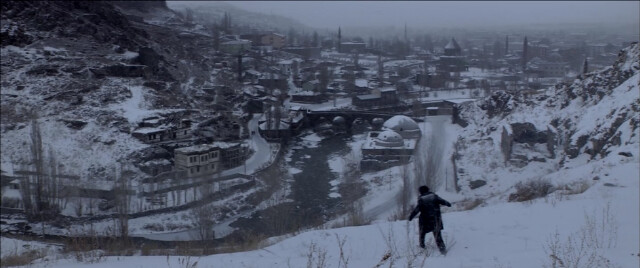
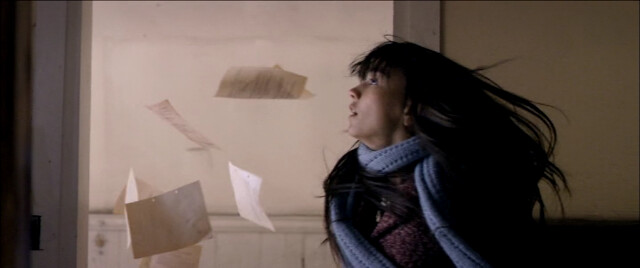
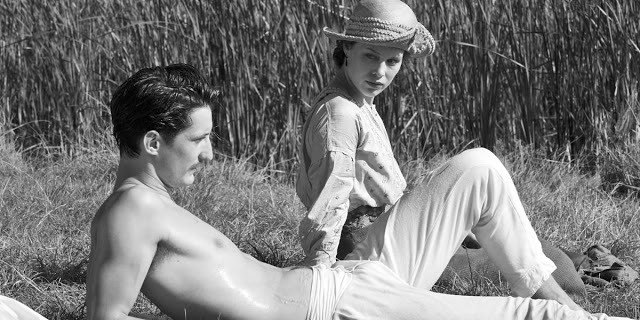
The year is 1918. The Great War has just ended and Germany and France were licking their wounds, hopped up on their respective national fervor. Anna (Paula Beer), a young German woman who lost her 23-year old fiancé, Frantz in the trenches, is living in a mountainous rural German town with his parents, the Hoffmeisters, out of love and duty. One day she notices a frail looking stranger putting roses on Frantz's grave.

Soon the stranger knocks on the doorstep. His name is Rivoire (Pierre Niney), a French soldier who claims to be a friend of Frantz from their school days in Paris. At first apprehensive with anti-France sentiments around the country - 'any Frenchman could have killed my son', but the Hoffmeisters soon open their arms to the charming, tall and melancholic man. Young Anna too, ignoring other suitors, gets smitten by the long eye-lashed, sexy mustachioed Frenchman.

Rivoire confesses to Anna that it was he, who killed her Frantz and learned about Anna and the Hoffmeisters through a letter in the dead man's pocket- that he lied to them. His intention of coming to Germany was to ask for forgiveness. Heartbroken, Anna takes ill right after Rivoire leaves and doesn't have the hearts to tell the Hoffmeisters the truth.

Ok. The synopsis for the first half of the film sounds very much like an old overblown melodrama. Based on an old French play The Man I killed by Maurice Rostand which was adapted by Ernst Lubitch in 1932 as Broken Lullaby. But Ozon, the master of a twisty narrative, packs much more interesting development in store in the second half- part detective story, part romance and part reflecting the current climate of the rise of nationalism where the relationship between two old neighbors - France and Germany and Europe as a whole is being tested.

Frantz is as usual for Ozon, a seductive concoction. Disguised as period costumes and sumptuous monochrome cinematography that bursts in to color in pivotal moments, but the film holds some sinister undertones of lost innocence and pain/joy of growing up.

Beer, a young German actress is marvelous here to carry the whole movie on her shoulder. It's perfectly natural to see the film from a female perspective in Ozon's films, and obviously he flirts with sexual attraction and sensuality (albeit very subtly). But Anna being a German lost in unforgiving world of its enemy gives another layer to this delicious concoction.

As a provincial country girl discovering the world in Paris, a bustling, decadent culture capital of the world, heartbroken but wiser and more world weary, Anna is a thoroughly a modern woman. As the last shot suggests that now she is accustomed to the city living, comfortable in her cosmopolitan surroundings. We feel for Anna. But we all know that wouldn’t last long, as we are aware of the world history of what comes next to France and Germany and she doesn’t.

Beautifully nuanced and poignant and still encompassing all the Ozon film characteristics – secrets, sexuality, twisty genre conventions and its searing political undertones, Frantz is Ozon’s most accomplished film to date.

Frantz is scheduled to open in New York on Wed, 3/15 at Film Forum and Lincoln Plaza Cinema, followed by a national roll out.

Monday, March 13, 2017

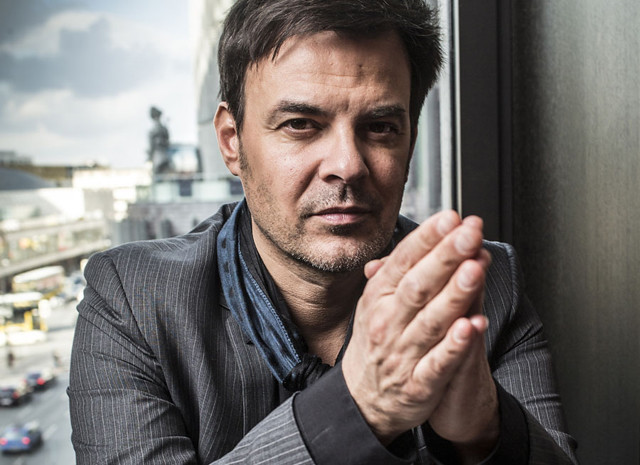
François Ozon Interview: Secrets and Lies and the Rise of Nationalism

ozon
One of the France's most prolific writer-filmmakers, François Ozon (Sitcom, Swimming Pool, 8 Women) has been delighting movie-goers while exploring and subverting many genres for almost three decades with 30 features and shorts. His new film Frantz, a sumptuously shot period piece, just might turn out to be his best film. I had a chance to sit down with him during Rendez-Vous with French Cinema Series here in New York.

There is a lot of talks on Frantz being the remake of Broken Lullaby, an old film by Ernst Lubitch. Was that the starting point for your film when you first conceived the idea for the film?

No, the starting point was the play. Broken Lullaby was a play that was written just after the WWI. I discovered the play first because a friend of mine told me about it. The play was very successful in France at that time but forgotten today. And it’s author Maurice Rostand wrote Cirano de Berzerac which was a huge success. Rostand is also totally forgotten.

For a long time I wanted to make a film about secrets and lies and a friend told me that there is a good play so I went to see the play and I really loved it. I thought it was very touching you know. This French soldier goes to Germany and put some flowers on the grave of a German soldier. And so I decided to make and adaptation then I realized that another director already did it before me and it was Lubitch, so I was destroyed you know, totally depressed. How can I make a film after Lubitch? (Laughs)

Finding Broken Lullaby was a challenge. It was quite unknown, forgotten Lubitch: it was a drama and it wasn’t successful at all. After seeing that, I realized that like the play it was based on, the film was from the point of view of a French soldier. My idea was to tell the point of view of the loser of the war- from the Germans point of view: especially the point of view of Anna. From the moment they start, you know what the main character has done. So I changed totally from the play and Lubitch. I turned that around to concentrate on the German girl, there is suspense of unknown - no one knows why this French guy is in Germany.

The challenge of writing the script was how to create suspense until the twist in the middle and how it will turn out the next half of the film. So it was quite a challenge to write it. It was good to know what Lubitch did with the same material and because he made the film in the 30s, he didn’t know the coming of WWII. So his film was more optimistic than mine. After the WWI, everyone was a pacifist and nobody thought nothing like that would happen again. What’s the expression? ‘Never Again!’ Lubitch’s film was about the true reconciliation between France and germany. But I knew, for me it was impossible to have the film like that with an optimistic ending. Well, my film has a happy ending too, but quite different.

The film was shot in black and white. I don’t recall any of your films shot like that.

No. It’s the first time.

It was still shot on film, no? So how did it come about?

The film was supposed to be shot in color. But two weeks before the shoot I decided to put everything in black and white. My producers were very nervous. (laughs) But I had a feeling it would be stronger for the story that it would involve audience into the film more and to believe in this small city. Because of all the memories of this period is in black and white: there are a lot of documents in the archives- films shot in black and white. I had a feeling that it would be more realistic.

My natural tendency is shooting in color of course. I love technicolor and all that. It was impossible to give up color totally. So I decided to put some moments in color when things get emotional.

Like that music scene?

Yes.

A lot of shots in Germany resemble the German Romanticism era paintings.

You know it’s very strange when you shoot in black and white. Because I shot everything in color on film. It’s during color correction that you make the footage black and white. So when I was looking through the viewfinder, I saw everything in colors. But after the take, I’d go and take a look at the monitor to see my shot in black and white and I had a totally different vision - it looked like some 30s Max Ophüles movies. It was not my goal! But seeing the black and white imagery wakes the cinephilia in you. Despite what I wanted to make, black and white adds something that you didn’t anticipate. It was quite strange.

Paula Beer, a young German actress who plays Anna, is wonderful in this. How did you cast her in the role?

I didn’t know her. I’m not familiar with young German actresses that well these days. So we did a big casting. I had this version of young German actress in mind who was very popular in France in the 70s, Romy Schneider.

Oh, of course.

She was the favorite actress of the French at the time. And when I met Paula, she was just 20 years old. She’s quite different than Schneider obviously. But very mature and beautiful and clever and able to speak in French so it was a miracle. I was very happy to find her because the whole film is on her shoulder. It was important to have someone strong to play Anna and she was perfect.

I don’t think I saw any of your films where characters speaking in German. Was it the first time also?

Yes, it was the first time also. I can speak German. I travelled a lot in Germany when I was young. I did the Fassbinder adaptation of Water Drops on Burning Rocks, but the play was in German, which I translated it to French. It was very stylized because these French actors are playing Germans. There were very short lines spoken in German but that was about it.

Was it difficult for you to direct in German?

Not so much. I was very lucky because actors were very good you know. The actors who play the parents, they both are from theater background and involved in German film industry for a long time. I think they were very happy to be in a French movie, because German film industry is (comparably) smaller. But they do a lot of television and a lot of theater. But they really loved the story. Usually Germans in French movies are not well portrayed - they are usually the bad guys, you know. This time they are the nice guys of the story. So they were very involved and happy.

Actually it was easier for me to direct them in German than English. Accent in English language is quite difficult for French people. We don’t really know where to put the accent in an English word. German and French are (rhythm-wise) closer that way. Usually French don’t like German language. They think it’s aggressive. But to me when girls speak German, it’s very sexy and very charming.

As you told me that there is a revelation in the middle, but what’s more interesting about the film is what happens after. It becomes kind of a detective story about this naive young country girl going to this big unknown city and everything. And she finds that her presence is not welcome and as uncomfortable as Rivoire has been when he was in Germany and how he was treated there. Also noticed that when Anna first arrives in Paris and she finds out that her young husband was staying in this kind of a sleazy area full of prostitutes and vice. I found that interesting.

Yes. I think Frantz is about disillusionment and facing the truth: do you want to face the truth or stay and live in lies forever? It’s the big conflict for Anna. Does she want to know who Frantz was exactly? Maybe Frantz wasn’t as ‘prince charming’ as she thought. So the idea was to make Anna face the reality. So she suffers a lot. But at the end she finds peace within herself. She finds that Adrien wasn’t for her and she might find another man in France. We just don’t know. But for me, she learns a lot. This film is really about an emancipation of a woman.

Because Adrien was played by Pierre Niney, who played Yves Saint Laurant among other things and is a very handsome with very effeminate features, and since I didn’t know much about the play or Lubitch film the premise was based on, and since because it is your film, I thought, ‘oh maybe Adrien’s presence is a stand-in for repressed homosexuality, especially with the setting and time and everything. Am I stretching it too far?

No not at all. I play with that of course. I knew that my audience would expect me to put a red herring in my film, so I play with that. Actually, we have revelation in the middle, maybe it wasn’t what you as an audience had in mind, but at the end, maybe it was. Because we see this guy is totally lost. With his identity, his sexuality, he doesn’t know what he wants.

Right.

He prefers to stay with his mother, with the girl he’s known from his childhood. So life is ambiguity, you know.

But I think it comes from today’s perspective. In the original play and even in Lubitch’s films, that subtext at that time, people didn’t see that. Today we know and think about homosexuality more openly. I don’t think Lubitch was aware when he was making Broken Lullaby. But in the play, it lies underneath and between the lines because when I was doing the research I found out the writer was gay and he lived with his mother until the death of his mother. That’s why I created that part of Rivoire in the later part of the film.

It makes sense.

Frantz also reflects what’s going on in the world -especially Europe and here in the States. I mean there has always been tension and friendship between the two countries. But the rise of nationalism is really visible in France and Germany.

I didn’t know my film would become political. It wasn’t my goal. But I realize it echoes what you just talked about. I didn’t know that Brexit would happen in Europe, I didn’t know Trump would be elected. I didn’t have all that in mind. But I felt something. We had a lot of attacks in France. You could feel all the tensions. Some politicians are asking drawing up new borders based on old boarders, the fear of foreigners, all that’s happening now. It was interesting making this film with all these in mind. We know that history repeats itself. To understand it, we need to ask ourselves what happened before.

I realized showing the film to many different audiences, that people were very touched, both old and young. And they were quite concerned about what’s been going on. I was quite surprised because it was quite difficult to finance the film - my producer, especially shooting in black and white, the fact it was taking place right after WWI, it wasn’t quite easy. But I had the feeling that it could touch people. The history would prove me right. But I’m afraid my film will change anything.

I mean, let’s hope so. (laugh)

It’s a great film. This is the prime time for artists to rise up. no?

Yes absolutely.

And reflect the society we are living in and do something about it.

Yes.

So I think it’s a good time for you to make more films to touch people. I’m a big fan and thank you very much for talking to me today.

Thank you.

Sunday, March 12, 2017

Hyper Capitalism vs. Spirituality

Personal Shopper (2016) - Assayas
personalshopper2
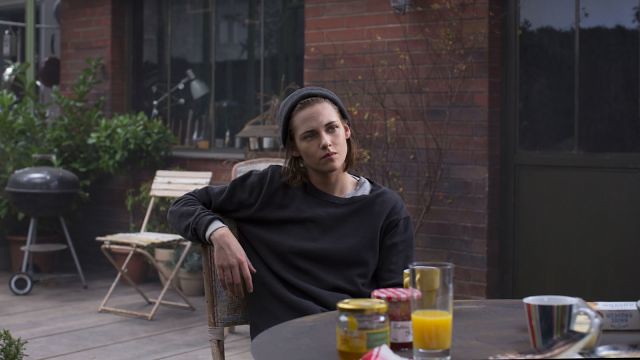
Loved it. With a lucid, flowing script, Assayas lets out the best in Kristen Stewart. The film's more Demon Lover or Irma Vep than Summer Hours. Assayas sketches out the general framework of the film in broad strokes - Maureen (Stewart), a girl who can't let go of her twin brother's death, comes to Paris where he died and waits for his signal (they were both mediums). In the mean time, she works as a personal shopper for Kyra (Nora von Waldstätten), who can't do normal things for herself because of her celebrity status. The result is a delicious, genre bending whatsit that highlights Stewart's best assets - her nonchalance and youthful physical beauty. Added on here is her vulnerability. She is pretty much the same character here as she was in Clouds of Sils Maria or anything she's ever done that I saw her in, except here she is a fully flesh and blood, a young woman unsure of her judgment and emotion.

After determining the presence who vomits ectoplasm in her brother's house is not her brother and giving up the hopes of contacting her brother again, Maureen starts getting text messages from an unknown caller. He is watching her every move, and making her do things. Things turn darker and scarier for Maureen.

Assayas is operating on his top form with Personal Shopper. Forget about his penchant for portraying flash subjects and celebdom. No other European filmmaker better keeps balance in catering toward box office appeal while not compromising his/her artistic vision than he (Lars von Trier is the other I'm thinking of, but to lesser extent). As usual for Assayas standards, there are many international actors showing up - von Waldstättten (October November), Lars Eidinger (Everyone Else, Sils Maria), Anders Danielson Lie of Joachim Trier films. And of course in the middle of it all is Stewart. She plays her character with so much disdain. She doesn't need a man to be sexy (no pun intended). Her eyes reading the text message, "you are afraid because it's forbidden?" alone makes her sexy. And where else would you see her changing clothes and putting on expensive dresses so casually? One of the year's best.

Saturday, March 11, 2017

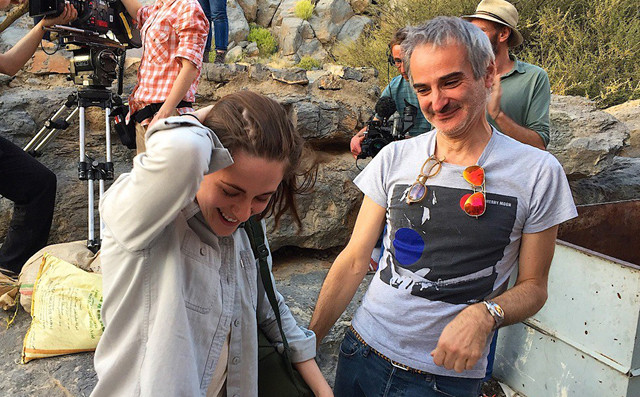
Interview: Olivier Assayas on Kristen Stewart and Breaking the Boundaries of Filmmaking in Personal Shopper

Assayas Stewart1
French writer/director Olivier Assayas, turned 62 this year. He doesn't look it though. He is an ultimate cinema geek- when he talks about filmmaking, you can easily be overpowered by his enthusiasm and fast talking. He hasn't lost twinkle in his eyes. Only giveaway of his age might be his short graying hair.

Assayas diverse filmography (including Irma Vep, Summer Hours, Demon Lover, Carlos) reflects his tireless exploration of film as a medium. Clouds of Sils Maria, a delicious hall of mirrors meta-film, made an international splash two years ago and made its young American actress, Kristen Stewart a darling of French movie goers. Assayas and Stewart, an unlikely pair, hit it off and now we have Personal Shopper, a delicious whatisit, that is 100 percent Assayas (for me, as of now, the hard to beat movie of the year). I met him in blustery snowy day in March in New York for a brief chat. Honestly, I could listen to him for days.

There is always this fluidity in your films but especially in Personal Shopper, there seems to be surprises in every turn. It was really fun to watch the film! How did this particular script developed?

I think I’ve been experimenting more and more in terms of screenwriting. I’m just trying things. I've kind of lost interest in the classic dynamics of the narrative, of linear narrative, I would say. For some reason there is something frustrating about it for me, so I’m just trying to see by twists and turns and putting on layers, whatever, so I can come up with something that’s more exciting for me. I always have this notion that if I’m having fun writing it, quite possibly the audience will have fun watching it.

I can’t deal any more with ‘traditional steps’ when you are telling the story. I just want to go straight to moments - I need to write cinematic moments that would make sense once connected together. It feels somehow stronger. I need to feel that because there is so much of corporate industrial filmmaking going on, movies have become totally predictable. Because you have to adopt to standards and if you don’t they will think it will have problems with the audiences.

I think it’s important to move on because filmmaking has so much potential. So I have been describing this movie as a collage which in a way it is - I’m using mixed materials to tell my story.

You know when people say ‘cut to the chase’ and I’m constantly cutting to the chase. I am constantly moving to the next exciting moment. But I don’t really deal with the connection, I just, (hitting his hands together) hit the two things together. It would be like hitting two stones together to create a spark or something like that.

I think that’s the best kind of cinema.

Kristen Stewart is obviously the main character in this and you’ve made her a big French star now with two back to back films. In our previous conversation when you were presenting Clouds of Sils Maria, you said that Stewart’s biggest assets are her youth and her power to go against a legend like Juliette Binoche in that film. How did this continued working collaboration come about?

I think so much of filmmaking is about grabbing opportunities when they come to you. I’m not sure why— well I kind of know why. Connecting with Kristen has been an inspiration in a sense that, I would not have imagined that we would click the way we clicked. I mean we met and talked. I liked her work and she’d seen couple of my films that she liked. I thought that it was interesting that this young American actress is interested in my work. I thought if we were gonna work together, something interesting would come out of it. But then I realized that we connected way beyond that. There was something deeper- how we approach filmmaking, how we idealize filmmaking in a certain way, how we live for movies.

There is something very genuine in her in approaching filmmaking. And she is very ambitious in the best sense of the word. She always wants to go beyond whatever she knows how to do or have been doing. She has this feeling that filmmaking is an open space for her.

I’ve been trying to break the boundaries of French filmmaking. I always felt trapped, not as much as limited. I am a product of French independent filmmaking in many ways. But simultaneously, it’s been frustrating to see that there are certain things you can do and can’t do in any film culture. At some point there is this framework and I’m always excited by what’s beyond the framework.

Kristen brings another dimension which is youth. It’s essential. It’s vital. Independent filmmaking is kind of losing touch with the young audience.

True.

You know I think it’s happening all over the world - the indie film crowd is aging. But I think filmmaking has so much to do with youth because the youth is the real audience for cinema. It’s a medium for young people so you don't want to lose that audience. You just hope that you connect with it. Beyond anything we do together, Kristen brings me that.

And as a director and an actor, it goes both ways right? And what I can give her is space, time and freedom. Like my movies, indie European films- often we create then while we are doing it. It’s not always possible to do that in American indie framework, unless you are Malick or someone who has been doing that for all his life.

What did she first think about the Personal Shopper script?

She was in Paris for couple of days. And we were like 'lets have a drink together'. We kind of sat down and she asked me what I’m up to and I said I was working on a screenplay and she was like, 'oh can I read it?' 'well, yeah sure.' (laughs) And she sent me the document saying that she loved it and would love to do it. And that was pretty much it. I supposed we had couple of short conversations afterwords but nothing much.

What I love about Kristen is that she doesn’t ask questions. Most actors, including most interesting, great actors I’ve worked with, wants me to discuss the psychology of the characters and why this and why that. Kristen doesn’t function like that. She connects physically with a character and she considers making sense of it as an actor which is their job. Other actors would take it as that they ‘should somehow contribute’. Because I’m the director and writer, they want to please me and want to go in my direction. But I don’t want that. I want them to bring their own imagination to bring the spark of life to my screenplay. When I finish writing a screenplay, I already went as far as I can go. I need someone to take over the character.

The supernatural element of the film reminded me of Irma Vep. Despite all the glamorous settings, there is something sweet about Maureen being a medium and waiting for her brother to give her a sign. I’d call it sweet spirituality. Is it what you were exploring? Some kind of spiritualism against this rather vacuous materialism?

That’s what I was aiming at, I suppose. I wanted to make a movie that dealt with invisible, whatever that invisible is - you can call it spirituality, you can call it ghosts, parallel reality, alternative facts! (laughs). The thing is, there is the material world and there is our inner world however we project ourselves -longing, imagination, into this outside world. All through the ages, every culture in the world, people have had visions, heard voices or projected some of these tendencies to the outside world. So I wanted to deal with that. I was always convinced that cinema was a way of capturing things that are ultimately beyond perception.

Something intangible.

Intangible. And I wanted to explore that. Once you decide to go in that direction, you will be using genre element because cinema had invented the ways of dealing with that dimension of human experience which is genre filmmaking. I’m saying that in terms of films like Vampyr by Dreyer or Nosferatu by Murnau would be considered horror movies today but they are not horror movies. They are films by those directors who tried to cross the dimensions of reality through those specific stories.

So there is Nora Von Wal--

Walstäten.

Who is an Austrian actress, there is Lars Eidinger--

German

Anderson Danielson Lie who is Norwegian in that group as well. Once again, you have this whole international cast working for you. How do you come up with such great actors from all over? Do you cultivate relationships over the years?

You know, I love working with people that I love. Nora has been a friend since we did Carlos together. I've known Lars since Sils Maria and I hope to keep working with those guys. I think it’s so precious to establish those kind of friendship with your actors. And they happen to be great actors.

When I was talking about opening the boundaries of french filmmaking, it mostly involves working with the actors I love. And making my films in English helps me with that. It’s because I’ve done few films in English, all of sudden I can work with German actors and I can work with Anders Danielson Lie whom I think is an amazing actor.

Yes.

You know, I saw him in Oslo, August 31. I thought he was amazing. He has something specifically modern about him that fascinates me. I can’t imagine a French actor who would’ve brought the same vibe to that role. So shooting in English opens the possibilities of working with the broad range of actors and in that sense broad range of colors that I can use it in my film.

We talked about this before but you were always on the forefront of pushing and discovering film culture from other parts of the world and I still feel you are the only one as a French director who continue to do so.

One thing I found interesting thinking about your filmography - Demon Lover, Boarding Gate and now Personal Shopper. There is this hyper-capitalist element in the background. And I can't help myself thinking that oh Assayas perhaps is satirizing the highly advanced capitalist society. Is that the case?

Ha ha. Yes. I think it’s totally over the top ridiculous about fashion world or celebrity worshiping culture but I wouldn’t say I am satirizing them. I am presenting them as reality. That there is the side of the world that actually exists.

Personal Shopper is now playing in New York and LA. National roll out will follow next week.
Wednesday, March 1, 2017

Suzanne takes you down to her place near the river...

Suzanne (2013) - Quillévéré
 photo f2daaa27-4129-4959-ab37-c7ede8a77d13_zpsd8aeuv2t.jpg
Gritty and succinct in its presentation, the film paints about 20 some years of a woman and her immediate family and friends in a fleeting style. Suzanne (Sarah Forestier) is a daughter of a blue color 18 wheeler driver Nicolas (beautifully played by François Damiens) and an older sister of Maria (Adéle Haenel). You can only tell a passage of time by Nicolas's thinning hair on top. Main attraction here is of course, Forestier. As a young woman who makes some really bad choices early on, her Suzanne is an ordinary girl who has no luck in life.

With co-screenwriter Mariette Désert, Quillévéré moves the film briskly, jumping time forward in major way, leaving the audience to catch up both narratively and emotionally. We never get to see a botched home invasion/robbery that sends Suzanne to prison, we never get to see her young son growing up in foster care, we never get to see Maria's social life. We only get the glimpse of Suzanne's life every 5 or so years, not in a calculated, 'the super hit medley of my life' but more fleeting, observing someone's life with a sense of melancholy. This way, Quillévéré eliminates a sense of that false expectation/manipulation that comes with moviemaking. We see excellent actors portraying beautiful characters and we share their regrets, loves and their sadnesses together. Suzanne is a massively affecting film, much more so than any of Dardenne Bros. films.

Soft Touch

Love Like Poison (2016) - Quillévéré
 photo 8169c961-d05c-46c3-940c-9a6035d3d5c9_zpsknf9fwfm.jpg
14 year old Anna (Clara Augarde) comes home from the boarding school for the Summer. With her parents being separated, she has to contend with being with her depressed mother and a bedridden grandpa. But she is generally a good girl. She hangs with a local choir boy Pierre. Her confirmation at the church is approaching but she is having doubts, struggling with her body changing and earthly desires. Quietly being repulsed by adults' behaviors, she and perhaps us audiences learn that the line between childhood and adulthood is pretty thin.

Quilévéré's strength is in her paying attention to every character in the film, from Anna to the conflicted local priest to Ana's deadbeat father to the dirty grandpa. Also I do like Quillévéré's gentle approach. Let's face it, coming of age story is a dime a dozen in French cinema. But she has perhaps the gentlest touch in all female directors of her generation (Mia Hansen-Løve, Rebecca Zlotowski and Alice Rohrwacher come to mind).

Tuesday, February 28, 2017

Sneak Preview: Rendez-Vous with French Cinema 2017

In its 22nd edition, Rendez-Vous with French Cinema at FSLC remains to be one of the main attractions for cinephiles in a crowded New York Spring film event season.

This year's lineup features 23 films from established filmmakers and newcomers alike, including - François Ozon, Bertrand Bonello, Bruno Dumont, Rebecca Zlotowski, Jérome Salle, Chrstophe Honoré, and the list goes on.

In conjunction with Rendez-Vous with French Cinema, FIAF presents Agnès Varda: Life as Art, taking place February 28–March 21.

A special exhibition imported from the esteemed photography festival Les Rencontres d’Arles will be on view in the Walter Reade Theater’s Furman Gallery throughout the festival, displaying newly discovered color photos from behind the scenes of Fellini’s black-and-white masterpiece 8 1/2, shot by the late Paul Ronald and accompanied by recollections from the film’s co-star Anouk Aimée.

And, for the first time, a Film Comment magazine presentation within Rendez-Vous with French Cinema: Julia Ducournau’s cannibal thriller Raw which titillated audiences at Toronto and Cannes.

The series runs March 1 - 12. Visit FSLC website for tickets and more info. And here are my samplings this year:

FRANTZ
 photo frantz_03_zpsa9aqmctd.jpg
Frantz is as usual for Ozon, a seductive concoction. Disguised as period costumes and sumptuous monochrome cinematography that bursts in to color in pivotal moments, but the film hold some sinister undertones of lost innocence and pain/joy of growing up.

Paula Beer, a young German actress is marvelous here to carry the whole movie on her shoulder. It's perfectly normal to see the film from a female perspective in Ozon's films, and obviously he flirts with sexual attraction and sensuality (albeit very subtly). But Anna being a German lost in unforgiving world of its enemy gives another layer.

Ozon, the master of a twisty narrative, packs much more interesting development in store in the second half- part detective story, part romance and part reflecting the current climate of the rise of nationalism where the relationship between two old neighbors - France and Germany and Europe as a whole is being tested. One of his very best films in years.


STRUGGLE FOR LIFE
 photo 69edb538-70e1-44e8-9cbc-464067f5f9a7_zps3zqtmvhx.jpg
Because of subway delays Chataigne (French comedian Vincent Macaigne), a thirty-something portly intern of Ministry of Standards, is assigned to French colonial Guiana to report on the progress of an absurd public works project titled Gui-snow, the first ski resort which will be built in the jungle of the tropical country. With a resilient tax agent mistaking him for tax evader and nothing really to live for, Chataigne head for Guiana with a second grade computer and a thick red French standard guide book. In Guiana, because he doesn't have a license, he is assigned a driver named Tarzan (Vimala Pons), another intern from the Ministry of Versailles, seeing over the completion of French style garden. With humidity, mud, millions of manacing insects, allegators, monkeys and other jungle elements hostile to humans, the duo soon gets lost in the jungle. They have to survive by their wits.
It's another madcap comedy by Antonin Peretjatko and starring Pons, a circus trained actress who worked with Peretjatko and Macaigne in The Daughter of 14th of July. Taking a jab at absurd notion of taming the jungle and the first world arrogance, Struggle for Life thrives on slapstick comedy and racy humor a la Woody Allen's Bananas and largely rides on the charm of Pons who dons hot pants with cigarette forever dangling from her pouty mouth. Macaigne is a very lucky man to be paired up with Pons and spend entire film with her in the jungle alone. Oh, Mathieu Amalric shows up as a swinging bureaucrat in charge of Project Gui-snow in Guiana.

DAYDREAMS
 photo 8aa4e07b-9cdf-4e5b-b3ef-4f095a3615d7_zpsgruf5hux.jpg
One year artist residency in an ancient villa in sunny Medici is the setting for a delicious daydream that involves a budding writer Camille (Clotilde Hesme) and a photographer Axéle (Jenna Thiam).

There are illicit affairs, artistic jealousy, moving statues and ghosts. Camile's older and more successful writer husband (Tchkéy Karyo) tags along for the trip with their young daughter. But soon she finds his presence overbearing. Axéle's affair with a married man doesn't lead her anywhere and she soon has an artistic identity crisis.

Daydreams has self-reflexiveness of Philippe Garrel (director Caroline Deruas' older, more established husband) and Ozon's playfulness. It's a very accomplished debut of a talented writer/filmmaker. Daydreams also allots ample screen time for Hesme's big green eyes in series of close ups. Great.

HEAL THE LIVING
 photo 3be38fdc-f345-4c8a-9960-c8fe91d4ae56_zps0ssy2oid.jpg
A young blonde boy, Simon, wakes. He kisses his girlfriend who's still in bed, sneaks out of the window to join his buddies to go surfing. It's winter. The whole beginning sequence of Katell Quillévéré's Heal the Living has a fluidity and detached youthful spirituality of Gus Van Sant movie.

It's an organ transplant weepee - 'An accident cuts a young man's life short and gives another a second chance in life' story. We've seen this before, many times. What elevates this lifetime movie of the week premise is its ensemble cast which includes Emmanuelle Seigner, Kool Shen, Tahar Rahim and Alice de Lencquesaing.

Through Simon, we see the glimpse of other's lives - both professional or private in equal measure. It's the space between the brain and the heart- which makes us human that Quillévéré explores. It would've definitely turned out corny in less assured hands. It's remarkable that Quillévéré, with just 2 other films under her belt achieves something so graceful and thoughtful.

SOPHIE'S MISFORTUNES
 photo 4379725_berlin-gaumont-brings-kiddie-lits-sophie_117a9a7e_m-1_zpslh4ps6ho.jpg
Sophie (Caroline Grant), a mischievous young girl leads a normal bourgeois life in a chateau with a beautiful but sickly mom (Golshifteh Farahani). Sophie's antics could be sometimes too much for her mom and friends who could tolerate her as girl with the too much imagination and energy. But her journey to the new world (America) ends in tragedy and leaves her orphaned. She now comes back to the country under the care of strict, unloving stepmother Mme. Fichini. She rejoins with her best pals and their kind hearted mother Mme. de Fleurville (Anaïs Demoustier).

After sexually charged interpretation of Greek mythology, Metamophorses in 2014, Honoré returns with unabashedly unadulterated kid's movie, Sophie's Misfortune, based on a beloved 19th century children's story by Countess of Segur. He gets mindbogglingly true to life performances by youngsters. It reminded me of Jacques Doillon's Ponet. Great use of seamless animation too to portray kid's imagination running amok. I didn't expect this from Honoré and it's a nice surprise.

Monday, February 27, 2017

Eat the Old

The Girl with All the Gifts (2016) - McCarthy
 photo girl_with_all_the_gifts4_zpsrtmhzxfq.jpg
Now this is much better. There is fungal infection going around that turns people into a flesh eating zombies. In the bunker, scientists and military officers are trying to find a cure dissecting kids who are born infected and immune to zombies but can still think and talk like a normal human being. The carers have to be very careful handling these kids and follow strict regimen (tethered to a wheelchair days and nights at gunpoint), otherwise there will be hell to pay. One such carers, Ms. Justineau (Gemma 'sexy in Military sweater' Arterton) develops attachment with one of her subjects, Melanie (Sennia Nanua), the smartest girl in class. The inevitable happens and the base becomes overrun by zombies. Justineau, Melanie, no nonsense Dr. Caldwell (awesome Glenn Close) and hardass Sgt. Parker (Paddy Considine) escape and try to reconnect with civilization. Except urges to eat warm flesh here and there, Melanie is quite helpful and resourceful because she loves Justineau. But Caldwell wants to dissect her to save the humanity.

With such a premise, Colm McCarthy goes about his business serenely and slowly. There are jolts of violence but it's a thoughtful film without being corny. Gifts in the title doesn't refer to the kid's superpower or anything, but the ability to think for herself and it proves to be her best asset at the end. Great film.

Fishy

The Lure (2015) - Smoczynska
 photo 640_zpsgq4ln7pd.jpg
Half baked ideas and intentionally campy approach, The Lure is an epitome of an amateur hour at international film festival circuit. The title is an apt one. You are supposed to be lured in by a pair of young topless girls and candy colored palette and catchy 80s music numbers only to find there is nothing else in it. There isn't an ounce of creativity or originality.

Sunday, February 26, 2017

Game Over Man, Game Over!!

RIP Bill Paxton

Make America Great Again?

I Am Not Your Negro (2016) - Peck
 photo ed937e62-bb82-4c88-8b7e-bc020de4f8a0_zpsdlsc2jiu.jpg
 photo 197044_zpsmjbf89o5.jpg
American writer James Baldwin is the subject of Raoul Peck's searing documentary I Am Not Your Negro. Baldwin, extremely articulate in his own words (narrated serenely here by Samuel Jackson), tells the world, especially whites, what it is like to be a black man in America. Through the death of Medgar Evers, Macolm X and Martin Luther King Jr., Baldwin examines the hateful history of the US, supposedly the greatest nation on earth, the land of freedom and aplenty.

Juxtaposing the footage of slavery, hanging, police brutality and what's been going on these days with Ferguson, Travon Martin and Black Lives Matter, Peck never let you forget what Baldwin taught us - being optimistic means very different in the lives Americans. Being alive is optimistic for blacks. Peck shows that nothing has changed since the Civil Rights Movement era. I Am Not Your Negro is an extremely pessimistic movie in that regard. Make America Great Again? You mean for whites? On the blood and sweat of all the others? Because America was never great to others, EVER.

I watched the film with the sold out crowd at Film Forum. It is sometimes comforting to watch a film in the room full of so-called cultured left-wing intelligencia. But I couldn't bring myself up to join them applauding at the end of the movie because I Am Not Your Negro is a definitely depressing movie, not a joyous one.

Cyber War and Its Presentation on Film

Zero Days (2016) - Gibney
 photo 3060464-inline-i-3-alex-gibney-sometimes-you-find-secret-passageways_zpsv7t9nrhl.jpg
At the height of 'Iranian nuclear program' scare in the early 2010s, Obama administration and Israelis developed a internet virus called Stuxnet. The cyber attacks on nuclear centrifuge sites in Iran, Gibney presupposes in Zero Days, which interrupted Iran's nuclear ambition just for a little while, was carried out by impatient Israeli Prime Minister Bibi Netanyahu after tweaking the virus without Washington's approval. Hence the appeasement from Obama administration with the historic nuclear deal in 2015 and brought on sour relations with the Israelis ever since. Also, this cyber aggression set the precedents for other nations doing the same on the US- glaring example being Russian hacking of the 2016 election.

It's all eye opening, mindboggling stuff. Gibney supports his thesis with interviews of countless heavyweights in gov intelligence community. But as with his other documentaries, Gibney almost ruins it with cheesy, completely unnecessary graphics. It's important information delivered badly, almost unbelievably so. There needs to be some sort of revolution in documentary filmmaking because so called reputable mainstream docs make me wanna vomit.

Tuesday, February 14, 2017

Bressonian Comedy Fail

Slack Bay/Ma Loute (2016) - Dumont
94aecab6b30ce0e76c6bf87b3c120fd5
Dumont does Discreet Charm of Bourgeoisie? Known for his austere films about human conditions or religious faith being tested, Dumont, hailing from Northern France, sets Slack Bay in Channel Coast, just like in most of his films. So how do I feel about Dumont doing comedy... I quietly bailed out on his 4 part TV series Lil' Quin Quin. I found its weird sets of characters (played by non-actors, true to Dumont tradition) coming across as extremely inauthentic, opposite of his dramas. He does another all-out comedy here, but this time with big French movie stars pitted against another set of weird looking non-actors.

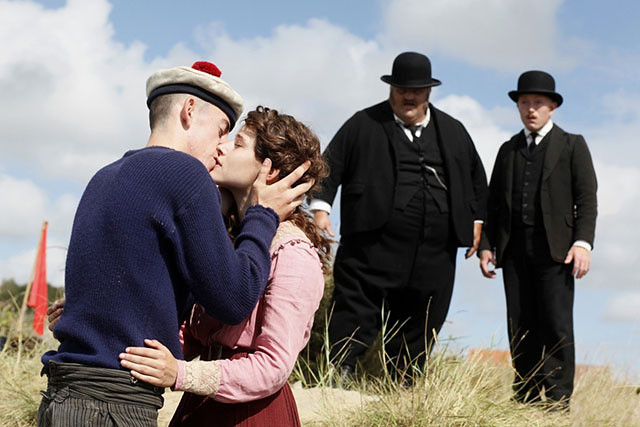
The Van Peteghems, (Fabrice Luchini and Valeria Bruni Tedeschi) with their two daughters are vacationing on the coast in their 'Egyption style' mansion, overlooking a picturesque bay consist of sand dunes and cliffs. They are soon joined by Aude (Juliette Binoche), M. Peteghem's sister with her tomboy daughter/son Billie (stunning newcomer Raph) and mentally challenged Christian (Jean-Luc Vincent), Mme. Peteghem's brother. Down below, the Bruforts, a long faced hearty fisherman clan live, making extra pennies by carrying visitors (man and woman) across the channel in their arms slogging through knee deep water- I guess rich doesn't want their clothes wet? People have been disappearing in the bay and Laurel and Hardy of a bumbling police inspectors are dispatched to solve the mystery. Just like the police in Lil' Quin Quin, the duo in Slack Bay are also extremely inept and disarmingly peculiar in their behavior and mannerisms.

The thing is, it's really uncomfortable to see all these esteemed actors acting grossly over the top characters- Luchini slurrs his lines in his hunchback posture, Tedeschi is overly hysterical, Binoche's acting, with rolling eyes and over-exaggerated faint spells, can only be described as camp.

Yes, the notion of 'Eat the rich' is literally fulfilled in Slack Bay. The Van Peteghems are nothing but snotty nosed inbreds. But Dumont doesn't show how the Bruforts are any better. There is a scene where Ma Loute Brufort (Brandon Lavieville) brutally beating Billie after he finds out she is a he. I find that very disturbing. The faces of Dumont's Bruegel-esque non-actors worked to his advantage to ground his films firmly on the ground. With well known actors acting like retards in Slack Bay, it loses grip on its reality and floats away like the obese police inspector does in the movie.

M. Dumont, you've proven that your Bressonian filmmaking doesn't work on comedies. Can you go back to searing dramas now?

Thursday, February 9, 2017

Catstanbul

Kedi (2016) - Torun
KEDi - 17
Long before the internet made cats everyone's favorite animal, the cat love has been going on for thousands of years in the city of Istanbul, Turkey. In the sprawling metropolitan city of 20 million people, hundreds of thousands of street cats co-exist, vying for every inch of its ever expanding territory.

Director Ceyda Torun and her cinematographer Charlie Wuppermann capture some of these beautiful, eccentric feline creatures and people who love them in the stunningly picturesque city.

Kedi starts out with a yellow tabby as she makes the daily rounds in the bustling neighborhood. She meows at humans at outdoor cafes for food. It seems she has her route all mapped out. She brings a piece of pastry in her mouth all the way across town for her four kittens. 'She's got character,' her human caregiver tells us. As the film concentrates on a handful of cats with their stories told by their human counterparts, we get the distinct feeling that many Istanbulites have accepted that cats are just as human and full of distinctive characters as they are.

Everywhere the camera points, we see cats: they are on the rooftops, building ledges, steps, cars, boats, tombstones, in the streets, basements, outdoor markets, cafes, restaurants... It's a city that seems to be completely devoid of animal pounds.The city can be easily renamed Catstanbul.

There is Gamsiz, a short haired black-and-white badass who forever seems to be in trouble. 'He was a mess, getting into fights with other cats every time,' his baker carer tells the filmmaker. 'Doesn't it get expensive?' Torun asks him off-camera. He tells her that everybody in the city has a running tab with the vets.

Then there is the neighborhood psychopath, a female cat who is very territorial and very good at stealing fish from fishmongers. She also prefers heavy petting. 'She likes it rough', her carer says at the outdoor tea house, massaging her as she lounges on a chair.

There is an aristocat named The Gentleman, an overweight smokey who appeared at a fancy restaurant one day and never left. He doesn't like to be petted nor wants to come in and beg for food, but when he gets hungry, he paws at the window.

Many humans in the film says it was the cats who saved their lives. When they were down and life seemed hopless, caring for them gave them peace and worked as the best kind of therapy. 'No drugs would cure me, but the cats did,' one carer recalls.

The general sentiment of the film is that if you don't love animals, you don't love people. The voice over in the beginning goes, 'Unlike dogs, cats know god exists. Dogs think we are god, but cats know we are just a middleman. ... If all the cats disappear one day, Istanbul will lose its soul too.'

Istanbul is a great mix of ancient culture and cosmopolitan living. Torun slightly makes a socio-political statement with the opposing shots of iconic mosques and their towering minarets by the sea and new modern skyscrapers. People in many gentrifying neighborhoods worry about not themselves, but the fate of thousands of cats who will be losing their green territories to the glass and concrete. There are stenciled graffittis against highly unpopular president Recep Tayyip Edogan- 'Erdo-gone!' in the background.

With the camera constanlty on the cat's eye level, the filmmakers follow the creatures through labyrinthine back streets. With some beautiful shallow depth photography and spectacular drone shots of the city, Kedi is a love song to Istanbul and its cats.

Just like watching cat videos on Youtube when you are feeling down, Kedi works as a purrfect antidote for all the ugliness going on in the world.

Oscilloscope Laboratories will release Kedi on February 10 in New York at the Metrograph and on February 17 in Los Angeles at the Royal. National expansion will follow

Monday, February 6, 2017

All the Pretty Horses

Michael Clayton (2007) - Gilroy
Michael-Clayton-Still-1024x427
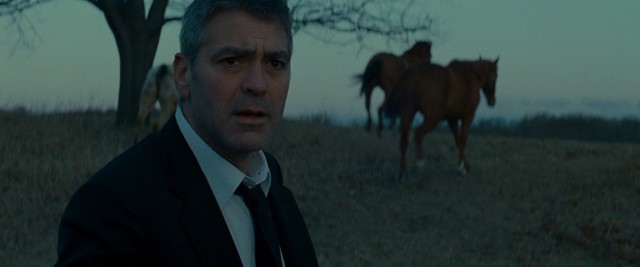
Was on TV. It was a pretty riveting. The moral angst in George Clooney and Tom Wilkinson's faces is so meaty and heavy, it could smother a dozen vegetarians to death. Tilda Swinton is superb as nervous as wreck corporate whore who gets her biggest comeuppances at the end. You can see the lineage of her Karen in Toni Erdmann's Ines. Really though, the best thing about Michael Clayton is that George Clooney is saved by bunch of horses.

Sunday, February 5, 2017

Macabre Japan

Blind Woman's Curse (1970) - Ishii
Screen Shot 2017-01-27 at 3.57.58 AM
Screen Shot 2017-01-27 at 3.59.35 AM
Screen Shot 2017-01-27 at 4.03.33 AM
Screen Shot 2017-01-27 at 4.06.52 AM
Screen Shot 2017-01-27 at 4.07.49 AM
Screen Shot 2017-01-27 at 4.10.25 AM
Screen Shot 2017-01-27 at 4.10.56 AM
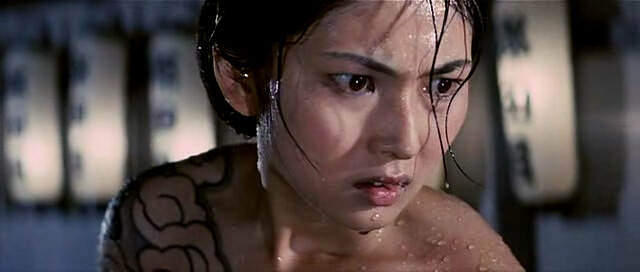
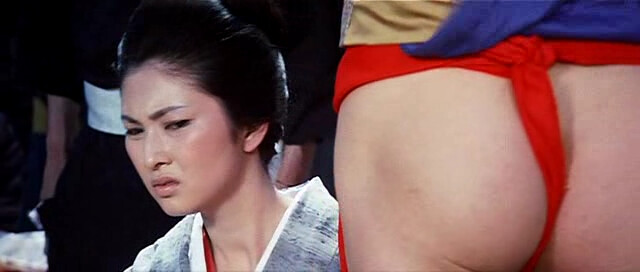
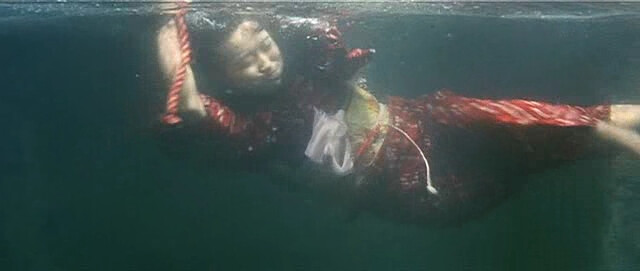
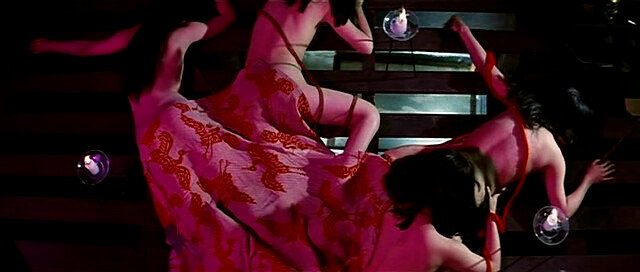
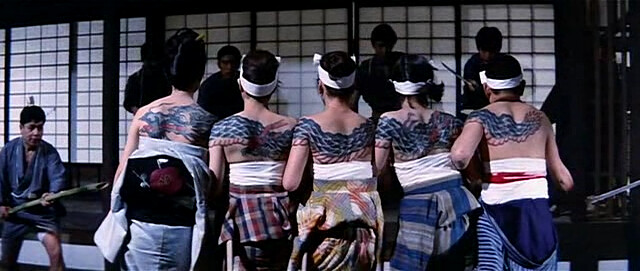
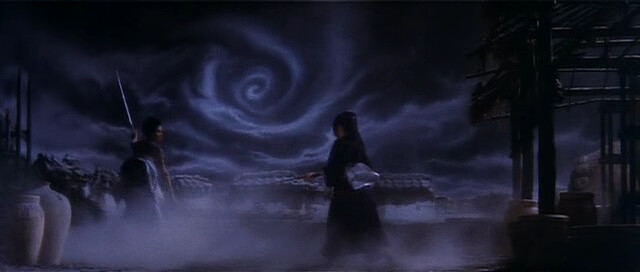
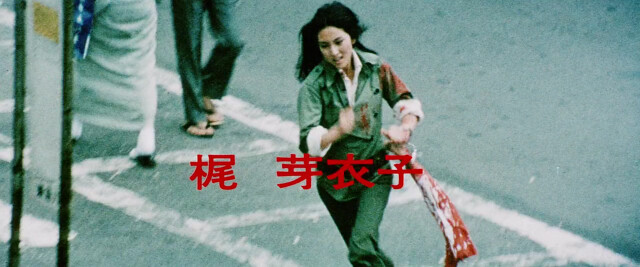
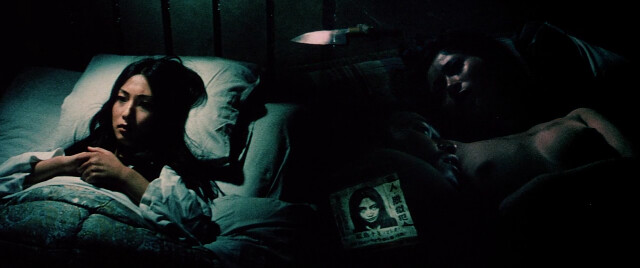
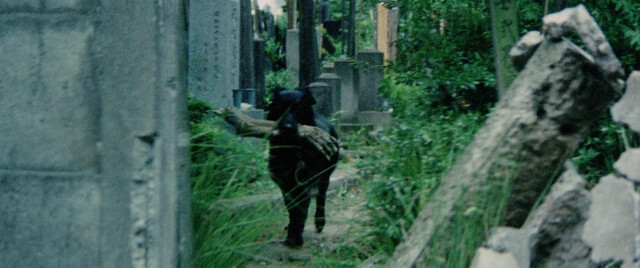
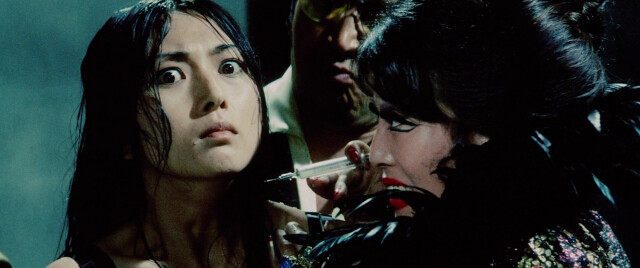
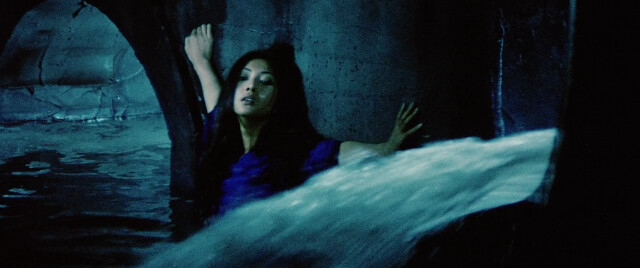
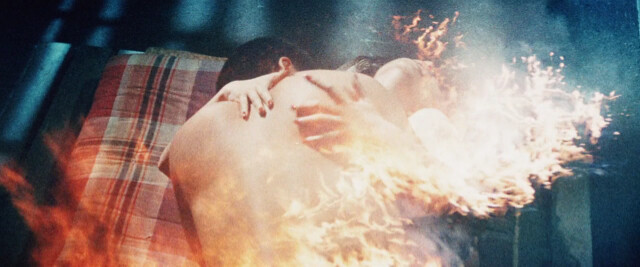
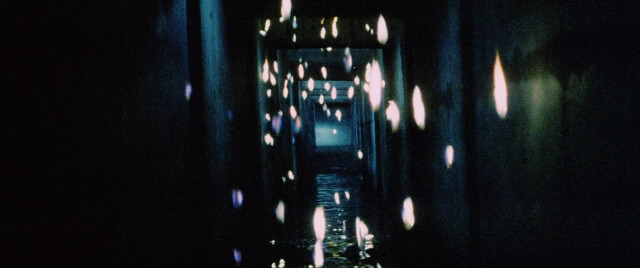
Wow, this movie is batshit crazy! Meiko Kaji plays Akemi, the head of the Tachibana clan, known for the dragon tattoos on their back. The rivaling clan wants to take over its territory by any means necessary- planting drugs in businesses in Tachibana controlled area, making alliances with shady and weird characters, hiring assassins, etc. One such assassin happens to be a vengeful blind swordwoman (Hoki Tokuda) who has grudge against Akemi ever since she slew her husband and blinded her. Director Teruo Ishii (Horrors of Malformed Men, The Joys of Torture series) known in Japan as king of cult, pulls all stops here with macabre images - an underground opium den orgies, water torture chambers, grand guignol style theater, supernatural forces, a creepy hunchback, a red loinclothed creepy man, expressionistic matte painting... the list goes on and on. Action packed and super violent, not only Blind Woman's Curse a showcase for Kaji's martial art skills but also her raised eyebrows and deadly stare, a prelude to what's to come.

Bogey(wo)man

Female Prisoner Scorpion: Beast Stable (1973) - Ito
Screen Shot 2017-01-23 at 10.16.58 AM
Screen Shot 2017-01-23 at 10.18.02 AM
Screen Shot 2017-01-23 at 10.46.22 AM
Screen Shot 2017-01-23 at 10.18.43 AM
Screen Shot 2017-01-23 at 10.26.09 AM
Screen Shot 2017-01-23 at 10.26.32 AM
Screen Shot 2017-01-23 at 10.25.40 AM
Third in the Female Prisoner 701 series, Beast Stable finds Sasori (Scorpion, played by steely eyed Meiko Kaji) hacking off an arm of a pursuing detective with a kitchen knife in the subway even before the credits roll. It's not a chicks in prison movie as much as a girl on the run fugitive movie. The premise is lurid and way over melodramatic with a storyline involving Sasori's aide Yuki, a street walker with a retarded brother she regularly has sex with. But Toei studio director Shunya Ito (who has directed the first 3 Female Prisoner movies to critical acclaim) has enough flair for visuals to keep things interesting. Indeed, a nod to Yojimbo and the Third Man-esque sewer chase scenes have enough artistry to rise above its mere exploitation label the series is accustomed to.

Like a ninja, Sasori hunts down every man and woman who done her and Yuki and some other prostitute wrong and brings down a surgical scalpel to their necks. Feared by her enemies, she becomes a some kind of indestructible force, almost an imaginary boogey(wo)man by the end.

Kaji, in an almost silent, physically demanding role, lets her death-stare speak volumes as a dead-girl-incarnate for vengeance. She lets others do the baring - both soul and body. She fully becomes a persona, a symbol of vengeance, a kindred spirit of sisterhood to those who are abused. I vote Sasori for president!


Thursday, January 26, 2017

Revenge and Shame

The Salesman (2016) - Fahardi
Salesman
It's an earthquake: The building shakes, plaster tiles fall from the bedroom ceiling. You look out the cracking window to see what's going on. Then you realize that it's a track hoe digging for a foundation next door that caused your rude awakening. This is how Asghar Farhadi's The Salesman sets up the things to come, rather ominously, from the get-go for a young middle-class, childless couple living in bustling Tehran.

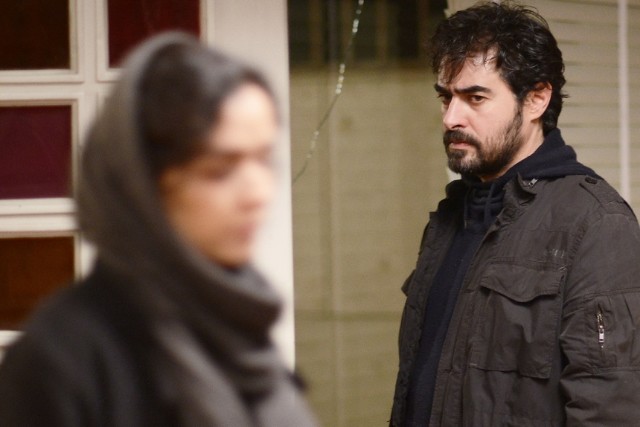
Emad (Shahab Hosseini) and Rana (Taraneh Alidoosti) are theater actors who are preparing for their roles in a stage production of Arthur Miller's Death of a Salesman. Their lives are rudely interrupted when their building gets condemned because of that construction snafu. Luckily, one of the cast members has a newly vacated property and suggests that they consider moving in. It's a spacious top-floor apartment but still strewn with other people's belongings. The man says the previous tenant will pick her stuff up soon. Gracious for the offer and desperate to find something fast, Emad accepts the colleague's suggestion despite Rana's misgivings about many personal items still left by the previous tenant.

Not long after they move in, Rana is assaulted by an unseen attacker while taking a shower and gets knocked unconscious while Emad is out. She buzzed the assailant in because she thought it was her husband. Physically and emotionally traumatized, Rana is having a hard time coping and has tearful breakdowns while performing in the play.

Emad, not trusting the authorities' ability to execute swift justice, starts investigating the matter himself. He is furious to find out that the previous tenant is a prostitute and the Rana's attacker might have been one of her regular johns. He is soon consumed by the thought of revenge as he gets closer to finding out who the attacker was.

Just like his award winning neo-realist drama, A Separation, Farhadi is superb at creating tension in The Salesman that plays out like a thriller in its first half. But that part is not the true selling point of the film. The film doesn't end with Emad finding the assailant. The meaty part of the movie only begins after. So this is by no means a spoiler: paralleling the story of Willy and Linda Loman in Death of the Salesman is not Emad and Rana, it turns out, but the attacker, an old man who delivers bread around the neighborhood who had a relationship with the former tenant, and his family who doesn't know his secret. This is where things get interesting.

Farhadi's mastery is in his densely layered script. Not only in the way he structures the story within a story with Miller's play, there is also another dimension involving audiences. It seems that public humiliation and making sinners to confront their loved one with the truth is the worst thing that can happen to a person in a socially conservative society.

Emad, whose passive, timid personality gradually changes after the home invasion, lets his anger cloud his good judgment. This parallels yet another story, Ingmar Bergman's Shame. The movie's poster for the Bergman's film is visible throughout the film in their abandoned apartment. In it, there is a childless couple. A war changes ineffectual and apolitical husband, played by Max Von Sydow, into a coward and ultimately a murderer.

As Emad's zealous pursuit of a punishment for the old man becomes more strained and agonizing to watch, Farhadi is, in effect, putting us the audience in Emad's shoes. Are we really prepared to live with the guilt and shame of the knowledge that we ruined someone else's life, even if the person did us wrong?

Both Shahab Hosseini and Taraneh Alidoosti do fantastic jobs as an ordinary couple struggling with the aftermath of a home invasion. The Salesman shows a man's failure to put himself in other people's shoes. Irony is not lost on him being an actor.

Farhadi has a real knack for portraying the guilt of ordinary people. The degree of guilt he is showing might be a little too dramatic to pass as a real life. But that degree is small enough to make us uncomfortable. Deeply philosophical with human entanglements, culture, tradition, class and morality, The Salesman is a complex drama with a great narrative pull that is a richly rewarding experience.

Wednesday, January 25, 2017

Interview: Asghar Farhadi on His New Film, The Salesman

686592.189
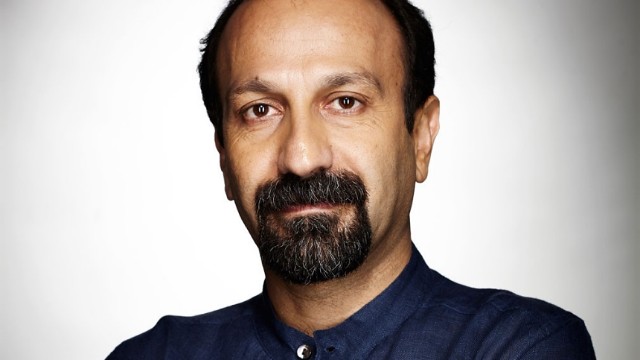
With his latest film, The Salesman, Asghar Farhadi once again proves his mastery in presenting complexities of human relationships within the confounds of his native country Iran. But he also demonstrates that even when there are political and cultural differences among us, deep down, certain things in life are constant and universal. I was eager to talk to Farhadi about his richly layered human drama when he was in town before the theatrical release of the film on Friday, January 27.

* Many thanks to our translator Sheida Dayani of Harvard University. 

The structure of this film is very interesting. Loved how you set it up in the beginning with the broken window and cracked walls, as we learn that the foundation of the couple’s relationship is shaking with what happens in the middle of the film. Earthquakes aside, does this kind of construction mishap happen a lot in real life in Tehran?

Tehran is a very large city. Everyday, they are dismantling old buildings and building new ones, almost like New York in the 50s and 60s. Everything changes very fast. And all these destructions put harms on older buildings and make them collapse. This is not something that happens everyday but it happens sometimes.

But the structure of the film itself, there are two parts into it: One part is theater and one part is real life. This was the first time I was experiencing something like this. And I wanted these two parts to go parallel, reach for and connect with each other at some point. And i wanted it to be the case that by the time we get to the end of the film, the boundaries between these to merge and then turn into one.

People usually think that the couple in the film -- Emad and Rana -- is the same couple in Death of the Salesman, Willy and his wife Linda. But there is something else that I’d like you to know. The older man who comes into the film later, and his wife are the ones representing Linda and Willy for me.

Right. I get that.

Doing this was a very new experience.

DEATH OF A SALESMAN. Why that particular play?

When I wrote the treatment of the story, I thought about many plays. Then I got to Death of the Salesman which I was familiar with in my student years, it excited me in many aspects. The theme of the play and the theme of my script were very similar -- they had both stressed on the theme of humiliation but also contempt.
They were very close thematically but it was interesting for me that I had a character in my story that is very close to Willy in that play. In (Arthur) Miller’s play, there is a touch, there is a color or residue of sexual theme, especially when he goes into a hotel in Boston and he sees the woman and his son Biff comes in and catches him.

Right.

In my story, there is also a sexual theme. And there are also these subtle things and colors, minute connections that I later on developed but this theme really convinced me that the play was the best one that I can play with.

In some of your films, characters take the laws into their own hands, trying to do the right thing. Is it because the system too untrustworthy or because vagaries of human life need to be solved with a more nuanced approach? Can you elaborate on that a bit?

It could be all the things that you listed. But the most important thing is that applies globally is that people usually like to implement laws themselves. When a person is furious and angry, they don’t feel at ease with themselves until they take revenge. When you leave justice in the hands of law it takes a very long time and that doesn’t satisfy people.

Maybe you don’t trust law, maybe you don’t want this private issue to be revealed publicly. The thing that many people enjoy is when they do justice themselves and when they could stand up for their own rights. And this is when the retaliation and revenge begins. Revenge in a sense that you both judge and execute your own orders.

The scene that struck me the most was when Emad stops eating the food bought by the money that was left in the house and returning the money to the old man at the end. That would never happen in America. Is he just very traditional and old fashioned or is it his character that Rana later finds as faults in his character, and that’s why they are not going to be together?

The character has this impression of himself, the notion that he has of himself, the notion that other people have of him gradually changes throughout the film. When he is put in one specific situation, another side of him comes out. Even he is surprised of this change.

At that table when he doesn’t want to eat the food, he is not a religious character. But he comes to a point that personally, that food to him is polluted. And he feels that the shadow of that old man or that person whom he assumed as guilty is everywhere. Permeating everything he sees. And this is what leads him to revenge. He doesn’t decide to revenge but more like he is gradually thrown into it. You can’t say that’s a fault of his.

No.

This is the characteristic of his personality. I believe he is oscillating between his modern and traditional behavior. And he himself doesn’t know about it.

I noticed Ingmar Bergman’s SHAME poster in their old apartment.

Ah! [Laughs.]

With them not having children and them joking about it made me realize that there is some kind of connection there, albeit very subtly. Am I right about that assessment?

In Bergman’s Shame, there is also a couple that doesn’t have a child. And because of war, the character of man [played by Max Von Sydow] changes like we wouldn’t believe. The woman doesn’t change but it’s the man who changes. And we see the side of character of that man we didn’t expect.

True.

The same thing happens here except that instead of war, it is their surroundings, the environment that causes him to change.

With its title being SHAME, I was wondering if there is a connection between being an artist and apolitical in Bergman’s film and the characters in THE SALESMAN where both of them are artists and living a semi-comfortable life that there is a class distinction between them and the old couple.

In Bergman’s film, those characters are very sensitive people- they are close to nature and very vulnerable. Their relationship is very subtle and they always communicate their feelings with each other. The woman [played by Liv Ullman] plants flowers and has a very sensitive personality. And the man is very dependent on his wife and he always talks to her and reveals his feelings. Bergman does this because he wants us to feel the change in people who are sensitive and subtle to people who are aggressive.

In my film I turned this into people who are dealing with culture and they are theater actors. Being an actor means being someone who can put himself in other people’s shoes. We are surprised in this film because Emad is supposed to know how to put himself in other people’s shoes and play the roles but he fails to do that when he fails to put himself in the shoes of his wife- that he failed to see through her eyes.

Being an actor, yes I would say he is a cultural elite.

There is also life as a stage thing that I’ve been thinking about ever since I saw the film. As it ends with two of them getting their makeup on for the stage, the film takes on yet another, metaphysical layer to it. Much has happened and I don’t see Emad and Rana staying together. But ‘Life is a stage and it goes on’ no matter what happens?

One of the things you can sense is that life still goes on for everyone. But these people are not the same people that you know before it happened. In the last scene you see them going through their make up, they look older and tired.

True.

Every night they have to go on stage and play the role of a family that they have cause into destruction and death. And this seems to be an endless torture for them. When I look at the last scene, I think about how they are going to perform the play after what happened. They have a sense of shame about themselves.

We lost of a lot of great artists throughout 2016. The most devastating for me was the passing of Abbas Kiarostami, one of the greatest filmmakers of our time. Can you say a few words about what he meant for you as an artist?

This was the bitterest occurrence that happened in the cinema past year, because he was one and only. There was no one like him. There is no one like him. Many people tried to be like him or copy him but because their personalities are different from his, their films didn’t come out the way his films did.

I met him a few weeks before his death the last time. He was lying in bed in his house when I went to visit him with a woman who was a friend of his. When we entered his room the first thing he said to the woman was, “the flowers on your scarf are very beautiful.” I spent an hour with that lady on the way there and I hadn’t noticed that. He had always seen the world from a different angle. He had learned to see the beauty in the world. He respected life very much. He appreciated life but the life didn’t appreciated him unfortunately.

That’s for sure.

Monday, January 16, 2017

Cosmic Energy

Kosmos (2010) - Erdem
Screen Shot 2017-01-16 at 9.58.04 AM
Screen Shot 2017-01-16 at 9.59.02 AM
Screen Shot 2017-01-16 at 10.05.27 AM
Screen Shot 2017-01-16 at 10.06.38 AM
Screen Shot 2017-01-16 at 10.14.30 AM
Screen Shot 2017-01-16 at 10.07.53 AMScreen Shot 2017-01-16 at 10.22.03 AM
Screen Shot 2017-01-16 at 10.30.29 AM
A bug eyed stranger (Sermet Yesil) comes into snowy border town in northeast Turkey. Upon arrival, he saves and miraculously revives a drowned boy from the river. The boy's father, a local butcher, grateful, tells the stranger that he is welcome and can stay in an abandoned city hall building. But it's the stranger's eccentricity that attracts the locals attentions- it's his philosophical talk in a high pitched voice, only eating lumps of sugar at a tea house for sustenance, having no concept in labor or money, and is later revealed, has abilities to cure and heal people and even defy gravity. He impacts some of the locals' lives for the better, at first. After healing an old man's bad lung (he has to pick his patients up from behind and shake them like a rag doll), there's a line of sick and invalid people gathering at his door which he avoids.

The story of two factions in the village, ones who embraces opening the borders and by trading with the others that will bring the wealth, the other who blames the loss of cultural, traditional ways and recent social ills (mostly robbery committed by the stranger) on the foreigners, resonates the world we are living in. As the miracles fade and turn into tragedies, people start to resent the stranger they first saw as a savior.

This allegorical tale packs a lot of themes and stories in to a 2 hour running time. It reminds me of Werkmeister Harmonies and Tarkovsky's work. But unlike those clinically astute aesthetics of Tarkovsky or Tarr, Erdem's Kosmos is an energetically charged film from beginning to end. The stranger who calls himself Kosmos is always moving about, and the camera, through tracking shot and handheld, constantly move through snowy landscape and chaotic interiors: It being a border town in an unending conflict with neighbors, there are constant low booms of cannons heard from near distance. A satellite falls from the sky. There are also noises of cows from the slaughterhouse, birds, dogs and music- the film is cacophony of sounds and motion all of the time.

Neptün (Türkü Türan), daughter of the butcher, connects with Kosmos. There courtship is that of feral animals - they communicate by howling and running around. Perhaps she is the only one who understands when he says there is no difference between human and animals.

Kosmos is an unwieldy, messy, sprawling work. There are many moments of brilliance and striking visuals. But all that chaos is what Erdem is intending to show. But Kosmos is definitely not a moral lesson, there is no ultimatum or strong message. That the world is indeed chaotic, indecipherable, unknowable and mysterious. The director leaves it at that. Perhaps not narratively satisfying, but Kosmos is full of beauty and wonder.

Friday, January 13, 2017

Vacillation

The Passion of Anna (1969) - Bergman
Screen Shot 2017-01-13 at 7.11.08 AM
Screen Shot 2017-01-13 at 7.12.27 AM
Screen Shot 2017-01-13 at 7.13.18 AM
Screen Shot 2017-01-13 at 7.14.03 AM
Screen Shot 2017-01-13 at 7.15.28 AM
The Passion of Anna is a difficult work. Bergman had always tussled with the bleak view on humanity, commented on how vile human relationships can be- that people go on living together for the sake of living together. But at the end, we all die alone. With his regular actors who were still contractually obligated to work with him after Shame and the set from it still left over, Bergman made this small but more abstract film that is supposed to be a sequel/companion piece. But where Shame shows how war degrades humanity, The Passion looks more inward to reach the same conclusion and the result is just as devastating. His disgust with humanity is loud and clear, no doubt brought on by the raging Vietnam War.

Andreas (Max Von Sydow) leads a solitary life in a rural island. He spends his time fixing his house and doing daily chores. His wife has left him long ago. Occasionally he screams to the cold Swedish air out of loneliness, but he seems to be content most of the time. One day, he lets in Anna (Liv Ullman), a friend of the neighbor couple Eva and Elis (Bibi Andersson and Erland Josephson) to make urgent phone call. He eavesdrops the conversation and looks through her bag and reads the letter from Anna's dead husband. Unlike her professing her love for her dead husband to anyone who listens, that her marriage was 'perfection', the letter tells the very opposite, her husband telling her that if they go on living together, it will end in psychological and physical violence.

Andreas hooks up with Eva, who in turn spills out her innermost thoughts- she has no thoughts of her own, no ambition and always following the lead of her intellectually superior, successful architect husband who seems to be away on business trips often. Elis's sarcasm and contempt for the world don't sit well with the other three. Being an amateur photographer, he laments on not being able to capture the human soul with his photos. But his clinical observation on humanity and how he sees it is obvious.

The passion is like Bergman's hit medley. His usual themes are all there, portrayed by four archetypes: Andreas - a vacillating coward caught between humanly desire and disgust, Anna - a guilt stricken, self-deceiving woman capable of intolerable cruelty, Eva - a naive, empty vessel trotting through doomed life and Elis - an arrogant, distant, soulless observer of humanity. The actors candidly talk about their characters in length on camera within the movie, as if in DVD extras.

Andreas then shacks up with Anna- the monotonous narrator tells us that they are living together without any passion. And we see them eating and talking like a normal couple. The union of necessities I suppose, to keep a warm body next to you. To have someone to talk to to alieviate loneliness.

Bergman, who found his home in remote Faro Island living in relative isolation and solitude while the raging war on the other side of the world is blaring on TV reminded him of the ugly humanity, reflects his sentiments in The Passion. The title is misleading since because Anna's passion of her past relationship is a bold faced lie. It questions if it will ever help Andreas, Anna and Eva go on their almost unbearable existence if they had it in the first place. The Passion ends with horrendous fistfight between Andreas and Anna, as predicted by the letter in the beginning, and Andreas literally walking back and forth, vacillating and collapsing under the weight of his own guilt and shame and desire both to be alone and be with someone.

Emotionally bare and structurally, technically jarring, The Passion of Anna is a deeply pessimistic, open wound of a film. Unlike his other depressing films I've seen, I failed to see the beauty in it.

Monday, January 9, 2017

It's Oh So Quiet in Kore-eda's After the Storm

After the Storm (2016) - Kore-eda
8zOfNUK
Kore-eda Hirokazu's new film, After the Storm, about a dead-beat dad getting over his divorce/letting go is as subtle as any other of his films. When I first heard the title, it immediately reminded me of the conversation I had with Kore-eda when he was presenting Like Father, Like Son. I asked him if the Fukushima disaster and the Great Eastern Earthquake of 2011 changed him as a filmmaker. He said the real impact of the disaster on Japan and its people was yet quite unknown. After a pause, he told me this:

But I think this time, in terms of making this film (Like Father, Like Son), there were a couple of motivations for it. One definitely had to be the earthquake. I think it really enforced the idea of bonds in Japan. The idea actually became very trendy. In a way, it wasn't so good in Japan before (in that regard). But the idea of bonds and people supporting each other and all of Japan becoming one has become very common in Japan. I've been thinking about that, about how we can reduce that feeling to a small community that is family. So I think in terms of how I came up with the idea for the movie about a man and his bond with his family, I suppose the earthquake played the role.

The idea of family bond is not a stretch for Kore-eda, considering his filmography. Then again, nor is death (Maborosi, Afterlife). But the implication of a incoming storm in After the Storm here is definitely about bonding and renewal than death and destruction.

A Kore-eda regular Abe Hiroshi (Still Walking, I Wish), a long, sad faced actor, plays a one-hit-wonder, washed up writer Ryota, still carrying the torch for his ex Kyoko (Maki Yoko of Bitter Honey, Like Father, Like Son). He spends most of his time blowing money (that he earned at the detective agency - 'research for a book' temp job which became permanent) at the racetrack. With the custody arrangement, and sandwiched between his always patient aging mother (always marvelous Kiki Kirin) and grilling sister, he has to resort seeing his son who's in elementary school only on the weekends and constantly being asked for alimony payments.

Using his private detective skills, he starts spying on Kyoko's new romance with a manly man who coaches his son in a little league team. He is not a bad guy, but Ryota can’t help constantly asking his son if Kyoko is falling for him or not. Obviously Ryota wants to give it another go at her, even though it is a pretty hopeless prospect.

The news of incoming storm as an excuse, Ryota takes his son to his mother's and maroon themselves there with furious Kyoko, over one stormy night.

The Typhoon season (in Summer) is a yearly occurrence in Japan. Just like earthquakes, violent storms are part of Japanese people’s daily lives. But nothing too dramatic happens in After the Storm. Ryota gets to relive one more night, just like old times, with his wife, son eating his mother's food. Spending one last time with them as gajoku/family, before he lets his old feelings go and grows up and moves on, thanks to the storm. Thanks to the mother nature to smooth things over.

Taking on many Japanese social issues - divorce, unemployment, elderly care, albeit very subtly, After the Storm is another gentle family tale with great measured performances from everyone involved.

In Kore-eda’s world, the storm is not a cause of destruction and pain but a helping agent to bond with each other- something the current Japanese society has lost due to modern life taking its course. But the film is so old-fashioned and soft-edged, it hardly registers on an emotional level. Still a great little film. But after the greatness that was Our Little Sister, After the Storm feels like a minor Kore-eda.

After the Storm opens in New York and Lost Angeles on Friday March 17.

Friday, January 6, 2017

Iranian Neo-Realism at its Best

A Separation (2011) - Farhadi
9separation
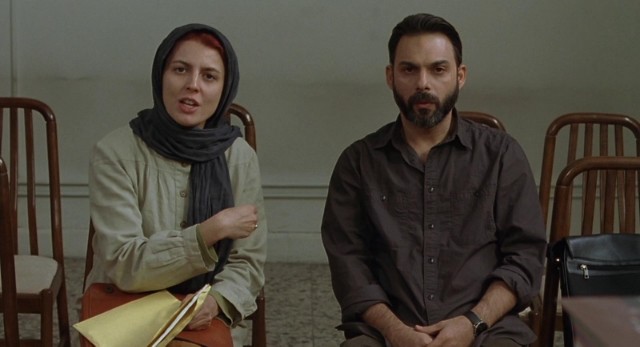
Riveting morality tale from Asghar Farhadi. Nader (Peyman Moaadi) and Simin (Layla Hatami) want a divorce after 14 years of marriage. Nader has an old father who has an alzheimer so he won't leave the country with his wife and 11 year old daughter. Simin's mind was set on immigration, for the future of their child. They go to a judge but he won't grant the divorce since Nader is not a bad man. Things begin to unravel when Nader takes up a caretaker to take care of his dad while he is working. Razieh (Sareh Bayat) with his young button nosed daugther in tow, starts working for Nader but taking care of the old man who doesn't know where he is most of the time and can't clean himself is just too much for her with hot tempered, unemployed husband at home. She is also pregnant.

Things get out of hand when Razieh leave the old man tied to the bed and go to the doctors appointment - Nader comes home with his daughter, finds his dad fallen off bed unconscious, goes mad, throws Razieh out when she comes back. In the scuffle that ensues, Razieh has a miscarriage. The intense court drama (in the office of a judge) begins.

Farhadi's moral dilemmas where no one is really at fault but everyone finds himself in bad circumstances in a deeply religious society is extremely well-balanced and beautifully drawn out. He is especially good at observing all these rigmaroles from children's perspective. Outstanding performances by all involved. A great example of neo-realist Iranian cinema.