Tuesday, December 24, 2013

Midas's Little Brother

Inside Llewyn Davis (2013) - Coen
 photo 910a8b0e-8cf4-4c31-9edd-26a14a9caf4a_zps4bb35db2.jpg
OK. I won't call the Coens movies soulless anymore. They are immensely smart people/filmmakers who play by their own rules and no one elses. I still remember their Oscar acceptance speech for No Country for Old Men, "OK, we'll go back to our sandbox now." Inside Lewyn Davis is the only way they know how to show their tender side- by making their main character a total dick. Llewyn (Oscar Isaac) is a young proto-hipster folk singer from Queens, doing the rounds at clubs and coffee houses in Greenwich Village. The year is 1961 and the Village is not quite the boho it had become. He's an all around asshole, who's been couch-surfing at the mercy of ever shrinking pool of friends. His arrogance, bad manners are always testing people's patience. Llewyn is a talented singer but terrible at human relationships, even though he is a folk aka 'people's music' singer. Music industry people see through this and won't give him time of day and Llewyn himself is very aware of this predicament as well. Everything he touches turns into shit (according to his ex gal pal Jean, played by Carrey Mulligan) and his life's going in circles, literally.

There are plenty of chances the Coens turn the movie into corny redemption tale, especially with a cute cat and Llewyn's father in a home, but they don't. Llewyn starts as an asshole and remains one throughout. But at the same time you can't take your eyes off of him and chuckle at his misadventures. He is not a misunderstood genius nor mopey eternal teenager and his misery is his own making and no one else's. It's the first time I feel that Coens are not making fun of genre tropes nor doing grossly technical/verbal exercise. You still feel for the Llewyn. This might be my favorite Coen Bros movie.

Friday, December 20, 2013

Life as Art as Life

An Oversimplification of Her Beauty (2012) - Nance
 photo c201fff6-b964-44b7-921d-9bf49c760012_zps47a4f6df.png
 photo 6608910d-1ec4-43f7-800e-b18cae527f27_zpsf226711f.png
 photo 6f356daf-df3b-4fde-ab61-63c3e23b7725_zps37b13d40.png
 photo 2b81b376-89da-4c80-9c5c-6a847c8ae5ab_zpsc852a030.png
 photo 6fa140b3-b466-415b-893c-74deaaf38e34_zps6e925e9a.png
 photo fb786d17-20a4-495c-a4e1-f1db10fdb9b8_zps6d6f9639.png
 photo 7cb1e646-ecee-4f8e-a9c2-de5cb5113a06_zps4b3db5a7.png
 photo 24b1d49a-1eaf-4015-81f4-2f4cefc32d27_zpsb420b5b2.png
 photo 1c3bb276-e47c-4d86-b7e8-f618ee5d5527_zps0e33f0c1.png
 photo d7a68e36-9a66-4ae7-a7bf-ec6a25d2fbef_zps58302419.png
Gotta say that I admired Terence Nance's film more than I enjoyed it. There is no doubt that Nance is talented- who wrote, directed, did an animation and music all by himself. It's rare to find someone so original and graceful in his ability to express himself visually. One can also tell that this project is a true labor of love: there are more than a dozen animation styles applied here- stop motion, water color, drawings, whatsit...all achingly beautiful. It also takes a form of movie-within-a-movie, starting with a short How Would You Feel which dates back 2006. This on-going autobiographical examination on relationship is in part his train of thoughts, part her train of thoughts, part documentary, part reflection of those thoughts, endlessly repeating like a mobius strip.

The thing is, you have to drown out Nance's neverending monologue after a while and just give in to the visual aspect, because its narrative doesn't lead you anywhere. The project started out as a short and it should've remain as a short. He is a undeniably super talented guy in an obsessive relationship, but not a storyteller.

Monday, December 16, 2013

The Life and Death of Marina Abramovic at The Park Ave Armory 12/14/13

 photo fded0b7f-d65f-4ff7-8a96-c2d7e00c8c68_zpsdf5b5c28.jpg
 photo 0e4cf31b-5d50-4626-ad39-4de3efd301a1_zps850660ed.jpg
 photo 93f9650e-e1a8-4143-b92f-359603c6871e_zpsb875fc92.jpg


What a visual feat! Robert Wilson's Life and Death of Marina Abramovic was an experience that I will not soon forget. Ever since I realized that I missed seeing Black Rider, a musical that was Wilson's collaboration with Tom Waits and his Three Penny Opera, I was determined to see this. The avant-garde theater director's staging of a biography of the famed performance artist Abramovic is a close collaboration of Wilson, Abramovic, Willem Defoe and singer Antony from Antony and the Johnsons.

Dafoe serves as an devilish MC, gyrating through the 67 year old artist's bio, illustrating her harsh childhood in a militarily decorated, strict communist household in former Yugoslavia. Mixing amazing Balkan music with exceptionally powerful and beautiful Antony's singing voice and striking lighting schemes, watching Life and Death is unlike anything I've seen before. Abramovic here is a subject and a cast of an ensemble but not a performance artist. As a whole, it is an Wilson's piece through and through, artistically speaking. The two hours and forty minutes with intermission in beautiful The Park Avenue Armory on a snowy night Manhattan, I definitely wanted it to go on a lot longer. Too bad that the beautiful snow fall earlier turned into a heavy rain as we got out of the theater and made a real mess on the street. We wanted to frolic in the snow taking the experience in. Instead, Nicole and I opted for the cigar bar nearby and puffed our night away.

Selective Memories

Muriel ou Le temps d'un retour (1963) - Resnais
 photo 989e164f-f67a-477d-8b45-d3f3904365b8_zps8c1bcfde.jpg
The film is set in Boulogne, a port city up north just on the other side of the English Channel. It is rapidly modernizing city with the remnants of WWII destruction still very much lingering. Same is true in the inner lives of Muriel's inhabitants- Helen (Delphine Seyrig), a widow with a selective amnesia who can't let go the memories of a past lover, Alfonse. He shows up at her request accompanied by a young woman claiming to be his niece. Helen's stepson Bernard (Jean-Baptiste Thierrée) also carries a terrible secret from his military days in Algeria.

Even though characters are talking about material things, joking about shady constructions of the new glass and concrete buildings that might 'slide right out to the sea,' and a cruise ship that ran aground at the bay, one can sense that there is a sense of doom over the ugly city. The youngun's wants to get away from it while older folks are stuck in only happy, fantasy oriented memories.

The film is structured like someone's scattered memories. Intentionally drab color palette and ugly 60s buildings are quite contrasty with visual elegance of Last Year at Marienbad, which was made just 2 years earlier (both shot by Sacha Vierny). Muriel is no less impressive at contemplating memories, fantasies and collective scar left in people's psyche in postwar Europe. I actually prefer this to Marienbad.

Friday, December 13, 2013

Orphaned

Nobody's Daughter Haewon (2013) - Hong
 photo a0acd5e2-9ea6-481f-a4cc-5a5e24eb8264_zps09d030fa.jpg
It's quite amazing that Hong's been making the same film with little variations for close to 20 years now with an unwavering consistency. Sure, as his reputation has grown as one of the leading Korean auteurs on the international film stage, and his films now feature European art house staples (this time around, Jane Birkin). But the scope of his films has remained pretty much the same. Nothing really new here- having an affair with older professor/movie director, copious amount of drinking and smoking, and wrestling with that sinewy entanglement called human relationship. But you can't not end up falling for Haewon (Jeong Eun-chae), a pretty college student who's about to be orphaned because her mom's permanently relocating to Canada. Her married professor/director wants to continue their 'secret' affairs and gets mad jealous and clingy at the same time, even though they both are tired of their predicament. Very enjoyable and endearing.

I have no desire to see Frances Ha. I don't know why Hong's films are much more attractive to me than Noah Baumbachs. Haewon and many of Hong's films ring true to me in portraying human relationships.

Tuesday, December 10, 2013

Kora on 66th Street Subway Platform

 photo 2fe379c5-f989-473d-b327-e28177832e02_zps5703e809.jpg
Kora is an African string instrument prevalent in West Africa- Mali, Senegal, Guinea and other places. I've recorded this back in October. In close proximity to Juliard, the 66th St. 1 Train station platform attracts amazing array of street musicians. This man was too good for me not to record. I just wish I had a better recording device than my 7 year old ipod with a mic attachment at hand.

Listen at:
https://soundcloud.com/floatingartist/1-train-66th-street-lincoln

High Noon in Space

Outland (1981) - Hyams
 photo 3537ab86-e598-4ce1-b4f7-5077e90e4ffc_zps0ae68119.png
High Noon in space. Sean Connery plays, O'Niel, a middle management type company sheriff or security officer or whathaveyou of the mining colony in Io, one of Jupiter's moon. Because he is a loudmouth, he's been getting kicked around from the both sides and ended up in the shithole like Io with his less than enthusiastic family. As a matter of fact, his family bolts in two weeks. The company station in the orbit is secretly supplying some kind of red jello type drug that makes mining workers super productive. The side effects of it is hallucination, suicidal tendencies, etc. Many heads get blown up inside spacesuits because of this. As O'Niel catches up with what's going on, the asshole general manager (Peter Boyle) scorns him on acting like a fucking hero and making trouble. He contacts the mothership and have them send some space goons. The big Casio clock ticks down from 40 hours until the goons' arrival. 40 HOURS!

It's unfathomable in this day and age to have nothing blown up or having yet another plot twist every five seconds in a big budget Hollywood action movie. Outland is refreshing in its simpleness. It builds up tediously, showcasing some good old Sci-fi FX goodness and beautiful production design. O'Niel even has enuff time to visit a titty bar and chug a coupla drinks before the showdown. I appreciate that in a movie.

Monday, December 9, 2013

Body Art

Marina Abramovic: The Artist is Present (2011) - Akers, Dupre
 photo 11fcde5c-c945-41af-a0c0-088d0b0f2445_zps3013ed85.jpg
I didn't know Abramovic's MoMA show in 2011 was such a big deal. I do remember seeing the glimpse of her sitting in a chair against one gleeful patrons after another when I went to see William Kentridge show then. She drew a lot of crowd. I've never been a fan of performance art and just ignored her exhibition completely when it was on.

The film is a great introduction to her body of work. Born in former Yugoslavia, it was her communist hero parents' strict upbringing that shaped her as an artist that primarily uses her body to express. Her 60s-70s radical performance art is not quite dissimilar and equally annoying in that 'radical feminist art', 'I am naked and will balance myself on a stake' way. She and her long time partner/lover Ulay performed the war of the sexes until they broke up after The Great Wall Walk, where they walked from opposite end toward each other. The rest of the film leads up to her MoMA performance. I have to say I was moved by her sitting in one place day after day facing different people for three months. At 62, she looks great and her stamina is astounding. The performance brings out different reactions and emotions out of people. It's quite affecting. I'm very excited about seeing her new performance piece in Robert Wilson's Life and Death of Marina Abramovic next weekend.

Friday, December 6, 2013

Much More than a Feminist Parable

The Wall/Die Wand (2012) - Pölsler
 photo a7de8f02-500c-4b20-b5a7-892988b0a633_zps77346568.png
 photo d60b5204-a305-497f-b252-dcfc787dfdc1_zpse8bb728a.png
 photo e16259b6-f906-4fd8-aad5-35314d6ddba9_zps05f8aba5.png
 photo 47a15ae1-96d6-4889-824d-f7c14851b7c8_zps83fbeafc.png
 photo 16c9baff-4f25-4d00-b403-8d93325ec7d7_zps08bbd174.png
 photo 3d5c9ec1-9c5d-4f91-b725-aa8e785a4ebb_zps27abd214.png
 photo 1d9337e4-5cc4-46e1-8c50-b82e9c2445aa_zpsfb29848d.png
 photo 5b1075ce-b3ec-46aa-86ce-af3ca1474dfa_zpsab7b02d8.png
It is very hard to disregard The Wall as a 'what-if' tinged sci-fi in the tradition of Twilight Zone that The Simpsons is so keen on ripping off of. Based on a 60's novel by Marlen Haushofer, the film tells a frumpy, middle aged woman (played superbly by Martina Gedeck) suddenly finding herself cut off from the rest of the world overnight by an invisible wall in the wilderness of the stunning Austrian Alps. It's as if the time has stopped outside the wall. The old couple it the neighboring cabin on the other side of the wall has frozen in their daily activities. Yet, the nature prevails: the birds chirp, the trees sway in the wind, the stream gently flows.... It's just her and her dog, Lynx, alone. She slowly accepts this nightmarish fact and starts a journal, cataloging her thoughts and activities in the back of an old calendar she finds in her cousin's hunting lodge. She goes on long treks to map out the limits of her territories. She learns herself how to survive by hunting and growing crops. The seasons change, and she slowly begins to enjoy living in nature. Crippling loneliness is compensated only by Lynx and other animal friends. Taking care of her animals become her sole reason to go on. But her peace is not meant to last long.

The star of the film is undoubtedly its spectacular setting and cinematography. As our unnamed protagonist treks, works and rests in four seasons in day/night time, we are presented with the majestic Alps scenery. Contemplative, and strangely moving by the end, The Wall doesn't come across only as some sort of a feminist parable on the modern world. The whole experience is much more than that.

Wednesday, December 4, 2013

Heaven on Earth

The Garden of Earthly Delights (2004) - Majewski
 photo a4ebf612-ded0-4c12-af7e-62416af0e80d_zps7a0b4823.png
 photo 28993e41-b6aa-4d92-acfe-655057ea04ce_zps4e97bafe.png
 photo 27f574b2-4d4e-4efd-bd89-7304ae0ec5e5_zps97a2c0f4.png
Two lovers, Claudia (Claudine Spiteri) and Chris (Chris Nightingale) both pursuing their doctorate: she studying Hieronymous Bosch's painting, he, nautical engineering, in one of the most picturesque, arty cities in the world, Venice. Claudia's thesis is that Bosch believed in paradise on earth. It's something we create for ourselves in our short time on earth. This rings more true because she is dying of throat cancer. The lovers roam around the forever waterlogged city, reenacting many of the details in the painting, all faithfully documented by Chris with his handheld video camera. This premise might sound a little too self-indulging in that snobby Euro-art way and Spiteri's coquettish British accent hits you as more than annoying. But when all is said and done, it's an affecting contemplation on art, life, death and beauty. I'm definitely going to see more of Majewski's films.

Oh, this will make a great double feature with Museum Hours.

Monday, December 2, 2013

War, What is it Good for?

Shame (1968) - Bergman
 photo 9305be3e-8125-4863-9cd8-d455e96699db_zps0887b2f1.jpg
Jan (Max von Sydow) and Eva (Liv Ullman) are a childless couple living rustic life in an island. Through their conversation it is revealed that they are former musicians in an orchestra before it was disbanded, presumably, because of the looming war. It also seems that the couple's having some marital problems. Eva wants a baby but Jan doesn't. Eva loathes Jan's passivity and escapist tendencies. The war comes roaring in with jet planes and bombs. The war- destructions, dead bodies, fire, threats, media manipulation..., brings the worst in the couple and heightens the rift between them. The life of the couple is turned upside down, inside out, thoroughly exploited and exhausted by both sides of the fence.

I've never seen the horrors of war this frightening in b&w. The fear and anxiety Bergman, von Sydow and Ullman bring to the screen are amazing. Shame is a complex anti-war film. The setting, its fuzzy time frame are almost expressionistic against realistic performances of the actors. It denounces war, any war and shows how it sucks humanity out of normal people. And what an ending- as they aimlessly float in purgatory treading through full of dead corpses, Eva recites a rather erotic dream. She says she tried to remember something somone had said, not remembering that pleasurable moment. Art is dead (as indicated in Jan's dream that starts the film), love is dead, all that is left is shame of losing them.

Saturday, November 30, 2013

Collective Amnesia

12 Years of a Slave (2013) - McQueen
 photo fd45e8c0-9523-47c2-a1cd-c287c155ae59_zps7519b09a.jpg
Masterful filmmaking. It does limit the shameful American slavery experience to 12 years and have unwanted famous faces popping up to say hello. But McQueen's focus is all on Solomon Northup (Chiwetel Ejiofor) and his unjust slavery. Even Michael Fassbender's powerhouse plantation owner Epps doesn't eclipse Solomon and other slaves' harrowing experiences. The punchline is that without a big payback or satisfying epilogue, we are left to grapple with the fate of the fellow slaves Solomon leaves behind at the end.

It gave me a pleasure seeing this in a packed theater the day after Thanksgiving in one of the beautiful screening rooms of the Brooklyn's cultural mecca, BAM (Brooklyn Academy of Music) with very mixed audiences. I couldn't help but comparing this film to the best film I've seen this year, The Act of Killing- for both dealing with a collective amnesia of sort, especially when witnessing older white audiences wincing in their seats during many of the film's difficult moments.

My minor issue with the film is what Solomon went through in the film didn't feel like 12 years. If McQueen's intention was that of a surprise that, indeed it's been 12 years and his kids are all grown up, that he's been unjustly kept as a slave, it didn't work for me. It would have a better impact if there was some kind of indication of passage of time. I totally understand how that come across as anything but cheesy, but McQueen would have found the way to show it, just like the rest of the film not being anything but cliché. Definitely among one of the best this year.

Thursday, November 21, 2013

Melancholic Landscapes

Une femme en Afrique (1985) - Depardon
 photo 7242d831-2ad2-4fcb-aa81-1c200b4b9f4f_zps794cc92d.jpg
 photo e40855ab-ed2a-411e-bb8c-d3458a9e2420_zps274f5dee.jpg
 photo 23f2173b-97ca-4162-8b89-44d17d064cc9_zpse462863a.jpg
Photographer/director Raymond Depardon equates his unfulfilled desire with the vast, empty desert. The whole film is told by an unseen narrator observing a young, androgynous French woman/traveling companion (Françoise Prenant) as she mumbles back sweet nothing to the camera in various stages of undress. The main draw of the film is not the Woody Allenesque neurosis of the narrator. It's the scenery from Djibouti to Alexandria, seen from the balcony, train, boat and plane, mostly over the young woman's shoulders. Depardon captures the melancholy of the desert landscape like no other.

Monday, November 18, 2013

Heist of the Highest Order

In the Shadows (2010) - Arslan
 photo 05e60cf8-9077-4e9c-a158-570cf841bb50_zps066d2fdc.jpg
Arslan's foray into genre exercise is perhaps one of the tightest heist film that would make Michael Mann blush. There is nothing remarkable about the plot: A criminal gets out of the jail. He regroups and plans another job with his former associates. His old boss and a corrupt cop are on his trail, and that sets up for various confrontations.

It's not 'what' that's important in In the Shadows, it's 'how'. The mechanics of procedural takes a precedent- getting unregistered guns, counting money, getting rid of the bodies and simple wait-in-the-corners-until-bad-guys-approach-then-shoot set ups, not one moment of the film is wasted. Arslan's treatment of locations is also impeccably economical and has an almost documentary feel to it. It's the empty parking lot, non-descriptive hotel rooms and corridors and gas stations off the freeway, not some recognizable landmarks. But the still shots of those places provide the sense of real and concreteness against the characters who are constantly in motion. People are speaking German but our aptly named protagonist Trojan (Mišel Matičević), with his broad lion face, doesn't come across as a German. In this economical climate, even the heist money is modest- 600,000 euros.

Arslan, a German-Turkish filmmaker who has made a point early in his career not to repeat what he's done previously, makes a sly turn with In the Shadows. At the onset, In The Shadows might not be the best film to represent him as one of filmmakers of the tenuous Berlin School. Although not politically as blunt as fellow filmmaker Petzold in his films, Arslan acknowledges in his (whatever the genre might be) the influx of immigrants which Germany had never experienced before in its history.

In the Shadows plays part of MoMA Film Series The Berlin School: Films from the Berliner Schule Nov.20 through Dec.6. Please visit MoMA website for details.

I Confess

I am Guilty (2005) - Hochhäusler
 photo 63f6b50e-ff9a-4478-a00f-57cc49986a63_zps97d0e070.jpg
Fragmented, distant and elliptical, Hochhäusler's I am Guilty aka Falscher Bekenner (False Confessor) is a deeply disturbing film that stays with you for a long time after viewing. It tells a story of Armin (Constantin Von Jascheroff), an aimless teen from a middle-class household, who might be a terrorist in the making. He seems to be into mechanics and has a fascination for mechanical objects but not much else. Being a third son in a German household, therefore exempt from the mandatory military service isn't really helping him to get a headstart in life by any means. Because his concerned parents' constant nagging, Armin goes to job interviews only to get rejected, one after another. He lacks enthusiasm, focus, social skills, qualification...everything. The interviewers absurd questions and methods are as troubling as Armin's withdrawal. There is no discernible human quality to the process.

The film keeps things as lucid as possible. Did Armin actually committed the arson in his neighborhood? Is he engaging in some dark sexual activities in the public bathroom at night? The thing is, because of Hochhäusler's precise, impeccable direction, you can't dismiss the boy's lethargic behavior as shallow characterization. His troubled inner life, however hidden, beckons more of your attention.

Hochhäusler, a former critic turned filmmaker, says that this loss of identity theme in his as well as many other films of the Berlin School is not particularly limited to reflect the post-Wall German society. He sites that many of these German compatriots see themselves as cosmopolitan and get their influences from filmmakers from other parts of the world. With that in mind I feel there is an unspoken fraternity with Armin and all the young protagonists on the periphery of society with identity problems in so-called 'skipped generation' of wayward youth films around the world (films of Kiyoshi Kurosawa, Hou Hsiao Hsien, Gus Van Sant and current Greek cinema immediately come to mind).

I am Guilty plays part of MoMA Film Series The Berlin School: Films from the Berliner Schule Nov.20 through Dec.6. Please visit MoMA website for details.

Suspended State

Bungalow (2002) - Köhler
 photo 6711ac45-5610-4baa-aa79-79b43ba7f9c4_zpsf569ccdb.jpg
A teenage soldier Paul (Lennie Burmeister) deserts his squad at a roadside gas station and comes back home. His parents are on holiday in Italy, so the house is empty. Things get complicated when his older brother Max (Devid Striesow, Yella, Three, The Heart is a Dark Forest) shows up with his pretty Danish actress girlfriend, Lene (Trine Dyrholm). They are on the way to Munich because Lene is about to star in a low grade German Sci-fi flick. They leave in two days. It's quite obvious that the brothers don't get along. Paul lies about his AWOL status and develops an unhealthy obsession with Lene. Stooped, sulking and completely inept in human interactions, Paul is not just another lost, wayward youth. There is something more dangerous hidden in his unmotivated actions. There is something missing in him.

The post-Wall Germany's collective identity crisis and its angst is demonstrated by an unexplained, ominous explosion in the middle of the film, as our characters watch the plume of smoke rising in the distance from the roof of the house in their quiet suburban town. No one knows what exactly happened. Everyone has their own theories and no one believes the news media. Everyone remains suspicious and on guard. Bungalow does an amazing job at showing the German society treading dangerous, unforeseen territory in the new millennium.

Bungalow plays part of MoMA Film Series The Berlin School: Films from the Berliner Schule Nov.20 through Dec.6. Please visit MoMA website for details.

Thursday, November 7, 2013

John Sayles Interview

John-Sayles
Go for Sisters, a new film by director/writer John Sayles, the godfather of American independent cinema (Return of the Secaucus Seven, Brother from Another Planet, Lone Star, Limbo), is just as I expect in a John Sayles film; beautifully written, beautifully acted, mature and always relevant -- the qualities so rare in mainstream American cinema these days. Recently I had a chance to talk to him briefly on the phone about his new film, Edward James Olmos and the country's immigration reform debate.

Can you tell me the origin of GO FOR SISTERS?

Chinese smugglers of illegal immigrants are called Snakeheads. There was a case in New York where the head of this organization got indicted for human trafficking. She was operating in a hole in the wall place down on Canal Street. They would come first to Belize, Guatemala by ships, then to Mexico through our southern borders or through Canadian border up north. They come from China for economical reasons. So for many people, she was a good business woman providing valuable services for those who want to come over.

Then I had this situation in my head for a long time -- about two very close friends whose lives have taken different paths and are reunited in the most awkward of circumstances. I've heard that there is a stricter rules now in monitoring parolees in the parole system. It's in the film where Fontayne (Yolonda Ross) has to pee in the cup in front of her parole officer, Bernice (LisaGay Hamilton) -- the two High School friends who haven't seen each other for a long time. So those two things just came together.

It's such a beautifully acted film. Did you have certain actors in mind for these roles?

I usually don't do that when I make a film. There are a lot of actors I want to work with but that doesn't mean I can get them -- sometimes their schedule doesn't work out, they might not want to work on a reduced scale, they are having babies.... But when I was writing Go for Sisters, I had these three actors (Hamilton, Ross and Edward James Olmos) in mind.

I've worked with LisaGay before in Honeydrippers. I've auditioned Yolonda for LisaGay's role. I remember jotting down next to her name, 'not quite right for the role but a terrific actor, will need to work with her in the future'.

It's so opposite of Hollywood. There are no mainstream films about two African American women in their 40s.

There are so many talented actors who are not getting work, let alone good roles. Lucky for me, they both were available for this project.

Eddie James Olmos is an actor I've been admiring for a long time. We've met at film festivals and such before but I never got a chance to work with him before.

Edward James Olmos is also credited as one of the producers, how did he come on board as a producer?

He's a legendary actor. He's done a lot of films. And half of the films he's been in had to be independent. He was in most of Robert Young films.

Yeah I remember watching Robert M. Young's great film, CAUGHT, which Olmos produced also.

Not only that, he is a director as well. So he knows what making small independent movies, shooting on a shoestring budget is like. There are a lot of components to producing and he was a great help.

So what's Freddy Suarez (Edward James Olmos's character)'s backstory? Why is he helping these two women out?

As it was portrayed in the film, first it was money. Because Freddy was disgraced when he was in the police force, the pension is gone. He needs to pay for paying the mortgage. Two thousand dollars is not much money but he is in a desperate situation. So he takes the job to help Bernice and Fontayne to locate Bernice's son. The second reason is, as he learns along their trip, he wants some sort of redemption. Not that what happened to his career was his fault, he still wants to redeem himself for doing something right.

It's an amazing performance. I hope he gets some kind of recognition for this.

It can happen. Hopefully many people will see the film and I am actively talking to many of my actor friends to vote for him come awards season.

I can't help thinking about what would be left out while watching your films compared to Hollywood films. There are two beautiful scenes I want to talk to you about: And these are the scenes that if GO FOR SISTERS was a Hollywood film, they would surely be cut out.

Right. For Hollywood projects, there can be no breathing room. It has to be a roller coaster ride and you have to move on. I do a lot of script doctoring for Hollywood films so I know how that works. The thing about doing your film your way is that there is no financial pressure coming from studios.

I love the scene with Bernice and Fontayne at the AA meeting, where Bernice understands what Fontayne has been going through for the first time. The other scene I love is Freddy buying the young Mexican mother and her little girl breakfast.

That's the trade off, isn't it? On one hand I am shooting a movie in 14 days with under a million-dollar budget, barely making it. On the other hand, I have a freedom to really get into creating characters and give them more nuances.

I know it's always a struggle for you to find funding for your film. The last time I interviewed you for AMIGO which was a historical period piece, you told me that one of the main reasons you shot that film in the Philippines is because you could do it cheap down there. I am wondering what you could've done differently if you had more money for GO FOR SISTERS.

(Without hesitation) I would have liked to pay actors and crew better. I mean the reason I could've (barely) made Go for Sisters was because its budget was low enough to qualify for the SAG Modified Low-Budget Scale agreement, which I understand, is about the same as the California State minimum wage. Because of this I could worked with many of the actors (besides those three principals) I always wanted to work with but didn't get a chance to -- Hector Elizondo, Harold Perrineau and Isaiah Washington. So I would've definitely paid them more - actors, crew, everyone involved.

Can you tell me your assessment on the climate of Washington in terms of immigration reform?

The problem with immigration laws in this country is that they aren't practical, they're symbolic, and the government is unwilling to enforce our minimum wage laws. If immigrant workers had to be paid minimum wages, fewer employers would hire them, and we'd have a better idea of what their true employment situation is. Then we could arrange a work-permit and visa system -- this has been done before. Instead we have a free-for-all that is both racist and hypocritical.


Go for Sisters played at SXSW this year and has a theatrical release on Nov. 8 in NY, Nov. 15 in LA and regional roll out in Nov/Dec.

Ethnography of Mirage

The Days of the Eclipse (1988) - Sokurov
 photo e4f7fc56-8c0c-478a-b4a1-1953739516ae_zpsf967e260.jpg
 photo ed5aabbf-6173-45ae-bdbe-532a69595763_zps060bb3b9.jpg
 photo 39e25ad3-ccd6-4d20-b8f8-0208692ab01e_zpsc531dce8.jpg
 photo aeeaf914-ac65-4210-84cf-05bc7084e44e_zpsc04b1052.jpg
 photo e6281c03-76c1-4fdc-bb5a-b14d0d4fcffa_zpsd10ab393.jpg
 photo ef7106d8-4ab5-4efd-8dcf-0b176d545fb3_zps17f03f29.jpg
 photo 9dd8f987-4113-4961-9359-e545eac73438_zps72bfdaae.jpg
 photo 988a80a0-ec7f-4d6d-ba80-a82e91d445eb_zps6433b87e.jpg
Strange and heady, Sokurov's semi-Sci-fi is a surrealistic meditation of the USSR on the eve of its dissolution. It starts with the POV shot of a celestial being flying over the barren, arid Turkmenistan landscape and crashing down to earth, accompanied by laughter of a child and Ennio Morricone inspired carnival music. Then we are introduced to its inhabitants - old, toothless people with decidedly Asiatic features. Sokurov points out many times throughout the film that this dusty small village in the desert could simply be a mirage.

Dmitri, a fresh faced young doctor/writer from Moscow is our prince Myshkin: he is more of an ethnographer, observing the foreign landscape and its inhabitants. The unrelenting heat makes many of the residents sleepless and Dmitri shirtless most of the time. His adobe is strewn with papers, exotic animals and strange artifacts and uninvited visitors. His life is total chaos: he talks to a recently deceased friend at the morgue, gets into a fist/kick fight in the street while trying to intervene the fight between two men and gets taken hostage by an armed military man.

The Days of the Eclipse can be read as a palimpsest of a Soviet federation's history: not quite understanding different ethnic groups with completely different culture and religion under one large umbrella. And its past still haunts even in the remote valley in the desert. The most beautiful scenes are the ones with celestial cherubic blonde kid appearing at his doorstep. He tells how handsome Dmitri is, but sees time passing in his face. Perestroika is good looking and all, but is it going to last?

Wednesday, November 6, 2013

Sisterhood

Go for Sisters (2013) - Sayles
 photo 0ee9d1bf-e0b0-4855-b6af-a35bb8025a4c_zps41adc9b0.jpg
A solid movie from John Sayles. It's not mindblowing or anything but as usual in John Sayles film, acting and script are superb. It concerns two childhood friends, Bernice (Lisa Gay Hamilton) and Fontayne (Yolonda Ross) reuniting as a parole officer and a parolee. Their lives went different ways after High School. Bernice became a no-nonsense, "I can sense your bullshit even before you finish your sentence" law enforcement agent and Fontayne has been struggling with drugs and bad relationships.

Bernice gives Fontayne a break with the parole violation for old times sake, but its her asking her old friend's help whose seedy underworld connection might help locate her son who maybe in trouble. With the help of an old disgraced cop, Freddy 'the Terminator' (Edward James Olmos) the odd trio embark on a road trip down south of the border.

Fine tuned performances never delves into caricature territory. Class differences explored and so is the problems of human trafficking across the border. Olmos is so fucking good in this as an aging cop who is amazing at his job while going blind. And there are some very fine moments in the film that would've definitely ended up on the chopping block if it was a studio film. Go for John Sayles!

Tuesday, October 29, 2013

Žižek Remains Hopeful, So Should You

The Pervert's Guide to Ideology (2013) - Fiennes
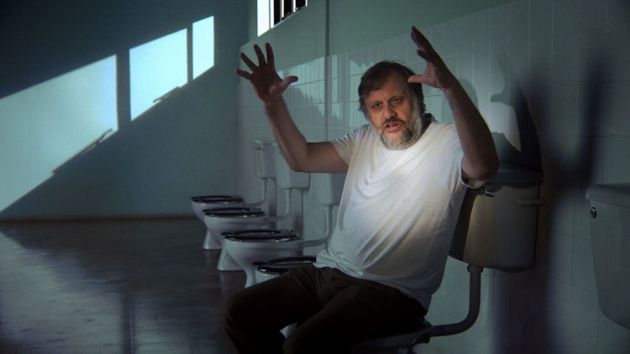
 photo b6e87d84-d965-45d1-8427-c89aeb112cd0_zps187d4e80.jpg
Why is it easier for us to visualize the end of the human race, than the end of the free-market capitalism? This is the driving question behind the latest collaboration between Slavoj Žižek, the superstar philosopher/psychoanalyst/cultural critic of our time and director Sophie Fienne's in their new documentary, The Pervert's Guide to Ideology. It's their second film since the widely successful The Pervert's Guide to Cinema in 2006. Clocking at 135 minutes, Ideology is arguably less entertaining than its predecessor despite the charming presence of the famed philosopher in several iconic movie backdrops, gesticulating wildly and sounding like the Eastern European Sylvester the Cat. But this film is a denser, more serious examination of our consumerist society that asks many of the important questions of our time, and will require your full attention. As the film jumps briskly through various components of ideology, I suggest seeing the film more than once to absorb Žižek's whole thought process.

For a person who grew up in Communist Slovenia during the Cold War, and hailing from a Marxist/Anarchist perspective, Žižek is equally critical of all ideologies -- the Soviet Communism, Fascism, Capitalism and religion. With various examples of Soviet era war films and Nazi propaganda, he demonstrates the manipulative nature of ideology.

While this film is intellectually complex and sometimes hard to follow, there are many brilliant moments that you just have to nod and smile. One of these is in the beginning, with John Carpenter's hidden gem of the Hollywood Left, They Live. Žižek begins his dissertation by the dumpster in a back alley in LA, where the epic fist-fight between Roddy 'Rowdy' Piper and Keith David takes place, because David's character refuses to put on the sunglasses that will let him see the hidden messages used by the yuppie aliens to control the human race ("Obey", "Money is your God" etc - all the good things about the Reagan years). Ideology is essentially the filter that we see the world through.

Žižek uses different cultural examples to demonstrate how historic ideological movements manipulate the masses. Beethoven's 9th Symphony -- Ode to Joy, a world famous melody associated with a vision of fraternity amongst all human beings, has been appropriated by many political movements: Nazis, Marxists, Maoists and even the Shining Path -- believe it or not, these were all 'utopian movements' in their own minds. It was the national anthem of the apartheid government of Southern Rhodesia (present day Zimbabwe) and is now the anthem of the European Union. After the long historical montage, you are relieved to see Žižek sitting in the Korova Milk Bar from Clockwork Orange. The genius of Beethoven is not only utopian vision in music, but the realization that there are those who will always be excluded from this utopia, as illustrated by the carnivalesque version of the symphony's fourth movement heard in the scene where Little Alex prowls the shopping mall.

Žižek dissects our advanced, capitalist system using Freudian psychoanalytic terms and Western philosophy, giving variety of cultural examples for the laymen: Sound of Music, Kinder Eggs, Starbucks, coke, Titanic.... He takes us to the Mojave Desert -- the gravesite of derelict airplanes, for us to witness the amazing amount of waste created by the current economic system. For those who are not familiar with Plato's Republic, he sites Dark Knight to explain the 'Noble Lie', a conservative view of the society where it is necessary for the rulers to lie because the public can't handle the truth.

All this heady, intellectual inquiries are at times too much. Fiennes deftly moves from one iconic movie setting to another connecting the dots and continuing visual threads to keep up with our motor-mouthed host and keep the film afloat. The movie settings are perfectly matched with the originals and the visual gags are clever and funny.

Capitalism is the only revolution that survived because it thrives on economic crises and social turmoil. Why do people loot during the riot? Žižek uses an example of the London Riots of 2011. In our consumerist system, people's frustrations in social and economic injustice can be only expressed by stealing objects. We go back to his main question for the finale:

Why do we so easily envision asteroid hitting the earth or the end of days rather than seeing a moderate change in our economic system?

I saw him speaking eloquently about the possibilities of envisioning a different kind of world for our future at the Zuccotti Park, during Occupy Wall Street protests in 2011. With The Pervert's Guide to Ideology, he is suggesting us to examine the past, learn from mistakes and be a little bit of a realist in seeing the world.

The Pervert's Guide to Ideology opens 11/1 at the IFC Center followed by other markets.
Slavoj Žižek and director Sophie Fiennes in person Fri Nov 1 & Sat Nov 2 for Q&As following 6:45 shows.

Plus book signing with Žižek for his new book Less Than Nothing: Hegel and the Shadow of Dialectical Materialism, Sat Nov 2 at 9:45pm – books on sale at lobby concessions stand.
Please visit IFC website for tickets.

Thursday, October 24, 2013

Mother Russia

Mother and Son (1997) - Sokurov
Mother and Son Mother and Son 2 Mother and Son 3 Sokurov's idea of the basis of all human relationship - the one between mother and child, is stunningly visualized in Mat I Syn. As the rightful heir to Tarkovsky and reining spiritual backbone in faithless, chaotic Mother Russia, Sokurov shows eternal rebirth of devotion, sadness and nostalgia. The film's dreamy, skewed images are heavily influenced by paintings of Caspar David Friedrich. The look of the film is like nothing I've ever witnessed on film: its slightly distorted, no depth of field, soft green & yellow palette creates the world where time has lost all its meaning. It's a beautiful and soulful film.